- ProduitÉquipementPrécision de Puissance, Personnalisation, Solution de GruesCourriel :WhatsApp / Wechat :+8613781917315Adresse :Rue Shanhai n° 18, ville de Changyuan, province du Henan, Chine
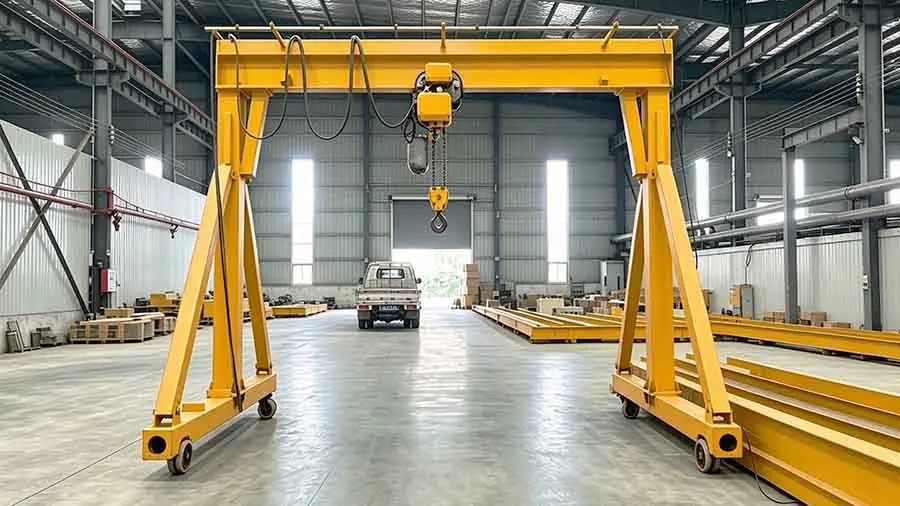
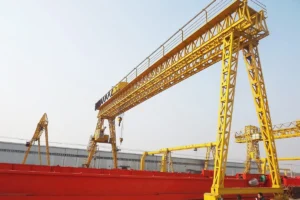
A Mobile Gantry Crane, also known as a Grue portique mobile or Movable Gantry Crane, is a lifting system with a movable gantry frame and traveling mechanism. It consists of main beams, supporting legs, wheels, and a hoisting unit, allowing the crane to move within the working area for material handling and equipment lifting.
Unlike fixed gantry cranes, mobile gantry cranes do not require permanent installation. The crane can be relocated between different workstations and is commonly used for workshop handling, equipment maintenance, assembly operations, and temporary lifting tasks.
The traveling system can be designed with rubber wheels, casters, or rail-mounted structures according to the working environment. Standard models cover lifting capacities from small 500 kg units to heavy-duty designs of over 100 tons, with customized span and lifting height available for different applications.
Mobile Gantry Cranes are designed in different structures to match various lifting applications. Based on the traveling system and frame material, they are mainly classified into track mounted, trackless, steel, and aluminum types. Each design has different load capacities, movement methods, and application areas.
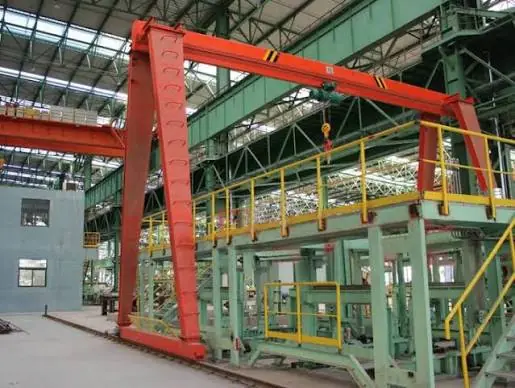
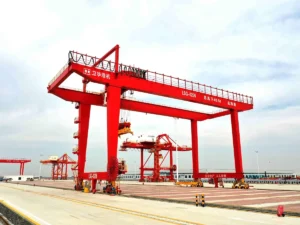
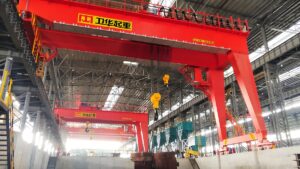
Track Mounted Mobile Gantry Crane runs on fixed rails and is designed for repeated lifting operations along a fixed route. It is commonly used in container yards, railway freight stations, and large manufacturing plants where stable movement and accurate positioning are required.
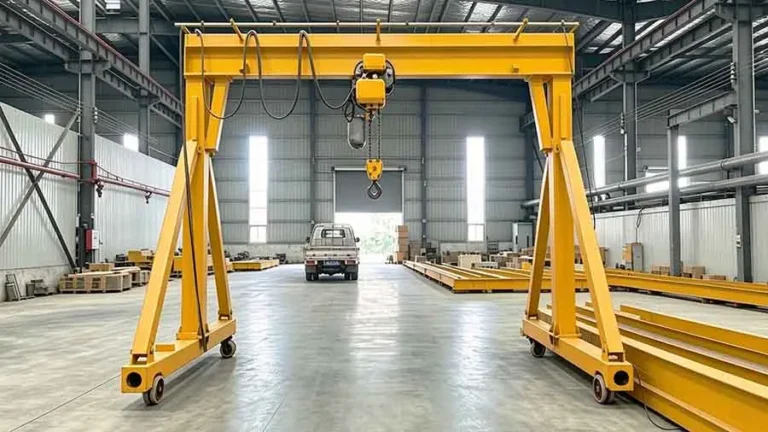
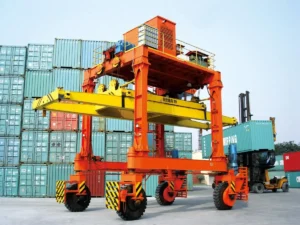
Trackless Mobile Gantry Crane uses rubber wheels or casters for movement without rail installation. It is suitable for workshops, warehouses, and maintenance areas where lifting positions need to be changed frequently.
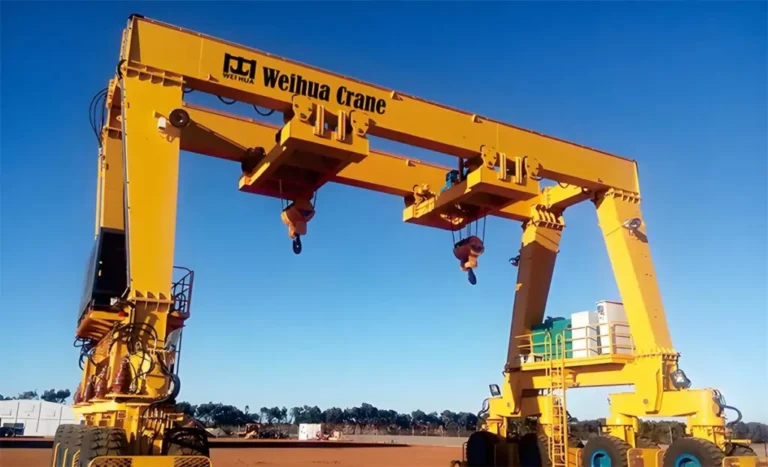
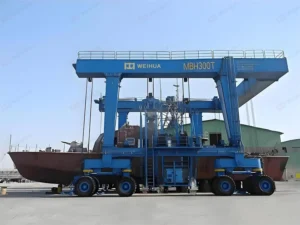
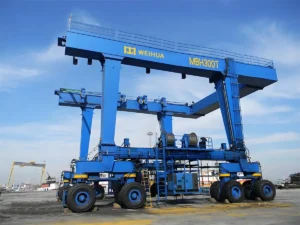
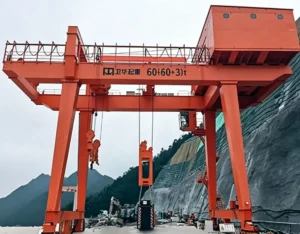
Rubber Tyred Mobile Gantry Crane is equipped with rubber tyre traveling systems, enabling flexible movement and quick relocation without fixed rails. With a modular steel structure and hydraulic steering system, it provides efficient lifting operations in ports, shipyards, precast concrete yards, and outdoor industrial sites where mobility and flexible handling are required.
A Mobile Gantry Crane consists of the frame structure, lifting mechanism, traveling system, and control devices. Each part has a specific function in load lifting, movement, and operation control.
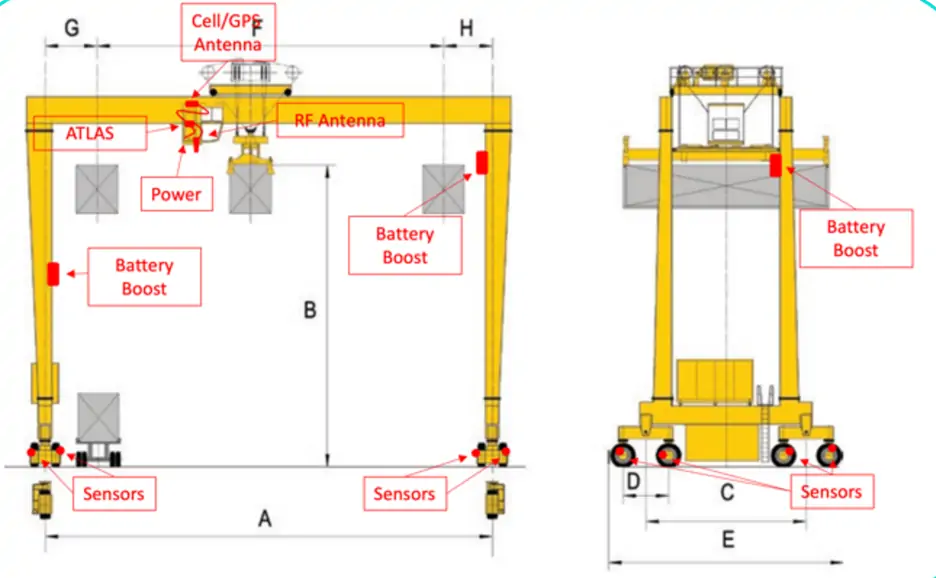
| Paramètre | Spécification |
|---|---|
| Capacité de levage | 0.5–200 Ton |
| Span | 2–30 m |
| Hauteur de levage | 1–30 m |
| Classe ouvrière | A3–A7 |
| Type de structure | Poutre simple / Poutre double |
| Structure Material | Carbon Steel / Aluminum Alloy |
| Alimentation électrique | 380V/50Hz/3 Phase (Customizable) |
| Méthode de contrôle | Manual Control / Wired Remote Control / Wireless Remote Control / Cabin Control |
| Hoisting Mechanism | Manual Chain Hoist / Electric Chain Hoist / Wire Rope Hoist |
| Vitesse de levage | 3–8 m/min (Customizable) |
| Traveling System | Manual Push / Electric Drive / Diesel Drive |
| Vitesse de déplacement | 5–20 m/min (Customizable) |
| Wheel Type | Caster Wheel / Rubber Tire / Rail Wheel |
| Dispositifs de sécurité | Overload Protection / Limit Switch / Emergency Stop |
| Surface Treatment | Anti-corrosion Coating / Custom Painting |
| Environnement de travail | Indoor / Outdoor |
| Application | Workshop / Warehouse / Factory / Maintenance Area / Construction Site |
All specifications can be customized according to workshop dimensions and operating requirements.
A mobile gantry crane operates through the hoist system, trolley mechanism, and traveling wheels. The hoist completes vertical lifting, the trolley moves the load along the main beam, and the gantry frame moves on wheels or rails to reach different working positions.
1. Lifting Operation
The hoist lifts or lowers the load through the hook and wire rope or chain system. Electric hoists are driven by motors, while manual hoists are operated by hand chain.
2. Horizontal Movement
The trolley moves along the main beam to adjust the load position within the crane span, allowing materials to be transferred between different points.
3. Crane Relocation
The gantry frame moves on wheels, casters, or rails to change the working location. Manual pushing or motor-driven travel systems are available according to crane design.
4. Load Support
During lifting, the load is transferred through the hoist, trolley, main beam, legs, and base frame to the ground. The rigid structure maintains stability during operation.nts.
Gantry cranes must be inspected regularly during operation to ensure safe use. For a detailed inspection checklist, see the article: “Gantry Crane Inspection Checklist: Daily, Monthly, and Annual Inspection Guide.”
Mobile Gantry Cranes are used for lifting, positioning, and transferring materials in factories, workshops, warehouses, and outdoor working areas. Their movable structure makes them suitable for applications where lifting locations change or permanent crane installation is not required.
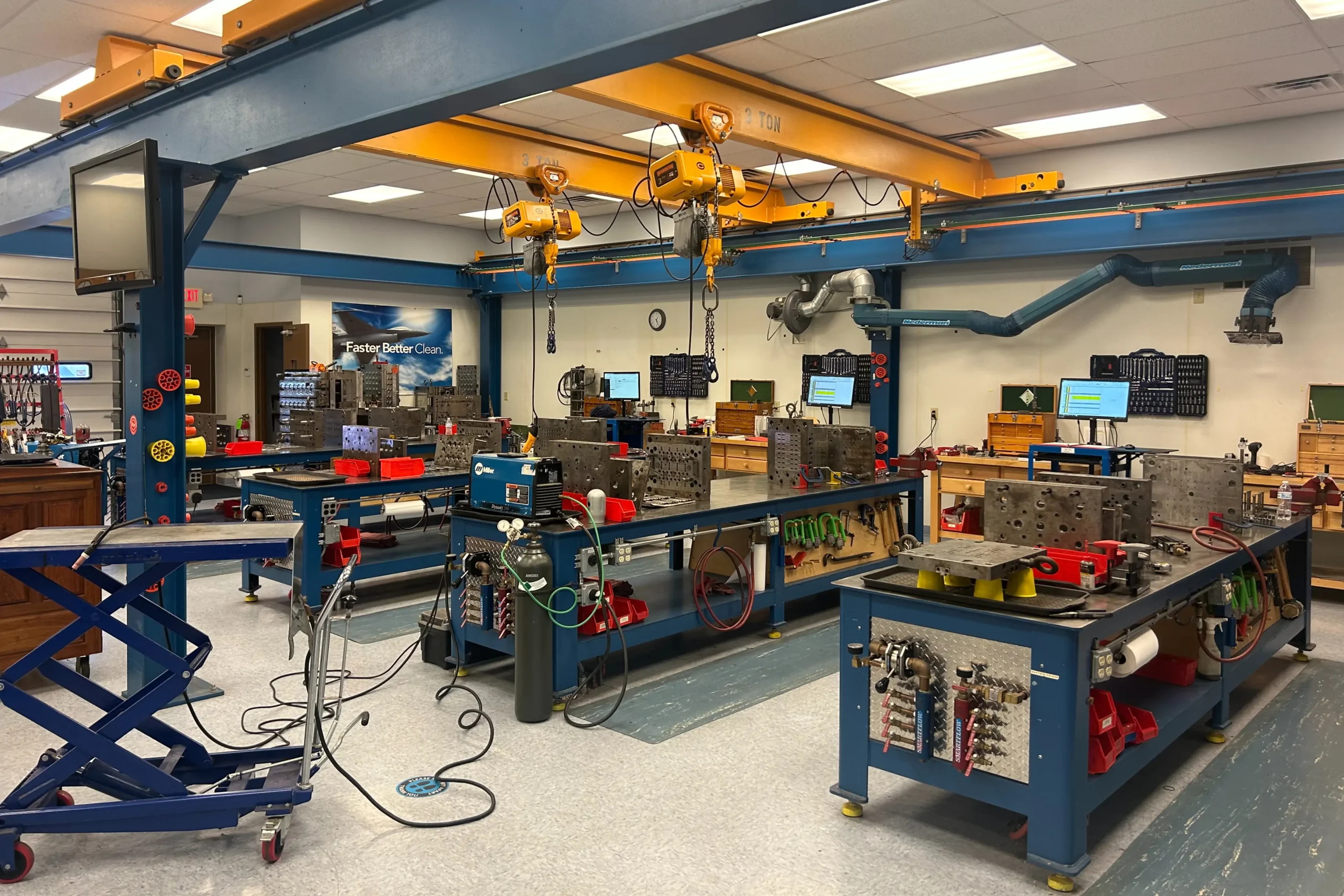
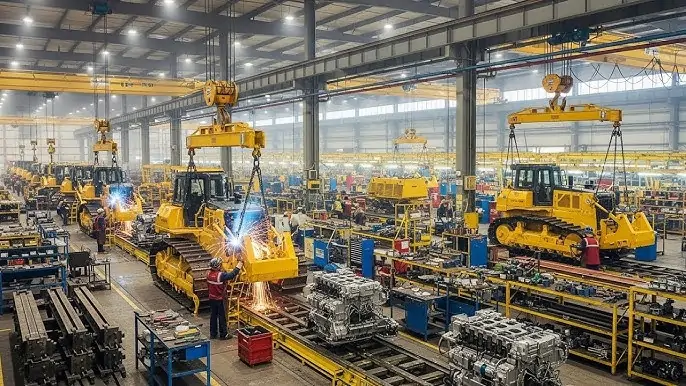
Used for moving machinery parts, steel components, and production materials between workstations.
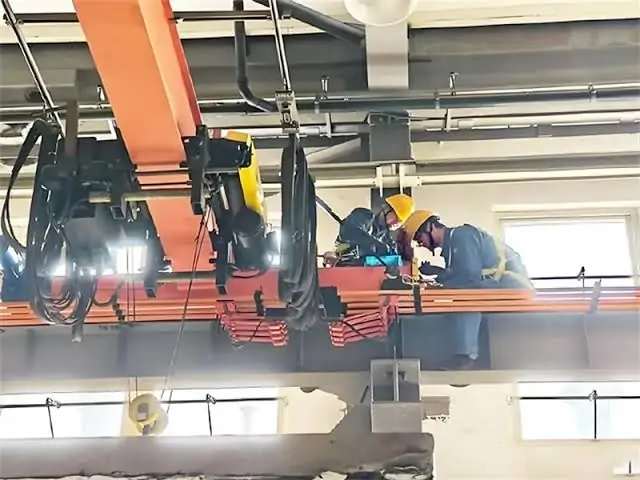
Used for lifting motors, machines, and heavy components during installation, repair, and maintenance work.
Used for loading, unloading, and transferring goods in storage areas and logistics facilities.
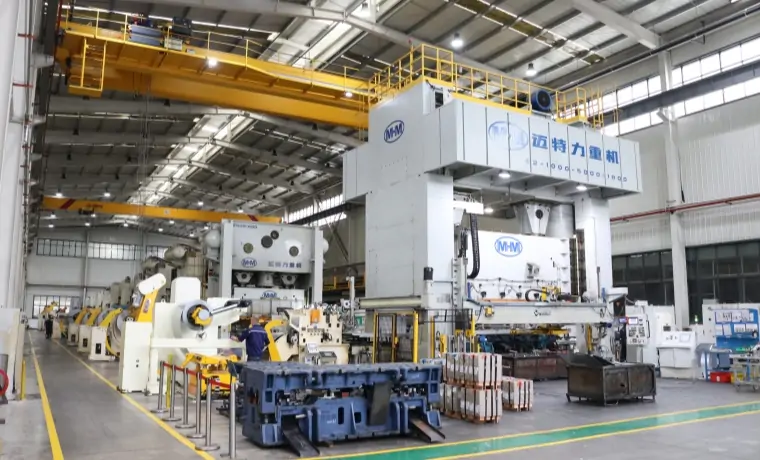
Used for assembly lines and manufacturing processes that require frequent component handling.
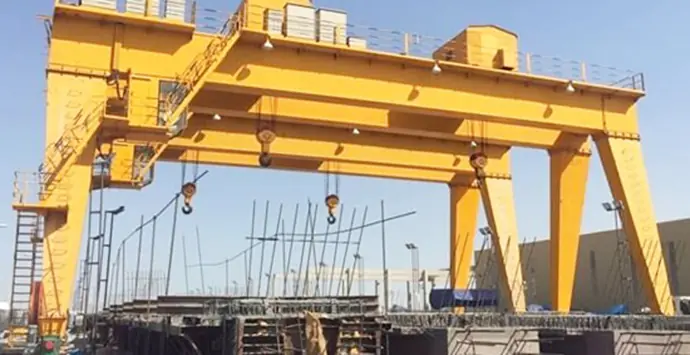
Used for lifting building materials, tools, and equipment at temporary construction locations.
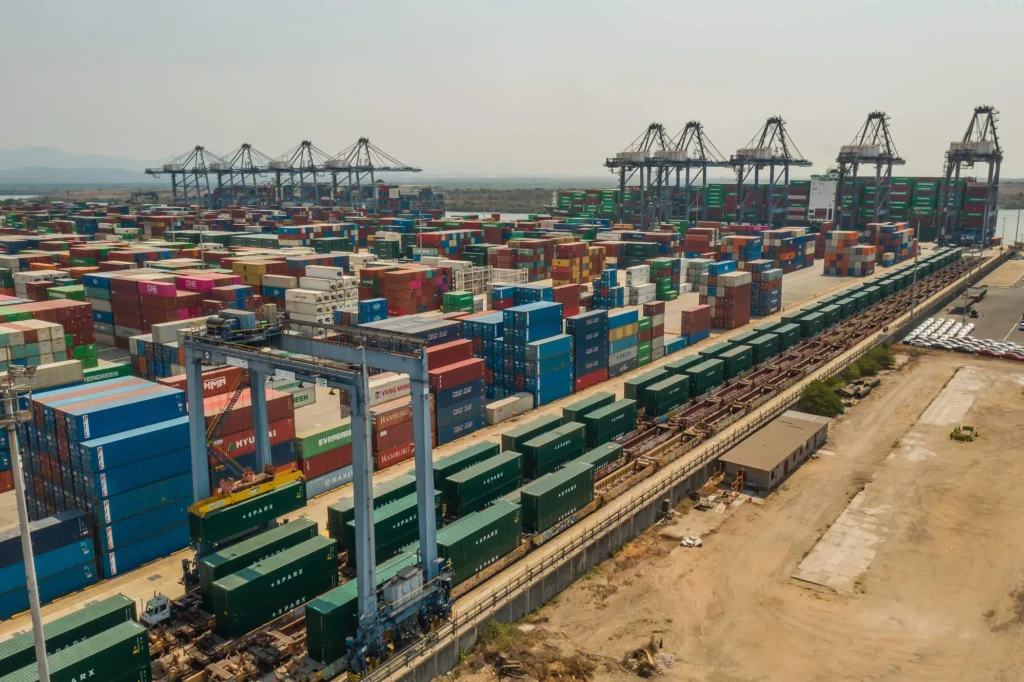
Track-mounted models are used for container transfer and heavy cargo handling in ports and freight yards.
WEIHUA offers cranes for various applications, including not only Mobile Gantry Cranes but also Workshop Gantry Cranes, Warehouse Gantry Cranes, and Heavy-Duty Gantry Cranes.
To learn more about the applications of gantry cranes, read the article: What Is a Gantry Crane Used For? Applications and Industries
Mobile Gantry Crane is available with customized designs for different lifting conditions. The crane dimensions, load capacity, traveling system, hoist type, and control method can be selected according to the actual working environment and operation needs.
WEIHUA provides customized mobile gantry crane designs based on lifting capacity, working space, and application requirements. Options include crane size, structure, lifting system, control mode, and power configuration.
To learn about the factors that affect pricing and how to choose the right model, see the article: Grues portiques à vendre : types, prix et guide d'achat (2026)
Mobile Gantry Crane and Fixed Gantry Crane are used for different lifting conditions. The main difference is the installation method and movement capability. Mobile gantry cranes are designed for flexible lifting operations, while fixed gantry cranes are used for permanent lifting locations with higher load requirements.
| Comparison | Mobile Gantry Crane | Fixed Gantry Crane |
|---|---|---|
| Mobilité | Equipped with wheels or casters, allowing movement between different work areas | Permanently installed at a fixed location |
| Span and Height Adjustment | Span and lifting height can be customized or adjusted | Dimensions are usually fixed after installation |
| Installation | No permanent foundation required, easy to install and relocate | Requires fixed support structure and installation work |
| Flexibilité | Suitable for multiple workstations and changing lifting positions | Designed for dedicated lifting areas |
| Capacité de charge | 0.5–200 tons depending on design | Usually designed for higher capacity and continuous operation |
| Application | Workshops, warehouses, maintenance areas, assembly lines | Ports, large factories, container yards, construction sites |
| Operating Cost | Lower installation cost and easier relocation | Higher installation cost with fixed infrastructure |
| Typical Use | Temporary lifting, equipment handling, multi-location operations | Heavy-duty lifting with repeated operations |
Mobile Gantry Crane is suitable for applications that require frequent movement, flexible layouts, and quick installation. Fixed Gantry Crane is better suited for heavy loads, fixed routes, and continuous lifting operations. The choice depends on load capacity, working frequency, and site conditions.
Selecting a Mobile Gantry Crane requires checking the lifting load, working space, travel method, and operating conditions. The main specifications should match the actual lifting task and installation environment.
WEIHUA Mobile Gantry Crane can be manufactured according to different lifting conditions, including load capacity, working space, moving method, and operation environment. With professional crane design and manufacturing experience, WEIHUA provides customized options for crane structure, span, lifting height, traveling system, hoisting equipment, and control mode.
Obtenez un devis personnalisé dès maintenant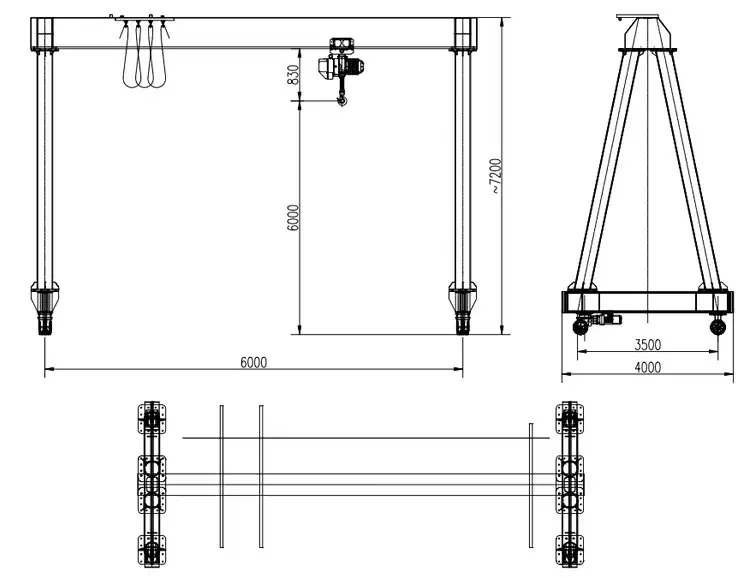
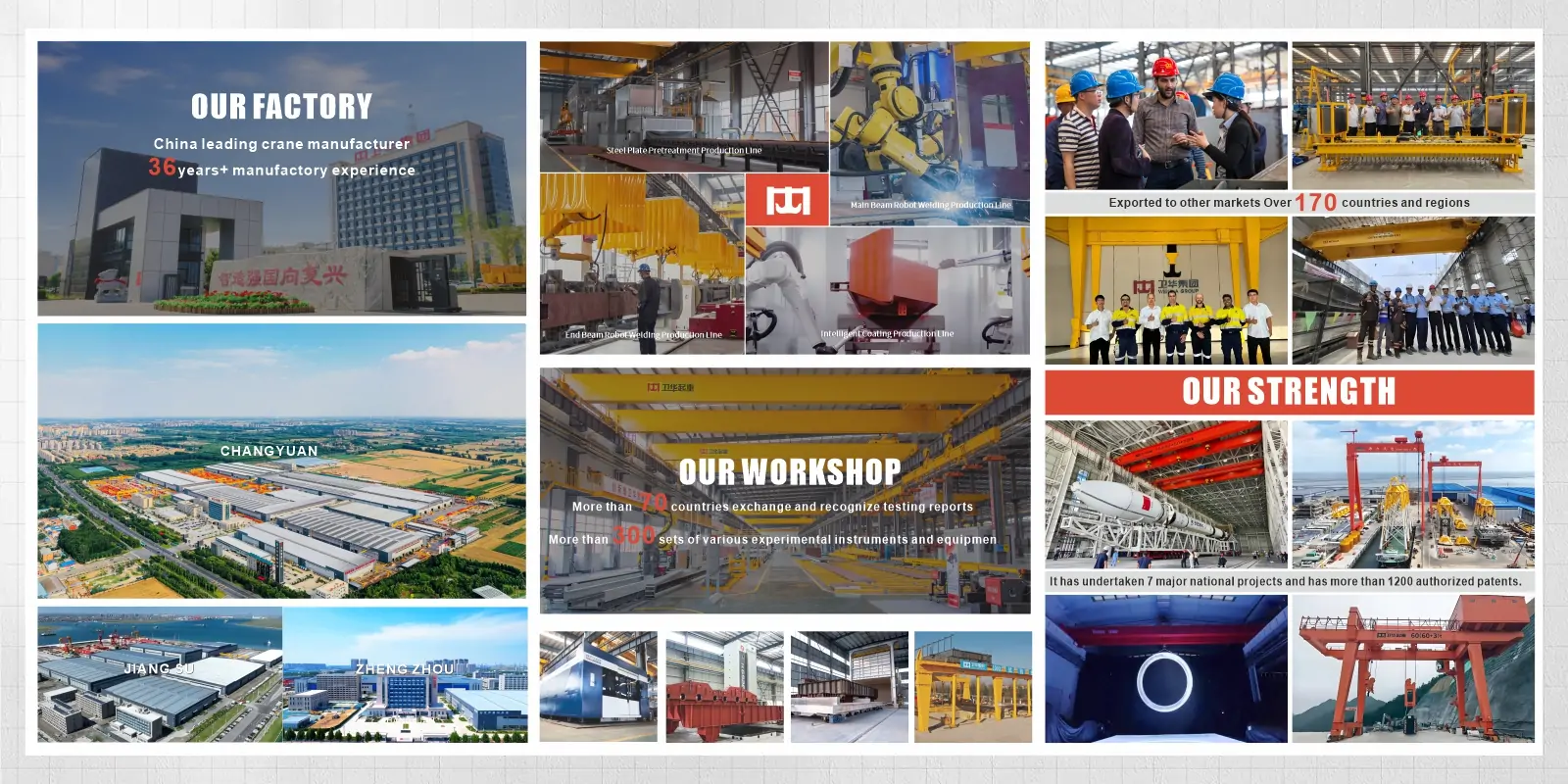
WEIHUA is a professional manufacturer and supplier of Mobile Gantry Cranes, providing lifting equipment for workshops, factories, warehouses, maintenance areas, and industrial applications. With advanced manufacturing facilities, engineering teams, and strict quality control, WEIHUA produces mobile gantry cranes in different capacities, structures, and configurations to meet various lifting conditions.
From product design and structural customization to manufacturing, testing, and after-sales service, WEIHUA provides complete support for global customers. Contactez-nous for customized Mobile Gantry Crane solutions, technical consultation, and project requirements.
A mobile gantry crane is a movable lifting crane equipped with a gantry frame, hoist, and traveling system. It can be moved between different working areas for material handling, equipment installation, and maintenance operations.
The lifting capacity of a mobile gantry crane typically ranges from 0.5 tons to 200 tons. The capacity can be customized according to the load weight and working conditions.
Yes. A mobile gantry crane can be customized in lifting capacity, span, lifting height, structure type, traveling system, hoist type, control method, and power supply.
A mobile gantry crane is equipped with wheels or casters and can be relocated between work areas, while a fixed gantry crane is installed at a permanent location for repeated lifting operations.
Yes. Mobile gantry cranes can be designed for outdoor applications with suitable materials, protective coatings, weather protection, and traveling systems.
Mobile gantry cranes are mainly made of carbon steel such as Q235B/Q345B. Aluminum alloy structures are also available for lightweight and corrosion-resistant applications.
Control options include manual operation, pendant push-button control, wired remote control, wireless remote control, and cabin control.
The price of a mobile gantry crane depends on lifting capacity, span, lifting height, hoist type, traveling system, control configuration, and customization requirements. Contact WEIHUA for a quotation based on your project details.
Fondée en 1988, Weihua est devenue un leader mondial dans le domaine de la fabrication intelligente en Chine. Nous sommes spécialisés dans la R&D et la production de grues intelligentes tout en proposant des solutions d'AGV. Nos équipes professionnelles d'ingénierie, de livraison et d'après-vente offrent un support technique complet, des solutions personnalisées, des conseils d'installation sur site et des services mondiaux à réponse rapide pour garantir que chaque projet fonctionne en toute sécurité et efficacité.
La capacité typique varie de 40 à 65 tonnes pour la manutention de conteneurs standard de 20 et 40 pieds.
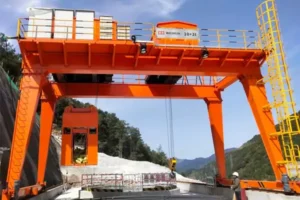
The lifting height can be customized according to project requirements, making it suitable for both standard and deep shaft construction projects.
Steel mills, ports, shipyards, heavy equipment manufacturing, and large-scale outdoor engineering projects.
A fixed-height gantry crane is set to one working height and offers maximum rigidity for dedicated workstations. An adjustable gantry crane features telescoping legs that allow continuous height adjustment and a variable span, making it suitable for multiple applications across different spaces.
A portable gantry crane is used to lift, move, and position heavy loads in environments where a fixed overhead crane is not practical. Common applications include automotive engine removal, warehouse material handling, mold assembly, machinery installation, and construction site lifting.
Contactez-nous dès maintenant par e-mail : [email protected], ou remplissez le formulaire ci-dessous.


La potence est un équipement de levage largement utilisé dans diverses industries, sur les chantiers de construction, dans les ports, les entrepôts et d'autres domaines. Sa structure unique et sa puissante capacité de charge le rendent idéal pour la manutention moderne de matériaux lourds. La conception de la structure “potence” permet à la grue de se déplacer librement dans un espace, couvrant une large zone de travail. Alors, qu'est-ce qui rend les potences spéciales ? Quels sont leurs types, leurs paramètres, leurs méthodes de contrôle, leurs applications et leurs principes de fonctionnement ? En quoi diffèrent-elles des ponts roulants ? Explorons ensemble. Types de potences Basées sur la conception, l'application et l'environnement d'exploitation, les potences sont généralement classées dans les types suivants : Potence à poutre unique Les potences à poutre unique sont largement utilisées dans les secteurs industriels, les entrepôts, les ports et les ateliers. Dotées d'un mécanisme de levage à support à poutre unique, elles se déplacent via des colonnes latérales et des rails au sol. Avec leur structure simple, leur fonctionnement convivial et leur capacité de levage modérée, elles sont idéales pour la manutention de charges légères à moyennes. Capables de couvrir de grandes distances librement, les potences à poutre unique conviennent aux opérations de manutention et de levage de matériaux lourds. Potence à double poutre Par rapport aux potences à poutre unique, les potences à double poutre offrent une plus grande…
Dans les ports, les parcs logistiques et la manutention de matériaux industriels, les grues à quai et les portiques sont deux types d'équipements de chargement/déchargement courants et essentiels. Ils diffèrent par leur conception structurelle, leurs caractéristiques de performance, leurs méthodes d'exploitation, leurs scénarios d'application et leurs coûts d'investissement. Cet article fournit une analyse complète des grues à quai par rapport aux portiques et vous guide dans le choix approprié. Comparaison de la conception structurelle Les différences structurelles entre les grues à quai et les portiques se manifestent principalement dans les méthodes de support de charge, les trajectoires de mouvement et les plages de couverture. La première est centrée sur une tour fixe et une flèche rotative, mettant l'accent sur la “ couverture ponctuelle ” et la rotation horizontale flexible. La seconde présente une structure en portique et un déplacement longitudinal sur rails, privilégiant le “ vaste mouvement horizontal ” et la manutention logistique efficace sur site. Par conséquent, leurs conceptions structurelles distinctes dictent directement leurs différents scénarios d'application. Caractéristiques structurelles de la grue à quai Les grues à rotation de portique utilisent des structures de flèche cantilever simple/double avec la tour fixée à des fondations ou à des rails, permettant une rotation à 360° ou partielle. Cette configuration permet une opération flexible dans des espaces étroits et allongés tels que les rives, les fronts de quai et les postes de navire, ce qui la rend particulièrement adaptée à la manutention de matériaux du navire à terre. Sa fonctionnalité principale combine verticalement…
Dans les opérations industrielles modernes, la manutention efficace des matériaux est essentielle pour maximiser la productivité et optimiser le flux de travail. Les ponts roulants, également connus sous le nom de grues aériennes ou de grues EOT, sont des systèmes de manutention fixes largement utilisés dans les secteurs de la fabrication, du traitement des métaux, de l'entreposage et des opérations de chargement/déchargement. Dans cet article, nous explorerons le principe de fonctionnement, les composants principaux, les applications et les avantages opérationnels des ponts roulants, offrant ainsi un guide complet pour les planificateurs industriels et les professionnels de la logistique. Principe de fonctionnement d'un pont roulant Un pont roulant fonctionne sur une structure semblable à un pont qui enjambe l'espace de travail, avec un chariot et un système de levage qui se déplacent horizontalement le long du pont et soulèvent ou abaissent verticalement les charges. Le déplacement de la grue le long du chemin de roulement, combiné à un contrôle précis du palan, permet une manutention efficace et sûre des matériaux lourds dans les usines, les entrepôts et les installations industrielles. Pour plus d'informations sur le fonctionnement des grues aériennes, veuillez consulter cet article : Principe de fonctionnement des grues aériennes : composants, mouvement et processus d'exploitation Terminologie des ponts roulants Voici une introduction à la terminologie relative aux pièces des ponts roulants. Capacité de la grue : La capacité de la grue fait référence au poids maximum qu'un pont roulant peut soulever en toute sécurité. Généralement mesurée en tonnes…
Une grue EOT (Electric Overhead Traveling Crane) est un système de levage aérien efficace et fiable utilisé pour manipuler des matériaux lourds dans les usines, les entrepôts, les ateliers et les installations industrielles. Fonctionnant sur des rails aériens, les grues EOT permettent un mouvement tridimensionnel sûr et précis des charges grâce à des mouvements coordonnés de levage, de translation et de pontage. Cet article vous guidera à travers les définitions des grues EOT, leurs types, leur structure, leurs principes de fonctionnement, leurs applications et les facteurs de coût afin de vous aider à choisir la solution la plus adaptée à vos besoins de levage. Comment fonctionne une grue EOT ? Le principe de fonctionnement d'une grue EOT repose sur une combinaison de levage vertical, de mouvement horizontal du chariot et de déplacement longitudinal du pont, permettant une manipulation efficace de charges lourdes dans les installations industrielles. La grue circule sur des rails de roulement surélevés installés le long de la structure du bâtiment, le pont de la grue enjambant l'espace de travail. Le mécanisme de levage monte ou descend la charge à l'aide de câbles en acier ou de chaînes, tandis que le chariot déplace la charge horizontalement le long du pont. L'ensemble de la grue se déplace longitudinalement le long des rails de roulement, permettant un positionnement tridimensionnel des matériaux. Les grues EOT modernes sont alimentées par des moteurs électriques à vitesse précise…
Les portiques sont largement utilisés dans les parcs à matériaux en plein air, les chantiers navals, les usines et les sites de construction, ce qui en fait l'une des solutions de manutention les plus polyvalentes et les plus appliquées. Les portiques existent en différents types, chacun personnalisable pour s'adapter à différentes capacités de charge, conditions de site et exigences opérationnelles. Cependant, choisir la mauvaise configuration peut entraîner des dépenses inutiles, une capacité de levage limitée ou des contraintes d'expansion futures. Alors, quels sont les principaux types de portiques ? Comment choisir le bon type pour votre application ? Dans ce guide, nous fournir un aperçu détaillé des différents types de portiques en fonction de leur structure, de leur mobilité et des scénarios d'application, vous aidant à prendre la bonne décision avant d'investir dans une solution de levage. L'article est assez long. Ci-dessous se trouve notre table des matières. Veuillez accéder à la section correspondante si nécessaire : Qu'est-ce qu'un portique ? Les portiques sont des équipements de levage conçus pour la manutention efficace de charges lourdes sur de grands sites en plein air. Leur structure caractéristique comprend une ou plusieurs poutres principales supportées par des pieds rigides (ou flexibles) de chaque côté, formant un cadre monumental en forme de “ portail ”. Ces grues se déplacent…
 English English
  Русский
 العربية
 Français
 Português
 Español