










Table des matières
Introduction
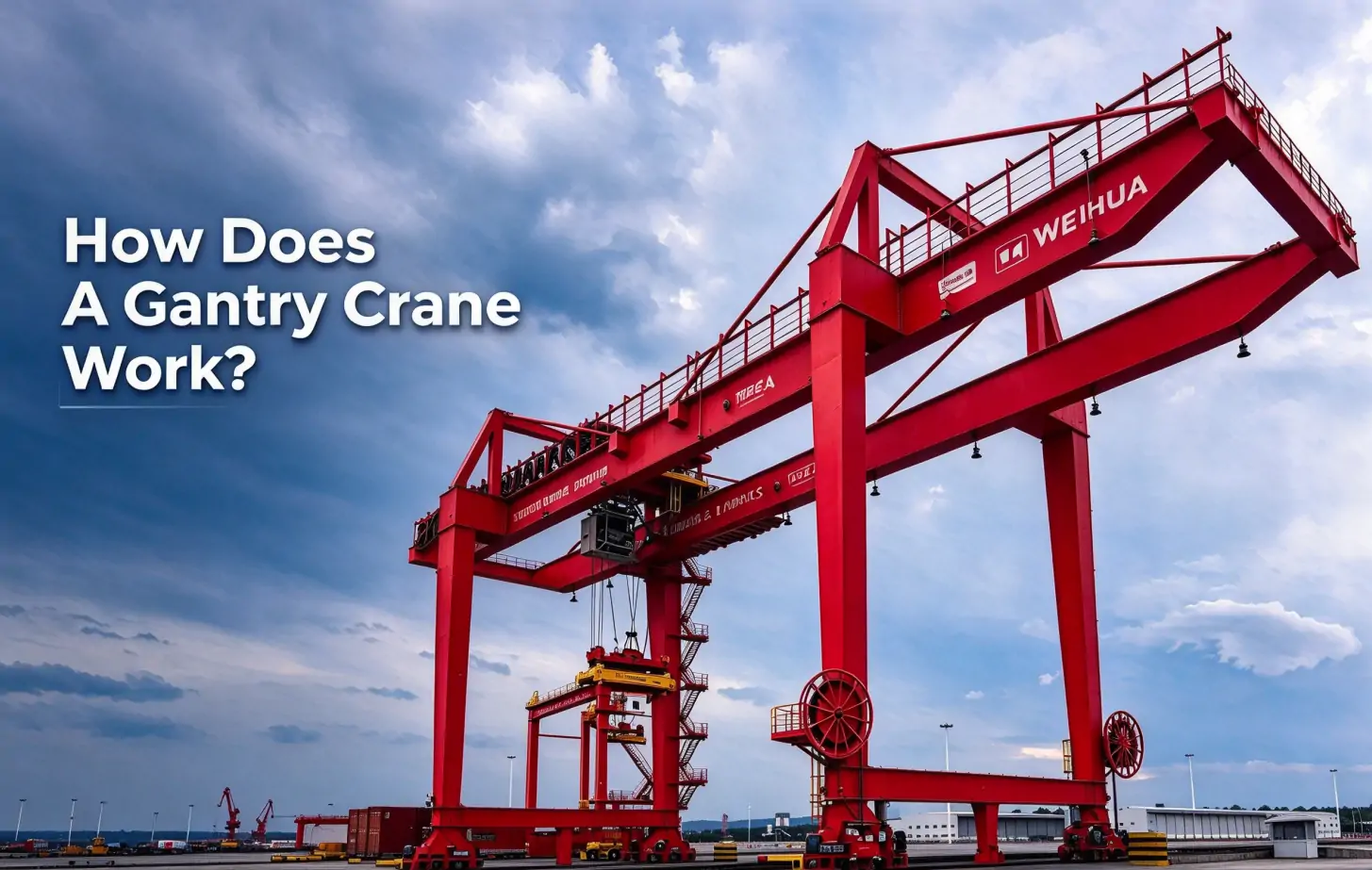
A gantry crane works through three main movements: the lifting mechanism raises and lowers the load, the trolley moves it across the span, and the crane travel system moves the entire crane along the rails. The hoist, trolley, end trucks, wheels, motors, and control system work together to complete these movements.
The working process also varies with crane configuration and application. I will cover the lifting, trolley, and travel mechanisms, control and safety systems, plus the working principles of single girder, double girder, and container gantry cranes.
How Does a Gantry Crane Work Step by Step?
A gantry crane working cycle has six steps: load positioning, lifting, trolley movement, gantry travel, lowering, and release.
- 1. Load Positioning: Gantry travel moves the crane to the required bay. The trolley positions the hook or spreader above the load. Container cranes use spreaders for 20 ft, 40 ft, or 45 ft containers, with single- or double-container handling options.
- 2. Load Lifting: The hoist motor drives the drum, wire rope, sheaves, and brake to raise the load. Container yard cranes can lift high enough for four or more container tiers. Some configurations reach 10 m/s lifting speed.
- 3. Trolley Movement: The trolley carries the suspended load along the main girder. Rack-and-pinion or single/twin-shaft drives control trolley movement. Travel limits define forward stop, forward deceleration, reverse deceleration, and reverse stop positions.
- 4. Gantry Travel: Travel motors drive the crane wheels along ground rails. Rubber-tyred gantry cranes can use 4, 8, or 16 tyres. Travel speed can reach about 30 m/min. Steering systems can operate from 0° to 90° for yard positioning.
- 5. Load Lowering: The hoist reverses the lifting motion under brake control. Automated container cranes can use positioning and anti-sway systems to keep placement error below 5 cm.
- 6. Load Release: The lifting device releases the cargo after positioning. Hooks handle general loads, grabs handle bulk materials, and spreaders handle containers. Spreader configurations support different container lengths and single or double-container handling.
The complete cycle—position, lift, trolley travel, gantry travel, lower, and release—allows a gantry crane to move loads across a defined working area with controlled horizontal and vertical positioning.
What Are the Main Mechanisms of a Gantry Crane?
A gantry crane has three main mechanisms: the lifting mechanism, trolley travel mechanism, and gantry travel mechanism. Each mechanism controls a different crane movement.
Mécanisme de levage
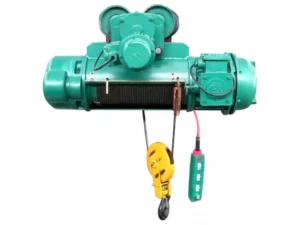
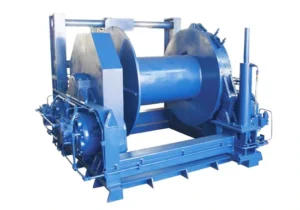
The lifting mechanism raises and lowers the load through the hoist and its drive components.
- Hoist: Drives the lifting operation.
- Lifting Motor: Provides lifting power.
- Wire Rope: Transfers lifting force to the hook block.
- Drum: Winds and releases the wire rope.
- Hook Block: Connects the lifting system to the load.
- Sheaves: Guide the wire rope through the reeving system.
Trolley Travel Mechanism
The trolley travel mechanism moves the hoist horizontally along the main girder.
- Trolley Frame: Carries the hoist and travel components.
- Travel Motor: Drives trolley movement.
- Gearbox: Transmits motor torque to the wheels.
- Wheels: Run along the trolley rails.
- Brake: Controls stopping and holding.
Gantry Travel Mechanism
The gantry travel mechanism moves the entire crane along the ground rails.
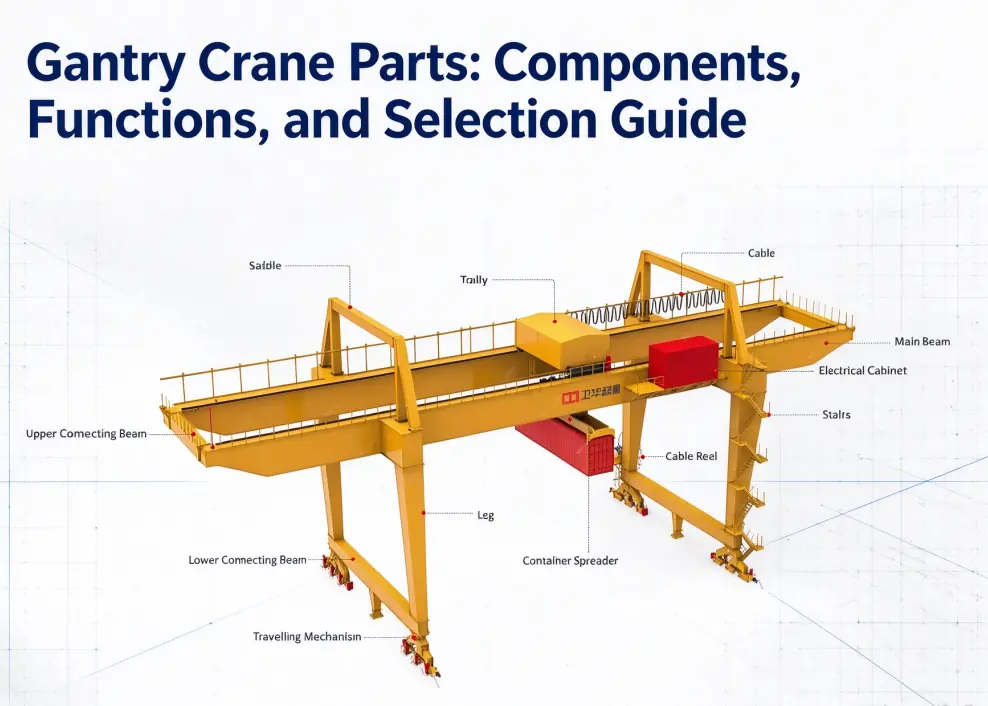
- End Trucks: Support the crane structure and wheel assemblies.
- Travel Motors: Drive crane movement.
- Gearboxes: Transfer motor torque to the wheels.
- Wheels: Run along the ground rails.
- Rails: Define the crane travel path.
- Brakes: Control stopping and holding during travel.
These three mechanisms work together to lift, position, and move loads within the crane’s operating area.
How Does a Gantry Crane Lift a Load?
A gantry crane lifts a load through the hoist system. Motor power passes through the gearbox and drum to the wire rope, which transfers the lifting force to the hook or spreader.
Lifting Motor → Gearbox → Drum → Wire Rope → Hook/Spreader → Load
Lifting Motor: Provides power for the lifting mechanism.
Gearbox: Transfers motor torque to the drum.
Drum: Winds or releases the wire rope to raise or lower the load.
Wire Rope: Transfers the lifting force from the drum to the hook block.
Hook/Spreader: Connects the lifting system to the load.
Brake: Holds the load at the required height and controls descent.
The lifting process relies on the coordinated operation of the motor, transmission, drum, rope, lifting device, and brake. Each component has a defined role in vertical load movement.
How Does a Gantry Crane Move?
A gantry crane moves in two directions: the trolley moves the load across the main girder, while the crane travel system moves the entire crane along the ground rails.
Trolley Movement: The trolley motor drives the trolley wheels along the main girder, changing the load position across the crane span.
Crane Travel: Travel motors drive the end trucks and traveling wheels along the ground rails, moving the entire gantry crane to the required position.
The two travel systems work on separate paths. Trolley movement controls the load position across the span; crane travel changes the crane’s position along the rails.
How Does a Gantry Crane Control System Work?
A gantry crane control system sends operator commands or programmed instructions to the hoist, trolley, and gantry travel mechanisms.
- Pendant Control — A wired push-button pendant sends direct commands for hoisting, trolley travel, and gantry travel during close-range manual operation.
- Radio Remote Control — A radio transmitter sends wireless commands to the crane receiver, allowing the operator to control the crane from a distance.
- PLC Control — A PLC processes commands, interlocks, limit signals, and equipment status for programmed or automated crane operation.
- Variable Frequency Drive — A VFD controls motor speed, acceleration, deceleration, and stopping for the hoist, trolley, and gantry travel mechanisms.
The signal path is Pendant/Radio Control → PLC → VFD → Motor, with the exact configuration depending on the crane control mode.
How Do Gantry Crane Safety Systems Work?
Gantry crane safety systems monitor load, lifting position, trolley travel, gantry travel, and emergency conditions. Each device controls a specific safety function.
- Overload Limiter: The overload limiter detects excessive lifting loads through a load cell or load monitoring system. When the preset limit is exceeded, hoisting stops.
- Hoist Limit Switch: The hoist limit switch monitors hook position and stops the hoist when the hook reaches the preset upper or lower limit.
- Travel Limit Switch: Travel limit switches control the end positions of the trolley and gantry. They trigger deceleration or stopping when the preset travel limit is reached.
- Emergency Stop: The emergency stop cuts the crane control command during an unsafe condition. It can be installed on the pendant, radio remote, or operator cabin.
- Anti-Collision Device: The anti-collision device detects nearby cranes, vehicles, structures, or other obstacles. It sends warning, deceleration, or stop signals according to the set distance.
- Brake System: Brakes control stopping and holding for the hoist, trolley, and gantry travel mechanisms. Lifting brakes hold the suspended load after hoisting stops.
- Safety Interlock: Safety interlocks block conflicting or unsafe crane operations. The control system can stop movement when a limit switch or other safety condition is activated.
Gantry crane safety systems combine overload protection, limit switches, brakes, emergency stops, anti-collision devices, and interlocks to control key crane movements and operating risks.
How Does a Single Girder Gantry Crane Work?
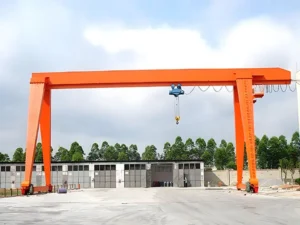
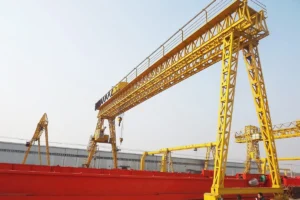
A single girder gantry crane follows the same basic working principle: the hoist lifts the load, the trolley moves it across the span, and the gantry travels along the rails. Its main difference is the use of one main girder to support the lifting and trolley system.
- One Main Girder: Supports the trolley and hoist across the crane span.
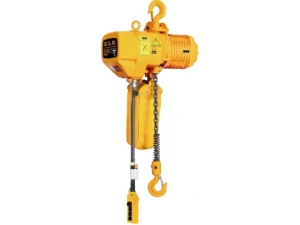
- Electric Hoist: Raises and lowers the load through the motor, drum, wire rope, and hook.
- Trolley: Carries the electric hoist and moves it along the main girder.
- End Trucks: Connect the main girder to the legs and support the traveling wheels.
- Traveling Wheels: Move the entire crane along the ground rails.
- Control System: Controls hoisting, trolley travel, gantry travel, speed, and stopping.
A single girder gantry crane uses one main girder to support the trolley and hoist, while the end trucks and wheels move the crane along the rails.
Obtenez un devis personnalisé dès maintenant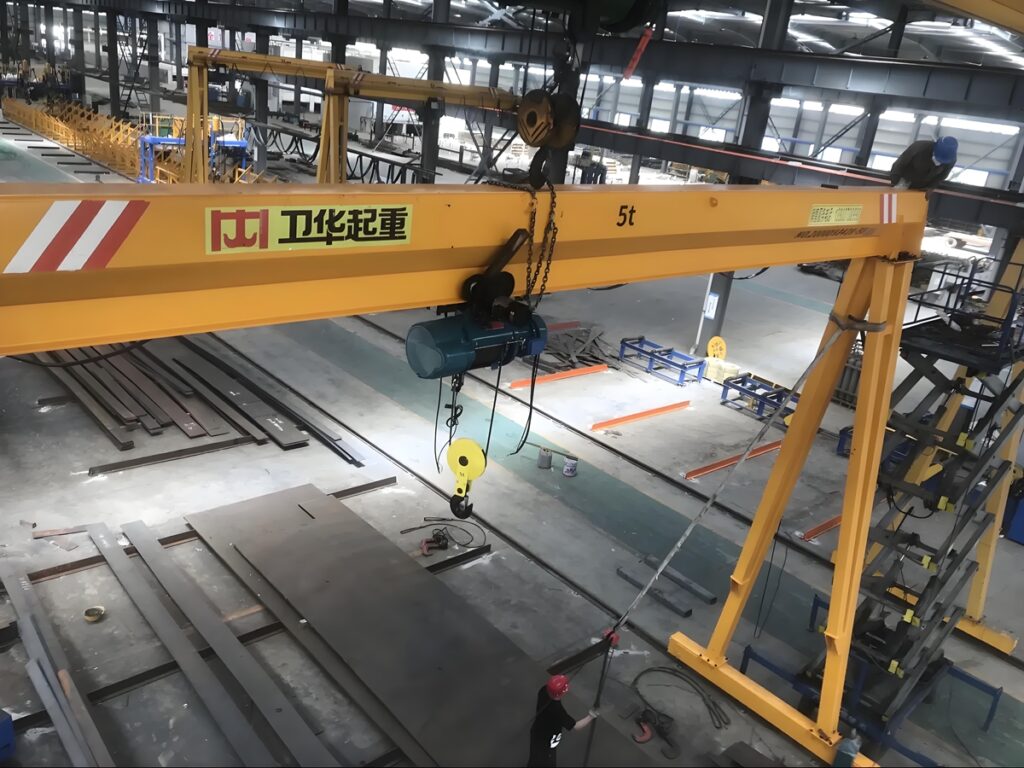
How Does a Double Girder Gantry Crane Work?
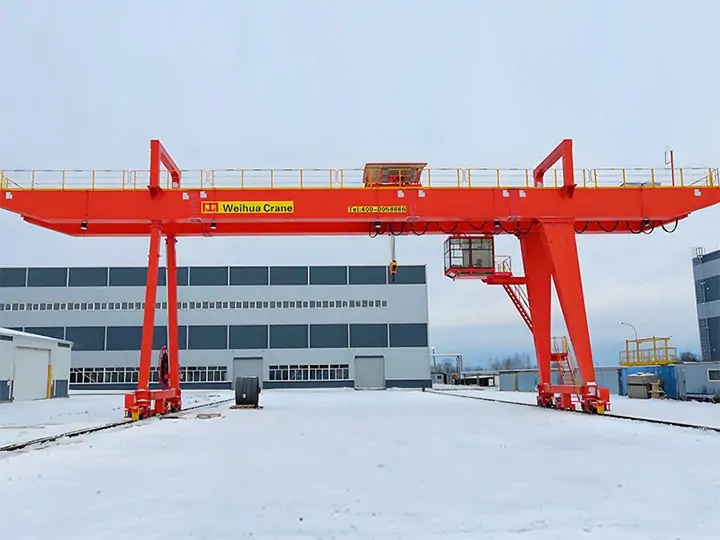
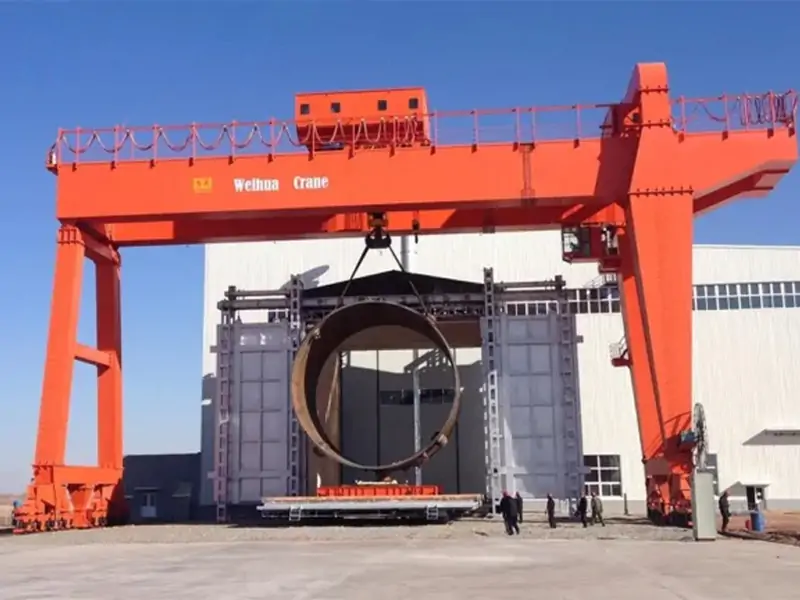
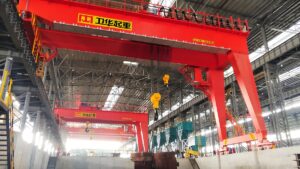
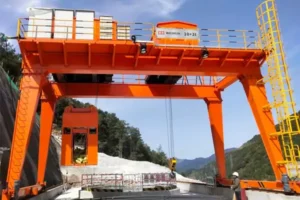
A double girder gantry crane follows the same basic working principle: the hoist lifts the load, the trolley moves it across the span, and the gantry travels along the rails. Two main girders provide a stronger support structure for heavy lifting equipment and larger crane spans.
- Two Main Girders: Support the trolley and lifting system across the crane span.
- Heavy-Duty Trolley: Runs between or above the main girders and carries the lifting equipment.
- Wire Rope Hoist: Uses a motor, gearbox, drum, wire rope, and hook to lift and lower heavy loads.
- Higher Load Capacity: The double-girder structure suits higher lifting capacities than many single-girder configurations.
- Larger Spans: The two-girder structure supports wider crane spans for larger working areas.
- Heavy-Duty Operation: Used for steel plants, machinery yards, shipyards, and other demanding material handling applications.
A double girder gantry crane uses two main girders to support a heavier trolley and lifting system, making it suitable for higher loads, larger spans, and heavy-duty applications.
Obtenez un devis personnalisé dès maintenantHow Does a Container Gantry Crane Work?
A container gantry crane uses a spreader to lock onto containers, while the hoist, trolley, and gantry travel mechanisms control lifting and positioning. The same three basic movements apply as with other gantry cranes, but the lifting system is configured for 20 ft, 40 ft, and 45 ft containers.
- Spreader Locks onto the Container: The spreader engages the container corner castings through automatic twist locks. Telescopic spreaders can handle different container lengths, including 20 ft, 40 ft, and 45 ft.
- Hoist Lifts the Container: The hoist raises the locked container from the truck, rail wagon, or ground. The lifting system controls vertical movement during loading, unloading, and stacking.
- Trolley Moves the Container: The trolley carries the spreader and container across the main girder, positioning the load over the target truck lane, rail track, or stacking row.
- Gantry Travel Positions the Crane: The gantry travel system moves the entire crane along the yard rails for RMG cranes. RTG cranes use rubber tires for yard movement.
- Spreader Releases the Container: The hoist lowers the container into the target position. After the container is seated, the twist locks release and the spreader returns for the next handling cycle.
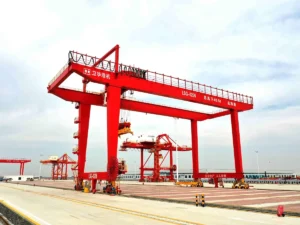
A container gantry crane combines spreader locking, hoisting, trolley travel, and gantry travel to move and stack 20 ft, 40 ft, and 45 ft containers in ports, rail yards, and container terminals.
Obtenez un devis personnalisé dès maintenant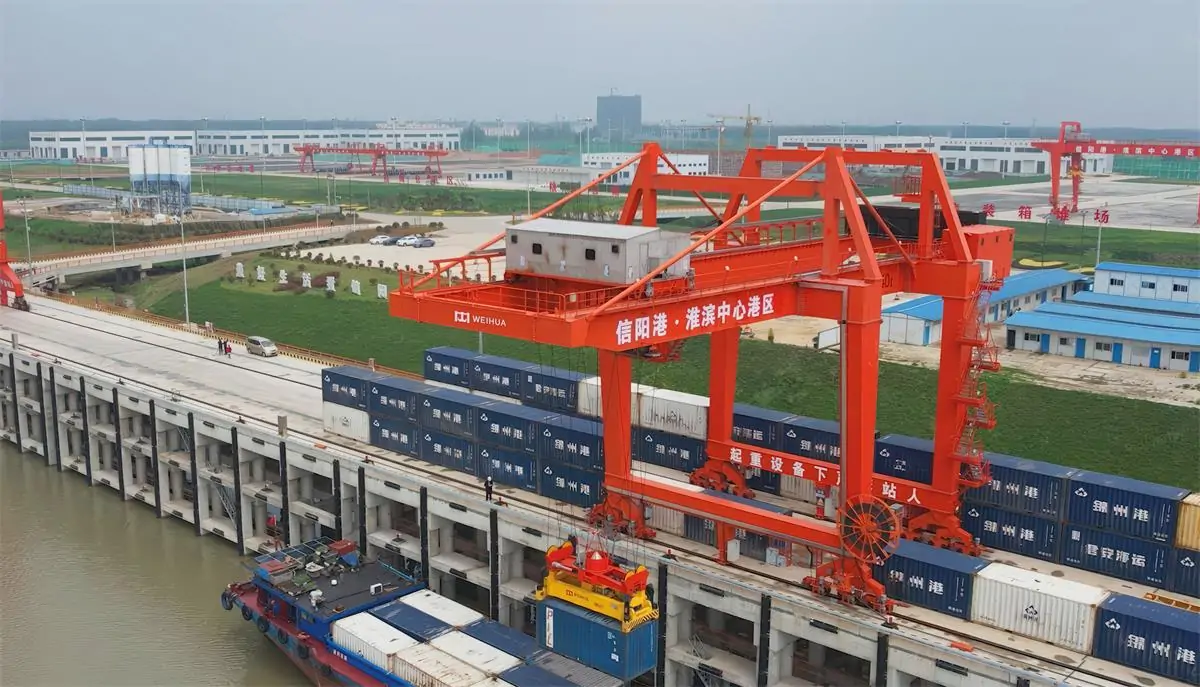
What Factors Affect How a Gantry Crane Works?
Gantry crane performance and configuration depend on the load, dimensions, duty cycle, operating speed, and working environment. These parameters guide the selection of the main structural and mechanical components.
1. Rated Load: Rated load affects the hoist, main girder, wheels, motors, and structural design. Higher loads require stronger lifting and supporting components.
2. Span: Span affects main girder design, trolley travel distance, and structural loading. Larger spans require appropriate girder dimensions and structural reinforcement.
3. Lifting Height: Lifting height affects hoist configuration, wire rope length, drum capacity, and reeving arrangement.
4. Duty Class: Duty class determines the required motor, brake, gearbox, and structural component ratings based on lifting frequency and operating cycles.
5. Travel Speed: Travel speed affects motor power, gearbox ratio, acceleration, deceleration, and braking requirements for trolley and gantry travel.
6. Working Environment: Outdoor yards, ports, steel mills, warehouses, and corrosive sites require different electrical, structural, protection, and material configurations.
The right gantry crane configuration is determined by load capacity, span, lifting height, duty class, travel speed, and site conditions.
Applications
Aciéries
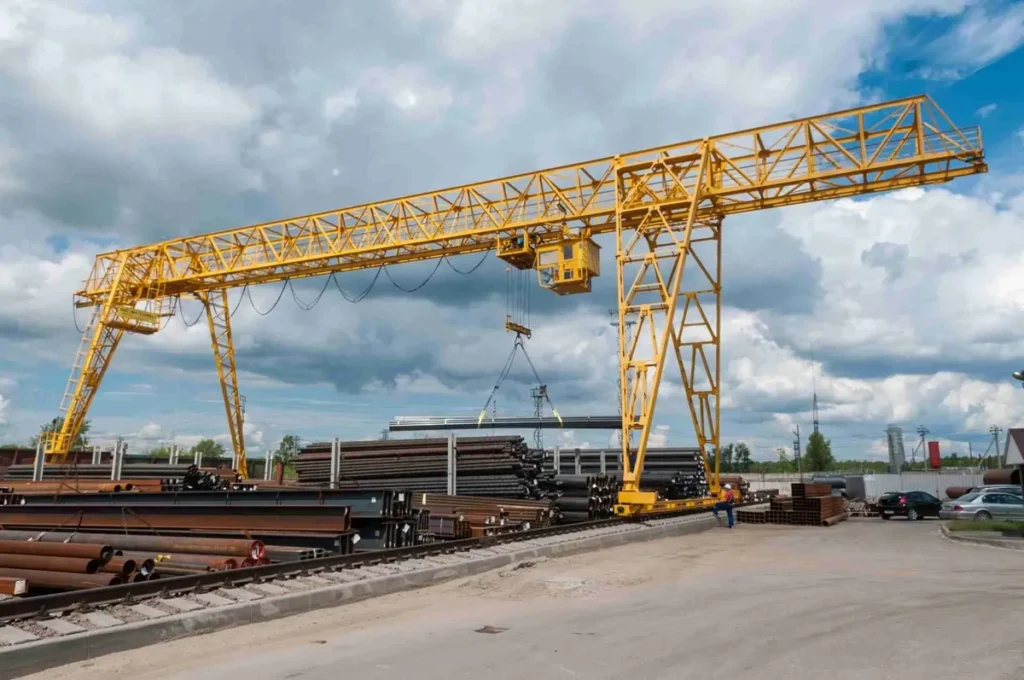
Heavy-duty gantry cranes lift and move steel coils, plates, billets, and other heavy steel products.
Ports
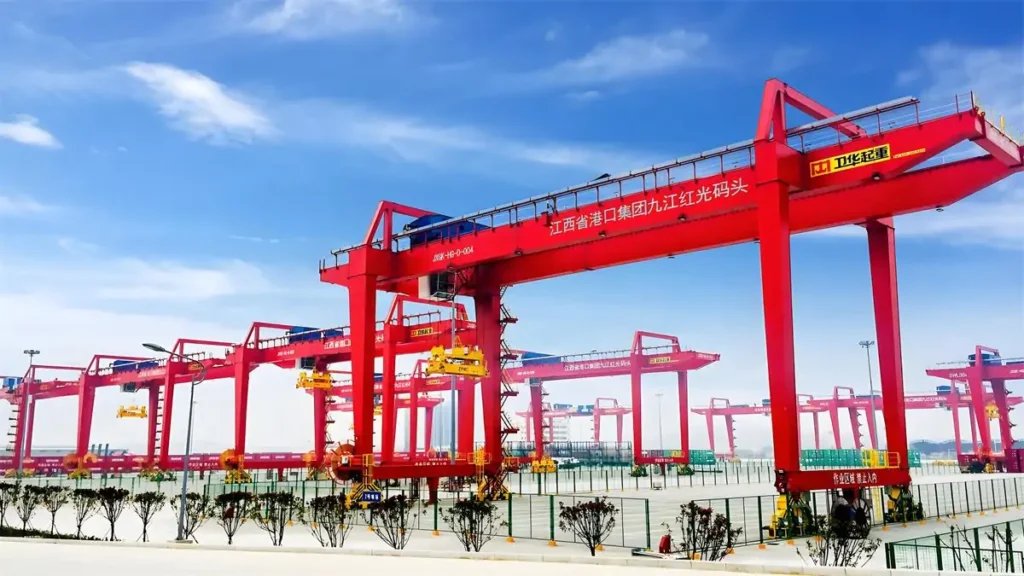
Container gantry cranes use spreaders to lift, transfer, and stack 20 ft, 40 ft, and 45 ft containers.
usines de fabrication
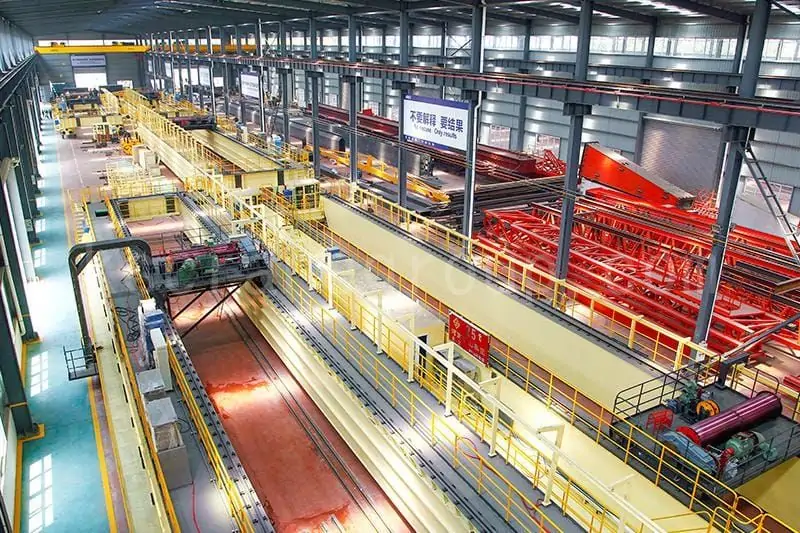
Gantry cranes handle machinery, steel structures, molds, and production components across manufacturing areas.
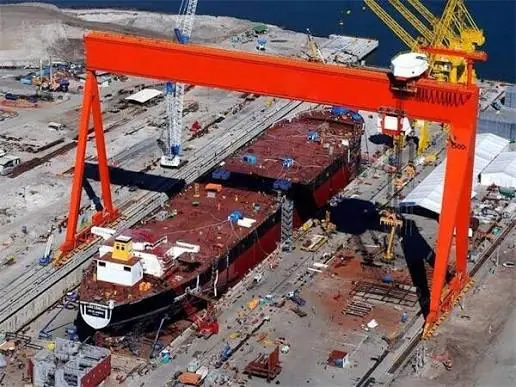
Chantiers navals
Large-span gantry cranes lift ship sections, hull blocks, engines, and other heavy assemblies.
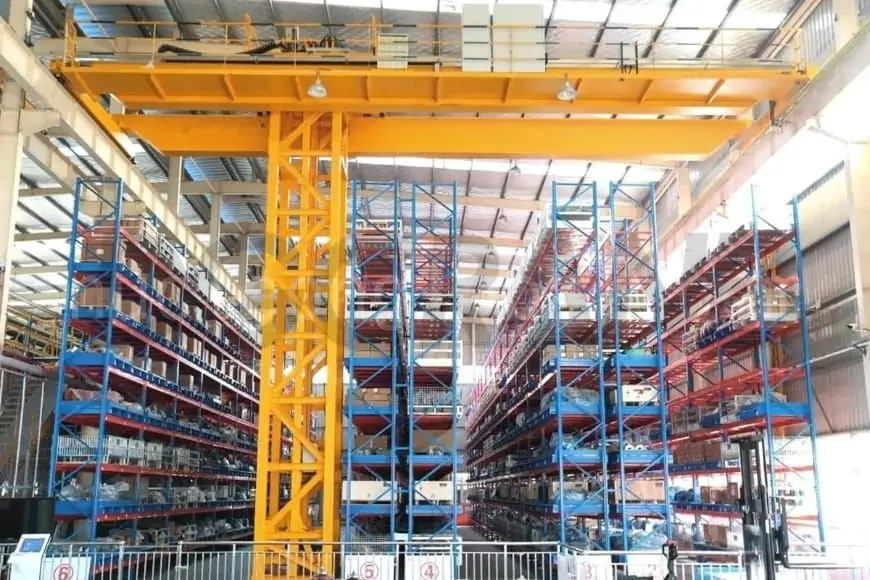
Entrepôts
Compact gantry cranes handle machinery, materials, and equipment installation within designated storage areas.
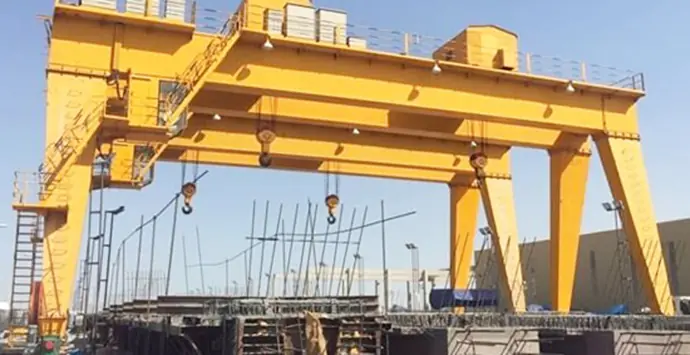
Chantiers de construction
Gantry cranes lift steel structures, precast components, machinery, and construction materials at large project sites.
What Is the Difference Between a Gantry Crane and an Overhead Crane?
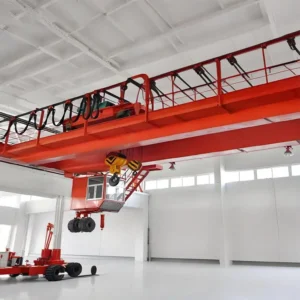
Gantry cranes et ponts roulants use similar lifting and trolley mechanisms, but their supporting structures and travel paths are different.
| Article | Portique | Pont roulant |
|---|---|---|
| Supporting Structure | Supported by legs and end trucks | Supported by building columns or runway structures |
| Chemin de voyage | Travels on ground-level rails or tires | Travels on elevated runway rails |
| Installation | Suitable for outdoor yards and open areas | Requires suitable building or supporting structures |
| Zone de travail | Covers open yards, storage areas, and large outdoor spaces | Works within a defined building or workshop area |
| Rail Arrangement | Ground rails or rubber tires | Elevated runway rails |
| Applications typiques | Ports, shipyards, steel mills, container yards | Factories, workshops, warehouses, production lines |
A gantry crane is supported by legs that run on ground rails, while an overhead crane runs on elevated runway rails supported by the building structure.
How to Operate a Gantry Crane Safely?
Safe gantry crane operation focuses on equipment checks, load control, correct lifting methods, and timely response to abnormal conditions.
- Check the Crane Before Operation: Inspect the hoist, wire rope, hook, brakes, wheels, controls, and safety devices.
- Confirm Load Weight and Lifting Points: Check the load weight, center of gravity, lifting points, hook position, and lifting attachments.
- Stay Within Rated Capacity: Keep the lifted load within the crane’s rated capacity and lifting equipment limits.
- Lift Vertically: Keep the hook directly above the load and avoid side pulling during lifting.
- Keep Personnel Away: Keep workers away from suspended loads and the crane travel path during operation.
- Watch for Abnormal Conditions: Stop and inspect the crane if abnormal noise, vibration, movement, or control response occurs.
- Stop When Safety Devices Fail: Stop operation if a brake, limit switch, overload limiter, emergency stop, or other critical component fails.
Conclusion
A gantry crane works through the coordinated operation of the hoist, trolley, gantry travel system, control system, and safety devices. The configuration of these systems determines how the crane lifts, positions, and moves loads.
WEIHUA designs and manufactures gantry cranes based on load capacity, span, lifting height, duty class, and working environment. Our engineering team handles structural design, lifting and travel systems, electrical controls, safety devices, and project-specific configurations, with experience in port, steel, manufacturing, shipyard, warehouse, and other heavy-duty applications. Contactez-nous to discuss your gantry crane requirements.

FAQ
How does a gantry crane work?
A gantry crane uses a hoist to lift and lower loads, a trolley to move the load across the span, and a travel system to move the crane along ground rails. Motors, gearboxes, brakes, controls, and safety devices coordinate these movements.
How does a gantry crane lift a load?
The hoist motor drives the gearbox and drum, which winds the wire rope around the drum to raise the hook and load. Releasing the wire rope lowers the load, while the brake holds it at the required height.
How does a gantry crane move?
A gantry crane moves through two travel systems. The trolley moves the hoist across the main girder, while travel motors drive the crane wheels along ground rails to move the entire crane.
How does a gantry crane trolley work?
The trolley carries the hoist and travels along the main girder. A travel motor and gearbox drive the trolley wheels, allowing the hook or lifting device to move horizontally across the crane span.
How does a gantry crane travel?
Travel motors transmit torque through gearboxes to the crane wheels. The wheels run along ground rails and move the entire gantry structure to different working positions.
What powers a gantry crane?
Most gantry cranes use electric motors for hoisting, trolley travel, and gantry travel. Power can come from cable reels, busbars, festoon systems, or other site-specific power supply systems.
How does a double girder gantry crane work?
A double girder gantry crane uses two main girders to support a heavy-duty trolley and lifting system. The hoist lifts the load, the trolley travels across the span, and the crane travels along ground rails.
How does a container gantry crane work?
A container gantry crane uses a spreader to lock onto containers, then lifts, transfers, and positions them through hoist, trolley, and gantry travel movements. Spreader configurations can handle 20 ft, 40 ft, and 45 ft containers.