



Table des matières
Introduction
A Vertical Shaft Gantry Crane is a specialized lifting system designed for vertical shaft construction, hydropower projects, underground caverns, pump-storage power stations, and navigation lock facilities. Unlike conventional gantry cranes used for horizontal material handling, a vertical shaft gantry crane is engineered to lift heavy loads through deep shafts with high positioning accuracy and enhanced safety requirements.
In large hydropower and underground infrastructure projects, shaft depths commonly range from 50 m to over 500 m, while individual lifting loads may exceed 100 tons.
This article explains how a Vertical Shaft Gantry Crane works, including its main operating stages, key mechanical systems, and the engineering challenges associated with deep-shaft lifting. It also compares shaft crane operations with conventional gantry crane applications to help you better understand the design requirements and performance advantages of this specialized lifting equipment.
Qu'est-ce qu'un portique à arbre vertical ?
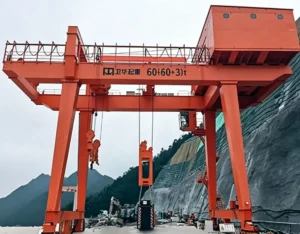
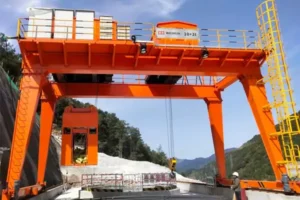
A vertical shaft gantry crane is a portal-type lifting system designed specifically for vertical shaft construction environments. It is used to handle material hoisting and muck removal in projects such as subway shafts, tunnel excavation, and underground engineering, where lifting operations must be carried out in deep and confined spaces. Compared with a standard gantry crane, it is structurally optimized for vertical lifting conditions, offering better stability, higher adaptability to narrow shaft openings, and improved performance in underground construction scenarios where conventional overhead or open-space cranes cannot operate effectively. For more information on the features of this equipment, see: Qu'est-ce qu'un portique à arbre vertical ?
Main Components of a Vertical Shaft Gantry Crane
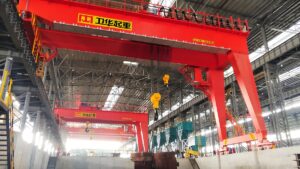
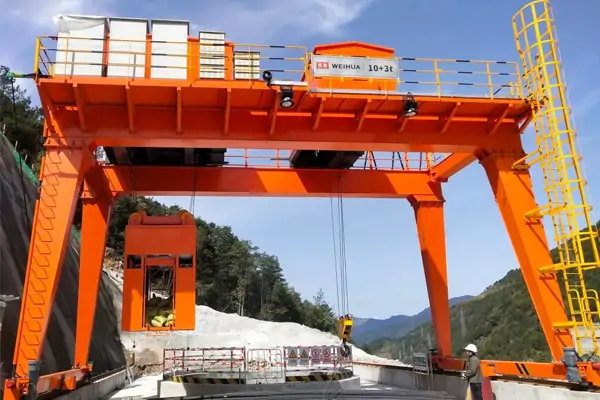
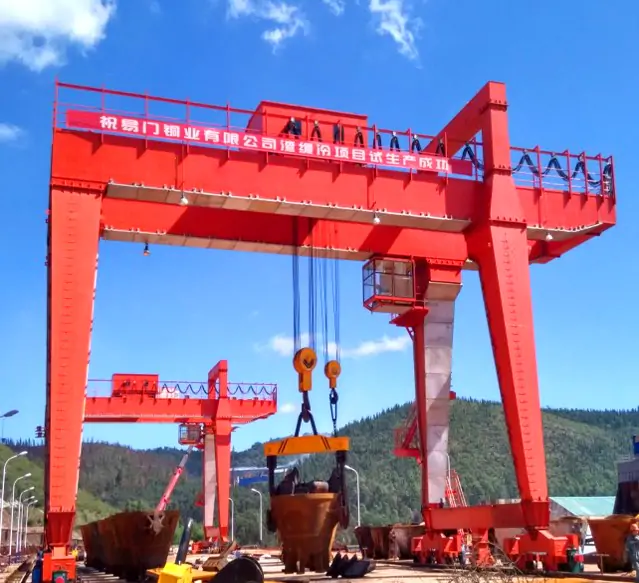
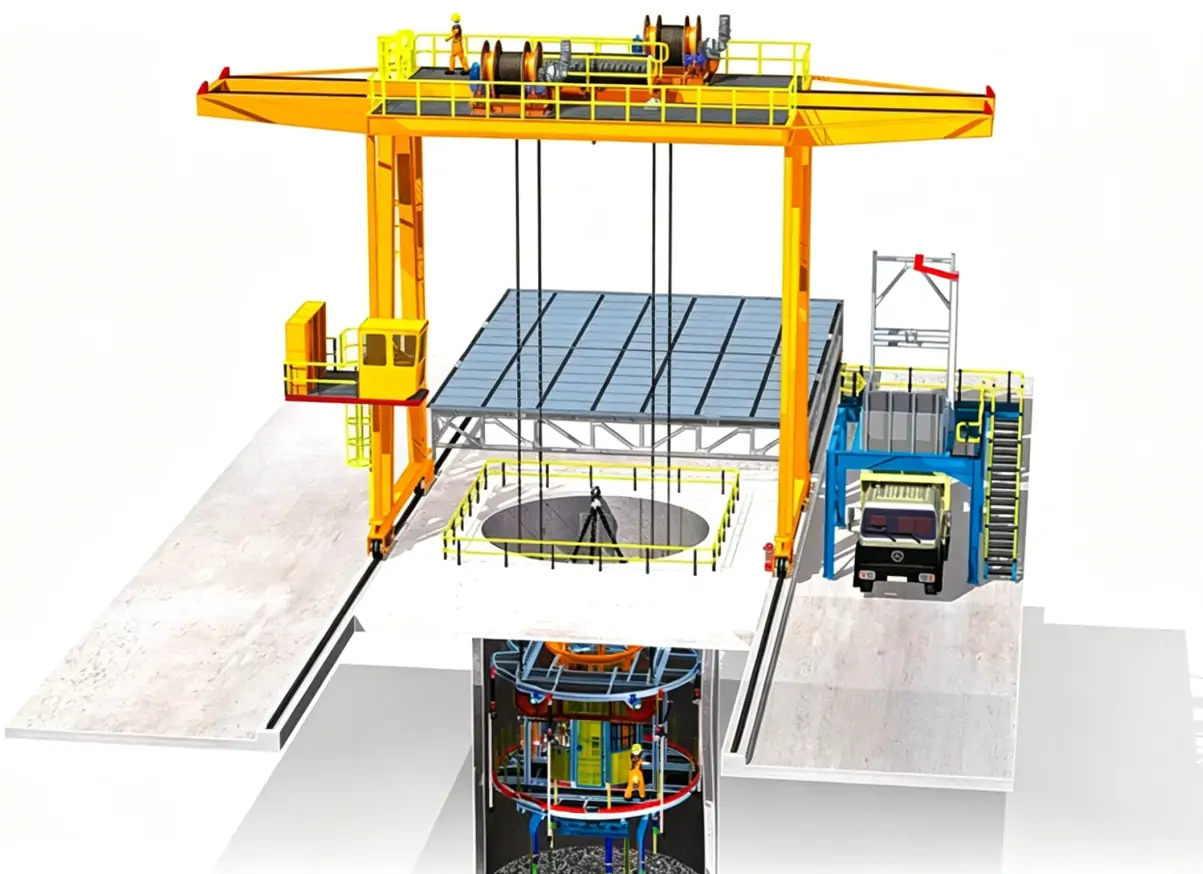
A Vertical Shaft Gantry Crane is primarily composed of a gantry structure, hoisting mechanism, trolley system, traveling mechanism, electrical control system, safety devices, and auxiliary maintenance platforms. These components work together to safely handle heavy equipment, materials, and personnel during shaft construction, mine development, and underground infrastructure projects.
1. Gantry Structure
The main load-bearing framework of the crane, typically consisting of main girders, support legs, and end beams. Designed to withstand heavy lifting loads, wind loads, and dynamic operating forces while maintaining structural stability.
2. Hoisting Mechanism
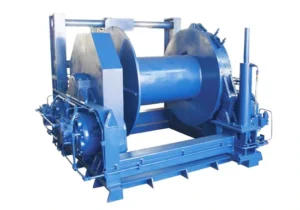
Includes hoist motors, reducers, drums, wire ropes, and hooks. Responsible for lifting and lowering loads with precise speed control and positioning accuracy. Single-hook, double-hook, or dual-hoist configurations are available according to project requirements.
3. Trolley System
Mounted on the main girder and driven by electric motors. Enables horizontal movement of the hoist across the crane span, allowing accurate load positioning above the shaft opening.
4. Crane Traveling Mechanism
Consists of drive motors, wheel assemblies, gearboxes, and rail-running devices. Allows the entire crane to travel along the runway for expanded operational coverage.
5. Wire Rope and Hook Assembly
The primary load-engaging component. High-strength wire ropes and heavy-duty forged hooks ensure safe handling of cages, skips, shaft lining segments, steel structures, and construction materials.
6. Electrical Control System
Integrates PLC control, variable frequency drives (VFD), control cabinets, sensors, and operator interfaces. Provides synchronized motion control, speed regulation, monitoring, and fault diagnosis.
7. Safety Protection System
Includes overload protection, limit switches, anti-collision devices, emergency stop functions, brake monitoring, rope protection devices, and wind resistance systems to ensure safe operation under demanding shaft conditions.
8. Operator Cabin or Remote Control System
Provides centralized crane operation and real-time monitoring. Depending on project requirements, the crane can be equipped with a cabin, wireless remote control, or automated control system.
9. Maintenance Platform and Access Facilities
Comprises walkways, handrails, ladders, and maintenance platforms. Facilitates routine inspection, servicing, and safe access to critical crane components.
10. Shaft-Specific Auxiliary Equipment
According to shaft construction requirements, the crane can be integrated with personnel cages, material skips, guide rope systems, shaft sinking equipment interfaces, and monitoring and communication systems. These auxiliary components support the safe transportation of personnel, equipment, and construction materials while improving lifting efficiency, operational coordination, and continuous shaft sinking productivity.
To learn more about the functions of safety devices, read the article: “Overhead Crane Safety Devices: Types, Functions, and Working Principles”
Comment fonctionne un portique à arbre vertical ?
A Vertical Shaft Gantry Crane is designed to lift and lower equipment, construction materials, and shaft components through deep vertical openings. The crane combines a gantry structure, trolley system, and hoisting mechanism to achieve safe, controlled, and accurate load handling in mining, hydropower, and underground construction projects. The lifting capacities range from 10–500 t, while hoisting depths commonly range from 50–500 m and can exceed 1,000 m in large mining shafts. The following describes its operating principle.
1. Crane Positioning
Before lifting begins, the crane travels along the runway rails until it reaches the designated shaft location. Position sensors, limit switches, and PLC control systems ensure accurate alignment between the hoisting mechanism and the shaft centerline. Modern cranes can typically achieve positioning accuracy of ±5–10 mm, reducing load deviation before hoisting starts.
2. Hook Alignment
The trolley moves along the main girder to position the hook directly above the lifting point. Accurate alignment minimizes side loading on the wire rope, reduces load swing, and improves lifting stability. In shafts deeper than 200 m, even a horizontal offset of a few centimeters can significantly increase rope deviation and affect placement accuracy.
3. Load Rigging
Once aligned, the load is secured using hooks, shackles, lifting beams, or custom lifting fixtures. Depending on the application, individual lifts may range from several tons to more than 100 t. Proper rigging ensures balanced load distribution, reduces structural stress, and improves lifting safety throughout the operation.
4. Vertical Hoisting
The hoisting motor drives the reducer and drum to wind or unwind the wire rope, converting motor torque into vertical lifting force. Through the pulley block system, heavy loads can be raised or lowered smoothly while maintaining controlled speed and stable operation. Typical hoisting speeds range from 0.5–10 m/min for precision installation and up to 20–40 m/min for material handling applications.
5. Load Placement
As the load approaches the target elevation, the control system automatically reduces hoisting speed for precise positioning. Encoder feedback, anti-sway functions, and variable frequency drives help place the load accurately at the required underground location. Modern systems can commonly achieve final positioning accuracy within ±10 mm.
Challenges in Deep Shaft Lifting
Rope Weight and Elongation
In deep-shaft applications, wire rope weight becomes a major design factor. For a shaft depth of 300 m, the wire rope itself can weigh several tons, depending on rope diameter and reeving configuration. This additional dead load affects hoisting capacity, drum sizing, and rope tension, requiring the system to compensate for changing operating conditions throughout the lifting cycle.
Load Swing Control
Long wire ropes increase pendulum effects and make load stabilization more difficult. Compared with conventional gantry cranes operating at lifting heights below 20 m, shaft cranes working at depths of 200–500 m face significantly greater swing control challenges. Advanced VFD drives and anti-sway systems are commonly used to improve positioning accuracy. (View our projects: Le portique de Weihua soutient l'achèvement de puits ultra-profonds de 637 m)
Safety Protection
Vertical shaft lifting involves heavy loads, confined spaces, and substantial lifting heights. Most projects require multiple safety redundancies, including overload protection, dual braking systems, travel limiters, anti-collision devices, wind monitoring systems, and emergency stop functions. For critical mining and hydropower projects, redundant braking systems are commonly designed to meet safety factors exceeding 125% of rated load capacity.
Applications
The vertical shaft gantry crane is widely used in underground and shaft construction projects for lifting materials, equipment, and excavation spoil. Its flexible configuration makes it suitable for a variety of working conditions.
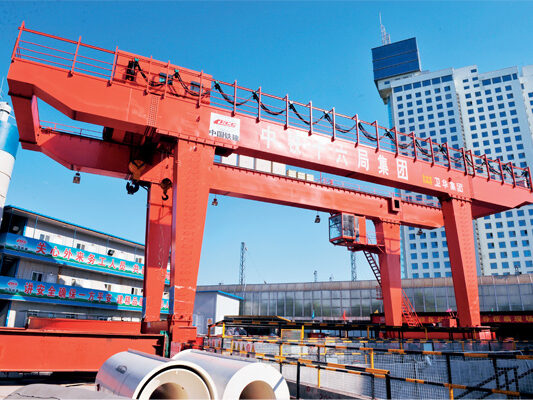
Metro Construction
Used for lifting muck buckets, steel reinforcement, concrete materials, and construction equipment during metro shaft excavation.
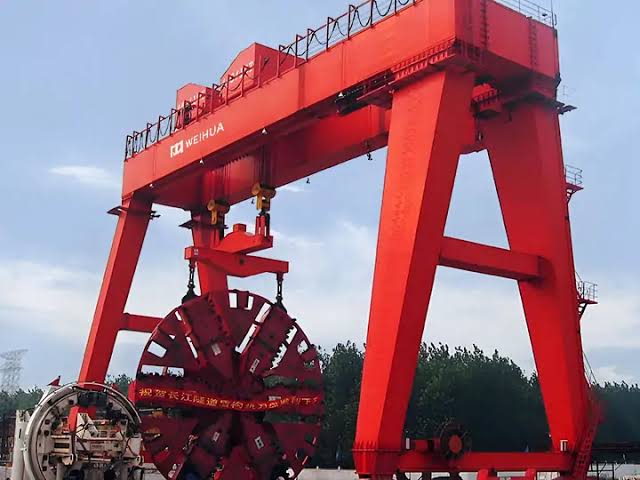
Tunnel Engineering
Used for transporting excavated material, lining components, pipes, and construction supplies in tunnel projects.
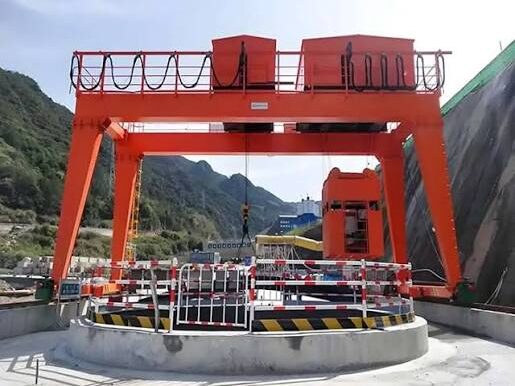
Mining Shaft Construction
Used for hoisting ore, rock spoil, tools, and equipment during shaft sinking and mine development.
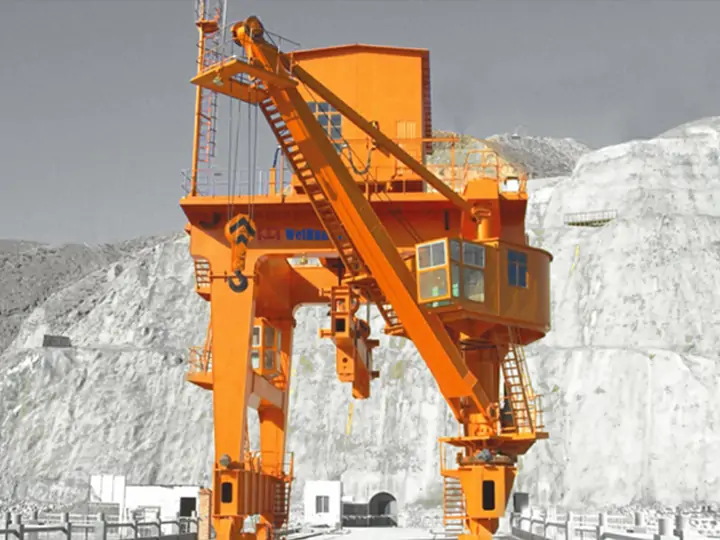
Hydropower Projects
Used for handling concrete materials, steel structures, pipelines, and mechanical equipment in underground hydropower works.
Vertical Shaft Gantry Crane vs Standard Gantry Crane
The primary difference between a Vertical Shaft Gantry Crane and a Standard Gantry Crane lies in their lifting application. A Vertical Shaft Gantry Crane is specifically designed for deep vertical lifting in mining shafts, hydropower projects, and underground construction, where lifting depths can reach several hundred meters. A Standard Gantry Crane is mainly used for horizontal material handling in factories, yards, ports, and construction sites, with relatively limited lifting heights.
Vertical Shaft Gantry Cranes require higher hoisting capacity, larger rope drums, advanced positioning systems, and enhanced safety protection to handle deep-shaft operations. Standard Gantry Cranes focus on general-purpose lifting efficiency and operational flexibility.
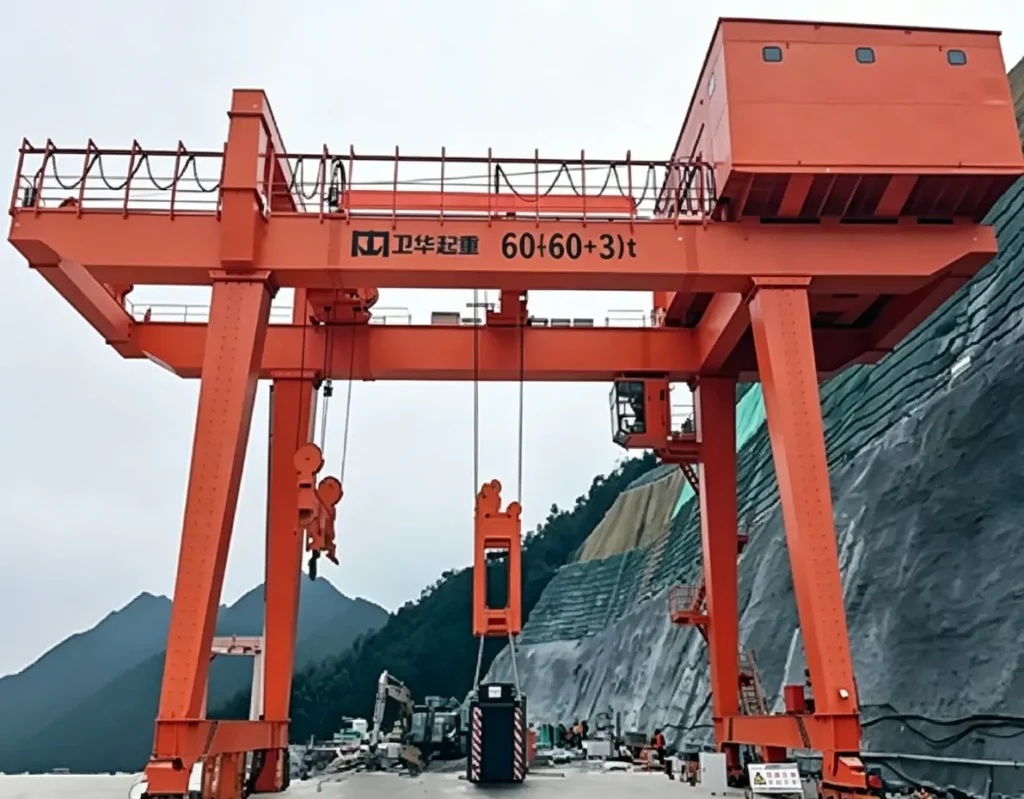
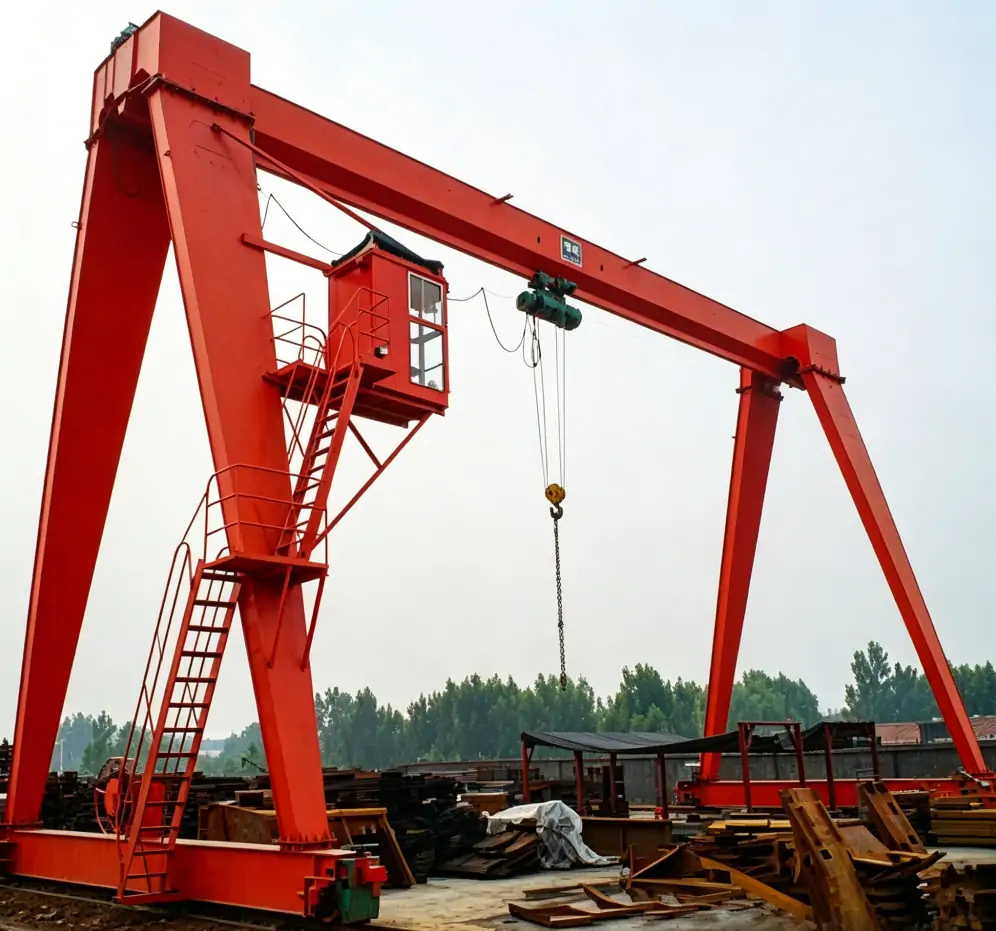
| Paramètre | Grue portique à arbre vertical | Standard Gantry Crane |
|---|---|---|
| Primary Application | Shaft sinking, mining, hydropower, underground construction | Manufacturing, warehouses, ports, precast yards, construction sites |
| Lifting Direction | Deep vertical lifting and lowering | Conventional vertical lifting |
| Typical Lifting Capacity | 10–500 t+ | 1–200 t |
| Typical Hoisting Depth/Height | 50–500 m, can exceed 1,000 m | 6–30 m |
| Plage d'étendue | 10–60 m | 5–50 m+ |
| Hoisting System | Heavy-duty deep-shaft hoist with large-capacity drum | Standard wire rope or chain hoist |
| Wire Rope Length | Hundreds of meters | Typically below 50 m |
| Rope Weight Consideration | Critical design factor | Minimal impact |
| Précision du positionnement | High precision, typically ±5–10 mm | Standard industrial accuracy |
| Load Swing Control | Advanced anti-sway systems required | Basic swing control |
| Safety Requirements | Dual brakes, overload protection, rope monitoring, emergency systems | Standard crane safety systems |
| Système de contrôle | PLC + VFD + encoder positioning | Conventional PLC or relay control |
| Operating Environment | Deep shafts, tunnels, hydropower stations, mines | Workshops, yards, terminals, fabrication plants |
| Structural Design | Reinforced for high rope loads and dynamic shaft lifting forces | Designed for general material handling |
| Customization Level | Highly customized for project conditions | Standardized configurations available |
| Investment Cost | Higher due to specialized design and safety systems | Lower for equivalent lifting capacity |
Which Crane Should You Choose?
Choose a Standard Gantry Crane for general lifting operations in factories, storage yards, precast plants, ports, and construction sites where lifting heights are relatively limited and deep-shaft handling is not required.
Choose a Grue portique à arbre vertical when your project involves deep-shaft excavation, mine development, hydropower construction, underground infrastructure, or heavy equipment installation at significant depths.
How to Choose the Right Vertical Shaft Gantry Crane
Selecting the right vertical shaft gantry crane helps improve lifting efficiency, operational safety, and overall project performance. Several key factors should be evaluated before making a decision.
Consider the Project Environment
Select a vertical shaft gantry crane based on shaft depth, site dimensions, and construction conditions. Tunnel and metro projects may require compact designs for confined spaces.
Define Key Working Parameters
Determine lifting capacity, span, lifting height, and operating speed according to actual load and site requirements. Leave an appropriate safety margin for long-term operation.
Choose the Right Structure
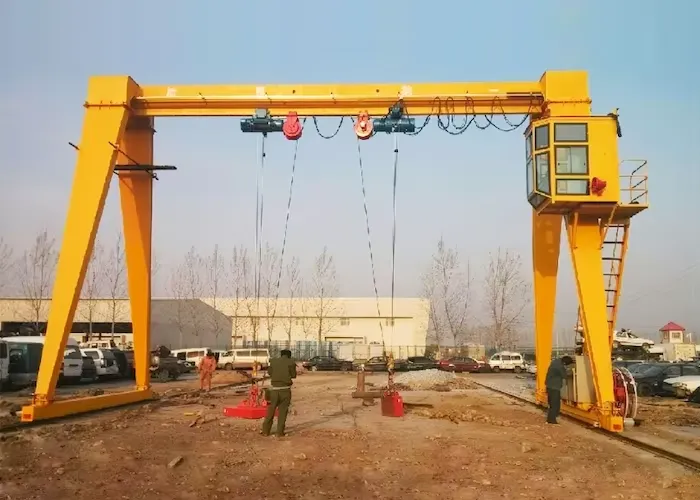
Single-girder cranes are suitable for lighter lifting tasks, while double-girder designs are preferred for heavier loads and higher-duty applications.
Evaluate Site Mobility Requirements
For projects involving frequent relocation, choose designs that allow easier movement between work areas and reduce downtime.
Check Manufacturer Support
Work with suppliers that offer proven manufacturing experience, technical support, and after-sales service.
Consider Total Ownership Cost
In addition to the purchase price, evaluate energy consumption, maintenance requirements, labor costs, and long-term operating expenses.
By matching the crane configuration to the project requirements, contractors can achieve more efficient material handling, reliable operation, and lower long-term operating costs. WEIHUA provides custom-made professional equipment for hydropower projects and the mining industry. Learn more about our equipment: Fabricant et fournisseur de portiques à puits vertical pour l'exploitation minière. Grue portique de puits hydroélectrique pour l'excavation de puits profonds
Conclusion
The vertical shaft gantry crane plays an important role in shaft excavation, tunnel construction, mining, and other underground projects. Its lifting capacity, site adaptability, and continuous operating performance make it a practical choice for material handling and muck removal in confined working environments.
WEIHUA manufactures vertical shaft gantry cranes with customized capacities, spans, lifting heights, and control systems to meet different project requirements. From equipment design and production to installation guidance and after-sales support, WEIHUA provides services throughout the project lifecycle. Contactez-nous today to discuss your application and receive a tailored solution and quotation.

FAQ
What is a vertical shaft gantry crane used for?
A vertical shaft gantry crane is used for lifting muck, construction materials, equipment, and tools in shaft excavation, tunnel construction, mining, and other underground engineering projects.
How does a vertical shaft gantry crane work?
The crane works through the coordination of vertical lifting, trolley travel, and crane movement. It lifts materials from the shaft, transfers them to the unloading area, and returns for the next lifting cycle.
What is the difference between a vertical shaft gantry crane and a standard gantry crane?
A vertical shaft gantry crane is designed for shaft and underground construction, with configurations suited to deep lifting operations and confined working spaces, while standard gantry cranes are generally used in open industrial areas.
What lifting capacity is available for a vertical shaft gantry crane?
Lifting capacity varies according to project requirements. The crane can be customized for different load capacities, lifting heights, spans, and operating conditions.
Can a vertical shaft gantry crane be customized?
Yes. Capacity, span, lifting height, rail length, control system, unloading method, and other specifications can be customized to suit different shaft and tunnel projects.
What industries use vertical shaft gantry cranes?
Common applications include metro construction, tunnel engineering, mining projects, hydropower construction, and utility tunnel development.
How often should a vertical shaft gantry crane be inspected?
Daily visual checks are recommended before operation, with periodic inspections of structural components, wire ropes, brakes, electrical systems, and safety devices based on operating conditions.
How do I choose the right vertical shaft gantry crane?
Key considerations include lifting capacity, shaft depth, span, lifting height, working environment, operating frequency, and project-specific requirements. A customized configuration is often recommended for underground construction projects.




 English
  Русский
  العربية
  Français
  Português
  Español