




What is the right crane for precast concrete plants? Usually two machines, not one: a double girder overhead crane over the casting and finishing bays, and a double girder or truss gantry crane over the storage yard. Lighter products can run on single girder designs, and yards that cannot lay rails may use rubber-tyred gantry (RTG) cranes.
The difficulty sits between those two answers. Element weight is only the starting point. Mould weight, lifting beams, shift length, yard ground, wind exposure and truck loading all change the specification, and a crane chosen on tonnage alone often ends up wrong in span, duty class or speed control.
This guide follows the order of a real selection. It sets the load, duty and layout data first, compares overhead, gantry, truss gantry and rubber-tyred cranes, covers the site conditions that cause trouble, lists the certificates and supplier checks worth requesting, and ends with the information a manufacturer needs to quote accurately.
Quick reference, using the ranges Weihua lists on its precast concrete cranes page:
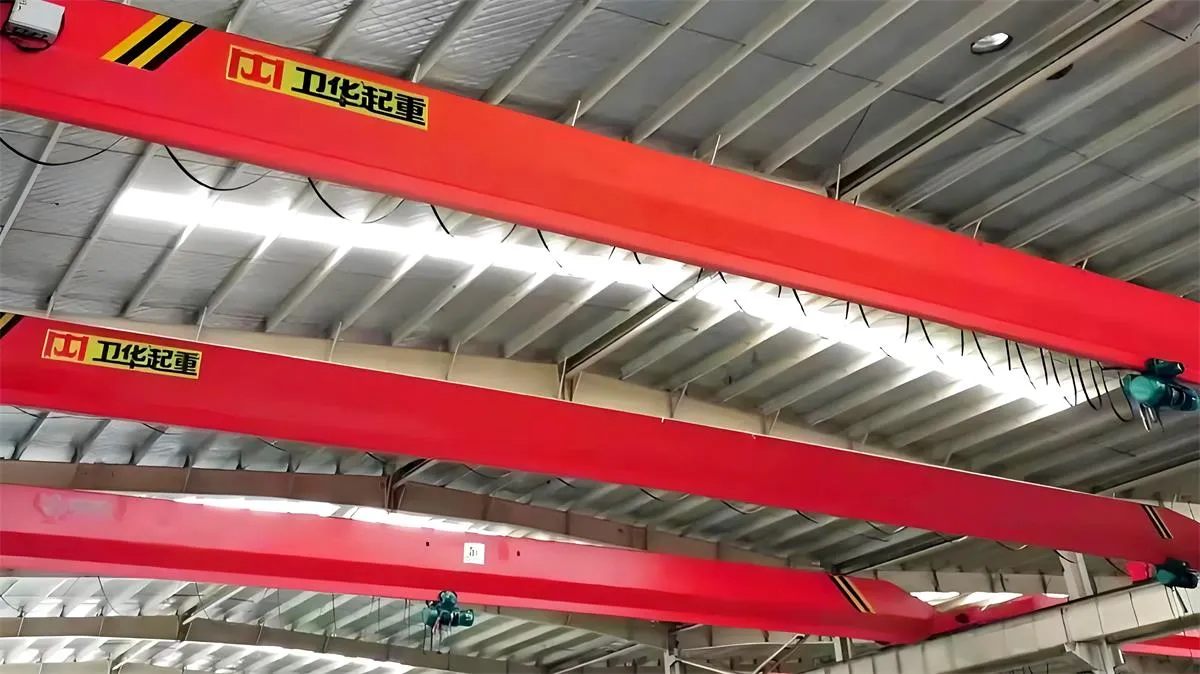
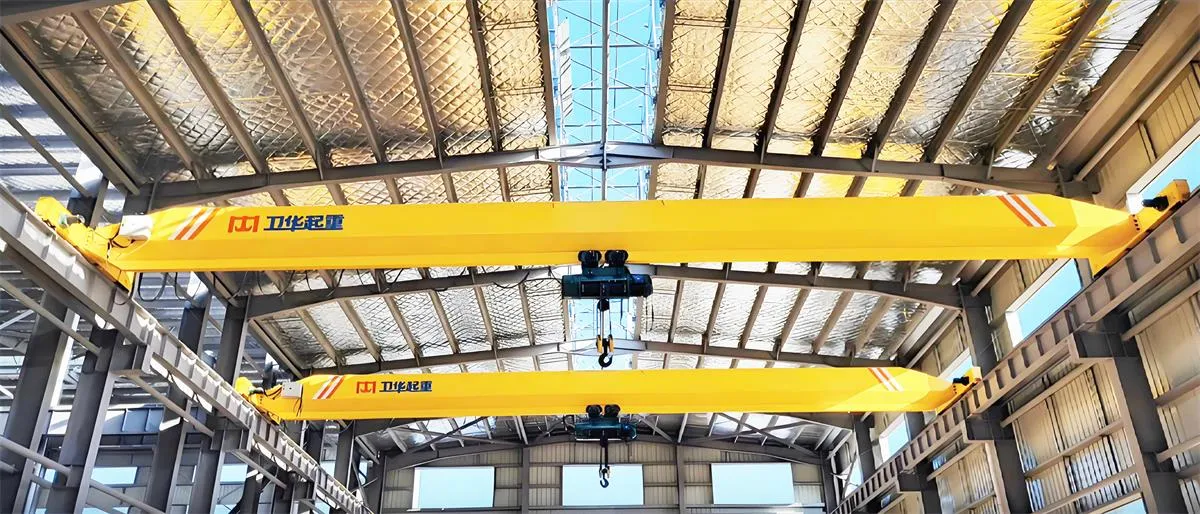
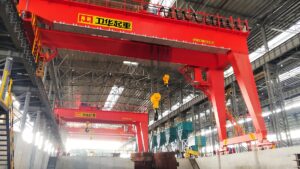
- Casting bays and mould shops: double girder overhead travelling crane, 1–150 t, custom span, duty class A5–A7.
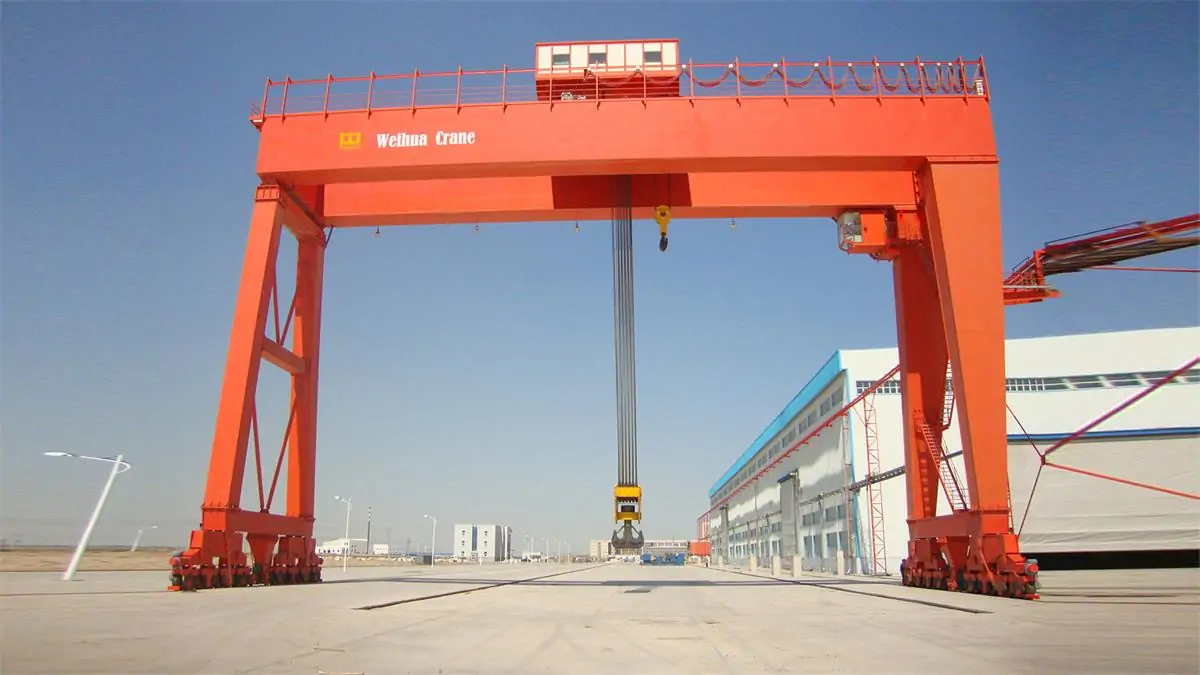
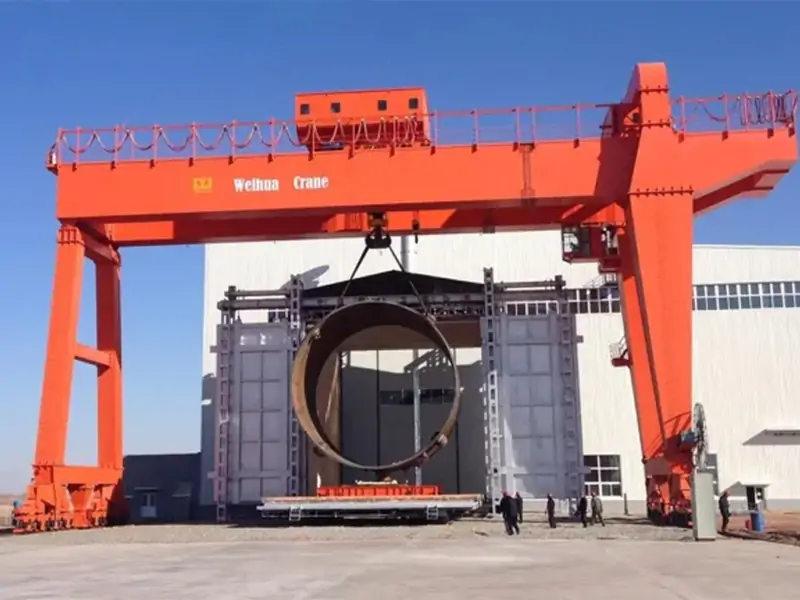
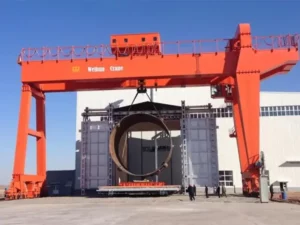
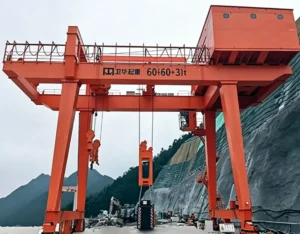
- Heavy elements in storage yards: double girder gantry crane, 10–300 t, span 12–60 m.
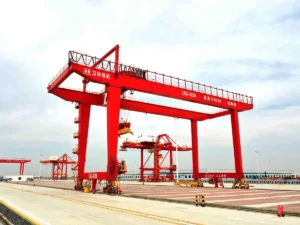
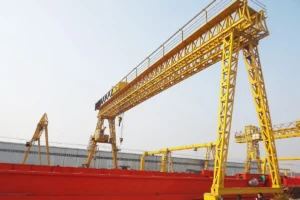
- Long spans and wind-exposed yards: truss gantry crane, 5–80 t, span 18–70 m.
- Yards without fixed rails: rubber-tyred gantry (RTG) crane, selected on ground bearing capacity and stacking height.
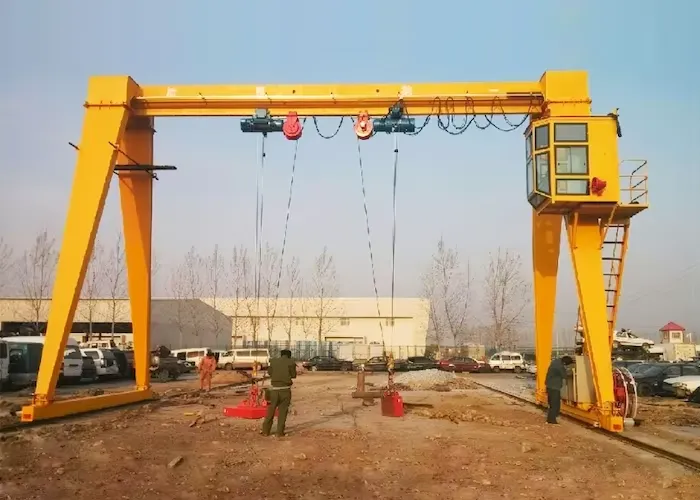
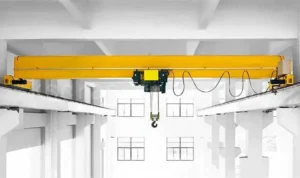
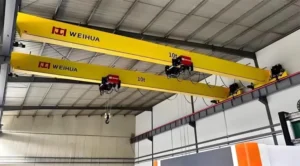
- Lighter elements in smaller plants: single girder overhead crane (1–32 t) or single girder gantry crane (1–20 t).
Tell us your heaviest element, span and lifting height and receive a configuration proposal
Obtenez un devis personnalisé dès maintenantDefine the Load, Duty Class and Layout Before Comparing Cranes
Hook load is element weight plus mould, lifting beam and breakaway force
Rated capacity should cover the heaviest lift as the hook actually sees it, not the element’s catalogue weight. The load includes the lifting beam, spreader or clamp below the hook, and when an element is stripped from its mould, adhesion can briefly add force above dead weight. Plants that lift mould and element together need the combined figure. Most buyers also keep a margin above the heaviest planned product, so a new product line does not force a crane replacement; the margin should be agreed with the structural engineer.
Lifting frequency, not only tonnage, decides the duty class
Duty class should follow how often the crane lifts, not only how heavy the elements are. Duty class is the A1–A8 rating in ISO 4301 that describes lifting frequency and load spectrum. A casting bay that cycles elements all shift generally needs a higher class than a storage yard that lifts a few times an hour, and Weihua lists A5–A7 for its precast overhead cranes. An underrated crane wears hoists, brakes and wheels early, which shows up as downtime.
The production flow sets span, runway length and lifting height
Span, runway length and lifting height should follow the path an element travels from casting to loading. Map the casting lines, curing area, finishing station, storage rows and truck lane before fixing any dimension. Span must cover every station the crane serves, and hook height must clear the tallest stacked element plus lifting gear. Leave runway length for planned expansion, because extending a runway is usually easier than replacing a crane that was specified too short.
Overhead Crane vs Gantry Crane for a Precast Concrete Plant
A double girder overhead crane is the standard choice inside casting bays
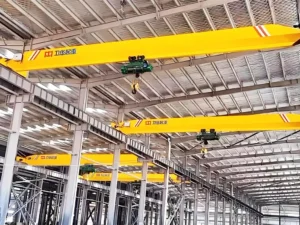
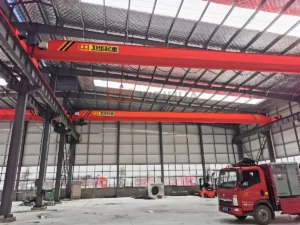
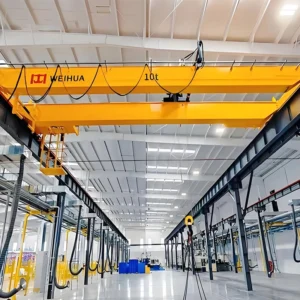
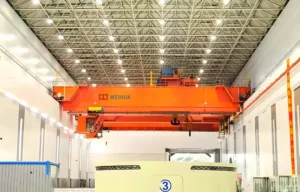
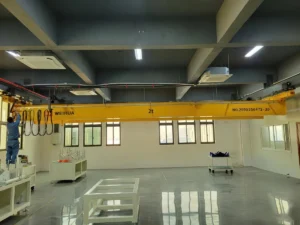
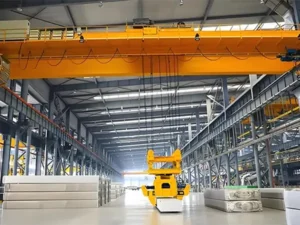
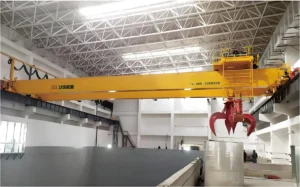
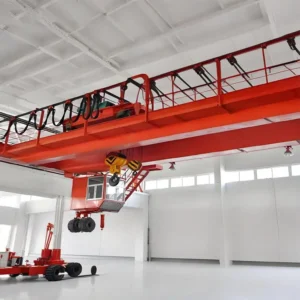
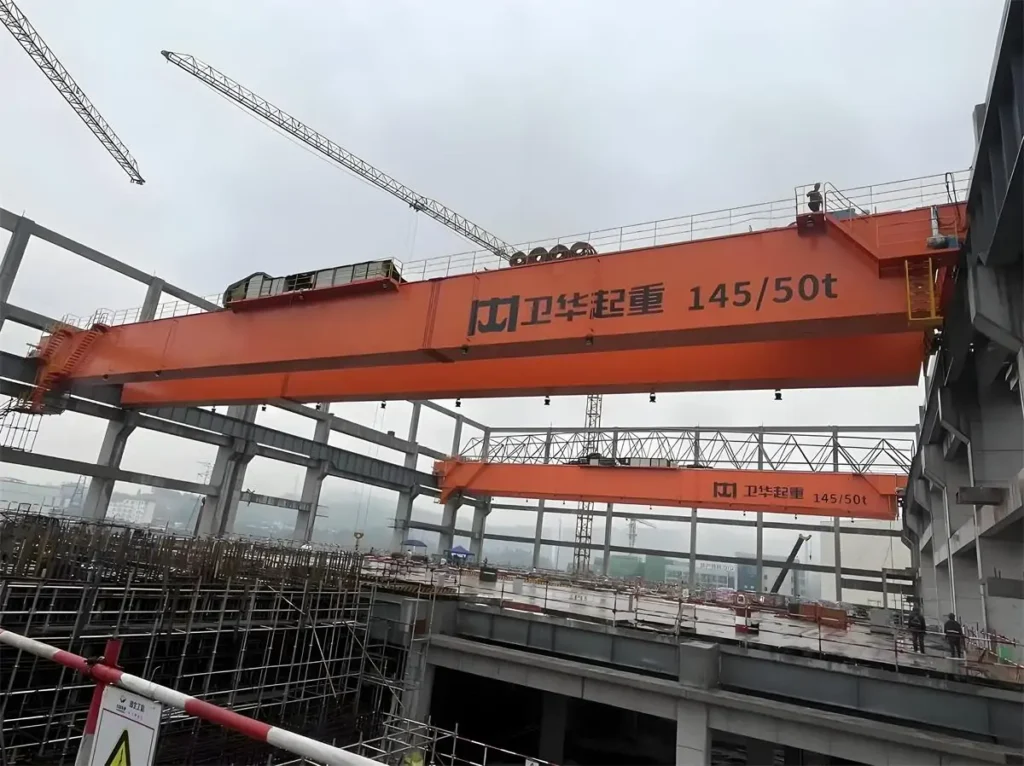
A double girder overhead crane is the standard choice inside casting bays and mould shops. It runs on rails fixed to the building structure, keeps the floor clear and leaves lifting protected from weather. Weihua’s precast page lists double girder overhead travelling cranes from 1 to 150 t with custom span, and a low-headroom design for tight workshops. Wall panels that are tilted or turned usually need a main hoist and an auxiliary hoist, so specify both early. In retrofits the limit is often the building: check that columns and runway beams can carry the crane’s wheel loads.
A double girder gantry crane is the usual precast yard crane for heavy elements
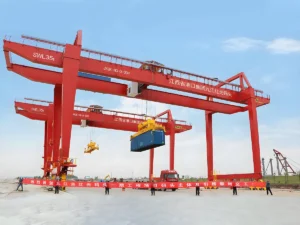
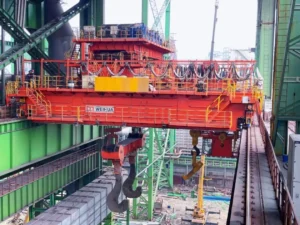
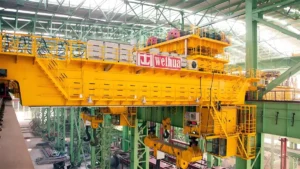
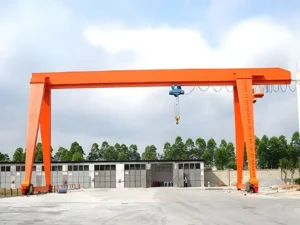
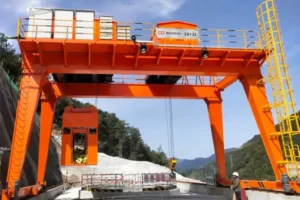
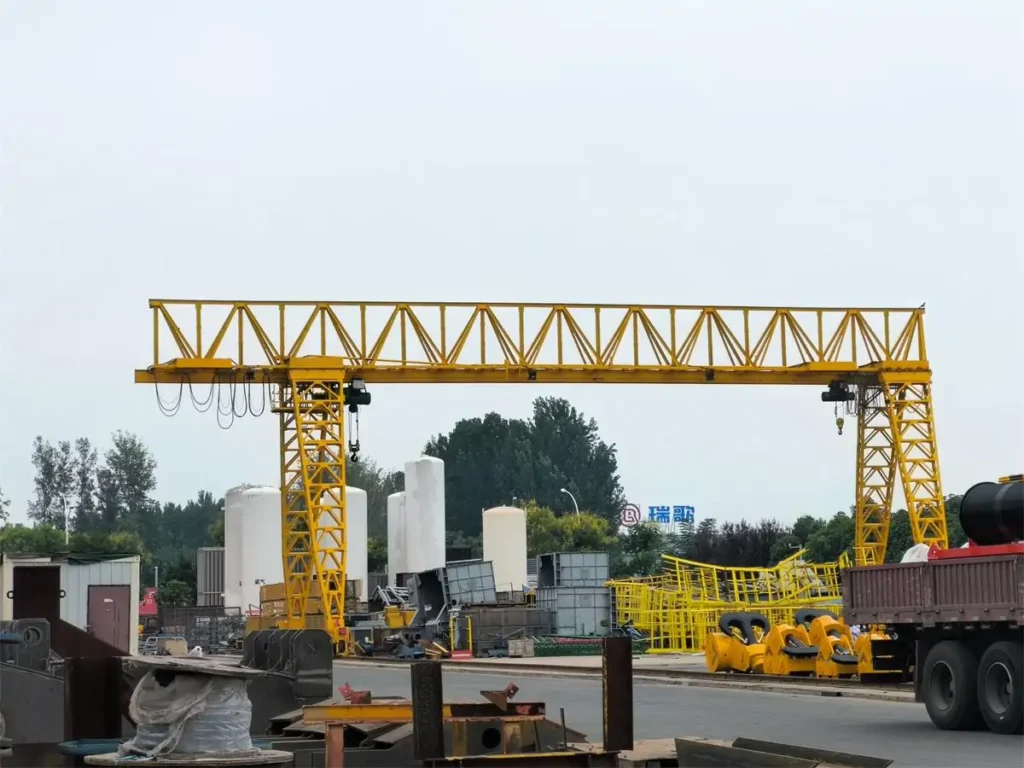
A double girder gantry crane is the usual precast yard crane for heavy beams, slabs and moulds. It travels on ground rails, spans the storage rows and the truck lane, and can carry cantilever ends to load vehicles outside the rails. Weihua lists double girder gantry cranes from 10 to 300 t with 12–60 m span. Plants lifting lighter products can look at a single girder gantry crane, which Weihua lists at 1–20 t and 8–30 m span, with a simpler structure but a lower ceiling on capacity and duty.
Truss gantry cranes suit long spans and wind-exposed open yards
Truss gantry cranes suit long spans and wind-exposed open yards. The open truss presents less wind area than a box girder of similar span, and the lighter structure generally puts lower loads on rails and ground. Weihua lists the truss gantry crane at 5–80 t with 18–70 m span for precast yards. Box girders generally stay stiffer under the heaviest loads, so the choice depends on which constraint governs: wind and ground, or stiffness and capacity.
RTG cranes fit yards that cannot lay rails or change layout often
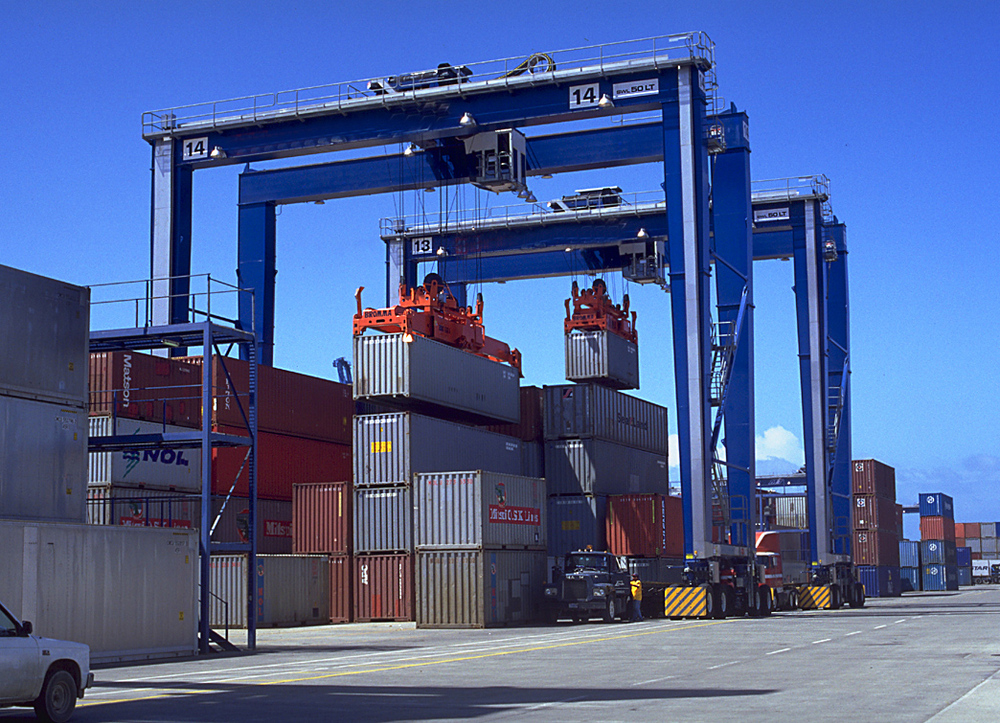
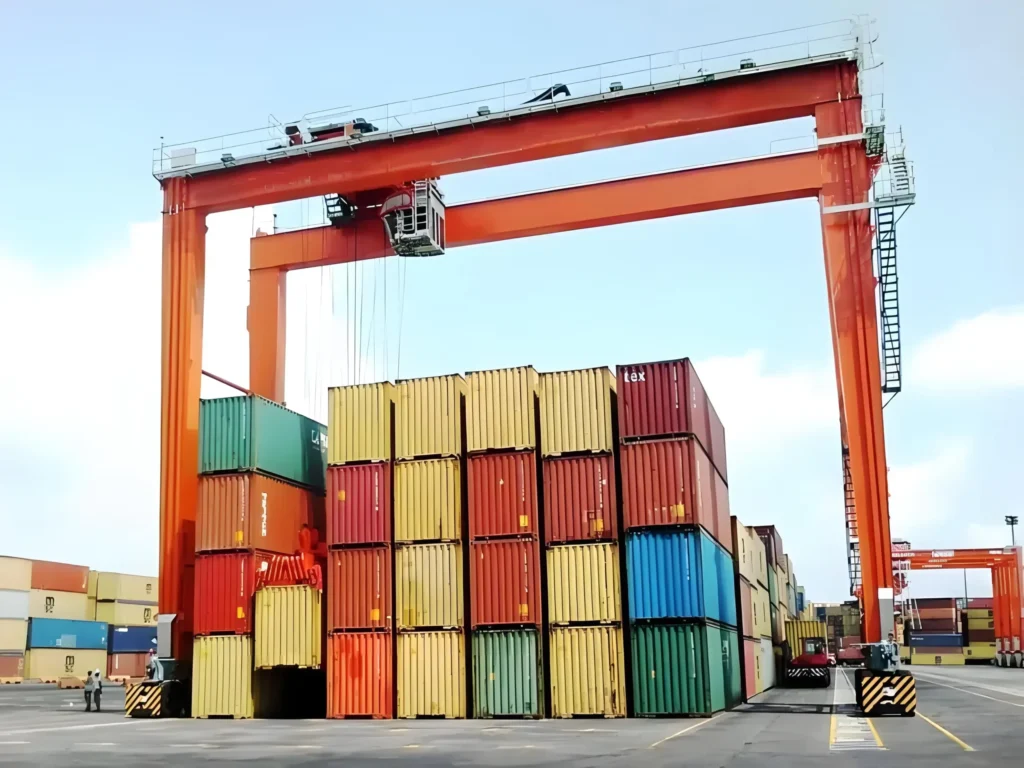
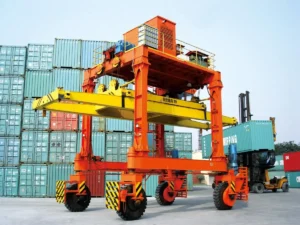
Rubber-tyred gantry (RTG) cranes fit precast yards where rails are impractical or the stacking layout changes often. An RTG crane travels on tyres between yard blocks, but it needs level paving with enough bearing capacity and positions less precisely than a rail-mounted design. Where the job is moving elements between stations rather than stacking them, a straddle carrier may serve better; the trade-offs are set out in straddle carrier vs gantry crane.
Not sure whether the plant needs one crane or two? Get a tailored quote from our engineers: send the heaviest element weight, bay and yard dimensions and required lifting height through Weihua’s contact page, and our sales engineers will recommend a configuration.

Site Conditions That Change the Crane Specification
Cement dust and moisture make enclosure protection part of the specification
Cement dust and moisture make enclosure protection and maintenance access part of the crane specification. Check the ingress protection (IP) rating of motors, brakes, limit switches and control panels, and ask how cables and conductor rails are sealed. Dust is abrasive, so wheels, rails and hoist drums wear faster than in a clean workshop. Maintenance access matters as much: platforms and inspection points that are hard to reach tend to be skipped, and skipped inspections are where brake and wire rope faults go unnoticed.
Rail foundations and ground bearing capacity need confirming before the crane type is fixed
Rail foundations and ground bearing capacity should be confirmed before the crane type is fixed. A gantry crane loads its rails through the wheels, so wheel load, the vertical force at each wheel, has to be checked against the slab or track beam. Uneven settlement under a rail misaligns the crane and wears wheels and flanges, while a rubber-tyred crane needs level paving of adequate strength instead. Ask the supplier for wheel load data early, so the civil design and the crane design move together.
Wind, tandem lifts and truck loading shape the details of an outdoor yard crane
Wind, tandem lifts and truck loading shape the details of an outdoor yard crane. Outdoor cranes generally need rail clamps or anchoring, a wind-speed alarm and a storm parking procedure. Long beams are often lifted by two cranes, or one crane with two trolleys, which requires synchronised control and slow positioning speed. Where trucks are loaded outside the rails, specify cantilever ends and enough hook height to clear the vehicle with the element suspended.
Certificates and Supplier Checks for Precast Concrete Cranes
The target market decides which standards apply
The target market decides which standards apply, so confirm it before comparing suppliers. CE marking under Machinery Directive 2006/42/EC is the usual reference for Europe and many importing markets. ISO 4301 and FEM classify cranes by duty, ISO 9001 covers the manufacturer’s quality system, and OSHA rules apply to cranes used in the United States. Local inspection regimes may add requirements, so check with the project consultant or authority before ordering.
Certification affects customs, insurance and plant approval as much as safety
Certification affects customs clearance, insurance and plant approval as much as safety. Missing documents can hold up import clearance, complicate an insurance claim after an incident and delay inspection before commissioning. For a precast plant with fixed delivery contracts, a crane that cannot be commissioned on time is a production problem, not only a paperwork one.
Buyers can verify claims with documents tied to the exact crane offered
Buyers can verify a supplier’s claims by asking for documents tied to the exact crane being offered. Request the EC declaration of conformity, the ISO 9001 certificate with its scope, the load test report procedure and the duty class calculation for the specific model. Weihua lists CE, ISO 9001 and ISO 14001 certificates on its About page; as with any manufacturer, match each certificate’s scope to the crane being bought. A factory visit or pre-shipment inspection by a third party adds a further check.
What Precast Concrete Crane Suppliers Need to Quote Accurately
A quotation depends on span, duty class, controls and site scope, not tonnage alone
A quotation depends on span, duty class, controls and site scope, not tonnage alone. Two cranes with the same rated capacity can differ widely in structure and price because of span, hook height, hoist count, drive type and controls such as radio remote, cabin operation or anti-sway. Runway steel, installation, commissioning and electrical supply may sit inside or outside a supplier’s scope, so compare scope lines before comparing totals. Weihua lists project planning, equipment selection, lifting tool customisation, layout optimisation, installation, commissioning and lifecycle maintenance among its precast services.
Eight data points are enough for an engineer to propose a first configuration
Eight data points are enough for an engineer to propose a first configuration. Buyers can send them to the manufacturer in one message:
- Weight and dimensions of the heaviest element, plus lifting gear and mould weight
- Required lifting height
- Bay or yard length and width, and the planned runway length
- Shifts per day and approximate lifts per hour
- Indoor or outdoor installation, wind exposure and ground conditions
- Power supply voltage and frequency
- Control preference: pendant, radio remote or cabin
- Target market and required standards
Weihua’s contact page asks for similar details: required capacity, lifting height, working environment, frequency of use and project duration.
FAQ
Q1:Is an overhead crane or a gantry crane better for a precast concrete plant?
Use an overhead crane inside the building and a gantry crane in the yard. Many plants need both. Overhead cranes serve casting bays from the building structure, while gantry cranes serve outdoor storage and truck loading on ground rails. The choice follows where the lifting happens, not which crane type is better in general.
Q2:What lifting capacity does a precast concrete plant crane need?
Capacity should cover the heaviest lift including mould, lifting beam and breakaway load, plus an agreed margin. Weigh the heaviest planned element, add the lifting gear and any mould lifted with it, then allow for future products. Confirm the figure with the structural engineer before sending it to suppliers.
Q3:What duty class does a precast plant crane need?
Production bays with continuous casting cycles generally need a higher duty class than storage yards. Weihua lists A5–A7 for its precast overhead cranes. The final choice should follow lifts per hour, load spectrum and shift pattern, using ISO 4301 or the buyer’s local classification.
Q4:What affects the price of a crane for a precast concrete plant?
Span, duty class, hoist and control configuration, and installation scope drive the price more than rated capacity alone. Hook height, power supply, runway steel and certification requirements also change the quote. For a project figure, send the element weights, span and lifting height to Weihua’s sales engineers through the contact page.
Q5:Which certificates should a precast concrete crane supplier provide?
Ask for the EC declaration of conformity, the ISO 9001 certificate and the load test report for the specific crane. Requirements vary by market, so confirm local rules for CE, ISO 4301 classification or OSHA compliance before ordering. Check that each document’s scope matches the model offered.
Last updated: 2 November 2026. This guide gives general selection guidance for precast concrete plants. Specifications, standards and site requirements vary by project and market; confirm final crane design, foundations and certification with the supplier and a qualified engineer.