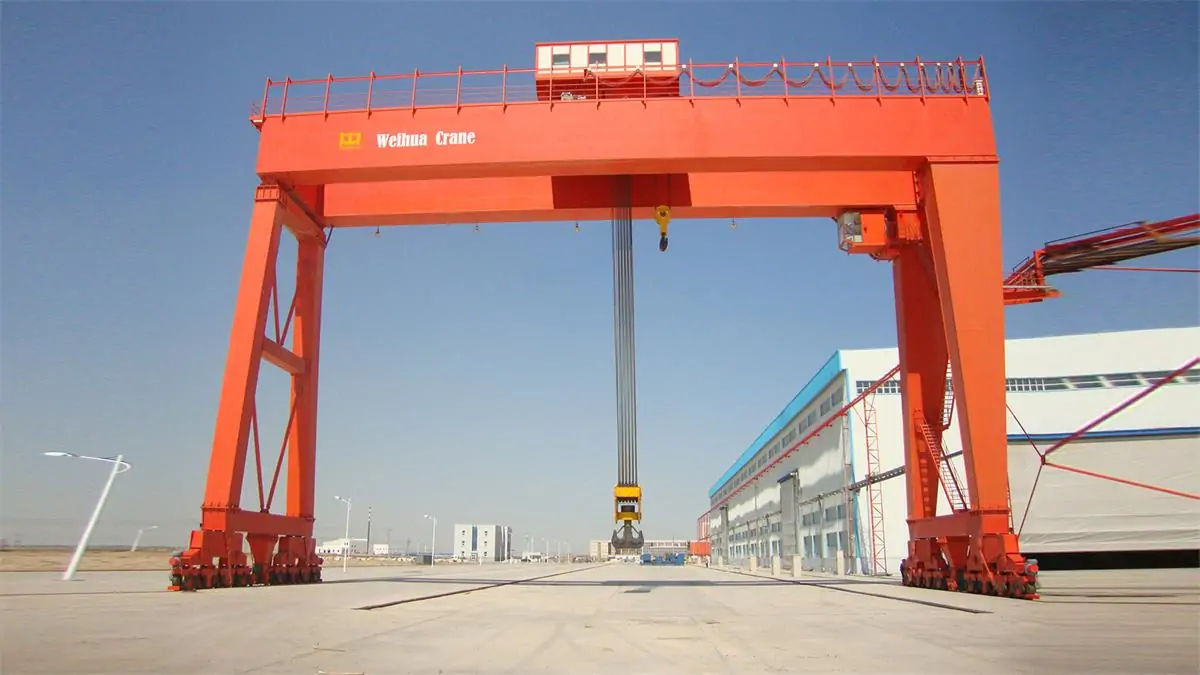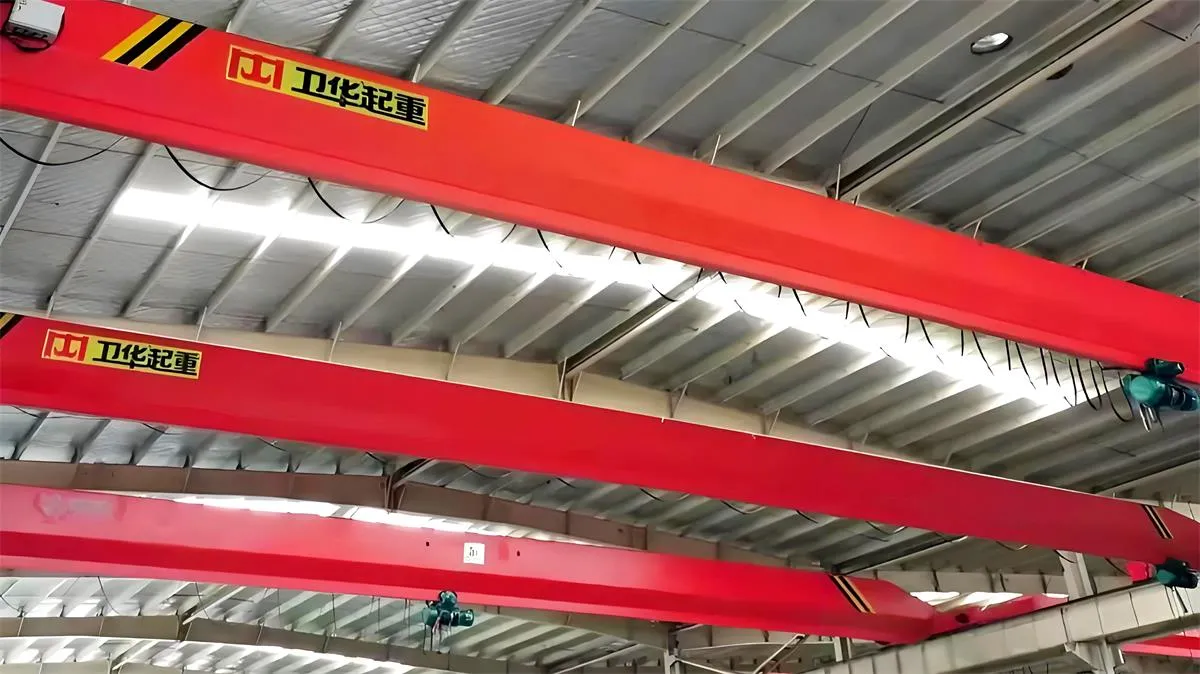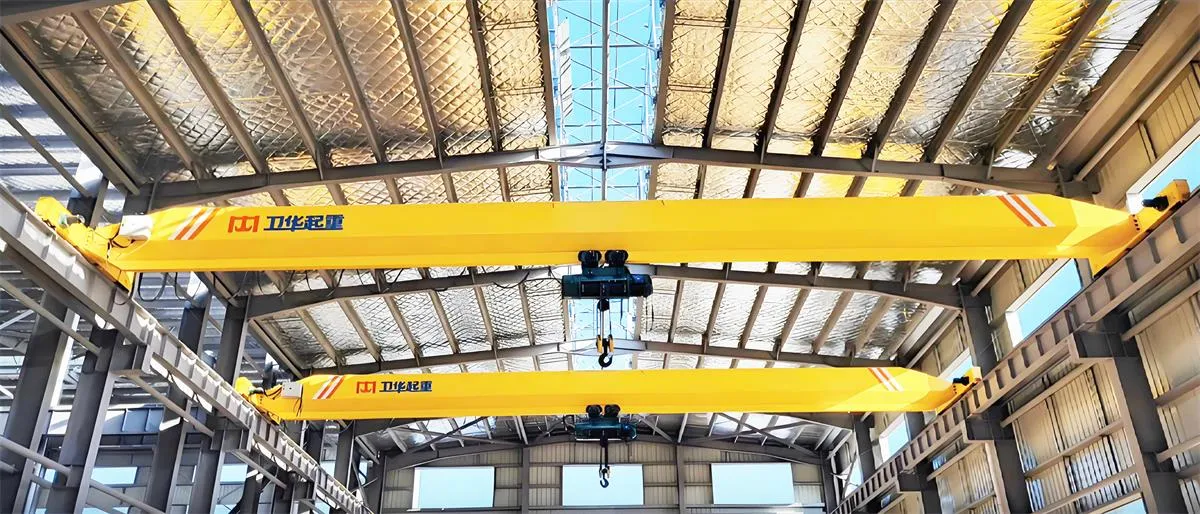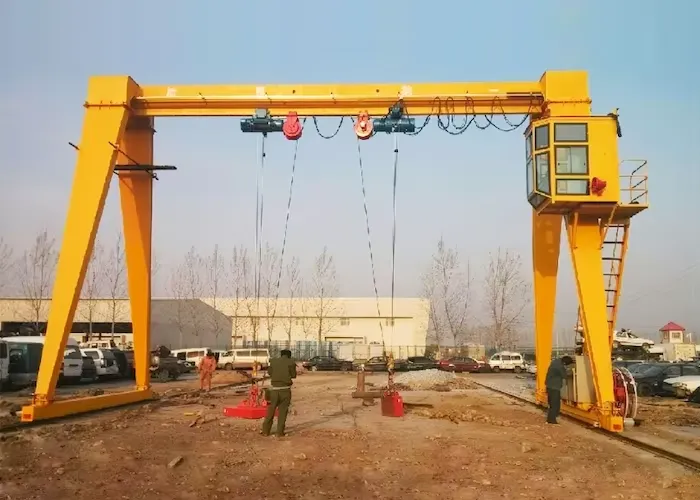

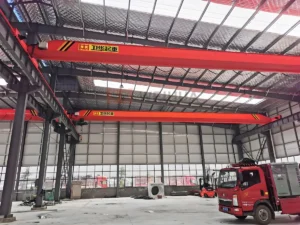
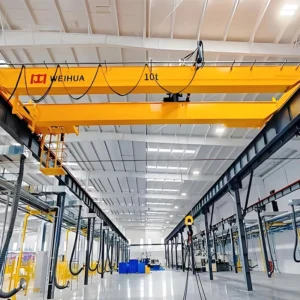
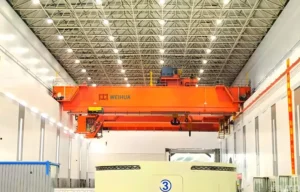
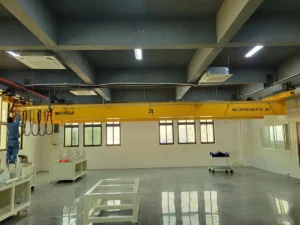
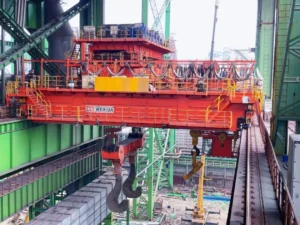
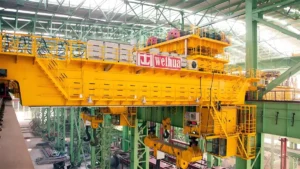
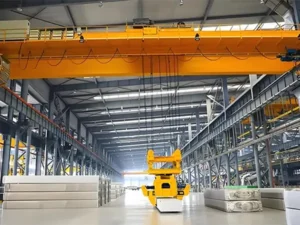
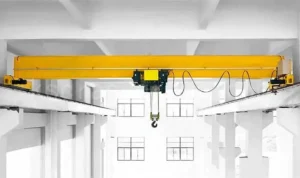








An overhead crane for sale from a Chinese manufacturer runs from $2,900 FOB for a 1-ton single girder workshop unit to $130,000+ FOB for a heavy-duty double girder system with an operator cabin. The majority of industrial buyers — steel fabricators, warehouses, machine shops — close orders in the $5,000–$45,000 FOB range. This guide gives you the price matrix by capacity, the type comparison framework, the duty class table, and a supplier checklist so you know exactly what to ask before you send the first RFQ.
Buying an overhead crane is not like ordering off a shelf. The final price depends on at least six interacting variables, and a 200mm error in measured span can trigger a complete structural re-design and delay shipment by 3–4 weeks. Most buyers waste time and lose price leverage because they approach suppliers with only a capacity number.
This guide covers: FOB price ranges by type and tonnage, single vs double girder selection logic, what CMAA Classes A through F actually mean for your budget, how to calculate total landed cost from China, and the four questions every buyer should put in writing before signing a purchase order.
TL;DR: Overhead Cranes
- • Pricing: Overhead cranes start at $2,900 FOB (1-ton single girder) and reach $130,000+ for heavy double girder units; most orders range between $5,000–$45,000.
- • Cost Drivers: Final pricing is primarily determined by girder configuration, CMAA/FEM duty class, و span — not capacity alone.
- • Critical Site Measurements: Confirm four values before contacting suppliers: rated capacity, span, ارتفاع المصعد, و headroom to avoid re-quotes.
جدول المحتويات
Quick Reference: Overhead Crane for Sale — China FOB Prices by Type & Capacity
| اكتب | سعة | النطاق المعتاد | FEM Class | China FOB Price (Indicative) |
|---|---|---|---|---|
| Single girder, top running | 1–2 ton | 7.5–16.5 m | M3–M4 | $2,900–$6,500 |
| Single girder, top running | 3–5 ton | 10.5–19.5 m | M3–M4 | $4,500–$10,000 |
| Single girder, top running | 10–20 ton | 13.5–28.5 m | M4–M5 | $5,000–$22,000 |
| Double girder, top running | 5–10 ton | 10.5–22.5 m | M4–M5 | $12,000–$28,000 |
| Double girder, top running | 20–50 ton | 13.5–31.5 m | M5–M6 | $28,000–$75,000 |
| Double girder, with cabin | 50–100 ton | 16.5–31.5 m | M6–M7 | $65,000–$130,000+ |
| Underhung / KBK system | 0.5–5 ton | 4–18 m | M3 | $3,500–$18,000 |
| Explosion-proof (ATEX/Ex) | 1–20 ton | 7.5–28.5 m | M3–M5 | $8,000–$28,000+ |
All prices are indicative FOB China (Henan/Shandong region). Span, lift height, duty class, and hoist brand affect the final price significantly. Ocean freight, import duties, runway, and installation are additional costs.
Note: The FOB prices above are for general reference only. To help you choose the most cost-effective capacity and avoid over-engineering, we recommend checking our featured configuration pages:
- 5 Ton EOT Crane for Sale: Review detailed dimensions and design options.
- 10 Ton EOT Crane Prices & Specs: Browse high-efficiency lifting configurations.
- QD Double Girder Hook Overhead Crane: General workshop lifting for machinery and steel structures.
- رافعة علوية كهرومغناطيسية لمراقبة الجودة: Steel plates, billets, coils, and scrap handling with an electromagnetic chuck.
- رافعة علوية من نوع QZ: Bulk material handling such as coal, ore, sand, and slag with a grab bucket.
- رافعة علوية مزدوجة الرفع: Two hoists for heavy or irregular load lifting.
1. Single Girder vs Double Girder: The Decision That Sets Your Budget
Single Girder Overhead Cranes: The Standard for 1–20 Ton Applications
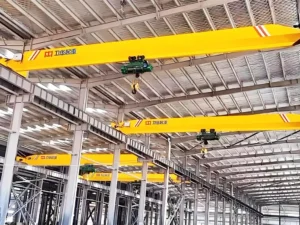
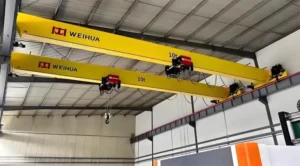
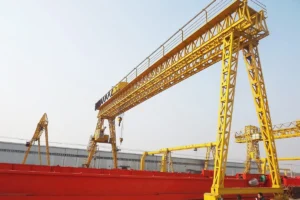
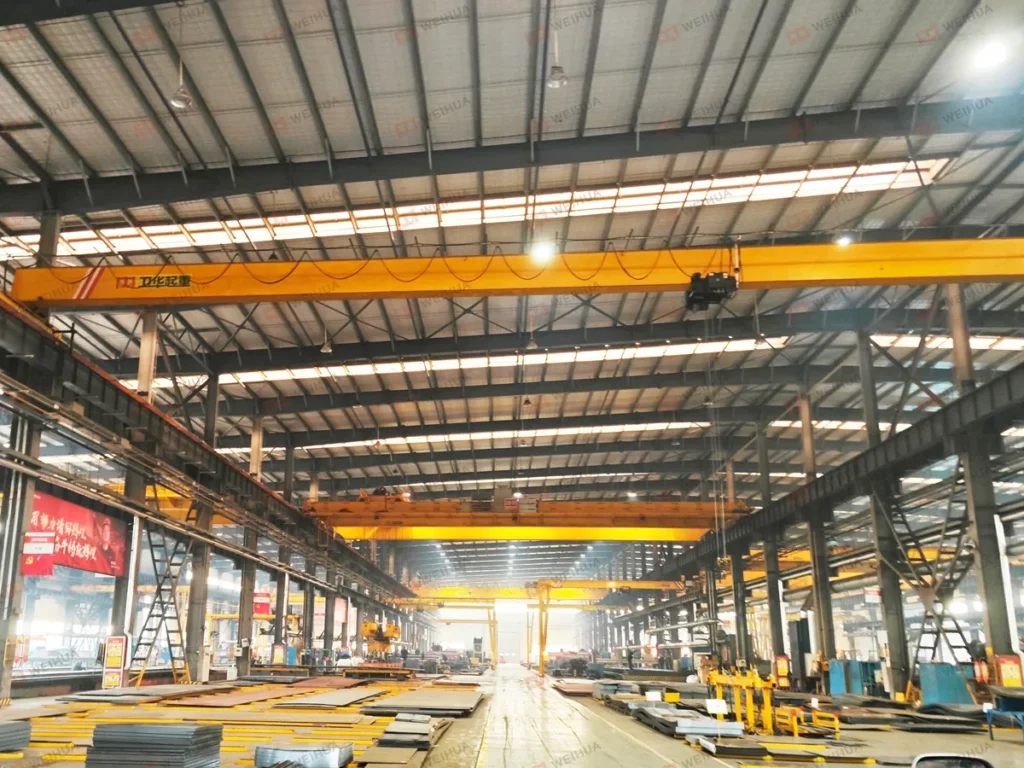
A single girder overhead crane uses one main bridge beam supported on end trucks that ride along the runway rails. The hoist — typically an electric chain hoist or underslung wire rope hoist — travels along the lower flange of the bridge beam. This configuration minimizes dead weight on the building structure, reduces overall height requirements, and keeps unit costs substantially lower than double girder designs.
Single girder cranes are the right specification for loads from 1 to 20 tons, standard spans up to 28 meters, and duty cycles up to FEM M4 / CMAA Class C. They dominate in light manufacturing, fabrication shops, auto repair facilities, and warehouse operations where the crane runs intermittently through the shift. Single girder cranes are the right specification for loads from 1 to 20 tons, standard spans up to 28 meters, and duty cycles up to FEM M4 / CMAA Class C. They dominate in light manufacturing, fabrication shops, auto repair facilities, and warehouse operations where the crane runs intermittently through the shift. In machining workshops, these cranes can also assist with lifting and positioning heavy workpieces, fixtures, and components around CNC machining centers. A 5-ton single girder unit with a 10.5-meter span and standard electric chain hoist typically leaves the Chinese factory at $5,500–$8,500 FOB; at 19.5-meter span, the same capacity runs $8,500–$14,000 FOB due to the larger structural steel requirement.
One structural constraint to understand: headroom. Single girder cranes with an underhung electric chain hoist can operate in facilities with as little as 3.5 meters of clear height. If your building has limited clearance, this configuration preserves usable lift height that a double girder system would consume.
Double Girder Overhead Cranes: Required for High Duty, Long Spans, and Heavy Loads
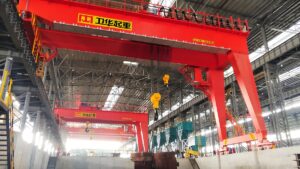
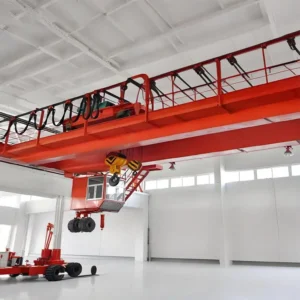
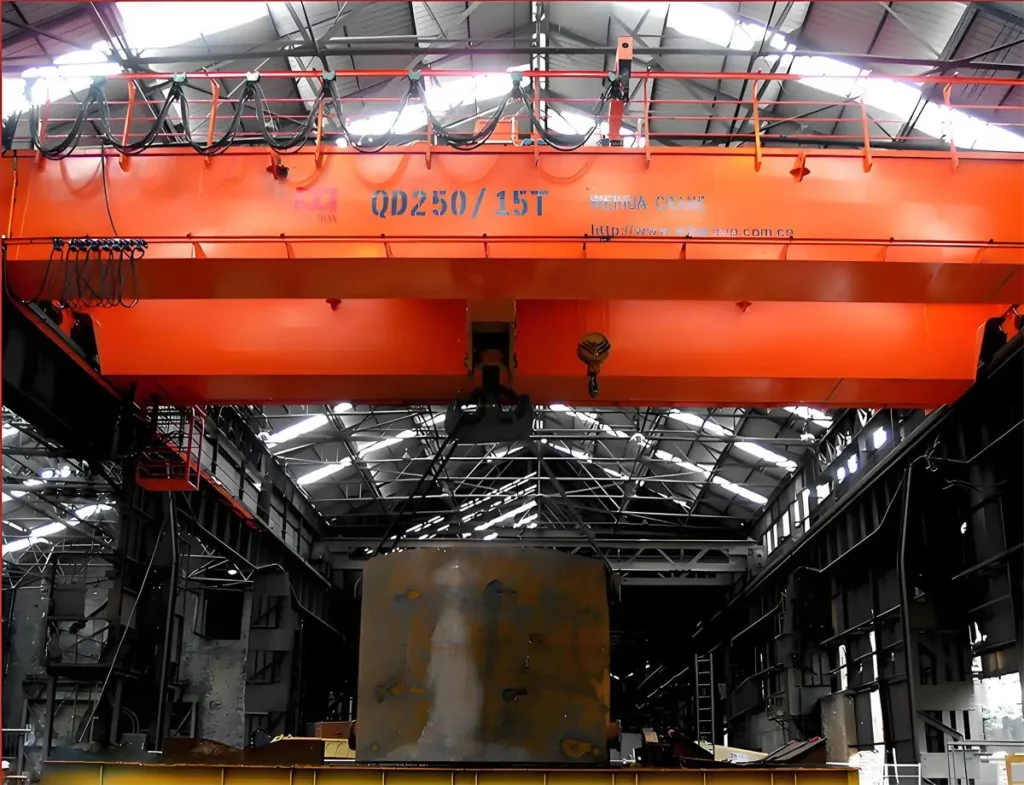
A double girder overhead crane uses two parallel bridge beams, with the hoist trolley running on top-mounted rails between the beams rather than hanging below. This raises hook height by 1.5–2.5 meters compared to a single girder equivalent and increases structural capacity for spans to 35+ meters and loads from 5 to 320 tons.
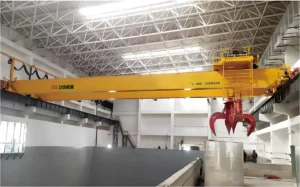
Double girder cranes are specified for heavy manufacturing, steel fabrication, casting plants, shipbuilding, and any application where the crane is a primary production tool rather than an occasional handling aid. They accommodate wire rope hoists with VFD speed control, magnet or grab attachments, and full cabin operation. A standard 10-ton QD-type double girder at 13.5–22.5-meter span ships at $12,000–$25,000 FOB from Henan-region factories; a 20-ton unit runs $22,000–$40,000 FOB; heavy 50-ton configurations with full cabin reach $65,000–$90,000 FOB before shipping.
Selection rule: Under 20 tons, moderate duty, less than 4 hours of lifting per shift — single girder. Above 20 tons, continuous production, or the crane is a bottleneck in your process — double girder, and size the FEM class accordingly.
| ميزة | عارضة مفردة | العارضة المزدوجة |
|---|---|---|
| نطاق السعة | 1–20 ton | 5–320 ton |
| Max typical span | 28 m | 35 m+ |
| متطلبات الارتفاع الرأسي | Low (from ~3.5 m clear) | Higher (typically 5.5 m+) |
| Hoist position | Underslung (below beam) | Top-mounted (between beams) |
| FEM duty class range | M3–M4 (CMAA A–C) | M4–M8 (CMAA C–F) |
| China FOB price range | $2,900–$22,000 | $12,000–$130,000+ |
| الأفضل لـ | Workshops, warehouses, fab shops | Heavy industry, process cranes |
For moderate duty cycles and loads under 20 tons, a single girder overhead crane for sale from a Chinese manufacturer delivers the strongest cost-to-performance ratio at $2,900–$22,000 FOB.
For a detailed comparison of single-girder and double-girder cranes, see: Single vs. Double Girder Crane: Differences, Advantages, and How to Choose
2. CMAA Duty Classes: The Specification Most Buyers Skip
Why Duty Class Determines More Than Capacity
Duty class — defined under CMAA Specification 70 and 74 in North America, and FEM 1.001 أو ISO 4301 internationally — describes how hard the crane works over its design life, not just what it can lift. Two cranes with identical 10-ton capacity and 16.5-meter span can differ by $15,000–$30,000 in FOB price purely because one is engineered for light intermittent use and the other for heavy continuous production. Every structural component changes: end trucks, hoist drum, gearbox, motor frame, and bearing specifications all step up as the duty class increases.
CMAA classifies overhead cranes in six grades:
| CMAA Class | FEM Equivalent | Lifts per Shift | التطبيق النموذجي | Price Premium vs Class B |
|---|---|---|---|---|
| Class A | M3 | < 5 | Powerhouses, maintenance bays | Baseline |
| Class B | M3–M4 | 5–10 | Light assembly, storage | +0% |
| Class C | M4 | 10–20 | Machine shops, warehouses | +10–15% |
| Class D | M5 | 20–40 | Heavy fabrication, steel service centers | +20–30% |
| Class E | M6–M7 | 40–80 | Foundries, paper mills | +35–50% |
| Class F | M8 | > 80 | Steel mills, blast furnace cranes | +60–100%+ |
Specifying Class C when your operation demands Class D means every structural component is underspecified for the actual load cycle. A Class C crane running Class D duty will require major overhaul within 2–3 years instead of the designed 8–12 years. Get the duty class correct at the RFQ stage — retrofitting components after delivery is expensive and in many cases structurally impossible without replacing the entire bridge.
To choose the right equipment among various overhead cranes for sale, you must first define your application environment. If your project involves indoor material handling, warehousing, or assembly lines, you can check our dedicated رافعة علوية للمصنع series to compare specific technical data and clearance dimensions.
How to Determine Your Duty Class Before Contacting a Supplier
Four data points determine your class: (1) average load as a percentage of rated capacity per lift, (2) number of lifts per hour, (3) total hours of crane operation per day, and (4) whether lifts are consistently near capacity or a mixed spectrum. Most Chinese manufacturers default to M4 / CMAA Class C for standard catalog orders unless otherwise specified in the purchase order. If your shift data suggests more than 20 lifts per hour or more than 4 hours of active hoisting per shift, state M5 / Class D explicitly in your RFQ — do not assume the supplier will uprate the specification.

3. Total Landed Cost: What the FOB Price Doesn’t Include
The FOB Price Is Roughly 50–65% of Your Total Project Cost
When evaluating an overhead crane for sale from a Chinese supplier, the FOB factory price covers the crane unit only — bridge structure, hoist, end trucks, electrical panel, and remote control. Buyers who budget only the FOB figure routinely face a 60–90% cost overrun by the time the crane is operational. The additional cost components are predictable and can be estimated before you issue a purchase order.
Ocean freight and import duties: A 5-ton single girder crane in a 20-foot container ships from Qingdao or Shanghai to a major port for approximately $1,800–$3,500 depending on destination and season. A 20-ton double girder crane requires flat-rack or open-top containers and ships at $4,000–$9,000 freight. Import duties vary by country — EU buyers face 2.7% import duty on steel crane structures; buyers in other markets should verify applicable HS code rates before finalizing their landed cost estimate.
Runway structure: Runway beams, columns, rail (ASCE or square bar), brackets, and anchor bolts. For a 10-ton crane with a 20-meter span and 30-meter runway, structural steel adds $8,000–$20,000 depending on local fabrication costs and whether the building structure requires reinforcement.
Electrical package: Collector bar or festoon cable system, main distribution panel, and connection to facility power supply. Electrical typically represents 15–25% of total system cost. VFD drives for hoist and bridge travel add $2,500–$8,000 per axis if not included in the base specification.
Installation and commissioning: Crane erection, runway alignment, load testing (110% SWL static + 100% SWL dynamic per ASME B30.2 or EN 15011), and operator training. Budget $4,000–$18,000 for installation depending on crane size and site conditions.
Total cost benchmark: A fully installed 10-ton double girder system — 20-meter span, 30-meter runway, standard electrical, installed in Southeast Asia or the Middle East — typically runs $45,000–$80,000 total, against a FOB crane price of $18,000–$28,000. Always request a line-item quote, not a total-only figure, when evaluating an overhead crane for sale.
4. Specifications to Confirm Before You Contact Any Supplier
The Four Measurements That Define Your Crane
Most overhead crane quotations require revisions because buyers provide estimated rather than measured site dimensions. The following four values must be confirmed on site before any Chinese supplier can produce an accurate FOB price:
السعة المقدرة Maximum load including below-the-hook attachments. Apply a 125% safety margin per ASME B30.2 — if your heaviest lift is 8 tons, specify a 10-ton crane. This margin accounts for dynamic load factors and prevents chronic operation at the structural limit.
يمتد Center-to-center distance between runway rails, measured horizontally on site. This is not building width or column spacing. A 200mm span error forces a full structural redesign of the bridge and end trucks. Measure directly from rail centerline to rail centerline.
Lift height: Vertical distance from finished floor to lowest hook position at maximum lift. This determines hoist drum size and rope/chain quantity. A 500mm error in lift height can trigger a complete hoist re-specification.
Headroom: Distance from the top of the runway rail to the lowest overhead obstruction. This value determines whether a single girder or double girder crane physically fits within the building envelope, and sets the minimum building clear height requirement.
Certifications to Require in Writing
For North American installations: CMAA Specification 70 (top-running cranes) or CMAA 74 (underhung cranes), ASME B30.2 compliance, and OSHA 1910.179 applicability for US workplaces. For European and international markets: علامة CE under Machinery Directive 2006/42/EC, structural design per EN 13001, and duty classification per FEM 1.001. Chinese manufacturers export under GB/T 14405-2011 as the domestic standard; for export units, require the CE Declaration of Conformity referencing your specific order unit, not a generic template.
Ask every supplier these four questions in writing before issuing a purchase order:
- What FEM duty group or CMAA class is this crane designed to — and can you provide the calculation basis?
- Will you include a General Arrangement drawing for client approval before fabrication begins?
- Will you provide a full load test report — 110% SWL static plus 100% SWL dynamic — issued for this specific unit before shipment?
- What hoist brand is fitted — your proprietary brand or a recognized third-party manufacturer?
خاتمة
Choosing the right overhead crane for sale from a Chinese supplier comes down to three decisions made in the correct sequence: girder configuration (single or double), FEM/CMAA duty class matched to your actual shift cycle, and four confirmed site dimensions before the first RFQ. Get these right and the price follows logically from the specification.
For most factory and warehouse applications, a single girder overhead crane for sale in the 5–10 ton range, rated FEM M4 / CMAA Class C, at $5,000–$14,000 FOB China, delivers the strongest value. For spans above 22 meters, loads above 20 tons, or continuous production environments, a double girder is the correct structural investment at $22,000–$75,000 FOB. In both cases, budget your total landed and installed cost at 1.6–2.0× the FOB crane price.
Contact our engineering team with your capacity, span, lift height, duty cycle estimate, and power supply — we’ll return a formal quotation with full line-item breakdown, GA drawing, and CE documentation package.
أسئلة شائعة
Q1: How much does an overhead crane for sale from China cost?
Chinese factory FOB prices start at approximately $2,900 for a 1-ton single girder unit and reach $130,000+ for a 50–100 ton double girder crane with operator cabin. The most common mid-range orders close at: 5-ton single girder at 10.5m span — $5,500–$9,000 FOB; 10-ton single girder at 16.5m span — $7,000–$12,000 FOB; 10-ton double girder at 16.5m span — $14,000–$22,000 FOB. Add 60–90% above the FOB price for freight, runway, electrical installation, and commissioning to reach your total installed cost.
Q2: What is CMAA duty class and why does it affect the price so significantly?
CMAA duty class (A through F, per CMAA Specifications 70 and 74) rates how heavily the crane is engineered for its working cycle — not just the maximum load. A CMAA Class D crane running 20–40 lifts per shift requires heavier structural members, higher-grade gearboxes, and more robust motors than a Class C crane at the same capacity and span. Two 10-ton cranes with identical dimensions can differ by $15,000–$30,000 FOB based on duty class alone. Specifying the wrong class results in premature fatigue failure and major repair costs within 2–3 years of production use.
Q3: What is the difference between a top-running and an underhung overhead crane?
A top-running crane has end trucks riding on rails fixed to the top of runway beams, allowing capacities from 1 ton to 160+ tons and spans over 35 meters — the standard configuration for new industrial facilities. An underhung (underslung) crane has end trucks running on the bottom flange of runway beams, requiring less headroom and integrating more easily into existing building structures, but is typically limited to 10 tons and 18-meter spans. For new builds above 5 tons, top-running is the standard. For retrofit projects where modifying existing steelwork is impractical, underhung is often the lower-cost installation path.
Q4: What certifications should I require from a Chinese crane manufacturer?
For exports to Europe: علامة CE per Machinery Directive 2006/42/EC, with structural design under EN 13001 and duty classification per FEM 1.001. For North American markets: CMAA Specification 70 or 74 compliance and ASME B30.2 design basis. For all markets: require a CE Declaration of Conformity issued specifically for your order unit, a full factory load test report (110% SWL static, 100% SWL dynamic), and a General Arrangement drawing approved before fabrication begins. The crane must also comply with GB/T 14405-2011, the Chinese national standard applicable to all domestically manufactured cranes.
Q5: What information do I need to get an accurate FOB price from a Chinese supplier?
To receive a firm FOB price — rather than a catalog estimate — provide: (1) rated capacity in tons including below-the-hook attachments; (2) span in meters, measured center-to-center between runway rails on site; (3) lift height in meters from finished floor to lowest hook position; (4) available headroom from top of runway rail to lowest obstruction; (5) estimated duty cycle — lifts per hour and hours of crane operation per shift; and (6) site power supply — voltage, phase, and frequency (e.g., 380V/50Hz/3-phase). Without all six, any Chinese supplier can only provide a rough budgetary range, not a bindable FOB price.