- منتجمعداتالدقة الكهربائية، التخصيص، حلول الرافعاتبريد إلكتروني:واتساب / وي شات:+8613781917315عنوانرقم 18 طريق شانهاي، مدينة تشانغ يوان، مقاطعة خنان، الصين

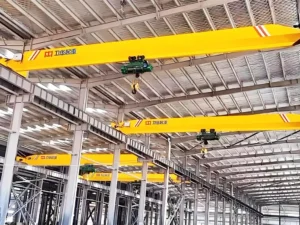
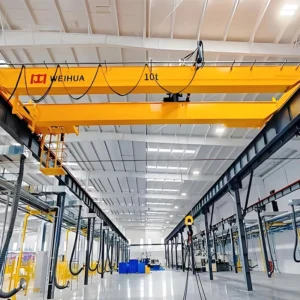
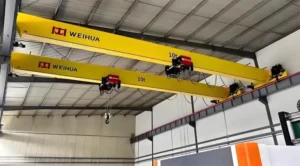
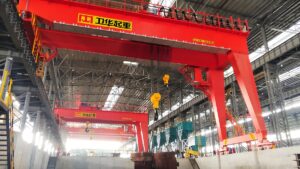
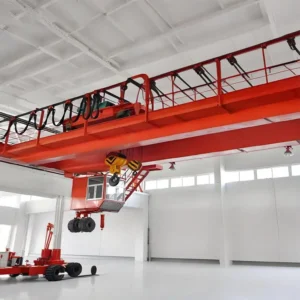
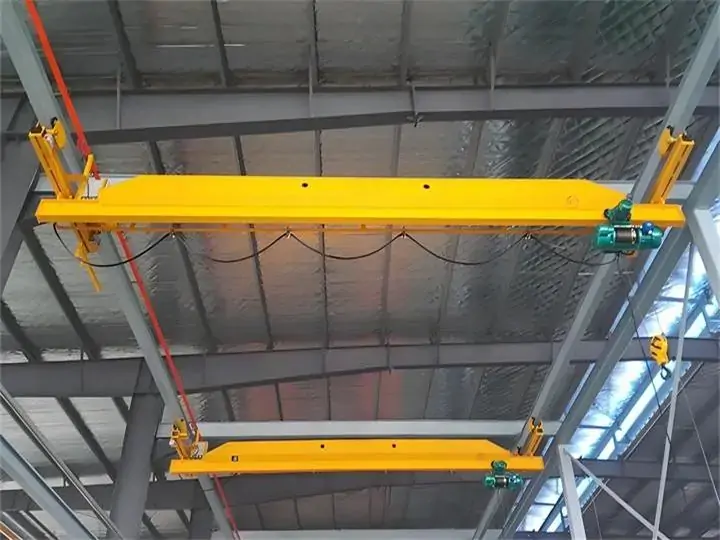
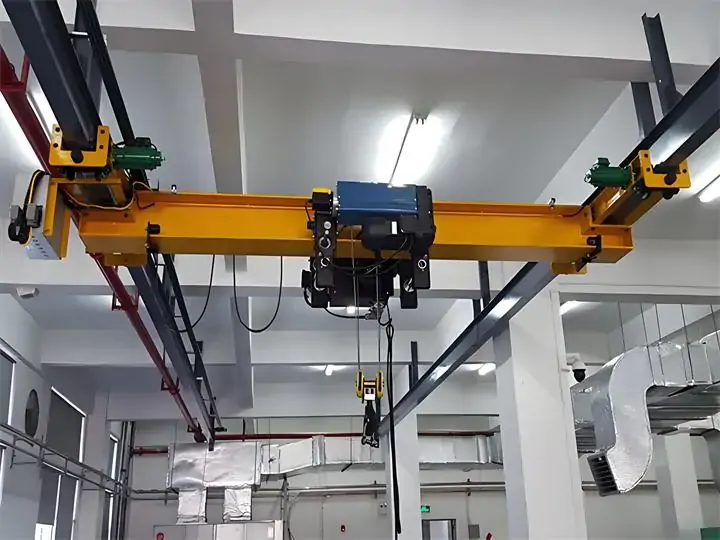
تتميز الرافعة العلوية المتحركة المعلقة أسفل عوارض المصنع بوجود مسارها أسفلها، مما يسمح بتشغيل هيكل الرافعة بالكامل بالقرب من السطح دون زيادة ارتفاع المبنى. يوفر هذا التصميم مساحةً ويقلل من متطلبات قدرة تحمل الهيكل وظروف الهندسة المدنية. تتميز هذه المعدات بسهولة التشغيل، والأداء المستقر، والصيانة المريحة.
يمكن اختيار الرافعات العلوية المعلقة بأشكال وتكوينات هيكلية مختلفة لتلبية احتياجات مختلف هياكل المصانع، وقدرات الرفع، وأساليب التشغيل. تتوفر أنواع مختلفة منها بناءً على سعة الحمولة، ونمط التشغيل، وتكرار الاستخدام. فيما يلي مقدمة عن الأنواع الشائعة من الرافعات العلوية المعلقة.
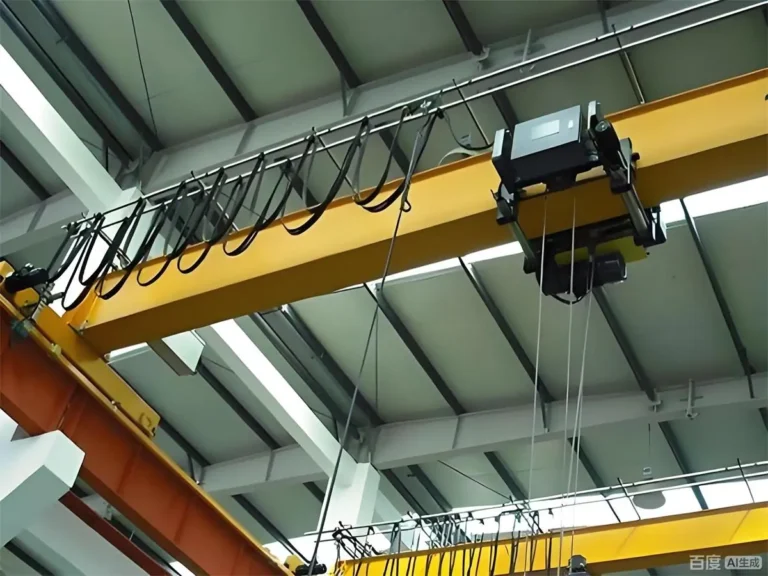
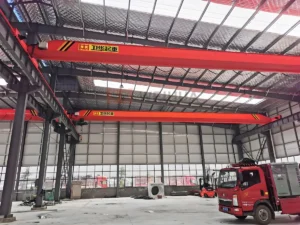
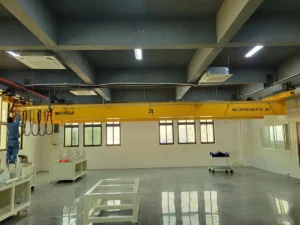
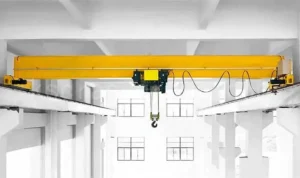
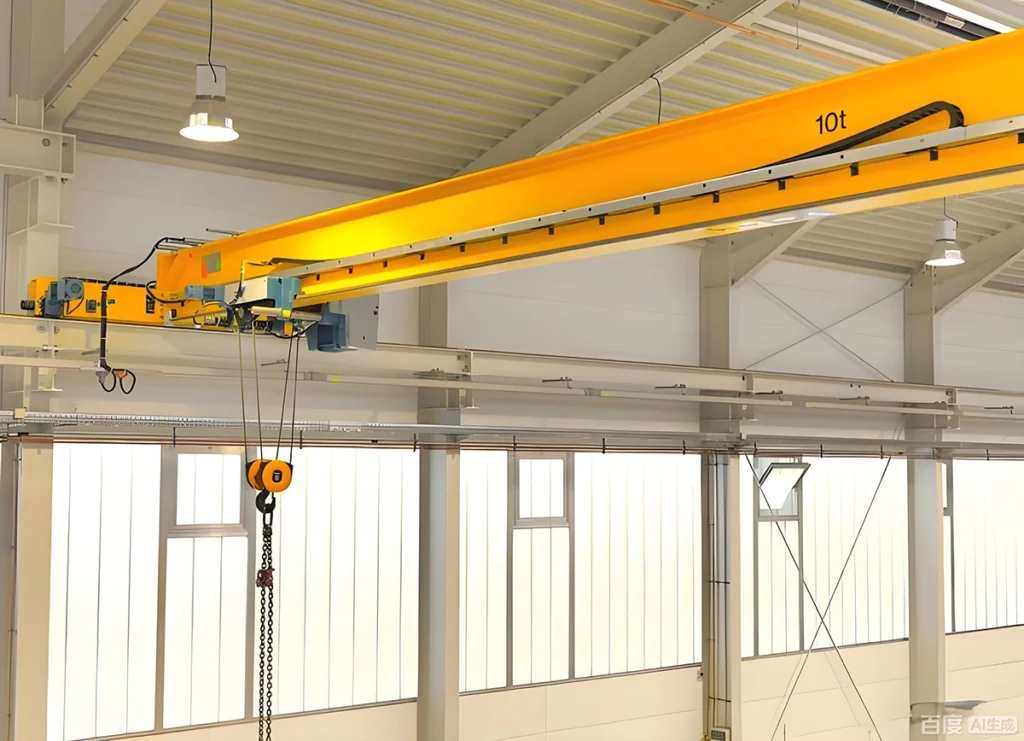
تتميز الرافعة المعلقة ذات العارضة الواحدة بعارضة رئيسية واحدة معلقة أسفل عارضة مسار الرافعة العلوية في المصنع. تتميز هذه الرافعة بهيكل خفيف الوزن، وتشغل مساحة صغيرة، مما يجعلها أكثر اقتصادية وعملية. وهي مناسبة لعمليات الرفع الخفيفة إلى المتوسطة، وتُستخدم في مشاريع التركيب حيث يكون ارتفاع المصنع محدودًا، أو المسافات بين الدعامات صغيرة، أو يتطلب الأمر تصميمًا مرنًا. وتُستخدم عادةً في المستودعات، وورش التجميع، ومصانع التصنيع الخفيفة.
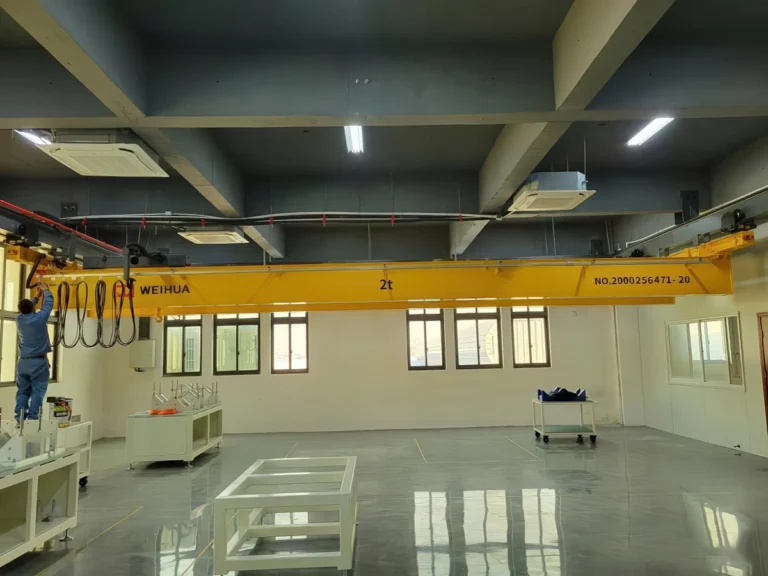
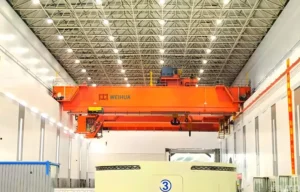
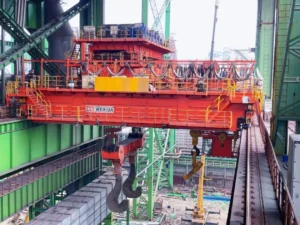
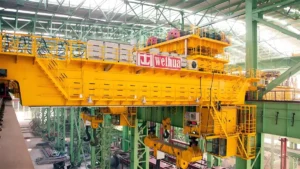
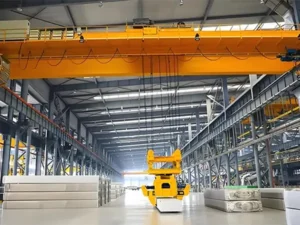
تتميز رافعات الجسور المعلقة ذات العارضة المزدوجة بعارضتين رئيسيتين معلقتين أسفل عوارض مسار الرافعة في المصنع، مما ينتج عنه هيكل أكثر استقرارًا وقدرة تحمل فائقة واستقرار تشغيلي أعلى مقارنةً بتصاميم العارضة المفردة. وهي مناسبة لعمليات الرفع المتوسطة إلى الثقيلة، بالإضافة إلى التطبيقات ذات المسافات الكبيرة وتكرار الاستخدام العالي، وتُستخدم عادةً في ورش التجميع وخطوط الإنتاج والمصانع الصناعية التي تتطلب استقرارًا تشغيليًا عاليًا.
تعمل رافعات الجسور المعلقة من خلال التنسيق بين مكونات أساسية متعددة، صُمم كل منها ليكون صغير الحجم ومتوافقًا على النحو الأمثل. سيساعدك فهم مكونات هذه الرافعات الرئيسية في اختيار المعدات وإدارة العمليات اللاحقة.
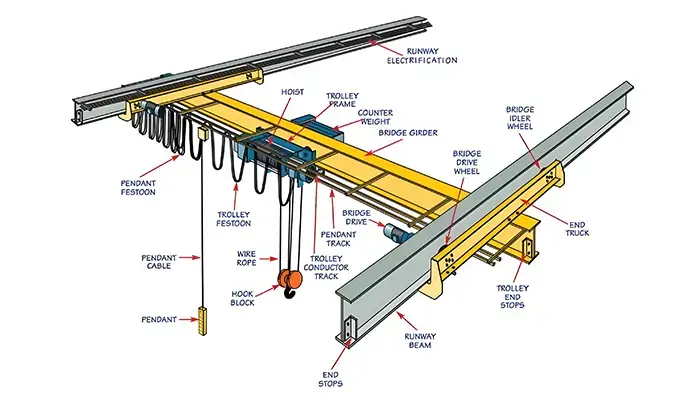
العارضة الرئيسية: الهيكل الرئيسي الحامل للأحمال في الرافعة، وعادة ما يكون هيكلًا صندوقيًا أو هيكلًا على شكل حرف I، ويستخدم لدعم آلية الرفع وتحمل وزن الحمولة.
عربات النهاية / وحدات التشغيل: يتم تركيبها في كلا طرفي العارضة الرئيسية، وتتحرك على الحافة السفلية لعتبة المسار عبر مجموعات العجلات، مما يتيح للرافعة بأكملها التحرك جانبياً.
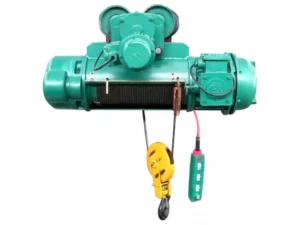
الرافعة: تشمل الرافعة الكهربائية والمحرك والمخفض والفرامل، وهي المسؤولة عن رفع وخفض الحمولة.
عارضة المدرج: تتكون من هيكل مبنى المصنع أو عوارض فولاذية مستقلة، توفر الأساس لتشغيل الرافعة وتحمل الأحمال.
نظام التحكم الكهربائي: يستخدم للتحكم في الرفع والتحريك والكبح، مع طرق تحكم اختيارية مثل التحكم المعلق والتحكم عن بعد.
أجهزة السلامة: بما في ذلك مفاتيح الحد، والحماية من الحمل الزائد، وأجهزة إيقاف الطوارئ، وما إلى ذلك، لضمان التشغيل الآمن للمعدات.
تعمل رافعة الجسر المعلقة عن طريق تعليق الآلة بأكملها من الحافة السفلية لعتبة مسار الرافعة في المصنع، مما يتيح رفع المواد ونقلها أفقيًا داخل الورشة. بمجرد تشغيل الرافعة، يتولى الرافعة الكهربائية رفع البضائع وإنزالها، بينما تتحرك آليات الحركة في طرفي العتبة الرئيسية بسلاسة على طول الجانب السفلي لعتبة المسار، مما يسمح للحمل بالتحرك أفقيًا داخل الورشة.
أثناء التشغيل، تعمل حركات الرفع والتحريك والتنقل لمسافات طويلة بتناسق تام، ويمكن للمشغل التحكم بالمعدات بدقة باستخدام مقبض تحكم أو جهاز تحكم عن بُعد. ولأن الرافعة بأكملها موضوعة أسفل عارضة مسارها، فإنها تقلل بشكل فعال من الارتفاع المطلوب في المصنع، مما يجعلها مناسبة لعمليات مناولة المواد في ورش العمل ذات المساحة المحدودة.
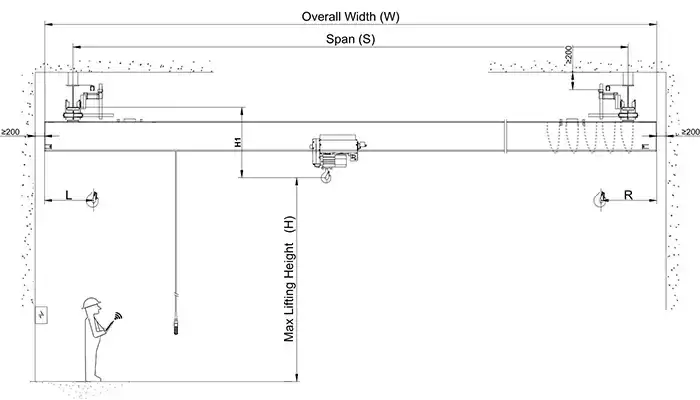
يمكن تهيئة الرافعات العلوية المعلقة بمرونة تامة بناءً على هيكل مبنى المصنع وبيئة التشغيل وتكرار الاستخدام. ويمكن تخصيص المعايير الرئيسية، مثل قدرة الرفع والمدى وارتفاع الرفع وفئة العمل، وفقًا لظروف العمل الفعلية. فيما يلي المواصفات الفنية الشائعة للرافعات الجسرية المعلقة.
| عنصر | مواصفات |
|---|---|
| قدرة الرفع | 0.5 - 10 أطنان |
| سبان | 5 – 15 متر |
| ارتفاع الرفع | يتم تخصيصها وفقًا للمبنى |
| فئة الواجب | أ3 – أ5 |
| نوع الرافعة | عارضة واحدة / عارضة مزدوجة |
| نوع الرافعة | رافعة كهربائية سلكية |
| طريقة التحكم | وحدة تحكم معلقة / جهاز تحكم عن بعد |
| مزود الطاقة | 380 فولت / 50 هرتز / 3 طور (قابل للتخصيص) |
| نوع عارضة المدرج | عارضة المدرج ذات الحافة السفلية |
| تطبيق | مستودع، ورشة عمل، خط تجميع |
تتميز الرافعات العلوية المعلقة بهيكل مدمج وتشغيل مستقر. سيساعدك فهم خصائصها الرئيسية على تحديد ما إذا كانت هذه المعدات مناسبة لورشة العمل واحتياجات الإنتاج لديك بسرعة.
تُستخدم الرافعات العلوية المتحركة المعلقة أسفل الهيكل في مناولة المواد وعمليات الرفع الخفيفة إلى المتوسطة في البيئات الداخلية مثل المصانع وورش العمل والمستودعات. تشمل التطبيقات النموذجية ما يلي:
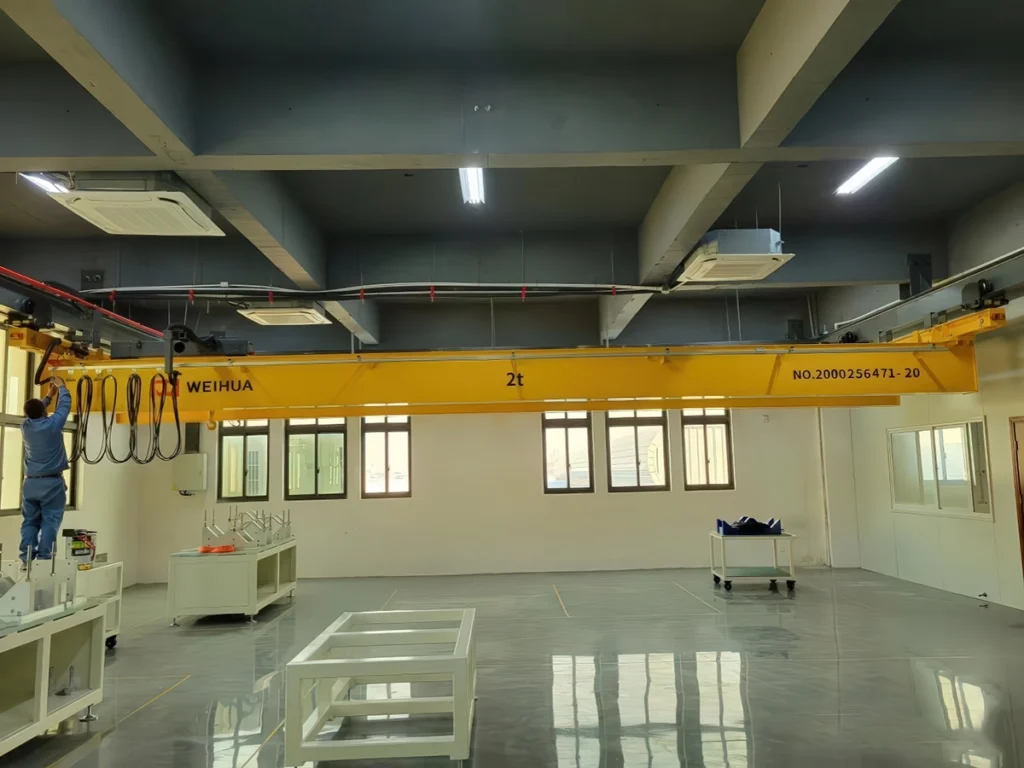
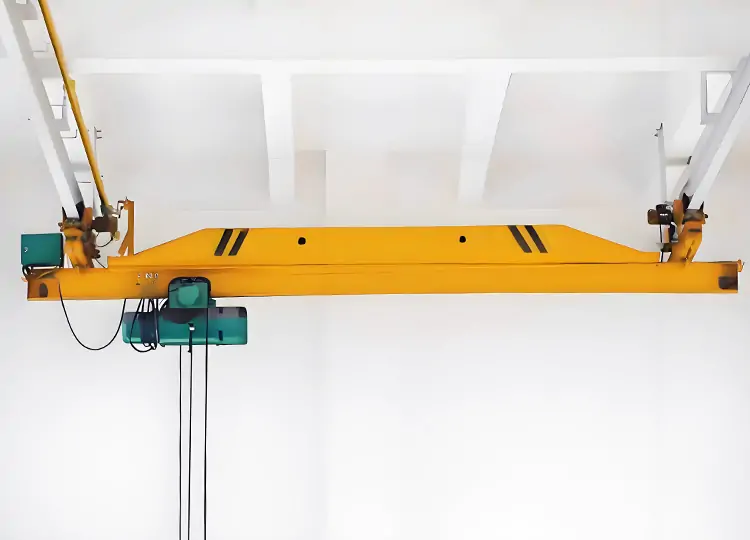
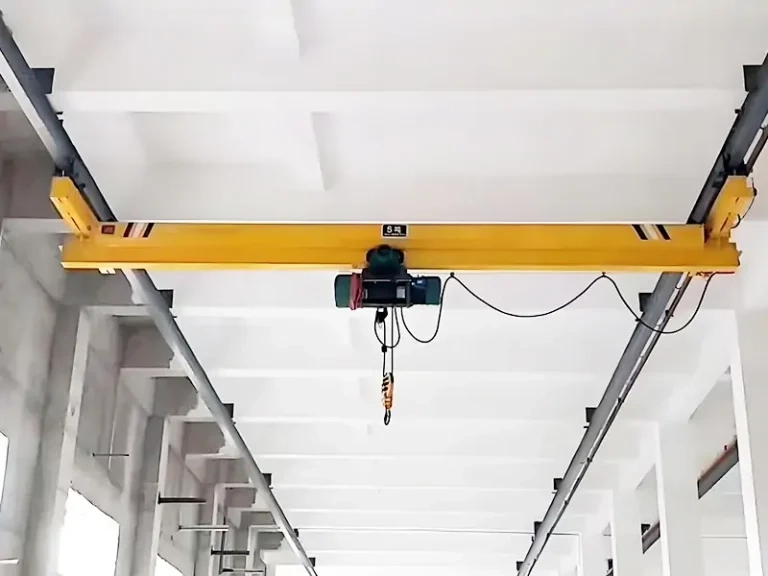
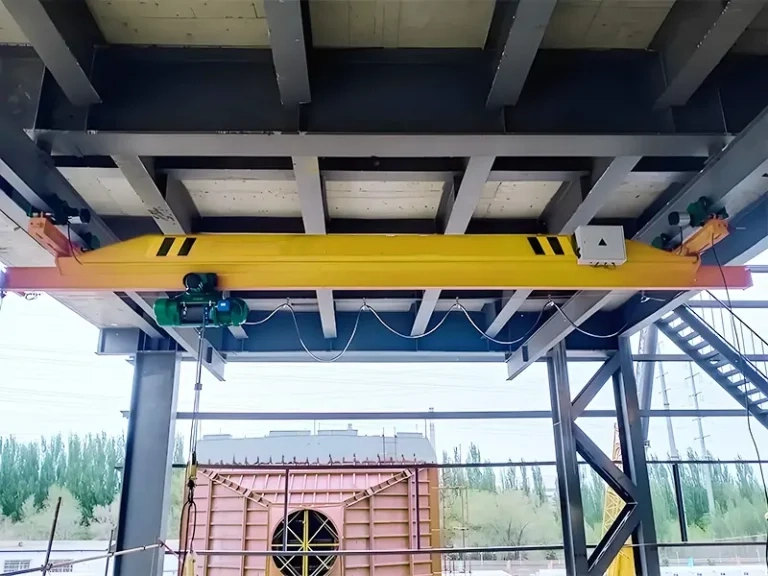
يمكن تخصيص الرافعات العلوية المتحركة المعلقة من الأسفل وفقًا لهيكل المصنع ومتطلبات الرفع وبيئة التشغيل. تشمل خيارات التخصيص الشائعة ما يلي:
عند اختيار رافعة علوية, تُعد الرافعات المعلقة من الأسفل والرافعات العلوية من الأعلى النوعين الأكثر شيوعاً. ويختلفان في هيكلهما وظروف التشغيل المناسبة لهما، وهما مناسبان لسيناريوهات استخدام مختلفة.
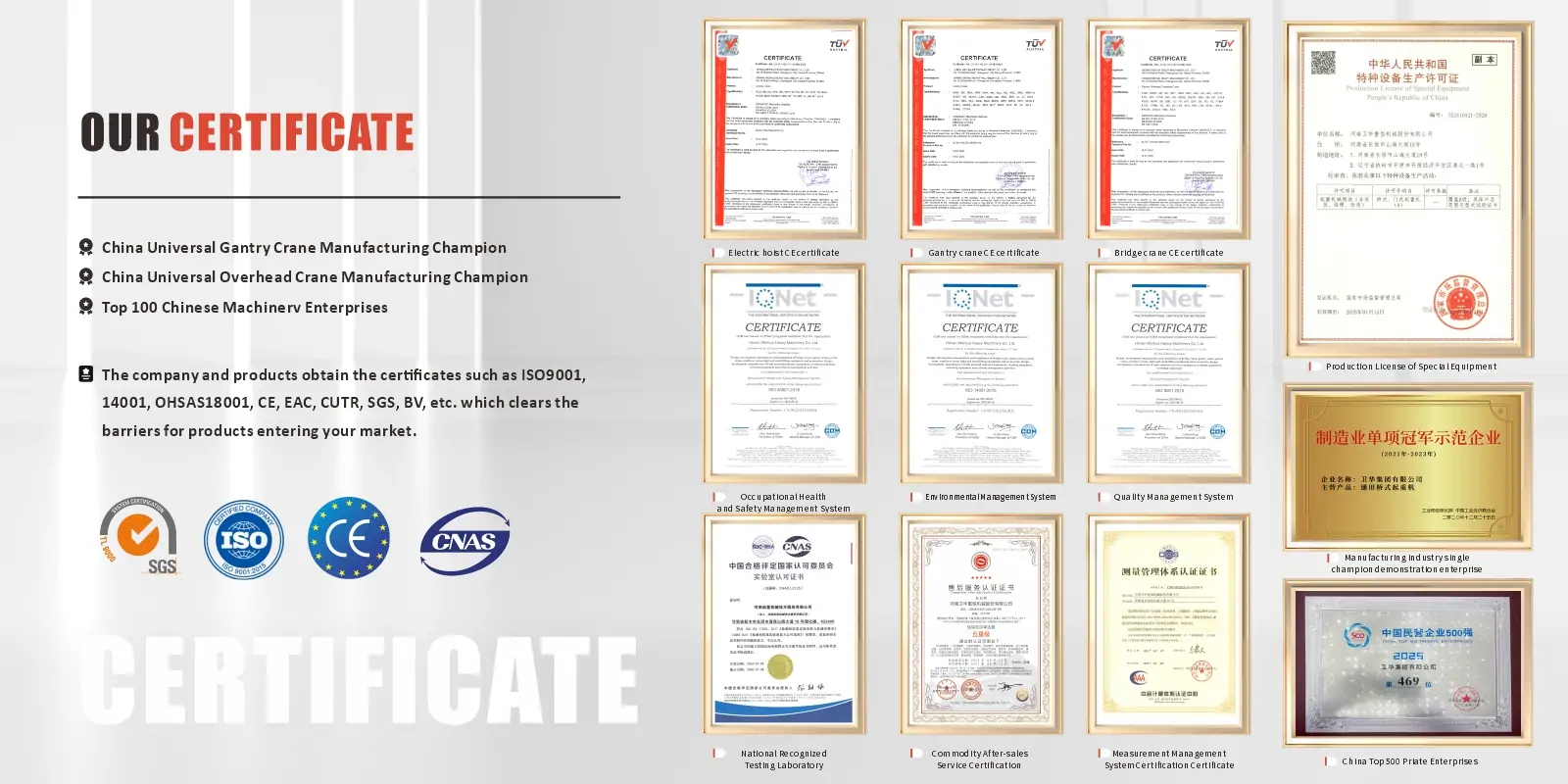
شركة Weihua هي شركة صينية رائدة في تصنيع وتوريد الرافعات العلوية المتحركة المعلقة، بخبرة تزيد عن 37 عامًا في مجال تصنيع معدات الرفع. على مر السنين، قدمنا حلول رفع متكاملة للمصانع وورش العمل ومشاريع التخزين والخدمات اللوجستية في مختلف القطاعات، مكتسبين خبرة واسعة في التصميم والتصنيع. جميع معداتنا مصنعة وفقًا للمعايير الدولية وحاصلة على شهادات CE وISO. وقد تم تصدير رافعاتنا واستخدامها في العديد من البلدان والمناطق.
تمتلك شركة Weihua فريقًا هندسيًا محترفًا يمكنه تقديم الدعم في الاختيار والحلول خلال المرحلة الأولية للمشروع، وتقديم إرشادات التركيب والدعم الفني وخدمة ما بعد البيع الشاملة بعد تسليم المعدات، بالإضافة إلى ضمان لمدة عام واحد.
مرحباً بكم في التواصل مع فريق الهندسة في ويهوا؛ سنقوم بتخصيص حل لكم بناءً على ظروف عملكم الخاصة.
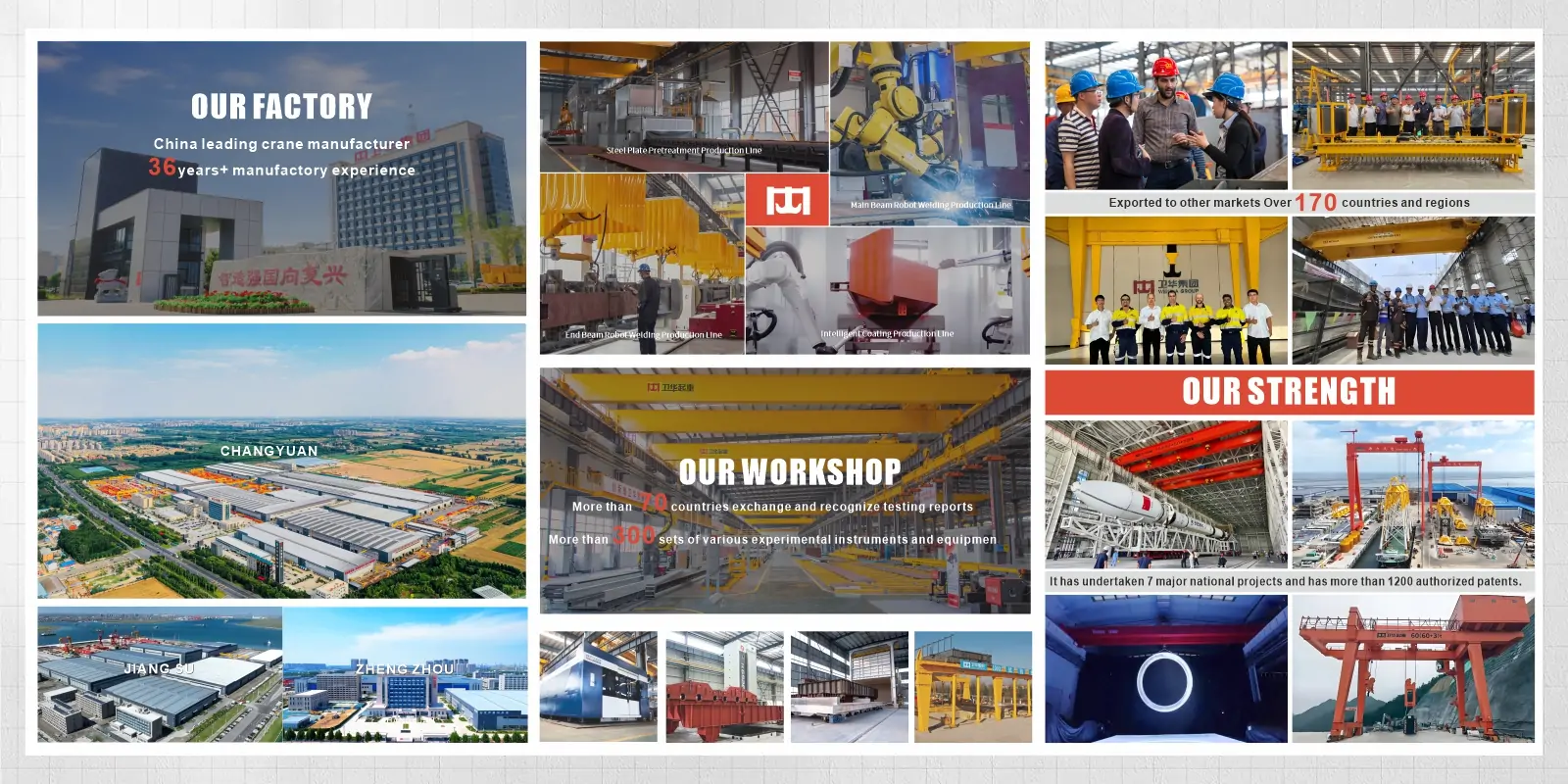
تطورت شركة "وي هوا"، التي تأسست عام 1988، لتصبح رائدة عالمية في مجال التصنيع الذكي في الصين. نحن متخصصون في البحث والتطوير وإنتاج الرافعات الذكية، مع توفير حلول المركبات الموجهة آليًا (AGV). تقدم فرقنا الهندسية والتسليم وما بعد البيع المحترفة دعمًا تقنيًا شاملًا، وحلولًا مخصصة، وإرشادات تركيب في الموقع، وخدمات عالمية سريعة الاستجابة لضمان تشغيل كل مشروع بأمان وكفاءة.
تعمل الرافعات المعلقة أسفل عارضة المدرج وتناسب المباني ذات الارتفاع المنخفض، بينما تعمل الرافعات العلوية فوق القضبان وتتعامل مع الأحمال الأثقل.
معظم الرافعات المعلقة مصممة لرفع الأحمال الخفيفة إلى المتوسطة، وعادة ما تصل إلى 10 أطنان.
وهو مناسب للورش ذات الارتفاع المحدود واحتياجات الرفع الخفيفة إلى المتوسطة، مثل المستودعات ومناطق التجميع.
نعم. يمكن تخصيص السعة والمدى وارتفاع الرفع وخيارات التحكم لتناسب متطلبات ورشة العمل الخاصة بك.
اتصل بنا الآن عبر البريد الإلكتروني: [email protected], ، أو املأ النموذج أدناه.


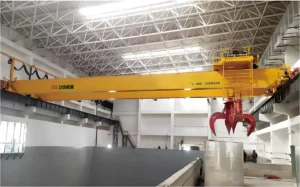
الرافعة الجسرية هي معدات رفع تُستخدم على نطاق واسع في مختلف الصناعات ومواقع البناء والموانئ والمستودعات وغيرها من المجالات. ويجعلها هيكلها الفريد وقدرتها القوية على تحمل الأحمال خيارًا مثاليًا لمناولة المواد الثقيلة في العصر الحديث. ويتيح تصميم الهيكل “الجسري” للرافعة التحرك بحرية داخل المساحة، مما يغطي منطقة عمل واسعة. إذن، ما الذي يجعل الرافعات الجسرية مميزة؟ وما هي أنواعها ومعاييرها وطرق التحكم فيها وتطبيقاتها ومبادئ عملها؟ كيف تختلف عن الرافعات الجسرية؟ دعونا نستكشف ذلك معًا. أنواع الرافعات الجسرية بناءً على التصميم والتطبيق وبيئة التشغيل، تُصنف الرافعات الجسرية عادةً إلى الأنواع التالية: الرافعة الجسرية أحادية العارضة تُستخدم الرافعات الجسرية أحادية العارضة على نطاق واسع في القطاعات الصناعية والمستودعات والموانئ وورش العمل. تتميز بآلية رفع مدعومة بعارضة واحدة، وتتحرك عبر أعمدة جانبية وقضبان سفلية. بفضل هيكلها البسيط وتشغيلها السهل وقدرتها المعتدلة على الرفع، فهي مثالية لمناولة الأحمال الخفيفة إلى المتوسطة. وبفضل قدرتها على عبور مسافات كبيرة بحرية، فإن الرافعات الجسرية ذات العارضة الواحدة مناسبة لعمليات مناولة ورفع المواد الثقيلة. الرافعات الجسرية ذات العارضتين مقارنة بالرافعات الجسرية ذات العارضة الواحدة، توفر الرافعات الجسرية ذات العارضتين قدرة أكبر...
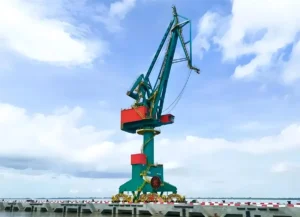
في الموانئ، والحدائق اللوجستية، ومناولة المواد الصناعية، تعتبر الرافعات البوابية والرافعات الجسرية نوعين شائعين وأساسيين من معدات التحميل/التفريغ. تختلف هذه الرافعات في التصميم الهيكلي، وخصائص الأداء، وطرق التشغيل، وسيناريوهات التطبيق، وتكاليف الاستثمار. تقدم هذه المقالة تحليلاً شاملاً للرافعات البوابية مقابل الرافعات الجسرية وتوجهك لاتخاذ الاختيار الصحيح. مقارنة التصميم الهيكلي تتجلى الاختلافات الهيكلية بين الرافعات البوابية والرافعات الجسرية بشكل أساسي في طرق تحمل الأحمال، ومسارات الحركة، ونطاقات التغطية. يركز الأول على برج ثابت وذراع دوار، مع التركيز على “تغطية النقاط” والدوران الأفقي المرن. يتميز الأخير ببنية إطار بوابة ورحلة سكة حديد طولية، مع إعطاء الأولوية لـ “الحركة الأفقية الواسعة” والتعامل الفعال مع الخدمات اللوجستية في الموقع. نتيجة لذلك، فإن تصميماتهما الهيكلية المميزة تملي مباشرة سيناريوهات التطبيق المختلفة. الخصائص الهيكلية للرافعات البوابية تستخدم الرافعات الدوارة البوابية هياكل أذرع مفردة/مزدوجة منصة، مع تثبيت البرج على الأسس أو السكك الحديدية، مما يتيح دورانًا بزاوية 360 درجة أو جزئيًا. يمكّن هذا التكوين التشغيل المرن في المساحات الضيقة والممتدة مثل السواحل، وواجهات الأرصفة، وأرصفة السفن، مما يجعله مناسبًا بشكل خاص لمناولة المواد من السفينة إلى الشاطئ. تجمع وظيفتها الأساسية بين العمودي…
في العمليات الصناعية الحديثة، تعتبر مناولة المواد الفعالة ضرورية لزيادة الإنتاجية وتحسين سير العمل. تعتبر الرافعات الجسرية، المعروفة أيضًا بالرافعات العلوية أو رافعات EOT، من أنظمة مناولة المواد الثابتة المستخدمة على نطاق واسع في التصنيع، ومعالجة المعادن، والتخزين، وعمليات التحميل/التفريغ. في هذه المقالة، سنستكشف مبدأ العمل، والمكونات الرئيسية، والتطبيقات، وفوائد التشغيل للرافعات الجسرية، مما يوفر دليلاً شاملاً للمخططين الصناعيين ومهنيي اللوجستيات. مبدأ عمل الرافعات الجسرية تعمل الرافعات الجسرية على هيكل يشبه الجسر يمتد عبر مساحة العمل، مع نظام عربة ورافعة يتحرك أفقيًا على طول الجسر ويرفع أو يخفض الأحمال عموديًا. تتيح حركة الرافعة عبر مسارها، جنبًا إلى جنب مع التحكم الدقيق بالرافعة، مناولة المواد الثقيلة بكفاءة وأمان في المصانع والمستودعات والمنشآت الصناعية. للحصول على معلومات حول كيفية عمل الرافعات العلوية، يرجى الاطلاع على هذه المقالة: مبدأ عمل الرافعات العلوية: المكونات، الحركة، وعملية التشغيل مصطلحات الرافعات الجسرية فيما يلي مقدمة للمصطلحات المتعلقة بأجزاء الرافعات الجسرية. سعة الرافعة: تشير سعة الرافعة إلى أقصى وزن يمكن للرافعة الجسرية رفعه بأمان. ويقاس عادة بالطن...
الرافعة العلوية الكهربائية (EOT) هي نظام رفع علوي فعال وموثوق يُستخدم لمناولة المواد الثقيلة في المصانع والمستودعات وورش العمل والمنشآت الصناعية. تعمل الرافعات العلوية الكهربائية على سكك علوية، وتتيح حركة ثلاثية الأبعاد آمنة ودقيقة للأحمال من خلال تنسيق حركات الرفع والتحرك العرضي والتحرك الطولي. ستوجهك هذه المقالة عبر تعريفات الرافعات العلوية المتحركة وأنواعها وهيكلها ومبادئ عملها وتطبيقاتها وعوامل التكلفة لمساعدتك في اختيار الحل الأنسب لاحتياجات الرفع الخاصة بك. كيف تعمل الرافعات العلوية المتحركة؟ يتضمن مبدأ عمل الرافعات العلوية المتحركة مزيجًا من الرفع الرأسي وحركة العربة الأفقية والحركة الطولية للجسر، مما يتيح مناولة الأحمال الثقيلة بكفاءة عبر المنشآت الصناعية. تعمل الرافعة على قضبان مسار مرتفعة مثبتة على طول هيكل المبنى، مع امتداد عارضة الجسر عبر مساحة العمل. تعمل آلية الرفع على رفع أو خفض الحمولة باستخدام حبال أو سلاسل سلكية فولاذية، بينما تقوم العربة بنقل الحمولة أفقيًا على طول الجسر. تتحرك الرافعة بأكملها طوليًا على طول قضبان المسار، مما يتيح وضع المواد في وضع ثلاثي الأبعاد. تعمل الرافعات الجسرية الكهربائية الحديثة بمحركات كهربائية ذات سرعة دقيقة...
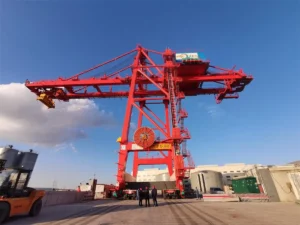
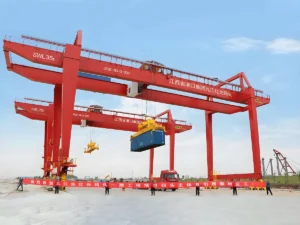
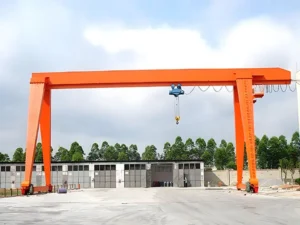
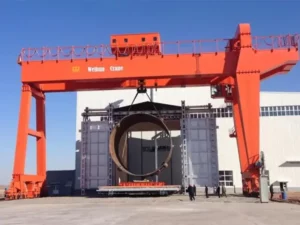
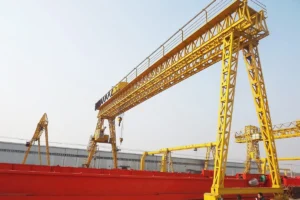
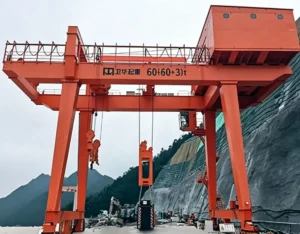
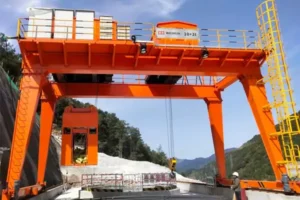
تُستخدم الرافعات الجسرية على نطاق واسع في ساحات التخزين المفتوحة، وأحواض بناء السفن، والمصانع، ومواقع البناء، مما يجعلها واحدة من أكثر حلول مناولة المواد تنوعًا وتطبيقًا على نطاق واسع. تأتي الرافعات الجسرية في أنواع مختلفة، وكل منها قابل للتخصيص ليناسب قدرات تحميل وسعات مختلفة، وظروف الموقع، ومتطلبات التشغيل. ومع ذلك، فإن اختيار التكوين الخاطئ يمكن أن يؤدي إلى نفقات غير ضرورية، أو قدرة رفع محدودة، أو قيود على التوسع المستقبلي. إذن، ما هي الأنواع الرئيسية للرافعات الجسرية؟ كيف تختار النوع المناسب لتطبيقك؟ في هذا الدليل، سنقدم نظرة عامة مفصلة على أنواع الرافعات الجسرية المختلفة بناءً على الهيكل، والتنقل، وسيناريوهات التطبيق، مما يساعدك على اتخاذ القرار الصحيح قبل الاستثمار في حل رفع. المقال طويل جدًا. فيما يلي جدول المحتويات الخاص بنا. يرجى التوجه إلى القسم المقابل حسب الحاجة: ما هي الرافعات الجسرية؟ الرافعات الجسرية هي معدات رفع مصممة لمناولة البضائع الثقيلة بكفاءة في المواقع المفتوحة الكبيرة. يتميز هيكلها المميز بشعاع أو أكثر من الأشعة الرئيسية مدعوم بأرجل صلبة (أو مرنة) على كلا الجانبين، لتشكيل إطار ضخم على شكل “بوابة”. تتنقل هذه الرافعات...
 English English
  Русский
 العربية
 Français
 Português
 Español