
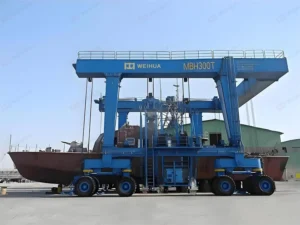
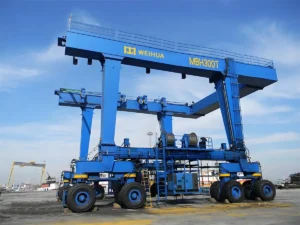

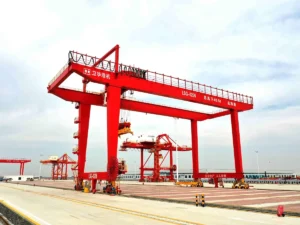
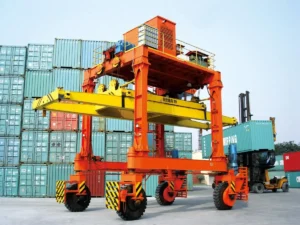
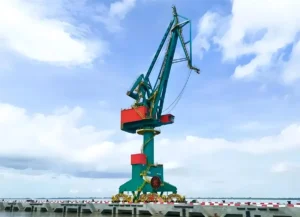
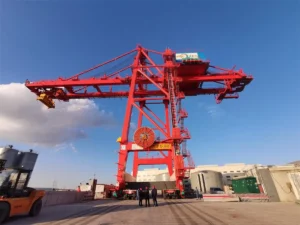
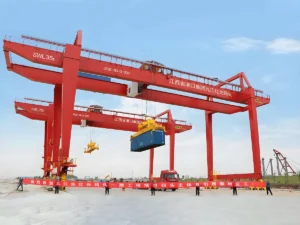
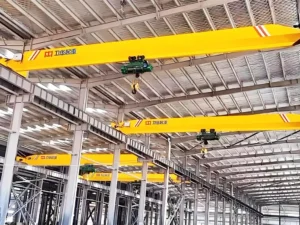
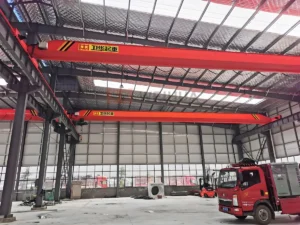
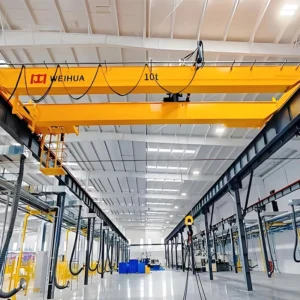
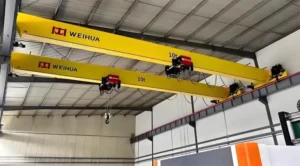
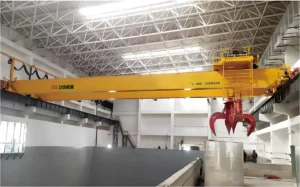
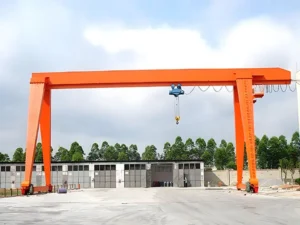
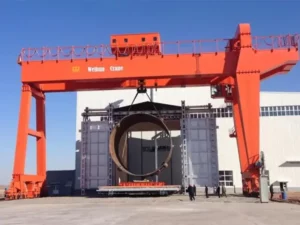
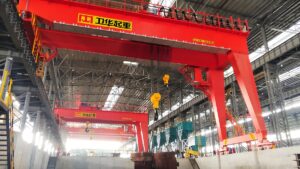
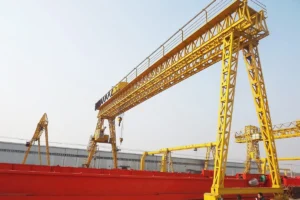

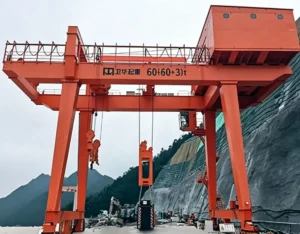
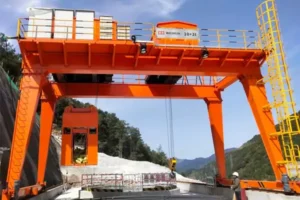

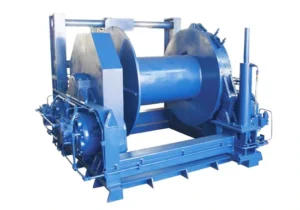






The gantry crane is a lifting equipment widely used across various industries, construction sites, ports, warehouses, and other fields. Its unique structure and powerful load-bearing capacity make it ideal for modern heavy-duty material handling. The “gantry” structure design allows the crane to move freely within a space, covering a large working area. So, what makes gantry cranes special? What are their types, parameters, control methods, applications, and working principles? How do they differ from bridge cranes? Let’s explore together.
جدول المحتويات
Types of Gantry Cranes
Based on design, application, and operating environment, gantry cranes are typically categorized into the following types:
Single-Girder Gantry Crane
Single-girder gantry cranes are widely used across industrial sectors, warehouses, ports, and workshops. Featuring a single-girder support lifting mechanism, they traverse via side columns and bottom rails. With their simple structure, user-friendly operation, and moderate lifting capacity, they are ideal for handling light to medium loads. Capable of spanning large distances freely, single-girder gantry cranes are suitable for heavy material handling and lifting operations.
- Lifting Capacity: 1 ton – 32 tons
- Span: 4 meters – 35 meters
- Lifting Height: 6 meters – 30 meters
- Working Class: A3 – A5
- Crane Control Methods: Ground Control, Remote Control, Cab Control

رافعة جسرية مزدوجة العوارض
Compared to single-girder gantry cranes, double-girder gantry cranes offer greater load capacity and higher operational precision, typically used for material handling tasks involving heavy or oversized objects.
- Lifting Capacity: 5 tons – 500 tons (higher load capacities available upon request)
- Span: 10m – 35m (Customizable for larger or smaller spans based on actual requirements)
- Lifting Height: 6m – 50m (Customizable according to operational environment and load demands)
- Working Class: A3 – A8 (Selected based on usage frequency and load)
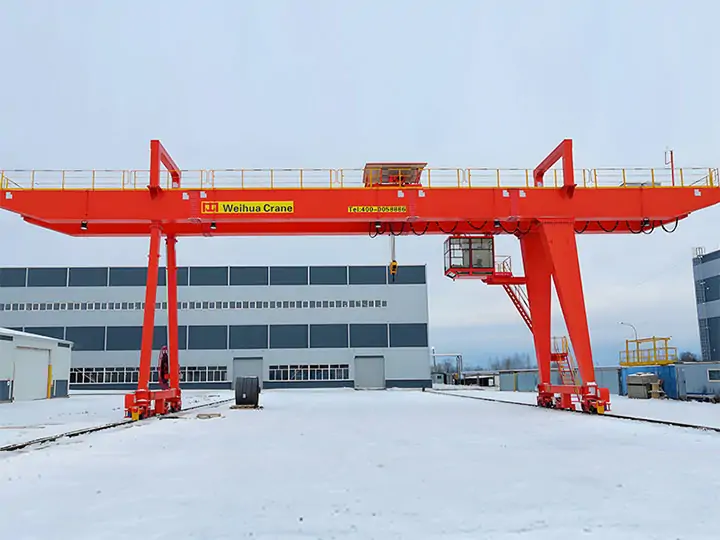
رافعة جسرية نصفية
The structure of a رافعة نصف جسرية is similar to that of a fixed gantry crane, but one side is supported by a wall while the other is supported by rails. This type of crane is suitable for factories or warehouses with ample space on one side, saving floor space.
- Lifting Capacity: 1 ton – 50 tons
- Span: 6m – 25m
- Lifting Height: 6m – 25m
- Working Class: A3 – A6
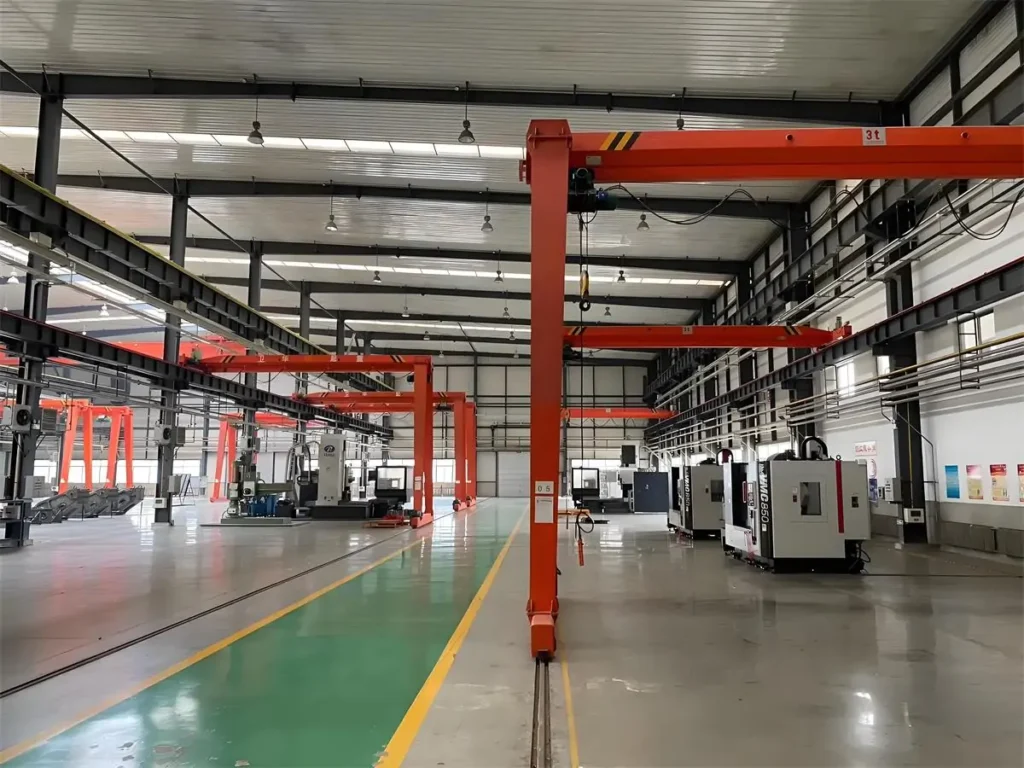
رافعة جسرية جملونية
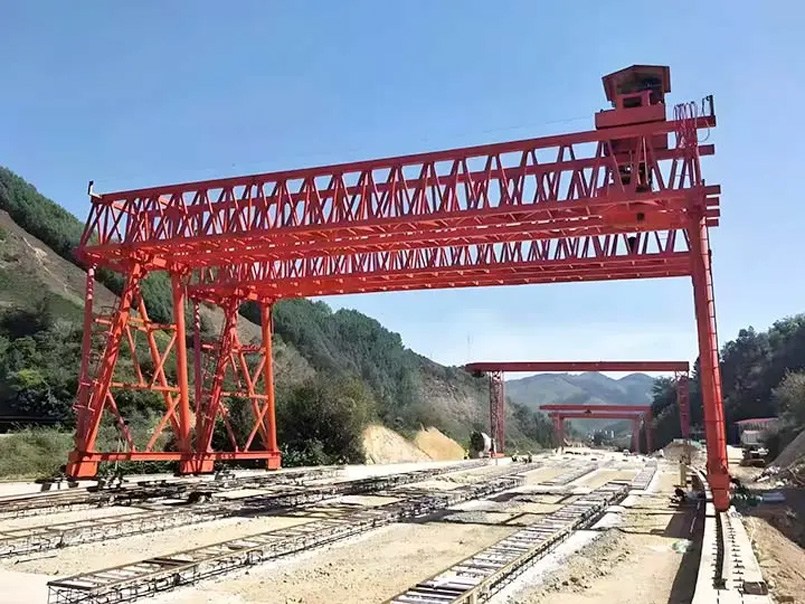
رافعات جسرية ذات دعامات are widely used in heavy industry, construction projects, and ports. Combining the advantages of gantry cranes and truss structures, they feature lightweight construction, high load-bearing capacity, and excellent stability. The “truss” section of these cranes is fabricated from welded steel, forming a triangular frame structure. Through optimized mechanical design, this structure achieves greater load capacity while reducing its own weight, thereby enhancing overall efficiency.
Truss gantry cranes are lightweight and cost-efficient with a lattice structure suitable for long spans, while box-type gantry cranes feature a solid steel girder offering higher rigidity, load capacity, and stability for heavy-duty applications.
- Lifting Capacity: 5 tons – 500 tons
- Span: 10 meters – 40 meters
- Lifting Height: 6 meters – 50 meters
- Working Class: A3 – A8 (selectable based on usage frequency and load)
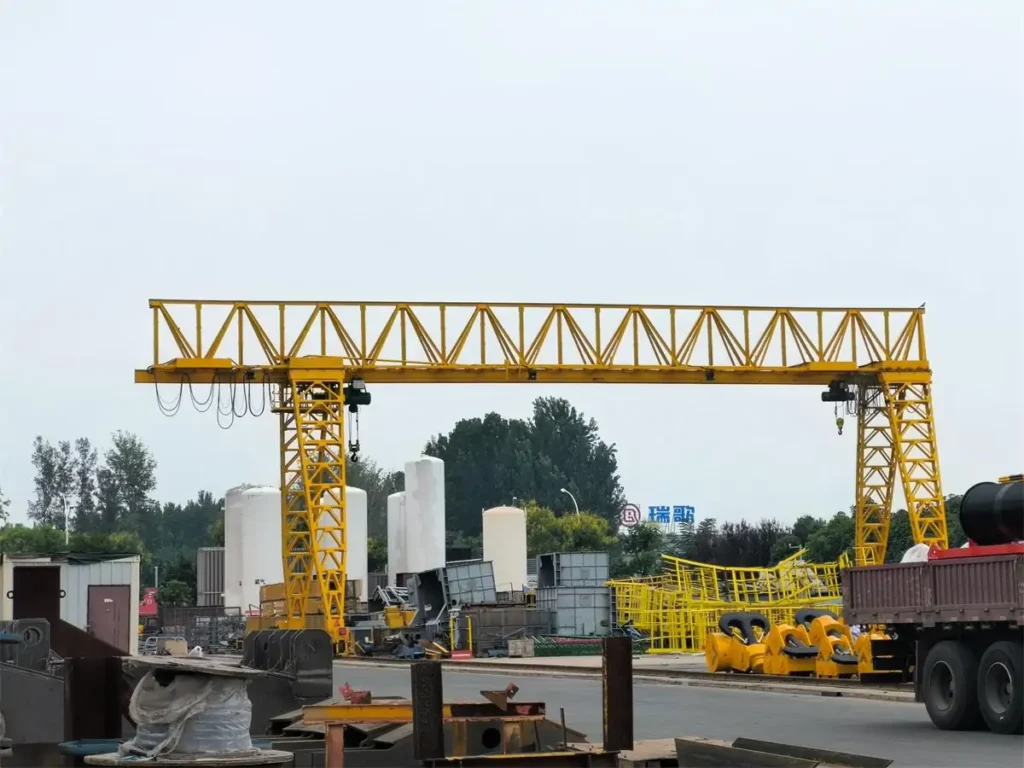
رافعات جسرية ثابتة
This type is mounted on fixed rails and primarily used in factories, warehouses, docks, and similar facilities. It is suited for repetitive operations within a defined area. Offering high stability and strong load capacity, it is an ideal choice for handling large items.
- Lifting Capacity: 5 tons – 300 tons
- Span: 6 meters – 35 meters
- Lifting Height: 6 meters – 50 meters
- Working Class: A3 – A8

Portable Gantry Cranes
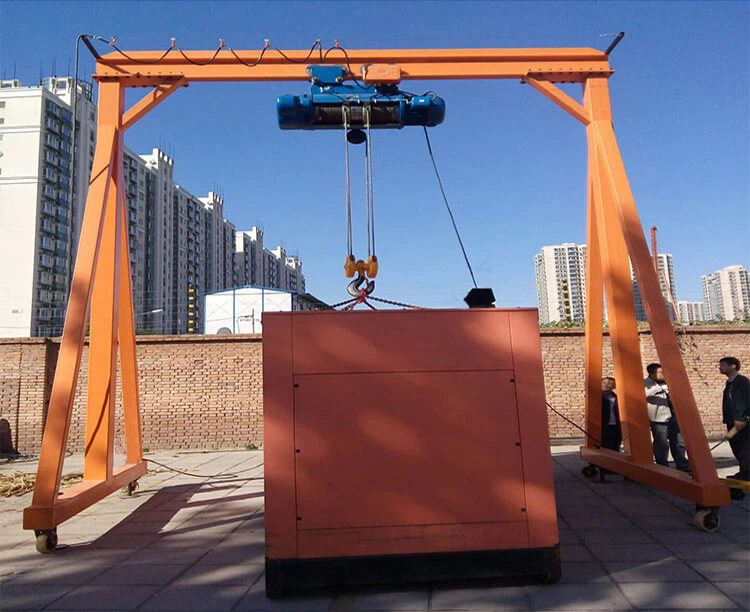
Portable gantry cranes offer high flexibility, capable of moving between different locations. They transport heavy loads across multiple sites. Typically equipped with wheeled structures, they facilitate free movement on the ground. Used for handling goods in warehouses; also known as a رافعة جسرية للمستودع
- Lifting Capacity: 5 tons – 100 tons
- Span: 6m – 30m
- Lifting Height: 6m – 35m
- Working Class: A3 – A5
What is a gantry crane used for?
Gantry cranes offer robust load-bearing capacity, flexible working space, and efficient operational performance, making them suitable for diverse industries and working environments. Below are typical application scenarios for gantry cranes:
- Industrial Production Line Material Handling: Used for heavy-duty lifting and transportation in factory workshops and production lines.
- Warehousing and Logistics: Suitable for moving heavy cargo and equipment within warehouses and cargo yards.
- Port Terminals: Handling container and cargo loading/unloading operations.
- Construction Site Lifting: Managing construction materials like rebar and concrete slabs.
- Shipbuilding and Repair: Hoisting ship components and large equipment.
- Steel and Metallurgical Industries: Transporting heavy materials such as steel products and furnace charge.
For a detailed comparison of gantry cranes used on construction sites against tower cranes, mobile cranes, crawler cranes, and RTG cranes, please refer to أنواع مختلفة من الرافعات المستخدمة في البناء.
Browse our equipment by application:
رافعة جسرية للمستودع
Workshop Gantry Crane
رافعة جسرية متحركة
Heavy-Duty Gantry Crane


Gantry Crane working principle
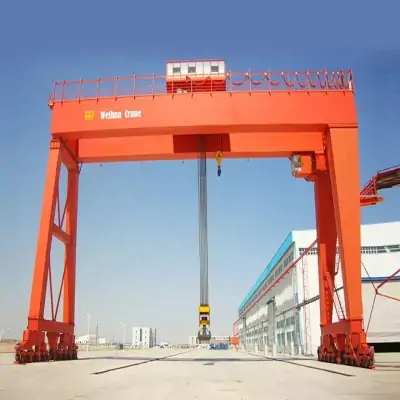
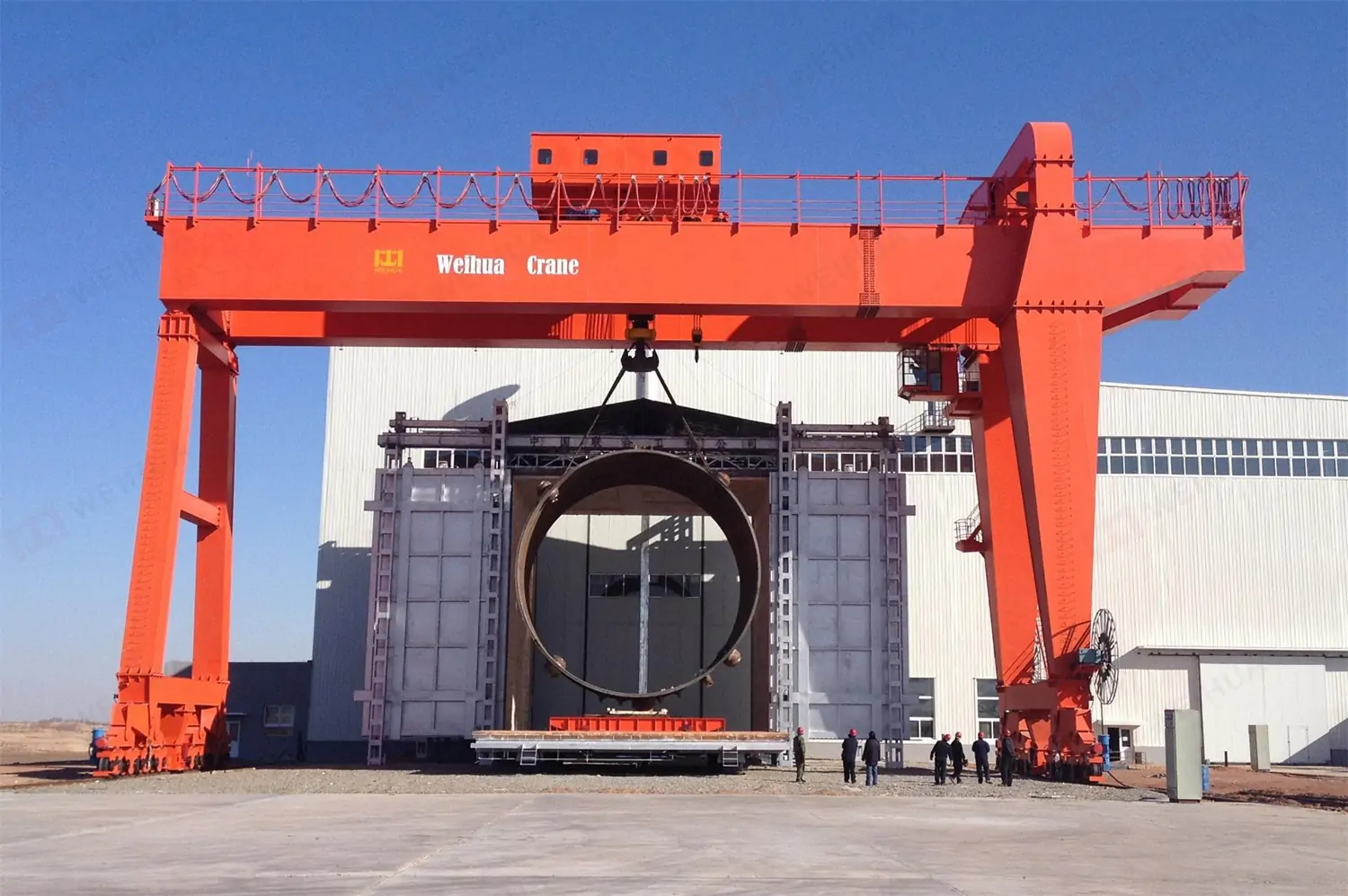
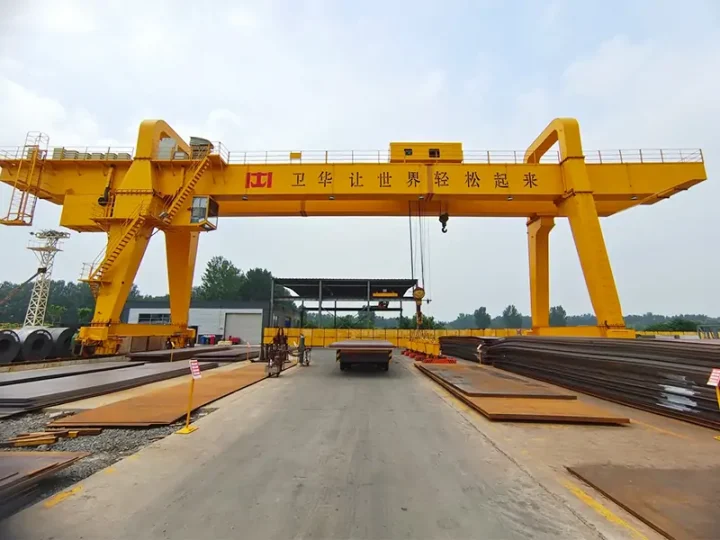
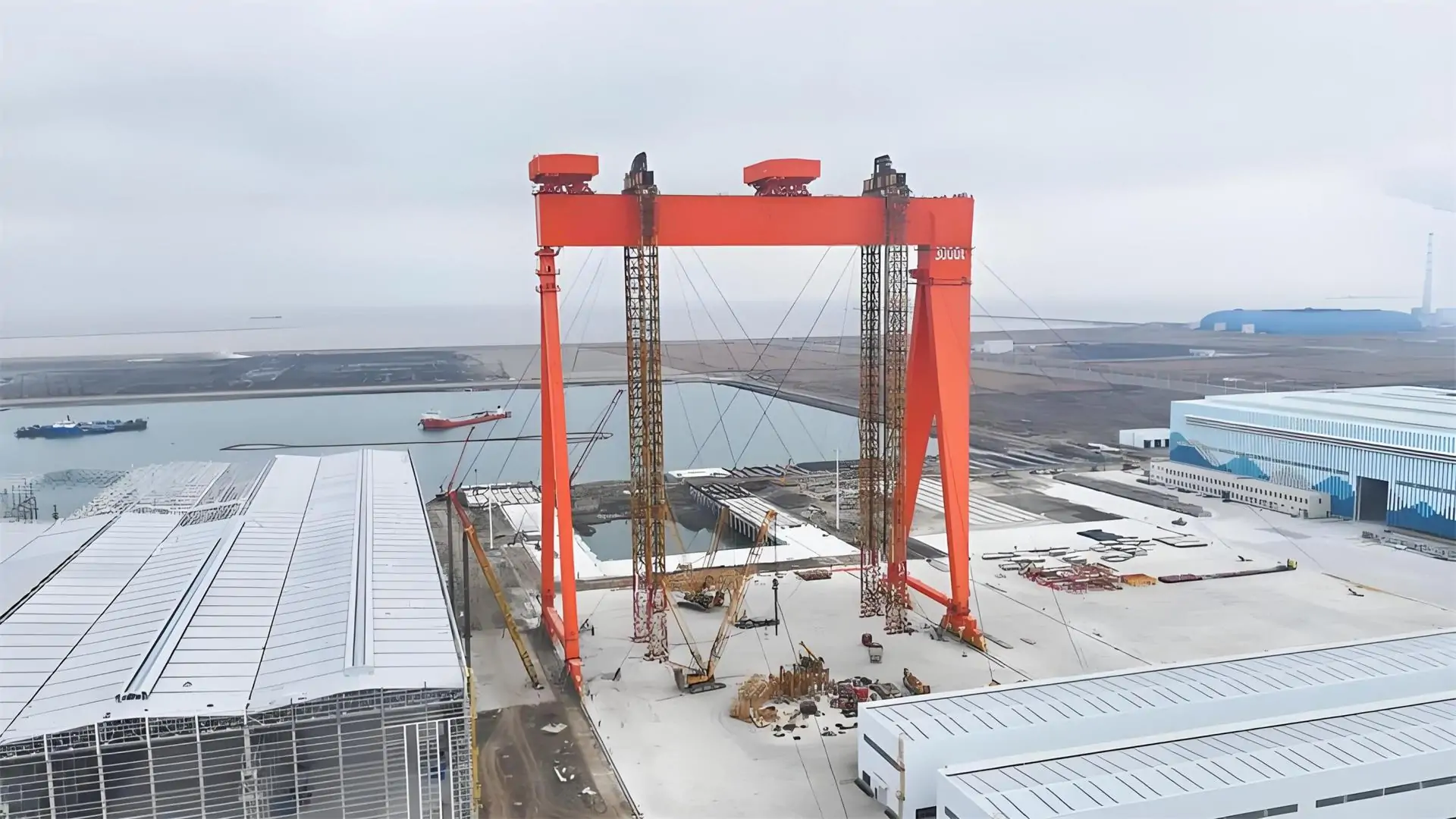
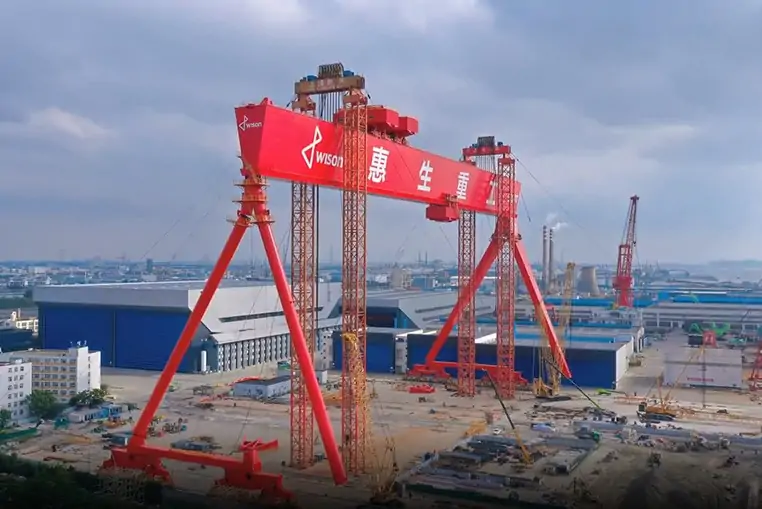
The working principle of gantry cranes primarily involves lifting materials through electric hoists or winches, while their horizontal movement along tracks is achieved via a “gantry” structure composed of a crossbeam and outriggers. The hook travels left and right along the beam, while the entire crane moves forward and backward along ground rails, enabling three-dimensional material handling. Operation methods typically include handle control, wireless remote control, or cab control. With its stable structure, smooth operation, and wide coverage, it is widely used in factories, warehouses, ports, and construction sites as essential equipment for efficient material handling.
What is the difference between a gantry crane and an overhead crane
The primary differences between gantry cranes and bridge cranes lie in their structural design and application scope. Gantry cranes feature a “gantry” structure composed of a crossbeam and columns, which can travel on ground rails. They are used in open-air or unsupported environments such as freight yards, docks, and construction sites.
Overhead cranes operate on overhead tracks within factory buildings, with their beams suspended from the structural framework. They are primarily used for heavy lifting operations in large-span indoor spaces like production workshops and warehouses. Overall, gantry cranes excel in flexible outdoor operations, while bridge cranes are better suited for high-intensity material handling along fixed indoor routes.
For more information on precast gantry cranes used in highway bridge construction, see: رافعة جسرية مسبقة الصب لنقل عوارض الجسور والإنشاءات مسبقة الصب
For a detailed explanation of the differences between overhead cranes and gantry cranes, please refer to this article:
الرافعة العلوية مقابل الرافعة الجسرية: الاختلافات الرئيسية، والتطبيقات، وكيفية الاختيار
What Is The Difference Between an EOT Crane and a Gantry Crane?
خاتمة
Gantry cranes are characterized by high efficiency, safety, and broad applicability, finding extensive use in manufacturing, construction sites, logistics, warehousing, ports, and terminals. If you’re ready to evaluate specific models, pricing, and supplier options, see our Gantry Crane For Sale buying guide for capacity selection, configuration options, and cost references. Whether single-girder, double-girder, truss-type, fixed, or mobile, these structures meet diverse lifting and handling demands across various scenarios. Featuring stable structural design, flexible control methods, and robust load-bearing capacity, gantry cranes serve as critical equipment for modern industrial material handling. Selecting the appropriate gantry crane type not only enhances operational efficiency but also reduces running costs and improves safety, providing enterprises with reliable material handling solutions.


