








Table des matières
Introduction
Mechanical clamshell grab buckets and hydraulic grab buckets differ mainly in their drive systems, control methods, and application scenarios. Both are crane-mounted material handling attachments used for grabbing and transferring bulk materials. A mechanical clamshell grab bucket uses crane wire ropes to control the opening and closing of the bucket shells, while a hydraulic grab bucket uses a hydraulic system and cylinders to operate the grab.
This article compares mechanical clamshell grab buckets vs. hydraulic grab buckets based on working principles, structural design, material handling applications, maintenance requirements, and selection considerations. I will explain the differences between these two grab bucket types and provide practical guidance for choosing the right solution according to material characteristics, working conditions, and crane configurations.
What Is a Mechanical Clamshell Grab Bucket?
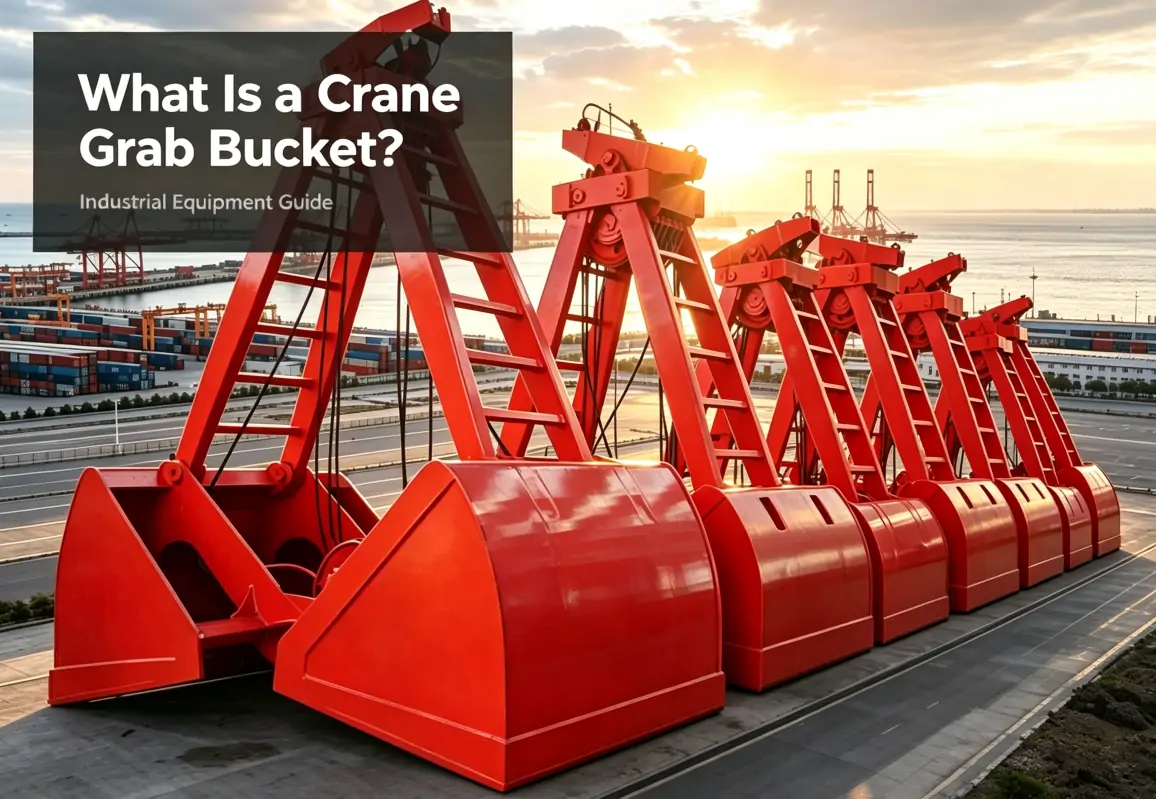
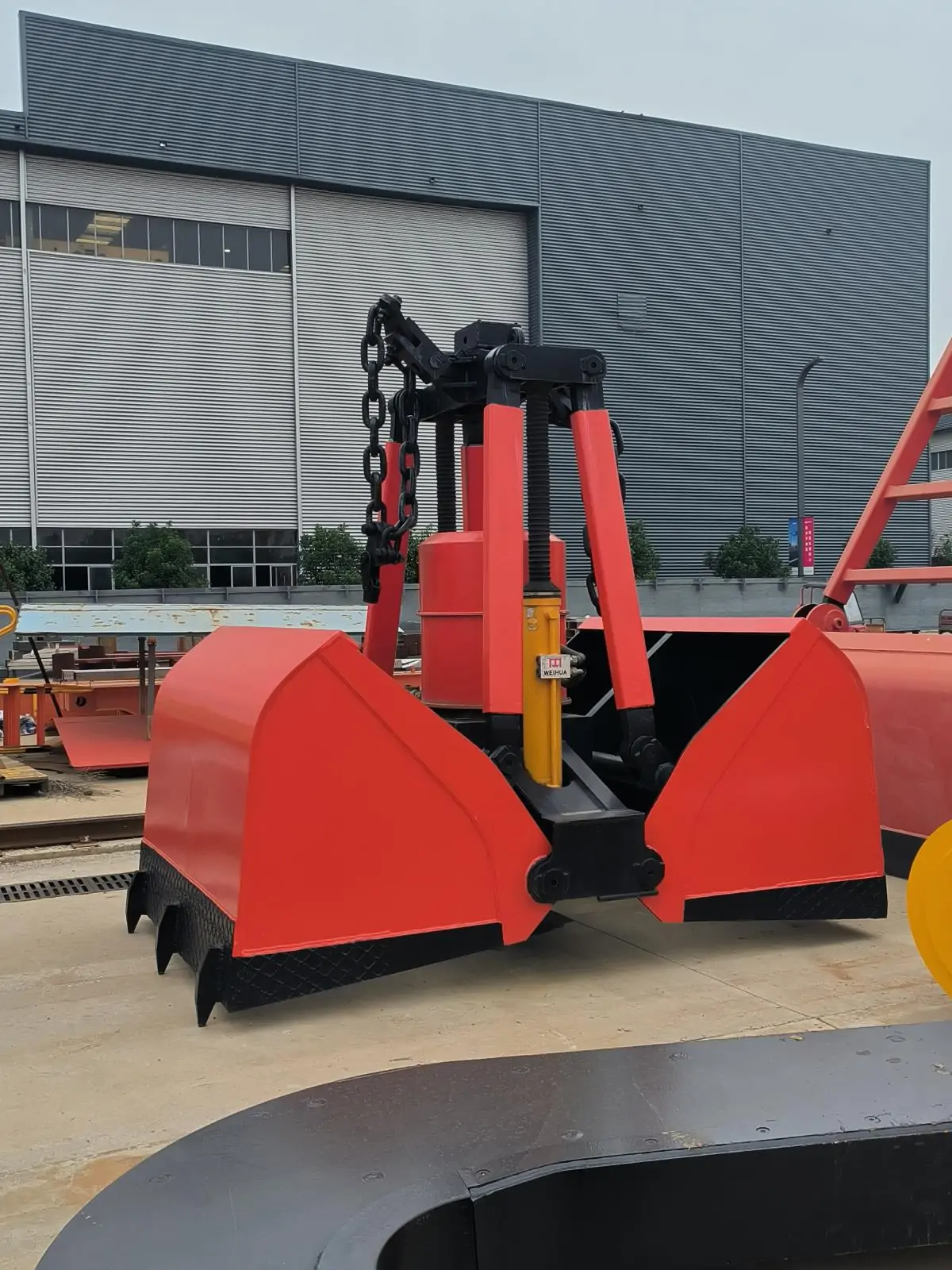
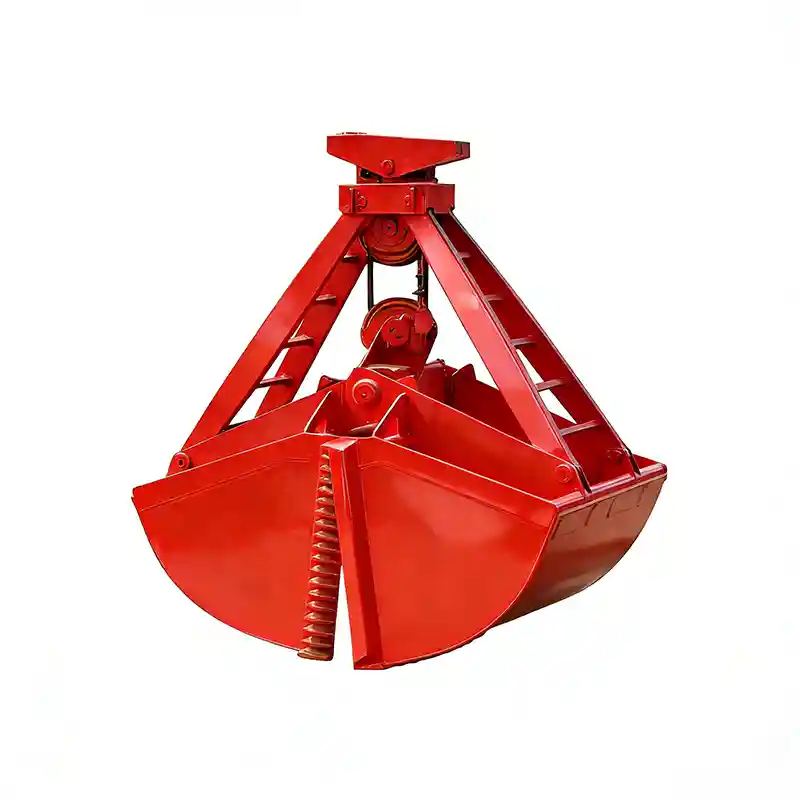
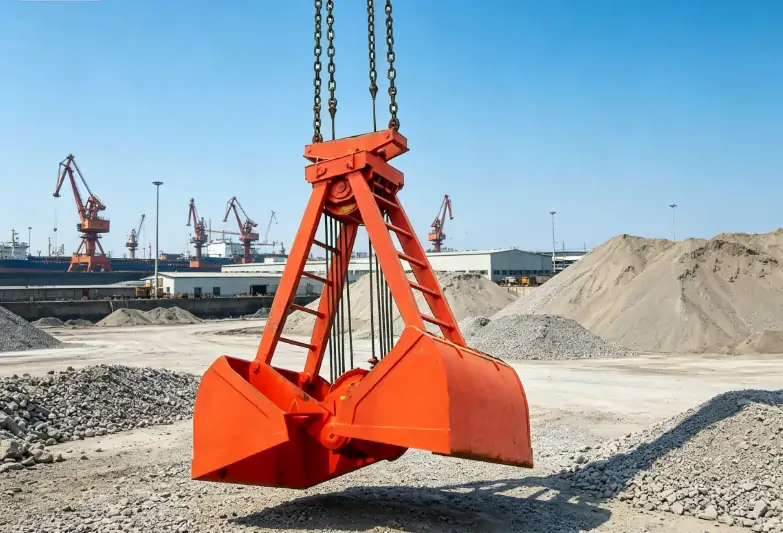
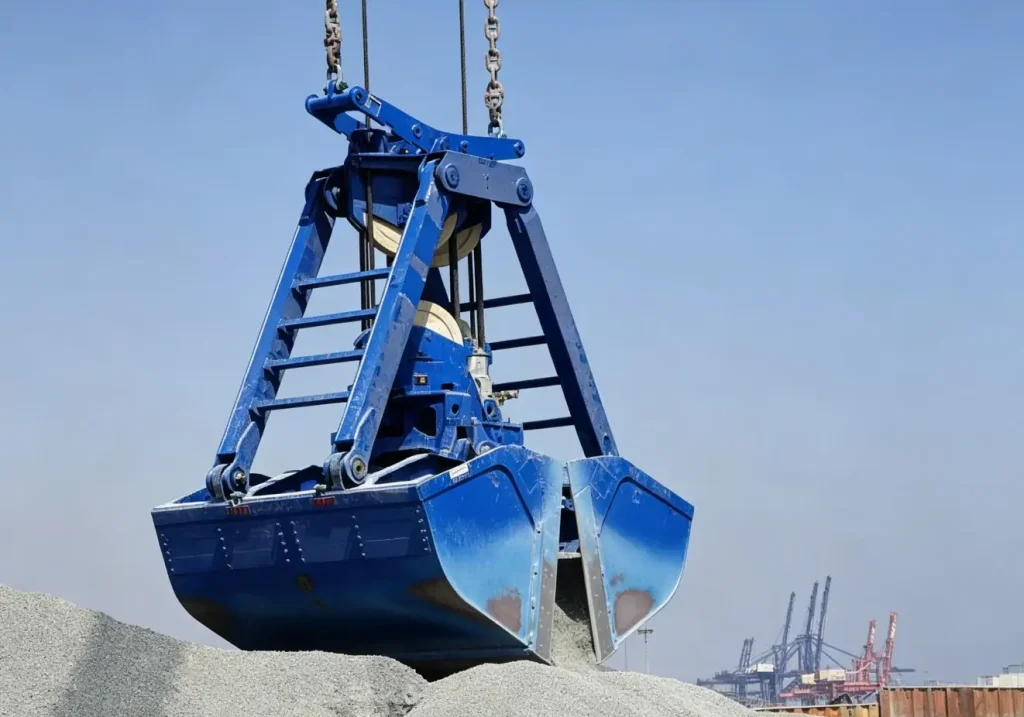
A mechanical clamshell grab bucket, also called a mechanical grab bucket, rope grab, or clamshell grab, is a crane attachment designed for grabbing, transporting, and discharging bulk materials. It operates through the crane’s wire rope system without a hydraulic power unit. The opening and closing movement is controlled by the crane drums, which makes it a reliable solution for bulk material handling applications.
How Does a Mechanical Clamshell Grab Bucket Work?
A mechanical clamshell grab bucket works through a rope-driven opening and closing mechanism connected to the crane hoisting system.
The working cycle includes:
- The support rope lifts and moves the grab to the material pile.
- The closing rope pulls the two bucket shells together.
- The closed shells capture and hold the bulk material.
- The opening mechanism releases the material at the unloading position.
The most common design is a two-rope grab, which uses a support rope and a closing rope controlled by separate crane drums. A four-rope grab combines two sets of rope systems to provide higher stability and lifting performance.
This mechanical structure allows the grab to operate without additional hydraulic equipment. It is commonly installed on cranes equipped with suitable rope mechanisms for continuous bulk material handling.
Main Features of Mechanical Clamshell Grab Bucket
Mechanical clamshell grab buckets are designed for simple operation and reliable performance in standard bulk handling conditions.
Simple Mechanical Structure
The grab uses a rope-driven mechanism without hydraulic cylinders, pumps, valves, or hydraulic power units. The simple design reduces system complexity and makes inspection easier.
Low Maintenance Requirements
Without hydraulic components, maintenance mainly focuses on rope systems, pins, shells, and wear parts. It avoids hydraulic oil replacement and cylinder maintenance.
Wide Crane Compatibility
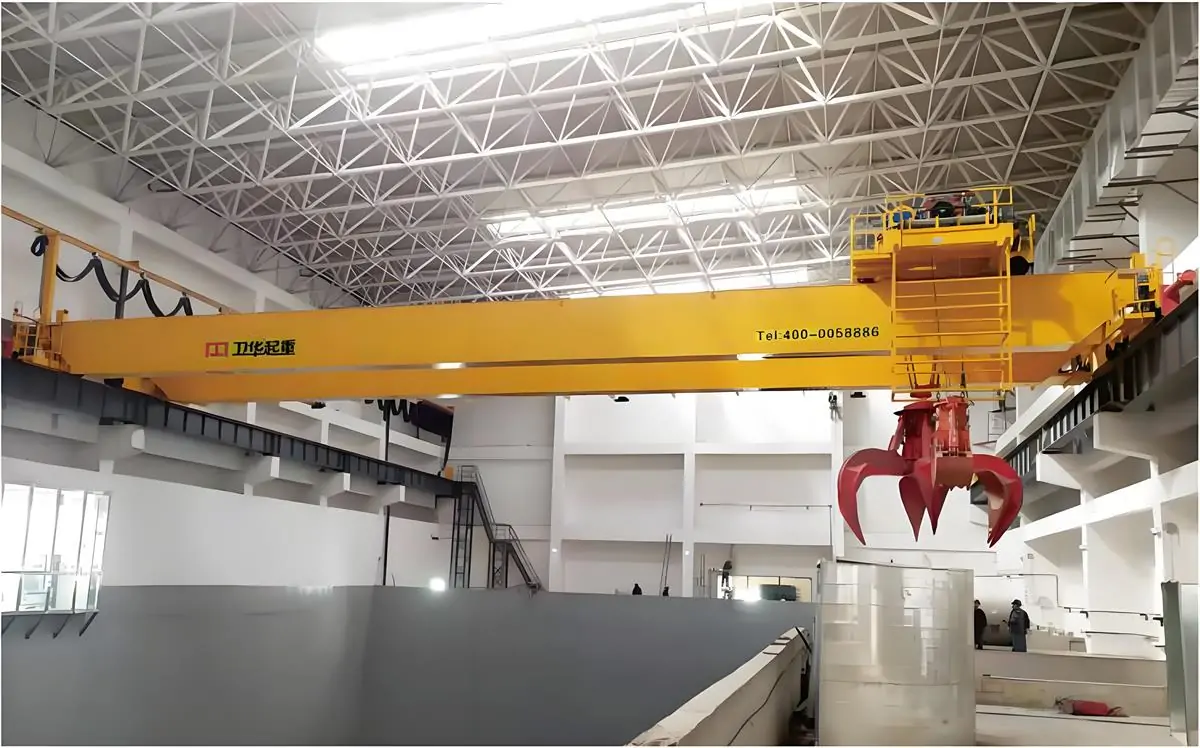
Mechanical grabs can be matched with various cranes when the crane provides the required rope configuration. They are widely used with bridge cranes, gantry cranes, and port handling cranes.
Stable Bulk Material Handling
The mechanical structure provides consistent opening and closing cycles for continuous handling operations.
A mechanical clamshell grab bucket uses the crane’s rope system to control grabbing and releasing operations. Its simple structure, low maintenance requirements, and compatibility with different cranes make it suitable for high-volume bulk material handling. It is widely used for materials such as coal, ore, sand, and grain in ports, plants, and industrial facilities.
What Is a Hydraulic Grab Bucket?
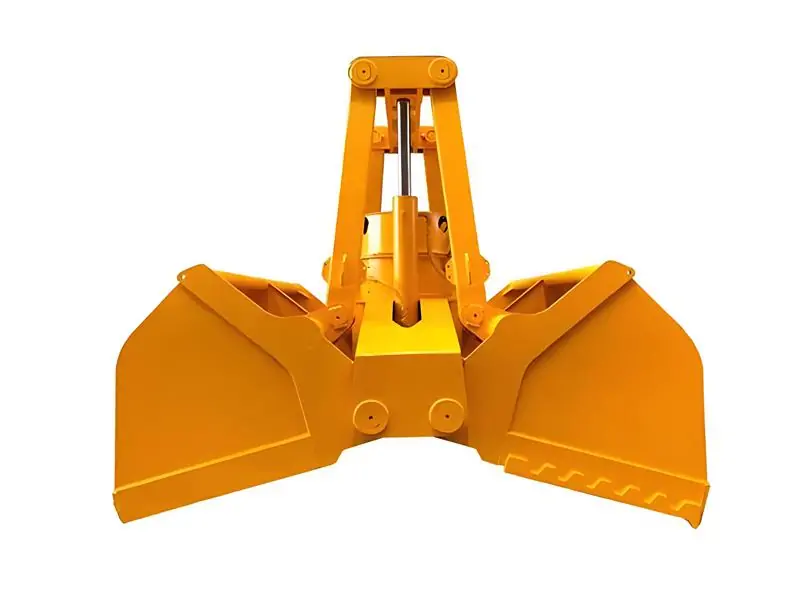
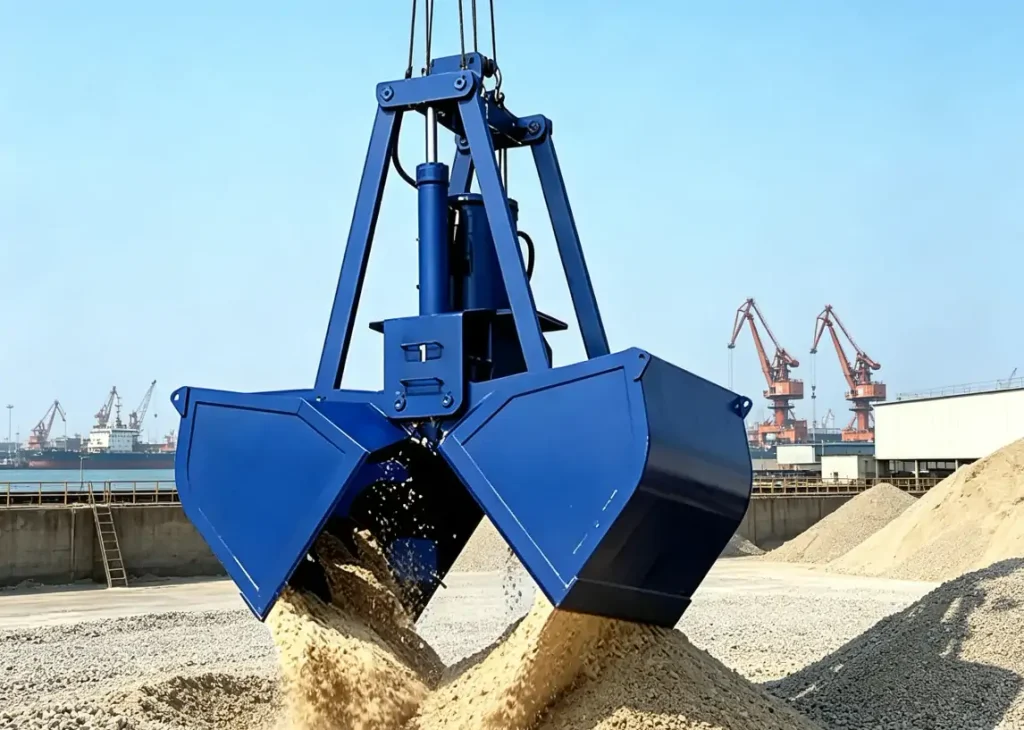
A hydraulic grab bucket, also called a hydraulic clamshell grab, hydraulic grab, or electro-hydraulic grab, is a crane attachment that uses hydraulic cylinders and a hydraulic power system to open, close, and control the grabbing force of the bucket shells. Compared with mechanical clamshell grab buckets, hydraulic grabs have an independent drive system, allowing more flexible operation for different materials and working conditions.
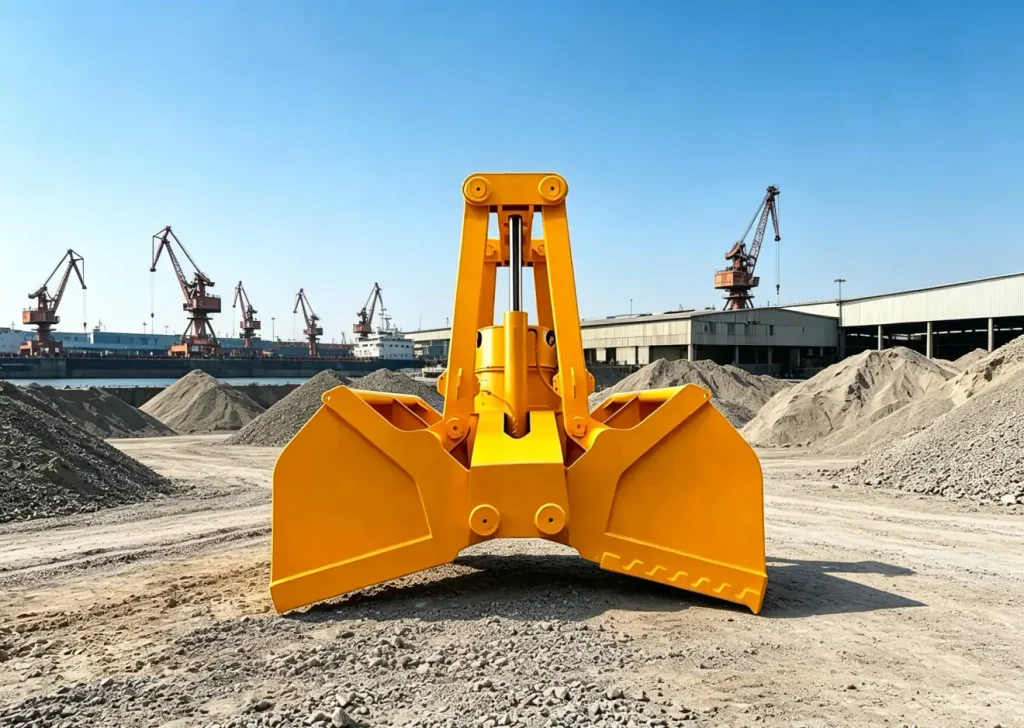
How Does a Hydraulic Grab Bucket Work?
A hydraulic grab bucket operates through a hydraulic system that supplies pressure to the cylinders installed on the grab body. The hydraulic cylinders drive the bucket shells to open and close, allowing the operator to control the grabbing action according to the material condition.
The working cycle includes:
- The crane positions the grab above the material pile.
- The hydraulic system activates the cylinders to open the bucket shells.
- The shells close and apply gripping force to capture the material.
- The crane moves the loaded grab to the discharge area.
- The hydraulic system opens the shells to release the material.
The hydraulic system provides independent control of the grab movement. The operator can adjust the opening and closing action according to material size, shape, and density, which improves handling flexibility in demanding applications.
Main Features of Hydraulic Grab Bucket
Hydraulic grab buckets are designed for applications that require stronger gripping ability and more precise control.
Adjustable Gripping Force
The hydraulic system controls the closing force of the shells. This feature makes hydraulic grabs suitable for irregular, heavy, or compact materials that require stronger holding performance.
Flexible Material Handling
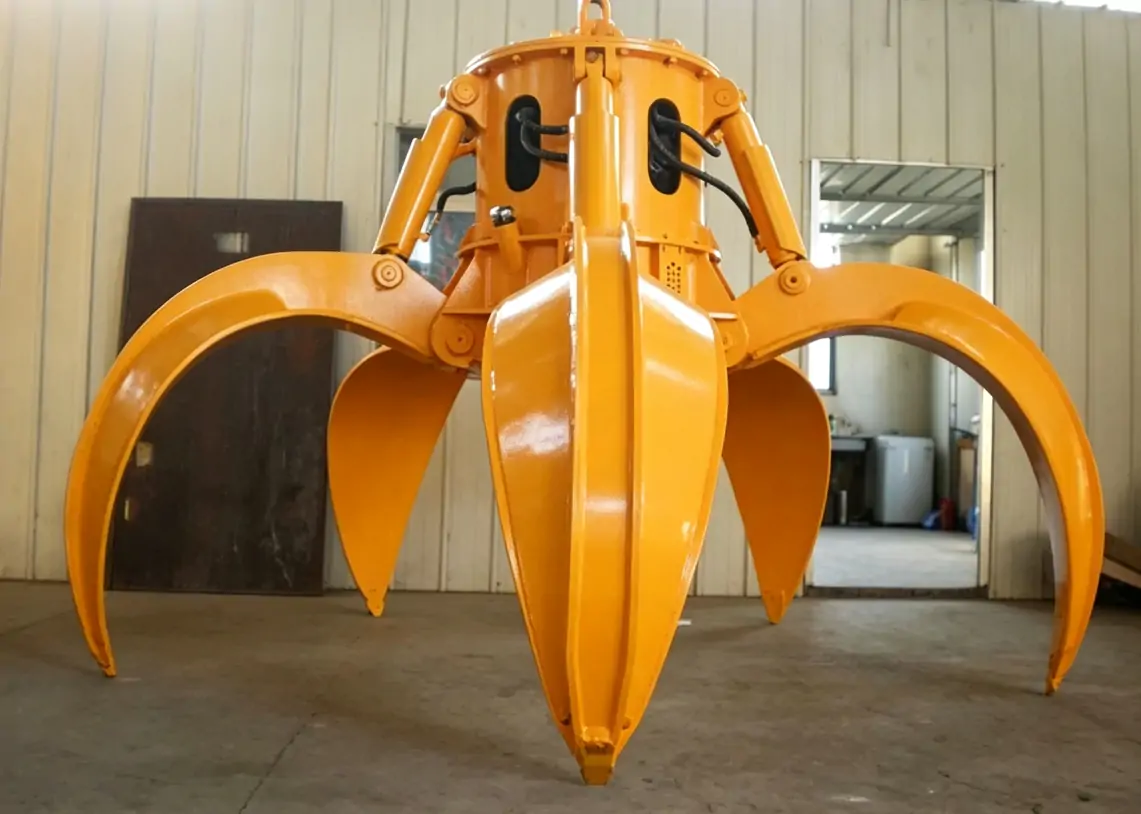
Hydraulic grabs can handle materials with different shapes and densities, including scrap steel, rocks, waste materials, and heavy bulk cargo.
Independent Hydraulic Drive System
The grab operates through hydraulic cylinders and a hydraulic power unit instead of relying on crane rope mechanisms. This allows the grab to work with different crane configurations.
Multiple Structural Designs
Hydraulic grab buckets are available: Single-cylinder hydraulic grabs, Double-cylinder hydraulic grabs, and multi-shell hydraulic grabs. Customizable to meet your needs.
A hydraulic grab bucket uses hydraulic cylinders and a dedicated hydraulic system to control opening, closing, and gripping operations. Its adjustable control, strong gripping capability, and flexible application range make it suitable for heavy, irregular, and demanding material handling tasks. Hydraulic grabs are commonly selected for industries such as steel, recycling, mining, and port operations where mechanical grabs may have limited adaptability.
Hydraulic grabs are widely used in port material handling. For details on materials and how to select the appropriate equipment, please refer to the article: “Electro Hydraulic Grab Bucket for Port Bulk Material Handling.”
Mechanical Clamshell Grab Bucket vs Hydraulic Grab Bucket: Comparison
The key difference between a mechanical clamshell grab bucket and a hydraulic grab bucket is the drive system. Mechanical grabs use crane wire ropes for opening and closing, while hydraulic grabs use an independent hydraulic system. This difference affects structure, maintenance, gripping performance, and applications.
| Comparaison | Mechanical Clamshell Grab Bucket | Hydraulic Grab Bucket |
|---|---|---|
| Système d'entraînement | Crane wire ropes (two-rope or four-rope) | Hydraulic cylinders and power unit |
| Structure | Simple design without hydraulic components | Includes hydraulic cylinders, valves, and pipelines |
| Gripping Force | Depends on grab weight and rope mechanism | Adjustable force with stronger gripping ability |
| Entretien | Lower maintenance, no hydraulic system | Requires hydraulic system inspection |
| Coût | Inférieur | Plus haut |
| Applications | Coal, ore, sand, grain, and other bulk materials | Scrap steel, rocks, waste, and irregular materials |
Mechanical clamshell grab buckets are suitable for continuous bulk handling due to their simple structure and reliable operation. Hydraulic grab buckets provide better control and stronger gripping performance for heavy or irregular materials.
A simple selection rule is to use mechanical grabs for loose bulk materials and hydraulic grabs for heavy or irregular materials. The final choice depends on material type, crane configuration, and working conditions.
Differences Between Mechanical and Hydraulic Grab Buckets
The main differences between mechanical and hydraulic grab buckets are related to their drive systems, material handling performance, operation methods, and maintenance requirements. Mechanical grabs rely on the crane structure for movement, while hydraulic grabs use an independent power system for more flexible control.
1. Drive System Difference
- A mechanical clamshell grab bucket operates through the crane’s wire rope system. The support rope lifts the grab, and the closing rope controls the opening and closing of the bucket shells. The grab movement depends on the crane’s hoisting mechanism.
- A hydraulic grab bucket uses hydraulic cylinders powered by a hydraulic power unit. The hydraulic system directly controls the bucket shells, providing independent operation without relying on crane rope mechanisms.
2. Material Handling Difference
Mechanical and hydraulic grab buckets are designed for different material conditions.
Mechanical clamshell grab buckets are commonly used for loose and free-flowing materials with relatively uniform density.
- Coal
- Sand
- Grain
- Ore
- Gravel
Hydraulic grab buckets are suitable for materials with irregular shapes, higher density, or stronger resistance.
- Scrap steel
- Rocks
- Metal waste
- Sticky materials
The stronger gripping force of hydraulic grabs allows them to handle materials that require more control during grabbing.
3. Operation and Control Difference
- A mechanical grab bucket is controlled through crane movement. The operator adjusts lifting and closing actions by controlling the crane drums and rope system.
- A hydraulic grab bucket is controlled through the hydraulic system. The operator can directly adjust the opening and closing movement, allowing more precise control during material handling.
4. Maintenance Difference
- Mechanical grab buckets have fewer components because they do not include hydraulic systems. Routine maintenance mainly focuses on ropes, pins, shells, and wear parts.
- Hydraulic grab buckets require additional maintenance for hydraulic components, including hydraulic seals, Cylinders, Hydraulic hoses, and hydraulic system inspection. Regular hydraulic maintenance helps maintain stable performance in heavy-duty applications.
Regular inspection and maintenance of crane grab buckets can extend their service life. For details, please refer to: Crane Grab Bucket Maintenance Tips to Extend Service Life.
Mechanical Clamshell Grab Bucket vs Hydraulic Grab Bucket: Which One Should You Choose?
The right grab bucket depends on the material type, crane configuration, and working conditions. Mechanical clamshell grab buckets are suitable for standard bulk handling operations that require a simple structure and reliable performance. Hydraulic grab buckets provide more flexibility for heavy-duty applications where stronger gripping force and precise control are needed.
Choose Mechanical Clamshell Grab Bucket:
A mechanical clamshell grab bucket is a suitable choice when:
- Handling regular bulk materials such as coal, sand, grain, or ore
- A simple structure with fewer components is preferred
- Low maintenance requirements are important
- The crane already supports a suitable rope operation system
- Continuous loading and unloading operations are required
Choose Hydraulic Grab Bucket:
A hydraulic grab bucket is recommended when:
- Handling scrap steel, rocks, or other heavy materials
- Adjustable grabbing force is required
- Different material sizes and shapes need to be handled
- Higher operating flexibility is needed
- The application requires stronger gripping performance
Before selecting a grab bucket, consider the material characteristics, lifting capacity, working frequency, and crane system. A properly matched grab bucket improves handling efficiency and reduces maintenance requirements during operation.
Applications of Mechanical and Hydraulic Grab Buckets
Mechanical and hydraulic grab buckets are used in different industries based on material characteristics and operating requirements. Mechanical grabs are commonly selected for continuous bulk material handling, while hydraulic grabs are used for heavy, irregular, and demanding materials.
Mechanical Clamshell Grab Bucket Applications
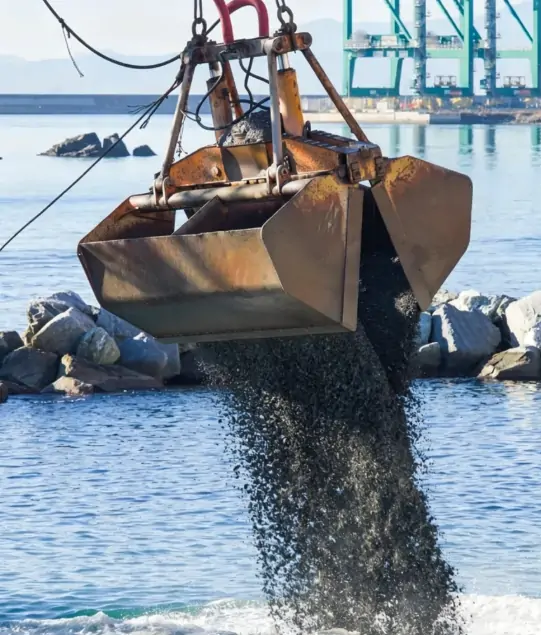
Ports
Used for loading and unloading bulk cargo such as coal, ore, and sand.
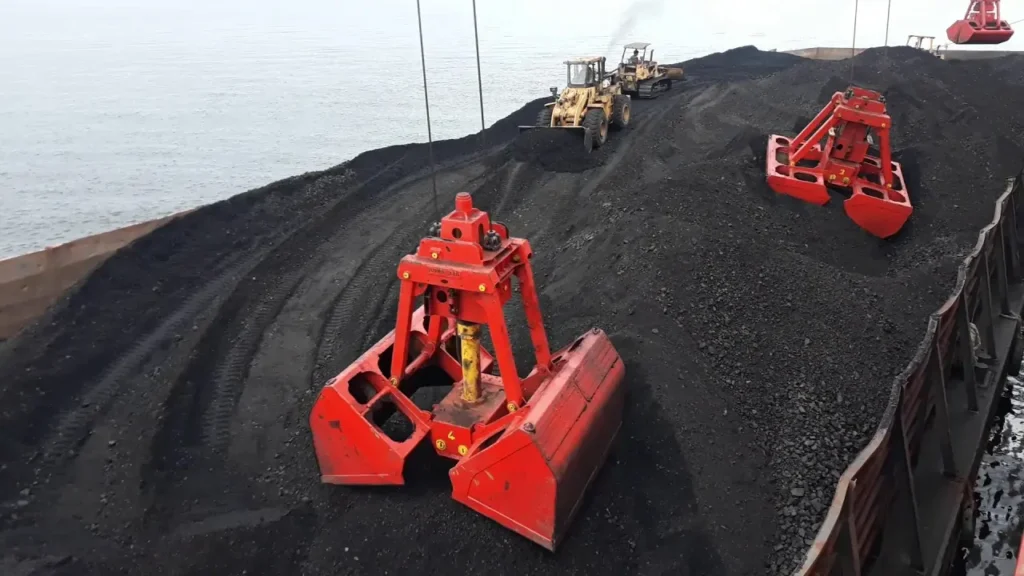
Coal Terminals
Suitable for continuous coal transfer with high-volume handling requirements.
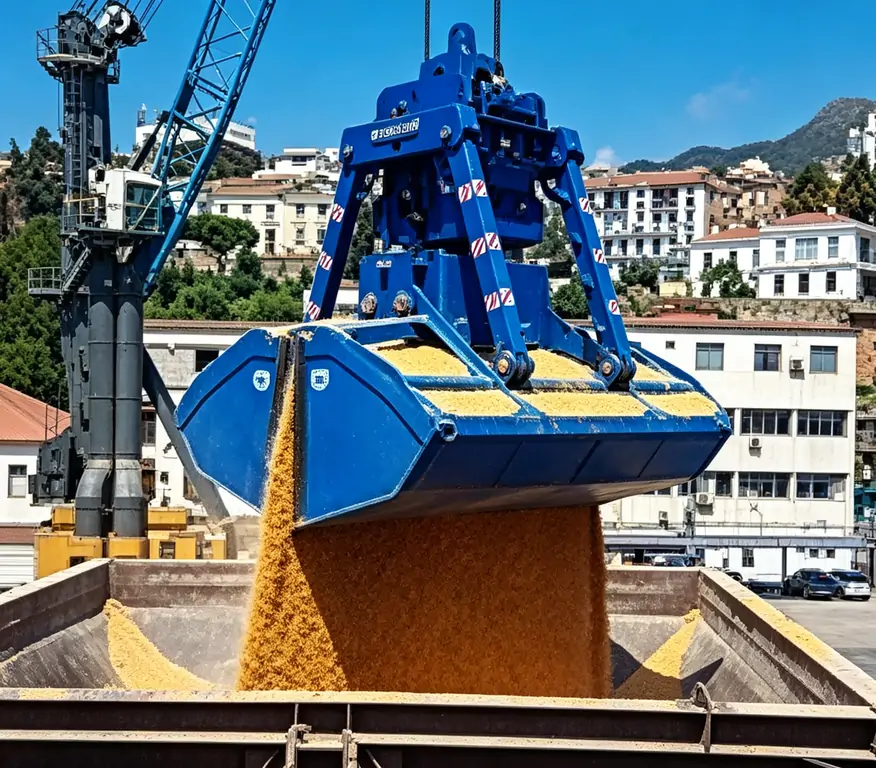
Grain Terminals
Used for efficient handling of grain and other free-flowing agricultural materials.
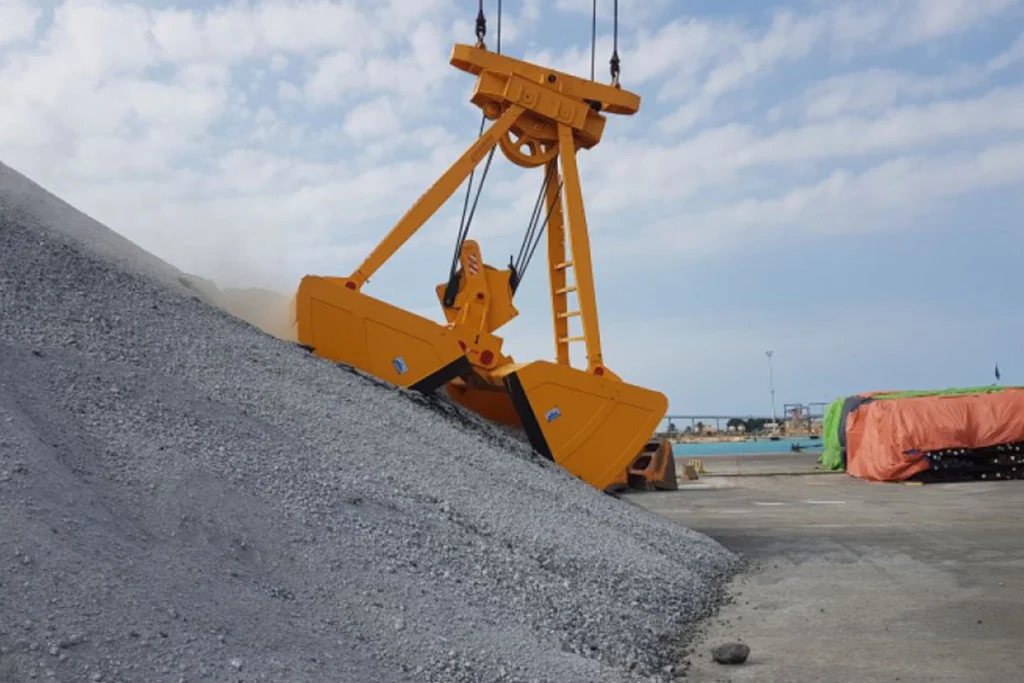
Sand and Gravel Yards
Handles loose construction materials during storage and transportation operations.
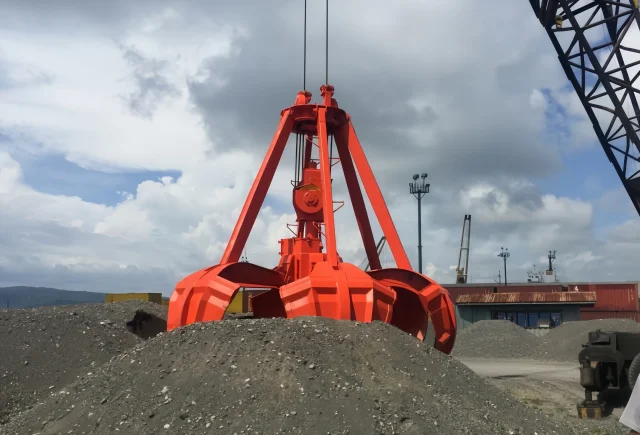
Mining Operations
Used for transferring bulk minerals and ores in mining facilities.
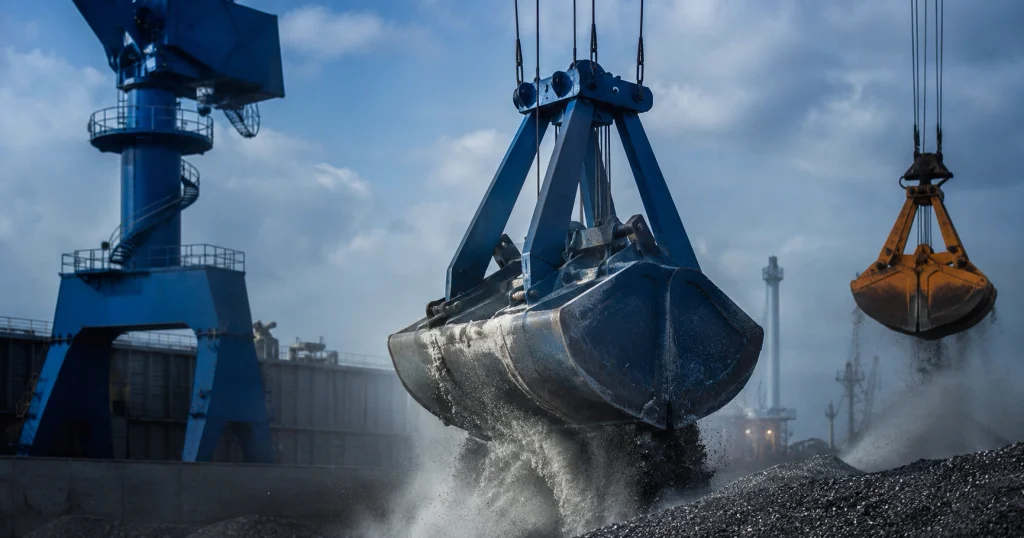
centrales électriques
Applied in fuel handling systems for coal, ash, and other bulk materials.
Hydraulic Grab Bucket Applications
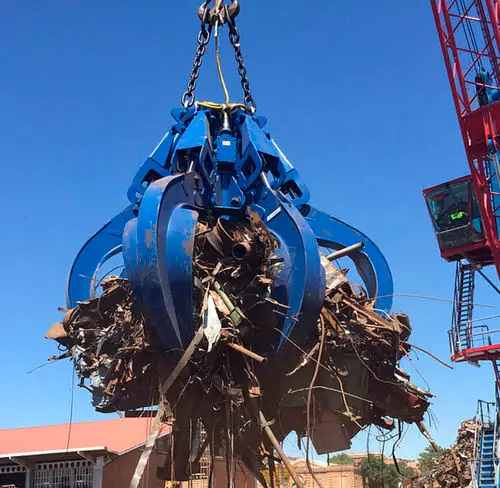
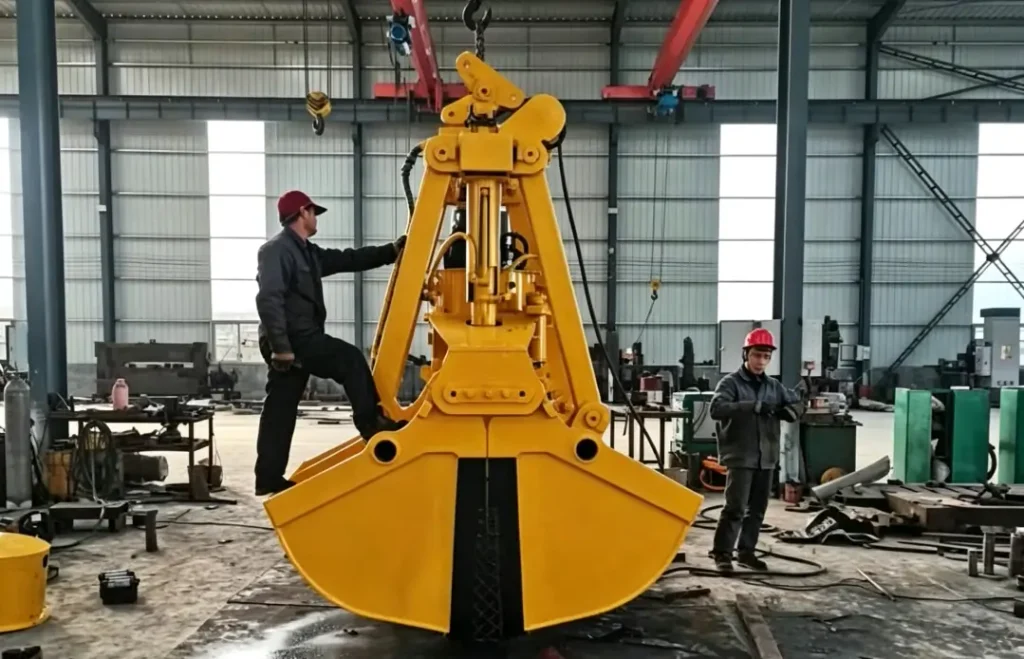
Scrap Yards
Designed for grabbing irregular scrap metal with strong closing force.
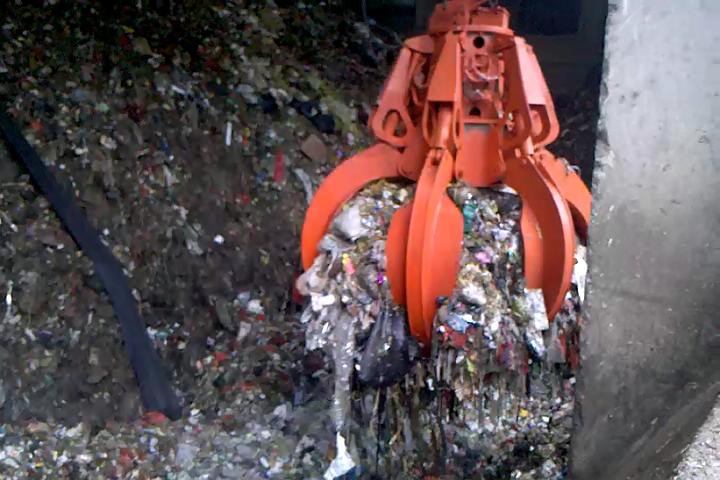
Steel Plants
Used for handling steel scrap, metal blocks, and heavy production materials.
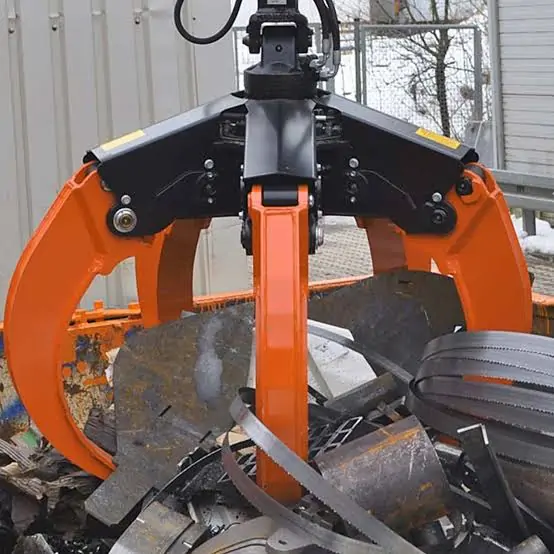
Waste Treatment Plants
Suitable for moving mixed waste materials with different shapes and sizes.
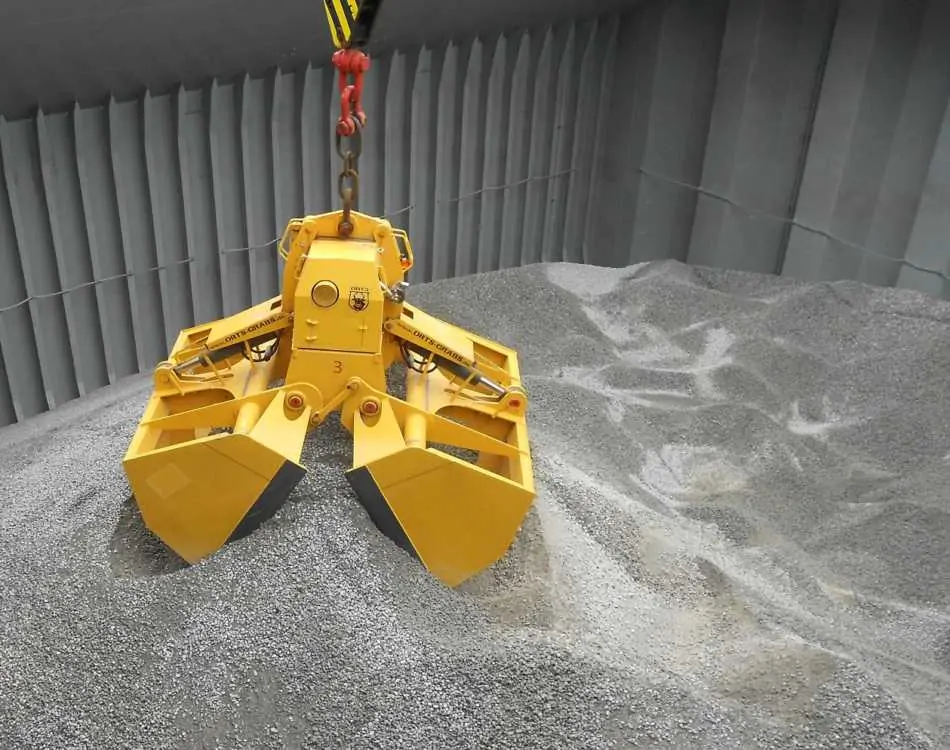
Recycling Facilities
Provides flexible handling of metal waste and recyclable materials.
Quarries
Used for loading rocks, stone blocks, and heavy mineral materials.
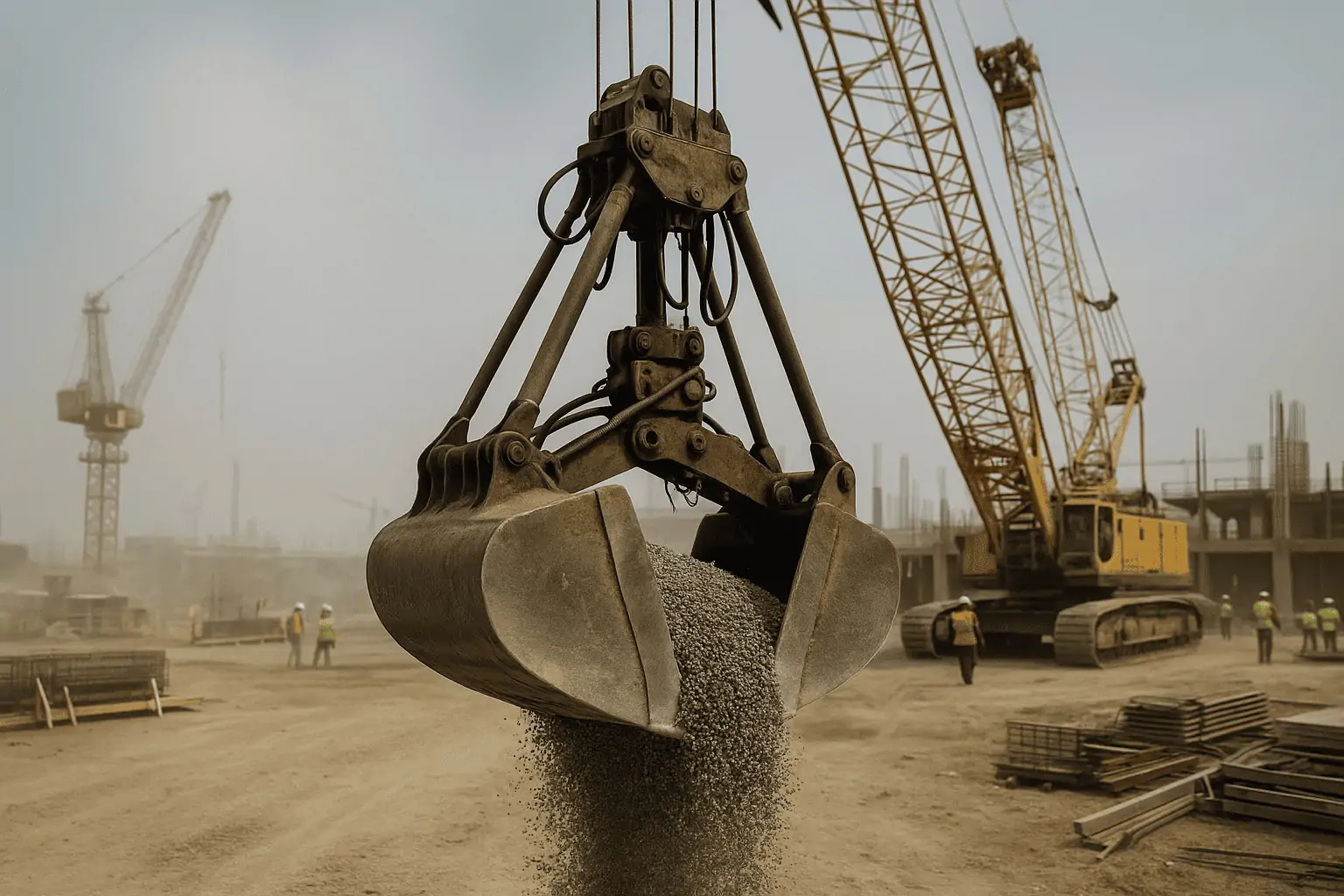
Heavy Material Handling
Applied in ports, construction sites, and industrial areas requiring high gripping performance.
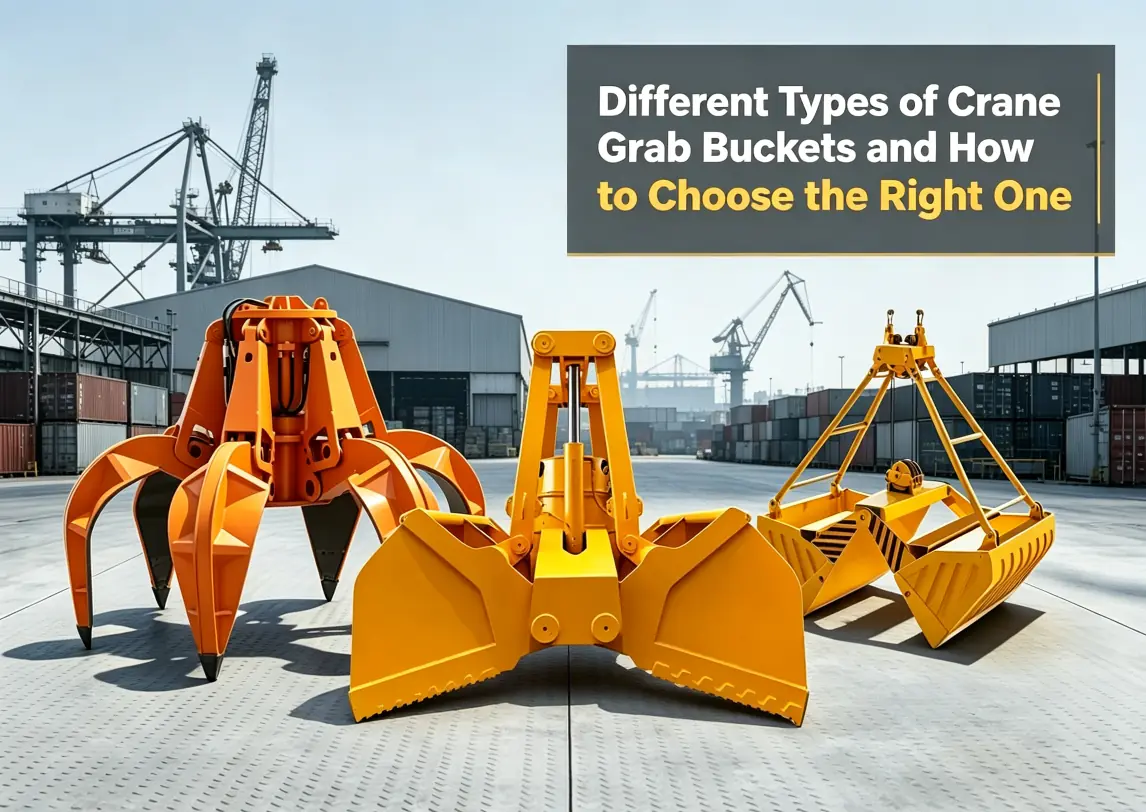
For details on the different applications and classifications of grab buckets, see: Différents types de godets preneuses pour grues et comment choisir le bon
How to Choose the Right Crane Grab Bucket?
Choosing the right crane grab bucket requires matching the grab type with the material, crane system, and job conditions. The following factors are the main considerations during selection.
1. Material Type — Material properties determine the suitable grab design. Mechanical clamshell grabs are used for loose materials such as coal, sand, and grain. Hydraulic grabs are used for scrap steel, rocks, and irregular materials.
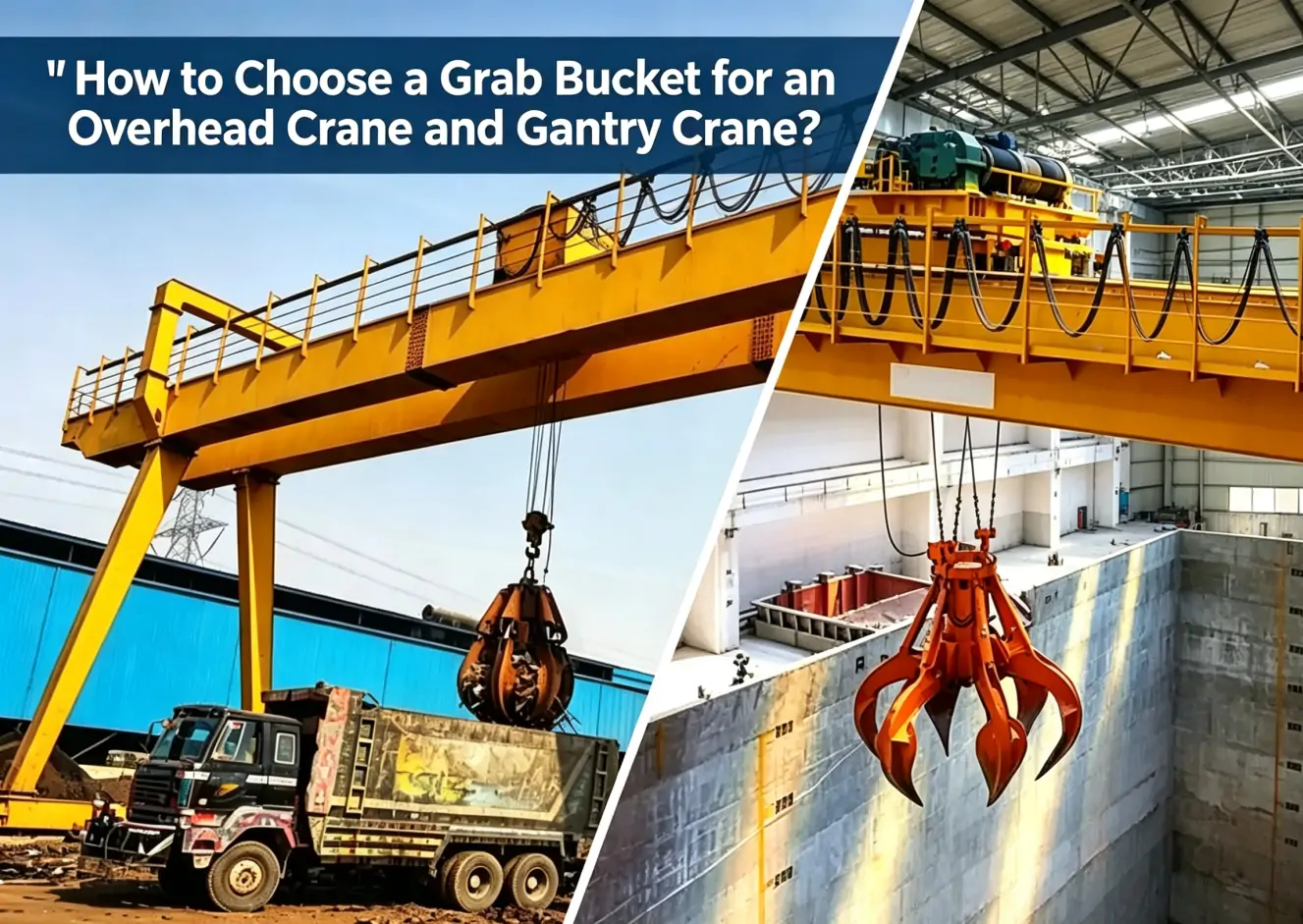
2. Crane Configuration — The grab bucket must fit the crane’s lifting capacity, rope system, and operating setup. Mechanical grabs require suitable rope arrangements, while hydraulic grabs require a compatible hydraulic power system.
3. Working Frequency — The operating cycle affects grab selection. Mechanical grabs are commonly used for continuous bulk loading and unloading. Hydraulic grabs are suitable for operations that require frequent adjustment and flexible handling.
4. Bucket Capacity — Bucket capacity should match the material density and crane load capacity. The correct capacity helps maintain stable operation and prevents excessive load on the crane system.
5. Operating Conditions — The working environment affects grab structure and material selection. Ports, steel plants, mines, and recycling facilities may require wear-resistant designs for long-term operation.
The right crane grab bucket is selected based on material type, crane specifications, bucket capacity, and working conditions. A properly matched grab improves handling performance and extends service life in industrial applications.
Conclusion
Mechanical clamshell grab buckets are suitable for simple and continuous bulk material handling, while hydraulic grab buckets provide more flexibility for complex materials and demanding working conditions. The choice between the two types depends on material properties, crane configuration, operating frequency, and project requirements.
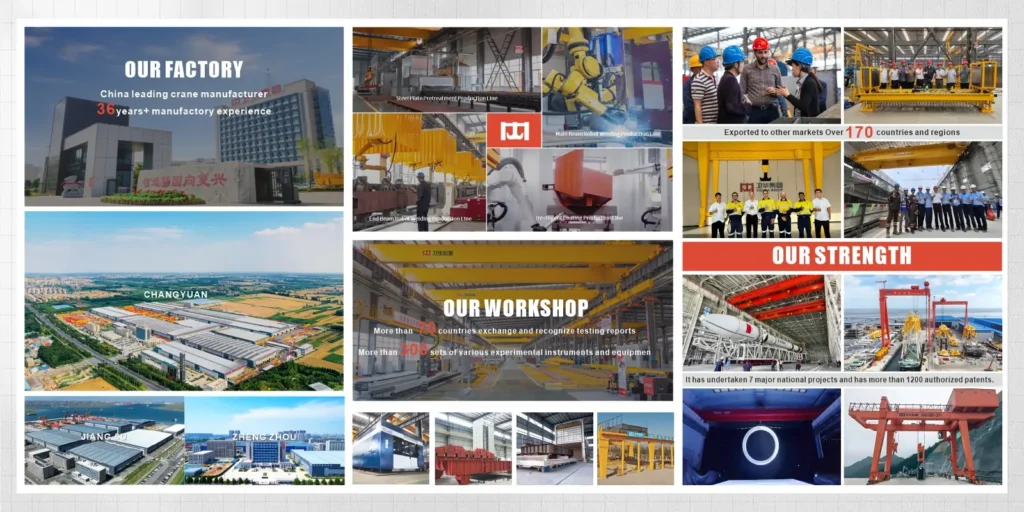
WEIHUA supplies customized mechanical clamshell grab buckets and hydraulic grab buckets for ports, mines, steel plants, and bulk material handling projects. Contact WEIHUA for grab bucket solutions matched to your crane type, material characteristics, and working conditions.
FAQ
What is the difference between mechanical and hydraulic grab buckets?
Mechanical grab buckets use crane wire ropes to control opening and closing, while hydraulic grab buckets use hydraulic cylinders and a power unit. Mechanical grabs have a simple structure, while hydraulic grabs provide adjustable gripping force.
Which grab bucket is better for scrap steel?
Hydraulic grab buckets are commonly used for scrap steel because they provide stronger gripping force and can handle irregular shapes, heavy loads, and mixed metal materials.
Are mechanical clamshell grab buckets cheaper than hydraulic grab buckets?
Yes. Mechanical clamshell grab buckets usually have lower purchase and maintenance costs due to their simple structure and lack of hydraulic components.
Which grab bucket is used for coal handling?
Mechanical clamshell grab buckets are widely used for coal handling because coal is a loose bulk material suitable for rope-operated grab systems.
Can hydraulic grab buckets handle heavy materials?
Yes. Hydraulic grab buckets are designed for heavy materials such as scrap steel, rocks, metal blocks, and other materials that require higher gripping force.
What materials can mechanical clamshell grab buckets handle?
Mechanical clamshell grab buckets are commonly used for coal, sand, grain, gravel, ore, coke, and other loose bulk materials.
How do I choose the right crane grab bucket?
Selection depends on material type, crane capacity, bucket size, working frequency, and operating conditions. Mechanical grabs suit bulk materials, while hydraulic grabs fit heavy or irregular materials.
Can WEIHUA customize mechanical and hydraulic grab buckets?
Yes. WEIHUA provides customized mechanical clamshell grab buckets and hydraulic grab buckets based on crane specifications, material characteristics, capacity requirements, and project conditions.