



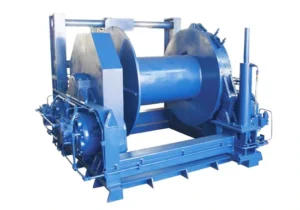
Looking for a hydraulic winch for sale? Prices range from $1,800 for a compact 1-ton unit to $85,000+ for a 500-ton marine mooring winch, depending on capacity, drum configuration, and certification requirements. Most industrial buyers in the 5–50 ton range will find CE-certified units between $4,500 and $28,000 at factory-direct pricing.
If your site already runs a hydraulic power pack, or if you need continuous-duty pulling in an explosive, wet, or high-temperature environment where electric motors can’t operate safely, a hydraulic winch is almost certainly the right call. The challenge isn’t whether to buy one — it’s confirming the right specs before you wire the deposit.
This page gives you the price reference, spec table, and pre-order checklist you need to finalize your purchase and avoid the most expensive configuration mistakes.
Obtenez un devis personnalisé dès maintenantSend your load (tons), line speed (m/min), and drum capacity (mm × m) to our engineering team for a factory-direct price within 24 hours.
Key Takeaways
-
•
Hydraulic Winch Pricing: Hydraulic winches for sale range from $1,800–$85,000+; most 5–50T industrial units ship between $4,500–$28,000.
-
•
Technical Specifications: Confirm six parameters before ordering: rated load, line speed, drum capacity, duty class, power supply, and certifications required.
-
•
Compliance & Benchmarks: CE (EN 14492-1) and ISO 4309 are the minimum compliance benchmarks for most export markets.
Table des matières
Hydraulic Winch Price & Spec Quick-Reference Table
Use this table to match the right hydraulic winch for sale to your capacity and application before requesting a quote.
| Type | Capacité | Line Speed | Price Range (Market Ref.) | Application typique |
|---|---|---|---|---|
| Compact Hydraulic Winch | 1–5T | 5–15 m/min | $1,800–$6,500 | Construction, vehicle recovery |
| Industrial Hydraulic Winch | 5–30T | 3–12 m/min | $5,500–$22,000 | Mining, factory, oil & gas |
| Heavy Duty Hydraulic Winch | 30–100T | 2–8 m/min | $14,000–$52,000 | Offshore, port, slipway |
| Marine Mooring / Towing Winch | 50–500T | 0.5–6 m/min | $28,000–$85,000+ | Shipyard, FPSO, harbor tug |
| Hydraulic Planetary Winch | 5–150T | 2–20 m/min | $7,000–$45,000 | Piling, drilling rig, deep mining |
For loads under 10 tons in a standard construction or factory setting, an industrial hydraulic winch ($5,500–$12,000) delivers the best power-to-cost ratio; for marine or offshore duty, budget at least $28,000 and specify DNV or ABS certification upfront.
Obtenez un devis personnalisé dès maintenantShare your specs — we respond within 1 business day.
Hydraulic Winch Types: Which One Matches Your Application?


When evaluating a hydraulic winch for sale, the type you need depends on your transmission, drum configuration, and operating environment — not just rated capacity.
Planetary vs. Worm Gear: The Transmission Decision
Planetary hydraulic winches deliver higher efficiency (typically 85–93%) and handle continuous-duty cycles better than worm gear units. Worm gear models are more compact and self-locking under load — useful where the load must hold position without brake engagement (e.g., slope pulling, piling). For speeds above 10 m/min or loads above 30T, specify planetary transmission. For slow-speed hoisting where self-locking is a safety requirement, worm gear is the safer default.
Single Drum vs. Double Drum Configuration
Single drum hydraulic winches cover the majority of pulling and towing applications — simpler to spec, lower cost, easier to maintain. Double drum units are specified when two independent wire rope lines are needed simultaneously (e.g., mooring winches holding both head and stern lines, or synchronized lifting of a suspended load). Double drum units add 25–40% to the base price and require additional hydraulic flow capacity.
Marine vs. Industrial Hydraulic Winch
Marine hydraulic winches (mooring, towing, anchor) are built to IACS standards and typically carry DNV-GL, ABS, or BV certification in addition to CE marking. They use stainless-steel or hot-dip galvanized hardware, IP65-rated electrical components, and corrosion-resistant coatings rated for saltwater exposure. Industrial models (construction, mining, oil & gas onshore) follow FEM 1.001 duty classifications (M1–M8) and are CE-marked under EN 14492-1. Specifying the wrong class for the environment is the single most common — and costly — ordering mistake.
Pre-Order Specification Checklist
The Six Parameters You Must Confirm Before Ordering
Getting even one parameter wrong can result in a unit that underperforms, voids the warranty, or fails safety certification. Confirm all six with your engineering team before finalizing the purchase order:
- Rated load (T or kN) — specify the maximum working load, not the occasional peak. Undersizing by 20% is common and leads to premature motor wear.
- Line speed (m/min) — slower speeds require higher torque; faster speeds require larger hydraulic flow rates. Both affect motor sizing and pump selection.
- Drum capacity (wire rope diameter mm × usable length m) — e.g., Ø16mm × 200m. Undersized drums cause multi-layer spooling issues that reduce rated capacity by 15–30%.
- Duty class (FEM 1.001: M1–M8 or ISO 4301) — M3–M4 covers most construction/factory use; M5–M6 for continuous industrial; M7–M8 for 24/7 mining or marine.
- Hydraulic system compatibility — flow rate (L/min) and working pressure (bar) must match your existing power pack. Mismatched systems are the primary cause of post-installation failures.
- Certification required — CE (mandatory for EU), DNV-GL / ABS / BV (marine), ATEX (explosive zones), or local standards (CCS for China, KR for Korea).
Certifications Explained
- EN 14492-1 (CE marking): the European harmonized standard for power-driven winches. Required for any winch sold or operated in the EU.
- FEM 1.001: Federation Européenne de la Manutention duty classification for winch and hoist components. Defines service life and load spectrum.
- ISO 4309: specifies wire rope inspection, discard criteria, and safety factors — critical for on-site maintenance compliance.
- DNV-GL / ABS: class society certifications required for offshore and marine-class equipment. Adds 12–18% to unit cost but is non-negotiable for FPSO, platform, or ship-mounted applications.
- ATEX (94/9/EC or 2014/34/EU): mandatory for use in Zone 1 or Zone 2 explosive atmospheres (petrochemical, coal mines). Must be specified at the design stage — cannot be retrofitted.
How to Evaluate a Hydraulic Winch Supplier
What a Qualified Manufacturer Can Provide
A credible factory-direct supplier should be able to provide, without hesitation: a factory audit report or ISO 9001:2015 certificate, CE Declaration of Conformity with the notified body number, load test certificate (typically 1.25× rated load), and material traceability documents for load-bearing components. If any of these are unavailable or delayed beyond 3 business days, treat it as a red flag.
Lead Time and Delivery Realities
Standard-catalog hydraulic winches for sale (1–30T, in-stock configurations) typically ship within 15–30 days ex-works. Custom units — non-standard drum dimensions, ATEX certification, double drum, or capacity above 100T — require 45–90 days from order confirmation. Factor in sea freight (25–45 days to most ports) when planning installation timelines. Request a detailed production schedule in writing before paying the deposit.
Conclusion
A hydraulic winch is a long-term capital equipment decision. Whether you’re sourcing a hydraulic winch for sale from a factory-direct supplier or through a distributor, getting the spec right costs nothing extra; getting it wrong costs the price of a second unit. Use the six-parameter checklist above, confirm the certification path for your market, and evaluate suppliers on their ability to provide documentation — not just price.
Three actions before you place an order:
- Fill out the spec sheet with all six parameters and send it to at least two qualified suppliers for comparison quotes.
- Ask each supplier for the CE Declaration of Conformity and load test certificate for a reference unit in your capacity range.
- Confirm hydraulic system compatibility (flow rate and pressure) with your site’s power pack before the purchase order is signed.
Ready to get a factory-direct price? Send your rated load, line speed, and drum spec — our engineering team will respond with a detailed quotation within 24 hours.

FAQ
How much does a hydraulic winch cost?
Hydraulic winches range from $1,800 (1-ton compact) to $85,000+ (500-ton marine mooring). Most industrial 5–50T units ship factory-direct between $4,500 and $28,000 (market reference, ex-works). Certification requirements (CE, DNV, ATEX) and drum configuration add 15–40% to base price. Always request a line-item quotation so you can compare motor, gearbox, and certification costs separately.
What is the difference between a hydraulic winch and an electric winch?
Hydraulic winches draw power from a hydraulic motor driven by a pump, making them ideal for continuous-duty, high-force, or hazardous environments where electric motors risk overheating or pose ignition risks. Electric winches are simpler, cheaper to install, and require no hydraulic infrastructure — but are limited in duty cycle and unsuitable for ATEX zones. For loads above 30T or in offshore/mining duty, hydraulic drive is typically the specification default.
What certifications should a hydraulic winch have for export markets?
CE marking (EN 14492-1) is mandatory for the EU and most export markets. Marine applications additionally require DNV-GL, ABS, or BV class certification. Explosive zone installations must carry ATEX certification (2014/34/EU). Always request the CE Declaration of Conformity with the notified body identification number — a CE mark without this document is not legally valid.
What FEM duty class do I need for my application?
FEM 1.001 duty classes for winches range from M1 (very light, infrequent use) to M8 (continuous, 24/7 heavy-duty). Construction and factory pulling typically falls within M3–M4. Continuous mining or port operations require M5–M6. Offshore and permanent marine installations are typically specified M6–M7. Undersizing the duty class is the leading cause of premature gearbox and motor failure in hydraulic winch installations.
Can I connect a hydraulic winch to my existing hydraulic power pack?
Yes, provided the flow rate (L/min) and working pressure (bar) of your power pack match the winch motor specifications. Most industrial hydraulic winches operate at 100–350 bar and require 40–200 L/min depending on capacity and speed. Ask your supplier for the hydraulic schematic and motor displacement figure (cc/rev) before ordering, and have your hydraulic system engineer verify compatibility — mismatched systems account for the majority of post-installation performance complaints.



 English
  Русский
  العربية
  Français
  Português
  Español