- منتجمعداتالدقة الكهربائية، التخصيص، حلول الرافعاتبريد إلكتروني:واتساب / وي شات:+8613781917315عنوانرقم 18 طريق شانهاي، مدينة تشانغ يوان، مقاطعة خنان، الصين
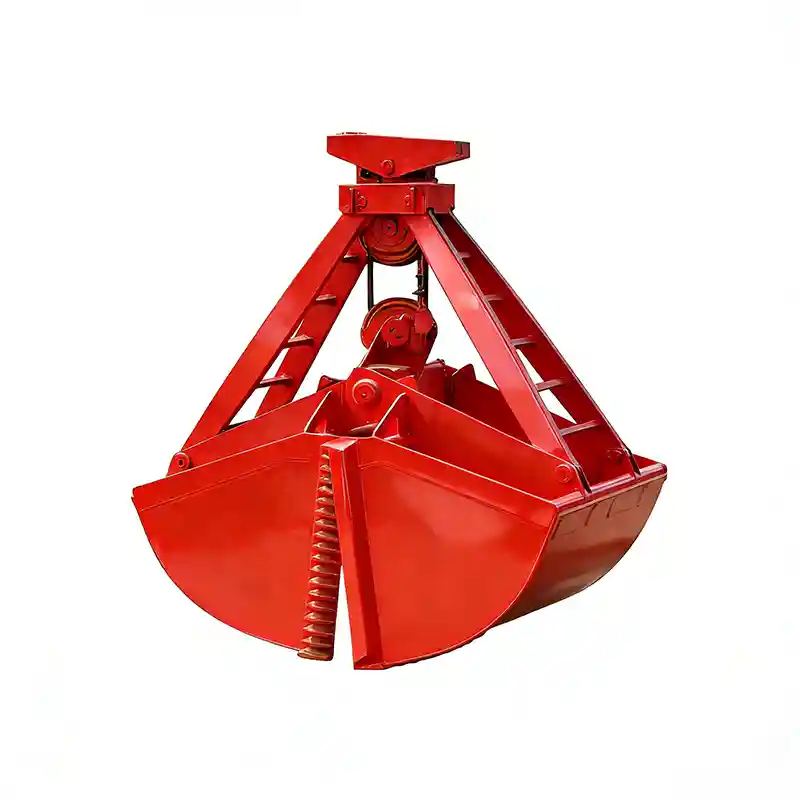
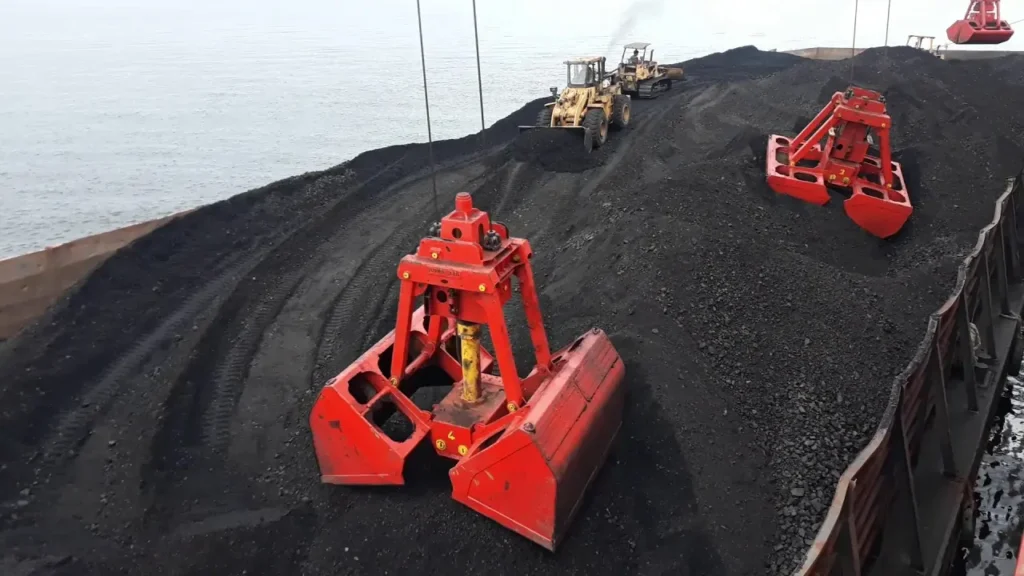
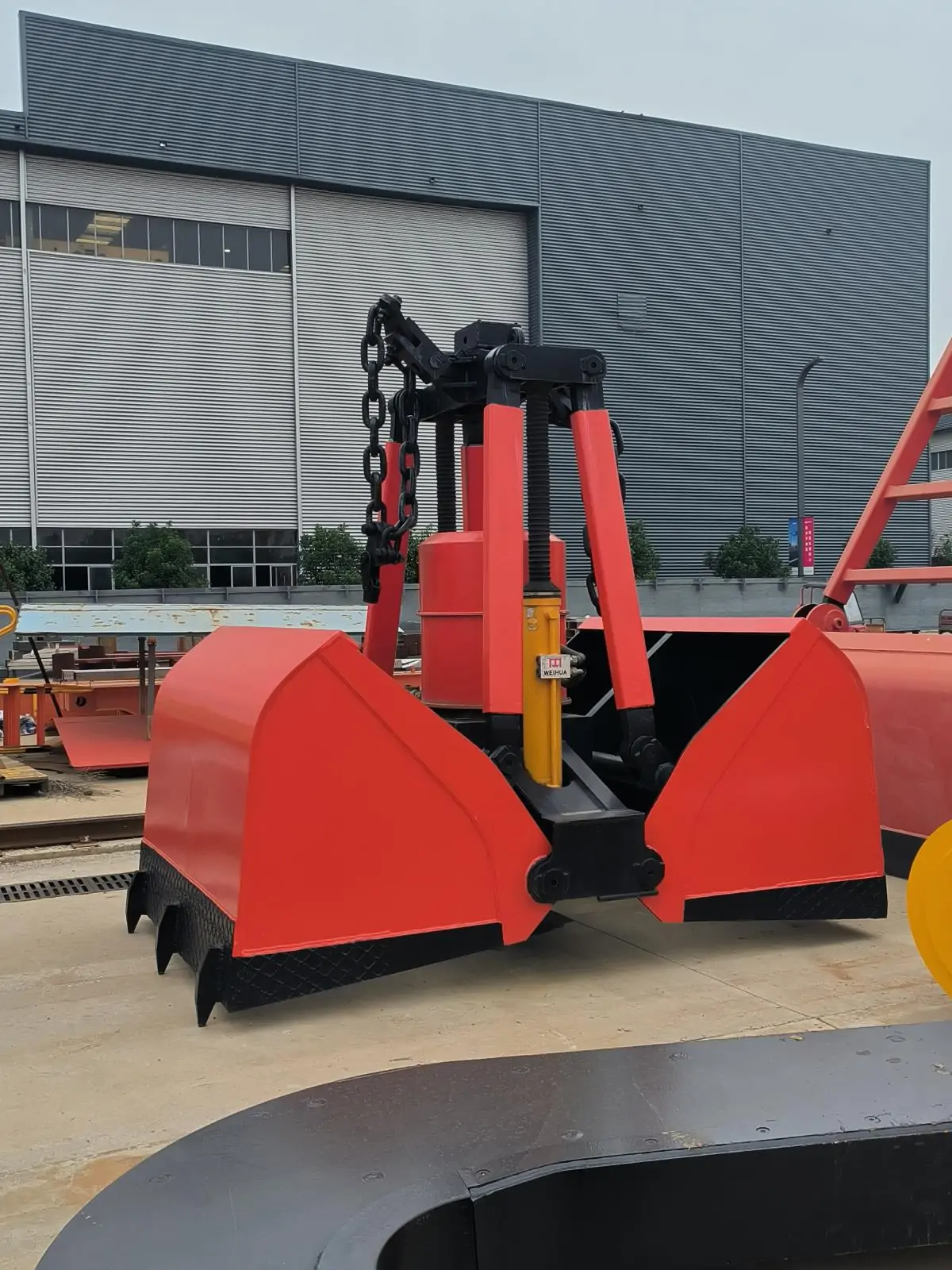
A mechanical clamshell grab bucket is a two-shell attachment used for handling loose bulk materials such as coal, sand, grain, scrap, and ore. It is commonly installed on cranes, including overhead cranes, port cranes, رافعات جسرية, and ship unloaders. The grab opens and closes through the crane lifting mechanism to scoop, hold, and discharge materials. Also known as a mechanical grab or rope-operated grab bucket, simple structure, reliable operation, and easy maintenance without a separate hydraulic power unit.
The grab hangs from the crane hook. Hoist and closing ropes run through the upper and lower sheaves. The jaws close under their own weight and the pull of the closing rope, cutting into the material pile. Releasing the closing rope opens the jaws for discharge. Motor-driven models use an onboard motor for jaw movement instead of a closing rope. The operator handles the material from the crane without direct contact.
The shells are welded from Q345B or NM400 wear-resistant steel. The head, sheaves, ropes, and hinge pins are sized according to the rated load. Capacities range from 0.5 to 30 m³ and are selected according to crane capacity and material density. Materials include coal, ore, sand, gravel, cement clinker, fertilizer, and grain. Common applications include ports, mines, steel plants, power stations, and waste-to-energy facilities.
للمزيد من المعلومات، اقرأ المقال: ما هي جرافة الرافعة؟
Mechanical clamshell grab buckets are mainly available in two-rope and four-rope configurations. The rope arrangement affects how the grab is operated and must match the crane’s rope system. Selection also depends on grab capacity, material, and working conditions.
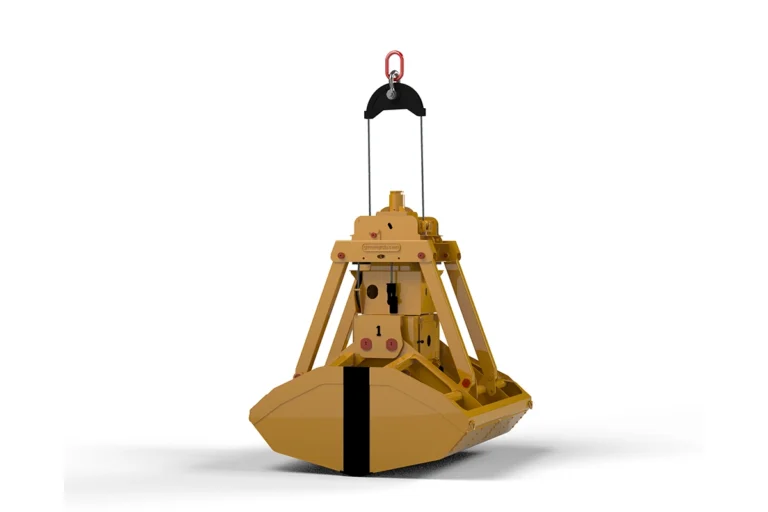
A two-rope mechanical clamshell grab uses one hoist rope and one closing rope. The hoist rope raises and lowers the grab, while the closing rope operates the shells. It has a straightforward rope arrangement and is suitable for general handling of sand, gravel, coal, grain, and other loose bulk materials.
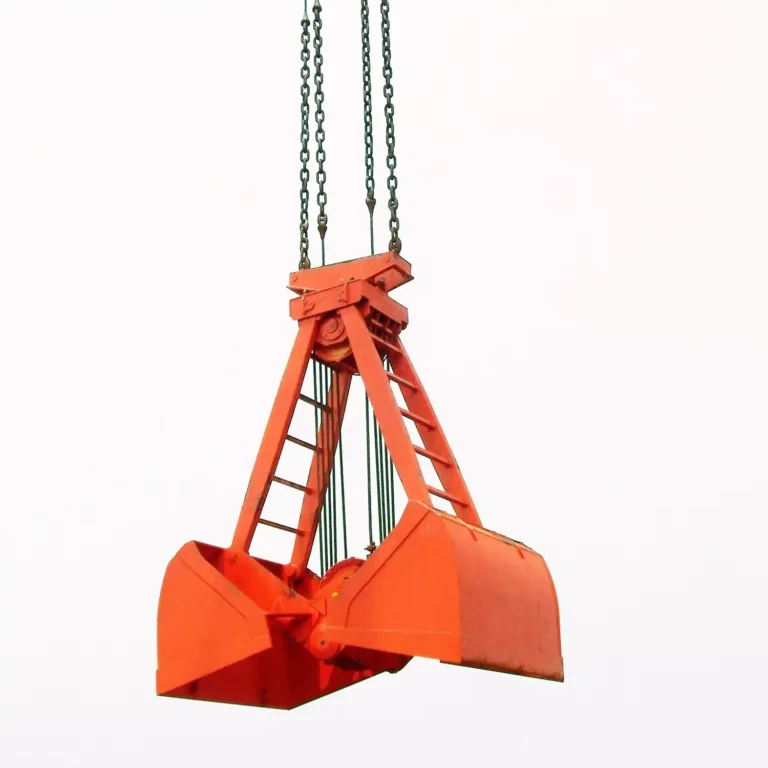
A four-rope mechanical clamshell grab uses separate hoist and closing ropes for the grab mechanism. The arrangement gives better control of shell movement and is suited to larger grabs and heavier handling work. It is commonly used for bulk material handling in ports, mines, steel plants, and other industrial facilities.
A mechanical clamshell grab bucket operates through the crane hoist rope and closing rope. The hoist rope lifts and lowers the grab, while the closing rope controls two hinged shells. The head and sheave assembly transfers rope force to the shells, with hinge pins allowing them to open and close. The grab connects to the crane through a suspension link or similar connector.
The mechanical clamshell grab uses the crane’s rope system rather than a separate hydraulic power unit. This configuration is suitable for repetitive handling of loose bulk materials such as coal, ore, sand, and gravel.
| مُعامل | Value / Options |
|---|---|
| SWL (Lifting Capacity) | 5.0–25.0 t; 30 t or higher on request |
| Grab Capacity | 1.4–8.0 m³ standard; 0.5–30 m³ customized |
| Dead Weight | 2,640–12,200 kg |
| Shell Configuration | 2-shell; multi-jaw; 6-peel available |
| Rope Configuration | Two-rope, three-rope, four-rope |
| Pulley Diameter | 315–630 mm |
| Main Material | Q355B, Q460, NM400, NM500 |
| شهادة | م.م, ISO 9001 |
Mechanical Clamshell Grab Buckets are used for loading, unloading, and transferring loose bulk materials in industrial and material handling operations.
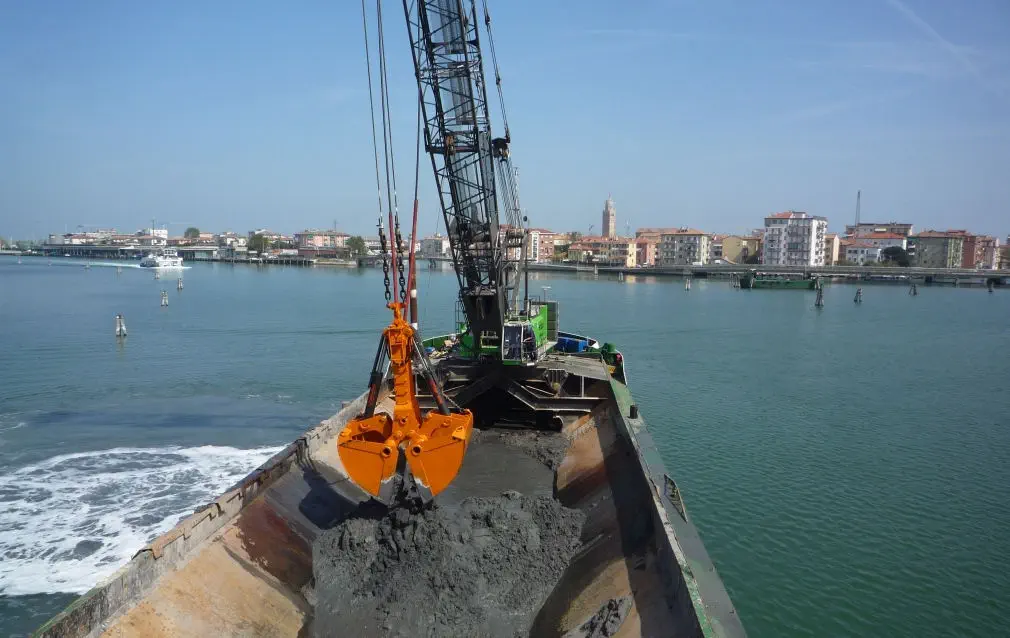
Loading and unloading coal, ore, grain, and other bulk cargo.
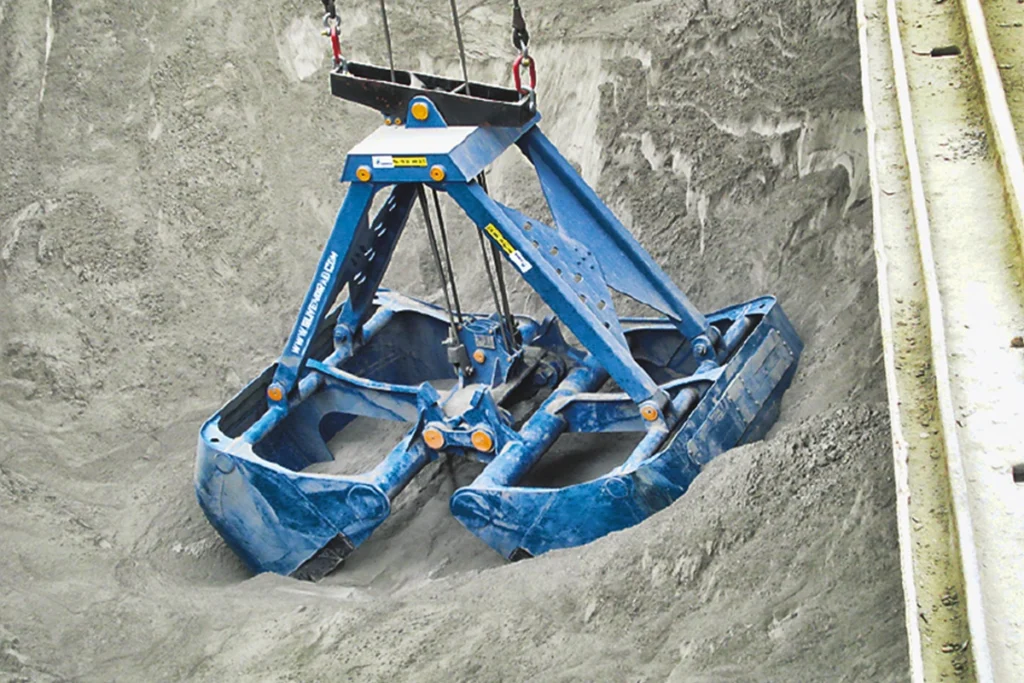
Charging and transferring raw materials such as iron ore, coal, and limestone.
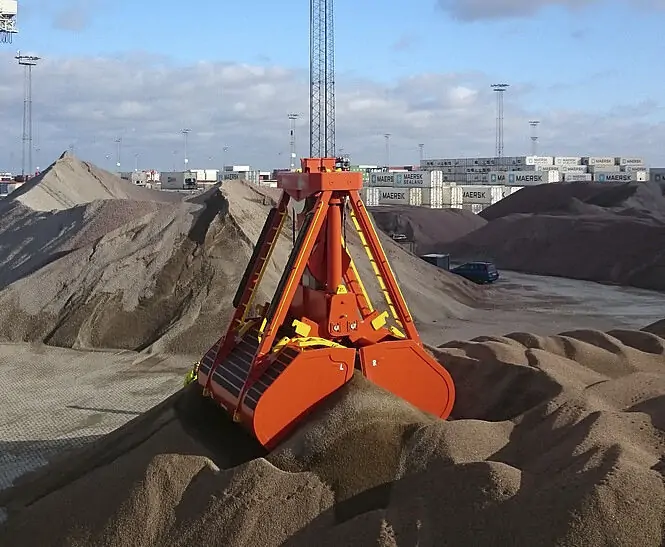
Handling coal, fly ash, and other bulk materials.
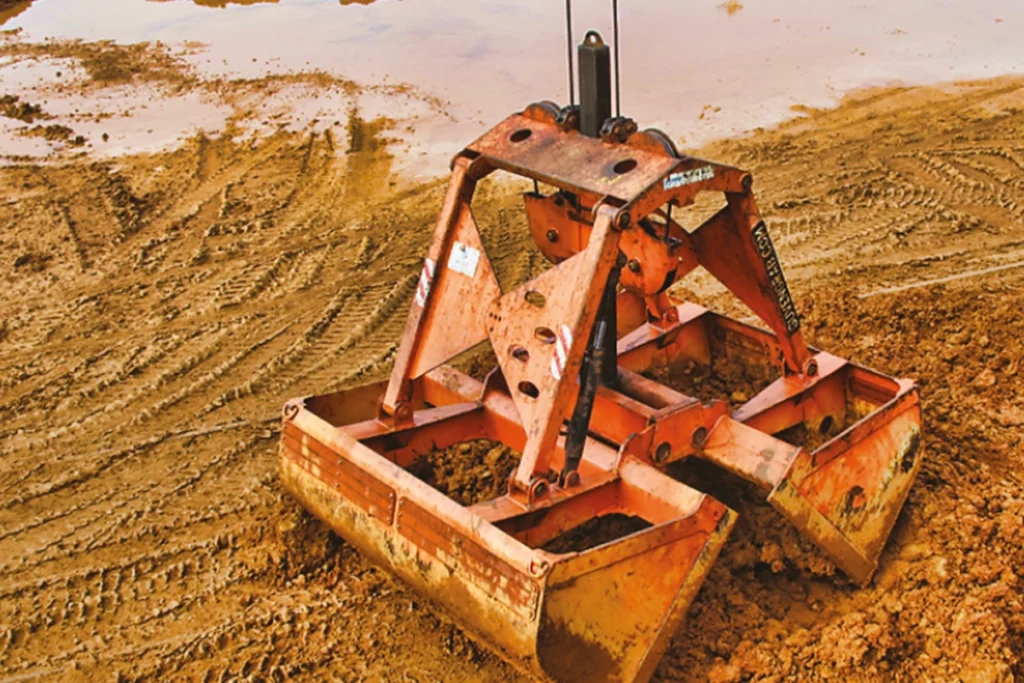
Loading sand, gravel, and crushed stone.
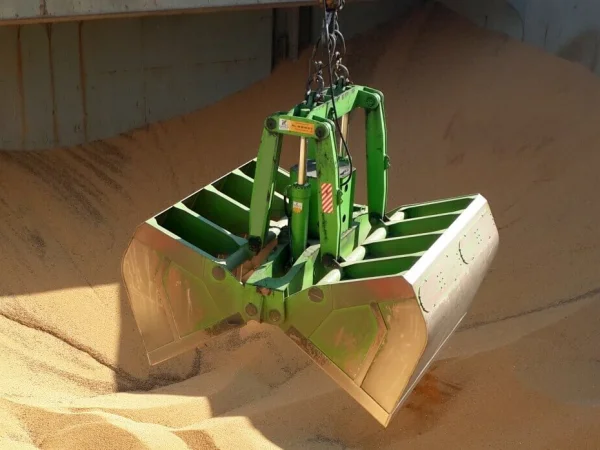
Moving free-flowing agricultural and processed bulk materials.
The grab capacity, shell configuration, and rope system are selected according to the material density, required load per cycle, and crane capacity.
To learn more about the specific applications of crane grab buckets in heavy-duty industries, read the article: “Crane Grab Bucket Applications in Ports, Steel Mills, Mining, and Bulk Material Handling”
Mechanical and hydraulic clamshell grab buckets both handle loose bulk materials with two shells. The main difference is the shell opening and closing mechanism. Mechanical grabs use the crane’s rope system, while hydraulic grabs use hydraulic cylinders and a hydraulic power system.
| مقارنة | دلو ميكانيكي ذو غطاء صدفي | جرافة هيدروليكية ذات صدفة محارية |
|---|---|---|
| Drive Method | Wire rope and mechanical linkage | Hydraulic cylinder |
| مصدر الطاقة | Crane lifting mechanism | Hydraulic power unit |
| عملية | Open and close through crane movement | Controlled directly by hydraulic system |
| نوع الرافعة | Overhead crane, gantry crane, port crane | Overhead crane, gantry crane, port crane |
| يتحكم | Mechanical operation | Hydraulic control |
| Typical Materials | Coal, sand, grain, ore, scrap | Scrap steel, ore, bulk materials, irregular cargo |
| صيانة | Simple mechanical structure | Requires hydraulic system maintenance |
| تطبيق | General bulk material handling | Heavy-duty and controlled grabbing operations |
Mechanical clamshell grabs are suited to standard bulk material handling where a simple rope-operated structure is preferred. Hydraulic clamshell grabs are used when independent shell control, stronger gripping force, or more precise grabbing is required.
للاطلاع على تفاصيل حول الاستخدامات المختلفة لدلاء التحميل وكيفية اختيار النوع المناسب، انظر: أنواع مختلفة من دلاء الرافعات وكيفية اختيار النوع المناسب
تختلف الجرافات الميكانيكية والهيدروليكية اختلافًا كبيرًا في استخداماتها وتكويناتها. لمزيد من التفاصيل، راجع المقال التالي: الجرافة الميكانيكية ذات المقبض الصدفي مقابل الجرافة الهيدروليكية ذات المقبض: ما الفرق؟
The right mechanical clamshell grab bucket depends on the material being handled, required capacity, and the crane’s lifting system. The grab weight must also be included when checking the crane’s rated load.
1. Material Type and Density: Identify the material and its bulk density before selecting the grab. Coal, ore, sand, gravel, and grain require different shell designs and capacities.
2. Required Grab Capacity: Select the bucket volume according to the required load per cycle and material density. A larger volume is not always suitable if the crane cannot handle the loaded grab weight.
3. Crane Capacity and Hook Height: Check the crane’s SWL, hook height, and rope arrangement. The crane must handle the combined weight of the grab and material.
4. Rope Configuration: Match the grab with the crane’s rope system. Two-rope and four-rope configurations have different operating arrangements and should not be selected independently of the crane.
5. Working Conditions: Consider handling frequency, material abrasiveness, pile depth, and operating environment. Wear-resistant shells and reinforced components may be required for heavy or abrasive materials.
Select the grab based on the material, bulk density, required capacity, and crane specifications. The grab weight, rope configuration, and working conditions should also match the crane.
If you are considering using an overhead crane or gantry crane and are unsure how to select the appropriate grab bucket, see the article: How to Choose a Grab Bucket for Overhead Cranes and Gantry Cranes?
Mechanical clamshell grab buckets can be designed for different crane systems, bulk materials, and working conditions. The grab size and structure are selected according to the required load, material density, lifting capacity, and operating cycle.
Provide the crane model or lifting capacity, material type, bulk density, and required grab capacity to start the design.
احصل على عرض أسعار مخصص الآن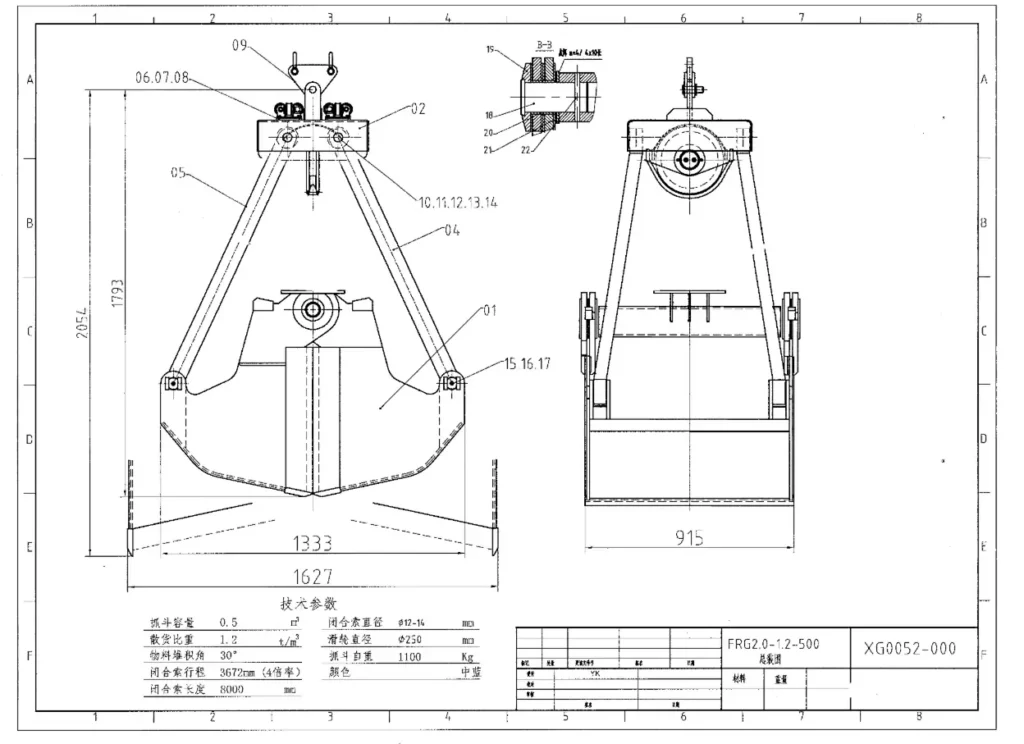
وي هوا manufactures and supplies mechanical clamshell grab buckets for overhead cranes, gantry cranes, port cranes, and other lifting systems. Custom designs cover grab capacity, dead weight, rope configuration, jaw opening, shell structure, wear-resistant materials, and crane connection. The equipment is used for coal, ore, sand, gravel, grain, and other bulk materials.
WEIHUA has experience supplying lifting equipment to overseas markets and holds relevant quality certifications. Technical support covers grab selection, design, production, delivery, and installation guidance. Spare parts and after-sales service are also available.
اتصل بنا with your crane and material handling requirements for a mechanical clamshell grab bucket quotation.
A mechanical clamshell grab bucket is a rope-operated crane attachment with two hinged shells. It is used to scoop, lift, and discharge loose bulk materials such as coal, ore, sand, gravel, and grain.
The crane lowers the open grab onto the material. The closing rope pulls the shells together to capture the load. The crane lifts the closed grab, then releases the closing rope to open the shells and discharge the material.
It can handle coal, ore, sand, gravel, cement clinker, fertilizer, grain, and other loose bulk materials. Shell design and wear-resistant materials can be selected according to material density and abrasiveness.
Grab capacity can range from 0.5 to 30 m³, depending on the model and configuration. The required capacity is selected according to material density, crane lifting capacity, and the required load per cycle.
A two-rope grab uses one hoist rope and one closing rope. A four-rope grab uses separate hoist and closing ropes on both sides. The rope configuration must match the crane and grab design.
Mechanical clamshell grabs can be used with compatible overhead cranes, gantry cranes, port cranes, and other rope-operated lifting systems. Crane SWL, hook height, and rope configuration should be checked before selection.
Check the material type, bulk density, required capacity, crane SWL, rope configuration, and working conditions. These factors determine the suitable grab size, shell design, and operating arrangement.
Yes. Custom options include bucket capacity, grab weight, rope configuration, jaw opening, shell structure, wear-resistant materials, and crane connection. The design can be specified according to the material and working conditions.
تطورت شركة "وي هوا"، التي تأسست عام 1988، لتصبح رائدة عالمية في مجال التصنيع الذكي في الصين. نحن متخصصون في البحث والتطوير وإنتاج الرافعات الذكية، مع توفير حلول المركبات الموجهة آليًا (AGV). تقدم فرقنا الهندسية والتسليم وما بعد البيع المحترفة دعمًا تقنيًا شاملًا، وحلولًا مخصصة، وإرشادات تركيب في الموقع، وخدمات عالمية سريعة الاستجابة لضمان تشغيل كل مشروع بأمان وكفاءة.
اتصل بنا الآن عبر البريد الإلكتروني: [email protected], ، أو املأ النموذج أدناه.
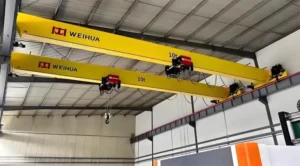
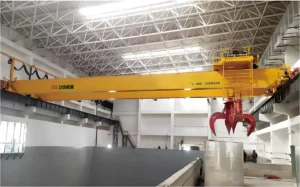
الرافعة الجسرية هي معدات رفع تُستخدم على نطاق واسع في مختلف الصناعات ومواقع البناء والموانئ والمستودعات وغيرها من المجالات. ويجعلها هيكلها الفريد وقدرتها القوية على تحمل الأحمال خيارًا مثاليًا لمناولة المواد الثقيلة في العصر الحديث. ويتيح تصميم الهيكل “الجسري” للرافعة التحرك بحرية داخل المساحة، مما يغطي منطقة عمل واسعة. إذن، ما الذي يجعل الرافعات الجسرية مميزة؟ وما هي أنواعها ومعاييرها وطرق التحكم فيها وتطبيقاتها ومبادئ عملها؟ كيف تختلف عن الرافعات الجسرية؟ دعونا نستكشف ذلك معًا. أنواع الرافعات الجسرية بناءً على التصميم والتطبيق وبيئة التشغيل، تُصنف الرافعات الجسرية عادةً إلى الأنواع التالية: الرافعة الجسرية أحادية العارضة تُستخدم الرافعات الجسرية أحادية العارضة على نطاق واسع في القطاعات الصناعية والمستودعات والموانئ وورش العمل. تتميز بآلية رفع مدعومة بعارضة واحدة، وتتحرك عبر أعمدة جانبية وقضبان سفلية. بفضل هيكلها البسيط وتشغيلها السهل وقدرتها المعتدلة على الرفع، فهي مثالية لمناولة الأحمال الخفيفة إلى المتوسطة. وبفضل قدرتها على عبور مسافات كبيرة بحرية، فإن الرافعات الجسرية ذات العارضة الواحدة مناسبة لعمليات مناولة ورفع المواد الثقيلة. الرافعات الجسرية ذات العارضتين مقارنة بالرافعات الجسرية ذات العارضة الواحدة، توفر الرافعات الجسرية ذات العارضتين قدرة أكبر...
في الموانئ، والحدائق اللوجستية، ومناولة المواد الصناعية، تعتبر الرافعات البوابية والرافعات الجسرية نوعين شائعين وأساسيين من معدات التحميل/التفريغ. تختلف هذه الرافعات في التصميم الهيكلي، وخصائص الأداء، وطرق التشغيل، وسيناريوهات التطبيق، وتكاليف الاستثمار. تقدم هذه المقالة تحليلاً شاملاً للرافعات البوابية مقابل الرافعات الجسرية وتوجهك لاتخاذ الاختيار الصحيح. مقارنة التصميم الهيكلي تتجلى الاختلافات الهيكلية بين الرافعات البوابية والرافعات الجسرية بشكل أساسي في طرق تحمل الأحمال، ومسارات الحركة، ونطاقات التغطية. يركز الأول على برج ثابت وذراع دوار، مع التركيز على “تغطية النقاط” والدوران الأفقي المرن. يتميز الأخير ببنية إطار بوابة ورحلة سكة حديد طولية، مع إعطاء الأولوية لـ “الحركة الأفقية الواسعة” والتعامل الفعال مع الخدمات اللوجستية في الموقع. نتيجة لذلك، فإن تصميماتهما الهيكلية المميزة تملي مباشرة سيناريوهات التطبيق المختلفة. الخصائص الهيكلية للرافعات البوابية تستخدم الرافعات الدوارة البوابية هياكل أذرع مفردة/مزدوجة منصة، مع تثبيت البرج على الأسس أو السكك الحديدية، مما يتيح دورانًا بزاوية 360 درجة أو جزئيًا. يمكّن هذا التكوين التشغيل المرن في المساحات الضيقة والممتدة مثل السواحل، وواجهات الأرصفة، وأرصفة السفن، مما يجعله مناسبًا بشكل خاص لمناولة المواد من السفينة إلى الشاطئ. تجمع وظيفتها الأساسية بين العمودي…
في العمليات الصناعية الحديثة، تعتبر مناولة المواد الفعالة ضرورية لزيادة الإنتاجية وتحسين سير العمل. تعتبر الرافعات الجسرية، المعروفة أيضًا بالرافعات العلوية أو رافعات EOT، من أنظمة مناولة المواد الثابتة المستخدمة على نطاق واسع في التصنيع، ومعالجة المعادن، والتخزين، وعمليات التحميل/التفريغ. في هذه المقالة، سنستكشف مبدأ العمل، والمكونات الرئيسية، والتطبيقات، وفوائد التشغيل للرافعات الجسرية، مما يوفر دليلاً شاملاً للمخططين الصناعيين ومهنيي اللوجستيات. مبدأ عمل الرافعات الجسرية تعمل الرافعات الجسرية على هيكل يشبه الجسر يمتد عبر مساحة العمل، مع نظام عربة ورافعة يتحرك أفقيًا على طول الجسر ويرفع أو يخفض الأحمال عموديًا. تتيح حركة الرافعة عبر مسارها، جنبًا إلى جنب مع التحكم الدقيق بالرافعة، مناولة المواد الثقيلة بكفاءة وأمان في المصانع والمستودعات والمنشآت الصناعية. للحصول على معلومات حول كيفية عمل الرافعات العلوية، يرجى الاطلاع على هذه المقالة: مبدأ عمل الرافعات العلوية: المكونات، الحركة، وعملية التشغيل مصطلحات الرافعات الجسرية فيما يلي مقدمة للمصطلحات المتعلقة بأجزاء الرافعات الجسرية. سعة الرافعة: تشير سعة الرافعة إلى أقصى وزن يمكن للرافعة الجسرية رفعه بأمان. ويقاس عادة بالطن...
الرافعة العلوية الكهربائية (EOT) هي نظام رفع علوي فعال وموثوق يُستخدم لمناولة المواد الثقيلة في المصانع والمستودعات وورش العمل والمنشآت الصناعية. تعمل الرافعات العلوية الكهربائية على سكك علوية، وتتيح حركة ثلاثية الأبعاد آمنة ودقيقة للأحمال من خلال تنسيق حركات الرفع والتحرك العرضي والتحرك الطولي. ستوجهك هذه المقالة عبر تعريفات الرافعات العلوية المتحركة وأنواعها وهيكلها ومبادئ عملها وتطبيقاتها وعوامل التكلفة لمساعدتك في اختيار الحل الأنسب لاحتياجات الرفع الخاصة بك. كيف تعمل الرافعات العلوية المتحركة؟ يتضمن مبدأ عمل الرافعات العلوية المتحركة مزيجًا من الرفع الرأسي وحركة العربة الأفقية والحركة الطولية للجسر، مما يتيح مناولة الأحمال الثقيلة بكفاءة عبر المنشآت الصناعية. تعمل الرافعة على قضبان مسار مرتفعة مثبتة على طول هيكل المبنى، مع امتداد عارضة الجسر عبر مساحة العمل. تعمل آلية الرفع على رفع أو خفض الحمولة باستخدام حبال أو سلاسل سلكية فولاذية، بينما تقوم العربة بنقل الحمولة أفقيًا على طول الجسر. تتحرك الرافعة بأكملها طوليًا على طول قضبان المسار، مما يتيح وضع المواد في وضع ثلاثي الأبعاد. تعمل الرافعات الجسرية الكهربائية الحديثة بمحركات كهربائية ذات سرعة دقيقة...
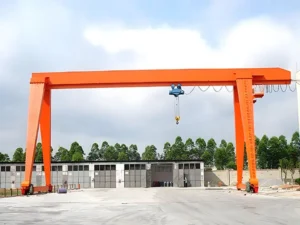
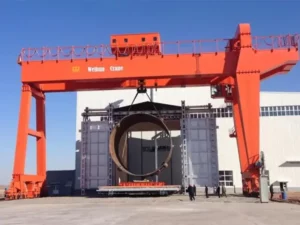
تُستخدم الرافعات الجسرية على نطاق واسع في ساحات التخزين المفتوحة، وأحواض بناء السفن، والمصانع، ومواقع البناء، مما يجعلها واحدة من أكثر حلول مناولة المواد تنوعًا وتطبيقًا على نطاق واسع. تأتي الرافعات الجسرية في أنواع مختلفة، وكل منها قابل للتخصيص ليناسب قدرات تحميل وسعات مختلفة، وظروف الموقع، ومتطلبات التشغيل. ومع ذلك، فإن اختيار التكوين الخاطئ يمكن أن يؤدي إلى نفقات غير ضرورية، أو قدرة رفع محدودة، أو قيود على التوسع المستقبلي. إذن، ما هي الأنواع الرئيسية للرافعات الجسرية؟ كيف تختار النوع المناسب لتطبيقك؟ في هذا الدليل، سنقدم نظرة عامة مفصلة على أنواع الرافعات الجسرية المختلفة بناءً على الهيكل، والتنقل، وسيناريوهات التطبيق، مما يساعدك على اتخاذ القرار الصحيح قبل الاستثمار في حل رفع. المقال طويل جدًا. فيما يلي جدول المحتويات الخاص بنا. يرجى التوجه إلى القسم المقابل حسب الحاجة: ما هي الرافعات الجسرية؟ الرافعات الجسرية هي معدات رفع مصممة لمناولة البضائع الثقيلة بكفاءة في المواقع المفتوحة الكبيرة. يتميز هيكلها المميز بشعاع أو أكثر من الأشعة الرئيسية مدعوم بأرجل صلبة (أو مرنة) على كلا الجانبين، لتشكيل إطار ضخم على شكل “بوابة”. تتنقل هذه الرافعات...
 English English
  Русский
 العربية
 Français
 Português
 Español