
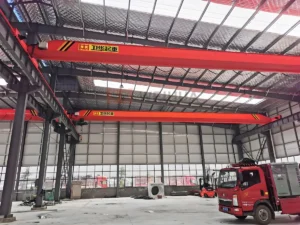
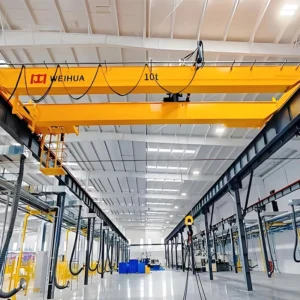
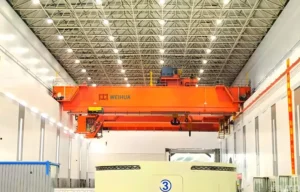
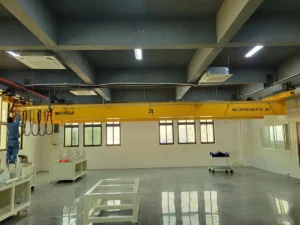
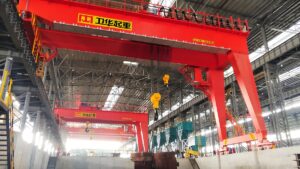
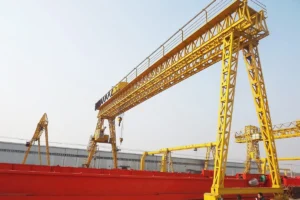

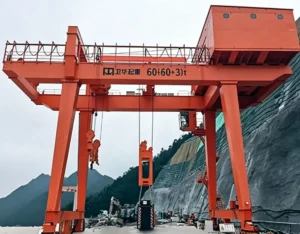
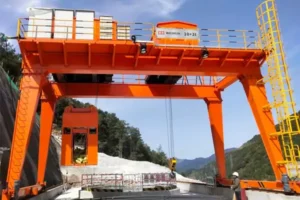

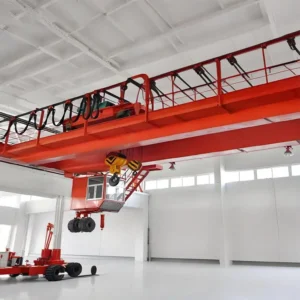






أن رافعة جسرية علوية (Electric Overhead Traveling Crane) is an efficient and reliable overhead lifting system used to handle heavy materials in factories, warehouses, workshops, and industrial plants. Running on overhead rails, EOT cranes enable safe and precise three-dimensional movement of loads through coordinated lifting, cross travel, and long travel motions.
This article will guide you through EOT crane definitions, types, structure, working principles, applications, and cost factors to help you select the most suitable solution for your lifting needs.
جدول المحتويات
How EOT Crane Works?
The working principle of an EOT crane involves a combination of vertical lifting, horizontal trolley movement, and longitudinal bridge travel, enabling efficient handling of heavy loads across industrial facilities. The crane operates on elevated runway rails installed along the building structure, with the bridge girder spanning the workspace. The hoist mechanism raises or lowers the load using steel wire ropes or chains, while the trolley moves the load horizontally along the bridge.
The entire crane travels longitudinally along the runway rails, enabling three-dimensional positioning of materials. Modern EOT cranes are powered by electric motors with precise speed control, often managed through a pendant control, wireless remote, or operator cabin, and are equipped with safety devices such as limit switches, overload protection, and emergency stop systems.
For more detailed information on how it works, see the article: كيف تعمل رافعة الجسر العلوية؟ مبدأ العمل، والمكونات، ودليل التشغيل
Parts of EOT Crane
Industrial EOT Overhead Cranes are mainly available as single girder EOT cranes and double girder EOT cranes, and are composed of core components such as bridge girders, hoisting mechanisms, trolleys, control systems, and safety devices. The following is eot crane parts name and features:
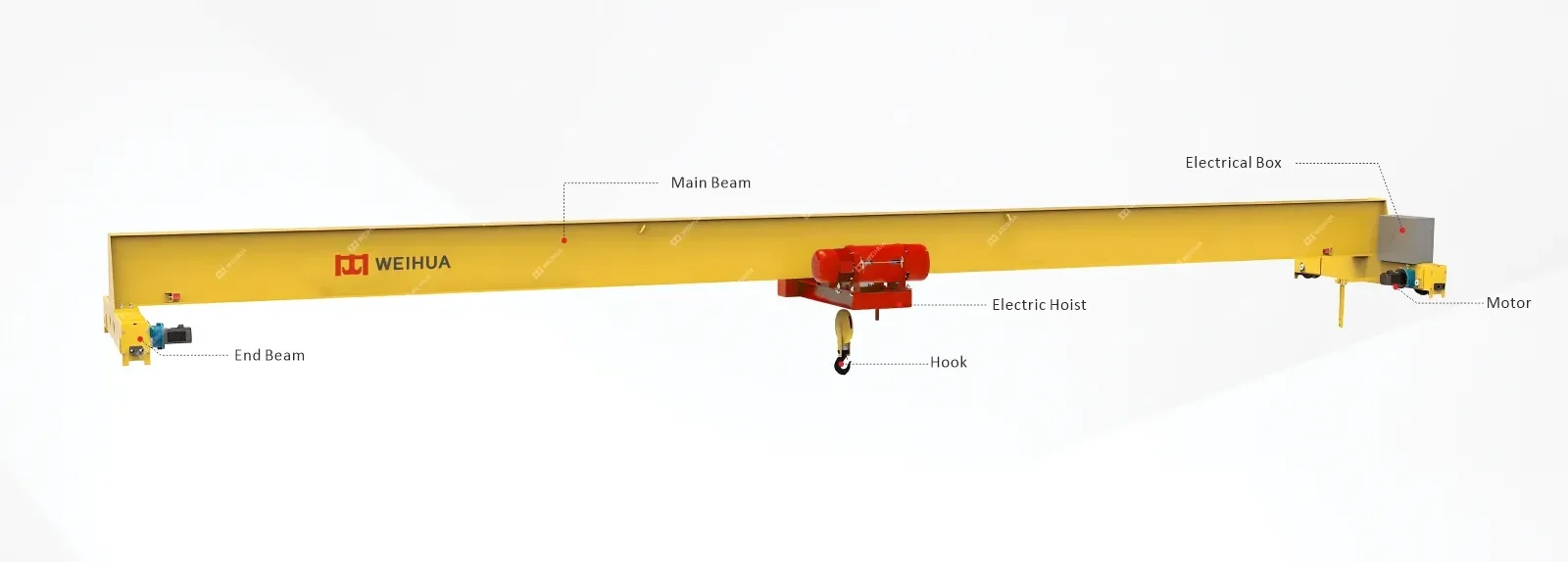
Bridge Girder: The primary load-bearing structure of the crane, spanning the workshop and traveling along rails. It features high strength, high rigidity, and stable overall operation.
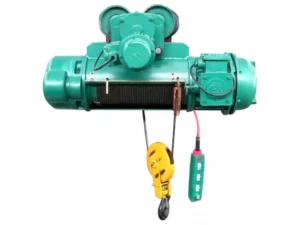
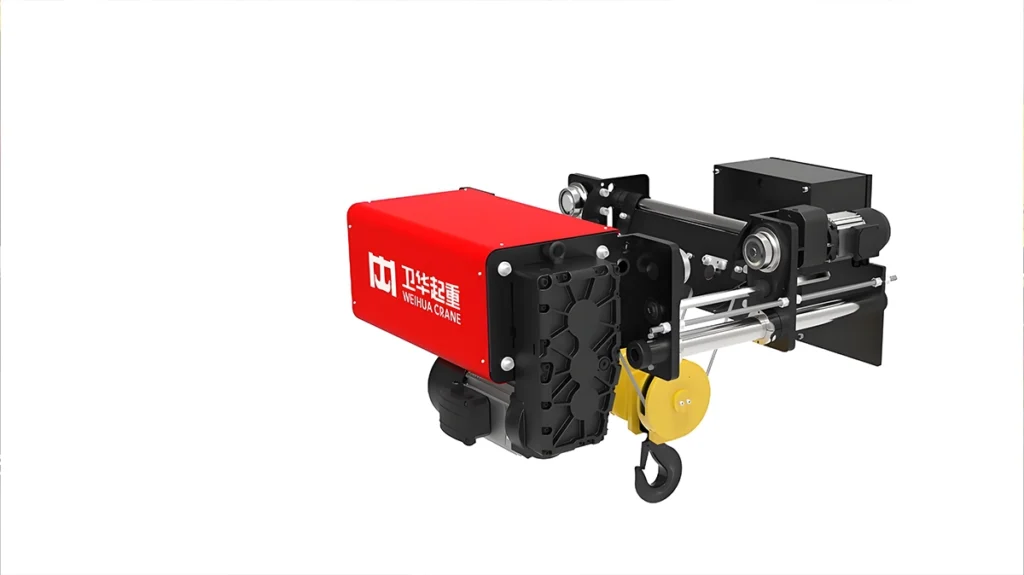
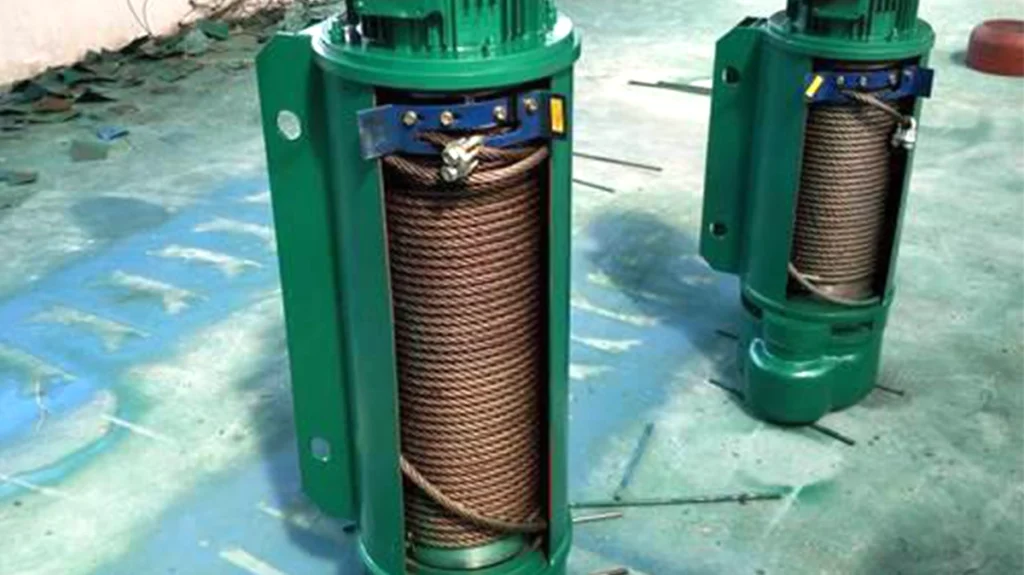
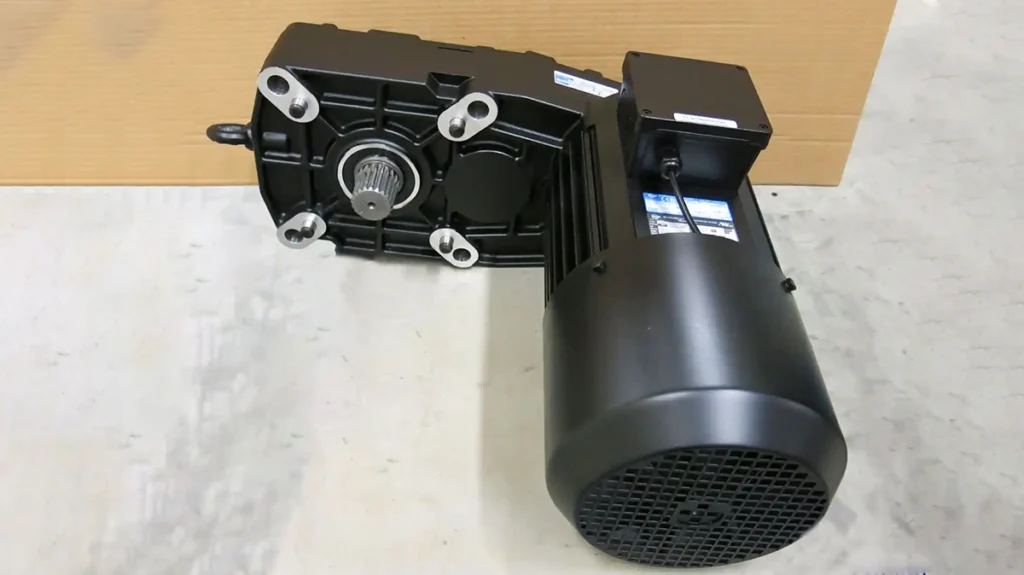
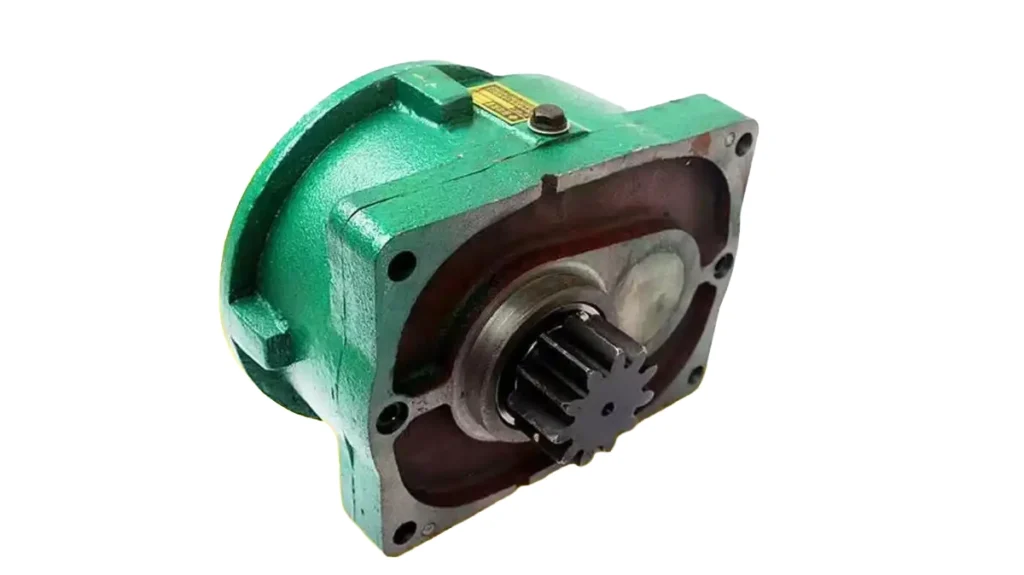
Hoisting Mechanism: Comprising a motor, reducer, wire rope, and drum, it is responsible for vertically lifting loads with smooth operation and precise positioning.
Trolley: Mounted on the bridge girder and traveling horizontally, it supports the hoisting mechanism to enable lateral movement of the load.
Traveling Mechanism: Drives the bridge girder along the longitudinal tracks within the factory building, ensuring smooth operation and covering a large working area.
Control System: Includes an electrical control cabinet, pushbutton panel, or wireless remote control, enabling precise control of hoisting, traveling, and other movements.
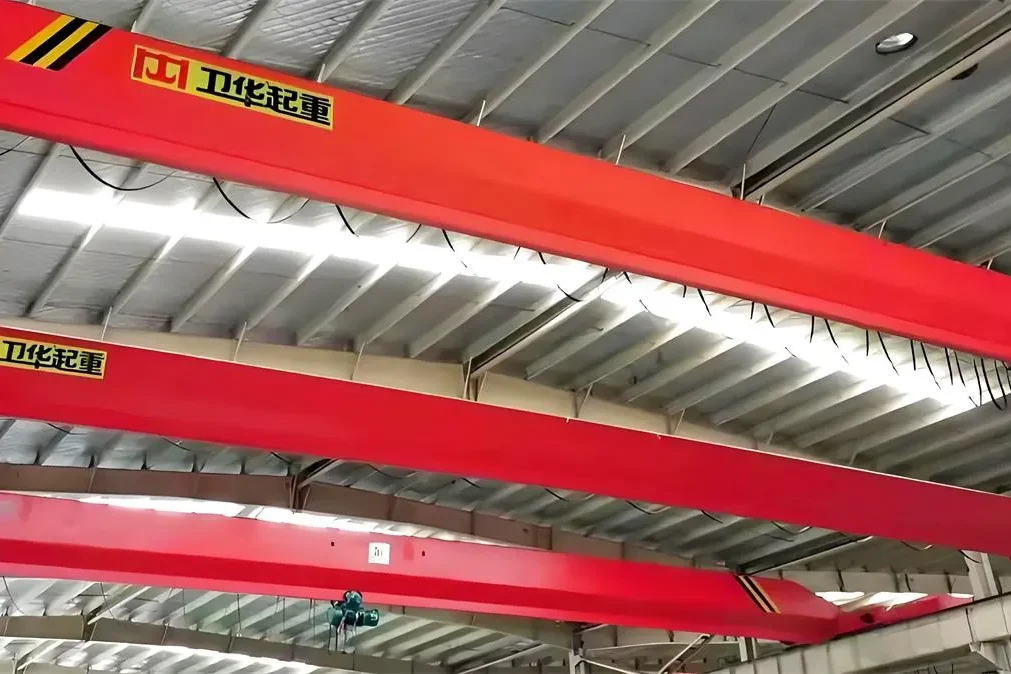
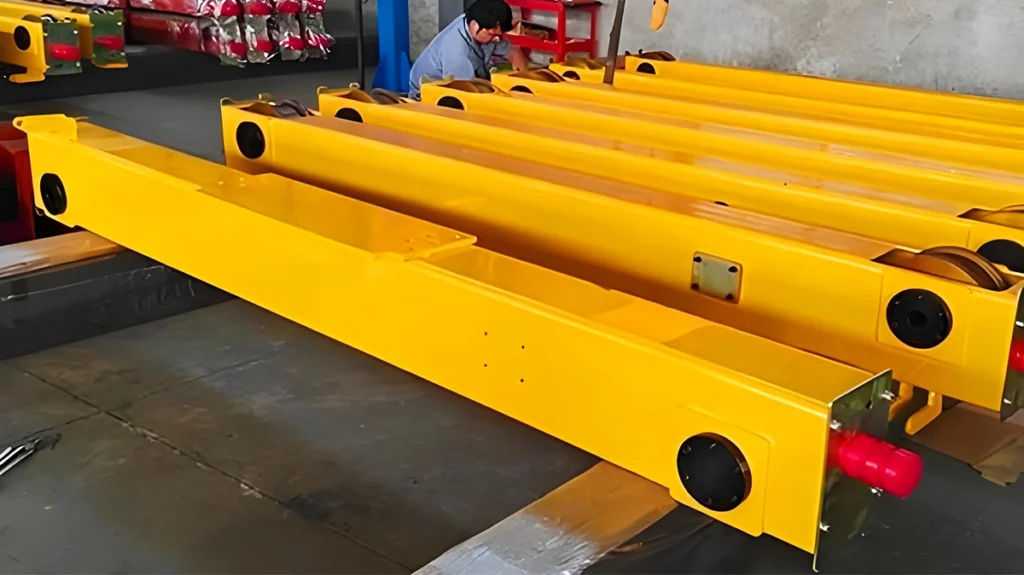
EOT Crane Details Show
How Many Types of EOT Crane?
Based on structural design, lifting capacity, and application scenarios, EOT cranes (Electric Overhead Traveling Cranes) can be classified into several common types. The following is advantages of each type:
رافعة علوية أحادية العارضة
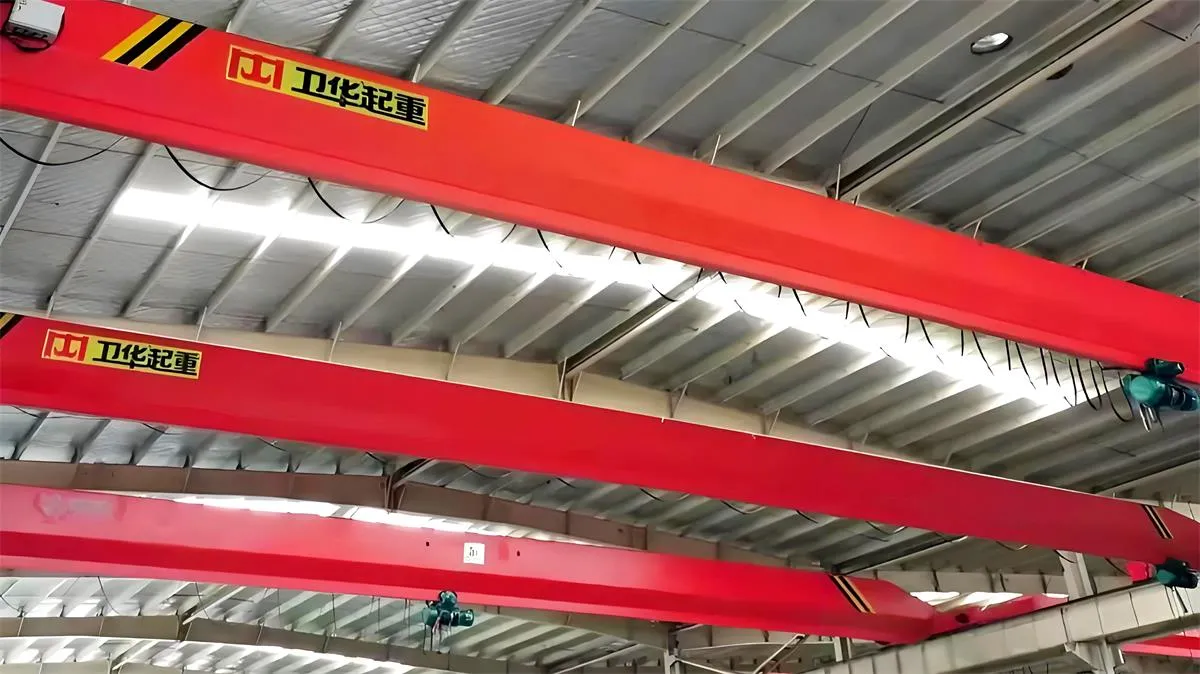
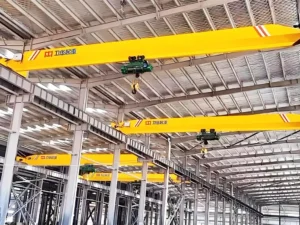
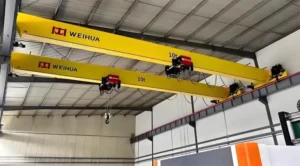
الـ single-girder EOT رافعة is designed with one main bridge girder supporting the hoist, offering a compact structure and a cost-effective solution for light to medium lifting tasks. It features easy installation, lower power consumption, and simple maintenance, making it one of the most widely used EOT crane types in general industrial applications such as workshops and warehouses.

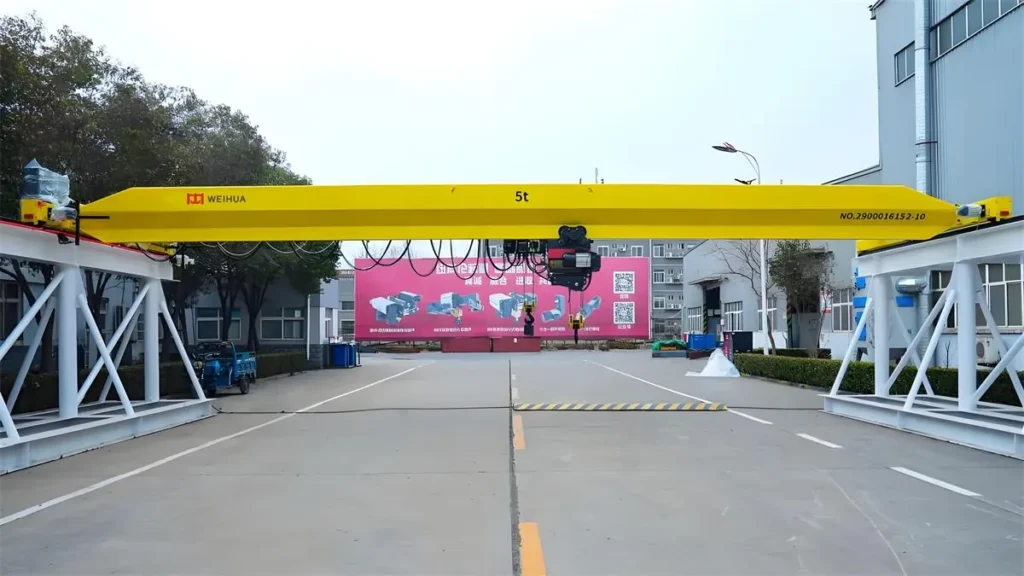
Single Girder EOT Crane Specifications
| مُعامل | يتراوح |
|---|---|
| قدرة الرفع | 1–20 t |
| سبان | 7.5–28.5 m |
| ارتفاع الرفع | 6–18 m |
| فئة الواجب | A3–A4 |
| وضع التحكم | Pendant / Wireless Remote |
| تطبيقات | Workshops, warehouses, light industry |
رافعة جسرية مزدوجة EOT
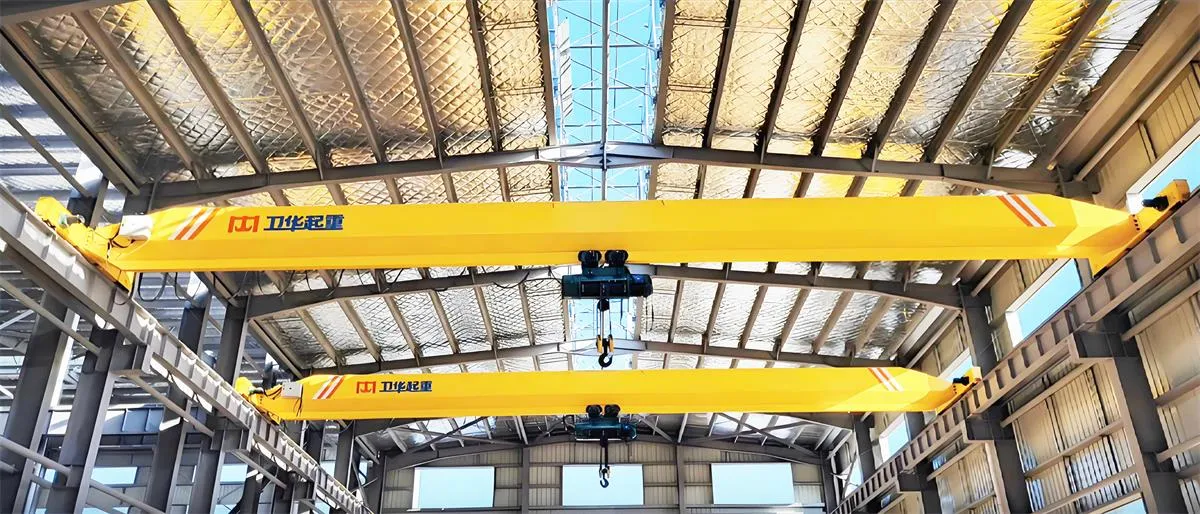
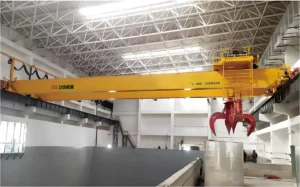
A double girder EOT crane consists of two parallel bridge girders and a trolley running on top, allowing higher lifting capacities, greater spans, and increased lifting heights. With excellent rigidity and stability, it is suitable for heavy-duty and continuous operations in demanding industrial environments.
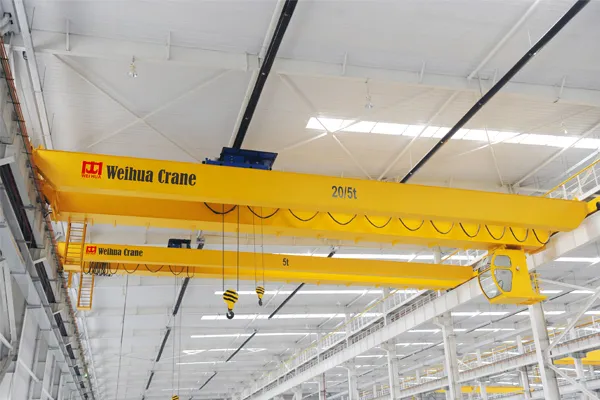
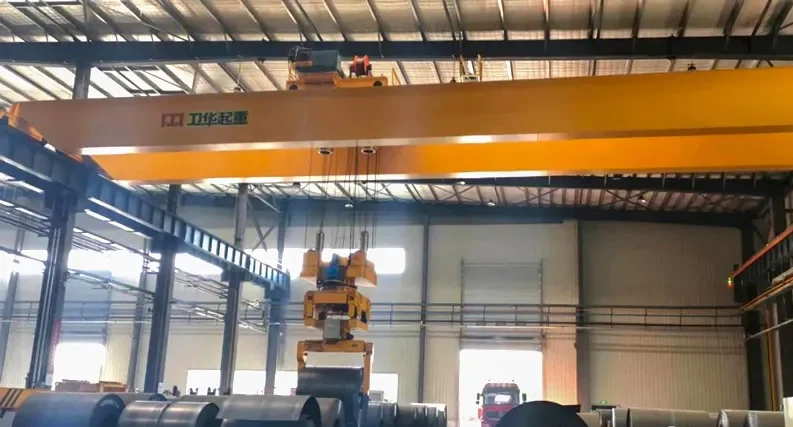
Double Girder EOT Crane Specifications
| مُعامل | يتراوح |
|---|---|
| قدرة الرفع | 5–500+ t |
| سبان | 10.5–35+ m |
| ارتفاع الرفع | 9–30+ m |
| فئة الواجب | A5–A8 |
| وضع التحكم | Cabin / Remote / Automation |
| تطبيقات | Steel plants, power stations, heavy manufacturing |
تحت رافعة علوية كهربائية
الـ under running EOT crane, also known as an underhung crane, is suspended from the bottom flange of the runway beams. This design is ideal for buildings with limited headroom or lightweight structures, providing smooth operation and efficient space utilization.
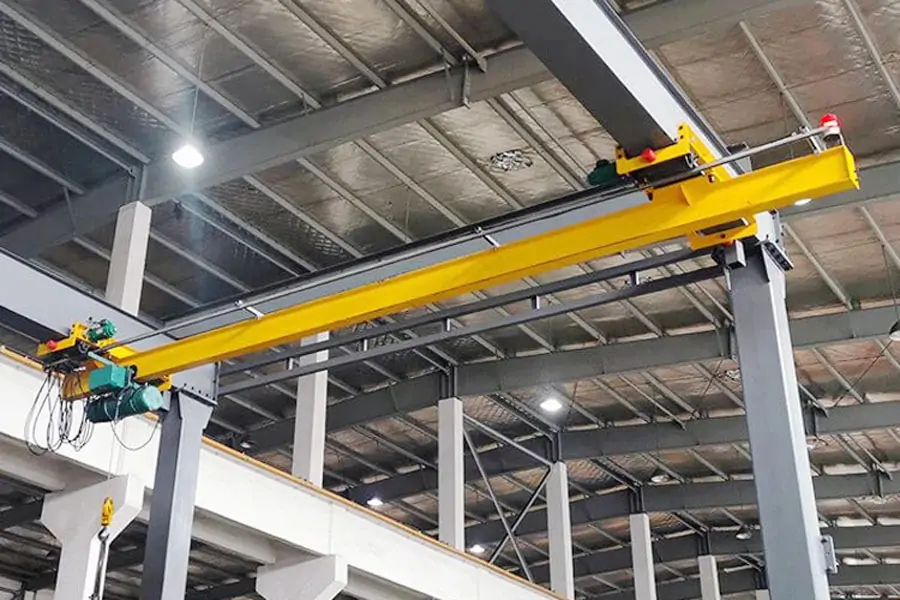
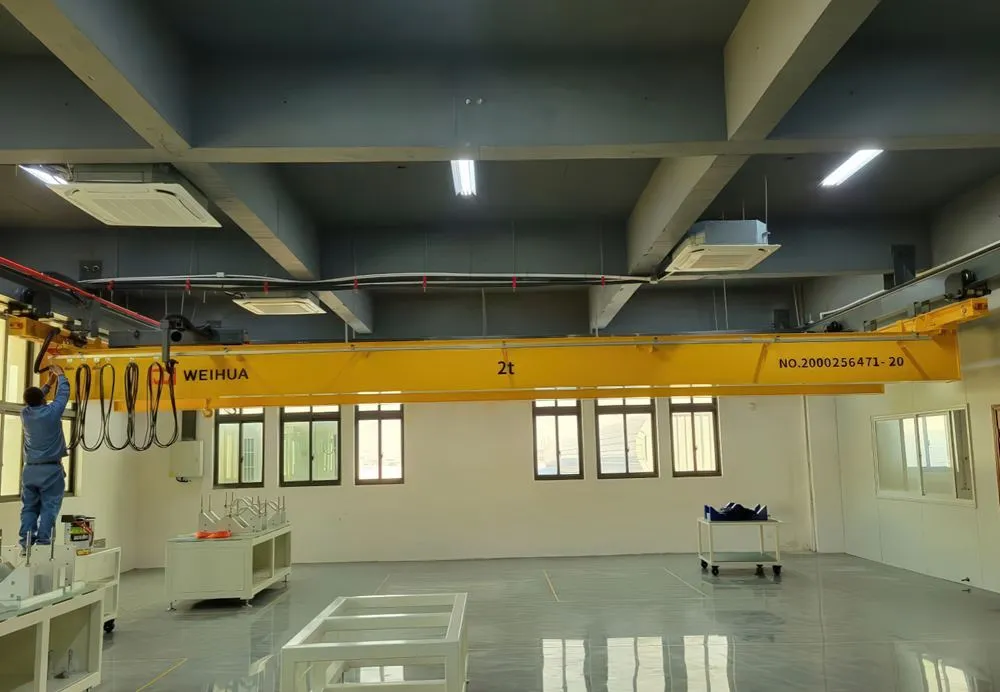
Under Running EOT Crane Specifications
| مُعامل | يتراوح |
|---|---|
| قدرة الرفع | 0.5–10 t |
| سبان | Up to 20 m |
| ارتفاع الرفع | 3–12 m |
| فئة الواجب | A2–A3 |
| وضع التحكم | Pendant / Remote |
| تطبيقات | Low-ceiling workshops, maintenance areas |
Top Running EOT Crane
A top running EOT crane travels on rails mounted on top of runway beams and is the most common configuration in industrial facilities. It supports larger spans and heavier loads than under running cranes, offering high structural strength and long service life.
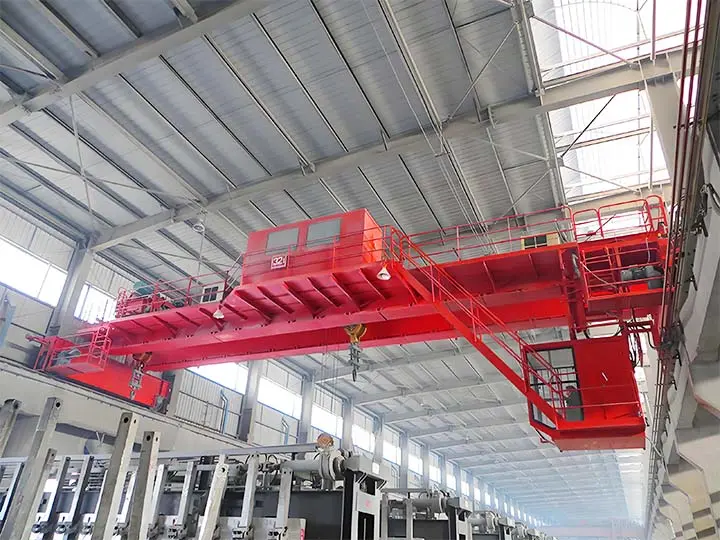
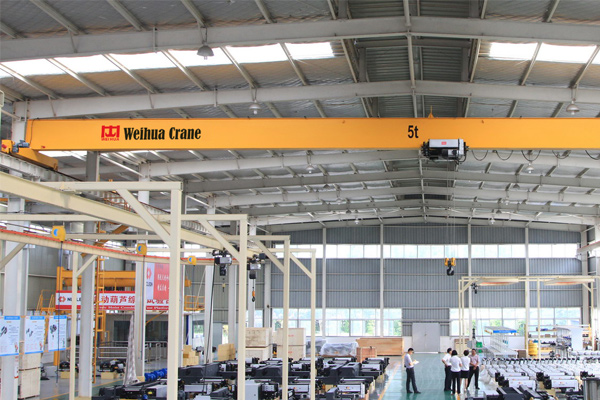
Top Running EOT Crane Specifications
| مُعامل | يتراوح |
|---|---|
| قدرة الرفع | 1–500+ t |
| سبان | 10–35+ m |
| ارتفاع الرفع | 6–30+ m |
| فئة الواجب | A3–A8 |
| وضع التحكم | Pendant / Cabin / Remote |
| تطبيقات | Factories, logistics centers, industrial plants |
رافعة كهربائية علوية مقاومة للانفجار
أن explosion-proof EOT crane is specially engineered for hazardous environments where flammable gases, vapors, or dust may be present. All electrical and mechanical components comply with explosion-proof standards, ensuring maximum operational safety.
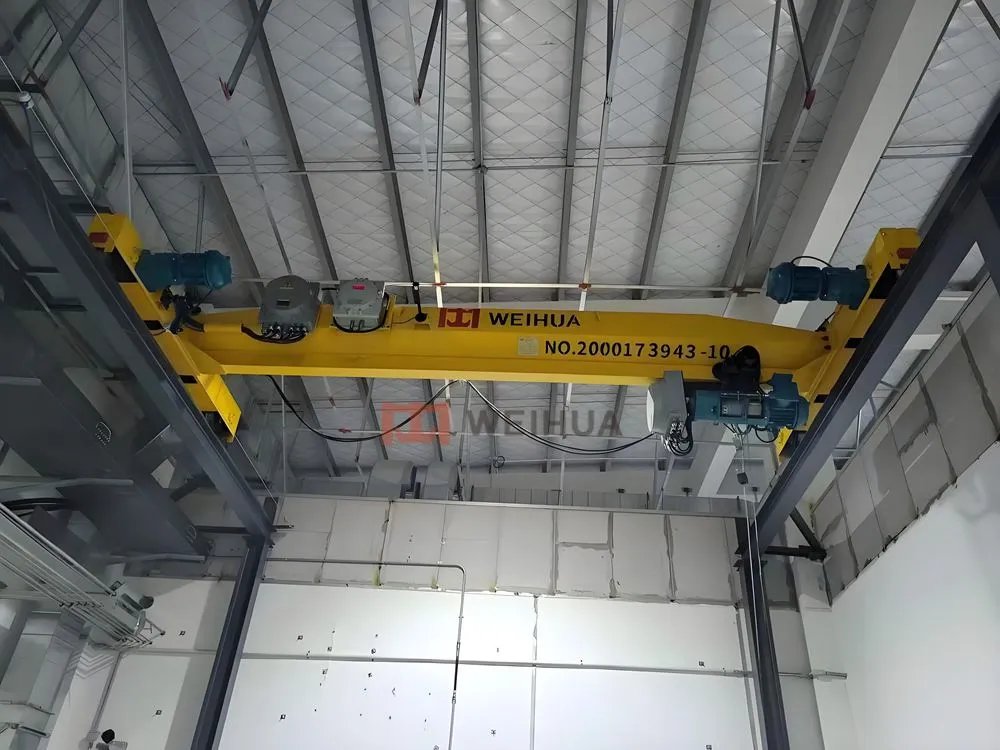

Explosion-Proof EOT Crane Specifications
| مُعامل | يتراوح |
|---|---|
| قدرة الرفع | 1–50 t |
| سبان | 7.5–30 m |
| ارتفاع الرفع | 6–24 m |
| فئة الواجب | أ3-أ6 |
| وضع التحكم | Remote / Cabin |
| تطبيقات | Chemical plants, oil & gas, hazardous workshops |
Types of EOT Crane Hooks
The selection of EOT crane hook types depends on load characteristics, lifting methods, and safety requirements. The following are the most widely used EOT crane hook types:
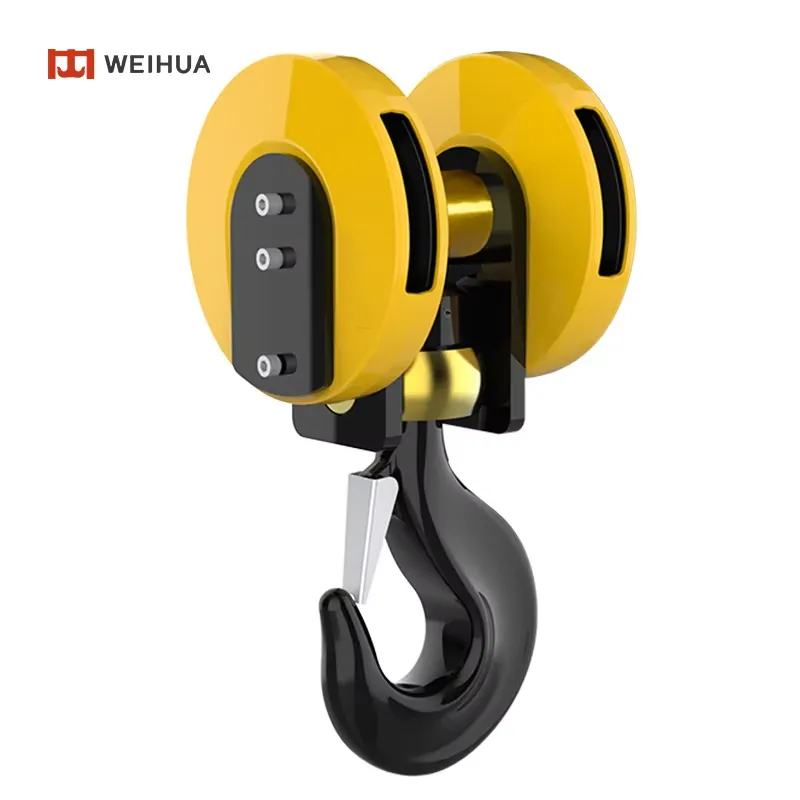
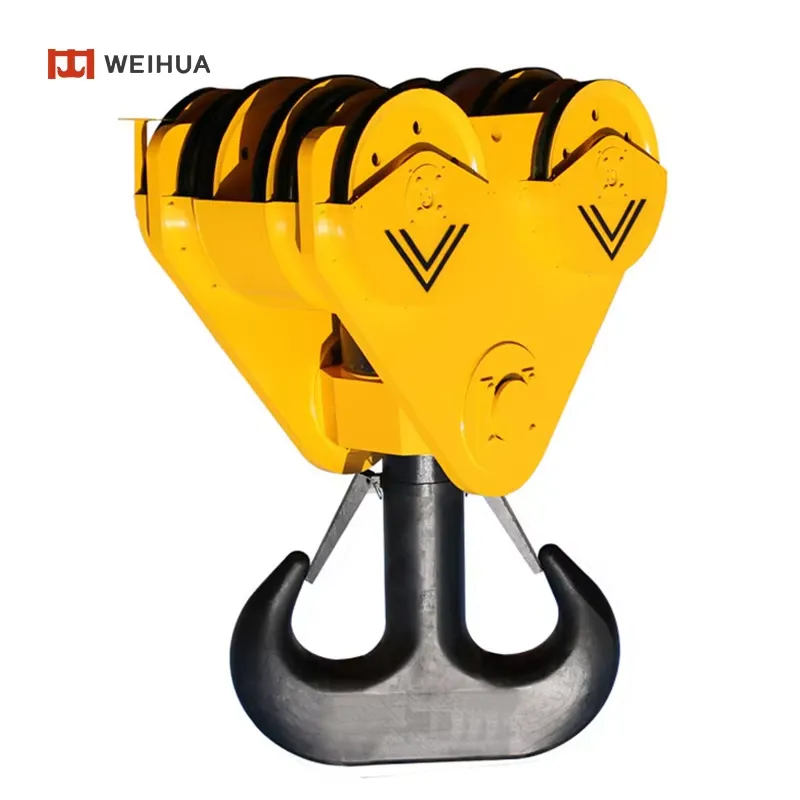
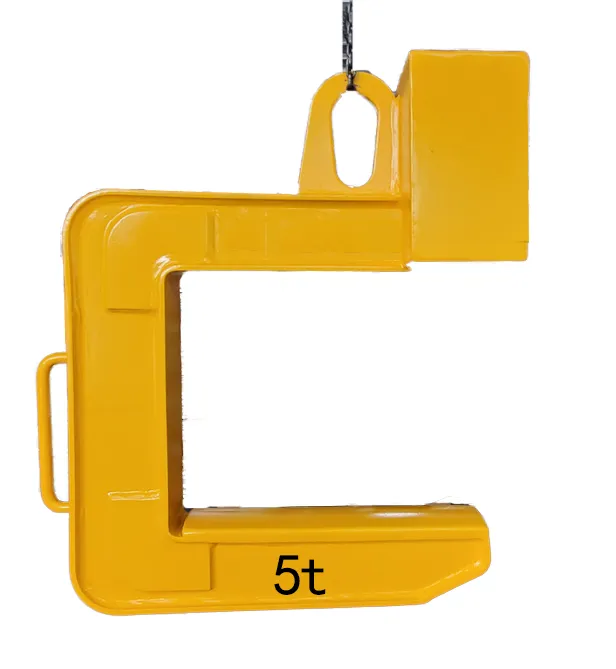
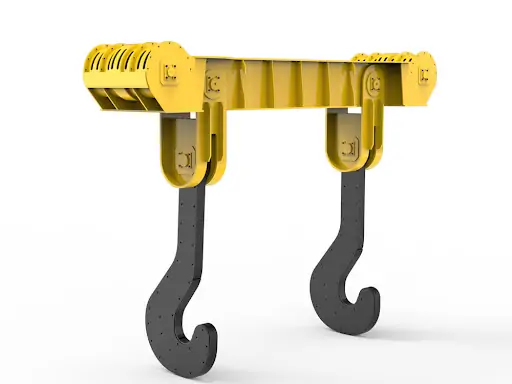
Single Hook: Commonly used on single girder EOT cranes and light-duty double girder cranes, suitable for general-purpose lifting of moderate loads in workshops and warehouses.
Double Hook: Often paired with double girder EOT cranes or ladle handling cranes, ideal for lifting heavy, long, or unbalanced loads with improved stability.
Ramshorn Hook: Standard for foundry ladle cranes or steel mill EOT cranes, designed for safe handling of molten metal or ladles.
Ladle Hook: Exclusively applied in steel plants and foundries for lifting molten metal safely, offering heat-resistant performance.
Swivel Hook: Can be integrated into double girder or heavy-duty EOT cranes, reducing cable twist and enabling precise load rotation.
Safety Hook (with Latch): Suitable for single and double girder cranes handling critical loads, providing extra protection against accidental load release.
Forged Hook: Preferred in heavy-duty double girder EOT cranes for high-capacity lifting, delivering superior strength and long-term reliability.
Plate (Laminated) Hook: Common on industrial double girder or ladle cranes, used for frequent-duty, high-load operations.
What Is an EOT Crane Used For?
An EOT crane (Electric Overhead Traveling Crane) is used for lifting, moving, positioning, and assembling heavy materials and equipment within factories, workshops, warehouses, and industrial production facilities. By travelling along overhead runway beams, the crane can cover a large working area without occupying valuable floor space.
EOT cranes are commonly used where materials are too heavy, large, or difficult to handle with forklifts or manual lifting equipment. Depending on the lifting capacity, duty class, span, and operating environment, they can be configured for general material handling or continuous production use.
Steel & Metal Processing:
EOT cranes handle steel plates, coils, billets, structural sections, castings, molds, and fabricated components between production, storage, and loading areas.
Machinery Manufacturing & Assembly:
They are used to lift machine frames, motors, gearboxes, large machined parts, dies, and complete equipment during machining, assembly, inspection, and maintenance.
Chemical Pump Manufacturing:
In chemical pump factories, EOT cranes are used to move pump casings, impellers, motors, baseplates, cast components, and complete chemical process pumps between machining centers, assembly stations, test benches, painting areas, and packing zones.
Power & Energy Industry:
EOT cranes support the installation and maintenance of turbines, generators, transformers, motors, and other heavy power-generation equipment.
Fabrication Workshops:
They are widely used for handling welded structures, pressure vessels, tanks, frames, and other large fabricated components during cutting, welding, assembly, and loading.
Warehousing & Logistics:
EOT cranes provide efficient overhead handling of heavy machinery, metal products, containers, and oversized materials where ground-based handling equipment has limited access.
Construction Material Production:
They can also be used to move precast concrete components, structural steel, large molds, and other heavy materials within production and storage facilities.
EOT Crane Cab
The EOT crane cab is an enclosed operator compartment providing a safe, ergonomic, and efficient working environment for crane operators during lifting operations. Mounted on the crane bridge or trolley, it offers clear visibility of the load, work area, and travel path, primarily used for precise control during complex or heavy-duty lifting tasks.
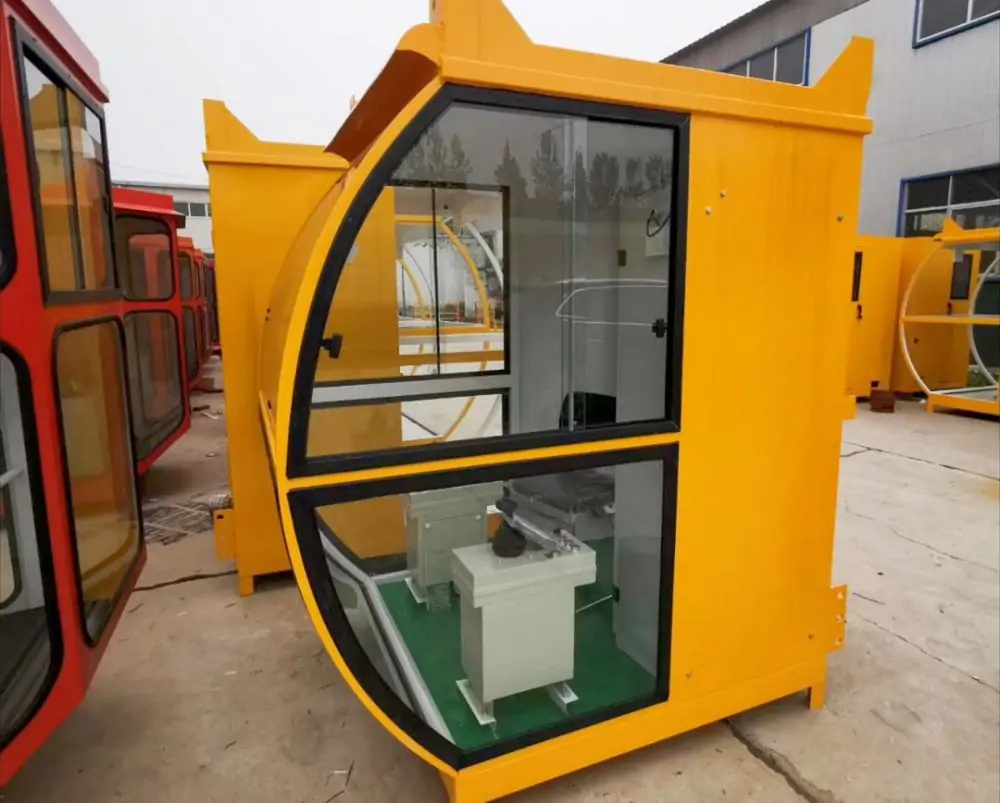
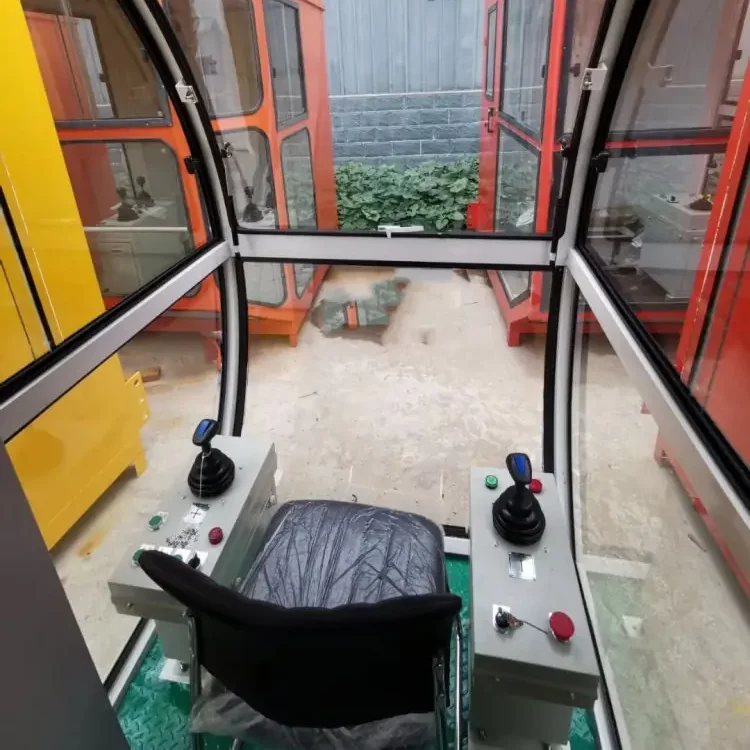
Modern EOT crane cabs typically feature adjustable operator seats, joysticks or master controllers, climate control systems, safety glass, and integrated monitoring panels to enhance comfort, reduce operator fatigue, and improve operational safety.
In practical applications, crane cabs are most commonly used on double-girder EOT cranes, heavy-duty EOT cranes, ladle cranes, and specialized industrial overhead cranes operating under high load capacities, large spans, or continuous duty conditions. They are particularly suited for steel mills, power plants, foundries, and large manufacturing facilities requiring extended operating hours, high lifting precision, and direct visual control. For lighter or compact systems like single-girder EOT cranes, suspended or wireless remote controls are more common. However, cab operation remains the preferred solution for large-capacity and complex EOT crane structures.
Regular inspections and maintenance are essential for the safe operation of overhead cranes and for minimizing unplanned downtime. Routine inspections help identify worn or damaged components early on and extend the equipment’s service life. For information on recommended inspection items, maintenance methods, and inspection schedules, please read the article:
كيفية فحص رافعة الجسر المتحركة: قائمة فحص كاملة ودليل الصيانة
أجهزة السلامة الخاصة بالرافعات العلوية: أنواعها ووظائفها ومبادئ عملها
EOT Crane Stands For?
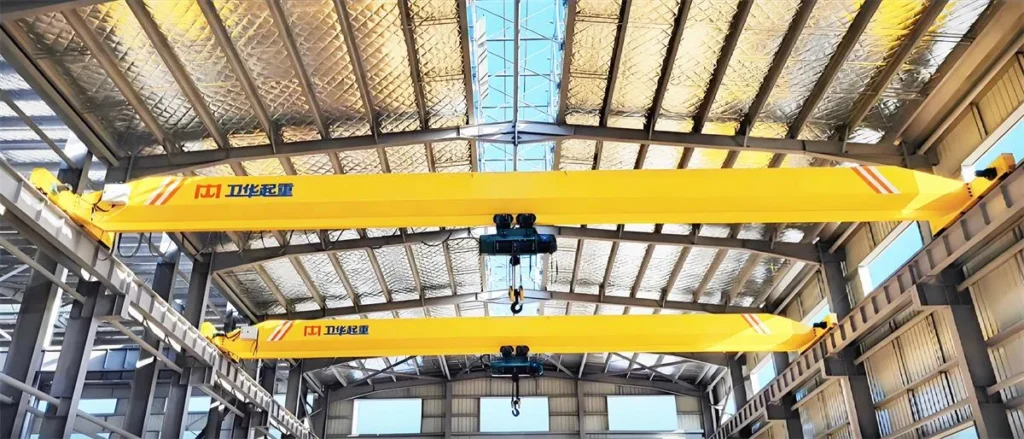
In crane terminology, EOT stands for Electric Overhead Traveling. An EOT crane (Electric Overhead Traveling Crane) is a type of overhead lifting equipment designed to move heavy loads efficiently within industrial facilities such as factories, warehouses, workshops, and power plants. Installed on elevated runway rails, an EOT crane operates electrically and provides three-directional movement—lifting (up and down), cross travel (side to side), and long travel (along the runway)—allowing precise positioning of materials across a wide working area.

What is Span in EOT Crane?
In electric overhead traveling cranes (EOT cranes), span refers to the horizontal distance between the centerlines of the two tracks along which the crane travels. It is a critical design parameter that determines the width of the area an electric overhead traveling crane can cover within a workshop or industrial plant, and directly impacts the crane’s structural strength, load distribution, and overall stability.
The span of an electric overhead traveling crane is typically customized based on building layout, column spacing, and lifting requirements, varying depending on whether a single-girder or double-girder electric overhead traveling crane is used. Selecting the appropriate span ensures safe operation, optimal lifting performance, and efficient utilization of available floor space.
What is the difference between a gantry crane and an overhead crane
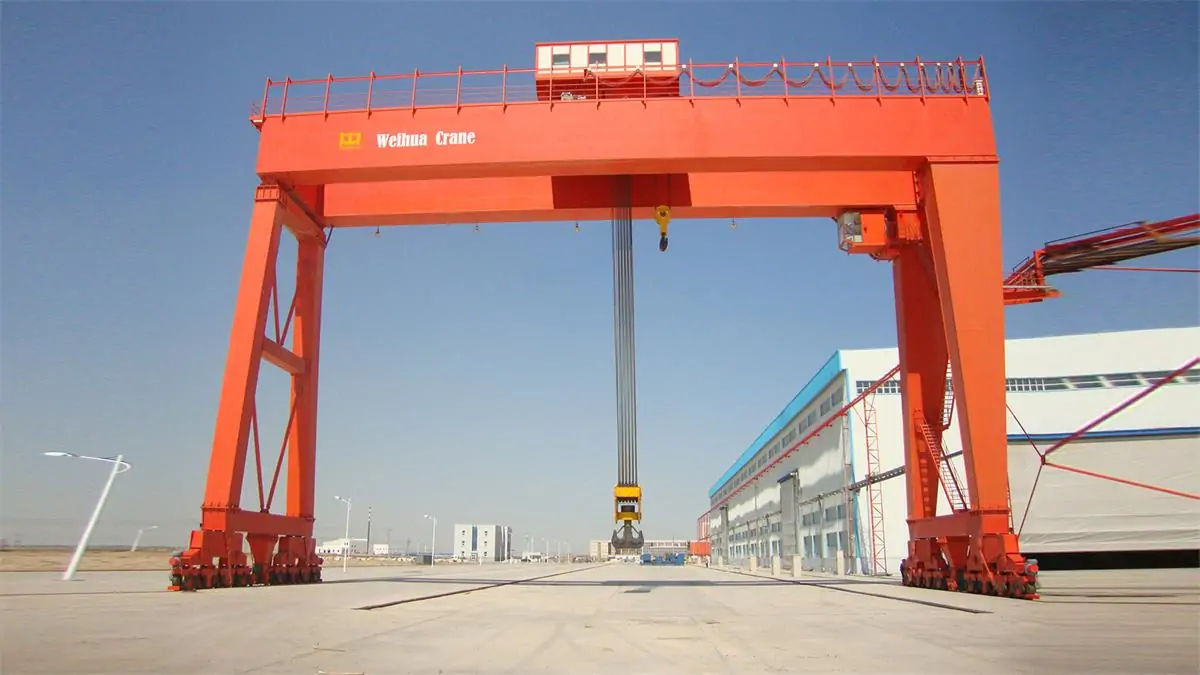
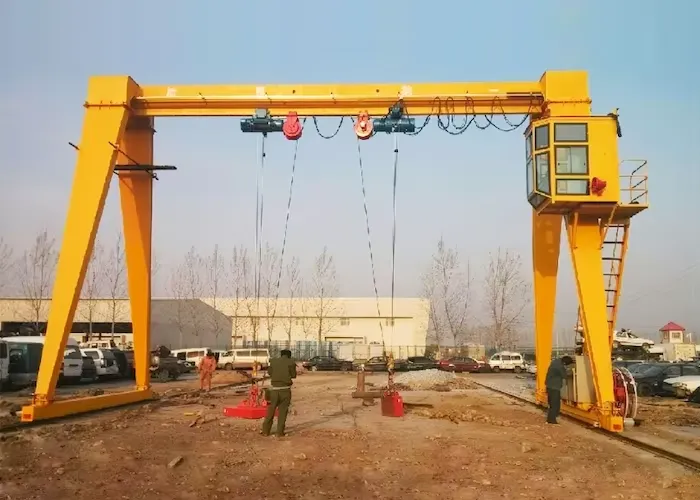
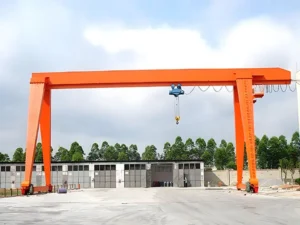
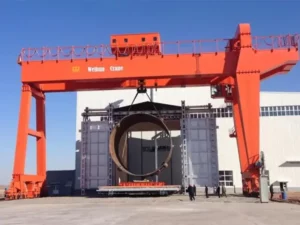
The primary differences between gantry cranes and bridge cranes lie in their structural design and application scope. Gantry cranes feature a “gantry” structure composed of a crossbeam and columns, which can travel on ground rails. They are used in open-air or unsupported environments such as freight yards, docks, and construction sites.
Overhead cranes operate on overhead tracks within factory buildings, with their beams suspended from the structural framework. They are primarily used for heavy lifting operations in large-span indoor spaces like production workshops and warehouses. Overall, gantry cranes excel in flexible outdoor operations, while bridge cranes are better suited for high-intensity material handling along fixed indoor routes.
For a detailed explanation of the differences between overhead cranes and gantry cranes, please refer to this article:
الرافعة العلوية مقابل الرافعة الجسرية: الاختلافات الرئيسية، والتطبيقات، وكيفية الاختيار
ما الفرق بين رافعة الجسر المتحركة ورافعة الجسر المتحركة؟
خاتمة
In summary, electric overhead traveling cranes (EOT cranes) are indispensable lifting solutions across diverse industries, widely used in steel, manufacturing, power generation, warehousing, chemical, and construction sectors. They efficiently handle various materials such as steel coils, machinery, heavy equipment, reactors, and prefabricated components, helping businesses enhance productivity and reduce manual labor.
Should you have any questions regarding electric overhead traveling crane selection, technical specifications, or customized solutions, Weihua’s professional team stands ready to provide expert guidance. Contact us today for personalized recommendations, project consultations, and tailor-made electric overhead crane solutions to meet your industrial lifting requirements.