








جدول المحتويات
مقدمة
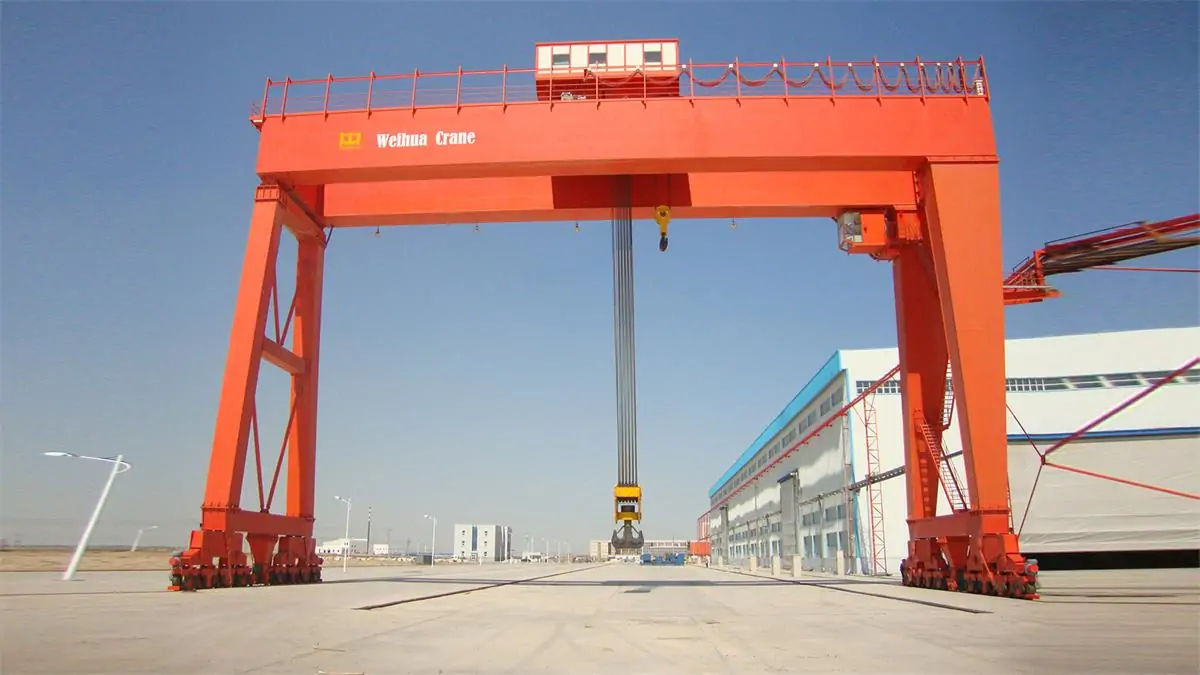
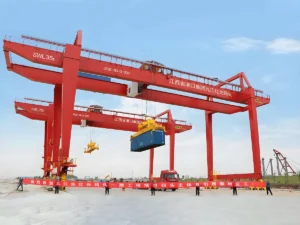
RTG Crane (Rubber-Tyred Gantry Crane) is a mobile lifting crane suitable for ports, logistics hubs, and bulk cargo facilities. Unlike rail-mounted RMG cranes, RTGs utilize rubber tires to move freely within yards, enabling efficient handling of containers, steel, and heavy cargo. They can integrate with intelligent yard management systems to achieve efficient stacking and precise operational control.
In this article, you will gain a detailed understanding of RTG crane definitions, main components, pricing factors, and considerations for selection. It provides a comprehensive reference guide for ports, logistics, and industrial facilities, while also covering common questions regarding operation and maintenance.


What is RTG Crane?
An RTG crane (Rubber-Tyred Gantry Crane) is a mobile heavy-duty gantry crane primarily used for container handling, bulk cargo operations, and intermodal logistics yards.
Unlike rail-mounted RMG cranes, RTG cranes operate on large rubber tyres, allowing them to move freely across expansive yard areas without the need for fixed rails. This mobility provides flexibility for yard layout adjustments, ideal for ports and terminals where space optimization and high throughput.
RTG cranes are designed to lift and transport heavy containers, steel materials, or large cargo units, often equipped with automated control systems, remote operation capabilities, and precision positioning technology.
Modern RTG cranes can integrate with yard management systems (YMS) to streamline container stacking, reduce labor costs, and increase overall operational efficiency.
How Does an RTG Crane Work?
The RTG crane working principle is based on a mobile gantry structure with four vertical legs mounted on rubber tyres, creating a portal frame that spans multiple container rows (typically 6-7 wide). A trolley system runs on rails along the top beam, carrying a container spreader that locks onto containers via four corner castings.
Three independent drive systems enable operation:
(1) Hoist mechanism lifts containers vertically using wire ropes and drums,
(2) Trolley drive moves the spreader laterally across the gantry width, and
(3) The gantry drive propels the entire structure along the container yard.
The rubber tyre chassis eliminates the need for ground-level rails, providing operational flexibility through 90-degree steering, enabling diagonal movement, lane changes, and precise positioning for container stacking operations up to 1-over-5 or 1-over-6 high.
RTG Crane Applications in Ports and Terminals
RTG cranes (Rubber-Tired Gantry Cranes) form the cornerstone of modern port and terminal operations, delivering flexible and efficient container and heavy cargo handling services in busy port yards, intermodal terminals, and bulk cargo facilities. RTG cranes optimize yard utilization, reduce turnaround times, and integrate with automated yard management systems (YMS), enabling terminal operators to achieve efficient stacking and precise material handling even under continuous heavy-load operations.


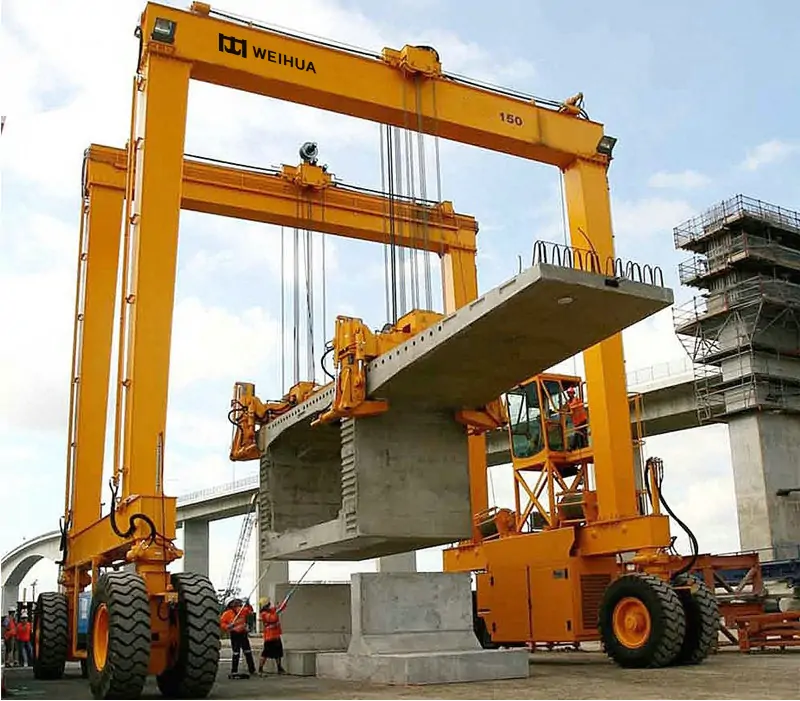
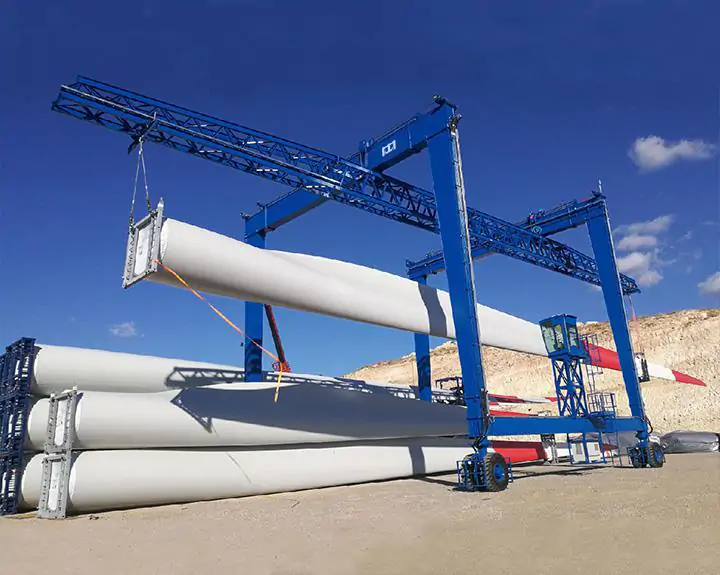

For details and benefits of RTG cranes, see: Advantages of RTG Cranes for Multiple Applications
The following are application scenarios:
Container Terminals
- Stacking and unstacking of standard and high-cube containers
- Loading and unloading containers from trucks, trailers, or railcars
- Integration with automated yard management systems to optimize container retrieval processes
Intermodal Logistics Hubs
- Handling containers for intermodal transport: truck, rail, or barge
- Flexible yard layout management to accommodate frequent layout changes
- High-throughput operations minimizing manual intervention
Bulk Cargo Facilities
- Lifting and transferring heavy materials such as steel coils, scrap metal, or oversized cargo
- Temporary storage and organization of materials before shipment
- Integration with cranes, forklifts, and conveyors for end-to-end logistics
Types of Materials Handled
- Standard containers (20-foot, 40-foot, high-cube)
- Heavy steel materials (steel coils, steel beams, steel plates)
- Oversized cargo and machinery
- Bulk cargo (scrap metal, timber, construction materials)
RTG vs RMG Cranes
Rubber-tyred gantry cranes (RTGs) and rail-mounted gantry cranes (RMG) are both used for container yard operations, but they offer distinct advantages and differences.
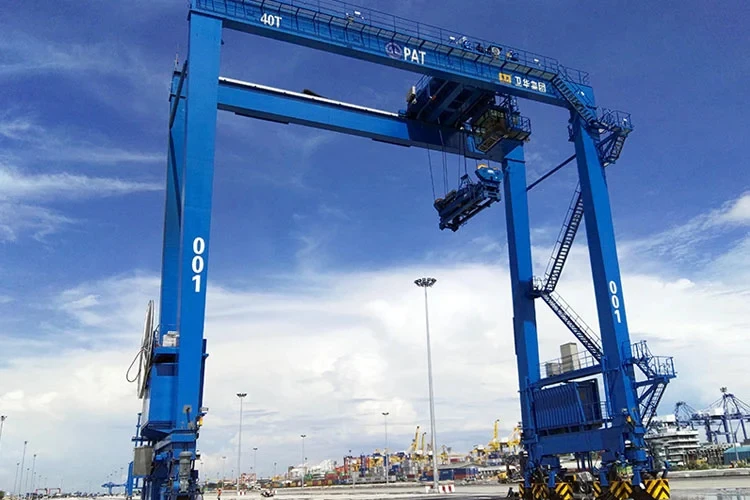

RTG cranes utilize rubber tires, eliminating the need for fixed rail infrastructure and offering exceptional operational flexibility. RTG cranes can move between yard areas and feature multiple steering modes. Compared to RMG systems, RTG cranes reduce initial capital investment by 30% to 50% since they require no ground rail installation, precision foundations, or complex electrical infrastructure.
RMG cranes are suited for high-throughput, highly automated terminals, offering superior precision and speed for efficient container handling. Compared to RTGs, RMGs are primarily deployed for fixed-track operations in ports, delivering greater accuracy and speed but demanding higher infrastructure requirements. RTGs, conversely, offer greater flexibility and are ideal for scenarios requiring phased expansion and reduced infrastructure costs. For a complete overview of all port crane types — including STS, mobile harbor cranes, and quay cranes — beyond just RTG and RMG, see أنواع مختلفة من الرافعات المينائية والرافعات الجسرية المستخدمة في الموانئ والمحطات.
RTG vs RMG Cranes: Technical Comparison
| ميزة | RTG (الرافعة الجسرية ذات الإطارات المطاطية) | RMG (الرافعة المثبتة على السكة الحديدية) |
|---|---|---|
| المحمولة | Operates on rubber tyres, no rails required | Fixed to ground-level rails |
| المرونة | Relocate between blocks, 90° steering, lane changes | Limited to installed track layout |
| تكلفة البنية التحتية | 30-50% lower (no rail installation) | High (rail + foundations + electrical) |
| Positioning Accuracy | ±25mm (standard), ±15mm (automated) | ±10mm (superior precision) |
| سرعة السفر | 60-100 m/min | 100-150 m/min |
| Automation Readiness | Semi-automation common, full automation possible | Easier full automation integration |
| صيانة | Tyre replacement, mechanical systems | Rail inspection, track maintenance |
| Energy Options | Diesel, electric, hybrid, battery | Primarily electric (busbar/cable reel) |
| Deployment Time | 6-12 months | 18-24 months (rail installation) |
| الأفضل لـ | Flexible operations, phased growth, 100K-2M TEU | High automation, consistent operations, 2M+ TEU |
| Typical CAPEX | $1.8M – $3.5M per crane | $2.5M – $4.5M per crane + infrastructure |
| Scalability | Add units incrementally | Requires complete rail system planning |
Components and Parts of an RTG Crane
An RTG crane is composed of a gantry structure, trolley and hoist system, rubber-tyred mobility system, power supply (diesel, electric, or hybrid), control and automation systems, and supporting components such as brakes and cables, all working together for efficient and precise material handling in port yards and logistics terminals. Below are the key features of the core components:
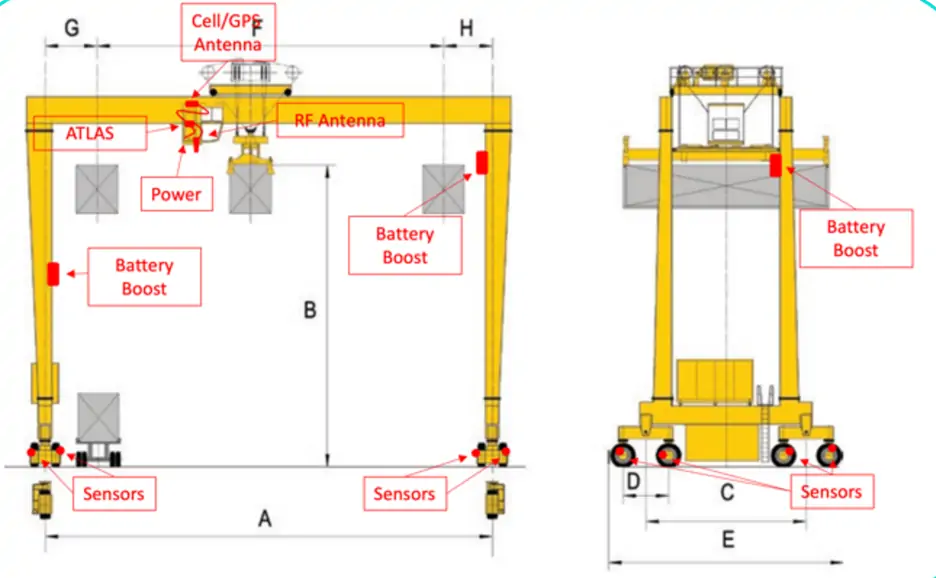
Gantry Structure
The main frame of the crane, spanning the yard area, supporting the trolley and hoist, and providing structural stability for heavy-duty lifting operations.
Trolley and Hoist System
Mounted on the gantry span, the trolley moves horizontally to position the hoist, which lifts and lowers containers, steel materials, or other heavy cargo.
Wheel and Mobility System
Large rubber tyres enable the crane to move freely across the yard without rails, providing flexibility and adaptability for various terminal layouts.
نظام الطاقة
RTG cranes can be diesel-powered, electric, or hybrid, supplying energy to the hoist, trolley, and mobility systems while influencing operational efficiency and emissions.
Control and Automation System
Includes remote operation interfaces, sensors, anti-sway devices, and yard management system (YMS) integration to ensure precise stacking, safe operation, and optimized workflow.
Supporting Components
Includes brakes, cables, pulleys, and other auxiliary parts that ensure smooth, reliable, and safe crane operation under heavy loads.
Are RTG Cranes Electric or Diesel?
RTG cranes feature multiple drive modes, including diesel engines, electric motors, or hybrid systems, offering flexibility for diverse port and terminal operational requirements.
Diesel-powered RTG cranes are widely adopted for their high mobility, independence from external power infrastructure, and suitability for large open-yard storage areas. This drive system maintains stable performance during long-distance travel and heavy-load operations, making it ideal for terminals with limited power supply. Compared to electric RTGs, diesel RTGs incur higher fuel costs, produce greater emissions, and require more frequent maintenance.
Electric RTG cranes are designed for enhanced energy efficiency, reduced emissions, and quieter operation. Typically connected to a fixed power source or using a cable reel, they provide stable power for continuous operation while minimizing environmental impact. The primary drawbacks of electric RTGs include limited mobility due to cable constraints, higher initial infrastructure costs, and dependence on a stable power supply.
However, modern terminals increasingly opt for hybrid RTG cranes, combining diesel and electric systems to balance operational flexibility, environmental compliance, and cost-effectiveness.
Benefits of Using an RTG Crane
Flexible Yard Operation
Moves freely on rubber tyres, eliminating the need for rails and adapting to changing yard layouts.
High Stacking Efficiency
Capable of stacking multiple container layers, maximizing yard space utilization.
Integration with Automation
Supports yard management systems (YMS) and remote operation for precise and efficient material handling.
Heavy-Duty Performance
Large lifting capacity, able to handle containers, steel materials, and oversized cargo.
Reduced Labor Costs
Automation and remote control reduce manual intervention and operational workforce requirements.
Environmentally Friendly Options
Electric and hybrid RTG cranes offer energy efficiency and lower emissions compared to diesel-only models.
Common RTG Crane Problems and Maintenance Tips
RTG cranes are widely used for high-load, high-volume operations in ports and logistics terminals. However, improper maintenance can lead to common problems. Understanding these issues and taking preventive measures ensures continuous, safe, and efficient crane operation.
Tire Wear and Replacement
Since RTG cranes rely on large rubber tires for mobility, frequent movement across yard surfaces can cause tire wear or damage. Regular inspections and timely replacement of worn tires are essential to maintain crane stability, traction, and safe operation.
Power System Issues
Diesel, electric, or hybrid RTGs rely on robust power systems to drive lifting, trolley, and travel functions. Fuel system failures, battery degradation, or electrical faults can cause operational interruptions. Routine power system inspections and proper energy management help prevent downtime.
Sensor and Control System Failures
Modern RTG cranes utilize positioning sensors, anti-sway devices, and automated control systems. Sensor or control module failures impact stacking accuracy, travel safety, and automation performance. Regular calibration, software updates, and component testing prevent operational errors.
Preventive Maintenance Measures
A structured preventive maintenance program extends RTG crane lifespan. This includes lubricating moving parts, inspecting structural components, monitoring mechanical system wear, and regularly testing electrical and control systems.
To ensure the long-term safe operation of an RTG crane, regular maintenance is essential. For information on maintenance intervals and detailed procedures, please refer to the article: “RTG Crane Maintenance Checklist: A Complete Guide to Safe and Efficient Operation.”
How to Operate an RTG Crane
Operating an RTG crane (Rubber-Tyred Gantry Crane) requires strict adherence to safety guidelines to ensure both personnel and cargo remain protected.
Operators should wear appropriate personal protective equipment (PPE), maintain clear communication with yard staff, and regularly inspect the crane for structural integrity, tyre condition, and proper functioning of hoist and trolley systems before each shift. Following these safety protocols helps prevent accidents and ensures smooth operations in busy container yards and logistics terminals.
Standard operating procedures for RTG cranes include proper positioning of the crane over containers, controlled lifting and lowering of loads, and careful maneuvering across the yard.
Many modern RTG cranes are equipped with automation assistance, such as remote control interfaces, anti-sway devices, and yard management system (YMS) integration, which enhance precision, reduce manual workload, and optimize stacking efficiency.
Combining procedural discipline with automation ensures high productivity, safe handling, and consistent performance in high-volume port and intermodal operations.
أسئلة شائعة
What does RTG crane stand for?
A: RTG stands for Rubber-Tyred Gantry Crane, a mobile gantry crane that operates on large rubber tyres instead of rails. It is widely used in container terminals, intermodal yards, and bulk cargo facilities for lifting, stacking, and transporting heavy materials and containers.
RTG crane vs RMG crane
A: While both RTG and RMG (Rail-Mounted Gantry) cranes are used for container handling:
RTG cranes move on rubber tyres, providing flexible yard mobility and adaptability for changing layouts.
RMG cranes operate on fixed rails, offering precise positioning, high stacking density, and automated operation in structured port yards.
Choosing between them depends on yard layout, operational volume, and automation requirements.
Common operational questions
A: Operators frequently inquire about lifting capacity, power options (diesel, electric, or hybrid), maintenance frequency, and automation features. Weihua’s technical team provides basic operational training and the RTG Crane Manual PDF, covering proper stacking techniques, tire inspections, sensor calibration, and integration with Yard Management Systems (YMS) to ensure safe and efficient operation.