








جدول المحتويات
مقدمة
Container cranes are used to lift, move, and position containers between ships, trucks, rail yards, and storage areas. The basic process relies on the spreader, hoisting system, trolley, and crane traveling mechanism, with each system handling a specific movement during container transfer.
How Do Container Cranes Work? This article explains how container cranes operate and how containers are moved from ships to yards through a step-by-step handling process. It covers the main crane components, lifting and horizontal movement systems, STS, RTG, and RMG crane operations, control systems, and the key factors affecting container handling efficiency.
Learn more about container crane types, applications, and working principles in our guide: What Is a Container Crane? Types, Uses & How It Works.
أجزاء
Container cranes consist of structural, mechanical, electrical, control, and safety systems. These components work together to lift, move, position, and secure containers during handling operations.
1. Structural System
The structural system provides the main support for the crane and carries the lifting loads during operation.
- Metal Structure — Includes main girders, end beams, legs, and supporting structures that carry the crane load and container weight.
- Trolley Frame — Supports the hoisting mechanism and trolley travel components while transferring lifting forces to the crane structure.
2. Travel & Lifting System
The travel and lifting system controls vertical lifting and horizontal movement of containers.
- Hoisting Mechanism — Uses motors, drums, and wire ropes to raise and lower the spreader and containers.
- Trolley Travel Mechanism — Moves the trolley and spreader along the main girder to position containers accurately.
- Gantry Travel Mechanism — Drives the entire crane along rails or tires to move between different operating positions.
3. Container Handling System
The container handling system connects the crane with containers and controls the lifting process.
- Spreader — Locks onto containers and handles different container sizes, commonly including 20 ft, 40 ft, and 45 ft containers.
- Hydraulic System — Controls spreader functions such as telescoping, twist locks, and flippers.
- Anti-Sway System — Reduces container swing during lifting and trolley movement for smoother handling.
4. Control & Power System
The control and power system provides electrical power and manages crane operation through integrated control devices.
- Electrical Control System — Includes PLCs, drives, sensors, and control interfaces for crane movement, speed adjustment, and operation monitoring.
- Cable Reel / Busbar System — Supplies electrical power to the moving crane.
- Operator Cabin — Provides the operator with control equipment, monitoring systems, and visibility of the working area.
5. Safety & Access System
The safety system protects operators, equipment, and surrounding areas during crane operation.
- Safety Devices — Includes overload protection, limit switches, anti-collision devices, wind sensors, and emergency stop systems.
- Anchoring & Anti-Wind Devices — Secure the crane during strong winds and idle periods.
- Ladders, Platforms & Walkways — Provide safe access for inspection, maintenance, and servicing.
- Lighting & Signal System — Includes working lights, warning signals, indicators, and operation alerts.
Container Handling Process Step by Step
The container handling process involves lifting, moving, positioning, and storing containers between vessels, trucks, rail yards, and container yards.
- 1. Position the Crane: The container crane moves to the assigned working position and aligns the trolley and spreader with the target container.
- 2. Lower the Spreader: The hoisting system lowers the spreader onto the container. The spreader adjusts to the required container length.
- 3. Lock the Container: The spreader twist locks engage with the container corner castings and secure the load for lifting.
- 4. Lift the Container: The hoisting mechanism raises the container from the vessel, truck, chassis, or ground. Load monitoring and safety devices check the lifting operation.
- 5. Move the Container: The trolley moves the suspended container horizontally. For ship-to-shore operations, the trolley transfers the container between the vessel and quay side.
- 6. Position the Container: The crane slows down and positions the container above the target location. The anti-sway system helps control container movement during positioning.
- 7. Lower and Release: The hoisting system lowers the container onto the truck, AGV, rail wagon, or storage position. The twist locks release after the container is properly placed.
- 8. Return the Spreader: The spreader returns to the next pickup position, starting another handling cycle.
How Does a Container Crane Move a Container?
A container crane moves a container through three basic movements: hoisting, trolley travel, and crane travel. These movements control the vertical and horizontal position of the container during handling.
Hoisting — The hoisting mechanism raises and lowers the spreader and container. Motors, drums, and wire ropes control the vertical movement during lifting and lowering.
Trolley Travel — The trolley moves along the main girder and carries the spreader and container horizontally. This movement transfers the container between the vessel, quay, truck, or storage position.
Crane Travel — The entire crane moves along rails or tires to reach different working positions. In a container yard, crane travel allows the equipment to move between container rows and operating lanes.
Container movement is controlled by the combination of hoisting, trolley travel, and crane travel.
How Do RTG and RMG Cranes Handle Containers?
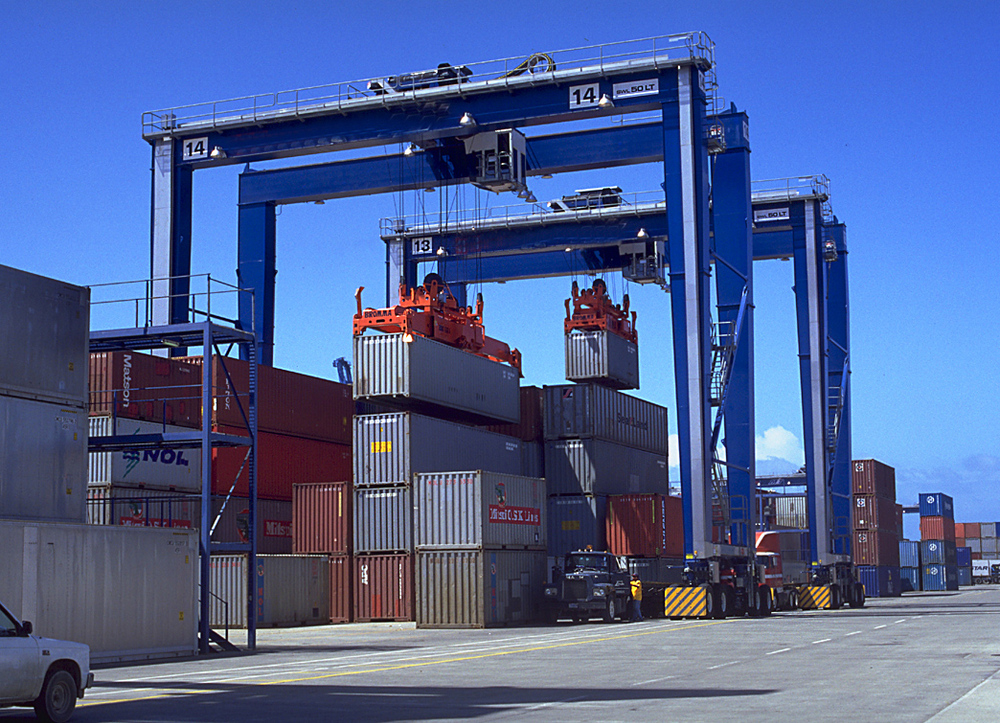
RTG and RMG cranes are widely used for container stacking and transfer in yards. Both use a spreader, hoisting mechanism, and trolley to handle containers, but their travel systems and operating areas are different.
RTG Container Handling
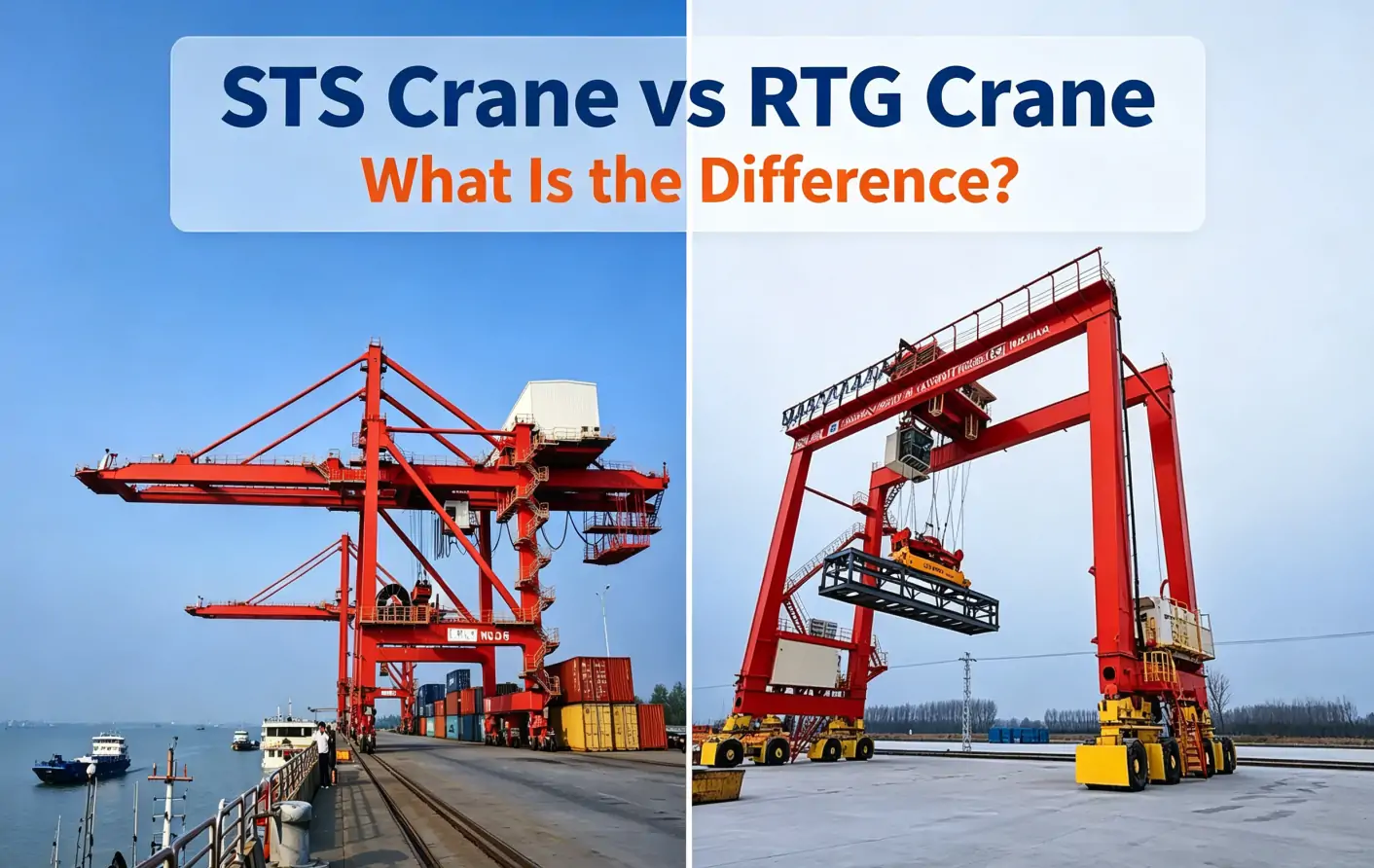
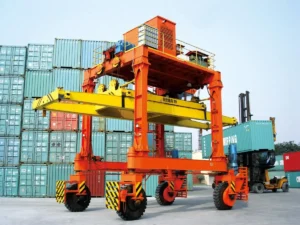
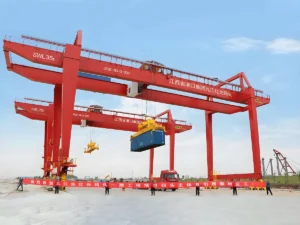
أن رافعة RTG runs on rubber tires and can move between different yard blocks. The trolley moves along the main girder while the hoisting system raises and lowers the container. This makes RTG cranes suitable for yards that require flexible equipment movement.
احصل على عرض أسعار مخصص الآن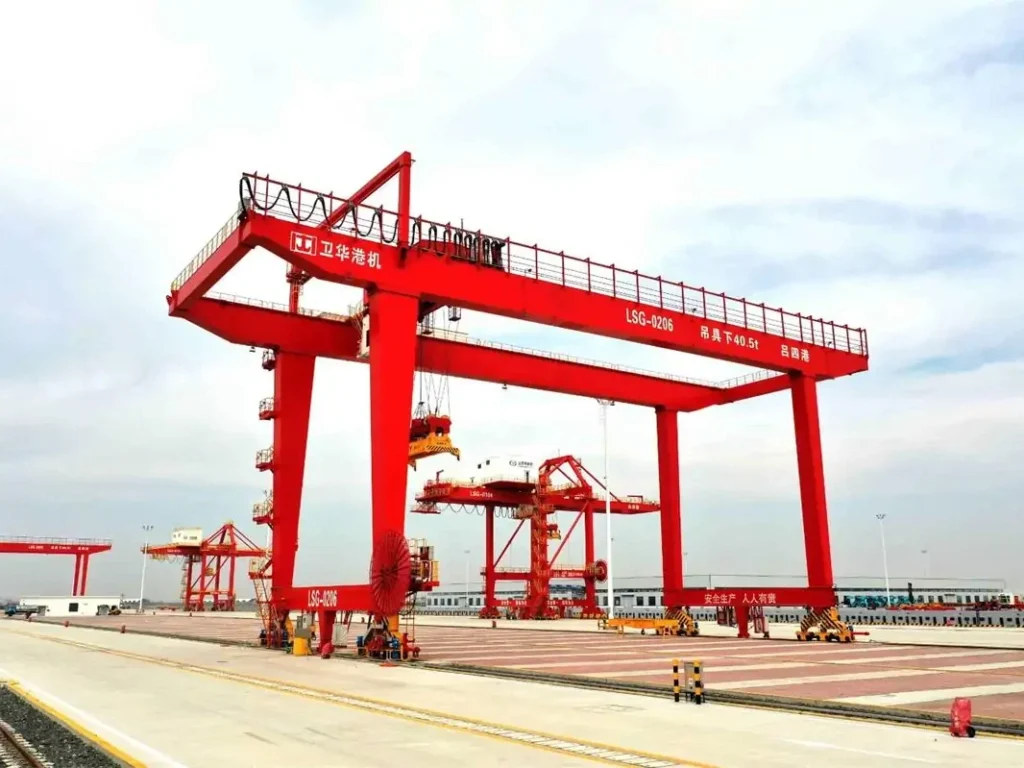
RMG Container Handling
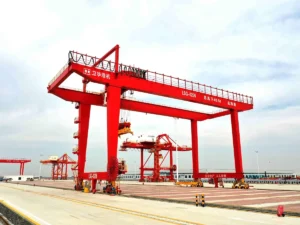
أن رافعة RMG runs on fixed rails and handles containers within a defined yard area. The trolley and hoisting system work together for container stacking and transfer. Rail-guided movement also makes RMG cranes suitable for automated and high-frequency yard operations.
احصل على عرض أسعار مخصص الآنRTG vs RMG Container Handling
| ميزة | رافعة RTG | رافعة RMG |
|---|---|---|
| Travel | Rubber tires | Fixed rails |
| قوة | Diesel generator or hybrid/electric system | Electric power |
| المحمولة | Flexible movement between yard blocks | Fixed operating area |
| Positioning | Manual or automated | Manual or automated |
| Typical Use | Flexible container yards | Large or automated container yards |
كيف تعمل رافعة الحاويات من نوع STS؟
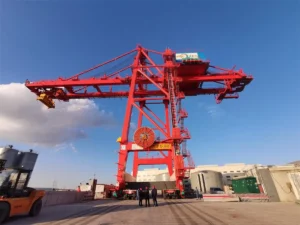
أن STS (Ship-to-Shore) container crane handles containers between a vessel and the quay. The main process uses the spreader, hoisting mechanism, trolley, and crane travel system.
1. Position the Crane
The STS crane travels along the quay rail and positions the trolley and spreader above the target container.
2. Lock the Container
The spreader is lowered onto the container and twist locks engage with the container corner castings.
3. Lift and Transfer
The hoisting mechanism lifts the container from the vessel. The trolley then moves the container horizontally toward the quay.
4. Lower and Release
The container is lowered onto a truck, AGV, or other transport equipment. The spreader releases the container and returns for the next cycle.
For loading operations, the same process is carried out in reverse, moving containers from the quay to the vessel.
How Does the Container Crane Control System Work?
The container crane control system coordinates the crane’s lifting, trolley travel, crane travel, and spreader operations. Its basic working process includes four steps:
Sensors Collect Data: Sensors monitor load, lifting height, trolley position, crane position, wind speed, and other operating conditions.
PLC Processes Signals: The PLC receives sensor signals and control commands, then calculates the required movement for each crane mechanism.
Drives Control the Mechanisms: Variable frequency drives control the motors for hoisting, trolley travel, and crane travel. The hydraulic system controls spreader functions such as locking and telescoping.
Monitoring and Safety Protection: The control system monitors crane status and works with overload protection, limit switches, anti-collision devices, and emergency stops.
For automated cranes, the control system can also integrate positioning, machine vision, and remote operation for container handling.
How Does Anti-Sway Control Work?
Anti-sway control limits container swing during lifting and trolley travel. It helps the crane keep the container stable when starting, stopping, and changing speed.
Mechanical Anti-Sway: Mechanical anti-sway uses guide structures or stabilizing devices to limit container movement. The structure provides physical restraint during crane operation.
Electronic Anti-Sway: Electronic anti-sway uses sensors and the control system to detect container movement. The drive system adjusts trolley speed and acceleration to reduce swing.
- Detect – Sensors detect trolley position, container movement, and swing angle.
- Calculate – The control system calculates the required speed and acceleration.
- Adjust – The drive system changes trolley movement to reduce container swing.
Anti-sway control reduces swing during crane acceleration and deceleration, helping the spreader reach the target position faster.
What Determines Container Crane Handling Efficiency?
Container crane handling efficiency mainly depends on crane speed, positioning accuracy, control performance, and yard or vessel operating conditions.
- Hoisting Speed – Higher hoisting speed shortens the time required to lift and lower containers.
- Trolley Speed – Trolley speed directly affects the horizontal transfer time between the vessel and quay.
- Crane Travel Speed – Higher travel speed reduces the time required to move the crane to another working position.
- Anti-Sway Performance – Good anti-sway control reduces container swing and allows faster positioning.
- Positioning Accuracy – Accurate spreader positioning reduces correction movements during pickup and placement.
- Control System – PLC, variable frequency drives, sensors, and automation systems coordinate crane movements and reduce operating delays.
- Operating Conditions – Wind, container arrangement, vessel movement, yard layout, and traffic around the crane can affect the handling cycle.
Handling efficiency is determined by the combined performance of crane speed, positioning, control, and operating conditions.
Container Crane Safety During Handling
Container crane safety depends on load control, position monitoring, travel limits, and protection against collisions and strong winds.
| جهاز أمان | وظيفة |
|---|---|
| حماية من الحمل الزائد | Monitors the lifting load and prevents operation when the load exceeds the rated capacity. |
| Limit Switches | Controls the lifting, trolley travel, and crane travel limits to prevent overtravel. |
| Spreader Locking System | Confirms that twist locks are properly engaged before lifting containers. |
| Anti-Collision System | Detects nearby cranes, equipment, or obstacles and restricts movement when necessary. |
| Anti-Sway Control | Reduces container swing during lifting, acceleration, and trolley movement. |
| Wind Protection System | Uses wind sensors, rail clamps, and anchoring devices to secure the crane during strong winds and idle periods. |
| Emergency Stop System | Quickly stops crane movements when abnormal or unsafe conditions occur. |
| Load and Position Monitoring | Monitors load weight, lifting height, trolley position, and other operating parameters in real time. |
Safe container handling requires the crane, spreader, control system, and safety devices to work together throughout each lifting cycle.
How to Choose a Container Crane for Your Operation?
Container crane selection depends on the load, container dimensions, lifting range, working area, and operating frequency. Check the following factors before selecting the crane:
- Container Weight
Confirm the maximum container weight and select the rated lifting capacity accordingly. - حجم الحاوية
Check the container lengths and types to select the suitable spreader configuration. - Required Lifting Height
Determine the highest stacking position or required vessel lifting height and allow sufficient clearance. - Required Span or Outreach
Measure the working width of the yard or the required vessel outreach to determine the crane span. - Handling Frequency
Consider daily container moves, working hours, and cycle requirements when selecting the working class. - Yard or Port Layout
Check rail spacing, container rows, traffic lanes, ground conditions, and available operating space.
The final crane configuration should be based on the actual working conditions. Key specifications include lifting capacity, span or outreach, lifting height, and working class.
Different types of container cranes are used for different operational scenarios. To learn how to select the right crane for container operations, see the article: “كيفية اختيار رافعة جسرية لنقل الحاويات؟”
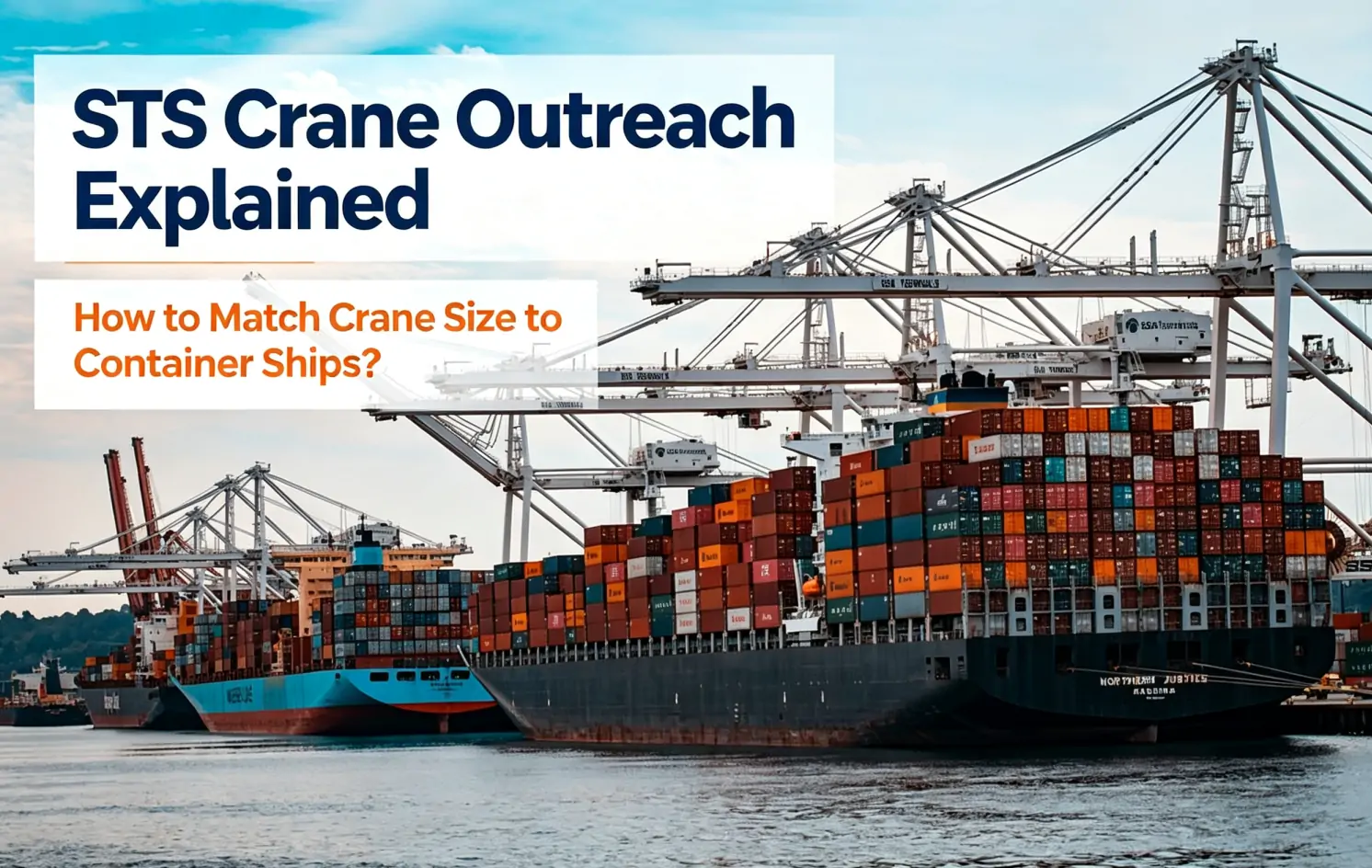
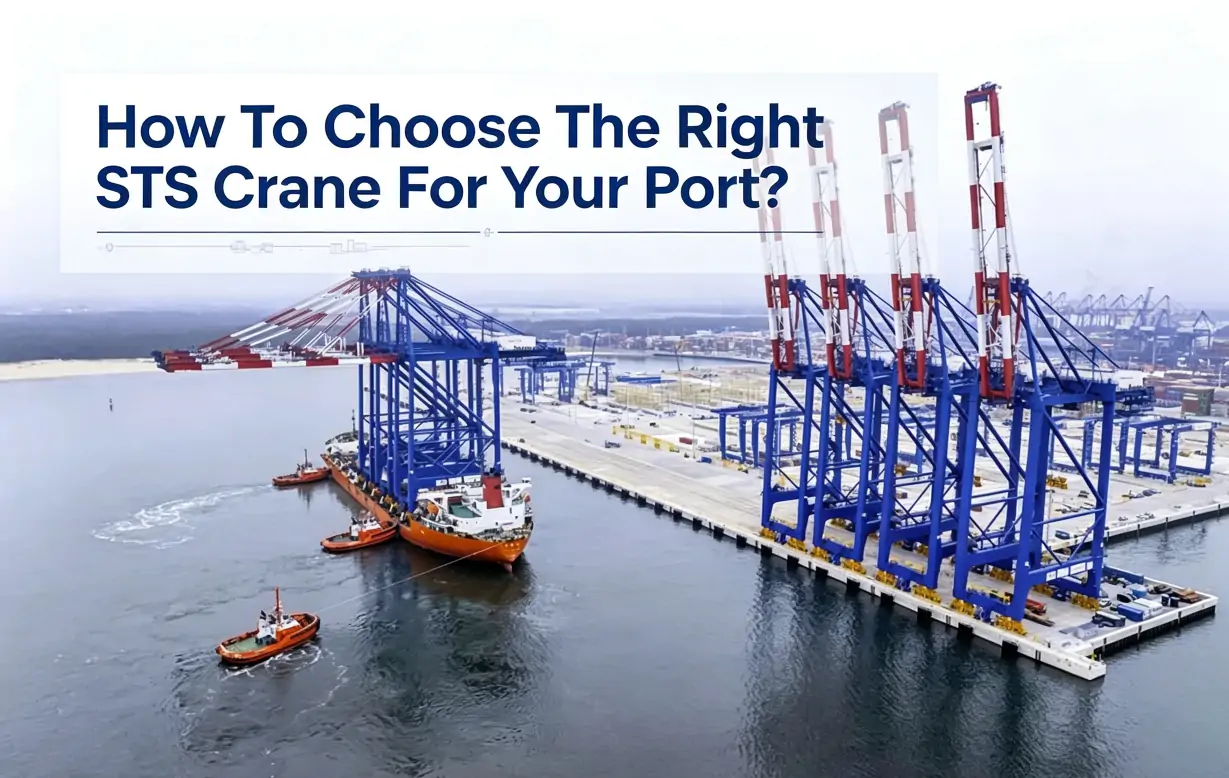
To select an STS container crane with the appropriate capacity, refer to the article: How To Choose The Right STS Crane For Your Port?
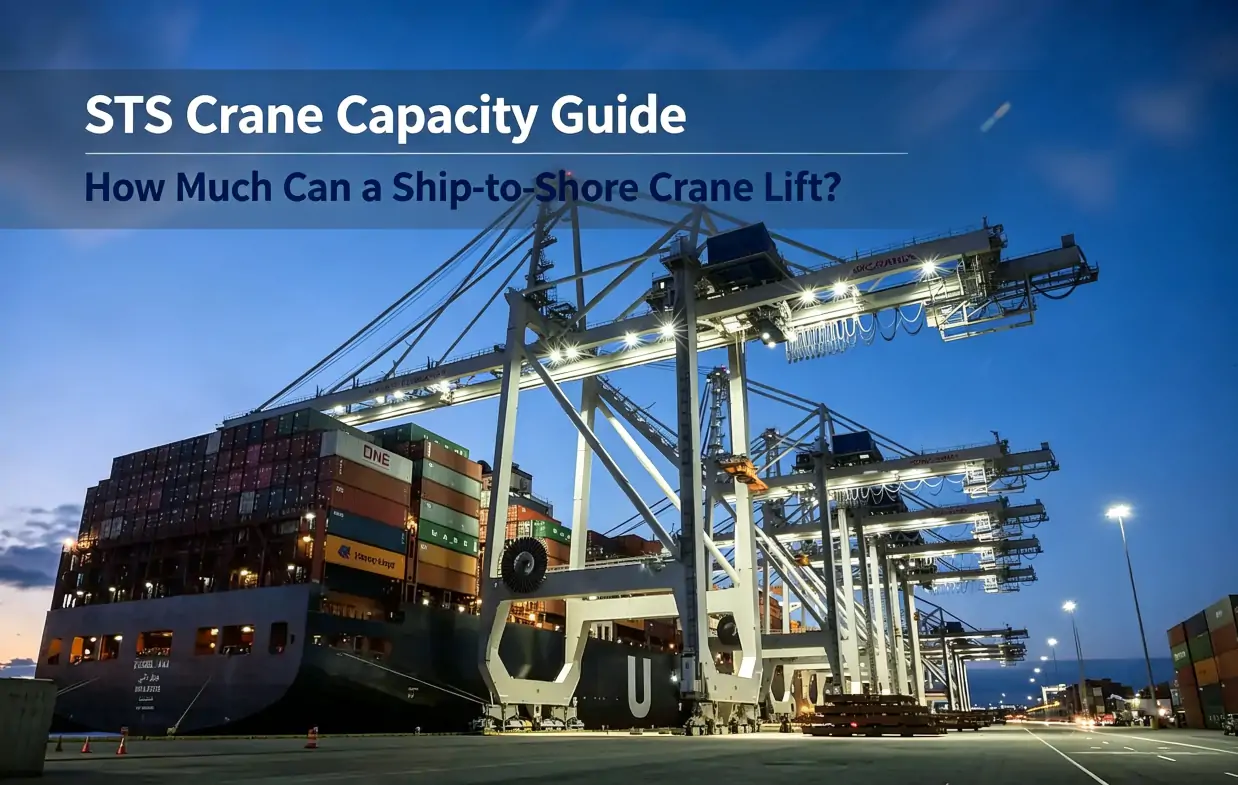
The specifications of container cranes—such as lifting capacity, span, and lifting height—directly affect the pace of operations. For detailed data, see: Container Crane Specifications: Capacity, Span, Lifting Height & Working Class
خاتمة
Container cranes use the hoisting mechanism, trolley, crane travel system, spreader, and control system to lift, move, and position containers. STS cranes handle ship-to-shore operations, while RTG and RMG cranes are mainly used for container stacking and transfer in yards. Crane selection depends on the container load, lifting height, span or outreach, handling frequency, and site layout.
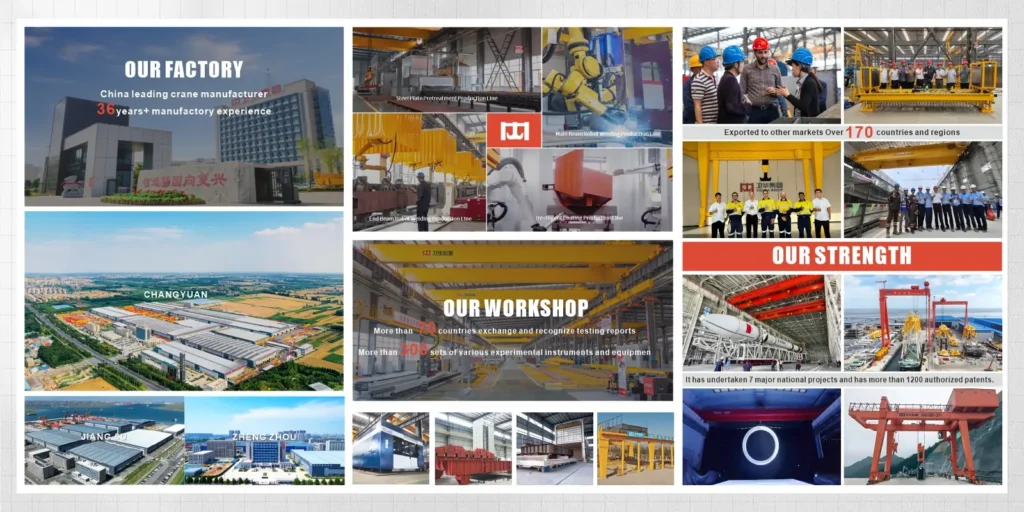
WEIHUA provides container cranes for ports, container terminals, railway yards, and industrial applications. We provide crane design, manufacturing, installation guidance, commissioning, spare parts, and after-sales service. Contact us with your container handling requirements and site conditions for a suitable crane solution.
أسئلة شائعة
How do container cranes work?
Container cranes use a hoisting mechanism, trolley, spreader, and crane travel system to lift, move, and position containers. The control system coordinates these movements during each handling cycle.
How does a container crane lift a container?
The spreader locks onto the container corner castings, and the hoisting mechanism raises the spreader and container with wire ropes. The container is then moved to the required position.
How does a container crane move horizontally?
The trolley moves along the main girder to transfer the container horizontally. The entire crane can also travel along rails or tires to reach another working position.
How does an STS crane load a ship?
The STS crane picks up a container from the quay, raises it, and moves the trolley toward the vessel. The container is then lowered into the assigned position on the ship.
What is the function of a container crane spreader?
The spreader connects the crane to the container through twist locks at the corner castings. Telescopic spreaders can handle different container lengths, such as 20 ft, 40 ft, and 45 ft containers.
How do RTG cranes handle containers?
RTG cranes run on rubber tires and use the spreader, hoisting mechanism, and trolley to pick, move, and stack containers within the yard. Their mobile design allows them to move between different container blocks.
How do RMG cranes work?
RMG cranes run on fixed rails and use the hoisting and trolley mechanisms to move containers within a defined yard area. Their fixed travel path provides accurate positioning and supports automated container handling.
How long does it take to move a container with a crane?
The handling time varies with crane type, travel distance, lifting height, container position, and operating conditions. A complete crane cycle can range from around one to several minutes depending on the operation.