








جدول المحتويات
مقدمة
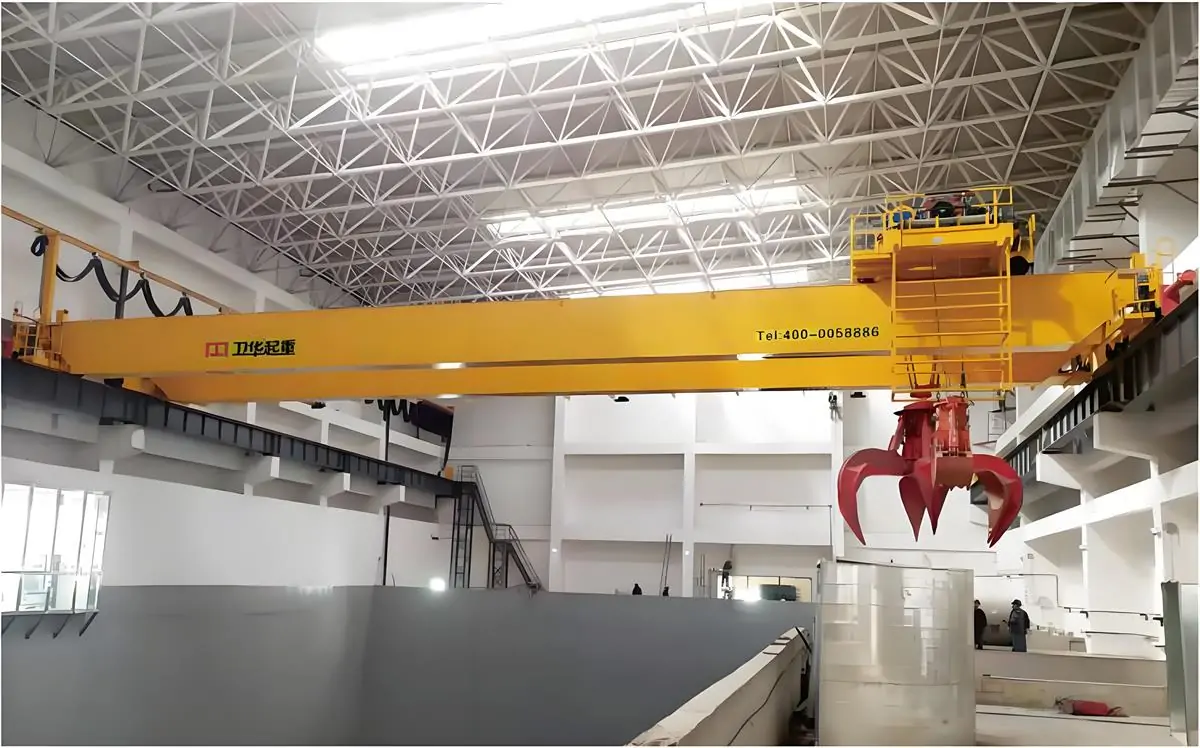
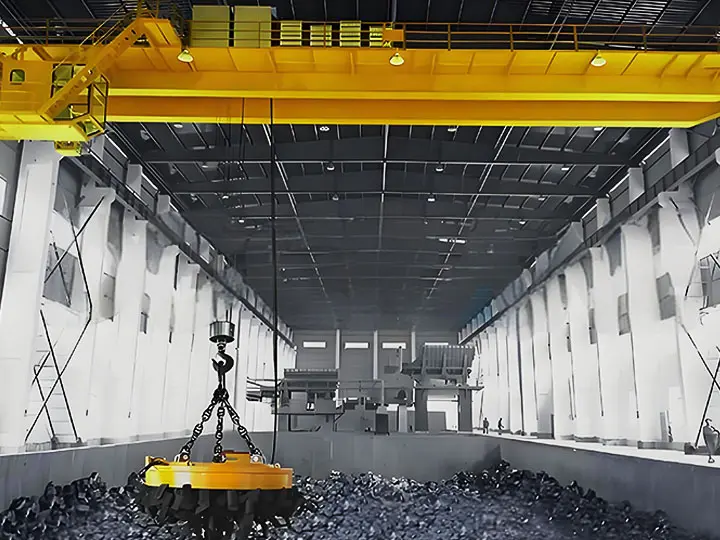
Metallurgical overhead cranes are specialized overhead lifting equipment designed for steel mills, aluminum plants, foundries, and other high-temperature industrial environments. They are mainly used for handling molten metal, ladles, billets, coils, and heavy materials during production. Compared with standard overhead cranes, metallurgical overhead cranes feature heat-resistant structures, stronger load capacity, and enhanced safety systems to meet the demanding conditions of metallurgical operations.
In this article, we will introduce what metallurgical overhead cranes are, how they work, and their applications in steel and aluminum plants. We will also discuss their main types, key design features, and important factors for selecting a suitable crane. These details help you understand how metallurgical cranes support heavy industrial production and why they are widely used in metal processing facilities.
What Is a Metallurgical Overhead Crane?
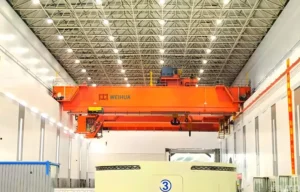
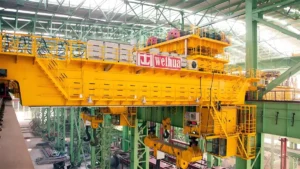
A metallurgical overhead crane, also called a ladle crane or steel mill crane, is a heavy-duty lifting machine used for molten metal handling, slag removal, billet transfer, and other material handling tasks in steel plants, foundries, and non-ferrous metal plants. The crane adopts a welded box girder structure and trolley-mounted hoisting mechanism, providing strong load support for high-temperature and heavy-load operations.
Compared with standard overhead cranes, metallurgical overhead cranes are designed for continuous working conditions, commonly with A8 or M8 duty class. They are equipped with heat-resistant electrical components, dual braking systems, and precision hoisting devices for safe ladle movement. A typical 100-ton metallurgical crane operates at a lifting speed of around 2–4 m/min under full load, allowing controlled positioning during molten metal transfer.
The crane structure uses high-strength steel such as Q345B or S355. Heat protection designs include insulated walkways and water-cooled operator cabins to reduce the impact of radiant heat. Electrical cabinets usually adopt an IP54 protection rating and ventilation systems for operation in environments above 60°C. These features make metallurgical overhead cranes suitable for steelmaking, aluminum production, and other high-temperature metal processing applications.
How Does a Metallurgical Overhead Crane Work?
A metallurgical overhead crane operates through four main systems: hoisting, trolley travel, bridge travel, and control. These systems work together for ladle handling, molten metal transfer, and heavy material movement in steel and aluminum plants.
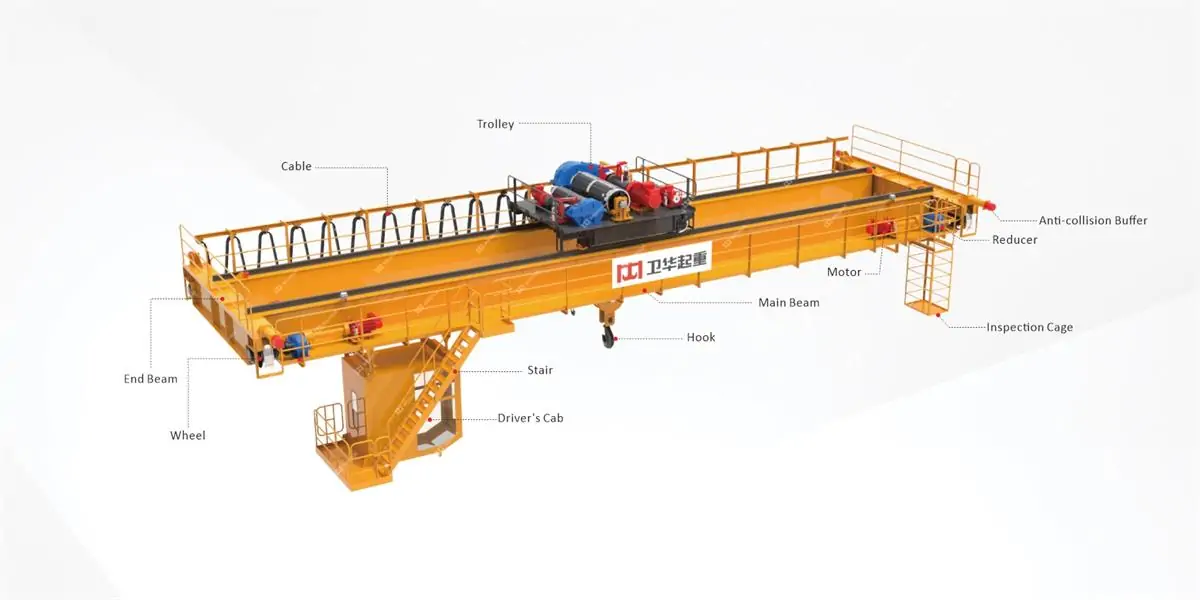
- Hoisting Mechanism: The hoisting system uses a dual-motor drive and planetary gearbox to lift ladles through wire ropes and drums. The lifting speed is usually 2–4 m/min under full load
- Trolley Travel: The trolley moves along the main girder with self-aligning roller bearings and variable-frequency drive control. A dual-trolley design can handle ladle lifting, tilting, and slag removal operations.
- Bridge Travel: The bridge moves along runway rails through end carriages and wheels. The crane uses thermal expansion designs and A6–A8 duty ratings for continuous heavy-duty operation.
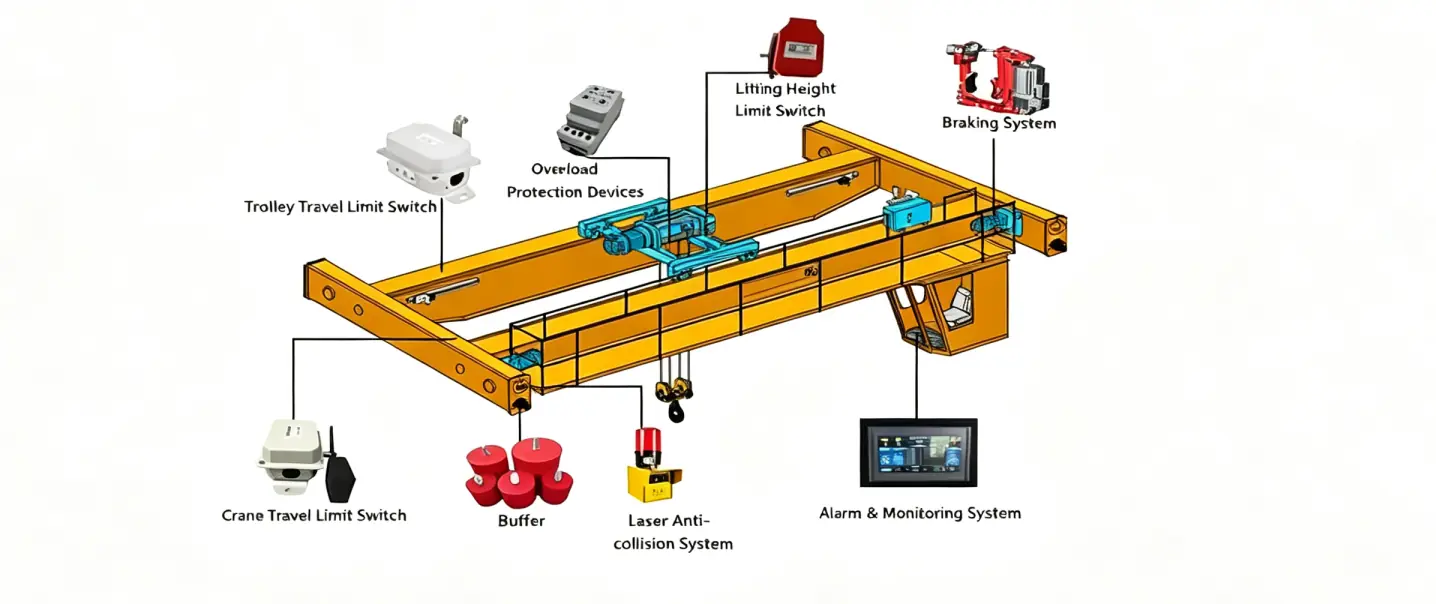
- Control and Safety Systems: The crane is operated by an insulated cabin or remote control system. Safety devices include dual brakes, overload protection, limit switches, IP54 electrical cabinets, and emergency stop functions.
A metallurgical overhead crane combines heavy-load lifting capacity with heat-resistant design, making it suitable for demanding production environments in steel mills and aluminum plants.
Applications of Metallurgical Overhead Cranes
(Metallurgical overhead cranes are used in different stages of steel and aluminum production, from molten metal transfer to finished product handling. Their applications mainly focus on high-temperature, heavy-load, and continuous material movement in industrial plants.
Applications in Steel Plants
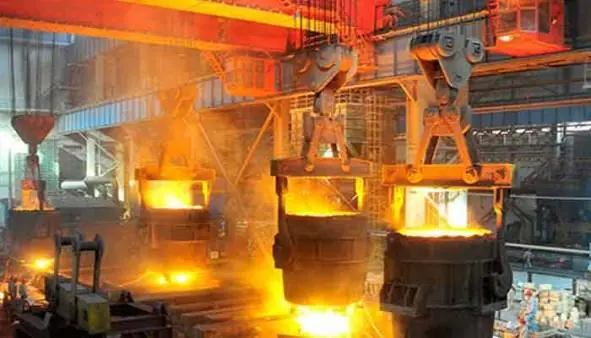
Molten Steel Ladle Handling
Metallurgical overhead cranes handle steel ladle transfer in steel plants. They move ladles between converters, furnaces, refining stations, and casting machines. The lifting speed is usually 2–4 m/min during full-load operation.
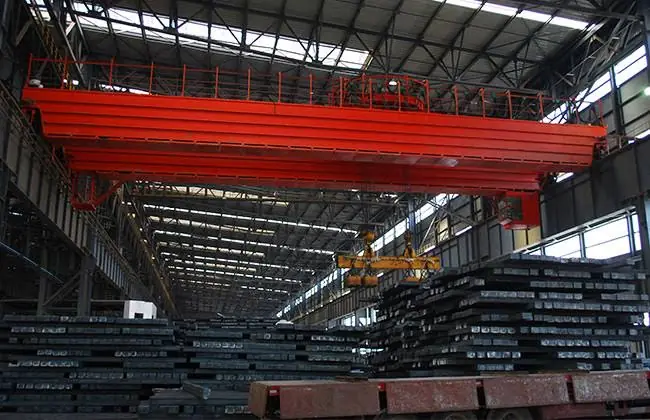
Steel Billet and Slab Handling
These cranes are used for billet and slab lifting in continuous casting lines. They transport high-temperature steel products from casting machines to cooling areas, storage yards, or rolling mills. Heat-resistant structures are used for handling slabs with temperatures above 650°C.
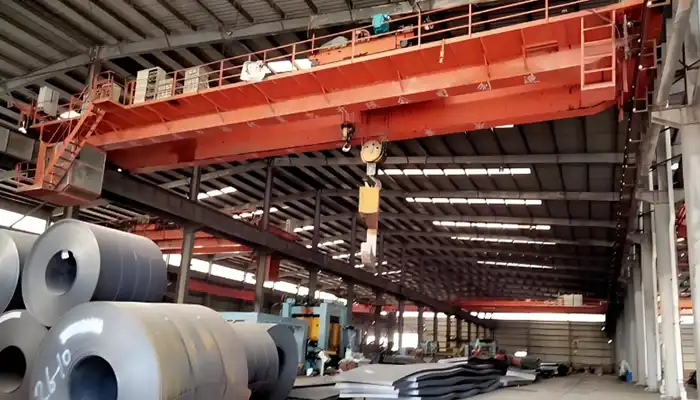
Steel Coil Handling
Metallurgical overhead cranes handle hot-rolled coils, cold-rolled coils, and steel products in warehouses and production lines. Special hooks, coil grabs, or lifting devices are used for coil transfer, stacking, and loading operations.
Applications in Aluminum Plants
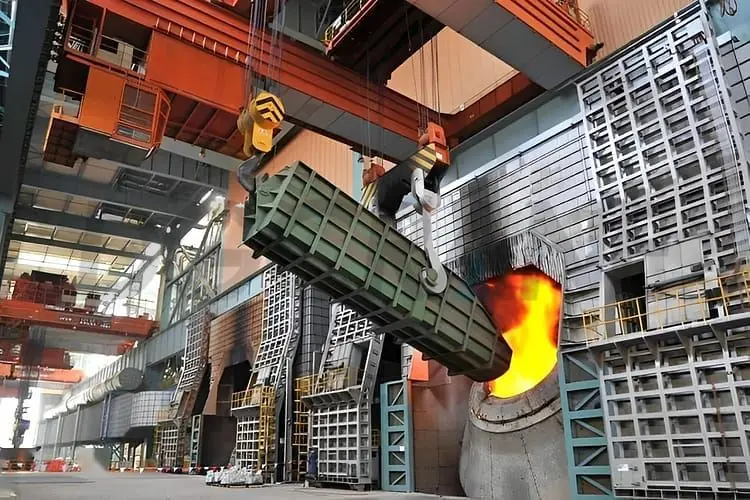
Molten Aluminum Transfer
In aluminum smelting plants, metallurgical overhead cranes are used for molten aluminum transportation between furnaces, holding furnaces, and casting areas. They are designed for high-temperature environments in electrolytic aluminum workshops.
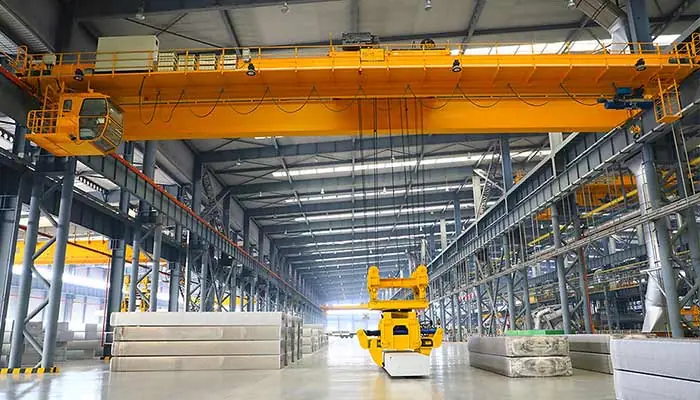
Aluminum Ingot Handling
These cranes handle aluminum ingots in casting production lines. They are used for ingot lifting, stacking, and movement between casting equipment and storage areas.
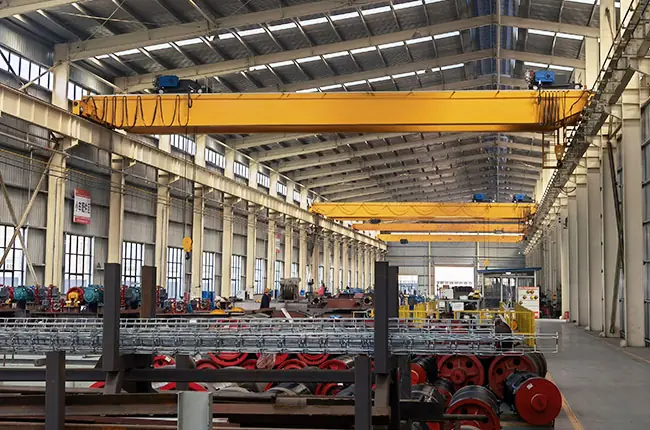
Production Line Material Handling
Metallurgical overhead cranes support raw material transportation and finished product transfer in aluminum production. They are also used for auxiliary operations such as anode replacement and material feeding in electrolytic cells.
Metallurgical overhead cranes are designed for high-temperature and heavy-load operations, supporting continuous material handling in steel and aluminum production processes.
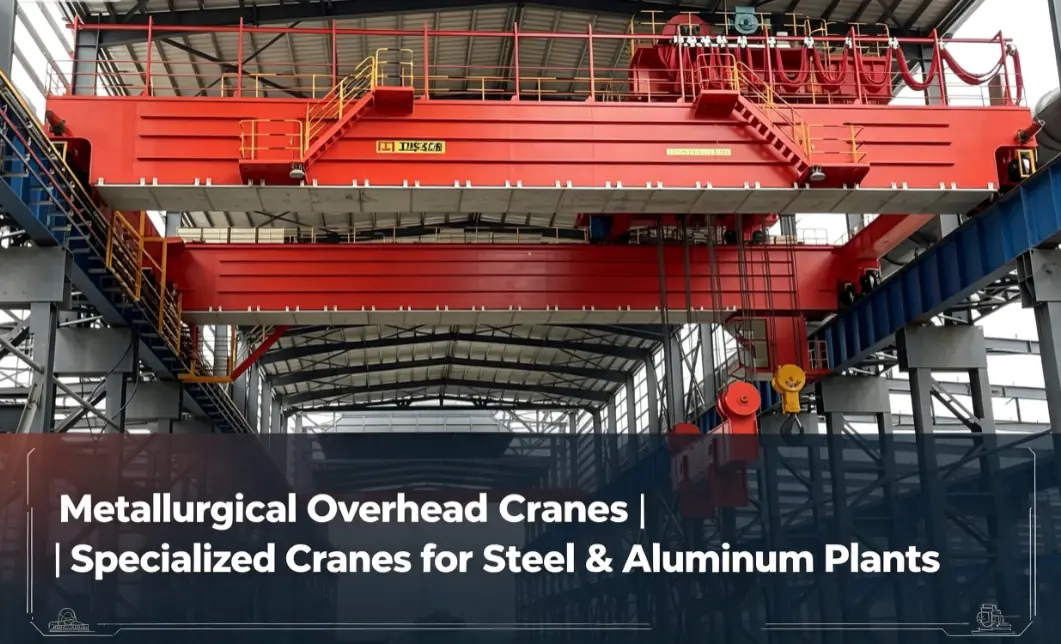
For details on the applications of metallurgical overhead cranes, see the article: “Metallurgical Overhead Cranes | Specialized Cranes for Steel & Aluminum Plants”
Metallurgical Overhead Crane vs Standard Overhead Crane
Metallurgical overhead cranes and standard overhead cranes have different designs and working conditions. Metallurgical cranes are built for molten metal handling, high temperatures, and continuous heavy-duty operations, while standard cranes are mainly used for general material handling.
| مقارنة | Metallurgical Overhead Crane | Standard Overhead Crane |
|---|---|---|
| Design Standard | Designed for metallurgical applications with strict safety requirements for molten metal handling | Designed for general industrial lifting operations |
| فئة الواجب | Usually A7–A8 for continuous heavy-duty work | Usually A3–A6 for regular lifting tasks |
| هيكل | Uses welded box girders, heat insulation layers, and stronger structures for high-temperature environments | Uses common box or steel beam structures for general factory use |
| Hoisting System | Equipped with dual brakes and precise low-speed lifting, usually 2–4 m/min under full load | Mainly uses standard braking systems with higher lifting speed |
| Safety Protection | Includes overload protection, heat shielding, insulated cabins, and IP54 or higher electrical protection | Uses standard safety devices without special heat protection |
| تطبيقات | Used for steel ladle transfer, furnace charging, casting handling, and aluminum production | Used in workshops, warehouses, and general material handling |
| Cost and Maintenance | Higher investment due to special structure and safety requirements | Lower cost and easier maintenance for normal working conditions |
Metallurgical overhead cranes are designed for high-temperature and heavy-load environments in steel and aluminum plants. Standard overhead cranes are suitable for general lifting work but cannot meet the safety requirements of molten metal handling.
Main Types of Metallurgical Overhead Cranes
Metallurgical overhead cranes are used in steel plants, aluminum plants, foundries, and metal processing workshops. Different crane types are selected according to lifting materials, production processes, and working conditions. Common types include ladle cranes, charging cranes, ingot handling cranes, casting cranes, heavy-duty metallurgical cranes, and single-girder metallurgical cranes.
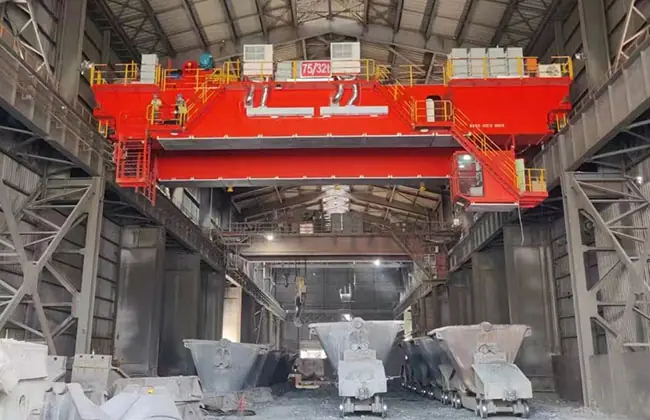
Ladle Handling Crane
Ladle handling cranes, also called steel mill cranes or casting cranes, are used for molten steel transportation. They lift steel ladles between converters, electric furnaces, refining stations, and continuous casting areas. The crane usually adopts A7–A8 duty class, dual braking systems, and heat-resistant components. The design meets the requirements of JB/T 7688.1 Metallurgical Crane Technical Conditions.
- Steel ladle transfer
- Converter and refining operations
- Continuous casting pouring
- Molten steel transportation
رافعة شحن
Charging cranes are used for loading scrap steel, iron blocks, and other furnace materials. They are installed in electric furnace and steelmaking workshops. The crane has high working frequency and impact resistance for dusty and high-temperature environments. The common duty class is A5–A8.
- Electric furnace charging
- Scrap steel handling
- Furnace material transfer
- Steelmaking raw material loading
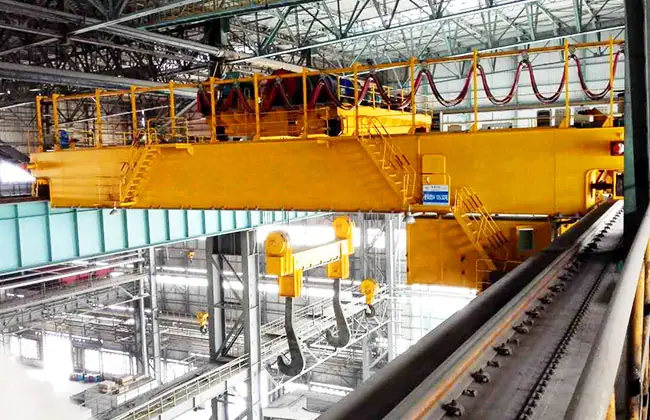
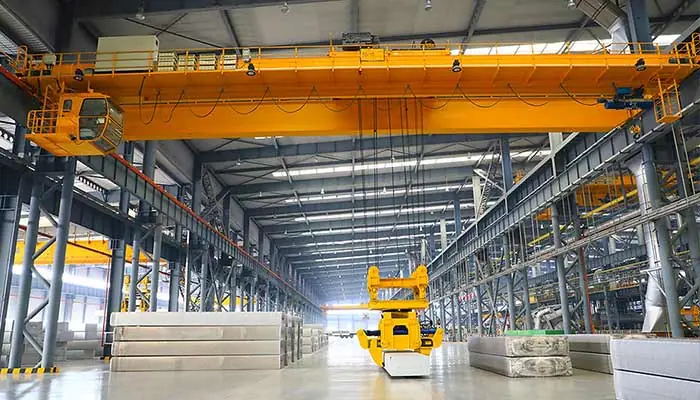
Ingot Tongs Crane
Ingot tongs cranes are designed for lifting and moving steel ingots and billets. They use special clamps to hold high-temperature steel products. Variable-frequency drive systems control crane movement and reduce load swinging during transportation.
- Steel ingot lifting
- Billet handling
- Heating furnace loading and unloading
- Rolling mill material transfer
رافعة صب
Casting cranes are used in foundries and casting workshops for molten metal pouring and casting operations. They are designed for frequent lifting cycles and high-temperature working conditions. Large models can use double trolley structures for heavy casting tasks.
- Molten metal pouring
- Casting material transfer
- Mold handling
- Foundry production operations
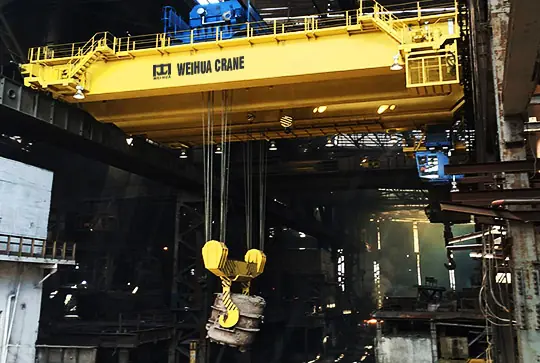
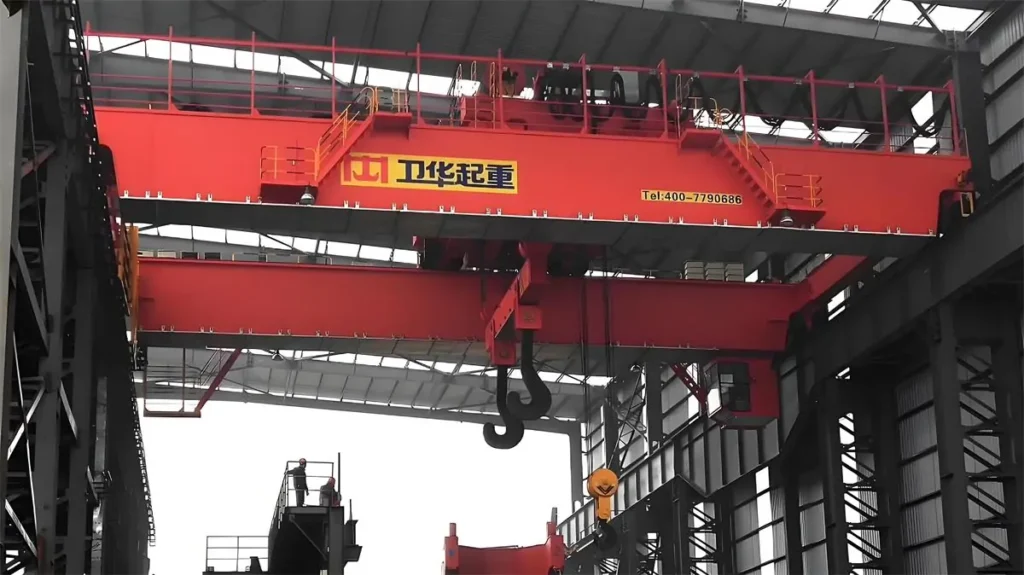
Heavy Duty Metallurgical Crane
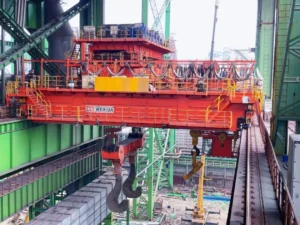
Heavy-duty metallurgical cranes use reinforced bridge structures for large-capacity lifting. Four-beam casting cranes are used in large steel plants for heavy ladle transportation and casting operations. Some models have lifting capacities above 200 tons.
- Large steel ladle lifting
- Heavy molten metal transfer
- Large casting operations
- Steel production lines
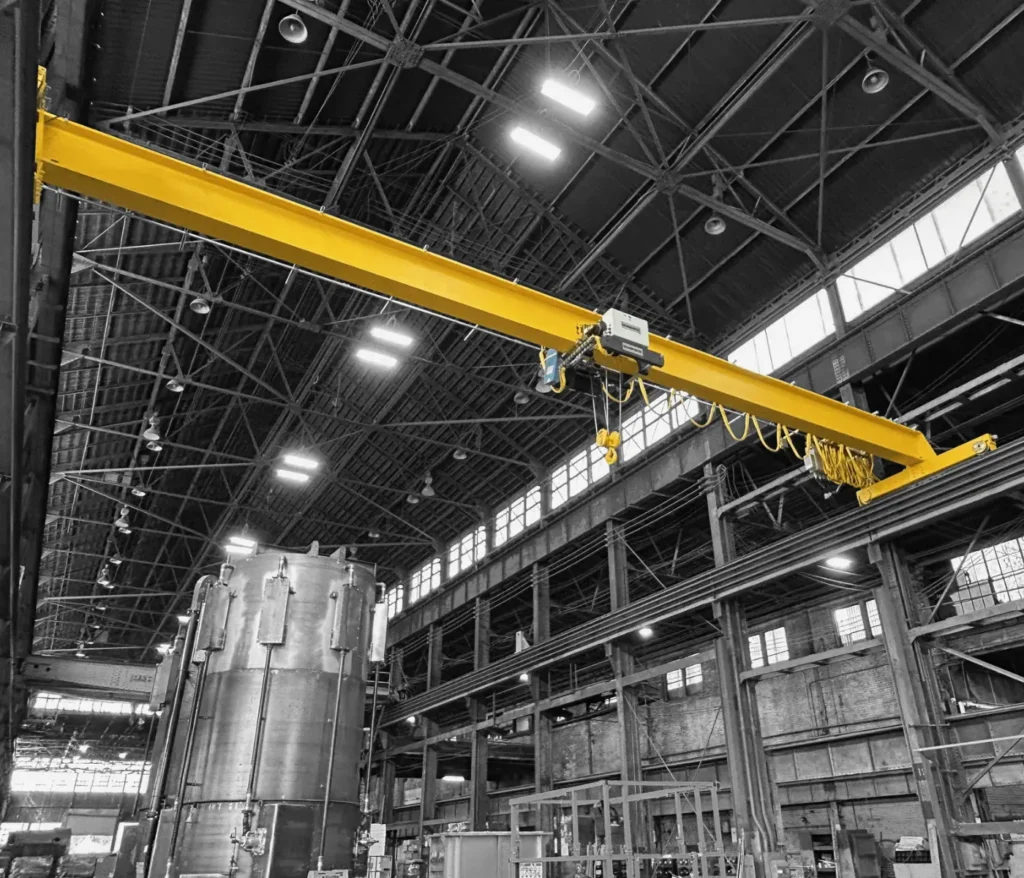
Metallurgical Single Girder Crane
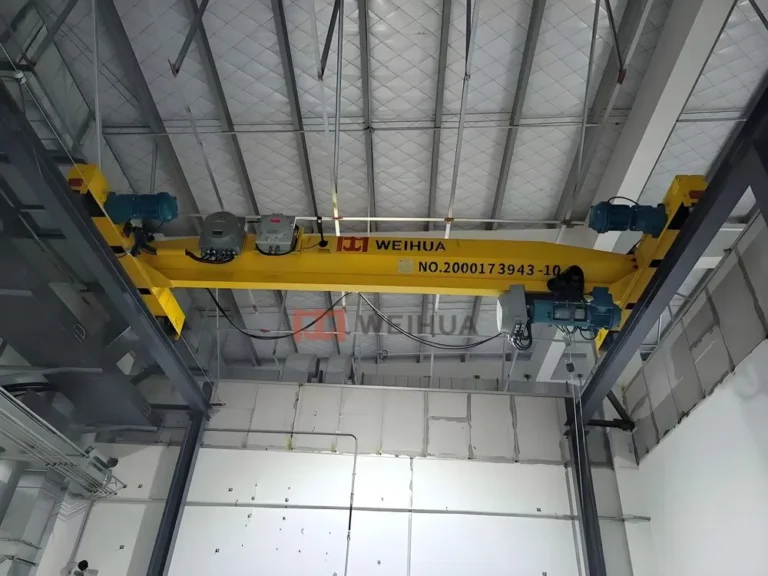
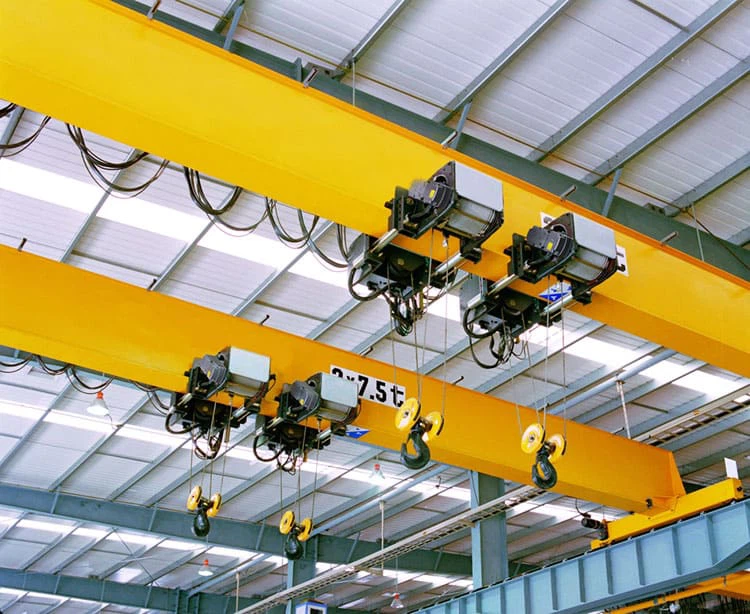
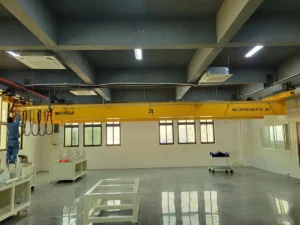
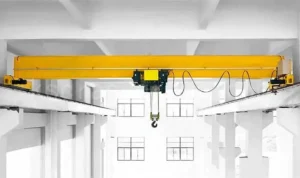
Metallurgical single girder cranes are used for small-capacity molten metal handling and auxiliary lifting work. They are equipped with metallurgical electric hoists, heat insulation layers, and safety protection devices. Typical lifting capacities range from 2–10 tons.
- Small foundry workshops
- Melting process auxiliary handling
- Light molten metal transfer
- Equipment maintenance lifting
Metallurgical overhead cranes are selected based on lifting capacity, material temperature, working class, and production requirements. Ladle cranes are used for molten steel handling, while charging cranes, ingot cranes, casting cranes, and single-girder cranes serve different production processes in metal plants.
For details on how to select the most suitable crane type for steel mills, see: Steel Plant Crane Selection Guide: How to Choose the Right Crane for Steel Manufacturing
Reasons for Selecting a Metallurgical Overhead Crane
- Lifting Capacity — Choose the crane capacity according to the weight of ladles, billets, coils, or other materials. Common capacities range from several tons to hundreds of tons for steel and aluminum plants.
- Working Class — Metallurgical cranes usually use A6–A8 duty classes for heavy lifting and long-hour operation in steel and aluminum plants.
- Temperature Resistance — Check the crane design for high-temperature environments. Heat insulation, heat-resistant materials, and protected electrical components are important for molten metal handling.
- Safety System — The crane should include safety devices such as dual brakes, overload protection, limit switches, and emergency stop systems for heavy-load operations.
- Crane Structure and Span — The bridge structure, span, and lifting height should match the workshop layout and production line requirements.
- Control System — Choose a suitable control method, such as cabin control or remote control, according to the working environment and operation requirements.
- Maintenance and Service — Consider spare parts supply, maintenance requirements, and technical support when selecting a metallurgical overhead crane supplier.
Why Are Metallurgical Overhead Cranes Important for Steel and Aluminum Plants?
Metallurgical overhead cranes are used in steel and aluminum plants for molten metal handling and heavy material transfer. They operate in areas with high temperatures, heavy loads, and frequent lifting requirements.
1. Molten Metal Handling: Metallurgical cranes move steel ladles and aluminum pots between furnaces, refining areas, and casting lines. They are used in key production steps involving liquid metal.
2. Heavy Material Transfer: These cranes handle steel billets, slabs, coils, aluminum ingots, and other heavy products during production and storage.
3. High-Temperature Working Conditions: The crane structure, electrical system, and operator cabin are designed for high-temperature areas with heat radiation and dust.
4. Safe Crane Operation: Dual brakes, overload protection, limit switches, and other safety devices are used for molten metal lifting and heavy-load transportation.
Metallurgical overhead cranes support steel and aluminum production by handling heavy materials in high-temperature industrial environments.
Maintenance Requirements of Metallurgical Overhead Cranes
- Check wire ropes for wear, broken wires, corrosion, and deformation, and replace them according to GB/T 5972-2023.
- Test brakes, overload limiters, and limit switches before operation.
- Inspect main girders, end beams, trolley frames, and welding joints for damage.
- Check electrical cabinets, cables, and cooling systems in high-temperature environments.
- Inspect hooks, C-hooks, ladle beams, and clamps before use.
- Lubricate bearings, gears, wheels, and wire ropes on schedule.
- Check rails, wheels, and wheel flanges for wear and alignment.
- Inspect insulation layers and heat shields regularly.
- Perform load tests and safety inspections according to standards.
- Record maintenance, repairs, and replacement of parts.
For a detailed maintenance checklist for cranes, see the article: “How to Inspect an EOT Crane: Complete Inspection Checklist & Maintenance Guide”
خاتمة
Metallurgical overhead cranes are essential equipment for steel mills, aluminum plants, and other metal processing industries. They are used for molten metal handling, heavy material transfer, and high-temperature operations with strict requirements for safety and reliability.
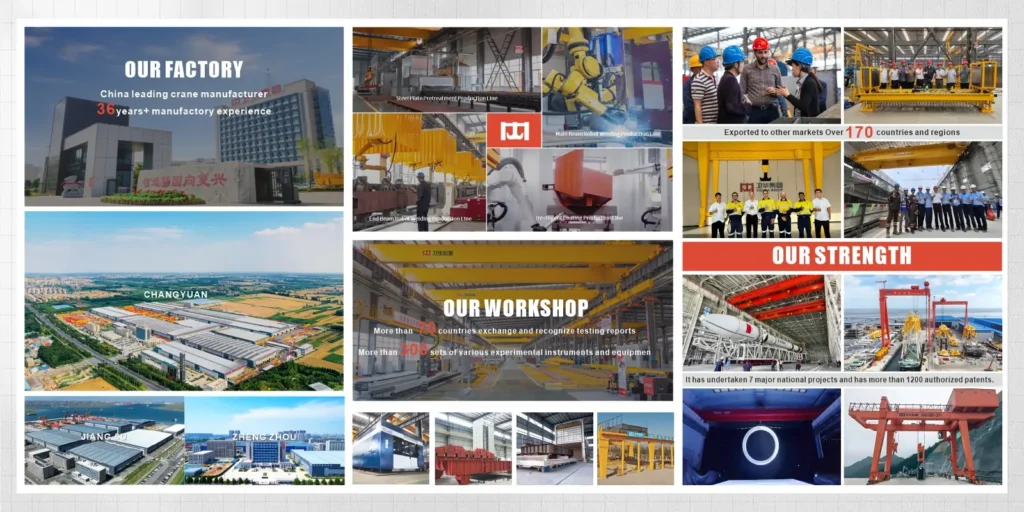
وي هوا provides customized metallurgical overhead crane solutions based on lifting capacity, span, lifting height, working class, and production conditions. With professional crane design, manufacturing experience, installation support, and after-sales service, WEIHUA supplies reliable lifting equipment for different metallurgical applications. اتصل بنا for a customized metallurgical overhead crane solution based on your plant requirements.
أسئلة شائعة
1. What is a metallurgical overhead crane?
A metallurgical overhead crane is a heavy-duty crane designed for steel mills, aluminum plants, and foundries. It is used for handling molten metal, ladles, billets, coils, and other heavy materials in high-temperature environments.
2. Where are metallurgical overhead cranes used?
Metallurgical overhead cranes are used in steel plants, aluminum plants, foundries, casting workshops, and metal processing facilities for molten metal transfer and heavy material handling.
3. What is the difference between a metallurgical crane and an EOT crane?
A metallurgical crane is designed for high-temperature, heavy-load, and continuous operations, while a standard EOT crane is mainly used for general material handling in factories and warehouses.
4. Can metallurgical overhead cranes handle molten metal?
Yes. Metallurgical overhead cranes are designed for molten metal handling, with heat-resistant structures, special lifting devices, and safety systems for ladle and liquid metal transportation.
5. What lifting capacity do metallurgical overhead cranes have?
The lifting capacity depends on the application. Common models range from several tons to hundreds of tons, with large ladle cranes reaching over 300 tons.
6. Why do steel plants need special overhead cranes?
Steel plants require cranes that can handle high temperatures, heavy loads, and frequent operation. Standard cranes cannot meet the safety and working requirements of molten metal handling.
7. Are metallurgical overhead cranes customizable?
Yes. Metallurgical overhead cranes can be customized according to lifting capacity, span, lifting height, working class, control system, and specific production requirements.
8. How often should metallurgical overhead cranes be maintained?
Maintenance frequency depends on operating conditions and workload. Regular inspections of wire ropes, brakes, electrical systems, structures, and safety devices are required before and during operation.