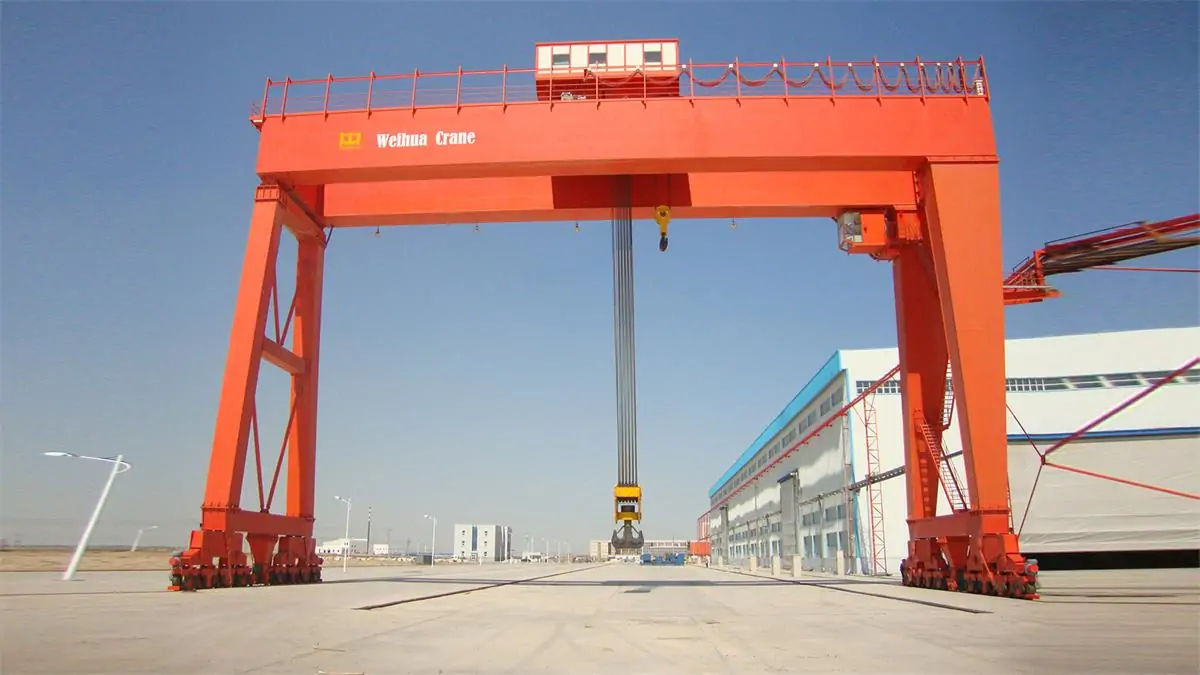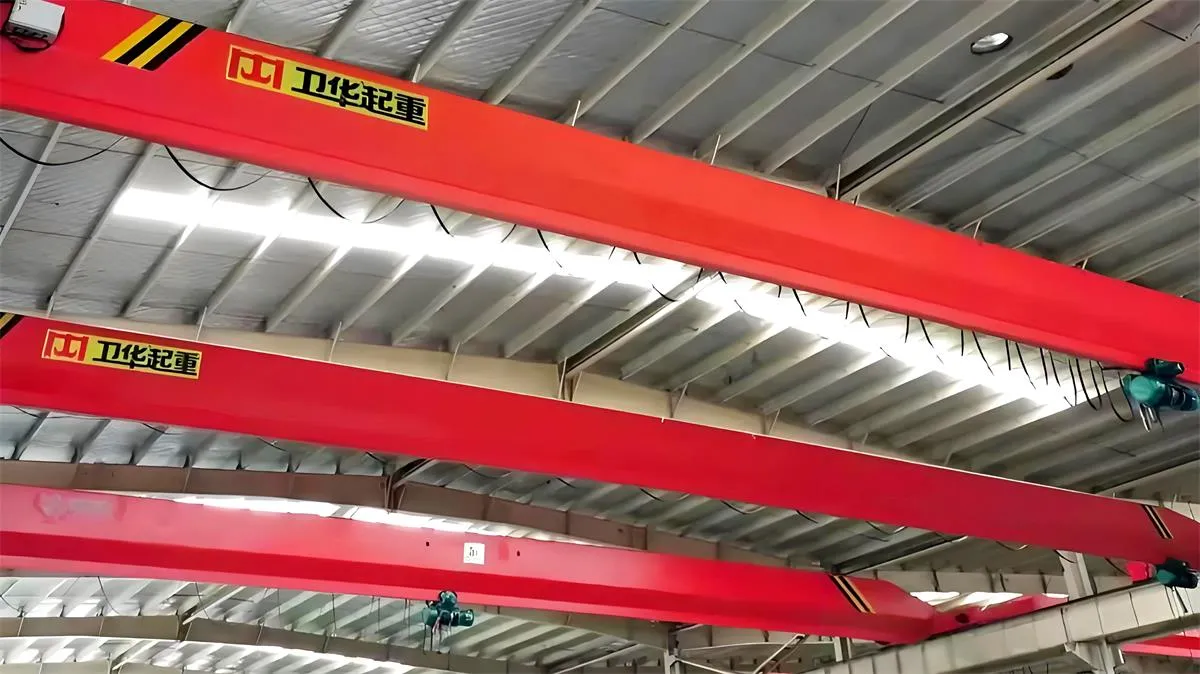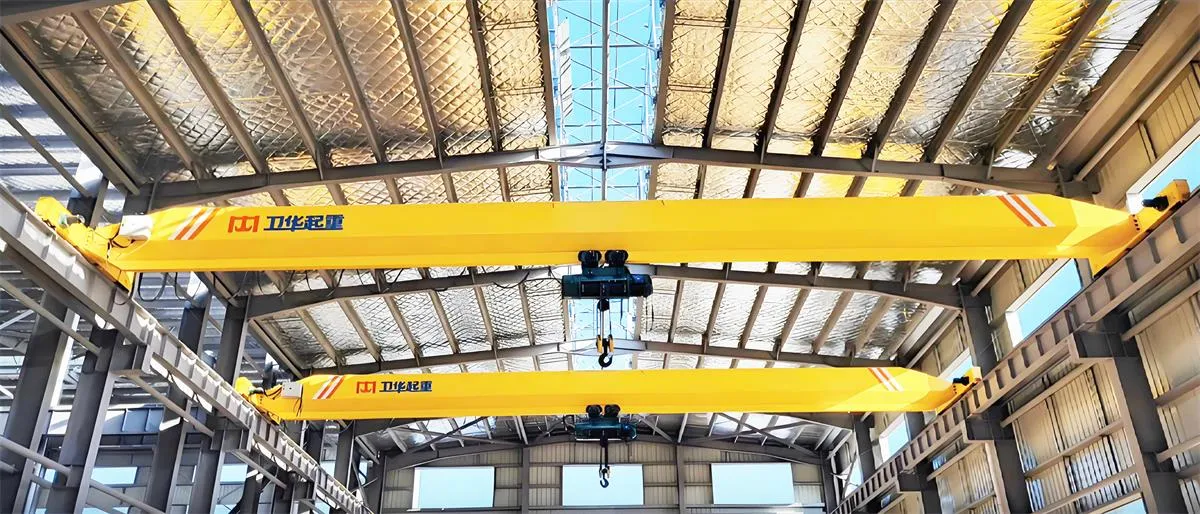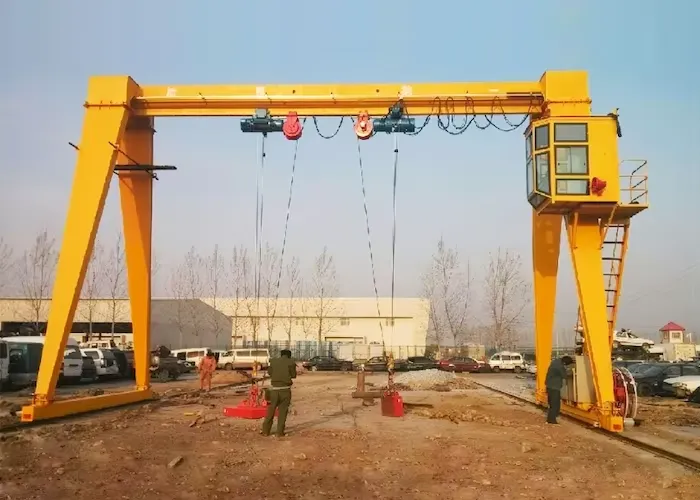

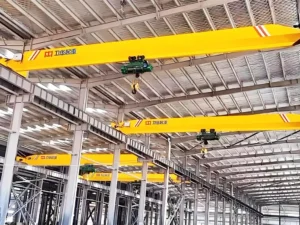
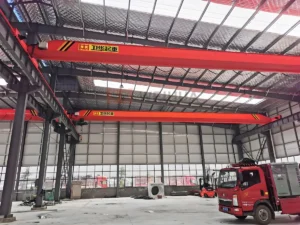
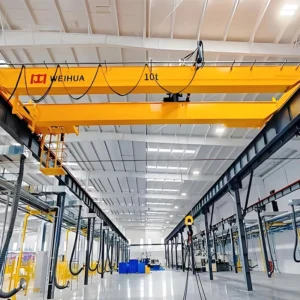
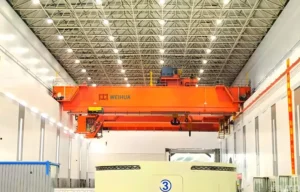
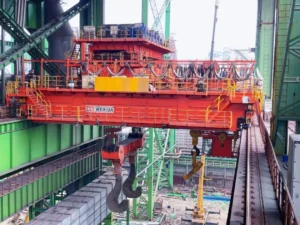
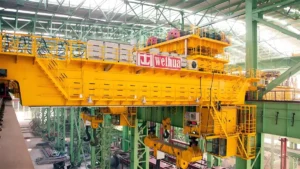
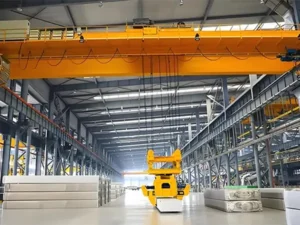
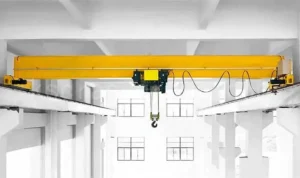
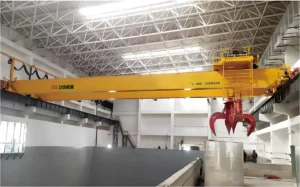
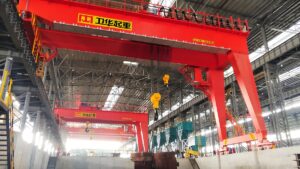
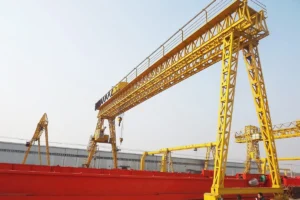

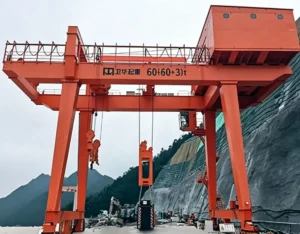
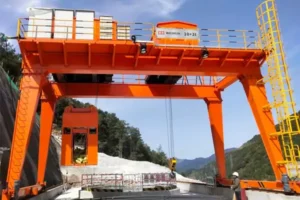

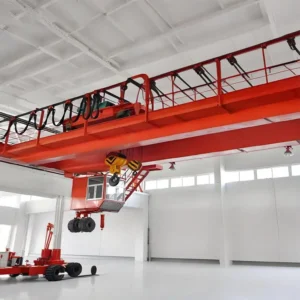
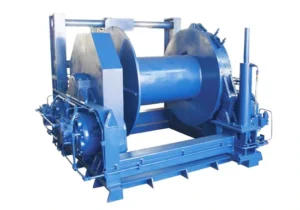






What separates a grab bucket EOT crane from a standard overhead crane? One word: the attachment. Where a conventional EOT crane uses a hook, a grab bucket EOT crane — also called an electric overhead travelling crane with grab bucket — uses an automated clamshell or orange peel grab that opens, descends into a bulk material pile, closes, and lifts. No slings, no manual scooping, no auxiliary crew. The entire cycle is controlled by a single operator.
Procurement teams evaluating this type of equipment typically face three decisions: which grab type fits the material, what duty class the application actually demands, and how to verify that the supplier’s equipment meets compliance requirements before it ships. This guide addresses all three, using Weihua Crane’s product range as the reference basis.
جدول المحتويات
Quick Reference: Grab Bucket EOT Crane at a Glance
| مُعامل | Typical Range (Weihua) |
|---|---|
| قدرة الرفع | 1–32 tons |
| سبان | 5–35 meters |
| ارتفاع الرفع | 6–15 meters |
| فئة الواجب | أ 3 - أ 7 |
| Grab Types | Clamshell / Orange Peel |
| Drive Options | Electric / Hydraulic |
| أوضاع التحكم | Manual / Remote / Automatic |
| Applicable Materials | Coal, ore, grain, scrap, sand, municipal waste |
| Certifications | CE, ISO 9001 |
→ Need a project-specific configuration? Contact Weihua’s engineering team for a quote
احصل على عرض أسعار مخصص الآنHow a Grab Bucket EOT Crane Works
The Grab-and-Release Cycle
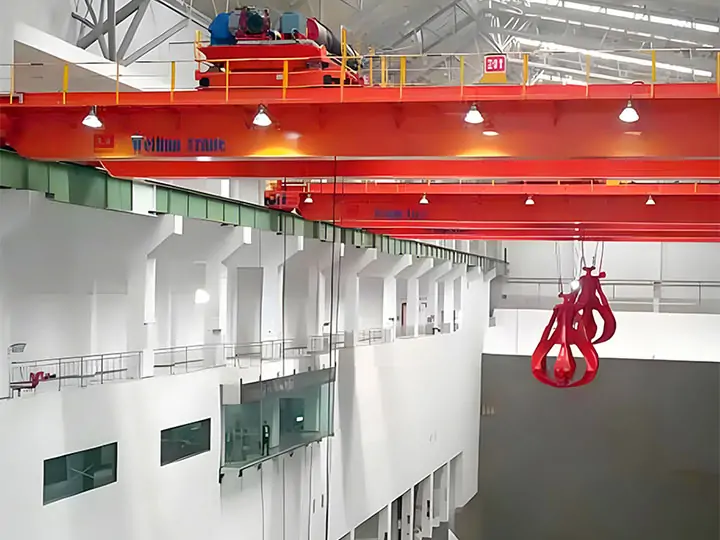
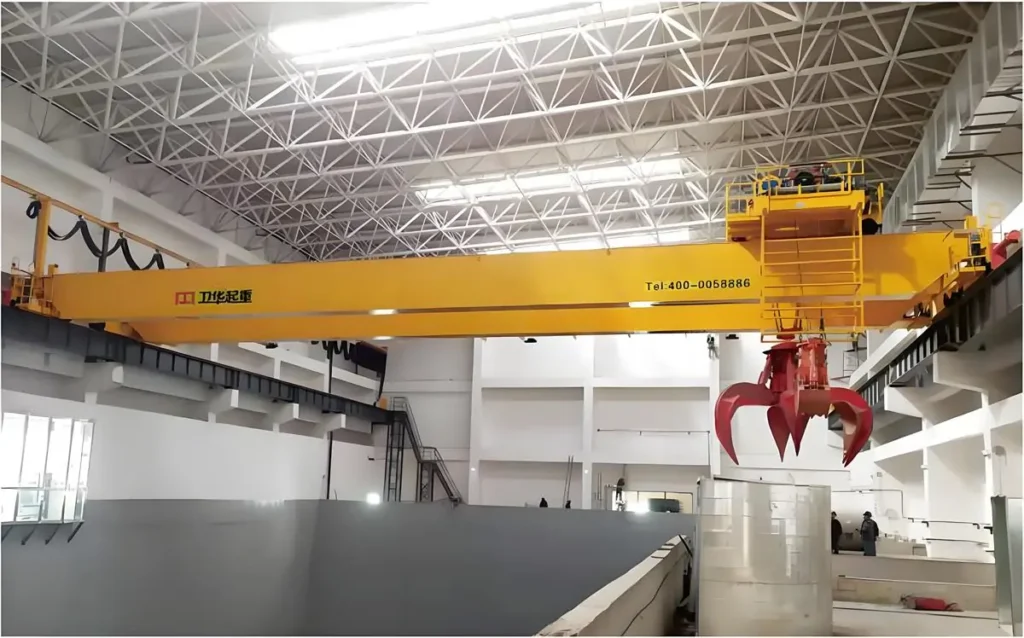
A grab bucket EOT crane completes material transfer in four linked motions: traverse, descend, grab, and discharge. The bridge travels along overhead runway rails covering the full working bay. The trolley moves laterally across the bridge. The hoist lowers the grab bucket into the material stockpile. Once the grab closes — either mechanically via rope tension or hydraulically via cylinder pressure — the hoist lifts the loaded bucket, the crane repositions, and the grab opens to release the material at the discharge point.
The key distinction is that the grab opening and closing mechanism requires its own dedicated control channel, separate from the hoist. On rope-operated (mechanical) grabs, a four-rope system uses two ropes for lifting and two for opening and closing. On hydraulic grabs, a power pack mounted on the trolley drives the cylinders. Buyers specifying control systems should confirm whether the supplier’s electrical panel integrates grab-open/close commands natively or requires additional field wiring.
Girder Configuration and Its Practical Impact
Single-girder and double-girder configurations are not just a structural choice — they define the weight class and span the crane can handle.
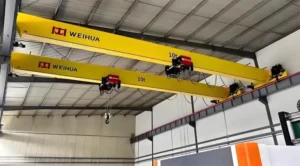
Single-girder grab cranes are lighter, lower in headroom consumption, and cost-effective for spans up to roughly 28 meters and capacities up to 20 tons. The hoist runs on the bottom flange of the main beam, which limits hook approach to the beam center line. Double-girder cranes mount the trolley on top of two parallel girders, delivering greater rigidity, higher hook approach (the hoist travels between the girders), and the ability to handle heavier grab weights at longer spans. For applications above 20 tons or spans beyond 28 meters — common in steel mills, port stockyards, and large-scale power plants — double-girder is the appropriate baseline.
Clamshell vs. Orange Peel Grab: Matching the Grab to the Material
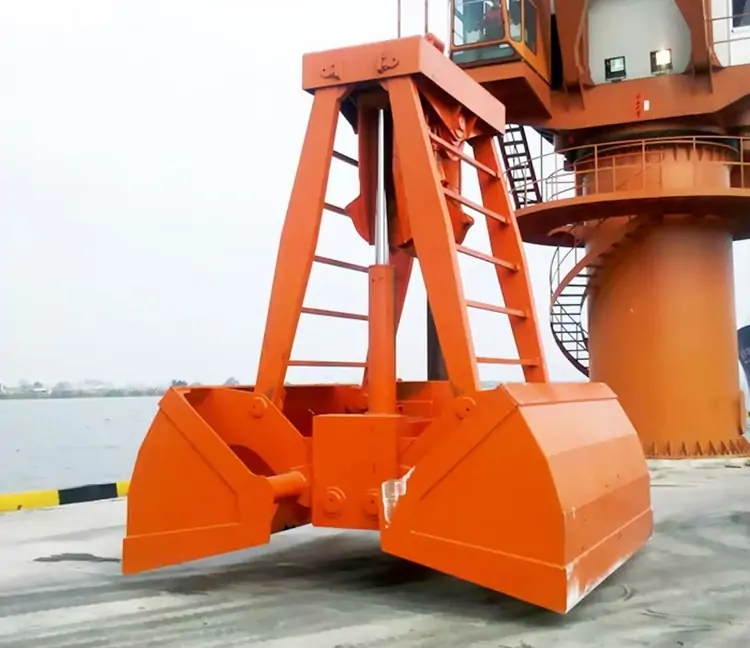
The Core Selection Decision
The grab type is determined by material characteristics, not crane capacity. Selecting the wrong grab for the material is one of the most common specification errors in bulk-handling projects — and it shows up as poor fill rates, excessive wear, or material spillage well before the crane itself reaches its design life.
| Grab Type | Best-Fit Materials | Material Density (typical) | Jaw Count | Drive Options |
|---|---|---|---|---|
| Clamshell (Two-jaw) | Coal, grain, sand, ore, fly ash | 0.5–2.5 t/m³ | 2 | Electric rope / Hydraulic |
| Orange Peel (Multi-jaw) | Scrap steel, metal waste, municipal solid waste, logs | 1.8–3.0 t/m³ | 4–8 | Electric / Hydraulic |
When clamshell grabs are appropriate: Free-flowing granular and powdery materials fill a clamshell bucket efficiently because the two jaws scoop and seal against each other with high contact force. Fill rates for well-matched clamshell buckets on uniform bulk materials typically reach 90–100% of rated volume. For materials such as grain or fertilizer where leakage is a concern, sealed clamshell designs with overlapping jaw edges are available.
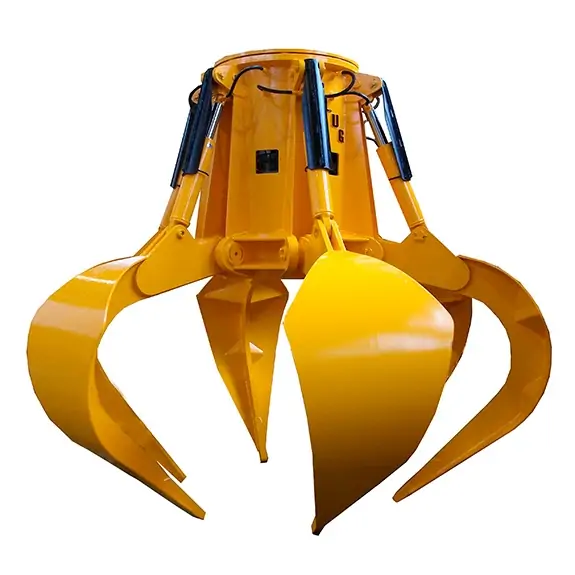
When orange peel grabs are appropriate: Irregular, bulky, or interlocked materials — scrap steel is the clearest example — cannot be scooped. An orange peel grab’s 4 to 8 articulating jaws grip around the material rather than scooping through it. The penetration force of each jaw tip matters more than bucket volume, which is why orange peel grabs are rated by grab weight and jaw opening diameter rather than cubic capacity alone.
The boundary case: Mixed scrap yards that also handle loose material (shredded scrap plus fines, for example) sometimes run two grab types on interchangeable headblocks. Buyers in this situation should confirm that the crane’s hoist capacity accounts for the heavier grab dead weight, not just the rated payload.
Duty Class and Operating Frequency: Why A6/A7 Matters
Duty Class Is Not a Formality
Grab bucket EOT cranes are typically designed to ISO 4301 / FEM 1.001 work classification standards, with duty classes A3–A7 depending on application. Most continuous bulk-handling applications — power plant coal handling, port unloading, scrap yard operations — fall into A5, A6, or A7.
The duty class encodes two factors: the load spectrum (how often the crane lifts at or near full rated load) and the total number of operating cycles over the crane’s design life. A6 is designed for frequent operation with moderate to heavy load spectra. A7 is heavy-duty continuous operation, common in steel mill scrap bays and waste-to-energy plants where the crane may complete hundreds of grabs per shift.
The practical implication: a crane specified at A5 in a role that demands A6-equivalent cycling will reach structural fatigue limits ahead of its design life. Inspection intervals shorten, component replacement costs accelerate, and downtime increases. Buyers should calculate — or ask the supplier to calculate — the expected annual cycles and load spectrum before finalizing the duty class specification.
Request a Duty Class Calculation for Your Application — Contact Weihua’s engineering team via WhatsApp or inquiry form →
احصل على عرض أسعار مخصص الآنIndustry Applications
Where Grab Bucket EOT Cranes Are Used
Grab bridge cranes handle bulk materials across five major industry sectors. The crane configuration, grab type, and duty class shift meaningfully by sector.
Power Plants (Coal Handling): Coal stockyards and bunker-feeding systems typically use double-girder cranes with clamshell grabs, operating at A5–A6. The priority is high cycle throughput and reliable coal transfer to conveyor feed points, often in dusty, partially enclosed environments.
Steel Mills and Scrap Processing: Scrap bays require orange peel grabs and A6–A7 duty class. The grab dead weight is heavier (orange peel grabs for large-scale scrap handling can weigh 3–12 tons), which must be factored into the effective payload. Electrical systems in steelworks environments often require enhanced EMI shielding.
Ports and Bulk Cargo Terminals: Grain, ore, and coal terminals use clamshell grab cranes with higher lifting heights (up to 15 meters or more) to reach hold depths. Span requirements are wide — 15 to 35 meters is common. Outdoor or semi-outdoor installation typically requires IP55 or higher motor protection ratings.
Cement and Aggregate Plants: Limestone, gypsum, sand, and clinker handling suits clamshell grab cranes at A4–A6. Dust concentration in these environments warrants sealed enclosures for electrical cabinets and encoder units.
Waste Treatment and Recycling: Municipal solid waste and industrial waste handling represents one of the most demanding environments for grab cranes. Corrosive gases, uneven load distribution, and continuous multi-shift operation typically demand A6–A7, orange peel or multi-tine grab designs, and stainless steel or coated structural components in the most aggressive zones.
مواصفات
Key Technical Parameters
The following reference ranges reflect Weihua Crane’s standard and custom configurations. Actual parameters are confirmed per project at time of order.
| Model Type | قدرة الرفع | سبان | ارتفاع الرفع | فئة الواجب | Grab Type |
|---|---|---|---|---|---|
| Single Girder – Clamshell | 1–20 t | 5–28 m | 6–12 m | A3–A5 | Clamshell |
| Single Girder – Orange Peel | 5–20 t | 5–28 m | 6–12 m | A4–A5 | Orange Peel |
| Double Girder – Clamshell | 5–32 t | 10–35 m | 8–15 m | A5–A7 | Clamshell |
| Double Girder – Orange Peel | 5–32 t | 10–35 m | 8–15 m | A5–A7 | Orange Peel |
Market reference pricing for Weihua grab bucket EOT cranes generally ranges from approximately $8,000 to $120,000+, depending on capacity, span, girder type, grab configuration, and control system complexity. Contact Weihua for a project-specific quotation.
Certifications and Compliance
What Import Buyers Need to Verify Before Ordering
Certification is a hard checkpoint for import buyers — it affects customs clearance, insurance validity, and local regulatory compliance. A CE marking alone on a nameplate is not sufficient evidence. Industry practice shows that buyers should request the following documents from any supplier:
Documents to request:
- إعلان المطابقة للمفوضية الأوروبية (for CE-marked equipment destined for the EU or countries accepting CE): must identify the specific machine, applicable directives (Machinery Directive 2006/42/EC is the primary reference), and the authorized signatory.
- Load test certificate: Overload testing at 125% of rated capacity, typically conducted at the manufacturer’s facility, with test report signed by an authorized inspection body.
- ISO 9001 quality management system certificate: Confirms the supplier’s production process meets international quality standards. Verify the certificate is current (not expired) and covers the relevant manufacturing scope.
- Material certificates for structural steel: Relevant for high-duty applications where weld quality and steel grade documentation are required by local authorities.
Weihua Crane holds CE and ISO 9001 certifications. Buyers should request current certificate copies at the quotation stage and confirm that the specific crane model ordered is within the certified scope. For markets requiring EAC (Eurasian Customs Union) or other regional certifications, confirm availability with Weihua’s sales team early in the process.
Safety devices to verify in the specification:
- Overload protection (limit switch or load cell-based)
- Upper and lower hoist limit switches
- End travel limit switches for bridge and trolley
- Anti-collision devices (where multiple cranes share the same runway)
- Emergency stop accessible from all control positions
خاتمة
Grab bucket EOT cranes handle bulk material efficiently when specified correctly. The three decisions that carry the most risk are grab type selection (clamshell for granular, orange peel for irregular and heavy materials), duty class (confirm annual cycles before accepting A5 for a role that demands A6), and certification verification (request the EC Declaration of Conformity and load test certificate, not just a CE label).
Weihua Crane offers single and double-girder grab bucket EOT cranes from 1 to 32 tons, with span options to 35 meters and configuration support across the full range of duty classes. For projects where duty class or grab type selection is uncertain, Weihua’s engineering team can assist with a specification review.
Next steps:
- Confirm your material type and bulk density — this determines grab type.
- Estimate your annual lift cycles — this determines duty class.
- Contact Weihua with span, capacity, and site conditions for a tailored quotation.

أسئلة شائعة
Q1:What is a grab bucket EOT crane and how does it work?
A grab bucket EOT crane is an electric overhead travelling crane fitted with an automated grab bucket instead of a conventional hook. The grab descends into a bulk material pile, closes around the material, lifts the loaded bucket, traverses to the discharge point, and opens to release. The entire process — including grab open/close control — is managed by a single operator using a pendant, remote control, or cabin-mounted panel.
Q2:What is the difference between a clamshell grab and an orange peel grab?
Clamshell grabs use two jaws to scoop granular, free-flowing materials like coal, grain, sand, and ore — materials with bulk densities generally between 0.5 and 2.5 t/m³. Orange peel grabs use 4 to 8 articulating jaws to grip irregular, bulky, or interlocked materials such as scrap steel, municipal waste, and logs, where scooping is impractical. The correct grab is determined by the material’s shape and density, not the crane’s capacity.
Q3:Why do most grab bucket EOT cranes use duty class A5, A6, or A7?
Bulk material handling is inherently repetitive. Power plant coal cranes, scrap yard cranes, and port unloading cranes complete hundreds to thousands of grab cycles per shift, often at or near rated capacity. ISO 4301 / FEM 1.001 duty class A5–A7 is designed for this load spectrum and cycle count. Underspecifying duty class leads to accelerated structural fatigue, shortened inspection intervals, and higher lifecycle costs.
Q4:What certifications should I request from a grab EOT crane supplier?
At minimum, request the EC Declaration of Conformity (for CE-marked equipment), the factory load test certificate at 125% rated capacity, and a current ISO 9001 certificate covering the relevant manufacturing scope. For markets requiring additional regional approvals (EAC, OSHA compliance, etc.), confirm requirements with the supplier at the quotation stage. A CE nameplate alone is not sufficient — the Declaration of Conformity is the legally binding document.
Q5:Can a grab bucket EOT crane operate automatically?
Yes. Control options range from manual pendant operation to radio remote control to semi-automatic and fully automatic PLC-based systems. Automatic grab cranes — common in large-scale coal handling and port operations — use preprogrammed cycles, position sensors, and weight feedback to complete grab-and-discharge sequences without continuous operator input. Buyers should specify the required level of automation early, as it affects the electrical cabinet design, sensor package, and overall crane cost.