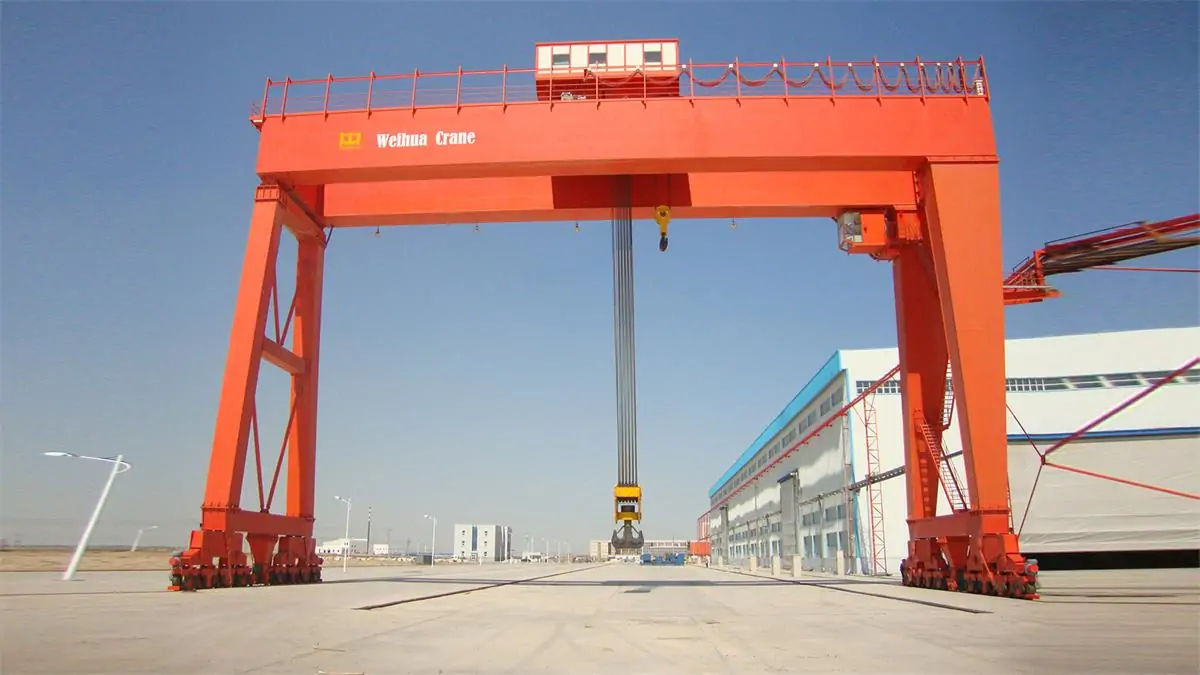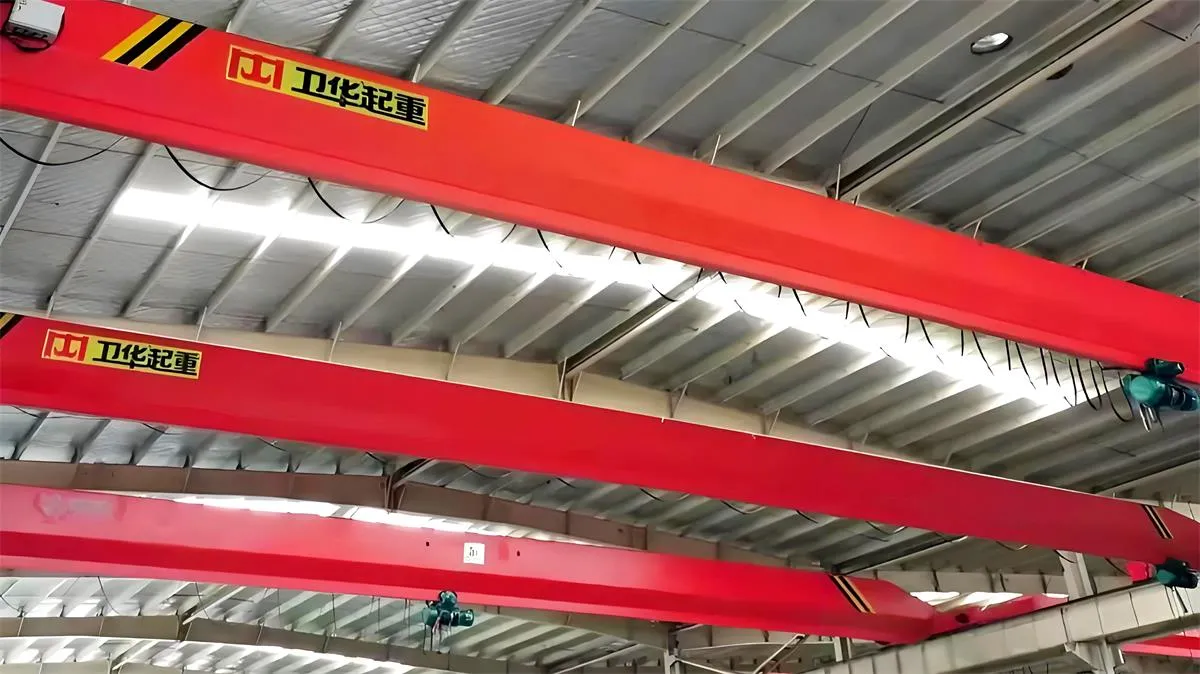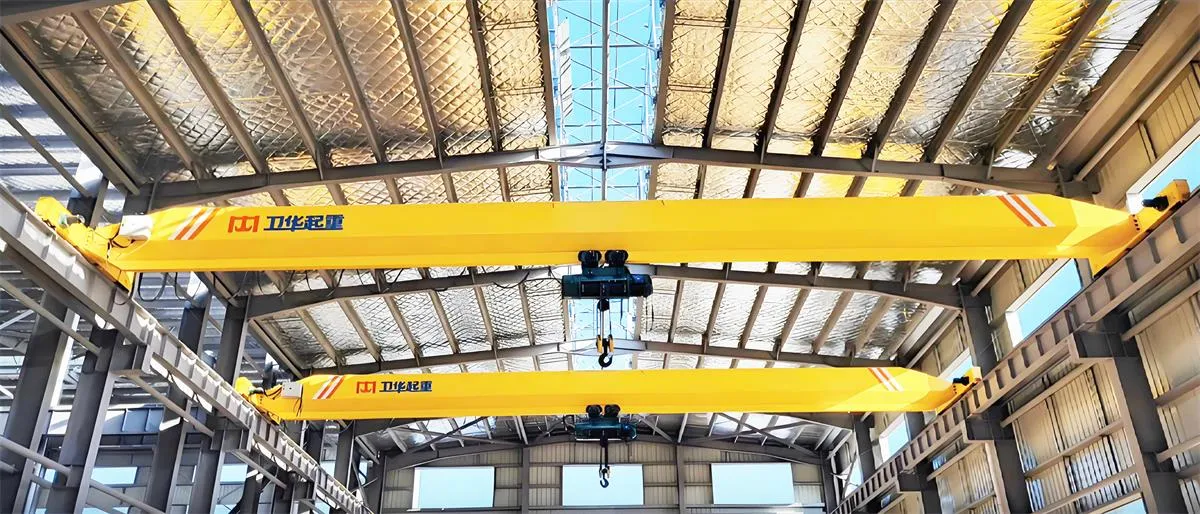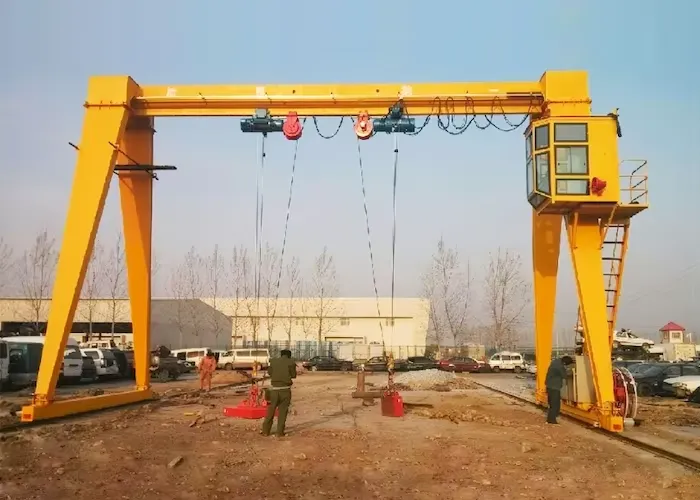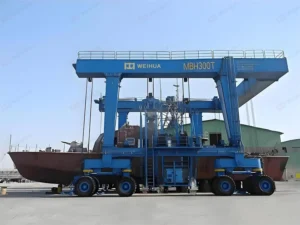
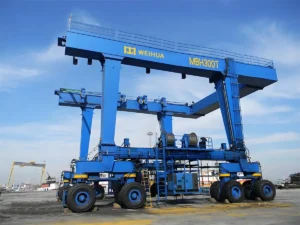

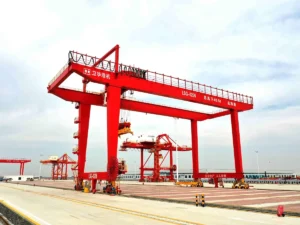
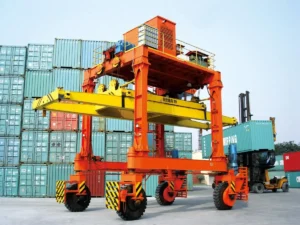
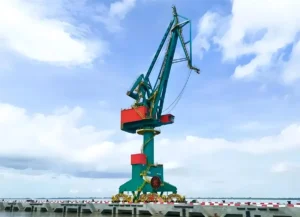
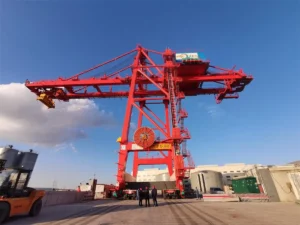
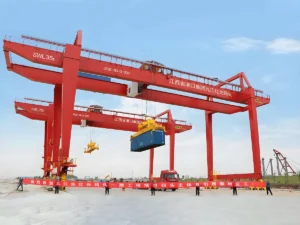
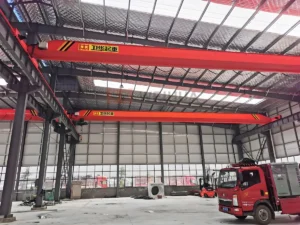
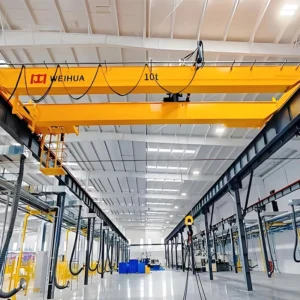
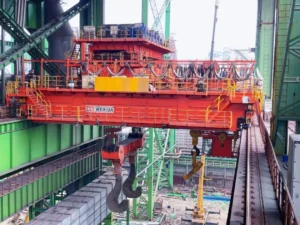
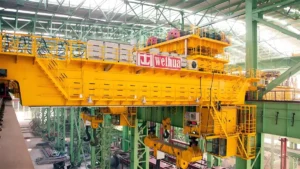
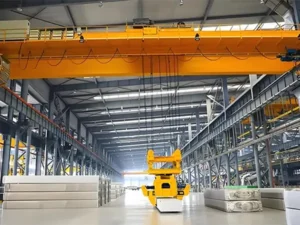
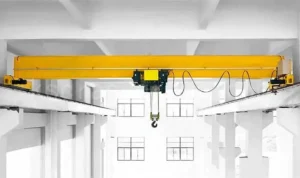
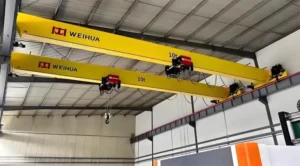
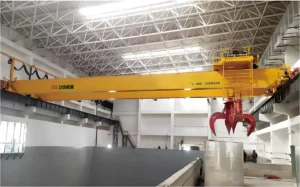
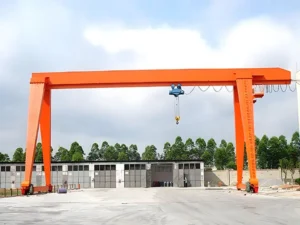
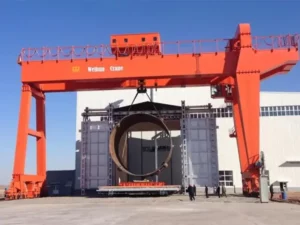
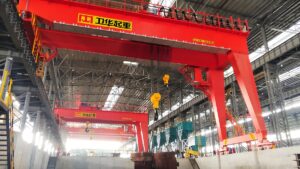
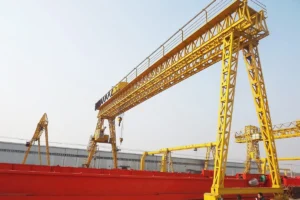

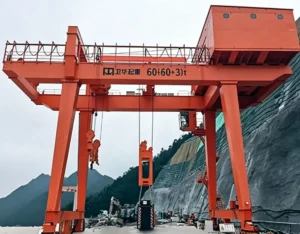
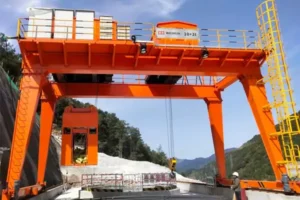

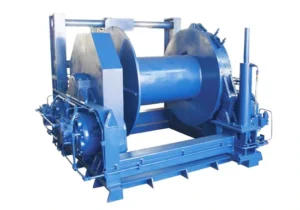






A portal crane features a rigid gantry structure that travels along rails, supporting a top-mounted lifting mechanism capable of 360-degree rotation. Portal cranes enable more precise and flexible handling of heavy cargo. They are widely used in ports, shipyards, and industrial docks to handle heavy cargo more efficiently.
This article will analyze the working principles and main application scenarios of portal cranes, different types of portal cranes, and a comparison between portal cranes and gantry cranes, helping you gain a deeper understanding of portal cranes and providing a reference for your selection process.
جدول المحتويات
portal crane working principle
The portal type crane supports its entire weight through a portal structure mounted on rails or a fixed foundation. The upper slewing mechanism enables 360° continuous rotation. During lifting operations, the hoisting mechanism drives the wire rope winch via an electric motor or hydraulic system, allowing the hook or grab to lift and lower cargo. Simultaneously, the luffing mechanism adjusts the boom angle to alter the working radius, adapting to loading and unloading requirements at different positions.
During operation, the portal crane can traverse along rails or perform continuous work at a fixed position. Most mechanisms employ variable frequency speed control, enabling smooth coordination of lifting, slewing, and luffing motions.
what is a portal crane used for?
Portal cranes feature a stable portal structure and slewing capability, designed for scenarios requiring efficient lifting, rotation, and positioning of large loads across expansive work areas. They are well-suited for continuous high-intensity operations. Below are typical application scenarios for portal cranes:
- Port and Terminal Cargo Handling: Port portal cranes are deployed at ports and terminals for loading and unloading bulk cargo, general cargo, and oversized cargo from ships.
- Bulk Terminals: At terminals handling bulk materials like coal, ore, and grain, portal cranes work with grab buckets or hooks to process massive volumes of material.
- Steel Mills and Industrial Sites: Portal cranes are deployed in steel plants and heavy industrial facilities for moving steel coils, plates, and heavy structural components.
- Shipyards and Offshore Engineering: Used for lifting ship components, offshore equipment, and marine structures.
- Inland Ports and Logistics Hubs: Portal cranes serve inland river ports and logistics centers, particularly in fixed installations or space-constrained environments.
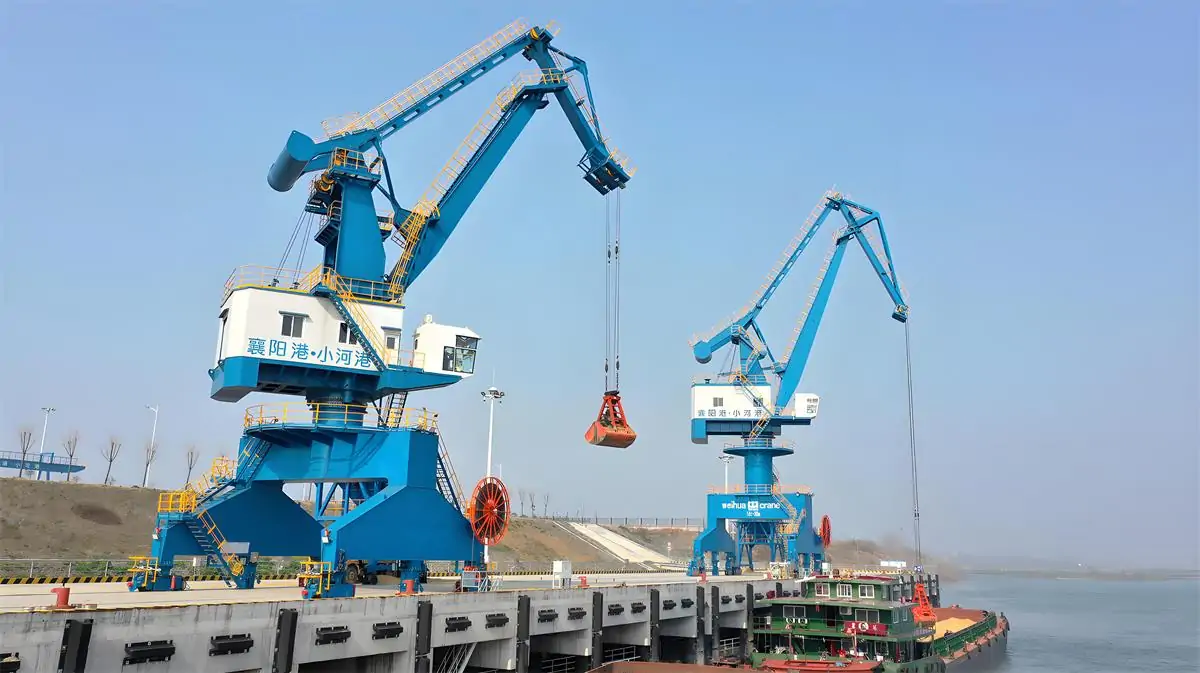
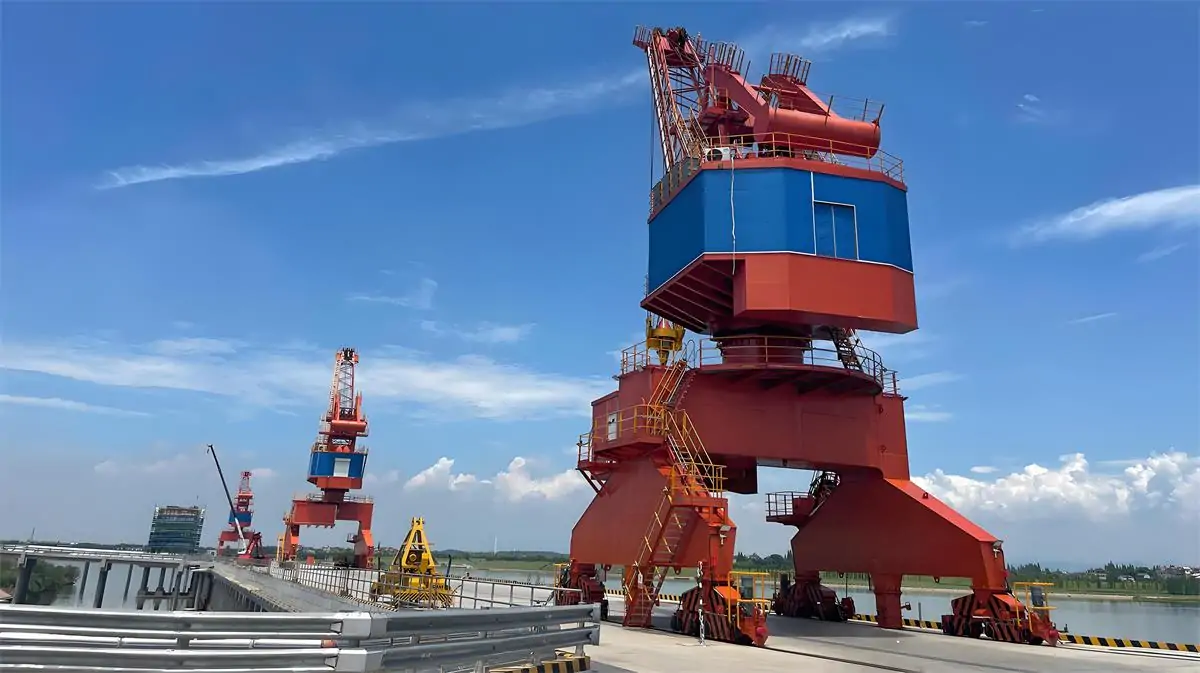
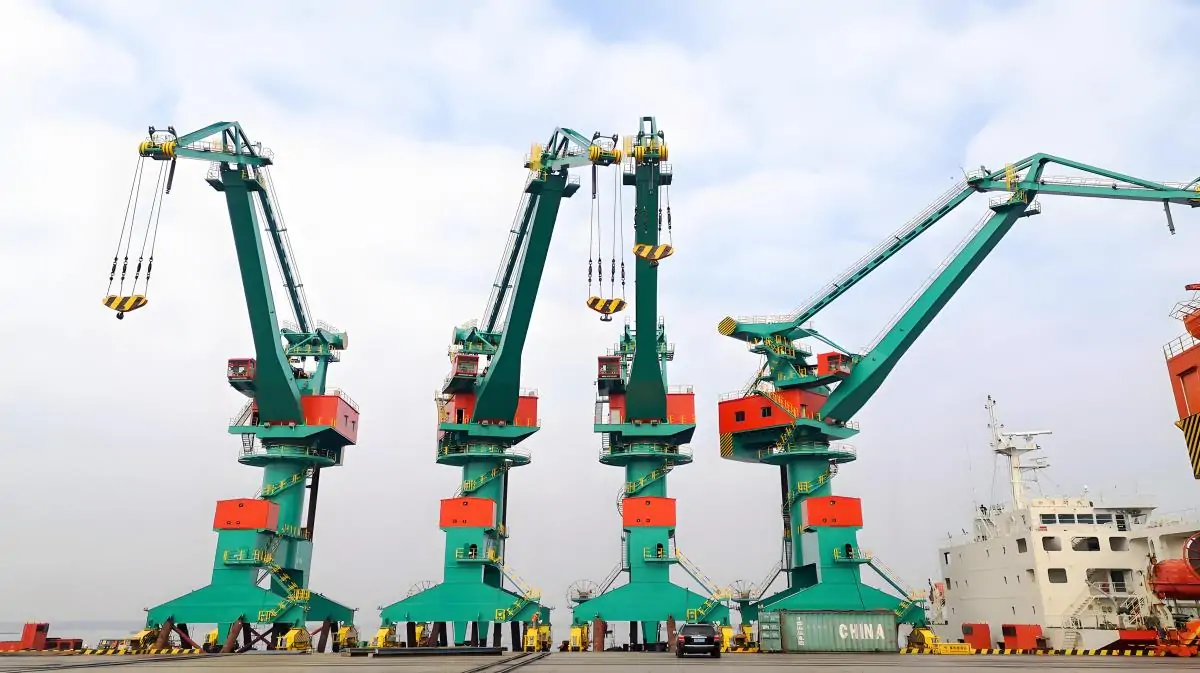
Types of portal crane
رافعات دوارة بوابة can be classified into various types based on their structure, movement method, and application scenarios. The most common types include:
رافعة بوابة رباعية الوصلات
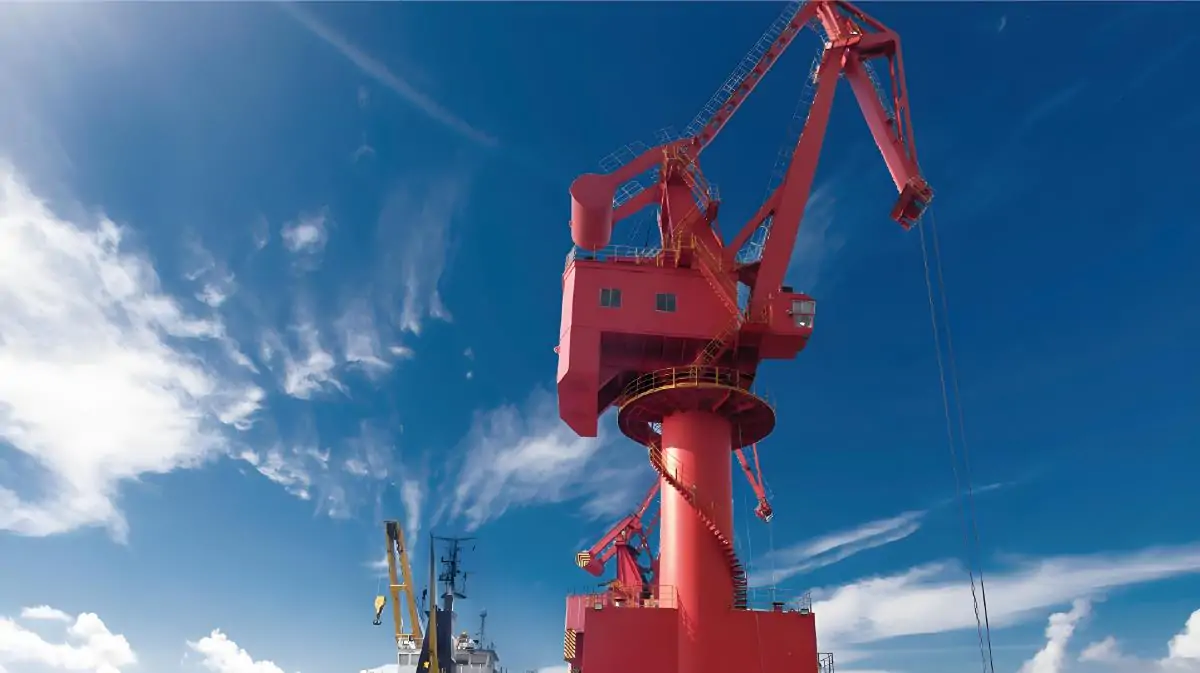
The four-link type portal crane employs a four-bar linkage luffing mechanism, maintaining a nearly constant hook height during luffing operations. This design reduces load sway, enhances positioning accuracy, and improves safety, making it ideal for high-frequency cargo handling at ports and terminals.
- Rated Lifting Capacity: 5–50 tons
- Working Radius: 6–40 meters
- Lifting Height: 10–35 meters
- Slewing Angle: 360° continuous rotation
- Working Load Class: A6–A7
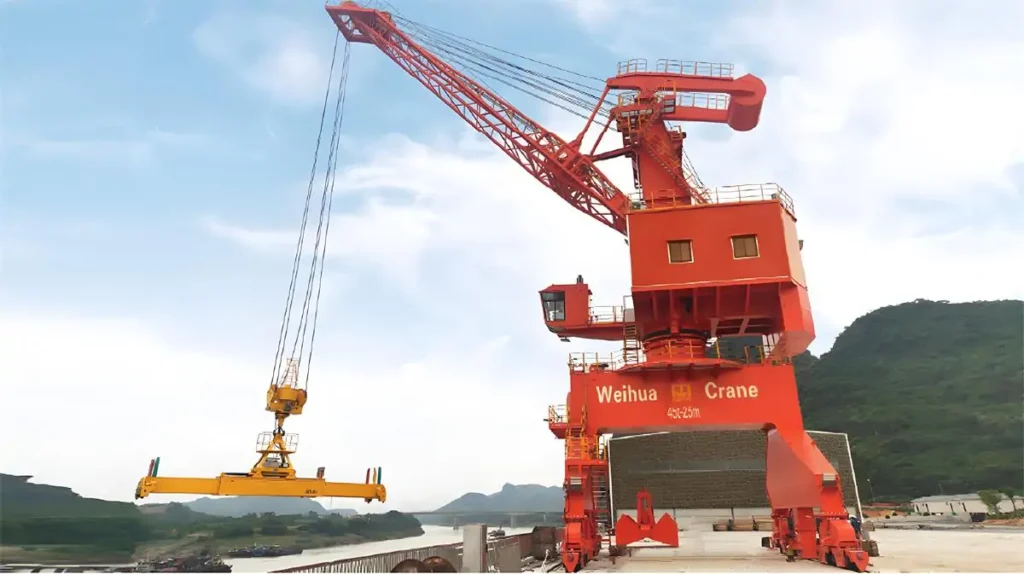
رافعة بوابة من نوع ذراع مفردة
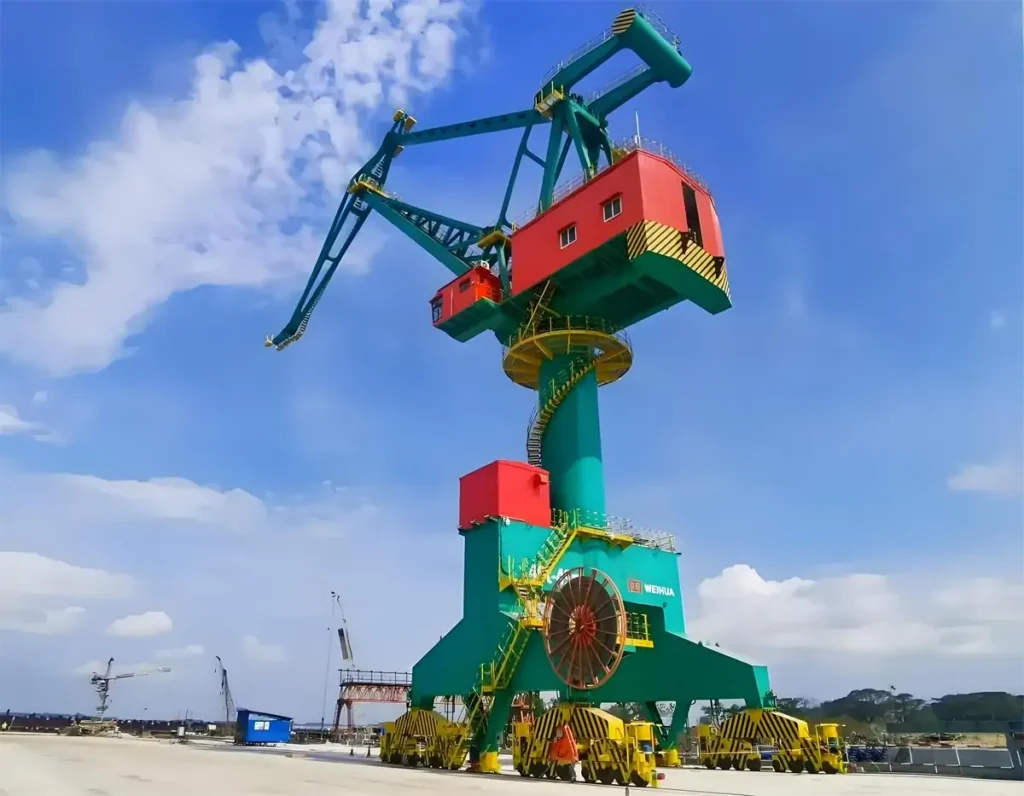
The single-jib type portal crane features a simple structure and reliable operation. Its single-boom luffing mechanism is integrated with a stable portal frame, enabling precise lifting at various working radii. Characterized by flexible operation, easy maintenance, and low overall costs, it is suitable for handling general cargo, bulk materials, and heavy loads.
- Rated Lifting Capacity: 5–50 t (customizable)
- Working Reach: 7–45 m
- Lifting Height: 10–35 m
- Boom Configuration: Single-boom variable-reach structure
- Working Class: A6–A7
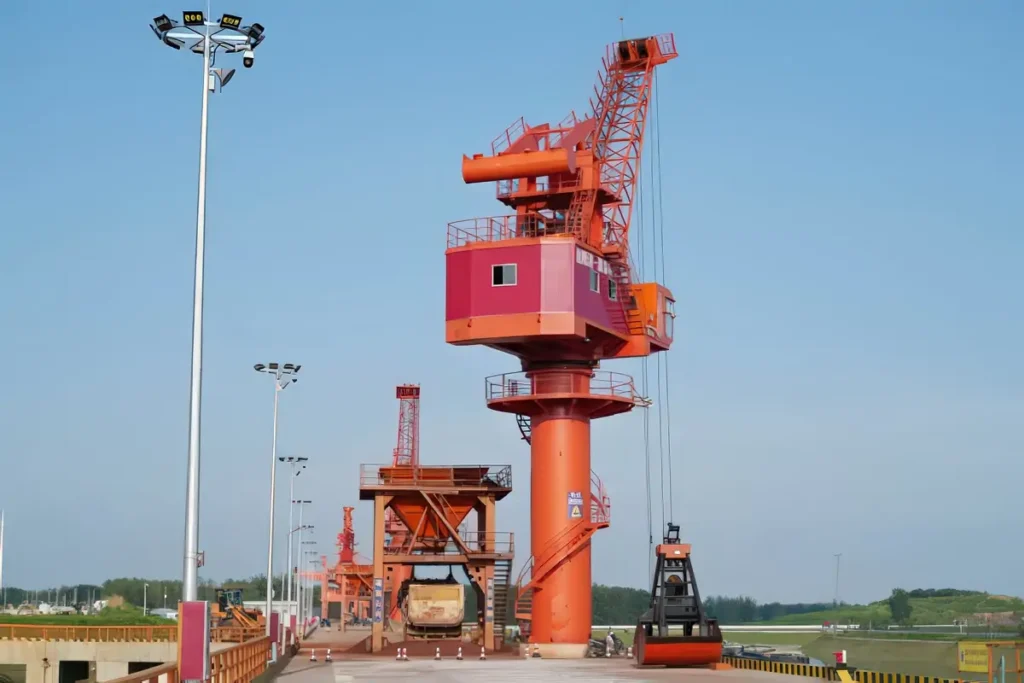
رافعة جسرية ثابتة
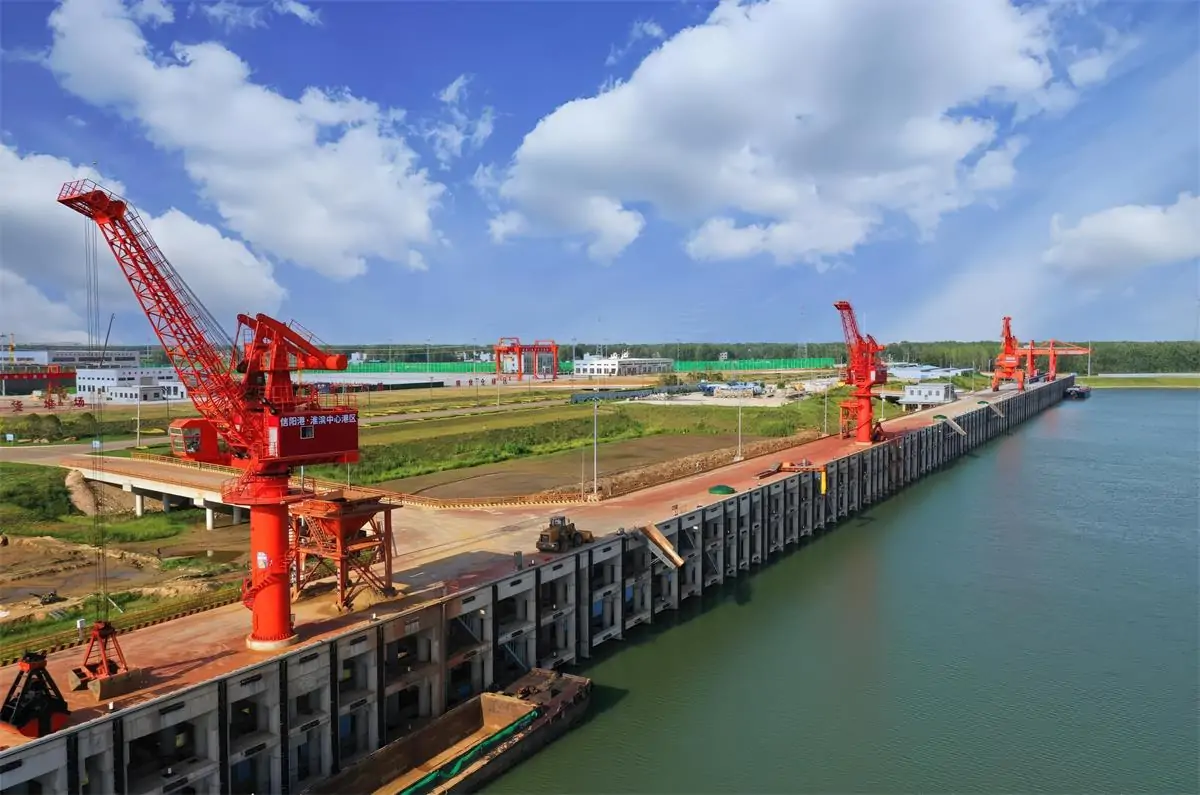
A fixed portal crane is a heavy-duty loading and unloading device installed on a fixed foundation. It features a robust portal structure and a rotating crane superstructure, primarily used for long-term, fixed-location operations in ports, docks, and industrial loading/unloading areas. This model lacks travel capability but offers high structural stability and strong load-bearing capacity. It is particularly suited for continuous material handling operations involving high frequency and large lifting capacities, ensuring safe and reliable operation with relatively low maintenance costs.
- Rated Lifting Capacity: 10–100 t (customizable)
- Working Radius: 6–50 m
- Lifting Height: 10–40 m
- Installation Method: Fixed foundation installation
- طبقة عاملة: A6–A8
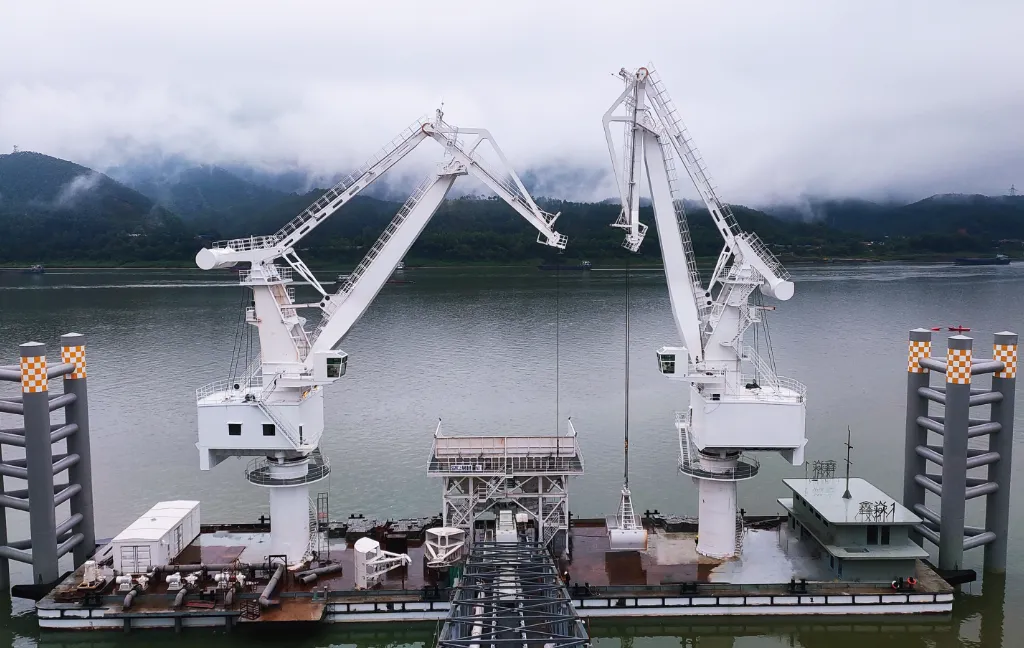
رافعة بوابة عائمة
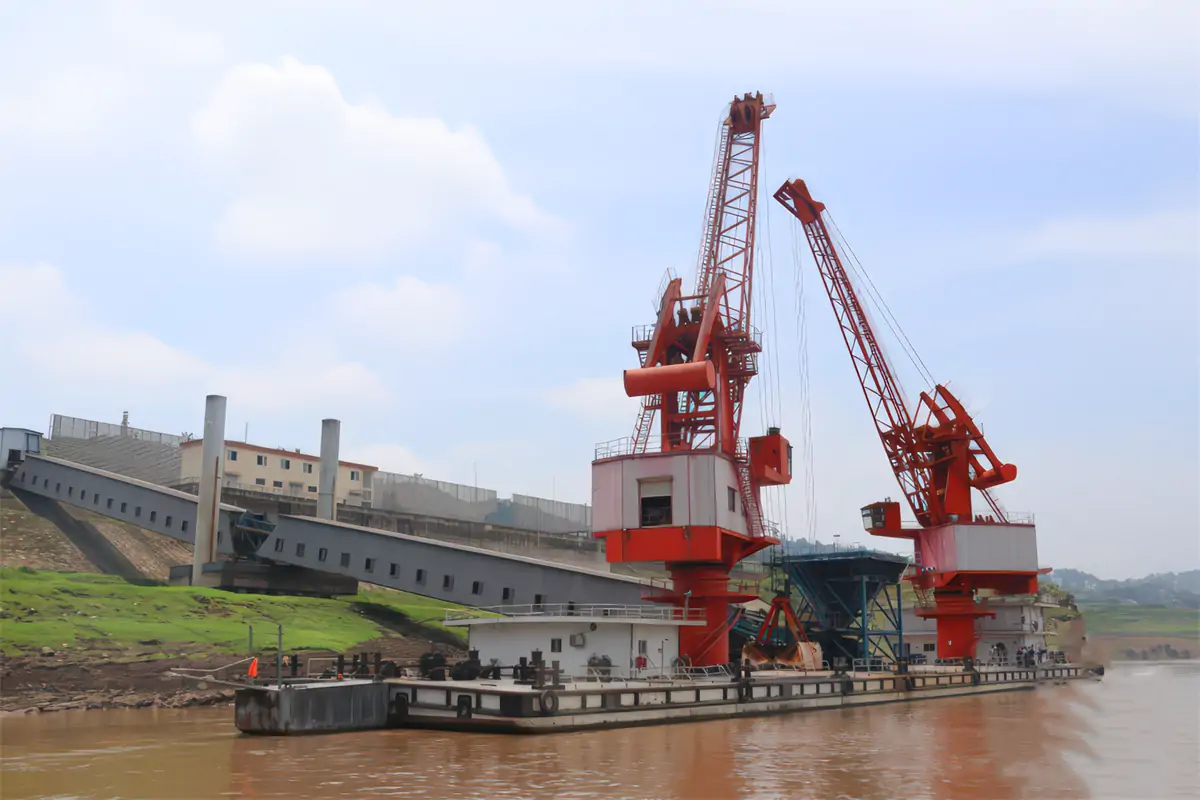
Floating portal cranes are specialized lifting equipment combining portal cranes with floating platforms. Mounted on barges or pontoons, they enable flexible operations in water areas. This configuration integrates the high lifting capacity of portal cranes with waterborne mobility, making it particularly suitable for loading/unloading and hoisting operations in port waters, inland waterways, offshore projects, and temporary docks.
- Rated Lifting Capacity: 10–200 t (customizable)
- Working Radius: 8–50 m
- Lifting Height: 15–45 m (including submerged working height)
- Mounting Configuration: Floating barge / Barge-mounted
- طبقة عاملة: A6–A8
portal crane vs gantry crane
Based on the practical requirements of port and industrial material handling, what are the differences between Portal Cranes and Gantry Cranes in terms of working conditions, applications, structure, and efficiency?
- Operating Conditions: Portal cranes are typically deployed in ports, docks, and along coastal or inland waterways. Gantry cranes are primarily used in factories, storage yards, prefabrication plants, or open-air cargo yards, in relatively fixed and regular work areas.
- تطبيقات Portal cranes are mainly used for ship loading and unloading, handling bulk cargo and general cargo in ports, and are adept at slewing and luffing operations. Gantry cranes focus more on lifting tasks across larger areas, such as handling large components, containers, steel structures, or equipment.
- Lifting Capacity and Structure: Portal cranes utilize a portal frame structure and a rotating upper structure, capable of handling medium to large loads. Gantry cranes use a rigid portal frame with a larger span, providing a wider range of lifting capacities.
- Operating Speed and Efficiency: Portal cranes excel at coordinated multi-motion operations (lifting, slewing, luffing), supporting continuous and efficient ship loading and unloading operations. Gantry cranes excel at linear and lateral movement, offering high efficiency for single lifting tasks.
In summary, Portal Cranes are better suited for specialized loading/unloading operations in ports and terminals, while Gantry Cranes excel at large-span material handling in industrial and yard applications. Selection should be determined comprehensively based on the operational environment, cargo type, lifting capacity, and efficiency requirements.
How to Choose the Right Portal Crane?
When selecting a portal crane, a comprehensive assessment should be conducted based on actual operating conditions and task requirements. The lifting capacity must accommodate the maximum load while allowing for a safety margin; the working radius should cover primary loading/unloading areas; the duty cycle must match operational frequency and intensity; in coastal and port environments, special consideration should be given to corrosion resistance, electrical protection, and weather resistance.
During the selection phase, consult extensively with our professional team to develop customized designs tailored to your site conditions.
خاتمة
Portal cranes play a vital role in ports, terminals, and heavy industrial sectors, serving applications requiring high lifting capacity, wide operating ranges, and continuous operation. They feature a stable gantry structure and a flexible slewing system.
Selecting the appropriate portal crane requires comprehensive consideration of specific operating conditions, load requirements, and environmental factors. We can tailor solutions based on your site conditions, application scenarios, and lifting needs.