









Оглавление
Введение
RTG crane parts include the gantry frame, hoisting system, trolley, spreader, rubber tires, drive units, electrical controls, and safety devices. Each component serves a specific function in container handling, from lifting and positioning containers to moving the crane across the yard. Correct part selection affects load capacity, operating performance, and maintenance requirements.
This article covers the main RTG crane parts, their functions, maintenance points, and factors to consider when selecting replacement components.
What Are the Main RTG Crane Parts?
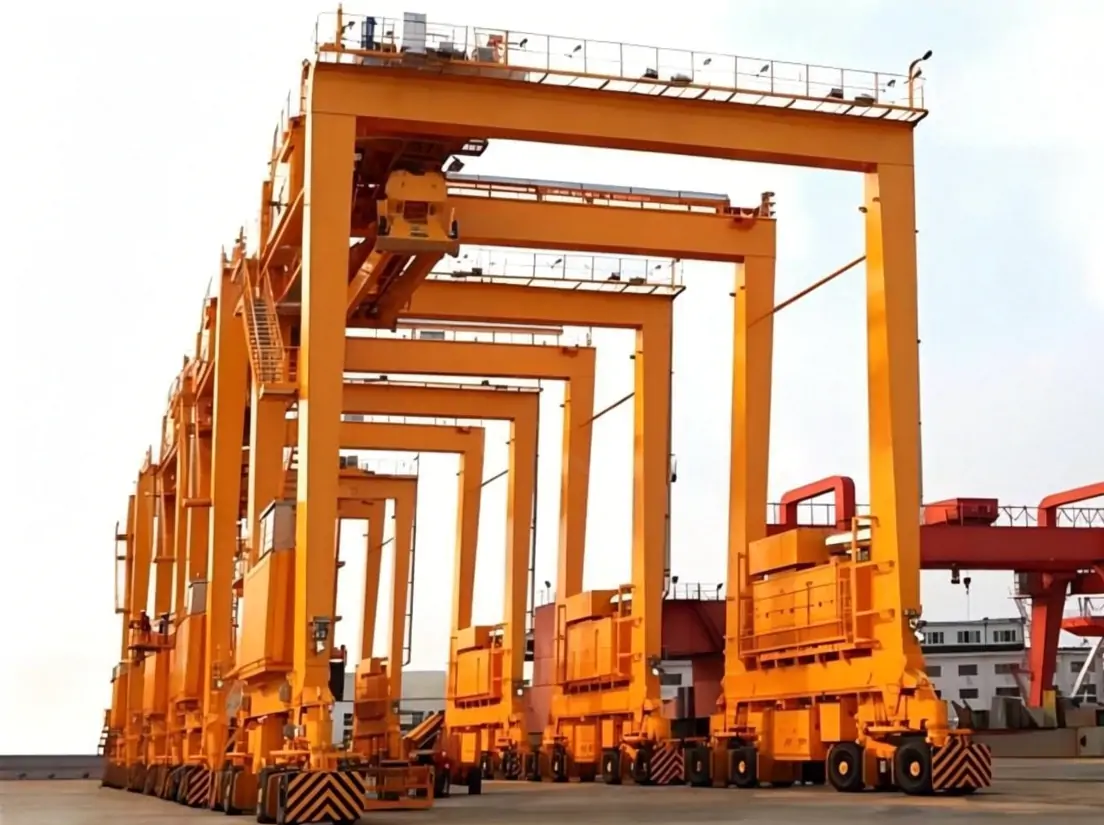
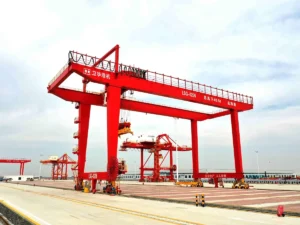
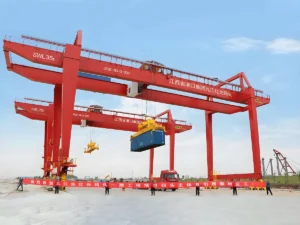
Ан Козловой кран РТГ consists of structural, lifting, travel, electrical, and safety components. Each assembly supports a specific function, from carrying the load and positioning containers to moving the crane across the yard. The main RTG crane parts and their functions are listed below.
| RTG Crane Part | Components | Function |
|---|---|---|
| Gantry Frame | Main girder, legs, cross beams, structural bracing | Supports the crane structure and lifting load. The main girder carries the trolley rails. |
| Hoisting System | Hoist motor, wire ropes, rope drum, sheaves, brakes | Raises and lowers containers. |
| Троллейбус | Trolley frame, wheels, drive motor, travel mechanism | Moves the suspended container across the gantry span. |
| Разбрасыватель | Headblock, twistlocks, lifting interface | Connects to and lifts containers. Available for 20 ft, 40 ft, and 45 ft containers, with single-lift or twin-lift configurations. |
| Rubber Tires and Travel Mechanism | Rubber tires, wheel assemblies, drive units | Moves the entire crane around the yard. Four-, eight-, or sixteen-wheel arrangements depend on crane design and ground pressure requirements. |
| Система рулевого управления | Steering drives, steering mechanism, control components | Changes travel direction. Steering configurations may support 0°–90° wheel rotation, depending on the model. |
| Система электропитания | Diesel generator, cable reel, or slide-wire supply | Supplies electrical power to the crane mechanisms. |
| Electrical Control System | PLC, sensors, control cabinet, variable-frequency drives | Controls lifting, trolley travel, crane travel, and steering functions. |
| Устройства безопасности | Limit switches, overload protection, anti-collision equipment, tire-pressure monitoring | Monitors operating conditions and prevents unsafe movements. |
These RTG crane parts work together to handle containers and position the crane within the yard. Part specifications depend on lifting capacity, container size, travel requirements, ground conditions, and power configuration. For replacement parts, confirm the crane model, component name, part number, and technical specifications before ordering.
What Are the Structural Parts of an RTG Crane?
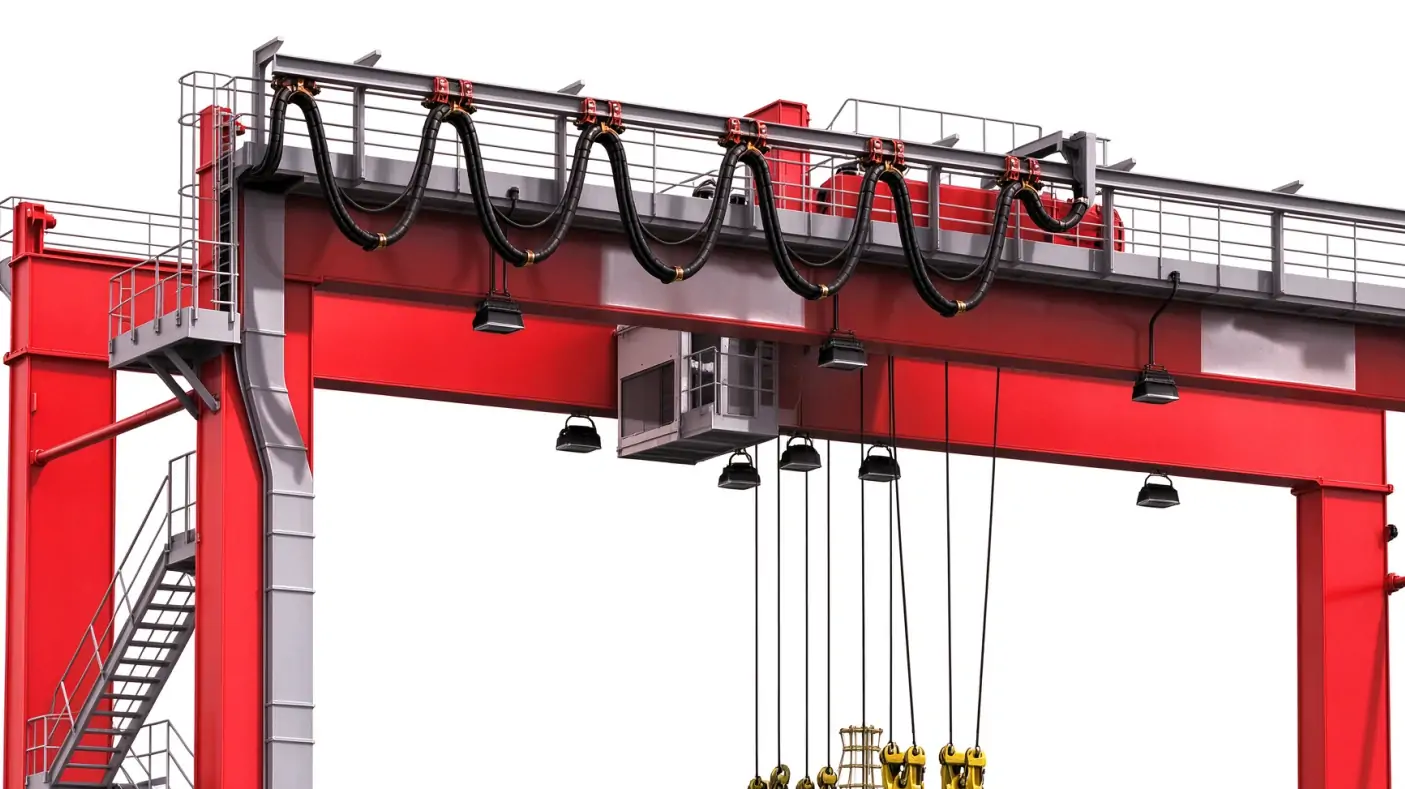
The structural parts of an RTG crane form the load-bearing framework for container lifting and yard travel. The main girder, gantry legs, lower crossbeams, and structural bracing support the trolley, hoisting system, and suspended load. Their dimensions and connections are designed around the crane’s rated capacity, span, stacking height, and operating conditions.
Main Girder and Gantry Frame
The main girder spans the width of the crane and carries the trolley rails. The trolley travels along these rails to position containers across the gantry span. Gantry legs connect the main girder to the lower frame, transferring loads to the wheel assemblies and tires. Lower crossbeams connect the legs and support the travel mechanism. Welded box sections are common in major load-bearing members, with dimensions and plate thicknesses set by structural calculations.
Cross Beams and Structural Bracing
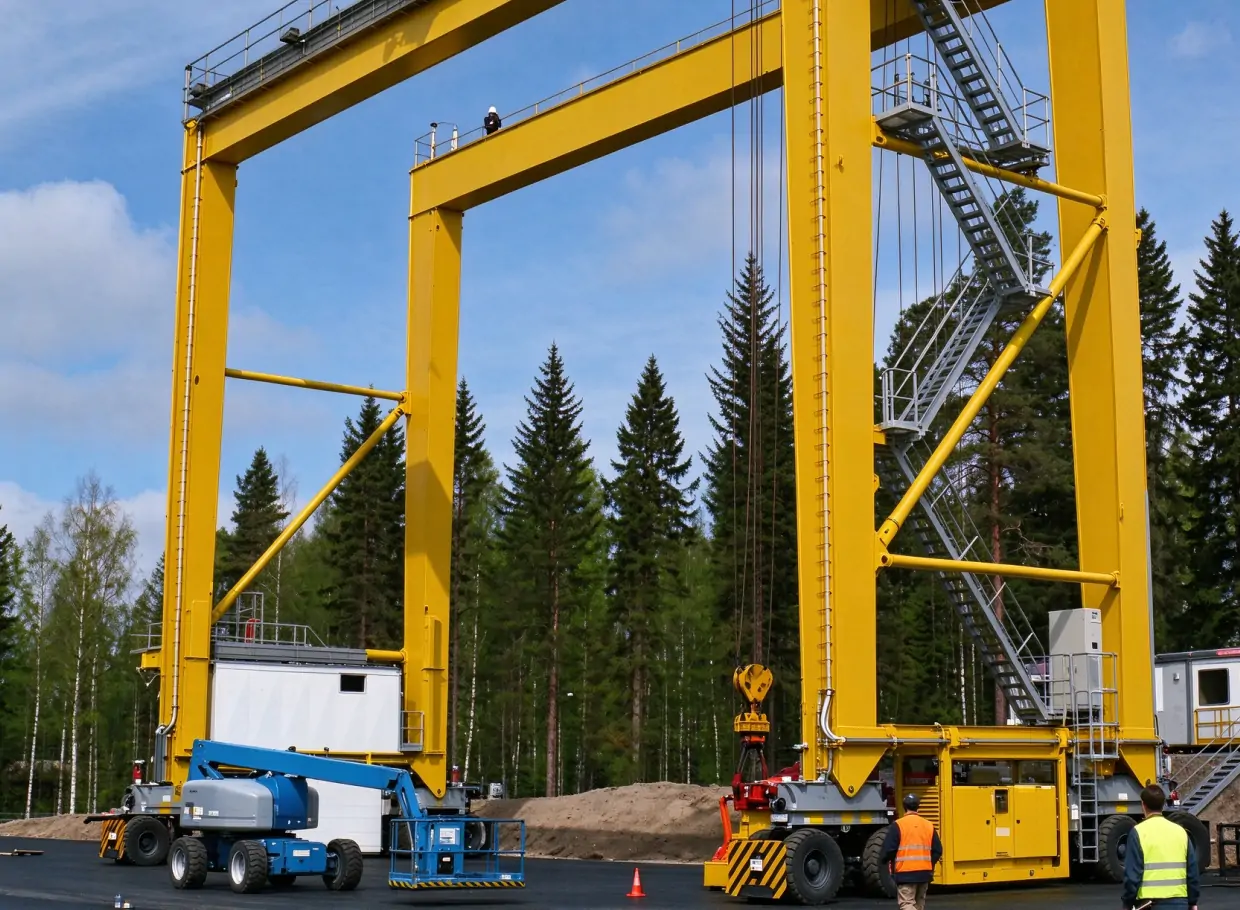
Crossbeams connect the main structural members and distribute loads through the gantry frame. Diagonal braces and other reinforcing members limit deformation under lifting, trolley travel, and crane movement. Their layout affects frame rigidity and resistance to lateral forces. Connection plates, bolted joints, and welded joints are specified according to the structural design.
What Are the Main Lifting and Travel Components?
RTG crane lifting and travel components control container hoisting, trolley movement, load connection, and whole-crane travel. Each mechanism has its own components and operating function.

Hoisting Mechanism
Main components: Hoist motor, gearbox, brake, rope drum, wire ropes, sheaves.
Function: The hoist motor drives the gearbox and rope drum. The drum winds or releases the wire ropes to raise or lower the spreader and container. The brake holds the suspended load when hoisting stops, while the sheaves guide the wire ropes through the reeving system.
Trolley and Trolley Travel Mechanism
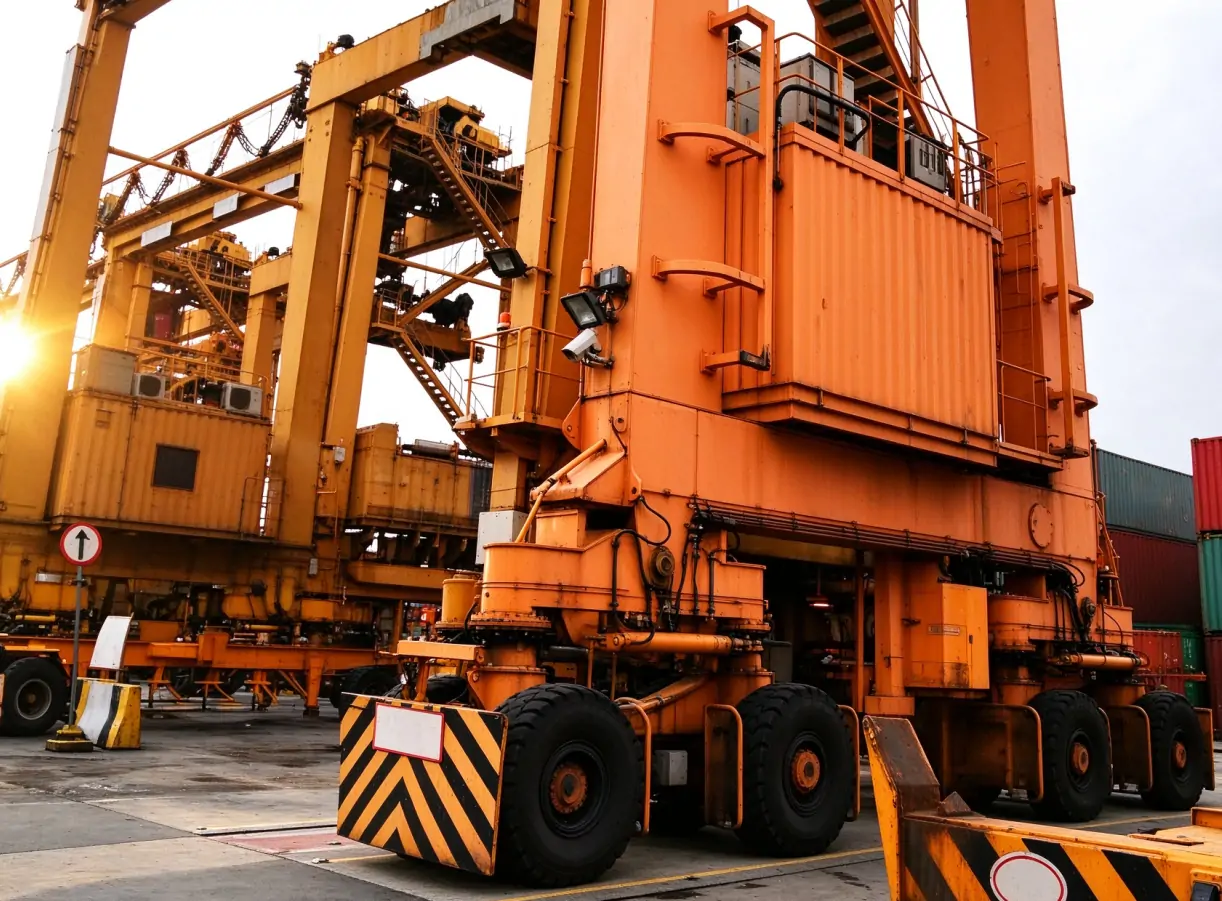
Main components: Trolley frame, travel wheels, drive motor, gearbox, transmission system.
Function: The trolley carries the hoisting equipment and travels along rails on the main girder. Its drive system moves the suspended container across the gantry span for stacking and transfer operations.
Container Spreader and Headblock
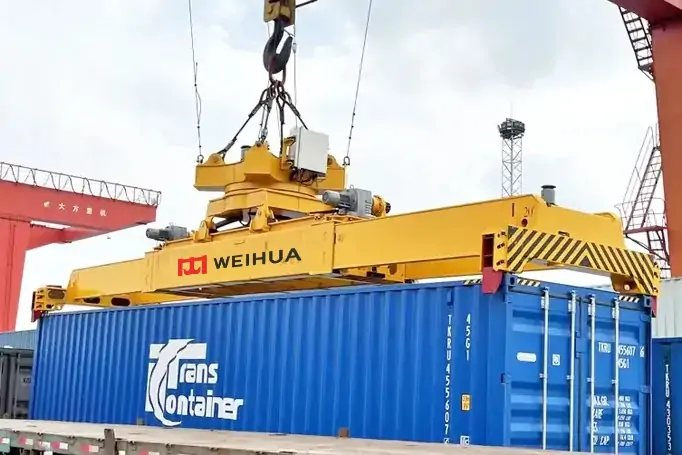
Main components: Spreader frame, twistlocks, headblock.
Function: The headblock connects the spreader to the hoisting system. Twistlocks engage with the container’s corner castings to secure it for lifting. Spreader configurations vary by RTG model and handling requirements. Options include telescopic spreaders for different container lengths and twin-lift spreaders for handling two compatible containers in one lift.
View RTG Container Crane Spreader Types: Разбрасыватель для крана RTG
Rubber Tires, Drive Units and Steering Mechanism
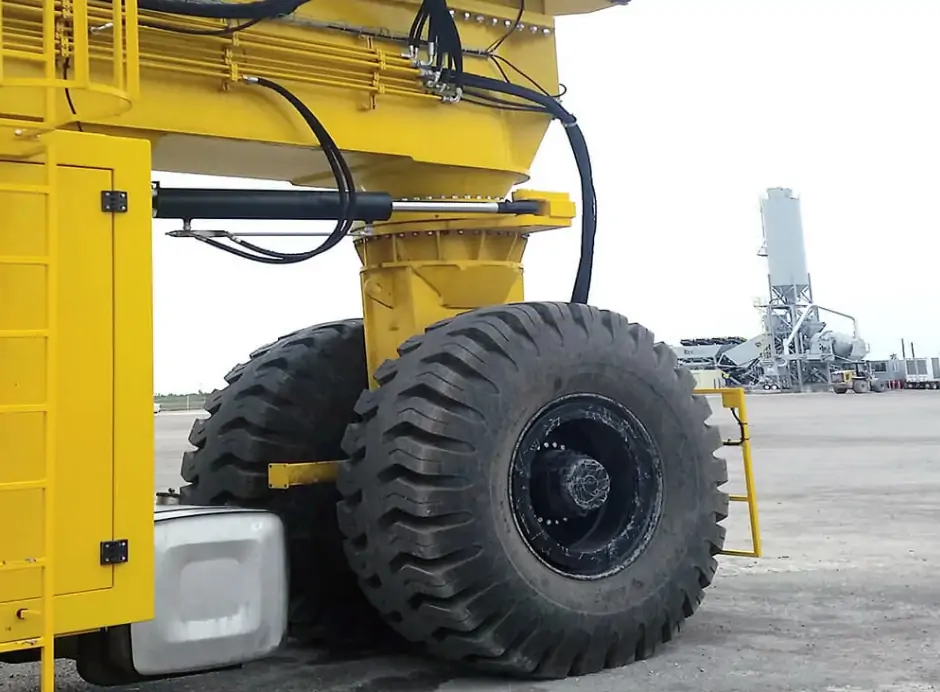
Main components: Rubber tires, wheel assemblies, drive units, steering mechanism, equalizer beams where fitted.
Function: Rubber tires support the crane and allow it to travel between container rows. Drive units power crane movement, while the steering mechanism controls travel direction. Wheel arrangements and equalizer beams affect wheel-load distribution and ground pressure. The configuration depends on crane capacity, yard layout, and ground conditions.
Types of Tires and How to Select Them: RTG Crane Tires: Selection, Performance, and Maintenance Guide for Container Handling Operations
What Electrical and Safety Components Does an RTG Crane Have?
RTG crane electrical and safety components control motor operation, power distribution, operator commands, and protective functions. The configuration varies with the crane model, power system, and automation level.
| Component | Function |
|---|---|
| Power Unit | Supplies electrical power to crane drives and auxiliary equipment. |
| Electrical Control Cabinet | Houses electrical control equipment, drive components, and protection devices. |
| PLC and Variable Frequency Drives (VFDs) | Execute control logic and regulate motor speed, acceleration, and deceleration. |
| Operator Cabin and Controls | Allow the operator to monitor crane status and control lifting, trolley travel, and crane movement. |
| Limit Switches and Load Monitoring | Detect travel limits and monitor lifting loads to support overload and movement protection. |
| Anti-Sway and Anti-Collision Devices | Reduce container sway or detect potential collisions where these functions are fitted. |
| Emergency Stop | Stops designated crane movements when an emergency occurs. |
RTG Crane Power Supply Options
RTG cranes use different power arrangements according to yard infrastructure and operating requirements.
- Diesel generator set: Supplies onboard power and allows flexible travel without a fixed external power connection.
- Cable reel or slide-wire supply: Connects an electrified RTG to an external power source, reducing or eliminating onboard diesel generation during powered operation.
- Hybrid power system: Combines an engine-generator with energy storage or an electrical supply arrangement, depending on the design, to reduce fuel consumption.
The final electrical and safety configuration should follow the project technical specifications, yard conditions, and required operating functions.
Which RTG Crane Parts Require Regular Maintenance?
RTG crane maintenance focuses on components exposed to load, friction, vibration, and outdoor conditions. Inspection items include wire ropes, brakes, drive motors, tires, spreaders, and safety systems.
Wire Ropes and Sheaves: Check for broken wires, rope wear, deformation, lubrication condition, and sheave groove damage. Replace components that exceed the limits specified in the maintenance manual.
Brakes and Drive Motors: Inspect brake operation, motor temperature, abnormal noise, mounting bolts, and drive connections. Check for oil leaks around gearboxes where applicable.
Rubber Tires and Wheel Assemblies: Inspect tire wear, damage, wheel alignment, and fasteners. Check inflation pressure on pneumatic tires according to the specified range.
Spreader and Twistlocks: Check twistlock engagement, locking indicators, telescopic mechanisms where fitted, and structural connections. Test locking and release functions before operation.
Electrical and Safety Systems: Inspect power cables, connectors, sensors, limit switches, emergency stops, and overload protection. Test safety functions according to the manufacturer’s procedures.
Set inspection intervals according to the manufacturer’s manual, operating frequency, site conditions, and maintenance records. Record defects and repairs to track component wear.
How to Select RTG Crane Parts for Your Application
RTG crane parts selection requires accurate equipment data and technical specifications. Check the following details before ordering replacement parts or planning a system upgrade.
- Crane Identification: Confirm the RTG model, manufacturer, serial number, and production year.
- Part Specifications: Verify the part number, drawing reference, dimensions, materials, and original technical specifications.
- Operating Requirements: Check rated capacity, duty classification, and operating frequency.
- Electrical Parameters: Confirm motor power, gear ratio, supply voltage, and control interfaces.
- Tire and Steering Configuration: Verify tire size, wheel loads, wheel arrangement, and steering mechanism.
- Site and Service Requirements: Consider operating conditions, spare parts lead time, technical support, and after-sales service.
Mechanical dimensions, electrical parameters, and connection interfaces must match the existing equipment. Visual similarity or rated capacity alone is not sufficient for selecting a replacement part.
Вейхуа provides crane design, customized equipment solutions, and project support for container handling applications. Свяжитесь с нашей командой with your RTG model, component drawings, technical specifications, and operating conditions. Our engineers can review your requirements and discuss suitable replacement parts or complete crane configurations.

Часто задаваемые вопросы
What are the main parts of an RTG crane?
The main RTG crane parts include the gantry frame, hoisting system, trolley, spreader, rubber-tire travel system, electrical controls, and safety devices. Each assembly handles structural support, lifting, travel, control, or protection.
What is the function of an RTG crane spreader?
The spreader connects to a container through twistlocks that engage with its corner castings. The locking mechanism secures the container for lifting and releases it after placement.
What are the main components of an RTG hoisting system?
The main components are the hoist motor, gearbox, brake, rope drum, wire ropes, and sheaves. Together, they transmit drive power and raise or lower the spreader and container.
What moves an RTG crane?
Rubber tires support the crane during travel. Drive motors and transmission units power the wheel assemblies, while the steering mechanism changes the travel direction. The wheel arrangement and steering design depend on the crane configuration.
What powers RTG crane parts?
Conventional RTG cranes use onboard diesel generator sets. Electrified models can draw power through cable reels or slide-wire systems. Hybrid configurations combine an engine-generator with energy storage or external electrical power, depending on the design.
Which RTG crane parts wear out most frequently?
Wire ropes, brake components, rubber tires, and moving spreader parts are subject to wear. Wear rates vary with load cycles, travel distance, operating conditions, and maintenance quality.
How do I identify the correct RTG crane spare parts?
Check the crane model, serial number, part number, technical drawings, and original specifications. Verify mechanical dimensions, electrical ratings, and connection interfaces before ordering replacement parts.
How often should RTG crane parts be inspected?
Inspection intervals should follow the manufacturer’s maintenance manual, applicable safety requirements, operating intensity, site conditions, and maintenance records. Components exposed to heavy use or harsh environments may require more frequent checks.