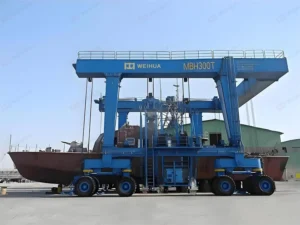
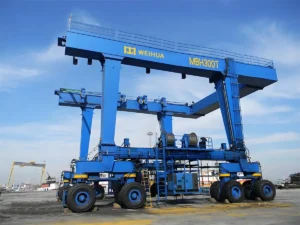
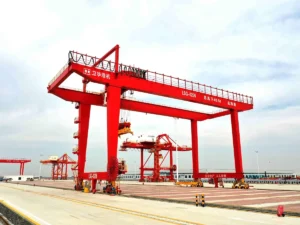
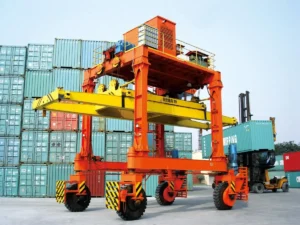
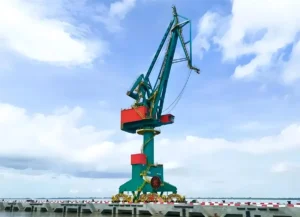
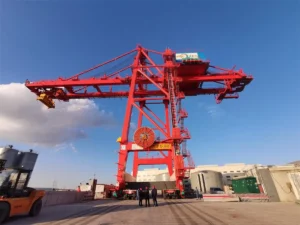
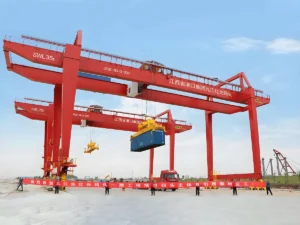
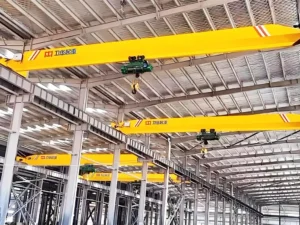
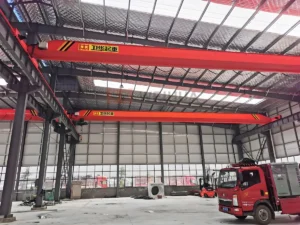
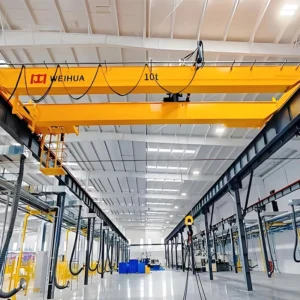
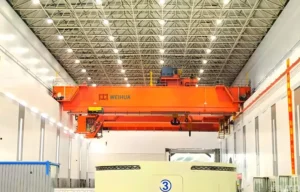
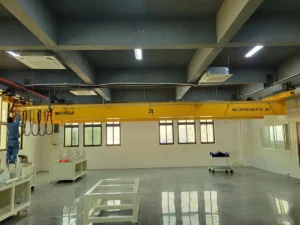
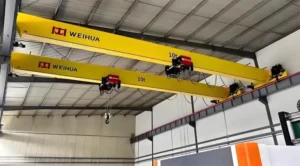
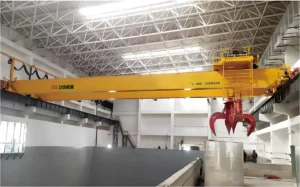
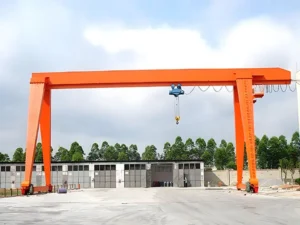
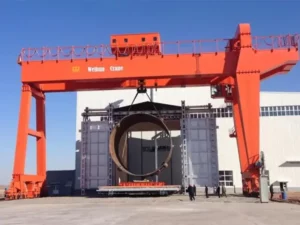
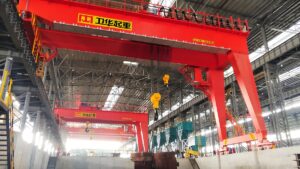
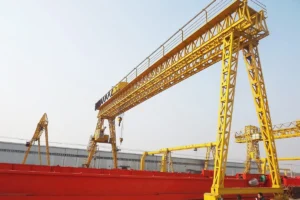
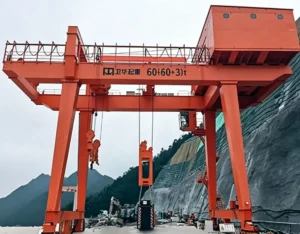
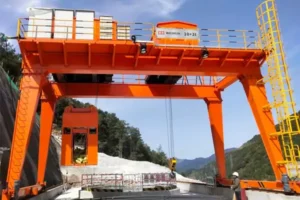
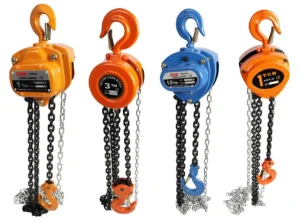
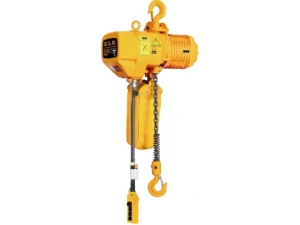
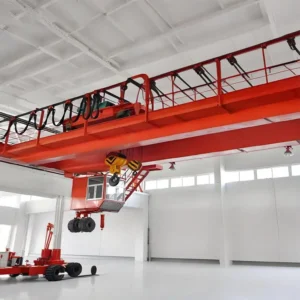
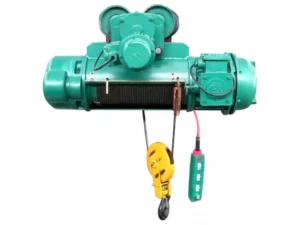
A crane trolley is the horizontal travel mechanism that moves a hoist and its suspended load across the span of a crane beam. Designed for continuous industrial operation, Weihua crane trolleys are available in electric motor drive and manual push configurations, compatible with single girder and double girder crane systems from 0.5 t to 80 t capacity.
A crane trolley is the load-bearing carriage that travels horizontally along the crane girder, carrying the hoist and load from one position to another across the full span of the crane bridge. It is one of the three primary motion axes in any overhead crane system: the crane bridge travels longitudinally along the runway rails, the crane trolley travels laterally across the bridge girder, and the hoist travels vertically to lift and lower the load.
Without a crane trolley, a hoist can only lift at a single fixed point. The trolley is what gives an overhead crane, bridge crane, or gantry crane its full two-dimensional working coverage across the entire bay or yard.
The term trolley crane is sometimes used informally to describe a complete crane system where the trolley is the primary defining feature — most commonly in monorail and underhung crane configurations. In standard overhead and gantry crane terminology, however, the crane trolley is a sub-assembly of the crane, not the crane itself.
Типы
Детали
Принцип работы
Weihua supplies crane trolleys matched to each major crane configuration. Selecting the correct trolley type depends on the crane structure, beam profile, load capacity, and working environment.
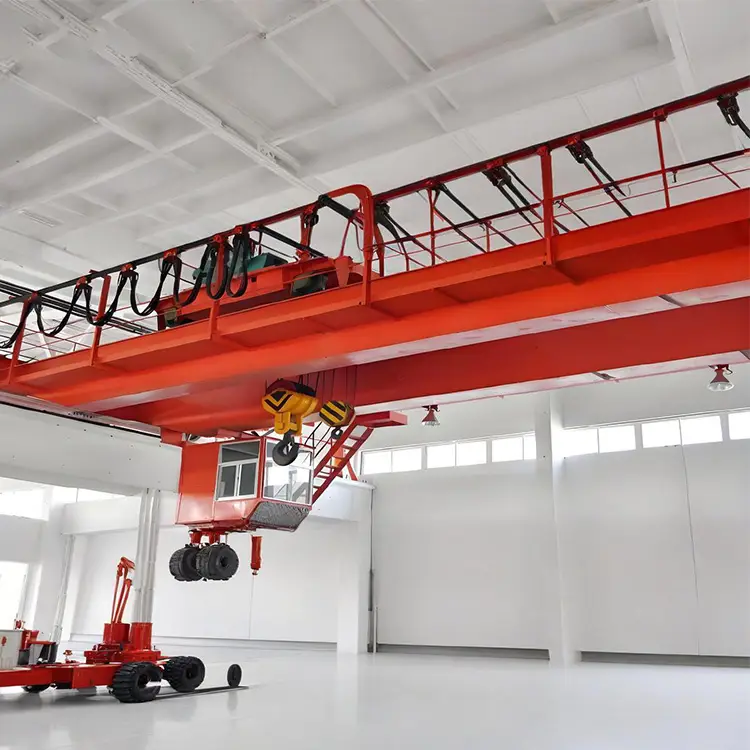
Overhead Crane Trolley / Bridge Crane Trolley
Ан мостовой кранtrolley — also referred to as a bridge crane trolley — is the horizontal travel carriage of an electric overhead traveling (EOT) crane or bridge crane. The two terms are used interchangeably across different markets and describe the same product.
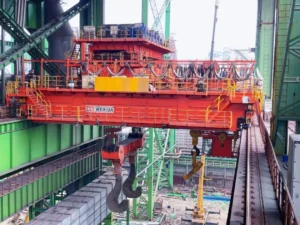
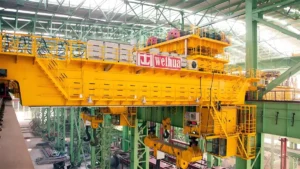
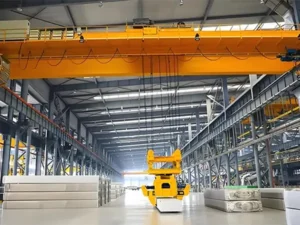
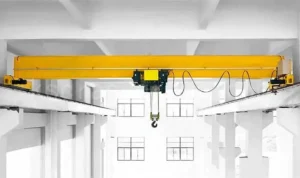
For single girder cranes (up to 20 t), the overhead crane trolley runs along the bottom flange of the main beam, mounting a chain hoist or low headroom wire rope hoist. For double girder and heavy-duty bridge cranes (up to 80 t), the bridge crane trolley is a top-running carriage on girder-mounted rails, built with reinforced frames and M5–M6 duty class ratings for continuous heavy industrial operation.
Typical applications: Workshops, warehouses, assembly lines, steel mills, foundries, shipyard assembly halls, power station turbine halls.
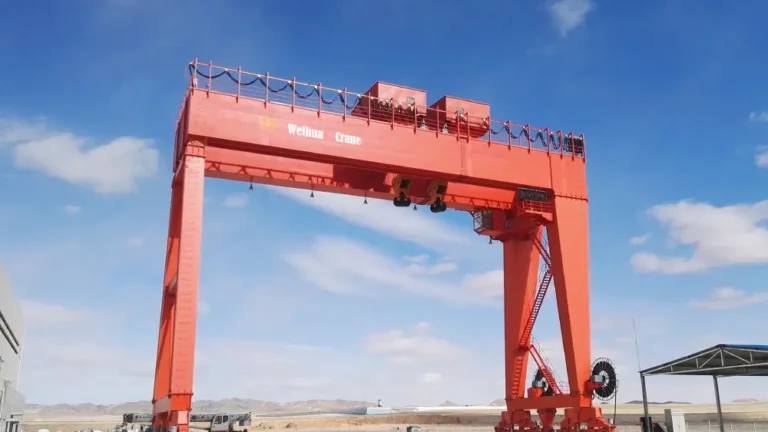
A козловой кран trolley operates on the bridge girder of a gantry or semi-gantry crane, following the same horizontal travel principle as an overhead crane trolley but adapted for the structural profile and outdoor operating conditions common to gantry crane installations. Gantry crane trolleys are typically specified with IP55 or higher motor protection, reinforced wheel flanges for outdoor rail running, and anti-wind safety clamps for open-air installations.
Both single girder gantry crane trolleys (for lighter capacities, typically 1 t – 20 t) and double girder gantry crane trolleys (for 5 t – 80 t and above) are available. The trolley design accounts for the longer spans and higher exposure to wind, rain, and temperature variation typical of outdoor gantry crane service.
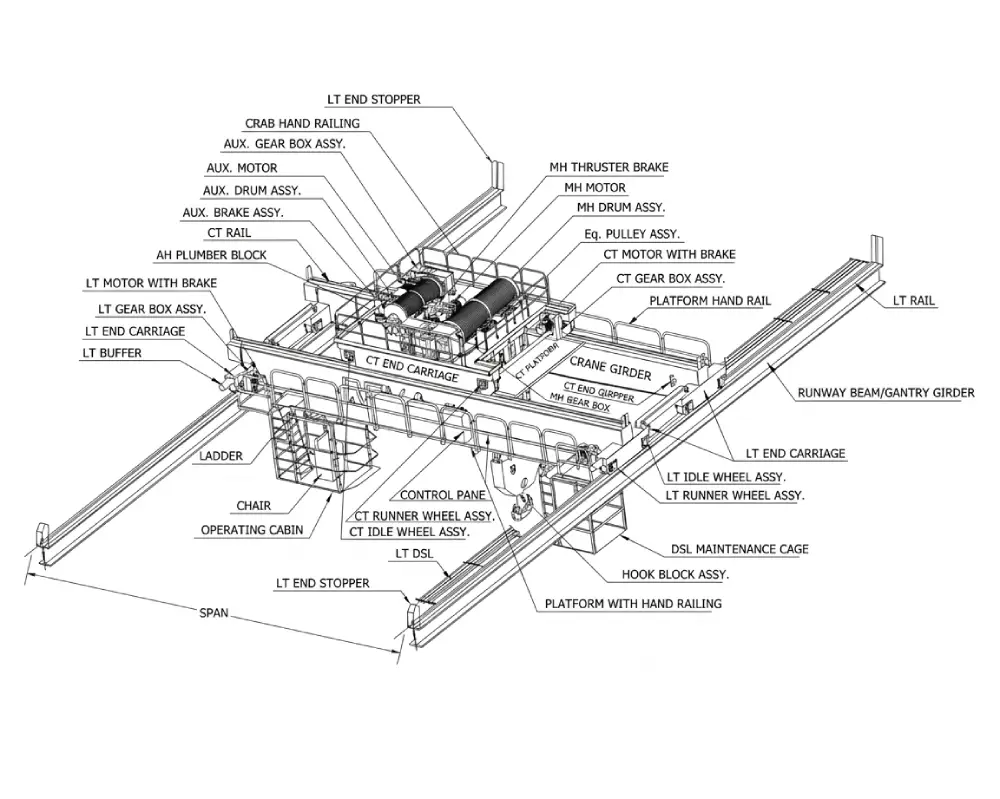
A well-engineered crane trolley integrates structural, mechanical, and electrical sub-systems that must function reliably as a unit throughout the crane’s working life.
Travel Wheels — Precision-machined alloy steel, heat treated, double-flanged for rail alignment. All wheels run on sealed, pre-lubricated roller bearings.
Travel Motor & Gearbox — Drives the trolley along the girder via gear reduction. Power from 0.2 kW (monorail) to 7.5 kW+ (heavy bridge crane trolley). VFD control available.
Electromagnetic Travel Brake — Spring-applied, electrically released. Stops the trolley instantly on button release and holds position on power interruption.
Hoist Mounting Interface — Bottom flange interface (single girder underhung) or top-mounted rail system (double girder). Compatible with Weihua wire rope hoists and chain hoists.
End Buffers — Rubber or polyurethane buffers at each trolley end absorb impact energy at travel limits, protecting the frame, girder end stops, and suspended load.
Travel Limit Switches — Cut motor power before the trolley reaches the buffer, preventing full-power buffer contact. Adjustable to match actual travel length.
Festoon Cable System / Conductor Bar — Supplies continuous power and control signals throughout the full travel range. Festoon for standard applications; conductor bar for high-cycle or long-travel runs.
Control Pendant / Radio Remote — Pushbutton pendant for Up/Down, East/West, and Emergency Stop. Explosion-proof or standard versions available. Radio remote control optional.
Working Principle of a Crane Trolley
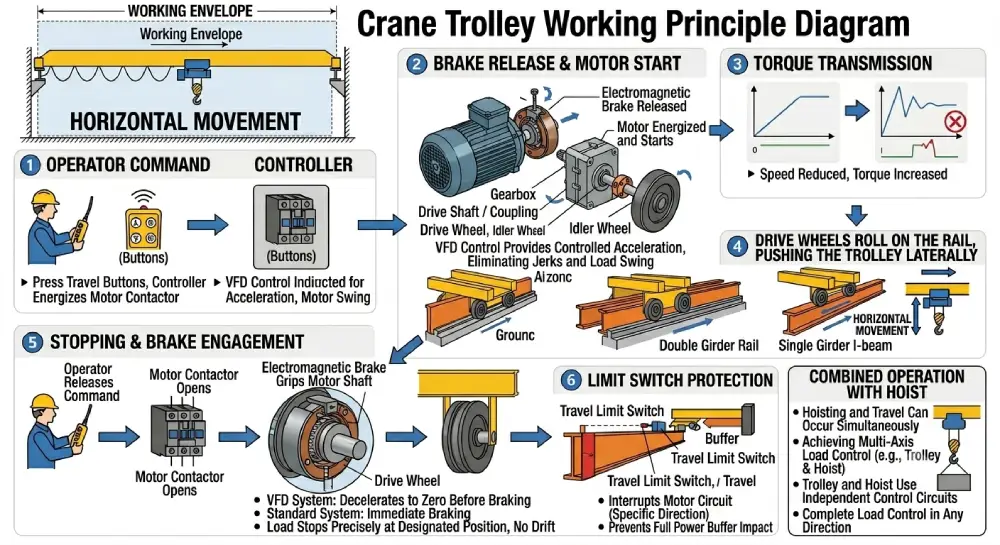
The crane trolley converts motor rotation into smooth, controlled horizontal travel along the crane girder, working in combination with the hoist to position loads at any point within the crane’s working envelope.
Step 1 — Operator Command The operator presses the East or West travel button on the pendant control or radio remote. The control circuit energizes the travel motor contactor inside the trolley control panel.
Step 2 — Brake Release & Motor Start The electromagnetic travel brake releases simultaneously with motor energization. For VFD-controlled trolleys, the drive ramps motor speed up from zero at a controlled acceleration rate, eliminating the jerk and load swing associated with direct-on-line starting. For standard contactors, the motor starts at full speed directly.
Step 3 — Torque Transmission The motor drives the gearbox input shaft. The gearbox reduces rotational speed and increases torque at the output shaft, which connects via a drive shaft or coupling to the driven travel wheels. The non-driven wheels (typically two of the four wheels) roll freely on bearings.
Step 4 — Trolley Travel Along the Girder The driven wheels roll along the rail surface (double girder trolleys) or the bottom flange of the I-beam (single girder trolleys), moving the entire trolley — and any suspended hoist and load — laterally across the crane span at the selected travel speed.
Step 5 — Stopping & Brake Engagement When the operator releases the travel button, the motor contactor opens. For VFD-controlled systems, the drive decelerates the motor to zero speed before opening the brake. For standard systems, the electromagnetic brake clamps the motor shaft immediately on power removal, stopping the trolley within the design stopping distance. The load comes to rest at the new horizontal position with no drift.
Step 6 — Limit Switch Protection If the trolley approaches either end of its permitted travel without operator input, the travel limit switch interrupts the motor circuit in the relevant direction before the trolley reaches the buffer. The operator can still travel in the opposite (away) direction. This prevents buffer impact under full motor power and protects both the trolley and crane structure from repeated mechanical shock.
Combined Operation with the Hoist In normal crane operation, trolley travel and hoist lifting or lowering are frequently performed simultaneously — moving the load diagonally from pick-up point to set-down point in a single operator motion. The trolley and hoist operate on independent control circuits, allowing combined movement without interference. The crane bridge may also travel simultaneously, giving the operator full three-axis control of load position.
Key Features & Benefits
Precision-Machined Trolley Frame — CNC-machined rail contact surfaces ensure correct wheel load distribution, reducing rail wear and extending wheel and bearing service life.
VFD Control (Optional) — Stepless speed control from near-zero to full travel speed. Eliminates load swing at start-up and allows accurate load positioning at set-down.
Heat-Treated Alloy Steel Wheels — 65Mn alloy steel, induction hardened to 50–58 HRC on the tread surface. Outlast standard steel wheels by a factor of 3–5 in continuous operation.
Wide Beam Compatibility — Adjustable wheel span fits I-beam and box girder flange widths from 50 mm to 300 mm, covering all standard overhead and gantry crane beam sections.
Low Headroom Design Options — Compact trolley and hoist assembly minimizes dead height, maximizing available hook height within the existing building envelope.
Corrosion-Resistant Coating — Two-coat epoxy primer plus polyurethane topcoat as standard. Hot-dip galvanizing and stainless steel hardware available for outdoor or chemically aggressive environments.
Hoist Brand Compatibility — Standardized interface dimensions compatible with Weihua wire rope hoists, chain hoists, open winch assemblies, and most internationally standard hoist mounting configurations.
Технические характеристики
Overhead Crane Trolley
Параметр
Спецификация
Грузоподъемность
0.5 t / 1 t / 2 t / 3 t / 5 t / 10 t / 16 t / 20 t / 32 t / 50 t / 80 t
Compatible Crane
Single Girder EOT / Double Girder EOT / Bridge Crane
Beam Type
I-Beam (underhung) / Box Girder with rail (top-running)
Beam Flange Width
50 – 300 mm
Скорость путешествия
2 – 40 m/min; VFD variable speed available
Travel Motor Power
0.2 – 7.5 kW
Wheel Diameter
160 – 630 mm
Рабочая категория
M3 – M6
Класс долга
A3 – A6
Метод управления
Pendant pushbutton / Radio remote (optional)
Блок питания
3-phase 380V / 415V / 440V / 460V, 50Hz / 60Hz
Класс защиты
IP54 (standard) / IP55 (optional)
Температура окружающей среды
-25°C to +40°C
Сертификация
CE · ISO 9001 · FEM · GB/T 14405
Gantry Crane Trolley
Параметр
Спецификация
Грузоподъемность
1 t / 2 t / 3 t / 5 t / 10 t / 16 t / 20 t / 32 t / 50 t / 80 t
Compatible Crane
Single Girder Gantry / Double Girder Gantry / Semi-Gantry
Beam Type
I-Beam (single girder) / Box Girder with rail (double girder)
Beam Flange Width
70 – 300 mm
Скорость путешествия
2 – 40 m/min; VFD variable speed available
Travel Motor Power
0.4 – 7.5 kW
Wheel Diameter
200 – 630 mm
Рабочая категория
M3 – M6
Класс долга
A3 – A6
Метод управления
Pendant pushbutton / Radio remote (optional)
Блок питания
3-phase 380V / 415V / 440V / 460V, 50Hz / 60Hz
Класс защиты
IP55 (standard) / IP65 (optional)
Anti-Wind Device
Available for open-air installations
Температура окружающей среды
-25°C to +40°C
Сертификация
CE · ISO 9001 · FEM · GB/T 14406
Standard configurations cover the capacities and beam sizes listed above. Custom trolley designs — including extended travel wheels for non-standard rail gauges, stainless steel construction, high-temperature service above +40°C, and heavy-duty M7/M8 working grades — are available on request. Contact our engineering team with your crane layout drawing and operational requirements.
Applicable Industries
General Manufacturing & Assembly — Overhead crane trolleys move workpieces between machining centers, assembly stations, and dispatch. VFD control improves production flow and reduces idle time.
Steel & Metallurgy — Bridge crane trolleys for steel mills and forge shops are specified to M6–M7 duty class with reinforced frames and high-temperature bearings for continuous heavy-duty service.
Shipbuilding & Offshore — Heavy bridge crane trolleys handle hull sections and large components in assembly halls; gantry crane trolleys for outdoor berths are specified with anti-wind devices and IP65 protection.
Складское хозяйство и логистика — Overhead crane trolleys with VFD control reduce load swing and improve positioning accuracy for pallet, coil, and bulk container handling in high-bay warehouses.
Construction & Precast — Gantry crane trolleys position heavy beams, slabs, and column elements in precast yards, specified for outdoor operation and variable load conditions.
Автомобильное производство — Electric overhead crane trolleys with VFD control and radio remote handle dies, body assemblies, and engine components with high positioning precision.
Power Generation — Heavy-duty bridge crane trolleys in turbine and transformer halls support overhaul and installation of high-value equipment where accurate load placement is critical.
How to Choose a Crane Trolley
Selecting the correct crane trolley requires matching the trolley specification to the crane structure, the load, and the working conditions. The following five factors cover the primary selection criteria.
1. Rated Lifting Capacity Select a trolley rated at or above the maximum load the hoist will lift, including any rigging, below-the-hook attachments, and appropriate safety factor. Do not undersize the trolley based on average loads — the rated capacity must cover the maximum load the system will ever be asked to handle.
2. Compatible Crane Type Identify whether the application requires an overhead crane trolley, bridge crane trolley, gantry crane trolley, or monorail trolley. This determines the basic frame geometry, wheel arrangement, and structural specification of the trolley required.
3. Beam Profile & Flange Width Measure the flange width of the girder rail or I-beam on which the trolley will run. The trolley wheel span and flange engagement must match the beam profile to ensure correct load distribution and safe travel without risk of derailment. Provide the beam section reference (e.g., HEB 300, H400×200, or I-beam No. 32) when requesting a quotation.
4. Travel Drive Type & Speed For most production applications, an electric motor travel drive provides the speed, control, and duty cycle performance required. For low-frequency, short-distance transfer tasks, a manual push or geared hand chain trolley is the economical choice. Travel speed selection should account for production cycle time requirements and the need for load positioning accuracy.
5. Working Grade & Duty Class Working grade (M3 to M6 for most standard crane trolleys) defines how intensively the trolley is designed to operate — combining the frequency of use and the average proportion of rated load carried per lift. Match the trolley working grade to the actual operational intensity of the application to ensure adequate service life without over-specifying and over-investing in equipment that exceeds the application’s real requirements.
Crane Trolley vs Hoist — What Is the Difference?
Users new to crane systems sometimes use the terms crane trolley and hoist interchangeably. They are distinct components with different functions, and both are required in most overhead crane configurations.
Factor
Тележка крана
Подъемник
Основная функция
Horizontal load travel
Vertical load lifting
Direction of motion
Lateral (along crane girder)
Vertical (up and down)
Location in crane system
Travels on crane bridge girder
Mounted to or integrated with trolley
Key components
Frame, travel wheels, travel motor, brake
Drum/chain, lift motor, brake, hook
Independent use
Rarely — typically paired with a hoist
Can be fixed-mounted without a trolley
Controls
East / West travel buttons
Up / Down lift buttons
In a complete overhead crane or gantry crane system, the crane trolley provides horizontal positioning across the crane span, while the hoist provides vertical lifting. Together they give the crane its full working coverage within the bay.
Certifications & Standards
All Weihua crane trolleys are designed and manufactured in accordance with the following standards:
Стандарт / Сертификация
Coverage
Маркировка CE
European conformity — Machinery Directive 2006/42/EC
ISO 9001
Quality management system certification
FEM 1.001
European federation of materials handling — crane design rules
GB/T 3811
Chinese national standard — crane design code
GB/T 14405
Chinese national standard — overhead crane general specification
Certification documents are provided with each trolley delivery and are available for customer review during equipment acceptance and facility compliance audits.
About Weihua Crane Trolleys
Weihua is a professional crane trolley manufacturer and supplier based in China, with over 37 years of experience in lifting equipment design and manufacturing. All Weihua crane trolleys are produced under a rigorous quality management system certified to ISO 9001, and every unit is CE-marked in compliance with the European Machinery Directive.
Weihua provides a global after-sales service network, a one-year product warranty, and long-term spare parts availability for all crane trolley models. Our engineering team supports custom trolley specifications, complete crane system integration, and on-site installation guidance for overhead crane trolley, bridge crane trolley, and gantry crane trolley projects worldwide.
We also offer a comprehensive range of lifting equipment, including electric wire rope hoists, electric chain hoists, overhead traveling cranes, and gantry cranes. Contact our engineering team today for a customized crane trolley solution tailored to your crane system and application requirements.
Послепродажное обслуживание
Weihua, основанная в 1988 году, превратилась в мирового лидера в области интеллектуального производства Китая. Мы специализируемся на исследованиях, разработках и производстве умных кранов, а также предлагаем решения для AGV. Наши профессиональные команды инженеров, по доставке и послепродажному обслуживанию предоставляют комплексную техническую поддержку, индивидуальные решения, руководство по установке на месте и оперативное глобальное обслуживание, чтобы обеспечить безопасную и эффективную работу каждого проекта.
Глобальная команда технической поддержки
Удаленное руководство, ввод в эксплуатацию на месте и обучение операторов для обеспечения оперативного развертывания оборудования.
Ищете надежного производителя кранов? Weihua станет вашим доверенным партнером! Не стесняйтесь обращаться к нам в любое время, чтобы обсудить требования вашего проекта, получить техническую консультацию от нашей профессиональной инженерной команды и запросить индивидуальное ценовое предложение. Позвольте Weihua использовать свои проверенные производственные мощности и комплексную систему обслуживания для предоставления эффективных и безопасных крановых решений, которые повысят эффективность работы и обеспечат успех вашего проекта!
Часто задаваемые вопросы
What is a crane trolley?
A crane trolley is the horizontal travel carriage in an overhead crane, bridge crane, or gantry crane system. It runs along the crane bridge girder and carries the hoist, moving the suspended load laterally across the full crane span. The trolley provides the cross-travel axis of motion that, combined with the crane bridge long-travel and the hoist vertical travel, gives the crane its full three-dimensional working coverage.
What is the difference between a crane trolley and a hoist?
A crane trolley moves horizontally along the crane girder. A hoist lifts and lowers the load vertically. In most crane configurations, the hoist is mounted to or integrated with the crane trolley. The two components work together but perform distinct functions: the trolley positions the hoist at the correct point along the crane span; the hoist then lifts or lowers the load at that point.
What type of crane trolley do I need for my overhead crane?
For single girder overhead cranes (up to 20 t), an underslung electric hoist trolley running on the bottom flange of the main girder is the standard solution. For double girder overhead cranes (5 t – 80 t and above), a top-running bridge crane trolley carrying a wire rope hoist or open winch unit is required. Provide your crane capacity, span, beam profile, and duty class when requesting a trolley quotation.
Can a crane trolley be used on a gantry crane?
Yes. Gantry crane trolleys are crane trolleys adapted for outdoor use and for the beam profiles used in gantry crane construction. They carry the same hoist types as overhead crane trolleys but are specified with higher IP-rated motors, reinforced wheel flanges for outdoor rail running, and anti-wind safety devices where required. Both single girder and double girder gantry crane trolley configurations are available.
What is the maximum capacity available?
Standard Weihua electric crane trolleys cover capacities up to 80 t. For heavier loads in bridge crane and gantry crane applications, custom trolley designs are available. Contact our engineering team with your capacity, span, and duty class requirements for a tailored solution.
Настройте свои подъемные решения
Свяжитесь с нами сейчас по электронной почте: [email protected], или заполните форму ниже.
Пожалуйста, укажите ваше требование, ссылаясь на следующие аспекты:
Какой кран вам нужен?
Какова максимальная грузоподъемность (в тоннах), требуемая для вашего проекта?
Могли бы вы уточнить необходимую высоту подъема (в метрах)?
Можете ли вы предоставить детали о рабочей среде, такие как состояние грунта, ограничения по пространству и препятствия?
Какова ожидаемая частота использования и продолжительность проекта?





 English
  Русский
 العربية
 Français
 Português
 Español