






Blog

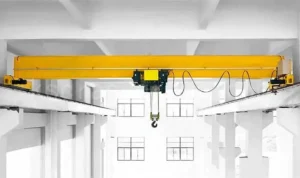
Grúa puente monorraíl

EOT Crane for Automotive Industry: Types, Specs & Selection Guide (2026)

04 Aug 2026

A plant manager once ordered a standard double-girder EOT crane for a trim-and-final assembly bay — reasonable choice on paper, until it arrived and the hook path sat 600 mm above the overhead conveyor. Three weeks of shutdown, a structural reinforcement contract, and a replacement crane order later, the real lesson landed: in automotive manufacturing, specifying the wrong EOT crane for the wrong production stage costs far more than the crane itself. Automotive plants are demanding environments. Three-shift schedules, precision die changes, explosive paint-booth atmospheres, and sub-tonne ergonomic lifts in final assembly all happen under one roof — and no single crane configuration handles all of them. Procurement managers who lead with tonnage alone routinely end up with equipment that either fails prematurely from duty class mismatch or physically cannot fit the installation point. This guide maps each major production stage to the correct EOT crane type, gives you market-reference pricing in USD, covers the compliance requirements your supplier must document, and tells you exactly which questions to ask before signing a purchase order. Use the quick-reference table below as…
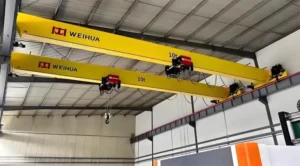
Single-girder overhead crane

10 Ton Overhead Crane: Types, Specs & Factory-Direct Pricing (2026)

27 Jul 2026

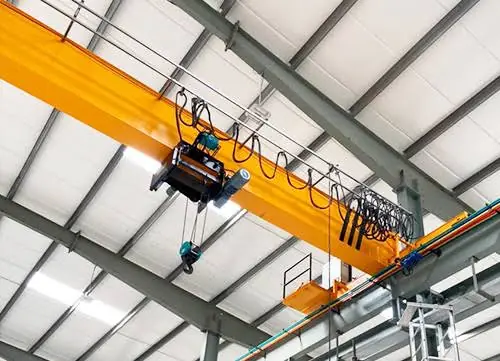
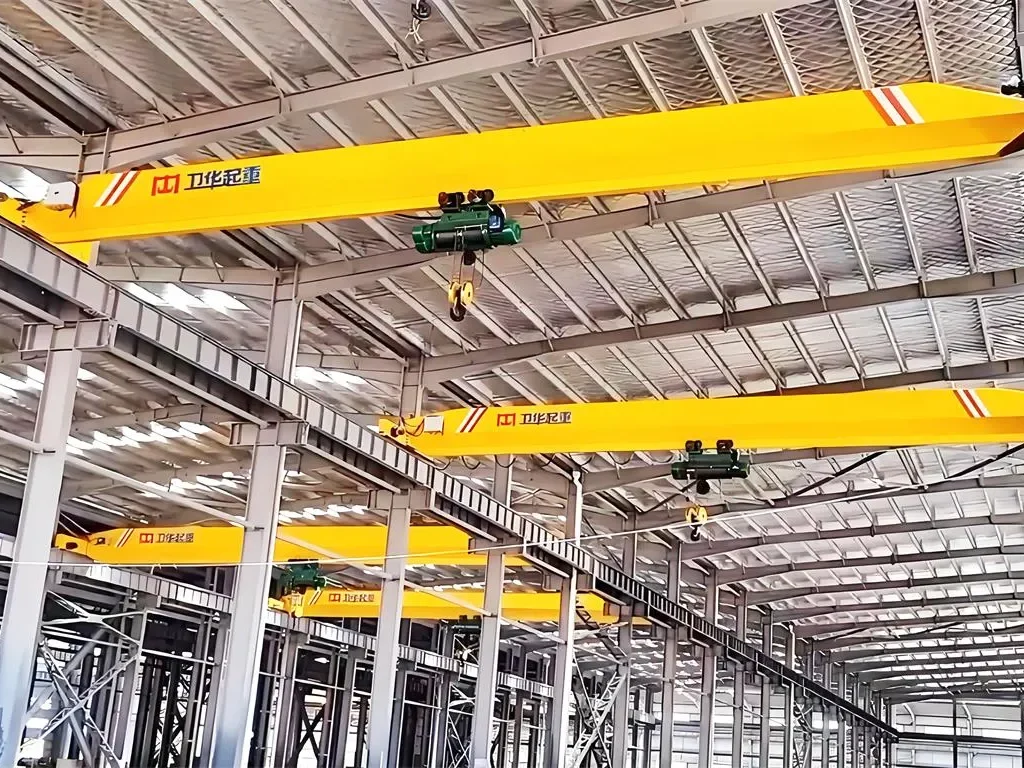
Does it matter which type of 10 ton overhead crane a facility buys? Far more than most procurement teams expect. The rated capacity is the easy part — the decisions around girder configuration, duty class, span, and headroom clearance determine whether the crane runs reliably for 15 years or becomes a maintenance problem within three. Buyers evaluating a 10 ton overhead crane for sale need a clear comparison of available configurations, the specifications that actually drive cost, and a practical checklist for vetting a supplier before placing an order. This guide covers all three, based entirely on Weihua’s product range. Quick Reference: 10 Ton Overhead Crane Types at a Glance Configuration Typical Span Duty Class Lifting Height Market Price (USD) Single girder (LD standard) 7.5–28.5 m A3–A5 6–30 m $3,900–$12,000 Underslung single girder (LX) 7.5–31.5 m A3–A5 6–30 m $3,900–$12,000 Double girder with hoist trolley (LH) 10.5–31.5 m A5–A6 Up to 16 m std. $17,200–$32,500 Double girder with winch trolley (QD) 10.5–31.5 m A5–A6 Up to 16 m std. $17,200–$32,500 European-style EOT (FEM standard) 7.5–33 m A5–A6 Customizable $7,800–$17,300 Explosion-proof…

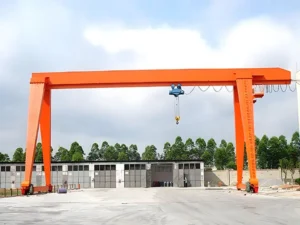
Single Girder Truss Gantry Crane

Truss Gantry Crane Price: Cost Breakdown & Budget Guide (2026)

24 Jul 2026

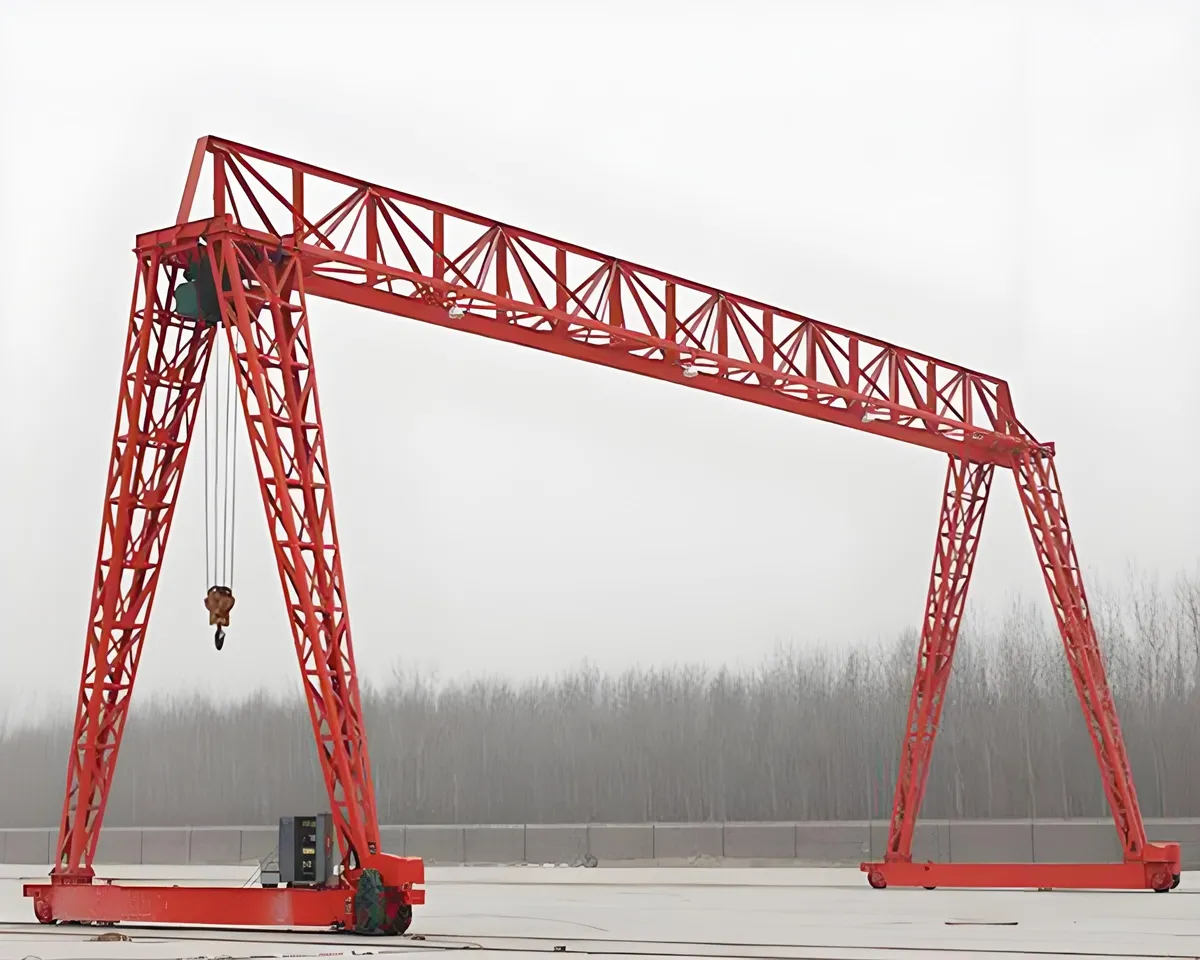
A truss gantry crane for industrial outdoor yards typically costs between $18,000 and $75,000 for single girder configurations (5–50 t) and $80,000 to $380,000+ for double girder heavy-duty models (50–500 t). These figures reflect factory-direct pricing from Chinese manufacturers and cover the crane structure, hoist, and electrical system — before freight, installation, and rail work. Most procurement teams ask about price early, and rightly so. But truss gantry crane costs are shaped by variables beyond tonnage alone: span, working duty class, hoist type, and site environment all shift the final number significantly. Requesting a price without these details typically produces a quote that doesn’t match what your site actually needs. This guide breaks down what drives truss gantry crane pricing, what hidden project costs to budget for, and how to get an accurate quotation from Weihua Crane’s engineering team. Why Truss Gantry Crane Pricing Is Different from Box Girder Models The open-lattice structure changes the cost equation at large spans A truss girder distributes load through triangulated steel members rather than solid plate walls. For spans above 20 m, this…

grúas pórtico eléctricas

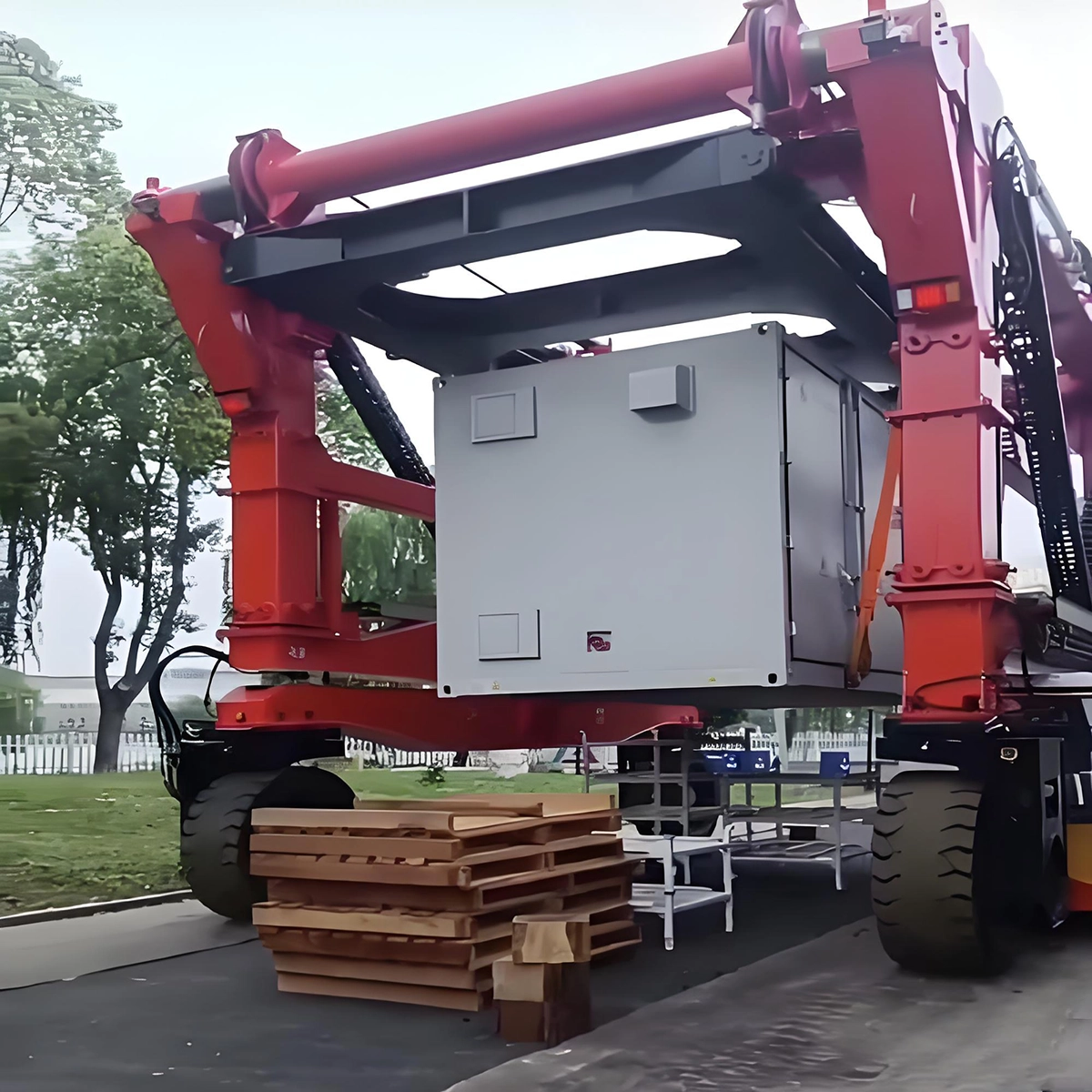
Grúa pórtico vs. grúa RTG: ¿Qué sistema se adapta mejor a su terminal?

20 de julio de 2026

Cuando un planificador de terminales pregunta "¿qué es mejor: una grúa pórtico o una grúa RTG?", la respuesta honesta es que la pregunta está mal planteada. Ninguno de los dos sistemas es universalmente superior. Cada uno está diseñado en torno a un conjunto específico de prioridades operativas, y la implementación del sistema incorrecto crea una incompatibilidad estructural que se agrava durante el ciclo de vida de 15 a 20 años del equipo. La pregunta real es más precisa: ¿su terminal necesita mover contenedores rápidamente en un patio flexible o necesita almacenar la máxima cantidad de contenedores en un espacio limitado? La respuesta a esta pregunta, determinada por el volumen de operaciones anual, el área de terreno disponible, la estrategia de automatización y el presupuesto de infraestructura, determina qué sistema es el más adecuado para su patio. Esta guía compara las grúas pórtico y las grúas RTG en función de las dimensiones más importantes para los equipos de compras y los planificadores de terminales: mecánica operativa, densidad del patio, costo total de propiedad, preparación para la automatización y requisitos de certificación. Referencia rápida: Grúa pórtico vs. Grúa RTG de un vistazo Factor de decisión Grúa pórtico Grúa RTG Función principal Elevar + transportar + apilar (unidad individual) Solo apilar…

Grúa pórtico industrial

Guía de selección de carretillas pórtico: 7 especificaciones que debe confirmar antes de realizar un pedido.

17 de julio de 2026

Los equipos de adquisición de equipos en terminales de contenedores y patios industriales frecuentemente se encuentran con el mismo problema: una grúa pórtico llega al sitio, pasa la verificación de capacidad nominal en papel y luego no funciona de manera eficiente porque la superficie del patio no puede soportar la presión del suelo, el ancho del pasillo es 1,5 metros demasiado estrecho para el radio de giro o el sistema de energía es incompatible con la infraestructura de la red local. La capacidad de elevación nominal es la primera cifra que examinan los compradores, pero en la mayoría de los errores de adquisición, no es la cifra que causa el problema. Esta guía cubre las siete especificaciones que determinan si una grúa pórtico realmente funcionará como se requiere en su instalación, no solo en una hoja de especificaciones. Cada especificación incluye la justificación técnica, el rango de valores típicos de referencia y la acción de verificación que los compradores deben completar antes de enviar una orden de compra. Tabla resumen de especificaciones Especificación Rango de referencia típico Error común 1 Capacidad de elevación (carga bruta) 30–66 t (puerto); hasta 100 t+ (industrial) Peso del aparejo no incluido en el cálculo de carga 2 Configuración de apilamiento 1 sobre 2 o 1 sobre 3 (3 o 4 de altura) Apoyo al suelo…

¿Qué es una grúa puente de doble viga?

¿Qué es una grúa puente de doble viga? Estructura, principio de funcionamiento y aplicaciones.

15 Jul 2026

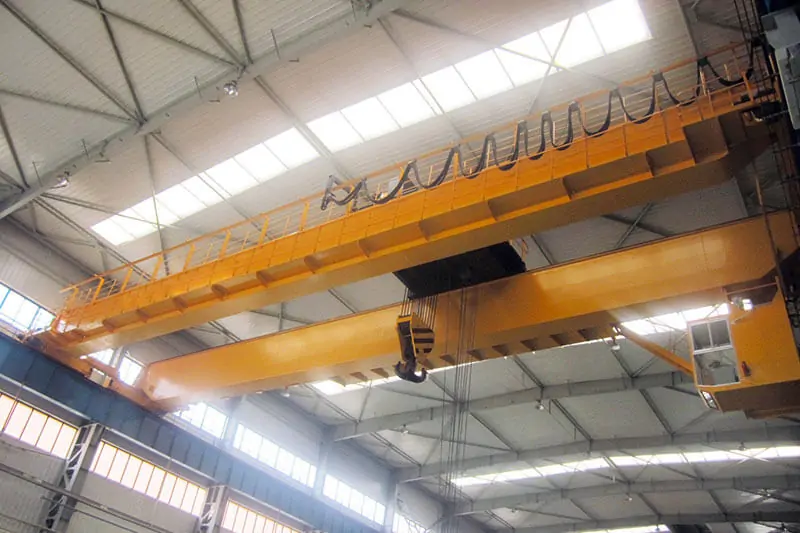
A double girder EOT crane is an electric overhead traveling crane designed for heavy lifting operations. It uses two parallel bridge girders to support the hoist and trolley, providing higher load capacity, greater lifting height, and improved stability compared with single girder cranes. This article explains the structure, working principle, advantages, applications, and selection factors of double girder EOT cranes

¿Qué es una grúa puente monorraíl?

¿Qué es una grúa puente monorraíl? Estructura, principio de funcionamiento y aplicaciones.

13 de julio de 2026

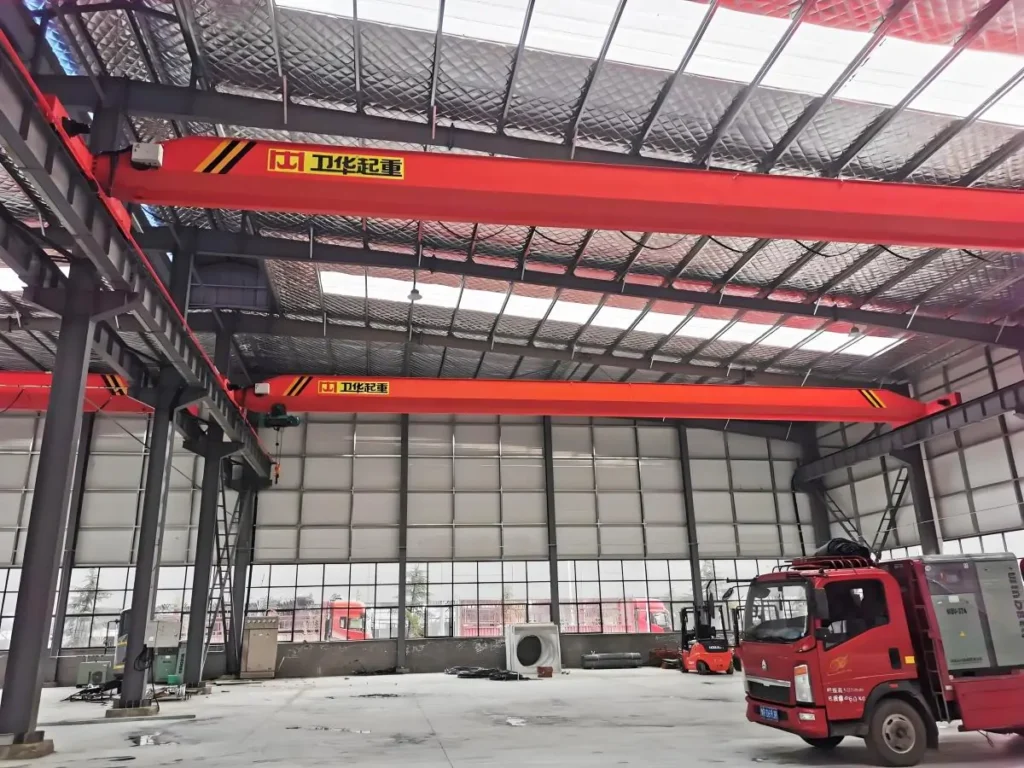
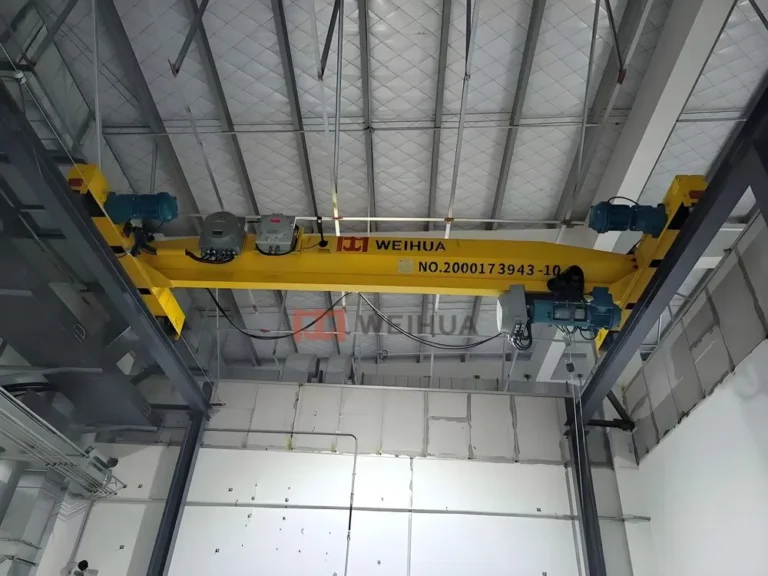
Una grúa puente monorraíl es un sistema de elevación ligero con una sola viga principal, diseñado para la manipulación de materiales en fábricas, talleres, almacenes y áreas de mantenimiento. Este artículo explica su estructura, principio de funcionamiento, características clave, aplicaciones y factores de selección para ayudarle a comprender cómo las grúas puente monorraíl mejoran la eficiencia de elevación y las operaciones en el lugar de trabajo.

¿Cómo funciona una grúa puente?

¿Cómo funciona una grúa puente? Principio de funcionamiento, componentes y guía de operación.

14 Jul 2026

An EOT crane is an industrial lifting system used to move heavy loads horizontally and vertically inside factories, workshops, and warehouses. This article explains how EOT crane works, including its main components, lifting mechanism, travel system, electrical control, and safety devices. Understanding the working principle of EOT cranes helps users select suitable lifting equipment and improve operational safety.

Grúa puente electromagnética de cucharón EOT

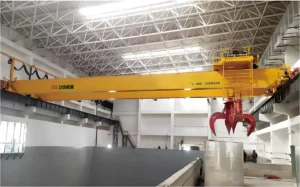
Grab Bucket EOT Crane: Types, Specs & Industry Guide

13 de julio de 2026

What separates a grab bucket EOT crane from a standard overhead crane? One word: the attachment. Where a conventional EOT crane uses a hook, a grab bucket EOT crane — also called an electric overhead travelling crane with grab bucket — uses an automated clamshell or orange peel grab that opens, descends into a bulk material pile, closes, and lifts. No slings, no manual scooping, no auxiliary crew. The entire cycle is controlled by a single operator. Procurement teams evaluating this type of equipment typically face three decisions: which grab type fits the material, what duty class the application actually demands, and how to verify that the supplier’s equipment meets compliance requirements before it ships. This guide addresses all three, using Weihua Crane’s product range as the reference basis. Quick Reference: Grab Bucket EOT Crane at a Glance Parameter Typical Range (Weihua) Lifting Capacity 1–32 tons Span 5–35 meters Lifting Height 6–15 meters Duty Class A3–A7 Grab Types Clamshell / Orange Peel Drive Options Electric / Hydraulic Control Modes Manual / Remote / Automatic Applicable Materials Coal, ore, grain, scrap,…

Polipasto de cable de acero a prueba de explosiones: Especificaciones, certificaciones y guía del comprador

13 de julio de 2026

Does your facility actually need an explosion proof wire rope hoist — or are you being oversold on one? That is the first question we ask every procurement team before we talk specs. The honest answer: if any part of your lifting operation sits inside a Zone 1, Zone 2, Zone 21, or Zone 22 classified area, there is no alternative. A standard electric hoist in a classified zone is not a budget decision — it is a compliance violation and a safety liability. But once you have confirmed the need, the real challenge shifts to selecting the right explosion proof grade, the right capacity, and the right certifications for your destination market. This guide walks through the specifications, zone classification logic, IIB vs. IIC selection rules, and the certification documents you should require from any supplier before issuing a purchase order. All specifications below reflect Weihua’s HB(BCD) series explosion proof wire rope hoist. Quick Reference: Weihua Explosion Proof Wire Rope Hoist at a Glance Parameter Specification Lifting Capacity 0.5 t / 1 t / 2 t / 3 t…

Arriba