








Tabla de contenidos
Introducción
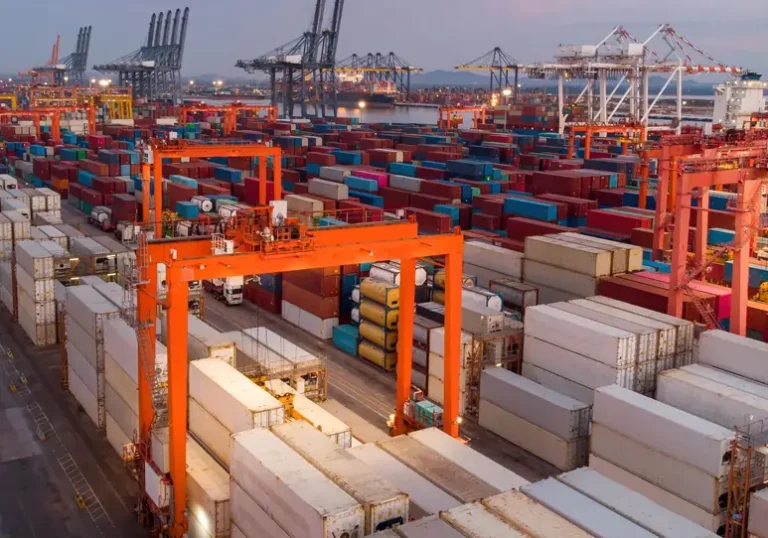
A Container Crane is a specialized lifting machine used in ports and container terminals to load, unload, and transfer shipping containers between vessels, trucks, and storage yards. As a key part of modern container handling systems, container cranes improve cargo handling efficiency and support large-scale global trade operations. This article explains what a container crane is, its main functions, and why it plays an important role in port logistics.
In this guide, I will introduce the main types of container cranes, including Ship-to-Shore (STS) cranes, RTG cranes, RMG cranes, and automated container cranes. I will also explain how it works, their components, common applications, capacity specifications, and the factors to consider when selecting the right crane for different terminal operations.
¿Qué es una grúa portacontenedores?
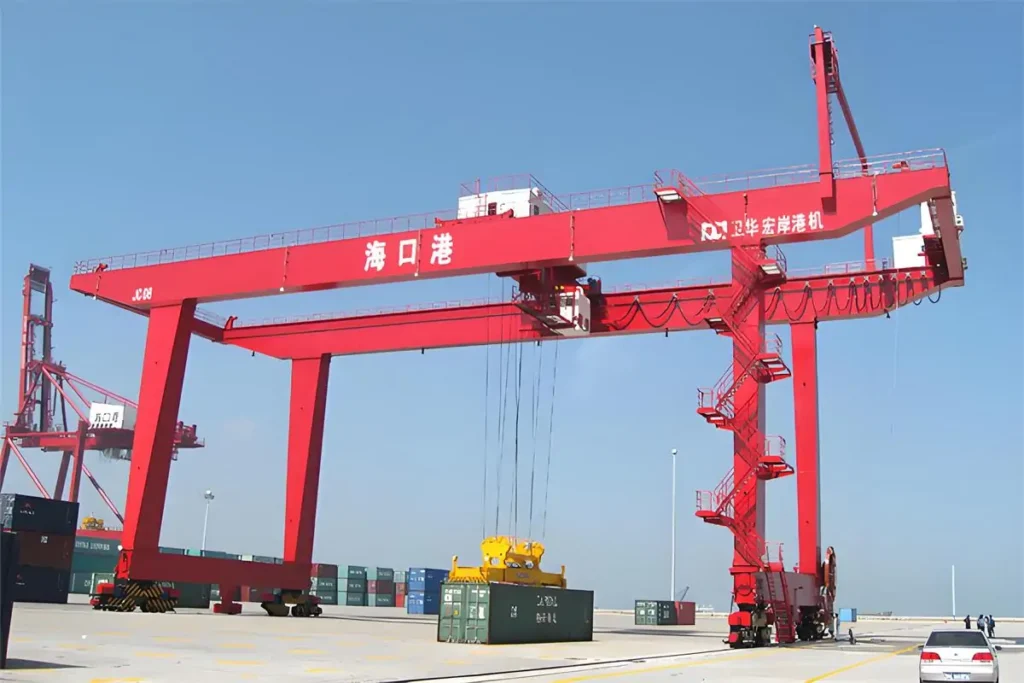
A Container Crane, also called a Ship-to-Shore (STS) crane or quay crane, is a dockside gantry crane used to move standardized shipping containers between vessels, trucks, railcars, and container yards. The crane uses a spreader to connect with container corner castings for lifting and placement. Most container cranes handle 20ft and 40ft containers, while some models support twin-lift and triple-lift operations.
Container crane productivity is measured by moves per hour (MPH). Modern Ship-to-Shore (STS) cranes usually achieve 30–40 moves per hour, with peak performance reaching 50 MPH. The main systems include the hoisting mechanism for vertical lifting, trolley drive for boom travel, and gantry travel system for rail movement along the quay. Steel box girders and counterweight structures support stable operation under heavy loads. Crane designs follow standards such as FEM 1.001 and ISO 8686.
They are used in major ports for handling containers from 24,000+ TEU container ships. Large STS cranes require outreach distances of more than 70 meters to cover wide vessels. Automated container cranes use laser positioning, anti-sway control, and remote operation systems, with some models reaching spreader positioning accuracy of ±10 mm.
How Does It Work?
It transfers containers between vessels and shore through lifting, trolley movement, and gantry travel. The operation includes spreader locking, container lifting, horizontal movement, and placement on trucks, AGVs, or yard areas.
- 1. Positioning and Spreader Engagement: The trolley moves along the boom and positions the spreader above the container. The spreader lowers onto the container and locks onto the four corner castings through twist locks. Telescopic spreaders handle 20ft, 40ft, and twin-lift containers without manual adjustment.
- 2. Hoisting and Trolley Travel: The hoisting system lifts the container from the vessel cell guides. The trolley moves along the boom rails and transfers the container toward the shore side. Anti-sway systems control container movement during travel. STS cranes can reach 30–40 moves per hour in twin-lift operation.
- 3. Lowering and Container Discharge: The crane lowers containers onto truck chassis, AGVs, or dock transfer areas. Single-cycle operation moves one container per cycle. Double-cycle operation combines loading and unloading movements to reduce empty travel.
- 4. Structural and Drive System Operation: The gantry travel system moves the crane along quay rails between vessel bays. The boom lifting mechanism raises the seaward boom to clear ship structures. Hoist, trolley, gantry, and boom movements are controlled by AC variable-frequency drives and PLC control systems with safety interlocks.
- 5. Auxiliary System Integration: Modern container cranes use ship profile scanning, load positioning, and truck guidance systems. Semi-automated STS cranes use laser positioning and remote control systems, with spreader positioning accuracy reaching ±10 mm.
Container cranes complete container transfer through the coordinated operation of the spreader, hoisting system, trolley, gantry, and control system. Each movement is controlled by mechanical and electrical systems to maintain lifting accuracy, operating speed, and safe container handling in port terminals.
Container crane operations require coordination across multiple stages. To learn how they work and their operating principles, see: How Do Container Cranes Work? Container Handling Process Explained
Tipos
Container cranes are designed for different container handling conditions, including ship loading, yard stacking, and automated terminal operations. The crane type depends on the working location, container throughput, storage layout, and level of automation required.
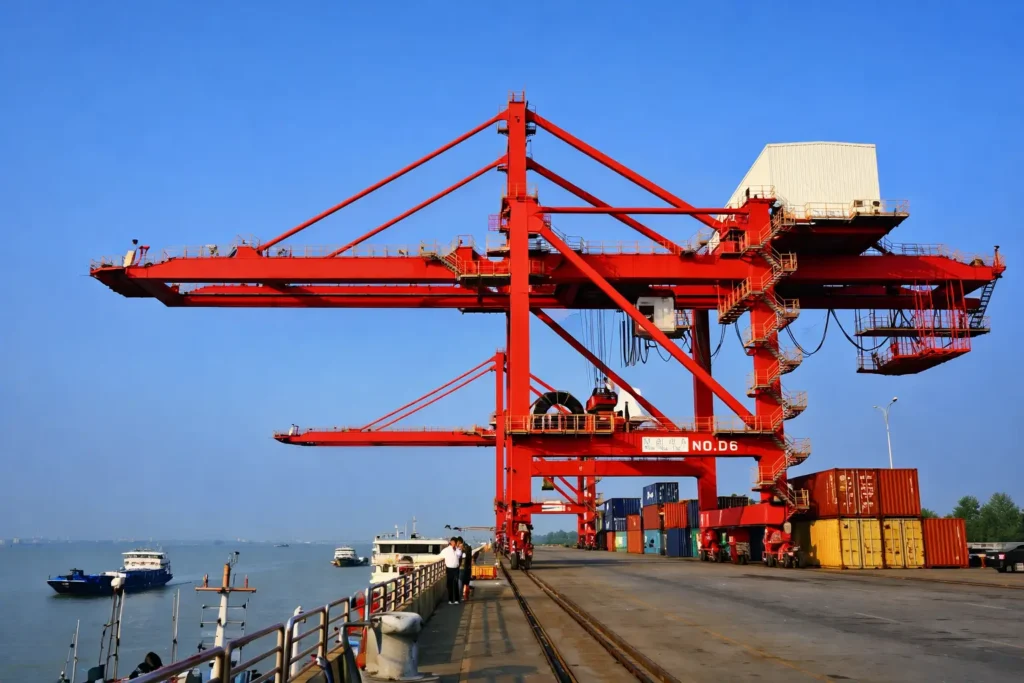
Ship-to-Shore (STS) Container Crane
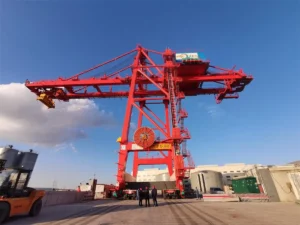
A Ship-to-Shore (STS) Container Crane is installed along the quay for loading and unloading containers between vessels and shore transport equipment. It uses a long outreach boom and spreader system to handle containers across the ship width. STS cranes are mainly used in large container ports and terminals handling high-volume vessel operations.
- Lifting Capacity: 30–100+ tons
- Outreach: 40–70+ m
- Lifting Height: 30–50 m
- Clase trabajadora: A6–A8
Rubber Tyred Gantry Crane (RTG Crane)
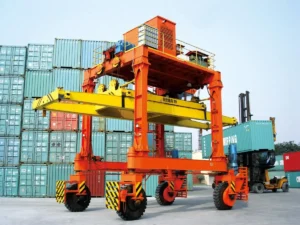
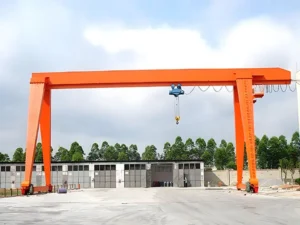
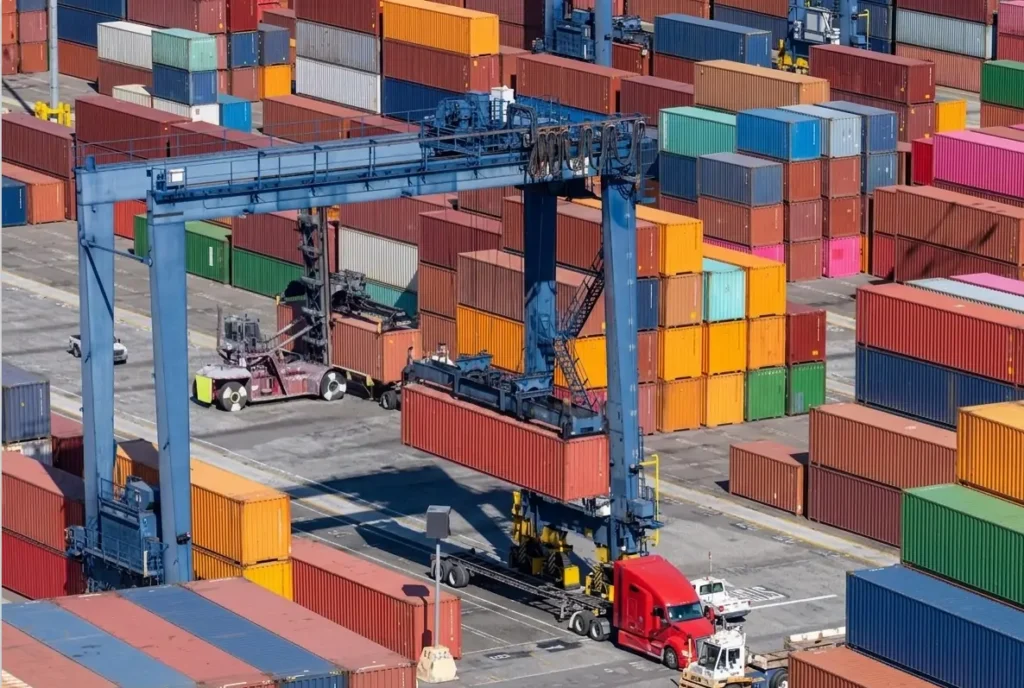
A Rubber Tyred Gantry (RTG) Crane is a mobile container yard crane running on rubber tires. It is used for stacking and transferring containers in storage yards. RTG cranes provide flexible movement between container blocks and are widely used in ports, rail terminals, and logistics yards.
- Lifting Capacity: 30–50 tons
- Stacking Height: 4–8 containers high
- Span: 20–30 m
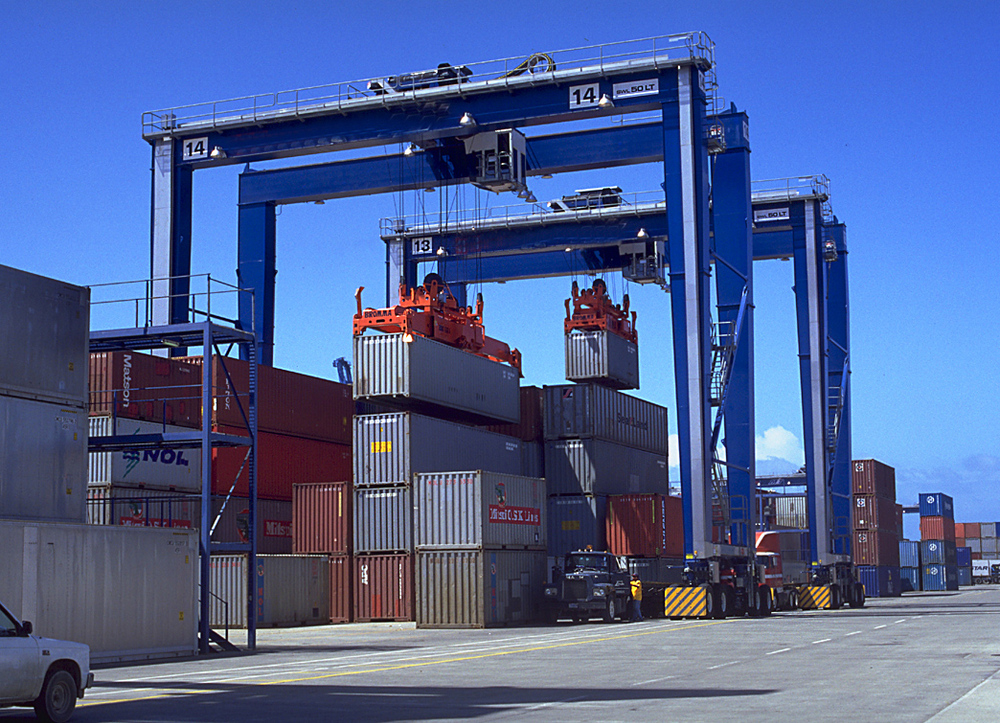

Rail Mounted Gantry Crane (RMG Crane)
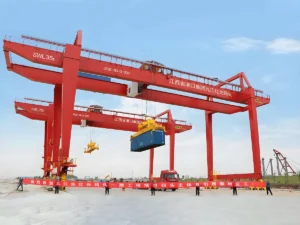
A Rail Mounted Gantry (RMG) Crane is a rail-based container handling crane designed for fixed-area operations. It runs on parallel rails and is commonly used in automated container terminals, railway yards, and intermodal transport centers.
Main Specifications:
- Lifting Capacity: 30–80 tons
- Span: 30–50 m
- Stacking Height: 5–10 containers high
- Positioning Accuracy: ±10 mm
Automated Container Crane
An Automated Container Crane uses automatic control systems for container lifting, positioning, and movement. It integrates technologies such as remote operation, laser positioning, and anti-sway control for automated or semi-automated terminal operations.
Main Specifications:
- Lifting Capacity: 30–65 tons
- Control Mode: Remote / Automatic Control
- Positioning Accuracy: ±10 mm
- Application: Automated Container Terminal
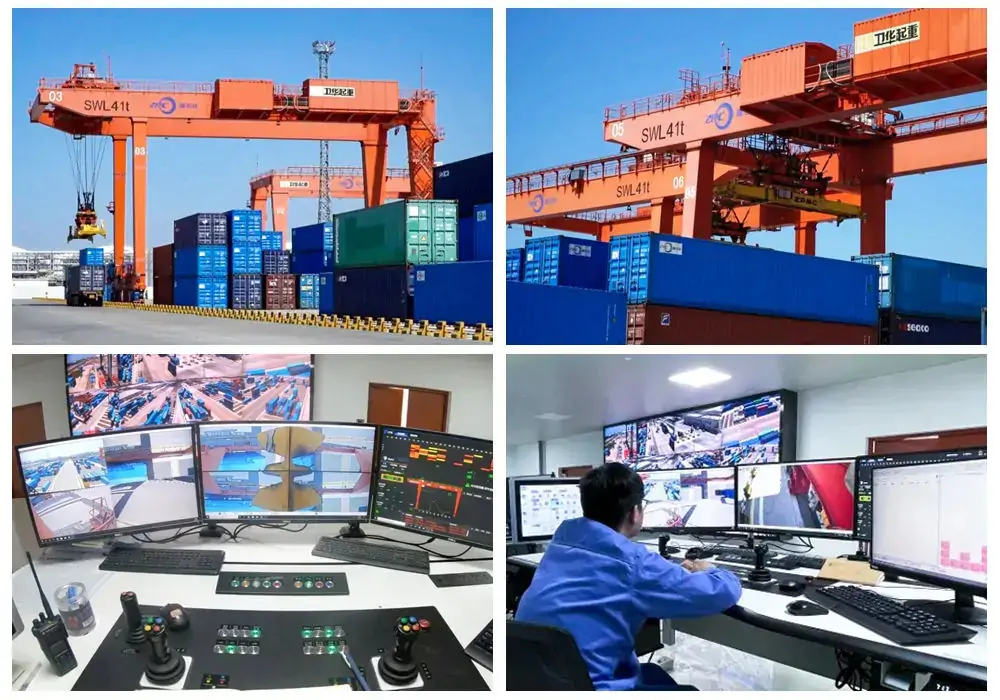
Container crane types are selected based on their operating environment and handling requirements. STS cranes handle ship-to-shore transfer, RTG and RMG cranes manage yard operations, and automated cranes support modern terminal automation.
Se utilizan diferentes tipos de grúas portacontenedores para diferentes escenarios operativos. Para aprender a seleccionar la grúa adecuada para operaciones con contenedores, consulte el artículo:“¿Cómo elegir una grúa pórtico para la manipulación de contenedores?”
Partes
A container crane consists of multiple mechanical and electrical systems that work together to complete container lifting and transfer operations. The main components include the steel structure, lifting system, spreader, drive mechanisms, and control devices.
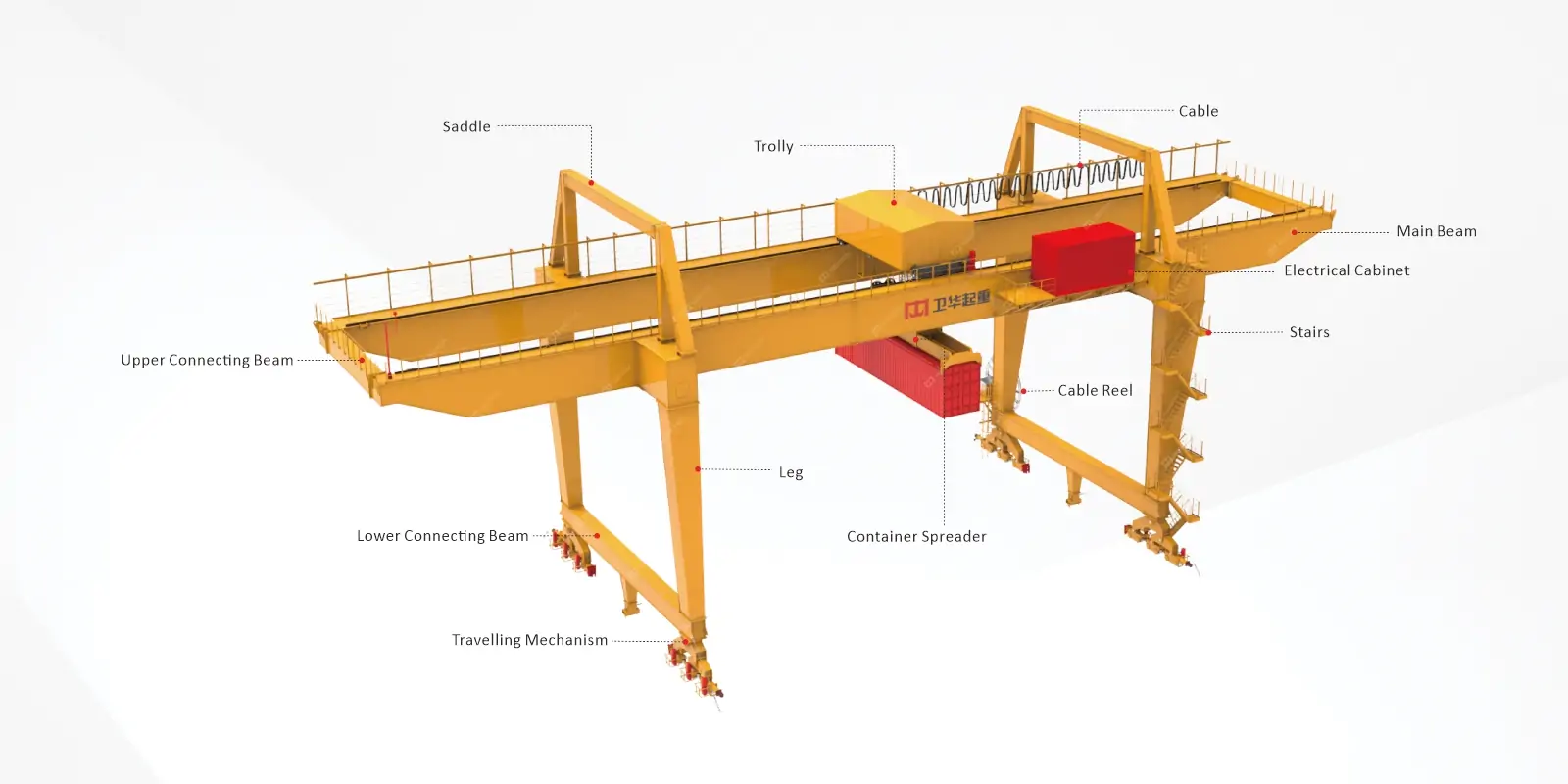
- Main Frame (Structural System): The main frame is built with welded steel girders, legs, and portal beams to support crane loads and maintain structural stability.
- Hoisting System: The hoisting system uses motors, reducers, drums, and wire ropes to lift and lower containers.
- Spreader: The spreader connects with container corner castings through twist locks and handles 20ft, 40ft, and 45ft containers.
- Trolley System: The trolley travels along the boom rails to move containers between the vessel and the quay area.
- Gantry Travel System: The gantry travel system moves the crane along quay rails through drive wheels and rail tracks.
- Counterweight System: The counterweight system balances the load moment caused by the boom extension and improves crane stability.
- Electrical Control System: The electrical control system uses a PLC, variable frequency drives, and safety monitoring devices to control crane movements.
- Anti-Sway System: The anti-sway system controls container swing during lifting and trolley travel to improve positioning accuracy.
- Automation System: The automation system includes remote control, laser positioning, and operation monitoring functions for automated container handling.
Each component of a container crane has a specific role in lifting, moving, and positioning containers. The cooperation of these systems determines the crane’s operating speed, load capacity, and handling accuracy.
There are different types of spreaders, and the number and size of containers each type can handle vary depending on the specifications. For details on the different types, see: Esparcidor de pórtico
Where Are They Used?
Container cranes are mainly used in ports, container terminals, and logistics yards for loading, unloading, and transferring shipping containers. Different crane types are selected according to the operation area, container flow, and handling requirements.
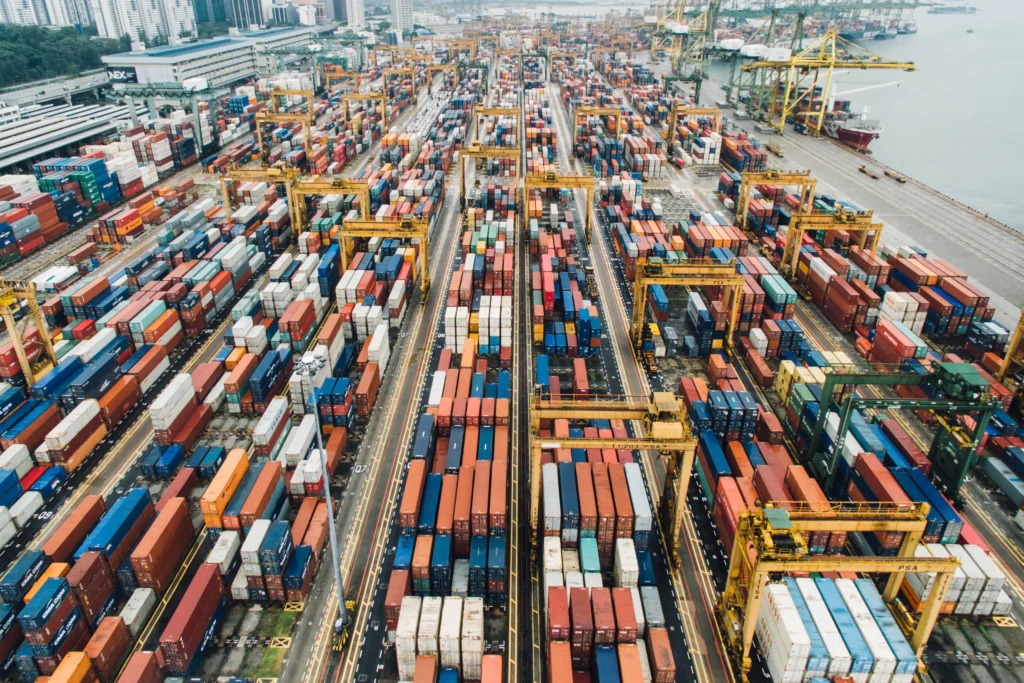
Seaports and Container Terminals
Container cranes are mainly used at seaports for loading and unloading containers between vessels and shore transport equipment. STS cranes handle ship-to-shore container transfer and are installed along quay areas for large-scale cargo operations.
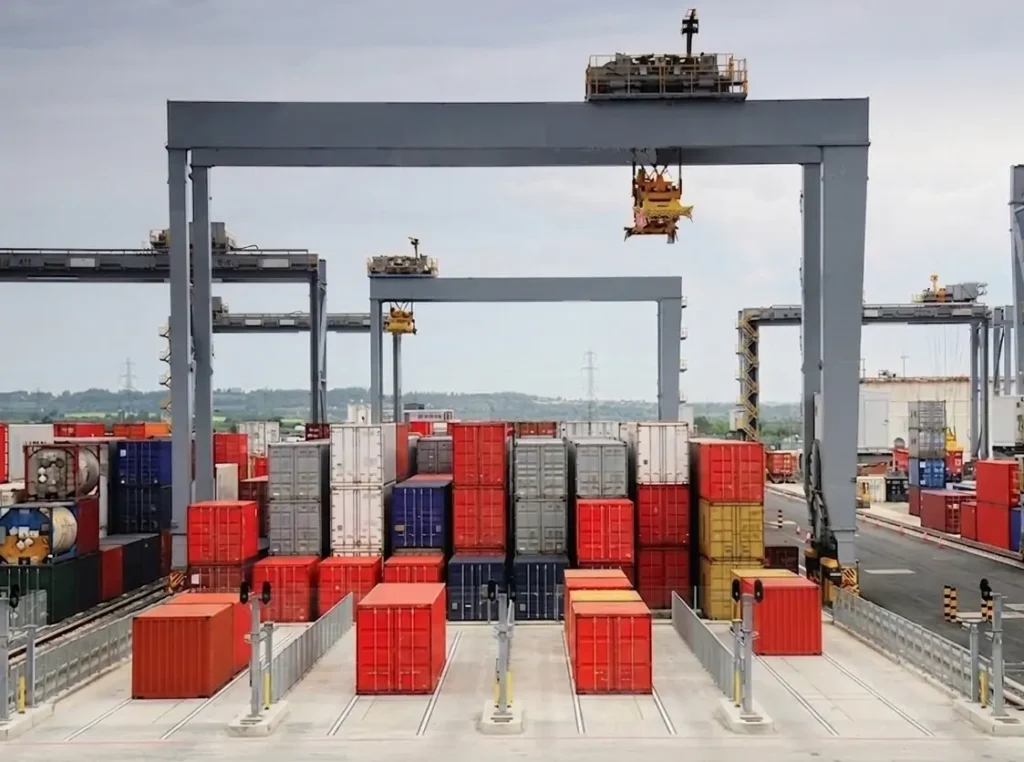
Container Yards
RTG cranes and RMG cranes are used in container yards for stacking, moving, and organizing containers. They operate between container blocks to support storage management and yard handling.
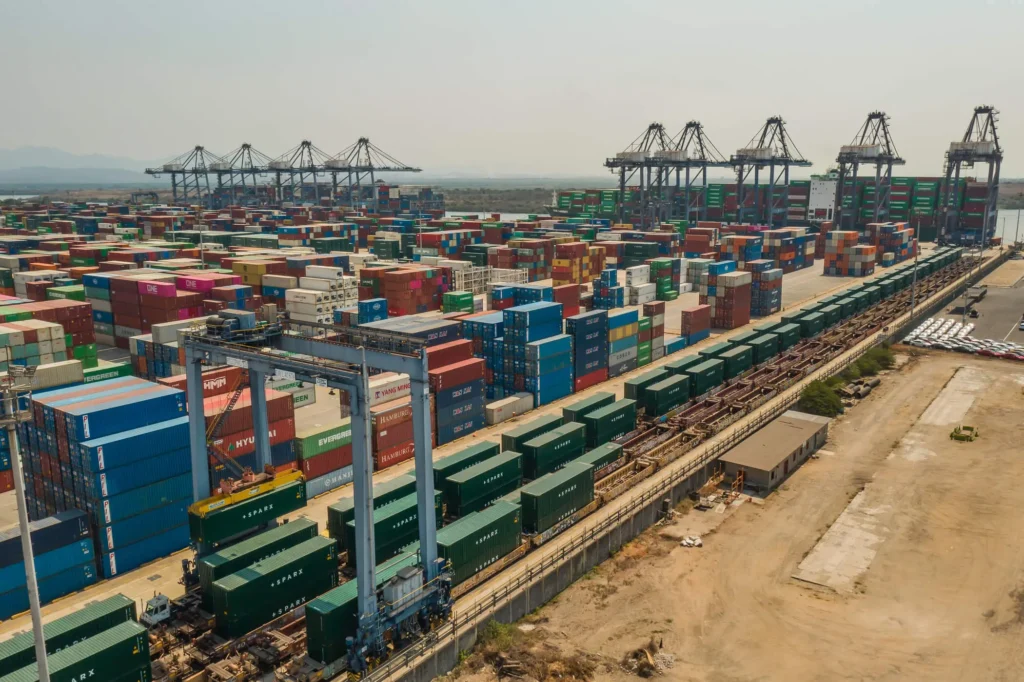
Terminales de contenedores ferroviarios
Container cranes are used in railway terminals to transfer containers between trains, trucks, and storage areas. RMG cranes are commonly used for fixed rail operations with repeated container movements.
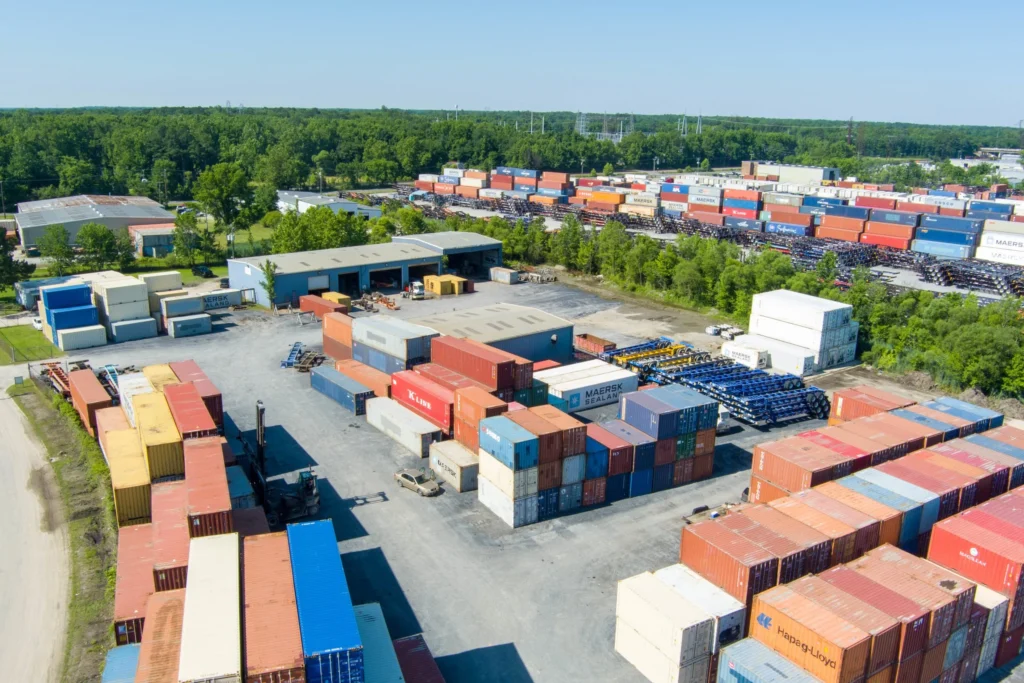
Inland Logistics Hubs
Container cranes are installed in inland container depots and logistics centers for container transfer between road, rail, and storage facilities. They support regional cargo transportation and container distribution.
Container cranes are used across ports, yards, railway terminals, and logistics centers. Their application depends on container volume, operating environment, and the required handling method.
Container Crane Capacity and Specifications
Container crane capacity and specifications vary according to port layout, vessel size, container type, and operating requirements. The main parameters include lifting capacity, outreach, lifting height, span, and working class.
| Parámetro | Rango |
|---|---|
| Capacidad de elevación | 30–100+ tons |
| Superar a | 40–70+ m |
| Altura de elevación | 30–50 m |
| Español | 15–35 m |
| Clase trabajadora | A6–A8 |
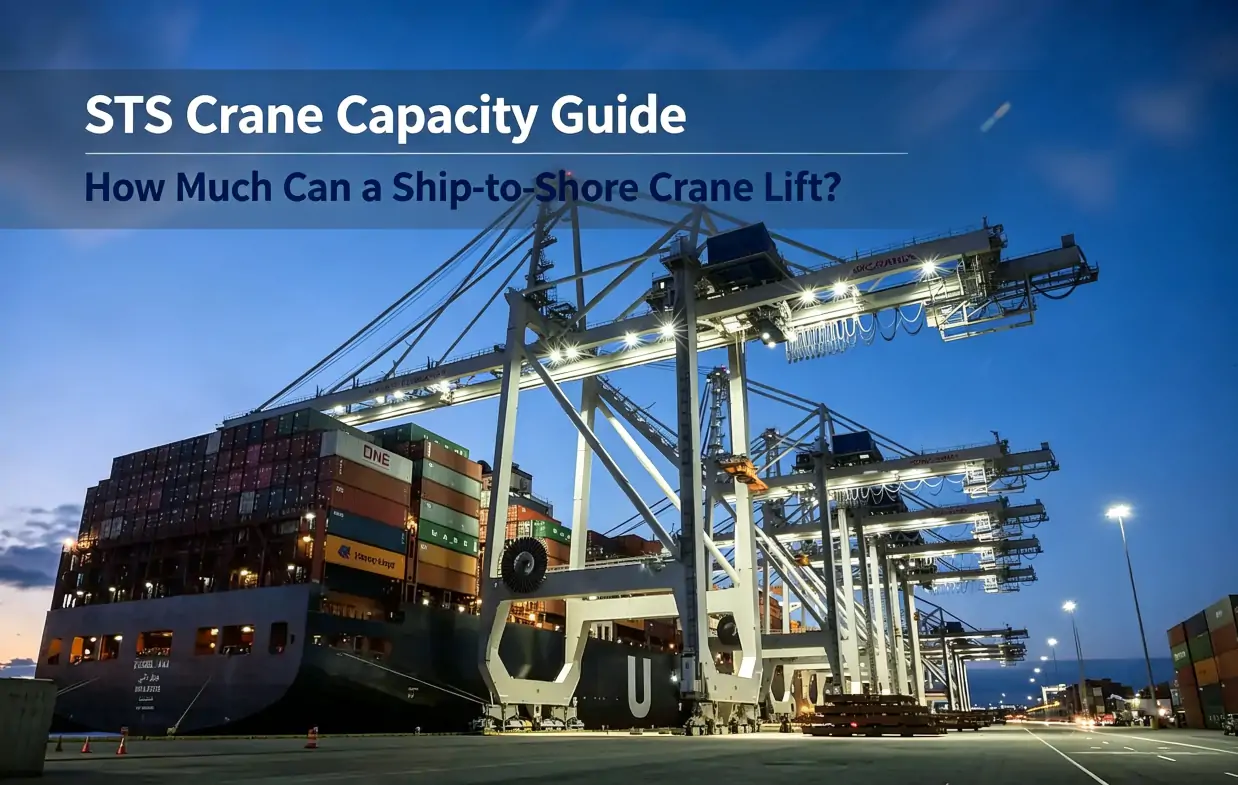
- Lifting Capacity: The lifting capacity determines the maximum container weight a crane can handle. Standard container cranes usually have a capacity of 30–50 tons, while large STS cranes for ultra-large container vessels can exceed 100 tons with twin-lift or special lifting configurations.
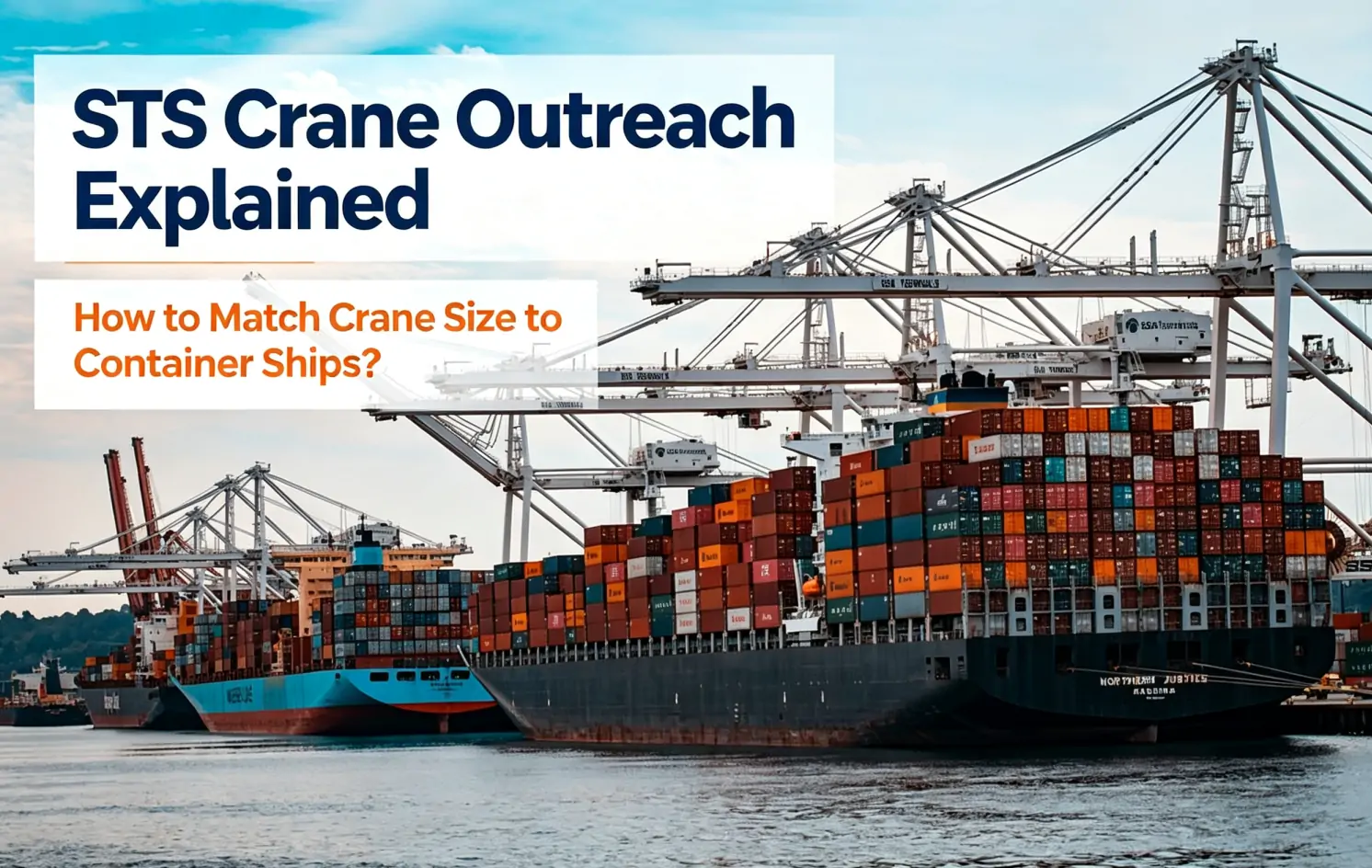
- Outreach: Outreach refers to the horizontal distance the boom extends over the vessel. Large container cranes require 40–70+ meters of outreach to reach containers across wide ships, including vessels with more than 24,000 TEU capacity.
- Lifting Height: Lifting height defines the vertical working range of the crane. Modern STS cranes typically provide 30–50 meters of lifting height to handle containers stacked on large container ships.
- Working Class: Container cranes usually operate under heavy-duty conditions and are classified as A6–A8 according to working frequency and load cycles. The working class affects crane structure design, component selection, and service life.
Container Crane vs Other Cranes
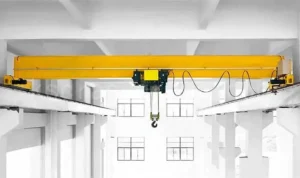
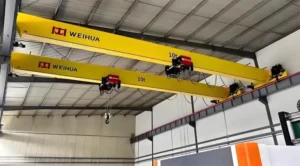
Container cranes are designed specifically for container handling between ships and shore areas. Compared with mobile cranes, overhead cranes, and yard cranes, they use dedicated spreaders and large-scale structures for high-volume container operations.
| Comparación | Container Crane (STS) | Grúa móvil | Overhead/Bridge Crane | RTG/RMG Yard Crane |
|---|---|---|---|---|
| Main Application | Ship-to-shore container loading and unloading | General lifting at construction sites and outdoor areas | Material handling in factories and warehouses | Container stacking and transfer in yards |
| Travel Method | Rail-mounted movement along quay | Tires or crawler tracks | Fixed overhead rails | Rubber tires (RTG) or rails (RMG) |
| Lifting Device | Telescopic container spreader with twist locks | Hook, grab, or other lifting tools | Hook or electromagnetic device | Container spreader |
| Typical Capacity | 40–70 tons, up to 80 tons with twin-lift | 20–1200 tons | 5–50 tons | 30–50 tons |
| Handling Object | 20ft and 40ft standard containers | Equipment, components, bulk cargo | Factory materials and production parts | Containers in storage yards |
| Nivel de automatización | PLC control, anti-sway system, remote operation | Low to medium, mainly manual operation | Medium, can include semi-automatic control | High, widely used in automated yards |
| Structural Features | Large portal frame with boom outreach over 70 m | Telescopic boom with counterweight and outriggers | Double girder bridge structure | Gantry structure with 4–6 container stacking height |
Container cranes, STS cranes, RTG/RMG cranes, and other lifting equipment serve different operating areas. STS cranes handle ship-to-shore transfer, RTG/RMG cranes manage yard operations, while mobile and overhead cranes are used for general lifting tasks. The selection depends on the container handling process, working environment, and load requirements.
The specifications of container cranes—such as lifting capacity, span, and lifting height—directly affect the pace of operations. For detailed data, see: Container Crane Specifications: Capacity, Span, Lifting Height & Working Class
How to Choose the Right Container Crane?
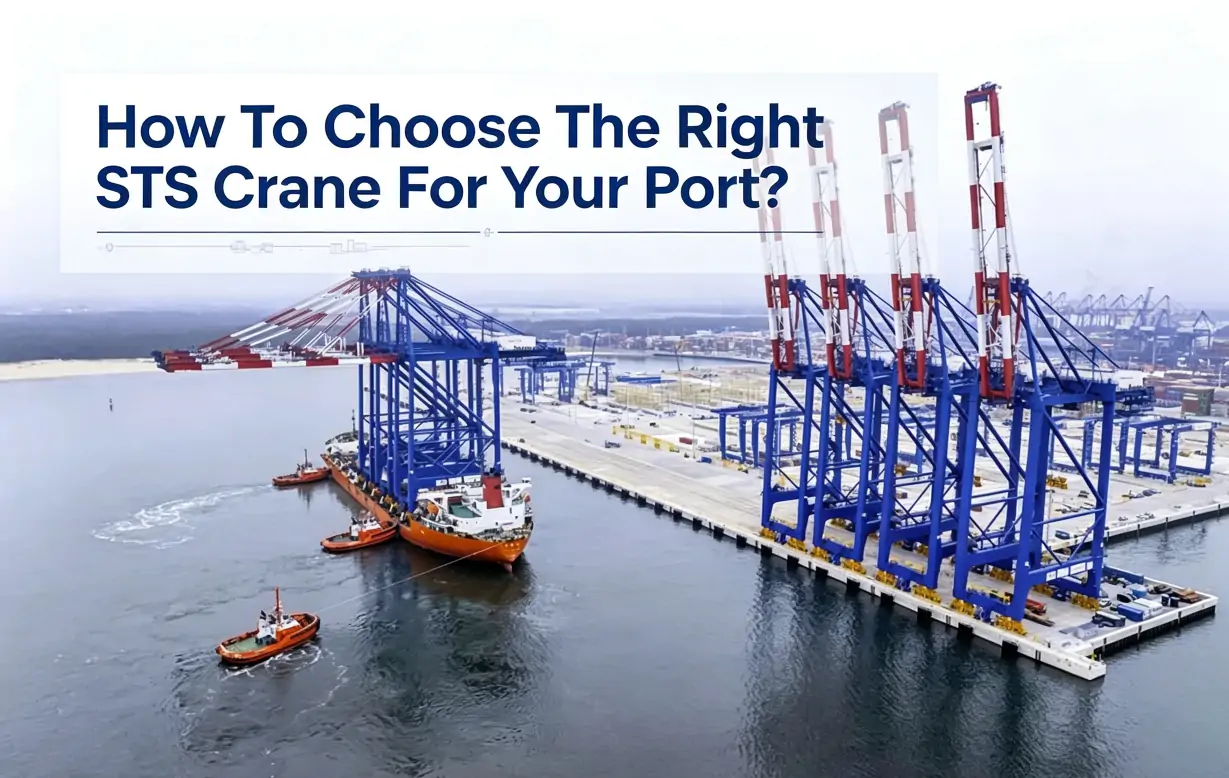
Container crane selection depends on terminal conditions, container volume, vessel size, and operating requirements.
- 1. Lifting Capacity: Choose crane capacity based on container weight and handling needs. Large ports may require 60–100+ ton STS cranes for heavy containers and twin-lift operations.
- 2. Outreach and Lifting Height: Match crane dimensions with vessel size. Large container ships require 40–70+ m outreach and sufficient lifting height for multi-layer container handling.
- 3. Operation Area: Select the crane type according to application. STS cranes handle ship loading and unloading, while RTG/RMG cranes are used for yard stacking.
- 4. Working Frequency: High-volume terminals require cranes with suitable working class, lifting speed, and durable drive systems for continuous operation.
- 5. Automation Level: Choose control systems based on operation requirements, including manual control, remote operation, or automated handling.
- 6. Working Conditions: Consider factors such as wind, corrosion, temperature, and outdoor exposure when selecting crane structure and protection systems.
- 7. Maintenance Support: Check component reliability, spare parts supply, and service capability to reduce equipment downtime.
The right container crane should match the terminal layout, cargo volume, vessel size, and operating conditions. Proper selection improves handling efficiency and equipment service life.
Se utilizan diferentes tipos de grúas portacontenedores para diferentes escenarios operativos. Para aprender a seleccionar la grúa adecuada para operaciones con contenedores, consulte el artículo:“¿Cómo elegir una grúa pórtico para la manipulación de contenedores?”
Container Crane Maintenance Tips
Inspect wire ropes, drums, and lifting components regularly.
Check spreader locks and connection points before operation.
Maintain trolley and gantry travel systems.
Inspect rails, wheels, and drive motors for wear.
Check electrical systems, PLC controls, and safety devices.
Maintain anti-sway systems and positioning sensors.
Inspect steel structures for cracks and corrosion.
Lubricate moving parts according to maintenance schedules.
Test braking systems and limit switches regularly.
Replace worn components to prevent unexpected downtime.
Conclusión
Container cranes are equipment for port and terminal operations, covering container loading, unloading, transfer, and yard handling processes. The selection of crane type, lifting capacity, outreach, automation level, and maintenance plan directly affects handling efficiency and long-term operation.
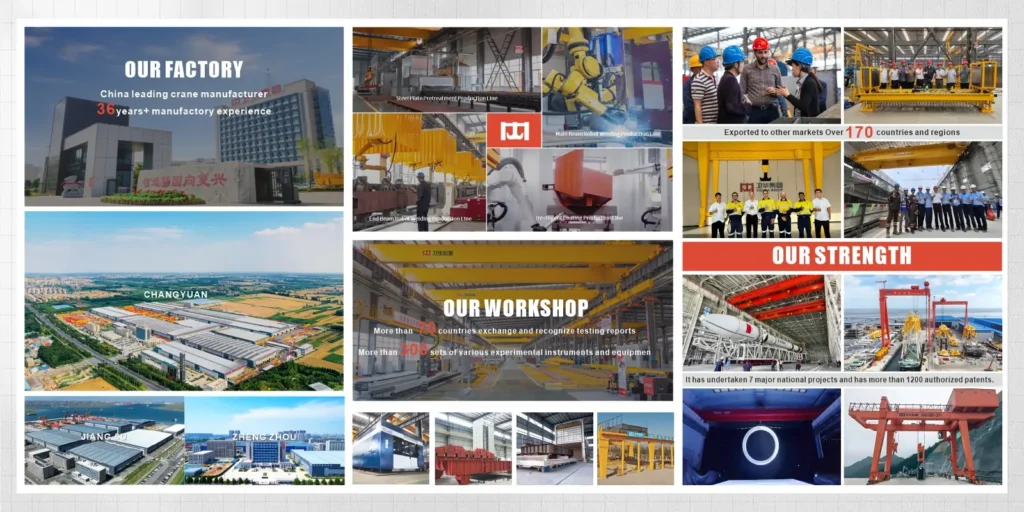
WEIHUA provides container crane solutions for different port applications, including Ship-to-Shore (STS) cranes, RTG cranes, RMG cranes, and automated container handling systems. With experience in crane design and manufacturing, WEIHUA can provide customized equipment according to terminal requirements, vessel size, and operating conditions. Contáctanos to discuss your container crane project and find a suitable lifting solution.
Preguntas frecuentes
What is a container crane used for?
A container crane is used for loading, unloading, and transferring shipping containers between vessels, trucks, rail systems, and storage yards.
What are the main types of container cranes?
The main types include Ship-to-Shore (STS) cranes, RTG cranes, RMG cranes, and automated container cranes.
How does a container crane work?
A container crane uses a spreader to lock onto container corner castings, then lifts, moves, and places containers through the hoisting system, trolley, and gantry travel system.
How much weight can a container crane lift?
Most container cranes handle 30–100+ tons, depending on crane type, vessel size, and lifting requirements.
What is the difference between an STS crane and an RTG crane?
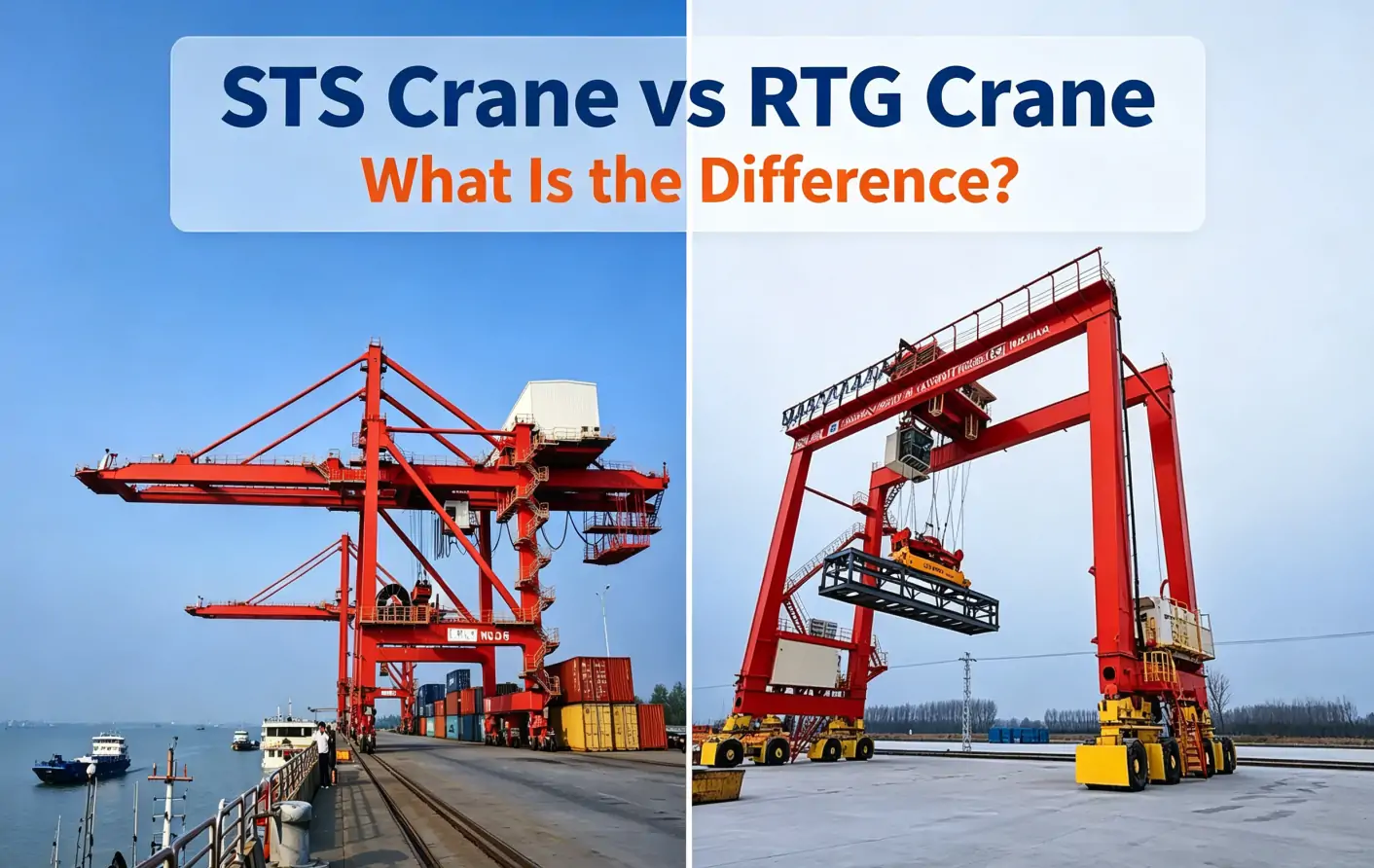
STS cranes are used for moving containers between ships and shore, while RTG cranes are used for stacking and transferring containers in storage yards.
How tall is a container crane?
Container crane height varies by design. Large STS cranes usually have a lifting height of 30–50 meters to handle containers on large vessels.
How long does a container crane last?
A container crane can typically operate for 20–30 years with regular maintenance and proper operating conditions.
What factors should be considered when choosing a container crane?
Key factors include lifting capacity, outreach, vessel size, terminal layout, automation requirements, working frequency, and maintenance support.