- ProductoEquipoPrecisión de Potencia, Personalización Solución de GrúasCorreo electrónicoWhatsApp / Wechat:+8613781917315Dirección:N.º 18, carretera Shanhai, ciudad de Changyuan, provincia de Henan, China


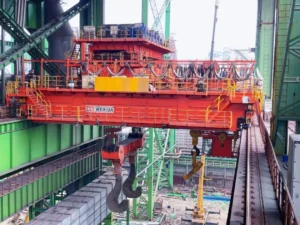
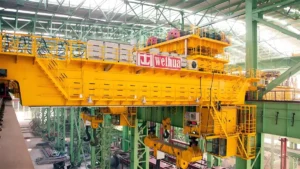
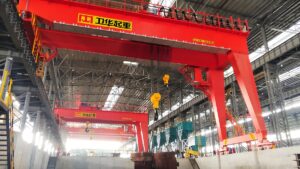
YZ Steel Mill Ladle Crane for Foundry Specifically engineered for molten steel handling in foundry workshops and steelmaking processes, this crane excels in high-risk, heavy-duty applications such as ladle tilting, transfer, and precise positioning.
The overhead ladle crane features systematic reinforcement for the high-temperature, high-dust, and heavy-load conditions typical of foundry and steelmaking environments. The hoisting mechanism, wire ropes, hook assemblies, and motors utilize metallurgical-grade components, complemented by thermal insulation, protective coatings, and high-temperature-resistant materials to minimize thermal radiation impact on critical parts.
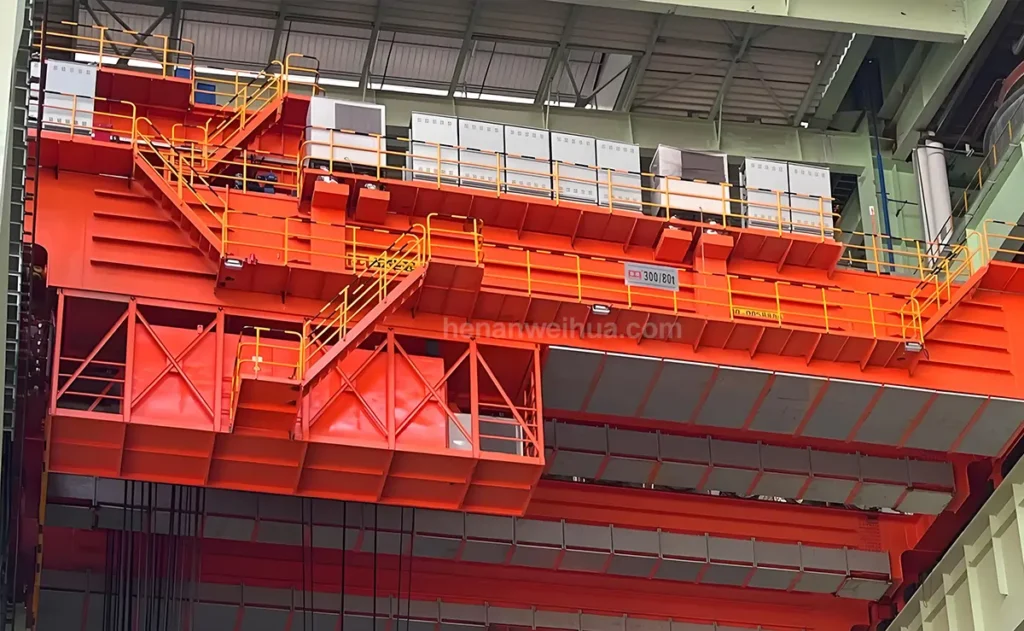
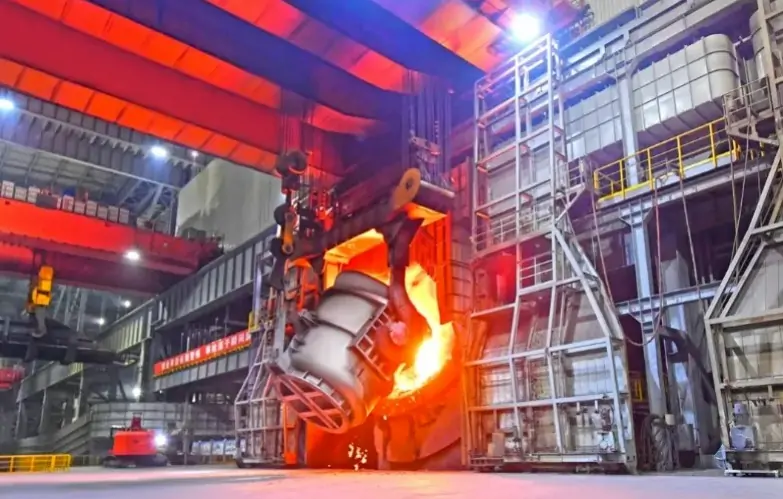
For safety and control, this ladle crane employs a metallurgical-grade dual-braking system, electrical interlock protection, and multiple redundant designs. The control system supports variable frequency speed regulation and multi-mode operation, enabling smooth lifting, precise positioning, and synchronized operation. This reduces molten steel swaying risks while enhancing operational safety and production efficiency. Variable frequency speed control, remote control, or cab operation modes can be configured according to foundry process requirements to achieve stable lifting and accurate positioning. Additionally, the equipment incorporates intelligent upgrade interfaces supporting operational monitoring and status feedback, delivering a safe, stable, and efficient molten steel handling solution for foundries.
To learn more about metallurgical overhead cranes, see the article: What Is a Metallurgical Overhead Crane? Applications in Steel and Aluminum Plants
Metallurgical cranes differ significantly from standard overhead cranes. For details, see: Metallurgical Crane vs. Standard Overhead Crane: Key Differences Explained
At different stages of steel production, varying demands exist for the load capacity, safety ratings, and operational intensity of lifting equipment. YZ Steel’s ladle cranes can be custom-designed to meet the requirements of each steelmaking phase, covering applications from medium-sized casting operations to ultra-heavy primary smelting scenarios.
Based on ladle dimensions, process layouts, and work cycles, we provide tailored solutions including: medium-duty casting ladle cranes (50–100 tons), heavy-duty steel mill ladle cranes (120–250 tons), and ultra-heavy-duty steel mill ladle cranes for primary smelting (300–500 tons), ensuring optimal performance, safety, and efficiency at every stage.
All YZ ladle cranes are fully customizable in load capacity, span, lifting height, duty cycle, control mode, and safety configurations to precisely match specific steelmaking processes. Contact our professional engineering team for technical consultation and customized ladle crane solutions.
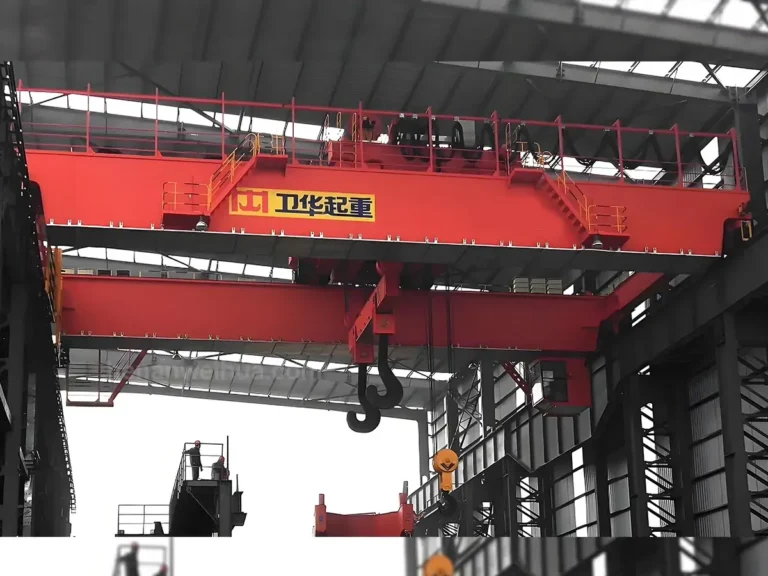
50–100 ton foundry ladle crane is designed for medium-sized foundries and steelmaking workshops. This ladle crane features a compact double-girder structure with enhanced heat resistance, making it ideal for routine molten metal lifting and transfer operations. It offers stable performance, precise control, and high safety levels, ensuring reliable operation in continuous-duty metallurgical environments. Widely used in foundries, steel rolling mills, induction furnace workshops, and medium-scale steel plants.
Lifting Capacity: 50–100 t
Span: 18–28 m
Altura de elevación: 10–25 m
Duty Class: A7 (Metallurgical duty)
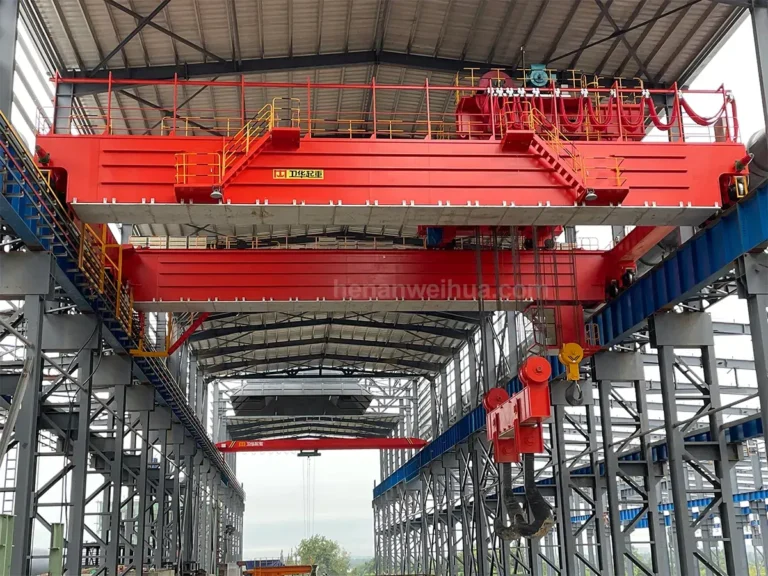
This 120–250 Ton Grúa de alta resistencia para acerías is designed for safe handling of large molten steel ladles under extreme temperatures. With reinforced box girders, dual braking systems, and high-reliability hoisting mechanisms, it ensures smooth, precise, and secure ladle transportation. It is widely applied in converter workshops, electric arc furnace (EAF) plants, and large steel mills requiring high-duty-cycle operations.
Lifting Capacity: 120–250 t
Span: 22–35 m
Lifting Height: 15–30 m
Clase de Servicio: A7 / A8
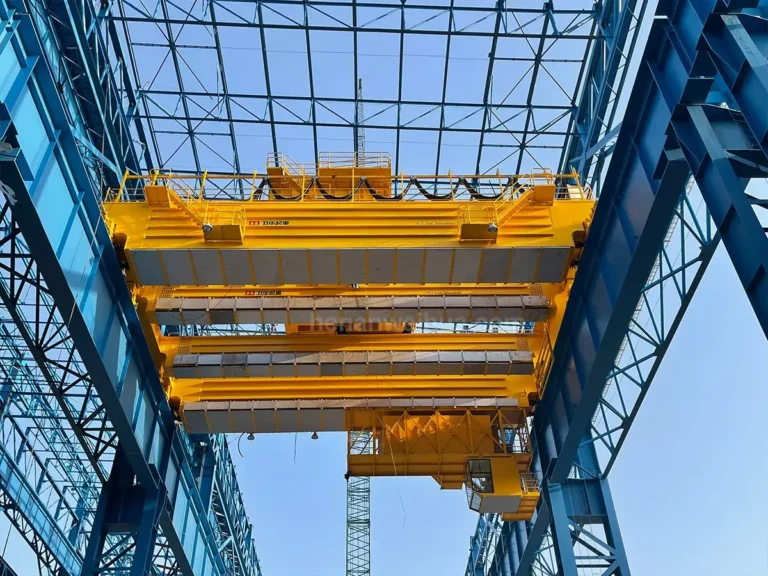
Specifically designed for primary steelmaking and continuous casting processes, this Steel Plant Ladle Handling Crane delivers maximum safety, structural strength, and operational reliability. Featuring redundant safety systems, heat-resistant electrical components, and precise variable-speed control, it is built to withstand long-term high-temperature and high-load operation. Commonly used in large integrated steel plants, converter steelmaking shops, and continuous casting lines.
Lifting Capacity: 300–500 t
Span: 25–38 m
Lifting Height: 20–35 m
Duty Class: A8 (Heavy metallurgical duty)
Steel Mill Ladle Cranes typically adopt a metallurgical-grade bridge crane structure, comprising a load-bearing framework, hoisting and traveling mechanisms, an electrical control system, and multiple safety devices. They are specifically designed for the safe handling of molten steel under high-temperature, heavy-load, and continuous operation conditions. All systems work in concert to ensure operational stability, reliability, and precision.
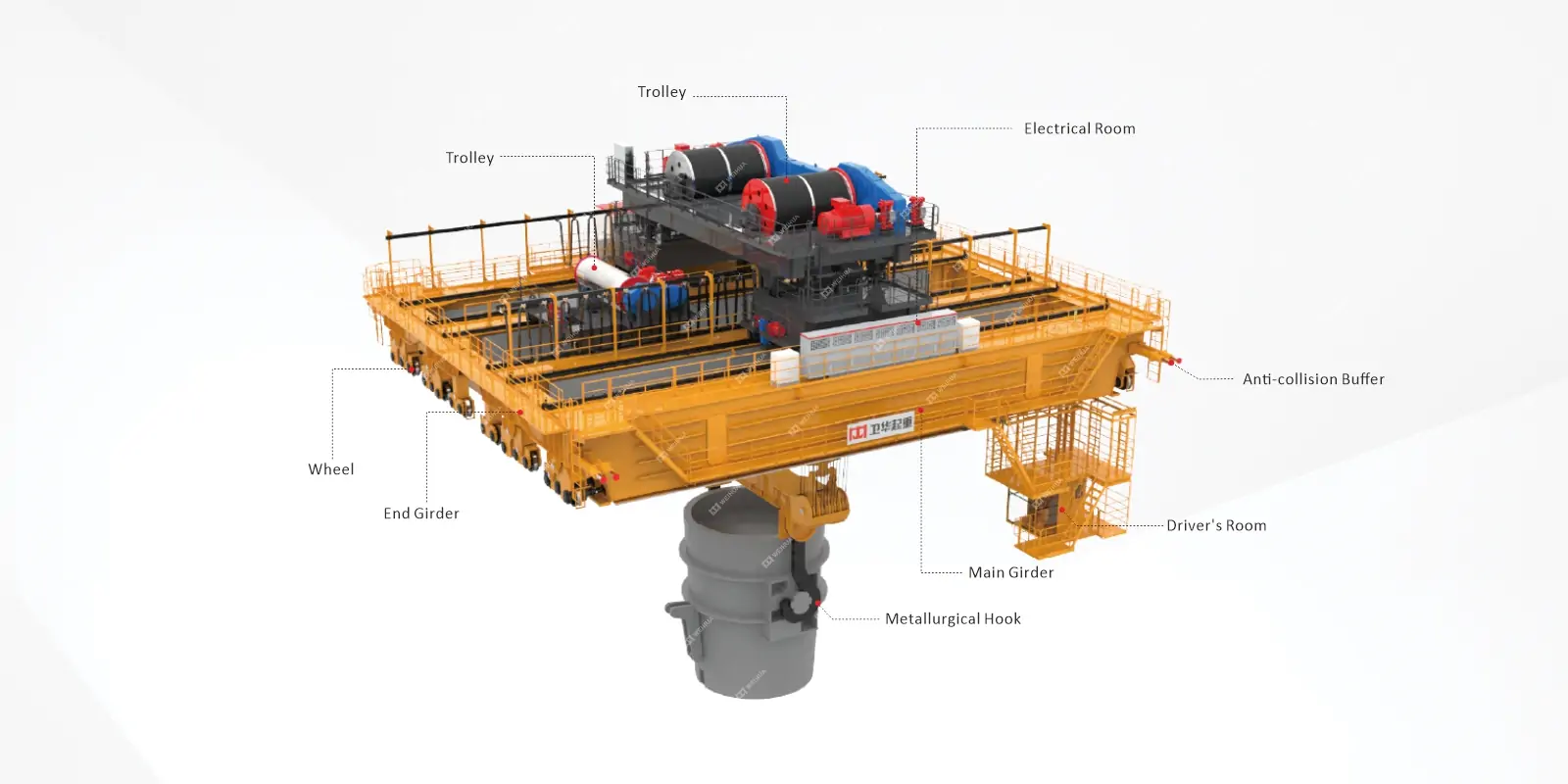
Main Girder: High-strength welded box-type structure with high rigidity and fatigue resistance, capable of enduring prolonged exposure to heavy ladle loads and impact stresses.
End Carriages: Connect and support the main girder, enabling longitudinal travel of the entire crane. Ensure smooth operation under long-span conditions.
Hoisting Mechanism: A metallurgical-specific lifting system equipped with high-safety-factor motors, reducers, and wire ropes to achieve reliable lifting.
Trolley: Supports the hoisting mechanism and traverses the main girder horizontally, enabling precise positioning of the ladle.
Ladle Hook / Lifting Device: Designed for high-temperature resistance and impact resistance, specifically for ladle handling operations.
Travel Mechanism: Drives the main and trolley cranes for smooth operation, designed for frequent starts/stops and continuous duty.
Electrical & Control System: Supports variable frequency speed control and multiple control modes, enhancing operational stability and safety.
Safety Devices: Integrated dual braking, overload, limit switch, and interlock protection provide multi-level safeguards for molten steel handling.
Para obtener más información sobre las funciones de los dispositivos de seguridad, lea el artículo: “Dispositivos de seguridad para grúas puente: tipos, funciones y principios de funcionamiento”
The YZ-type casting ladle crane primarily operates through the coordinated action of two independent hoisting mechanisms: the main hoist drives the gantry hook beam, responsible for safely lifting ladles filled with molten metal; the auxiliary hoist is used for pouring molten steel, assisting in ladle rotation, or handling other auxiliary equipment. Its working principle can be summarized as follows:
The YZ Ladle Handling Crane employs electric drives for its main and auxiliary travel mechanisms and hoisting systems. Utilizing the gantry hook of the main hoist, it lifts ladles containing molten steel. Coordinated with the auxiliary hoist, it facilitates ladle transfer or casting operations. The entire unit incorporates high-temperature resistant design, dual braking systems, and redundant wire rope configurations to ensure safe and stable liquid metal transfer within extreme environments characterized by high temperatures and heavy dust.
For details on how to select the most suitable crane type for steel mills, see:
The lifting device is the component that directly contacts or approaches the molten metal ladle, requiring exceptional structural strength and thermal insulation capabilities. As it operates continuously within the thermal radiation range of liquid metal exceeding 1500°C while enduring static and dynamic loads of hundreds of tons, the YZ crane primarily employs the following lifting devices tailored to diverse process requirements:
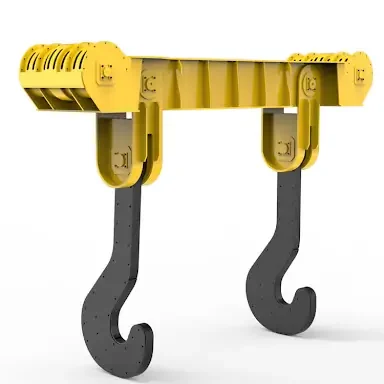
Featuring a laminated high-toughness structure and thermally insulated reinforced beam design, it maintains load-bearing capacity even with localized damage. This makes it the safest and most widely used lifting device for standard ladle handling.
Obtenga una cotización personalizada ahora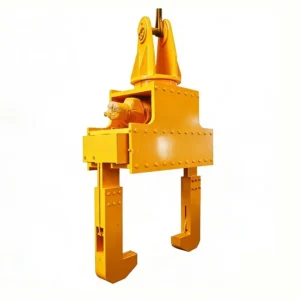
Integrated slewing bearings and drive systems enable precise 360° rotation of ladles in mid-air, enhancing alignment accuracy and operational efficiency in complex workstations.
Obtenga una cotización personalizada ahoraWeihua offers YZ series overhead ladle cranes with both double-girder and four-girder structures. Below are the technical parameters for these two types to help you quickly compare and select the right model. We can customize the design according to your process requirements and factory conditions. For a complete parameter table or a customized solution for your project, please get in touch with our engineering team for detailed selection charts and quotations.
| Capacity(t) | Lifting Height(m) | Speed (m/min) | Total Power (kw) | Recomend Rail (kg/m) | ||||
| Main/Aux hook | Aux hook | Main hook | Main Hook | Aux. hook | Carretilla | Crane | ||
| 16/3.2 | 12 | 15 | 2.5~9 | 9 | 20~38 | 30~70 | 19.4~49.5 | 52.8 |
| 20/5 | 27.5~62.5 | |||||||
| 25/5 | 28.1~72.9 | |||||||
| 32/5 | 15 | 17 | 30~80 | 29.7~110 | 63.69 | |||
| 40/5 | 2~9 | 30~70 | 30.5~111.5 | |||||
| 50/10 | 2~7 | 9 | 46.4~130 | |||||
| 63/10 | 21 | 23 | 1.5~7 | 9 | 46.4~157 | |||
| 75/20 | 26 | 28 | 1.7~7 | 7 | 18~30 | 81~184 | 88.96 | |
| Lifting capacity(t) | 125/32 | 140/32 | 160/32 | 180/50 | 200/50 | 225/65 | 240/80 | 280/80 | 320/80 | |
| Working class | A7 | |||||||||
| Span(m) | 19 | 19 | 27 | 28.5 | 28 | 27 | 22 | 22 | 24.5 | |
| Lifting height(m) | Main hook | 24 | 22 | 25 | 27 | 26 | 32 | 25 | 29 | 28 |
| Auxiliary hook | 26 | 24 | 26 | 29 | 26 | 34 | 27 | 29 | 32 | |
| Velocidad | Main hook | 7.6 | 7.8 | 9.8 | 7.5 | 6 | 11 | 7 | 12 | 7.5 |
| Aux. hook | 9.7 | 9.7 | 12 | 10 | 10 | 11 | 9.6 | 10 | 10 | |
| Main trolley | 38 | 36 | 43.5 | 40 | 41 | 41 | 35 | 40 | 29 | |
| aux.trolley | 39 | 37.5 | 43.5 | 38 | 38 | 39.5 | 38 | 40 | 39 | |
| crane | 76 | 73 | 84 | 80 | 78 | 84 | 80 | 80 | 58 | |
| Max wheel load(KN) | 505 | 535 | 485 | 525 | 530 | 550 | 545 | 735 | 750 | |
| Steel track recommended | 380V 50Hz 3-phase A.C. | |||||||||
| Power source | aux. trolley | |||||||||
YZ Steel Mill Ladle Cranes are specifically engineered for molten steel handling in steelmaking and casting processes. They deliver safe, stable, and high-precision operation under high-temperature, heavy-load, and continuous-duty conditions. Featuring metallurgical-grade structural reinforcement, specialized hoisting systems, and multiple safety protection configurations, these cranes meet critical production demands including ladle transfer, positioning, pouring, and auxiliary operations.
YZ Steel Mill Ladle Cranes are primarily used for molten steel handling and process integration in steel mills and large foundries, covering the entire process from tapping, refining to pouring. They ensure safe transfer and precise positioning of ladles under high-temperature, heavy-load, and continuous operation conditions, serving as critical equipment for maintaining continuous molten steel production and operational safety.
Converter/Electric Arc Furnace Tapping Area: Designed to carry and transfer high-temperature ladles, featuring high load capacity and impact-resistant structures.
Steel Refining Stations (LF, RH, etc.): Enables frequent short-distance movement and precise positioning of ladles with smooth operation, effectively minimizing molten steel agitation.
Continuous Casting Machine Pouring Area: Used for ladle positioning and pouring operations, with optional rotation or weighing functions to enhance pouring precision and production efficiency.
Internal Transport Corridors in Foundry Workshops: Handle continuous molten steel transfer between multiple workstations, adapted for high-temperature environments and prolonged operation to ensure stable production rhythms.
For details on the applications of metallurgical overhead cranes, see the article: Metallurgical Overhead Cranes | Specialized Cranes for Steel & Aluminum Plants
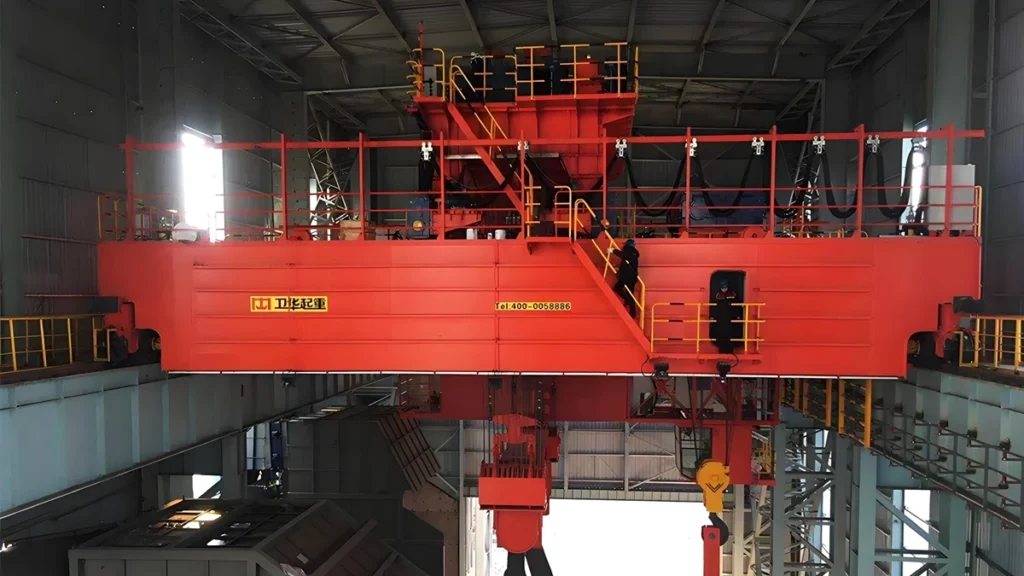
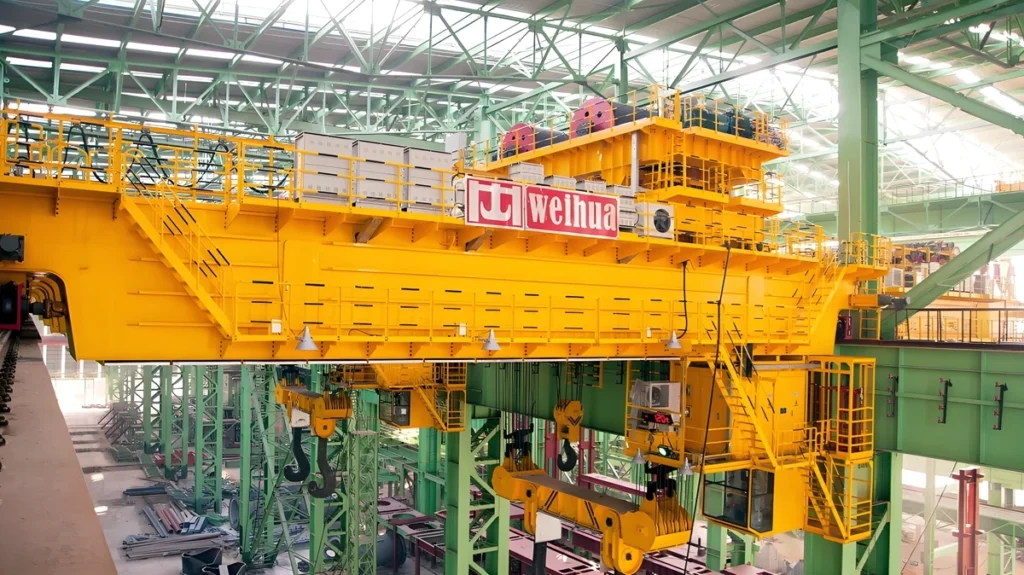
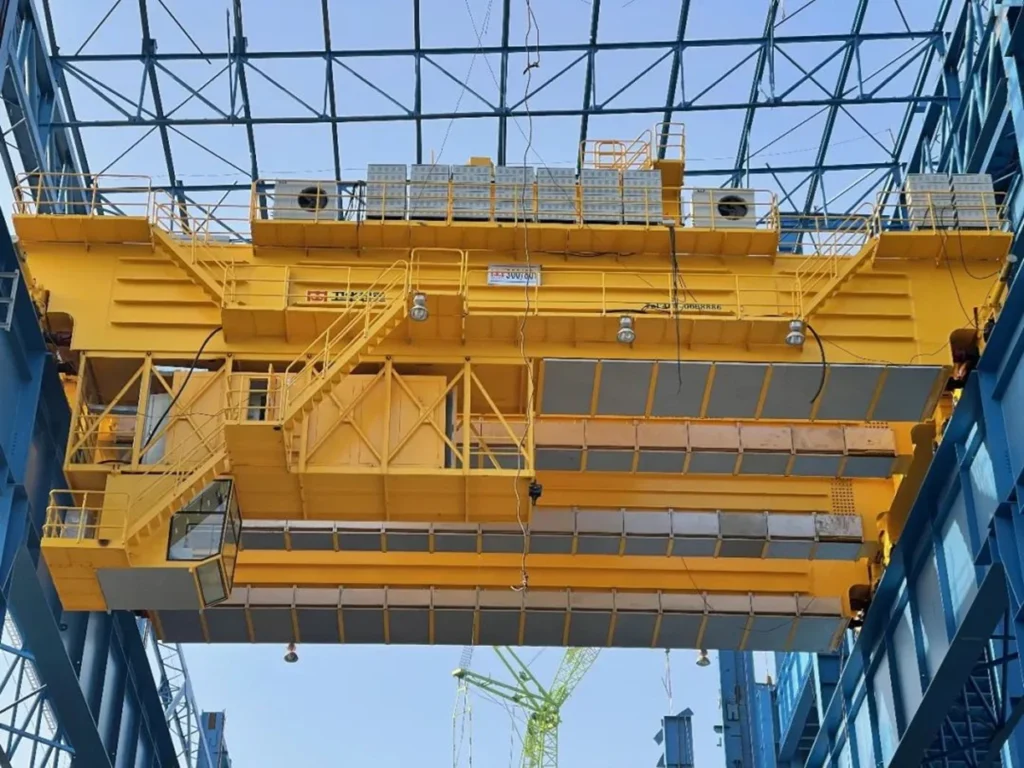
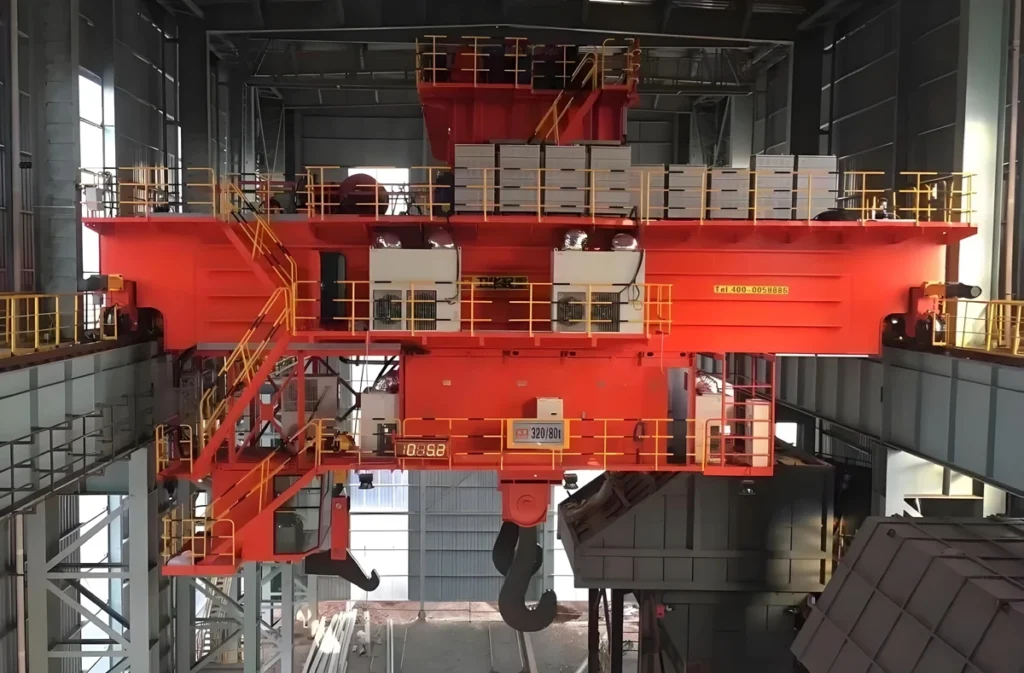
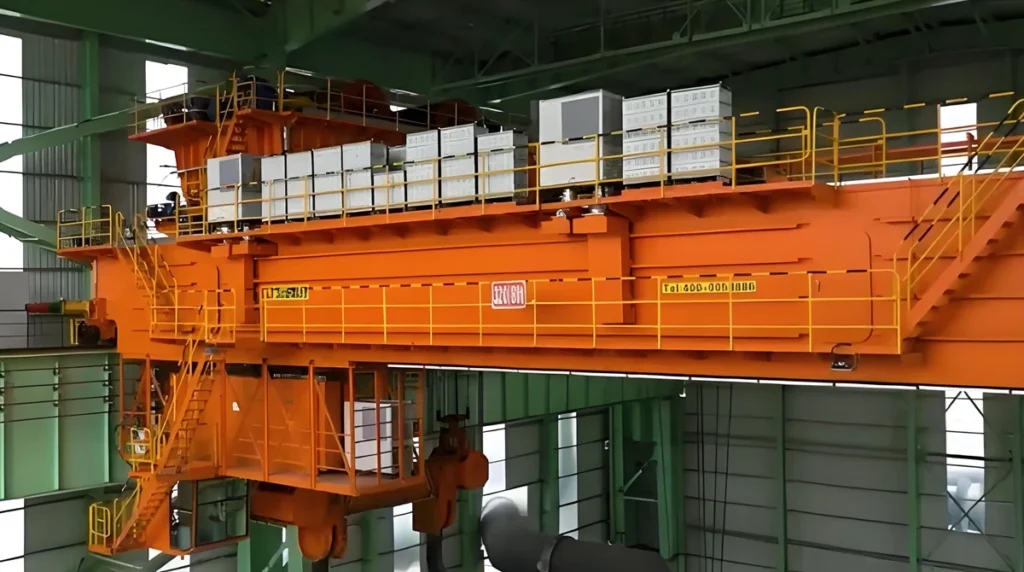
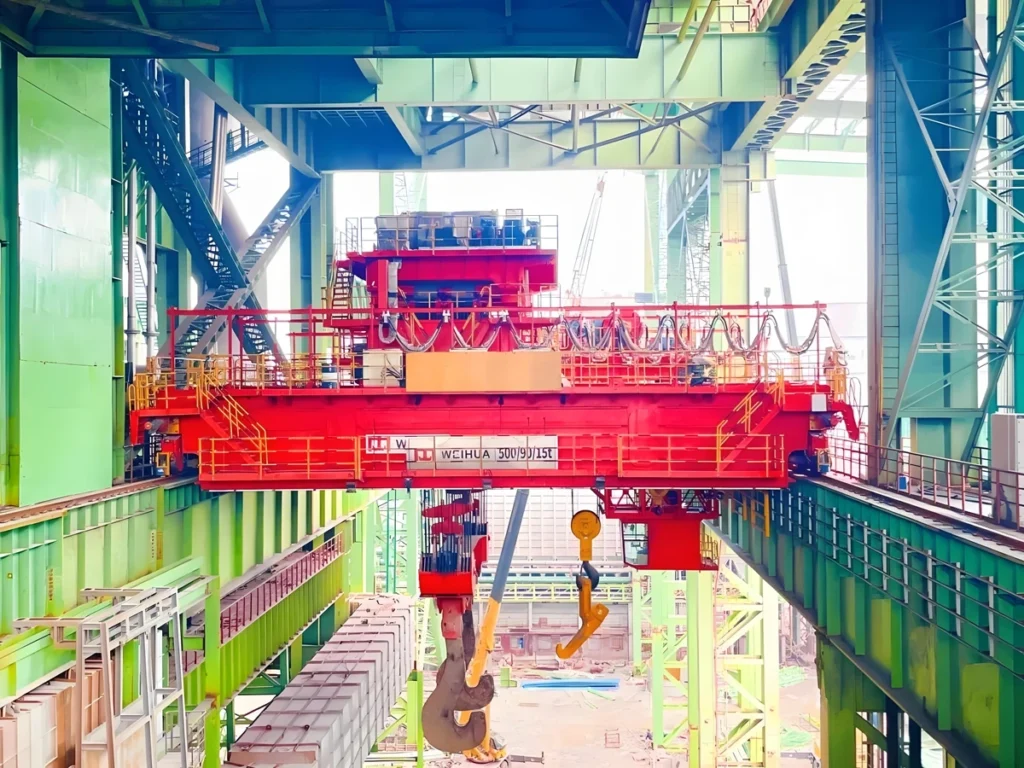
For more information on the various types of steel mill cranes and how to select the right one, see the article: “Steel Mill Crane Selection Guide: Types, Applications, and How to Choose”
Weihua offers a complete range of YZ ladle cranes, including double-girder and quad-girder configurations, with flexible lifting capacities, spans, hoist heights, control modes, and safety options to meet diverse steelmaking and casting process requirements.
We customize lifting capacity, span, hoist height, duty class, control methods, and auxiliary functions according to specific production layouts and ladle dimensions. Contact our team anytime for technical consultation, system design, and project support.
Obtenga una cotización personalizada ahora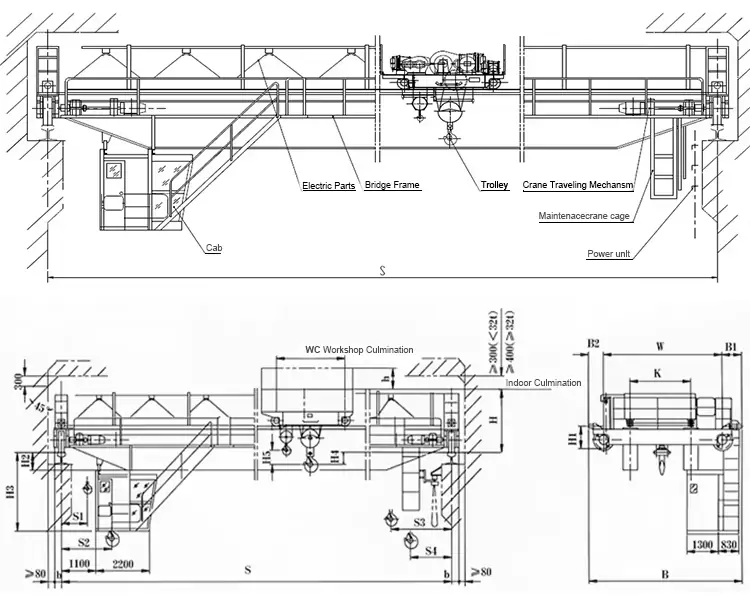
Weihua is a leading manufacturer and supplier of ladle cranes in China. We possess robust in-house manufacturing capabilities, advanced production equipment, comprehensive CE/ISO international certifications, and decades of experience in heavy-duty lifting solutions. We deliver ladle cranes that operate safely and reliably under high-temperature, heavy-load, and continuous-duty conditions. Our dedicated engineering and service teams provide end-to-end solutions encompassing technical consultation, customized design, manufacturing, installation guidance, and after-sales support. Contact our expert team today to discuss your project requirements and receive a tailored ladle crane solution along with a detailed quotation.
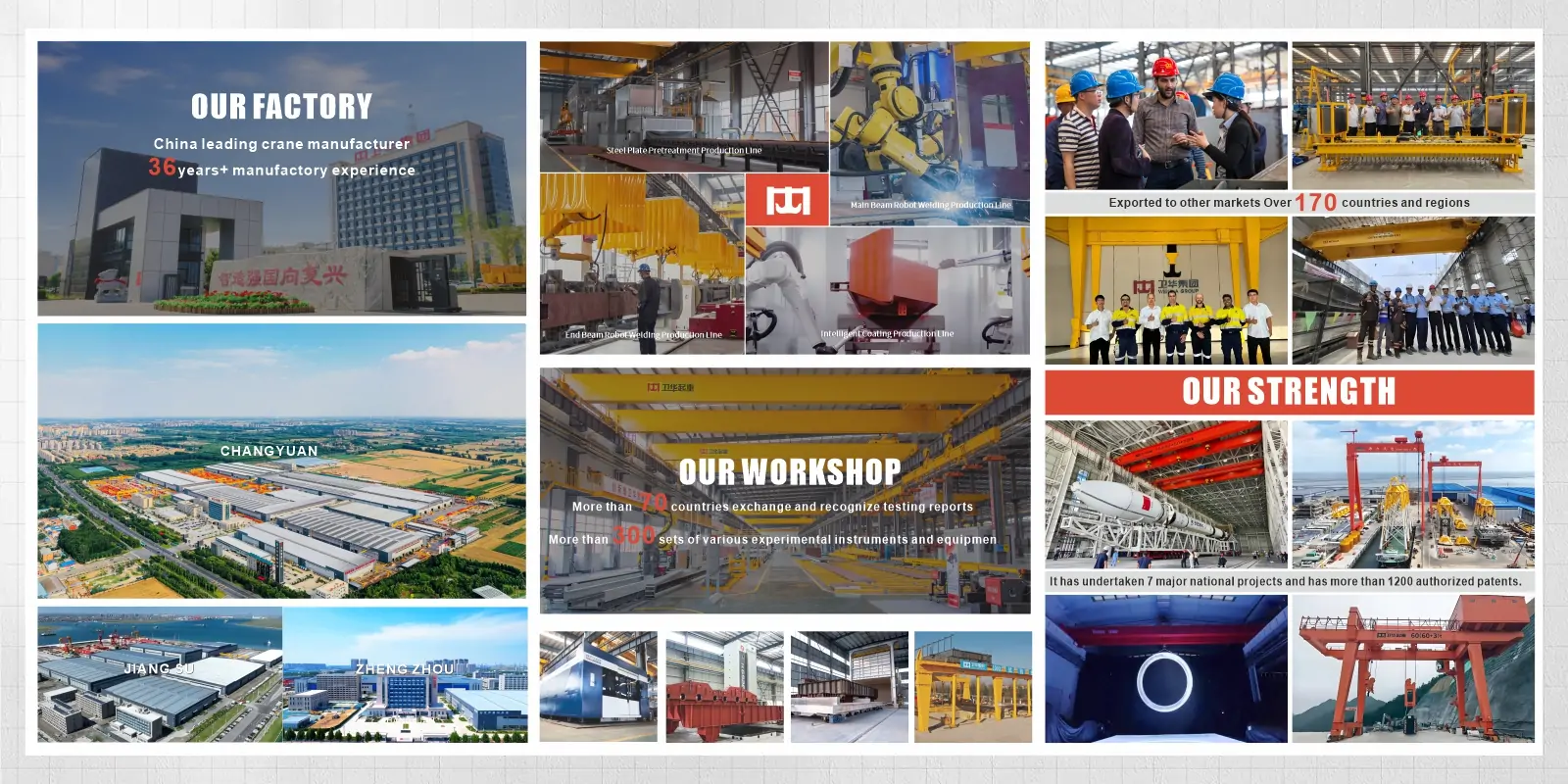
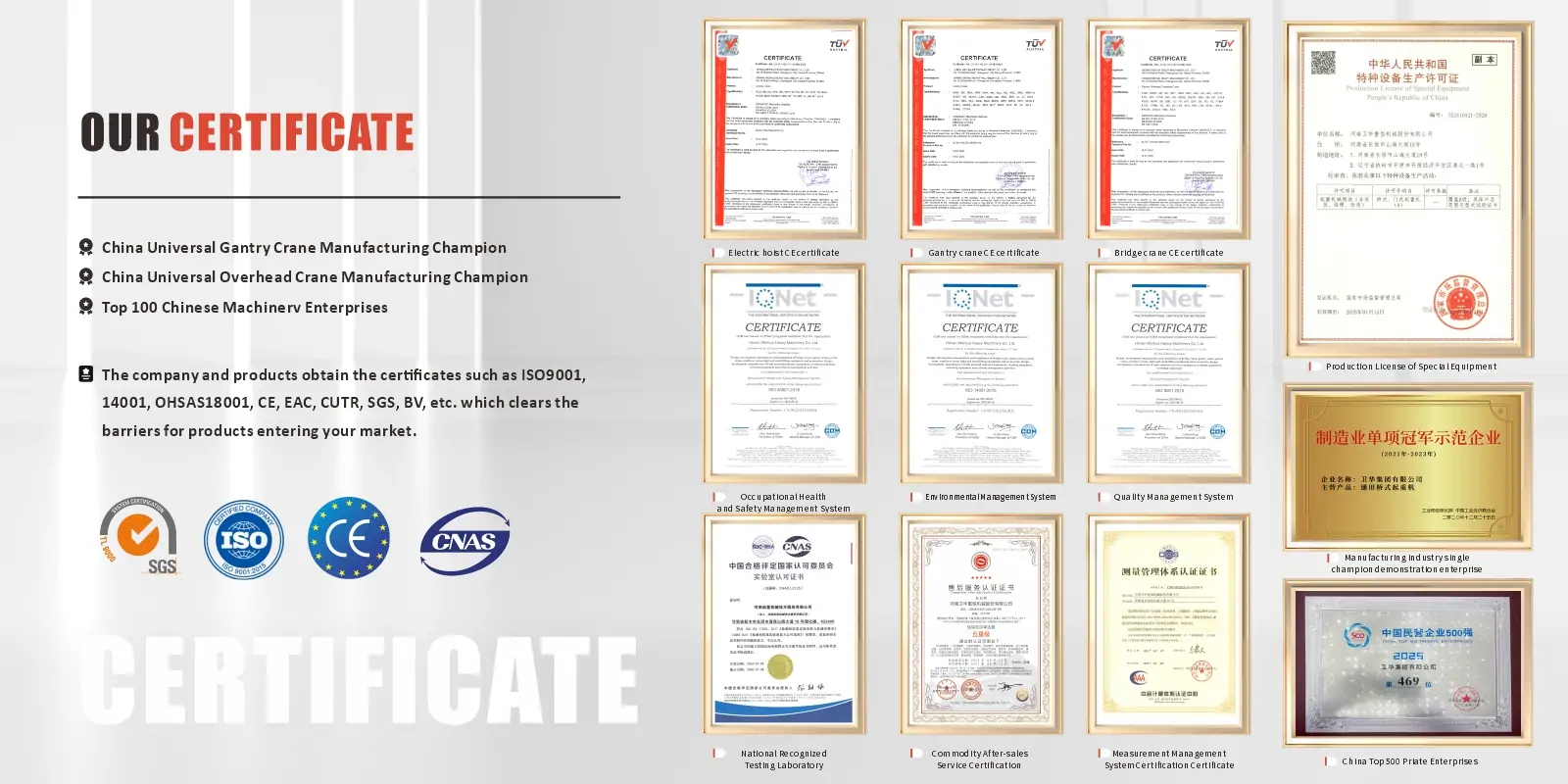
Weihua, fundada en 1988, se ha convertido en un líder mundial en el campo de la fabricación inteligente de China. Nos especializamos en la I+D y producción de grúas inteligentes, ofreciendo al mismo tiempo soluciones AGV. Nuestros equipos profesionales de ingeniería, entrega y posventa brindan soporte técnico integral, soluciones personalizadas, orientación de instalación in situ y servicios globales de respuesta rápida para garantizar que cada proyecto funcione de manera segura y eficiente.
A YZ steel mill ladle crane is designed for lifting, transporting, and positioning molten metal ladles in foundries and steel plants. It is mainly used during smelting, pouring, and refining processes, where high-temperature molten steel or iron must be handled safely and precisely.
YZ ladle cranes are engineered with heat-resistant structures, reinforced load-bearing components, and specialized safety systems to withstand extreme temperatures and heavy-duty operating conditions. Critical parts are designed to prevent deformation and ensure stable operation when handling molten metal.
Typical safety features include dual braking systems, overload protection, emergency stop functions, limit switches, and thermal protection for key components. These systems significantly reduce operational risks and ensure safe ladle handling in steelmaking and foundry environments.
YZ steel mill ladle cranes are available in a wide range of lifting capacities, commonly from 50 tons to over 500 tons. The crane configuration can be selected based on ladle size, molten metal weight, and specific production requirements.
Yes. YZ ladle cranes can be fully customized in terms of lifting capacity, span, lifting height, working class, control mode, and safety configuration to match different foundry layouts and steelmaking processes. Custom ladle hooks and lifting devices are also available.
Contáctenos ahora por correo electrónico: [email protected], o rellene el formulario a continuación.


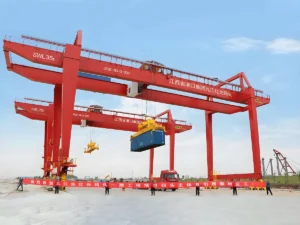
La grúa pórtico es un equipo de elevación ampliamente utilizado en diversas industrias, sitios de construcción, puertos, almacenes y otros campos. Su estructura única y su potente capacidad de carga la hacen ideal para el manejo de materiales modernos de alta resistencia. El diseño de la estructura de “pórtico” permite que la grúa se mueva libremente dentro de un espacio, cubriendo una gran área de trabajo. Entonces, ¿qué hace especiales a las grúas pórtico? ¿Cuáles son sus tipos, parámetros, métodos de control, aplicaciones y principios de funcionamiento? ¿En qué se diferencian de las grúas puente? Vamos a explorarlo juntos. Tipos de grúas pórtico Según el diseño, la aplicación y el entorno operativo, las grúas pórtico se clasifican típicamente en los siguientes tipos: Grúa pórtico de viga única Las grúas pórtico de viga única se utilizan ampliamente en sectores industriales, almacenes, puertos y talleres. Con un mecanismo de elevación de soporte de viga única, se desplazan a través de columnas laterales y rieles inferiores. Con su estructura simple, operación amigable y capacidad de elevación moderada, son ideales para el manejo de cargas ligeras a medianas. Capaces de abarcar grandes distancias libremente, las grúas pórtico de viga única son adecuadas para operaciones de elevación y manejo de materiales pesados. Grúa pórtico de doble viga En comparación con las grúas pórtico de viga única, las grúas pórtico de doble viga ofrecen mayor...
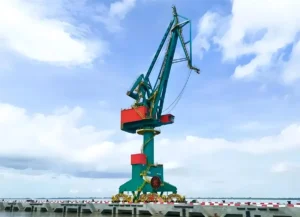
En puertos, parques logísticos y manipulación de materiales industriales, las grúas pórtico y las grúas de portal son dos tipos de equipos de carga/descarga comunes y fundamentales. Difieren en diseño estructural, características de rendimiento, métodos de operación, escenarios de aplicación y costos de inversión. Este artículo proporciona un análisis integral de las grúas pórtico frente a las grúas de portal y lo guía en la selección correcta. Comparación del diseño estructural Las diferencias estructurales entre las grúas pórtico y las grúas de portal se manifiestan principalmente en los métodos de soporte de carga, las trayectorias de movimiento y los rangos de cobertura. La primera se centra en una torre fija y una pluma giratoria, enfatizando la “cobertura puntual” y la rotación horizontal flexible. La segunda presenta una estructura de marco de portal y desplazamiento longitudinal sobre rieles, priorizando el “amplio movimiento horizontal” y la manipulación eficiente de la logística en el sitio. En consecuencia, sus distintos diseños estructurales dictan directamente sus diferentes escenarios de aplicación. Características estructurales de la grúa pórtico Las grúas de portal giratorias emplean estructuras de pluma en voladizo simple/doble con la torre fijada a cimientos o rieles, lo que permite una rotación de 360° o parcial. Esta configuración permite una operación flexible en espacios estrechos y alargados, como líneas de costa, frentes de muelle y atraques de barcos, lo que la hace particularmente adecuada para la manipulación de materiales de barco a tierra. Su funcionalidad principal combina verticalmente...
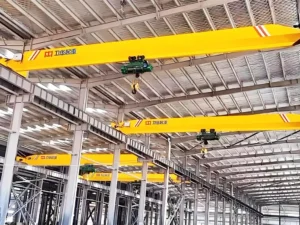
En las operaciones industriales modernas, el manejo eficiente de materiales es crucial para maximizar la productividad y optimizar el flujo de trabajo. Las grúas puente, también conocidas como grúas viajeras o grúas EOT, son sistemas fijos de manejo de materiales ampliamente utilizados en manufactura, procesamiento de metales, almacenamiento y operaciones de carga/descarga. En este artículo, exploraremos el principio de funcionamiento, los componentes principales, las aplicaciones y los beneficios operativos de las grúas puente, proporcionando una guía completa para planificadores industriales y profesionales de la logística. Principio de Funcionamiento de las Grúas Puente Una grúa puente opera sobre una estructura similar a un puente que abarca el área de trabajo, con un carro y un polipasto que se mueven horizontalmente a lo largo del puente y elevan o descienden cargas verticalmente. El movimiento de la grúa a lo largo de la vía, combinado con un control preciso del polipasto, permite el manejo eficiente y seguro de materiales pesados en fábricas, almacenes e instalaciones industriales. Para obtener información sobre cómo funcionan las grúas viajeras, consulte este artículo: Principio de Funcionamiento de las Grúas Viajeras: Componentes, Movimiento y Proceso de Operación Terminología de las Grúas Puente A continuación, se presenta una introducción a la terminología relacionada con las partes de las grúas puente. Capacidad de la Grúa: La capacidad de la grúa se refiere al peso máximo que una grúa puente puede levantar de forma segura. Típicamente medido en toneladas…
Una grúa EOT (Grúa Eléctrica de Puente) es un sistema de elevación aéreo eficiente y fiable que se utiliza para manipular materiales pesados en fábricas, almacenes, talleres y plantas industriales. Funcionando sobre rieles elevados, las grúas EOT permiten el movimiento tridimensional seguro y preciso de cargas mediante movimientos coordinados de elevación, traslación transversal y traslación longitudinal. Este artículo le guiará a través de las definiciones de las grúas EOT, sus tipos, estructura, principios de funcionamiento, aplicaciones y factores de costo para ayudarle a seleccionar la solución más adecuada para sus necesidades de elevación. ¿Cómo funciona una grúa EOT? El principio de funcionamiento de una grúa EOT implica una combinación de elevación vertical, movimiento horizontal del carro y desplazamiento longitudinal del puente, lo que permite la manipulación eficiente de cargas pesadas en las instalaciones industriales. La grúa opera sobre rieles de pista elevados instalados a lo largo de la estructura del edificio, con la viga del puente abarcando el área de trabajo. El mecanismo de elevación sube o baja la carga utilizando cables de acero o cadenas, mientras que el carro mueve la carga horizontalmente a lo largo del puente. Toda la grúa se desplaza longitudinalmente a lo largo de los rieles de la pista, permitiendo la posición tridimensional de los materiales. Las grúas EOT modernas están impulsadas por motores eléctricos con velocidad precisa...
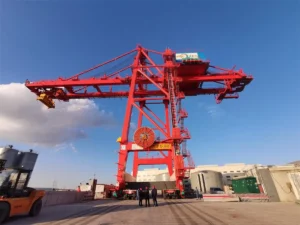
Las grúas pórtico se utilizan ampliamente en patios de almacenamiento al aire libre, astilleros, fábricas y sitios de construcción, lo que las convierte en una de las soluciones de manipulación de materiales más versátiles y aplicadas. Las grúas pórtico vienen en varios tipos, cada una personalizable para adaptarse a diferentes capacidades de carga, condiciones del sitio y requisitos operativos. Sin embargo, la elección de la configuración incorrecta puede generar gastos innecesarios, capacidad de elevación limitada o restricciones de expansión futuras. Entonces, ¿cuáles son los principales tipos de grúas pórtico? ¿Cómo elige el tipo correcto para su aplicación? En esta guía, proporcionaremos una descripción general detallada de los diferentes tipos de grúas pórtico según la estructura, la movilidad y los escenarios de aplicación, lo que le ayudará a tomar la decisión correcta antes de invertir en una solución de elevación. El artículo es bastante extenso. A continuación se presenta nuestra tabla de contenidos. Por favor, salte a la sección correspondiente según sea necesario: ¿Qué es una grúa pórtico? Las grúas pórtico son equipos de elevación diseñados para la manipulación eficiente de carga pesada en grandes sitios al aire libre. Su estructura distintiva presenta una o más vigas principales soportadas por patas rígidas (o flexibles) a cada lado, formando un marco monumental en forma de “puerta”. Estas grúas se desplazan...
 English English
  Русский
 العربية
 Français
 Português
 Español