






Blog

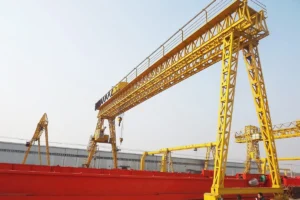
Double Girder Gantry Crane

Gantry Crane for Sale: Types, Prices & Buying Guide (2026)

12 Jun 2026

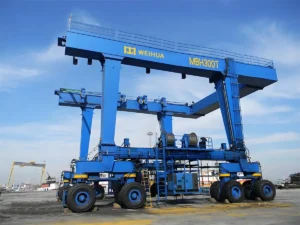
Gantry crane for sale pricing starts at $800 for a portable aluminum unit and reaches $300,000+ for a heavy double girder system — the exact number depends on type, capacity, span, and whether your application is indoor or outdoor. If you are comparing options before committing to a purchase, this guide gives you every decision point: a price table by crane type, a selection framework based on load and duty cycle, certification requirements, and the two cost items most suppliers leave out of their headline quotes. The challenge facing most procurement managers is not finding a supplier. It is knowing which configuration — single girder versus double girder, rail-mounted versus rubber-tired, A3 versus A5 duty class — actually matches the workload before a quote lands on the desk. Selecting by rated capacity alone, without accounting for operating frequency, is how factories end up replacing structural components within two years of installation. This guide covers six gantry crane types available from Wei Hua’s factory-direct range — including portable, single girder box-beam, truss, semi-gantry, double girder, and container/port configurations — the key…

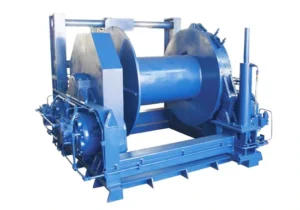
Double-Drum Hydraulic Winch

Hydraulic Winch for Sale: Specs, Pricing & How to Order Factory-Direct

08 Jun 2026

Looking for a hydraulic winch for sale? Prices range from $1,800 for a compact 1-ton unit to $85,000+ for a 500-ton marine mooring winch, depending on capacity, drum configuration, and certification requirements. Most industrial buyers in the 5–50 ton range will find CE-certified units between $4,500 and $28,000 at factory-direct pricing. If your site already runs a hydraulic power pack, or if you need continuous-duty pulling in an explosive, wet, or high-temperature environment where electric motors can’t operate safely, a hydraulic winch is almost certainly the right call. The challenge isn’t whether to buy one — it’s confirming the right specs before you wire the deposit. This page gives you the price reference, spec table, and pre-order checklist you need to finalize your purchase and avoid the most expensive configuration mistakes. Key Takeaways • Hydraulic Winch Pricing: Hydraulic winches for sale range from $1,800–$85,000+; most 5–50T industrial units ship between $4,500–$28,000. • Technical Specifications: Confirm six parameters before ordering: rated load, line speed, drum capacity, duty class, power supply, and certifications required. • Compliance & Benchmarks: CE (EN 14492-1) and…

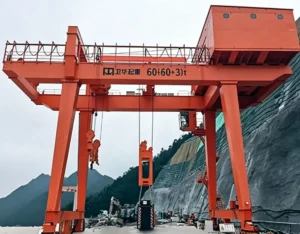
Vertical Shaft Gantry Crane

What Is a Vertical Shaft Gantry Crane?

10 Jun 2026

Vertical shaft gantry cranes are specialized lifting systems used for the construction, maintenance, and operation of deep shafts in mining, tunneling, and underground infrastructure projects. They provide reliable vertical lifting for personnel, equipment, construction materials, and excavated rock. This article explains the working principle, main components, types, applications, advantages, and factors to consider when selecting a vertical shaft gantry crane.

Single Girder Gantry Crane

What Is a Single Girder Gantry Crane? Structure, Types, Specs & Selection Guide

27 May 2026

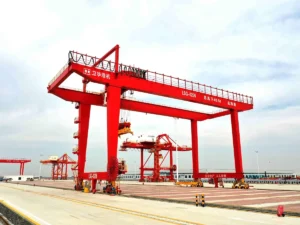
A single girder gantry crane is a ground-supported lifting system built from one main horizontal beam (the girder) mounted on two inverted-U-shaped legs that run on floor-level rails. Unlike overhead cranes that rely on a building’s runway beams, a gantry crane is self-supporting — it can operate indoors, outdoors, or in facilities that lack the structural steel to support a top-mounted bridge crane. Standard configurations cover lifting capacities from 1 ton to 20 tons, spans from 7.5 m to 31.5 m, and lifting heights from 6 m to 18 m, with working classes A3 and A4 under FEM (Fédération Européenne de la Manutention) classification. These numbers make the single girder gantry crane the default choice for mid-range material handling tasks in factories, warehouses, construction sites, and small ports where budget and installation flexibility both matter. This guide explains how the crane is built, how to read its key specifications, how it compares to double girder alternatives, which industries use it and why, and what to verify before placing an order. By the end, you will have a clear framework for…

Straddle Carrier VS RTG Crane

Straddle Carrier vs RTG Crane: Which Container Handling Solution Is Better?

27 May 2026

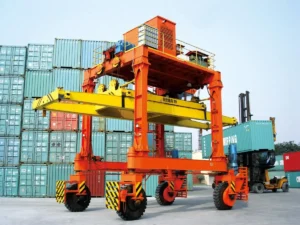
Introduction Container terminals, ports, and intermodal yards rely heavily on efficient container handling equipment to improve throughput, reduce operating costs, and maximize yard utilization. Among the most widely used solutions are Straddle Carriers and Rubber Tyred Gantry (RTG) Cranes. Although both are designed for container transportation and stacking, their working methods, automation capabilities, infrastructure requirements, and operational efficiency differ significantly. Choosing the right system directly affects terminal productivity, labor efficiency, fuel consumption, and long-term investment returns. This guide compares Straddle Carriers and RTG cranes from multiple professional perspectives, helping terminal operators, EPC contractors, logistics companies, and port investors select the most suitable solution for their projects. What Is a Straddle Carrier? A Straddle Carrier is a self-propelled container handling vehicle designed to lift, transport, and stack containers independently. Unlike RTG cranes, it combines both transportation and stacking functions into a single machine. Straddle carriers are widely used in automated ports and high-throughput container terminals because they provide flexible container movement without relying heavily on terminal tractors. How Straddle Carriers Work A straddle carrier drives directly over a container, lifts it…

sts crane vs rtg crane vs rmg crane

STS Crane vs RTG Crane vs RMG Crane: Key Differences Explained

19 May 2026

An STS crane handles vessel loading and discharge at the berth. An RTG crane stacks and retrieves containers in the yard — on rubber tyres, so it can move between lanes. An RMG crane does the same yard job on fixed rails, with higher stacking density and stronger automation capability. The three types do not compete directly: most container terminals use all three in sequence, each covering a distinct operational zone. Where the comparison matters is in configuration decisions — how many of each type to deploy, which specification to order, and where the trade-offs between flexibility and automation fall. Those decisions involve real capital and 20-plus years of operating cost. The sections below break down each crane type, map the differences that matter at the procurement stage, and give you a selection framework based on terminal throughput and layout. What Each Crane Type Actually Does Before comparing specifications, it helps to be precise about function. These three crane categories operate in different zones of a container terminal and are not interchangeable. STS Crane: The Berth Interface An STS crane…

Components of an STS Crane

How To Choose The Right STS Crane For Your Port: Specifications, Pricing & Buying Guide

15 May 2026

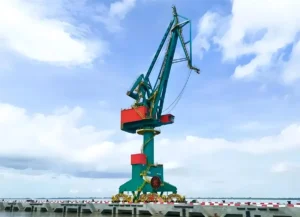
An STS crane purchase is one of the most capital-intensive decisions a port authority or terminal operator will make. Prices range from $5 million for a standard single-lift unit to over $25 million for a high-outreach, twin-lift configuration—and the wrong specification can bottleneck your terminal for the next 25 years. Before you issue an RFQ, you need clarity on three things: the vessel classes your berth must serve, your throughput targets, and the rail gauge your civil structure supports. Port procurement teams frequently encounter the same pressure point: container ships keep getting larger, but budgets and berth geometry are fixed. A crane specified for a 13-row vessel cannot efficiently handle a 24-row ultra-large container vessel (ULCV) without costly modification—or replacement. This guide gives you a structured framework to match STS crane specifications to your port’s actual operating conditions. You’ll find a specification comparison table, a parameter-by-parameter selection checklist, manufacturer evaluation criteria, and pricing benchmarks—everything your engineering team needs to build a technically sound RFQ. Quick Reference: STS Crane Types & Price Benchmarks Configuration Outreach Lifting Capacity Typical Application Indicative Price…

KPD Low-Voltage Rail-Mounted Electric Transfer Cart

What Is a Rail Transfer Cart? How It Works, Types & Selection Guide 2026

08 May 2026

A rail transfer cart is a motorized flatbed vehicle that travels along fixed steel rails to move heavy loads — machinery, steel coils, molds, pallets, or assembled products — within a factory, warehouse, or workshop. Unlike forklifts or cranes, it doesn’t lift. It moves loads horizontally, from one station to the next, with precision and repeatability. The core pain point it solves is straightforward: when loads are too heavy, too wide, or too awkward for forklifts — and when you need to move them through the same path dozens of times a day — rail transfer carts eliminate reliance on overhead cranes, reduce manual handling, and keep production moving without bottlenecks. This guide covers how rail transfer carts work, the main types available in 2026, what drives the selection decision, and the maintenance and compliance factors that procurement teams typically overlook until it’s too late. How Does a Rail Transfer Cart Work? The Basic Operating Principle A rail transfer cart runs on two parallel steel rails embedded in or mounted on the workshop floor. The cart platform — typically a…

Top