





جدول المحتويات
مقدمة
STS crane parts form the structural, mechanical, electrical, and safety systems of a ship-to-shore crane. Each component has a specific role in container handling, from supporting the boom and trolley to lifting containers and moving the crane along quay rails.
This article explains the main STS crane parts, including the crane assembly, boom, hoisting system, cabin, cables, carrier beam, wire ropes, and rail system. It also covers their functions, how the components work together, and key maintenance points for port operators planning STS crane procurement or equipment servicing.
What Are the Main Parts of an STS Crane?
STS crane parts include the main steel structure, hoisting mechanism, trolley travel system, electrical control system, spreader, and rail travel system. The steel structure supports the crane and its operating loads. The hoisting mechanism lifts and lowers containers, while the trolley moves them between the ship and quay. The electrical system controls crane movements, the spreader handles container locking and release, and the rail travel system moves the crane along the quay. The following sections explain the main components and their functions.
Main STS Crane Components and Their Functions
STS crane parts form an integrated system for structural support, container lifting, trolley travel, and crane movement along the quay. Each component has a defined operating role and maintenance requirements. The following sections cover the main assemblies, boom, cabin, cable systems, carrier beam, wire ropes, and rails used in ship-to-shore cranes.
STS Crane Assembly
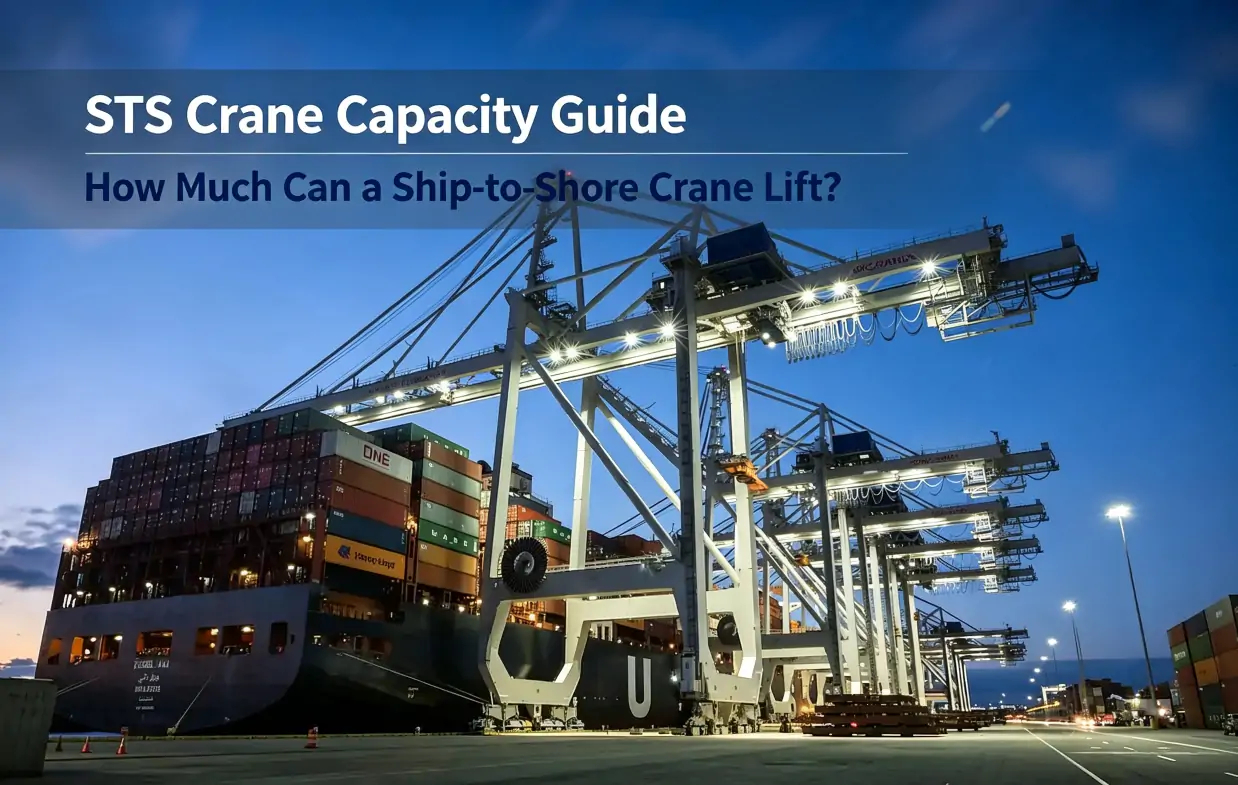
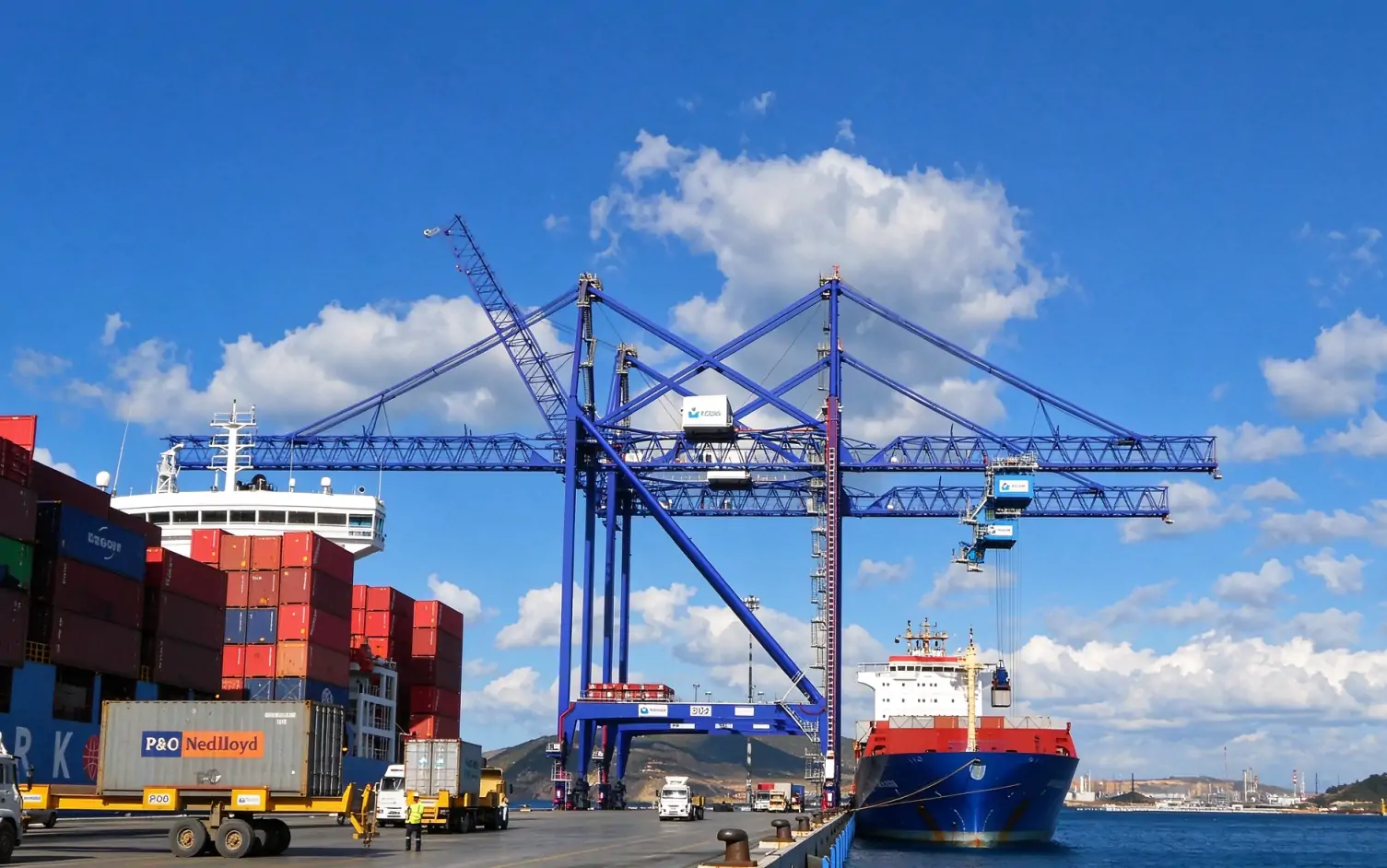
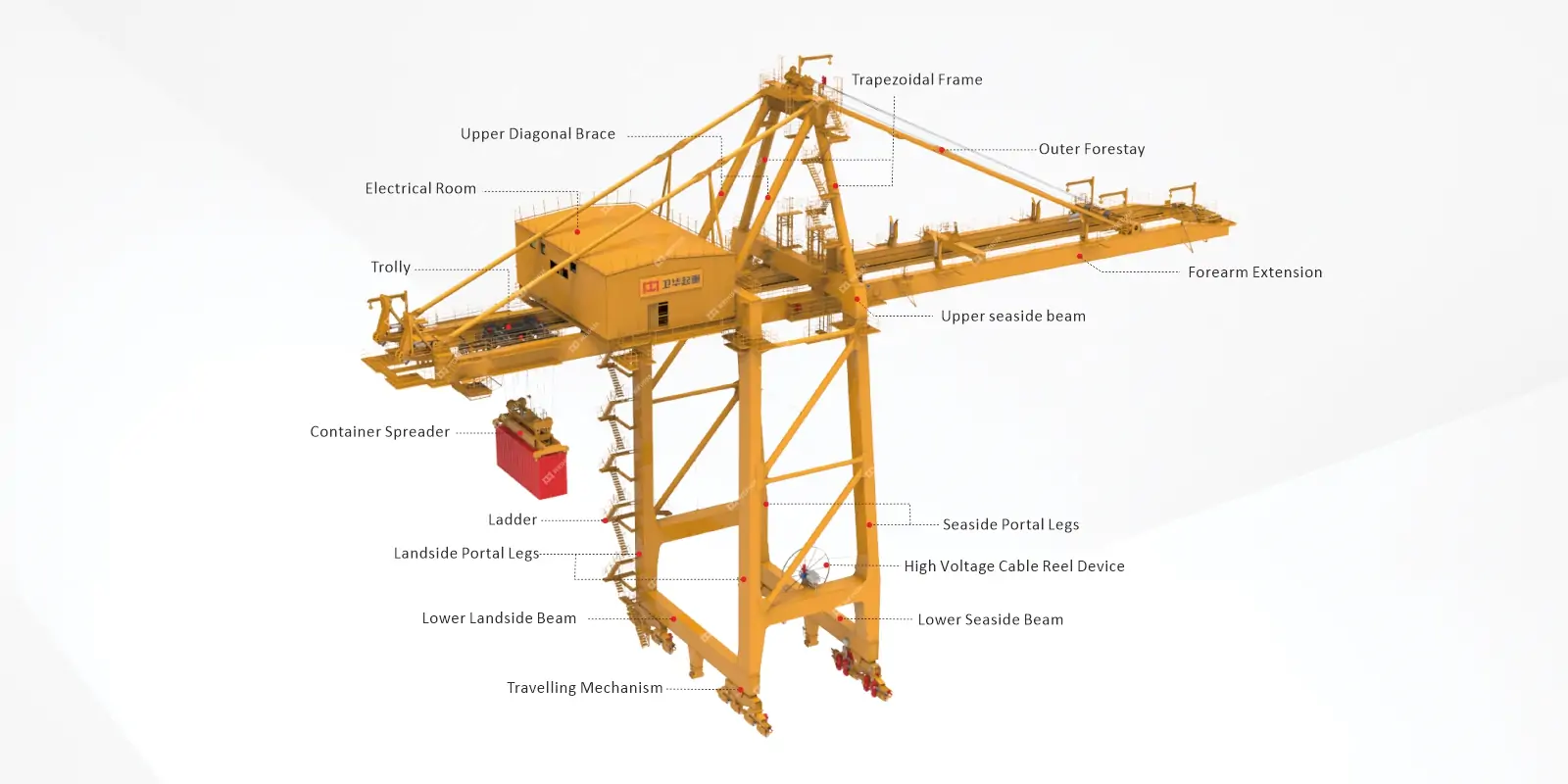
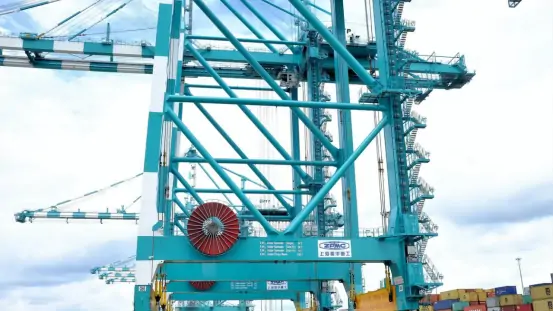
The STS crane assembly consists of the gantry frame, waterside and landside legs, main girders, boom, trolley, and hoisting mechanism. The legs support the upper steel structure, while the main girders connect the frame and carry the trolley travel system. The boom extends over the vessel, allowing the trolley and spreader to reach container positions across the ship.
- Component Function: The steel structure supports the crane’s dead weight, rated container load, and operational forces. The boom and main girders provide the structural framework for trolley travel and container handling.
- Operating Role: The assembly transfers lifting loads through the girders and legs to the crane wheels and quay rails. Structural dimensions and connections are engineered for the required outreach, lifting capacity, vessel dimensions, wind loads, and duty cycle.
- Maintenance Considerations: Inspect welded joints, bolted connections, corrosion protection, structural deformation, and areas subject to repeated loading. Inspection intervals and acceptance criteria should follow the crane maintenance manual and applicable standards.
STS Crane Boom
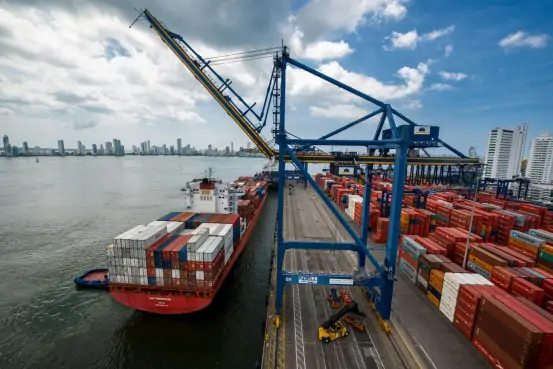
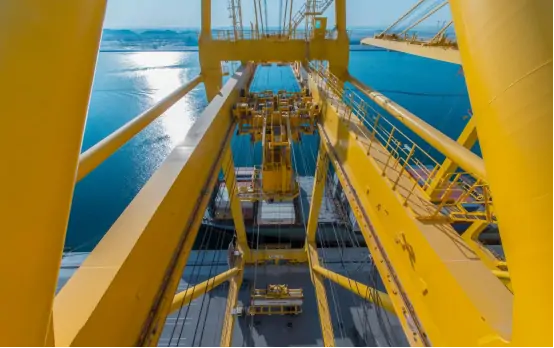
The STS crane boom is the cantilevered steel structure extending over the water. Single-girder or double-girder gantry cranes can be selected based on operational requirements. It carries the trolley travel path on the waterside and provides the outreach required to handle containers across the vessel’s beam. On a hinged-boom crane, the boom hoist mechanism raises the boom to clear the vessel during berthing and departure. The boom is lowered into its working position for cargo operations.
- Component Function: The boom supports trolley travel over the vessel and transfers associated loads to the main crane structure.
- Operating Role: Boom outreach and geometry determine the vessel positions the crane can reach. Boom hoisting allows the crane to change between the operating position and the raised clearance position where this design is used.
- Maintenance Considerations: Check boom hinge pins, bearings, locking arrangements, welded joints, and boom hoist components. Inspect wire ropes, sheaves, brakes, and limit devices in the boom hoisting system according to the manufacturer’s maintenance schedule.
STS Crane Cabin
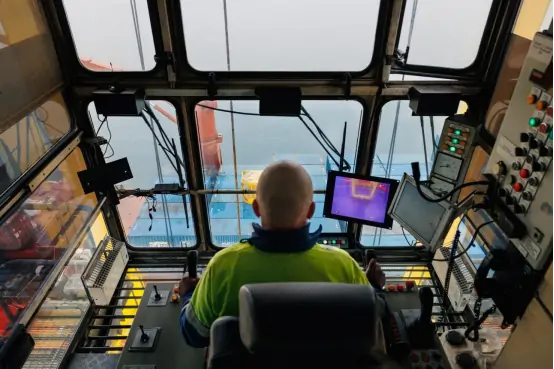
The STS crane cabin is the operator’s control station, commonly mounted on the trolley or positioned according to the crane design. Large windows provide views of the spreader, container rows, vessel bays, and quay-side handover area. The cabin may include control consoles, operating displays, communication equipment, and air conditioning.
- Component Function: The cabin houses the controls and displays used to operate and monitor crane movements.
- Operating Role: Cabin position, viewing angles, display layout, and control arrangement affect the operator’s ability to align the spreader with container corner castings and monitor loading or unloading operations.
- Maintenance Considerations: Inspect window visibility, wipers where fitted, control levers, displays, communication equipment, lighting, door seals, and air-conditioning units. Check that alarms and operator interfaces work according to the supplied configuration.
STS Crane Cable and Ship-to-Shore Crane Cable Systems
STS crane cable systems carry electrical power and control signals to moving crane equipment. Power cables supply motors and other electrical loads. Control cables transmit signals between sensors, drive systems, PLCs, and operating devices. Depending on the crane design, cable management may use cable reels, festoon systems, or drag chains.
- Component Function: Ship-to-shore crane cables supply power and transmit control signals between fixed electrical equipment and moving mechanisms.
- Operating Role: Cable reels and other cable management devices control cable payout and retrieval as the trolley or crane travels. The selected system must suit the travel distance, cable load, movement speed, and installation layout.
- Maintenance Considerations: Check cable insulation, outer sheaths, connectors, cable guides, reel tension, and signs of abrasion or crushing. Confirm that the cable follows its specified bending radius and moves without snagging, excessive twisting, or mechanical strain.
STS Crane Carrier Beam
The term STS crane carrier beam can refer to different structural members depending on the crane design. Its exact position and function should be confirmed against the WEIHUA general arrangement drawing and component drawings before specifying it in a technical document. Where the term refers to a beam supporting a trolley or another moving assembly, the beam carries the relevant equipment loads and transfers them into the main steel structure.
- Component Function: A carrier beam supports the designated assembly and distributes its loads through the connected structural members. The precise function depends on its location and design.
- Operating Role: The beam’s geometry, connection details, and stiffness affect load distribution and structural alignment. Its design must match the supported equipment and the loads specified for the crane.
- Maintenance Considerations: Inspect welds, bolted joints, bearing or mounting points, corrosion, deformation, and signs of fatigue cracking. Use the approved drawings to identify inspection locations and applicable limits.
- Editorial note: Confirm the intended meaning of “carrier beam” with WEIHUA engineering before publishing this subsection. Do not use the term interchangeably with the main girder or trolley frame unless the drawings support that identification.
Ship-to-Shore Crane Rope
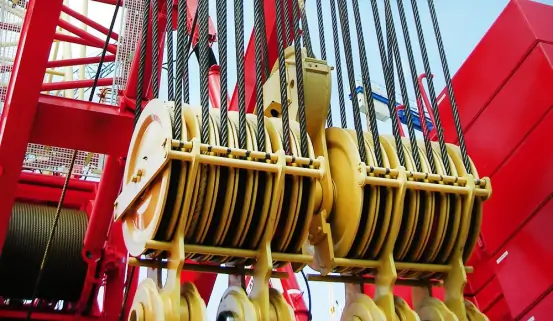
Ship-to-shore crane ropes, usually steel wire ropes in the hoisting system, connect the hoisting machinery and reeving arrangement to the spreader. The ropes pass over sheaves and wind onto or unwind from the hoist drum, raising and lowering the container through the spreader.
- Component Function: Hoisting wire ropes transmit the lifting force between the hoisting machinery and the suspended load.
- Operating Role: Rope diameter, construction, reeving arrangement, drum compatibility, and rated capacity must match the crane design. Correct rope routing and equal load distribution across the reeving system are important to hoisting performance.
- Maintenance Considerations: Inspect for broken wires, diameter reduction, corrosion, kinks, crushing, birdcaging, and damage near rope terminations. Check rope-end anchorage and sheaves for wear or misalignment. Apply the discard criteria specified by the applicable standards and the crane maintenance manual.
STS Crane Rail
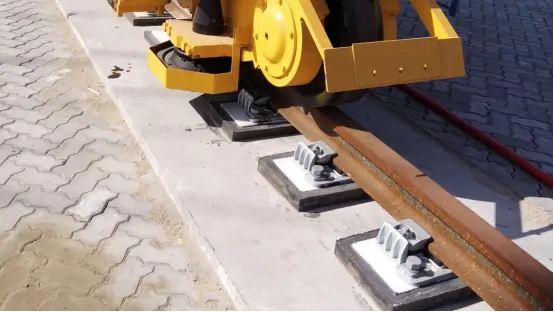
The STS crane rail system supports crane travel along the quay. Steel rails are secured to the supporting structure using the specified fastening and anchoring arrangement. Crane wheels run along the rails, allowing the complete crane to move between working positions along the berth.
- Component Function: The rails provide the running surface for crane travel and transfer wheel loads to the quay structure.
- Operating Role: Rail gauge, alignment, elevation, joint condition, and surface quality affect wheel tracking and load distribution. Rail and foundation design must account for the crane’s wheel loads and operational forces.
- Maintenance Considerations: Check rail wear, surface damage, joint condition, fasteners, clips, anchors, and signs of foundation settlement. Measure alignment and gauge against the approved installation drawings. Investigate abnormal wheel wear, vibration, or travel resistance rather than treating these symptoms as isolated wheel problems.
How STS Crane Parts Work Together
STS crane parts operate as a coordinated system throughout the container handling cycle. The hoisting, trolley, boom, electrical, and rail travel systems each control a specific movement or operating function.
1. Hoisting System: The motor drives the gearbox and hoist drum. Wire ropes run through the sheave system to raise or lower the spreader and container.
2. Trolley System: The trolley travels along the main girders, moving the suspended container between the quay-side transfer area and the target position on the vessel.
3. Boom System: The boom hoist mechanism raises or lowers the hinged boom to provide vessel clearance during berthing and departure. The boom remains in its working position during container handling.
4. Electrical System: Power cables, cable reels or other cable management equipment, drives, and control systems supply and control the crane’s moving mechanisms.
5. Rail Travel System: Travel motors drive the wheel assemblies along the quay rails, positioning the entire STS crane along the berth.
These systems work in sequence during loading and unloading. The hoisting system lifts the container, the trolley moves it horizontally, and the hoist lowers it into position. The electrical control system coordinates movement, while the rail travel system repositions the crane when operations require a different working location.
STS Crane Types
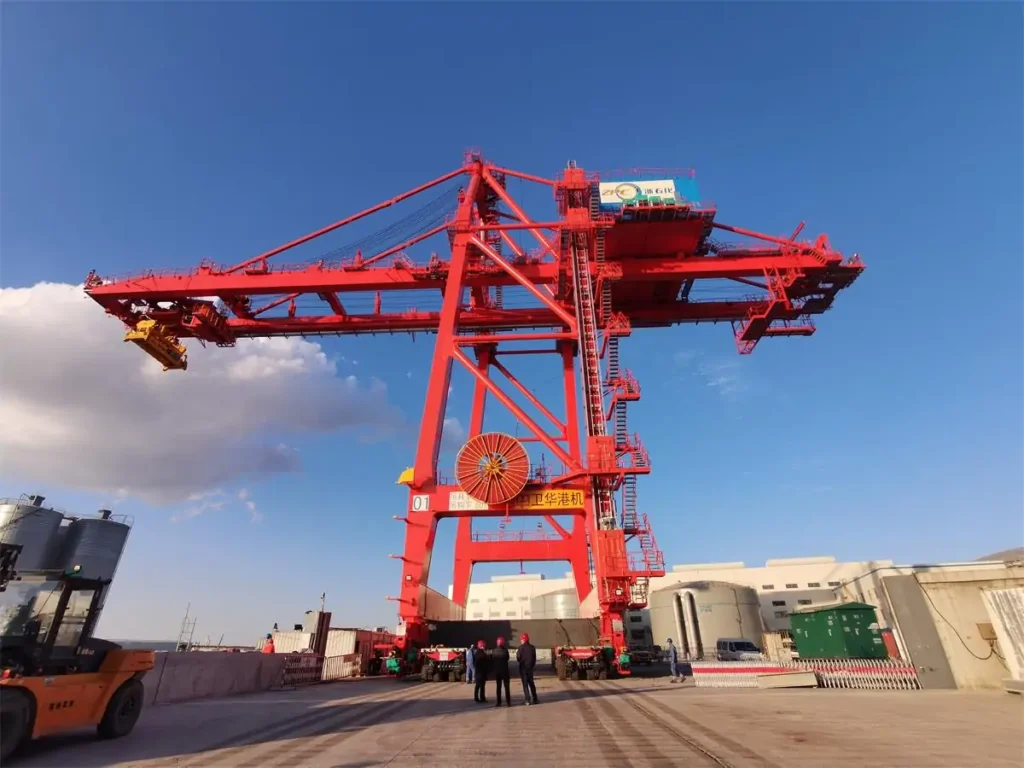
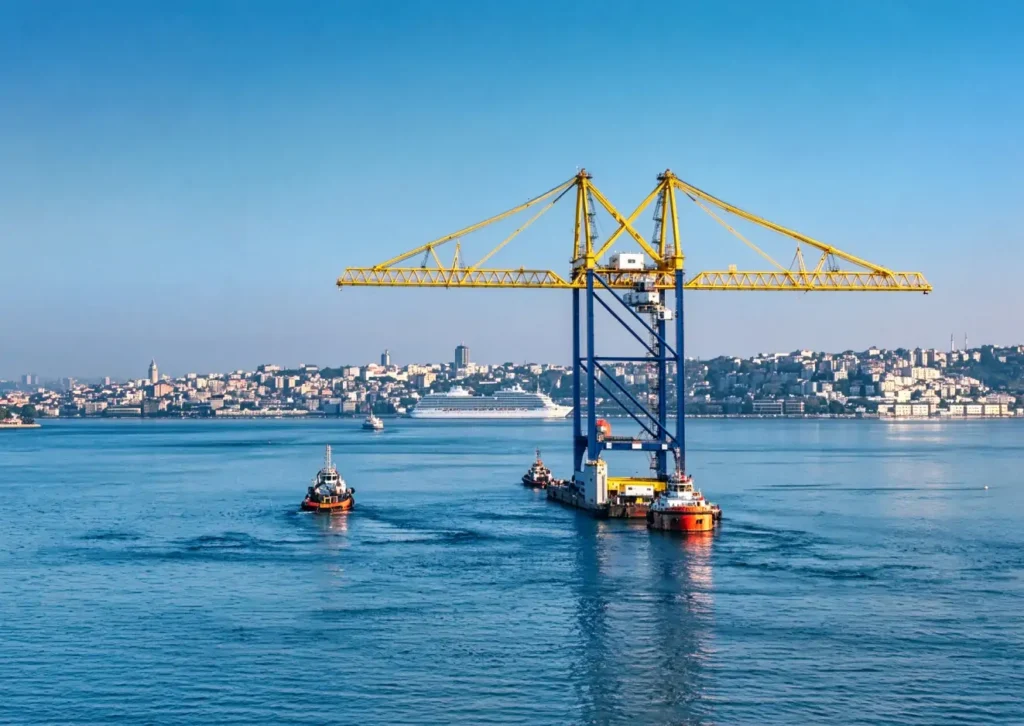
What Should Be Checked During STS Crane Parts Maintenance?
Regular inspection of STS crane parts focuses on structural condition, mechanical wear, electrical connections, and travel performance. Key inspection points include:
- Steel Structure: Check for cracks, corrosion, damaged welds, deformation, and loose bolted connections on the gantry, main girders, and boom.
- Boom and Hoisting System: Inspect boom hinge points, hoist brakes, sheaves, wire ropes, rope terminations, and signs of mechanical wear.
- Cables: Check insulation damage, abrasion, exposed conductors, connector condition, and cable reel or festoon operation.
- Cabin and Controls: Test control devices, displays, alarms, and communication equipment. Check window visibility, wipers where fitted, and cabin environmental controls.
- Rails and Wheels: Inspect wheel wear, rail surfaces, alignment, joints, clips, and fasteners. Check for abnormal vibration, uneven travel, or signs of foundation settlement.
Inspection intervals, repair procedures, and component replacement criteria should follow the equipment manual, crane duty classification, operating conditions, and applicable standards. Any defect affecting structural integrity, load control, braking, or safe crane travel requires assessment by qualified maintenance personnel before the equipment returns to service.
WEIHUA STS Crane Parts and Engineering Support
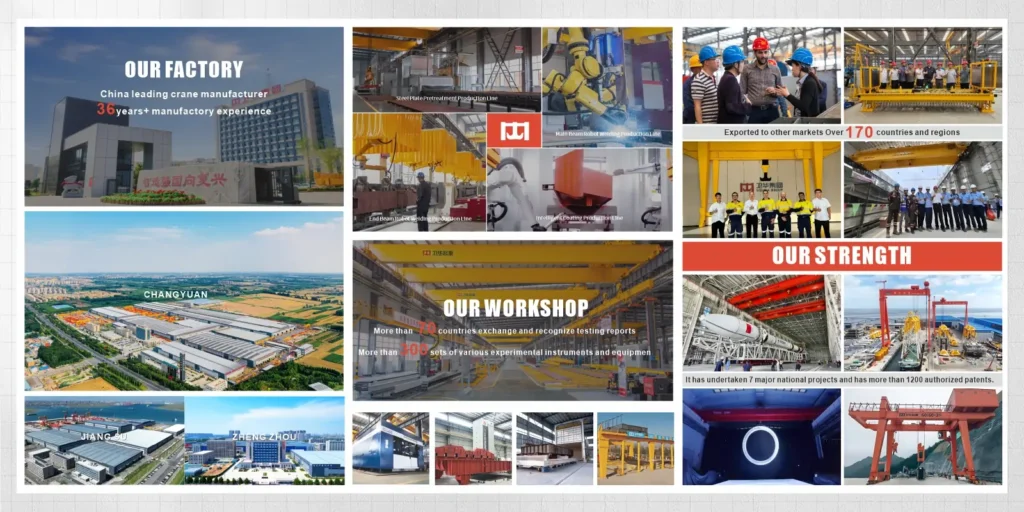
وي هوا designs and manufactures ship-to-shore (STS) cranes for container terminals, with crane structures, operating mechanisms, electrical systems, and component configurations specified according to project requirements. Engineering plans account for vessel dimensions, required outreach, rated lifting capacity, terminal layout, and operating conditions.
Before production, WEIHUA confirms the main component configuration against the project’s technical specifications and approved drawings. Installation support, commissioning, and operator training can be arranged according to the project scope. After-sales service covers technical consultation and maintenance support, with spare parts supply based on the equipment model, component specifications, and confirmed supply scope.
Contact WEIHUA to discuss your STS crane project, component requirements, or spare parts needs. Our team can review your technical specifications and provide information on crane configurations, engineering support, installation, commissioning, and after-sales service. Send us your project details to discuss a suitable solution for your container terminal.
أسئلة شائعة
What are the main parts of an STS crane?
The main STS crane parts include the gantry structure, boom, hoisting system, trolley, spreader, operator cabin, electrical control system, rail travel system, and safety devices. The exact configuration varies with crane design, rated capacity, vessel dimensions, and terminal operating requirements.
What is the function of an STS crane boom?
The STS crane boom extends over the vessel and provides the travel path for the trolley. On hinged-boom designs, a boom hoist mechanism raises the boom to provide clearance for vessel berthing and departure. The boom is lowered to its working position for container handling.
What does the hoisting system do on a ship-to-shore crane?
The hoisting system raises and lowers containers through the spreader. Its main components include the hoist motor, gearbox, drum, wire ropes, and sheaves. These components work together to control vertical movement under the crane’s specified load and operating conditions.
What is the function of the STS crane cabin?
The STS crane cabin provides the operator’s control station, with controls and displays for crane movements and operating status. Its position and viewing angles are designed around spreader alignment, vessel container positions, and quay-side operations. Cabin equipment varies by crane configuration.
What types of cables are used in STS cranes?
STS cranes use power cables to supply motors and electrical equipment, along with control and communication cables to transmit operating signals. Cable reels, festoon systems, or other cable management devices accommodate movement. Cable type and arrangement depend on travel distance, electrical load, and crane design.
How often should STS crane wire ropes be inspected?
Inspection frequency depends on operating hours, duty classification, working conditions, and applicable standards. Checks should cover broken wires, corrosion, wear, deformation, diameter reduction, and rope-end connections. Replacement decisions must follow the specified discard criteria in the crane maintenance manual and relevant regulations.
What should be checked when inspecting STS crane rails?
Inspect rail alignment, gauge, surface wear, joints, fasteners, clips, anchors, and supporting foundations. Uneven wheel wear, abnormal vibration, or irregular crane travel may indicate rail or wheel problems. Measurements should be compared with the approved installation drawings and specified tolerances.
How can I identify the correct replacement parts for an STS crane?
Provide the crane model, serial number, component name, nameplate information, and relevant drawings or photographs. For items such as wire ropes, cables, brakes, and travel wheels, verify the technical specifications and interface dimensions before ordering. Contact WEIHUA to discuss compatible replacement parts and supply requirements.