- ПродуктОборудованиеТочное управление, Индивидуальное решение для кранаЭлектронная почта:WhatsApp / WeChat:+8613781917315Адрес:Китай, провинция Хэнань, город Чанъюань, шанхайская дорога, дом 18
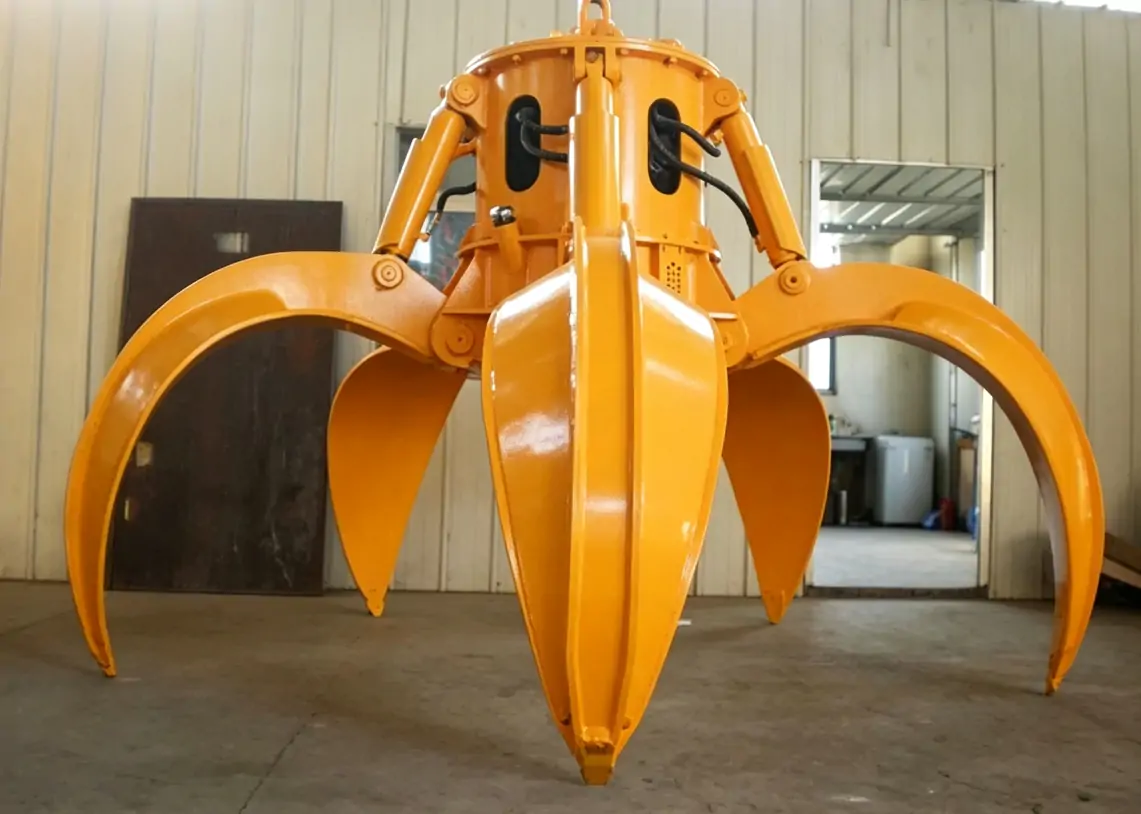
A Hydraulic Orange Peel Grab Bucket, also called a hydraulic cactus grab or electro-hydraulic orange peel grab, is a multi-tine attachment for handling scrap steel, metal scrap, rock, and other irregular materials. Hydraulic cylinders control the tines from multiple directions, reducing material slippage during loading and discharge.
It is used with overhead cranes, gantry cranes, port cranes, and excavators in recycling yards, steel mills, ports, and mines. Common crane-mounted models use 6 tines with capacities of 0.5–5.0 m³. Larger configurations can reach 20 m³.
Capacity, tine number, opening size, hydraulic pressure, and mounting connection can be customized. Working pressure is typically 180–260 bar for different crane and excavator systems.
For more information, read the article: What Is a Crane Grab Bucket?
Orange Peel Grab Buckets are available with different tine numbers to handle various scrap sizes, material shapes and loading conditions. Tine quantity affects the grab opening, contact area and material holding performance.
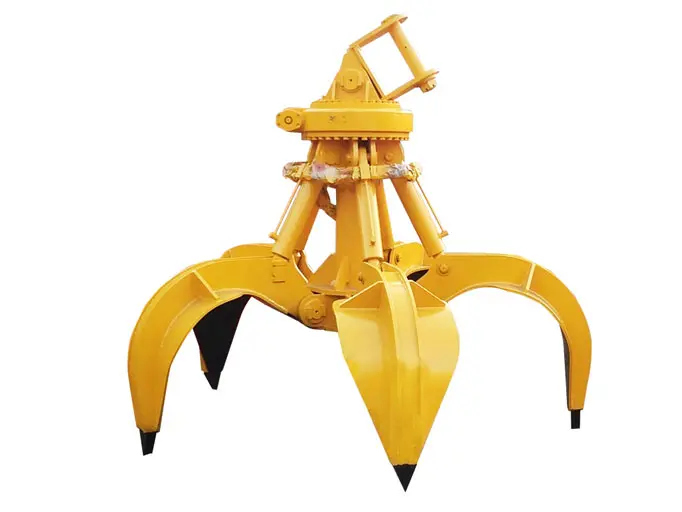
The 4-tine design has a larger opening and wider tine spacing. It is used for oversized scrap steel, heavy steel pieces, rocks and demolition materials. The structure allows the grab to enter large material piles and handle bulky loads.
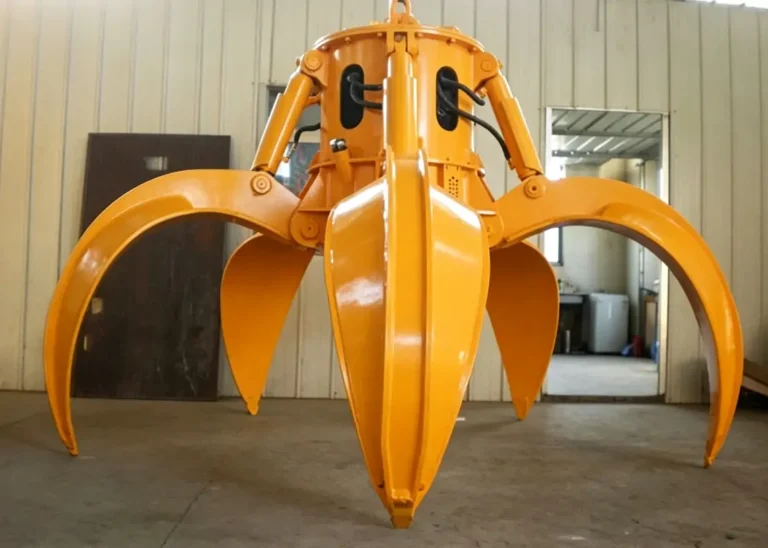
The 5-tine configuration offers a balanced structure for general scrap handling. It is commonly used for mixed metal scrap, irregular steel pieces and bulk materials with different sizes.
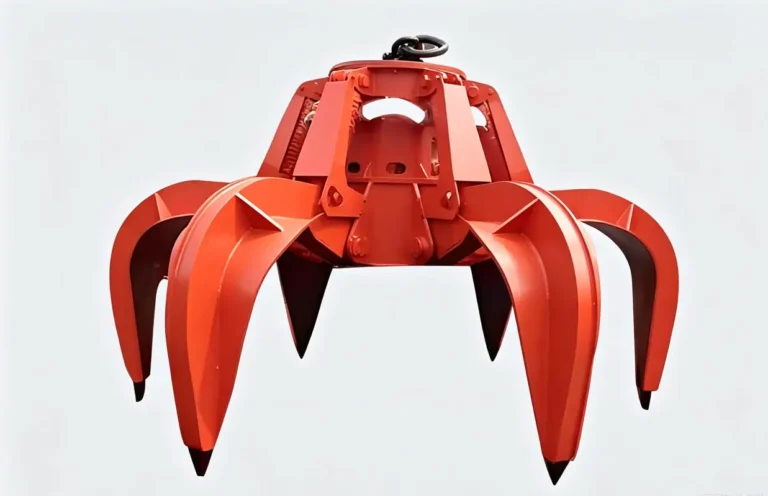
The 6-tine design increases the contact points between the grab and material. It is used for scrap steel, mixed scrap and irregular metal pieces that require stable gripping during lifting.
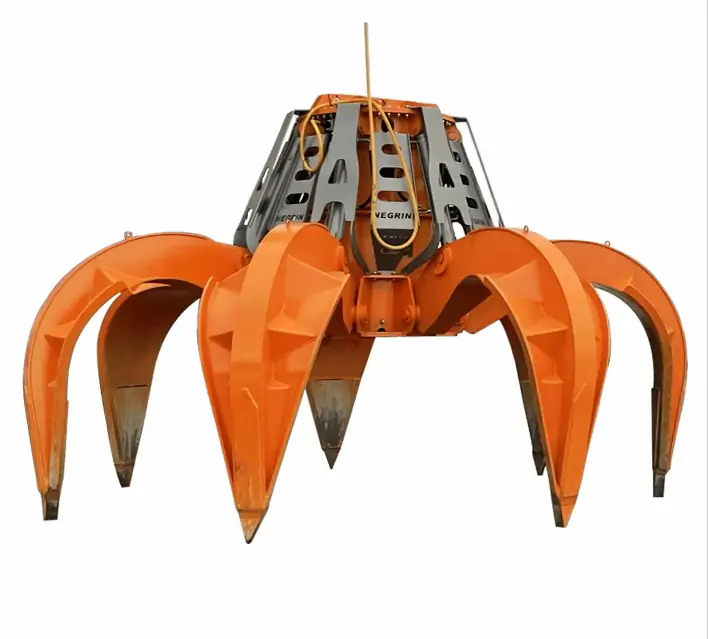
The 7–8 tine configuration features narrower gaps between tines and a compact grabbing structure. It is used for small scrap pieces, metal fragments and mixed materials with loose or irregular shapes.
The grab tines are driven by hydraulic cylinders mounted between the upper frame and each tine. Extending the cylinders closes the tines around the load, while retracting them opens the tines for discharge. Each tine is driven by its own cylinder or cylinder pair, distributing the closing force around the load. This allows the grab to hold irregular scrap, rock, and other uneven materials without relying on a single closing point.
1. Lowering: The open grab is lowered onto the scrap or bulk material. The retracted tines provide the maximum opening and allow the grab to penetrate the pile under its own weight.
2. Grabbing: The hydraulic cylinders extend and close the tines around the material. The closing force increases as the tines meet resistance. Hydraulic pressure holds the load during lifting.
3. Lifting: The crane or excavator lifts the closed grab and its load. The load is supported by the tines and hydraulic circuit, without rope tension to keep the grab closed.
4. Discharging: The hydraulic cylinders retract to open the tines at the discharge point. The operator can control the opening, including partial opening, when discharging into a hopper, truck bed, or stockpile.
The hydraulic cylinders control the tines directly, without a mechanical closing rope.
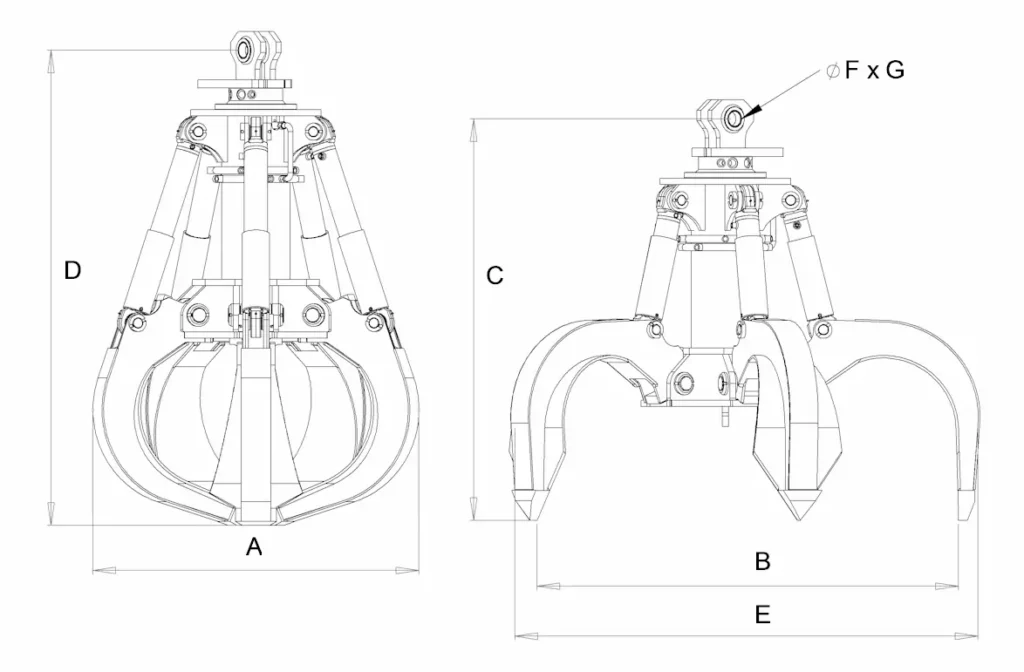
| Параметр | Спецификация |
|---|---|
| Тип привода | Hydraulic (electro-hydraulic / excavator hydraulic) |
| Grab Capacity | 0.3–20.0 m³ (standard 0.5–5.0 m³) |
| Rated Load / SWL | 3.2–63 t |
| Tine / Petal Number | 4–8 tines (4–5 for excavators, 6 standard, 7 for ≥3.2 m³) |
| Max Opening Size | 1,400–2,180 mm |
| Rotating Type | 360° hydraulic rotator (optional) / Non-rotating |
| Working Pressure | 180–260 bar |
| Dead Weight | 550–9,180 kg |
| Close Time | 9–14 s (380V/50Hz) |
| Material | Q355B / Q690D / NM400 / NM500 wear-resistant steel |
| Applicable Materials | Scrap steel, metal scrap, rock, stone, irregular bulk |
| Applicable Equipment | Overhead crane, gantry crane, port crane, excavator |
| Сертификация | ЦЭ / ISO 9001 |
Tine count varies by capacity: 4–5 tines for small excavator units, 6 tines for the mainstream crane-mounted range, and 7 tines for large 3.2 m³ and above configurations.
An orange peel grab uses multiple tines to grip irregular loads from several directions. This structure suits materials that are difficult to contain with a conventional two-shell grab.
An orange peel grab is a practical choice for scrap yards, steel plants, ports, mines, and other sites handling irregular bulk materials.
Regular inspection and maintenance of crane grab buckets can extend their service life. For details, please refer to: Crane Grab Bucket Maintenance Tips to Extend Service Life.
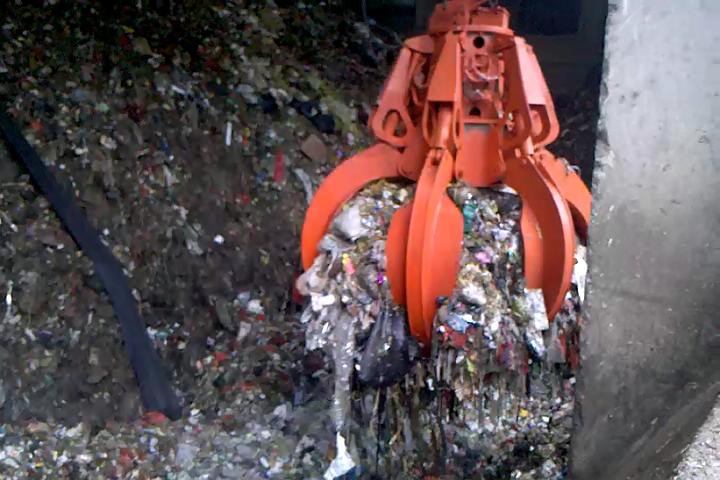
Grabbing bulky waste and irregular materials in waste sorting and processing facilities.
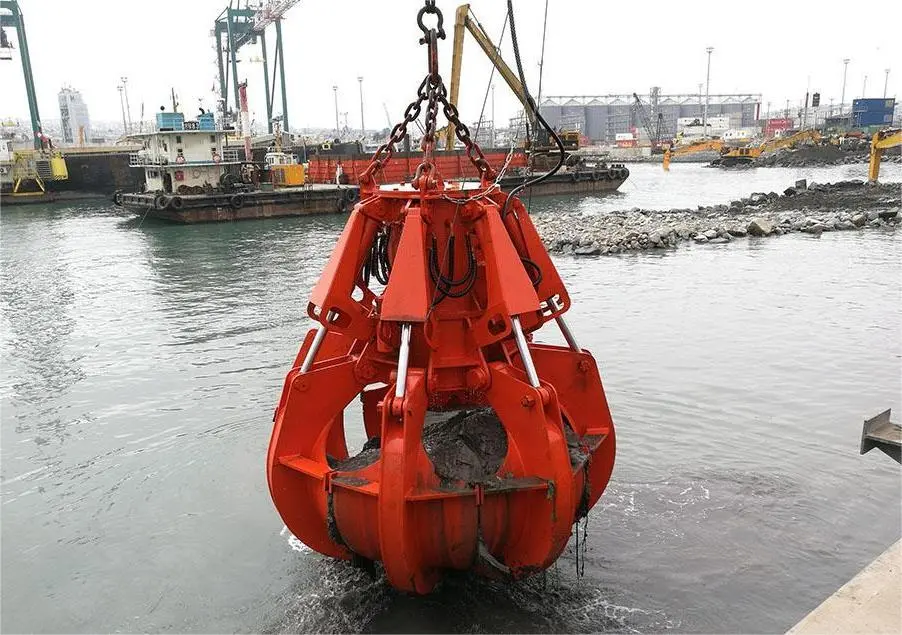
Loading and unloading scrap, minerals, and other bulk cargo at ports and terminals.
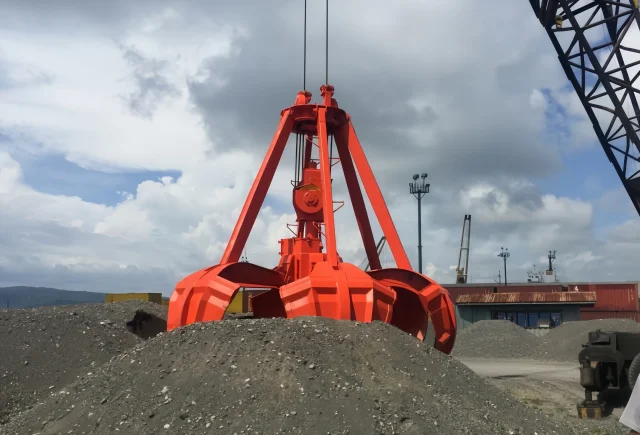
Moving scrap steel and raw materials between storage, charging, and processing areas.
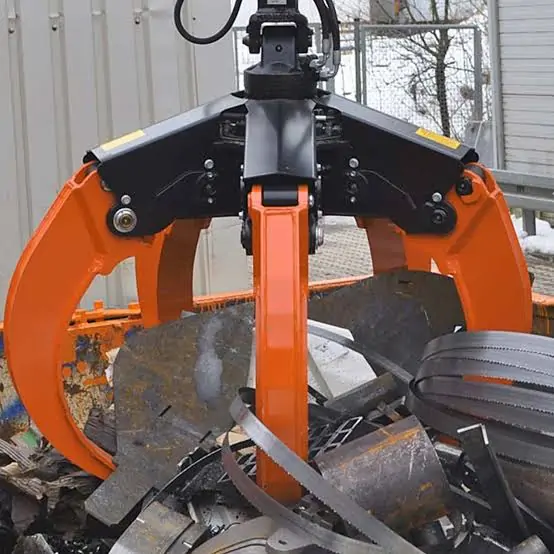
Handling steel scrap, cut steel sections, and irregular metal pieces in recycling yards and steel plants.
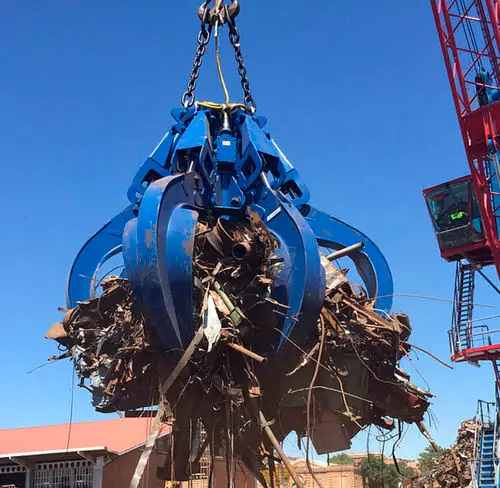
Loading and transferring non-uniform metal scrap in recycling and processing facilities.
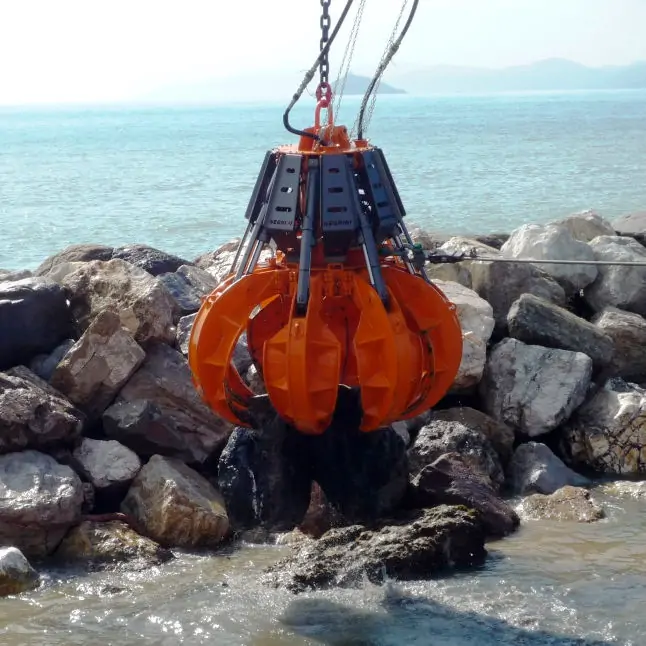
Handling loose rock, stone, and other irregular materials in mining and construction operations.
Orange peel grab buckets are widely used in various industries and are particularly suitable for handling irregularly shaped metal. Steel is one of the most common materials handled; for specific applications, read the article: Hydraulic Orange Peel Grab Bucket for Scrap
To learn more about the specific applications of crane grab buckets in heavy-duty industries, read the article: “Crane Grab Bucket Applications in Ports, Steel Mills, Mining, and Bulk Material Handling”
Hydraulic grabs are widely used in port material handling. For details on materials and how to select the appropriate equipment, please refer to the article: “Electro Hydraulic Grab Bucket for Port Bulk Material Handling.”
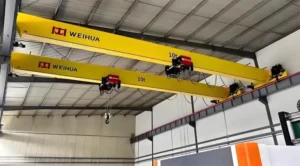
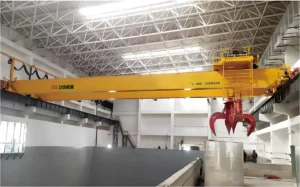
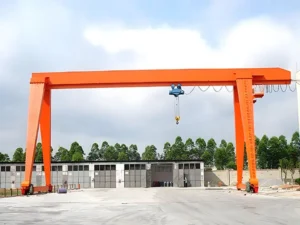
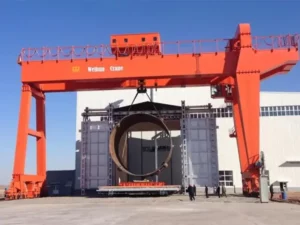
Hydraulic Orange Peel Grab Buckets can be mounted on different crane systems for scrap steel, metal waste, and other irregular heavy materials. The crane type is selected according to the working area, lifting capacity, and handling process.
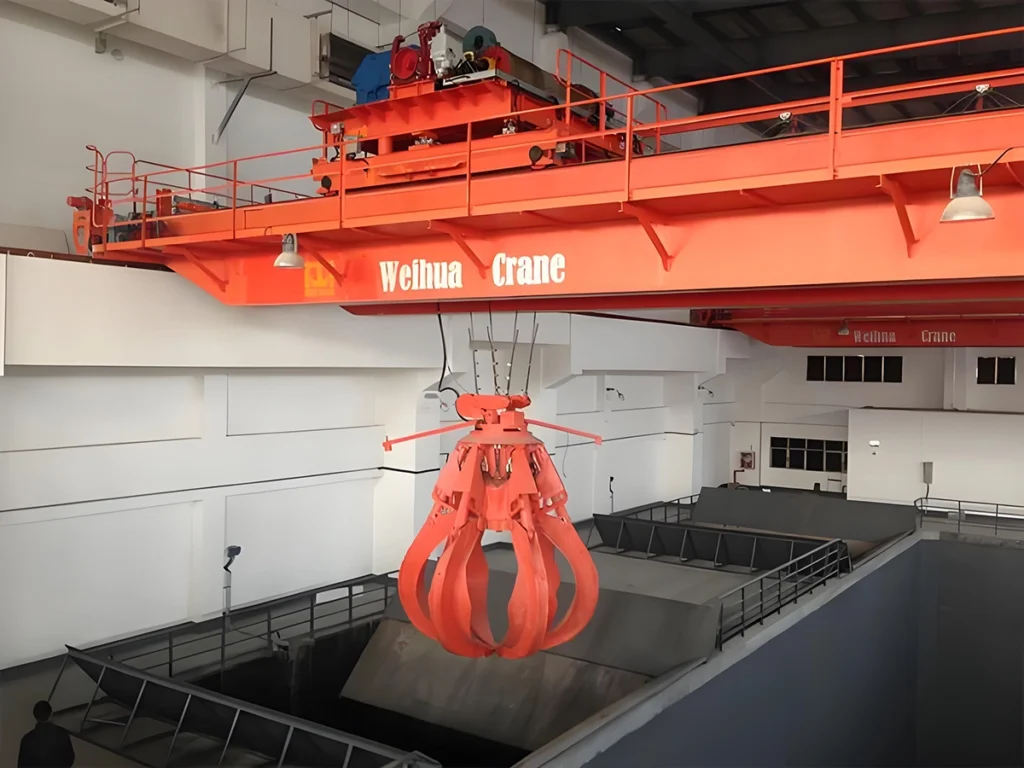
Used in steel mills, scrap processing plants, and indoor material yards. The hydraulic orange peel grab handles scrap steel, metal pieces, and production waste for loading, sorting, and transfer.
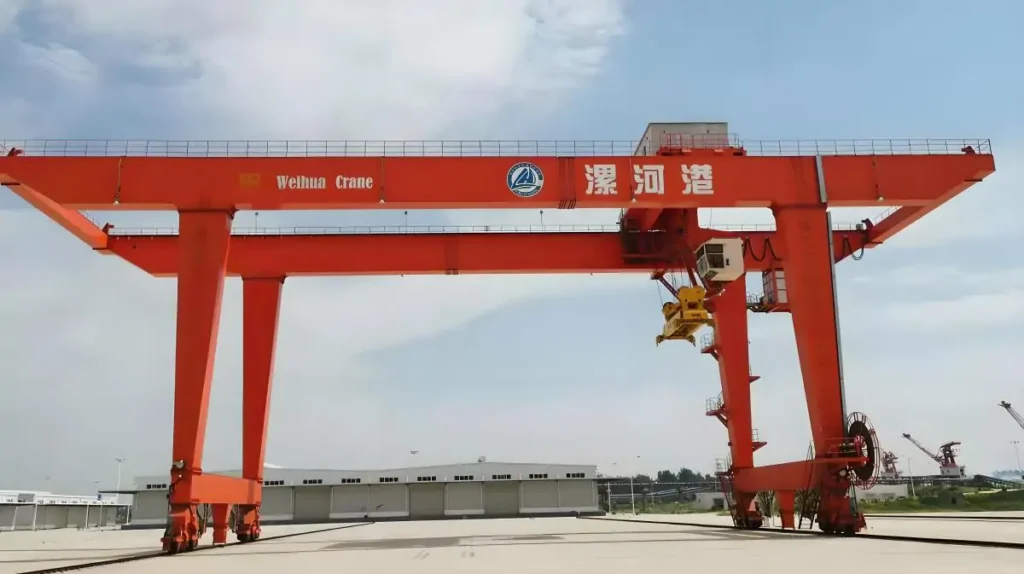
Used in outdoor scrap yards, steel storage areas, and industrial yards. The grab handles large metal pieces and heavy scrap between storage, processing, and loading areas.
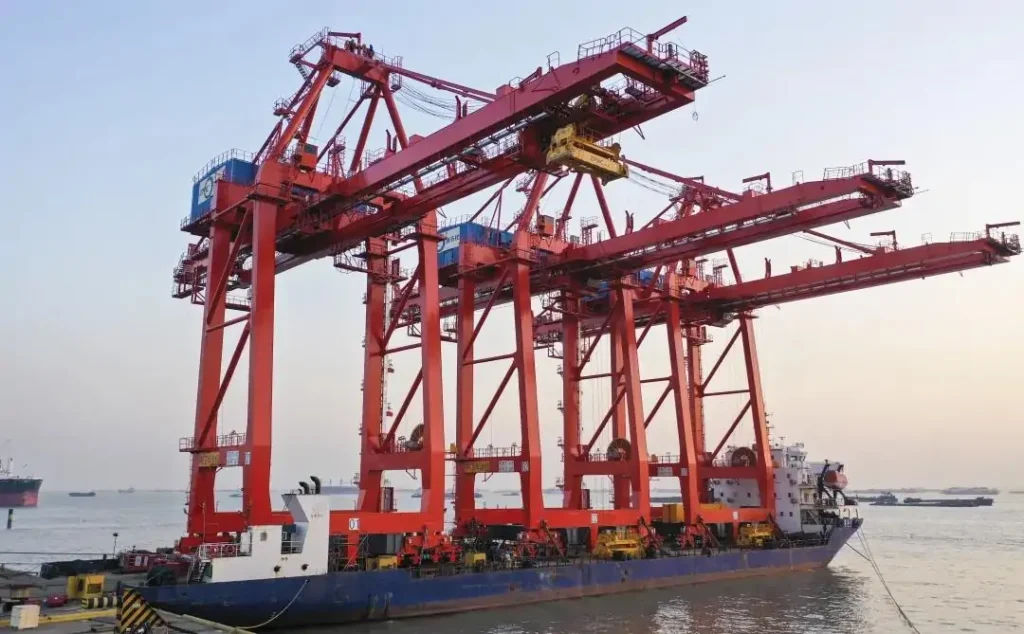
Used for bulk and scrap cargo handling at ports and terminals. The hydraulic orange peel grab handles scrap steel, metal waste, and irregular cargo during loading and unloading operations.
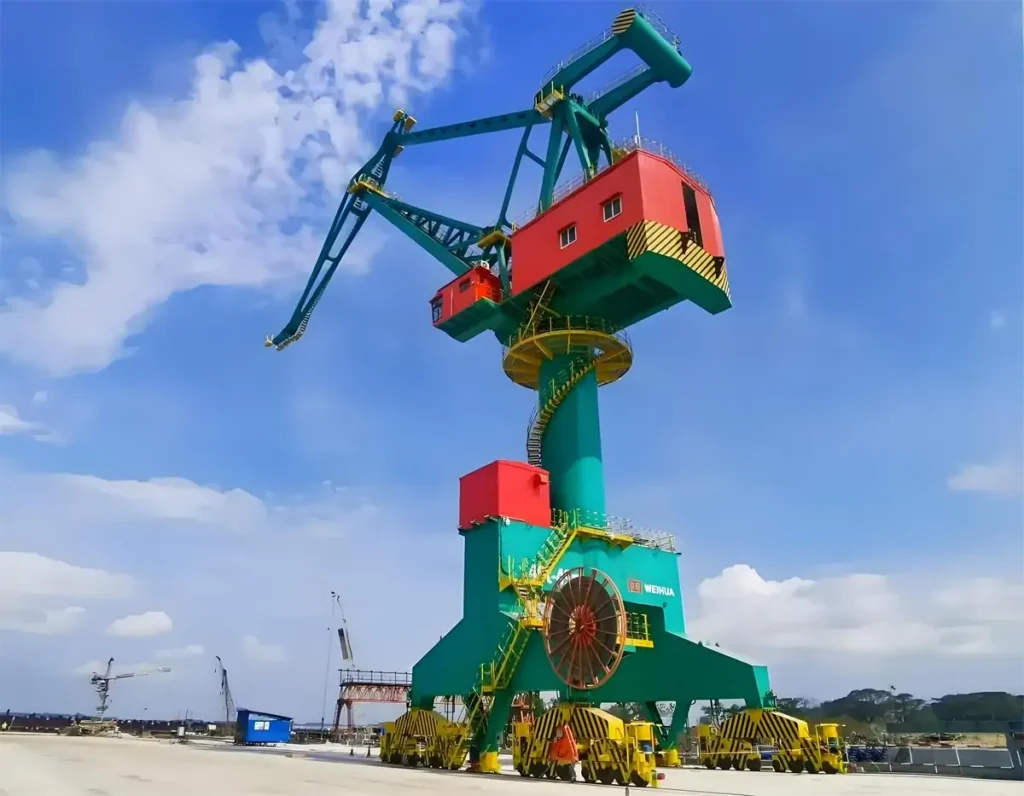
Used for multi-purpose port and yard operations. The orange peel grab handles scrap steel, bulk metal waste, and other irregular cargo with the crane’s slewing and lifting movements.
The right grab depends on the material, required capacity, tine configuration, and lifting equipment. Check the hydraulic system and working conditions before finalizing the grab size.
Consider the material type, piece size, shape, and density. Scrap steel, mixed metal, rock, and other irregular materials may require different tine designs.
Select the grab capacity according to material density and the required load per cycle. The grab weight must also fit within the crane or excavator lifting capacity.
Choose the number of tines according to material size and the required grip. Fewer tines provide a wider opening, while more tines give closer load coverage.
Check the crane or excavator capacity, hook or mounting connection, available lifting height, and working reach before selecting the grab.
Match the working pressure, flow rate, and power supply with the available hydraulic system. Crane-mounted and excavator-mounted grabs use different hydraulic arrangements.
Select the grab configuration based on the material, equipment, and site conditions rather than capacity alone.
If you are considering using an overhead crane or gantry crane and are unsure how to select the appropriate grab bucket, see the article: How to Choose a Grab Bucket for Overhead Cranes and Gantry Cranes?
Hydraulic Orange Peel Grab Buckets and Hydraulic Clamshell Grab Buckets both use hydraulic cylinders to open and close the grab. The main difference is the shell design. Orange peel grabs use multiple tines for irregular materials, while clamshell grabs use two shells for bulk materials.
| Сравнение | Hydraulic Orange Peel Grab Bucket | Hydraulic Clamshell Grab Bucket |
|---|---|---|
| Grab Structure | Multiple tines | Two clamshells |
| Grabbing Method | Tines surround and grip the material | Shells close around the material |
| Typical Materials | Scrap steel, metal waste, rocks | Coal, sand, ore, grain, bulk materials |
| Material Shape | Large, irregular and bulky pieces | Loose and granular materials |
| Material Retention | Multiple tines grip irregular loads | Enclosed shells hold loose materials |
| Типичные применения | Scrap yards, steel plants, demolition sites | Ports, mines, warehouses, bulk material yards |
| Common Crane Types | Overhead crane, gantry crane, port crane | Overhead crane, gantry crane, port crane |
Hydraulic Orange Peel Grab Buckets are mainly used for irregular and bulky materials such as scrap steel. Hydraulic Clamshell Grab Buckets are commonly used for loose bulk materials such as coal, sand, and ore. The material type and load shape are the main factors when selecting between the two.
For details on the different applications of grab buckets and how to choose the right one, see: Different Types of Crane Grab Buckets and How to Choose the Right One
Hydraulic Orange Peel Grab Buckets can be configured for different materials, lifting equipment, and working conditions. Grab capacity, tine structure, hydraulic system, and mounting connection can be specified for the required application.
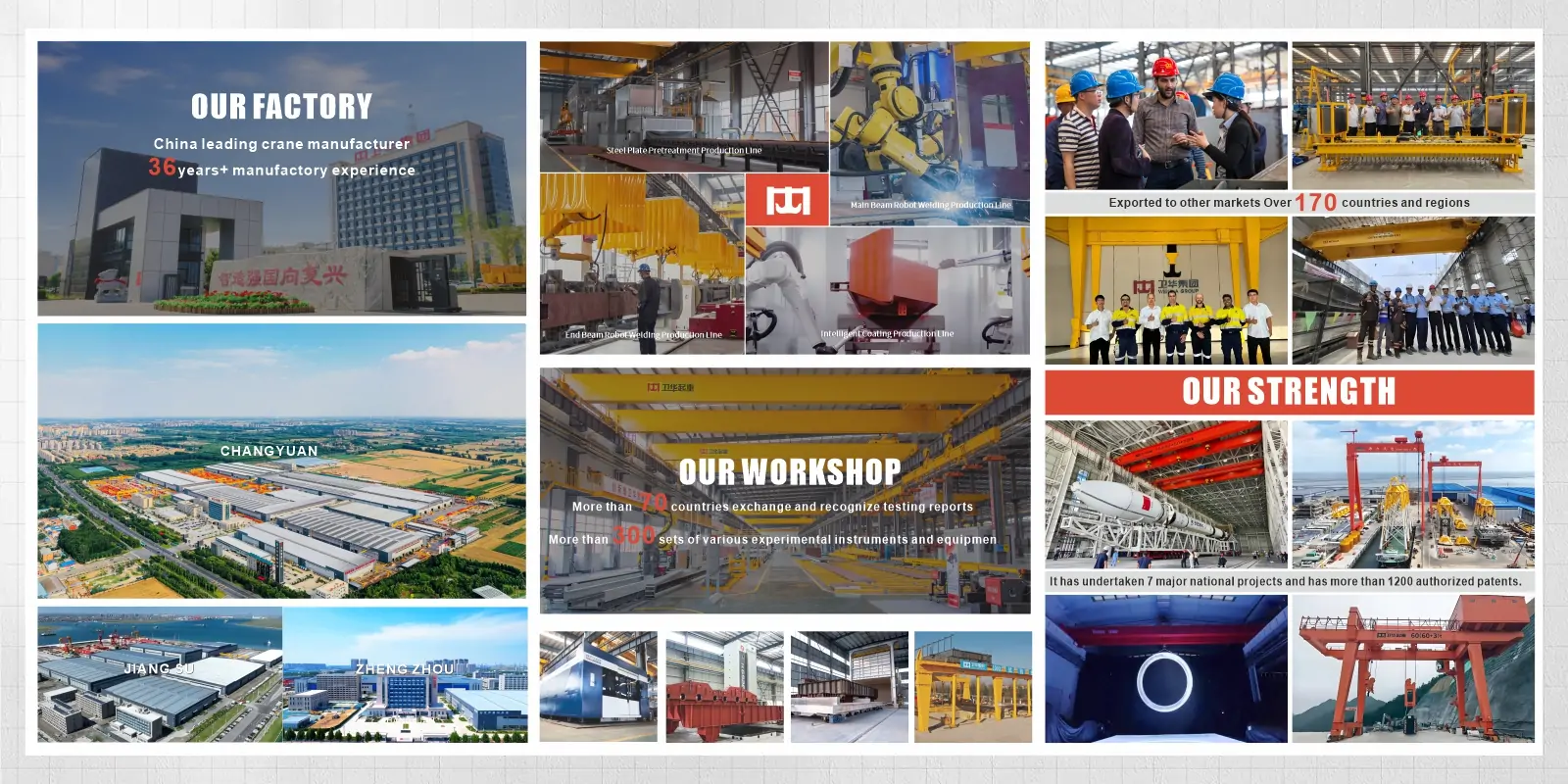
Вейхуа manufactures and supplies Hydraulic Orange Peel Grab Buckets for scrap steel, metal scrap, rock, and other irregular material handling applications. The grabs can be configured for overhead cranes, gantry cranes, port cranes, and excavators, with customized capacity, tine configuration, opening size, hydraulic system, and mounting connection. We have supplied material handling equipment to overseas markets and hold certifications including CE and ISO9001.
WEIHUA provides technical support from product selection and configuration to delivery, installation guidance, commissioning, and after-sales service. Spare parts and maintenance support are available for long-term operation. Send your material type, required capacity, and crane or excavator specifications to discuss a suitable Hydraulic Orange Peel Grab Bucket with the WEIHUA team.
A Hydraulic Orange Peel Grab Bucket is a multi-tine attachment for handling scrap steel, metal scrap, rock, and other irregular materials. Hydraulic cylinders control the tines to grip, lift, and discharge the load.
Hydraulic cylinders open and close the tines around the material. The crane or excavator lifts the closed grab, then the cylinders retract to open the tines and discharge the load.
It can handle scrap steel, metal scrap, rock, stone, and other irregular or bulky materials. The tine configuration and wear-resistant components can be selected for different material conditions.
An Orange Peel Grab uses multiple tines to grip irregular loads from several directions. A Clamshell Grab uses two or more shells and is more commonly used for loose, free-flowing bulk materials.
Hydraulic Orange Peel Grabs can be used with compatible overhead cranes, gantry cranes, and port cranes. Grab weight, capacity, mounting connection, and hydraulic power must match the crane.
Yes. Excavator-mounted Orange Peel Grabs connect to the excavator’s auxiliary hydraulic system. Grab capacity, hydraulic pressure, flow rate, and mounting connection are matched to the excavator.
Consider the material type, size, density, required capacity, tine configuration, and lifting equipment. Hydraulic pressure, flow rate, opening size, and working conditions should also be checked.
Yes. WEIHUA can customize the capacity, tine number, opening size, hydraulic system, rotating system, wear-resistant materials, and crane or excavator connection according to the application.
Weihua, основанная в 1988 году, превратилась в мирового лидера в области интеллектуального производства Китая. Мы специализируемся на исследованиях, разработках и производстве умных кранов, а также предлагаем решения для AGV. Наши профессиональные команды инженеров, по доставке и послепродажному обслуживанию предоставляют комплексную техническую поддержку, индивидуальные решения, руководство по установке на месте и оперативное глобальное обслуживание, чтобы обеспечить безопасную и эффективную работу каждого проекта.
Свяжитесь с нами сейчас по электронной почте: [email protected], или заполните форму ниже.
Козловой кран — это подъемное оборудование, широко используемое в различных отраслях промышленности, на строительных площадках, в портах, на складах и в других областях. Его уникальная конструкция и мощная грузоподъемность делают его идеальным для современной погрузочно-разгрузочной техники для тяжелых условий. Конструкция типа “козлы” позволяет крану свободно перемещаться в пределах пространства, охватывая большую рабочую зону. Так что же делает козловые краны особенными? Каковы их типы, параметры, методы управления, области применения и принципы работы? Чем они отличаются от мостовых кранов? Давайте разберемся вместе. Типы козловых кранов По конструкции, применению и условиям эксплуатации козловые краны обычно подразделяются на следующие типы: Однобалочный козловой кран Однобалочные козловые краны широко используются в промышленных секторах, на складах, в портах и цехах. Имея подъемный механизм на одной балке, они перемещаются с помощью боковых стоек и рельсов, расположенных снизу. Благодаря своей простой конструкции, удобству эксплуатации и умеренной грузоподъемности они идеально подходят для работы с легкими и средними грузами. Способные свободно перекрывать большие расстояния, однобалочные козловые краны подходят для погрузочно-разгрузочных работ и подъема тяжелых грузов. Двухбалочный козловой кран По сравнению с однобалочными козловыми кранами, двухбалочные козловые краны обладают большей...
В портах, логистических парках и на промышленных объектах, где ведется погрузка и разгрузка материалов, портальные краны и козловые краны являются двумя распространенными и основными типами погрузочно-разгрузочного оборудования. Они различаются по конструкции, эксплуатационным характеристикам, методам работы, сценариям применения и стоимости. Данная статья представляет собой всесторонний анализ портальных кранов в сравнении с козловыми кранами и поможет вам сделать правильный выбор. Сравнение конструкций Структурные различия между портальными кранами и козловыми кранами в основном проявляются в методах несущей способности, траекториях движения и диапазонах охвата. Первые сосредоточены на фиксированной башне и вращающейся стреле, делая упор на “точечное покрытие” и гибкое горизонтальное вращение. Вторые оснащены портальной рамой и движутся по продольным рельсам, отдавая приоритет “широкому горизонтальному перемещению” и эффективной обработке материалов на месте. Следовательно, их различные конструктивные решения напрямую определяют их различные сценарии применения. Конструктивные особенности портального крана Портальные краны с поворотной стрелой имеют одно/двухконсольные стреловые конструкции, где башня закреплена на фундаменте или рельсах, что обеспечивает вращение на 360° или частичное вращение. Такая конфигурация обеспечивает гибкую работу в узких, удлиненных пространствах, таких как береговые линии, доки и причалы, что делает их особенно подходящими для погрузки/разгрузки материалов между судном и берегом. Их основная функция сочетает в себе вертикальное…
В современных промышленных операциях эффективная обработка материалов имеет решающее значение для максимизации производительности и оптимизации рабочего процесса. Козловые мостовые краны, также известные как мостовые краны или электромостовые краны (EOT), представляют собой стационарные системы обработки материалов, широко используемые в производстве, металлообработке, складском хозяйстве, а также при погрузочно-разгрузочных работах. В этой статье мы рассмотрим принцип работы, основные компоненты, области применения и эксплуатационные преимущества козловых мостовых кранов, предоставив исчерпывающее руководство для промышленных планировщиков и специалистов по логистике. Принцип работы козлового мостового крана Козловой мостовой кран работает на мостовой конструкции, перекрывающей рабочую зону, с тележкой и подъемным механизмом, которые перемещаются горизонтально вдоль моста и вертикально поднимают или опускают грузы. Перемещение крана по крановому пути в сочетании с точным управлением подъемом обеспечивает эффективную и безопасную обработку тяжелых материалов на заводах, складах и промышленных предприятиях. Информацию о том, как работают мостовые краны, см. в этой статье: Принцип работы мостового крана: компоненты, движение и процесс эксплуатации Терминология, связанная с козловыми мостовыми кранами Ниже приведено введение в терминологию, относящуюся к частям козловых мостовых кранов. Грузоподъемность крана: Грузоподъемность крана относится к максимальному весу, который козловой мостовой кран может безопасно поднять. Обычно измеряется в тоннах…
Козловой кран (Electric Overhead Traveling Crane) — это эффективная и надежная система верхнего подъема, используемая для перемещения тяжелых материалов на фабриках, складах, мастерских и промышленных предприятиях. Перемещаясь по верхним рельсам, козловые краны обеспечивают безопасное и точное трехмерное перемещение грузов за счет скоординированных движений подъема, поперечного и продольного перемещения. Эта статья проведет вас через определения, типы, конструкцию, принципы работы, области применения и факторы стоимости козловых кранов, чтобы помочь вам выбрать наиболее подходящее решение для ваших потребностей в подъеме. Как работает козловой кран? Принцип работы козлового крана включает комбинацию вертикального подъема, горизонтального перемещения тележки и продольного перемещения моста, что обеспечивает эффективную работу с тяжелыми грузами на промышленных объектах. Кран работает на приподнятых рельсовых путях, установленных вдоль конструкции здания, а мостовая балка перекрывает рабочее пространство. Подъемный механизм поднимает или опускает груз с помощью стальных тросов или цепей, а тележка перемещает груз горизонтально вдоль моста. Весь кран перемещается продольно по рельсовым путям, обеспечивая трехмерное позиционирование материалов. Современные козловые краны оснащены электродвигателями с точным контролем скорости…
Козловые краны широко используются на открытых складах, верфях, заводах и строительных площадках, что делает их одним из самых универсальных и широко применяемых решений для перемещения материалов. Козловые краны бывают различных типов, каждый из которых может быть настроен в соответствии с различными грузоподъемностями, условиями площадки и эксплуатационными требованиями. Однако выбор неправильной конфигурации может привести к ненужным расходам, ограниченной грузоподъемности или ограничениям при будущих расширениях. Итак, какие основные типы козловых кранов существуют? Как выбрать правильный тип для вашего применения? В этом руководстве мы предоставим подробный обзор различных типов козловых кранов на основе их конструкции, мобильности и сценариев применения, что поможет вам принять правильное решение перед инвестированием в подъемное решение. Статья довольно объемная. Ниже приведено наше содержание. Пожалуйста, перейдите к соответствующему разделу по мере необходимости: Что такое козловой кран? Козловые краны — это подъемное оборудование, предназначенное для эффективного перемещения тяжелых грузов на больших открытых площадках. Их отличительная конструкция включает одну или несколько основных балок, поддерживаемых жесткими (или гибкими) опорами с обеих сторон, образуя монументальную раму в виде “ворот”. Эти краны перемещаются...
 English English
  Русский
 العربية
 Français
 Português
 Español