





Оглавление
Введение
STS crane operating cost covers the expenses involved in running a ship-to-shore container crane during terminal operations. Energy consumption, labor, maintenance, operating hours, handling rate, and equipment utilization all affect the actual cost.
This article explains how to calculate STS crane operating cost per hour, STS crane operating cost per minute, and STS crane cost per minute. It also covers cost per container, major operating cost items, factors that change the cost, electric versus diesel STS cranes, and practical ways to control operating expenses. The final section outlines the project data needed for a more accurate cost estimate.
What Is Included in STS Crane Operating Cost?
кран STS operating cost consists of the expenses required to keep the crane in service during terminal operations. The actual cost structure varies with the crane power system, operating hours, maintenance plan, labor rates, and terminal accounting method.
Operating Cost Formula::STS Crane Operating Cost = Energy + Labor + Maintenance + Spare Parts + Consumables + Inspection + Insurance + Depreciation + Other Operating Expenses
- Energy: Electricity for electric STS cranes or fuel consumption for diesel-powered systems.
- Labor: Crane operators, maintenance technicians, and other personnel allocated to crane operation.
- Maintenance: Routine servicing, inspections, adjustments, repairs, and scheduled component replacement.
- Spare Parts: Wire ropes, brakes, wheels, motors, electrical components, spreader parts, and other replacement items.
- Consumables: Lubricants, hydraulic fluids, filters, and other materials used during operation and maintenance.
- Inspection: Periodic inspections, load tests, statutory checks, and related certification costs.
- Insurance: Equipment insurance and other crane-related operating coverage where included in the terminal cost model.
- Depreciation: Annual allocation of the crane investment over its accounting service life.
- Other Operating Expenses: Software support, communications, training, site services, and other costs assigned to crane operation.
The cost items included in the calculation should follow the terminal’s own accounting method.
Operating Cost
STS crane operating costs can be calculated per hour, per minute, or per container move based on operating expenses and actual handling rates.
1. How Much Is STS Crane Operating Cost per Hour?
STS crane operating cost per hour is calculated from the total annual operating expenses and the crane’s actual operating hours. A fixed industry-wide hourly rate does not apply because electricity or fuel prices, labor rates, maintenance costs, utilization, and handling conditions vary by terminal.
STS Crane Operating Cost per Hour = Annual Operating Cost ÷ Actual Annual Operating Hours
- For an hourly cost model, each annual expense is converted to an hourly value:
- Energy Cost per Hour: Energy consumed during crane operation × local electricity or fuel price.
- Labor Cost per Hour: Annual labor cost allocated to the crane ÷ actual operating hours.
- Maintenance Cost per Hour: Annual maintenance expenditure ÷ actual operating hours.
- Spare Parts Cost per Hour: Annual spare parts expenditure ÷ actual operating hours.
- Inspection Cost per Hour: Annual inspection and certification costs ÷ actual operating hours.
- Insurance Cost per Hour: Annual crane insurance cost ÷ actual operating hours.
- Depreciation per Hour: Annual depreciation ÷ actual operating hours.
- Other Costs per Hour: Applicable software, communication, training, and site-service costs ÷ actual operating hours.
Actual Operating Hours
Annual operating hours should reflect the crane’s real working schedule rather than 8,760 calendar hours. Planned shifts, vessel schedules, maintenance shutdowns, weather restrictions, equipment failures, and idle periods reduce productive operating time.
For example, if a crane has $900,000 in annual operating expenses and records 4,500 actual operating hours: $900,000 ÷ 4,500 = $200 per operating hour
This figure represents the cost of one operating hour under the stated cost model. It is not the cost of handling one container. Container cost requires the crane’s actual moves per hour.
2. How Much Is STS Crane Operating Cost per Minute?
STS crane operating cost per minute is the hourly operating cost converted to a one-minute basis. The same method applies to STS crane operating cost per minute and STS crane cost per minute.
STS Crane Cost per Minute = Hourly Operating Cost ÷ 60
For example, if the calculated STS crane operating cost is $200 per hour: $200 ÷ 60 = $3.33 per minute
The $3.33 figure represents the crane operating expense for one minute under this cost model. Actual cost varies with energy rates, labor, maintenance expenses, operating hours, and terminal utilization.
3. How Much Does an STS Crane Cost per Container?
STS crane cost per container depends on the crane’s hourly operating cost and its actual handling rate. The key operating metric is moves per hour, which indicates how many container moves the crane completes during one operating hour.
STS Crane Cost per Container = Hourly Operating Cost ÷ Containers Handled per Hour
For example, an STS crane with an operating cost of $200 per hour and a handling rate of 30 moves per hour has: $200 ÷ 30 = $6.67 per container move
A higher handling rate lowers the operating cost allocated to each container when the hourly operating cost remains unchanged. Actual moves per hour depend on trolley travel distance, hoisting height, vessel hatch layout, container position, spreader operation, truck interface, and waiting time.
Operating costs vary with energy prices, labor, maintenance, utilization, and handling rate. The same cost calculation method also applies to double boom STS cranes.
What Factors Affect STS Crane Operating Cost?
STS crane operating cost varies between terminals because equipment duty, local costs, utilization, and site conditions are different. The main cost drivers are energy, labor, maintenance, utilization, handling rate, environment, and automation.
- Energy Price and Consumption — Electricity or fuel price directly affects energy expenditure. Crane power demand varies with lifting load, hoisting frequency, trolley travel, idle time, and operating cycle.
- Labor Cost — Operator wages, maintenance personnel, shift patterns, overtime, and local labor rates affect the labor cost allocated to each operating hour.
- Maintenance Requirements — Maintenance frequency depends on operating hours, load cycles, component condition, and service conditions. High-use cranes generate more wear on wire ropes, brakes, wheels, spreaders, motors, and other components.
- Crane Utilization — Low utilization spreads fixed operating expenses across fewer working hours. Higher utilization distributes these expenses across more operating hours and container moves.
- Handling Rate — Moves per hour has a direct effect on cost per container. A higher handling rate distributes the hourly crane cost across more container moves.
- Environmental Conditions — Wind, salt spray, humidity, temperature, dust, and corrosive conditions can affect component wear, maintenance frequency, and operating availability.
- Automation Level — Remote operation, automatic positioning, anti-sway control, OCR, and terminal system interfaces can change equipment investment, software support, maintenance requirements, and labor allocation. Actual impact depends on the automation scope.
The actual STS crane operating cost should be assessed from the crane configuration, terminal operating data, local energy and labor rates, and site conditions.
Electric vs Diesel STS Crane Operating Cost
Electric and diesel STS cranes have different operating cost structures. Electricity or diesel price, energy consumption, engine maintenance, power infrastructure, operating hours, and terminal conditions all affect the actual cost.
| Cost Factor | Electric STS Crane | Diesel STS Crane |
|---|---|---|
| Energy | Electricity consumption based on crane load and operating cycle | Diesel consumption based on engine load and operating cycle |
| Energy Price | Affected by local electricity tariff and demand charges | Affected by local diesel price |
| Engine Maintenance | No diesel engine maintenance | Engine servicing, filters, oil, cooling system, and related components |
| Electrical Infrastructure | Requires suitable power supply, cables, substations, and connection equipment | Requires fuel storage, refueling, and fuel distribution facilities |
| Emissions | No direct exhaust emissions at the crane | Exhaust emissions from diesel engine operation |
| Operating Profile | Cost varies with power demand, load cycles, idle time, and electricity tariff | Cost varies with fuel consumption, engine load, idle time, and fuel price |
| Maintenance Structure | Electrical and mechanical systems | Engine, fuel, electrical, and mechanical systems |
The lower-cost option depends on the terminal’s electricity or diesel price, crane utilization, energy consumption, infrastructure cost, maintenance plan, and operating profile. A project-specific cost comparison should use actual terminal data.
How to Reduce STS Crane Operating Cost?
STS crane operating cost is closely related to idle time, handling cycle, energy consumption, equipment condition, and maintenance planning.
Reduce Idle Time: Coordinate crane, vessel, and quay-side operations around the vessel working schedule. Limit waiting time, empty travel, and unnecessary trolley movements.
Improve Handling Cycle: Review hoisting speed, trolley travel, spreader operation, container positioning, and truck interface within the working cycle.
Monitor Energy Consumption: Record electricity or fuel consumption by operating hour and container move. Compare energy use across shifts, vessel operations, and load conditions.
Maintain the Hoisting System: Inspect motors, gearboxes, drums, wire ropes, brakes, and transmission components at scheduled intervals. Record wear, faults, and replacement history.
Maintain the Spreader: Check twistlocks, telescopic mechanisms, sensors, structural parts, and electrical connections. Spreader condition has a direct effect on container handling cycles.
Use Condition-Based Maintenance: Use inspection records, operating data, fault history, vibration data, and component condition to set maintenance intervals.
Effective cost control comes from accurate operating data, high equipment utilization, stable handling cycles, and controlled maintenance expenditure.
What Data Is Needed to Estimate STS Crane Operating Cost?
An STS crane operating cost estimate requires crane specifications, vessel data, terminal operating figures, local energy and labor rates, and site conditions. The following information gives WEIHUA the basis for a project-specific cost assessment.
- Vessel Size: Provide vessel length, beam, container rows, hatch dimensions, and deck height.
- Outreach: State the required outreach from the quay rail to the outermost container row.
- Lifting Height: Specify rail-above and rail-below lifting heights for the vessel profile.
- Rated Capacity: Define the required single-container or twin-lift capacity.
- Span: Provide the required crane span for the berth layout.
- Rail Gauge: State the existing or planned quay rail gauge.
- Power Supply: Provide voltage, frequency, available power capacity, and connection conditions.
- Annual Operating Hours: Estimate the actual crane working hours per year, excluding planned shutdowns and non-operating periods.
- Moves per Hour: State the target container handling rate in moves per hour.
- Energy Price: Provide the local electricity tariff or diesel price used for the cost calculation.
- Labor Cost: Provide operator, maintenance, and related labor rates allocated to the crane.
- Maintenance Cost: Provide historical maintenance expenditure or the expected annual maintenance budget where available.
- Environmental Conditions: Provide wind speed, temperature, humidity, salt exposure, seismic conditions, and other site data.
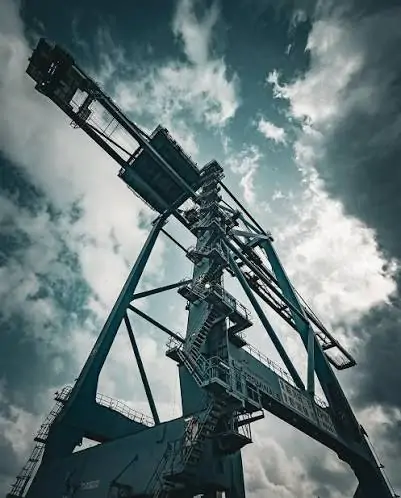
WEIHUA can use these project parameters to develop the STS crane configuration and prepare a project-specific operating cost estimate. Contact WEIHUA with your vessel and terminal data for a detailed technical and cost assessment.
WEIHUA STS Crane Engineering and Service
WEIHUA is an STS crane manufacturer providing project-based design, customized crane configuration, installation, commissioning, training, and overseas service for container terminals.
| Service | WEIHUA Capability |
|---|---|
| STS Crane Manufacturer | Manufactures STS cranes for ship-to-shore container handling. |
| Project-Based Design | Develops crane designs from vessel data, berth layout, handling requirements, and site conditions. |
| Customized Outreach | Configures outreach, backreach, and lifting height for the target vessel. |
| Customized Capacity | Selects rated capacity for single-container or twin-lift handling. |
| Spreader Options | Provides 20 ft, 40 ft, 45 ft, single-lift, and twin-lift spreader options. |
| Установка | Provides overseas installation support at the project site. |
| Commissioning | Covers equipment testing, control system checks, load testing, and operational setup. |
| Training | Provides operator and maintenance training during project commissioning. |
| Overseas Service | Provides technical support for international STS crane projects. |
| After-Sales Support | Covers spare parts, maintenance guidance, troubleshooting, and technical service. |
WEIHUA handles STS crane projects from engineering design and manufacturing to installation, commissioning, training, and after-sales support. Contact WEIHUA with your vessel dimensions, capacity, outreach, span, rail gauge, and terminal data for a project-specific STS crane solution.
Заключение
STS crane operating cost should be calculated from actual energy use, labor, maintenance, operating hours, and container handling productivity rather than a single hourly figure.
Вейхуа can develop an STS crane configuration from vessel dimensions, berth conditions, handling capacity, power supply, and operating requirements. Свяжитесь с нами with your project data for a customized crane specification and operating cost assessment.

Часто задаваемые вопросы
What is the average operating cost of an STS crane?
There is no single average operating cost for all STS cranes. The figure depends on energy prices, labor rates, maintenance expenses, annual operating hours, crane utilization, handling rate, and terminal conditions. A project-specific calculation is more accurate than using a general industry average.
How do you calculate STS crane operating cost per hour?
Divide the annual operating cost allocated to the crane by its actual annual operating hours.
STS Crane Operating Cost per Hour = Annual Operating Cost ÷ Actual Annual Operating Hours
The calculation can include energy, labor, maintenance, spare parts, inspection, insurance, depreciation, and other applicable operating expenses.
How do you calculate STS crane operating cost per minute?
Divide the hourly STS crane operating cost by 60.
STS Crane Operating Cost per Minute = Hourly Operating Cost ÷ 60
For example, a crane operating at $200 per hour has a calculated operating cost of $3.33 per minute.
What is the STS crane cost per minute?
STS crane cost per minute refers to the operating expense allocated to each minute of crane operation. It is calculated from the hourly operating cost rather than a fixed market rate. Energy price, labor, maintenance, utilization, and the terminal’s cost accounting method affect the final figure.
How much does electricity cost to operate an STS crane?
Electricity cost depends on the crane’s power demand, operating cycle, load profile, annual operating hours, and local electricity tariff. A calculation requires actual or estimated energy consumption in kWh and the applicable electricity price.
Electricity Cost = Energy Consumption × Electricity Price
What is the operating cost of an STS crane per container?
STS crane operating cost per container is calculated by dividing the hourly operating cost by the actual container handling rate.
Cost per Container = Hourly Operating Cost ÷ Moves per Hour
A crane operating at $200 per hour with a rate of 30 moves per hour has an operating cost of $6.67 per container move.
Does an electric STS crane cost less to operate than a diesel STS crane?
Not in every terminal. The comparison depends on electricity and diesel prices, energy consumption, crane utilization, engine maintenance, electrical infrastructure, fuel facilities, and the operating profile. A cost comparison should use actual terminal data for both power systems.
What information is needed to calculate STS crane operating cost?
The main inputs include vessel size, outreach, lifting height, rated capacity, span, rail gauge, power supply, annual operating hours, moves per hour, energy price, labor cost, maintenance cost, and environmental conditions. These parameters provide the basis for a project-specific operating cost estimate.