








Overhead cranes and gantry cranes are both common lifting equipment used in manufacturing workshops, warehouses, steel plants, and outdoor yards. Both are used for material handling, but they differ in structural form, installation requirements, and operating environments. Improper selection during the initial project planning phase can lead to increased factory modification costs, extended construction periods, and even efficiency and safety problems during later operation.
This article will systematically compare overhead cranes and gantry cranes across key dimensions such as structural characteristics, installation requirements, applicable scenarios, costs, and maintenance, helping you quickly determine which crane solution is best suited to your production needs based on your project conditions.
Ниже представлено содержание. Пожалуйста, переходите к соответствующему разделу по мере необходимости:
Оглавление
Что такое мостовой кран?
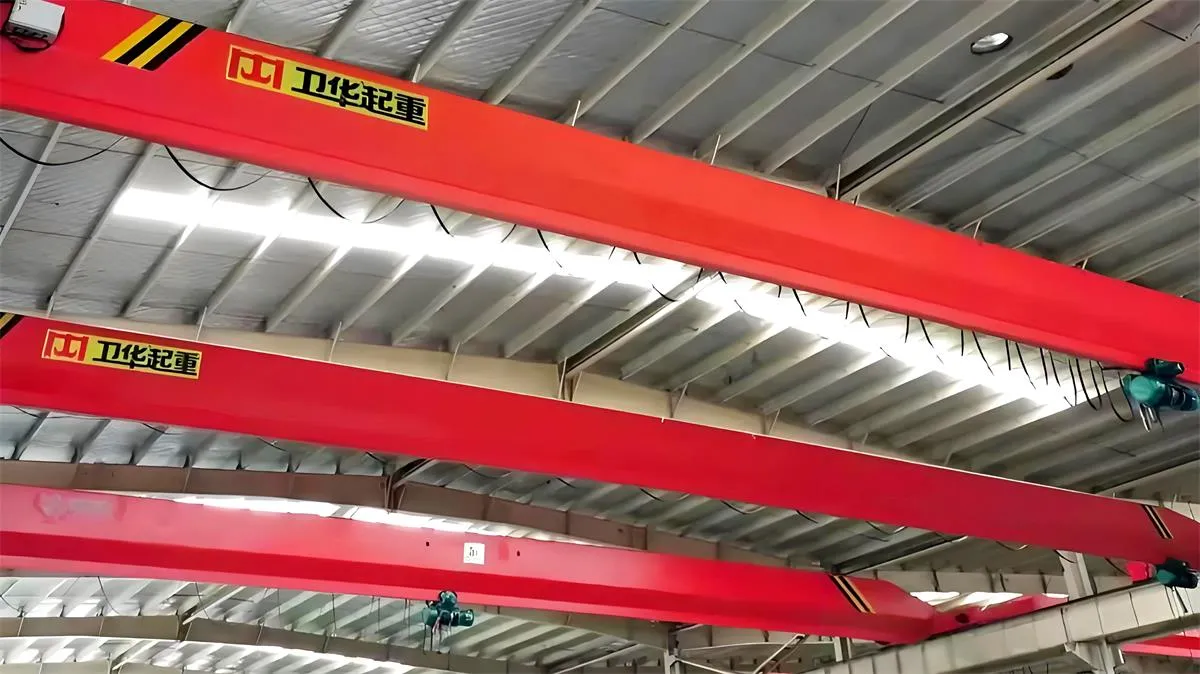
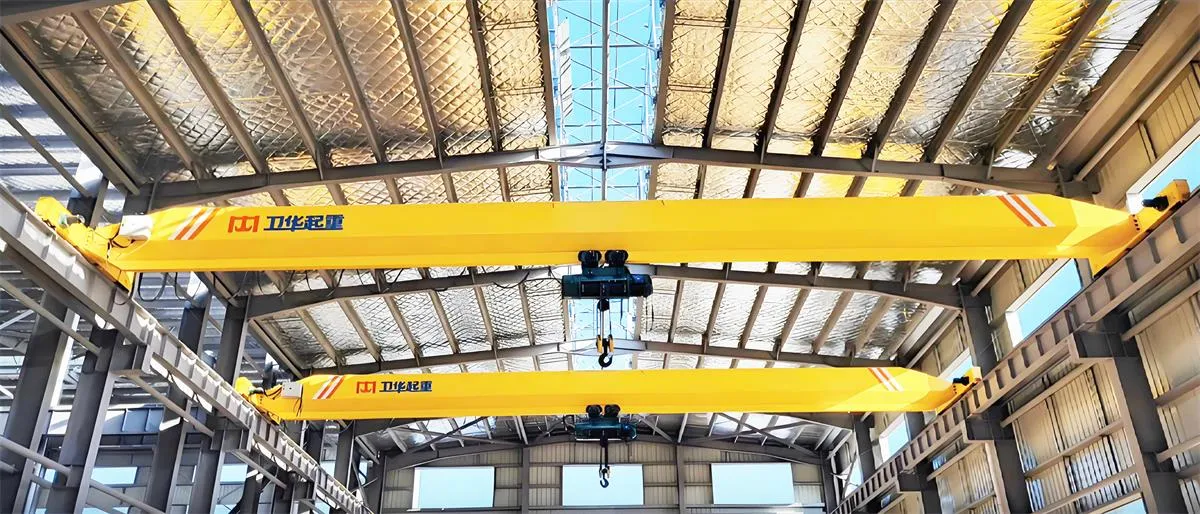
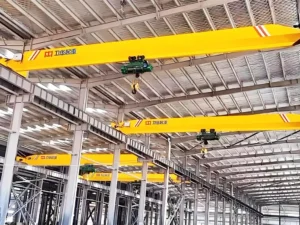
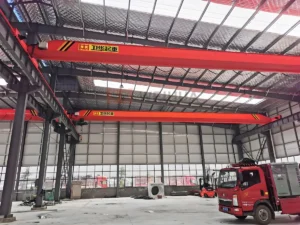
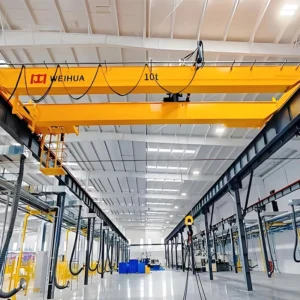
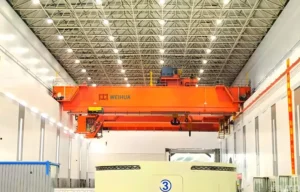
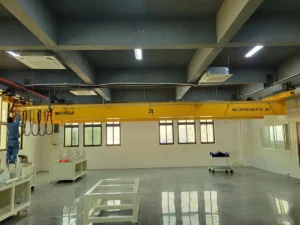
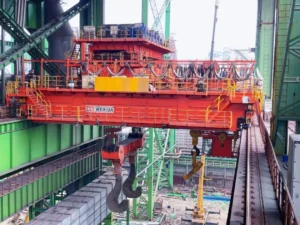
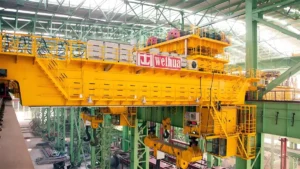
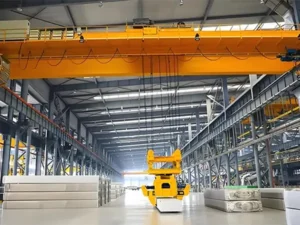
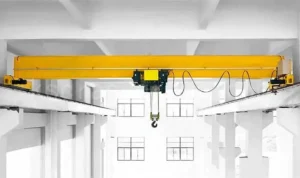
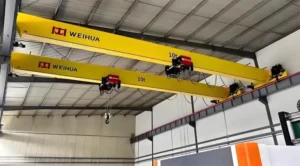
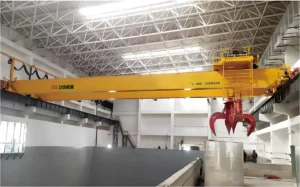
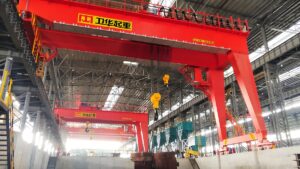
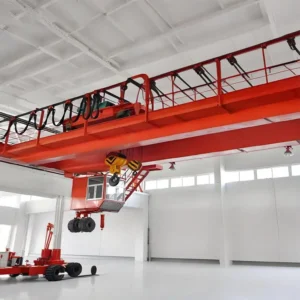
Overhead Travelling Cranes are installed in factory buildings or on independent track beams, and consist of two running tracks and a bridge structure connecting them. The hoisting mechanism and trolley move laterally along the bridge structure, and in conjunction with the longitudinal movement of the bridge structure, allow for longitudinal, lateral, and vertical movement of heavy objects within the working area. They are used for continuous material handling indoors.
Получить индивидуальное предложение сейчас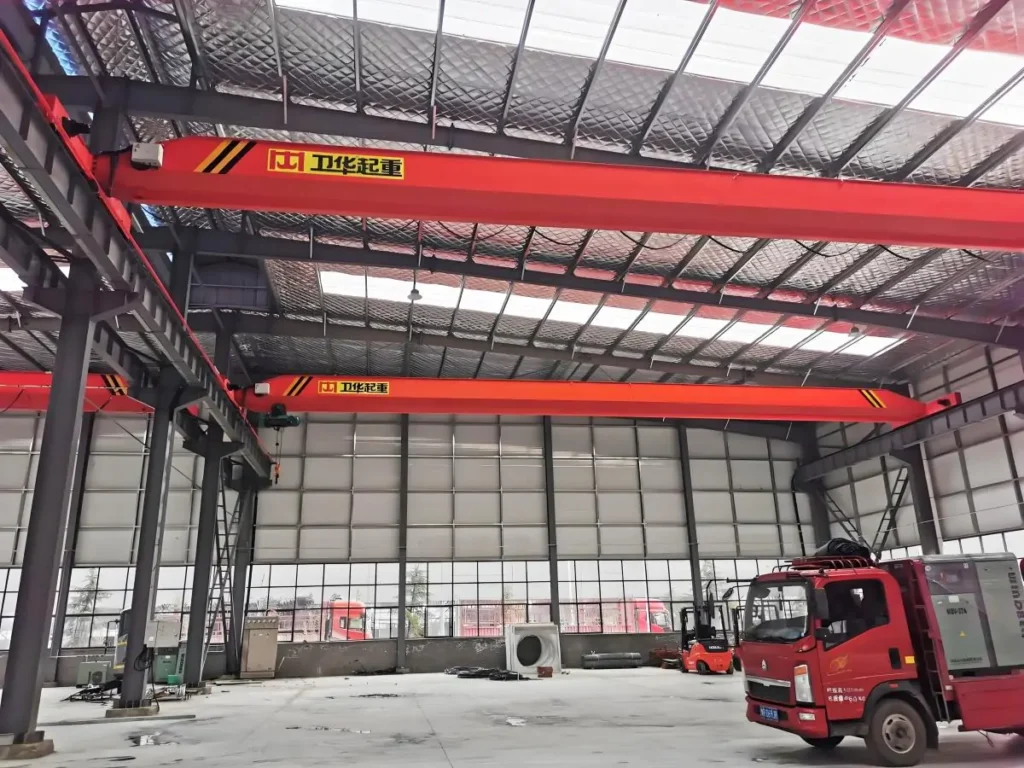
Types of Overhead Cranes
There are several types of overhead cranes, including:
- Top Running Overhead Cranes: The bridge runs on top of the runway beams, offering high load capacity and lifting height, suitable for medium to large workshops and heavy-duty applications.
- Underslung Overhead Cranes: The bridge is suspended below the runway beams, requiring less headroom and suitable for factories with limited overhead space or light-duty operations.
- Single Girder Overhead Cranes: Uses a single main girder structure, resulting in lower cost, suitable for small to medium tonnage material handling.
- Double Girder Overhead Cranes: Features a double main girder structure, offering higher load capacity and more stable operation, suitable for heavy equipment and high-frequency operations.
Advantages and disadvantages of Overhead Cranes
Advantages of Overhead Cranes
- Reliable Load Capacity: Overhead cranes are used for lifting medium to heavy materials, operating smoothly and controllably, and capable of handling high-intensity, long-duration continuous operations.
- Zero Ground Space Occupancy: The equipment is fixed to the factory building’s beams and columns or dedicated tracks, leaving the ground completely free, without affecting production lines, equipment placement, or personnel movement.
- Customizable Parameters: Lifting capacity, span, lifting height, and other technical indicators can be adjusted according to actual working conditions, matching the factory conditions and operational requirements of different industries.
- Wide Operating Coverage: A single unit can cover a large area along the track, reducing the need for multiple lifting devices and improving overall operational efficiency.
Limitations of Overhead Cranes:
- High Initial Cost: The factory building needs to have the corresponding load-bearing capacity, and in most cases, additional track beams or steel structure modifications are required, resulting in significantly higher initial capital investment compared to mobile equipment.
- Limited Operating Area: The operating range of the equipment is determined by the track layout and is basically fixed after installation, making it unsuitable for scenarios where the operating points frequently change or require flexible deployment across multiple areas.
- Long Installation and Commissioning Period: From site survey and design to construction, installation, and equipment commissioning, the entire process usually takes several weeks to months, making it difficult to put into use quickly.
Что такое козловой кран?
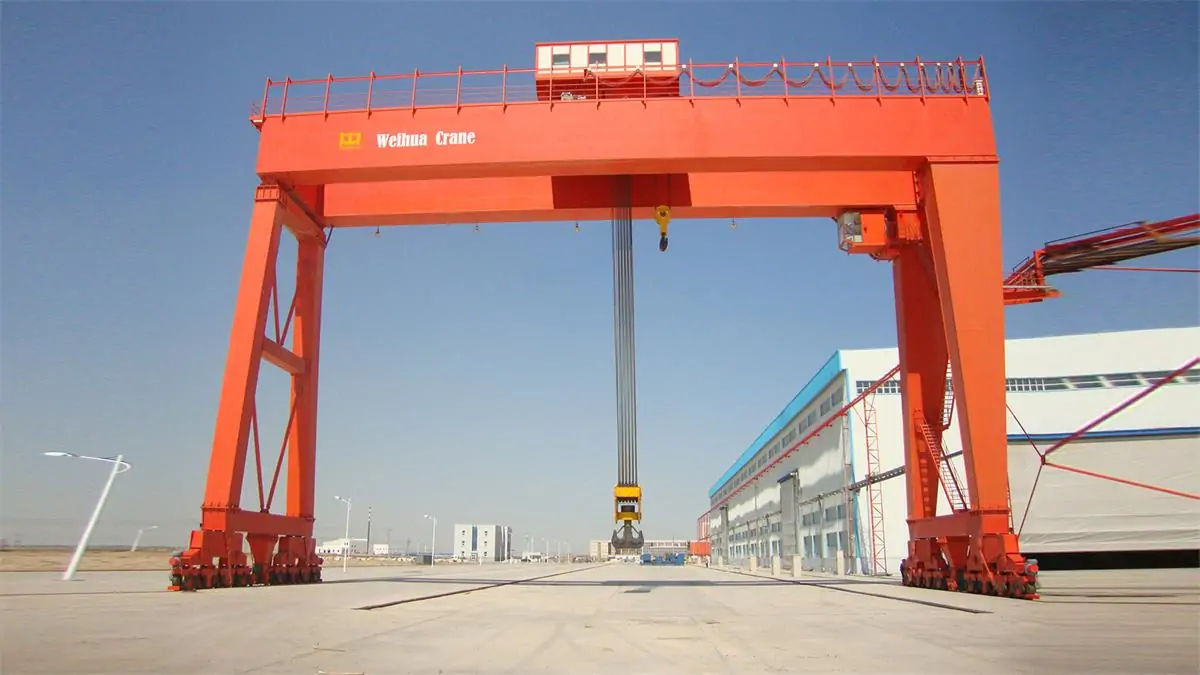
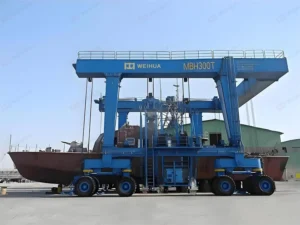
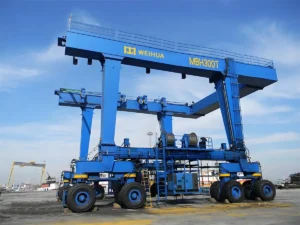
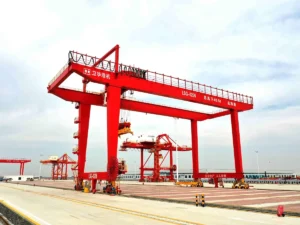
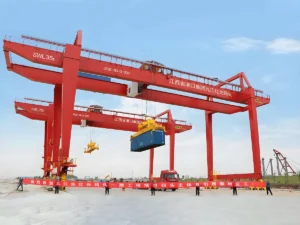
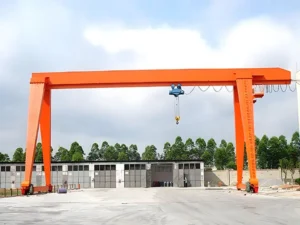
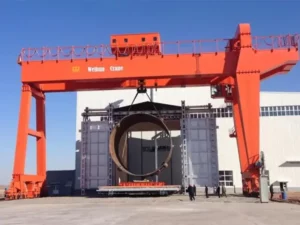
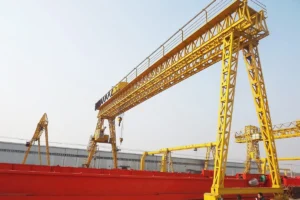
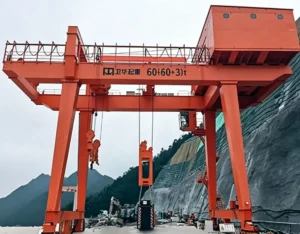
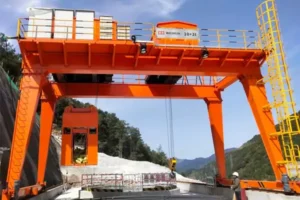
Gantry cranes are a type of gantry-style lifting equipment. The entire gantry structure is supported by ground rails, with the main beam spanning between the two supporting legs, forming a gantry opening. The lifting mechanism and trolley move laterally along the main beam, and the entire crane moves longitudinally along the ground rails, enabling three-dimensional material handling within the working area. They are primarily used in outdoor freight yards, docks, storage yards, and for the assembly of large components.
Получить индивидуальное предложение сейчас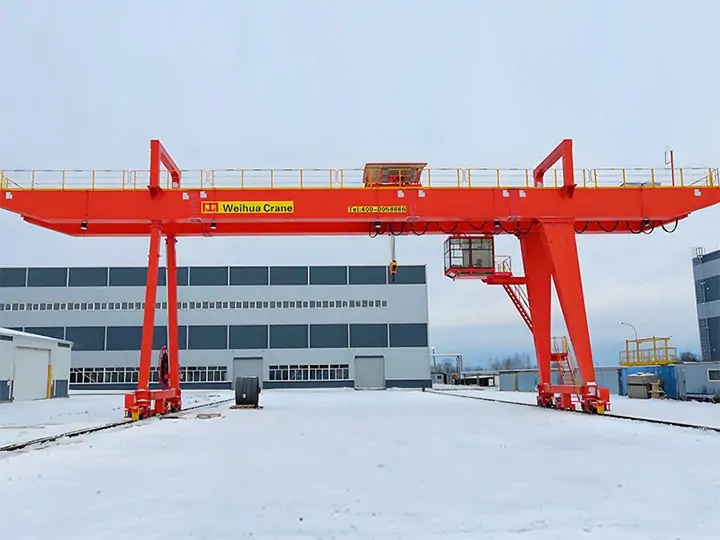
Types of Gantry Crane
Gantry cranes can be classified into various types based on their structure and purpose, including:
- Full gantry crane: Both legs are of equal height, and the gantry spans the entire width, used for large-span freight yards and storage areas, capable of spanning over cargo stacking areas.
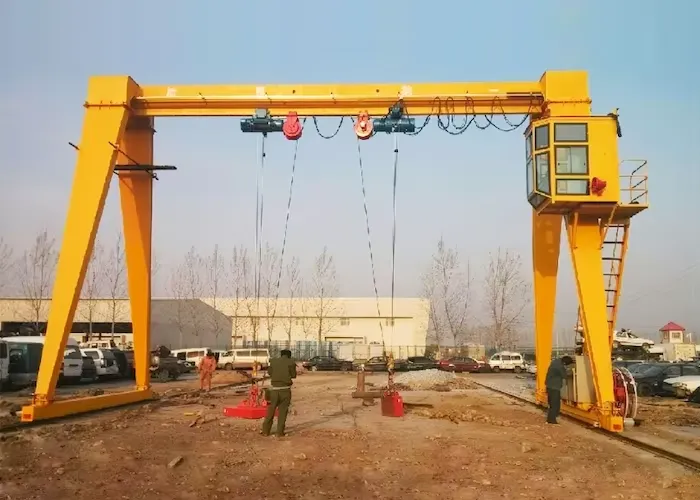
- Semi gantry crane: One leg is higher, and the other is lower or directly on the ground, used in situations where space is limited or where operation close to buildings or loading docks is required.
- Rail-mounted gantry crane: Runs along fixed ground rails, with strong load-bearing capacity and stable operation, used for heavy-duty material handling in fixed work areas.
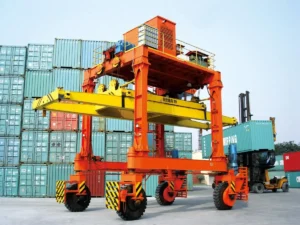
- Rubber-tired gantry crane: Uses a tire-based traveling mechanism, allowing for flexible movement on paved surfaces, used in container yards, ports, and other scenarios requiring mobile deployment.
Advantages and disadvantages of gantry cranes
Advantages of Gantry Cranes:
- Large span and wide coverage: The gantry structure can span a wide area, allowing a single unit to cover the entire cargo yard or storage area, reducing the need for multiple pieces of equipment.
- Suitable for outdoor operation: The structural design can withstand natural elements such as wind and rain, making it suitable for open areas such as docks, material yards, and construction sites.
- Independent of factory structure: The equipment has its own support system, requiring only a suitable foundation and track system, offering high construction flexibility.
- Wide range of lifting capacities: Models are available from a few tons to hundreds of tons, matching different operational needs such as container handling and lifting large prefabricated components.
Limitations of Gantry Cranes:
- High requirements for foundation and tracks: The equipment is heavy, requiring a solid foundation and high-precision track laying. Sites with poor geological conditions require additional reinforcement, increasing infrastructure costs.
- Occupies ground space: The tracks and support legs occupy ground area, affecting vehicle and pedestrian traffic, making them unsuitable for areas with limited ground space.
- Affected by weather conditions: Strong winds, heavy rain, snow, and other adverse weather conditions may affect safe operation. Wind protection devices are required, and operation must be stopped in extreme weather.
- High cost of repositioning: Track-mounted models require track re-laying for repositioning, and even wheeled models require professional transportation and re-commissioning for relocation across sites.
overhead crane vs gantry crane cost
When choosing between overhead cranes and gantry cranes, simply looking at the equipment price is not sufficient. Factory structure, foundation construction, installation difficulty, and future operation and maintenance costs all affect the overall investment. The table below compares the main costs of the two types of cranes for your reference.
| Cost Aspect | Мостовой кран | Козловой кран |
|---|---|---|
| Total Project Cost Range | USD 50,000 – 250,000 | USD 40,000 – 200,000 |
| Equipment Structure | More complex, heavy-duty design | Simpler, flexible design |
| Civil / Structural Needs | Requires building support | Requires ground foundation |
| Установка | Fixed, longer installation time | Flexible, faster installation |
| Facility Impact | Higher impact on existing buildings | Minimal building dependency |
| Обслуживание | Lower, stable indoor conditions | Higher, outdoor exposure |
| Flexibility & Expansion | Limited after installation | Easy to relocate or extend |
| Best Fit | Fixed, high-frequency operations | Flexible or outdoor operations |
overhead Cranes vs Gantry Cranes: A Comparison of Applications, Installation, and Maintenance
Bridge cranes and gantry cranes each have their own characteristics: the former is suitable for fixed, continuous indoor operations, while the latter is more flexible and adaptable to varying working environments. Below, we will provide a detailed comparison of the two types of cranes in terms of application scenarios, installation and mobility, and maintenance and safety, to help you determine which equipment is more suitable for your project.
Сценарии применения
- Bridge Cranes: Suitable for fixed indoor operations, such as manufacturing workshops, steel mills, and automotive production lines; ideal for continuous, high-frequency heavy lifting.
- Gantry Cranes: Used for both indoor and outdoor operations, such as storage yards, construction sites, and ports; adaptable to multi-point and multi-scenario lifting needs.
Installation and Mobility
- Bridge Cranes: Rely on factory tracks or steel structure supports, resulting in a fixed installation location and low mobility.
- Gantry Cranes: Equipped with self-supporting legs or wheeled tracks, allowing for position adjustments based on project needs, and even relocation to different sites, offering high flexibility.
Maintenance and Safety
- Bridge Cranes: Operate in a stable environment, resulting in longer regular maintenance cycles.
- Gantry Cranes: Frequently used in varying environments, subject to wind, rain, and ground conditions, generally requiring more frequent maintenance checks than bridge cranes.
gantry crane vs bridge crane: Comparison Summary
When choosing a crane, you need to consider not only the load and span, but also the factory conditions, operating environment, and future maintenance costs. The table below compares two types of cranes in terms of structure, operating environment, installation costs, coverage area, typical industries, applications, and maintenance, to help you determine which equipment is more suitable for your project.
| Comparison Aspect | Мостовой кран | Козловой кран |
|---|---|---|
| Supporting Structure | Mounted on building structure or runway beams | Self-supporting legs with ground rails or wheels |
| Операционная среда | Mainly indoor | Indoor and outdoor |
| Civil/Structural Requirements | High – requires strong building and runway beams | Medium – requires solid ground foundation or rails |
| Стоимость установки | Medium to high | Low to medium |
| Coverage / Mobility | Fixed working area | Flexible, can be relocated or moved to different sites |
| Typical Industries | Manufacturing plants, steel mills, workshops | Ports, container yards, construction sites, outdoor storage |
| Application Focus | Continuous, high-frequency heavy-duty lifting | Flexible operations, multiple sites, varying workloads |
| Maintenance & Safety | Stable environment, lower maintenance frequency | Frequently exposed to weather/ground conditions, requires more regular inspections |
Заключение
The selection between overhead cranes and gantry cranes requires a comprehensive consideration of the operating environment, site conditions, and budget.
Overhead cranes are suitable for indoor fixed operations, do not occupy floor space, and operate stably, but require a factory building and involve high initial investment.
Gantry cranes are suitable for open-air sites, have a large span, and do not rely on buildings, but require a strong foundation and are affected by weather conditions.
In terms of cost, overhead cranes have concentrated initial investment, while gantry cranes require continuous investment in protection and maintenance.
When making a selection, prioritize the operating environment (indoor/outdoor), site conditions (presence of factory building, foundation bearing capacity), material characteristics (weight, frequency), and budget before making a decision.
Weihua is a professional crane manufacturer and supplier in China, offering customized solutions based on your application scenarios and project location standards. From lifting capacity and span to control systems and certification standards, everything can be customized according to your specific working conditions. Contact us to get a crane solution tailored to your project.
Часто задаваемые вопросы
Is an overhead crane better than a gantry crane?
It depends on the application. Overhead cranes suit fixed indoor operations, while gantry cranes offer more flexibility.
Which crane is suitable for outdoor use?
Gantry cranes are better suited for outdoor environments and open yards.
Can gantry cranes be customized?
Yes. Capacity, span, lifting height, and control systems can all be customized.
How long does installation take?
Gantry cranes usually install faster, while overhead cranes take longer due to structural requirements.