








Введение
Marine travel lifts are essential lifting equipment used in shipyards and marinas for handling boats and yachts. For you as a buyer or project engineer, understanding safety standards is crucial to ensure stable vessel handling, operator safety, and long-term equipment reliability. This guide helps you clearly understand key international requirements, structural safety rules, and inspection practices so you can make a safer and more informed purchasing decision.
What Is a Marine Travel Lift and Why Safety Standards Matter?
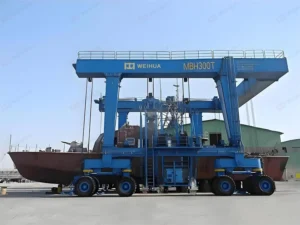
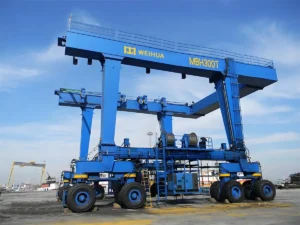
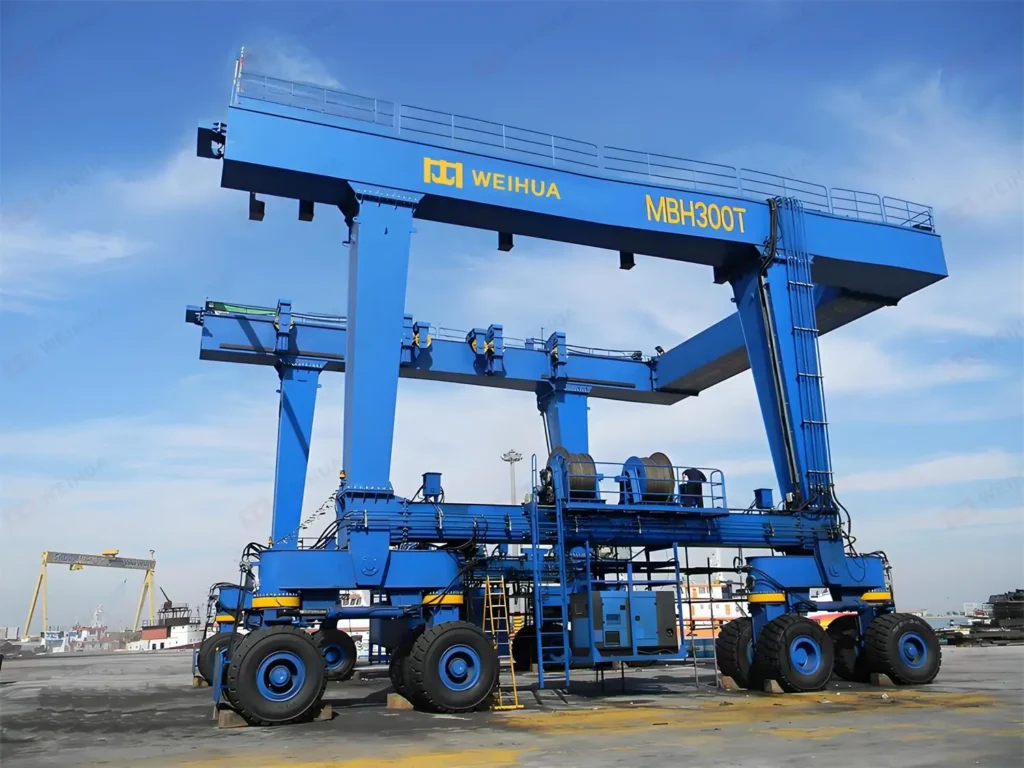
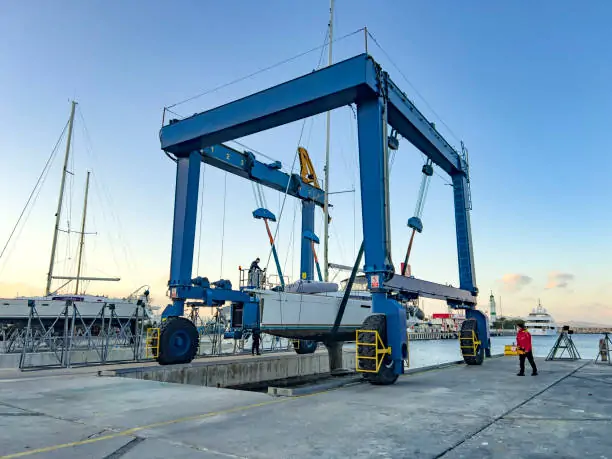
A морской трейлер-подъемник is a shipyard vessel lifting system used to lift, transport, and launch boats and yachts safely between water and land. It is commonly used in marinas and shipyards for maintenance, storage, and docking operations.
Because it handles heavy and high-value vessels, the equipment must operate under strict load control. Overload, uneven weight distribution, or structural imbalance can lead to serious safety risks during lifting.
That is why compliance with international safety standards is essential, ensuring stable operation, operator safety, and reliable long-term performance.
International Safety Standards for Marine Travel Lifts
Marine travel lifts are not just lifting machines—they are critical safety equipment in shipyards and marinas. For buyers, safety standards directly affect whether the equipment can operate reliably under heavy loads, pass inspections, and avoid costly accidents. The following key standards are what you should pay close attention to when evaluating a supplier.
ISO and CE Compliance Requirements
International certifications are the basic threshold for any marine travel lift used in global projects. If your equipment does not meet CE requirements or follow ISO-based manufacturing standards, it may face restrictions in installation, insurance approval, or export clearance.
In practical terms, CE compliance ensures the machine has passed risk assessment, structural verification, electrical safety checks, and emergency system validation. Most professional manufacturers also operate under ISO 9001 quality systems, which helps maintain consistent production quality. For buyers, this means fewer failures, easier approvals, and more predictable long-term performance.
Structural Load Safety Factor Standards
The structural safety factor determines whether the equipment can handle real-world lifting conditions, not just theoretical loads. In marine environments, vessels are rarely perfectly balanced, and external factors like wind or sling positioning can affect load distribution.
That’s why most projects apply a 1.1–1.25 safety factor for standard operations, and up to 1.3+ for high-frequency or heavy-duty lifting. For example, lifting an 80-ton yacht typically requires a 90–100 ton rated travel lift. This margin helps absorb dynamic forces such as braking impact and water breakout load, significantly reducing the risk of structural stress or tipping.
Electrical and Hydraulic Safety Regulations
The hydraulic and electrical systems must be designed to operate safely under continuous marine duty cycles. Key protections include pressure relief valves, rupture prevention, emergency lowering, waterproof electrical cabinets, and overload alarms.
According to ISO 4413 hydraulic safety requirements, pressure relief valves are typically set at no more than 110% of maximum working pressure, while hydraulic hose assemblies should be rated to at least 4× working pressure, and preferably 6× for dynamic lifting systems.
Operator Safety Control Systems
Even with a strong structure, poor control systems can still lead to accidents. That’s why modern marine travel lifts are equipped with multiple safety features to assist operators and reduce human error.
Typical systems include emergency stop buttons, overload alarms, synchronized wheel control, anti-sway systems, and load monitoring displays. For larger lifts (100 tons and above), synchronization accuracy becomes critical, small deviations can cause uneven load distribution and damage the vessel hull. A well-designed control system helps maintain balance throughout the lifting process and improves overall operational safety.
Practical Advice for Buyers
Before making a decision, ask your supplier to provide certificates, load calculations, and test reports. These documents are often more reliable than marketing claims and give you a clear picture of whether the equipment truly meets international safety standards.
Structural Safety Design Requirements
The structural design of a marine travel lift directly determines whether the equipment can lift vessels safely, travel smoothly, and remain stable in long-term marine service. For buyers, this is one of the most important EEAT sections because it reflects the manufacturer’s real engineering capability rather than just rated tonnage.
A qualified design should focus on load distribution, wheel-ground stability, anti-sway protection, and corrosion resistance, especially when handling 50–300 ton yachts and workboats in shipyards and marinas.
Gantry Frame Load Distribution Design
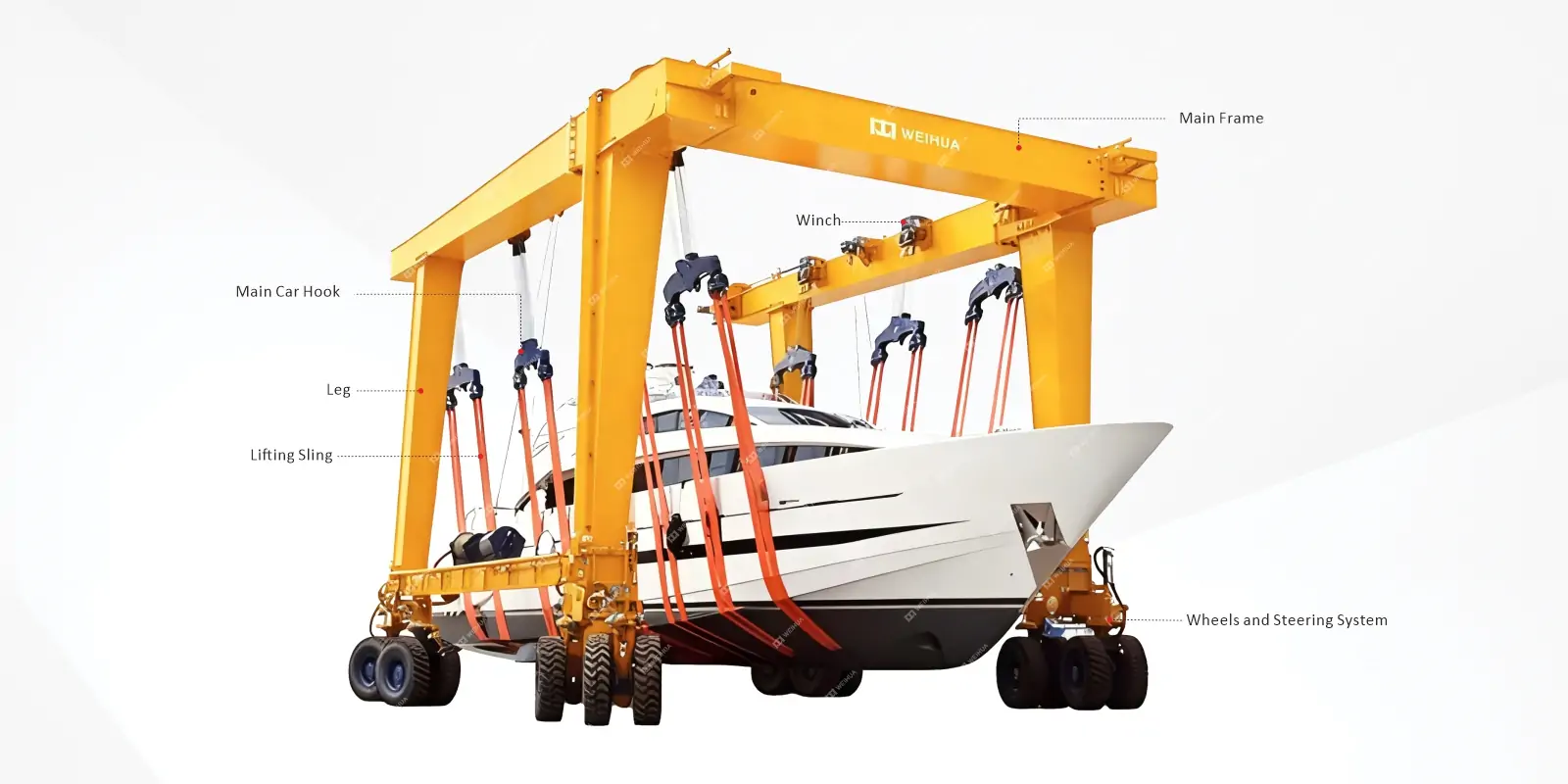
The gantry frame is the main load-bearing structure, and its first design priority is uniform load distribution across multiple lifting points. Because a vessel’s center of gravity is rarely perfectly centered, the frame must be engineered to distribute forces evenly through the main girder, legs, and sling points.
A common engineering practice is to maintain a 15–20% safety margin above the maximum vessel weight. For example, a boatyard handling vessels up to 100 tons should normally consider a 115–120 ton design basis.
In large-capacity systems, box-girder or double-girder frames are commonly used because they offer higher torsional rigidity and lower deflection under dynamic load. This is especially important during lifting, braking, and transport where impact loads increase structural stress.
Wheel and Rail Stability System
The wheel and travel system must keep the equipment stable under heavy load while moving at low speed across concrete docks, slipways, or uneven shipyard surfaces. This is where wheelbase width, axle layout, and ground pressure distribution become critical.
For heavy-duty travel lifts, multi-wheel synchronized layouts are standard. Some systems use modular axle groups that can scale from 50 tons up to 1200 tons, helping distribute load and reduce local ground stress.
From a buyer’s perspective, a key metric is whether the wheel load remains balanced under eccentric loading. In poorly designed systems, one side may temporarily bear up to 70% of the total load, which significantly increases tipping risk.
This is why intelligent steering synchronization and low-speed heavy-load control are essential in marina applications.
Anti-Sway Vessel Protection System
Vessel sway control is one of the most important safety systems during lifting and transport. Even small lateral movements can create sling offset, hull stress concentration, or instability, especially for tall yachts with high superstructures.
A professional anti-sway system typically combines:
- multi-point synchronized hoisting
- load balance sensors
- speed-limited lifting control
- wind load monitoring
- independent bow/stern fine adjustment
Industry guidance shows that wind load and wave surge can significantly amplify dynamic loads, making anti-sway control essential for safe marina operations.
This is particularly important when operating near water where wave movement and tidal variation affect load stability.
Corrosion Resistance in Marine Environment
Marine corrosion resistance is not optional — it directly affects service life and structural safety. Salt spray, humidity, UV exposure, and seawater contact can accelerate steel degradation much faster than inland industrial environments.
Industry best practice typically includes:
- zinc-rich primer
- epoxy intermediate coating
- polyurethane topcoat
- hot-dip galvanizing for smaller parts
- 316 stainless steel for pins, fittings, and fasteners
Тип 316 stainless steel is widely used because it offers excellent chloride resistance in marine conditions.
For buyers, coating system thickness, galvanization process, and maintenance cycle should all be verified before purchase, as these directly impact lifecycle cost and long-term reliability.
Common Safety Risks in Marine Travel Lifts
Marine travel lifts operate in demanding shipyard environments, where heavy vessel loads, frequent lifting cycles, and exposure to marine conditions can increase operational risk. For buyers and operators, understanding the most common safety issues is essential to prevent equipment damage, vessel accidents, and costly downtime.
Overloading Risk
Lifting a vessel beyond the rated capacity can cause excessive structural stress on the gantry frame, wheels, and hydraulic system, increasing the risk of instability and equipment failure.
Uneven Vessel Lifting
Improper sling positioning or an unbalanced center of gravity may lead to vessel tilt, uneven load distribution, and hull stress during lifting and transport.
Hydraulic Failure
Hydraulic leaks, pressure loss, or cylinder synchronization issues can affect lifting stability and may result in unsafe descent or load imbalance.
Operator Misuse
Incorrect operation, such as improper sling placement, sudden movement, or exceeding travel speed limits, is a common cause of lifting incidents in shipyards.
Corrosion Damage
Long-term exposure to salt spray, humidity, and seawater can weaken structural components, hydraulic fittings, and electrical systems if not properly protected.
How to Ensure Safe Operation in Shipyards?
Safe operation depends on a combination of trained personnel, routine inspection, and proper environmental management. Establishing a clear safety process helps reduce lifting risks and improve equipment reliability.
Proper Operator Training
Operators should be trained on load limits, sling positioning, emergency procedures, and safe travel practices before handling any vessel lifting operation.
Regular Maintenance Schedule
A scheduled maintenance plan should include checks on hydraulic oil, cylinders, wheel systems, electrical controls, and anti-corrosion coatings to ensure long-term safe use.
Daily Pre-Operation Inspection
Before each lifting cycle, inspect slings, hydraulic pressure, wheel alignment, emergency stop systems, and visible structural parts for signs of wear or damage.
Environmental Condition Control
Wind speed, ground condition, tidal movement, and weather should be assessed before operation to prevent instability during lifting and transport.
Marine Travel Lift Compliance Checklist for Buyers
Before purchasing a marine travel lift, it is important to verify whether the equipment meets international safety, structural, and operational compliance requirements. A proper compliance check helps you reduce project risk, ensure safe vessel handling, and confirm that the equipment is suitable for long-term use in shipyards and marinas.
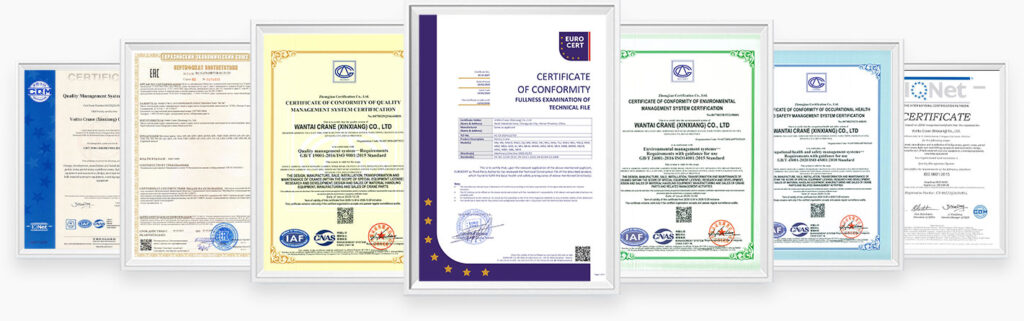
CE Certification Verification
You should confirm whether the equipment has valid CE certification documents
Load Capacity Confirmation
Check the rated lifting capacity and ensure it matches your actual vessel weight, with an appropriate safety margin (typically 10%–25% above maximum load
Safety System Inspection
Verify that the lift is equipped with essential safety systems such as emergency stop, overload protection, anti-sway control, and synchronized lifting functions
Hydraulic Pressure Test Report
Request hydraulic test data to confirm system stability under load, including pressure holding performance and overload protection settings under working conditions.
Electrical System Compliance
Ensure the electrical system meets industrial safety standards, including waterproof protection, circuit overload protection, and emergency shutdown functions
Anti-Corrosion Treatment Standard
Check surface treatment quality such as epoxy coating, marine-grade anti-rust paint, or hot-dip galvanizing, especially for long-term use in saltwater and high-humidity conditions.
Why Choose a Certified Marine Travel Lift Manufacturer?
Choosing a certified marine travel lift manufacturer like VOITTO Crane ensures that your equipment is designed and built according to strict engineering and safety standards. With over 10+ years of experience in marine lifting system manufacturing, we focus on delivering stable, reliable, and high-performance solutions for shipyards, marinas, and boatyards handling different vessel sizes and working conditions.
VOITTO Crane has delivered projects to more than 117 countries and regions, providing tailored solutions based on real dock layouts and vessel requirements. Every marine travel lift undergoes full load testing before shipment to ensure safe operation, while our custom engineering design service allows each system to be optimized according to vessel size, lifting capacity, and site conditions for maximum efficiency and safety.
Часто задаваемые вопросы
1. What safety standards must a marine travel lift comply with?
Marine travel lifts must comply with international standards such as ISO and CE, as well as local shipyard safety regulations. These standards cover structural design, hydraulic systems, and electrical safety requirements.
2. What is the typical safety factor for marine travel lifts?
Most marine travel lifts are designed with a safety factor between 1.25 and 1.5 times the rated load. This ensures safe operation under dynamic lifting conditions and unexpected load variations.
3. How is load safety tested before delivery?
Each marine travel lift undergoes full load testing, typically 100% to 125% of rated capacity. This verifies structural integrity, hydraulic stability, and braking performance before shipment.
4. What are the main safety risks during operation?
Key risks include overloading, uneven vessel positioning, hydraulic system failure, and operator error. Proper training and routine inspection significantly reduce these operational risks.
5. Are marine travel lifts safe for saltwater environments?
Yes, they are designed for marine environments when equipped with anti-corrosion coatings, marine-grade paint systems, and stainless-steel components to resist saltwater damage.
6. How often should safety inspections be carried out?
Daily pre-operation checks are required, along with scheduled periodic inspections of hydraulic, structural, and electrical systems to ensure long-term operational safety.
7. What safety systems are installed on marine travel lifts?
Standard systems include emergency stop buttons, overload protection devices, limit switches, hydraulic pressure control, and anti-sway protection systems for vessel stability.
8. Who is responsible for safety compliance?
Safety compliance is shared between the manufacturer and the operator. The manufacturer ensures design and testing standards, while the shipyard is responsible for proper operation and maintenance.