
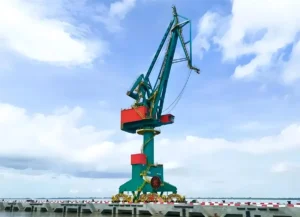
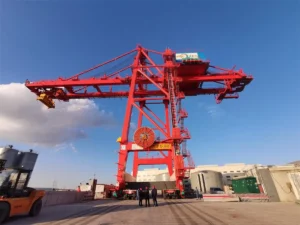
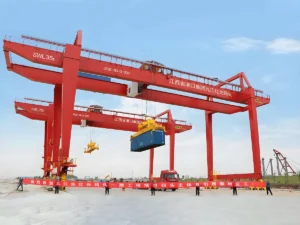
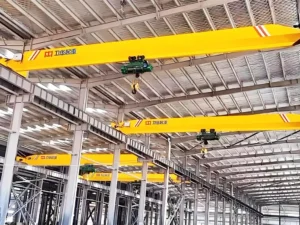
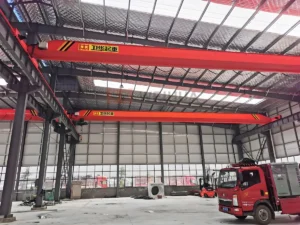
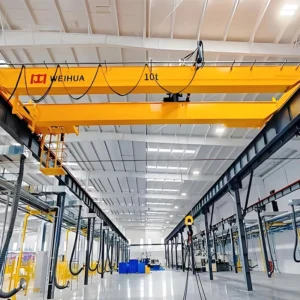
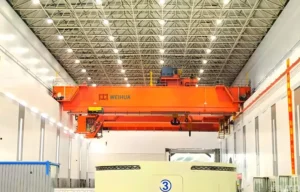
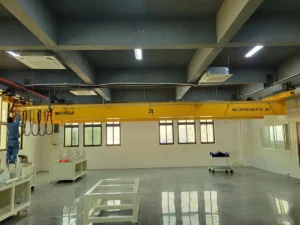
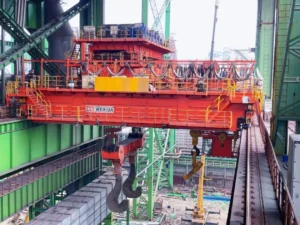
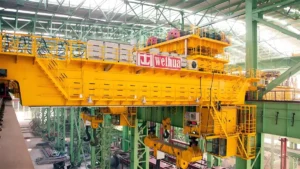
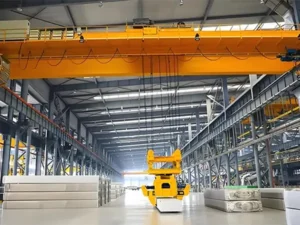
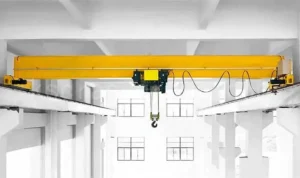
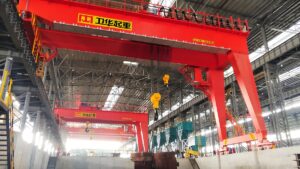
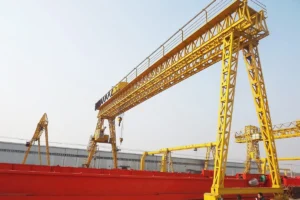

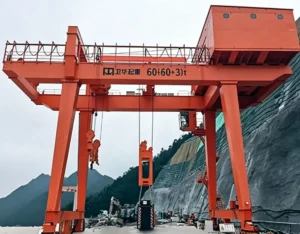
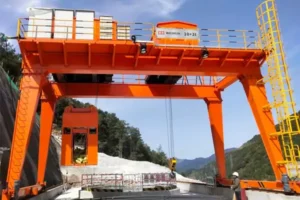

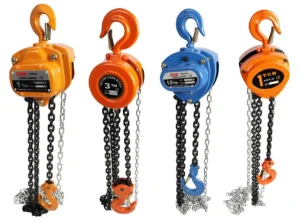
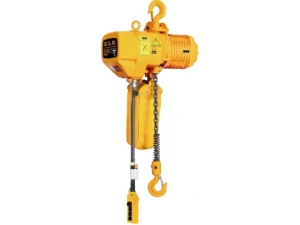
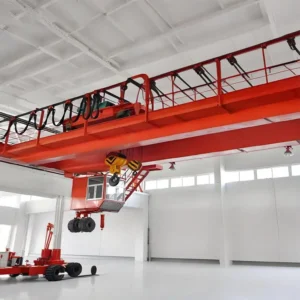
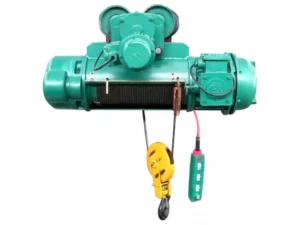






In modern industrial operations, efficient material handling is crucial for maximizing productivity and optimizing workflow. Bridge cranes, also known as overhead cranes or EOT cranes, are fixed material handling systems widely used in manufacturing, metal processing, warehousing, and loading/unloading operations. In this article, we will explore the working principle, main components, applications, and operational benefits of bridge cranes, providing a comprehensive guide for industrial planners and logistics professionals.
Bridge Crane Working Principle
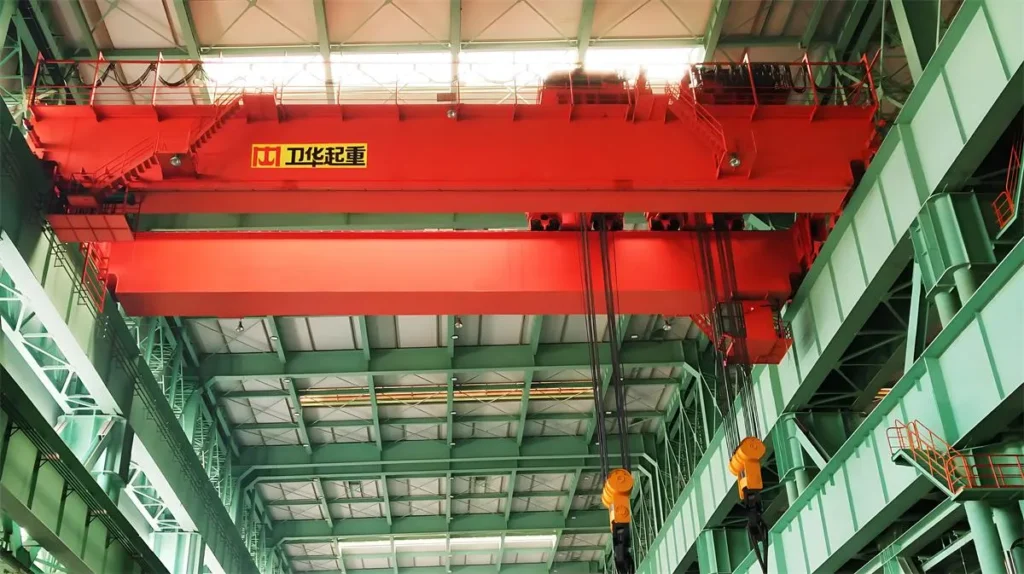
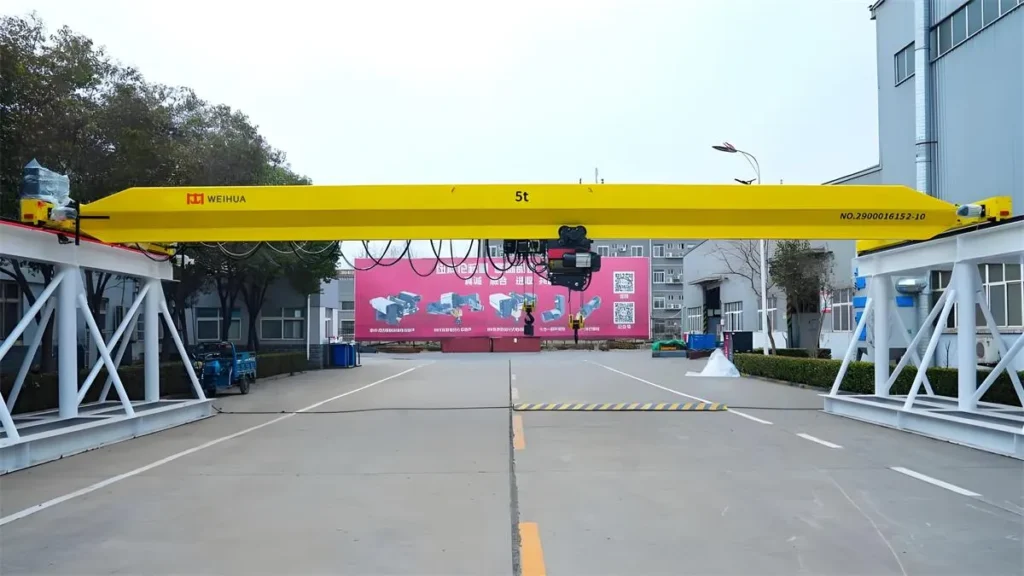
A bridge crane operates on a bridge-like structure spanning the workspace, with a trolley and hoist system that moves horizontally along the bridge and vertically lifts or lowers loads. The crane’s movement across the runway, combined with precise hoist control, enables efficient and safe handling of heavy materials in factories, warehouses, and industrial facilities.
For information on how overhead cranes work, please see this article: Принцип работы мостового крана: компоненты, движение и процесс эксплуатации.
Bridge Crane Terminology
Ниже представлено введение в терминологию, относящуюся к деталям мостовых кранов.
Crane Capacity: Crane capacity refers to the maximum weight a bridge crane can safely lift. Typically measured in tons (T), crane capacity is one of the most critical factors in selecting a crane model, ensuring it meets the weight requirements for materials handled during operations. High capacity cranes are used in heavy industries such as steel mills and heavy machinery manufacturing.
Crane Span: The span of a crane refers to the horizontal distance between the two support points at the ends of the bridge girder. The span directly affects the working area covered by the crane; a larger span allows for a broader working range. Selecting an appropriate span enhances the equipment’s efficiency when operating between different workstations.
Lift or Hook Height: Lifting height refers to the vertical distance from the crane hook to its highest working position. It determines the maximum height at which the crane can lift objects. Lifting height is crucial for high-altitude operations or situations requiring the handling of large items.
Bridge, Trolley, and Lift Speeds: The girder speed refers to the horizontal travel speed of the bridge crane’s girder, the trolley speed denotes the speed at which the trolley travels along the girder, while the hoist speed indicates the vertical movement speed of the hook. Different work scenarios and operational requirements necessitate distinct speed configurations to enhance work efficiency and ensure safety.
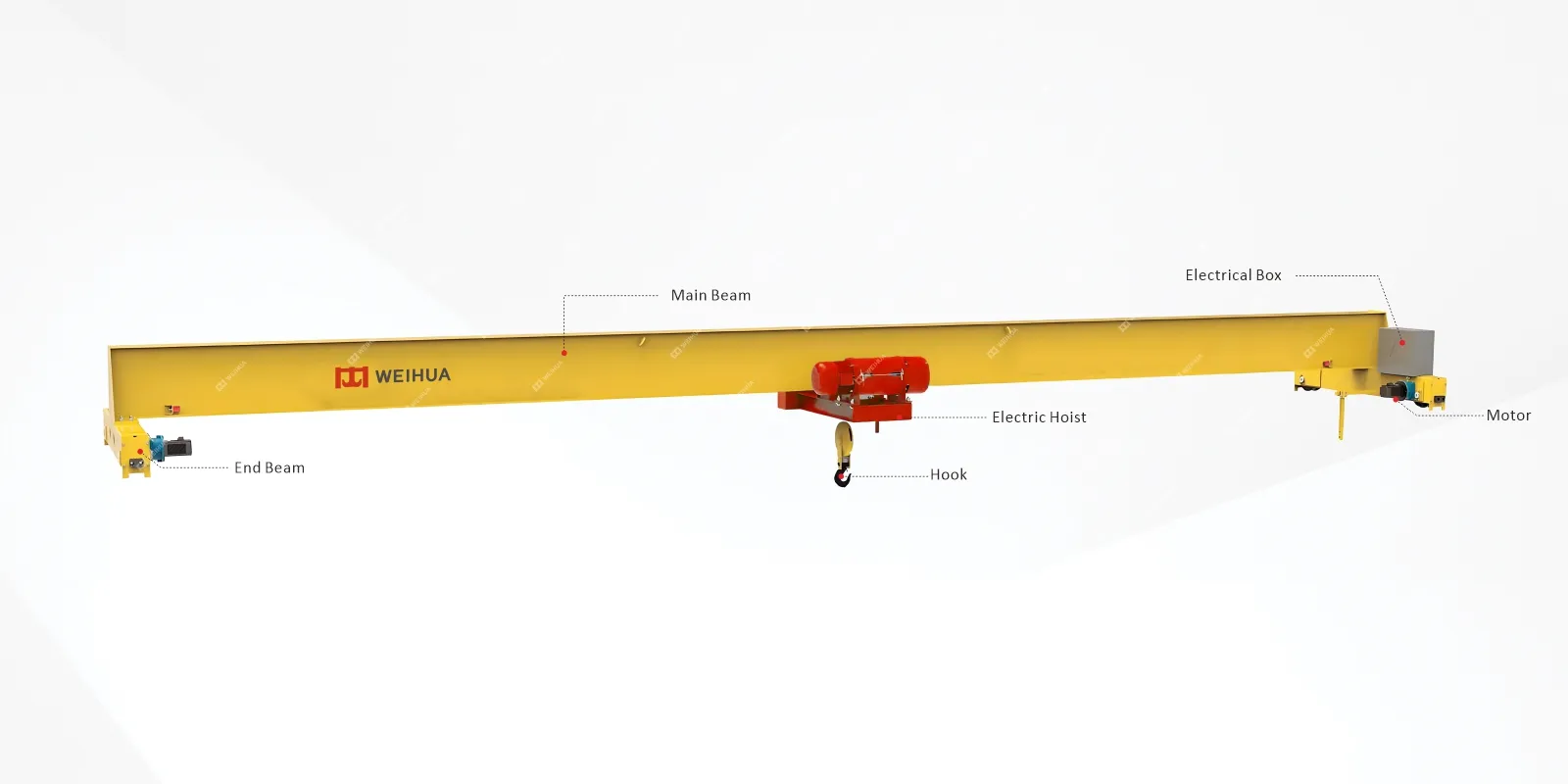
Crane Bridge: The crane girder is the primary structural component that supports the crane’s various assemblies such as the trolley and hook and enables their movement along the rails. Typically constructed from high strength steel, the girder bears heavy loads and provides stability, making it a critical part of the bridge crane.
End Trucks: End carriages are the support devices at both ends of a bridge crane, mounted at the ends of the bridge girder to bear its weight and enable smooth travel along the rails. Each end carriage incorporates a drive mechanism, typically equipped with wheels, to ensure the bridge girder moves smoothly.
Bridge Girder(s): The bridge girder is the primary load bearing component of a bridge crane, typically composed of two or more girders that provide structural stability. The strength and material composition of the bridge girder are critical factors determining the crane’s load-carrying capacity.
Trolley Hoist: The trolley hoist is the load lifting device in a bridge crane, mounted on the trolley and connected to a hook or other lifting attachment. It provides the capability to lift and lower heavy loads, typically driven by an electric motor.
Троллейбус The trolley is a movable component mounted on the bridge girder of a bridge crane, designed to support lifting gear or hoists and enable their horizontal movement along the girder. The trolley’s motion allows precise positioning of heavy loads along the bridge girder.
Hoist: Вот electric hoist is one of the key components of a bridge crane, responsible for lifting and lowering objects. It consists of parts such as an electric motor, drum, and wire rope, enabling the vertical movement of materials. It is typically used for more precise and frequent material handling operations.
Types Of bridge crane
Bridge cranes can be categorized into various types based on structural form, operating mechanisms, and operational modes. The primary classification is determined by the number of main girders, distinguishing single-girder and double girder bridge cranes. Single girder structures are suitable for medium to light duty operations, while double girder designs offer enhanced stability and accommodate heavy duty, high frequency applications.
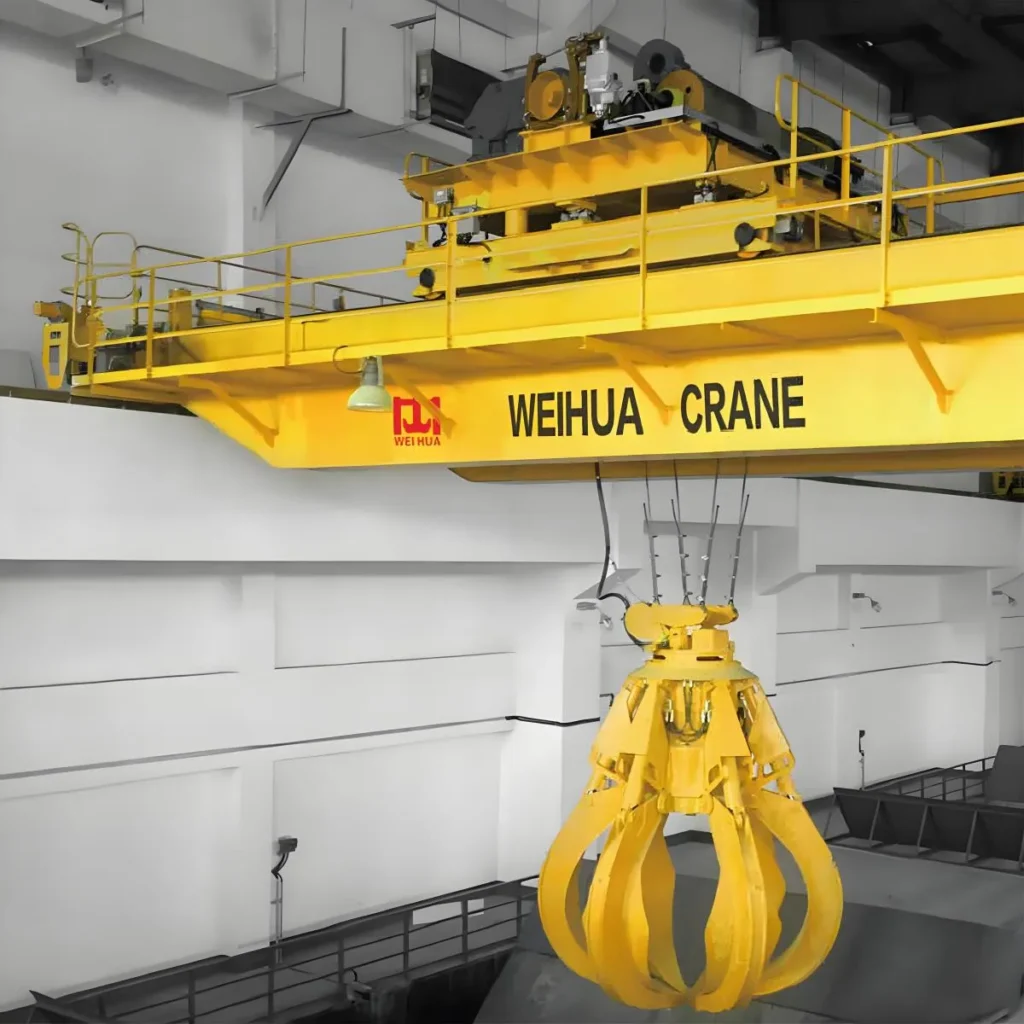
Based on operating principles, bridge cranes also include standard hook, grab, electromagnetic, and explosion-proof cranes, featuring specialized lifting devices or safety structures tailored for different materials. By drive method, they are categorized as manual, electric, and radio controlled. In modern industry, electric and radio-controlled systems are more prevalent due to their superior efficiency and safety.
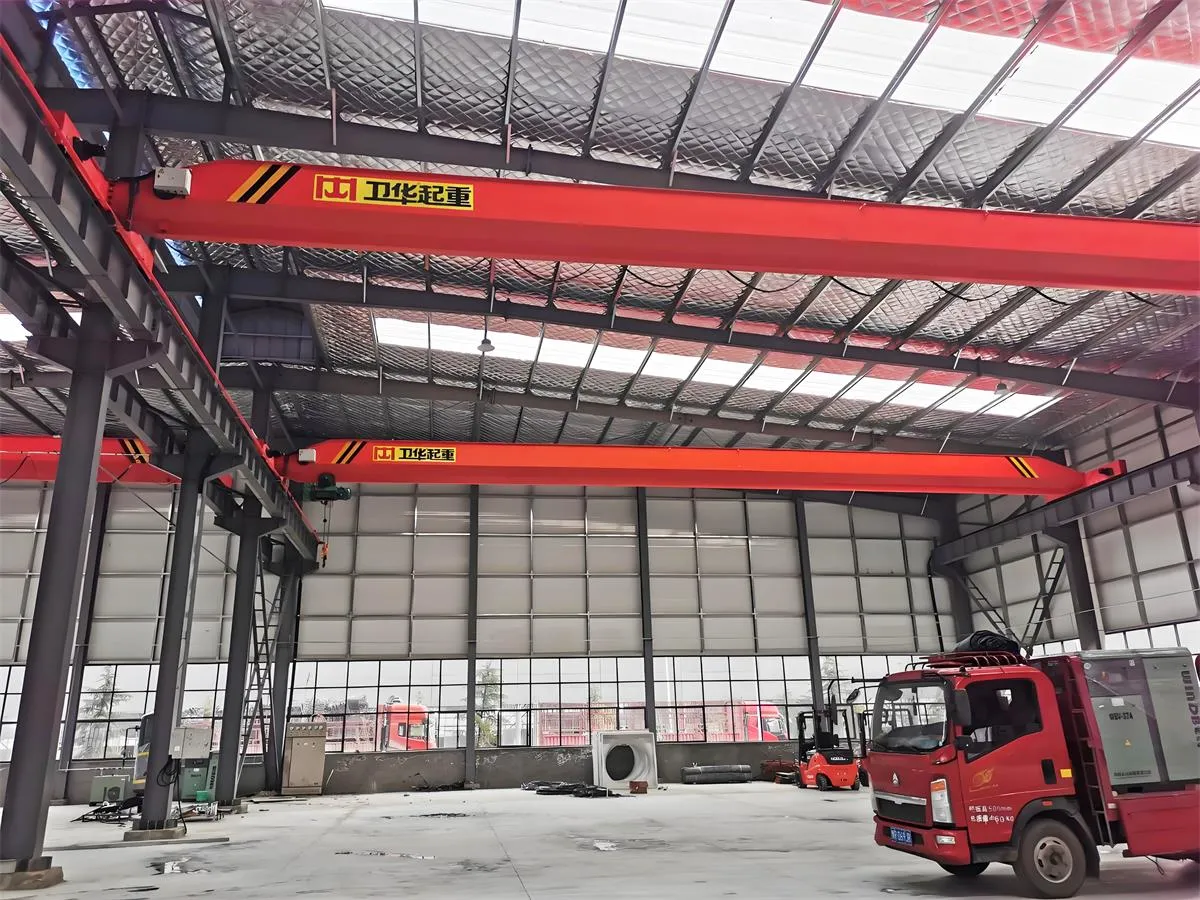
Single girder Overhead bridge crane
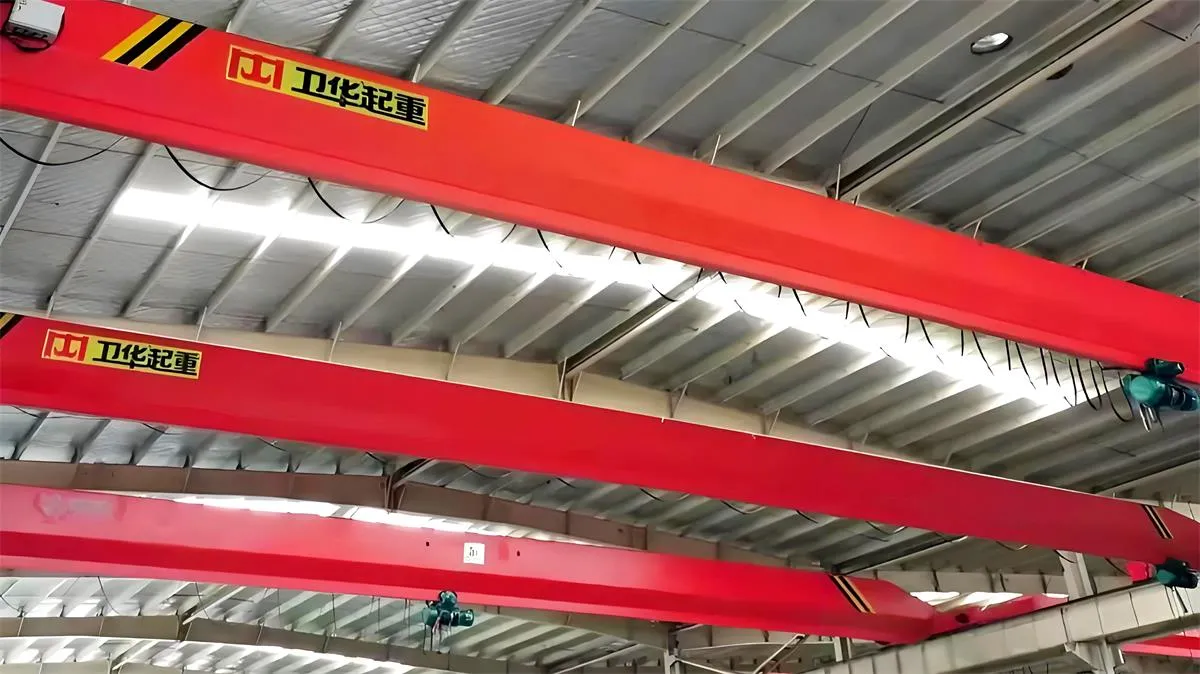
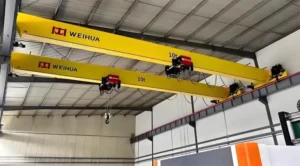
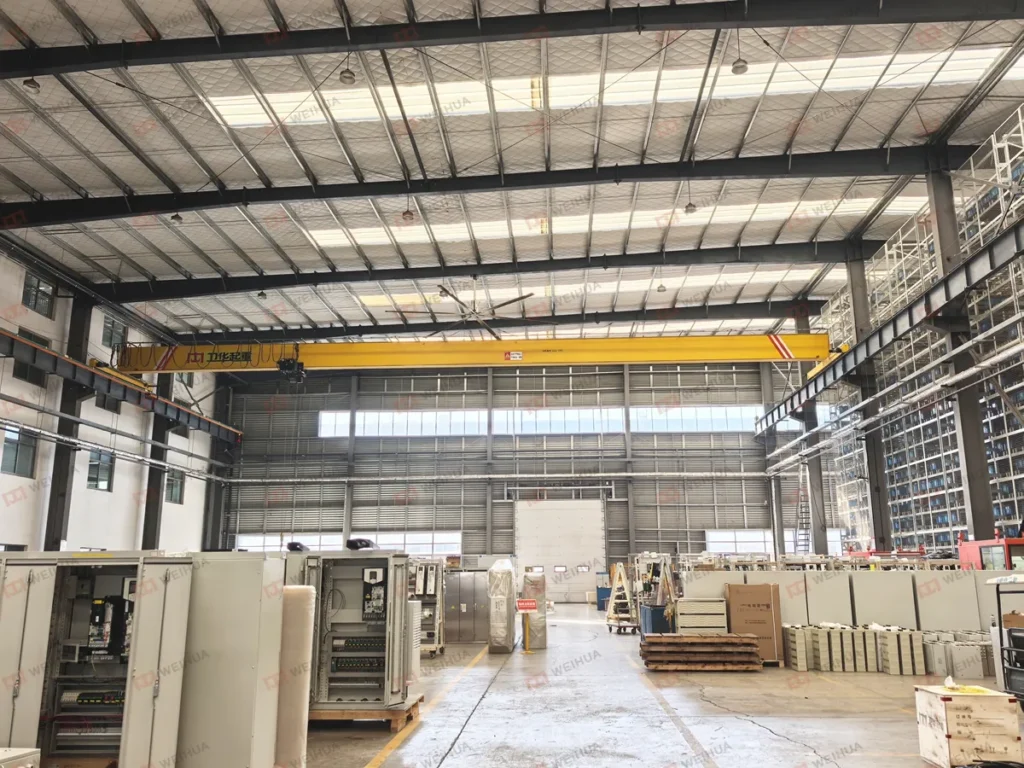
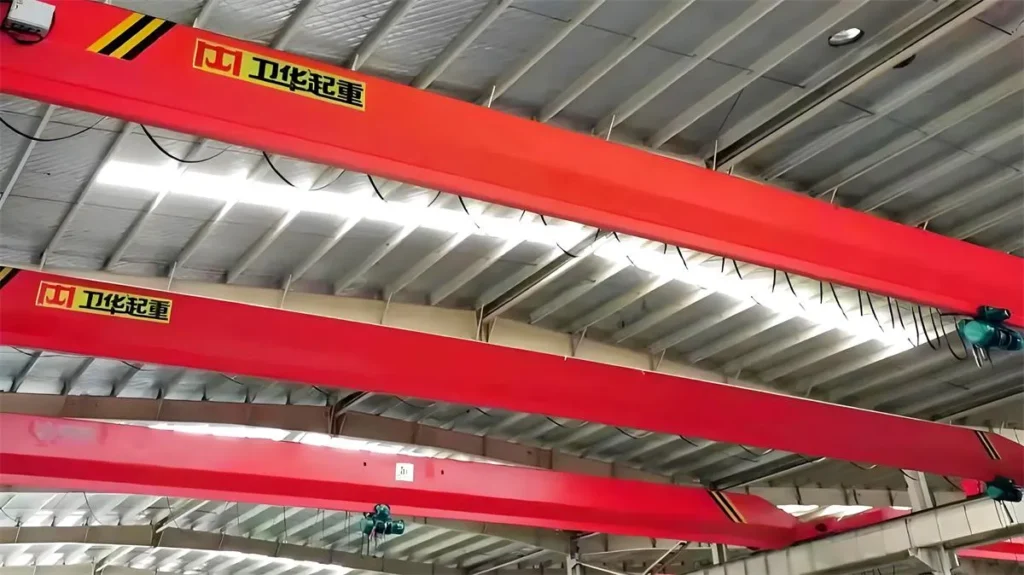
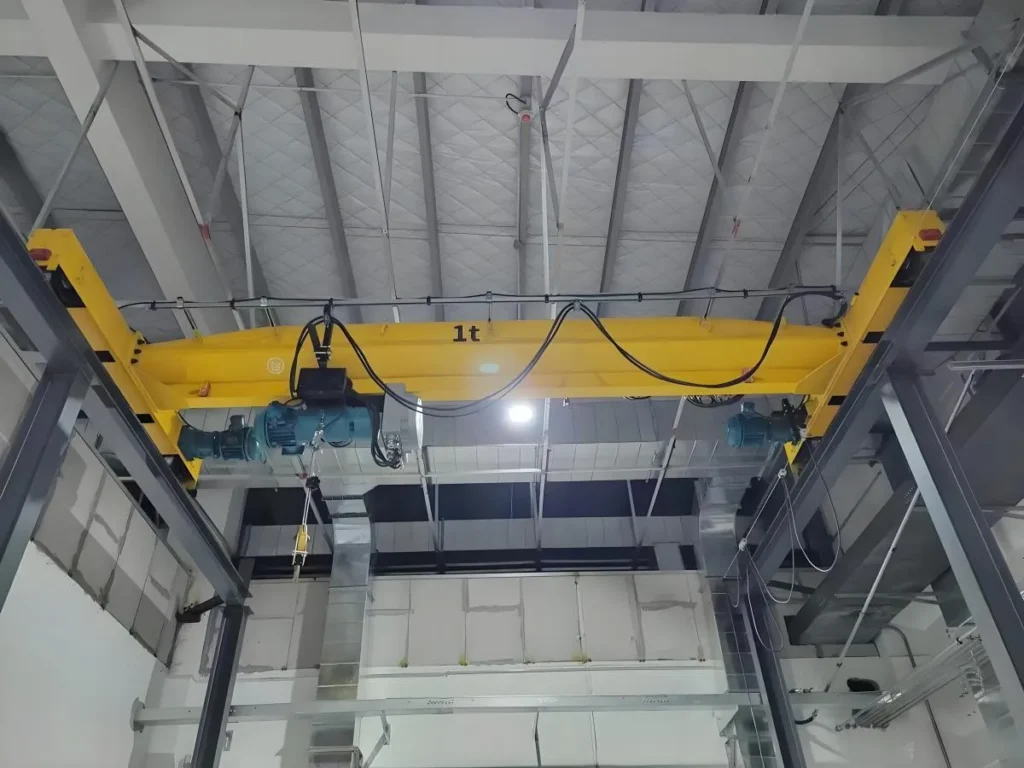
Single girder overhead cranes are lightweight and economical lifting equipment designed for handling medium to light-duty materials. Consisting of a main girder, hook, and electric hoist, they can move loads horizontally, vertically, and along the longitudinal axis. Ideal for workshops, warehouses, and other confined spaces, these cranes enable efficient operation in limited areas. Their simple structure facilitates easy installation and low maintenance costs.
- Lifting Capacity: 1t ~ 20t, customizable based on actual requirements, suitable for medium to light material handling tasks.
- Span: 4m ~ 22m, adjustable to match the span requirements of the work area, ensuring the equipment covers the necessary operational range.
- Lifting Height: 6m ~ 30m, customizable according to the spatial constraints of the work environment, meeting diverse lifting demands for different operations.
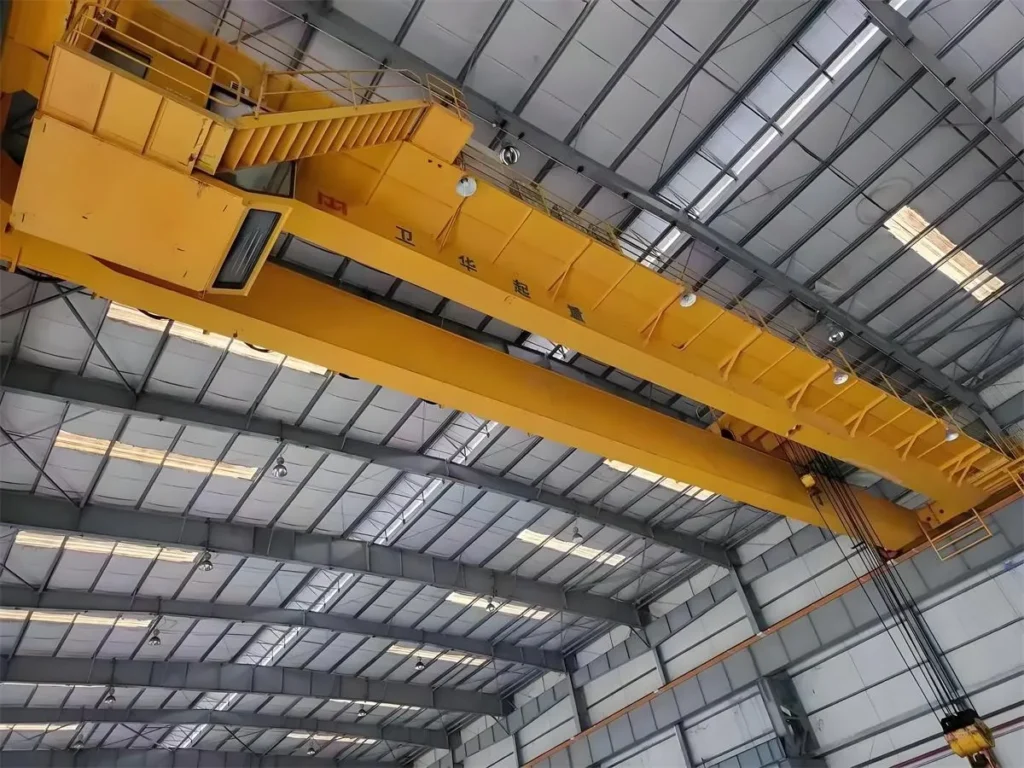
Double girder bridge crane
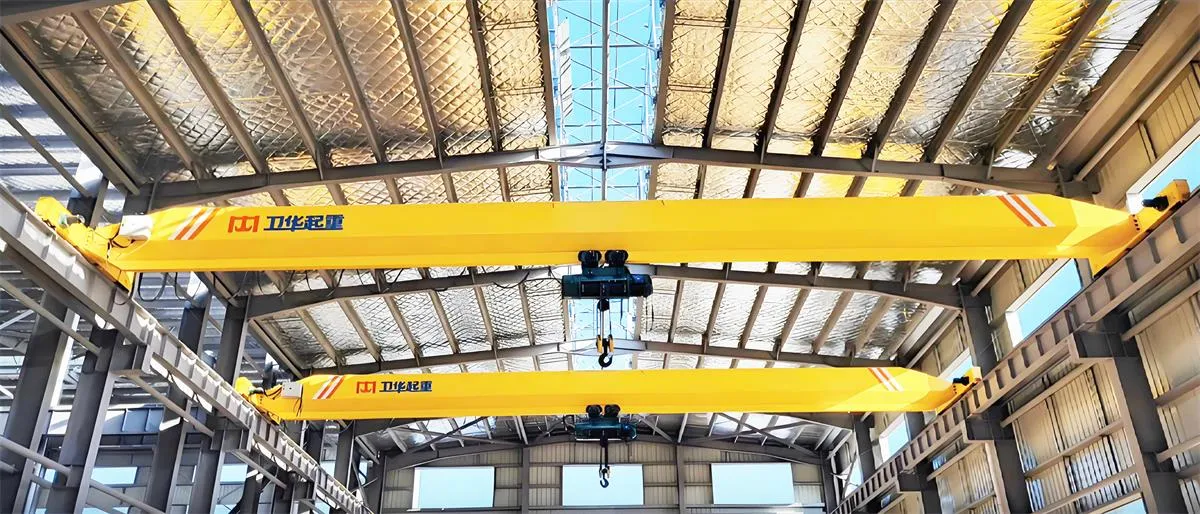
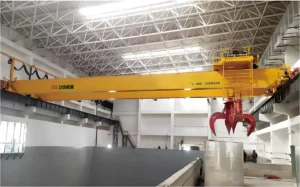
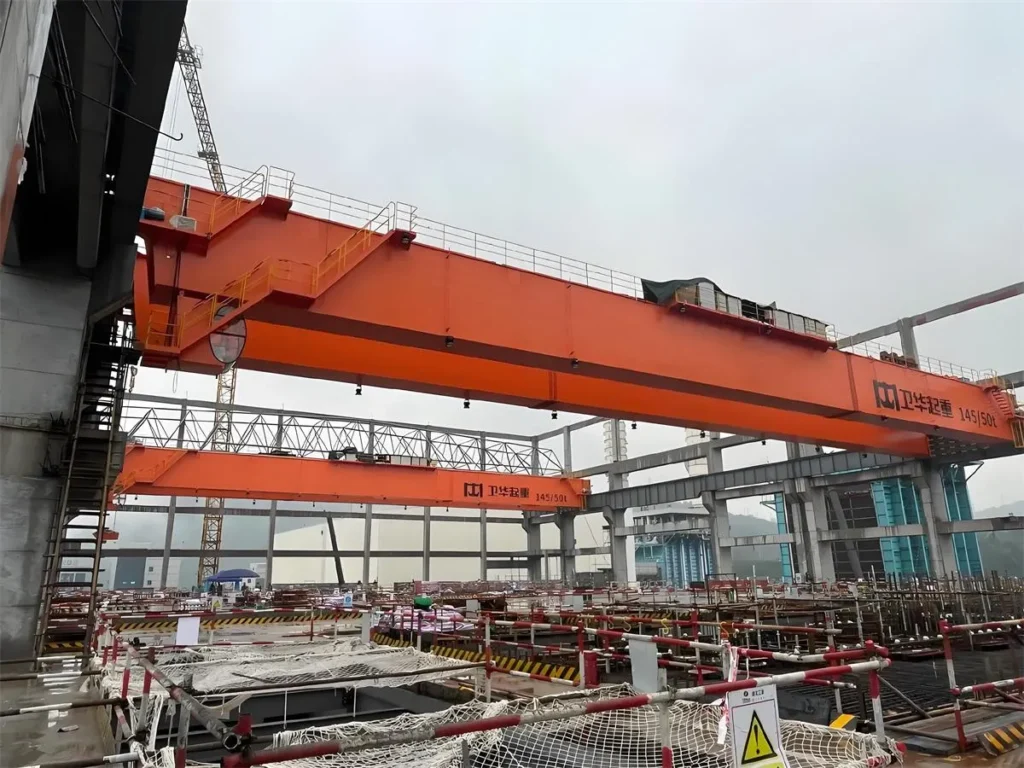
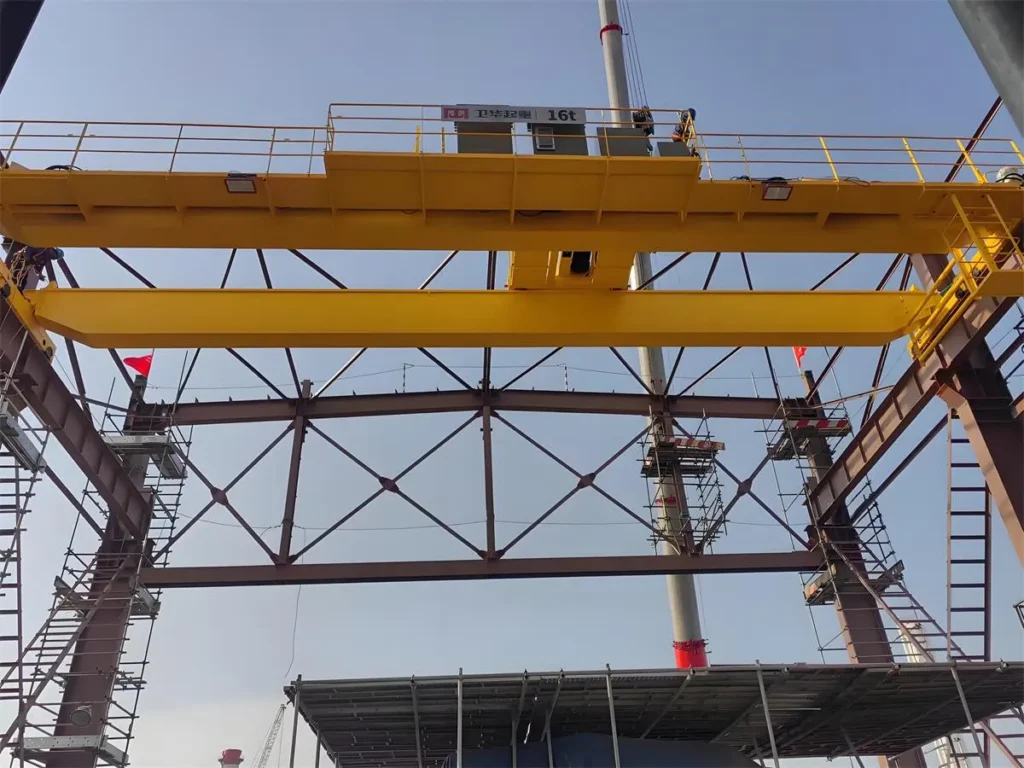
A double girder bridge crane is a heavy-duty bridge crane consisting of two parallel main girders, offering enhanced strength and stability. Typically equipped with trolleys and electric hoists running on both girders, it enables high-tonnage, high-frequency, and long-span material handling. Double girder cranes are utilised in industries such as steel, machinery manufacturing, energy, and warehousing.
- Lifting Capacity: Common range is 5t to 500t, with larger tonnages available upon request.
- Span: Typically 10m to 35m, customizable based on facility structural requirements.
- Lifting Height: 6m to 40m, adjustable based on process flow and building height requirements.
- Working Class: A5 to A8, suitable for medium to heavy-duty, high-frequency operation environments.
- Control Methods: Options include ground control (hanging control buttons), wireless remote control, cab operation, or combinations thereof.
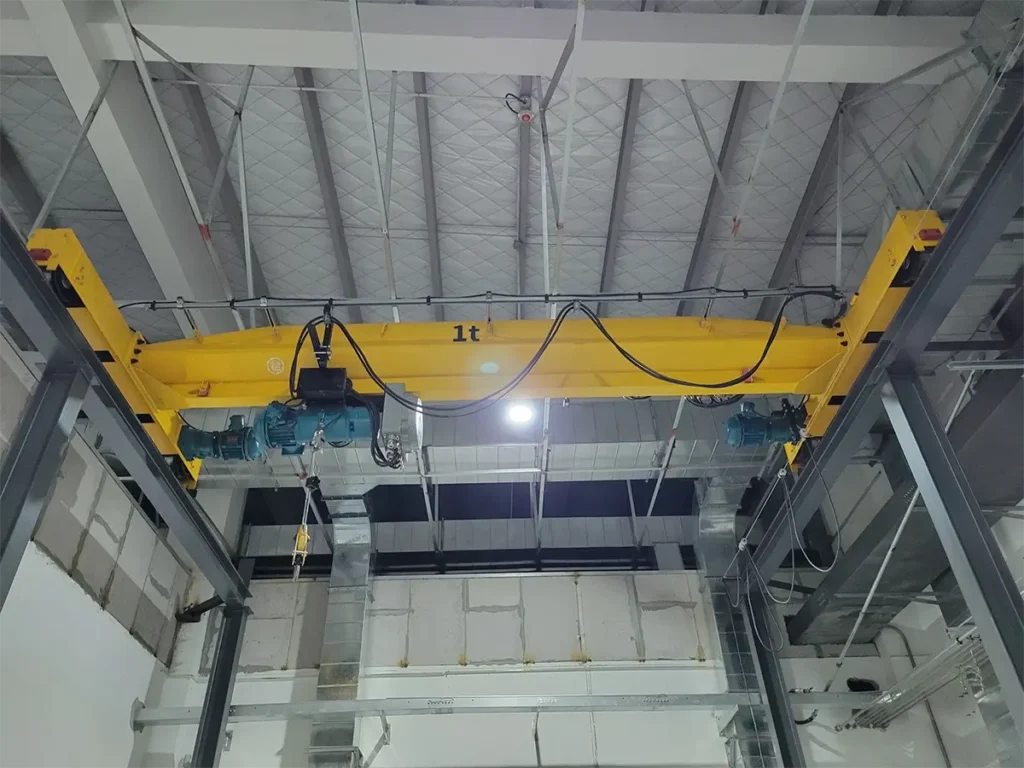
Underhung (Suspension) Bridge Crane
Underhung bridge cranes are mounted on the bottom flange of runway beams, making them ideal for facilities with limited headroom or structural constraints. Their compact design allows maximum use of available space while maintaining accurate load handling.
This crane type is frequently used in warehouses, light manufacturing plants, maintenance workshops, and logistics centers, where floor space optimization is critical.
Грузоподъемность: 0.5t ~ 10t, suitable for light-duty operations
Ждать Up to 20m, depending on building structure
Высота подъема: Optimized for low headroom environments

Explosion-Proof Bridge Crane
Explosion-proof bridge cranes are specifically engineered for hazardous and high-risk environments. All electrical components, motors, and control systems are designed to meet explosion-proof and safety standards, ensuring safe operation in flammable or corrosive atmospheres.
They are widely used in chemical plants, oil and gas facilities, metallurgy workshops, and pharmaceutical production lines, where safety compliance is critical.
Lifting Capacity: 1t ~ 100t, customized based on site conditions
Span: Tailored to plant layout and safety zoning
Lifting Height: Designed to match process requirements and safety regulations
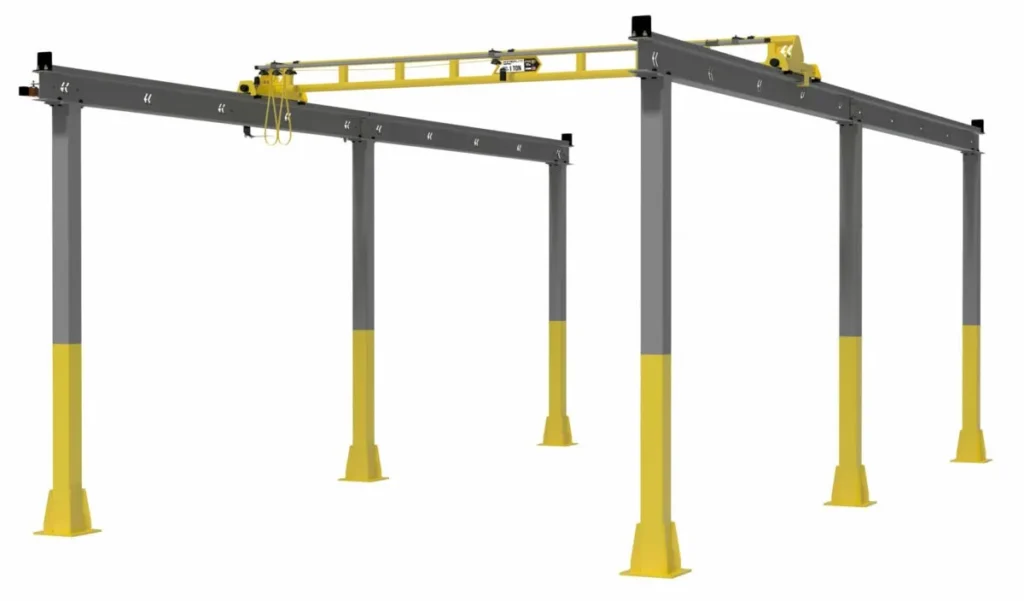
Workstation bridge crane
The Workstation Bridge Crane is a lightweight, modular material handling solution designed specifically for assembly lines, packaging lines, machining stations, and light duty warehousing operations. Characterized by its compact size, smooth operation, and simple installation, it delivers efficient, low friction handling capabilities within workstations, enhancing production cycle times and operational safety.
- Lifting Capacity: Typically 125kg to 2,000kg, customizable based on workstation requirements.
- Span: Approximately 2m to 10m, suitable for modular layouts and localized operations.
- Lifting Height: Designed according to factory clearance, generally 2m to 6m, with higher lifts available upon request.
- Control Methods: Manual pull cord, push button control, or wireless remote control.
Workshop bridge crane
Workshop overhead cranes are material handling equipment mounted on factory floor tracks, enabling three dimensional movement in horizontal, vertical, and longitudinal directions. They are used in machinery manufacturing, processing workshops, assembly lines, and storage areas. Characterized by stability and extensive coverage, they are suitable for frequent lifting and transporting of components, semi-finished products, and equipment.
- Lifting Capacity: 1t to 50t, customizable to meet workshop operational requirements.
- Span: 6m to 30m, determined by factory width and track layout.
- Lifting Height: 6m to 40m, adaptable to varying workshop clearances.
- Control Methods: Ground-level handle, electric control buttons, wireless remote control, or cab operation.
For a detailed comparison of single-girder and double-girder cranes, see: Single vs. Double Girder Crane: Differences, Advantages, and How to Choose
What is a bridge crane used for
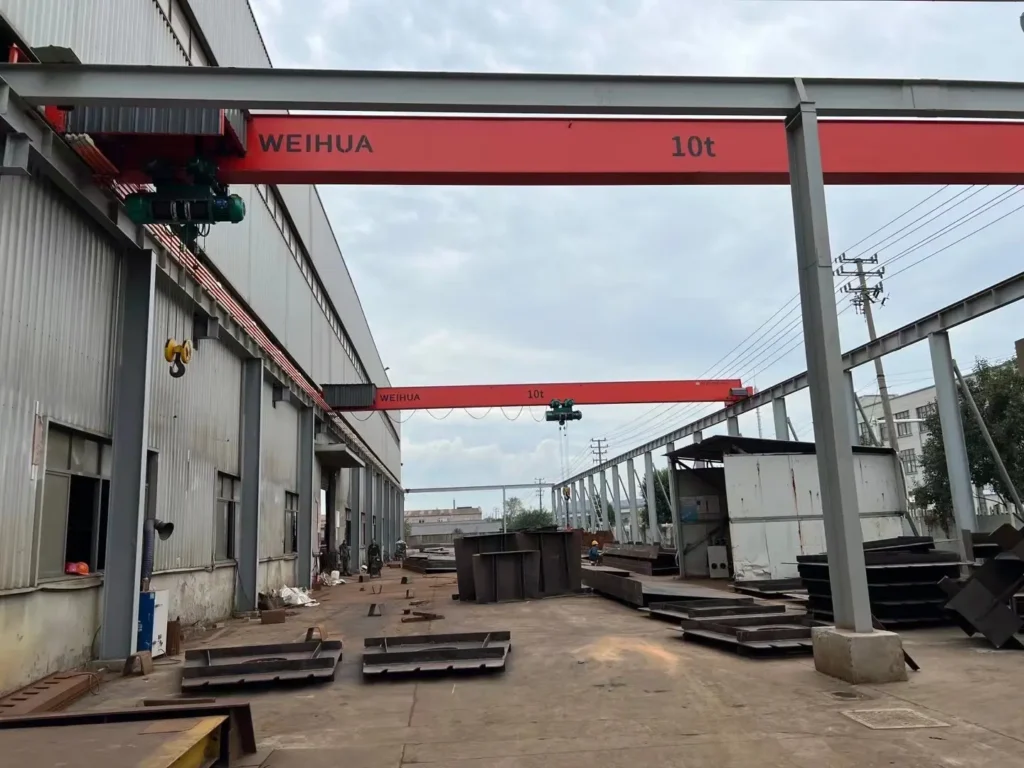
Bridge cranes are used for material handling, loading/unloading, and equipment installation in industrial production. They can flexibly move heavy loads longitudinally, transversely, and vertically, making them suitable for precise lifting operations across large coverage areas. They are employed in factory workshops, metal processing, machinery manufacturing, warehousing and logistics, assembly lines, docks, and maintenance areas to transport steel, molds, mechanical parts, raw materials, and finished products. Bridge cranes enhance production efficiency, reduce manual labor intensity, and optimize internal logistics.
Bridge crane for sale
The table below summarizes the lifting capacities of commonly used bridge cranes, covering standard specifications, applicable applications, and reference price ranges. It provides a useful reference for comparing different lifting capacities.
| Вместимость | Span Range | Высота подъема | Рабочий класс | Speeds (Hoist / Trolley / Bridge) | Control Methods | Ценовой диапазон (доллары США) |
| 2 Ton Bridge Crane | 6–16 m | 6–20 m | А3–А4 | 4–8 / 10–35 / 20–45 m/min | Кулон / Пульт дистанционного управления | $3,000 – $6,000 |
| 3 Ton Bridge Crane | 6–20 m | 6–30 м | А3–А5 | 4–8 / 10–40 / 20–50 m/min | Ground, hoist, remote | $4,000 – $8,000 |
| 5 Ton Bridge Crane | 6–25 m | 6–30 м | А3–А5 | 4–8 / 10–40 / 20–60 m/min | Wired control, handle, remote | $5,000 – $12,000 |
| 8 Ton Bridge Crane | 8–26 m | 6–30 м | A4–A5 | 5–10 / 10–45 / 20–60 m/min | Кулон / Пульт дистанционного управления | $8,000 – $16,000 |
| 10 Ton Bridge Crane | 10–30 m | 6–30+ м | А5–А6 | 5–10 / 10–45 / 20–60 m/min | Ground / Remote / Cabin (optional) | $12,000 – $25,000 |
| 16 Ton Bridge Crane | 10–32 m | 6–30+ м | А5–А6 | 5–12 / 10–50 / 20–60 m/min | Ground / Remote / Cabin | $20,000 – $40,000 |
| 20 Ton Bridge Crane | 10–36 m | 6–30+ м | А5–А6 | 5–12 / 10–50 / 20–70 m/min | Дистанционное управление / Кабина | $25,000 – $50,000 |
bridge crane vs gantry crane
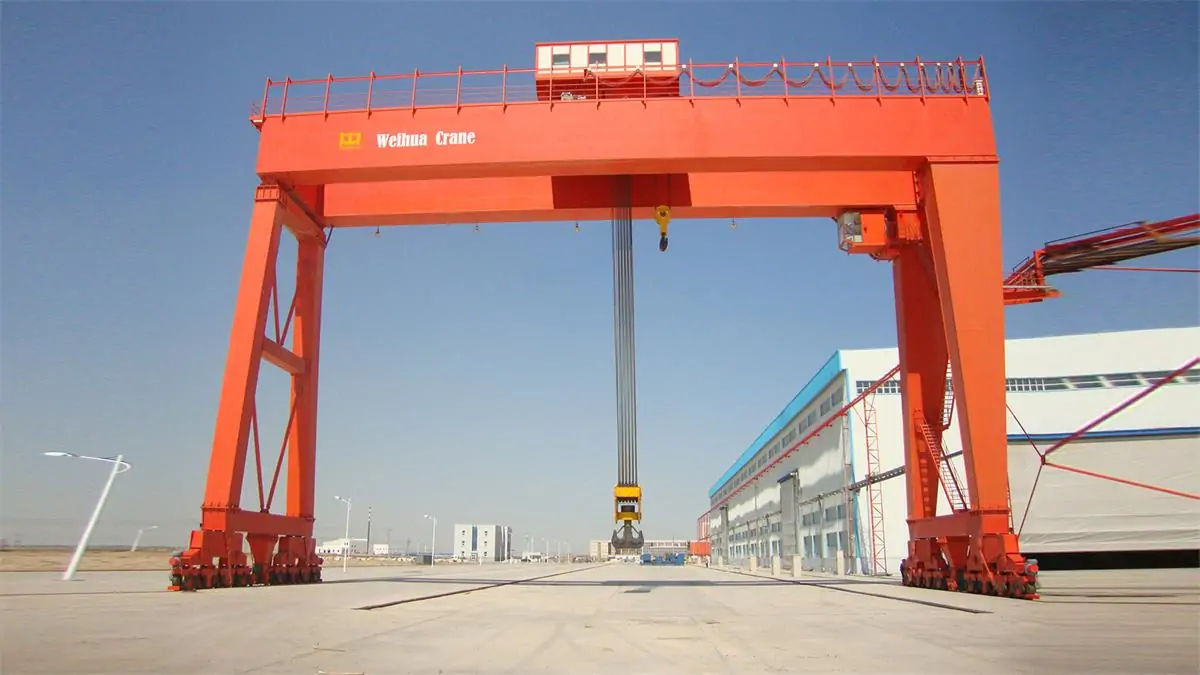
The primary differences between bridge cranes and gantry cranes lie in their structural installation methods and application scenarios.
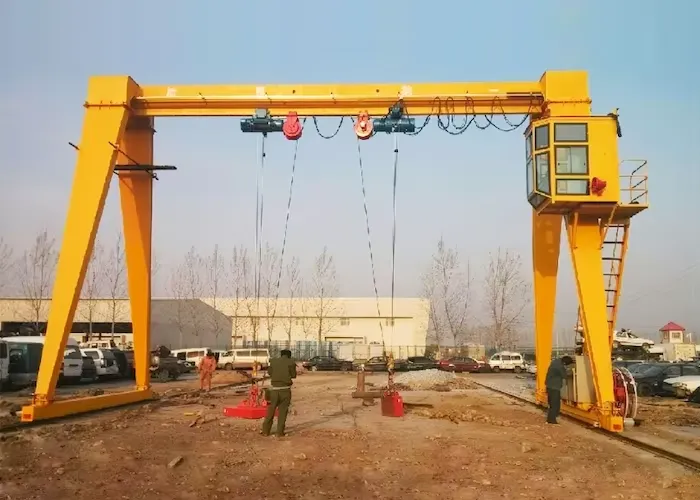
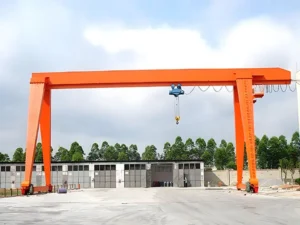
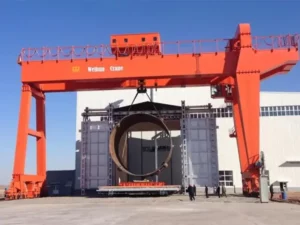
Bridge cranes (overhead cranes) operate by running on tracks mounted on the sides of a factory building. They rely on the building structure for support and are used for indoor material handling in workshops, warehouses, and similar environments. Gantry cranes, however, feature self-supporting legs. Their bridge structure rests on ground-level rails supported by legs on both sides, enabling independent operation without reliance on building structures. This makes them more suitable for outdoor sites, cargo yards, shipbuilding, steel yards, and other applications requiring large span, heavy tonnage handling. Overall, bridge cranes excel in indoor, fixed-rail environments for efficient lifting operations, while gantry cranes demonstrate greater advantages in outdoor settings and locations without structural support.
conclusion
Overall, bridge cranes represent a structurally mature and widely applied lifting solution, enabling efficient and precise material handling within confined spaces. Whether it’s lightweight single girder cranes, heavy duty double girder cranes, or specialized bridge cranes for diverse settings like workstations, workshops, and garages, flexible selection is possible based on actual requirements. By rationally configuring parameters such as lifting capacity, span, and control methods, bridge cranes not only significantly reduce manual labor intensity but also enhance production efficiency and optimize factory logistics. They are indispensable material handling equipment in modern industrial and warehousing sectors.