








Оглавление
Введение
Efficient bulk material handling is essential for modern ports and terminals where large volumes of cargo need to be loaded and unloaded continuously. An electro hydraulic grab bucket for port bulk material handling uses an electric drive system and hydraulic control technology to provide stable grabbing force, precise operation, and reliable performance for bulk cargo handling. It is widely used for handling coal, ore, sand, grain, scrap steel, and other loose materials in ports, docks, and bulk material transfer facilities.
In this article, I will introduce how electro hydraulic grab buckets work, their main applications, key specifications, and the factors to consider when selecting a suitable model. I will also explain the differences between hydraulic grabs and other grab bucket types, helping you understand how WEIHUA provides customized solutions for different cranes and operating conditions
What Is an Electro Hydraulic Grab Bucket?
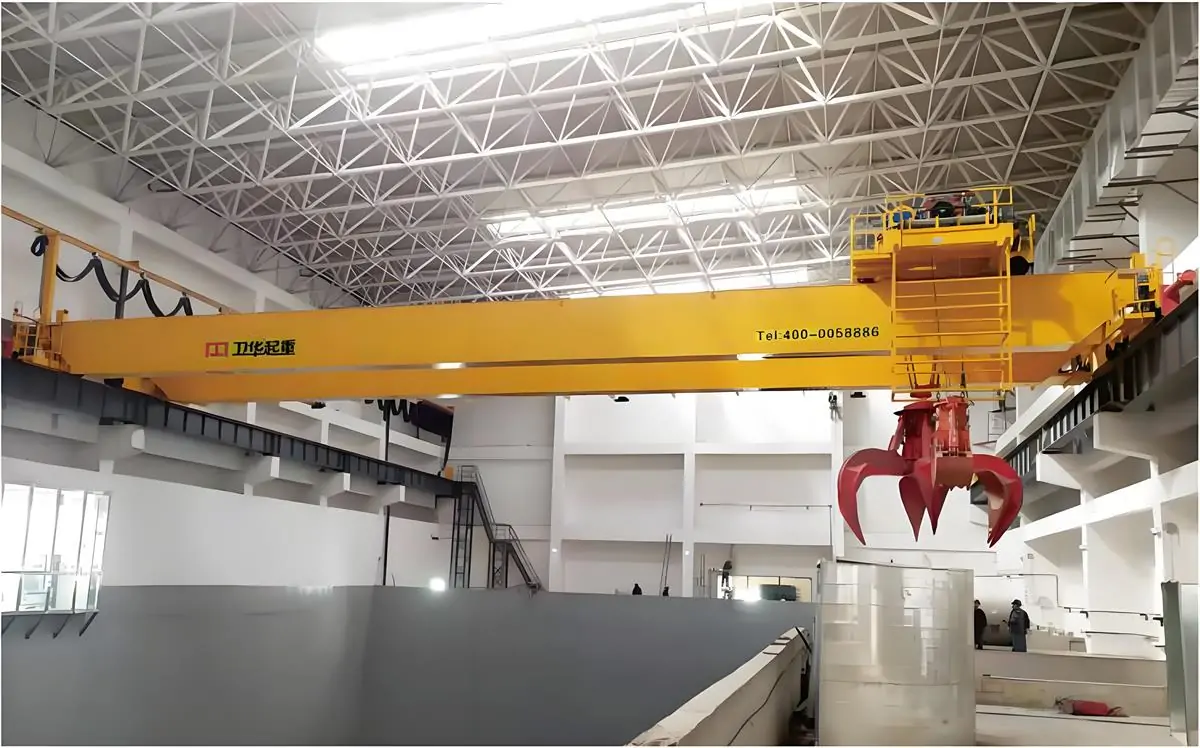
An electro hydraulic grab bucket is a crane attachment driven by an electric motor and hydraulic system. It uses hydraulic cylinders to control the opening and closing movement of the grab shells for handling loose bulk materials. It is also known as an electric hydraulic grab or electro-hydraulic grab. It is used in ports, power plants, waste handling facilities, and other applications to replace traditional rope grabs for material loading and unloading.
Different from mechanical rope grabs that rely on the crane hoisting wire ropes to open and close the grab, an electro hydraulic grab bucket has an integrated hydraulic drive system and can complete the grabbing cycle independently without an external hoisting mechanism. The complete unit consists of an electric motor, hydraulic pump, hydraulic cylinders, control system, and grab shell structure. The motor drives the hydraulic pump to generate pressurized oil, which then moves the hydraulic cylinders to open and close the grab shells.
This independent drive design allows the grab bucket to operate without being limited by the crane wire rope arrangement. A single grabbing cycle can usually be completed within 20 seconds, making it suitable for frequent bulk material handling operations. The hydraulic system also provides overload protection. When the grabbing resistance exceeds the set value, the hydraulic oil is returned through the relief valve to prevent damage to structural components.
How Does an Electro Hydraulic Grab Bucket Work?
The working logic of an electro-hydraulic grab bucket is the process of converting electrical energy into hydraulic energy and then into mechanical grabbing force. The power source is integrated into the grab bucket body, and it does not rely on the crane hoisting mechanism. The grab bucket can complete the opening and closing cycle with single-hook suspension.
The working process is as follows:
- Power supply and pressure building: The cable reel supplies power to the grab bucket, and the electric motor drives the hydraulic pump to output pressurized oil.
- Control and distribution: The pressurized oil enters the hydraulic cylinders through the control valve block according to the commands. The pump flow is automatically adjusted according to the working pressure. When the pressure approaches the maximum value, the flow rate approaches zero, reducing overflow heat generation.
- Grabbing operation: The hydraulic cylinders push the grab shells to rotate around the hinge points. The shells close and cut into the material pile to complete the grabbing process. Compared with traditional two-cylinder structures, the four-cylinder structure has a lower overall height, more reasonable force distribution, and a full bucket rate close to 100%.
- Pressure holding and unloading: After the grab bucket is lifted into position, the hydraulic cylinders change direction, and the grab shells open to discharge the materials before entering the next cycle.
With this drive method, the grabbing force is directly provided by the hydraulic system and is not restricted by wire rope winding or hoisting synchronization. The operation rhythm remains stable, and the single cycle time is short. The hydraulic circuit is equipped with overflow protection, preventing impact damage to the equipment when the grab bucket lands on the material pile at any position.
Why Use Electro Hydraulic Grab Bucket for Port Bulk Material Handling?
Port bulk material handling requires grab buckets that can handle frequent operation, different materials, and demanding working conditions. An electro hydraulic grab bucket for port bulk material handling uses an independent hydraulic drive system to provide stable grabbing performance for bulk cargo loading and unloading.
- Self-powered design with single-hook operation: The grab bucket integrates the hydraulic power unit inside the structure and does not require the crane to provide an additional opening and closing hoisting system. It can be installed on tower cranes, ship cranes, unloading machines, overhead cranes, and other lifting equipment.
- Short operation cycle and stable handling process: The hydraulic cylinders directly control the opening and closing of the grab shells. The grabbing action is not affected by wire rope synchronization, allowing the grab bucket to complete loading and unloading operations at a consistent working pace.
- Suitable for various bulk materials: The grab bucket is used for handling fine bulk materials such as fertilizer, grain, coal, iron ore, sand, and gravel. It can also handle irregular materials including scrap steel, pig iron, slag, waste, and stone. The applicable material density range is 0.9–3.0 t/m³.
- Reliable operation in harsh environments: The grab bucket adopts a simple mechanical structure with reliable hydraulic components. Sealing parts and pressure-bearing components are designed for dusty, humid, and impact-load environments commonly found in ports.
- Low maintenance requirements and long service life: The hydraulic system has a mature design, controlled component wear, and simple daily maintenance. Compared with mechanical grab buckets that require regular wire rope replacement, the electro hydraulic grab bucket provides lower long-term operating costs.
Applications of Electro Hydraulic Grab Bucket in Ports
Electro hydraulic grab buckets are widely used in ports and bulk terminals for loading, unloading, and transferring different types of loose materials, including minerals, agricultural products, scrap, and industrial waste.
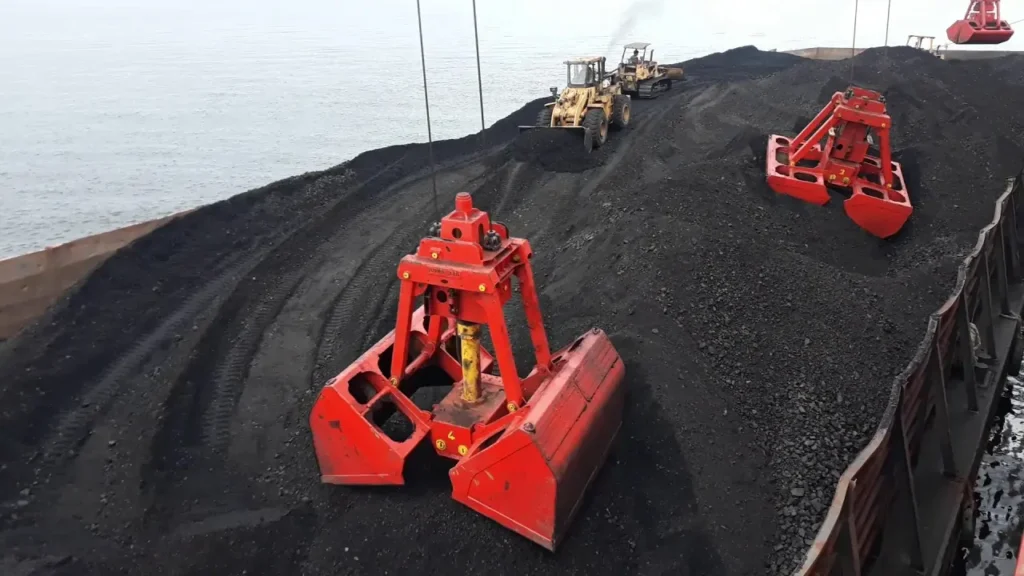
Coal Terminal Handling
Used for loading and unloading coal between vessels, stockyards, and conveyor systems.
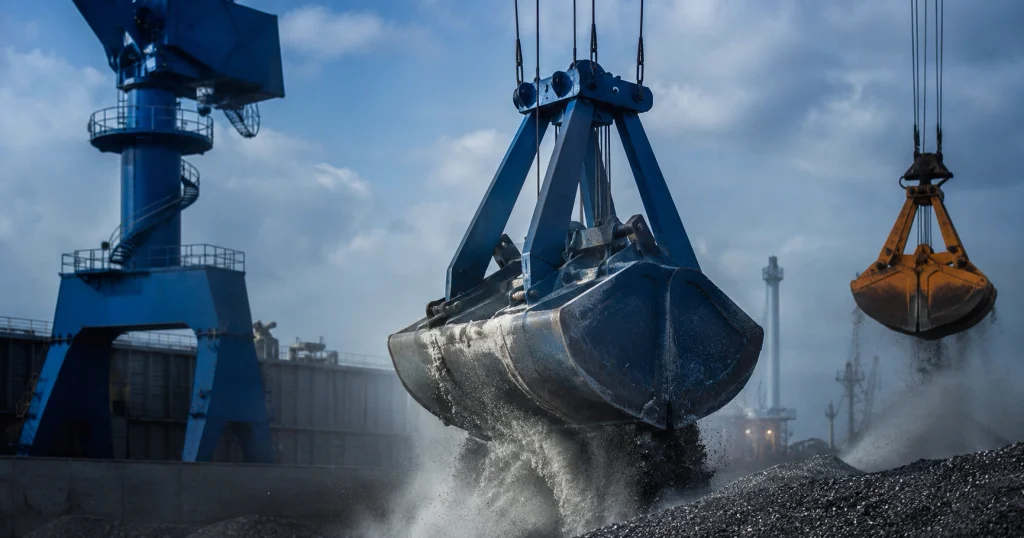
Iron Ore Handling
Suitable for high-density ore loading at bulk cargo terminals and mining ports.
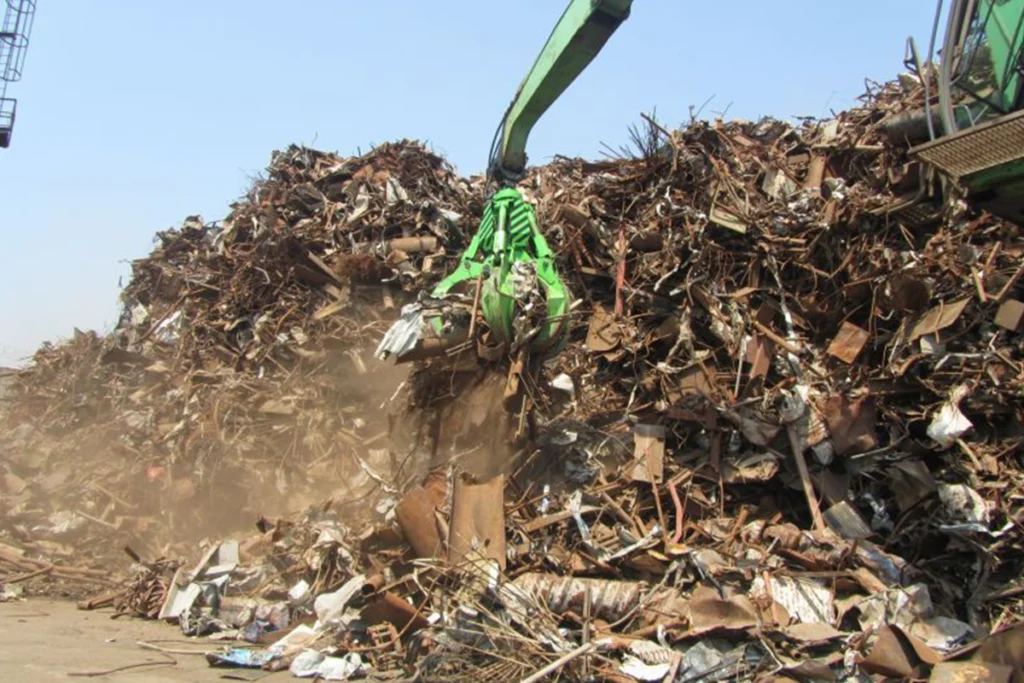
Scrap Steel Handling
Used for grabbing irregular scrap steel and metal materials in recycling and steel facilities.
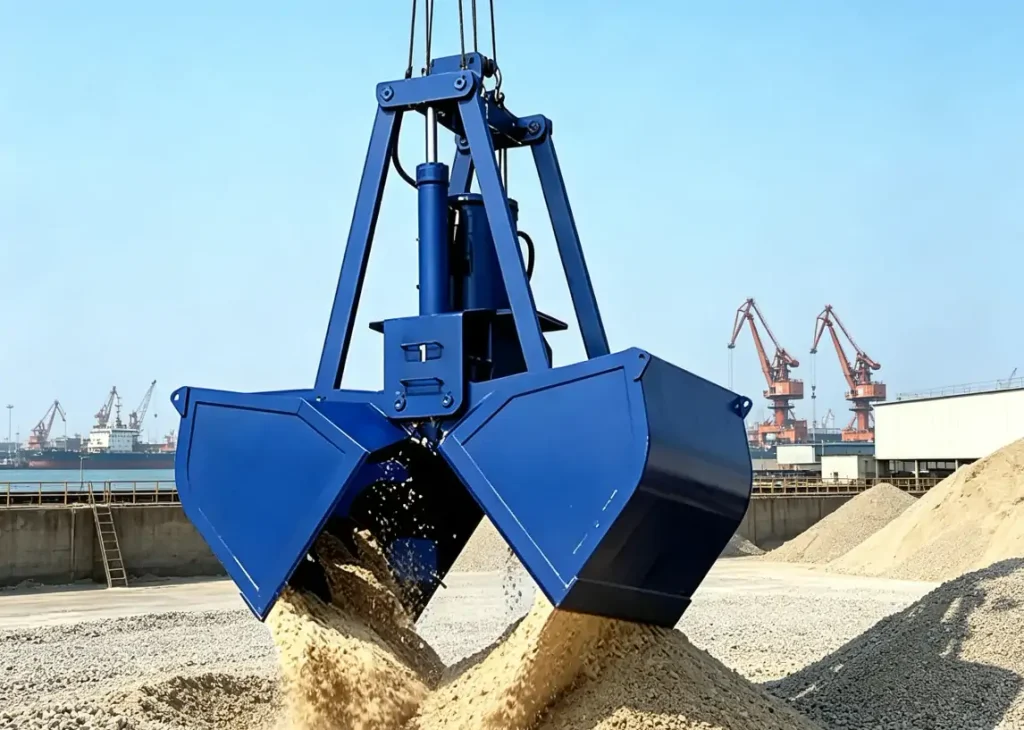
Grain and Fertilizer Handling
Applied in agricultural terminals for loading and transferring grain, fertilizer, and other fine bulk materials.
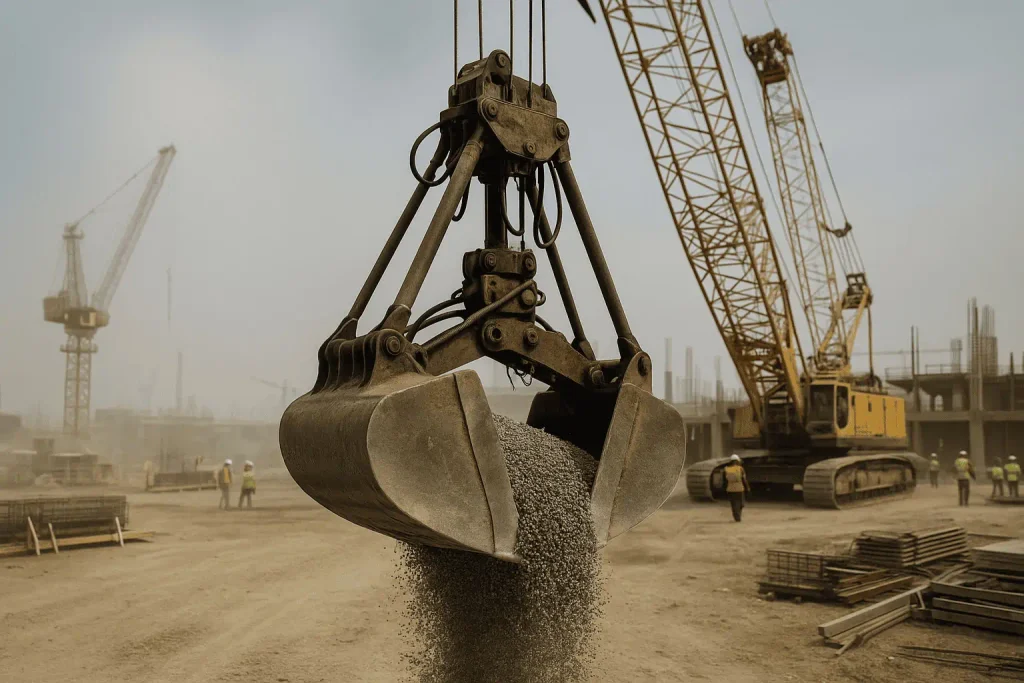
Sand and Gravel Handling
Used for river ports and construction material terminals handling sand, stone, and aggregates.
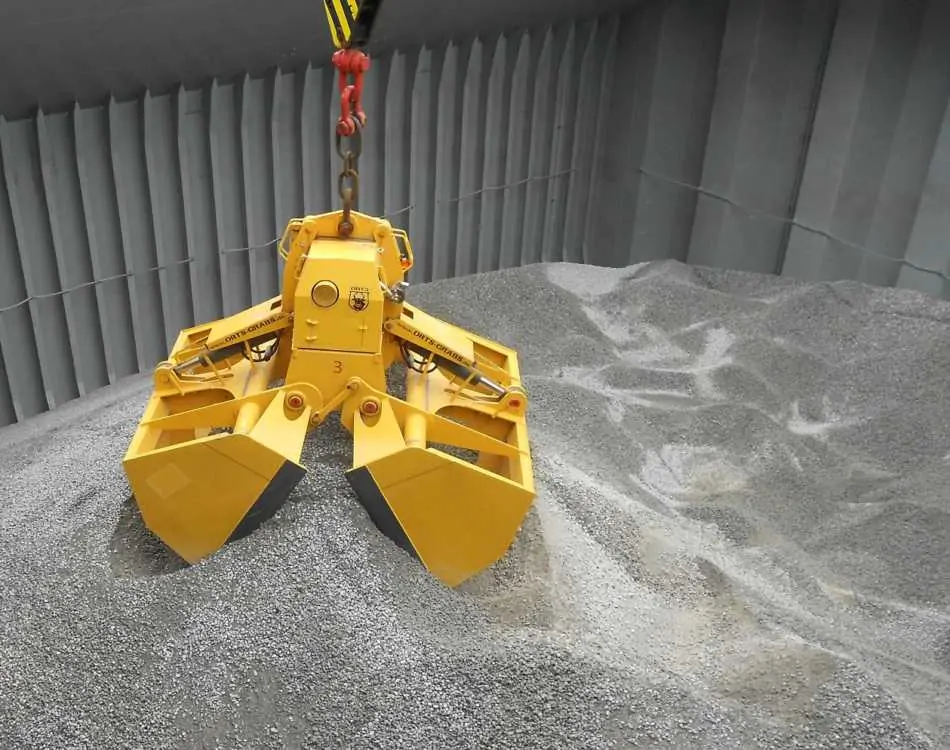
Waste and Slag Handling
Applied in waste treatment plants and industrial sites for handling slag, waste, and other loose materials.
Orange peel grab buckets are widely used in various industries and are particularly suitable for handling irregularly shaped metal. Steel is one of the most common materials handled; for specific applications, read the article: Hydraulic Orange Peel Grab Bucket for Scrap
Electro Hydraulic Grab Bucket Types for Bulk Material Handling
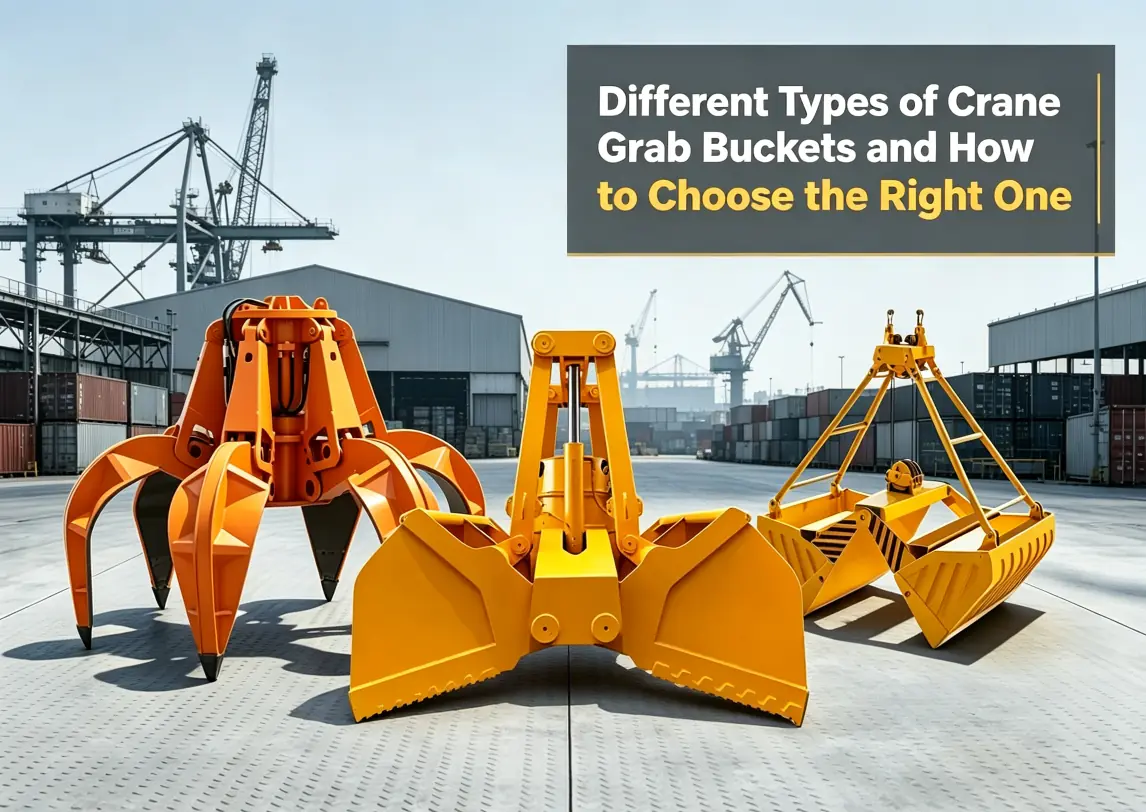
Electro hydraulic grab buckets are available in different structures according to material characteristics and handling requirements. The main types include clamshell grabs and orange peel grabs, which are selected based on material density, shape, and loading conditions.
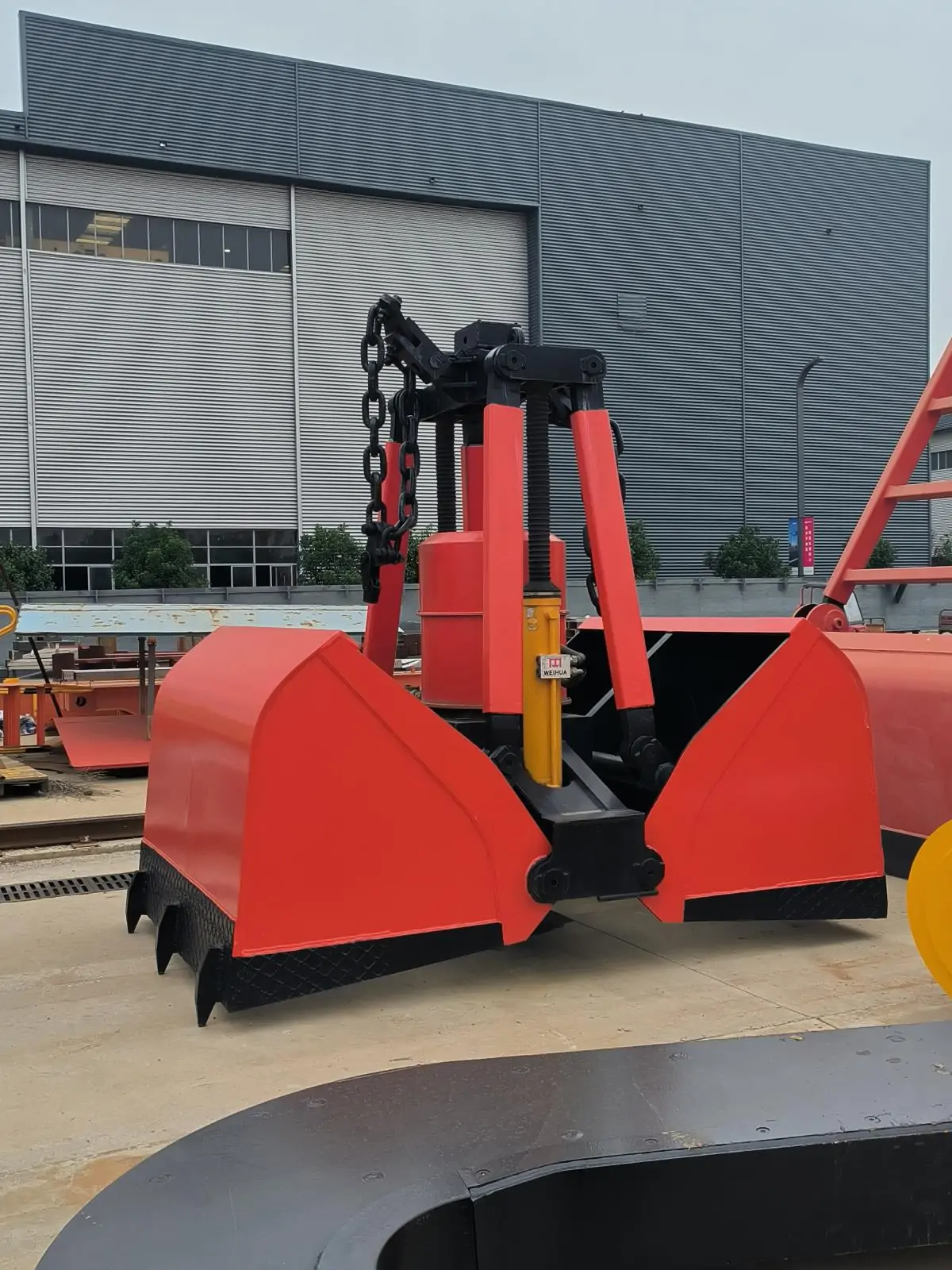
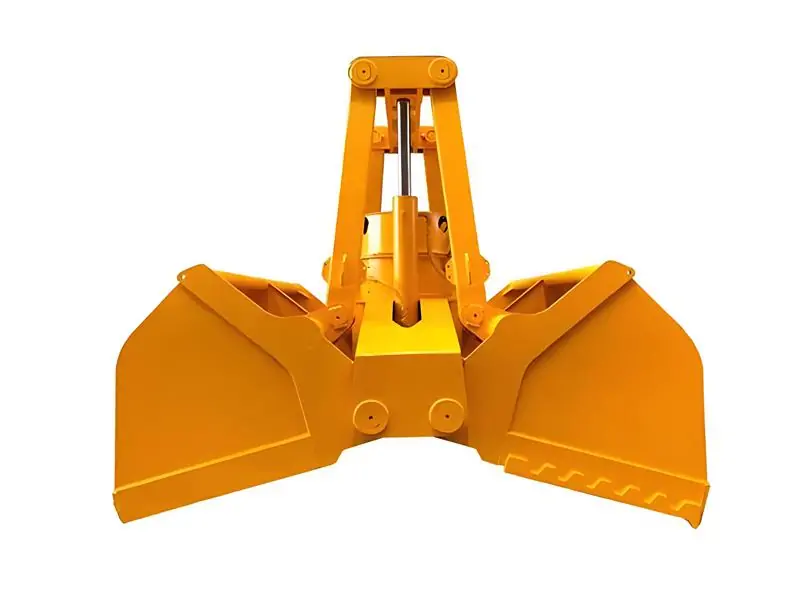
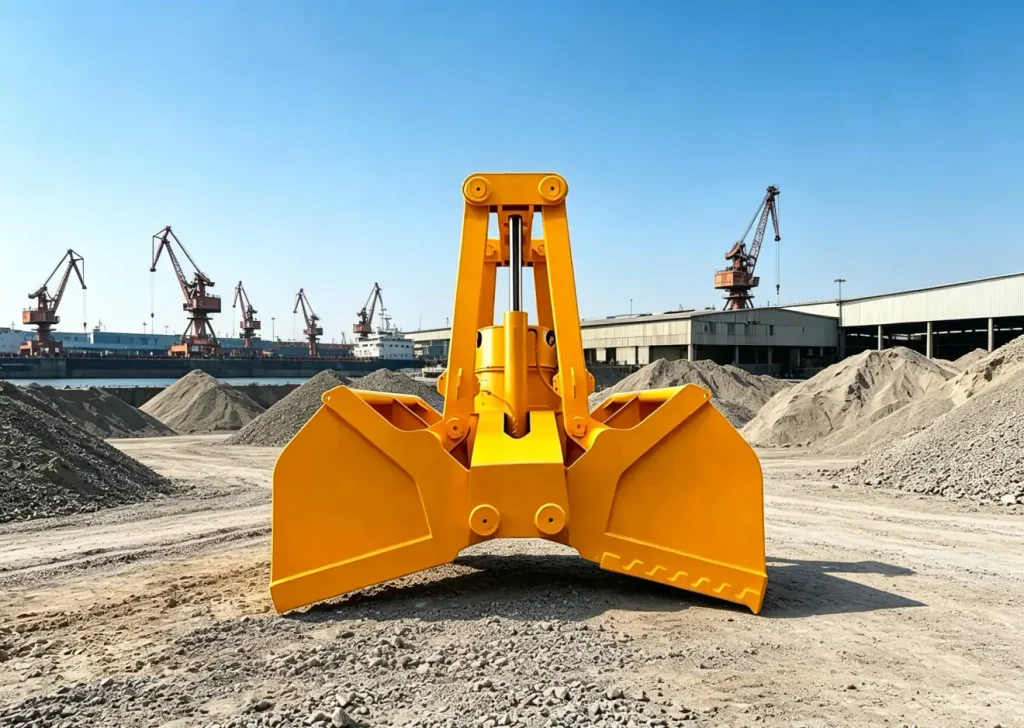
Electro Hydraulic Clamshell Grab
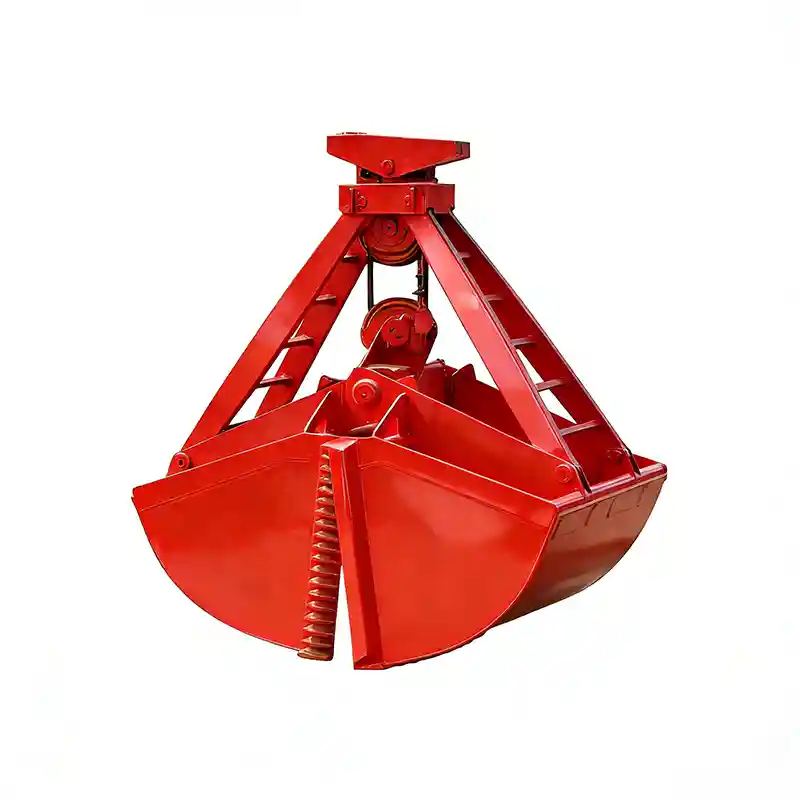
Ан electro hydraulic clamshell grab uses two bucket shells driven by hydraulic cylinders to open and close for bulk material handling. It features a large grabbing volume, good filling performance, and a closed shell structure that reduces material leakage during lifting. It is mainly used for loose and fine-grained bulk materials.
Приложения
- Coal
- Iron ore
- Grain
- Fertilizer
- Sand and gravel
- Limestone
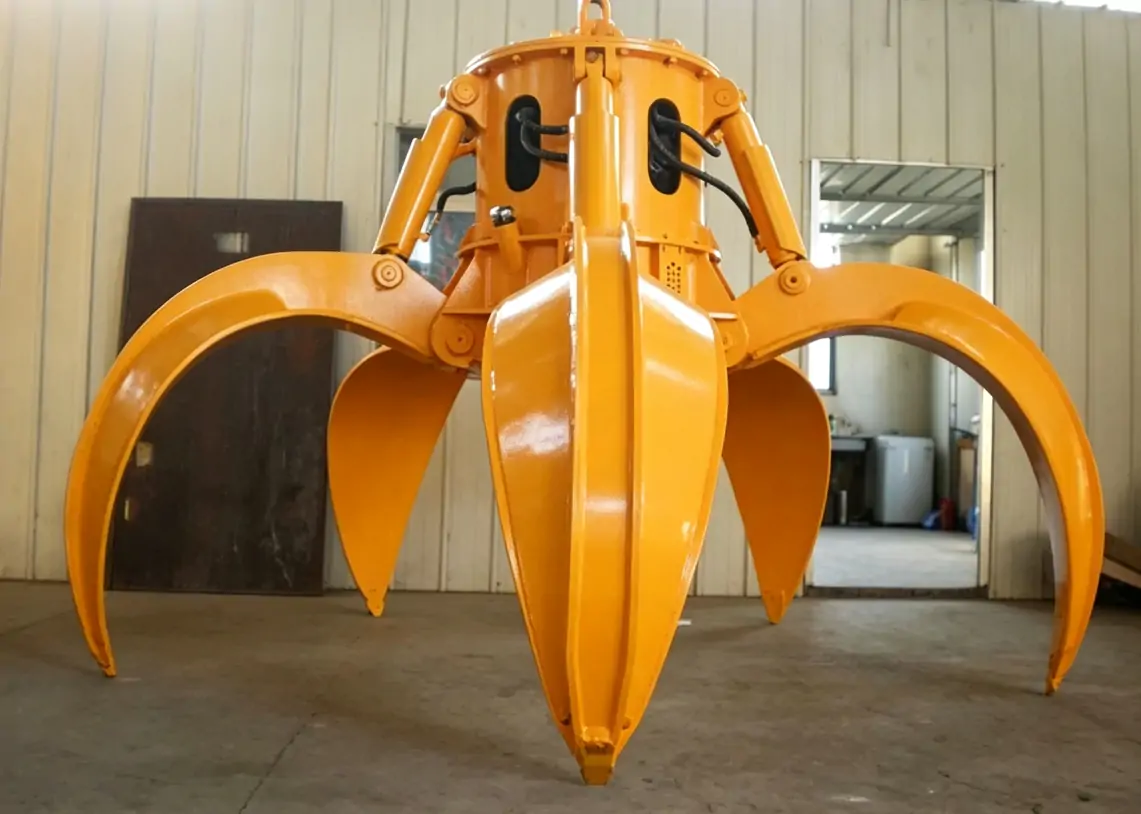
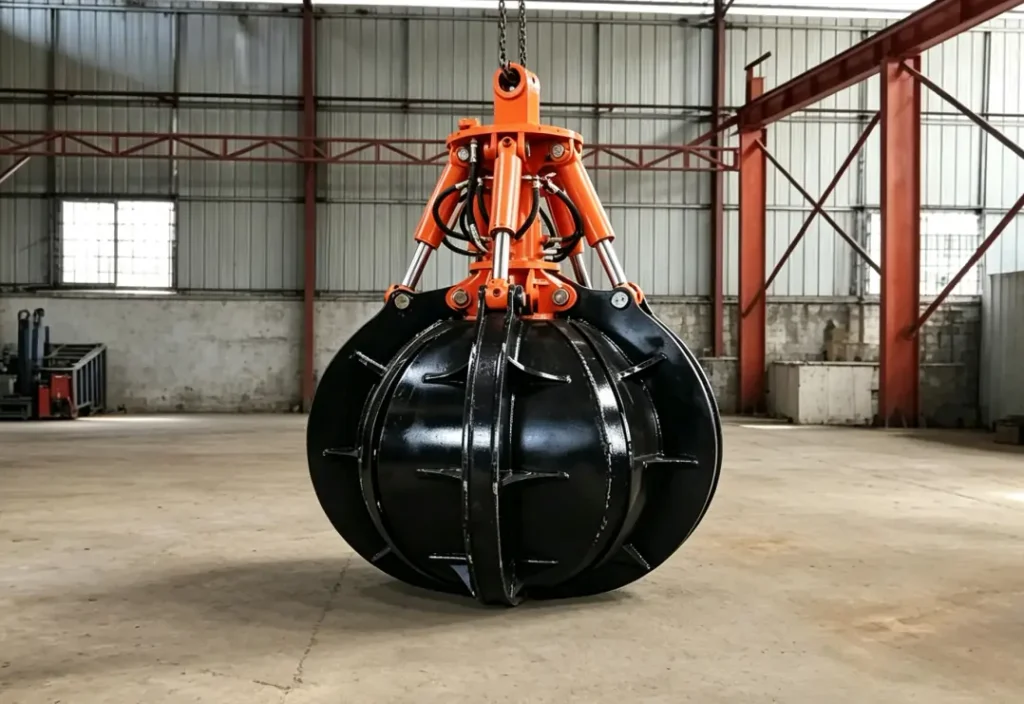
Electro Hydraulic Orange Peel Grab
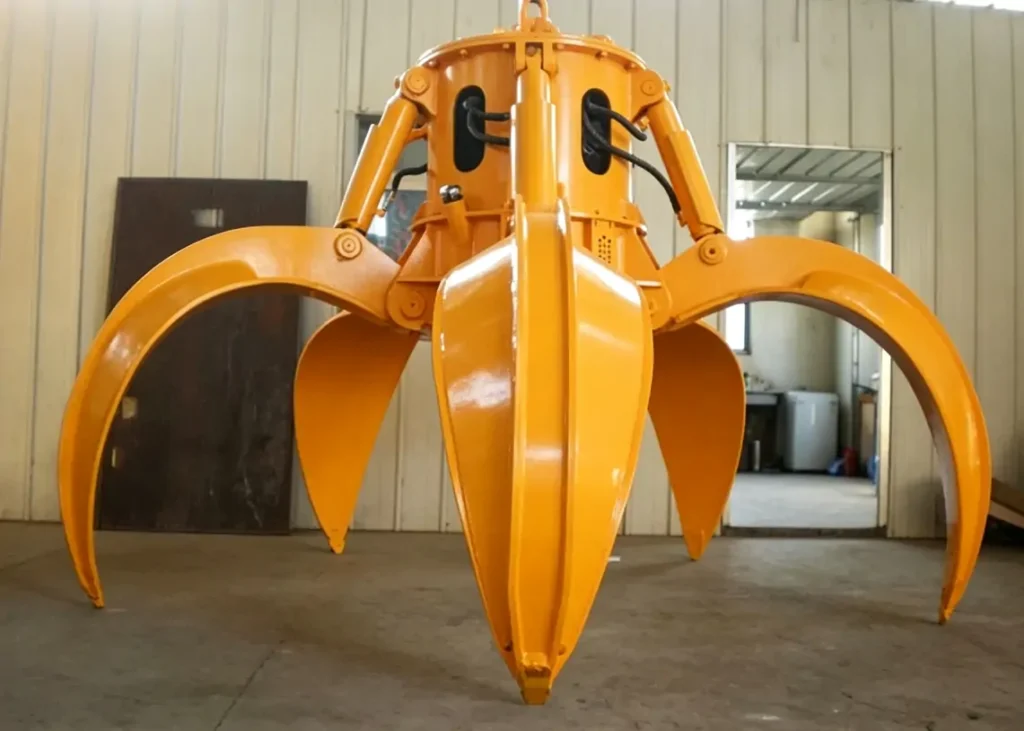
Ан electro hydraulic orange peel grab uses multiple curved tines to grip irregular and heavy materials. The tine structure provides strong penetration and holding force for materials with large size variations and uneven shapes. It is commonly used for heavy-duty handling operations.
Приложения
- Scrap steel
- Pig iron
- Steel blocks
- Slag
- Rocks
- Waste materials
Specifications of Electro Hydraulic Grab Bucket
The main specifications of an electro hydraulic grab bucket vary according to crane type, material characteristics, and operating conditions.
| Параметр | Диапазон |
|---|---|
| Grab Capacity | 0.5–30 m³ |
| Material Density | 0.9–3.0 t/m³ |
| Система привода | Electric hydraulic drive |
| Applicable Cranes | Ship cranes, portal cranes, overhead cranes, unloading machines |
| Working Materials | Coal, ore, grain, sand, scrap steel, waste, slag |
| Hydraulic Pressure | 160–250 bar |
| Режим управления | Crane control system / remote control |
| Рабочая среда | Ports, terminals, mines, steel plants |
WEIHUA provides customized electro hydraulic grab buckets based on crane specifications, material properties, capacity requirements, and working conditions to match different bulk material handling applications.
Electro Hydraulic Grab Bucket vs Mechanical Grab Bucket
Electro hydraulic grab buckets and mechanical grabs are the two most common types of lifting attachments used in bulk material handling. The core difference lies in the power source: one has an integrated hydraulic drive system, while the other is driven by the crane wire ropes.
| Особенность | Electro Hydraulic Grab | Mechanical Grab |
|---|---|---|
| Drive Method | Hydraulic cylinders, self-contained power unit | Crane wire ropes, no power supply needed |
| Closing Force | Higher, cylinder-driven digging force | Depends on rope system and grab dead weight |
| Control | Precise, open/close at any position | Mechanical linkage, limited by rope travel |
| Обслуживание | Hydraulic components, imported parts, low failure rate | Simple structure, rope and pulley wear is the main cost |
| Suitable Material | Heavy, irregular, and high-viscosity bulk materials such as nickel ore, scrap, and rock | General bulk materials such as coal, sand, grain, and fertilizer |
| Crane Compatibility | Single-hook crane, wide adaptability | Requires matched rope configuration (single/double/four-rope) |
| Efficiency | Handles about 20% more material than remote control grab in equal time | Slower, lower t/h, higher dead weight |
| Operation | No heavy manual labor, smooth and quiet | Depends on operator skill; more physical involvement |
Mechanical grabs have advantages in simple structure, no electrical or hydraulic components, strong durability, and suitability for conventional bulk materials and applications with limited budgets. However, for high-viscosity materials or high-frequency operations, the independent drive system and stable grabbing force of electro hydraulic grab buckets provide more obvious advantages, and the maintenance cost during long-term operation is more controllable.
During selection, the main factors include material characteristics, crane configuration, and operating intensity. The two types do not have an absolute replacement relationship.
The above provides only a general overview of the differences between the two. For more detailed information, please refer to the article: “Mechanical Clamshell Grab Bucket vs. Hydraulic Grab Bucket: What Is the Difference?”
How to Choose an Electro Hydraulic Grab Bucket for Port Operations?
Choosing an electro hydraulic grab bucket for port operations requires matching the grab design with the material, crane parameters, and working conditions. The selection directly affects grabbing performance, operation cycle, and equipment service life.
1. Check the Material Characteristics
Different materials require different grab structures and closing forces. Clamshell grabs are suitable for loose bulk materials, while orange peel grabs are used for irregular and heavy materials.
Common materials: Coal, Iron ore, Sand and gravel, Grain, Fertilizer, Scrap steel, and Slag.
2. Match the Grab Capacity with the Crane
The grab capacity should match the crane lifting capacity and working load. The total weight of the grab and loaded material must stay within the crane’s rated capacity.
Factors:
- Crane lifting capacity
- Grab self-weight
- Material density
- Required handling volume
3. Consider the Working Environment
Port operations involve dust, moisture, salt spray, and continuous loading cycles. The grab structure and hydraulic components should be suitable for these conditions.
Consider:
- Corrosion protection
- Working frequency
- Ambient temperature
- Material impact
4. Select a Suitable Drive and Control System
The electro hydraulic grab bucket uses an integrated hydraulic drive unit. The power supply and control system should match the crane configuration.
Selection factors:
- Crane power supply
- Control interface
- Operation method
- Maintenance requirements
5. Choose a Manufacturer with Customization Capability
Port handling conditions vary from project to project. The manufacturer should customize the grab capacity, shell structure, hydraulic system, and crane connection according to the actual application.
WEIHUA supplies customized electro hydraulic grab buckets for ports, bulk terminals, steel plants, and other industrial applications based on crane specifications and material handling requirements.
Regular inspection and maintenance of crane grab buckets can extend their service life. For details, please refer to: Crane Grab Bucket Maintenance Tips to Extend Service Life.
Заключение
Electro hydraulic grab buckets are designed for port bulk material handling applications that require strong grabbing force, stable control, and frequent loading cycles. With an integrated hydraulic drive system, they can handle various bulk materials such as coal, ore, sand, grain, and scrap steel.
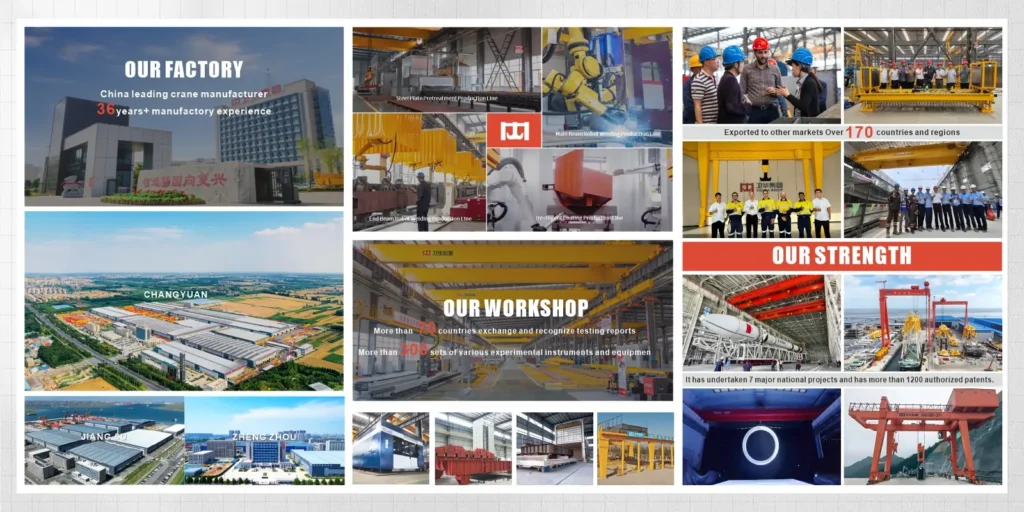
Вейхуа supplies customized electro hydraulic grab buckets for different crane types and material handling conditions. The grab capacity, structure, and hydraulic system can be configured according to specific project requirements. Свяжитесь с нами for customized electro hydraulic grab bucket solutions.
Часто задаваемые вопросы
What is an electro hydraulic grab bucket?
An electro hydraulic grab bucket is a crane attachment powered by an electric motor and hydraulic system. It uses hydraulic cylinders to control the opening and closing of grab shells for loading, unloading, and transferring loose bulk materials.
What materials can an electro hydraulic grab bucket handle?
An electro hydraulic grab bucket can handle coal, iron ore, sand, gravel, grain, fertilizer, scrap steel, slag, waste, and other bulk materials. The suitable grab type depends on material density, particle size, and handling conditions.
What is the capacity of an electro hydraulic grab bucket?
The capacity of an electro hydraulic grab bucket is typically 0.5–30 m³. The actual capacity depends on the crane lifting capacity, material density, grab structure, and required handling volume. Customized sizes are available for different port and industrial applications.
What is the difference between hydraulic grab and mechanical grab?
A hydraulic grab uses an integrated hydraulic system to control opening and closing, while a mechanical grab relies on crane wire ropes. Hydraulic grabs provide independent operation and stronger control, while mechanical grabs feature a simpler structure and lower initial cost.
Can electro hydraulic grabs be used for port cranes?
Yes. Electro hydraulic grabs can be installed on port cranes, ship cranes, portal cranes, unloading machines, and overhead cranes. They are commonly used for bulk cargo handling operations such as ship unloading, stockyard transfer, and terminal loading.
How does a hydraulic grab bucket improve bulk handling efficiency?
A hydraulic grab bucket uses direct cylinder-driven movement to provide stable grabbing force and accurate opening and closing control. It reduces dependence on wire rope synchronization and supports continuous loading and unloading operations in ports and industrial facilities.
Can WEIHUA customize electro hydraulic grab buckets?
Yes. WEIHUA provides customized electro hydraulic grab buckets based on crane type, material characteristics, capacity requirements, and working conditions. The grab structure, hydraulic system, and connection design can be adjusted for different bulk material handling projects.
What industries use electro hydraulic grab buckets?
Electro hydraulic grab buckets are used in ports, bulk terminals, power plants, steel plants, mines, waste treatment facilities, and other industries. They are used for handling coal, ore, scrap, grain, slag, and other loose materials.