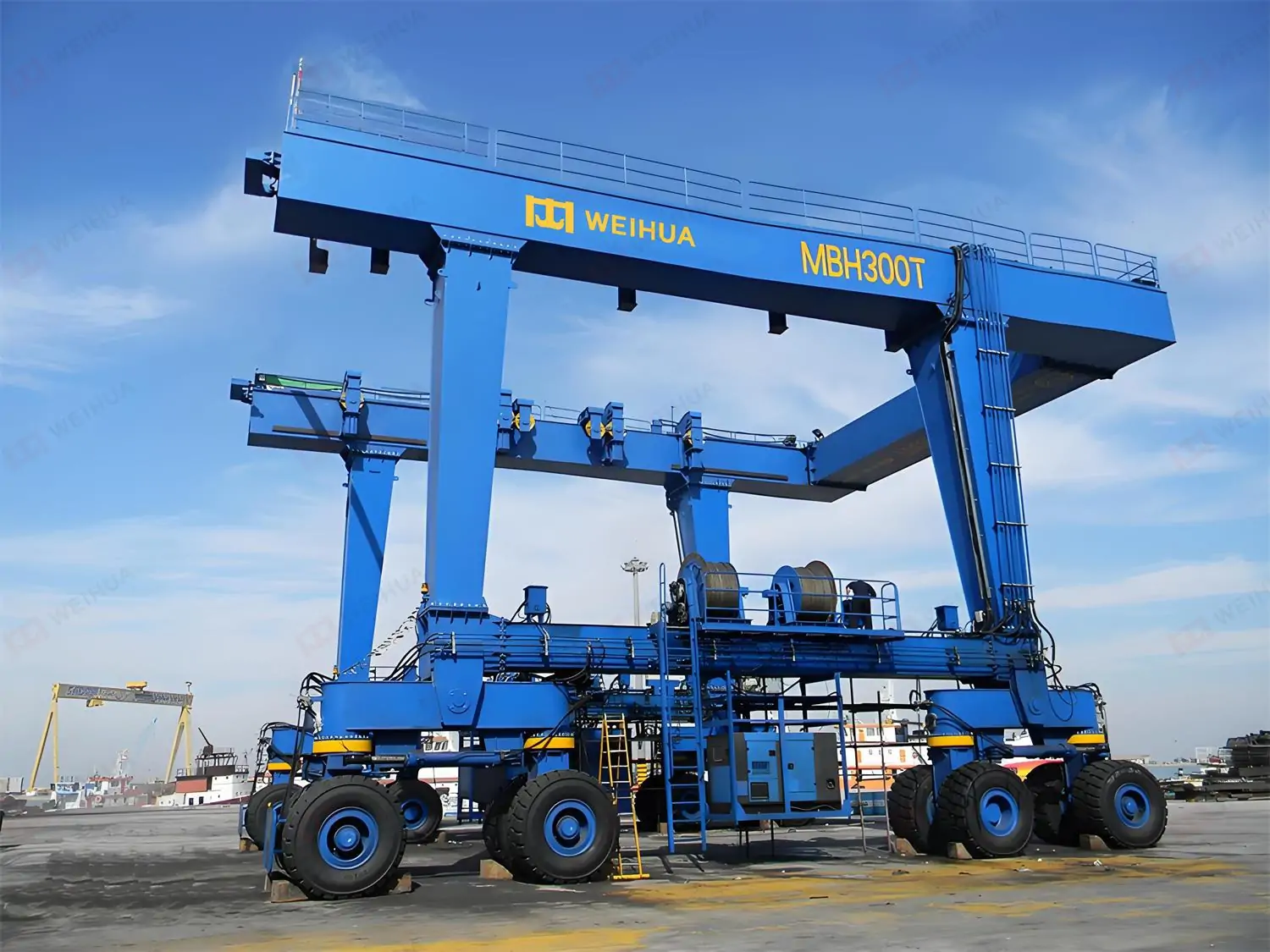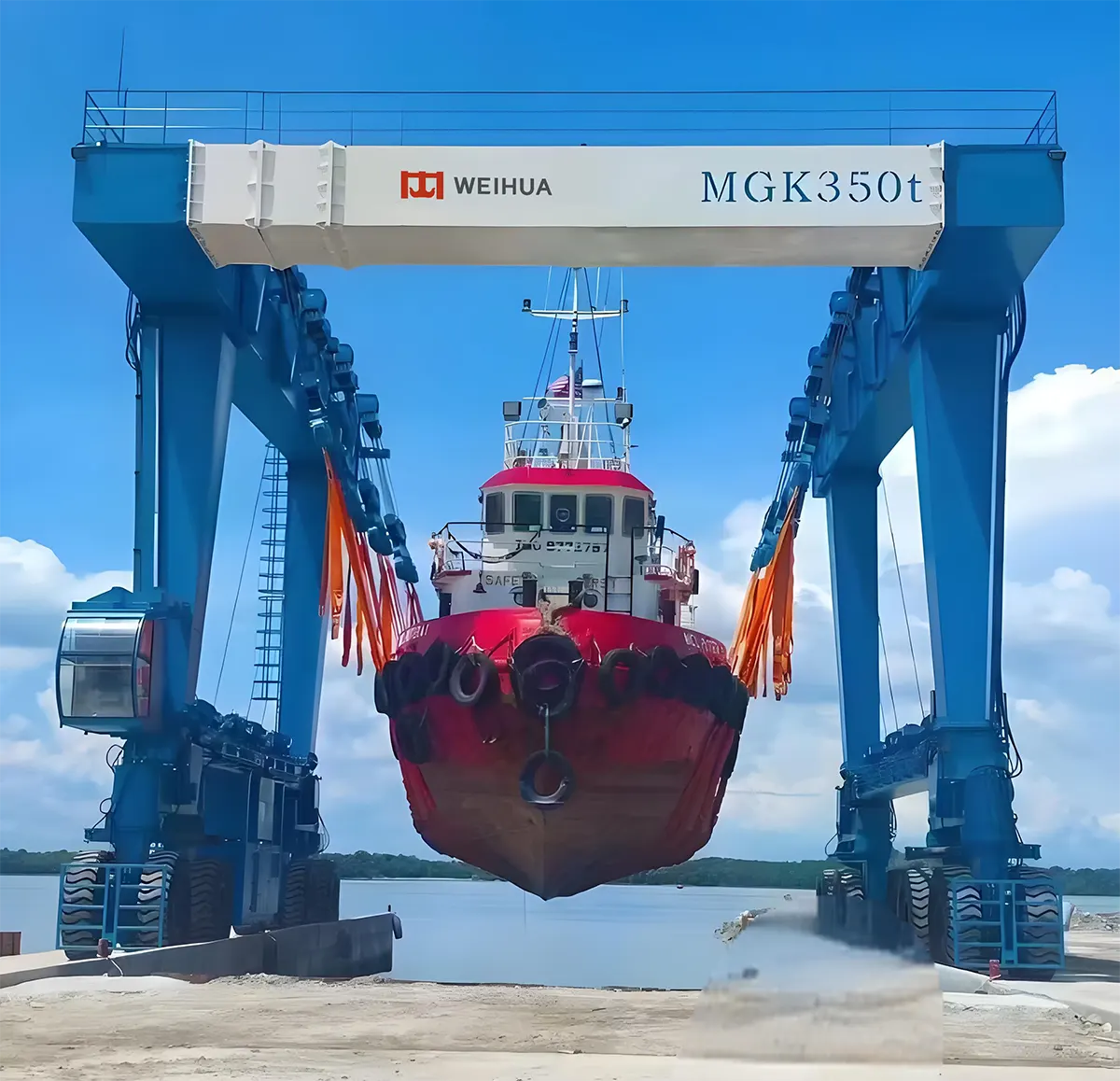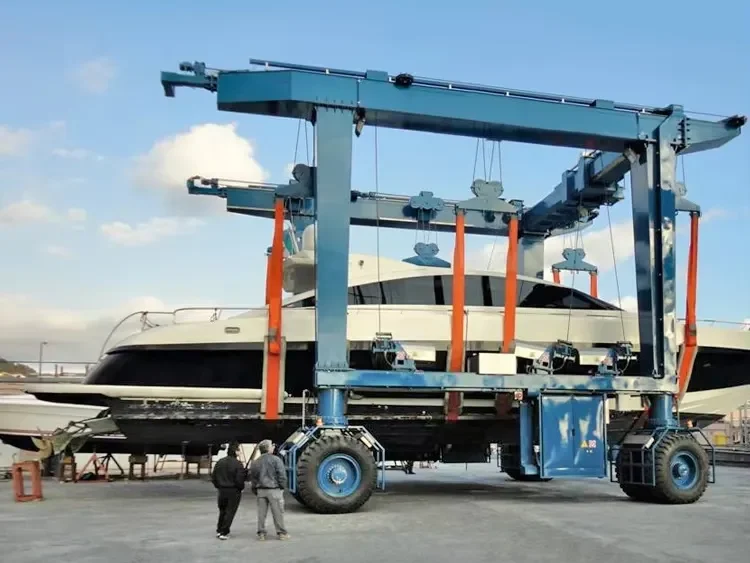
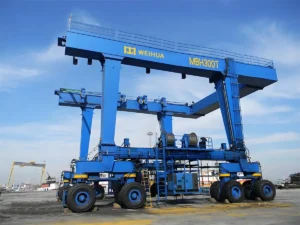

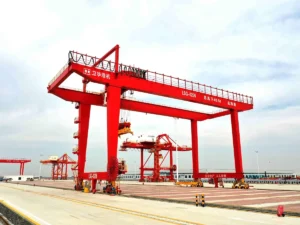
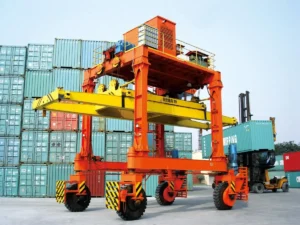
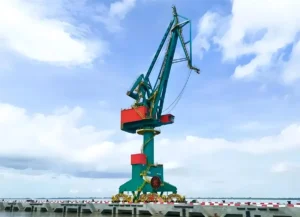








In the modern port and shipbuilding industry, with the continuous innovation of green technology, the electric marine travel lift is gradually becoming a strong competitor to the diesel marine travel lift. Which power system better meets the operational needs of your shipyard? This article will conduct an in-depth comparison of the pros and cons of both to help you make the most informed choice in your investment decision.
Оглавление
What is a Diesel Marine Crane?
A diesel marine crane is a specialized lifting device powered by a diesel engine and mounted directly on a ship’s hull. It is commonly referred to as a кран для подъема лодок or marine crane. It uses hydraulic cylinders to extend and retract the boom to perform lifting operations, and is used for cargo transfer between ships and shore, as well as for loading and unloading between vessels. It is widely used in various marine operations, including fish catch transfer, offshore supply, and the hoisting of engineering equipment. The equipment’s surface undergoes anti-corrosion treatment, such as the application of zinc-rich epoxy primer, to withstand salt spray corrosion in the marine environment.
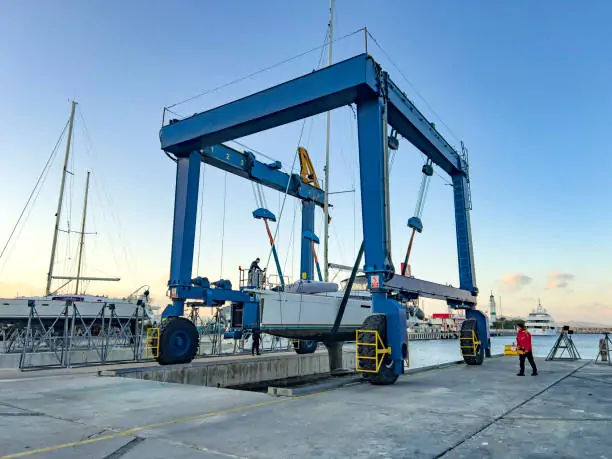
What is an Electric Marine Travel Lift?
Electric marine travel lift cranes are a type of specialized lifting equipment powered by electricity and installed on ship decks to perform tasks such as loading and unloading cargo at sea, transferring cargo between vessels, and retrieving subsea equipment. This category encompasses various types, including electric winches and electric jib cranes. Compared to traditional hydraulic models, they offer advantages such as zero oil leakage and pollution, lower energy consumption, responsive control, and easy maintenance. They are widely used in complex marine operations such as offshore engineering, deep-sea transportation, and offshore wind power.
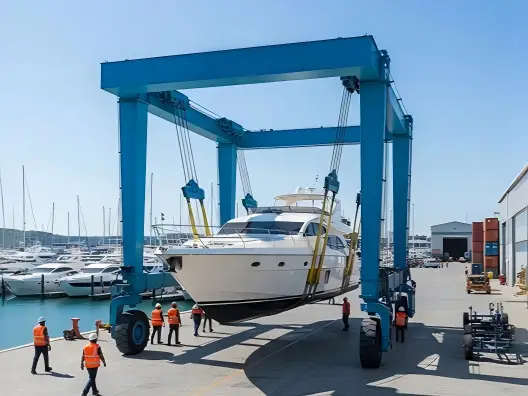
Принцип работы
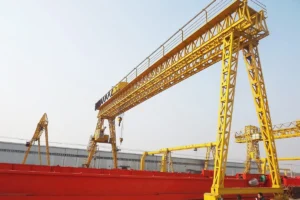
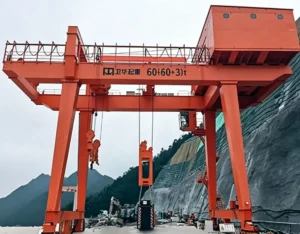
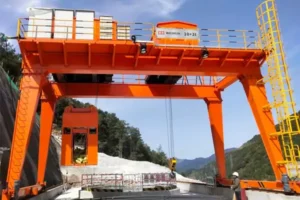
Whether it is an Electric marine travel lift or a Diesel marine travel lift, they are very similar in mechanical structure, both using a gantry crane structure, sling systems, and hydraulic/electric lifting mechanisms to complete vessel transfers. However, there is a fundamental difference in their power sources and energy conversion methods: one relies on an internal combustion engine burning diesel, while the other relies on electricity or batteries to drive a motor.
Diesel Marine Travel Lift
- Power: Equipped with a heavy-duty diesel engine.
- Operation: After the diesel engine starts, it generates mechanical energy by burning diesel, which drives the hydraulic pump. High-pressure hydraulic oil then flows to various actuators (such as hydraulic motors and cylinders) to drive the travel, steering, and lifting of the slings.
- Characteristics: Very strong power output, capable of high-load operation 24/7, even in places without a fixed power grid.
Electric Marine Travel Lift
- Power: The core is a high-capacity lithium battery pack or an external industrial power grid, combined with a variable frequency motor.
- Operation: Electricity directly drives a high-power AC or DC motor, which drives the transmission shaft or hydraulic pump. The control system regulates the motor speed through a precision frequency converter to smoothly control the lifting of the spreader and the movement of the lift.
- Characteristics: Higher energy conversion efficiency, with almost no exhaust emissions and much lower noise during operation.
The purpose of both is to safely lift boats, but the power source differs. A diesel marine travel lift is like a high-strength heavy warrior, not picky about the site and full of explosive power; while an electric marine travel lift is a high-tech green piece of equipment, driven by clean electricity, quiet and efficient.
Comparison of Electric Marine Mobile Cranes and Diesel Marine Mobile Cranes
In the daily operation of shipyards and docks, the Marine Travel Lift is the core equipment for lifting and moving boats. When deciding which power equipment to purchase, we need to carefully evaluate the advantages of electric and diesel equipment, as well as their actual operational performance.
Comparison of Advantages
Advantages of Electric Marine Travel Lift
- Green and Zero Emissions: Electric lifts produce no exhaust gas during operation, helping enterprises easily meet strict environmental regulations and significantly reduce their carbon footprint.
- Low Noise, Better Environment: Motor operation noise is minimal, improving the working and living environment for dock workers and nearby residents, especially suitable for shipyards located in urban areas.
- Extremely Low Operating Expenses (OPEX): Electricity costs are usually lower than diesel, and electric motors have fewer mechanical parts, reducing frequent oil changes and component wear, which significantly lowers long-term maintenance costs.
- High Efficiency: High energy conversion efficiency and smoother precision lifting through modern control systems.
Advantages of Diesel Marine Travel Lift
- High Mobility and Adaptability: Diesel lifts do not rely on an external power grid or charging infrastructure, allowing stable operation 24/7 in shipyards without a fixed power supply or in remote areas.
- Strong Power Output: The combination of the internal combustion engine and hydraulic system provides powerful continuous force, especially suitable for frequent lifting of ultra-large tonnage heavy vessels.
- Lower Initial Investment (CAPEX): The upfront procurement cost is relatively low, allowing shipyards to start operations faster even with limited capital.
Comparison of Operational Differences
| Comparison Dimension | Diesel Marine Travel Lift | Electric Marine Travel Lift |
| Emissions & Environment | High noise affects the working environment of the crew. | Exhaust emissions and high carbon footprint do not meet maritime emission reduction requirements. |
| Energy Cost | High fuel cost, high annual operating cost. | Zero emissions, meets IMO 2050 net-zero goals, and is eligible for environmental policy support. |
| Power Response | Energy costs are approximately 60%-80% lower than diesel, resulting in a significant long-term energy advantage. | Fast motor torque response, supports millisecond-level load adjustment, suitable for high-precision operations. |
| Noise Level | 15%-25% higher, the price difference is more obvious for high-tonnage models. | Noise is over 40% lower, friendlier working environment. |
| Initial Purchase Cost | Low (Baseline) | Complex structure, high maintenance demand, and high average annual cost. |
| Затраты на техническое обслуживание | Complex structure, high maintenance demand, high average annual cost. | 30%-50% less maintenance, no regular maintenance like oil or spark plug changes. |
Which one should you choose? Simply put: if your dock is close to the city center, has ample power supply, and you prioritize long-term cost savings, the electric lift—this “technological pioneer”—will certainly deliver satisfactory results. However, if your operating environment is harsh, frequently involves heavy-duty tasks, and lacks a well-developed power infrastructure, then the diesel lift—this “powerhouse”—is your most reliable choice. No matter which “trusted assistant” you choose, the key lies in finding the one that precisely matches your actual working conditions.
How to Choose
Deciding between electric and diesel for a Marine Travel Lift mainly depends on the actual operating environment and business needs of your shipyard.
Electric Marine Travel Lift
- Infrastructure support: The shipyard has a stable, sufficient power grid or has planned high-power charging piles.
- Site conditions: The dock is near residential or urban areas with strict environmental restrictions on noise and emissions.
- Budget and investment cycle: Electric lifts have higher initial costs, but since electricity is much cheaper than fuel and the motor structure is simple with fewer maintenance items (no frequent oil or filter changes), they save on costs throughout the life cycle.
- Operational needs and tonnage: If you mainly handle small and medium yachts and pursue sustainable development and a green brand image, electric lifts can fully meet daily needs.
Diesel Marine Travel Lift
- Infrastructure support: The site area is large with a long working radius, making frequent movement or cable connection inconvenient.
- Site conditions: The dock or shipyard is in a remote area with inconvenient power grid coverage.
- Budget and investment cycle: Diesel lifts are cheaper to buy and are suitable for shipyards needing to start operations quickly with limited initial budgets.
- Operational needs and tonnage: If your main business is lifting ultra-large tonnage yachts or commercial vessels and requires continuous high-load operation, the explosive power of a diesel engine is more advantageous.
In general, modern urban shipyards seeking low operating costs, zero emissions, and low noise levels opt for electric power. Traditional shipyards seeking low initial investment, high mobility, and the ability to operate under extreme working conditions opt for diesel power. WEIHUA offers a variety of customized solutions for marine crane equipment. Learn more about our customization options: Port and Terminal Cranes
Приложение
In the daily operations of modern ports, shipyards, and yacht marinas, the Marine Travel Lift plays an irreplaceable role.
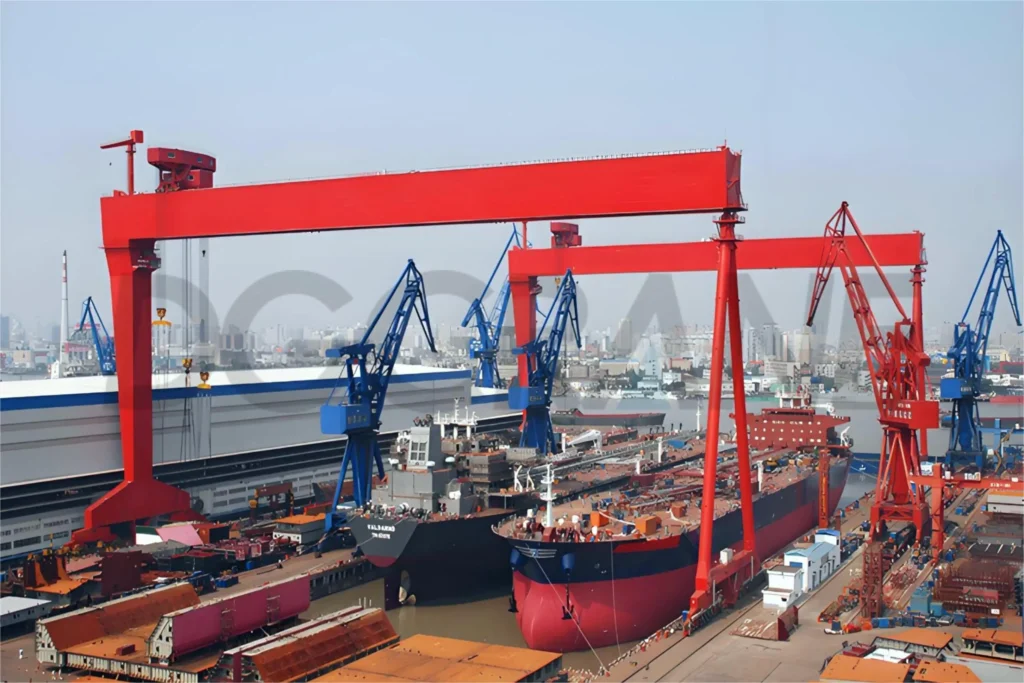
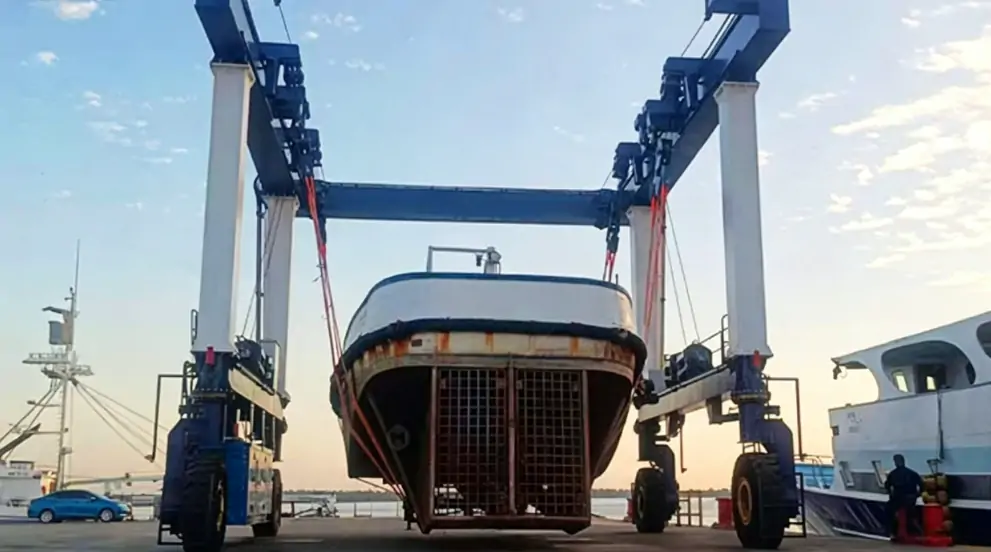
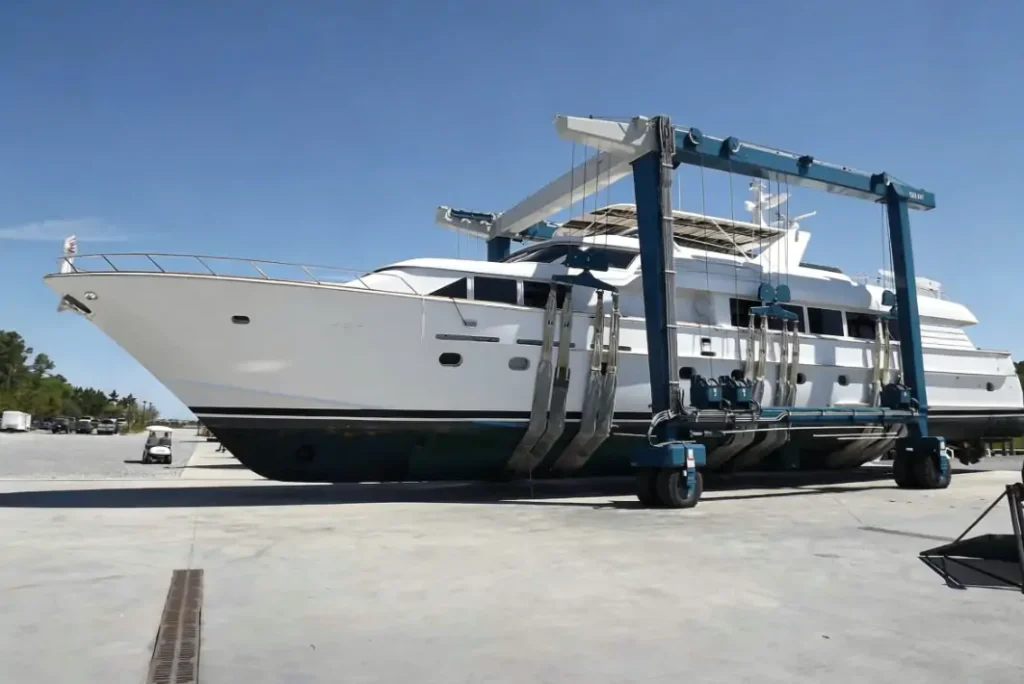
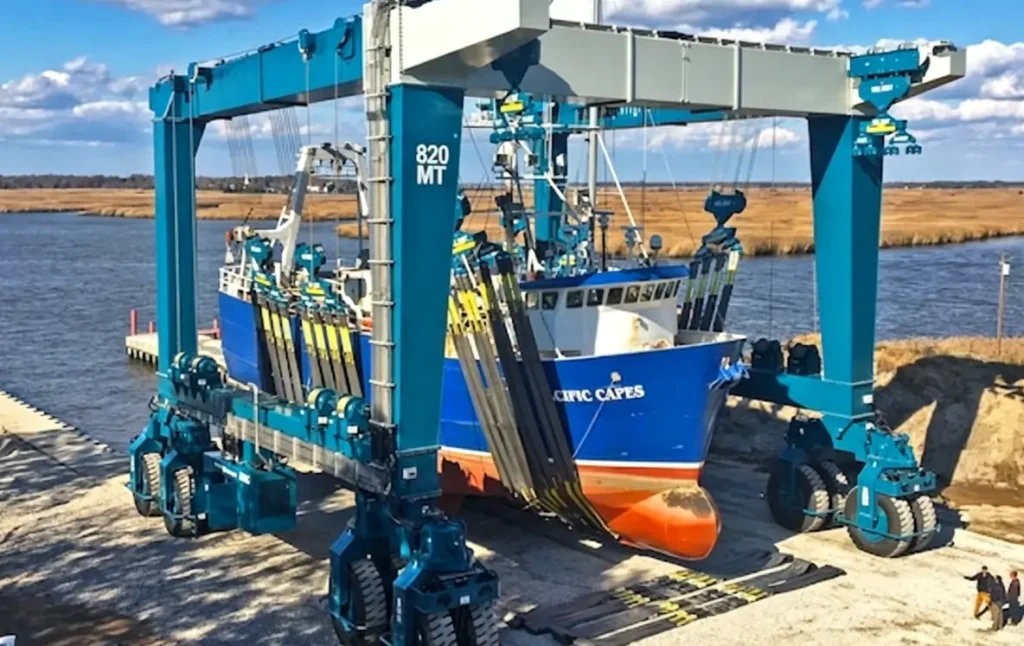
- Launching and Hauling: Regular boat maintenance and deployment.
- Dry Stacking and Transport: Moving vessels across shipyard land or into dry docks.
- Commercial and Workboat Service: Emergency repairs for commercial and work vessels.
- Remote or Harsh Environments: Logistics support in extreme climates or remote sea areas.
Заключение
Through the sharing above, we have a detailed understanding of the working principles, pros, and cons of electric and diesel marine travel lifts. Whether you pursue a zero-emission, low-operating-cost electric lift or a powerful, adaptable diesel lift, choosing the equipment that best suits your needs is key to improving shipyard efficiency.
Вейхуа is a leader in the crane industry, providing high-quality, customized material handling solutions. We have advanced crane manufacturing technology and can provide professional equipment selection guidance and comprehensive after-sales service based on your site conditions and environmental requirements. Свяжитесь с нами anytime, and our professional team will serve you wholeheartedly!
Часто задаваемые вопросы
Which is more economical, electric or diesel?
In the long run, electric is more economical. Although electric lifts have higher initial costs, electricity expenses are much lower than diesel, and there are very few daily maintenance items. Usually, the price difference can be recovered through saved operating costs within 3 to 5 years.
How long can an electric marine travel lift be used on one charge?
This depends on battery capacity and work intensity. Generally, a full charge can meet a whole day (8-10 hours) of regular lifting operations. Combined with Weihua’s fast charging technology, power can be quickly replenished during lunch breaks.
In what environments does a diesel marine travel lift have more advantages?
Diesel lifts are “all-rounders.” They are more flexible in remote docks lacking power infrastructure, commercial ports requiring 24-hour continuous high-intensity operation, or startup shipyards with strict initial budget control.
Is it safe for electric lifts to work near water? Will there be leakage?
It is very safe. Professional brands like Weihua use high-grade waterproof and anti-corrosion protection (such as IP65 or above) and are equipped with leakage protection and automatic power-off systems, fully complying with international ocean operation safety standards.
What is the maintenance frequency for marine travel lifts?
Diesel engines usually require power system maintenance every 250-500 hours; electric lifts have longer maintenance cycles because they lack internal combustion engines and complex hydraulic transmissions, mainly focusing on sling inspection and mechanical lubrication.
Can I convert an existing diesel lift to electric?
Theoretically possible, known as “diesel-to-electric” conversion. This involves replacing the power unit, installing battery packs, and control systems. Considering cost and structural matching, buying an original electric lift is usually more cost-effective and stable.
Should I reserve extra space when choosing tonnage?
It is recommended to reserve a 10%-20% margin. For example, if you often lift a 45-ton boat, it is recommended to choose a 50-ton or higher lift to handle extra weight from water accumulation, fuel, and cargo.
Does Weihua Crane provide customized marine travel lift solutions?
Yes. Weihua supports one-on-one engineering customization services based on your dock width, lifting height, rated tonnage, and power preference (electric, diesel, hybrid) to ensure the equipment perfectly fits your site.