



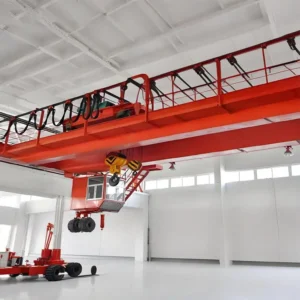



Does a козловой кран require a track? No. Rail-mounted models travel on fixed ground rails, while portable wheeled and rubber-tired designs can operate without dedicated travel rails. The correct choice depends on the load, operating route, floor condition, and permitted travel method.
For this comparison, “track” means the ground rails used for the entire crane to travel. It does not mean the bridge beam or trolley running surface. A rail-free design still needs a verified supporting surface and enough operating clearance.
Оглавление
Does a Gantry Crane Require a Track?
No, not every gantry crane requires ground rails. Rail-mounted models use installed rails; wheeled designs can operate on a suitable floor or yard without them. The term “trackless” describes the absence of ground travel rails, rather than one standardized crane type.
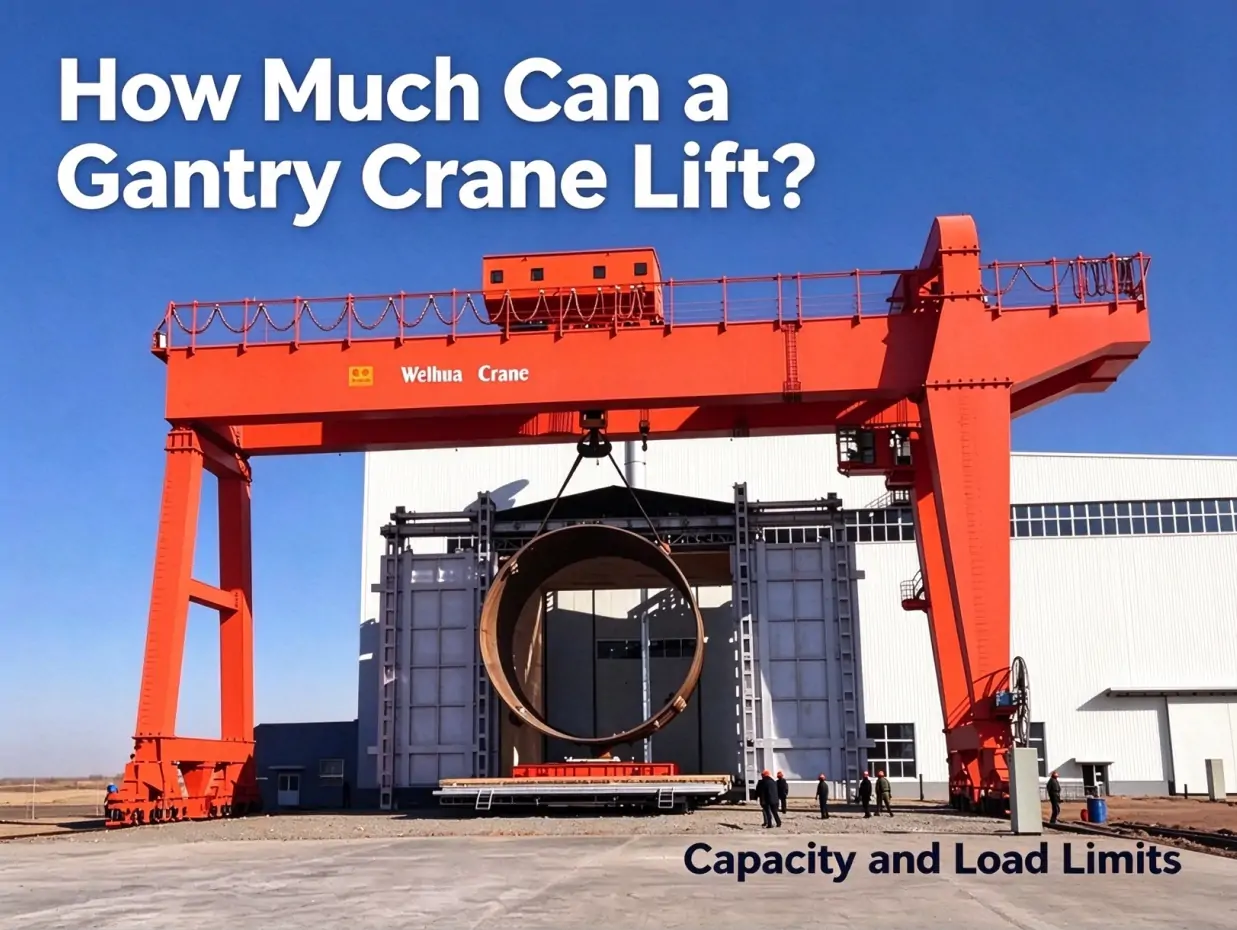
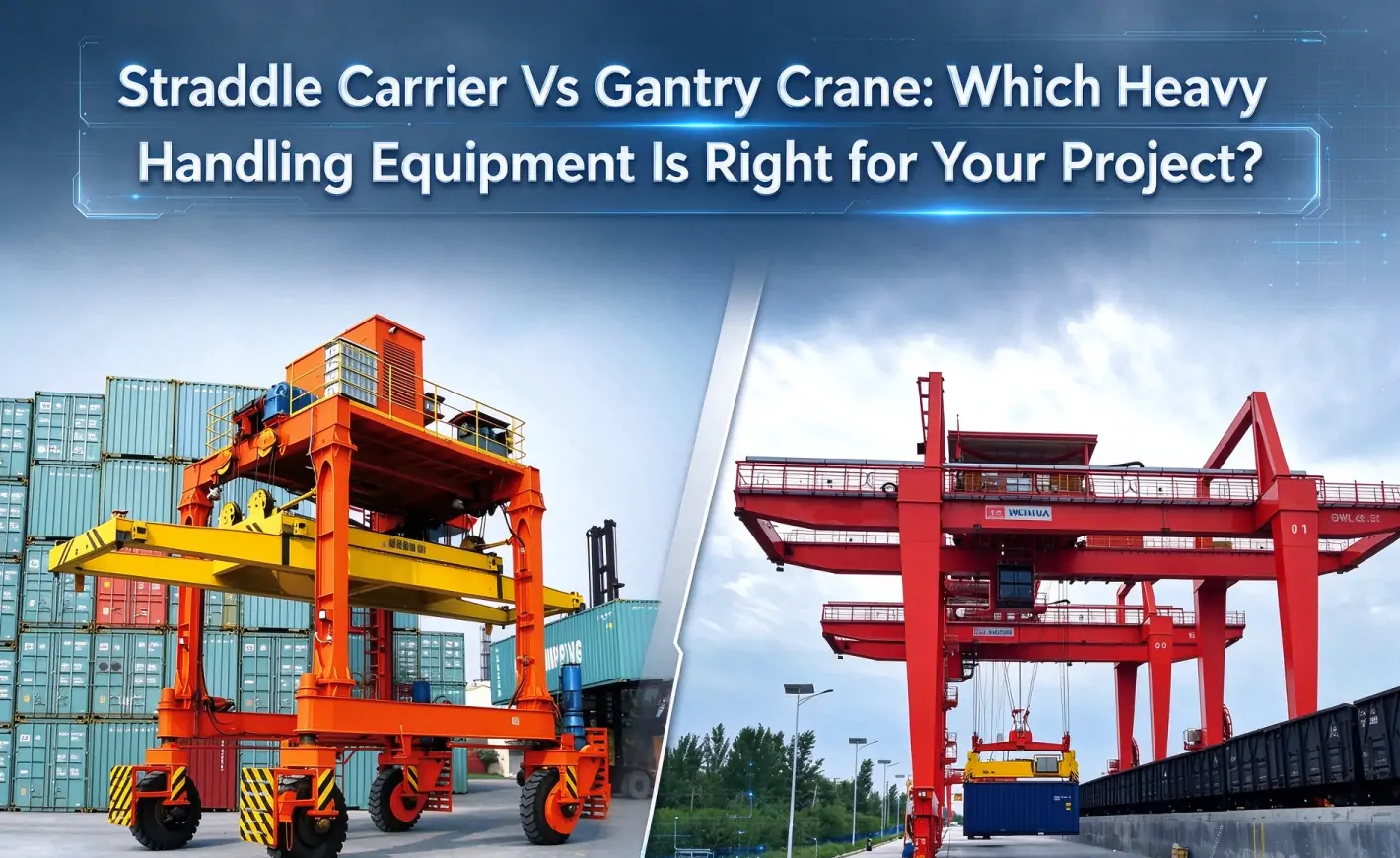
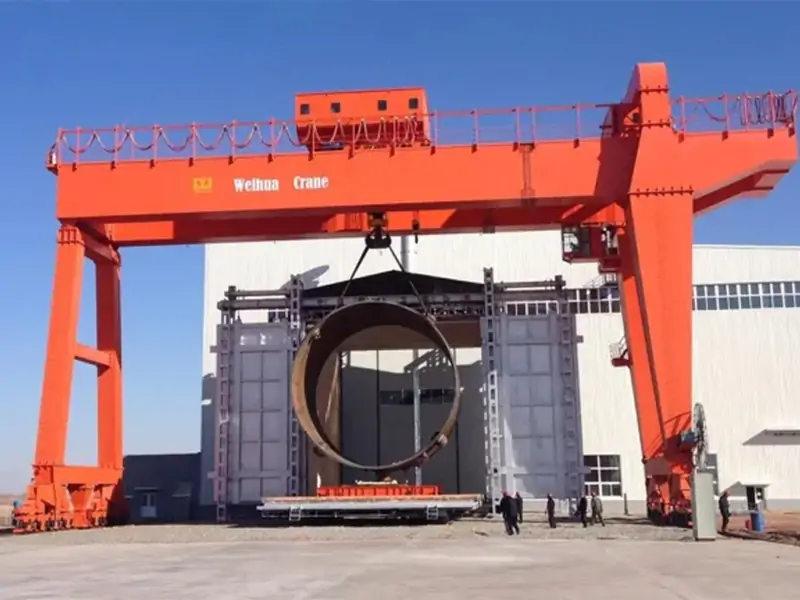
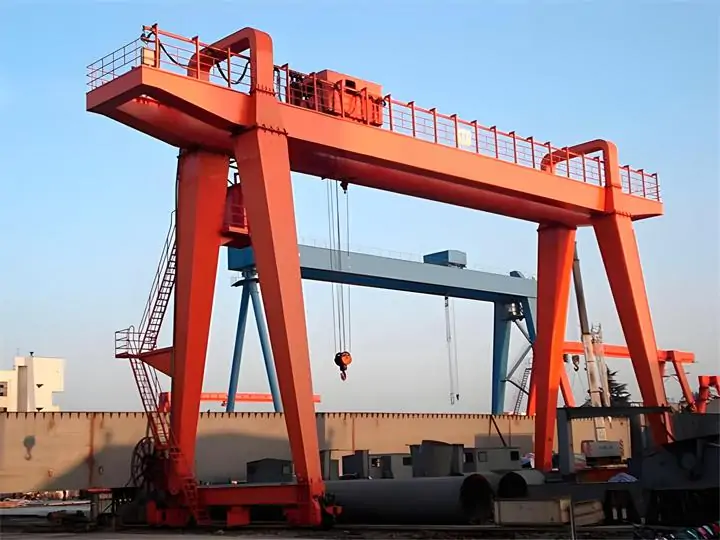
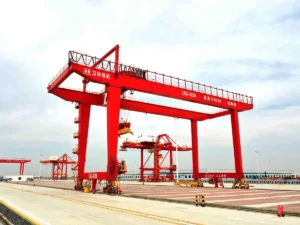
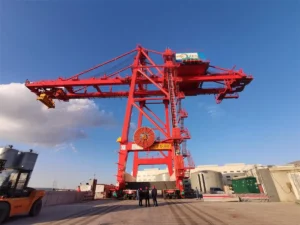
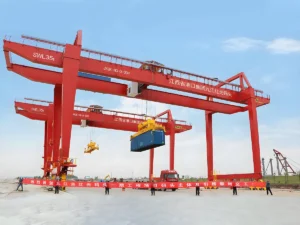
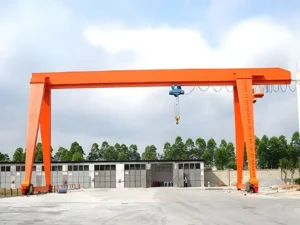
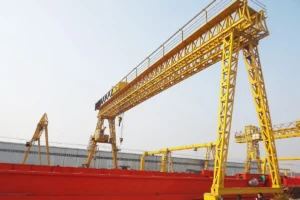
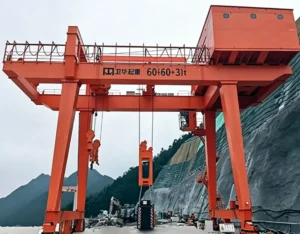
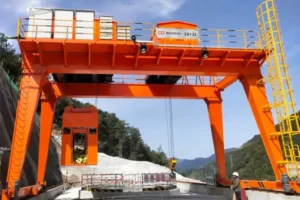
- Rail-mounted designs suit fixed travel routes and repetitive lifting operations in production facilities, container yards, and rail terminals. The wheels transfer loads through the rails to the supporting foundations.
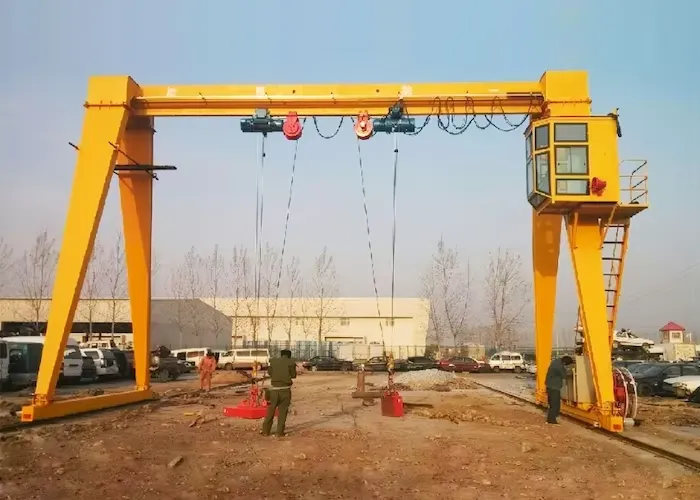
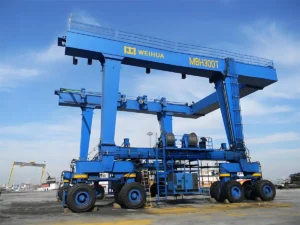
- Trackless designs suit work areas where lifting positions change. Portable caster-mounted units and larger rubber-tired systems have different steering, propulsion, and operating limits, so they should be assessed separately.
Ground conditions remain a key selection factor. Trackless cranes require adequate ground-bearing capacity, a sufficiently level surface, and enough clearance for travel and turning. Floor strength must be checked against the crane’s wheel loads, while the operating area must accommodate the crane’s dimensions and movement.
Gantry crane track requirements therefore depend on the selected machine and its operating conditions. Establish the travel route and load case before deciding whether rails are needed.
Rail Mounted and Trackless Gantry Cranes Compared
Rail-mounted and trackless gantry cranes differ in their travel systems, ground requirements, and operating flexibility. Rail-mounted cranes follow a fixed route, while trackless cranes move across suitable surfaces using a wheeled travel system.
| Коэффициент сравнения | Rail-Mounted Gantry Crane | Trackless Gantry Crane |
|---|---|---|
| Travel Path | Fixed rail route | Flexible route within the operating area |
| Ground Requirements | Rail foundation, alignment, and supporting structure | Adequate ground-bearing capacity and a suitable surface |
| Movement | Primarily along installed rails | Depends on wheel arrangement and steering system |
| Установка | Requires rail installation and alignment | No dedicated travel rails; floor preparation may be required |
| Positioning | Guided movement along a defined route | Requires appropriate steering and positioning control |
| Блок питания | Cable reel or conductor rail, depending on design | Onboard power or cable supply, depending on design |
| Типичные применения | Ports, container yards, fixed production routes | Workshops, industrial yards, and changing work areas |
| Key Design Checks | Wheel loads, rail gauge, alignment, and foundation | Wheel loads, steering, braking, traction, and floor condition |
The choice depends on the operating route, site conditions, and lifting requirements. Rail-mounted designs suit fixed, repetitive operations, while trackless designs offer greater movement flexibility. Neither design is inherently limited to a specific lifting capacity. Rated load, span, lifting height, duty classification, and structural design must be assessed for the selected crane.
How a Rail Mounted Gantry Crane Works
A typical powered rail-mounted gantry crane travels along fixed ground rails through motor-driven wheels. The hoist raises and lowers the load, while the trolley moves it across the bridge beam. The ground rails guide the entire structure along its operating route.
| Component | Function |
|---|---|
| Rails and Wheels | Guide crane travel along a fixed route |
| Travel Drive | Moves the crane along the rails |
| Hoist and Trolley | Lifts the load and moves it across the span |
| Rail Foundation | Supports wheel loads and maintains rail alignment |
Rail gauge, alignment, foundation strength, and wheel loads must match the crane design. For the full operating sequence, see how a gantry crane works. Rail-mounted gantry cranes are commonly used in ports, container yards, rail terminals, and production facilities with fixed travel routes.
Получить индивидуальное предложение сейчас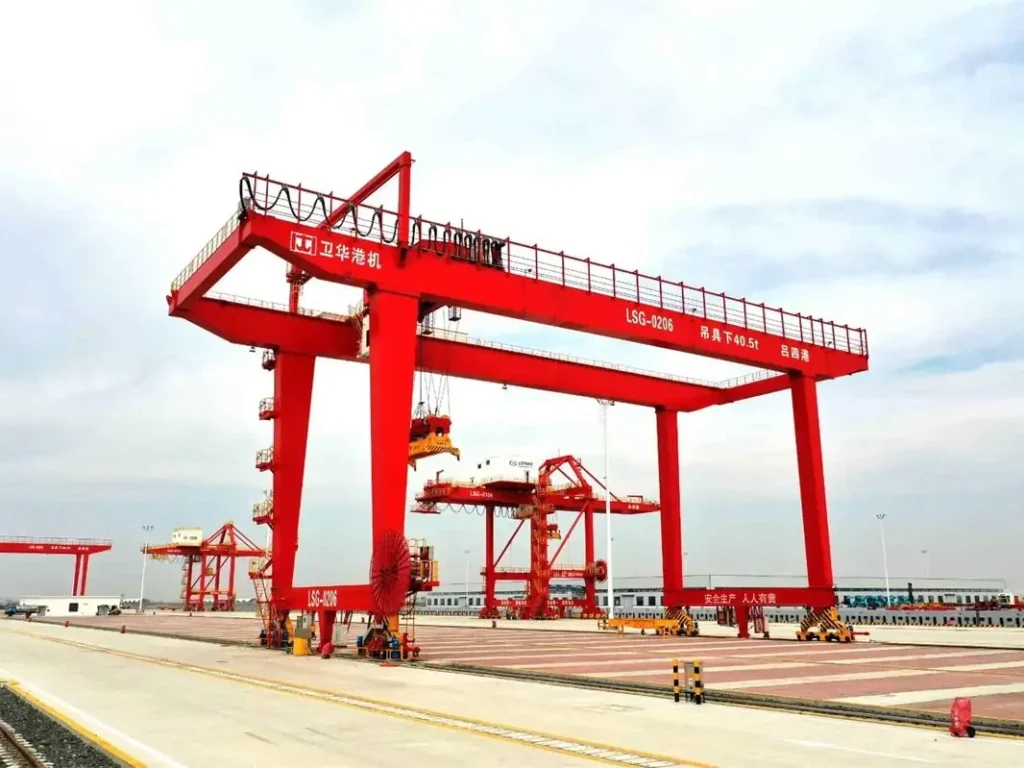
How a Trackless Gantry Crane Works
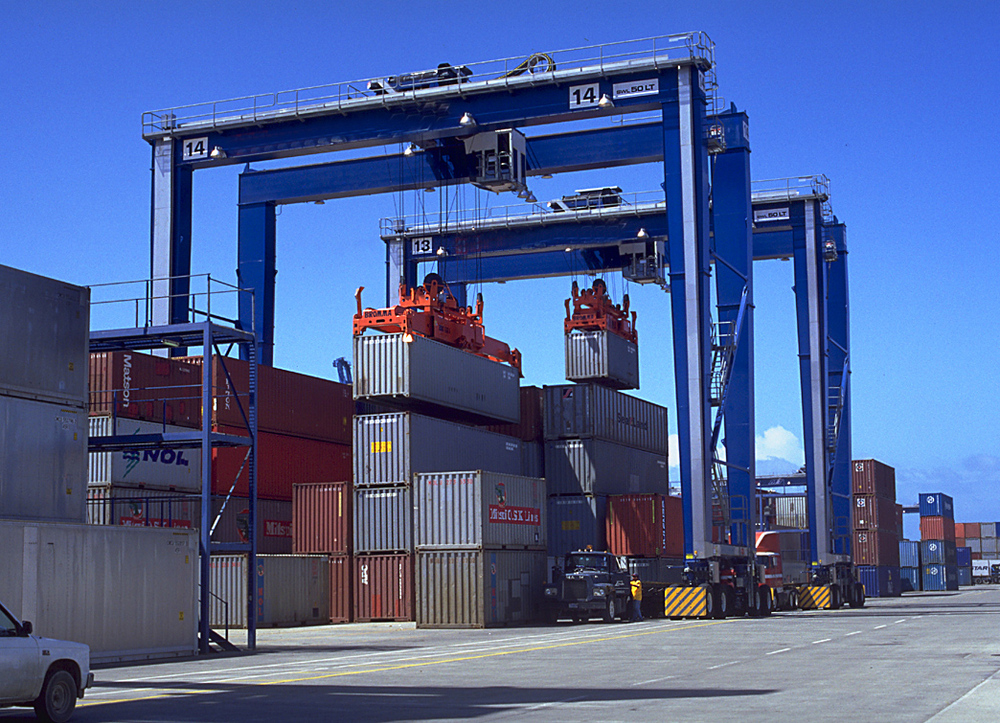
A trackless gantry crane moves on casters, industrial wheels, or tires across a suitable floor or yard. Some portable units are pushed manually; larger systems may use powered wheel drives. Steering, braking, and permitted movement depend on the specific model.
| Component / Requirement | Function |
|---|---|
| Wheels or Tires | Support the crane and allow movement across the ground |
| Система рулевого управления | Controls travel direction where steering is provided |
| Drive and Braking System | Controls movement and stopping |
| Ground Conditions | Must support wheel loads and provide suitable traction |
| Operating Clearance | Allows safe travel and turning around obstacles |
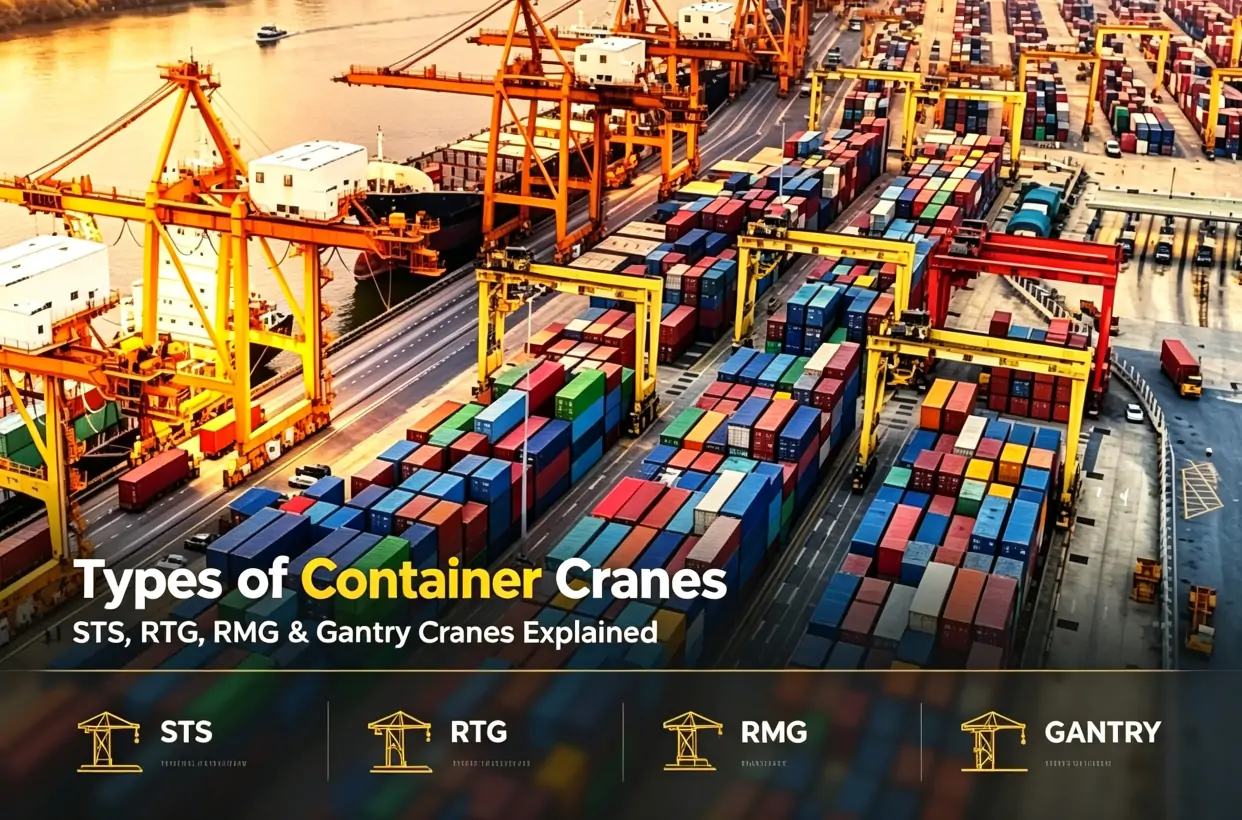
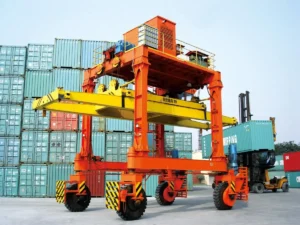
A rubber-tired gantry crane, often called an RTG, is one type of rail-free system. RTGs are commonly used for container handling. A portable workshop gantry and an RTG are not interchangeable machines; their structures, capacities, and operating procedures differ.
Получить индивидуальное предложение сейчасPortable Wheeled Gantries and Rubber Tired Systems
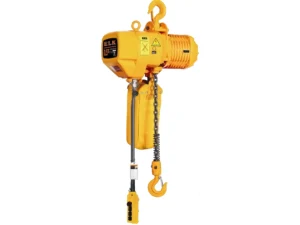
A portable gantry crane generally serves maintenance or assembly tasks and may use swivel casters. Some models can be relocated only when unloaded; others permit movement under load subject to specific instructions. An electric hoist does not necessarily mean that the whole structure has powered travel.
A powered rubber-tired system can serve a larger yard or handling route, but its ability to steer does not remove pavement requirements. Tire contact pressure, turning forces, braking, gradients, and outdoor exposure all matter. Compare the actual machine specifications rather than assuming every trackless system has the same mobility.
Choosing Between Rails and a Trackless Design
The choice between a rail-mounted and a trackless gantry crane depends on the travel route, site conditions, lifting requirements, and project budget. Each design suits different operating environments.
When to Choose a Rail-Mounted Gantry Crane
A rail-mounted gantry crane is suitable for projects with fixed travel routes and frequent, repetitive lifting operations.
- Fixed travel routes: Loads move along a predefined path between designated workstations.
- Dedicated operating areas: Common in ports, container yards, rail terminals, and production facilities.
- Planned infrastructure: The site can accommodate rail installation, foundations, and alignment work.
- Heavy-duty operations: Rail and foundation design can be engineered for the specified wheel loads and duty cycle.
When to Choose a Trackless Gantry Crane
A trackless gantry crane suits operations that require greater freedom to change lifting or transport locations.
- Flexible movement: The crane needs to move between different work areas without following a fixed rail route.
- Suitable ground conditions: The floor or yard can support wheel loads and provide adequate traction.
- Limited rail infrastructure: The project aims to avoid dedicated travel rails but can accommodate any necessary floor preparation.
- Compatible operating requirements: The crane’s capacity, dimensions, steering system, and travel method suit the site layout.
Choose fixed rails when a dedicated route and repeated travel justify the infrastructure. Choose a rail-free system when relocation is valuable and the floor, turning space, and approved operating method suit the task.
Costs of Rail Mounted and Trackless Designs
A trackless gantry crane may reduce infrastructure costs by eliminating dedicated travel rails, but the total project cost depends on the crane configuration and site conditions. Equipment price alone does not reflect the full cost of installation and operation.
| Cost Factor | Rail-Mounted Gantry Crane | Trackless Gantry Crane |
|---|---|---|
| Equipment Cost | Depends on capacity, drive system, and rail travel configuration | Depends on capacity, wheel arrangement, steering, and drive system |
| Инфраструктура | Rails, foundations, and alignment work | Floor preparation or ground reinforcement, if required |
| Установка | Rail installation and alignment add to project costs | No dedicated rail installation, but site preparation may be necessary |
| Обслуживание | Rail, wheel, drive system, and alignment maintenance | Tire or wheel, steering, braking, and drive system maintenance |
| Operating Costs | Depend on energy use, duty cycle, and maintenance needs | Depend on energy use, travel conditions, and maintenance needs |
Rail-mounted cranes may require higher initial infrastructure investment, particularly where new rail foundations are needed. Trackless designs can reduce these costs when the existing floor is suitable for crane travel. However, ground reinforcement, steering systems, and specialized wheels may add to the budget.
To compare costs accurately, assess the complete project budget, including equipment, civil works, installation, energy consumption, maintenance, and potential downtime. The lower-cost option depends on the operating environment and the crane’s service requirements. For container-yard projects, compare RTG and RMG crane costs and operating differences.
Ground and Foundation Requirements for Gantry Cranes
Ground conditions affect crane stability, wheel loading, and travel performance. Before selecting a rail-mounted or trackless gantry crane, check the following site requirements.
- Ground-Bearing Capacity: Verify that the floor or foundation can withstand the calculated wheel loads and operating loads.
- Surface Levelness: Check slopes, uneven areas, floor joints, and height differences that may affect crane movement.
- Wheel Loads and Load Distribution: Assess wheel loads under operating conditions and confirm the supporting structure can carry them.
- Travel Route and Clearance: Check turning space, obstacles, overhead clearance, and pedestrian access.
- Outdoor Conditions: Assess wind loads, drainage, corrosion exposure, and anchoring requirements where applicable.
Rail-mounted cranes require suitable rail foundations and accurate alignment. Trackless cranes need a suitable travel surface with adequate strength and traction.
Gantry crane ground requirements must be checked against wheel-load calculations, floor or foundation drawings, and the supplier’s installation limits. A floor that looks level may still be unsuitable because of slab thickness, joints, voids, or weak supporting ground.
Why Lifting Capacity Does Not Determine Floor Capacity
The rated lifting capacity states the permitted lifted load under specified conditions. It does not state the maximum load on each wheel. Crane self-weight, trolley position, load position, and operating effects also influence wheel reactions.
For an illustration only, a 5-tonne lifted load plus a 2-tonne crane and hoist produces a combined static vertical load of about 68.7 kN. Dividing that by four wheels gives 17.2 kN per wheel only if the load is shared equally. That assumption is not a design check: an off-center trolley can increase individual reactions, and the design may include additional operating effects.
Use the supplier’s maximum design wheel reactions for the relevant load cases. A structural engineer should check the slab, joints, supporting ground, and local contact loading. General floor loading in kN/m² cannot be compared directly with a concentrated wheel load in kN.
Can the Crane Travel With a Suspended Load?
Check this capability separately from whether the machine has wheels or rails. Mobility while unloaded does not establish permission to travel while loaded. The operating manual must cover the exact configuration, load, and movement involved.
Before planning loaded travel, obtain the manufacturer’s limits for load position, travel speed, slope, floor condition, and handling method. Review the route for joints, thresholds, obstacles, and turning clearance. Do not assume that locking or unlocking the casters establishes a safe travel procedure.
For portable models, also check whether height or span adjustments must be made without a load. For outdoor systems, confirm the operating wind limits and parking or securing arrangements. Follow the applicable equipment instructions and site lifting plan. Use a gantry crane inspection checklist to organize routine checks.
Applying the Choice to Two Workflows
For repeated transfers between two fixed production stations, a rail-mounted gantry crane is a candidate when the site can accommodate the rail route and its foundations. Compare cycle time and any obstruction caused by the rails before committing to the layout.
For maintenance at changing positions inside a workshop, a portable gantry crane may suit the workflow if its capacity, clear span, headroom, and approved relocation method are adequate. These are selection examples rather than completed project claims or model recommendations.
Information Needed to Select a Gantry Crane
Provide the following technical details when requesting a gantry crane quotation:
- Load Details: Maximum workpiece weight, dimensions, center of gravity, and lifting accessories. Account for rigging and any lifting beam within the selected equipment’s allowable load.
- Crane Dimensions: Required span, lifting height, and travel distance.
- Travel System: Fixed rails, portable casters, or a powered wheeled system; specify whether travel with a suspended load is required.
- Operating Environment: Indoor or outdoor installation and site conditions.
- Ground and Foundation: Floor specifications, foundation drawings, and site layout.
- Operating Parameters: Travel speed, lifting frequency, working hours, and duty classification.
- Power and Controls: Available power supply, control method, and applicable project standards.
Ask the supplier to confirm the maximum wheel reactions, permitted slope, turning envelope, duty classification, and conditions for loaded travel. These details make a quotation technically comparable and allow the site engineer to assess the supporting surface.
Заключение
Does a gantry crane require a track? Only when the selected design uses ground travel rails. Rail-mounted systems suit dedicated routes, while portable and rubber-tired systems offer rail-free movement within their approved operating limits.
Before ordering, confirm the load case, travel route, maximum wheel reactions, floor suitability, and permission to travel with a suspended load. Explore Weihua’s gantry crane range, then send your site layout and lifting requirements for a project-specific proposal.

Часто задаваемые вопросы
Does a gantry crane require a track?
No. A gantry crane can be rail-mounted or trackless. Rail-mounted cranes travel along fixed rails, while trackless models use wheeled travel systems to move across suitable ground surfaces. The choice depends on the load, travel route, and site conditions.
Can a gantry crane operate without rails?
Yes. A gantry crane without rails can operate on a suitable supporting surface within the manufacturer’s limits. Check wheel loads, traction, clearance, slope, and the permitted travel method before selecting or moving it.
What is the difference between a rail-mounted and a trackless gantry crane?
A rail-mounted gantry crane follows a fixed route defined by installed rails. A trackless gantry crane moves across suitable surfaces using a wheeled travel system. Rail-mounted designs suit repetitive operations along dedicated routes, while trackless designs offer greater flexibility in work areas where movement paths may change.
Can a trackless gantry crane lift heavy loads?
Yes, a trackless gantry crane can be designed for heavy loads. Its rated capacity depends on the structural design, span, wheel loads, lifting mechanism, and travel system. The ground must support the calculated wheel loads under the specified operating conditions. Confirm the crane’s rated capacity and whether it can travel with a suspended load before use.
Does a trackless gantry crane need a special floor?
Not necessarily, but the floor must meet the crane’s engineering requirements. Ground-bearing capacity, surface levelness, slope, joints, and wheel traction all affect operation. Heavy-duty applications may require floor reinforcement or ground preparation. A site assessment should confirm suitability before installation.
Is a rail-mounted gantry crane more expensive than a trackless crane?
Not in every case. Rail-mounted cranes may require additional investment in rails, foundations, and alignment. Trackless cranes avoid dedicated travel rails but may need reinforced flooring, specialized wheels, or steering systems. Compare equipment, installation, site preparation, energy consumption, and maintenance costs over the intended service life.
Can a gantry crane move while carrying a load?
Some gantry cranes are designed to travel with a suspended load, while others must remain stationary during lifting operations. Permitted movement depends on the crane design, rated capacity, travel system, load stability, and operating procedures. Confirm the manufacturer’s specifications before moving a crane with a load suspended.
How do you choose between a rail-mounted and a trackless gantry crane?
Choose a rail-mounted crane for fixed travel routes, repetitive lifting cycles, and sites that can accommodate rail infrastructure. Consider a trackless crane when the work area requires flexible movement and the ground is suitable for wheeled travel. Compare the rated load, span, lifting height, travel distance, site layout, and total project cost before selecting a design.
Technical References
REID Lifting. How to Configure a Porta Gantry. Read source.
Spanco. How Do Gantry Cranes Benefit Moving Under The Load. Read source.