- ProductoEquipoPrecisión de Potencia, Personalización Solución de GrúasCorreo electrónicoWhatsApp / Wechat:+8613781917315Dirección:N.º 18, carretera Shanhai, ciudad de Changyuan, provincia de Henan, China

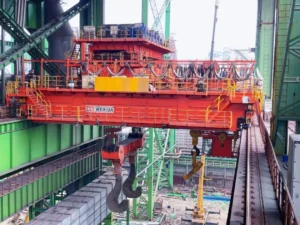
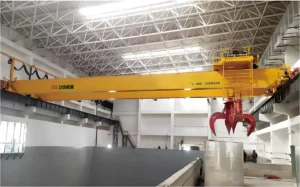
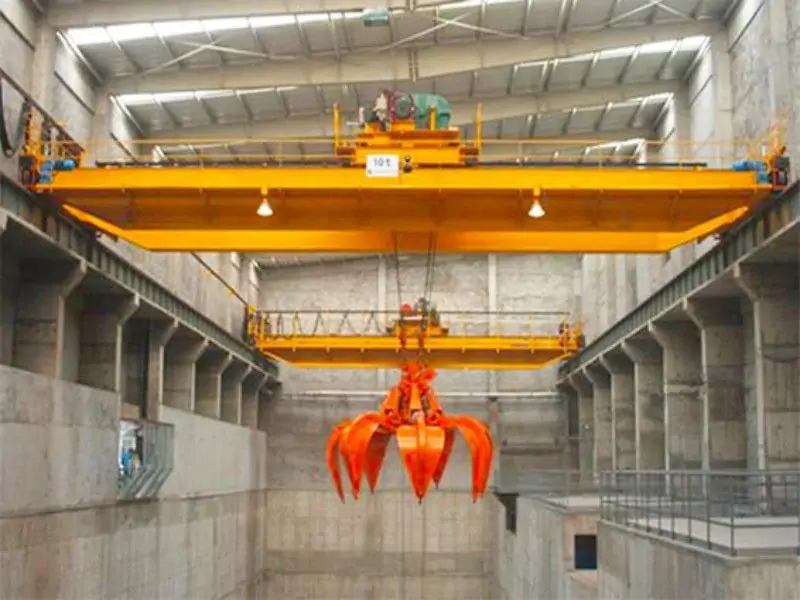
A QZ Grab Overhead Crane is a double girder overhead crane fitted with a grab bucket for bulk material handling. It is commonly used for coal, ore, limestone, scrap, sand, clinker, and other loose materials in steel plants, ports, power stations, cement plants, and waste treatment facilities.
The crane uses a four-rope grab bucket to pick up, transport, and discharge bulk materials. Grab bucket type, lifting capacity, span, lifting height, working duty, and control method are selected according to the material characteristics and site conditions. Different configurations are available for indoor, outdoor, and automated handling systems.
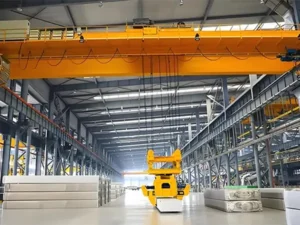
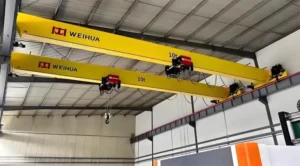
QZ Grab Overhead Cranes are divided into single girder and double girder types. Single girder cranes are commonly used for light-duty bulk material handling with smaller grab capacities. Double girder cranes are used for larger grab buckets, higher lifting capacities, and continuous operation in steel plants, mines, power stations, and other heavy industrial facilities. Grab bucket type, span, lifting height, and control method are selected according to the material and operating conditions.
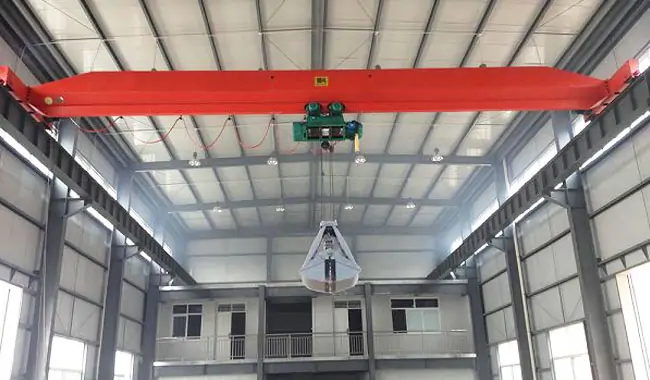
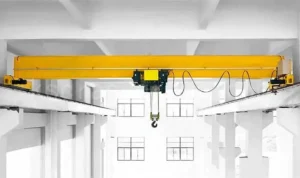
The main girder is a single box-type or I-beam structure. The structure is relatively simple and the manufacturing cost is lower. It is used in applications with lower lifting capacity, shorter span, and limited space requirements, such as small warehouses or workshops.
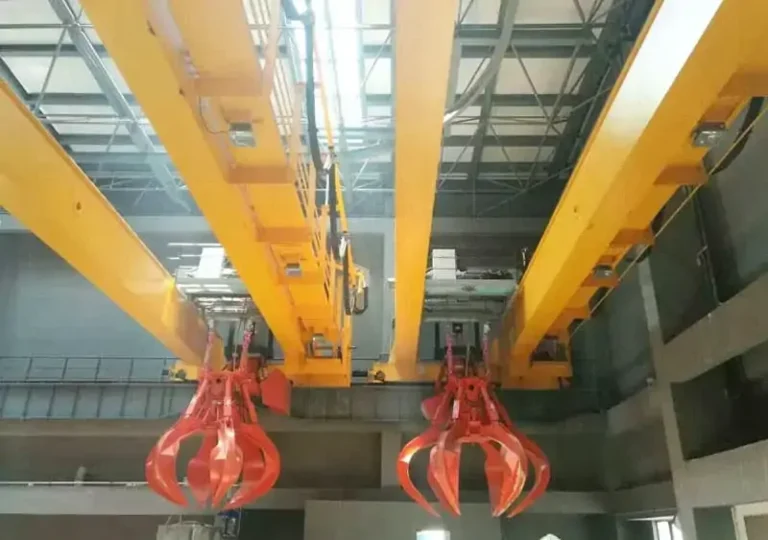
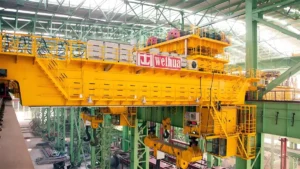
This is the most common standard QZ-type crane. It uses two parallel main girders with a rigid structure and high stiffness. It handles larger load capacities and spans, with stable operation. It is widely used in heavy industry sectors such as ports, power plants, steel mills, and cement plants for bulk material loading and unloading.
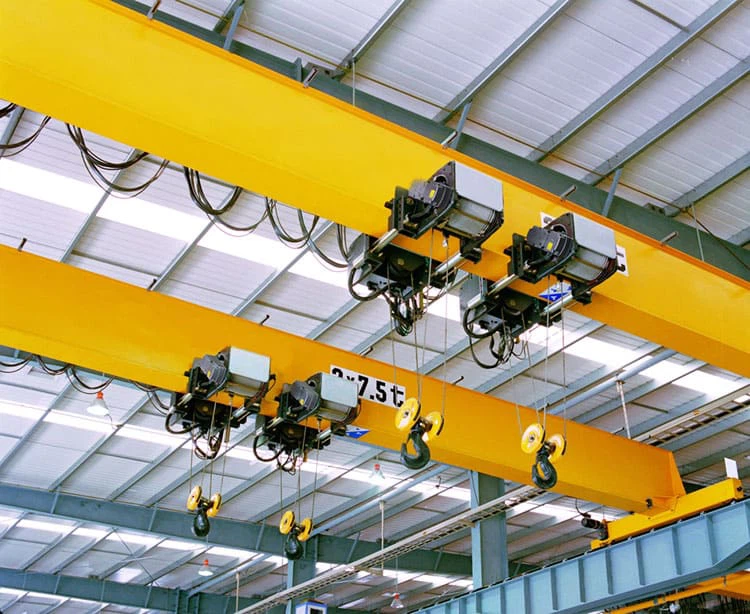
The QZ Grab Overhead Crane consists of the bridge frame, trolley, grab bucket, traveling mechanism, hoisting and opening-closing mechanism, electrical system, and safety and auxiliary devices.
QZ Grab Overhead Crane: each part works together for bulk material handling in ports, steel plants, power plants, and similar industrial sites.
Para obtener más información sobre las funciones de los dispositivos de seguridad, lea el artículo: “Dispositivos de seguridad para grúas puente: tipos, funciones y principios de funcionamiento”
QZ Grab Overhead Crane is used for bulk material loading and unloading. Parameter configuration is directly related to actual working conditions. Lifting capacity, span, lifting height, speed, and grab bucket volume are selected based on material type, bulk density, and on-site operation method. Different application scenarios use different configurations.
| Parámetro | Value |
|---|---|
| Capacidad nominal | 3–30 t (typical 5–20 t) |
| Español | 7.5–40 m (typical 10.5–31.5 m) |
| Altura de elevación | 6–40 m (typical 18–28 m) |
| Clase de Deber | A5–A8 (mainly A6–A7) |
| Velocidad de elevación | 39.2–48.6 m/min |
| Trolley Speed | 43.2–45.9 m/min |
| Velocidad de desplazamiento de la grúa | 86.5–113.6 m/min |
| Grab Volume | 0.75–10 m³ |
| Fuente de alimentación | 3-phase, 380V, 50Hz |
| Modo de operación | Pendant / Cabin / Wireless Remote |
| Entorno de trabajo | Interior / Exterior |
| Temperature Range | -25°C to +45°C |
The specifications of the QZ-type grab bridge crane are configured based on on-site conditions, including technical parameters such as lifting capacity, span, lifting height, duty cycle, travel speed, and grab volume. WEIHUA can provide customized solutions tailored to different material types and operating frequencies.
The type of grab bucket is selected based on the physical properties of the material being handled, such as particle size, density, and shape, which directly affect grabbing performance.
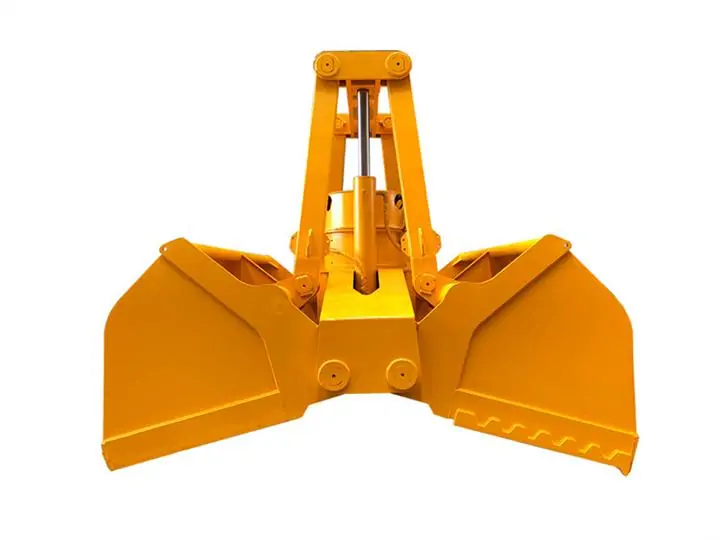
The most common type, used for general bulk materials such as coal, sand, and grain.
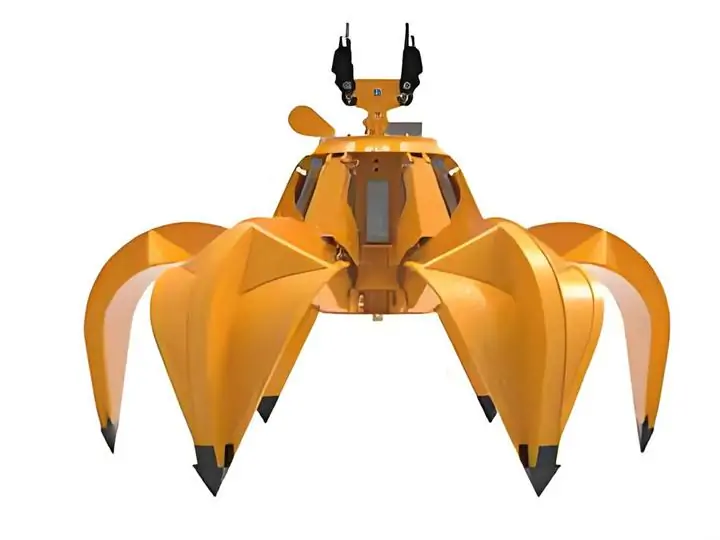
More cutting edges and better penetration into material piles. Suitable for irregular materials such as large ore, scrap steel, and iron chips, as well as sticky materials like sludge.
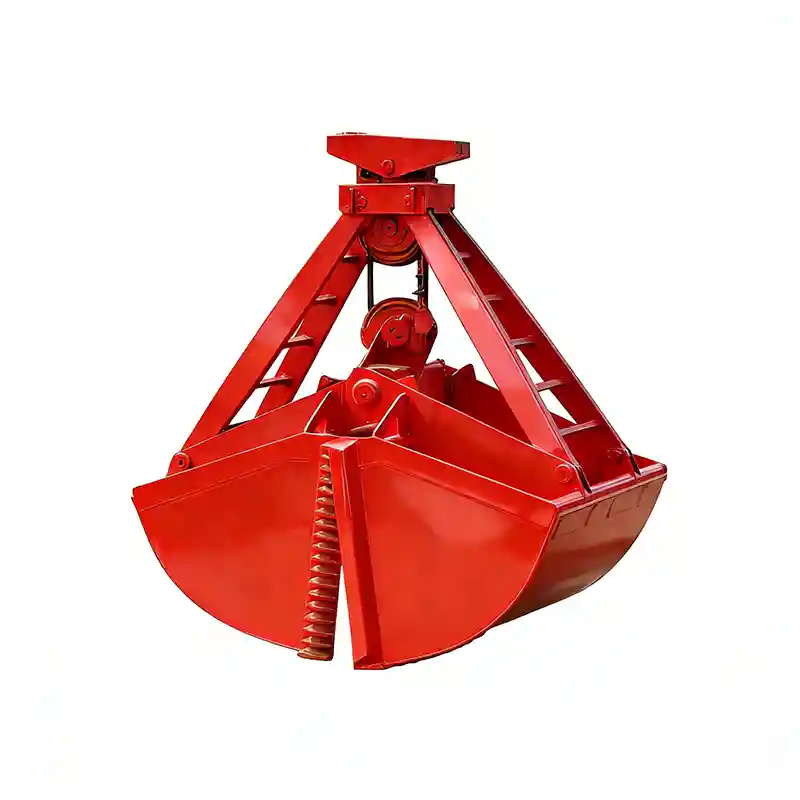
Equipped with teeth on the bucket edge for handling larger block materials (typically above 200 mm), such as large ore and limestone
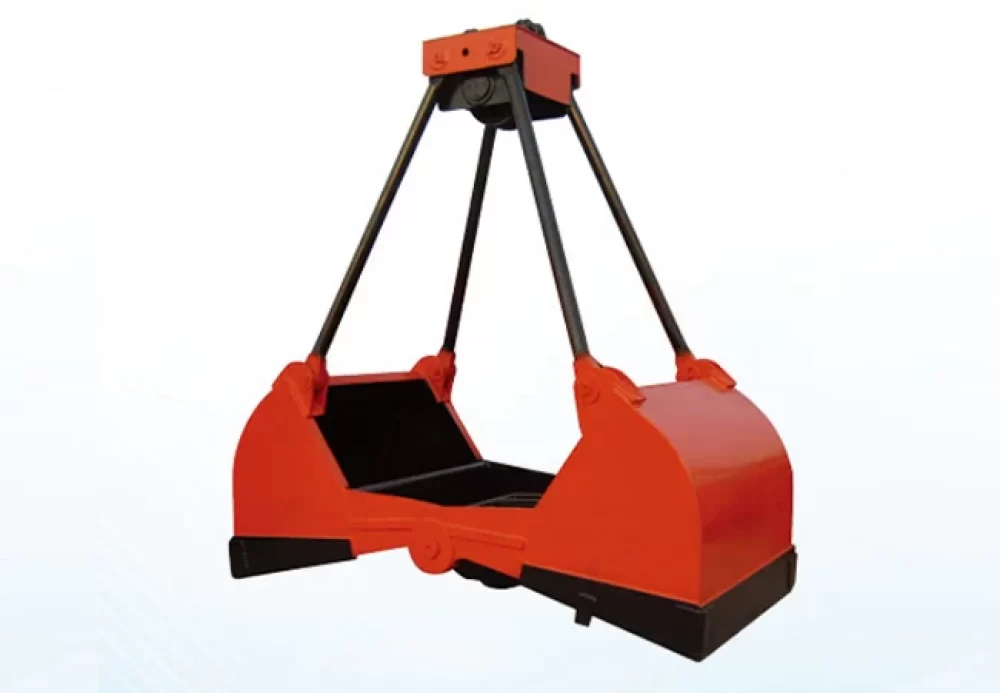
Works on a scissor mechanism, with increasing closing force during operation and a wide opening range. Suitable for yard cleanup and ship hold cleaning, but less effective for initial grabbing of large lumps.
Different grab buckets are designed for different bulk materials and operating conditions. The table below compares their structure, suitable materials, working characteristics, and applications.
| Comparison Item | Double Rope Grab | Multi-Tine Grab | Teeth Grab | Clamshell Grab |
|---|---|---|---|---|
| Estructura | Two bucket shells connected by four wire ropes and a pulley system. | Multiple curved tines (typically 4–8) are mounted around a central hub. | Two bucket shells with reinforced cutting teeth on the bucket edge. | Two bucket shells with straight or curved edges, hinged at the top. |
| Opening / Closing Method | Opens when lowered and closes when lifted by the wire ropes. | Tines open when lowered and close toward the center when lifted. | Teeth penetrate the material during closing and grip the load. | Opens when lowered and closes when lifted to scoop material. |
| Typical Use | General bulk material handling. | Handling irregular, loose, or mixed bulk materials. | Digging and handling hard or compacted bulk materials. | High-capacity grabbing and dredging operations. |
| Suitable Materials | Coal, sand, gravel, grain, ore powder, and other loose bulk materials. | Scrap steel, municipal waste, sludge, clay, soft ore, and mixed materials. | Rock, limestone, cement clinker, hard ore, and oversized materials. | Large lump materials, dredged sediment, ore, and bulk cargo. |
| Recommended Material Size | Best for particle sizes below 100 mm. | Suitable for mixed particle sizes and irregular materials. | Best for particle sizes above 200 mm or compacted materials. | Suitable for medium to large lump materials and dredging work. |
| Características principales | Simple structure and stable operation. | Multiple tines provide a strong gripping force from different directions. | Reinforced teeth improve penetration into hard materials. | Large bucket capacity with efficient scooping performance. |
| Ventajas | Low maintenance, reliable operation, high efficiency for loose materials. | Excellent gripping performance for irregular materials. | Strong digging capability and high wear resistance. | Large payload per cycle with good sealing performance. |
| Limitations | Not suitable for large blocks or compacted materials. | Lower filling efficiency when handling fine powders. | Higher self-weight and increased tooth wear. | Requires a larger opening space and is less suitable for fine materials. |
| Typical Duty Class | A3–A6 | A4–A6 | A5–A8 | A4–A8 |
| Aplicaciones Típicas | Power plants, cement plants, mines, warehouses, and material yards. | Steel plants, scrap yards, waste treatment plants, ports, and recycling facilities. | Mines, quarries, cement plants, and steel mills. | Dredging projects, ports, shipyards, and bulk cargo terminals. |
The grab bucket directly affects material handling efficiency, filling rate, and service life. Different grab designs are suitable for different bulk materials, particle sizes, and working conditions.
For more information about grab bucket types, selection guidelines, and application differences, read our Crane Grab Bucket.
A QZ Grab Overhead Crane handles bulk materials with a grab bucket suspended from the trolley. During operation, the crane travels along the runway while the trolley moves across the bridge to the loading position. The grab bucket descends into the material pile, closes to collect the material, and is lifted to the required height. The crane then carries the load to the unloading point, where the grab opens to discharge the material before returning for the next operation.
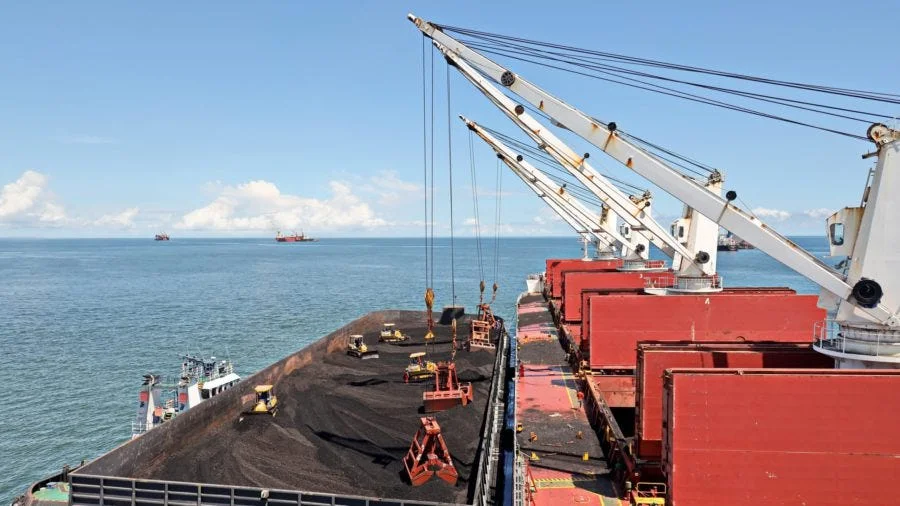
coal, iron ore, clinker, grain, bulk cargo
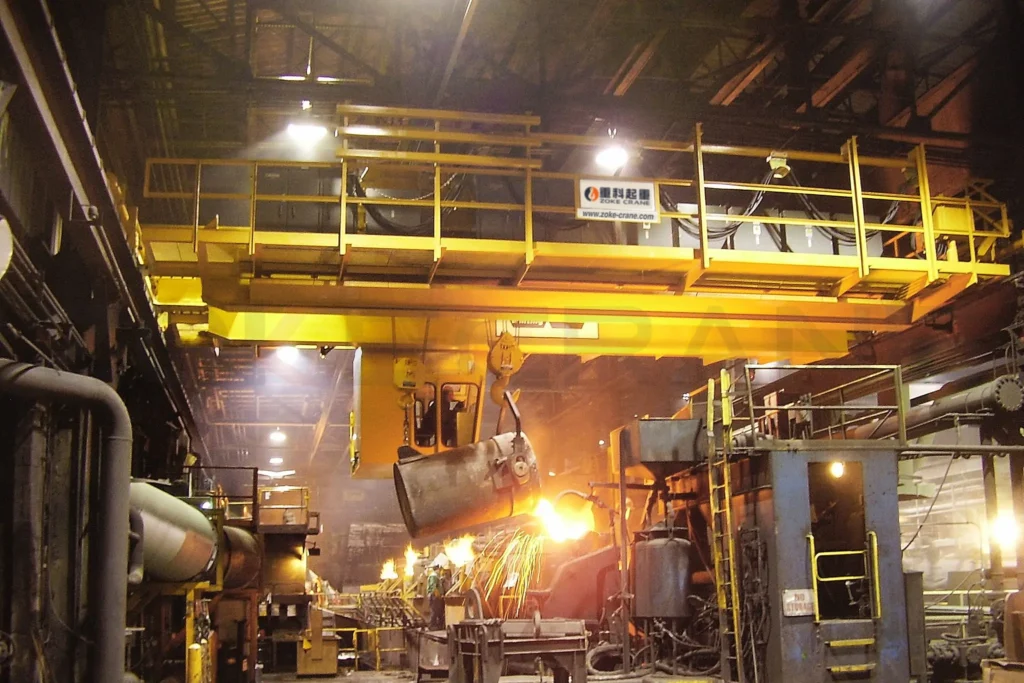
scrap steel, iron ore, coke, sinter
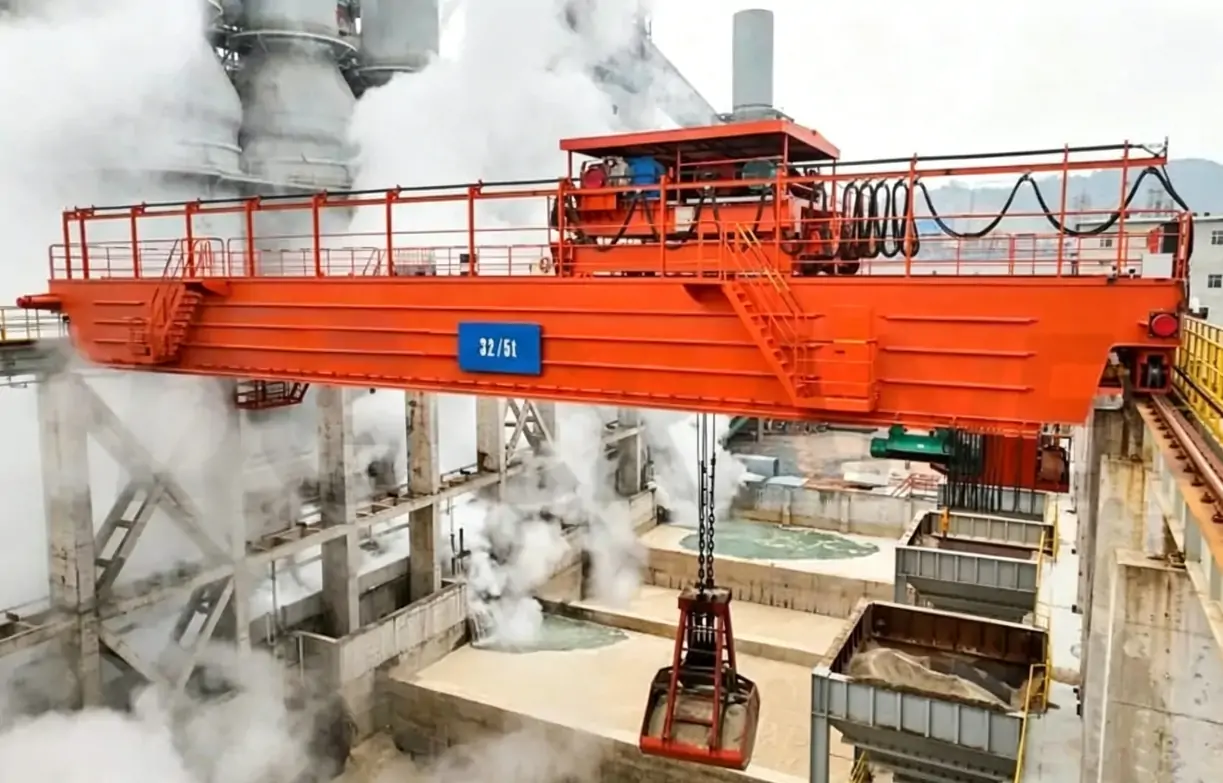
coal, biomass fuel, and ash handling
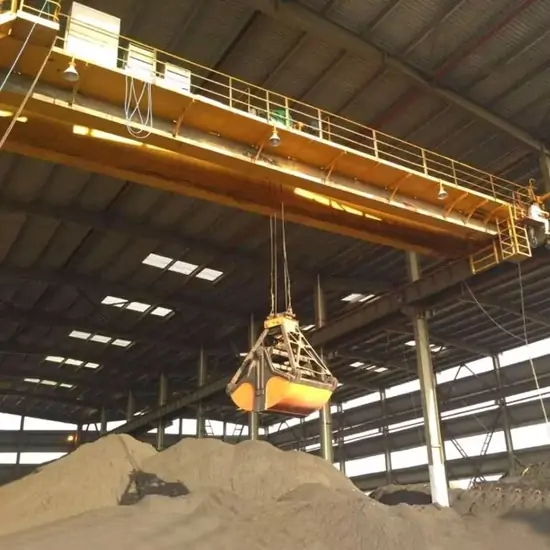
limestone, clinker, gypsum, coal powder
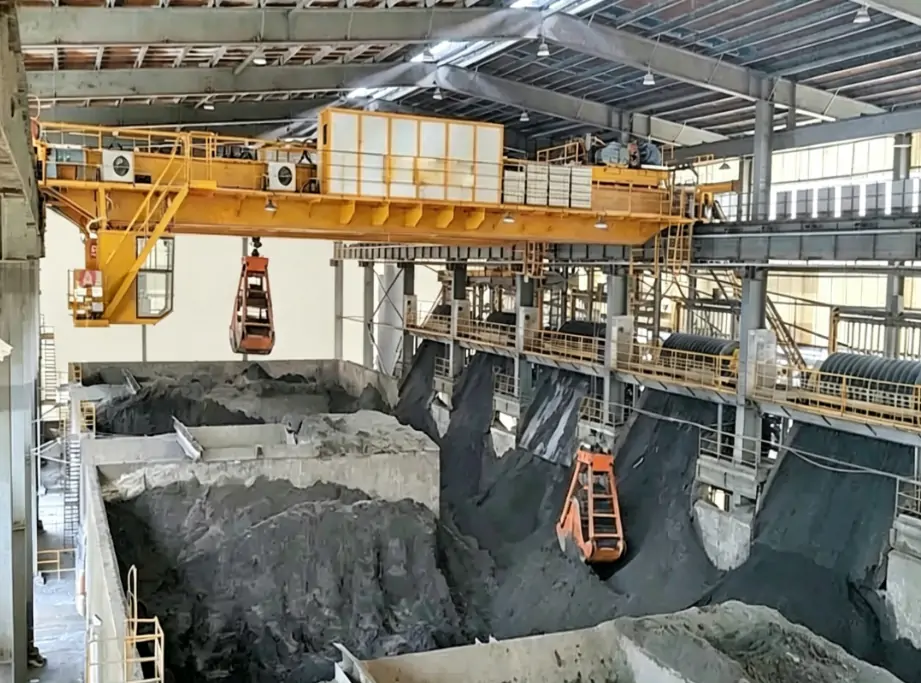
ore, stone, tailings
municipal waste, sludge, recyclable bulk materials
QZ Grab Overhead Cranes are built for handling bulk materials such as coal, ore, sand, limestone, clinker, grain, scrap, and industrial waste. They are widely used in steel plants, mines, power stations, cement plants, and material storage yards for continuous loading, unloading, and stacking operations.
QZ Grab Overhead Crane is configured based on site conditions, material type, and working requirements. Design and selection are adjusted according to actual operational needs.
WEIHUA provides customized design and configuration according to project requirements and application conditions. We will configure a suitable double-hook overhead crane for your project.
Obtenga una cotización personalizada ahora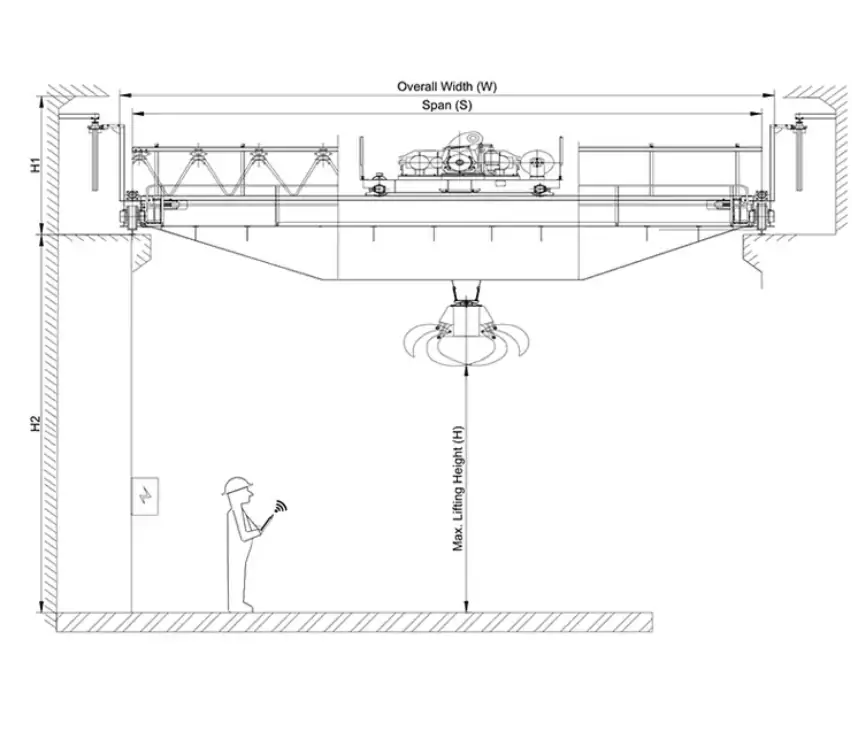
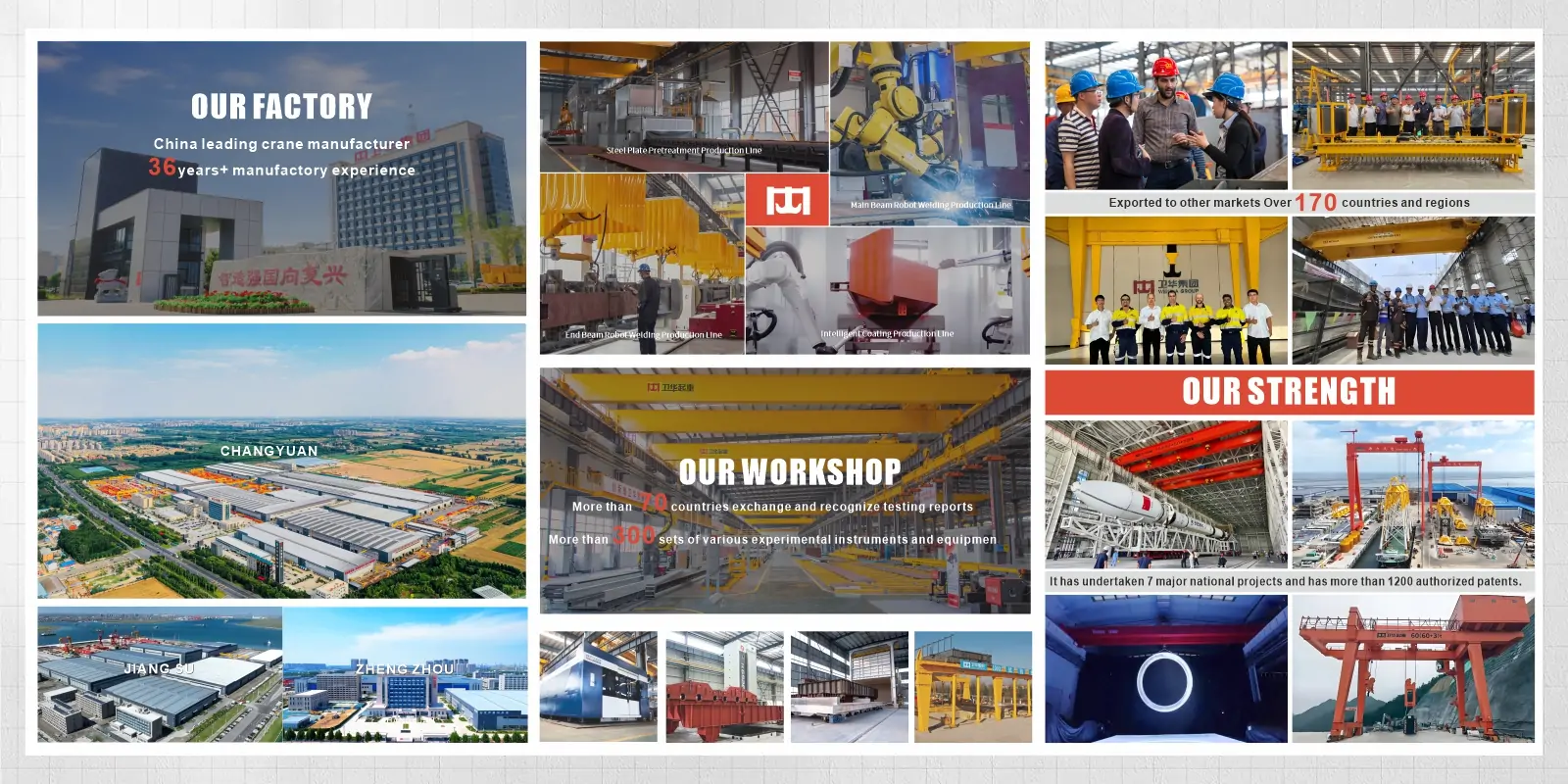
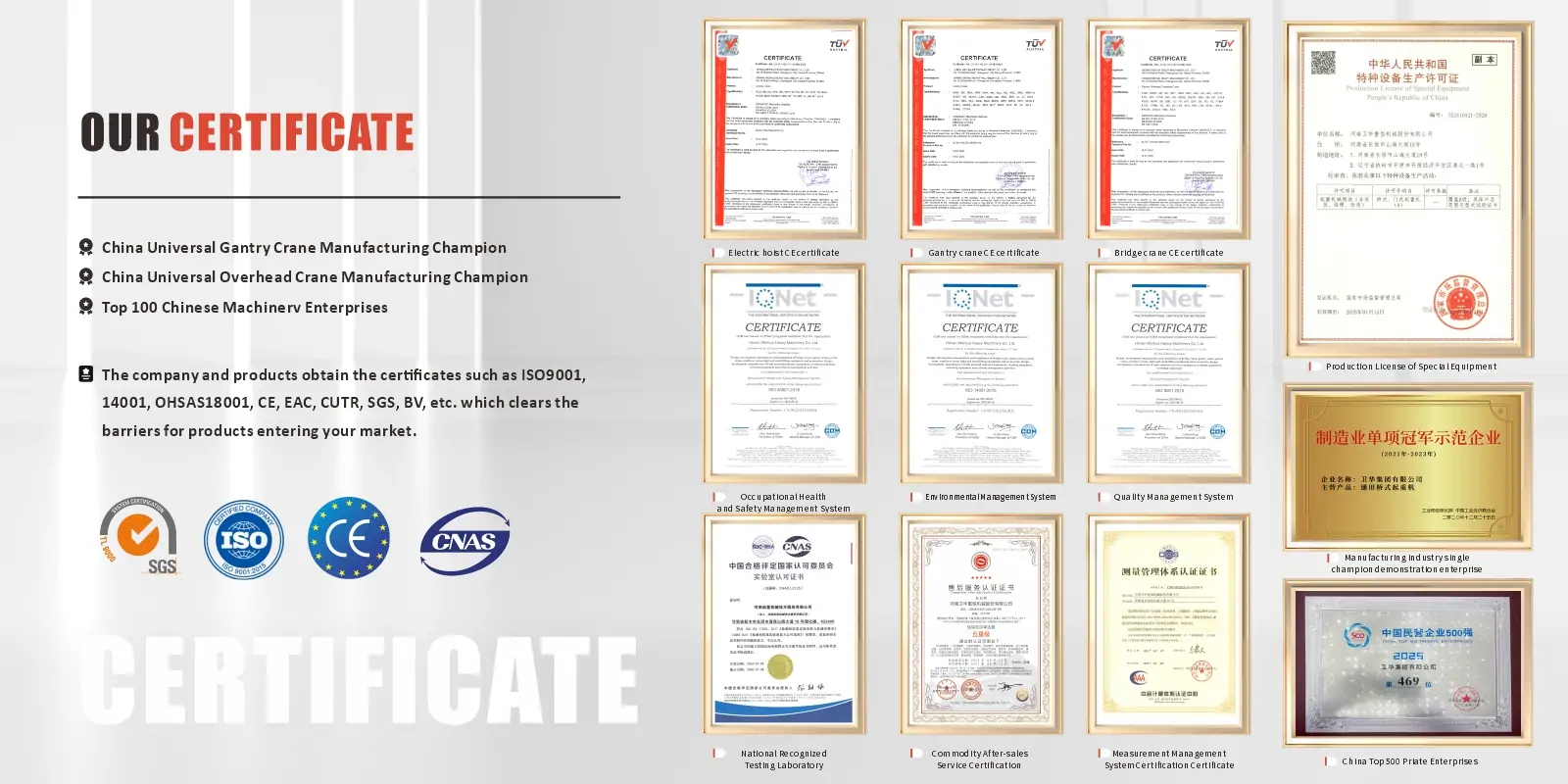
WEIHUA supplies QZ grab overhead cranes with full production capability, covering structural design, fabrication, assembly, testing, and delivery. Solutions are configured according to project requirements, including lifting capacity, span, grab type, and working duty class. Each unit is produced under industrial standards for long-term operation in demanding environments. For technical consultation, customization, or quotation, please contact us for detailed support. eeds. For technical support or project inquiries, Contáctenos para una solución a medida.
It is used for loading, unloading, and transferring bulk materials such as coal, ore, sand, grain, and scrap steel.
Common applications include ports, steel mills, power plants, cement plants, mining sites, and waste handling facilities.
Options include rope grab, hydraulic grab, multi-jaw grab, and scissor grab, selected based on material type.
Standard range is 3–30 tons, with customized models available for higher requirements.
Yes. Span, lifting height, grab volume, control mode, and duty class can all be designed according to site conditions.
It is typically designed for A5–A8 working duty, suitable for frequent and heavy operation.
Pendant control, cabin control, and wireless remote control are available depending on application needs.
Overload protection, limit switches, emergency stop, and optional anti-collision and monitoring systems are available.
Weihua, fundada en 1988, se ha convertido en un líder mundial en el campo de la fabricación inteligente de China. Nos especializamos en la I+D y producción de grúas inteligentes, ofreciendo al mismo tiempo soluciones AGV. Nuestros equipos profesionales de ingeniería, entrega y posventa brindan soporte técnico integral, soluciones personalizadas, orientación de instalación in situ y servicios globales de respuesta rápida para garantizar que cada proyecto funcione de manera segura y eficiente.
Contáctenos ahora por correo electrónico: [email protected], o rellene el formulario a continuación.


La grúa pórtico es un equipo de elevación ampliamente utilizado en diversas industrias, sitios de construcción, puertos, almacenes y otros campos. Su estructura única y su potente capacidad de carga la hacen ideal para el manejo de materiales modernos de alta resistencia. El diseño de la estructura de “pórtico” permite que la grúa se mueva libremente dentro de un espacio, cubriendo una gran área de trabajo. Entonces, ¿qué hace especiales a las grúas pórtico? ¿Cuáles son sus tipos, parámetros, métodos de control, aplicaciones y principios de funcionamiento? ¿En qué se diferencian de las grúas puente? Vamos a explorarlo juntos. Tipos de grúas pórtico Según el diseño, la aplicación y el entorno operativo, las grúas pórtico se clasifican típicamente en los siguientes tipos: Grúa pórtico de viga única Las grúas pórtico de viga única se utilizan ampliamente en sectores industriales, almacenes, puertos y talleres. Con un mecanismo de elevación de soporte de viga única, se desplazan a través de columnas laterales y rieles inferiores. Con su estructura simple, operación amigable y capacidad de elevación moderada, son ideales para el manejo de cargas ligeras a medianas. Capaces de abarcar grandes distancias libremente, las grúas pórtico de viga única son adecuadas para operaciones de elevación y manejo de materiales pesados. Grúa pórtico de doble viga En comparación con las grúas pórtico de viga única, las grúas pórtico de doble viga ofrecen mayor...
En puertos, parques logísticos y manipulación de materiales industriales, las grúas pórtico y las grúas de portal son dos tipos de equipos de carga/descarga comunes y fundamentales. Difieren en diseño estructural, características de rendimiento, métodos de operación, escenarios de aplicación y costos de inversión. Este artículo proporciona un análisis integral de las grúas pórtico frente a las grúas de portal y lo guía en la selección correcta. Comparación del diseño estructural Las diferencias estructurales entre las grúas pórtico y las grúas de portal se manifiestan principalmente en los métodos de soporte de carga, las trayectorias de movimiento y los rangos de cobertura. La primera se centra en una torre fija y una pluma giratoria, enfatizando la “cobertura puntual” y la rotación horizontal flexible. La segunda presenta una estructura de marco de portal y desplazamiento longitudinal sobre rieles, priorizando el “amplio movimiento horizontal” y la manipulación eficiente de la logística en el sitio. En consecuencia, sus distintos diseños estructurales dictan directamente sus diferentes escenarios de aplicación. Características estructurales de la grúa pórtico Las grúas de portal giratorias emplean estructuras de pluma en voladizo simple/doble con la torre fijada a cimientos o rieles, lo que permite una rotación de 360° o parcial. Esta configuración permite una operación flexible en espacios estrechos y alargados, como líneas de costa, frentes de muelle y atraques de barcos, lo que la hace particularmente adecuada para la manipulación de materiales de barco a tierra. Su funcionalidad principal combina verticalmente...
En las operaciones industriales modernas, el manejo eficiente de materiales es crucial para maximizar la productividad y optimizar el flujo de trabajo. Las grúas puente, también conocidas como grúas viajeras o grúas EOT, son sistemas fijos de manejo de materiales ampliamente utilizados en manufactura, procesamiento de metales, almacenamiento y operaciones de carga/descarga. En este artículo, exploraremos el principio de funcionamiento, los componentes principales, las aplicaciones y los beneficios operativos de las grúas puente, proporcionando una guía completa para planificadores industriales y profesionales de la logística. Principio de Funcionamiento de las Grúas Puente Una grúa puente opera sobre una estructura similar a un puente que abarca el área de trabajo, con un carro y un polipasto que se mueven horizontalmente a lo largo del puente y elevan o descienden cargas verticalmente. El movimiento de la grúa a lo largo de la vía, combinado con un control preciso del polipasto, permite el manejo eficiente y seguro de materiales pesados en fábricas, almacenes e instalaciones industriales. Para obtener información sobre cómo funcionan las grúas viajeras, consulte este artículo: Principio de Funcionamiento de las Grúas Viajeras: Componentes, Movimiento y Proceso de Operación Terminología de las Grúas Puente A continuación, se presenta una introducción a la terminología relacionada con las partes de las grúas puente. Capacidad de la Grúa: La capacidad de la grúa se refiere al peso máximo que una grúa puente puede levantar de forma segura. Típicamente medido en toneladas…
Una grúa EOT (Grúa Eléctrica de Puente) es un sistema de elevación aéreo eficiente y fiable que se utiliza para manipular materiales pesados en fábricas, almacenes, talleres y plantas industriales. Funcionando sobre rieles elevados, las grúas EOT permiten el movimiento tridimensional seguro y preciso de cargas mediante movimientos coordinados de elevación, traslación transversal y traslación longitudinal. Este artículo le guiará a través de las definiciones de las grúas EOT, sus tipos, estructura, principios de funcionamiento, aplicaciones y factores de costo para ayudarle a seleccionar la solución más adecuada para sus necesidades de elevación. ¿Cómo funciona una grúa EOT? El principio de funcionamiento de una grúa EOT implica una combinación de elevación vertical, movimiento horizontal del carro y desplazamiento longitudinal del puente, lo que permite la manipulación eficiente de cargas pesadas en las instalaciones industriales. La grúa opera sobre rieles de pista elevados instalados a lo largo de la estructura del edificio, con la viga del puente abarcando el área de trabajo. El mecanismo de elevación sube o baja la carga utilizando cables de acero o cadenas, mientras que el carro mueve la carga horizontalmente a lo largo del puente. Toda la grúa se desplaza longitudinalmente a lo largo de los rieles de la pista, permitiendo la posición tridimensional de los materiales. Las grúas EOT modernas están impulsadas por motores eléctricos con velocidad precisa...
Las grúas pórtico se utilizan ampliamente en patios de almacenamiento al aire libre, astilleros, fábricas y sitios de construcción, lo que las convierte en una de las soluciones de manipulación de materiales más versátiles y aplicadas. Las grúas pórtico vienen en varios tipos, cada una personalizable para adaptarse a diferentes capacidades de carga, condiciones del sitio y requisitos operativos. Sin embargo, la elección de la configuración incorrecta puede generar gastos innecesarios, capacidad de elevación limitada o restricciones de expansión futuras. Entonces, ¿cuáles son los principales tipos de grúas pórtico? ¿Cómo elige el tipo correcto para su aplicación? En esta guía, proporcionaremos una descripción general detallada de los diferentes tipos de grúas pórtico según la estructura, la movilidad y los escenarios de aplicación, lo que le ayudará a tomar la decisión correcta antes de invertir en una solución de elevación. El artículo es bastante extenso. A continuación se presenta nuestra tabla de contenidos. Por favor, salte a la sección correspondiente según sea necesario: ¿Qué es una grúa pórtico? Las grúas pórtico son equipos de elevación diseñados para la manipulación eficiente de carga pesada en grandes sitios al aire libre. Su estructura distintiva presenta una o más vigas principales soportadas por patas rígidas (o flexibles) a cada lado, formando un marco monumental en forma de “puerta”. Estas grúas se desplazan...
 English English
  Русский
 العربية
 Français
 Português
 Español