What Is a Travel Lift? Complete Guide for Marine Lifting Solutions
Learn what a travel lift is, how it works, and why it is essential for boat handling and shipyard operations. Explore types, capacities, applications, and expert buying tips.
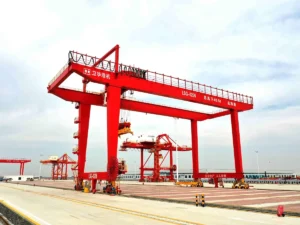
Introduction RTG Crane (Rubber-Tyred Gantry Crane) is a mobile lifting crane suitable for ports, logistics hubs, and bulk cargo facilities. Unlike rail-mounted RMG cranes, RTGs utilize rubber tires to move freely within yards, enabling efficient handling of containers, steel, and heavy cargo. They can integrate with intelligent yard management systems to achieve efficient stacking and precise operational control. In this article, you will gain a detailed understanding of RTG crane definitions, main components, pricing factors, and considerations for selection. It provides a comprehensive reference guide for ports, logistics, and industrial facilities, while also covering common questions regarding operation and maintenance. What is RTG Crane? An RTG crane (Rubber-Tyred Gantry Crane) is a mobile heavy-duty gantry crane primarily used for container handling, bulk cargo operations, and intermodal logistics yards. Unlike rail-mounted RMG cranes, RTG cranes operate on large rubber tyres, allowing them to move freely across expansive yard areas without the need for fixed rails. This mobility provides flexibility for yard layout adjustments, ideal for ports and terminals where space optimization and high throughput. RTG cranes are designed to lift and…
This article primarily introduces several common types of cranes used in construction, analyzing their characteristics and applicable scenarios. Construction sites select different types of cranes based on project scale, construction environment, and lifting requirements to improve construction efficiency and safety. This article aims to help readers better understand these important pieces of construction equipment. What is a Construction Crane? It is a large mechanical device used for lifting, hoisting, and moving heavy objects, applied in fields such as building construction, bridge engineering, and infrastructure projects. Through the coordination of mechanical structures and power systems, it safely and efficiently completes the vertical or horizontal transportation of materials and equipment at construction sites, making it an indispensable piece of essential equipment in modern construction engineering. Basic Functions: Lifting heavy objects, horizontal movement of materials, assisting high-altitude construction, improving construction efficiency Main Structural Components: Boom, tower or main structure, counterweight, wire rope and pulley system, hook Role in Modern Construction: Improve construction efficiency, support high-rise building construction, reduce manual labor intensity, enhance construction safety Types of Cranes Used in Construction The six most…
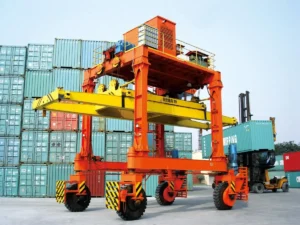
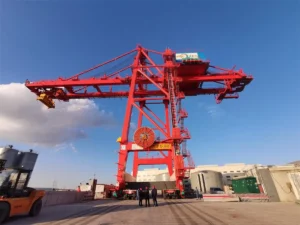
Straddle carriers play a vital role in container handling operations, as they can independently perform container lifting, transportation, and stacking, thereby reducing reliance on multiple pieces of equipment. This article will introduce the definition, working principles, and main types of straddle carriers, while comparing their differences with other container handling equipment at ports and logistics terminals. What Is a Straddle Carrier? A straddle carrier is a mobile container handling vehicle used for lifting and transporting shipping containers within container terminals or yards. Unlike cranes or stackers, straddle carriers can straddle (drive over) containers, lift them using a lifting device system, and transport them to other locations for stacking or loading. Straddle carriers are primarily used in: Types of Straddle Carriers Industrial straddle carrier cranes are primarily classified by their power systems into diesel-powered straddle carriers and electric straddle carriers. Ports and container yards can select appropriate equipment based on operational intensity, environmental requirements, and site conditions. Diesel-Powered Straddle Carrier Diesel-powered straddle carriers deliver robust power and high continuous operation capability, making them ideal for intensive port handling and large yard…
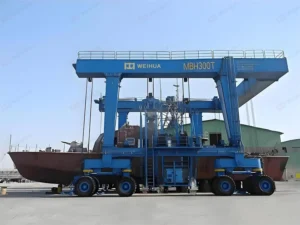
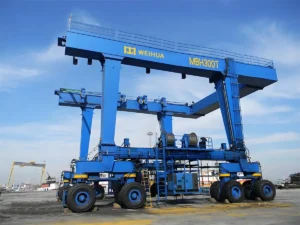
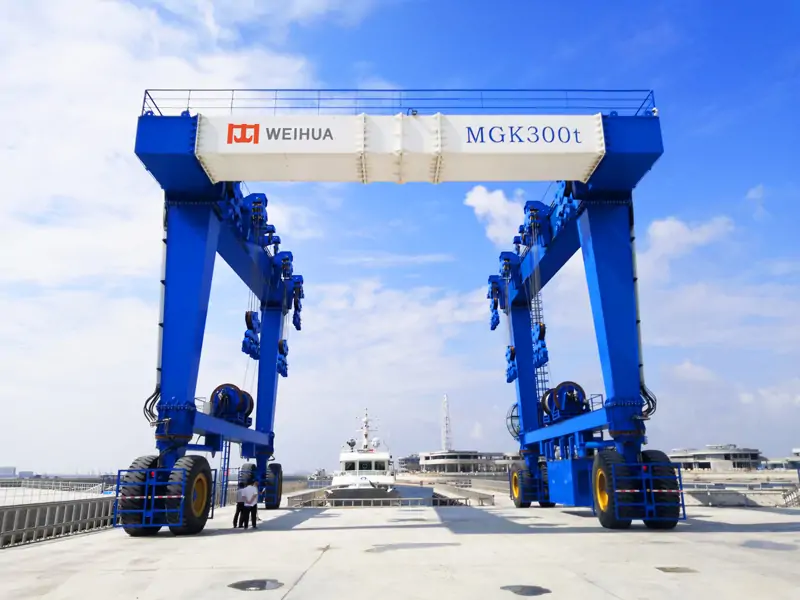
What is a Boat Lifting Gantry Crane? A boat lifting gantry crane, often referred to as a travel lift or Automotive Marine Gantry Crane, is a type of mobile lifting equipment specifically designed for marinas, shipyards, and repair docks. Its primary functions include vessel launching, hauling, transportation, and maintenance lifting. Unlike standard gantry cranes, these specialized ship-lifting gantries utilize multiple high-strength slings to cradle the hull, preventing localized stress points that could damage the shell. They are engineered to accommodate various beam widths. Types of Boat Lifting Gantry Crane As a manufacturer of boat lifting gantry cranes, we produce a diverse range of models, each with unique performance characteristics and applications. Weihua offers different lifting capacities, which can be customized to meet different needs, including 25 tons, 35 tons, 50 tons, 70 tons, 100 tons, 150 tons and 300 tons. 25 Ton Boat Gantry Crane In small marinas and private yacht clubs, the 25-ton mobile boat lifting gantry crane is an excellent choice for light-duty lifting applications. Its compact design and simple operation allow for the quick launching and hauling…
In container terminals and logistics yards, RTG vs RMG crane is a common comparison when selecting yard lifting equipment. Rubber Tyred Gantry (RTG) and Rail Mounted Gantry (RMG) cranes are mainly used for container stacking and transshipment, but they differ in mobility, power supply, automation level, and infrastructure requirements. This article will compare and analyze the structural composition, technical parameters, performance, application scenarios, and costs of RTG and RMG. What Is an RTG Crane? Rubber Tyred Gantry RTG Cranes is a mobile and flexible yard crane primarily used for container stacking and transshipment. It uses tires for mobility, allowing it to move freely within the yard. Powered typically by diesel or hybrid power, it offers flexible deployment options for scenarios requiring frequent repositioning within the yard. For detailed operating procedures and precautions, please refer to the article: How to Operate an RTG Crane: A Step-by-Step Guide What Is an RMG Crane? Rail Mounted Container Gantry Crane operates along fixed tracks and is primarily used for container stacking and loading/unloading. It is electrically powered, offers stable operation, and is suitable for…
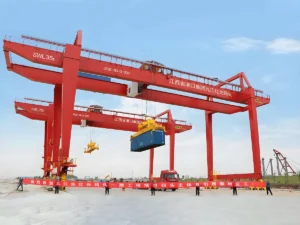
What is rmg crane?short for Rail Mounted Gantry Crane, operate on fixed rails and are primarily used for container handling operations in ports, railway container yards, and intermodal logistics terminals. Compared to rubber-tired gantry cranes, RMG cranes are more suitable for high-intensity, high-precision continuous operations, offering high stability, excellent positioning accuracy, and ease of automation. This article will systematically introduce what an RMG crane is, including its typical application scenarios, working principles, main technical parameters, and the core differences between RMG and RTG cranes. It will also analyze the advantages of RMG cranes in modern container handling and help you understand RMG cranes in the context of yard size, operational efficiency, and automation requirements. What Is an RMG Crane? RMG cranes are high-efficiency container handling and stacking equipment designed for ports, railway freight yards, and large logistics parks.They operate on rails, with the wheels moving on fixed tracks on the ground. Equipped with a retractable container spreader, they can lift, stack, and transfer 20-foot, 40-foot, and 45-foot international standard containers. Where Are RMG Cranes Commonly Used? RMG cranes are used…

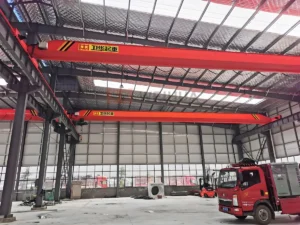
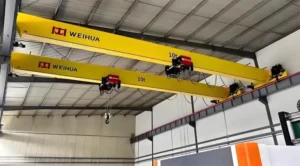
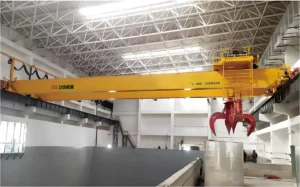
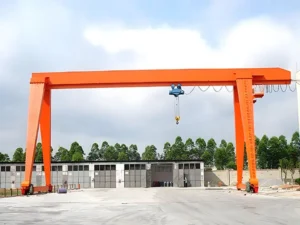
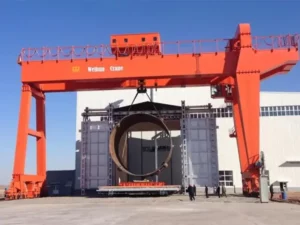
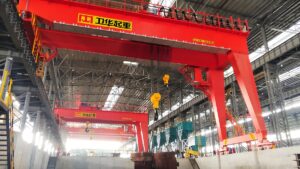
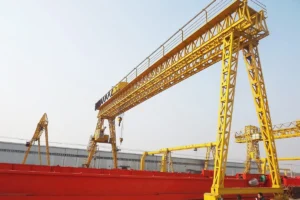
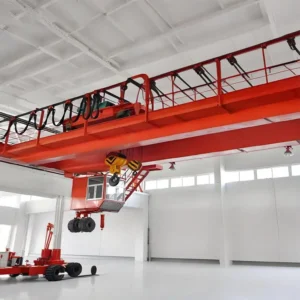
Overhead cranes and gantry cranes are both common lifting equipment used in manufacturing workshops, warehouses, steel plants, and outdoor yards. Both are used for material handling, but they differ in structural form, installation requirements, and operating environments. Improper selection during the initial project planning phase can lead to increased factory modification costs, extended construction periods, and even efficiency and safety problems during later operation. This article will systematically compare overhead cranes and gantry cranes across key dimensions such as structural characteristics, installation requirements, applicable scenarios, costs, and maintenance, helping you quickly determine which crane solution is best suited to your production needs based on your project conditions. Below is our table of contents. Please jump to the corresponding section as needed: What Is an Overhead Crane? Overhead Travelling Cranes are installed in factory buildings or on independent track beams, and consist of two running tracks and a bridge structure connecting them. The hoisting mechanism and trolley move laterally along the bridge structure, and in conjunction with the longitudinal movement of the bridge structure, allow for longitudinal, lateral, and vertical movement…
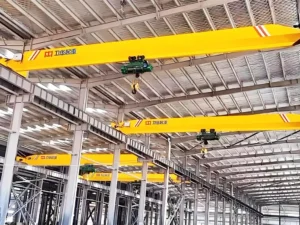
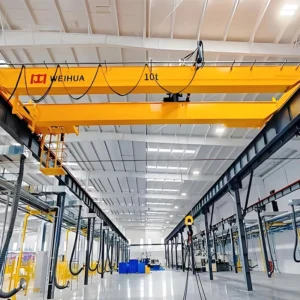
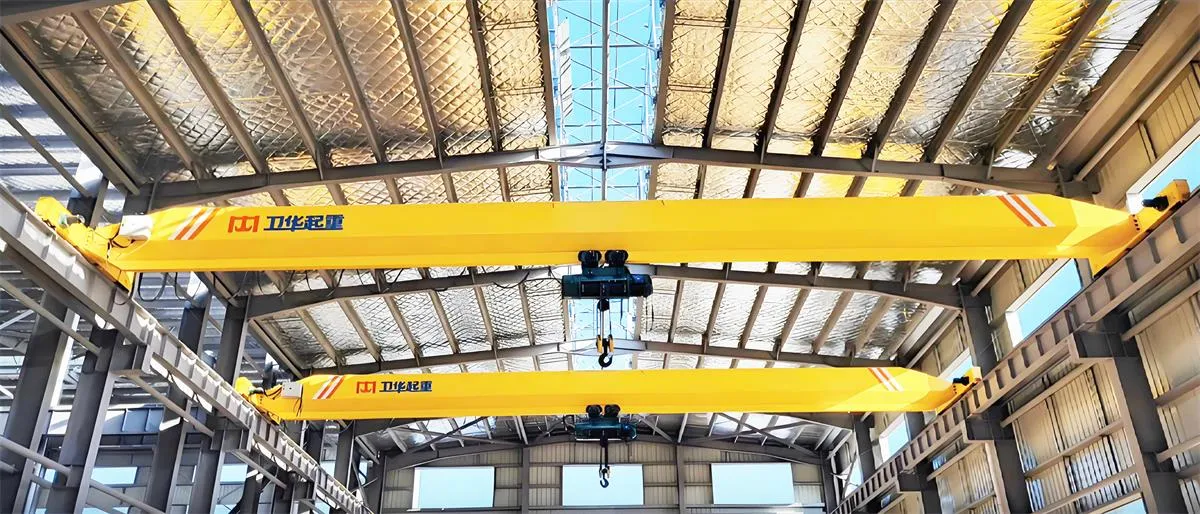
Overhead cranes are used in factory workshops, warehouses, steel mills, power plants, and assembly lines for the horizontal lifting and movement of heavy loads within fixed areas. Based on their operating principle, they coordinate hoisting, trolley travel, and bridge travel motions to enable precise material handling. Lifting capacity, span, lifting height, control methods, and duty cycle ratings are all customizable to meet diverse operational requirements. To understand the working principle of a bridge crane in detail, it is necessary to understand its overall structure and operating process. This article will introduce the definition, working principle, main components and functions, common terminology, basic operating procedures, and the differences in working principles among different types of bridge cranes. Below is our table of contents. Please jump to the corresponding section as needed: What Is an Overhead Crane? An overhead crane is a lifting device suspended above workshops, warehouses, and material yards for transporting goods. Typically mounted on tracks along both sides of a factory building, it traverses the rails via a bridge structure and works in conjunction with a hoisting mechanism to…
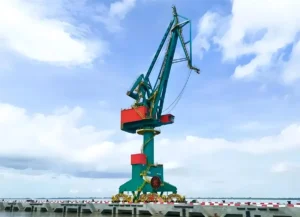
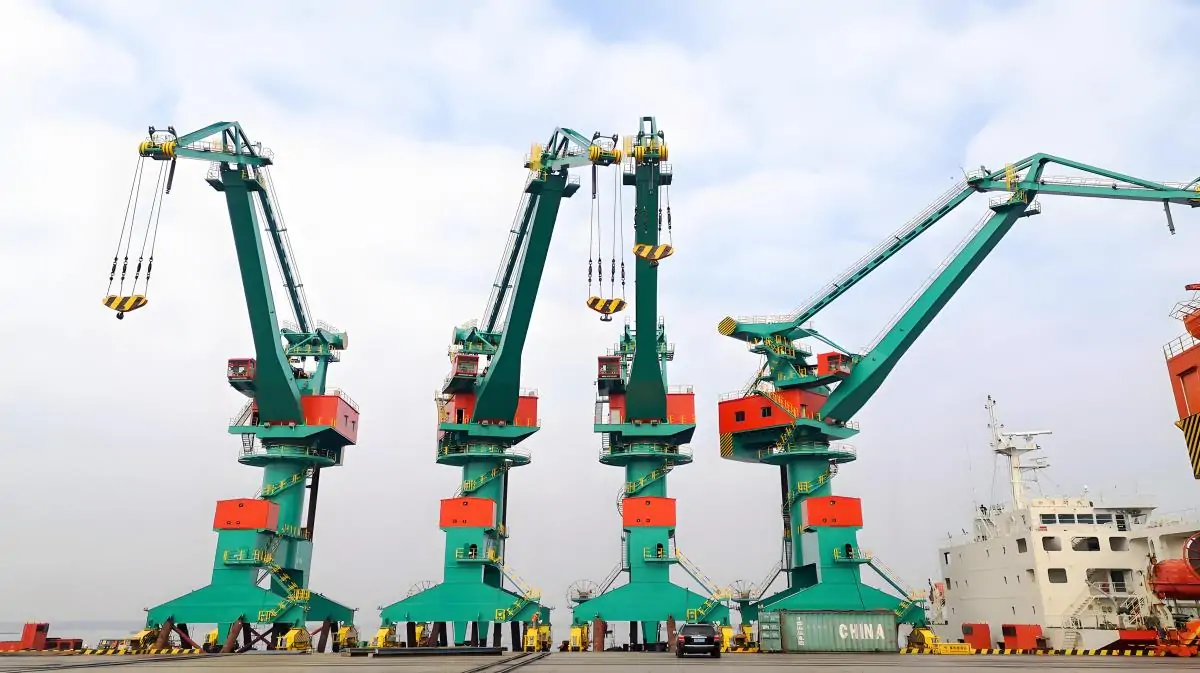
A portal crane features a rigid gantry structure that travels along rails, supporting a top-mounted lifting mechanism capable of 360-degree rotation. Portal cranes enable more precise and flexible handling of heavy cargo. They are widely used in ports, shipyards, and industrial docks to handle heavy cargo more efficiently. This article will analyze the working principles and main application scenarios of portal cranes, different types of portal cranes, and a comparison between portal cranes and gantry cranes, helping you gain a deeper understanding of portal cranes and providing a reference for your selection process. portal crane working principle The portal type crane supports its entire weight through a portal structure mounted on rails or a fixed foundation. The upper slewing mechanism enables 360° continuous rotation. During lifting operations, the hoisting mechanism drives the wire rope winch via an electric motor or hydraulic system, allowing the hook or grab to lift and lower cargo. Simultaneously, the luffing mechanism adjusts the boom angle to alter the working radius, adapting to loading and unloading requirements at different positions.During operation, the portal crane can traverse…
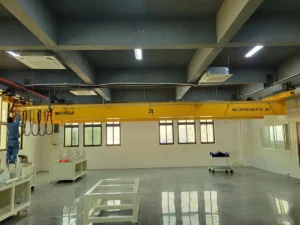
An EOT Crane (Electric Overhead Traveling Crane) is an efficient and reliable overhead lifting system used to handle heavy materials in factories, warehouses, workshops, and industrial plants. Running on overhead rails, EOT cranes enable safe and precise three-dimensional movement of loads through coordinated lifting, cross travel, and long travel motions. This article will guide you through EOT crane definitions, types, structure, working principles, applications, and cost factors to help you select the most suitable solution for your lifting needs. How EOT Crane Works? The working principle of an EOT crane involves a combination of vertical lifting, horizontal trolley movement, and longitudinal bridge travel, enabling efficient handling of heavy loads across industrial facilities. The crane operates on elevated runway rails installed along the building structure, with the bridge girder spanning the workspace. The hoist mechanism raises or lowers the load using steel wire ropes or chains, while the trolley moves the load horizontally along the bridge. The entire crane travels longitudinally along the runway rails, enabling three-dimensional positioning of materials. Modern EOT cranes are powered by electric motors with precise speed…

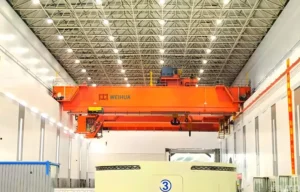
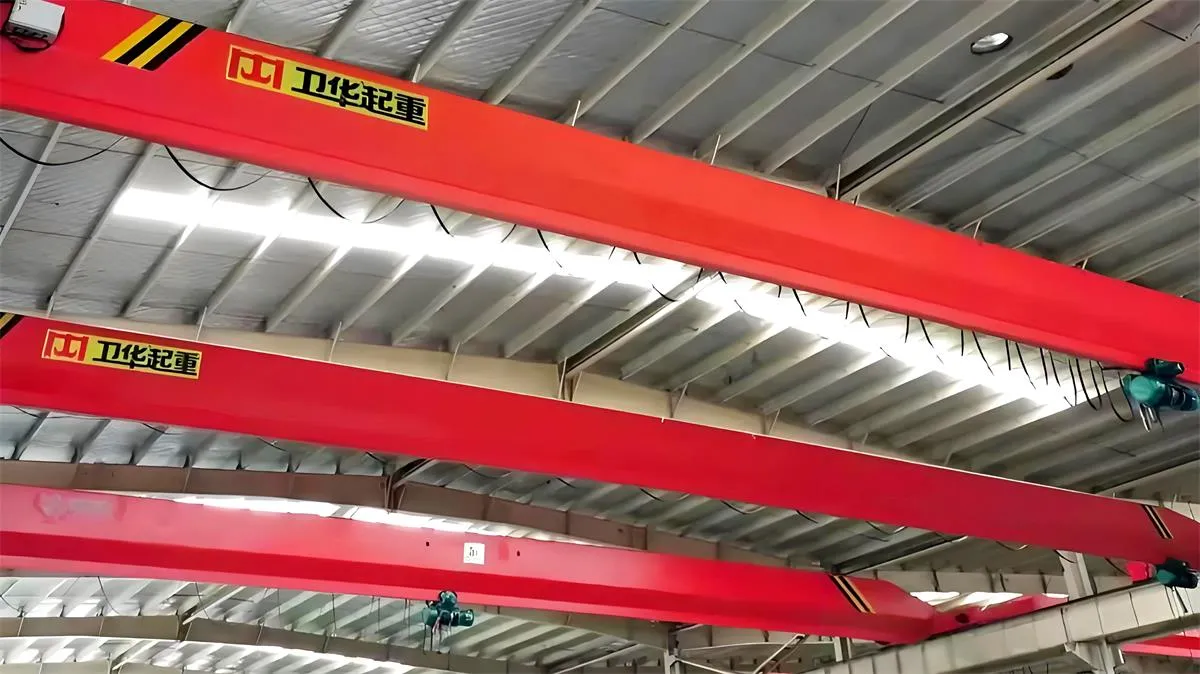
In modern industrial operations, efficient material handling is crucial for maximizing productivity and optimizing workflow. Bridge cranes, also known as overhead cranes or EOT cranes, are fixed material handling systems widely used in manufacturing, metal processing, warehousing, and loading/unloading operations. In this article, we will explore the working principle, main components, applications, and operational benefits of bridge cranes, providing a comprehensive guide for industrial planners and logistics professionals. Bridge Crane Working Principle A bridge crane operates on a bridge-like structure spanning the workspace, with a trolley and hoist system that moves horizontally along the bridge and vertically lifts or lowers loads. The crane’s movement across the runway, combined with precise hoist control, enables efficient and safe handling of heavy materials in factories, warehouses, and industrial facilities. For information on how overhead cranes work, please see this article: Overhead Crane Working Principle: Components, Motion & Operating Process Bridge Crane Terminology The following is an introduction to terminology related to bridge crane parts. Crane Capacity: Crane capacity refers to the maximum weight a bridge crane can safely lift. Typically measured in tons…