
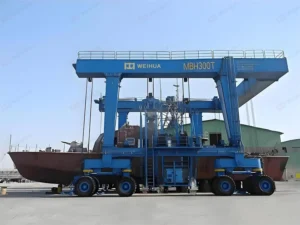
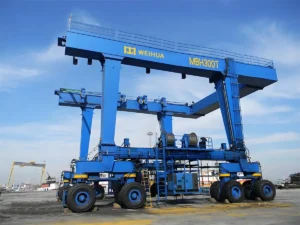

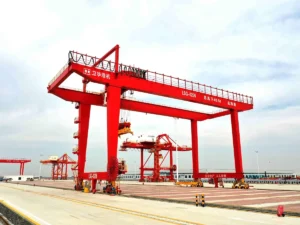
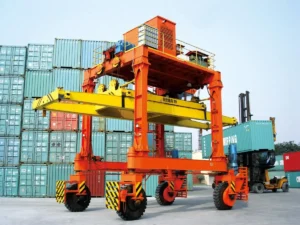
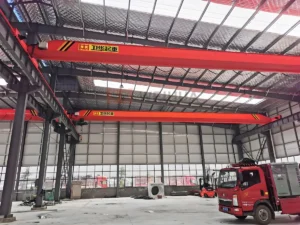
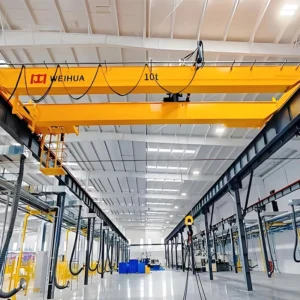
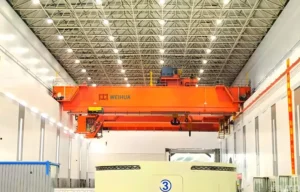
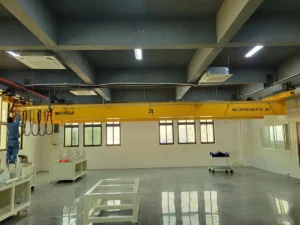
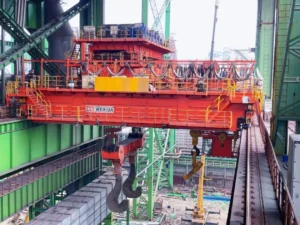
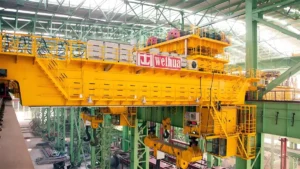

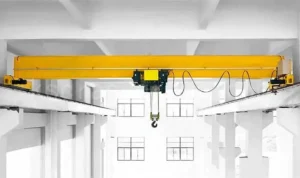
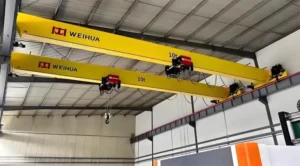
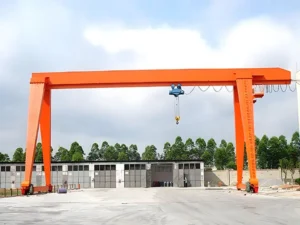
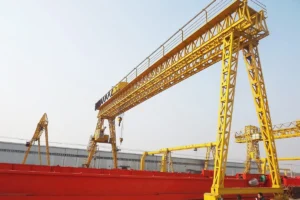

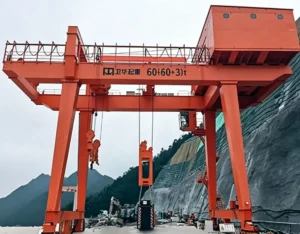
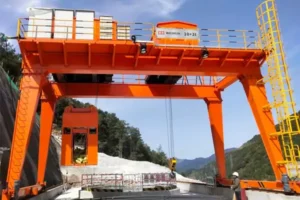


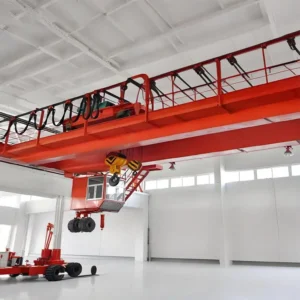
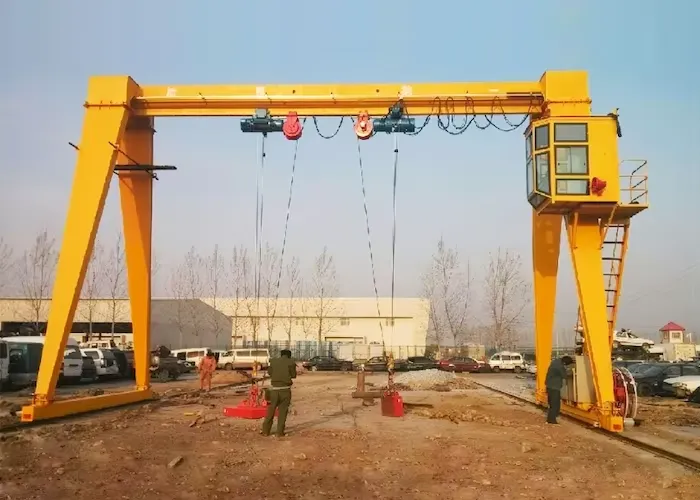
A single girder gantry crane is a ground-supported lifting system built from one main horizontal beam (the girder) mounted on two inverted-U-shaped legs that run on floor-level rails. Unlike overhead cranes that rely on a building’s runway beams, a gantry crane is self-supporting — it can operate indoors, outdoors, or in facilities that lack the structural steel to support a top-mounted bridge crane.
Standard configurations cover lifting capacities from 1 ton to 20 tons, spans from 7.5 m to 31.5 m, and lifting heights from 6 m to 18 m, with working classes A3 and A4 under FEM (Fédération Européenne de la Manutention) classification. These numbers make the single girder gantry crane the default choice for mid-range material handling tasks in factories, warehouses, construction sites, and small ports where budget and installation flexibility both matter.
This guide explains how the crane is built, how to read its key specifications, how it compares to double girder alternatives, which industries use it and why, and what to verify before placing an order. By the end, you will have a clear framework for deciding whether a single girder gantry crane fits your operation — or whether a different type would serve you better.
Table of Contents
Quick Reference: Single Girder Gantry Crane Specifications at a Glance
| Parameter | Typical Range |
|---|---|
| Lifting Capacity | 1 – 20 ton |
| Span (S) | 7.5 m – 31.5 m |
| Lifting Height | 6 m – 18 m (customizable up to 20 m) |
| Lifting Speed | 3.3 – 8 m/min (dual-speed hoist available) |
| Trolley Travel Speed | 14 – 30 m/min |
| Crane Travel Speed | 20 – 30 m/min |
| Working Class | A3, A4 (FEM / ISO 4301-1) |
| Operating Temperature | −25 °C to +40 °C |
| Power Supply | 3-phase, 380 V, 50 Hz (customizable) |
| Structure Material | Q235B / Q345B steel (equiv. Fe37 / Fe52) |
Price reference (indicative / FOB factory): $2,200 – $55,000 depending on capacity and span. See the detailed price table in the Pricing section below.
How a Single Girder Gantry Crane Is Built
Understanding the physical structure tells you where a crane’s limitations come from and what to inspect during acceptance testing.
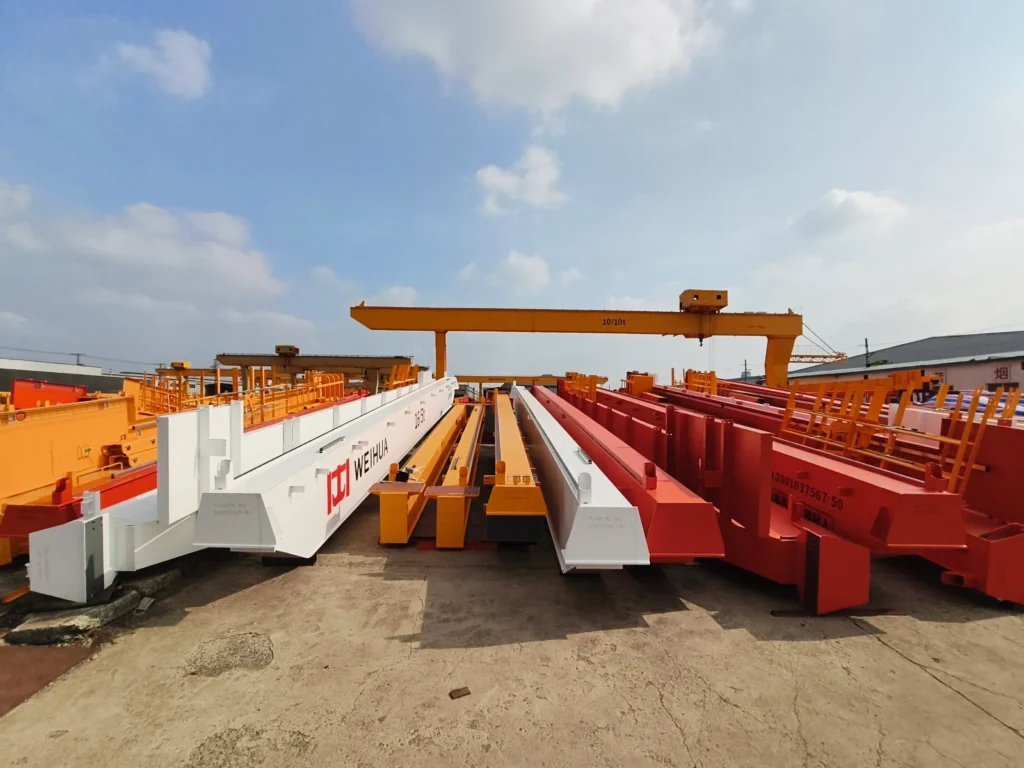
The Main Girder
The main girder is the single horizontal load-bearing beam that spans the working area. It is fabricated from a solid-web structure — typically a U-type groove combined with inclined and rib plates, cold-bent from Q235B or Q345B steel — or alternatively as a truss girder for longer spans where weight reduction matters.
Two design details affect long-term performance. First, the girder is built with a pre-set upward arch (camber): the arch degree F must equal (1/1000 to 1.4/1000) × span S, with the maximum arch occurring at midspan (S/10 maximum). This compensates for deflection under rated load and ensures the hoist trolley does not run to one end under gravity when unloaded. Second, saddle seats at each end of the girder connect it to the leg assemblies via flanged square-plate joints, and rubber buffers at both girder ends stop the electric hoist trolley from overrunning the travel limits.
The Ground Beam and Traveling Legs
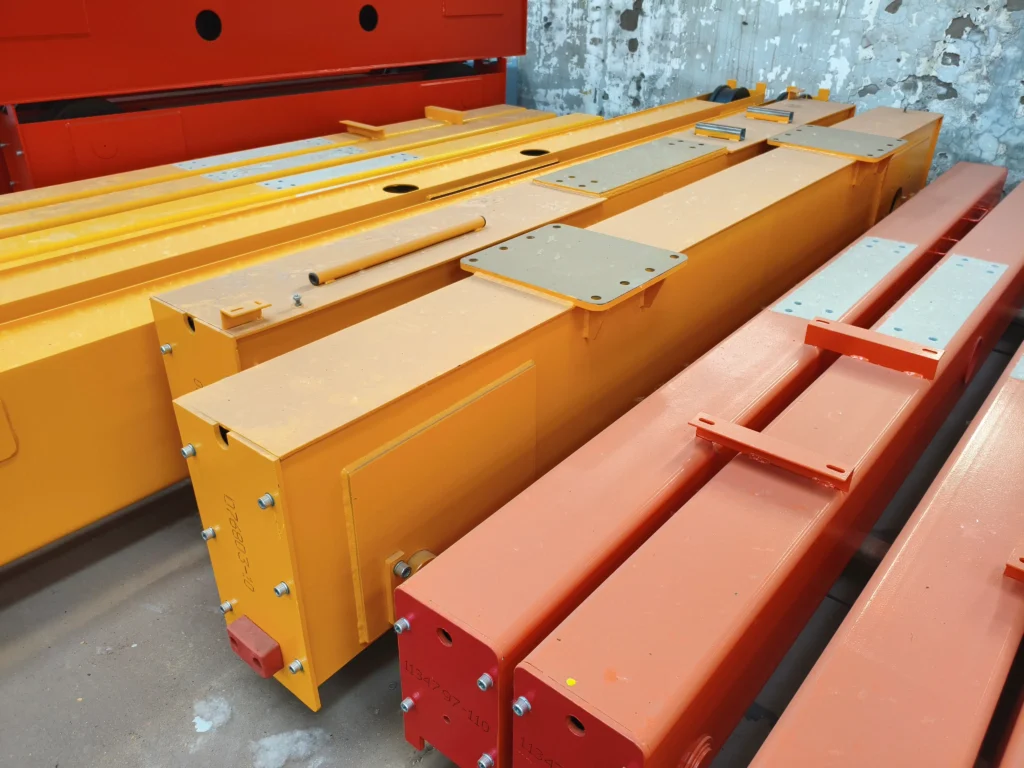
Ground beams serve a dual function: they transfer vertical loads from the girder down through the legs to the crane’s end trucks, and they house the traveling mechanism (wheels, drives, and buffers). Ground beams are box-structure members welded from U-type grooves and steel plates, chosen for their combination of light weight, high rigidity, and clean appearance.
The upright legs connecting girder to ground beams are isosceles-trapezoid or asymmetric-trapezoid box pillars. Wide flanges at the top and narrow flanges at the base increase both rigidity and stability. Bolted A-frame connections between the leg pairs stiffen the entire gantry portal. For spans at or above 30 m, one leg is designed as a “flexible” leg — meaning it can pivot slightly in the lateral direction — to accommodate minor rail gauge variation and reduce stress concentrations during crane travel.
The Hoist Trolley
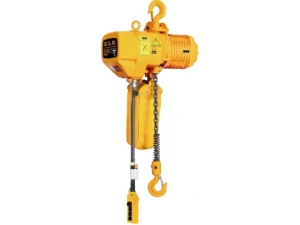
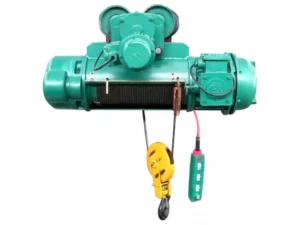
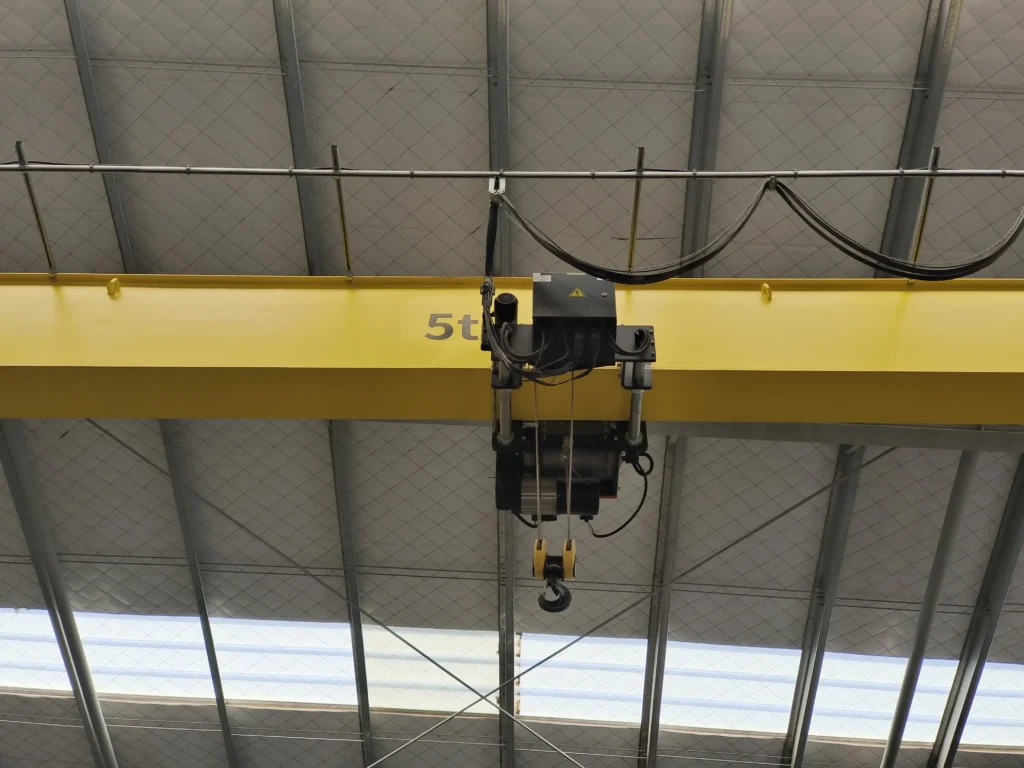
On a single girder gantry crane, the hoist trolley runs under the bottom flange of the main girder on a bottom-running track. This is the key structural distinction from double girder cranes, where the hoist sits on top-running rails between two girders. Bottom-running hoists — typically an electric wire rope hoist or electric chain hoist — are compact and cost-effective, but they reduce the available hook height by the depth of the hoist body itself. For help deciding between an electric or manual chain hoist for your gantry crane setup, see our Electric vs Manual Chain Hoist comparison guide.
Driver’s Cabin and Access
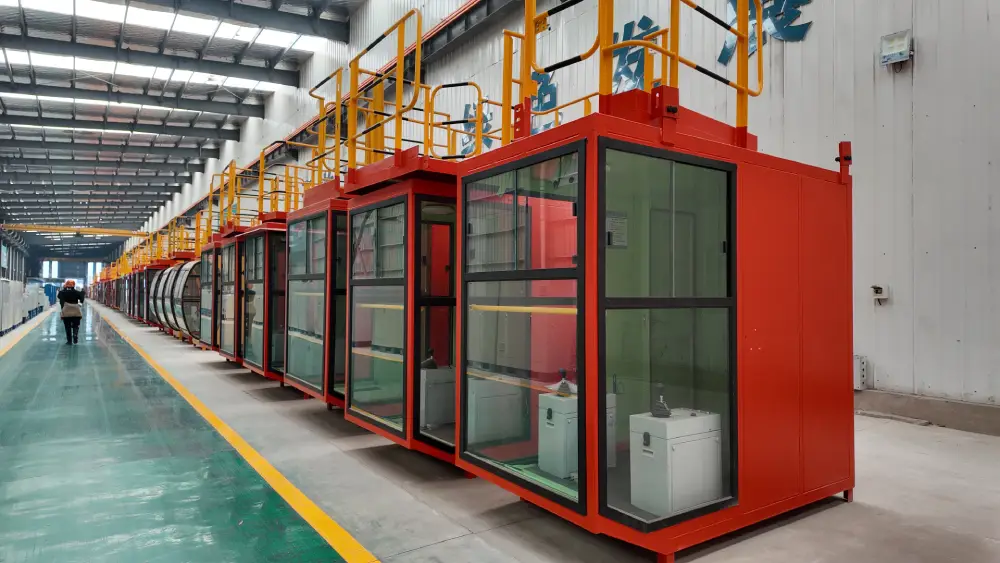
Gantry cranes operating in larger spans or high-duty cycles often incorporate an enclosed operator’s cabin. Per standard practice, the cabin’s roof must withstand a static load of at least 2.5 kN, and interior headroom must reach a minimum of 1.8 m. Access ladders to the cabin are set at 55°, 60°, or 65° from horizontal, with anti-skid platforms, retaining plates, and a guardrail height of 1,050 mm.
Key Specifications Explained — What Each Number Means for Your Site
Procurement decisions often fail not because buyers choose the wrong type, but because they misread the specification sheet. This section explains what each parameter actually controls.
Capacity, Span, and Lifting Height
Capacity (rated load) is the maximum single lift load in tonnes. Do not confuse it with the crane’s self-weight or the hoist chain’s breaking strength. Choose a capacity that covers your heaviest load with a safety margin — most standards require a design factor of at least 1.25 over the rated load (ISO 4301-1).
Span is the distance between the crane’s two rail centerlines at ground level. On a gantry crane, span directly determines how wide a working area the hoist can cover. Spans from 7.5 m to 31.5 m are standard; beyond 30 m, a flexible-leg design is recommended as noted above.
Lifting height is the vertical distance from the floor (or the lowest hook position) to the highest hook position. On a bottom-running single girder crane, the usable lifting height is limited by the girder’s own height plus the hoist’s minimum dead-end dimension. If your process requires maximum hook height in a low-headroom building, specify a low-headroom hoist variant.
Working Class and Duty Cycle
FEM working class A3 and A4 correspond to light-to-moderate duty. In practical terms:
- A3 suits occasional, non-production-critical lifts — maintenance bays, storage yards, occasional loading.
- A4 suits regular production use — assembly lines, workshop transfer operations, moderate-frequency warehousing.
If your crane will run continuously in multiple shifts, request a working class assessment under ISO 4301-1 before specifying. Using an A3 crane in an A5 application significantly shortens service life and increases structural fatigue risk.
Speed Parameters
Dual-speed hoists (e.g., 0.8/8 m/min or 0.7/7 m/min) allow slow-speed inching for precision placement and high-speed transfer for production efficiency. The lower speed shown in parentheses is the fine positioning speed, used when setting loads onto fixtures or threading into tight clearances.
Single Girder vs. Double Girder Gantry Crane: When to Choose Which
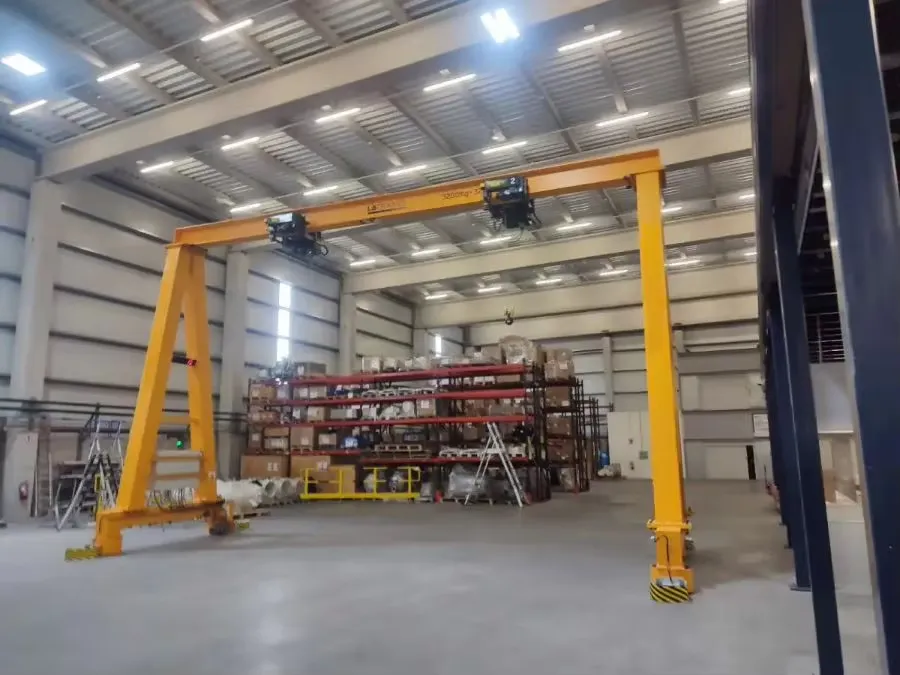
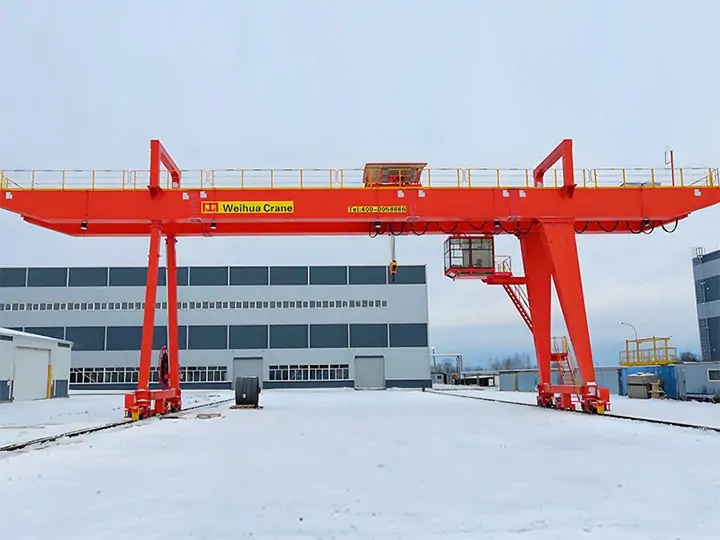
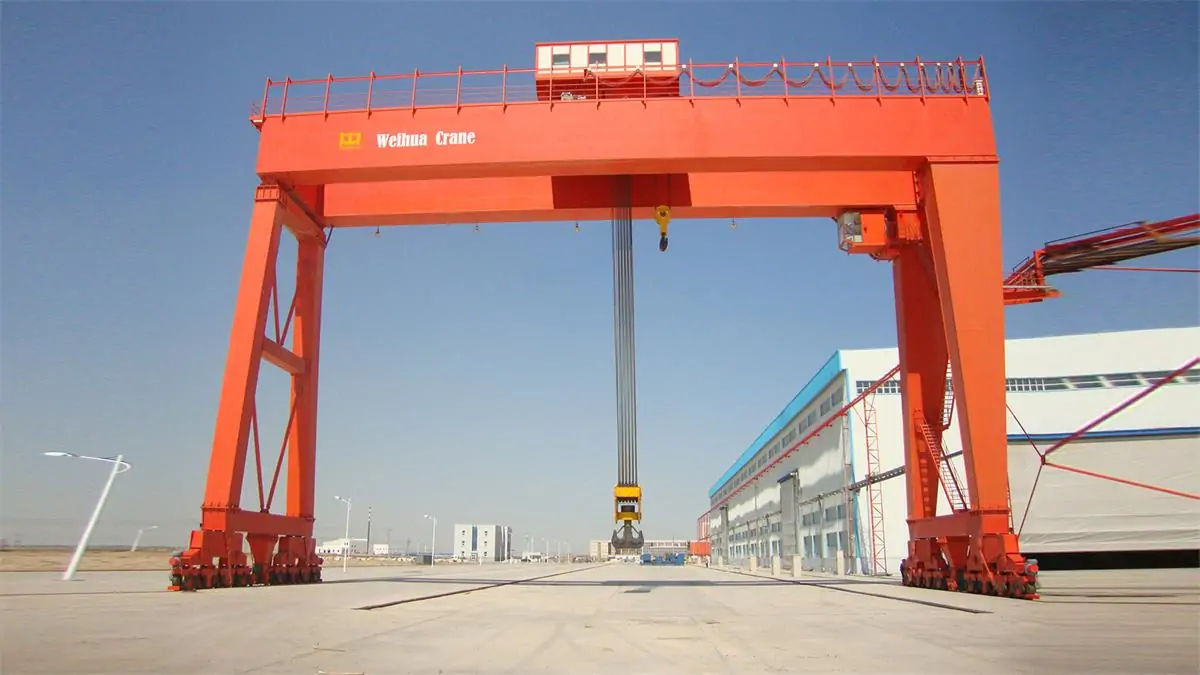
The most common decision point when specifying a gantry crane is whether one girder is enough. Here is a structured comparison:
| Criterion | Single Girder | Double Girder |
|---|---|---|
| Lifting Capacity | 1 – 20 ton | 5 – 500+ ton |
| Hook Height | Lower (hoist hangs below girder) | Higher (hoist sits between girders) |
| Span | Up to ~31.5 m standard | Up to 35 m+ |
| Structural Weight | Lighter | Heavier |
| Initial Cost | Lower (~30–50% less) | Higher |
| Maintenance Complexity | Simpler | More complex |
| Working Class Ceiling | Typically A4 | Up to A6/A7 |
| Indoor Use (low headroom) | Favorable | Less favorable |
Choose single girder when: your loads stay at or below 20 tons, your facility clearance is limited, your duty cycle is A3 or A4, and cost-efficiency is a priority. Recommended product for a single-girder gantry crane for your warehouse: Warehouse Gantry Crane
Choose double girder when: you need to lift more than 20 tons, your process demands higher working classes (A5 and above), you need a cab-operated crane handling high-duty precision work, or you require specialized attachments (grabs, magnets) that add significant hoist weight.
Control Modes and Safety Systems
Control Modes
Single girder gantry cranes support three primary control configurations:
- Pendant control — pushbutton pendant hanging from the crane, operator walks with the load. Most common for light-duty and occasional use.
- Remote control — industrial wireless transmitter, operator can stand clear of the load path. Required for outdoor applications and wherever pendant cord management is impractical.
- Cabin control — fixed operator’s cabin with master switches, joysticks, or cam controllers. Used for high-duty, high-precision, or safety-critical operations.
Dual-control combinations (pendant + remote, cabin + remote) are available, with the safety rule that only one control mode may be active at a time.
Electrical Protection Systems
A properly specified single girder gantry crane includes the following protections, each addressing a distinct failure mode:
- Short-circuit protection — automatic air-circuit breaker in the main power circuit
- Voltage-loss (zero-voltage) protection — prevents automatic restart after power restoration; the operator must deliberately re-engage the start button
- Emergency stop — rotating-reset mushroom-head switch at a reachable location, cuts all power immediately
- Overload limiter — audible alarm at 90% rated capacity; power cut to the lifting mechanism at 110% rated capacity (sensor links to control box, with moisture, vibration, and EMI protection)
- Travel limit switches — separate switches for hoist upper-limit and crane end-of-travel, interlocked with the drive circuits
- Wind-proof rail clamps — for outdoor cranes, rail clamps lock the crane to the runway rail when not in operation; a limit switch on the clamp interlocks with the main power switch so the crane cannot start while locked
- Ground protection — all metal structures, cable trays, and transformer secondaries bonded to earth; total grounding resistance ≤ 4 Ω; insulation resistance to ground ≥ 1 MΩ at ambient temperature
These protections are standard requirements under GB/T 3811 (Design Rules for Cranes) and align with IEC 60204-32 (Electrical Equipment of Machines — Cranes).
Typical Application Scenarios
Single girder gantry cranes appear across a wide range of industries. The specific value proposition varies by sector:
Manufacturing and Assembly
In factory workshops, the crane handles raw-material inbound, work-in-process transfer between machining or welding stations, and finished-goods outbound. The key advantage over overhead cranes here is that no building structural modifications are needed — the crane travels on its own ground-level rails, making it feasible to add lifting capacity to an existing workshop without a civil engineering project.
Warehousing and Logistics
Storage yards for steel coil, structural steel, precast concrete elements, and large mechanical assemblies are well-served by single girder gantry cranes because outdoor rail tracks are far cheaper to install than overhead crane runway beams. The 1–20 ton capacity range covers the majority of pallet-scale and bundle-scale heavy goods.
Construction Sites
Gantry cranes used in bridge construction, precast yard operations, and heavy-component erection benefit from the crane’s ability to relocate — rails can be moved and relaid as the work front advances, something impossible with a permanently installed overhead crane.
Ports and Terminals
Small ports, inland waterway terminals, and temporary project-site docks use single girder gantry cranes for ship loading and unloading where the volumes do not justify a container crane or a fixed quay crane. Their lower cost and faster installation make them the practical choice for capacities up to about 16 tons.
Energy Sector
Wind turbine component handling (nacelles, hubs, blade root sections), pipeline installation, and power-plant maintenance all call for a crane that can work in the open or in a partially enclosed structure. The −25 °C to +40 °C operating temperature range and the availability of weatherproofed electrical enclosures make the single girder gantry crane suitable for most outdoor energy-sector applications.
Surface Treatment and Paint Coating
Paint thickness and surface preparation are often omitted from informal quotations, yet they determine how long a crane survives in a corrosive or humid environment. Per GB/T 8923 and standard crane manufacturing practice:
- Steel surfaces must be derusted before welding. Main girder, legs, and upper and lower beams must reach Sa 2½ (near-white blast cleaning) or St 3 (thorough manual/tool cleaning) minimum. Secondary structural members require Sa 2 or St 2.
- Coating thickness after curing: ≥ 50 μm on mechanical components; 25–35 μm per layer on structural members, totaling 75–105 μm across all coats.
- Exposed bare metal areas (cut edges, machined surfaces) must receive an anti-rust treatment before shipment.
When sourcing from a manufacturer, request the paint specification document — including primer type, topcoat type, and dry-film thickness measurement records — as part of the acceptance documentation.
Single Girder Gantry Crane Price Reference
The price ranges below are indicative market references, FOB factory (China), and vary with span, lifting height, hoist type, control mode, and certification requirements. They should not be used as final quotation figures.
| Capacity | Price Range (USD, indicative FOB factory) |
|---|---|
| 1 ton | $2,200 – $40,000 |
| 2 ton | $2,500 – $43,000 |
| 3 ton | $2,600 – $45,000 |
| 5 ton | $3,000 – $46,000 |
| 10 ton | $4,000 – $48,000 |
| 15 ton | $5,000 – $50,000 |
| 20 ton | $6,000 – $55,000 |
The wide range within each capacity tier reflects the impact of span length, lifting height, control mode (pendant vs. remote vs. cabin), hoist brand, certification scope (CE, ISO, local statutory), and painting specification. A 3-ton crane with a 10 m span and pendant control sits near the lower end of its range; the same capacity at 30 m span with a cabin, remote control, and CE certification will approach the upper end.
Have a specific configuration in mind? Contact our engineering team with your capacity, span, lifting height, and duty-cycle requirements for a project-specific quotation.
What to Verify Before Placing an Order
Technical Checklist
Before finalizing a purchase order for a single girder gantry crane, confirm the following with your supplier in writing:
- Rail gauge and rail type — confirm that the crane’s wheel base matches your available or planned rail track gauge, and that the rail section (e.g., QU70, P43) is compatible with the wheel flange.
- Power supply — verify voltage (380 V / 415 V / 480 V), frequency (50 Hz / 60 Hz), and number of phases at your site. Non-standard voltages add cost and lead time.
- Working class and actual load spectrum — provide the supplier with your estimated number of lifts per day and the average load as a percentage of the rated capacity. This allows correct FEM/ISO working class assignment.
- Headroom availability — measure from floor to the lowest obstruction (roof truss, pipe, light fixture) above the crane path. Confirm the crane’s overall height, including the hoist’s minimum head-to-hook dimension, fits within that clearance.
- Outdoor wind loading — if the crane will operate outdoors, confirm the design wind speed for your location and whether wind-proof rail clamps and an anemometer interlock are included.
- Certification requirements — CE marking is required for equipment destined for EU member states; OSHA and ASME B30.2 compliance is the baseline for the US market; other markets have their own statutory requirements. Confirm which certificates the crane ships with.
- Painting and corrosion protection — specify the operating environment (dry indoor, humid outdoor, saline coastal, chemical-adjacent) and request the appropriate coating system in the purchase specification.
- Spare parts and after-sales support — confirm the availability of key wear items (hoist rope, limit switch, control contactor, wheel sets) and the supplier’s response time for technical support.
Conclusion
A single girder gantry crane is the right tool when you need self-supporting, floor-rail-based lifting of 1 to 20 tons across spans up to about 31.5 m, in either indoor or outdoor environments, at a lower capital cost than a double girder alternative. Its A3–A4 working class suits the majority of non-continuous production and logistics tasks.
Three practical steps before you commit to a purchase:
- Define your load spectrum — not just the maximum lift weight, but how frequently you lift and at what average percentage of rated capacity. This determines working class and, in turn, structural fatigue life.
- Measure your site constraints — rail gauge, available headroom, outdoor wind exposure, and available power supply. These parameters lock in the crane’s configuration and eliminate post-order surprises.
- Get a certified specification in writing — ensure the quotation references FEM/ISO working class, GB/T 8923 surface treatment grade, and whichever certification (CE, ASME, or local) your market requires.
Have questions about selecting the right gantry crane for your facility? Contact our engineering team — we respond within one business day with a technical recommendation and project-specific price estimate.

FAQ
Q1: What is the difference between a single girder gantry crane and a single girder overhead crane?
The structural principle is the same — both use one main horizontal beam carrying a hoist trolley. The difference is in how the beam is supported. An overhead crane hangs from runway beams bolted to the building’s columns or roof structure, so the building itself must be engineered to carry the crane loads. A gantry crane stands on its own legs running on ground-level rails, making it independent of the building structure. This means gantry cranes can be installed in facilities that were not originally designed for overhead lifting, relocated to different areas of a yard, or deployed in outdoor applications where no building exists. The trade-off is that gantry cranes consume floor space for their rail tracks, which an overhead crane avoids.
Q2: What working class should I specify for a workshop running two shifts per day?
Working class is defined by two factors: the total number of working cycles over the crane’s design life (utilization class U0–U9) and the ratio of the average lifted load to the rated load (load spectrum Q1–Q4). For a two-shift operation, you are likely looking at 40–80 lifts per day. If the average load is around 30–50% of rated capacity (common in general workshop use), this typically places the crane at A4 or A5 under FEM 1.001 / ISO 4301-1. A standard single girder gantry crane is rated A3–A4; if your assessment puts you at A5, specify a crane that is explicitly designed and certified for A5, or consider a double girder configuration. Providing your supplier with an honest load-spectrum estimate — rather than always specifying the maximum capacity — results in a crane that is correctly sized for both safety and service life.
Q3: Can a single girder gantry crane be used outdoors in all weather?
Yes, with the correct specification. The standard operating temperature range is −25 °C to +40 °C. For outdoor use, the crane should include wind-proof rail clamps with an interlock that prevents crane travel while the clamps are engaged, weatherproof (IP54 or higher) electrical enclosures, corrosion-resistant paint systems appropriate to the environment (coastal, industrial, or standard atmospheric), and an anemometer with automatic shutdown if your site is exposed to high winds. In regions with heavy snow or ice, check whether the structural loading calculation includes snow-on-girder loads. Request confirmation from your supplier that all of these provisions are included in the scope of supply, not treated as optional extras.
Q4: How much does installation cost and how long does it take?
Installation cost is not typically included in an FOB factory price and varies significantly by location, civil works scope, and local labor rates. For a straightforward indoor installation of a 5-ton, 18 m span crane on pre-laid rails, field assembly typically takes 3–5 days for an experienced team. If rail track installation, foundation anchoring, and electrical connection are included, add 1–2 weeks depending on site conditions. Budget installation at roughly 15–25% of the crane’s ex-works price as a planning figure, then obtain a fixed-price installation quote from a certified local crane erector. Confirm that installation and commissioning are completed by a qualified person and that a load test (typically 1.25× rated capacity static test, per ISO 9927-1) is conducted and documented before the crane is handed over for production use.
Q5: What certifications should a single girder gantry crane carry for export markets?
Certification requirements depend on the destination country. For European Union member states, CE marking under the Machinery Directive 2006/42/EC (and the Low Voltage Directive for electrical components) is mandatory — the supplier must provide a Declaration of Conformity and a technical file. For the United States and Canada, ASME B30.2 (Overhead and Gantry Cranes) and CMAA Specification 70 provide the design and manufacturing benchmark; OSHA 1910.179 governs operation. For other markets (Australia: AS 1418; Russia/CIS: GOST; Gulf states: GSO/SASO), confirm the applicable statutory standard before ordering. When exporting from China, request the manufacturer’s ISO 9001 quality management system certificate and, where applicable, a third-party inspection certificate from a body such as BV, SGS, or TÜV. Do not accept a general statement that the crane “meets international standards” — ask for the specific certificate number and scope of certification.



 English
  Русский
  العربية
  Français
  Português
  Español