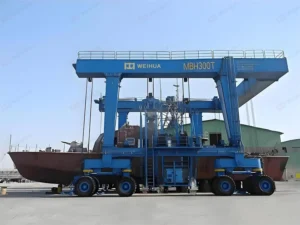
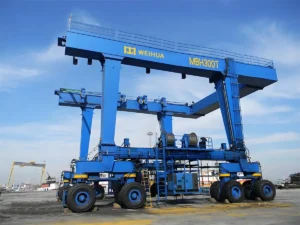

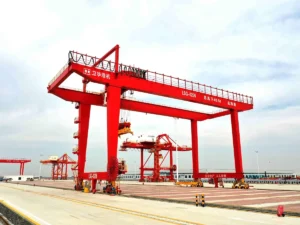
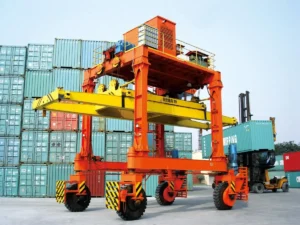








In ports, logistics parks, and industrial material handling, Portal Cranes and Gantry Cranes are two common and core loading/unloading equipment types. They differ in structural design, performance characteristics, operating methods, application scenarios, and investment costs. This article provides a comprehensive analysis of Portal Crane vs Gantry Crane and guides you in making the right selection.
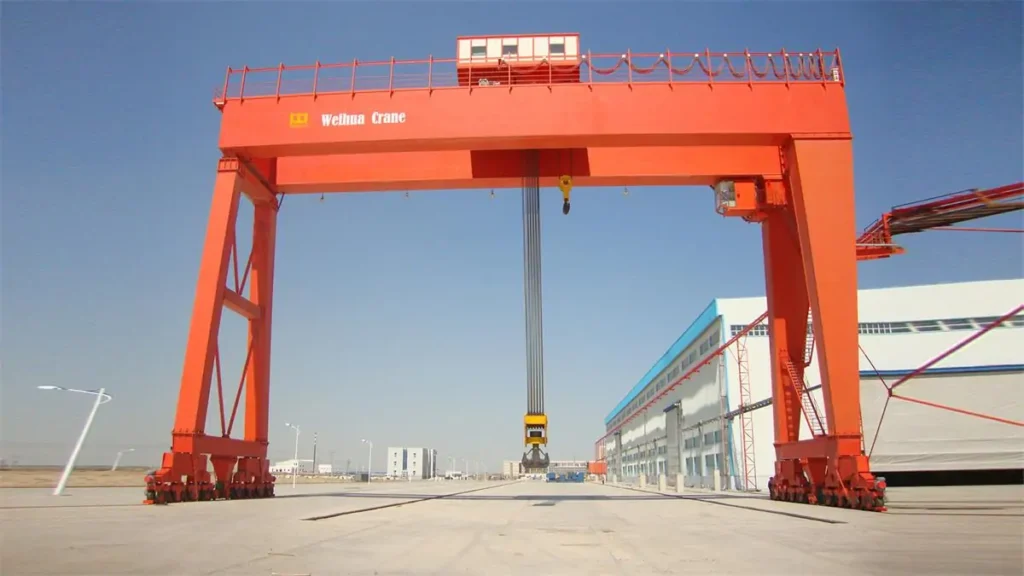
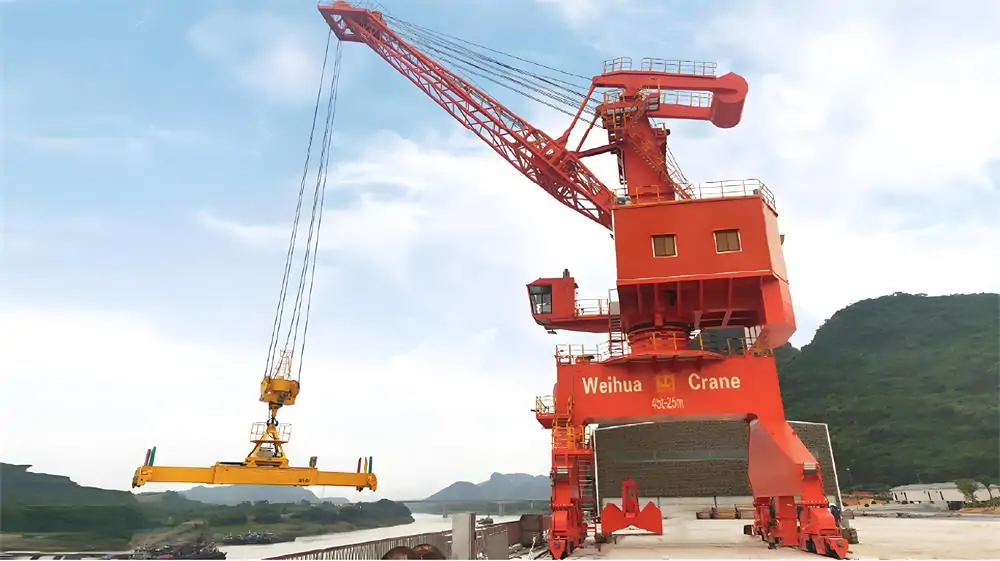
Table of Contents
Structural Design Comparison
The structural differences between Portal Cranes and Gantry Cranes primarily manifest in load-bearing methods, movement trajectories, and coverage ranges. The former centers on a fixed tower and rotating boom, emphasizing “point coverage” and flexible horizontal rotation. The latter features a portal frame structure and longitudinal rail travel, prioritizing “extensive horizontal movement” and efficient on-site logistics handling. Consequently, their distinct structural designs directly dictate their differing application scenarios.
Portal Crane Structural Characteristics
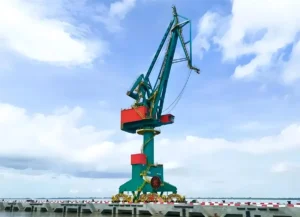
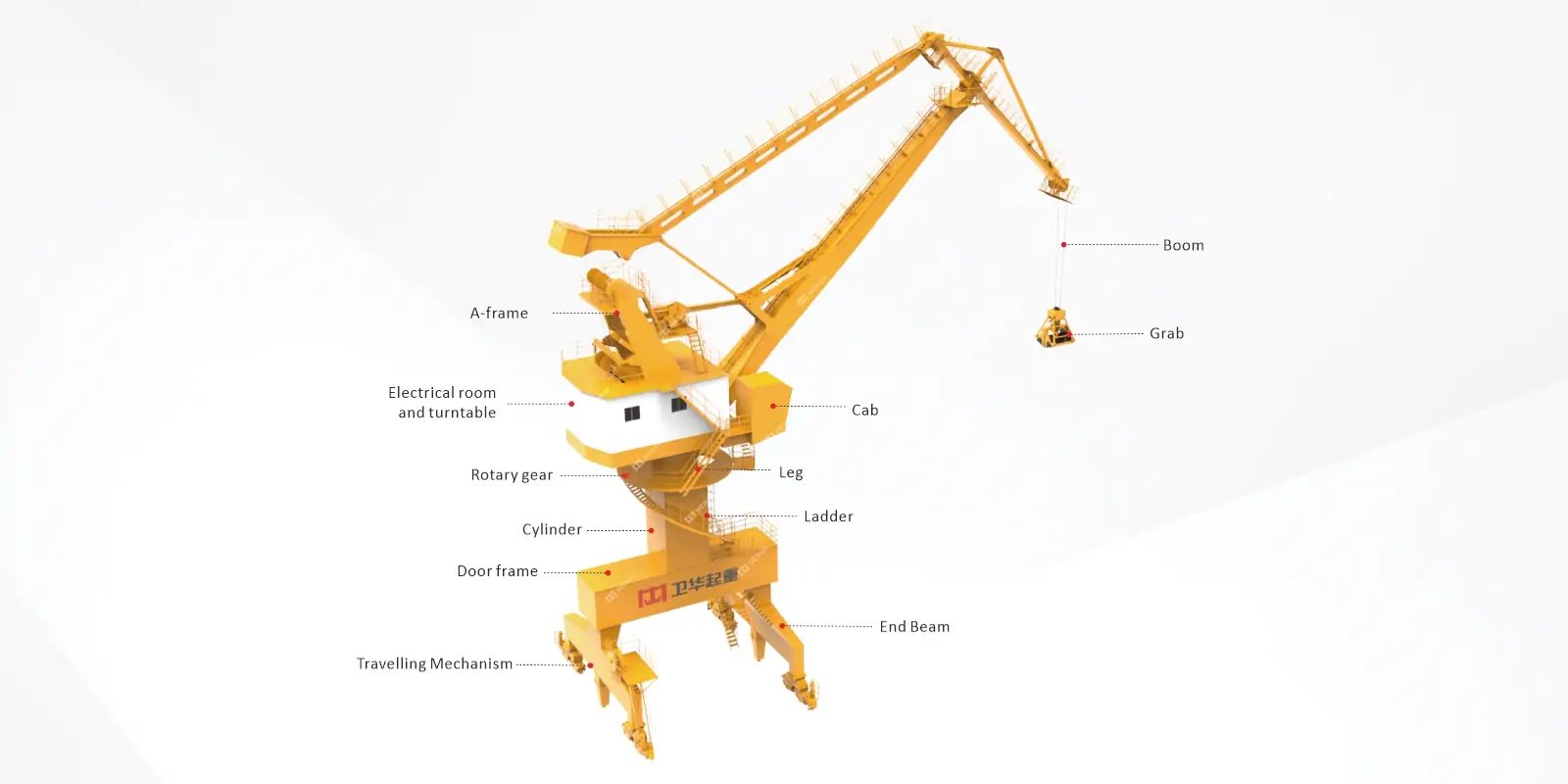
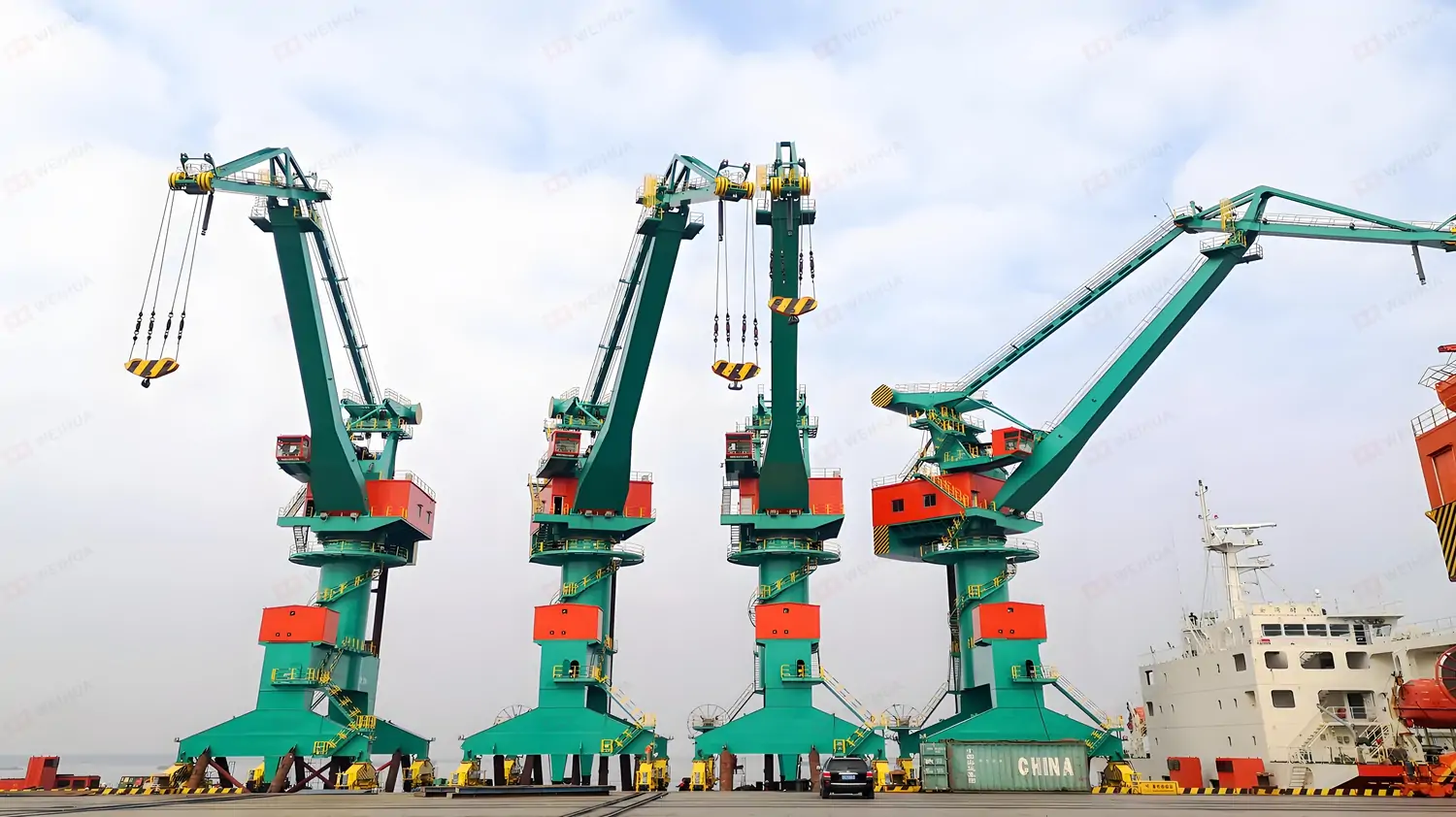
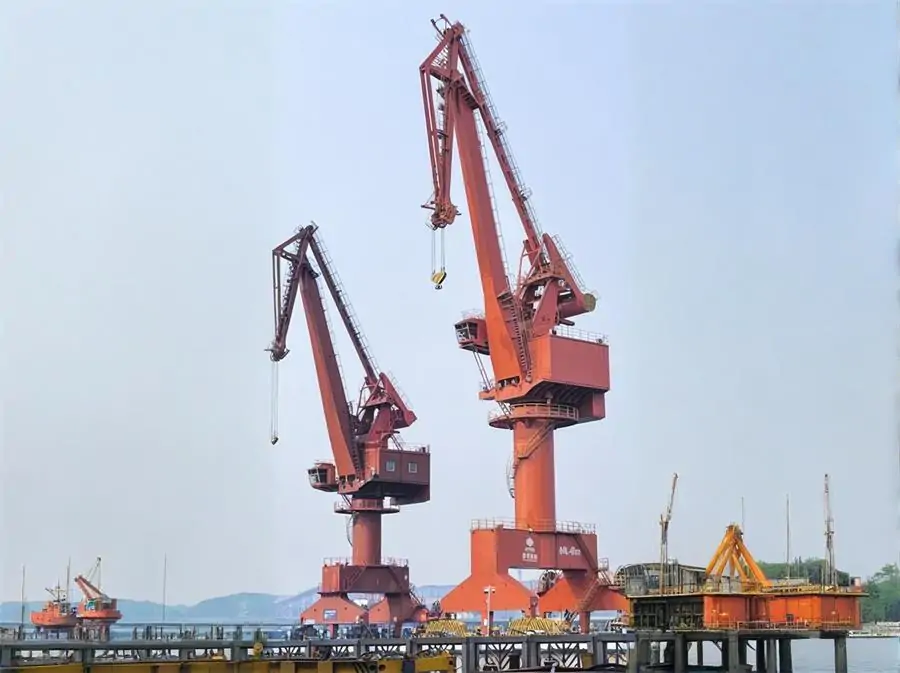
Portal slewing cranes employ single/double cantilever boom structures with the tower fixed to foundations or rails, enabling 360° or partial rotation. This configuration enables flexible operation in narrow, elongated spaces such as shorelines, dock fronts, and ship berths, making it particularly suitable for ship-to-shore material handling. Its core functionality combines vertical lifting with rotational coverage, emphasizing multi-directional operations within confined areas.
Gantry Crane Structural Characteristics
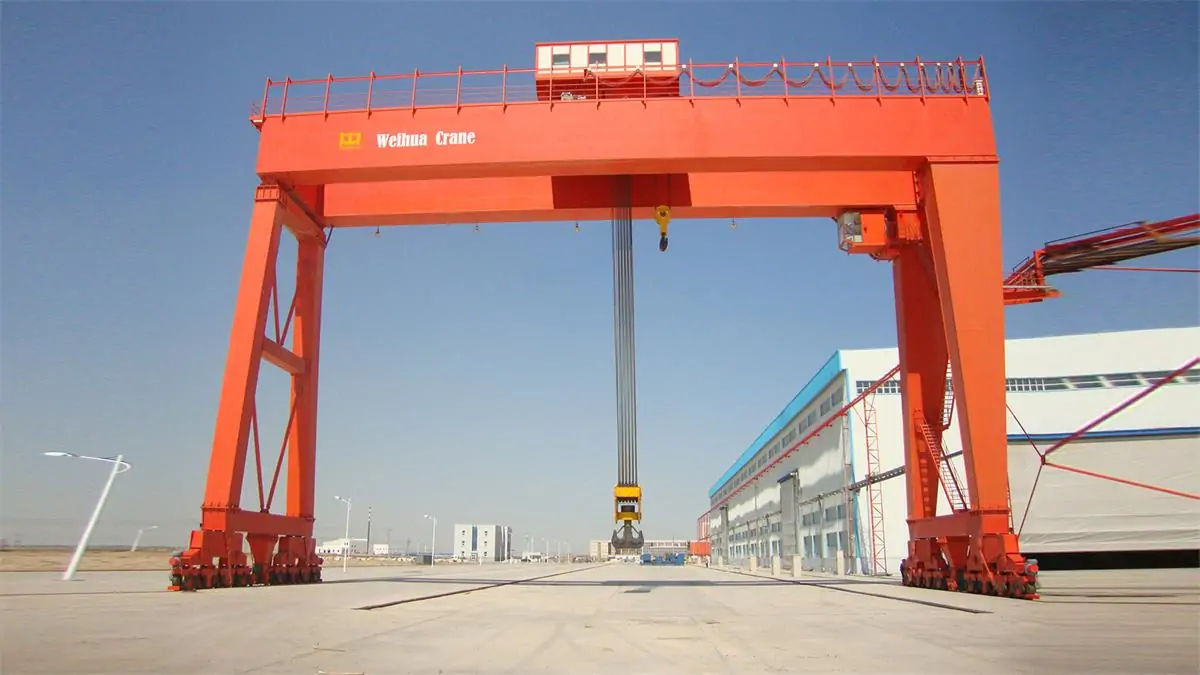
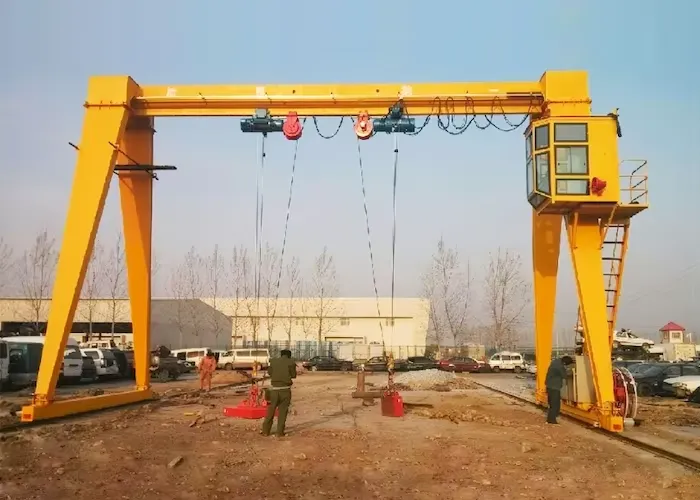
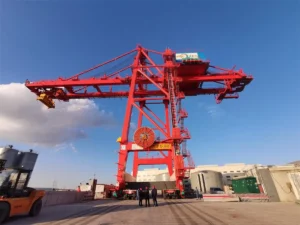
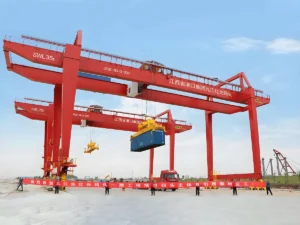
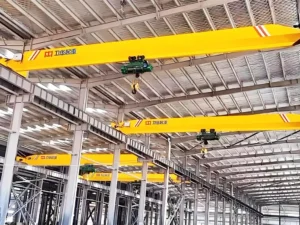
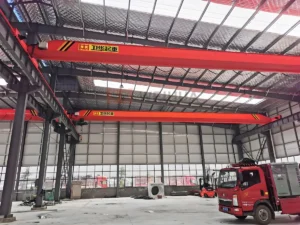
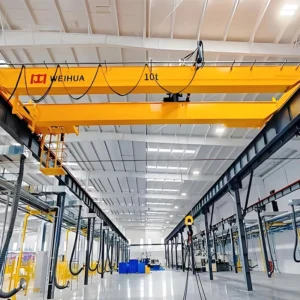
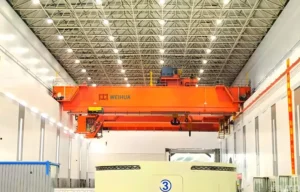
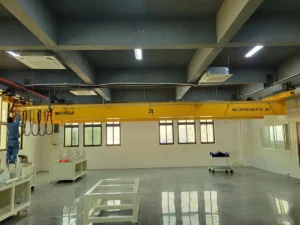
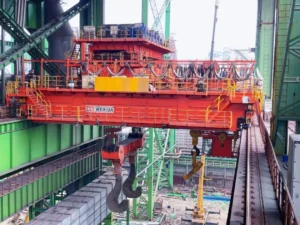
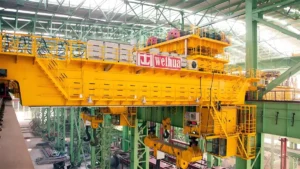
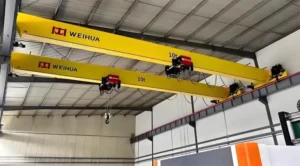
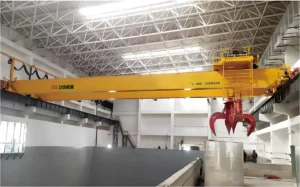
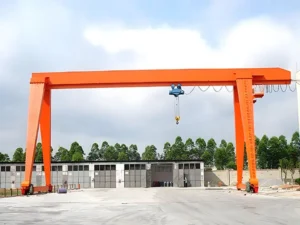
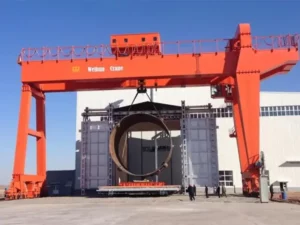
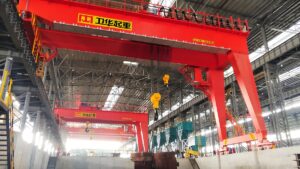
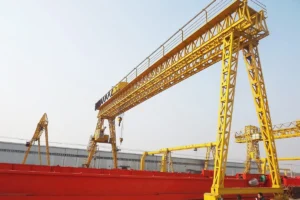
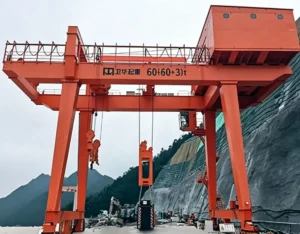
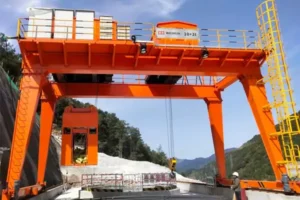
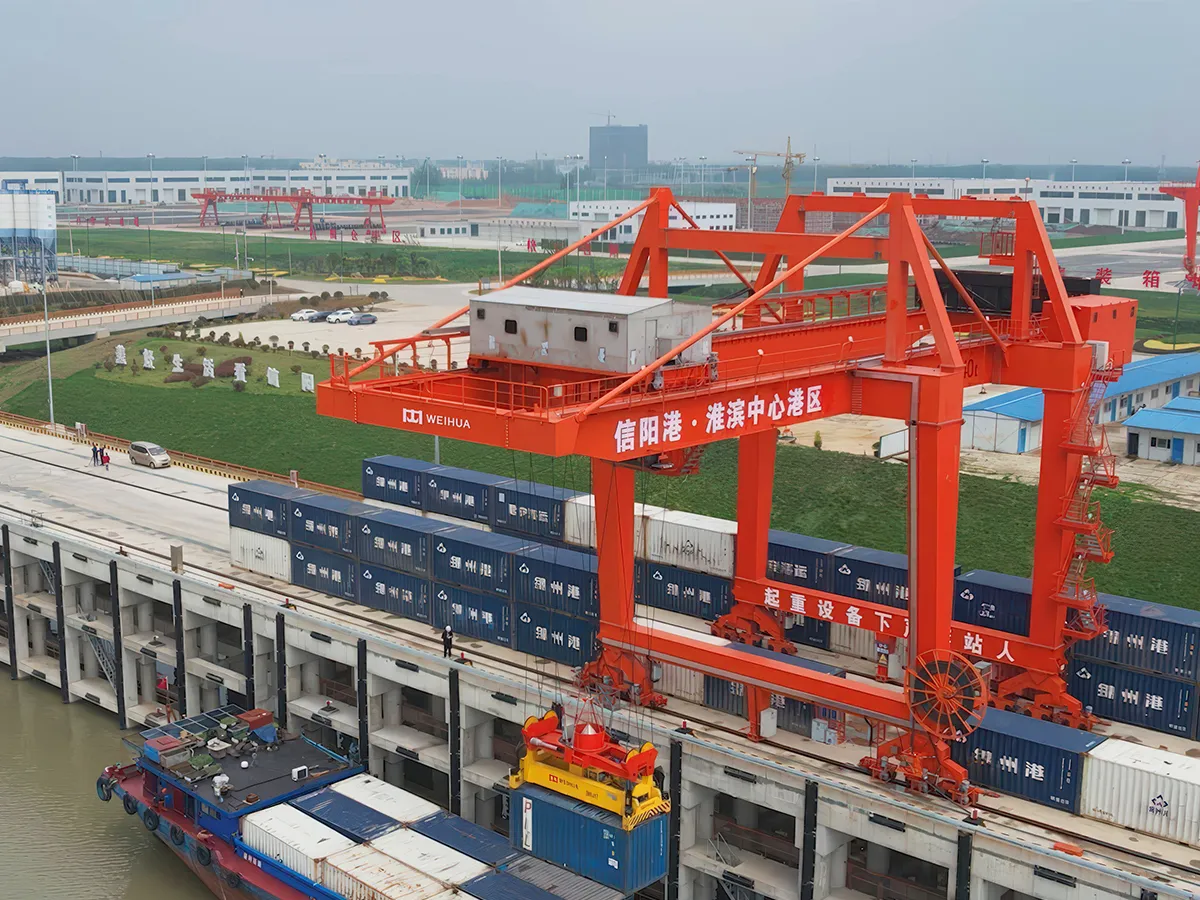
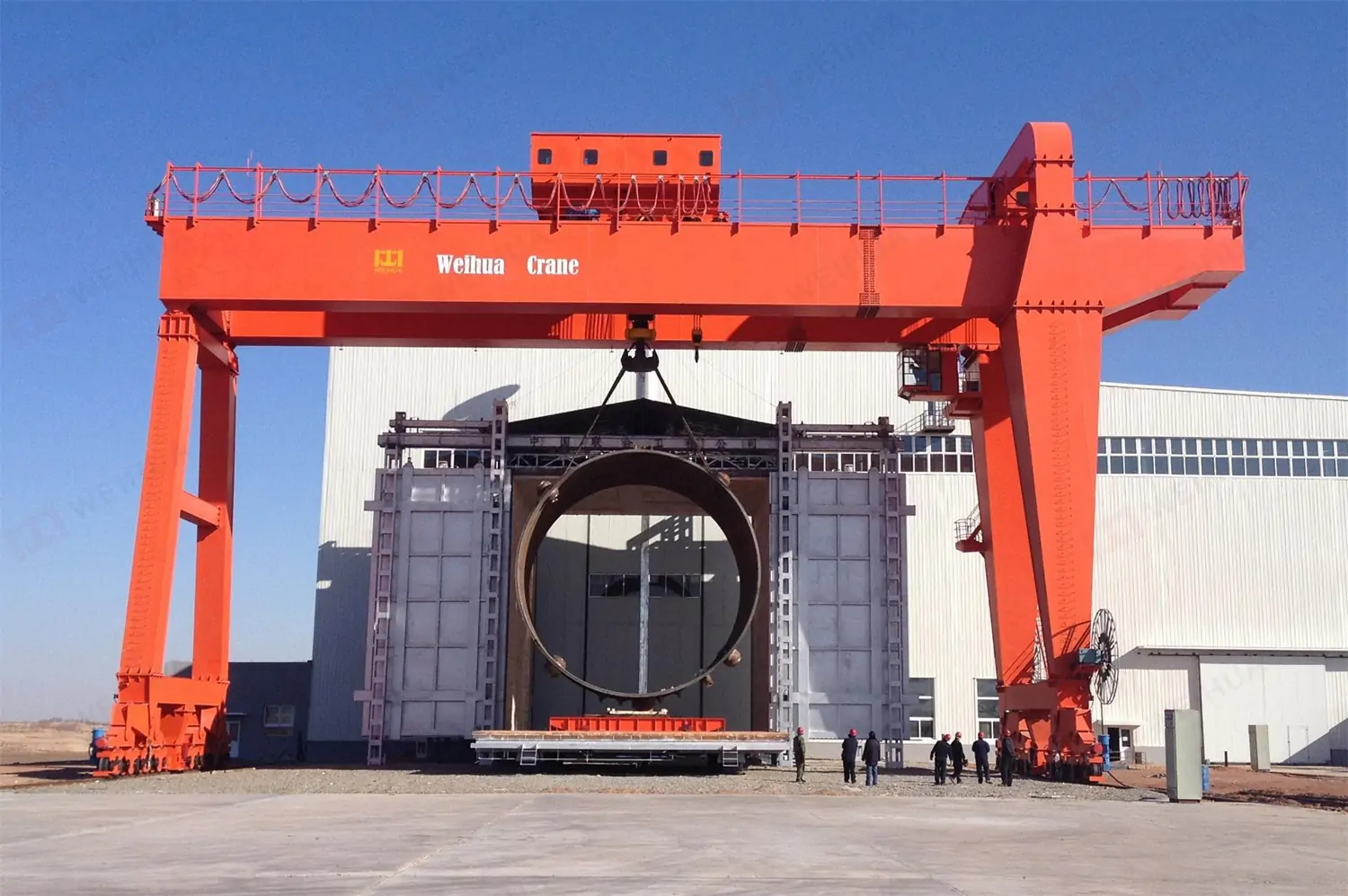
Gantry Cranes utilize steel box girders or truss girders as main beams, supported by sturdy legs on both sides, forming an overall “gantry” structure. Their legs can move longitudinally along ground tracks, while the main beam spans a broad working area. This design suits environments requiring large-span operations and heavy-load handling, such as yards, manufacturing sites, and precast plants. Its core advantages lie in extensive horizontal movement combined with stable high-tonnage load-bearing capacity.
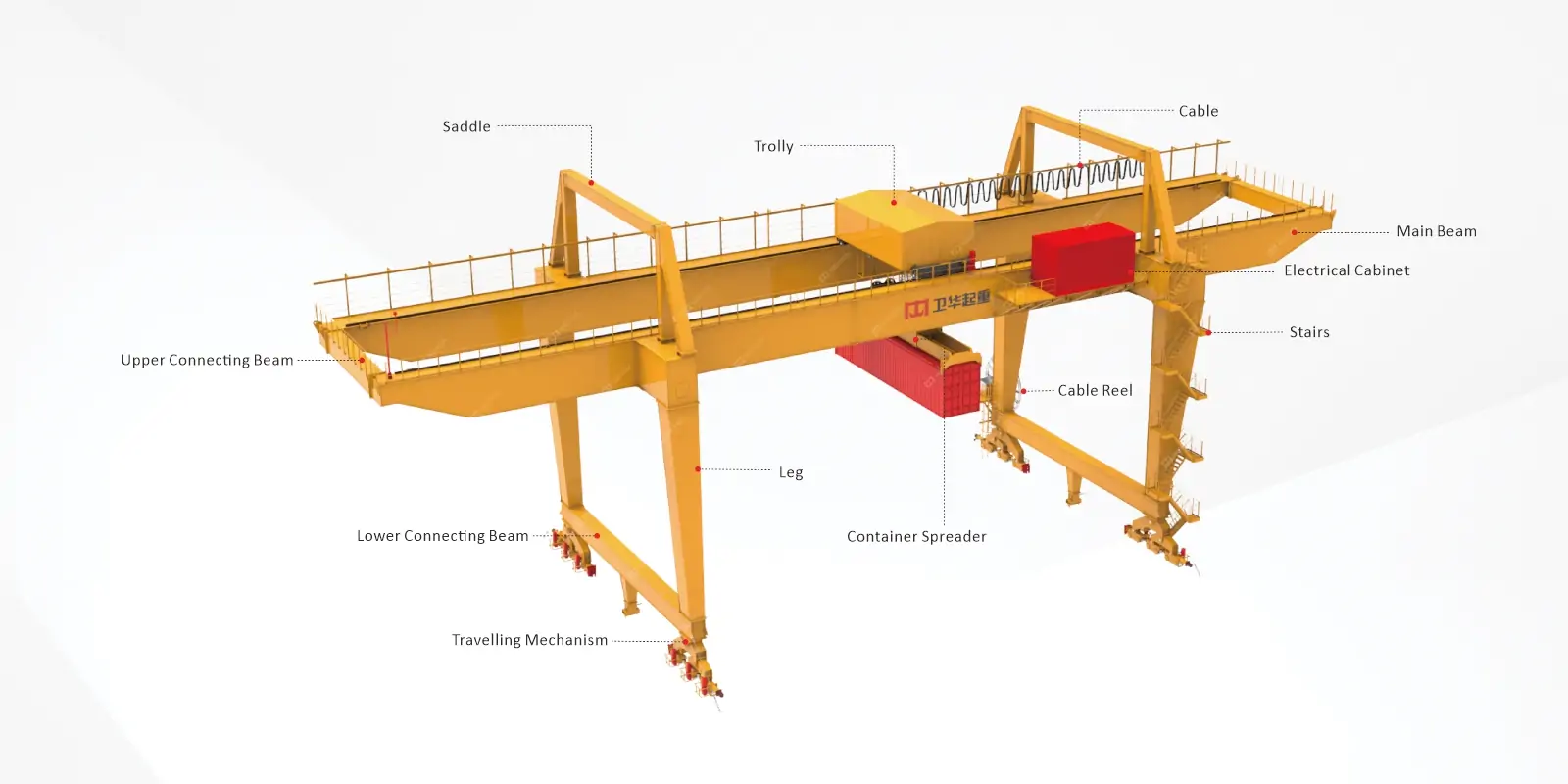
Functional Advantage Comparison
Portal cranes excel in rotary, multi-directional operations, making them ideal for port environments with variable vessel berthing positions, narrow coastlines, and fast-paced work rhythms. Gantry cranes, however, prioritize large spans, high stability, and high throughput capacity, better suited for land-side yards and high-frequency, repetitive large-scale handling tasks. Below are the respective advantages of each equipment:
Portal Crane Functional Advantages
1. Large swing radius for high ship-to-shore efficiency
The tower-rotating structure enables 360° omnidirectional operation, maintaining efficient loading/unloading despite varying vessel lengths and berth positions, significantly boosting shoreline throughput.
2. Single/Double Cantilever Design Supports Asymmetric Operations
- One side connects to the vessel while the other interfaces with the yard, enabling efficient bidirectional flow between ship and shore.
- This layout offers distinct advantages for ports with irregular shoreline shapes or limited berthing space.
3. Multi-gantry compatibility for diverse cargo types with rapid tooling change
Supports flexible handling of multiple cargo categories. Configurable attachments include:
- Grab buckets: Bulk materials (coal, ore, grain)
- Hooks: General cargo, machinery
- Electromagnetic lifters: Steel plates, coils
- Container spreaders: Small-scale container operations
4. High operational capacity, suitable for high-frequency loading/unloading at the quay
Portal cranes typically operate at higher duty cycles (A6–A8), making them ideal for continuous, high-intensity handling operations. They are widely used at bulk and general cargo terminals.
Gantry Crane Functional Advantages
1. Wide span coverage of yards, meeting overall handling needs with a single layout
Spans can reach tens or even hundreds of meters, offering exceptional lateral coverage. Suitable for wide-area operations in container yards, steel yards, large manufacturing sites, etc.
2. Exceptional heavy-load capacity for industrial handling
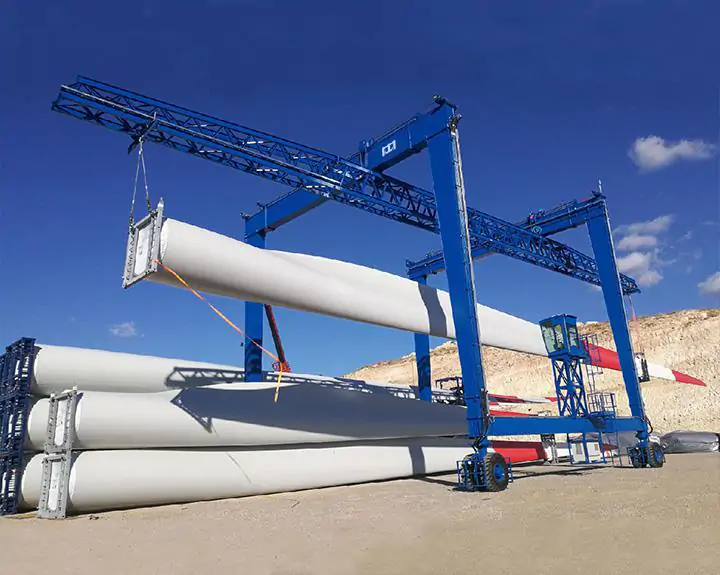
Capable of handling hundreds to thousands of tons, gantry cranes excel in lifting oversized components (wind turbine towers, ship sections, steel trusses, precast concrete elements). Their high-rigidity structure ensures safety and stability during heavy-duty operations.
3. Three-dimensional (X-Y-Z) operation structure for exceptional handling efficiency
Enables highly efficient three-dimensional coverage, particularly suited for rapid stacking and high-volume material flow in yards.
4. High operational stability, suitable for automation upgrades
The gantry crane’s linear tracks facilitate seamless integration with automated positioning systems, intelligent anti-sway control, unmanned operation, and AGV/automated yard coordination—making it ideal for large logistics parks and smart factories.
5. Controllable maintenance costs with standardized structure
Compared to the complex slewing mechanisms of portal cranes, gantry cranes primarily perform linear travel and lifting motions. This simplified structure ensures easier maintenance and lower lifecycle costs.
Operational Mode Comparison
The primary difference between Portal Cranes and Gantry Cranes lies in their movement trajectories and operational directions. Portal Cranes rely on slewing motions to perform multi-directional loading and unloading between ships and the shore. Gantry Cranes, conversely, utilize the three-dimensional linear movements of their main and trolley hoists and lifting mechanisms to achieve efficient, large-scale material handling within storage yards. Their distinct operational logics determine their optimal applications within ports and yards.
Portal Crane Operation Method
Centered around its tower slewing mechanism, the portal crane performs operations through the combined actions of boom rotation, trolley traverse, and hoisting systems. Its defining feature is the ability to execute wide-range sector operations from a fixed position: the boom extends seaward for vessel loading, then slews landward for unloading or reverse loading. This configuration is particularly suited for continuous ship-to-shore/shore-to-ship loading and unloading tasks, flexibly adapting to varying vessel drafts, cargo hold positions, and shoreline space constraints. Operation modes include cab control, semi-automatic operation, and assisted positioning systems, ensuring efficiency and safety in complex port environments.
Gantry Crane Operation Method
Gantry Cranes operate on a three-dimensional linear motion system comprising: – Longitudinal travel of the main girder (X-axis) – Transverse movement of the trolley (Y-axis) – Vertical lifting (Z-axis) This coordinated motion enables long-distance, high-frequency, repetitive handling and stacking operations across expansive yards. Running rails are typically positioned beneath the outriggers, allowing the crane to span the entire yard aisle. Operation modes extend from traditional cab control to wireless remote control, fully automated stacking systems, intelligent anti-sway, and precision positioning. Seamless integration with AGVs/automated yard systems is achievable, making it suitable for large logistics parks, container terminals, and heavy industrial manufacturing environments.
Application Scenario Comparison
The application differences between Portal Cranes and Gantry Cranes primarily stem from their structural characteristics and operational methods. Portal Cranes are predominantly deployed in narrow, elongated areas such as shorelines and berths for ship loading/unloading and diverse material handling. Gantry Cranes, leveraging their large spans and high load-bearing capacity, are better suited for yard operations, manufacturing, and heavy component lifting. Depending on the operational environment, material type, and work frequency, both cranes fulfill irreplaceable roles in port and industrial sectors.
Applications of Portal Cranes
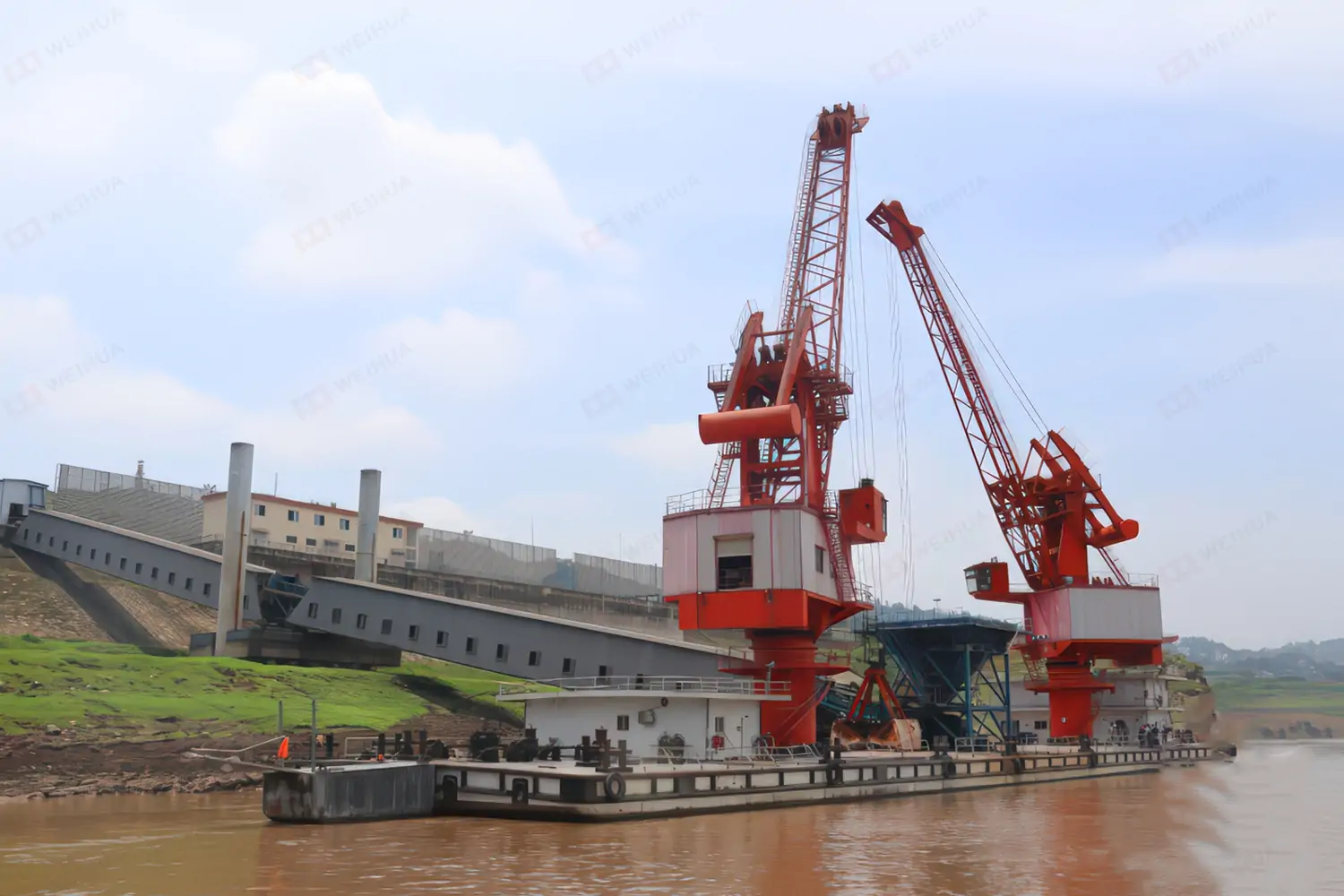
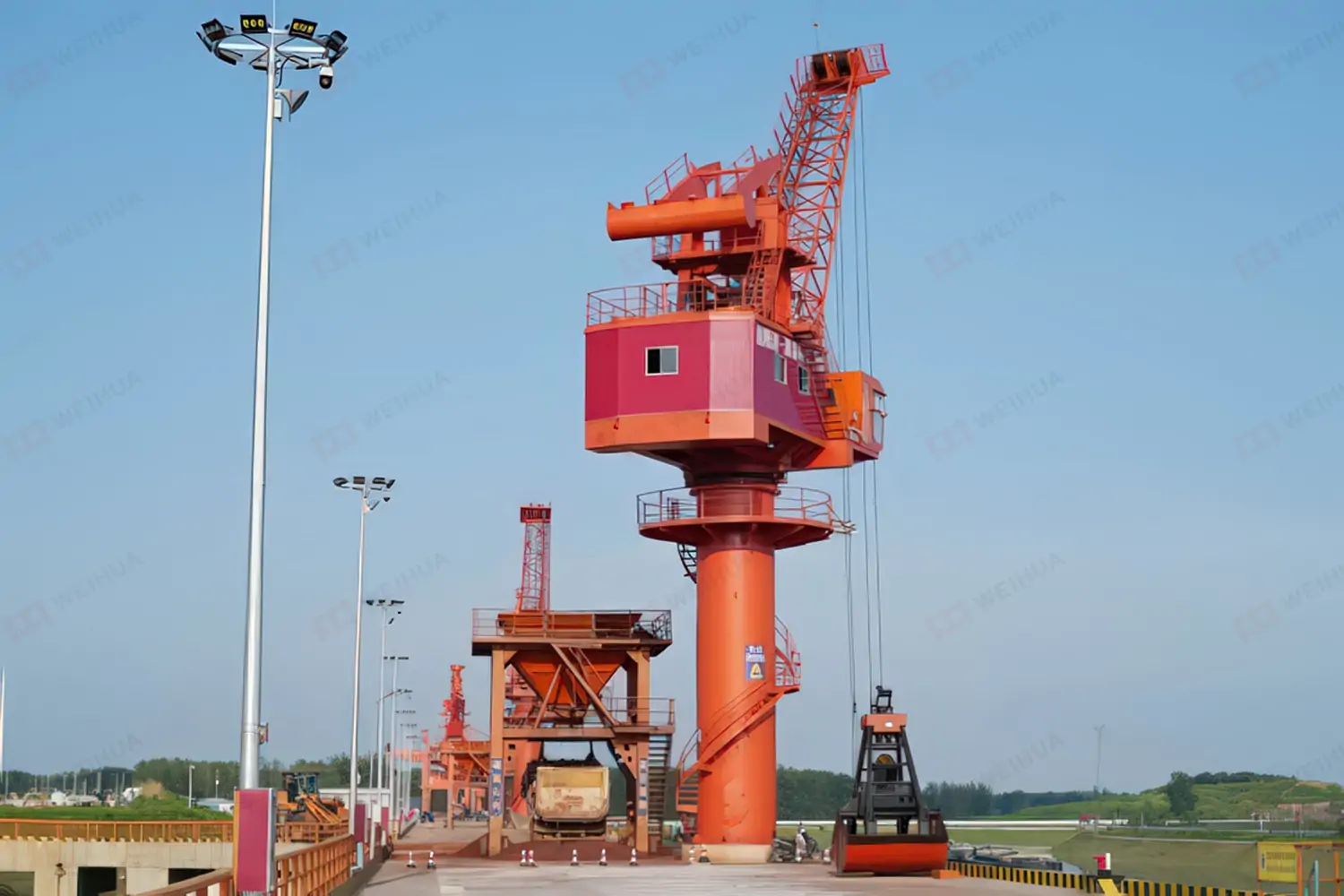
Portal cranes are extensively used at port and terminal frontlines as core equipment for cargo transfer between ships and shore. They handle diverse materials—including bulk cargo, general cargo, containers, steel coils, ore, and timber—within limited shoreline conditions. Through its rotating boom structure, it rapidly adapts to different vessel types and berth positions, meeting the loading, unloading, transshipment, or transfer needs of docked ships. Additionally, Portal Cranes are suitable for medium-load yet highly flexible environments such as shipyard section handling, small berth operations in river/lake ports, and inland waterway terminals, serving as versatile core equipment for coastal logistics operations.
Applications of Gantry Cranes
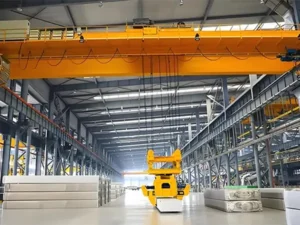
Leveraging their large spans, high load capacities, and stable three-dimensional linear motion systems, Gantry Cranes are widely deployed in logistics yards, container yards, steel yards, and large industrial complexes. Within manufacturing, they serve as critical equipment for handling heavy machinery, steel structures, large machined components, rail transit vehicles, wind turbine towers, blades, and other oversized components. For scenarios requiring stable, high-frequency lifting operations—such as precast concrete (PC) component plants and prefabricated building bases—gantry cranes enable efficient stacking, transfer, and synchronization with production cycles. They remain indispensable primary lifting equipment in heavy industry and large-scale storage operations.
In addition to Heavy Duty Gantry Cranes, you can browse our equipment by application:
Warehouse Gantry Crane
Workshop Gantry Crane
Mobile Gantry Crane

Cost Comparison
In terms of cost, the differences between Portal Cranes and Gantry Cranes primarily stem from variations in structural complexity, manufacturing processes, installation requirements, and application scenarios. Portal Cranes consist of multiple modules including the tower body, slewing platform, and jib system. Combined with higher demands on foundation structures and shoreline conditions, their manufacturing and installation costs are generally higher than those of Gantry Cranes. They are better suited for high-intensity, continuous port operations. Gantry Cranes, however, benefit from high structural standardization, mature manufacturing processes, and relatively simple foundation construction. They can be operational after track installation alone, resulting in more controllable overall costs and lower maintenance expenses. This makes them offer a higher return on investment for industrial yards, manufacturing enterprises, and multimodal transport users.
The following are key factors influencing cost:
- Lifting capacity and span (higher tonnage and greater span increase costs)
- Structural Type (box girders, truss girders, complexity of slewing platform design)
- Automation Level (semi-automatic, fully automatic, remote control systems, etc.)
- Track Foundation and Civil Engineering Requirements
- Operational Attachments and Lifting Gear Types (grabs, container spreaders, electromagnetic lifters, etc.)
- Special Duty Class or Port Environment Requirements (wind resistance, corrosion resistance, explosion-proof, etc.)
Reference Price Range
| Types of Cranes | Capacity | Span | Price range(USD) |
|---|---|---|---|
| Portal Crane (Port Gantry Crane) | 5–40t | Customized according to conditions. | $350,000 – $1,000,000+ |
| Gantry Crane | 10–200t | 12–40m | $65,000 – $1,000,000+ |
| Rail-Mounted Container Gantry Crane (RMG) | 20–65t | 18–40m | $180,000 – $1,000,000+ |
| Rubber-Tired Gantry Crane (RTG) | 20–50t | Movable | $220,000 – $1,500,000+ |
How to Select the Right Type?
When choosing between a Portal Crane and a Gantry Crane, consider the operating environment, material type, handling method, budget, and future expansion needs. Simply put: Portal Cranes are better suited for shoreline loading/unloading near water, bulk/breakbulk cargo/vessel operations; Gantry Cranes excel at wide-range handling within yards, heavy equipment lifting, and high-frequency stacking.
To help you quickly determine the right direction, the table below maps different core requirements to the most suitable crane type, enabling you to make a selection decision in seconds.
Portal Crane VS Gantry Crane Selection Guide
| Key Question | Your Requirement | Recommended Crane | Reason |
|---|---|---|---|
| 1. Is the operation near water/port areas? | Yes | Portal Crane | Designed for coastal/wharf operations, featuring slewing and cantilever coverage. |
| No | Gantry Crane | Ideal for inland yards, factories, and logistics hubs. | |
| 2. Do you need large horizontal coverage (long distance + wide span)? | Yes | Gantry Crane | Main beam moves along tracks, providing wide operational coverage. |
| No | Portal Crane | Best suited for fixed-position ship-to-shore operations. | |
| 3. Is 360° or wide-range slewing required? | Yes | Portal Crane | Equipped with slewing mechanism for irregular berth layouts and multi-directional operation. |
| No | Gantry Crane | Primarily moves longitudinally and transversely; slewing is not required. | |
| 4. Is the budget limited? | Yes | Gantry Crane | Standardized structure and simple foundation reduce cost; high cost-effectiveness. |
| No | Portal Crane / Gantry Crane | Can select based on project-specific operational requirements. | |
| 5. Do you need high-frequency, heavy-duty stacking or material handling? | Yes | Gantry Crane | Suitable for high-intensity, multi-shift, heavy-load operations. |
| No | Portal Crane | Suitable for mid-load ship-to-shore operations like bulk and general cargo. | |
| 6. Is the main task ship loading/unloading of bulk or general cargo? | Yes | Portal Crane | Supports grabs, hooks, and other lifting attachments for multi-material handling. |
| No | Gantry Crane | Better for yard-based production, storage, and industrial handling. |
Conclusion and Selection Recommendations
In summary, Portal Cranes and Gantry Cranes each possess distinct advantages, making them suitable for different operational scenarios and material handling requirements. Portal Cranes are renowned for their flexible slewing capabilities and shoreline loading/unloading performance, making them highly suitable for port front operations, ship-to-shore transshipment, and bulk cargo or general cargo handling tasks. while Gantry Cranes offer large spans, high load capacities, and efficient stacking capabilities, making them suitable for extensive operations in logistics yards, manufacturing facilities, and heavy component handling. Selecting the appropriate gantry crane requires comprehensive consideration of site layout, operation type, material weight, operational frequency, and budget.
Proper selection not only enhances operational efficiency but also reduces long-term operating costs, delivering a safe, efficient, and economical material handling solution. Should you have any questions regarding technical specifications, operating methods, or selection options, please feel free to contact our professional team at any time. We will provide you with tailored solutions and expert advice.