- ProductEquipmentPrecision Power, Customization Crane SolutionE-mail:WhatsApp / Wechat:+8613781917315Address:No.18 Shanhai Road, Changyuan City, Henan Province, China


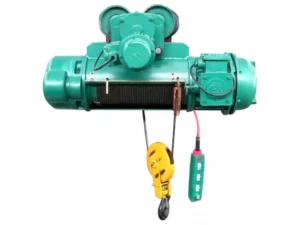
An explosion proof wire rope hoist is a motorized lifting device that uses a steel wire rope wound around a sealed drum to raise and lower heavy loads in hazardous environments. Unlike a standard electric wire rope hoist, every electrical and mechanical component is enclosed within flameproof housings, constructed from spark-resistant alloys, and tested to international explosion-proof standards before leaving the factory.
The core principle is containment and spark elimination: if an internal fault generates heat or a spark, the sealed enclosure prevents that energy from reaching the surrounding explosive atmosphere. At the same time, all external moving parts — wire rope, hook, drum, and trolley wheels — are manufactured from non-sparking materials to eliminate surface ignition risk.
This makes the explosion proof wire rope hoist the standard lifting solution wherever the atmosphere may contain flammable gases or vapors (IIA, IIB, or IIC gas groups) or combustible dust, and where a conventional hoist would represent an unacceptable safety risk.
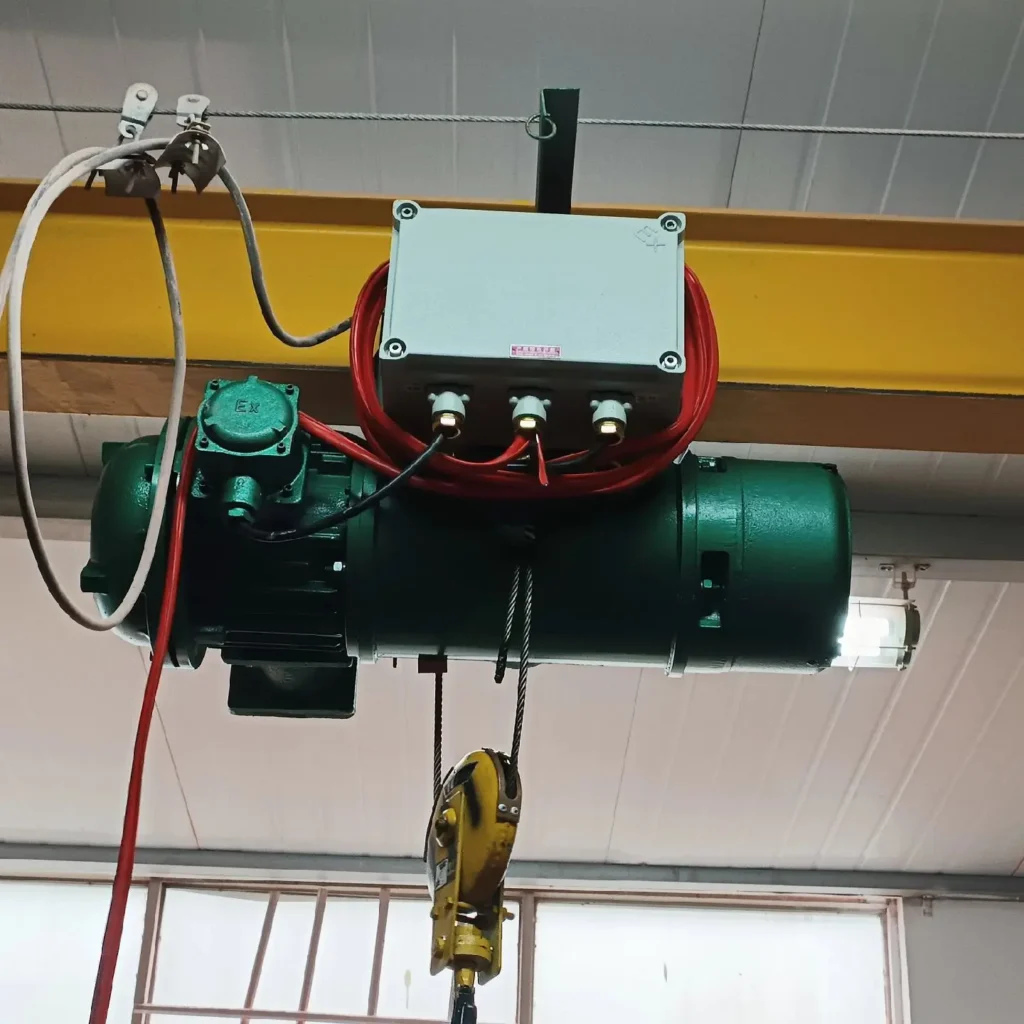
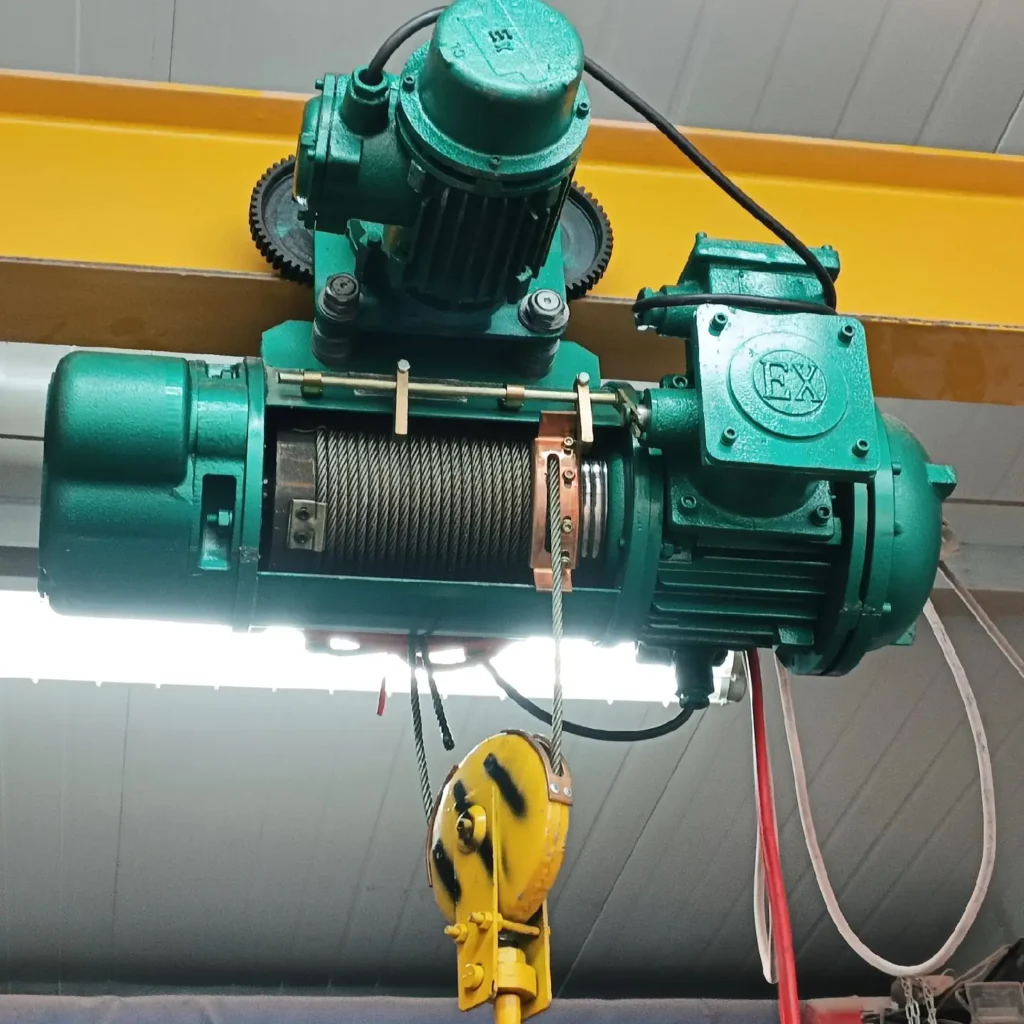
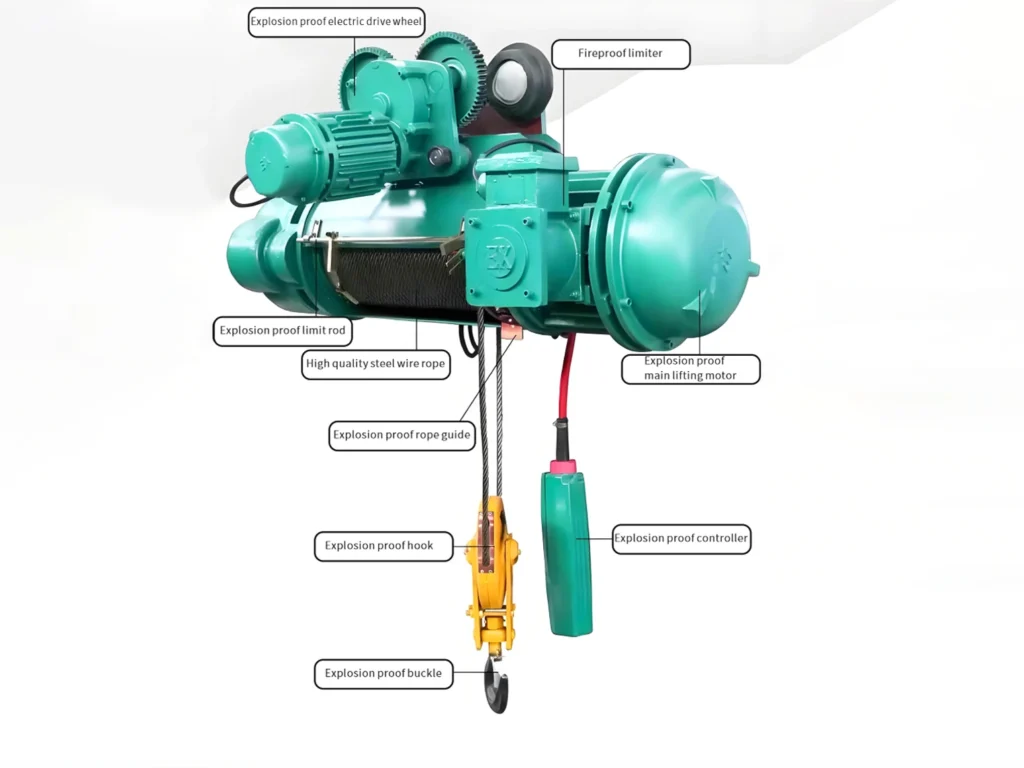
The explosion proof wire rope hoist combines certified flameproof electrical design with conventional wire rope mechanics to deliver safe, controlled lifting in hazardous atmospheres. The operating sequence below describes a standard lift cycle.
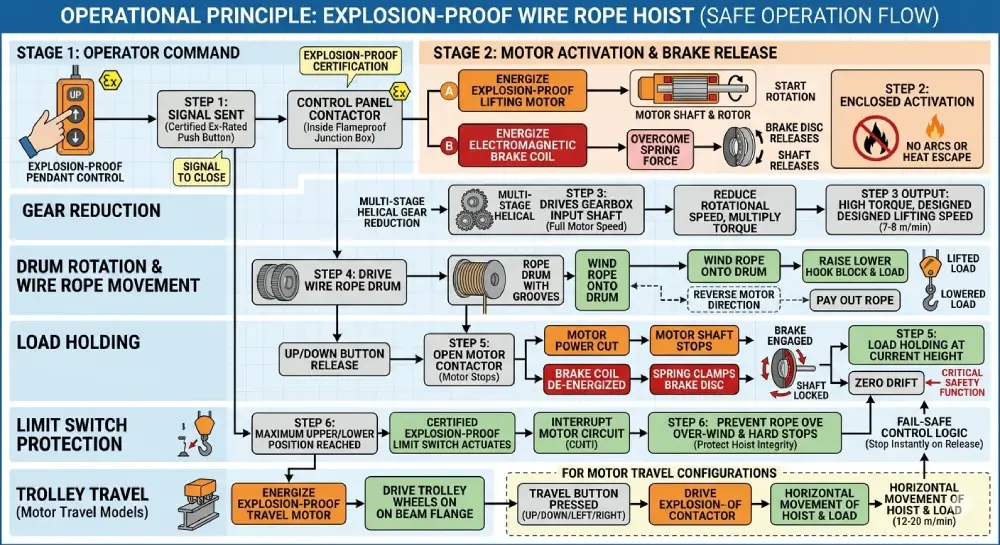
Step 1 — Operator Command The operator presses the Up button on the explosion-proof pendant control (or activates the explosion-proof wireless remote). The certified Ex-rated push button sends a signal to the control panel contactor inside the flameproof junction box.
Step 2 — Motor Activation & Brake Release The contactor energizes the explosion-proof lifting motor. Simultaneously, the electromagnetic brake coil is energized — overcoming the spring-applied clamping force — and the brake disc releases, allowing the motor shaft to rotate freely. The entire activation sequence occurs within sealed flameproof enclosures, with no electrical arc or thermal event capable of reaching the surrounding explosive atmosphere.
Step 3 — Gear Reduction & Torque Multiplication The motor drives the gearbox input shaft at full motor speed. The multi-stage helical gear reduction reduces rotational speed and multiplies torque at the output shaft, producing the force required to lift the rated load at the designed lifting speed of 7–8 m/min.
Step 4 — Drum Rotation & Wire Rope Movement The gearbox output shaft drives the wire rope drum. As the drum rotates, the steel wire rope is wound onto the drum in orderly helical grooves, shortening the effective rope length and raising the lower hook block and attached load. To lower the load, the motor reverses direction, and the drum pays out rope in a controlled manner.
Step 5 — Load Holding & Brake Engagement When the operator releases the Up or Down button, the motor contactor opens and the motor stops. At the same moment, the electromagnetic brake spring clamps the brake disc, locking the motor shaft and holding the drum — and therefore the load — at its current height with zero drift. This instantaneous, automatic braking action is the critical safety function that prevents uncontrolled load movement in the event of power interruption or operator error.
Step 6 — Limit Switch Protection If the hook reaches its maximum upper or lower travel position without operator input, the certified explosion-proof limit switch interrupts the motor circuit before the rope reaches the drum end stop. This prevents rope over-wind, drum damage, and the mechanical shock of a hard stop under load — all of which could compromise the explosion-proof integrity of the hoist structure.
Step 7 — Trolley Travel (Motor Travel Models) For motor travel configurations, a separate explosion-proof travel motor drives the trolley wheels along the beam flange, providing controlled horizontal movement of the hoist and suspended load. Travel speed is 12–20 m/min depending on capacity. The travel motor operates under the same fail-safe control logic as the lifting motor — stopping instantly on button release, with no coasting or uncontrolled movement.
| Parameter | Specification |
|---|---|
| Model | HB(BCD) |
| Lifting Capacity | 0.5 t / 1 t / 2 t / 3 t / 5 t / 10 t |
| Lifting Height | 6, 9, 12, 18, 24, 30 m (0.5 t max 18 m; custom on request) |
| Lifting Speed | 8 m/min (0.5 t–5 t) / 7 m/min (10 t) |
| Running Speed (Trolley) | 20 m/min (0.5 t–5 t) / 12 m/min (10 t) |
| Explosion-Proof Type | Flameproof Type d |
| Explosion-Proof Grade | Ex dⅡBT4 / Ex dⅡCT4 |
| Temperature Class | T1 – T4 |
| Protection Grade | IP65 / IP66 |
| Insulation Class | F |
| Working Grade | M3 (customizable) |
| Working Temperature | -25°C to +40°C |
| Altitude | ≤ 1,000 m |
| Application Zones | Gas: Zone 1 / Zone 2 · Dust: Zone 21 / Zone 22 |
The explosion proof wire rope hoist is designed for any facility where the presence of flammable substances creates a classified hazardous area. Common industries and applications include:
Oil & Gas Refineries, wellheads, compressor stations, and offshore platforms regularly require lifting of heavy pumps, valves, and pressure vessels in Zone 1 or Zone 2 gas atmospheres. The explosion proof wire rope hoist is the standard solution for this environment, offering the load capacity and lift height to handle large equipment safely.
Petrochemical & Chemical Plants Process areas handling hydrocarbons, solvents, chlorine compounds, or other flammable chemicals require ATEX-rated lifting equipment throughout the facility. The Ex dⅡCT4 rating covers the most demanding chemical environments, including those with hydrogen-based atmospheres (IIC gas group).
Pharmaceutical Manufacturing Solvent-based processes and active pharmaceutical ingredient (API) synthesis areas frequently fall under Zone 1 or Zone 2 classification. An explosion proof wire rope hoist for pharmaceutical use is typically specified with IP66 protection and stainless steel options for hygienic compatibility.
Gas Stations & LPG/LNG Facilities Liquefied petroleum gas, liquefied natural gas, and compressed natural gas facilities require explosion-proof lifting equipment rated for IIB or IIC gas groups, particularly in storage and dispensing areas.
Mining Underground coal mines and surface mineral processing plants generate combustible methane and coal dust atmospheres. Mining-certified explosion-proof hoists carry additional Mine Safety Certificate documentation beyond standard ATEX/IECEx requirements.
Food Processing & Grain Handling Flour mills, grain storage facilities, and sugar processing plants generate fine combustible dust classified as Zone 21 or Zone 22. An explosion proof wire rope hoist for dust environments is specified for these applications, covering the dust explosion protection requirements of GB 12476.3-2007.
Shipbuilding & Offshore Shipyard paint shops, confined spaces, and offshore platform lifting points all require explosion-proof rated hoists due to the presence of coating solvents, fuel vapors, and gas supply lines.
Wastewater Treatment & Power Generation Biogas production areas in wastewater plants, and fuel handling areas in power stations, are classified hazardous zones requiring explosion-proof lifting equipment for maintenance and overhaul work.
| Zone | Environment | Standard |
|---|---|---|
| Zone 1 | Explosive gas atmosphere likely to occur in normal operation | GB 3836.14-2000 |
| Zone 2 | Explosive gas atmosphere unlikely; if present, only occasionally and briefly | GB 3836.14-2000 |
| Zone 21 | Combustible dust/air mixture may occur in normal operation | GB 12476.3-2007 |
| Zone 22 | Combustible dust appears occasionally, exists only for short duration | GB 12476.3-2007 |
Every explosion proof wire rope hoist in this product range carries full documentation for the following certification bodies:
| Certification | Coverage |
|---|---|
| ATEX Directive 2014/34/EU | European market — mandatory for EU hazardous area equipment |
| IECEx | Global mutual recognition standard — accepted in 50+ countries |
| CE Marking | European conformity — machinery directive compliance |
| CCC (China Compulsory Certification) | China domestic market requirement |
| Mining Safety Certificate | Underground mining and coal industry applications |
| Explosion-Proof Qualification Certificate | China explosion-proof product registration |
All certification documents are provided with delivery and are available for customer review during procurement. Traceability documentation supports facility compliance audits and regulatory inspections.
Understanding the difference between an explosion proof hoist and a standard hoist is essential for correct equipment selection in any facility risk assessment.
| Factor | Explosion Proof Wire Rope Hoist | Standard Wire Rope Hoist |
|---|---|---|
| Motor enclosure | Flameproof (Ex d), IP65/IP66 | Standard IP54/IP55 |
| Electrical components | Fully explosion-proof rated | Standard industrial grade |
| Mechanical parts material | Spark-resistant copper alloy / aluminum bronze | Standard carbon steel |
| Brake system | Fail-safe Ex-rated electromagnetic brake | Standard electromagnetic brake |
| Control pendant | Explosion-proof rated enclosure | Standard pendant |
| Zone suitability | Zone 1, 2, 21, 22 | Non-hazardous areas only |
| Certifications | ATEX, IECEx, CCC, Mining Cert | CE, ISO |
| Unit weight | Higher (due to Ex enclosures) | Standard |
| Price | Higher | Standard |
| Maintenance | Requires qualified Ex personnel | Standard technicians |
Selection rule: Any lifting operation in a classified hazardous area (Zone 1, 2, 21, or 22) requires an explosion-proof rated hoist. Using a standard hoist in a hazardous zone is a safety violation and regulatory non-compliance regardless of operational precautions taken.
For more information on standards for explosion-proof cranes, read the article: “Explosion Proof Crane Standards Explained: Atex, lecex & Nec”
About Weihua Explosion Proof Wire Rope Hoists
Weihua is a professional explosion proof wire rope hoist manufacturer and supplier based in China, with over 37 years of experience in lifting equipment design and manufacturing. All Weihua explosion proof wire rope hoists are produced under a rigorous quality management system certified to ISO 9001, and every unit carries full ATEX, IECEx, and CE certification for operation in Zone 1 and Zone 2 hazardous areas.
Weihua provides a global after-sales service network, a one-year product warranty, and long-term spare parts availability for all explosion proof hoist models. Our engineering team is available to support custom hoist specifications, hazardous area crane system integration, and on-site installation guidance.
We also offer a comprehensive range of explosion-proof and standard lifting equipment solutions, including explosion proof electric chain hoists, explosion proof overhead cranes, gantry cranes, and jib cranes. Contact our engineering team today for a customized explosion proof wire rope hoist solution tailored to your site classification and load requirements.
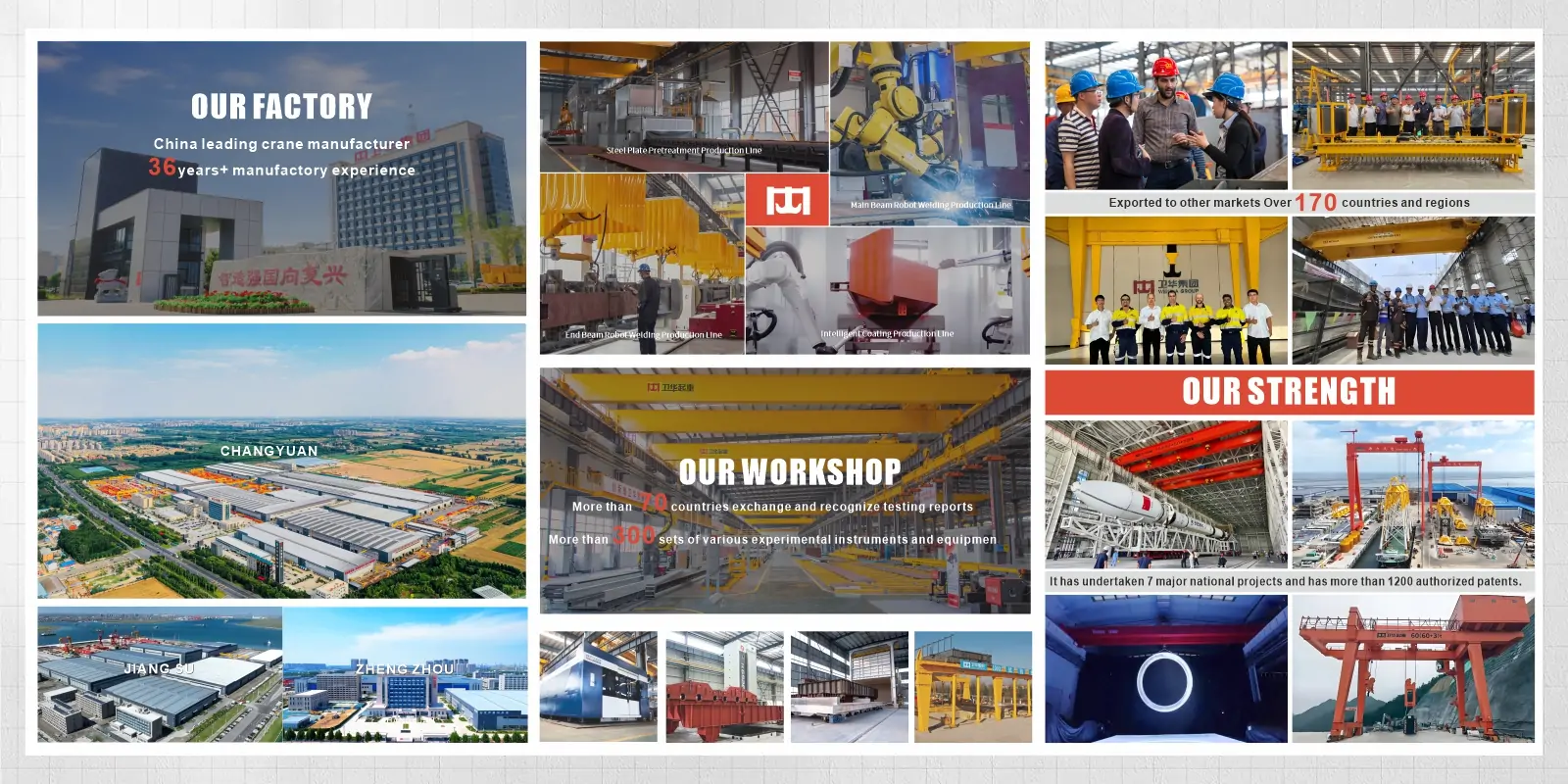
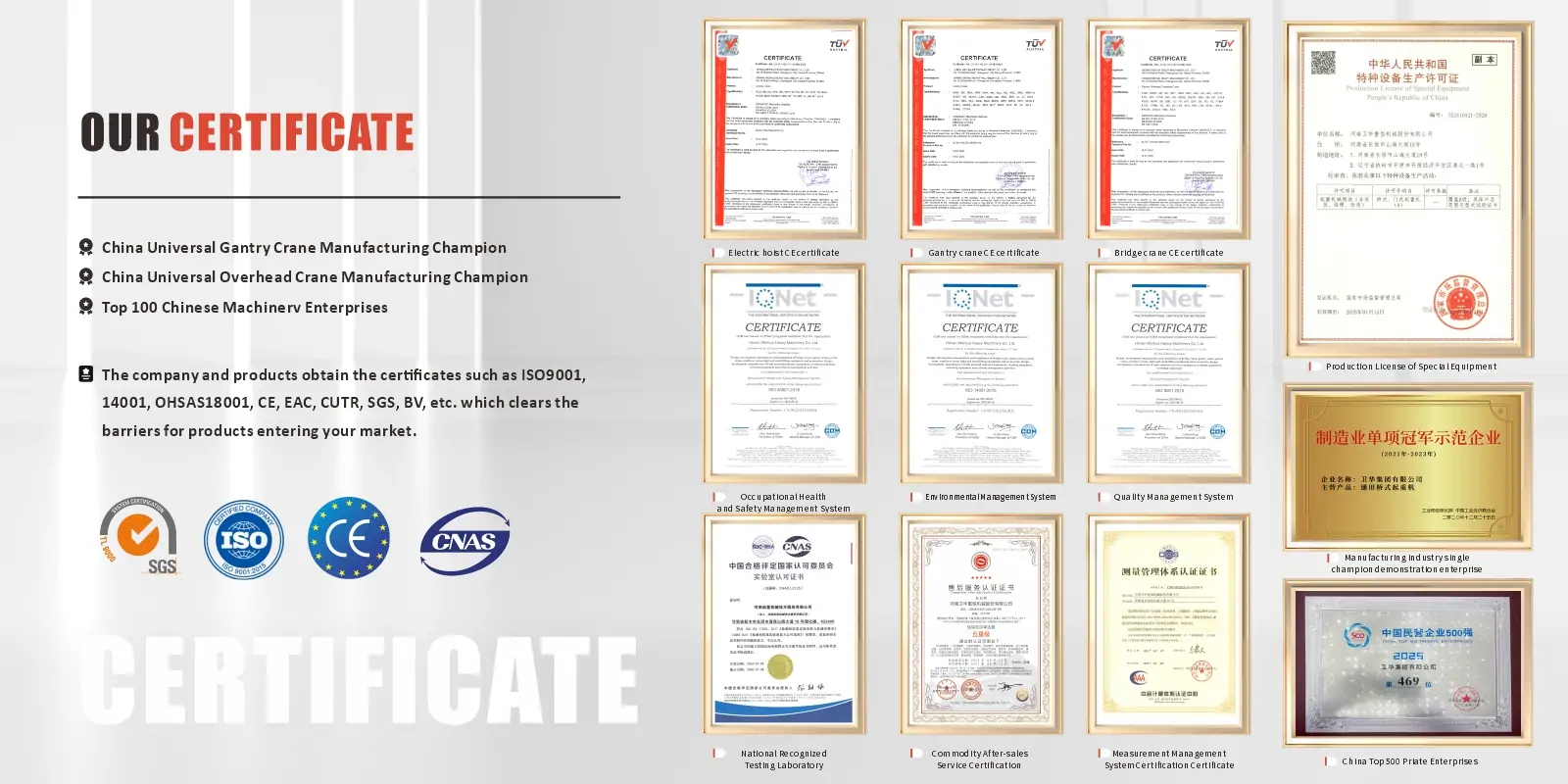
Weihua, founded in 1988, has evolved into a global leader in China's intelligent manufacturing field. We specialize in smart crane R&D and production while offering AGV solutions. Our professional engineering, delivery, and after-sales teams provide one-stop technical support, customized solutions, on-site installation guidance, and rapid-response global services to ensure every project operates safely and efficiently.
An explosion proof wire rope hoist is a motorized lifting device built specifically for hazardous environments where flammable gases, vapors, or combustible dust are present. All electrical and mechanical components are enclosed in certified flameproof housings, and all parts that could generate sparks through contact are made from non-sparking materials. The result is a hoist that can operate safely in Zone 1, Zone 2, Zone 21, and Zone 22 classified areas.
Both ratings indicate a flameproof (Type d) enclosure for Group II industrial atmospheres. The difference is the gas subgroup: IIB covers most common industrial gases including ethylene, propane, and ammonia; IIC covers the most hazardous gases including hydrogen and acetylene. If your facility handles hydrogen or acetylene, specify the Ex dⅡCT4 rated model. When in doubt, the IIC rating provides the broader protection.
Zone 1 and Zone 2 apply to flammable gas or vapor atmospheres; Zone 21 and Zone 22 apply to combustible dust environments. Zone 1 and Zone 21 indicate the hazardous condition may be present during normal operation; Zone 2 and Zone 22 indicate it is only present occasionally or for short durations. Your facility’s hazardous area classification drawing (produced as part of your site risk assessment) defines which zones apply to each lifting point.
Yes. With IP65 or IP66 protection, the HB(BCD) series hoist is suitable for outdoor installation in classified hazardous areas, including offshore platforms, tank farms, and open-air petrochemical facilities. Ensure that the working temperature range (-25°C to +40°C) and altitude limitation (≤1,000 m) are compatible with your site conditions.
Requirements vary by region and industry. The European Union requires ATEX certification (Directive 2014/34/EU) for all equipment in classified zones. IECEx is the international standard accepted in most non-EU markets. China requires CCC certification plus the Explosion-Proof Qualification Certificate for domestic use. Mining applications require additional Mine Safety Certification. All these certificates are provided with every unit in this product range.
Contact us now via email: [email protected], or fill in the form below.


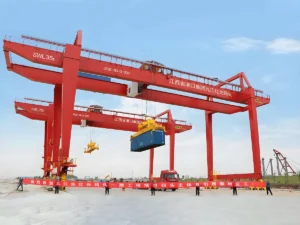
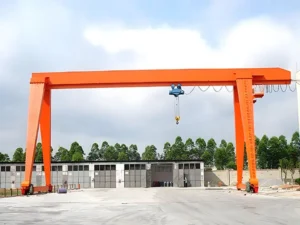
The gantry crane is a lifting equipment widely used across various industries, construction sites, ports, warehouses, and other fields. Its unique structure and powerful load-bearing capacity make it ideal for modern heavy-duty material handling. The “gantry” structure design allows the crane to move freely within a space, covering a large working area. So, what makes gantry cranes special? What are their types, parameters, control methods, applications, and working principles? How do they differ from bridge cranes? Let’s explore together. Types of Gantry Cranes Based on design, application, and operating environment, gantry cranes are typically categorized into the following types: Single-Girder Gantry Crane Single-girder gantry cranes are widely used across industrial sectors, warehouses, ports, and workshops. Featuring a single-girder support lifting mechanism, they traverse via side columns and bottom rails. With their simple structure, user-friendly operation, and moderate lifting capacity, they are ideal for handling light to medium loads. Capable of spanning large distances freely, single-girder gantry cranes are suitable for heavy material handling and lifting operations. Double Girder Gantry Crane Compared to single-girder gantry cranes, double-girder gantry cranes offer greater…
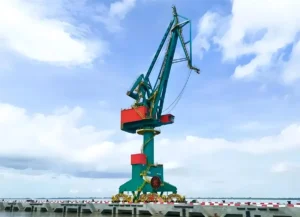
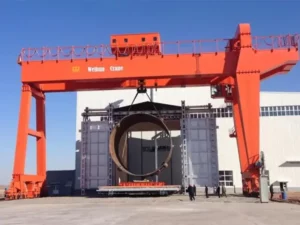
In ports, logistics parks, and industrial material handling, Portal Cranes and Gantry Cranes are two common and core loading/unloading equipment types. They differ in structural design, performance characteristics, operating methods, application scenarios, and investment costs. This article provides a comprehensive analysis of Portal Crane vs Gantry Crane and guides you in making the right selection. Structural Design Comparison The structural differences between Portal Cranes and Gantry Cranes primarily manifest in load-bearing methods, movement trajectories, and coverage ranges. The former centers on a fixed tower and rotating boom, emphasizing “point coverage” and flexible horizontal rotation. The latter features a portal frame structure and longitudinal rail travel, prioritizing “extensive horizontal movement” and efficient on-site logistics handling. Consequently, their distinct structural designs directly dictate their differing application scenarios. Portal Crane Structural Characteristics Portal slewing cranes employ single/double cantilever boom structures with the tower fixed to foundations or rails, enabling 360° or partial rotation. This configuration enables flexible operation in narrow, elongated spaces such as shorelines, dock fronts, and ship berths, making it particularly suitable for ship-to-shore material handling. Its core functionality combines vertical…
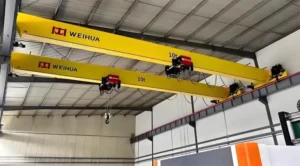
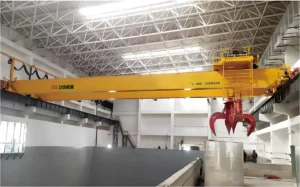
In modern industrial operations, efficient material handling is crucial for maximizing productivity and optimizing workflow. Bridge cranes, also known as overhead cranes or EOT cranes, are fixed material handling systems widely used in manufacturing, metal processing, warehousing, and loading/unloading operations. In this article, we will explore the working principle, main components, applications, and operational benefits of bridge cranes, providing a comprehensive guide for industrial planners and logistics professionals. Bridge Crane Working Principle A bridge crane operates on a bridge-like structure spanning the workspace, with a trolley and hoist system that moves horizontally along the bridge and vertically lifts or lowers loads. The crane’s movement across the runway, combined with precise hoist control, enables efficient and safe handling of heavy materials in factories, warehouses, and industrial facilities. For information on how overhead cranes work, please see this article: Overhead Crane Working Principle: Components, Motion & Operating Process Bridge Crane Terminology The following is an introduction to terminology related to bridge crane parts. Crane Capacity: Crane capacity refers to the maximum weight a bridge crane can safely lift. Typically measured in tons…
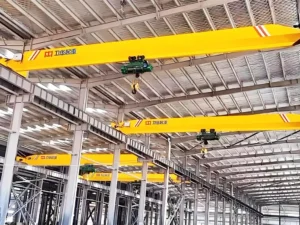
An EOT Crane (Electric Overhead Traveling Crane) is an efficient and reliable overhead lifting system used to handle heavy materials in factories, warehouses, workshops, and industrial plants. Running on overhead rails, EOT cranes enable safe and precise three-dimensional movement of loads through coordinated lifting, cross travel, and long travel motions. This article will guide you through EOT crane definitions, types, structure, working principles, applications, and cost factors to help you select the most suitable solution for your lifting needs. How EOT Crane Works? The working principle of an EOT crane involves a combination of vertical lifting, horizontal trolley movement, and longitudinal bridge travel, enabling efficient handling of heavy loads across industrial facilities. The crane operates on elevated runway rails installed along the building structure, with the bridge girder spanning the workspace. The hoist mechanism raises or lowers the load using steel wire ropes or chains, while the trolley moves the load horizontally along the bridge. The entire crane travels longitudinally along the runway rails, enabling three-dimensional positioning of materials. Modern EOT cranes are powered by electric motors with precise speed…
Gantry cranes are widely used in open-air stockyards, shipyards, factories, and construction sites, making them one of the most versatile and extensively applied material handling solutions. Gantry cranes come in various types, each customizable to suit different load capacities, site conditions, and operational requirements. However, selecting the wrong configuration can lead to unnecessary expenses, limited lifting capacity, or future expansion constraints. So, what are the main types of gantry cranes? How do you choose the right type for your application? In this guide, we will provide a detailed overview of different types of gantry cranes based on structure, mobility, and application scenarios, helping you make the right decision before investing in a lifting solution. The article is quite lengthy. Below is our table of contents. Please jump to the corresponding section as needed: What Is a Gantry Crane? Gantry cranes are lifting equipment designed for efficient handling of heavy cargo in large open-air sites. Their signature structure features one or more main beams supported by rigid (or flexible) legs on either side, forming a monumental “gate”-shaped frame. These cranes traverse…
 English English
  Русский
 العربية
 Français
 Português
 Español