








Table of Contents
Introduction
The STS container crane (Ship-to-Shore crane) is a key piece of equipment in modern ports, used for loading and unloading containers between ships and the quay. It is primarily used to improve terminal efficiency, reduce vessel turnaround times and support high-throughput port operations.
In today’s highly competitive logistics environment, selecting the right STS crane is not merely a matter of lifting capacity; it directly impacts operational efficiency, automation levels, long-term reliability and overall return on investment. For a structured specification framework, pricing enchmarks ($5M–$25M+), and a parameter-by-parameter selection checklist, see our STS Crane For Sale buying guide.
In this guide, we will provide you with a comprehensive overview of how ship-to-shore container cranes work, their structure and technical specifications, the different types available, cost factors, and how to select a reliable supplier for your port project. Please continue reading.
What Is an STS Container Crane?
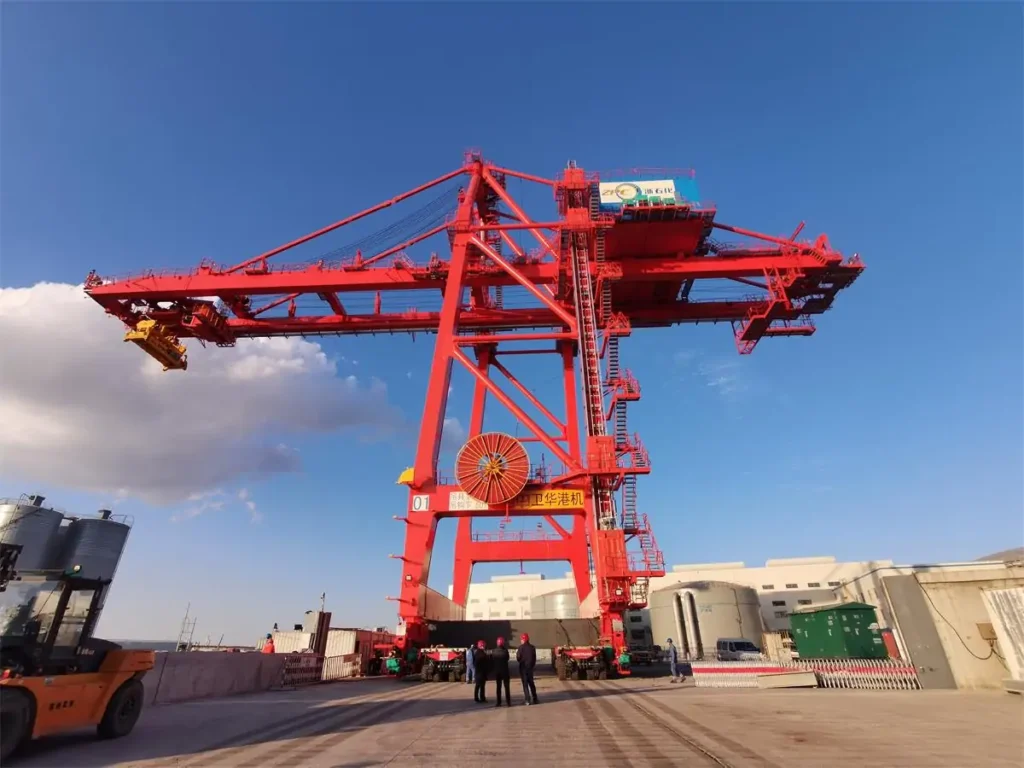
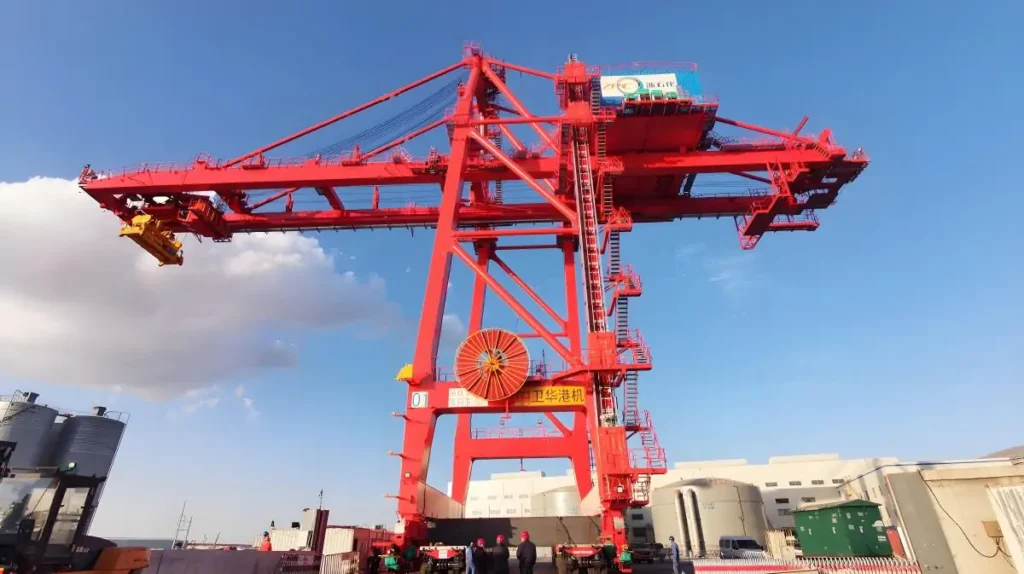
A ship to shore crane (STS crane), also known as a port container crane, is the core handling equipment in modern container terminals. Installed along the quay, it is specifically designed to transfer containers efficiently between vessels and the dock. It has large outreach, high lifting capacity, and precise control system, the STS crane plays a critical role in enabling fast and safe ship loading and unloading operations.
Functions in Port Operations
As the primary equipment determining port productivity, the sts crane is responsible for high-frequency container loading and unloading, directly impacting vessel turnaround time. In practical operations, it works in coordination with yard handling systems such as RTG (Rubber Tyred Gantry), RMG (Rail Mounted Gantry), and AGV (Automated Guided Vehicle), forming an integrated logistics chain that ensures continuous, efficient container flow across the terminal.
Learn more about container crane types, applications, and working principles in our guide: What Is a Container Crane? Types, Uses & How It Works.
How Does an STS Container Crane Work?
A ship to shore crane (STS crane) operates through the coordinated movement of its key mechanisms to achieve efficient container handling. The trolley travels horizontally along the boom to position the spreader above the target container, while the hoisting system lifts and lowers the load with precision. The spreader, equipped with an automatic twist-lock mechanism, securely locks onto the container corners, ensuring safe and stable lifting throughout the operation.
Container Handling Process Step-by-Step
The operation of a ship to shore crane (STS crane) can be broken down into clear, standardized steps to ensure safe and efficient container transfer:
- Vessel Positioning & Alignment
The port container crane aligns with the target bay on the vessel based on the stowage plan, ensuring accurate positioning before operation begins. - Spreader Lowering & Positioning
The trolley moves horizontally along the boom, positioning the spreader directly above the container. The hoisting system then lowers the spreader onto the container. - Container Locking
The spreader’s automatic twist-lock mechanism engages with the container corner castings, securing the load for lifting. - Hoisting Operation
The container is lifted vertically from the vessel using the hoisting system, maintaining stability and minimizing sway. - Horizontal Transfer (Trolley Travel)
The trolley travels from the seaside to the landside along the boom, transporting the container across the quay. - Container Placement
The container is lowered onto a waiting truck, trailer, or AGV with precise positioning. - Unlocking & Reset
The spreader releases the container, then returns to its initial position to begin the next handling cycle.
Container crane operations require coordination across multiple stages. To learn how they work and their operating principles, see: How Do Container Cranes Work? Container Handling Process Explained
Components of an STS Crane
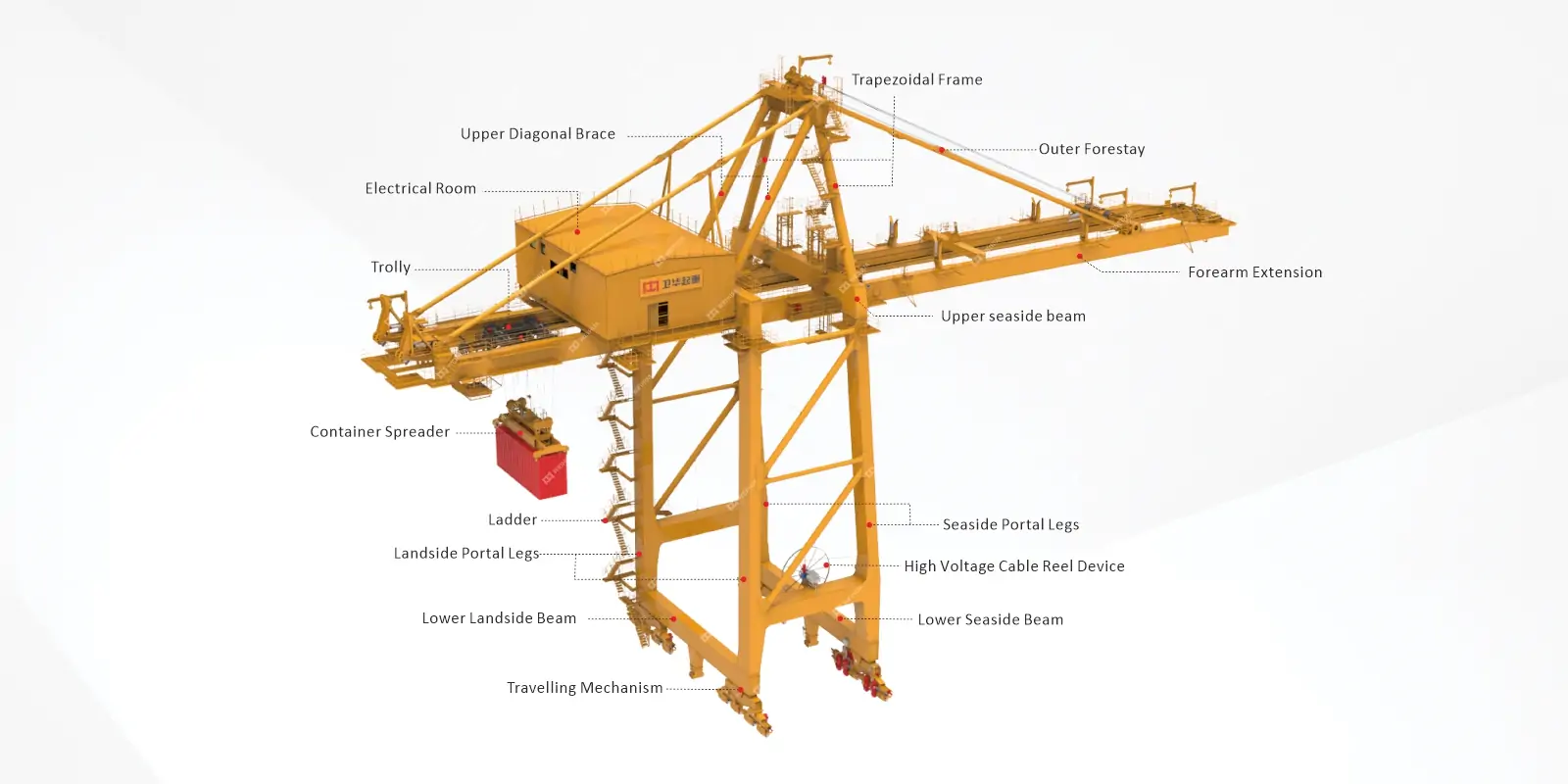
An STS crane (ship to shore crane) is a highly integrated system composed of structural, mechanical, and intelligent control components. Each part works together to ensure efficient, safe, and precise container handling in modern port operations.
Main Girder and Boom
The main girder and boom form the primary steel structure of the port container crane. The boom extends over the vessel to provide the necessary outreach, while the girder supports load distribution and ensures overall structural stability during lifting operations.
Trolley and Hoisting System
The trolley travels horizontally along the boom, positioning the lifting point accurately. The hoisting system controls vertical movement, enabling smooth lifting and lowering of containers with high precision and speed.
Spreader System
The spreader is the key load-handling device of the sts crane, equipped with automatic twist-locks to secure containers. It can adapt to different container sizes (e.g., 20ft, 40ft, 45ft), ensuring flexible and reliable operation.
Electrical and Control System
This system manages power distribution, motion control, and operational coordination. Advanced control technologies enable precise positioning, synchronized movements, and real-time monitoring of crane performance.
Automation & Safety Systems
Modern ship-to-shore container cranes are equipped with automation features such as remote control, anti-sway technology, and intelligent scheduling. Integrated safety systems, including overload protection, collision avoidance, and emergency stop functions, ensure safe and stable operation in high-intensity port environments.
The outreach radius of an STS crane directly determines whether the crane can fully cover the cargo being handled. For a detailed comparison of size specifications, see the article: STS Crane Outreach Explained: How to Match Crane Size to Container Ships?
To understand how STS crane lifting capacity matches specific applications, see: STS Crane Capacity Guide: How Much Can a Ship-to-Shore Crane Lift?
STS Container Crane Specifications
| Category | Parameter | Typical Value |
|---|---|---|
| Capacity | Lifting Capacity | 40–65 t (single) / up to 80 t (twin) |
| Duty Class | A7–A8 | |
| Structure | Outreach | 30–75 m |
| Backreach | 10–25 m | |
| Rail Gauge | 16–35 m | |
| Lifting Height | 30–55 m (above rail) | |
| Lifting Depth | 10–20 m (below rail) | |
| Hoisting | Speed (Full / Empty) | 60–90 / 120–180 m/min |
| Trolley | Travel Speed | 150–240 m/min |
| Crane Travel | Gantry Speed | 30–45 m/min |
| Spreader | Type | Single / Twin / Tandem |
| Container Size | 20ft / 40ft / 45ft | |
| Electrical | Power Supply | 6–11 kV |
| Control System | PLC + VFD | |
| Automation | Operation Mode | Manual / Remote / Automated |
| Safety | Key Features | Anti-sway, overload, wind protection |
| Environment | Temperature | -20°C to +50°C |
The configuration of an STS crane is highly customizable depending on vessel size, terminal layout, and automation level.
How to Choose the Right Specification?
Choosing the right specification for an STS container crane (ship to shore crane / port container crane) depends on aligning crane parameters with actual port conditions. Key factors such as vessel size, terminal throughput, and automation level directly influence outreach, lifting capacity, and operating efficiency.
Vessel Type (Panamax / Post-Panamax / Ultra Large Container Vessel)
Vessel type is a key factor in determining the core specifications of a STS container crane (ship to shore crane), especially outreach and overall structural design. Different ship sizes require different boom lengths to ensure full deck coverage and efficient container access. Panamax vessels (about 13 container rows) typically require a 30–40 m outreach, Post-Panamax vessels (16–18 rows) require 45–55 m, while Ultra Large Container Vessels (ULCVs, 20–24+ rows) demand a much larger outreach of 60–75 m.
In addition to outreach, lifting height and hoisting capacity must be designed to match vessel deck height and container load requirements. Standard port container cranes generally support 40–65 ton lifting capacity, while twin-lift configurations can reach up to 80 tons for higher efficiency in large-scale operations.
Terminal Throughput
The terminal throughput and automation level define the operational performance and system configuration of the sts crane. Medium-scale ports usually require standard efficiency, while large terminals handling 5 million TEU+ annually need higher-speed systems with 25–40 moves per hour per crane. Automation also plays a key role: from manual operation to remote control and fully automated systems, higher levels of automation can improve efficiency by over 30%, while enhancing safety through anti-sway systems, precise positioning (±10–20 mm), and full integration with terminal operating systems (TOS).
To understand how STS crane lifting capacity matches specific applications, see: STS Crane Capacity Guide: How Much Can a Ship-to-Shore Crane Lift?
Types of STS Container Cranes
STS container cranes (ship to shore cranes / port container cranes) are mainly categorized based on operating structure and automation level. Different types are designed to match various terminal capacities, vessel sizes, and efficiency requirements, ranging from conventional manual operations to fully intelligent automated port systems.
When selecting a ship-to-shore (STS) crane, please take into account the terminal’s throughput, level of automation and investment strategy to ensure optimal performance and long-term operational efficiency.
Single Trolley STS Crane
The single trolley STS crane is the most common configuration in standard container terminals. It uses one trolley system to complete both ship-side lifting and landside transfer. With a simple structure and stable operation, it is suitable for medium-throughput ports where reliability and cost-efficiency are priorities.
Basic Parameters:
- Outreach: 30–65 m
- Lifting Capacity: 40–65 t
- Hoisting Speed: 60–90 m/min
- Trolley Speed: 150–200 m/min
- Productivity: 25–35 moves/hour
- Application: General container terminals
Double Trolley STS Crane
The double trolley STS crane improves efficiency by separating the lifting and transfer process into two independent trolleys. One trolley handles ship-side operations, while the other transfers containers to the quay side, significantly reducing cycle time and increasing throughput.
Basic Parameters:
- Outreach: 40–70 m
- Lifting Capacity: 40–65 t (up to 80 t twin-lift)
- Hoisting Speed: 70–110 m/min
- Trolley Speed: 180–240 m/min
- Productivity: 35–45 moves/hour
- Application: High-efficiency and busy terminals
Automated STS Crane
The automated STS crane represents the advanced development of modern port equipment. It integrates remote control, intelligent positioning, and anti-sway systems, enabling semi-automatic or fully automatic container handling with minimal human intervention.
Basic Parameters:
- Outreach: 40–75 m
- Lifting Capacity: 40–65 t (up to 80 t twin-lift)
- Positioning Accuracy: ±10–20 mm
- Operation Mode: Manual / Remote / Fully automated
- Productivity: 30–50 moves/hour
- Application: Smart ports and automated terminals
STS Crane vs Other Port Cranes
STS container cranes (ship to shore cranes / port container cranes) are specialized quay-side equipment designed for direct loading and unloading of containers between vessels and the terminal. They are characterized by large outreach, high lifting capacity, and high operating efficiency, making them the core equipment in modern container terminals. In contrast, RTG and RMG cranes are yard handling equipment used for container stacking and internal yard logistics. Understanding the differences between these crane types is essential for selecting the right solution for port efficiency and investment planning.
STS Crane vs RTG Crane
RTG (Rubber Tyred Gantry) cranes are used in container yards for stacking and transferring containers, while STS cranes operate at the quay for vessel handling. The main difference lies in application scope and working environment: STS focuses on ship-to-shore transfer, while RTG focuses on yard storage and flexibility.

| Item | STS Crane | RTG Crane |
|---|---|---|
| Application | Ship-to-shore loading/unloading | Yard stacking & transport |
| Working Location | Quay side | Container yard |
| Main Function | Vessel container transfer | Yard stacking & retrieval |
| Lifting Capacity | 40–65 t (up to 80 t) | 40–50 t |
| Outreach | 30–75 m | Not applicable |
| Mobility | Rail-mounted along quay | Rubber-tyred, flexible movement |
| Efficiency Role | Core port productivity equipment | Yard operation support equipment |
STS Crane vs RMG Crane
RMG (Rail Mounted Gantry) cranes are also used in container yards but operate on fixed rails, offering higher precision and automation potential compared to RTG. Unlike STS cranes, RMGs are not used for ship loading but for high-density yard operations.

| Item | STS Crane | RMG Crane |
|---|---|---|
| Application | Ship-to-shore handling | Automated yard stacking |
| Working Location | Quay side | Rail-based container yard |
| Main Function | Vessel loading/unloading | High-density stacking |
| Lifting Capacity | 40–65 t (up to 80 t) | 30–50 t |
| Structure | Large outreach gantry crane | Rail-mounted gantry crane |
| Automation Level | Manual / Semi / Fully automated | High automation readiness |
| Efficiency Role | Vessel turnaround efficiency | Yard space optimization |
For more solutions for port gantry cranes, visit the page: Port Gantry Crane Manufacturer for Container Handling and Port Operations
Learn about the main types of container cranes—including STS, RTG, RMG, and gantry cranes—and their applications in various handling operations: Types of Container Cranes: STS, RTG, RMG & Gantry Cranes Explained.
Applications of STS Container Cranes in Port Projects
STS container cranes (ship to shore cranes / port container cranes) are core equipment in modern port projects and terminal construction, designed for high-efficiency transfer of containers between vessels and shore. With large outreach, high lifting capacity, and strong automation compatibility, they are widely used to improve vessel turnaround efficiency and support the development of advanced port logistics systems.
- Container Ports: In conventional container port projects, STS cranes are used to efficiently load and unload containers between ships and the quay, ensuring stable and continuous terminal operation.
- Automated Terminals: In automated terminal construction, STS cranes integrate with remote control and TOS systems to enable semi or fully automated container handling with higher efficiency and safety.
- Intermodal Transport Hubs: In multimodal logistics port projects, STS cranes act as the first transfer point, quickly moving containers from vessels to trucks, AGVs, or rail systems for inland distribution.
Cost of STS Container Crane: What Affects the Price?
The cost of a STS container crane (ship to shore crane / port container crane) varies widely depending on technical specifications, automation level, and project requirements. In most port projects and terminal construction cases, pricing is mainly determined by lifting capacity, outreach, electrical system configuration, and customization level.
The typical price of an STS crane is:
| Configuration Level | Typical Price Range (USD) |
|---|---|
| Standard Manual STS Crane | 5M – 8M |
| High-Performance STS Crane | 8M – 12M |
| Automated / Smart STS Crane | 12M – 15M+ |
Final price depends on project scale, vessel type, and automation requirements.
Key Cost Factors
- Lifting Capacity & Outreach
Larger ship to shore cranes designed for Post-Panamax and ULCV vessels require longer outreach (up to 75 m) and higher structural strength, significantly increasing steel structure and fabrication costs. - Automation Level
Manual operation is more cost-effective, while semi-automatic or fully automated sts cranes with remote control, anti-sway systems, and intelligent positioning can increase total investment by 20–40%. - Electrical System Brands
High-quality components such as Siemens, ABB, or Schneider improve stability and precision but also increase overall equipment cost and long-term reliability. - Customization Requirements
Special terminal construction conditions (high wind areas, cold regions, smart port integration) require customized engineering design, which further impacts final pricing.
How to Choose a Reliable STS Crane Manufacturer?
Selecting a reliable STS crane manufacturer (ship to shore crane / port container crane) is a critical decision for any port project or terminal construction. Procurement teams should evaluate suppliers based on engineering capability, customization flexibility, project execution experience, and long-term service support, rather than only focusing on initial price. A qualified manufacturer must be able to deliver safe, efficient, and durable equipment that meets international port operation standards.
Engineering Experience in Port Projects
A reliable manufacturer should have proven experience in global port projects, including different vessel classes (Panamax, Post-Panamax, ULCV) and high-throughput terminals.
Custom Design Capability
Each terminal has different operational requirements. A qualified supplier must provide customized ship to shore crane solutions based on outreach, lifting capacity, automation level, and quay layout.
Global Delivery & Installation
Reliable manufacturers should have a complete project execution system, including fabrication, logistics, on-site installation, and commissioning. This ensures smooth delivery for terminal construction projects and reduces risks of delay, installation errors, or operational downtime.
After-Sales Support and Spare Parts
Long-term service capability is essential for port equipment. A professional supplier should provide spare parts supply, remote diagnostics, maintenance support, and technical upgrades to ensure continuous and stable operation of STS container cranes throughout their lifecycle.
Weihua Crane – Reliable Partner for STS Crane Solutions

As a leading crane manufacturer, Weihua Crane has delivered port equipment solutions to customers in 130+ countries and regions, with extensive experience in large-scale container terminal projects. Our company is supported by a strong engineering team specializing in customized ship to shore crane systems, ensuring optimized performance for different port conditions and operational requirements.
Weihua provides full-cycle support including engineering design, manufacturing, global delivery, installation, and after-sales service. We have strong technical capabilities and proven project experience, we help customers improve terminal efficiency and reduce operational costs.
Contact our professional team today to get a customized STS crane solution tailored to your port project.
Advantages of Modern STS Container Cranes
Modern STS container cranes (ship to shore cranes / port container cranes) are the core equipment in advanced port projects and terminal construction. Their primary function is to enable fast, safe, and continuous transfer of containers between vessels and shore. With continuous technological upgrades in automation, control systems, and structural design, modern sts cranes significantly improve port efficiency, reduce operating costs, and enhance overall terminal performance.
- High Efficiency Operation – Modern STS cranes can achieve up to 30–45 moves per hour per crane, greatly improving vessel turnaround time.
- Advanced Automation – Integration of remote control and intelligent positioning systems reduces manual intervention and improves operational consistency.
- Enhanced Safety Performance – Anti-sway systems, overload protection, and real-time monitoring significantly reduce operational risks in port environments.
- Energy Efficiency & Environmental Performance – Energy recovery systems and optimized drive technology can reduce energy consumption by up to 20–30%.
- High Reliability for Continuous Operation – Designed for A7–A8 duty classification, STS cranes ensure stable performance under 24/7 heavy-duty terminal operations.
- Strong System Integration Capability – Modern ship to shore cranes can seamlessly integrate with TOS systems and yard equipment (RTG/RMG/AGV) for intelligent port coordination.
Future Trends of STS Cranes in Smart Ports
With the continuous development of smart ports and modern terminal construction, STS container cranes (ship to shore cranes / port container cranes) are evolving toward higher automation, digital integration, and low-carbon operation. The focus of future development is to improve port efficiency, reduce manpower dependency, and enhance coordination with terminal-wide intelligent systems.
Development Trends
- Automated Terminal Integration – STS cranes will increasingly be integrated into fully automated container terminals, enabling unmanned or semi-unmanned operations with higher stability and efficiency.
- Remote Control Operations – Centralized remote control systems will allow operators to manage multiple sts cranes from control centers, significantly improving safety and reducing on-site exposure.
- AI-Based Scheduling Systems – Artificial intelligence will optimize crane task allocation, reduce idle time, and improve coordination between vessel planning, yard equipment, and gate operations.
- Green Electrification Development – Future ship to shore cranes will adopt electric drives, energy recovery systems, and low-emission technologies to support the transformation toward sustainable and energy-efficient green port operations.
As the industry moves toward smarter and greener port infrastructure, manufacturers with strong R&D capability will play a key role. Weihua Crane continues to invest in intelligent crane technologies, automation systems, and green port solutions, supporting global customers in building next-generation smart terminal systems.
Conclusion
An STS container crane (ship to shore crane / port container crane) is the core equipment used in modern container terminals for loading and unloading containers between vessels and the quay. It has large outreach, high lifting capacity, and advanced control systems, it plays a critical role in improving port efficiency, reducing vessel turnaround time, and supporting the development of modern smart ports and terminal construction projects. As automation, AI scheduling, and green electrification continue to advance, STS cranes are becoming more intelligent, efficient, and environmentally friendly, making them essential assets in global port logistics systems.
If you are planning a port project or looking for a reliable STS crane solution, our professional engineering team is ready to support you with customized design, technical consultation, and full project execution services. Contact us today to get a tailored solution for your terminal requirements and improve your port operational efficiency.
FAQ
What is an STS crane and how does it work?
An STS (Ship-to-Shore) crane is a large gantry crane that loads and unloads containers from vessels at port terminals. It travels on rails parallel to the quay, with a trolley-mounted spreader that lifts containers vertically, traverses horizontally across the boom, and positions them on ships or terminal transport equipment.
How much does an STS container crane cost?
STS crane prices range from $8-$25 million depending on specifications. Panamax cranes (outreach 40-45m) cost $8-$12 million; Post-Panamax (48-52m) cost $10-$15 million; Super Post-Panamax (60-70m outreach, twin-lift capable) cost $15-$25 million. Additional costs include installation ($500K-$2M), commissioning, operator training, and spare parts inventory.
What are the key specifications to consider when purchasing an STS crane?
Critical specifications include: outreach (40-70m for vessel size compatibility), lifting height (above rail 35-55m), lifting capacity (40-100 tons), back reach (15-25m for truck/AGV operations), hoisting speed (60-180 m/min), trolley speed (150-240 m/min), and gantry travel speed (30-45 m/min). Verify compatibility with terminal layout, vessel fleet, and throughput targets.
How long does it take to manufacture and install an STS crane?
Manufacturing takes 12-18 months from contract signing to factory acceptance testing (FAT). Shipping adds 4-8 weeks (sea freight from Asia to global ports). On-site installation and commissioning require 2-4 months, including rail foundation preparation, crane assembly, electrical integration, load testing, and operator training. Total project timeline: 18-24 months.
What is the lifespan and maintenance cost of an STS crane?
STS cranes have a 25-30 year operational lifespan with proper maintenance. Annual maintenance costs 2-4% of initial capital ($200K-$800K/year), covering inspections, lubrication, wire rope replacement, structural repairs, and electrical system upkeep. Major refurbishments ($2-$5 million) at 15-20 years extend service life and upgrade automation capabilities.
Can STS cranes be automated and what are the benefits?
Yes. Semi-automated STS cranes use remote operators; fully automated cranes (Auto-STS) integrate with terminal operating systems (TOS) and automated guided vehicles (AGVs). Benefits include: 25-35% productivity increase, 40-50% labor cost reduction, consistent 24/7 operations, enhanced safety, reduced human error. Automation adds $2-$5 million to crane cost but delivers ROI within 5-8 years.
Which manufacturers are the leading STS crane suppliers globally?
Top manufacturers include: ZPMC (China – 70% global market share), Konecranes (Finland), Liebherr (Germany/Switzerland), Paceco (Spain), Mitsui (Japan), and Weihua Heavy Machinery (China). China crane equipments has competitive pricing and fast delivery; European manufacturers offer premium engineering, longer warranties, and superior after-sales support at 20-40% price premiums.
What are the key safety and regulatory requirements for STS cranes?
STS cranes must comply with ISO 8686 (crane design), FEM 1.001 (classification), and local port authority regulations. Safety features include: anti-collision systems, wind speed monitoring (auto-shutdown >25 m/s), seismic restraints, emergency stop systems, load moment limiters, operator cab climate control, and maintenance access platforms. Require EN/IEC 61508 certification for automated systems and OSHA/CE compliance documentation.