








Table of Contents
Introduction
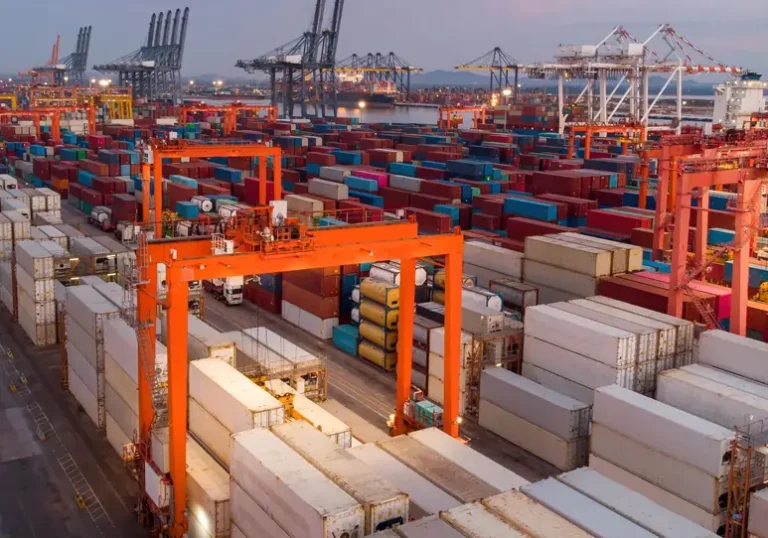
Container cranes are specialized lifting equipment used for container loading, unloading, stacking, and transfer operations in ports, terminals, and logistics yards. Different types of container cranes are designed for specific working conditions, including Ship-to-Shore (STS) cranes for vessel handling, RTG cranes and RMG cranes for yard operations, and gantry cranes for customized container movement.
In this article, I will introduce the main types of container cranes, their working areas, key specifications, and application differences. I will also compare STS, RTG, RMG, and gantry cranes to explain how each crane type works and how to choose the right container handling equipment for different terminal requirements.
Types of Container Cranes
Different types of container cranes are designed for various container handling operations in ports, terminals, and logistics yards. The main types include STS cranes, RTG cranes, RMG cranes, and container gantry cranes, each with different structures, movement methods, lifting capacities, and application areas.
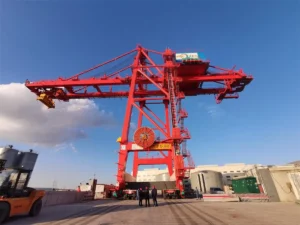
Ship-to-Shore (STS) Container Crane
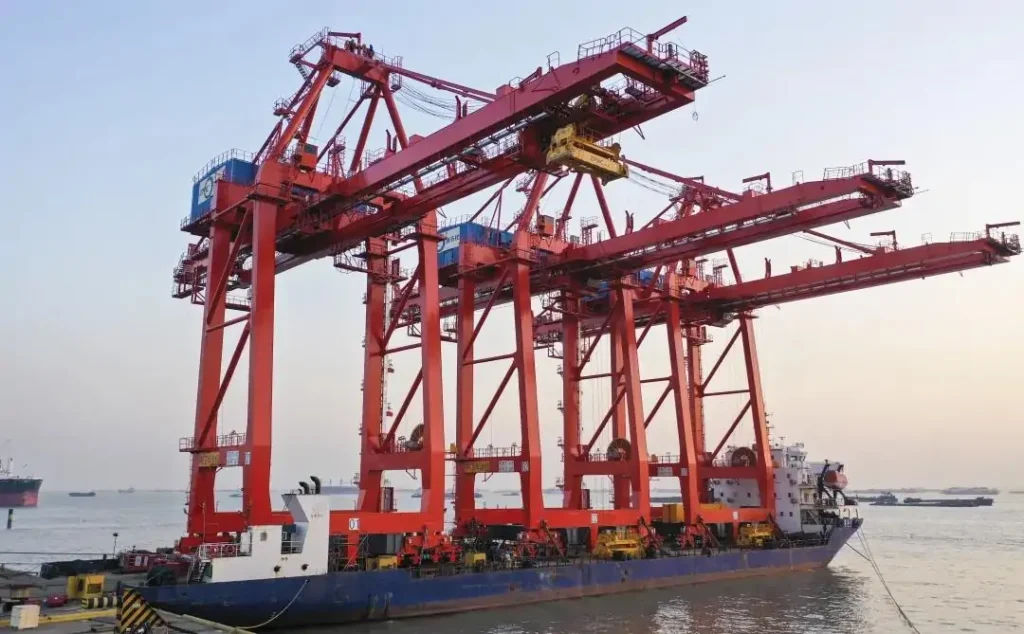
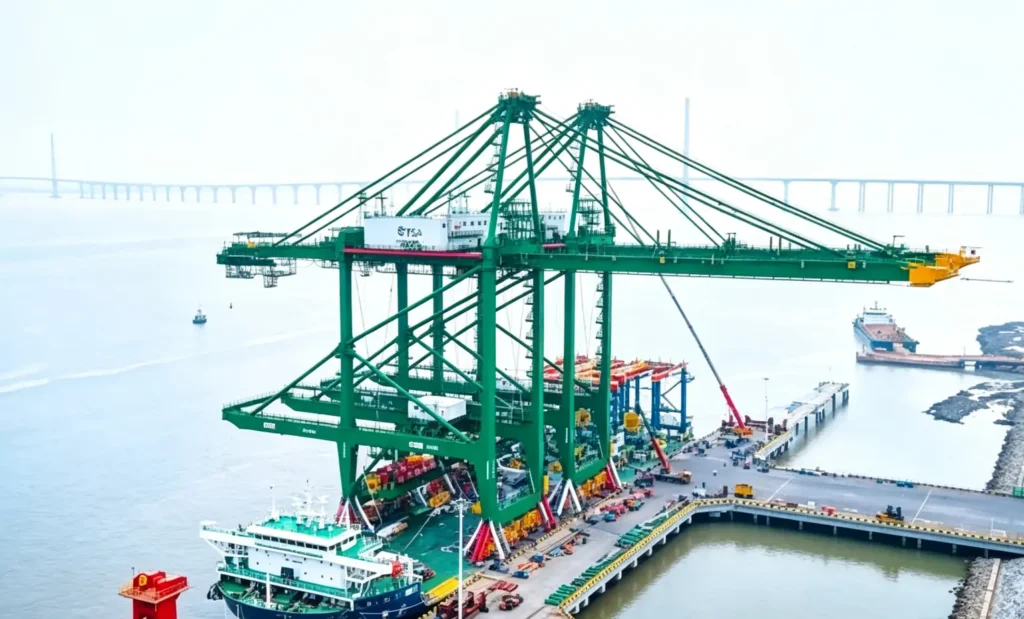
Ship-to-Shore (STS) Crane is a quay-side container crane installed at the port berth for loading and unloading containers between vessels and shore transport equipment. It uses a long boom and spreader system to reach containers across the ship deck.
| Parameter | Range |
|---|---|
| Lifting Capacity | 30–100+ tons |
| Outreach | 40–70+ m |
| Lifting Height | 30–50 m |
| Working Class | A6–A8 |
Advantages
- High-speed container loading and unloading
- Suitable for large container ships over 24,000 TEU
- Supports single, twin-lift, and multi-container handling
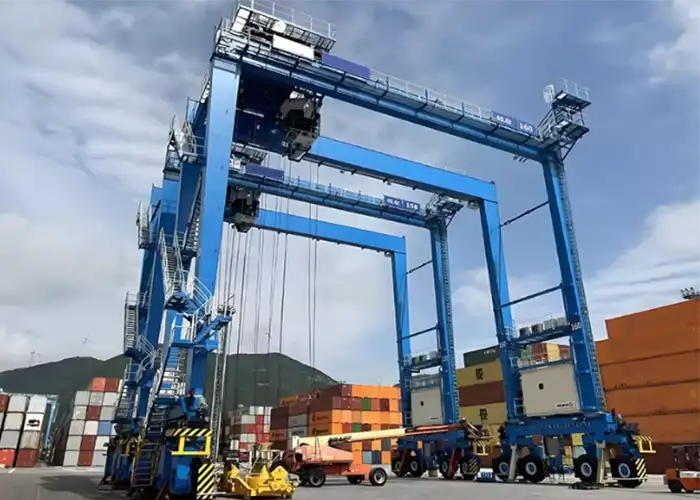
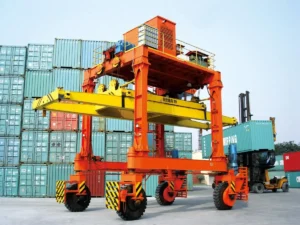
Rubber Tyred Gantry (RTG) Crane
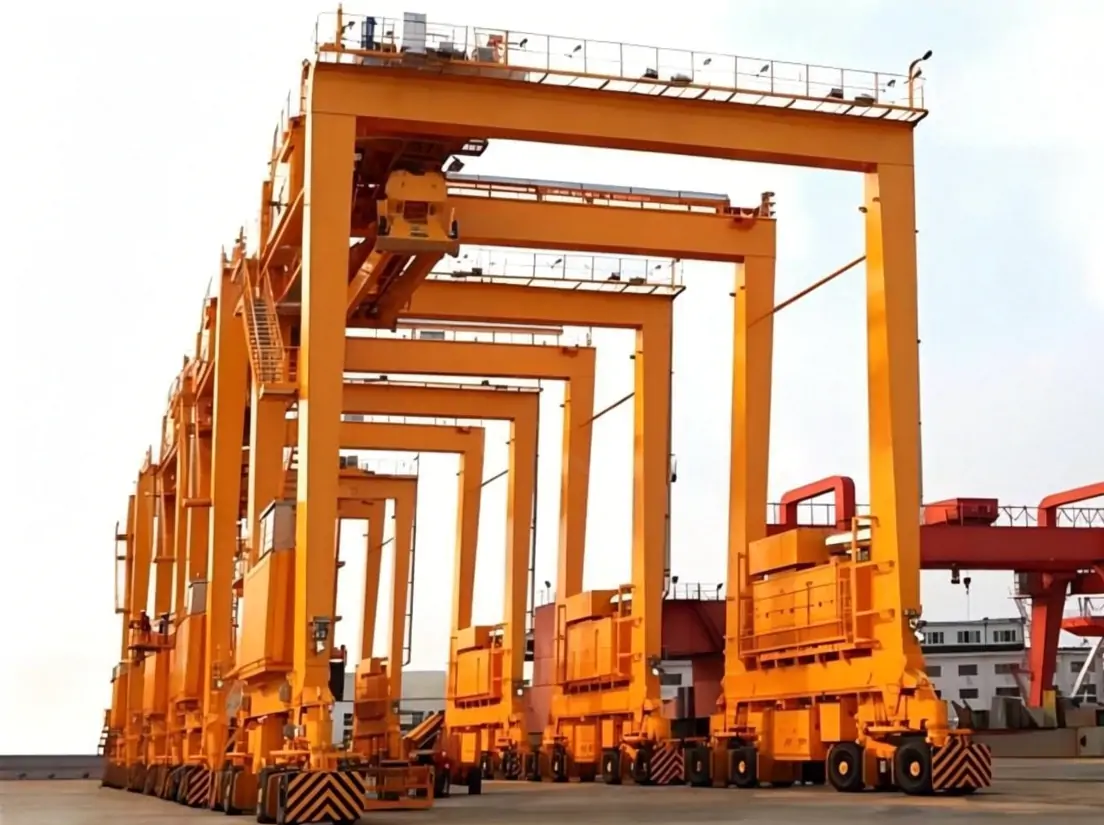
Rubber Tyred Gantry (RTG) Crane is a mobile container yard crane running on rubber tires. It is mainly used for container stacking and transfer operations in storage yards without fixed rails.
| Parameter | Range |
|---|---|
| Lifting Capacity | 30–50 tons |
| Stacking Height | 4–8 containers |
| Span | 20–30 m |
| Working Class | A6–A8 |
Advantages
- Flexible movement between storage blocks
- No rail installation required
- Supports 20ft, 40ft, and 45ft container handling
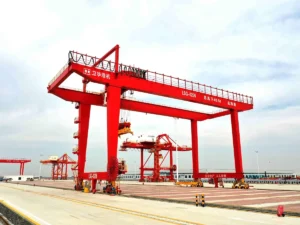
Rail Mounted Gantry (RMG) Crane
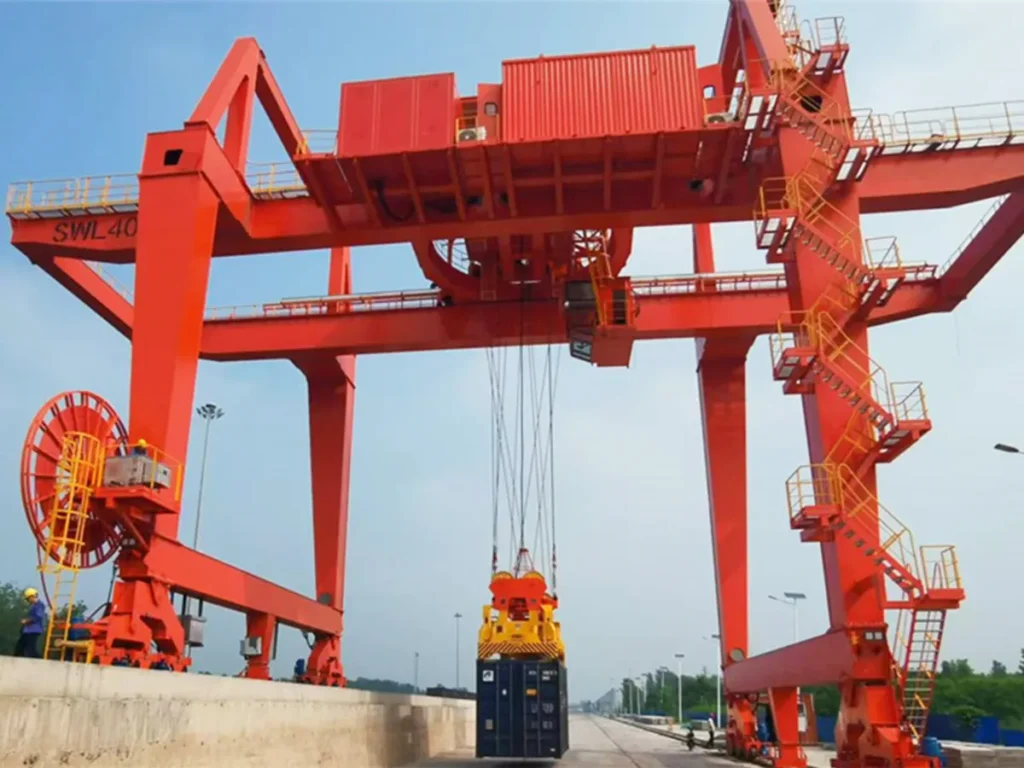
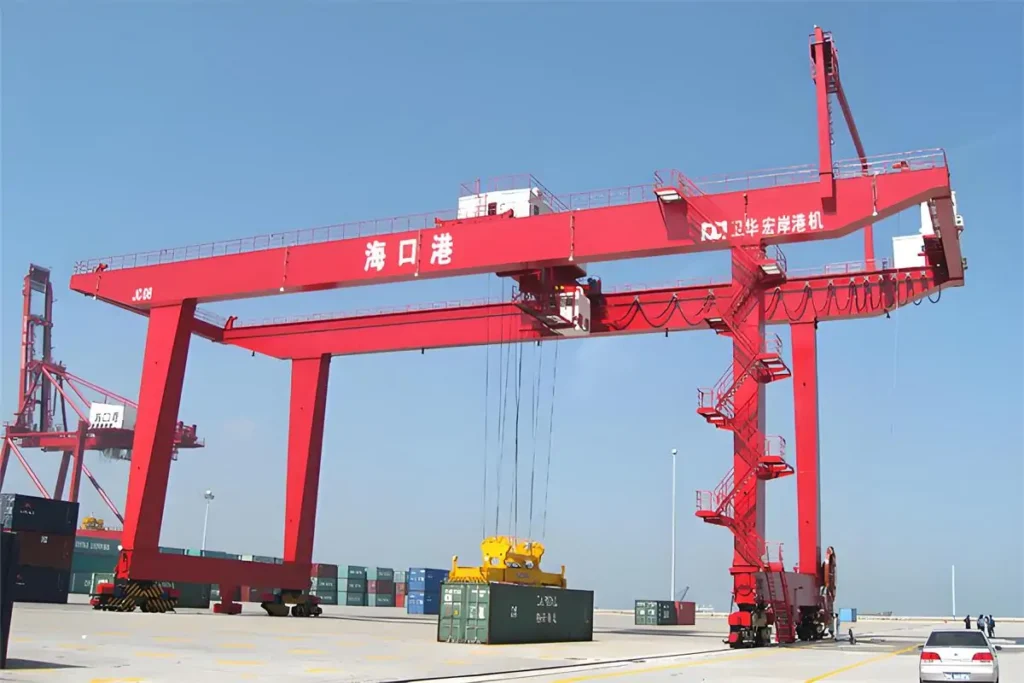
Rail Mounted Gantry (RMG) Crane is a rail-based container handling crane used in fixed operating areas. It runs along parallel rails and is widely used in automated terminals, railway yards, and intermodal transport centers.
| Parameter | Range |
|---|---|
| Lifting Capacity | 30–80 tons |
| Span | 30–50 m |
| Stacking Height | 5–10 containers |
| Positioning Accuracy | ±10 mm |
Advantages
- High positioning accuracy
- Suitable for automated operation
- Stable performance in continuous handling
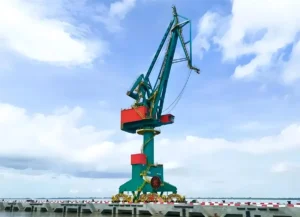
Container Gantry Crane
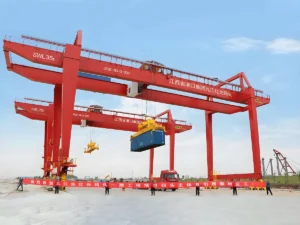
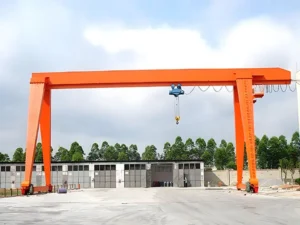
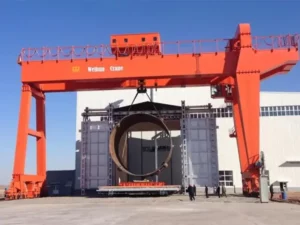
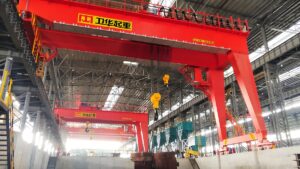
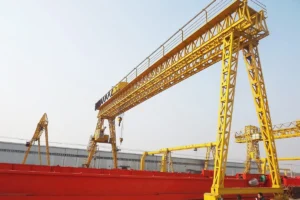
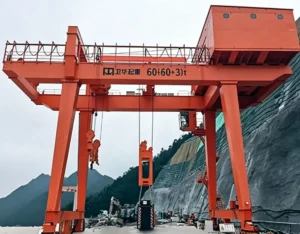
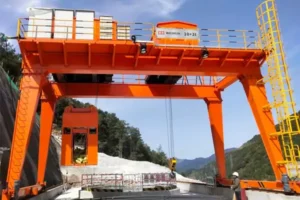
Container Gantry Crane is a general term for gantry-type cranes designed for container lifting and transfer. The crane can be configured with rubber tires or rail systems according to site conditions and handling requirements.
| Parameter | Range |
|---|---|
| Lifting Capacity | 20–100 tons |
| Span | Customized |
| Boom Type | No boom / Single boom / Double boom |
| Operation Mode | Manual / Remote / Automatic |
Advantages
- Flexible structure configuration
- Suitable for different container handling layouts
- Supports customized lifting height and span design
STS, RTG, RMG, and Container Gantry Cranes are designed for different container handling operations. STS cranes focus on ship-to-shore transfer, RTG and RMG cranes handle yard operations, while Container Gantry Cranes provide flexible solutions for various container handling sites.
Learn more about container crane types, applications, and working principles in our guide: What Is a Container Crane? Types, Uses & How It Works.
Container crane operations require coordination across multiple stages. To learn how they work and their operating principles, see: How Do Container Cranes Work? Container Handling Process Explained
STS vs RTG vs RMG Crane: Key Differences
Different types of container cranes, including STS, RTG, and RMG cranes, are widely used in ports and terminals for different handling operations. STS cranes handle ship-to-shore container transfer, while RTG and RMG cranes are mainly used for container stacking and yard transportation. The main differences between these crane types include application area, movement method, lifting capacity, and automation level.
| Comparison | STS Crane | RTG Crane | RMG Crane |
|---|---|---|---|
| Application Area | Quayside ship loading and unloading | Container yard stacking | Container yard and railway terminal handling |
| Travel Method | Rail movement along quay | Rubber tire movement | Fixed rail movement |
| Lifting Capacity | 50–65 tons, 100+ tons available | 40–50 tons | 30–80 tons |
| Outreach / Span | 48–71 m outreach | About 23.47 m span | 30–50 m span |
| Stacking Height | Not used for stacking | 4–6 containers | 5–10 containers |
| Positioning Accuracy | Depends on operator control | Medium accuracy | Up to ±10 mm |
| Automation Level | Remote and semi-automatic options | Manual or semi-automatic | Suitable for fully automatic operation |
| Power Supply | Shore power | Diesel generator or battery | Full electric drive |
| Main Advantage | High-speed ship loading and unloading | Flexible movement and lower infrastructure cost | High accuracy and automation capability |
| Main Limitation | Fixed at quay, cannot handle yard stacking | Lower positioning accuracy and tire maintenance | Requires rail installation and a fixed operating area |
Key Differences
- Working Function: STS cranes are used for ship-to-shore container transfer and directly affect vessel loading efficiency. RTG and RMG cranes handle container stacking and transfer inside yards.
- Movement Method: RTG cranes use rubber tires and can move between storage blocks without rails. RMG cranes run on fixed rails with higher positioning accuracy but limited working areas.
- Automation Capability: RMG cranes are widely used in automated terminals due to their rail guidance and electric drive systems. RTG cranes are commonly operated manually or remotely, while STS cranes support semi-automatic and remote operation.
- Cost and Operation: RTG cranes require less infrastructure investment but involve tire and fuel maintenance. RMG cranes need rail construction but offer lower energy consumption and stable long-term operation.
Different types of container cranes, including STS, RTG, and RMG cranes, serve different parts of the container handling process. STS cranes are mainly used for vessel loading and unloading, while RTG and RMG cranes are used for container yard stacking and transfer. The selection depends on terminal capacity, yard layout, automation requirements, and operating costs.
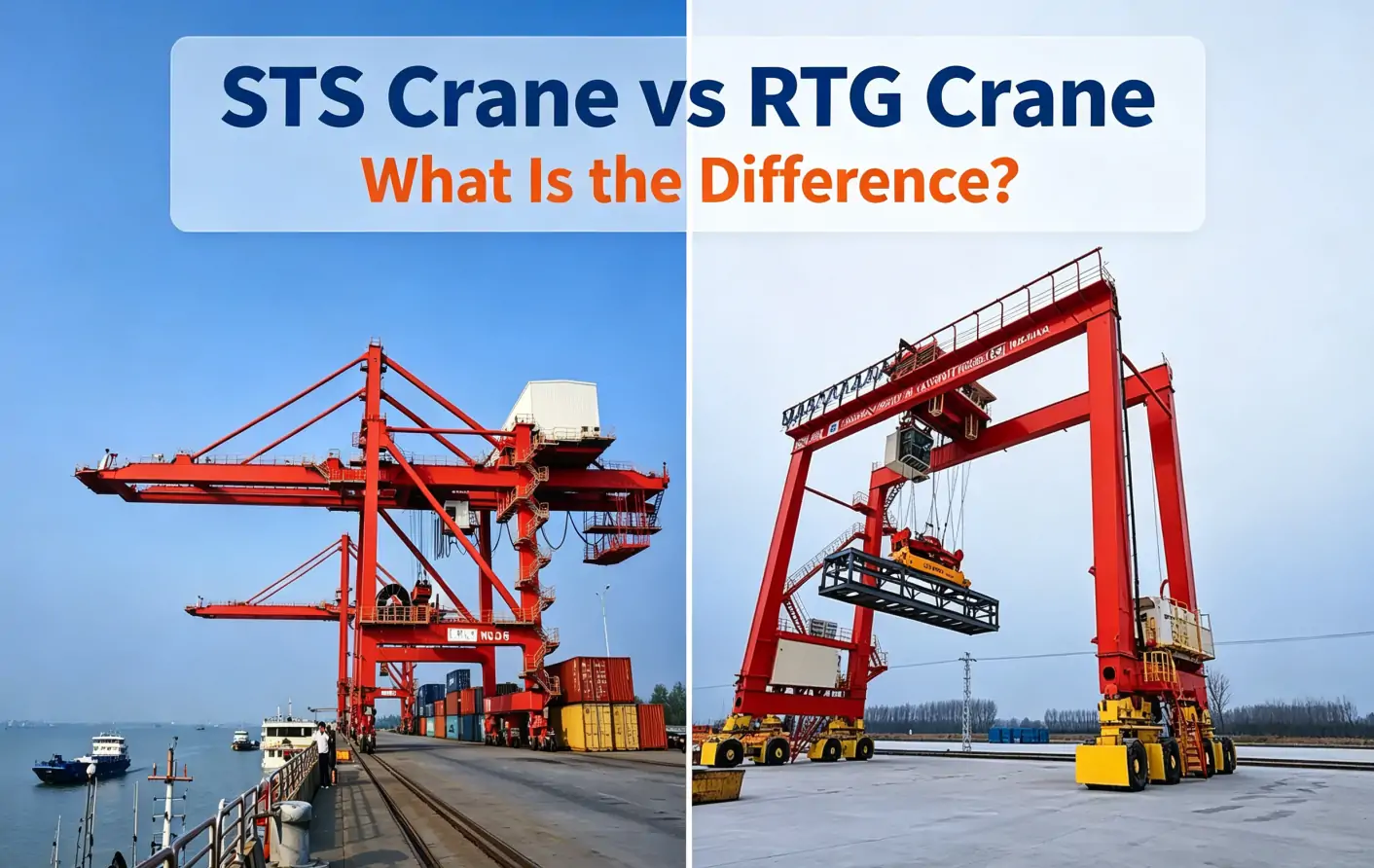
For a more detailed comparison of STS cranes and RTG cranes, see the article: STS Crane vs. RTG Crane: What Is the Difference?
Applications of Different Container Cranes
Different types of container cranes are used for specific handling tasks based on terminal layout, container flow, and operational requirements. STS cranes are mainly used for ship loading and unloading, while RTG and RMG cranes are commonly applied in container yards for stacking and transfer operations.
Ship-to-Shore (STS) Container Crane
STS cranes are used for ship-side container handling, transferring containers between vessels and shore transport equipment at port berths.
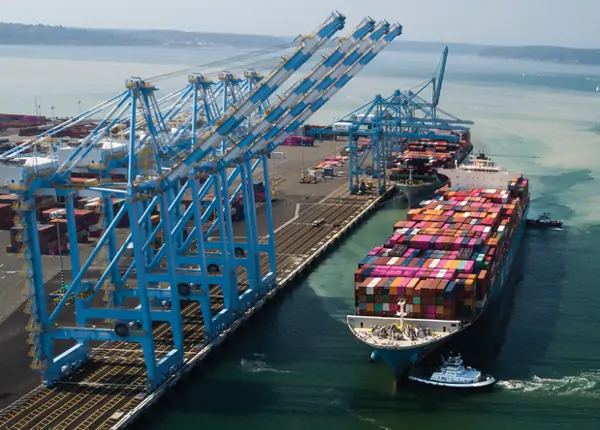
Seaport container terminals
Deep-water ports
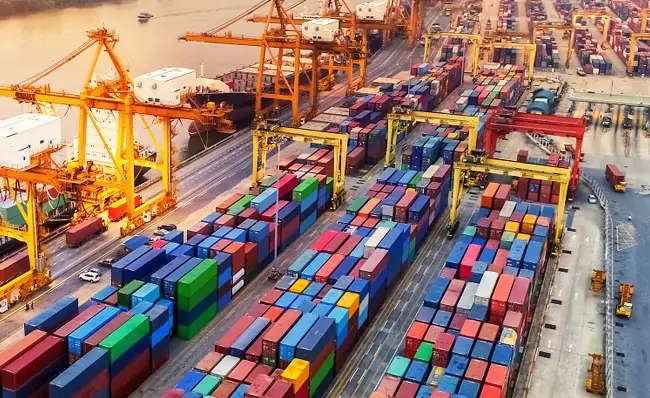
Large container vessel loading and unloading
Rubber Tyred Gantry (RTG) Crane
RTG cranes are used for flexible container stacking and transfer operations in storage yards with frequent block changes.
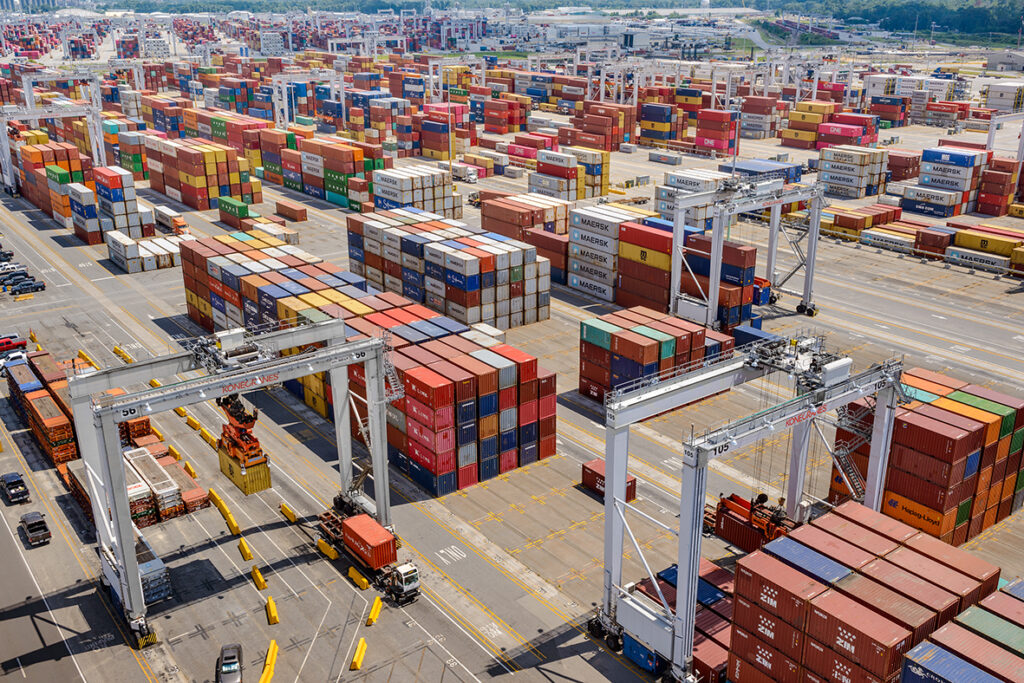
Container storage yards
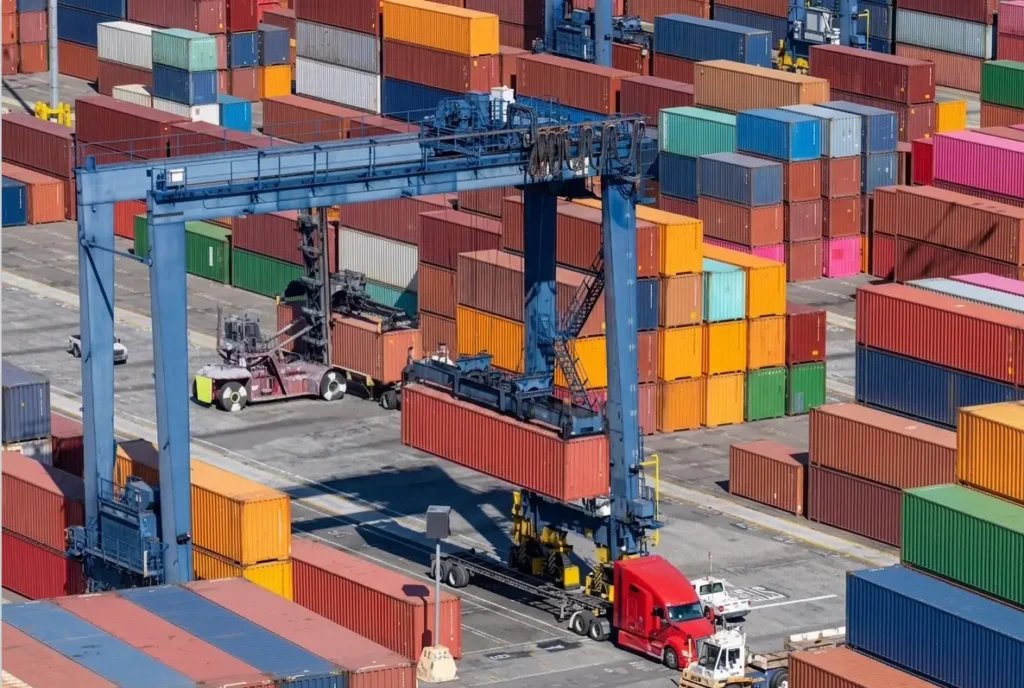
Inland container terminals
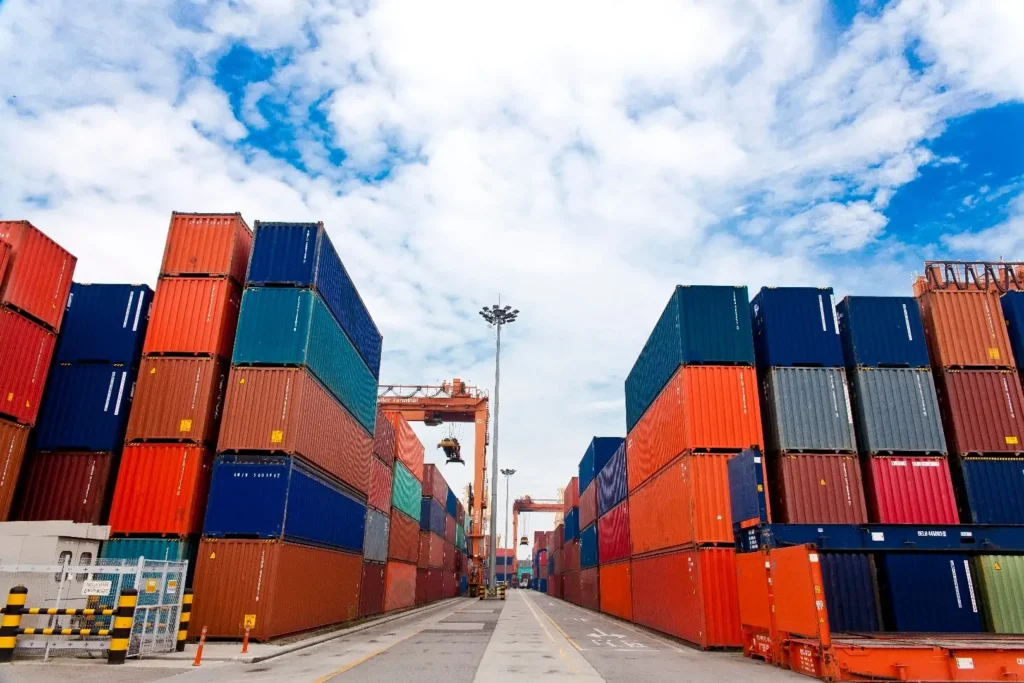
Logistics distribution centers
Rail Mounted Gantry (RMG) Crane
RMG cranes are used for fixed-area container handling where high positioning accuracy and automated operation are required.
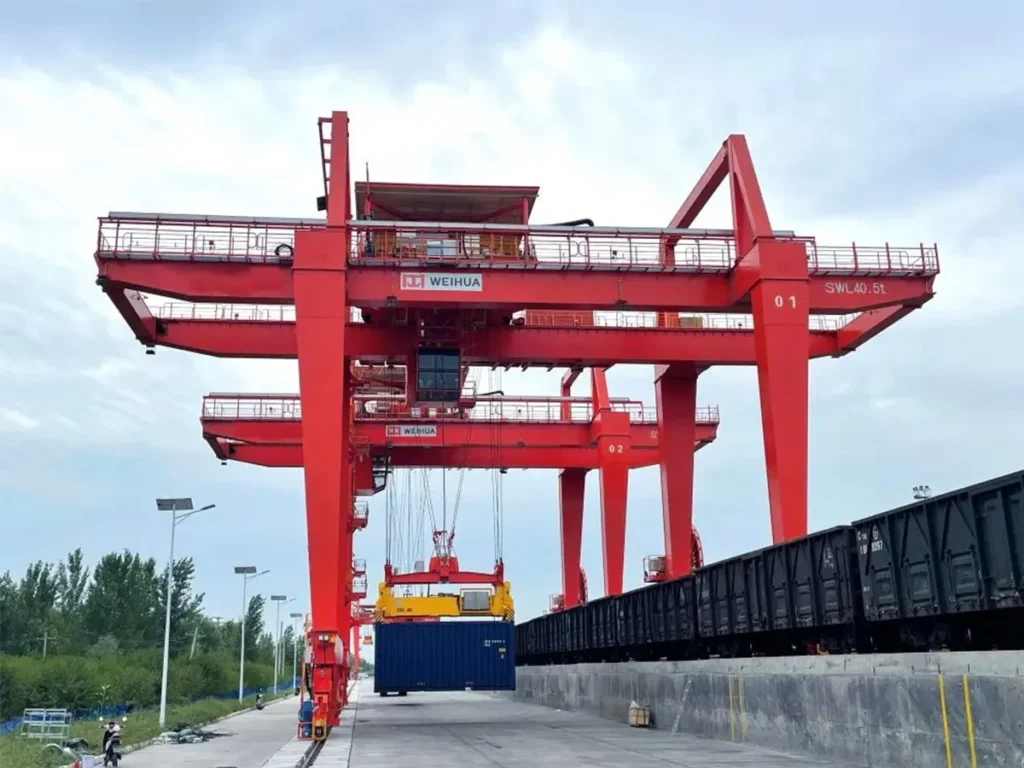
Automated container terminals
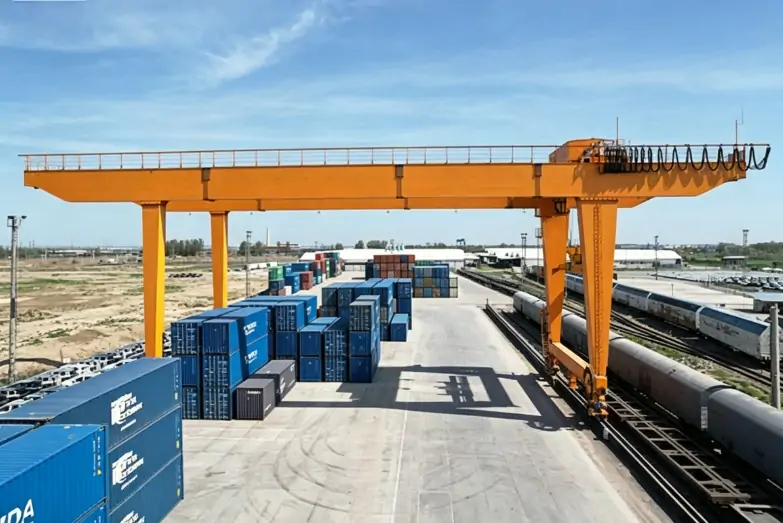
Railway container yards
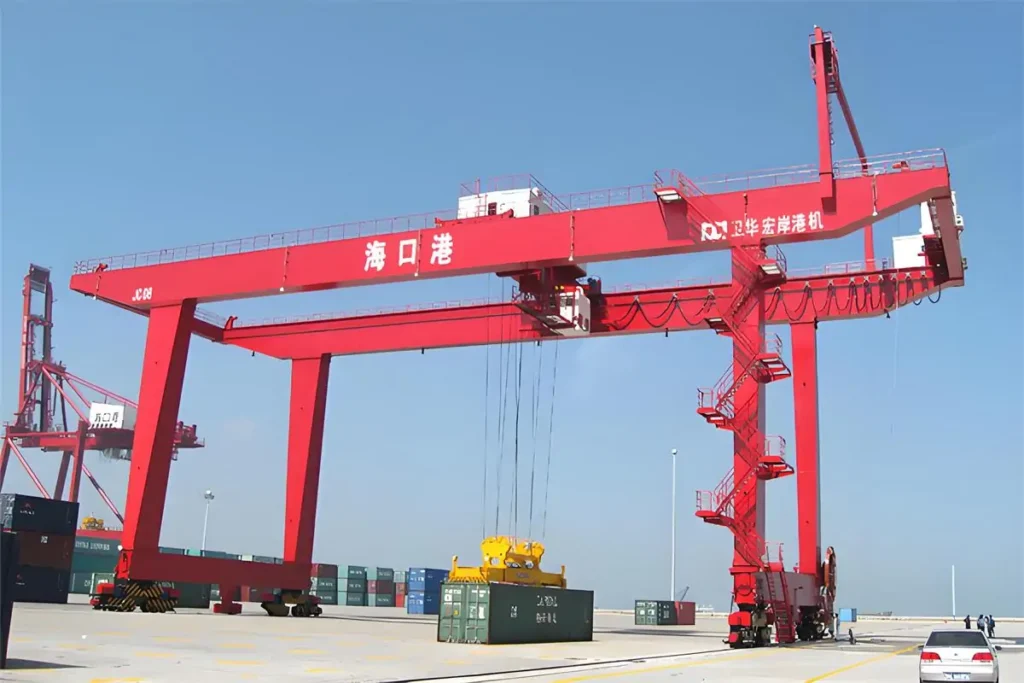
Multimodal transport hubs
Container Gantry Crane
Container gantry cranes are used for customized container lifting and transfer operations with different span, height, and travel configurations.
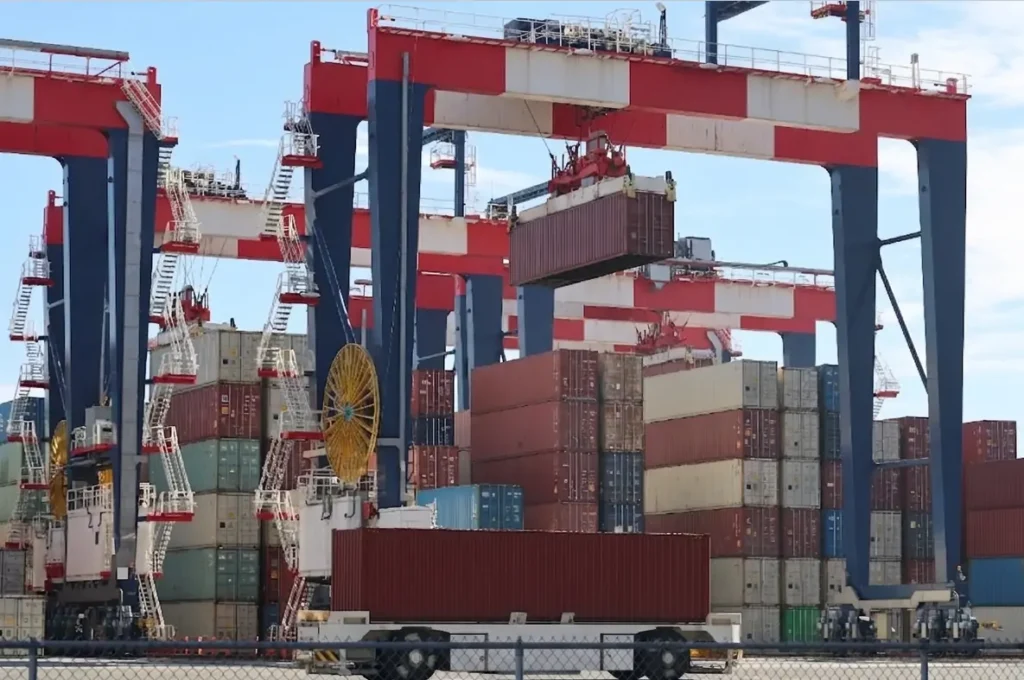
Port container yards
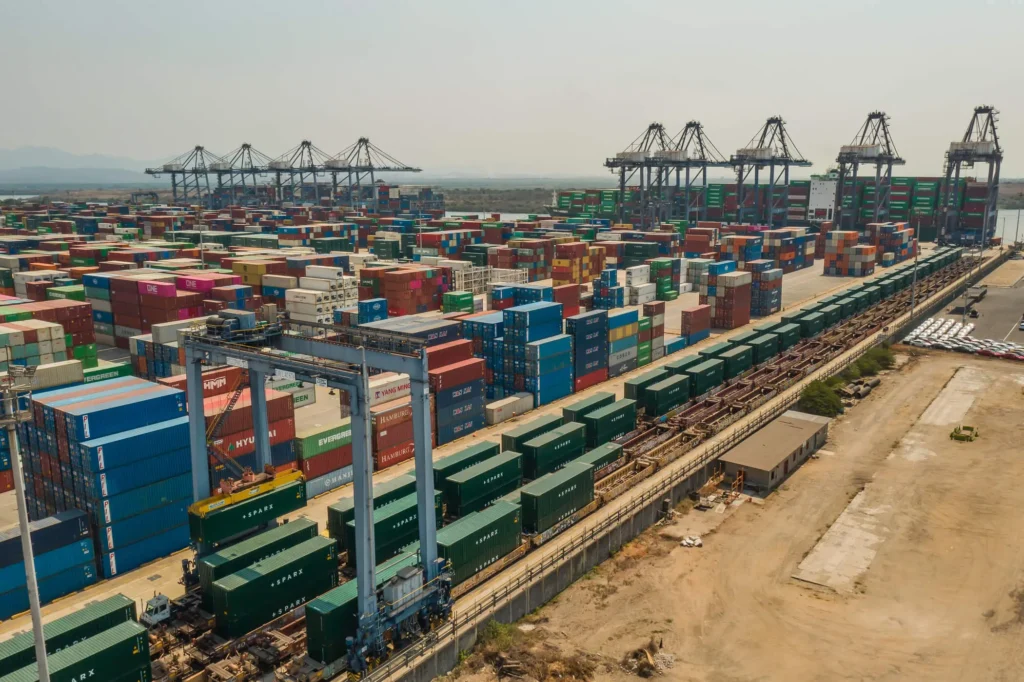
Railway freight stations
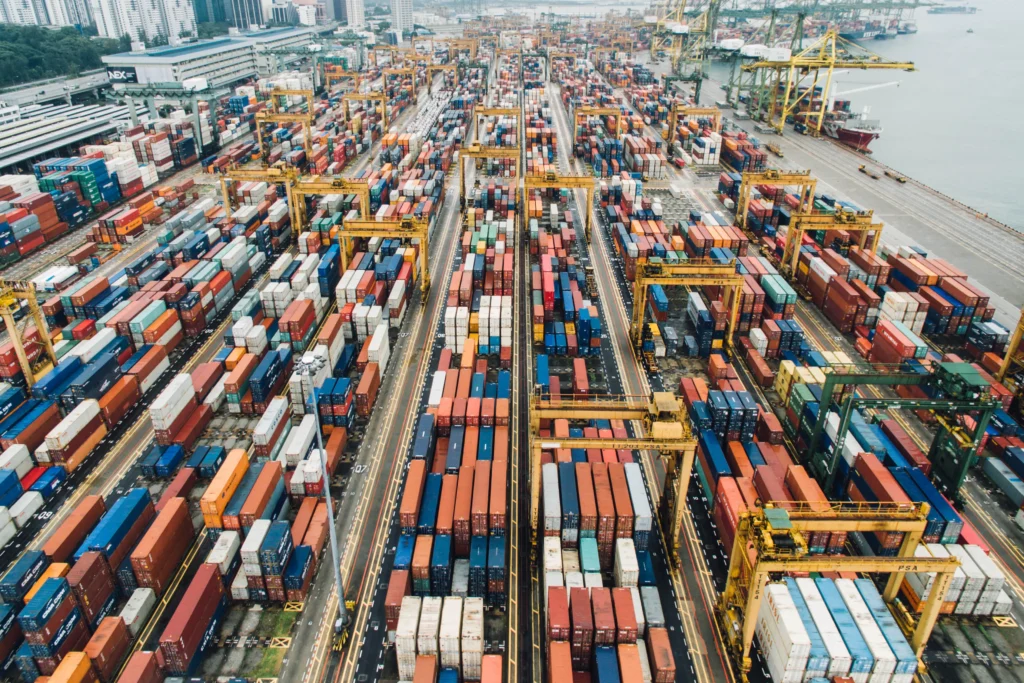
Inland container depots
Why Are Different Types of Container Cranes Needed?
Different types of container cranes are designed for different handling stages, including ship loading and unloading, yard stacking, and container transfer. Each crane type has its own working area, operating requirements, and application scenarios.
- 1. Different Handling Functions: STS cranes handle ship-to-shore container transfer with long outreach and high lifting height. RTG and RMG cranes are used for container stacking and transfer in yards.
- 2. Mobility and Accuracy Requirements: RTG cranes use rubber tires for flexible movement between storage areas. RMG cranes run on fixed rails and provide positioning accuracy up to ±10 mm for automated operations.
- 3. Automation Requirements: RMG cranes are widely used in automated terminals, while RTG cranes are suitable for flexible yard operations. STS cranes support remote control and automation systems.
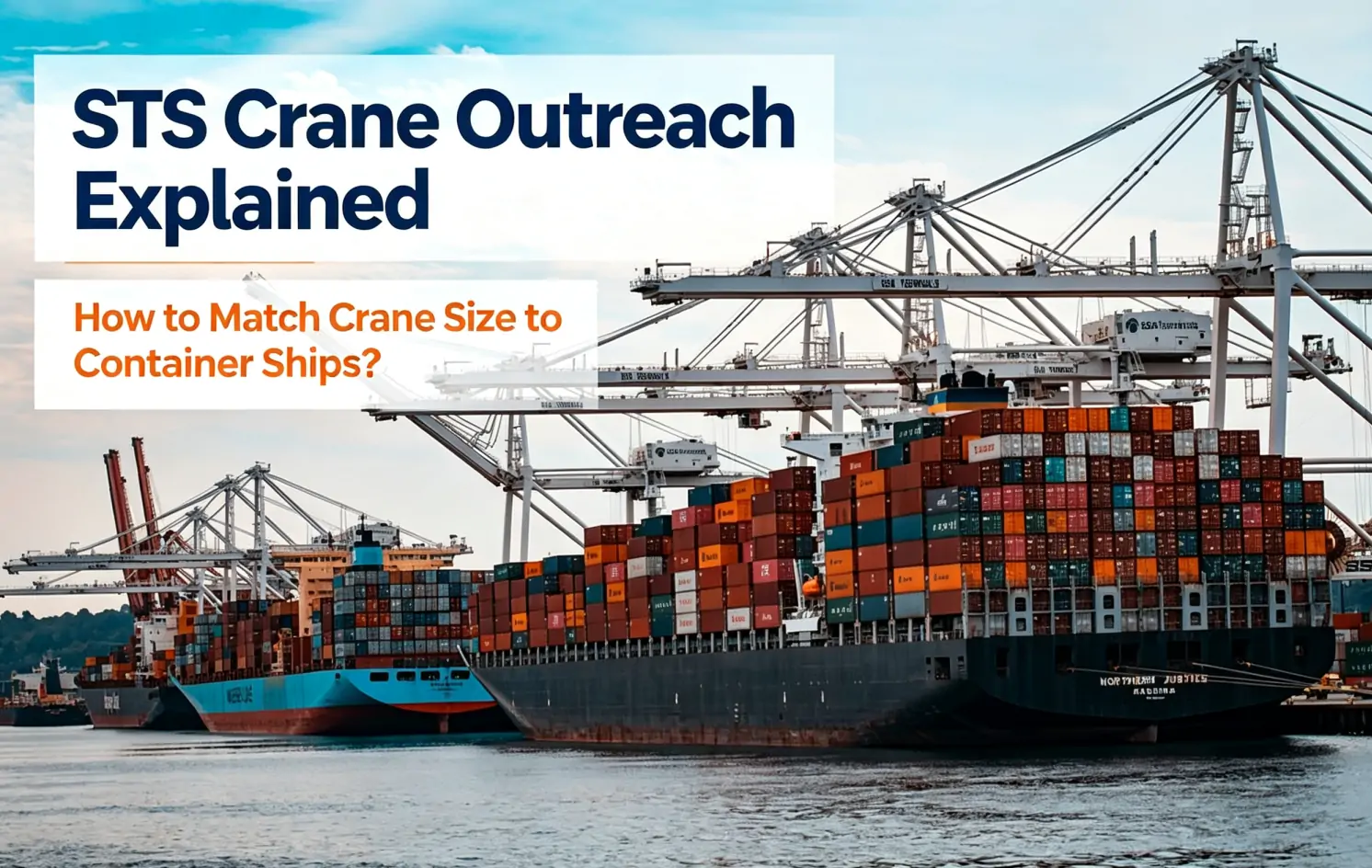
- 4. Vessel Size and Throughput: Large vessels over 24,000 TEU require STS cranes with more than 70 m outreach. Yard crane selection depends on storage capacity and container handling volume.
- 5. Investment and Operating Cost: RTG cranes have lower infrastructure costs but require tire and energy maintenance. RMG cranes require rail construction but provide stable operation and lower long-term energy consumption.
STS, RTG, and RMG cranes serve different roles in container terminals. The selection depends on handling process, automation level, site conditions, and operating costs.
How to Choose the Right Container Crane?
Different types of container cranes are selected based on terminal layout, container volume, vessel size, and operating requirements. The right crane type should match the handling process, including ship loading and unloading, yard stacking, and long-term operation needs.
1. Determine the Working Area
Choose the crane type according to the operation location.
- STS Crane: Used for ship-to-shore container loading and unloading.
- RTG Crane: Used for flexible container stacking in yards.
- RMG Crane: Used for fixed rail yards and automated terminals.
2. Check Lifting Capacity
Select lifting capacity based on container weight and handling method.
- Standard container cranes: 30–50 tons
- Heavy-duty STS cranes: 60–100+ tons
- Twin-lift operation requires higher capacity.
3. Match Vessel Size and Crane Dimensions
STS cranes require suitable outreach and lifting height for vessel size.
- Outreach: 40–70+ m
- Lifting Height: 30–50 m
- Suitable for large container vessels up to 24,000+ TEU
4. Consider Yard Layout
RTG and RMG selection depends on storage area design.
- RTG: Suitable for yards requiring flexible movement.
- RMG: Suitable for fixed layouts with higher stacking density.
5. Evaluate Automation Requirements
Choose the control system based on operational needs.
- Manual operation
- Remote control
- Fully automated operation
RMG cranes are commonly used in automated container terminals due to their rail-based positioning.
6. Consider Operating Environment
Check factors such as wind, corrosion, temperature, and working hours. Coastal terminals usually require corrosion-resistant structures and reliable protection systems.
7. Compare Long-Term Operating Costs
Consider energy consumption, maintenance requirements, spare parts, and service support during the equipment life cycle.
Choosing the right container crane type requires matching the crane type, lifting capacity, operating area, and automation level to actual terminal requirements. The suitable crane configuration should fit the handling process, vessel size, yard layout, and long-term operation needs.
The specifications of container cranes—such as lifting capacity, span, and lifting height—directly affect the pace of operations. For detailed data, see: Container Crane Specifications: Capacity, Span, Lifting Height & Working Class
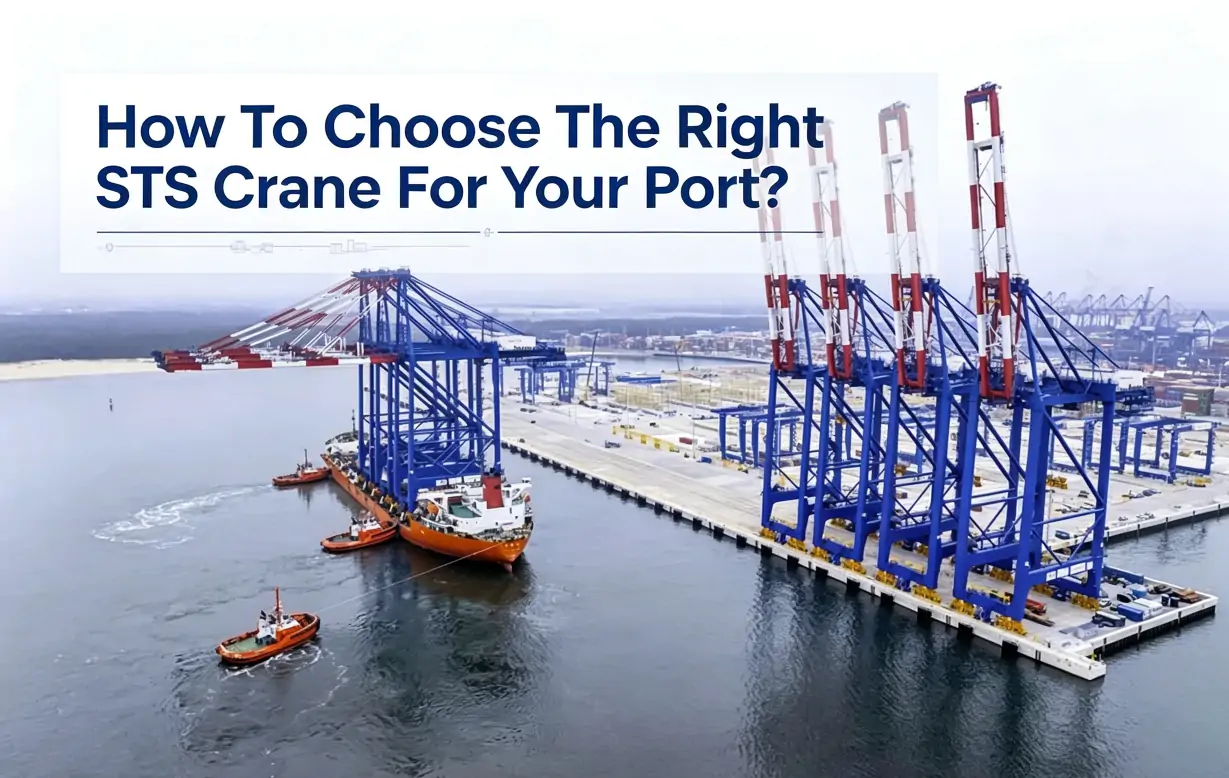
Different types of container cranes are used for different operational scenarios. To learn how to select the right crane for container operations, see the article: “How to Choose a Container Handling Gantry Crane?”
Conclusion
Different types of container cranes are designed for specific handling tasks in ports, terminals, and logistics yards. STS cranes focus on ship-to-shore container transfer, while RTG and RMG cranes handle yard stacking and transfer operations. The right crane selection depends on container volume, vessel size, site layout, automation requirements, and operating costs.
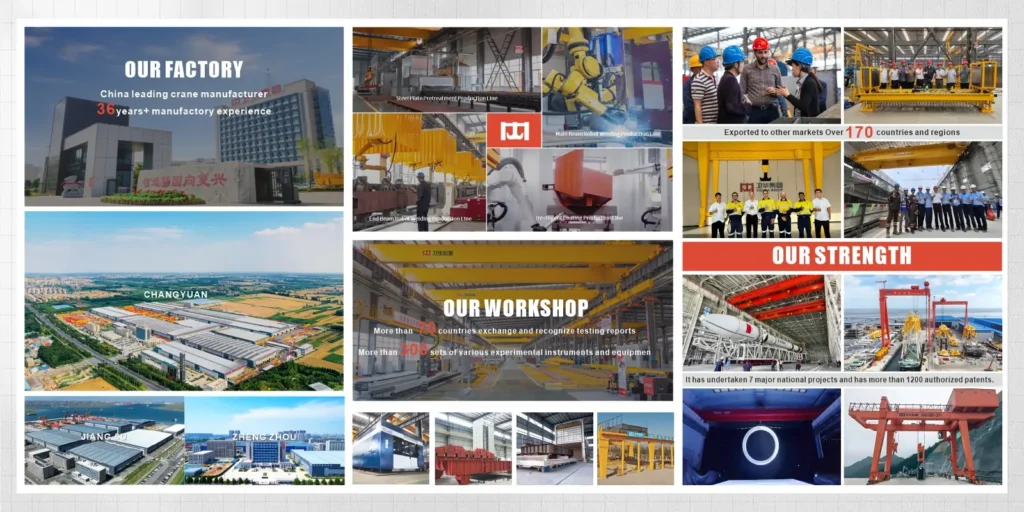
WEIHUA provides container handling crane solutions, including STS cranes, RTG cranes, RMG cranes, and customized gantry cranes for different terminal applications. With experience in crane design, manufacturing, installation, and project support, WEIHUA develops container handling equipment based on terminal layout, operating conditions, and customer requirements. Contact us to discuss your container crane project and find a suitable lifting solution for your operation.
FAQ
What are the main types of container cranes?
The main types include STS cranes, RTG cranes, RMG cranes, and container gantry cranes.
What is the difference between STS and RTG cranes?
STS cranes move containers between ships and shore, while RTG cranes stack containers in yards.
What type of crane is used at container ports?
STS cranes are used at quays for ship loading and unloading, while RTG and RMG cranes are used in container yards.
Which is better, RTG or RMG crane?
RTG cranes provide flexible movement, while RMG cranes offer higher positioning accuracy and are suitable for automated terminals.
How much weight can a container crane lift?
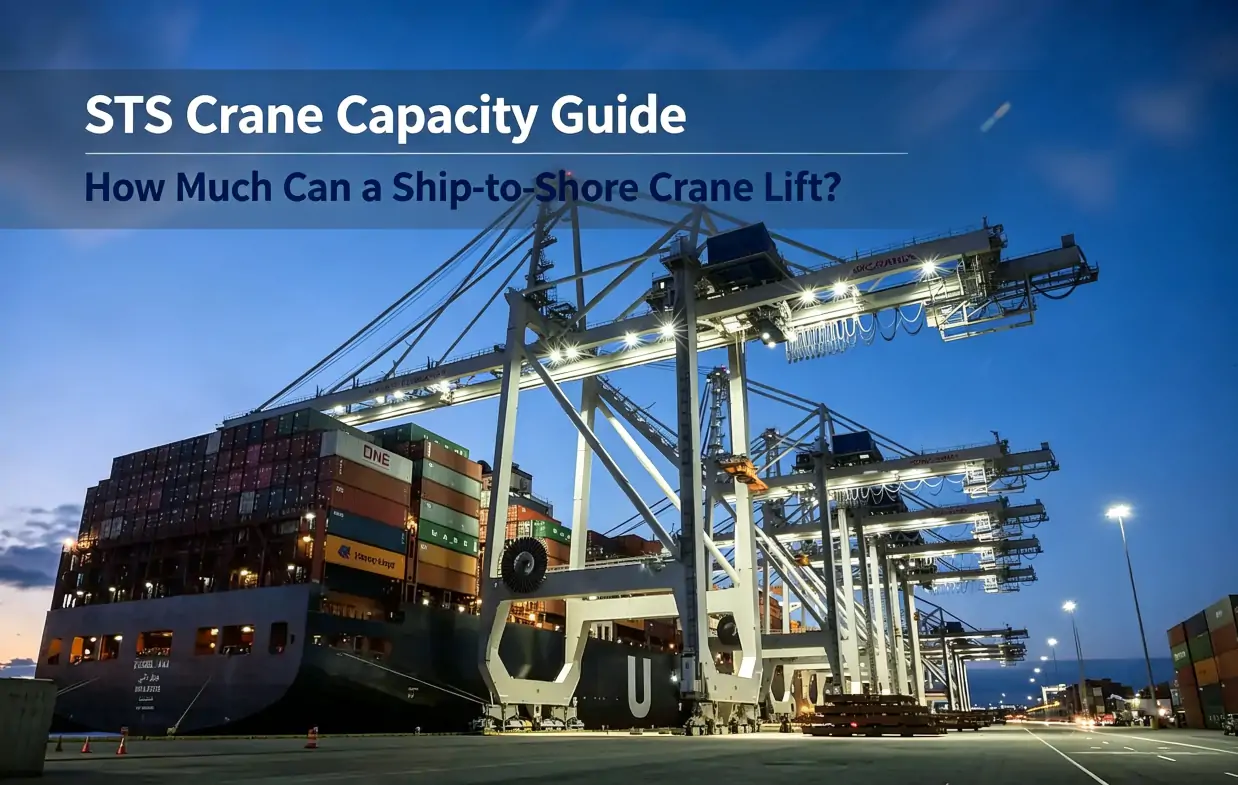
Container cranes typically lift 30–100+ tons depending on crane type and application.
Are container cranes automated?
Many modern container terminals use automated or remote-controlled cranes with PLC systems and positioning technology.
What crane is used for container stacking?
RTG and RMG cranes are commonly used for container stacking operations.
How do I select a container crane?
Selection depends on container volume, working location, vessel size, automation needs, and terminal layout.