








Table of Contents
Introduction
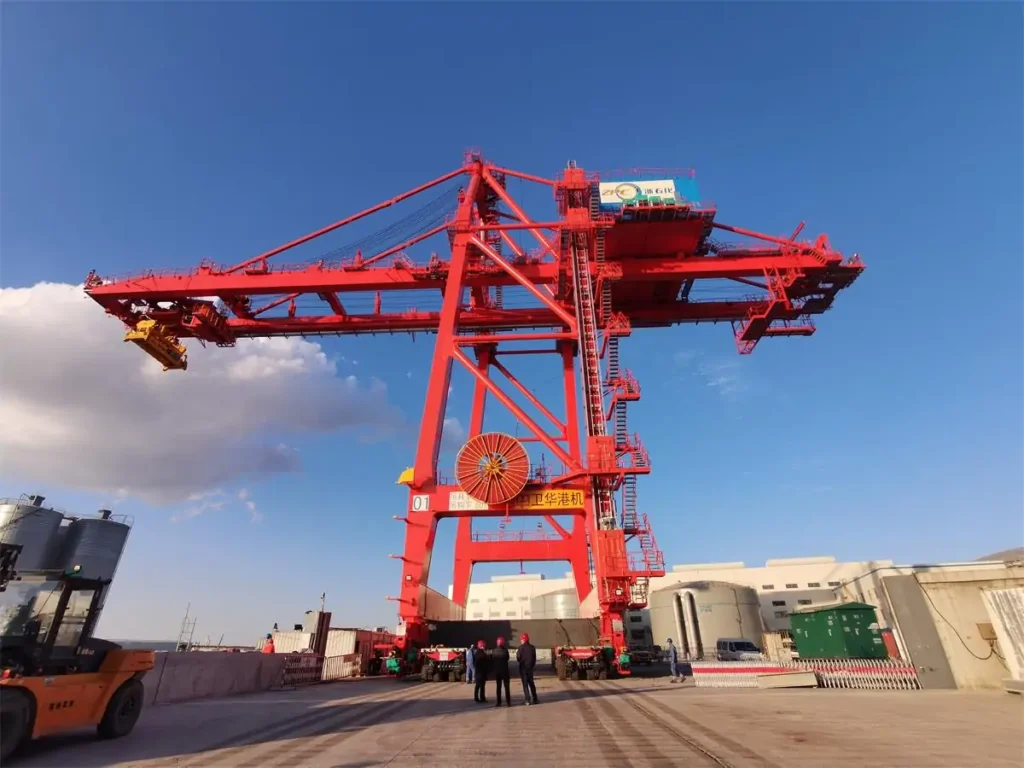
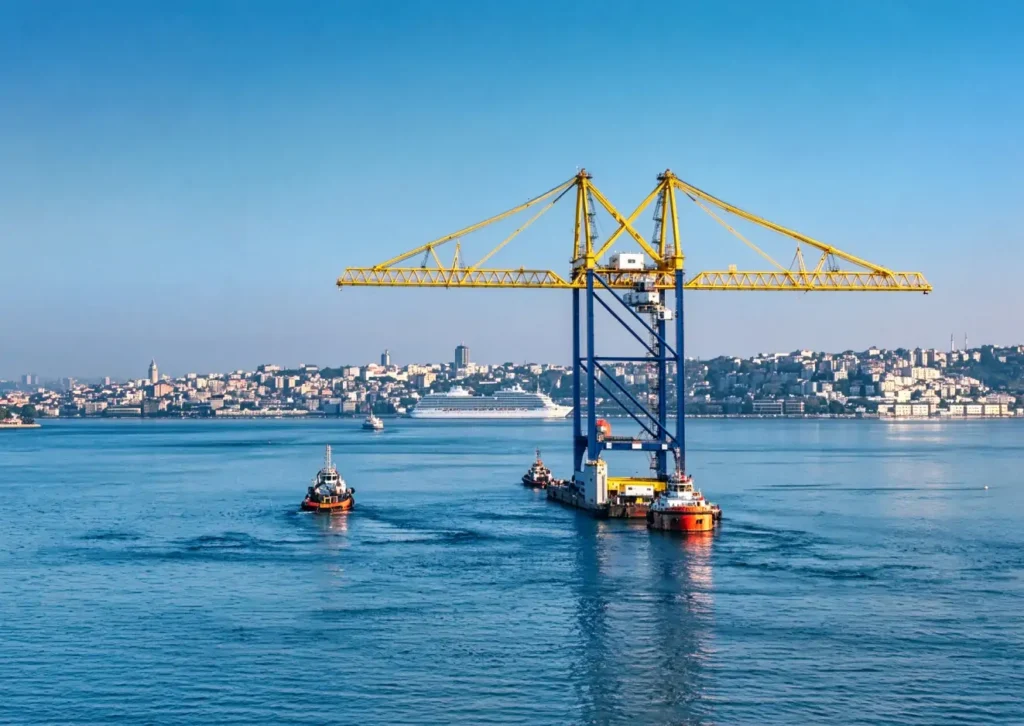
A Ship-to-Shore (STS) crane is a large-scale piece of port infrastructure used at the front edge of container terminals to load and unload containers between container ships and the quayside. Each STS crane project is unique: vessel size, berth dimensions, container throughput targets, site conditions, power supply capacity, and automation requirements all vary from one terminal to the next. Because every crane is engineered to match a specific set of project parameters, STS cranes are custom-built equipment, and no single published list price applies across projects.
This guide explains the main factors that drive STS crane cost, compares the two major crane types, reviews how automation level affects investment, and covers the total cost of ownership beyond the initial purchase price. For buyers planning a new terminal or expanding capacity at an existing port, the final section lists the technical information needed to request a project-specific quotation from WEIHUA.
What Determines the Price of an STS Crane?
STS crane price is shaped by the crane’s physical scale, technical configuration, and the complexity of the port project it is built for. Because every crane is designed to fit a specific berth, vessel class, and operational requirement, the cost cannot be separated from the specification. The main cost drivers are listed below.
Structural Scale and Outreach
Outreach is the horizontal distance from the quay rail to the tip of the crane’s boom. WEIHUA’s STS cranes cover an outreach range of 45–70 m for rail-mounted models, with the longer spans required for handling Ultra Large Container Vessels (ULCVs) carrying 20+ container rows. Greater outreach means more structural steel, longer booms, heavier wire rope systems, and larger foundations — all of which increase cost directly.
Lifting Capacity
Typical rated lifting capacity ranges from 40 t for smaller port cranes to 65 t for single-lift and up to 80 t for twin-lift operations on large rail-mounted STS cranes. Higher capacity requires stronger structural members, heavier hoisting mechanisms, larger motors, and upgraded drive systems, each adding to the final price.
Lifting Height
Lifting height above and below rail level determines whether a crane can serve deep-stowage vessels and high-deck ships. Standard configurations reach 50–55 m above rail and 18–20 m below. Projects requiring non-standard heights involve custom structural engineering that adds to cost.
Crane Span (Rail Gauge)
The span between the crane’s two main legs is set by the berth’s existing or planned quay rail gauge, typically 30–35 m for rail-mounted models. Wider spans require larger structural cross-sections and affect the overall weight and material cost of the crane.
Power Supply and Electrical System
Rail-mounted STS cranes use a 6 kV or 10 kV high-voltage power supply delivered via cable reel or busbar system. Projects at terminals with limited grid capacity, non-standard voltage requirements, or the need for energy recovery systems require additional electrical engineering work, which increases cost.
Customization and Project-Specific Engineering
STS cranes are engineered to project data: vessel dimensions, berth layout, handling rate target, environmental conditions (wind, seismic zone, temperature, salt exposure), and foundation conditions. Each customization — from spreader type to control system configuration — is priced individually. Projects with complex site conditions or special requirements such as dual-functionality (container and grab handling) will reflect higher engineering and manufacturing costs.
Key Specification Parameters and Their Cost Impact
The table below summarizes the main technical parameters of WEIHUA’s STS cranes and the direction in which each affects project cost. These parameters are taken from the product specifications at Ship-to-Shore Cranes (STS).
| Parameter | Typical Range | Cost Direction |
|---|---|---|
| Rated Lifting Capacity (single lift) | 40–65 t | Higher capacity → higher cost |
| Rated Lifting Capacity (twin lift) | Up to 80 t | Twin-lift adds cost vs single-lift |
| Outreach | 45–70 m | Longer outreach → higher cost |
| Backreach | 15–25 m | Longer backreach → higher cost |
| Hoisting Height (above rail) | 40–55 m | Greater height → higher cost |
| Hoisting Height (below rail) | 15–20 m | Deeper below rail → higher cost |
| Trolley Traveling Speed (no-load) | 180–240 m/min | Higher speed → higher cost |
| Hoisting Speed (no-load) | 80–90 m/min | Higher speed → higher cost |
| Crane Traveling Speed | 30–45 m/min | Higher speed → higher cost |
| Rail Gauge (span) | 30–35 m | Wider span → higher cost |
| Container Rows Covered | 22–24 rows or more | More rows → longer outreach → higher cost |
| Power Supply | 6 kV / 10 kV | Custom power configuration → higher cost |
| Automation Level | Manual to fully automatic | Higher automation → higher cost |
| Applicable Vessel Class | Post-Panamax to ULCV | Larger vessel class → higher specification requirements |
All parameters are customizable. A project requiring specifications outside standard ranges will require additional engineering work, which is reflected in the final price.
Get Custom Quotation NowRail-Mounted vs Rubber-Tyred STS Cranes: Price Comparison
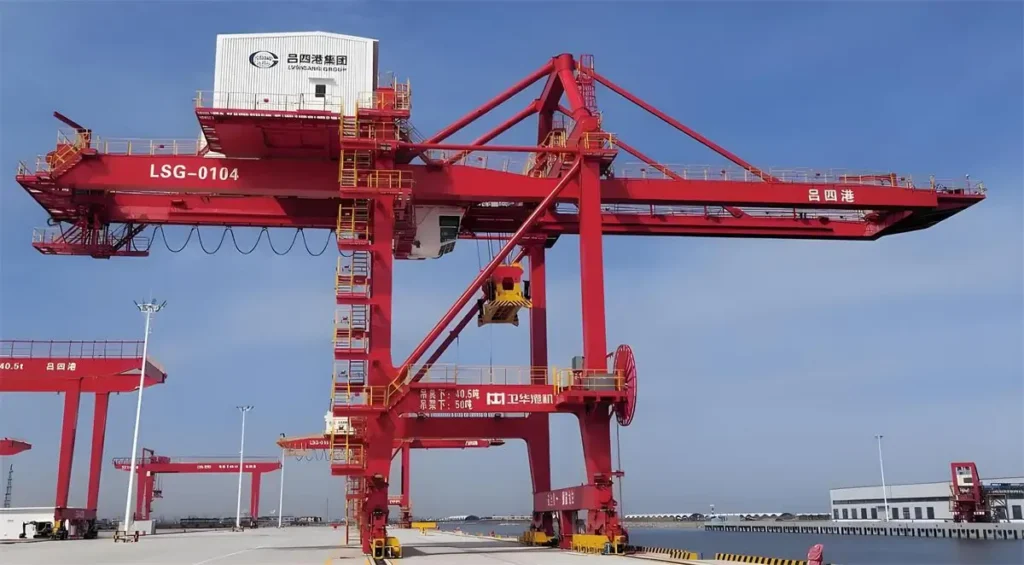
WEIHUA offers two main STS crane types, and the structural difference between them has a significant effect on project cost.
Rail-Mounted STS Cranes
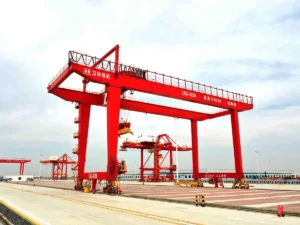
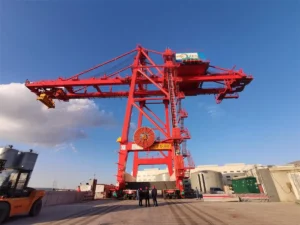
Rail-mounted models run on fixed quay rails and are the standard crane type for dedicated container terminals handling large and ultra-large vessels. With a rated lifting capacity of 40–80 t, outreach of 45–75 m, and lifting height up to 55 m above rail, they are engineered for intensive, continuous 24/7 port operations. The investment covers both the crane itself and the rail infrastructure at the berth. This type is used for Post-Panamax and ULCV operations and accounts for the majority of large-scale terminal investment.
Rubber-Tyred (Truck-Mounted) STS Cranes
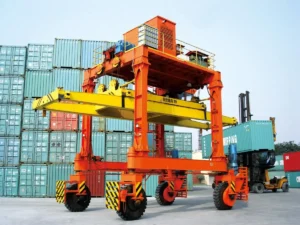
Rubber-tyred models are mounted on rubber tires and require no fixed rail infrastructure. With a rated lifting capacity of 20–40 t, outreach of 25–40 m, and lifting height of 25–35 m, they are suited to smaller container volumes, temporary operations, multi-purpose terminals, and emergency or auxiliary handling. Their lower specification ceiling and the absence of rail infrastructure requirements mean the upfront investment is lower than a rail-mounted system.
| Item | Rail-Mounted STS | Rubber-Tyred STS |
|---|---|---|
| Lifting Capacity | 40–80 t | 20–40 t |
| Outreach | 45–75 m | 25–40 m |
| Lifting Height (above rail) | 40–55 m | 25–35 m |
| Infrastructure Required | Fixed quay rails | None (self-propelled) |
| Power Supply | 6 kV / 10 kV grid | Diesel generator or hybrid |
| Vessel Class | Post-Panamax to ULCV | Smaller vessels / feeder ships |
| Typical Application | Dedicated container terminals | Small ports, temporary, multi-purpose |
| Relative Investment | Higher | Lower |
For a port that handles large container volumes and needs to operate at high throughput, rail-mounted STS cranes represent the appropriate investment. For smaller or more flexible operations, rubber-tyred models offer a lower entry point while still providing ship-to-shore container handling capability.
Automation Level and Price
STS cranes can be configured for manual cabin operation, semi-automatic operation, or fully automatic unmanned operation. Each level adds cost to the base crane configuration, and the difference between a manually operated system and a fully automated one can be substantial.
| Automation Level | Description | Cost Impact |
|---|---|---|
| Manual (Cabin Operation) | Operator controls all movements from an on-crane cab | Base configuration |
| Semi-Automatic | Automated positioning for certain functions; operator handles final placement | Moderate additional cost |
| Remote Control | Full control from a remote operations center, without an on-crane operator | Higher additional cost |
| Fully Automatic | Integration with Terminal Operating System (TOS); unmanned operation | Highest additional cost |
Automation systems add investment in PLC and software, anti-sway technology, optical container recognition (OCR), terminal interface systems, sensor packages, and remote operations infrastructure. These systems also affect ongoing software support and maintenance costs.
For most greenfield terminals and port expansions, the automation level is one of the most significant decisions affecting total project cost. WEIHUA supports all four configurations and can advise on the appropriate level based on the terminal’s throughput targets, labor cost structure, and operational model.
Get Custom Quotation NowBeyond the Purchase Price: Total Cost of Ownership
STS crane investment extends well beyond the initial purchase price. For a full budget assessment, terminals need to account for the crane’s total cost over its operational life. The main components of total cost of ownership are as follows.
Energy Costs
Electricity consumption depends on the crane’s power demand, operating cycle, load profile, annual operating hours, and local electricity tariff. Electric STS cranes consume power based on the actual load and cycle; diesel-powered systems (typically rubber-tyred models) depend on fuel consumption and local diesel pricing.
Labor Costs
Operator wages, maintenance personnel, shift patterns, overtime, and local labor rates are ongoing costs. Higher automation levels reduce direct operator headcount but shift costs toward software support, control system maintenance, and remote operations infrastructure.
Maintenance Costs
Regular maintenance covers wire ropes, brakes, wheels, motors, electrical components, and spreader parts. High-use cranes generate more wear cycles across all mechanical systems. Planned preventive maintenance reduces unplanned downtime and extends component service life.
Depreciation
The crane’s capital cost is depreciated over its accounting service life. Annual depreciation allocates the investment across operating years and feeds into hourly and per-container cost calculations.
For a detailed breakdown of how to calculate STS crane operating cost per hour, per minute, and per container — including formulas, cost factors, and worked examples — see WEIHUA’s article: STS Crane Operating Cost: Hourly, Per-Minute and Per-Container Costs.
That article also covers the data inputs needed for a project-specific operating cost estimate, including vessel data, power supply, annual operating hours, moves per hour, energy price, and labor rates.
How to Get an Accurate STS Crane Price
Because STS cranes are custom-engineered to project data, an accurate price requires the submission of technical parameters. General budget ranges can be discussed with WEIHUA’s engineering team once project intent and scale are known, but a firm quotation requires the following information.
Vessel and Berth Data
- Vessel class (Post-Panamax, Super Post-Panamax, ULCV) and typical vessel dimensions (length, beam, container rows, hatch layout)
- Required outreach from the quay rail to the outermost container row
- Lifting height above and below rail to match target vessel deck height and hold depth
- Existing or planned quay rail gauge (span)
- Berth length and number of cranes required
Capacity and Performance Requirements
- Required lifting capacity: single-lift and/or twin-lift
- Target container handling rate (moves per hour)
- Container sizes to be handled (20 ft, 40 ft, 45 ft, twin-lift spreader)
Power Supply and Site Conditions
- Available voltage, frequency, and grid capacity at the berth
- Environmental conditions: prevailing wind speed, seismic zone, temperature range, salt exposure, humidity
- Foundation and ground conditions at the berth
Operational and Automation Requirements
- Annual operating hours (excluding planned maintenance shutdowns)
- Desired automation level: manual, semi-automatic, remote control, or fully automatic
- Terminal operating system (TOS) interface requirements, if applicable
- Required certifications and standards (CE, ISO, local standards)
Submitting complete project data allows WEIHUA to develop an engineering configuration that matches the terminal’s operational and commercial requirements, and to provide a project-specific price that reflects the actual scope of supply.
Get Custom Quotation NowWhy Request a Quote from WEIHUA?
WEIHUA is a China-based manufacturer of Ship-to-Shore cranes with 37 years of experience in the design, production, and delivery of port and industrial cranes. WEIHUA’s STS cranes are CE and ISO certified and have been deployed at container terminals across domestic and international markets.
WEIHUA provides a full project delivery scope: engineering design from project data, customized crane configuration, manufacturing, installation, commissioning, operator and maintenance training, and after-sales support including spare parts supply and ongoing technical service.
Key capabilities relevant to STS crane procurement:
- Project-based design: crane configuration developed from vessel data, berth layout, handling requirements, and site conditions
- Outreach customization: 45–75 m for rail-mounted models, configured to the target vessel class
- Capacity options: single-lift up to 65 t, twin-lift up to 80 t
- Spreader options: 20 ft, 40 ft, 45 ft, single-lift, and twin-lift spreaders
- Automation: manual, semi-automatic, remote control, and fully automatic configurations
- Dual functionality: standard container handling or combined container and grab handling configuration
- Overseas installation and commissioning support
- One-year warranty and long-term spare parts availability
For a project-specific configuration and price, contact WEIHUA’s engineering team with your vessel dimensions, berth data, capacity requirements, and site conditions.

Conclusion
STS crane price is determined by the crane’s specification, not by a standard market list. Outreach, lifting capacity, lifting height, crane span, power supply configuration, automation level, and site conditions each contribute to the final cost — and because every crane is custom-engineered to a port project, the same type of crane can carry significantly different costs depending on the requirements.
For buyers assessing a new terminal or a port expansion, the most effective starting point is a detailed engineering inquiry with accurate vessel and berth data. WEIHUA’s engineering team can develop a project-specific STS crane configuration and provide a quotation that reflects the actual scope of supply, installation, and long-term service support.