








Table of Contents
Introduction
An EOT (Electric Overhead Traveling Crane) is a widely used industrial lifting system designed for moving heavy loads safely and efficiently across factories, workshops, and warehouses. Although the operation appears simple, the crane relies on the coordinated work of mechanical structures, drive systems, electrical controls, and safety devices.
In this article, I will explain how an EOT crane works, including its main components, three movement mechanisms, control methods, safety features, and the complete lifting process. This guide will help you understand the working principle of EOT cranes and how their various systems work together to handle materials.
What Is an EOT Crane?
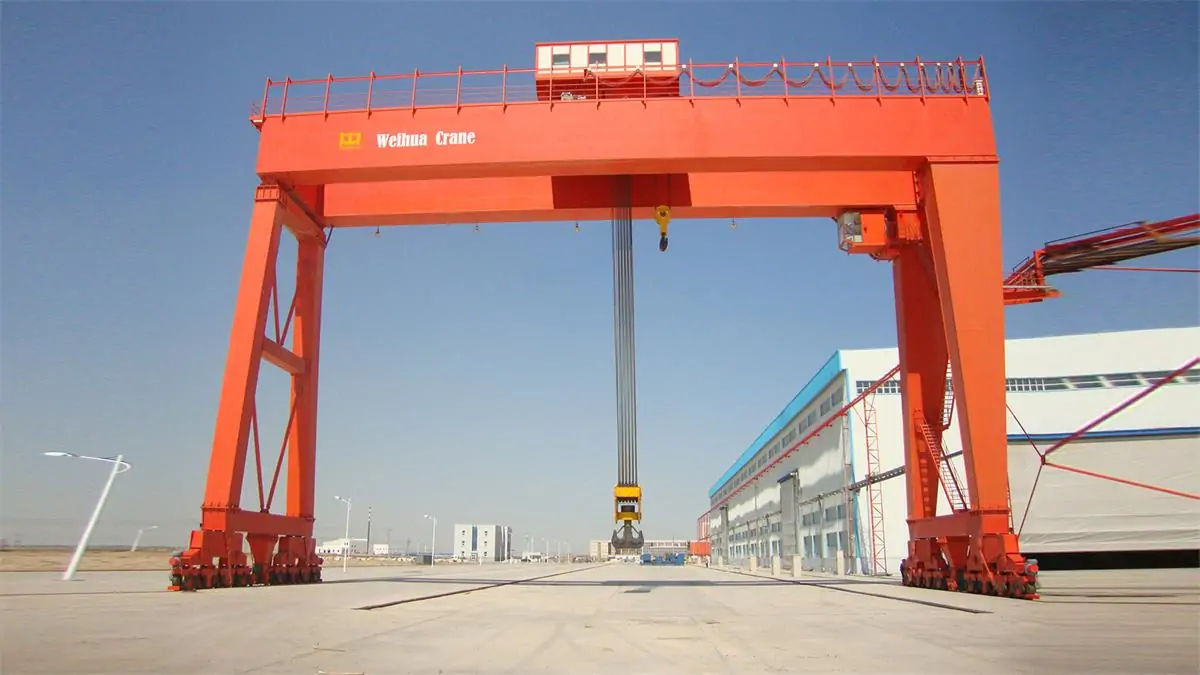
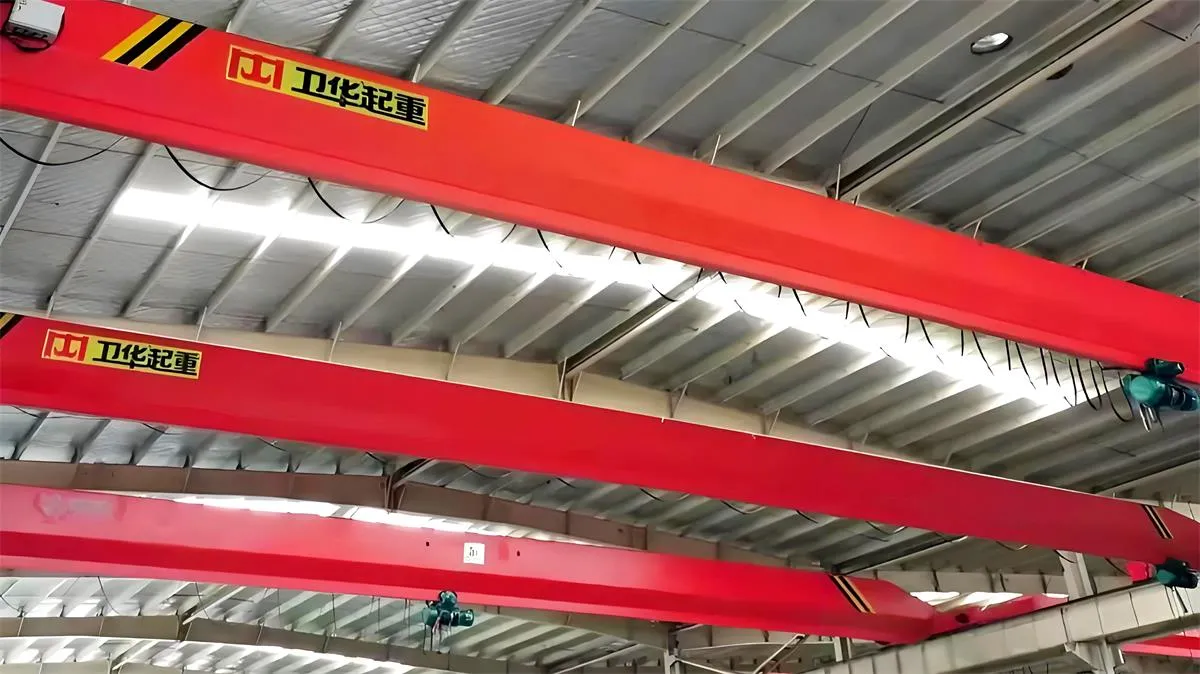
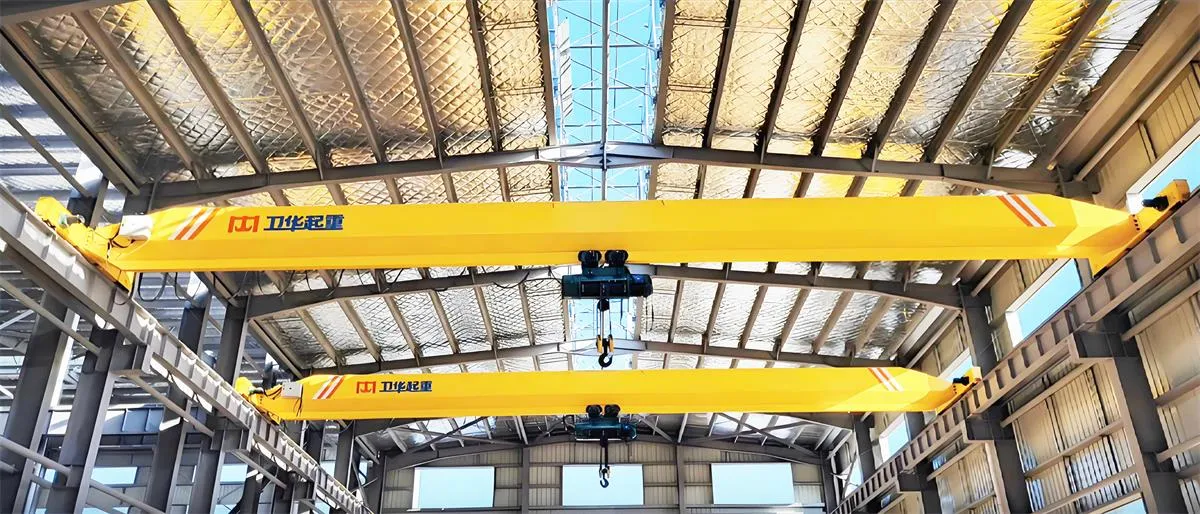
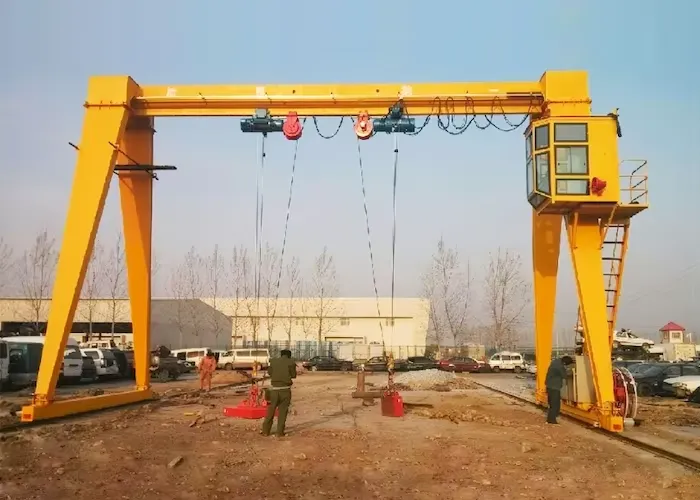
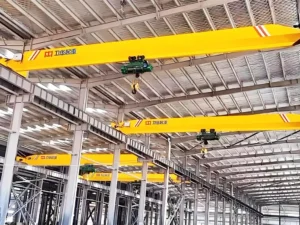
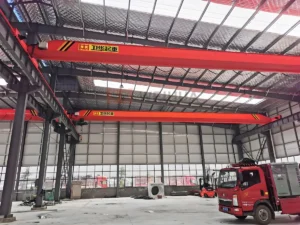
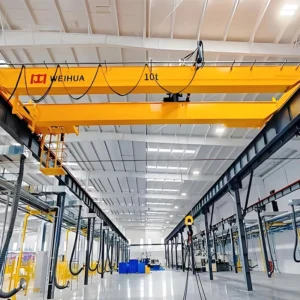
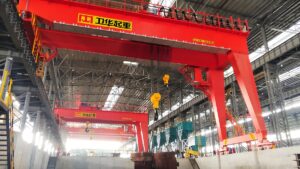
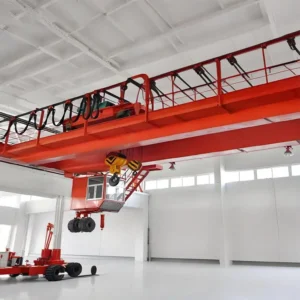
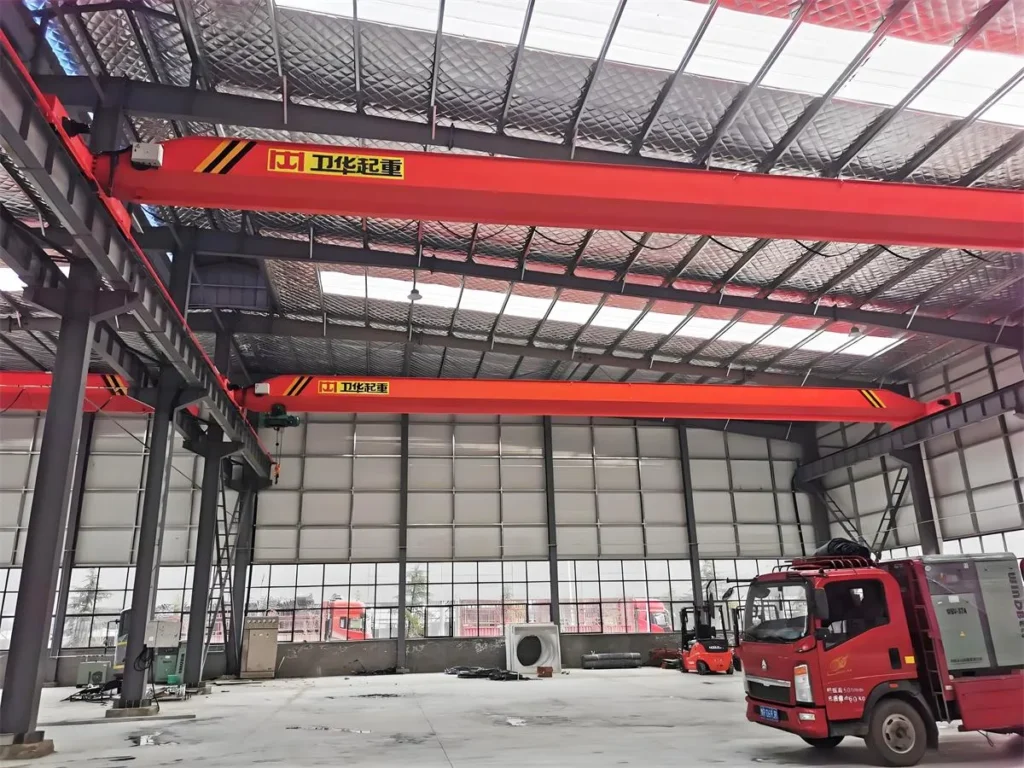
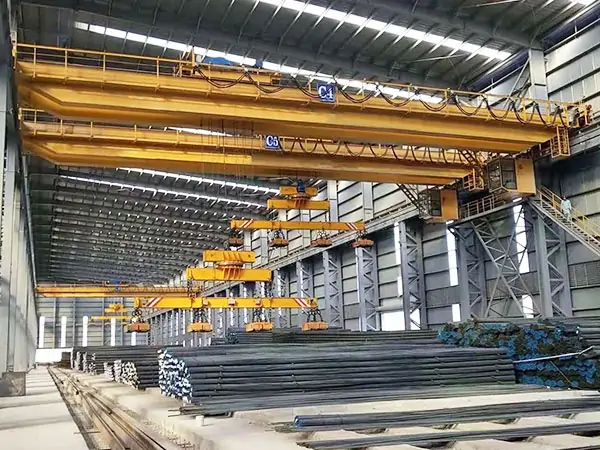
An EOT crane (Electric Overhead Traveling Crane) is a type of industrial material-handling equipment primarily consisting of a bridge (main girder), end beams, an electric hoist/trolley, and an electrical control system. It travels longitudinally along tracks above a workshop or factory building, while the trolley moves transversely along the bridge. Combined with the hoist’s vertical movement, this enables the handling of materials in three-dimensional space.
EOT cranes are commonly used in factories, warehouses, shipyards, power plants, and other facilities, with lifting capacities ranging from a few metric tons to hundreds of metric tons. Their key advantage lies in the fact that they do not occupy floor space, enabling them to efficiently and safely lift and position heavy materials. For a more in-depth understanding of what an EOT crane is, please see the article: What is an EOT Crane?
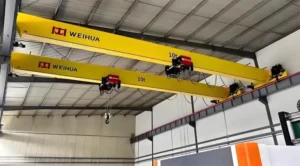
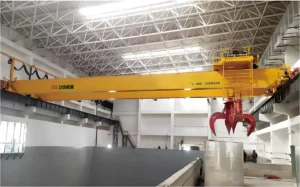
EOT cranes are classified as single-girder or double-girder based on their bridge structure. To learn more about the design characteristics of each, read the article:
- What Is a Single Girder EOT Crane? Structure, Working Principle, and Applications
- What is a double girder EOT Crane? Structure, Working Principle, and Applications
Parts
An EOT crane consists of several major components that work together to lift and move loads. Each part has a specific function, from supporting the crane structure to controlling lifting, traveling, and positioning operations.
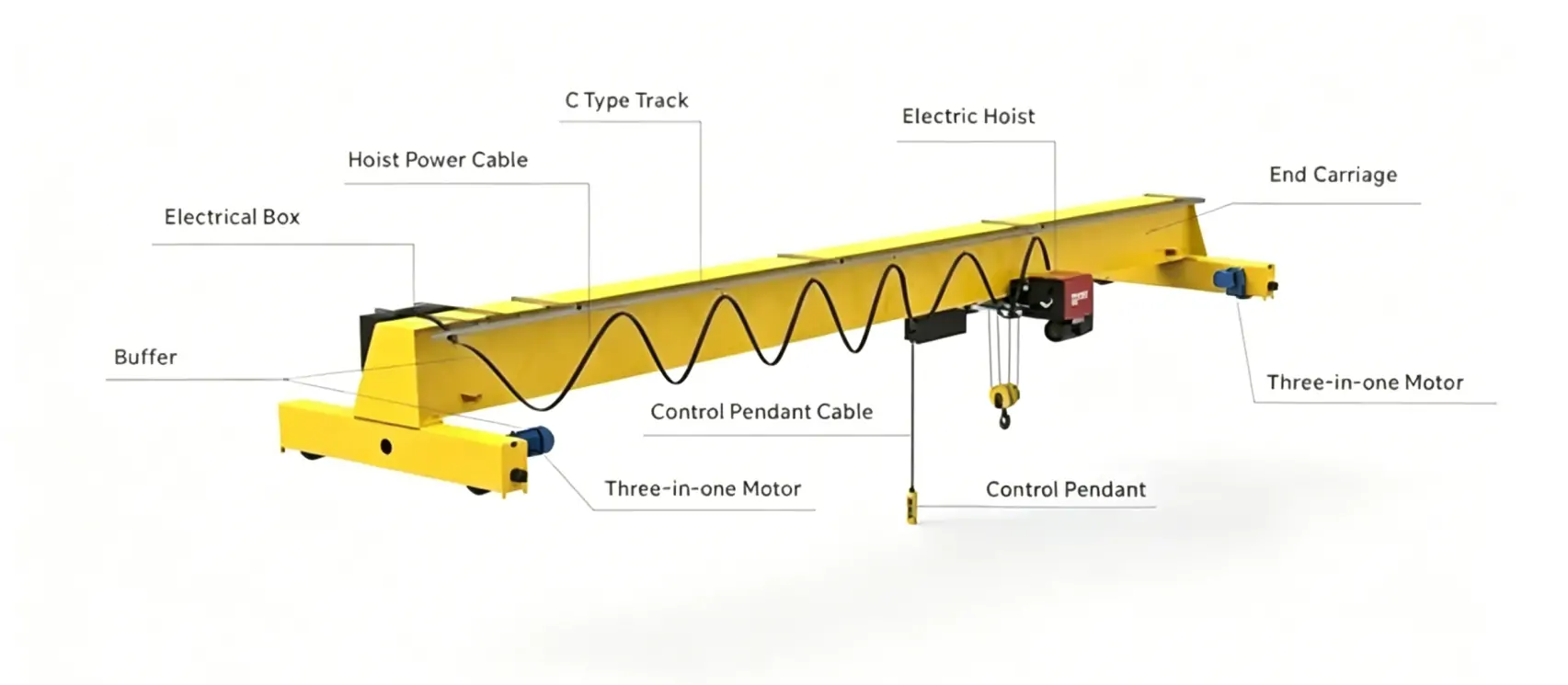
- Bridge (Main Girder) – The horizontal beam that spans the width of the workspace, running on rails mounted on the building’s support structure.
- End Trucks – Located at both ends of the bridge, containing wheels that travel along the runway rails.
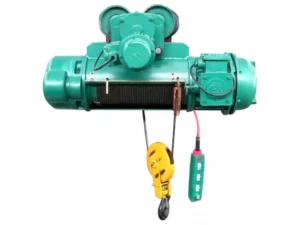
- Hoist/Trolley – The lifting mechanism that moves horizontally along the bridge girder. It contains the hook, wire rope, drum, motor, and brake system.
- Crane Travel Mechanism – Drives the entire bridge along the runway rails.
- Electrical System – Provides power and control, often including variable frequency drives (VFDs) and PLC for precise operation.
- Runway System – Provides the rails and support structure for crane movement.
- Drive Mechanism – Provides power for bridge and trolley movement.
How Does EOT Crane Work?
An EOT (Electric Overhead Travelling) crane, also known as a bridge crane or overhead crane, operates through the combination of lifting, trolley travel, and bridge travel movements. The hoist raises and lowers the load, the trolley moves along the bridge girder, and the bridge travels along the runway rails to cover the working area. Electric motors, drive systems, and controls work together to complete each lifting operation.
The working process of an EOT crane depends on the interaction between mechanical structures and electrical systems. These systems work together to control load lifting, horizontal movement, and accurate positioning in industrial material handling operations.
Lifting Mechanism Work
- The lifting mechanism is the core system for raising and lowering loads in an EOT crane. It consists of an electric motor, gearbox, drum, wire rope, hook, and brake system.
- During operation, the motor drives the gearbox, which rotates the drum to wind or unwind the wire rope. This moves the hook up or down. The brake system holds the load at the set height and prevents unwanted movement during lifting or stopping.
Bridge and Trolley Movement System Work
- The bridge and trolley movement system controls the horizontal movement of an EOT crane. It includes bridge girders, end trucks, wheels, motors, and drive units.
- The bridge travels along runway rails, while the trolley moves across the bridge girder to adjust the load position. Electric motors drive both movements, allowing operators to control travel direction and speed. Working with the lifting mechanism, the bridge and trolley system completes material handling tasks in factories, workshops, and warehouses.
Electrical Control System Operation Work
- The electrical control system manages EOT crane operations, including lifting, lowering, bridge travel, and trolley movement. It controls motor signals, crane direction, speed, and stopping position.
- The system consists of control panels, contactors, VFDs, PLC controllers, and safety devices. The VFD regulates motor speed, while the PLC processes commands and monitors crane functions.
- Operators can control the crane through a pendant controller, radio remote control, or cabin system. The electrical system links operator commands with crane movements for lifting, transporting, and positioning loads.
Safety Devices of EOT Crane
EOT cranes are equipped with safety devices to prevent overload, limit unsafe movements, and protect operators and equipment during lifting operations.
| Safety Device | Function |
|---|---|
| Overload Protection Device | Stops operation or sends an alarm when the load exceeds the rated capacity. |
| Limit Switches | Prevent over-lifting, over-lowering, and excessive travel of crane movements. |
| Emergency Stop Button | Stops all crane movements immediately in emergency situations. |
| Brake System | Holds loads securely when lifting stops or power is interrupted. |
| Anti-Collision Device | Detects nearby cranes and prevents collisions on shared runways. |
| Voltage Protection Device | Protects electrical components from abnormal voltage conditions. |
| Travel Limit Device | Limits trolley and bridge travel distance during operation. |
| Warning Alarm System | Provides sound and light signals during crane operation. |
These safety devices work together to keep EOT cranes operating safely and reduce risks during material handling. For detailed EOT crane safety device configuration, please refer to the full article: Overhead Crane Safety Devices
EOT Crane Working Process Step by Step
The working process of an EOT crane includes load positioning, lifting, transportation, and placement.
- Move the Crane to the Load Position
The operator controls the bridge and trolley to move the hook above the load. - Hook the Load
The hoist lowers the hook, and the load is connected with the proper lifting tools. - Raise the Load
The hoist motor drives the drum to lift the load to the required height. - Transport the Load
The bridge and trolley move along the runway and girder to carry the load to the target area. - Lower the Load
The hoist lowers the load to the ground or working position, and the lifting tools are removed.
Applications
EOT cranes are commonly used for heavy material handling in industrial environments. They are installed in areas where materials need to be lifted, moved, and positioned during production, storage, or maintenance work.
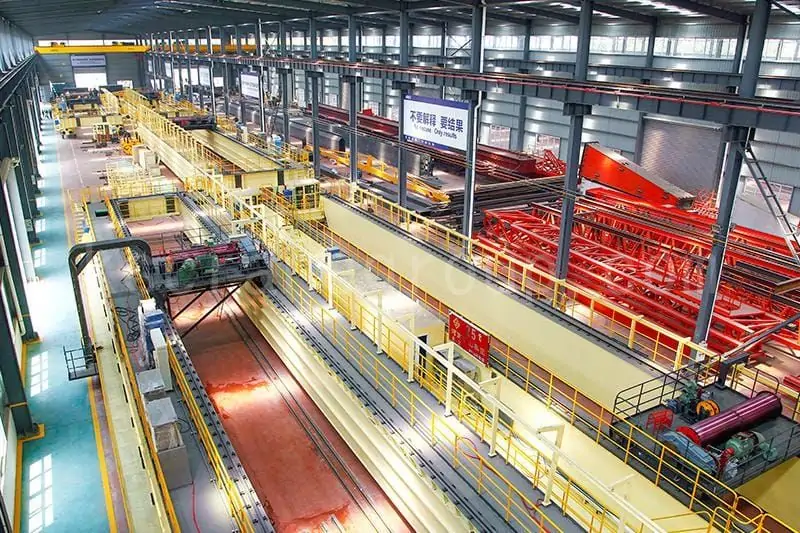
Manufacturing Plants
Used for moving raw materials, machine parts, molds, and finished products between different production areas.
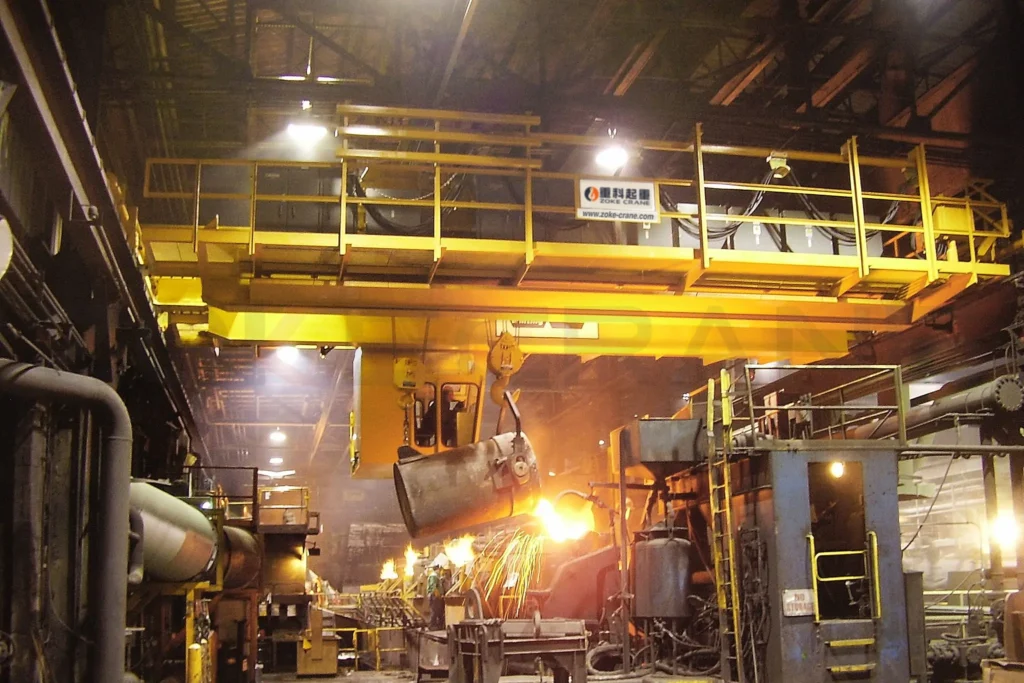
Steel Industry
Used for handling steel coils, plates, ladles, and other heavy steel components.

Automotive Industry
Used for lifting vehicle parts, production equipment, and assembly line components.
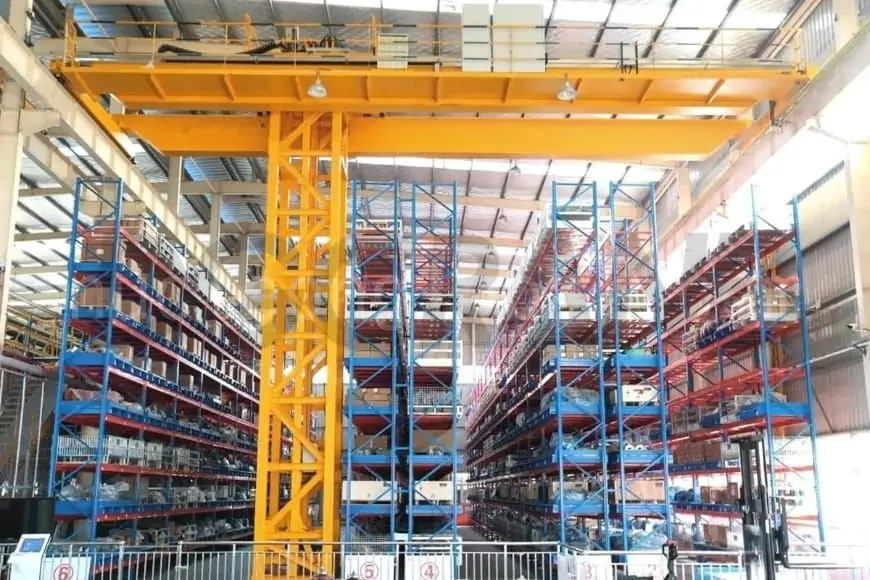
Warehouses
Used for loading, unloading, and transferring heavy goods in storage areas.
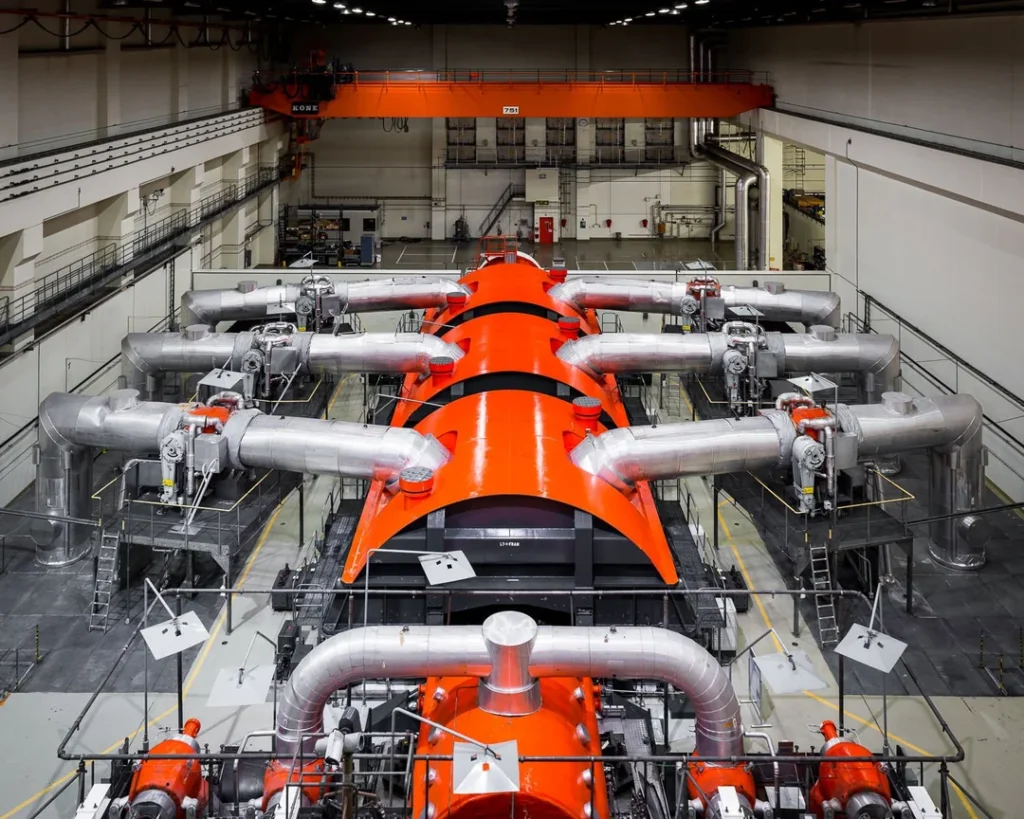
Power Plants
Used for handling generators, turbines, and equipment during installation and maintenance.
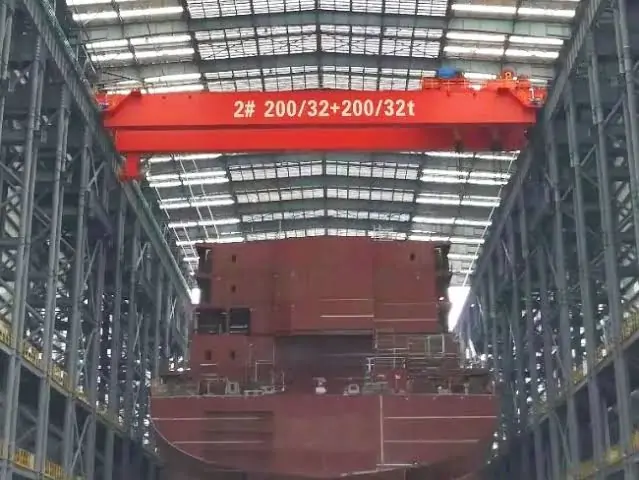
Shipyards
Used for moving large steel structures, ship sections, and heavy components during shipbuilding.
How to Choose the Right EOT Crane for Your Factory
Choosing the right EOT crane depends on the factory layout, lifting requirements, and working conditions. The crane should match the load capacity, operating frequency, and installation environment to provide suitable performance for daily material handling tasks.
- 1. Confirm the Lifting Capacity
Select the crane based on the maximum load weight and avoid operating beyond the rated capacity. - 2. Check Span and Lifting Height
Choose the crane span according to the runway distance and the lifting height according to the working area requirements. - 3. Consider Working Class
Select the proper duty class based on lifting frequency, working hours, and load conditions. - 4. Select the Crane Type
Single girder cranes suit light and medium loads, while double girder cranes are used for heavier loads and longer spans. - 5. Review the Working Environment
Consider temperature, dust, moisture, corrosive materials, or hazardous areas before selecting the crane design. - 6. Choose the Control Method
Select pendant control, remote control, or cabin control according to the operating conditions.
The right EOT crane should match the factory’s lifting needs, space conditions, and operating requirements. A proper selection helps maintain stable operation and reduces unnecessary maintenance costs.
View the detailed selection and application guide: Overhead Crane vs. Gantry Crane: Key Differences, Applications, and How to Choose
Conclusion
EOT cranes use the combined operation of the hoisting mechanism, bridge travel system, trolley system, electrical control, and safety devices to lift and move heavy loads in industrial facilities. Understanding how an EOT crane works helps users select the right crane type and improve lifting operations.
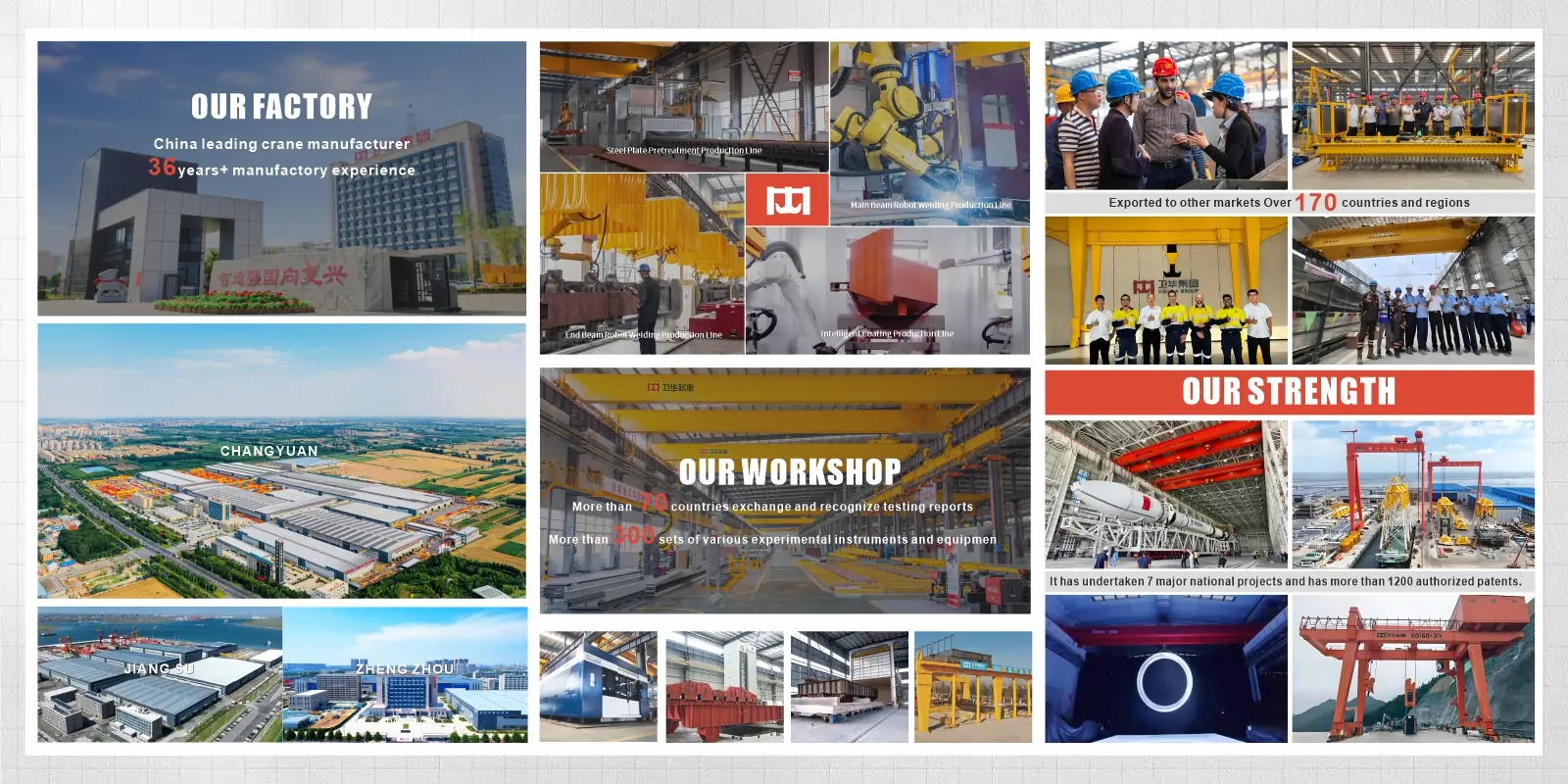
As a professional crane manufacturer, WEIHUA provides complete EOT crane solutions for factories, workshops, warehouses, and other industrial applications. We offer single-girder EOT cranes, double-girder EOT cranes, customized lifting systems, installation support, and after-sales service based on different working requirements.
If you need an EOT crane for your project, contact us for professional crane solutions and equipment support.
FAQ
What is the working principle of an EOT crane?
An EOT crane works through three basic movements: hoisting, trolley travel, and bridge travel. The hoist lifts the load vertically, while the trolley and bridge move the load horizontally within the working area.
How does an electric overhead traveling crane move?
An electric overhead traveling crane moves through bridge travel and trolley travel systems. Motors drive the bridge along runway rails and move the trolley across the bridge girder.
What are the main parts of an EOT crane?
The main parts include the bridge girder, end trucks, trolley, hoist, runway system, electrical control system, and drive mechanism.
How does an EOT crane lift heavy loads?
The hoist motor drives a drum that winds the wire rope, moving the hook up or down to lift and lower loads. The brake system holds the load during stopping.
What motors are used in EOT cranes?
EOT cranes commonly use electric motors for hoisting, trolley travel, and bridge travel. Motors are selected according to crane capacity, speed, and working class.
What is the difference between single girder and double girder EOT cranes?
Single girder EOT cranes use one main girder and are suitable for lighter loads. Double girder EOT cranes have two girders and are used for heavier loads, longer spans, and higher lifting requirements.
How does an EOT crane improve factory productivity?
EOT cranes reduce manual handling work and allow heavy materials to be moved quickly across production areas, improving material flow and reducing handling time.
How often should an EOT crane be inspected?
Inspection frequency depends on operating conditions and usage. Daily checks, regular maintenance inspections, and periodic professional inspections are required to keep the crane in proper working condition.