








If you’re sourcing an electric chain hoist for a workshop, warehouse, or production line, the first question is rarely “which brand” — it’s “which capacity, and what does that capacity actually cost.” Electric chain hoists in the 1/2 ton to 5 ton range cover the vast majority of factory lifting tasks, from light assembly work to moving machine components and packaged goods.
This guide compares specifications and market price references across the five most commonly ordered capacities — 1/2 ton, 1 ton, 2 ton, 3 ton, and 5 ton — so you can shortlist the right size before requesting a quote. We’ll also cover the single most common mistake buyers make when comparing hoists on a spec sheet.
By the end, you’ll have a working comparison table, a selection framework based on duty class and lift cycles, and a procurement checklist to use when evaluating supplier quotes.
Table of Contents
Electric Chain Hoist Capacity Comparison: 1/2 Ton to 5 Ton
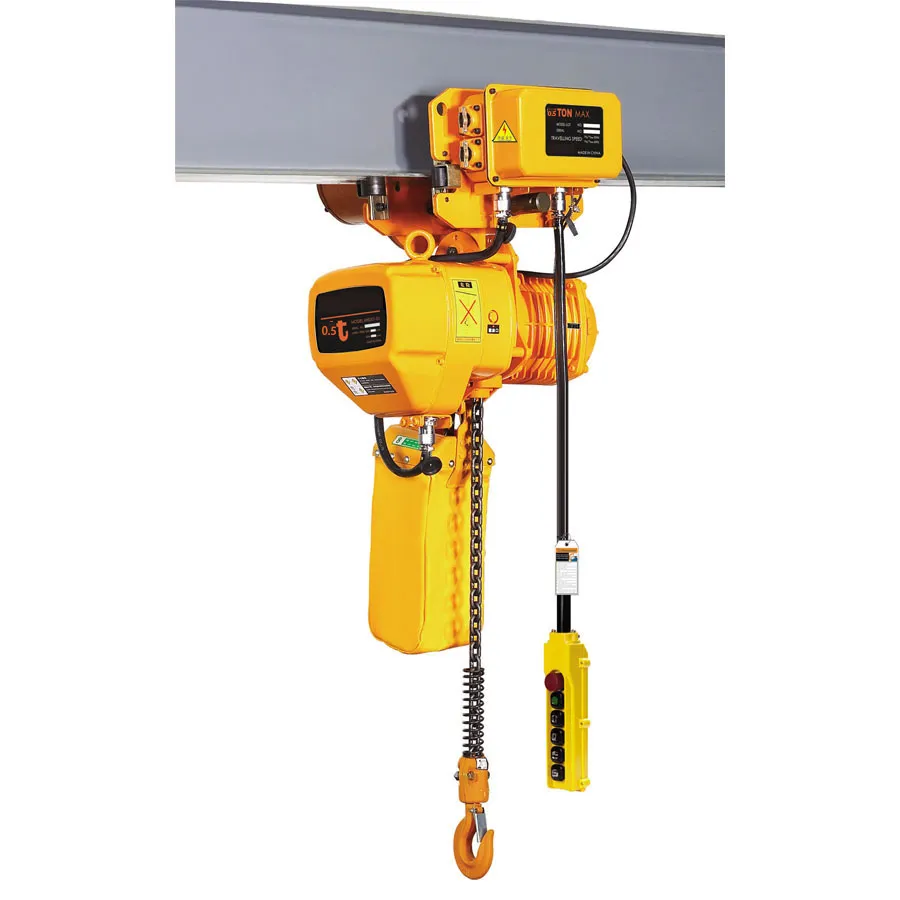

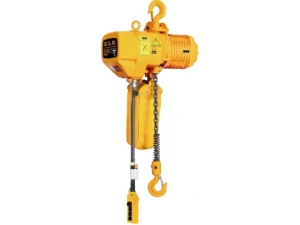
A 1/2 ton electric chain hoist suits light-duty assembly tasks, while a 5 ton unit is built for heavier industrial lifting with double chain falls — capacity, motor power, and price scale together across the range.
Quick reference table
| Capacity (ton) | Lifting Height (m) | Lifting Speed (m/min) | Power (Kw) | Rotation Speed (r/min) | Phases | Voltage (V) | Frequency (Hz/s) | Power (Kw) | Rotation Speed (r/min) | Operating Speed (m/min) | Phases | Voltage (V) | Frequency (Hz/s) | i-Beam |
|---|---|---|---|---|---|---|---|---|---|---|---|---|---|---|
| 0.5 | 3/9 | 6.8 | 0.75 | 1440 | 3 | 380 | 50 | 0.4 | 1440 | 11/21 | 3 | 380 | 50 | 58–153 |
| 1 | 3/9 | 3.4 | 1.5 | 1440 | 3 | 380 | 50 | 0.4 | 1440 | 11/21 | 3 | 380 | 50 | 58–153 |
| 1 | 3/9 | 6.6 | 1.5 | 1440 | 3 | 380 | 50 | 0.4 | 1440 | 11/21 | 3 | 380 | 50 | 58–153 |
| 1.5 | 3/9 | 8.8 | 3.0 | 1440 | 3 | 380 | 50 | 0.75 | 1440 | 11/21 | 3 | 380 | 50 | 82–178 |
| 2 | 3/9 | 6.6 | 3.0 | 1440 | 3 | 380 | 50 | 0.75 | 1440 | 11/21 | 3 | 380 | 50 | 82–178 |
| 2 | 3/9 | 3.3 | 1.5 | 1440 | 3 | 380 | 50 | 0.4 | 1440 | 11/21 | 3 | 380 | 50 | 100–178 |
| 2.5 | 3/9 | 5.4 | 3.0 | 1440 | 3 | 380 | 50 | 0.75 | 1440 | 11/21 | 3 | 380 | 50 | 100–178 |
| 3 | 3/9 | 5.4 | 3.0 | 1440 | 3 | 380 | 50 | 0.75 | 1440 | 11/21 | 3 | 380 | 50 | 100–178 |
| 3 | 3/9 | 2.2 | 3.0 | 1440 | 3 | 380 | 50 | 0.75 | 1440 | 11/21 | 3 | 380 | 50 | 100–178 |
| 5 | 3/9 | 2.7 | 3.0 | 1440 | 3 | 380 | 50 | 0.75 | 1440 | 11/21 | 3 | 380 | 50 | 100–178 |
These figures are typical industry reference values for this equipment class and vary by lift height, voltage, and control type (pendant vs. radio remote); confirm exact specifications with the manufacturer for your selected model.
For loads under 1 ton in a workshop with occasional lifting, a 1/2 ton or 1 ton single-fall hoist offers the best cost-to-performance ratio, while loads above 2 tons or frequent cycling generally call for double chain falls and a higher duty class.

Which capacity fits which application
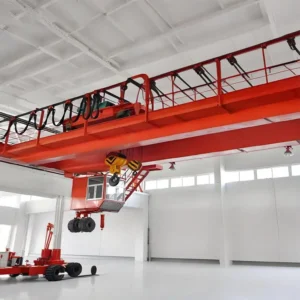
Smaller capacities (1/2–1 ton) suit light assembly, tooling changeovers, and parts handling, while 2–5 ton units handle machine components, molds, and palletized goods. A 1/2 ton or 1 ton electric chain hoist is commonly paired with jib cranes or single-girder systems in maintenance bays and assembly lines where loads are light but lifting frequency can still be high. A 2 ton or 3 ton electric chain hoist is the most frequently ordered range for general manufacturing — it covers most machine parts, fixtures, and crated goods without requiring a wire rope hoist. A 5-ton electric chain hoist typically appears on overhead bridge cranes for heavier components such as gearboxes, molds, or structural steel sections, and usually requires double chain falls to keep the hoist body compact.
How to Choose the Right Tonnage for Your Operation
Selecting the correct capacity means matching the hoist’s duty class — not just its nameplate tonnage — to your actual lifting frequency and load variation.
Match capacity to actual load, not estimated load
Always size the hoist to your heaviest realistic load plus a safety margin, since underestimating peak loads is one of the fastest ways to shorten chain and gearbox life. If your heaviest regular load is 1.8 tons, a 2 ton hoist gives you margin for fixtures, slings, and load variation without running at or near rated capacity on every lift.
Duty class determines real-world capacity more than nameplate tonnage
Two hoists with the same tonnage on the nameplate can have very different real-world capabilities depending on their duty classification under standards such as FEM 1.001 or ISO 4301. A hoist rated M3 is designed for moderate use with regular pauses, while an M4 or M5 hoist of the same tonnage is built for frequent, near-continuous cycling — using an M3-rated hoist in an M5 application leads to accelerated wear on the brake, motor, and gearbox well before the rated load itself becomes an issue.
Headroom, lift height and chain falls affect hoist selection
A double-fall (2/1 reeving) hoist roughly doubles the lifting capacity of a given motor but increases headroom requirements and slightly reduces lift speed compared to a single-fall configuration. If your building has limited headroom under the beam, a single-fall hoist in a higher capacity bracket may fit better than a double-fall hoist of the exact tonnage you initially specified — this is worth flagging to your supplier before finalizing dimensions.
Detailed Specifications by Capacity
Each capacity bracket has a typical motor power range, chain fall configuration, and duty class that should be cross-checked against your application before ordering — exact figures should be confirmed against the manufacturer’s product datasheet.
1/2 ton and 1 ton electric chain hoists
These two capacities typically share a single-fall chain configuration and motor power in the 0.4–1.5 kW range, with lift speeds around 8 m/min on standard single-speed models. They’re commonly specified under EN 14492-2 or ASME B30.16 for light-to-moderate industrial use, often in duty class 1Dm to M3. Buyers frequently select these sizes for jib cranes, single-girder gantries, and workstation lifting in electronics, light fabrication, and warehousing.
2 ton and 3 ton electric chain hoists
This bracket sits at the boundary between single and double chain fall designs, with motor power typically in the 1.5–4 kW range and duty classes generally falling between M3 and M4 under FEM 1.001 / ISO 4301. A 2 ton hoist may be offered in either single- or double-fall configurations depending on headroom and lift-speed requirements, while 3 ton models are more commonly double-fall as standard. This is the most frequently ordered range for general manufacturing because it balances capacity, price, and physical footprint.
5 ton electric chain hoists
5 ton electric chain hoists are almost always double-fall, with motor power typically in the 3–6 kW range and duty classes of M4 to M5 reflecting heavier, more frequent use. Lift speeds are generally lower (around 3–5 m/min) than smaller capacities because of the increased reduction ratio needed to handle the load. These units are typically mounted on bridge cranes rather than jib or gantry systems, and chain container accessories become more important at this capacity to manage the longer load chain length.
Procurement Checklist: Certification, Duty Class & Hidden Costs
The single most common procurement error is comparing hoists purely on nameplate tonnage and price while overlooking duty class — two “2 ton” hoists at very different prices are often built for entirely different usage intensities.
The most common procurement mistake: ignoring duty class
When buyers shortlist suppliers based on tonnage and price alone, they often end up comparing a light-duty M3 hoist against a heavier M4 or M5 unit without realizing the difference — the cheaper option may carry the same tonnage rating but a fraction of the expected service life under daily, multi-shift use. Before comparing quotes, ask each supplier to confirm the duty classification (FEM or ISO) alongside the tonnage, and weigh that against how many lift cycles per hour your operation actually runs.
Certifications to verify before ordering
For most export markets, confirm that the hoist carries CE marking with a declaration of conformity referencing EN 14492-2, and ask whether the unit has been tested in line with ISO 4301 or FEM 1.001 duty class standards. If the destination market requires ASME B30.16 compliance documentation, request this explicitly, as not all factory-default export packages include it.
Hidden costs that affect total landed price
Quoted unit prices often exclude items that affect total landed cost, including spare chain length beyond the standard lift height, pendant or radio remote controls, chain containers, and import duties or inland freight to the final site. Confirm whether the quoted price includes a standard pendant control and whether voltage/frequency (e.g., 380V/50Hz vs. 220V/60Hz) matches your site’s electrical supply, since reconfiguration after delivery adds cost and delay.
Conclusion
An electric chain hoist in the 1/2 ton to 5 ton range typically runs $280–$4,800 depending on capacity, chain falls, and duty class — but the right choice depends on matching duty class to your actual lift frequency, not just nameplate tonnage. Before requesting quotes, confirm your heaviest realistic load, your typical lifts-per-hour, and your available headroom. Then ask each supplier to state duty class, certification standard, and what’s included in the quoted price for your electric chain hoist.
Ready to compare specific models? Get a factory-direct quote for your required capacity — contact our team via WhatsApp, email, or the form below.
FAQ
Q1: What size electric chain hoist do I need for a 2 ton load?
A 2 ton electric chain hoist is the correct nameplate capacity for a 2 ton load, but confirm the duty class matches your lift frequency. If lifts happen continuously through a shift rather than occasionally, specify M4 rather than M3 even though both may be sold as “2 ton.”
Q2: What’s the price difference between a 1 ton and a 5 ton electric chain hoist?
A 1 ton electric chain hoist typically runs $380–$1,100, while a 5 ton unit typically runs $1,700–$4,800 in market reference pricing. The gap reflects higher motor power, double chain falls, and heavier-duty gearboxes and brakes at 5 tons.
Q3: What duty class should I choose for an electric chain hoist?
Duty class should match how often and how heavily the hoist is used, not just the load weight. Occasional use suits M3, while frequent or continuous multi-shift lifting at or near rated capacity calls for M4 or M5 under FEM 1.001 / ISO 4301.
Q4: Do electric chain hoists in this range need single-phase or three-phase power?
1/2 ton and 1 ton electric chain hoists are often available in single-phase versions for light workshop use, while 2 ton and above are typically three-phase as standard. Confirm voltage and frequency compatibility with your site’s electrical supply before ordering.