








Índice
Introdução
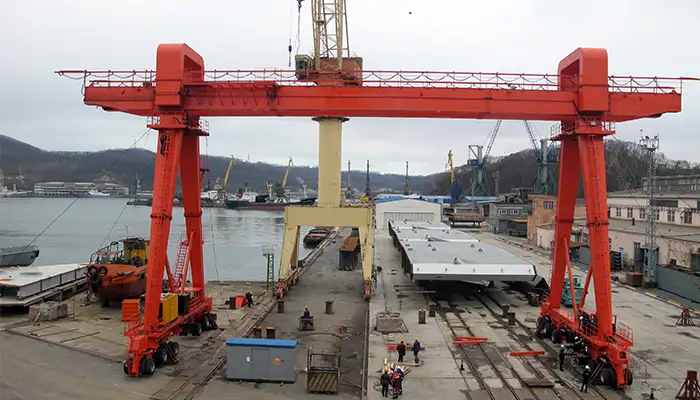
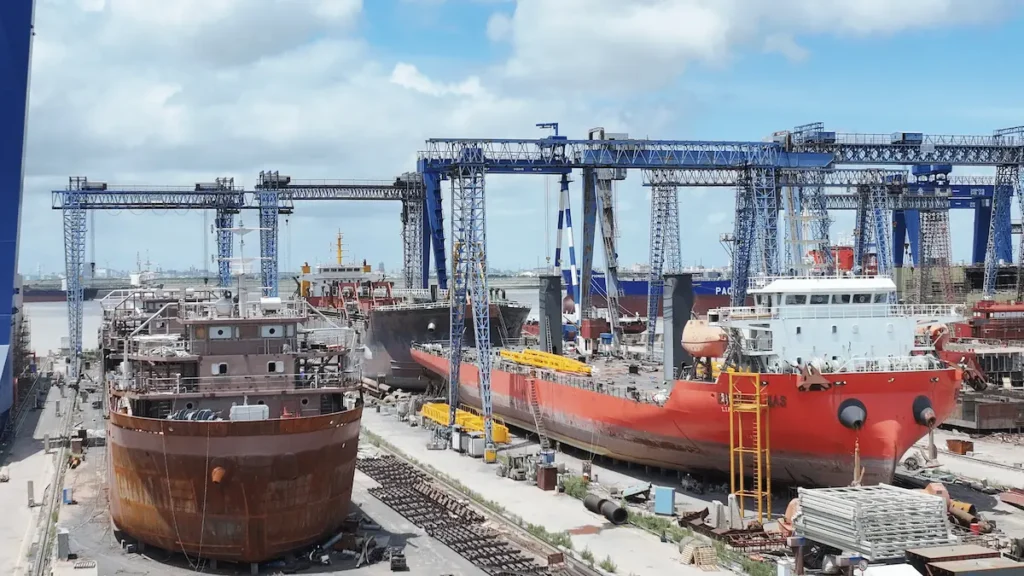
A Goliath Crane is a heavy-duty lifting machine designed for large-scale shipbuilding operations. It is primarily used to lift hull blocks, ship sections, marine equipment, and other oversized structures in shipyards, docks, and offshore construction projects. When selecting a goliath crane, shipbuilders usually focus on lifting capacity, span, working height, operating stability, and customization options.
This article explains what a goliath crane is, how it works, and why it is widely used in shipbuilding. We will cover its main applications, structure, advantages, selection factors, and the differences between standard gantry cranes to help you better understand this heavy-duty lifting equipment.
What Is a Goliath Crane?
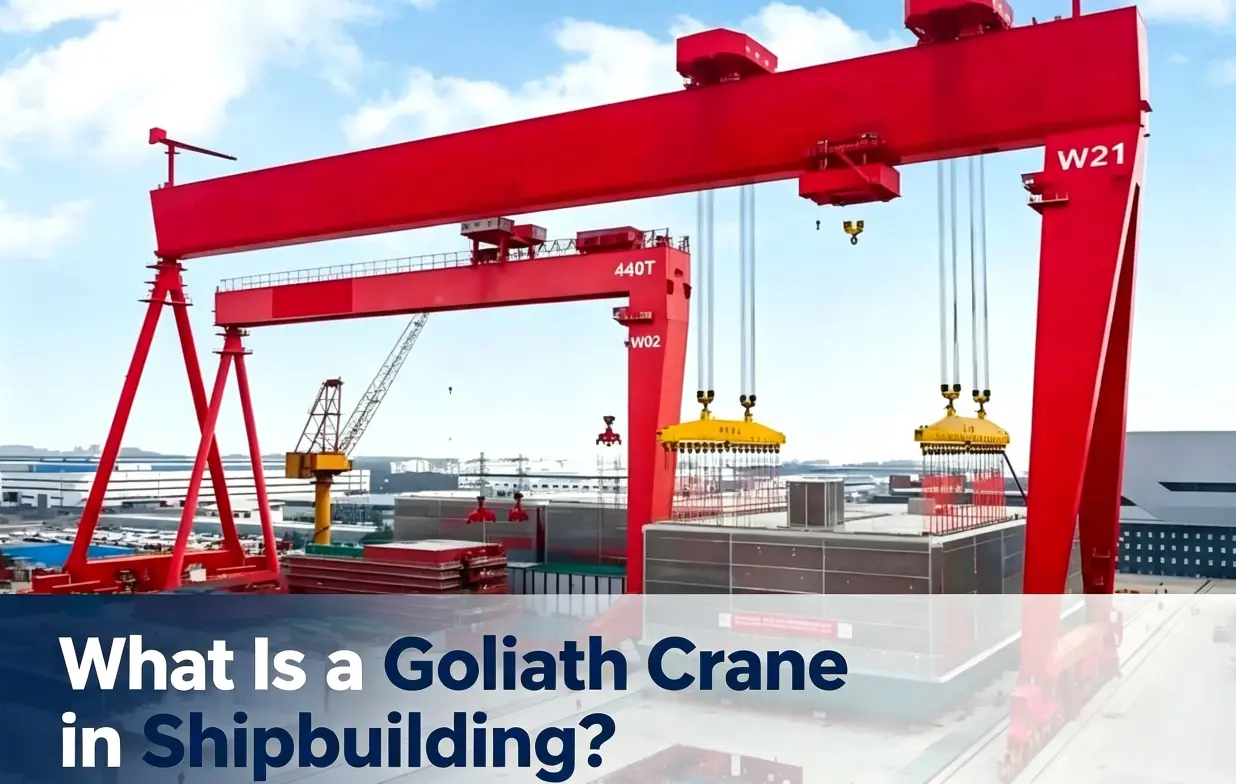
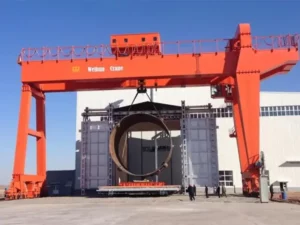
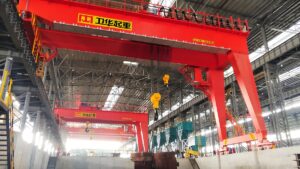
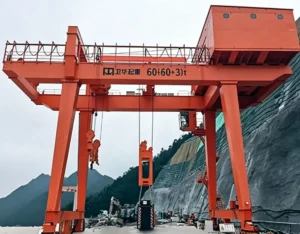
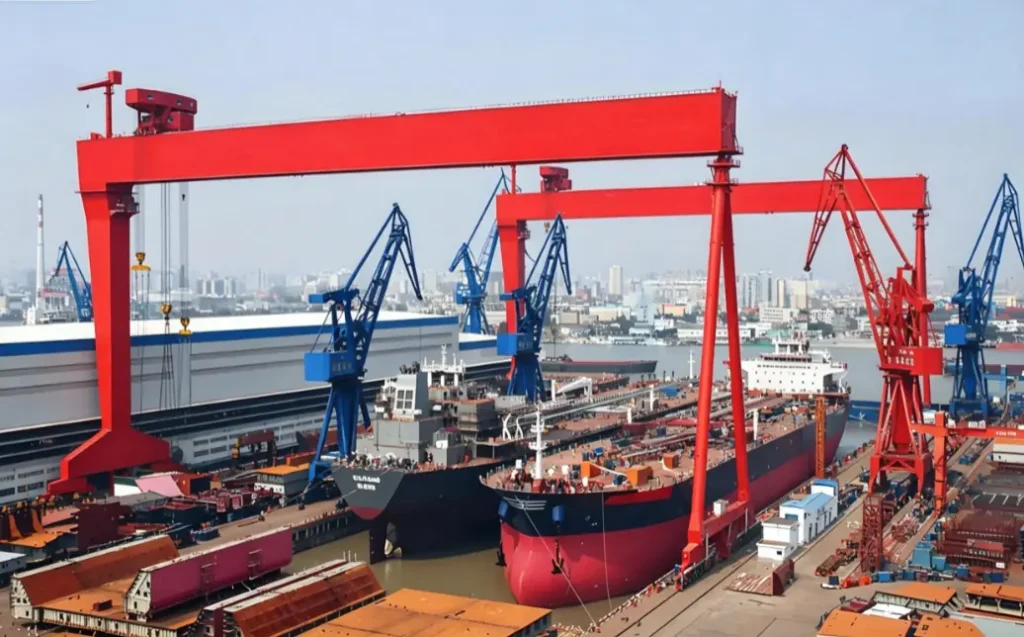
Goliath Crane, also known as a Shipbuilding Goliath Crane or Shipyard Gantry Crane, is a large-scale gantry crane designed for ship construction and marine engineering projects. It is primarily used to lift hull blocks, ship sections, heavy equipment, and offshore structures in shipyards, dry docks, and shipbuilding areas.
The crane features a heavy-duty steel structure, a large-span design, and an advanced lifting system. With lifting capacities of 100–1600 tons, spans up to 185 m, and lifting heights to 90 m, it can handle large hull sections, block assembly, and equipment installation. The dual trolley system allows lifting, turning, and positioning of ship sections during construction.
It can be customized according to shipyard layout, vessel size and production requirements. Options include lifting capacity, span, trolley configuration, control system and safety equipment, making it suitable for large vessels, offshore projects and heavy-duty shipbuilding operations.
Why Are Goliath Cranes Used in Shipbuilding?
Goliath Crane is a lifting piece of equipment in modern shipyards, supporting large block handling, ship assembly, and heavy equipment installation.
- Large Block Lifting: Handles prefabricated hull sections and heavy marine structures with lifting capacities from 100 to 1600 tons.
- Hull Turning and Assembly: The dual trolley system enables air turning and precise positioning of large hull sections.
- Higher Shipbuilding Efficiency: Reduces lifting operations and shortens dock assembly time through large-scale block handling.
- Large Span Operation: Designed for wide shipyards with high stability in coastal and heavy-duty environments.
- Advanced Engineering Design: Combines high-strength structures, synchronized control, and customized systems for large lifting projects.
Goliath cranes play a role in modern shipbuilding by supporting large block handling, precise assembly, and high-efficiency production in shipyards.
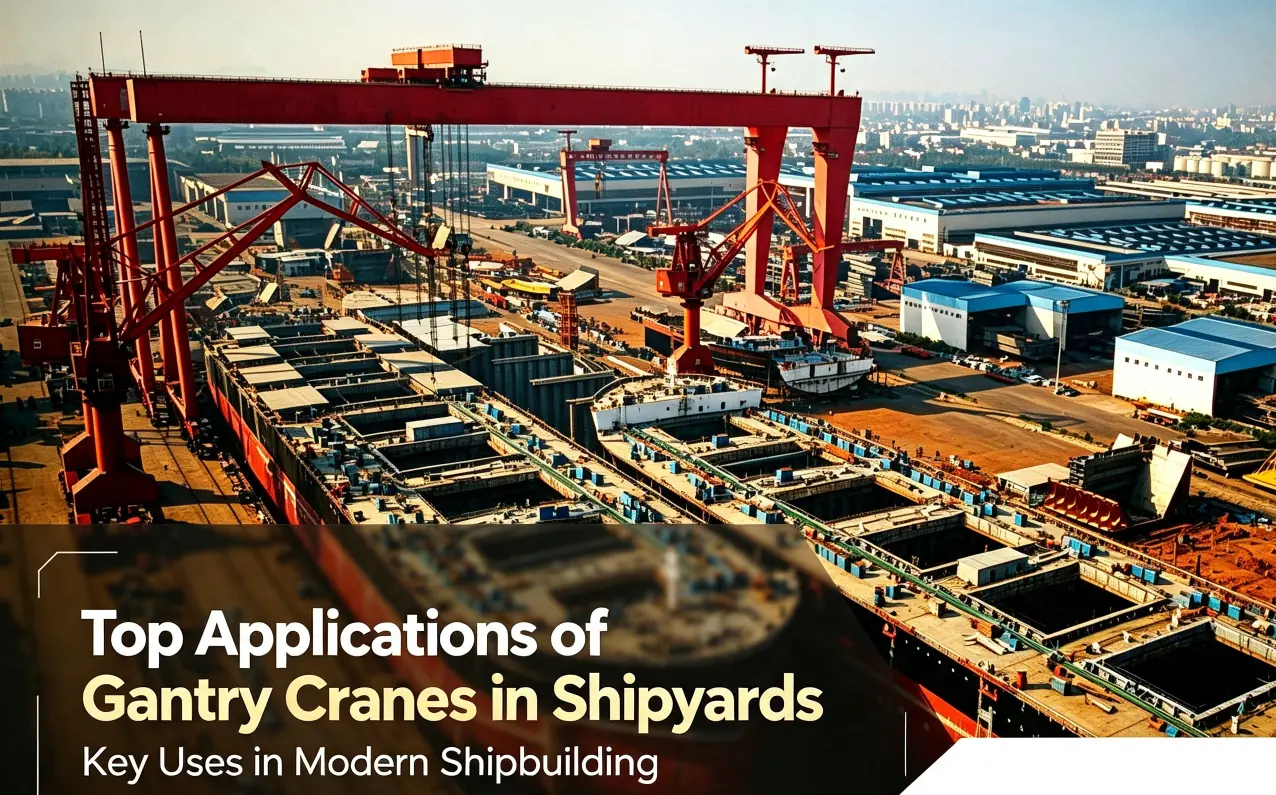
For more information on the applications of shipyard gantry cranes, see the article: Top Applications of Gantry Cranes in Shipyards
How Does a Goliath Crane Work?
A Goliath Crane completes shipbuilding lifting operations through coordinated movement of the crane structure, trolleys, and hoisting system. The working process includes positioning, lifting, air turning, alignment, and final placement of ship sections.
1. Crane and Trolley Positioning
The traveling mechanism moves the crane along rails to the lifting position. The upper and lower trolleys move on different tracks of the main girder and can operate independently or together according to the lifting process.
2. Lifting and Transfer
The hoisting system uses drums, wire ropes, and pulley blocks to lift and transport loads. The main hook lifting speed is typically 6–8.5 m/min, with inching speeds of 0.1–0.5 m/min for accurate positioning during assembly.
3. Air Turning and Hull Assembly
The upper and lower trolleys work together to lift and turn hull sections. By adjusting the movement of multiple hooks, the crane can complete 180° air turning and position sections accurately for hull joining.
4. Load Placement and Hook Release
The crane lowers the hull section to the installation position through variable speed control. After the section is fixed, the hooks are released to complete the lifting cycle.
Through the combined operation of traveling, hoisting, and trolley systems, the Goliath Crane provides precise handling for large hull sections and heavy components in shipbuilding projects.
Peças
A Goliath Crane consists of a heavy-duty steel structure, lifting system, trolley system, traveling mechanism, and control components. Each part works together to handle large hull blocks, marine equipment, and heavy loads during shipbuilding operations.
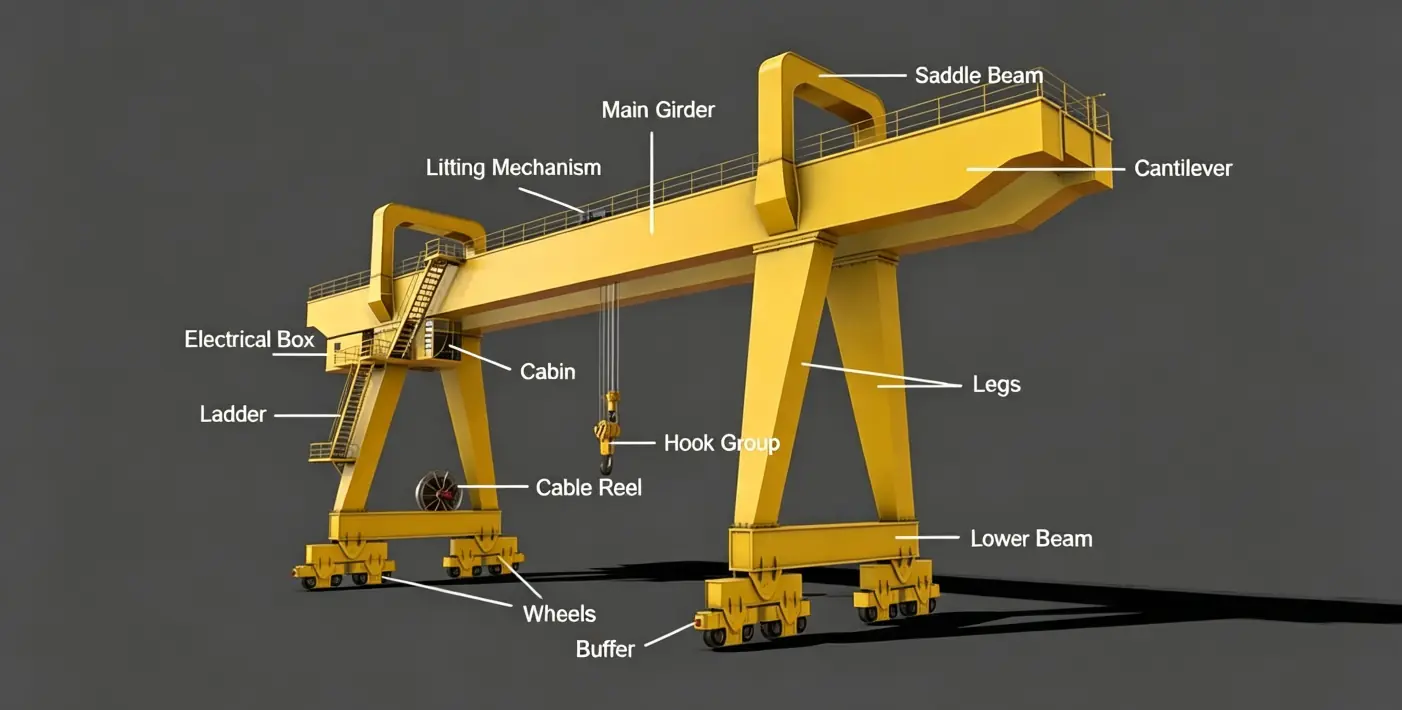
- Main Girder: The double box girder supports the trolley system and carries the main lifting loads.
- Rigid Leg: Connected to the main girder, the rigid leg provides structural support and maintains crane stability.
- Flexible Leg: The hinged flexible leg absorbs structural movement caused by temperature changes and foundation deformation.
- Upper Trolley: Equipped with two lifting hooks, the upper trolley is used for heavy lifting and hull section turning.
- Lower Trolley: Works with the upper trolley for hull block lifting, positioning, and assembly.
- Hoisting System: Includes motors, drums, wire ropes, and pulley blocks for lifting and lowering loads.
- Traveling Mechanism: Drives the crane and trolleys along rails for movement across the shipyard.
- Electrical Control System: Uses PLC and variable frequency control for speed adjustment and crane operation.
- Safety Devices: Includes overload protection, rail clamps, wind protection, and anti-collision systems.
The combination of these components allows the Goliath Crane to perform heavy lifting, hull assembly, and precision positioning work in large-scale shipbuilding projects.
Goliath Crane Specifications
| Parâmetro | Faixa típica |
|---|---|
| Capacidade de Elevação | 50–1600+ Tons |
| Span | 40–185 m |
| Altura de elevação | 25–90 m |
| Classe de Dever | A5–A8 |
| Sistema de Controle | PLC + Variable Frequency Drive |
Goliath Crane vs Gantry Crane: What Is the Difference?
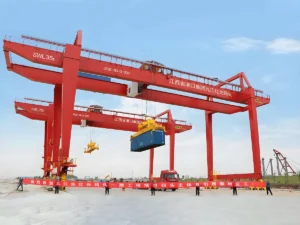
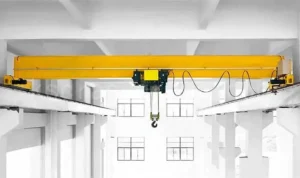
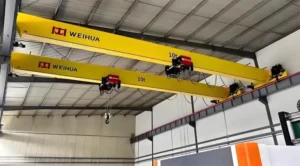
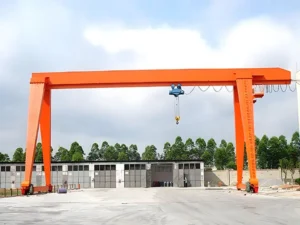
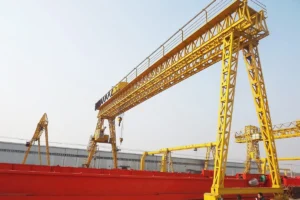
Goliath Crane is a specialized type of gantry crane designed for large-scale shipbuilding and marine engineering projects. Compared with standard ponte rolantes, it features higher lifting capacity, larger span, and more advanced lifting functions.
| Comparação | Pórtico Rolante | Goliath Crane |
|---|---|---|
| Definição | General gantry crane with a bridge structure supported by legs and running on rails. | Heavy-duty gantry crane designed for shipbuilding, offshore structures, and large block lifting. |
| Estrutura | Available in single girder, double girder, and different leg designs for general applications. | Usually uses double box girders with rigid and flexible legs for large-span operation. |
| Capacidade de Elevação | Commonly used for small and medium lifting tasks, with capacities usually below 100 tons. | Designed for heavy lifting, typically 100–1600 tons or higher for ship sections. |
| Span & Height | Standard span and lifting height for factories, yards, and workshops. | Large span up to 185 m and lifting height to 90 m for shipyard operations. |
| Trolley System | Single or double trolley for regular material handling. | Upper and lower trolley system for hull block lifting, turning and positioning. |
| Aplicações | Used in factories, warehouses, yards and general industrial handling. | Used in shipyards, docks and offshore construction for hull assembly and heavy equipment installation. |
| Missão de Serviço | Suitable for general lifting operations with moderate working cycles. | Designed for A5–A8 duty classes and continuous heavy-duty operation in coastal environments. |
In simple terms, a Gantry Crane is a general-purpose lifting machine, while a Goliath Crane is a large-scale gantry crane built for shipbuilding. For normal material handling, a standard gantry crane is usually sufficient; for large hull blocks and marine modules, a Goliath Crane is the preferred solution.
Vantagens
Heavy Lifting Capacity: Handles large hull blocks and marine structures with lifting capacities from hundreds to over 1000 tons, meeting the needs of modular shipbuilding.
Hull Turning and Precise Assembly: The dual trolley system supports air turning and accurate positioning of hull sections, which is essential for complex ship assembly.
Large Span Design: The wide-span structure covers large shipyard working areas and reduces crane relocation during block handling.
Heavy-Duty Operation: Designed for A5–A8 duty classes, with wind protection and safety systems for continuous operation in coastal environments.
Customized Configurations: Capacity, span, lifting height, trolley arrangement, and control systems can be customized for different shipyard requirements.
Lower Infrastructure Cost: Suitable for outdoor operation without relying on factory buildings, reducing construction requirements and expanding lifting applications.
How to Choose a Goliath Crane for Shipbuilding?
Selecting a suitable Goliath Crane requires considering shipyard layout, hull block weight, lifting process, and operating conditions. The crane configuration should match the actual production requirements and future expansion plans.
- Determine Lifting Capacity — Select the rated lifting capacity based on the maximum weight of hull blocks, marine equipment, and assembled structures. Heavy shipbuilding projects usually require cranes from 100 tons to over 1000 tons.
- Confirm Span and Lifting Height — The span should match the width of the shipyard, dock, or slipway, while lifting height should meet hull size and assembly requirements.
- Select Trolley Configuration — Choose single trolley, dual trolley, or multi-trolley systems according to lifting methods. Dual trolley systems are suitable for hull section turning and precise assembly.
- Check Working Duty Class — Choose the proper duty class according to lifting frequency and workload. A5–A8 duty ratings are commonly used for continuous shipbuilding operations.
- Consider Operating Environment — For coastal shipyards, select cranes with corrosion protection, wind resistance systems, rail clamps, and anchoring devices for outdoor operation.
- Choose a Reliable Manufacturer — A qualified manufacturer should provide engineering design, customized production, installation support, and maintenance service based on the shipyard project requirements.
The right Goliath Crane selection depends on lifting capacity, shipyard conditions, operating frequency, and future production needs. A suitable configuration helps improve lifting efficiency and supports long-term shipbuilding operations.
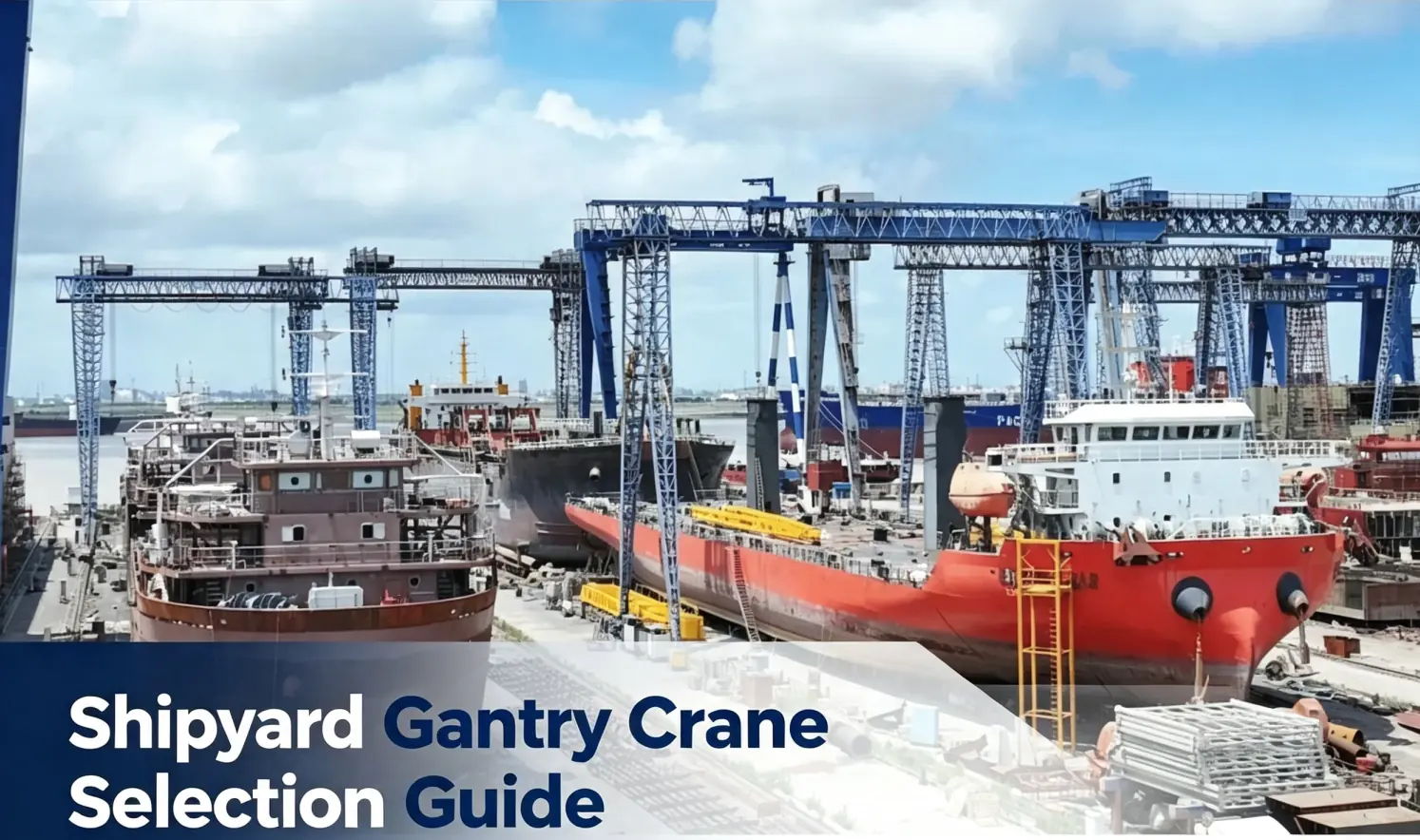
For detailed guidelines on selecting the right shipyard gantry crane, see: Shipyard Gantry Crane Selection Guide: Capacity, Structure, and Application
Conclusão
Goliath Crane is a heavy-duty lifting solution for modern shipyards, used for hull block lifting, turning, assembly, and large equipment installation. Its high capacity, large span, and customized design make it suitable for shipbuilding and marine engineering projects.
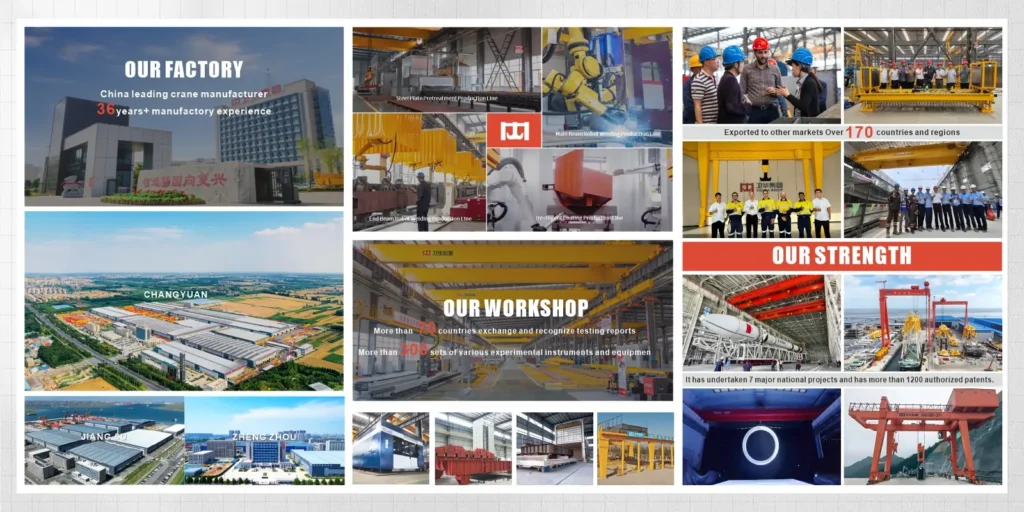
WEIHUA is a Goliath Crane manufacturer and supplier with years of experience in crane manufacturing, advanced production facilities, and strict quality control. With ISO and CE certifications, we provide customized design, production, installation support, and after-sales service, offering complete lifting solutions for shipyards. Contacte-nos for a suitable Goliath Crane solution.
FAQ
What is a goliath crane?
A Goliath Crane is a large gantry crane designed for shipbuilding and marine engineering. It is primarily used to lift hull blocks, ship sections, and heavy equipment.
Why are goliath cranes used in shipyards?
Goliath cranes handle large ship sections, support block assembly, and improve lifting efficiency during ship construction. Their large capacity and span fit the requirements of modern shipyards.
What is the difference between a goliath crane and a gantry crane?
A Goliath Crane is a heavy-duty type of gantry crane. Compared with standard gantry cranes, it has higher lifting capacity, larger span, and functions such as hull block turning and precision assembly.
How much weight can a goliath crane lift?
A shipyard Goliath Crane usually has a lifting capacity of 100–1600 tons, with larger customized models available for special projects.
How large can a shipyard goliath crane be?
A large shipyard Goliath Crane can have a span of over 185 m and a lifting height of up to 90 m, depending on dock size and construction requirements.
Can a goliath crane be customized?
Yes. The crane can be customized in lifting capacity, span, lifting height, trolley configuration, control system, and safety equipment.
How long does a goliath crane last?
With proper operation, regular inspection and maintenance, a Goliath Crane can typically serve for 20–30 years or longer depending on working conditions.
How do I choose a goliath crane manufacturer?
Choose a manufacturer with heavy-duty crane experience, engineering capability, production facilities, quality certifications, and project experience in shipbuilding or marine industries.