- ProdutoEquipamentoPrecisão de Potência, Personalização Solução de GruaCorreio eletrónico:WhatsApp / Wechat:+8613781917315Morada:N.º 18 Shanhai Road, Changyuan City, Província de Henan, China
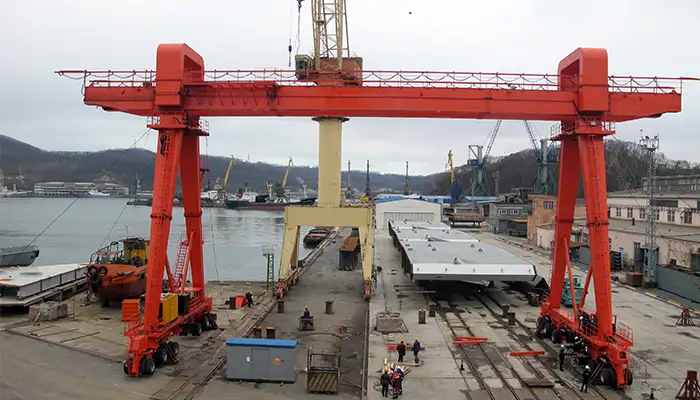
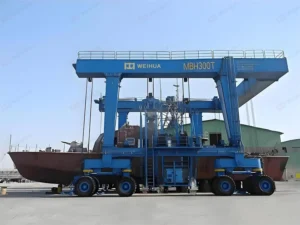
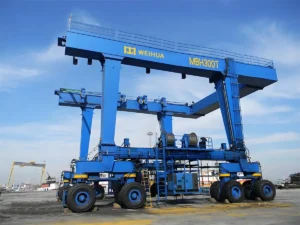
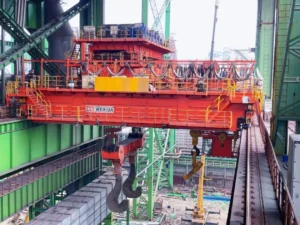
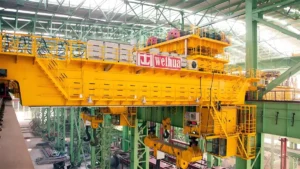
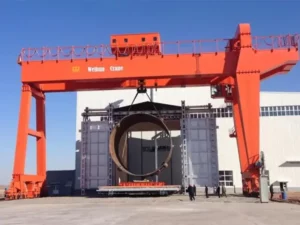
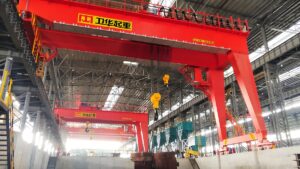
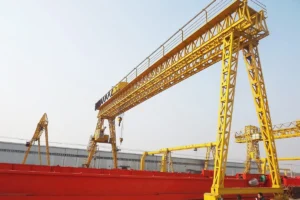
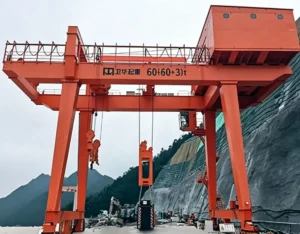
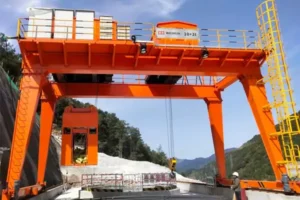
A Shipyard Gantry Crane, also known as a shipbuilding gantry crane, marine gantry crane, or shipyard portal crane, is a heavy-duty lifting machine designed for ship construction, ship section assembly, and large marine equipment handling. It is mainly installed in shipyards, dry docks, and shipbuilding areas to lift, transport, and position large hull blocks and heavy components.
The crane is built with a high-strength gantry structure, large-span design, and a precise control system to handle complex shipbuilding operations. With lifting capacities commonly ranging from 50 tons to over 1000 tons, it is used for hull block turnover, ship section alignment, assembly and installation of large equipment.
Designed for harsh marine environments, the crane features rigid steel structures, corrosion-resistant treatment, and adjustable working parameters. The span, lifting height, and duty class can be customized according to shipyard layout, vessel size, and production requirements, with typical duty ratings from A5 to A8 for different operating conditions.
For an in-depth analysis of shipyard gantry cranes, see the article: “What Is a Goliath Crane in Shipbuilding?”
The shipyard gantry crane is built with a large steel structure, lifting units, traveling system, and control equipment. The components work together to handle hull blocks, marine equipment, and other heavy loads in shipyard operations.
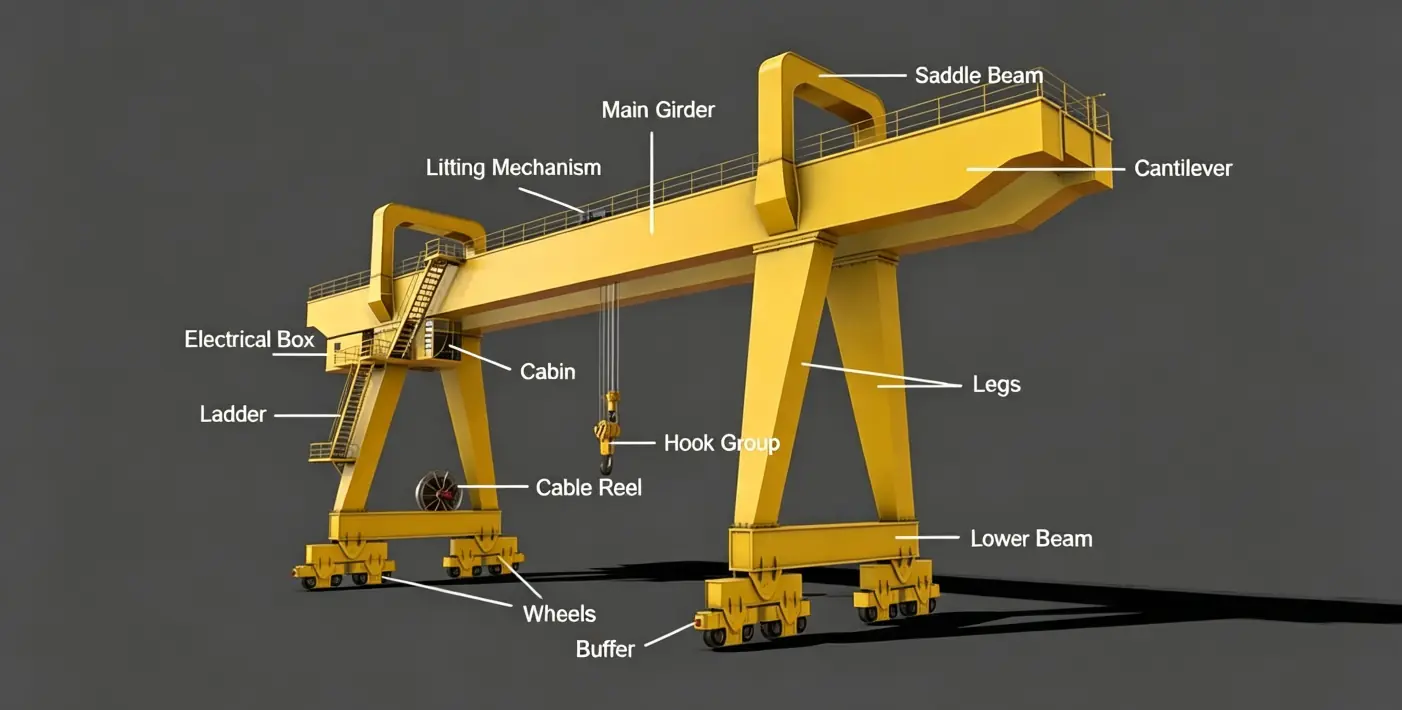
The combination of these components allows the crane to perform heavy lifting, hull assembly, and equipment installation tasks in shipyards, docks, and marine construction areas.
The shipyard gantry crane performs lifting operations through coordinated movement of the crane, trolleys, and hoisting system. The process includes positioning, lifting, turning, and accurate placement of ship sections.
1. Crane Positioning — The traveling mechanism moves the crane along the rails to the required lifting area. A variable frequency drive controls the travel speed and positioning accuracy.
2. Trolley Positioning — The upper and lower trolleys move along different tracks on the main girder. They can operate independently or together according to the lifting requirements.
3. Lifting and Transport — The hoisting system uses drums, wire ropes, and pulley blocks to lift loads. Variable speed control allows smooth lifting and precise positioning, with inching speeds of 0.1–0.5 m/min for assembly work.
4. Air Turning and Assembly — The upper and lower trolleys work together to lift and turn hull sections. Different hook movements allow 180° air turning and accurate alignment during hull assembly.
5. Placement and Release — The crane lowers the load to the installation position through low-speed control. After the section is secured, the hooks are released to complete the lifting cycle.
Through coordinated control of each mechanism, the shipyard gantry crane completes heavy lifting, hull section handling, and precision assembly operations in shipbuilding projects.
| Especificação | Parâmetro |
|---|---|
| Capacidade de Elevação | 50–1600 Tons |
| Span | 40–185 m |
| Altura de elevação | 25–90 m |
| Missão de Serviço | A5–A8 |
| Main Hoisting Speed | 6–8.5 m/min |
| Velocidade do carrinho | 38–44.5 m/min |
| Velocidade de Deslocamento do Guincho | 36–40 m/min |
| Inching Speed | 0.1–0.5 m/min |
| Max. Wheel Load | 260–750 kN |
| Installed Power | 400–1550 kW |
| Fonte de Alimentação | 3 Phase AC 380V/50Hz (Customizable) |
| Main Girder Structure | Double Box Girder |
| Trolley Configuration | Upper & Lower Trolley System |
| Sistema de Controle | PLC + Variable Frequency Control |
| Dispositivos de segurança | Overload Limiter, Rail Clamp, Wind Protection System |
| Temperatura de trabalho | -25℃ to +60℃ |
| Personalização | Capacity, Span, Height and Electrical System |
Note: Shipyard gantry cranes can be customized according to shipyard layout, hull block weight, lifting requirements, and operating conditions. Detailed technical design and configuration are available based on project requirements.
Used for lifting, positioning, and joining large hull sections with high precision during ship construction.
Handles the installation of main engines, auxiliary equipment, shaft systems, piping, and other heavy marine components.
Transfers steel plates, profiles, and prefabricated sections between docks, workshops, and storage areas.
Supports ship repair operations by lifting and replacing hull parts, propellers, rudders, and other heavy components.
Provides lifting support for ship launching, positioning, and construction work in slipways and floating docks.
Handles containers, heavy equipment, and shipbuilding materials at shipyard terminals and supporting docks.
Uses multi-trolley operation for air turning, rotation, and fine positioning of hull blocks and large equipment.
Provides lifting support for machinery maintenance, equipment replacement, and workshop servicing.
Lifts large prefabricated modules and assembled sections to improve shipbuilding efficiency.
Used for lifting offshore structures, wind turbine components, and other marine energy equipment.
For more information on the applications of shipyard gantry cranes, see the article: Top Applications of Gantry Cranes in Shipyards
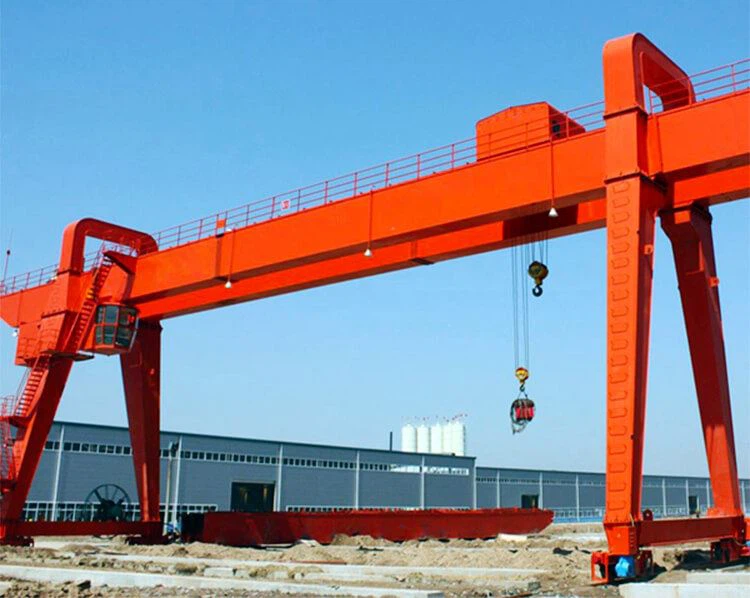
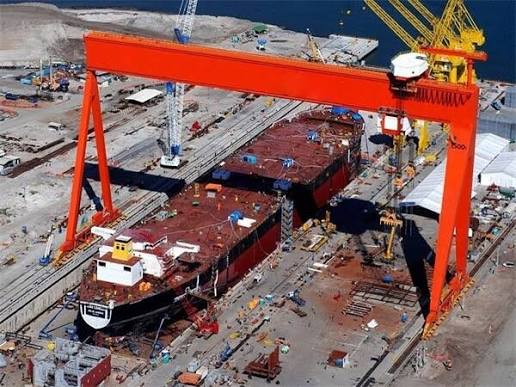
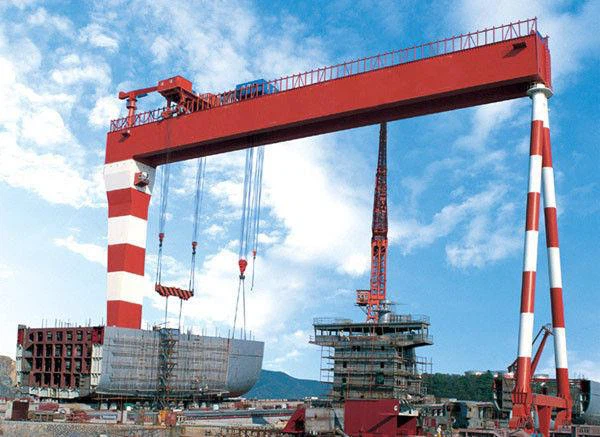
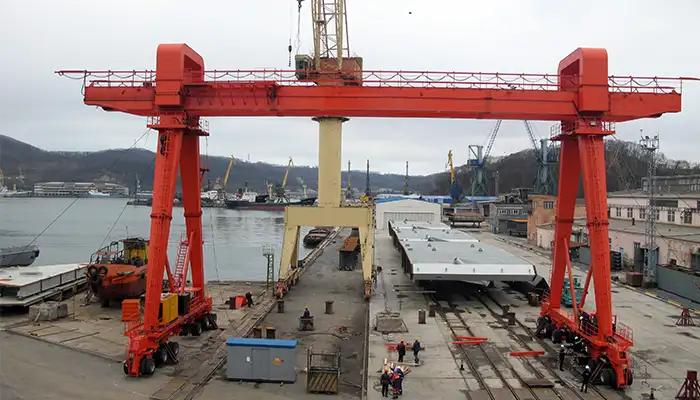
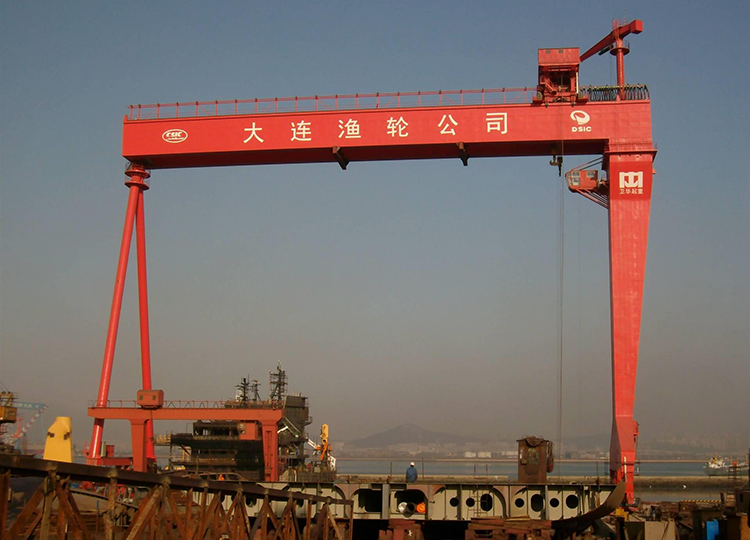
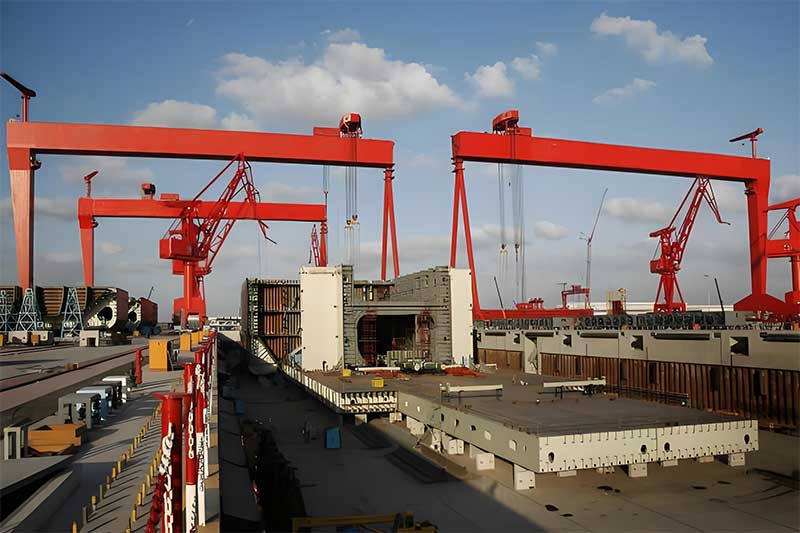
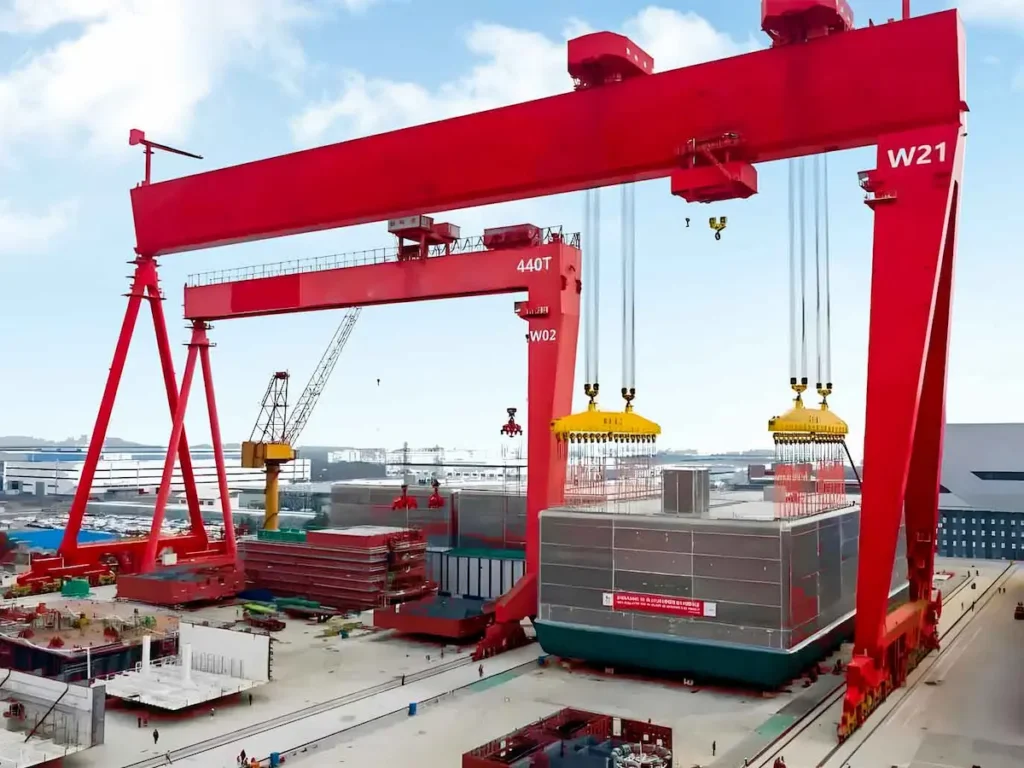
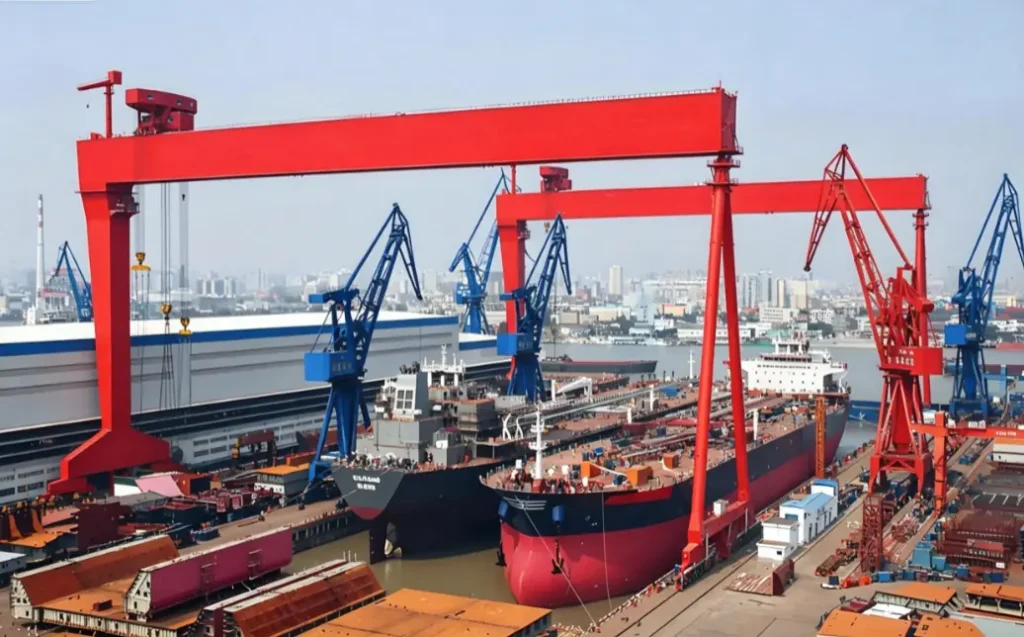
The shipyard gantry crane is equipped with structural, mechanical, electrical and monitoring protection systems to maintain safe operation under heavy-duty working conditions.
Regular inspection helps identify equipment issues and maintain reliable crane operation.
Safety records should be maintained for each inspection. Any abnormal condition must be repaired before the crane returns to service.
You can also read the article for more details on the inspection checklist and schedule: Shipbuilding Gantry Crane Maintenance Guide
A shipyard gantry crane can be customized according to shipyard layout, vessel size, and lifting requirements. The design covers capacity, structure, trolley configuration, control system, and safety equipment.
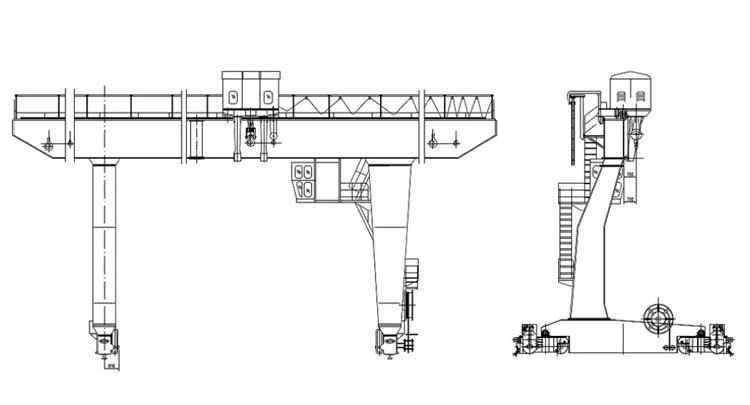
For detailed guidelines on selecting the right shipyard gantry crane, see: Shipyard Gantry Crane Selection Guide: Capacity, Structure, and Application
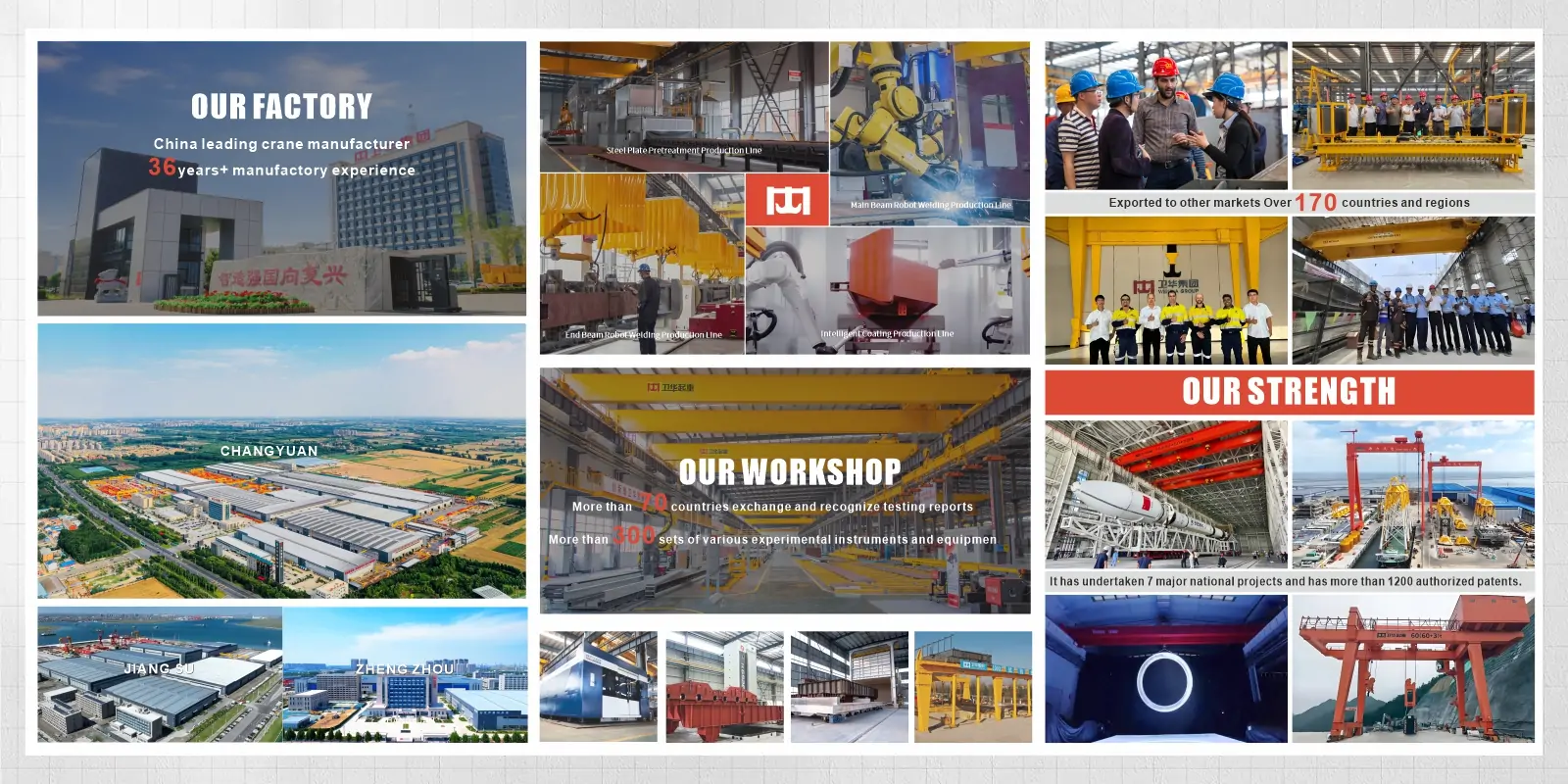
Obtenha uma Cotação Personalizada AgoraWEIHUA is a manufacturer and supplier of shipyard gantry cranes, specializing in the design and production of heavy-duty lifting equipment. With years of crane manufacturing experience, advanced production facilities, and strict quality inspection, WEIHUA provides shipyard cranes for hull assembly, block lifting, and marine equipment installation.
WEIHUA supports customized solutions based on lifting capacity, span, lifting height, and shipyard layout. From crane design and manufacturing to installation support and after-sales service, we provide complete lifting solutions for shipbuilding projects. Contacte-nos for a customized shipyard gantry crane proposal.
A shipyard gantry crane is used for ship block lifting, hull section assembly, equipment installation, and heavy material handling in shipyards, docks, and marine construction areas.
The lifting capacity typically ranges from 50 tons to 1600 tons, depending on ship size, block weight and project requirements.
The span can reach 40–185 m and can be customized according to dock width, rail layout and working area.
Large vessels such as container ships, bulk carriers, tankers, offshore vessels and special engineering ships commonly use shipyard gantry cranes during construction.
Yes. The crane can be customized in lifting capacity, span, lifting height, trolley configuration, control system, and safety equipment according to shipyard requirements.
A shipyard gantry crane is designed for large-scale shipbuilding work, with higher capacity, larger span, stronger structure and functions such as dual trolley operation and hull block turning.
With proper maintenance and regular inspection, a shipyard gantry crane can typically operate for 20–30 years depending on working conditions, load frequency and maintenance quality.
Selection should be based on lifting capacity, shipyard layout, span, lifting height, working duty, hull section weight and operating frequency. A crane manufacturer can provide the suitable configuration according to project conditions.
Fundada em 1988, a Weihua evoluiu para uma líder global no campo da manufatura inteligente na China. Somos especializados em I&D e produção de gruas inteligentes, ao mesmo tempo que oferecemos soluções AGV. As nossas equipas profissionais de engenharia, entrega e pós-venda fornecem suporte técnico multifacetado, soluções personalizadas, orientação de instalação no local e serviços globais de resposta rápida para garantir que cada projeto opere de forma segura e eficiente.
Yes. Our equipment can be equipped with an intelligent monitoring system, achieving real-time status monitoring and fault warning through remote data transmission, ensuring the safety and continuity of shipyard operations while shortening maintenance downtime.
Yes, it is designed for heavy-duty lifting in both automotive manufacturing and shipyard environments.
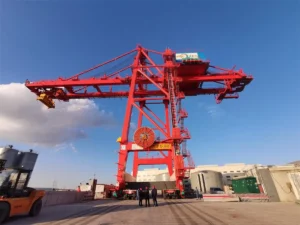
They refer to the same machine type. “Ship-to-Shore crane” (STS crane) is the international industry term used in port planning and procurement. “Quayside container crane” is the common Chinese technical designation. Both describe the portal crane installed at the apron edge of a container terminal to transfer containers between vessels and the dock. Weihua uses both terms interchangeably in its product documentation.
STS cranes typically offer a single-lift capacity of 40-65 tons, with a dual-lift capacity reaching 80 tons, suitable for post-Panamax and ultra-post-Panamax container ships.
STS cranes are designed with a lifting height of 40-55 meters above the rail and 15-20 meters below the rail, enabling efficient handling of high-deck vessels and deep-stowage containers.
Contacte-nos agora por email: [email protected], ou preencha o formulário abaixo.


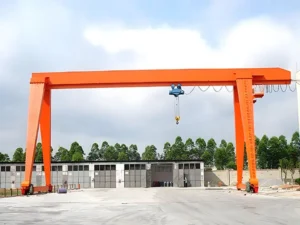
O pórtico rolante é um equipamento de elevação amplamente utilizado em diversos setores industriais, locais de construção, portos, armazéns e outros campos. A sua estrutura única e a sua potente capacidade de suporte de carga tornam-no ideal para a manipulação moderna de materiais de alta resistência. O design da estrutura do “pórtico” permite que o guindaste se mova livremente num espaço, cobrindo uma grande área de trabalho. Então, o que torna os pórticos rolantes especiais? Quais são os seus tipos, parâmetros, métodos de controlo, aplicações e princípios de funcionamento? Como diferem dos pontes rolantes? Vamos explorar juntos. Tipos de Pórtico Rolante Com base no design, aplicação e ambiente de operação, os pórticos rolantes são tipicamente categorizados nos seguintes tipos: Pórtico Rolante de Viga Única Os pórticos rolantes de viga única são amplamente utilizados em setores industriais, armazéns, portos e oficinas. Apresentando um mecanismo de elevação de suporte de viga única, eles percorrem através de colunas laterais e calhas inferiores. Com a sua estrutura simples, operação fácil de usar e capacidade de elevação moderada, são ideais para manusear cargas leves a médias. Capazes de cobrir grandes distâncias livremente, os pórticos rolantes de viga única são adequados para operações de elevação e manuseio de materiais pesados. Pórtico Rolante de Viga Dupla Em comparação com os pórticos rolantes de viga única, os pórticos rolantes de viga dupla oferecem maior…
Nos portos, parques logísticos e manuseamento de materiais industriais, as Gruas Pórtico e as Gruas de Portão são dois tipos comuns e essenciais de equipamentos de carga/descarga. Diferem no design estrutural, características de desempenho, métodos de operação, cenários de aplicação e custos de investimento. Este artigo fornece uma análise abrangente da comparação entre Gruas Pórtico e Gruas de Portão e orienta-o na escolha correta. Comparação do Design Estrutural As diferenças estruturais entre Gruas Pórtico e Gruas de Portão manifestam-se principalmente nos métodos de suporte de carga, trajetórias de movimento e alcances de cobertura. A primeira foca-se numa torre fixa e numa lança rotativa, enfatizando a “cobertura de ponto” e a rotação horizontal flexível. A última apresenta uma estrutura de portal e movimento longitudinal sobre carris, priorizando o “movimento horizontal extenso” e o manuseamento eficiente de logística no local. Consequentemente, os seus designs estruturais distintos ditam diretamente os seus diferentes cenários de aplicação. Características Estruturais da Grua Pórtico As gruas giratórias tipo pórtico empregam estruturas de lança de um ou dois cantiléveres com a torre fixada a fundações ou carris, permitindo uma rotação de 360° ou parcial. Esta configuração permite uma operação flexível em espaços estreitos e alongados, como linhas costeiras, frentes de cais e berços de navios, tornando-a particularmente adequada para o manuseamento de materiais entre navio e terra. A sua funcionalidade principal combina verticalmente…
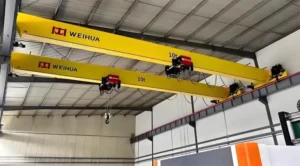
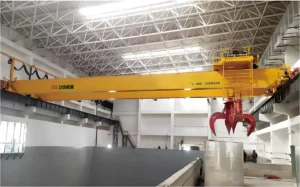
Nas operações industriais modernas, a movimentação eficiente de materiais é crucial para maximizar a produtividade e otimizar o fluxo de trabalho. Os pontes rolantes, também conhecidos como gruas aéreas ou gruas EOT, são sistemas fixos de manuseio de materiais amplamente utilizados em operações de fabrico, processamento de metais, armazenamento e operações de carga/descarga. Neste artigo, exploraremos o princípio de funcionamento, os componentes principais, as aplicações e os benefícios operacionais das pontes rolantes, fornecendo um guia abrangente para planeadores industriais e profissionais de logística. Princípio de Funcionamento da Ponte Rolante Uma ponte rolante opera numa estrutura semelhante a uma ponte que abrange o espaço de trabalho, com um carro e um sistema de elevação que se move horizontalmente ao longo da ponte e levanta ou baixa cargas verticalmente. O movimento da ponte rolante na via, combinado com o controlo preciso do elevação, permite o manuseio eficiente e seguro de materiais pesados em fábricas, armazéns e instalações industriais. Para informações sobre como funcionam as gruas aéreas, consulte este artigo: Princípio de Funcionamento das Gruas Aéreas: Componentes, Movimento e Processo Operacional Terminologia da Ponte Rolante Segue-se uma introdução à terminologia relacionada com as partes da ponte rolante. Capacidade da Ponte Rolante: A capacidade da ponte rolante refere-se ao peso máximo que uma ponte rolante pode levantar em segurança. Geralmente medida em toneladas...
Uma Ponte Rolante EOT (Electric Overhead Traveling Crane) é um sistema de elevação aéreo eficiente e fiável, utilizado para manusear materiais pesados em fábricas, armazéns, oficinas e instalações industriais. Correndo sobre carris suspensos, as pontes rolantes EOT permitem o movimento tridimensional seguro e preciso de cargas, através de movimentos coordenados de elevação, translação transversal e translação longitudinal. Este artigo irá guiá-lo através das definições, tipos, estrutura, princípios de funcionamento, aplicações e fatores de custo das pontes rolantes EOT, para o ajudar a selecionar a solução mais adequada às suas necessidades de elevação. Como funciona uma Ponte Rolante EOT? O princípio de funcionamento de uma ponte rolante EOT envolve uma combinação de elevação vertical, movimento horizontal do carro e movimento longitudinal da ponte, permitindo o manuseamento eficiente de cargas pesadas em instalações industriais. A ponte rolante opera em carris de pista elevados, instalados ao longo da estrutura do edifício, com a viga da ponte a cobrir o espaço de trabalho. O mecanismo de elevação sobe ou desce a carga utilizando cabos de aço ou correntes, enquanto o carro move a carga horizontalmente ao longo da ponte. A ponte rolante inteira desloca-se longitudinalmente ao longo dos carris da pista, permitindo o posicionamento tridimensional dos materiais. As pontes rolantes EOT modernas são acionadas por motores elétricos com velocidade precisa…
As gruas porta-pórtico são amplamente utilizadas em pátios de estocagem ao ar livre, estaleiros, fábricas e locais de construção, tornando-as uma das soluções de manuseio de materiais mais versáteis e extensivamente aplicadas. As gruas porta-pórtico vêm em vários tipos, cada uma personalizável para se adequar a diferentes capacidades de carga, condições do local e requisitos operacionais. No entanto, a seleção da configuração errada pode levar a despesas desnecessárias, capacidade de elevação limitada ou restrições de expansão futuras. Então, quais são os principais tipos de gruas porta-pórtico? Como escolher o tipo certo para a sua aplicação? Neste guia, forneceremos uma visão geral detalhada dos diferentes tipos de gruas porta-pórtico com base na estrutura, mobilidade e cenários de aplicação, ajudando-o a tomar a decisão certa antes de investir numa solução de elevação. O artigo é bastante longo. Abaixo está o nosso índice. Por favor, salte para a secção correspondente, conforme necessário: O que é uma Grua Porta-Pórtico? As gruas porta-pórtico são equipamentos de elevação concebidos para o manuseio eficiente de cargas pesadas em grandes locais ao ar livre. A sua estrutura distinta apresenta uma ou mais vigas principais suportadas por pernas rígidas (ou flexíveis) de cada lado, formando uma estrutura monumental em forma de “portão”. Estas gruas atravessam…
 English English
  Русский
 العربية
 Français
 Português
 Español