










Índice
Introdução
Shipbuilding involves the lifting and assembly of large hull sections, marine equipment, and heavy steel structures, which require reliable lifting equipment with high capacity and wide working coverage. Selecting the right crane plays an important role in improving shipyard operations, especially for projects involving large vessels and complex construction processes. A Shipyard Gantry Crane is designed to handle these heavy-duty lifting tasks in shipbuilding, repair, and marine structure projects.
In this guide, we will introduce the factors for selecting a shipyard gantry crane, including lifting capacity, crane structure, working conditions, and application requirements. We will also explain different crane types, common shipyard uses, and important considerations when choosing a suitable crane solution based on actual project needs.
What Is a Shipyard Gantry Crane?
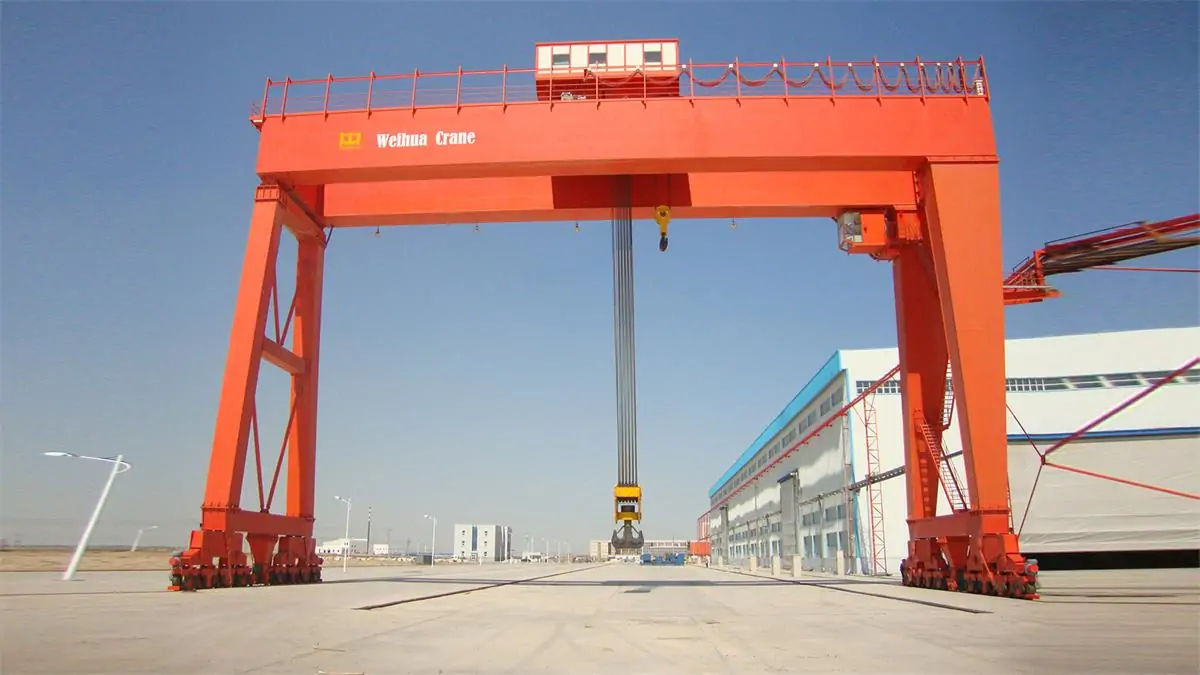
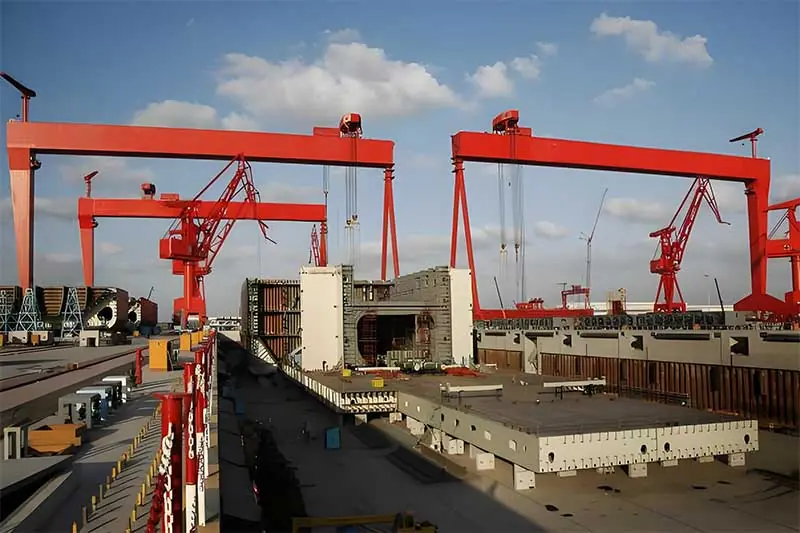
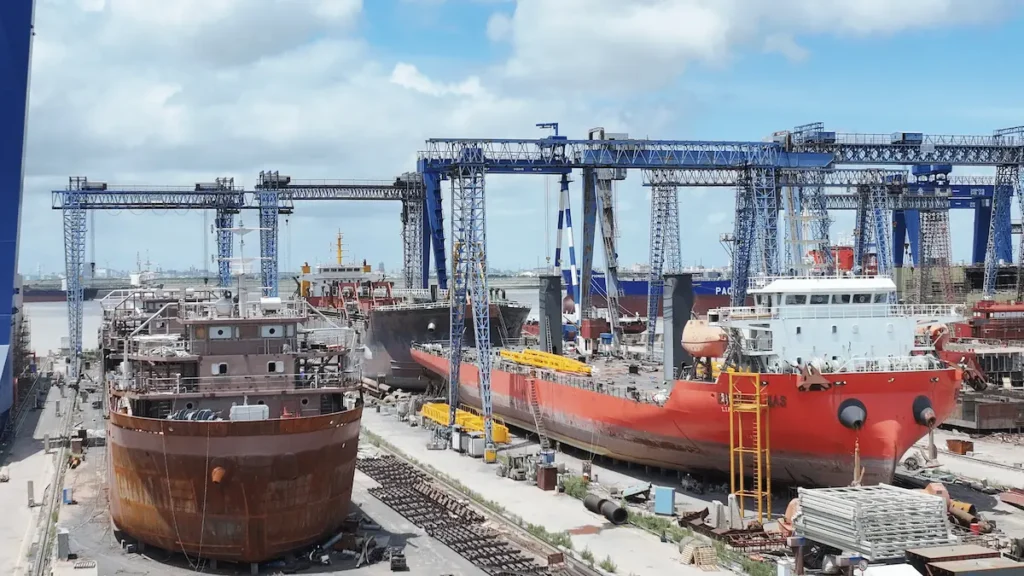
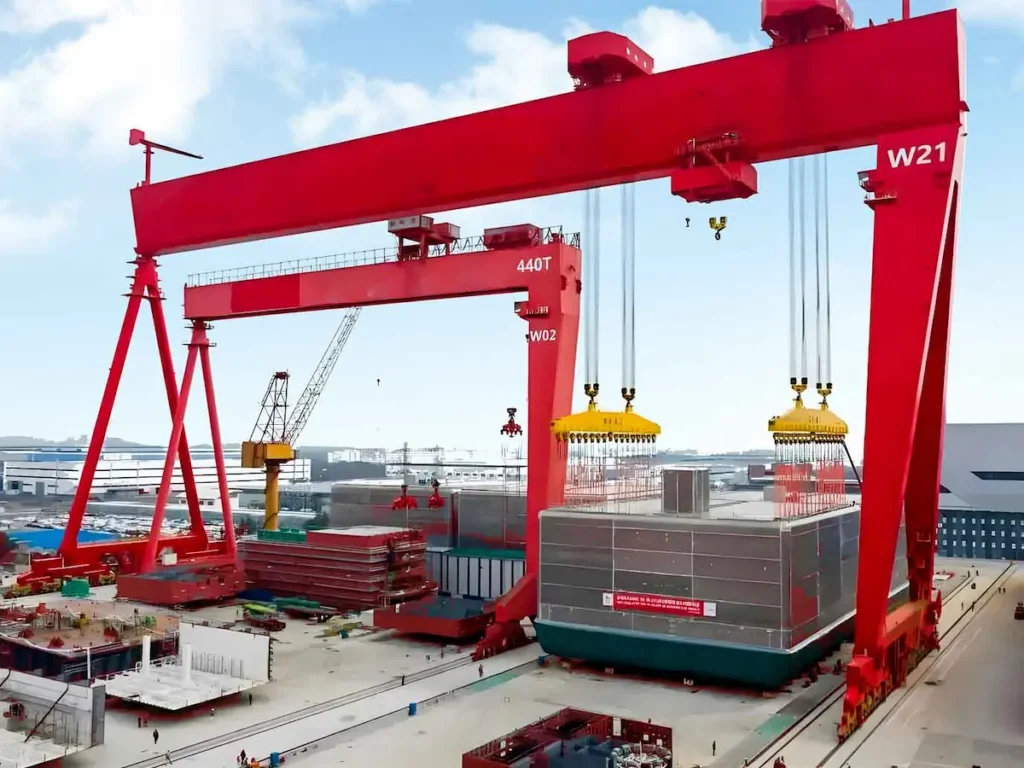
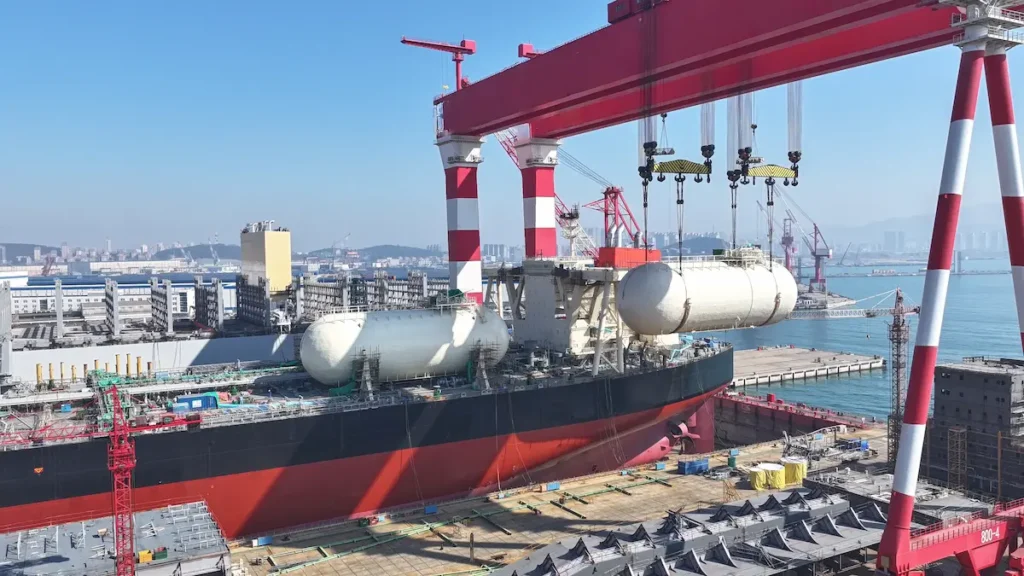
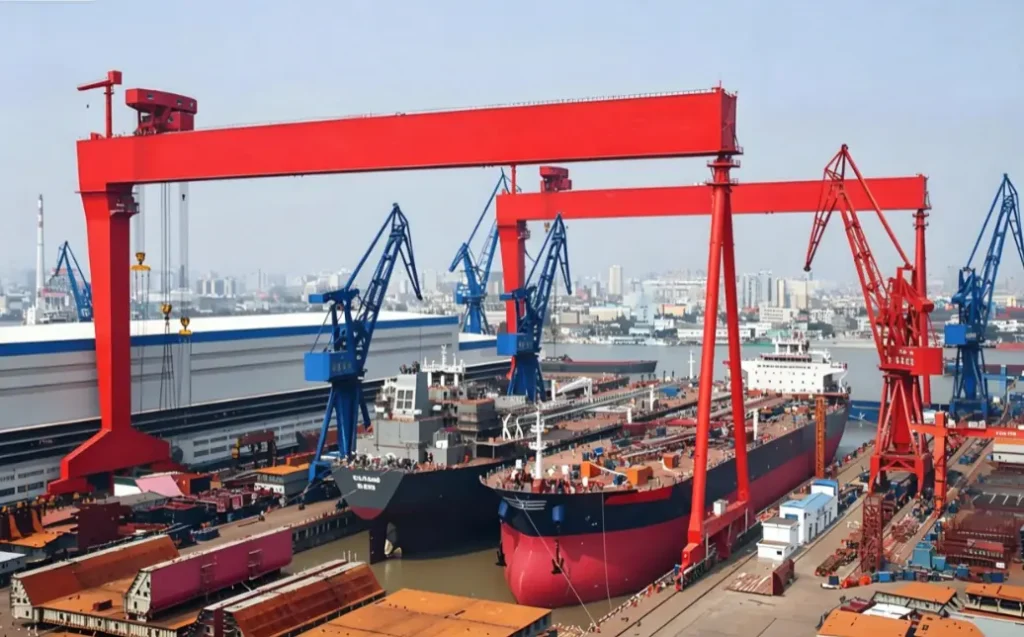
A shipyard gantry crane, also known as a shipbuilding gantry crane or shipyard goliath crane, is a heavy-duty lifting crane designed for shipbuilding, ship repair, and marine structure handling. It consists of a main girder, supporting legs, trolley system, hoisting mechanism, and traveling system. The crane moves along rails or a designated track to lift and transport large ship sections, steel structures, and heavy equipment across the shipyard.
Compared with standard gantry cranes, shipyard gantry cranes are built with higher lifting capacity, larger spans, and greater lifting heights to meet the requirements of large-scale vessel construction. They are commonly used for hull block assembly, equipment installation, material handling, and offshore structure projects.
For an in-depth analysis of shipyard gantry cranes, see the article: “What Is a Goliath Crane in Shipbuilding?”
Types of Shipyard Gantry Cranes
Shipyards use different types of gantry cranes according to lifting capacity, working area, and construction requirements. Common types include full gantry cranes, semi-gantry cranes, and shipyard goliath cranes.
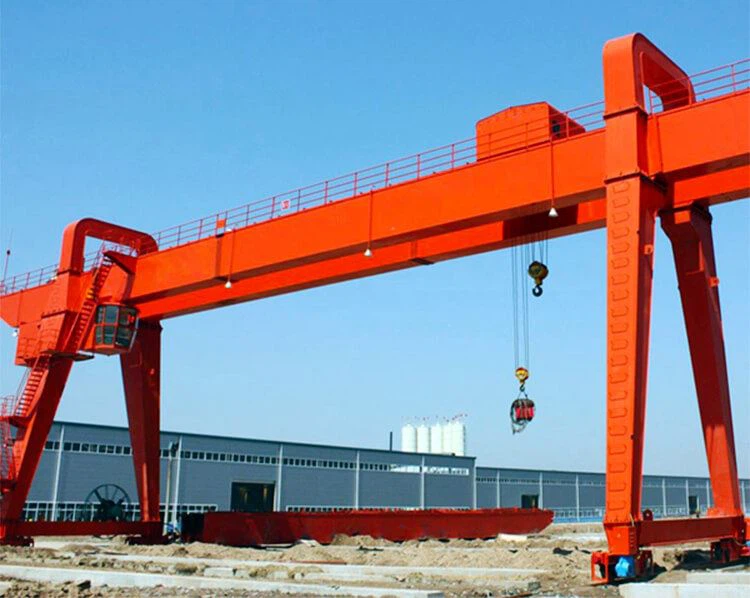
Full Gantry Crane
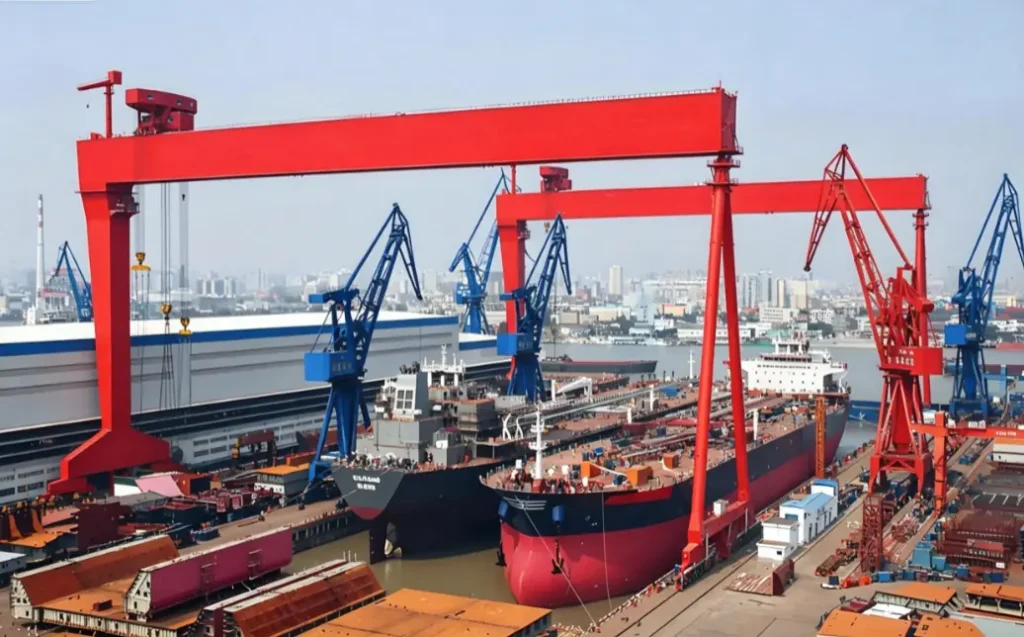
A full gantry crane is a heavy-duty crane supported by two legs running on ground rails. It is mainly used in large shipyards for lifting hull blocks, ship sections, and heavy marine equipment across open working areas.
- Lifting Capacity: 100–1,000+ tons
- Span: 50–200 m
- Lifting Height: 30–100 m
- Classe Trabalhadora: A5–A7
Pórtico Semi-Giratório
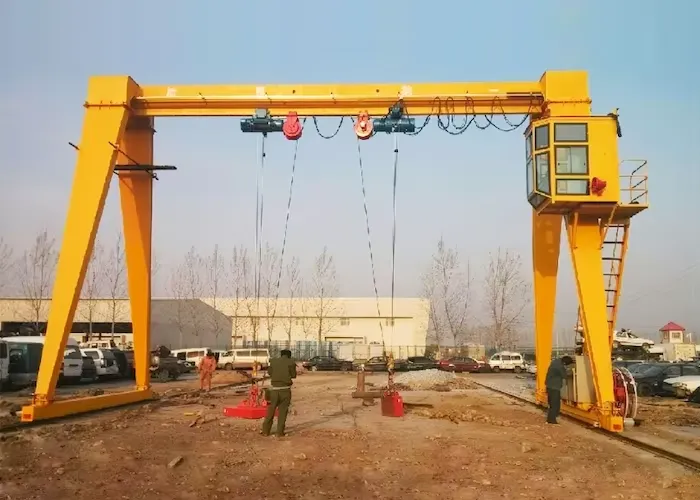
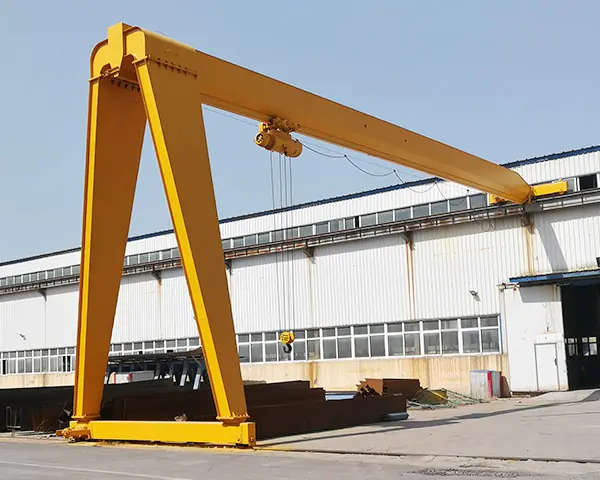
A semi gantry crane combines one side supported by a building structure and the other side supported by ground rails. It is suitable for shipyard workshops and areas with limited installation space.
- Lifting Capacity: 5–300 tons
- Span: 10–50 m
- Altura de Levante: 6–30 m
- Classe trabalhadora: A3–A5
Shipyard Goliath Crane
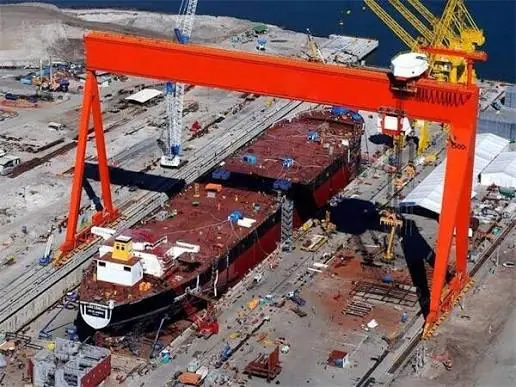
A shipyard goliath crane is a large-scale gantry crane designed for ship construction and offshore projects. It features a large span and high lifting capacity for handling oversized hull blocks and marine structures.
- Lifting Capacity: 300–2,000+ tons
- Span: 80–250 m
- Lifting Height: 50–120 m
- Classe Trabalhadora: A5–A7
Guindaste pórtico sobre pneus (RTG)
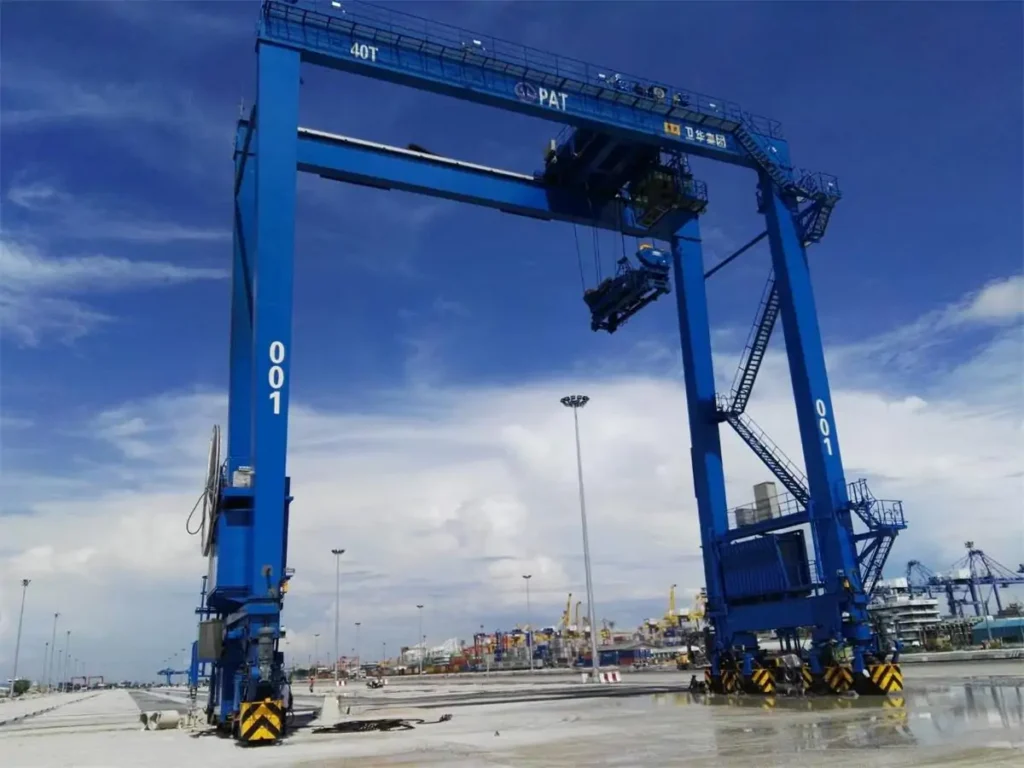
A rubber tyred gantry crane uses tires instead of fixed rails, allowing flexible movement between different work areas. It is mainly used for shipyard material transfer, block storage, and large component handling.
- Lifting Capacity: 20–300 tons
- Span: 20–60 m
- Lifting Height: 10–40 m
- Travel Speed: 10–30 m/min
Apresentação de Projetos
For more information on the applications of shipyard gantry cranes, see the article: Top Applications of Gantry Cranes in Shipyards
How to Choose the Right Shipyard Gantry Crane?
Choosing a shipyard gantry crane requires matching the crane specifications with shipbuilding requirements, including lifting loads, dock layout, working conditions, and future production needs.
1. Capacidade de Elevação
The lifting capacity is the first factor to consider when selecting a shipyard gantry crane. It should be based on the maximum weight of ship blocks, hull sections, and components handled during production.
Factors to consider when calculating the required capacity:
- Maximum ship block weight
- Weight distribution during lifting
- Lifting accessories and spreader beams
- Future shipbuilding plans
The selected capacity should include a reasonable safety margin to avoid long-term operation near the rated limit, which may increase structural stress and component wear.
2. Consider Span and Lifting Height
The crane span and lifting height directly affect whether the equipment can match the shipyard layout and production process.
Factors to consider when calculating the required span:
- Dry dock width
- Assembly area size
- Rail distance
- Material transportation routes
A larger span provides wider coverage but requires stronger structural design and higher manufacturing requirements.
3. Lifting Height Selection
Factors to consider when calculating the required lift height:
- Maximum ship block height
- Assembly clearance
- Installation requirements
- Hook approach distance
Insufficient lifting height may limit production flexibility, while excessive height can increase equipment cost.
4. Selecting the Right Assignment Level
Shipyard gantry cranes often operate under heavy-duty conditions. The working class should be selected according to daily operation time and lifting frequency.
Factors to Consider When Assigning Assignment Grades:
- Working hours per day
- Number of lifting cycles
- Average load ratio
- Operating environment
Heavy ship block handling requires a higher duty classification compared with occasional material handling. Choosing the correct working class helps avoid excessive fatigue on structural components and mechanical systems.
5. Evaluate the Shipyard Operating Environment
Shipyards usually operate in challenging environments, especially coastal areas with high humidity and salt spray.
Important considerations include:
Corrosion Protection
- Anti-corrosion coating system
- Weather-resistant electrical cabinets
- Sealed electrical components
- Regular surface protection
Wind Resistance
- Local maximum wind speed
- Rail clamp systems
- Anchoring devices
- Wind monitoring equipment
Temperature Conditions
The crane design should match local climate conditions, including extreme cold or high-temperature environments.
6. Choose Appropriate Safety and Control Systems
Safety systems are essential for large shipyard gantry cranes due to heavy lifting operations.
- Proteção contra sobrecarga: Prevents operation beyond rated lifting capacity.
- Limit Switches: Control lifting height and travel position.
- Anti-Collision System: Reduces the risk of collisions between cranes operating on the same track.
- Wind Speed Monitoring: Provides warnings when wind conditions exceed operating limits.
- Control Methods: Operator cabin control/Wireless remote control/PLC automatic control
The control method should match the shipyard production process and operating requirements.
7. Consider Power Supply and Drive System
The power supply method affects crane operation stability and maintenance requirements.
- Cable Reel Power Supply: Suitable for long-distance crane travel and outdoor applications.
- Busbar Power Supply: Suitable for fixed production areas with frequent crane operation.
- Battery or Special Power Systems: Used for specific applications requiring flexible movement.
The travel and lifting mechanisms should also use reliable motors, gear reducers, and variable frequency control systems for smooth operation.
8. Check Customization Capability
Shipyard gantry cranes are usually customized according to project requirements. Standard models may not meet every shipyard layout.
Customization options include:
- Capacidade de elevação
- Span length
- Altura de elevação
- Crane speed
- Classe trabalhadora
- Sistema de controlo
- Anti-corrosion treatment
- Special lifting devices
A manufacturer with engineering capability can provide a crane design that matches actual production conditions.
9. Choose an Experienced Shipyard Gantry Crane Manufacturer
The manufacturer plays an important role in crane performance and long-term service.
Manufacturing Experience
Check whether the supplier has experience with:
- Estaleiros
- Heavy lifting projects
- Large tonnage cranes
Engineering Capability
A qualified manufacturer should provide:
- Crane design
- Structural calculation
- Installation guidance
- Technical documentation
After-Sales Support
- Spare parts supply
- Maintenance support
- Remote technical assistance
- On-site service capability
10. Shipyard Gantry Crane Selection Checklist
Before purchasing, confirm the following:
- Required lifting capacity
- Maximum lifting height
- Required span
- Classe trabalhadora
- Operating environment
- Power supply method
- Safety requirements
- Sistema de controlo
- Maintenance requirements
- Manufacturer experience
A complete evaluation helps select a crane that matches both current production needs and future expansion plans.
The selection of a shipyard gantry crane should focus on actual lifting requirements, operating environment, and long-term use. A suitable crane design helps improve shipbuilding efficiency and provides reliable support for large-scale lifting operations.
Configuração de segurança
- Wind Protection System — Shipyards often require wind-resistant devices such as rail clamps, anchoring systems, and wind locks to prevent crane movement during strong winds.
- Overload Protection System — Load limiters and torque limiters monitor lifting conditions and prevent damage caused by overload or uneven loading.
- Limit and Anti-Collision Devices — Height limit switches, travel limit switches, and anti-collision systems prevent hook overtravel, crane derailment, and interference between multiple cranes.
- Electrical Safety System — The crane is equipped with emergency stop buttons, PLC control, frequency converters, and electrical protection systems suitable for humid and coastal environments.
- Monitoring and Alarm System — Wind speed sensors, sound and light alarms, and crane monitoring systems provide real-time operation information and improve working safety.
- Structural Safety Design — High-strength steel structures, reliable welding processes, and buffer devices improve crane stability and reduce impact during heavy lifting operations.
For detailed safety specifications and inspection checklists for shipyard gantry cranes, see the article: Shipbuilding Gantry Crane Maintenance Guide
Customization of Shipyard Gantry Crane
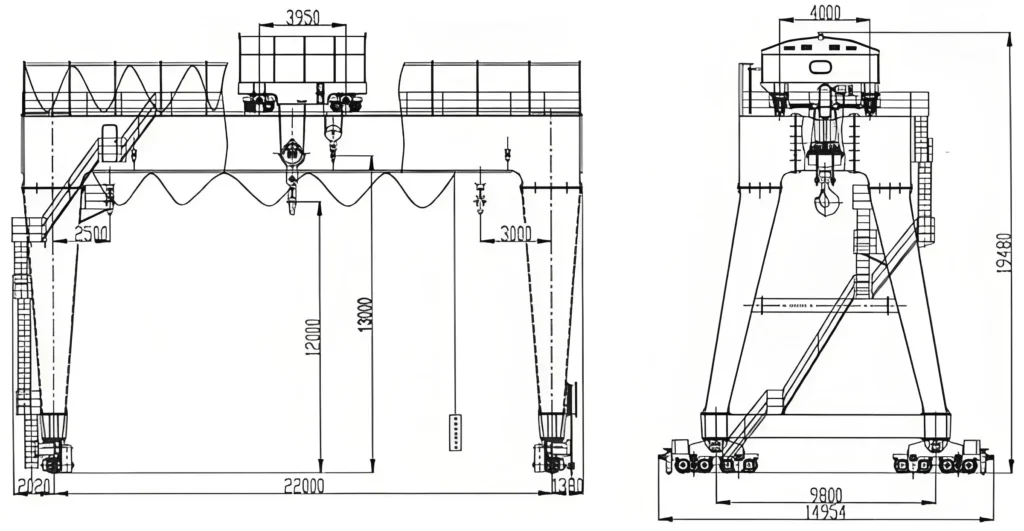
Shipyard gantry cranes are usually designed according to vessel size, lifting requirements, and site conditions. Common customization options include:
- Lifting Capacity: The crane capacity can be customized according to the weight of hull blocks, marine equipment, and heavy structures.
- Span and Lifting Height: The crane dimensions can be adjusted to match dock width, assembly areas, and shipbuilding space requirements.
- Trolley System: Single trolley, double trolley, and upper-lower trolley configurations can be selected for different lifting operations, including hull block turning and precise positioning.
- Control System: Options include pendant control, remote control, PLC control, and variable frequency drive systems for different operation requirements.
- Safety Equipment: Additional safety configurations such as wind protection devices, overload protection, anti-collision systems, and monitoring systems can be added.
- Environmental Adaptation: The crane structure and protection systems can be customized for coastal environments, including corrosion-resistant coating and high wind resistance design.
Conclusão
WEIHUA is a professional manufacturer and supplier of shipyard gantry cranes, specializing in heavy-duty crane design, production, and project delivery. With years of experience in crane manufacturing, WEIHUA has supplied lifting solutions for shipbuilding, marine engineering, and large-scale industrial projects.
WEIHUA provides customized shipyard gantry cranes based on lifting capacity, span, lifting height, and operating conditions. Supported by advanced manufacturing equipment, strict quality inspection, certifications, and experienced technical teams, we offer complete services from solution design and production to installation and maintenance. Contacte-nos for a reliable shipyard gantry crane solution for your project.

FAQ
What is a shipyard gantry crane?
A shipyard gantry crane is a heavy-duty lifting crane used in shipbuilding and marine projects. It is primarily used to lift hull blocks, ship components, steel structures, and large equipment during construction and repair operations.
What capacity gantry crane is used in shipyards?
Shipyard gantry cranes usually have lifting capacities from 100 tons to over 1,000 tons. The required capacity depends on the weight of hull sections, vessel size, and lifting requirements.
How do I choose a shipyard gantry crane?
Selection depends on lifting capacity, crane span, lifting height, working class, shipyard layout, and operating conditions. The crane configuration should match the actual shipbuilding process and future production needs.
What type of gantry crane is used for shipbuilding?
Full gantry cranes, shipyard goliath cranes, and other heavy-duty gantry crane designs are commonly used for shipbuilding. Large shipyards often select double girder structures with high lifting capacity and long spans for hull assembly.
How large can a shipyard gantry crane be?
Large shipyard gantry cranes can have lifting capacities above 1,000 tons, spans of 50–200 m, and lifting heights of 30–100 m. The size depends on the shipyard scale and project requirements.
What is the difference between a gantry crane and a goliath crane?
A goliath crane is a type of heavy-duty gantry crane. In shipyards, the term goliath crane usually refers to larger cranes with greater lifting capacity and span for handling large hull blocks and marine structures.
Can shipyard gantry cranes be customized?
Yes. Shipyard gantry cranes can be customized according to lifting capacity, span, lifting height, trolley configuration, control system, and working environment. Manufacturers can design solutions based on specific shipyard requirements.
How long does a shipyard gantry crane last?
A shipyard gantry crane can typically serve for 20–30 years or longer with proper maintenance. Service life depends on operating conditions, maintenance frequency, component quality, and usage intensity.