







Resumen del proyecto
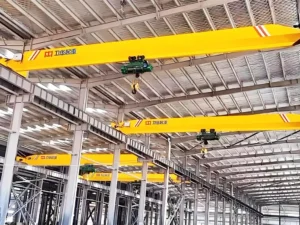
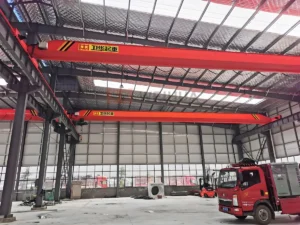
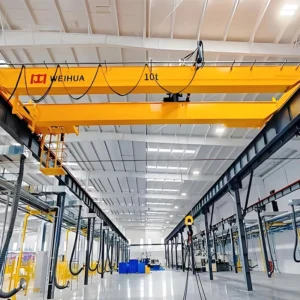
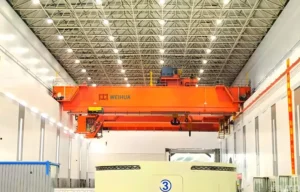
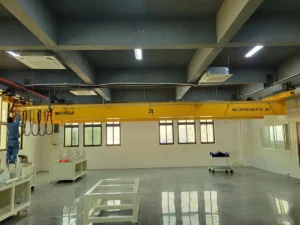
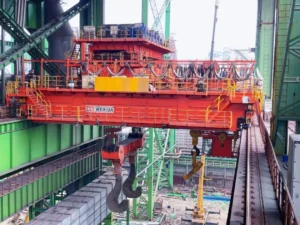
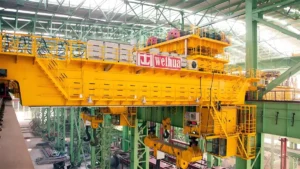
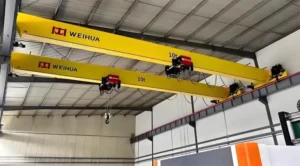
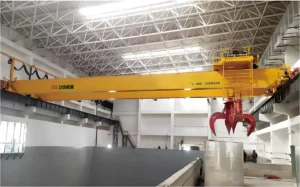
As the scale of domestic energy infrastructure and heavy industry construction continues to expand, a key project of China Energy Engineering Group urgently required a high-capacity, highly stable double girder bridge crane capable of adapting to multiple operating conditions for the handling of large components, equipment assembly, and the hoisting of heavy machinery.
Desafíos del proyecto
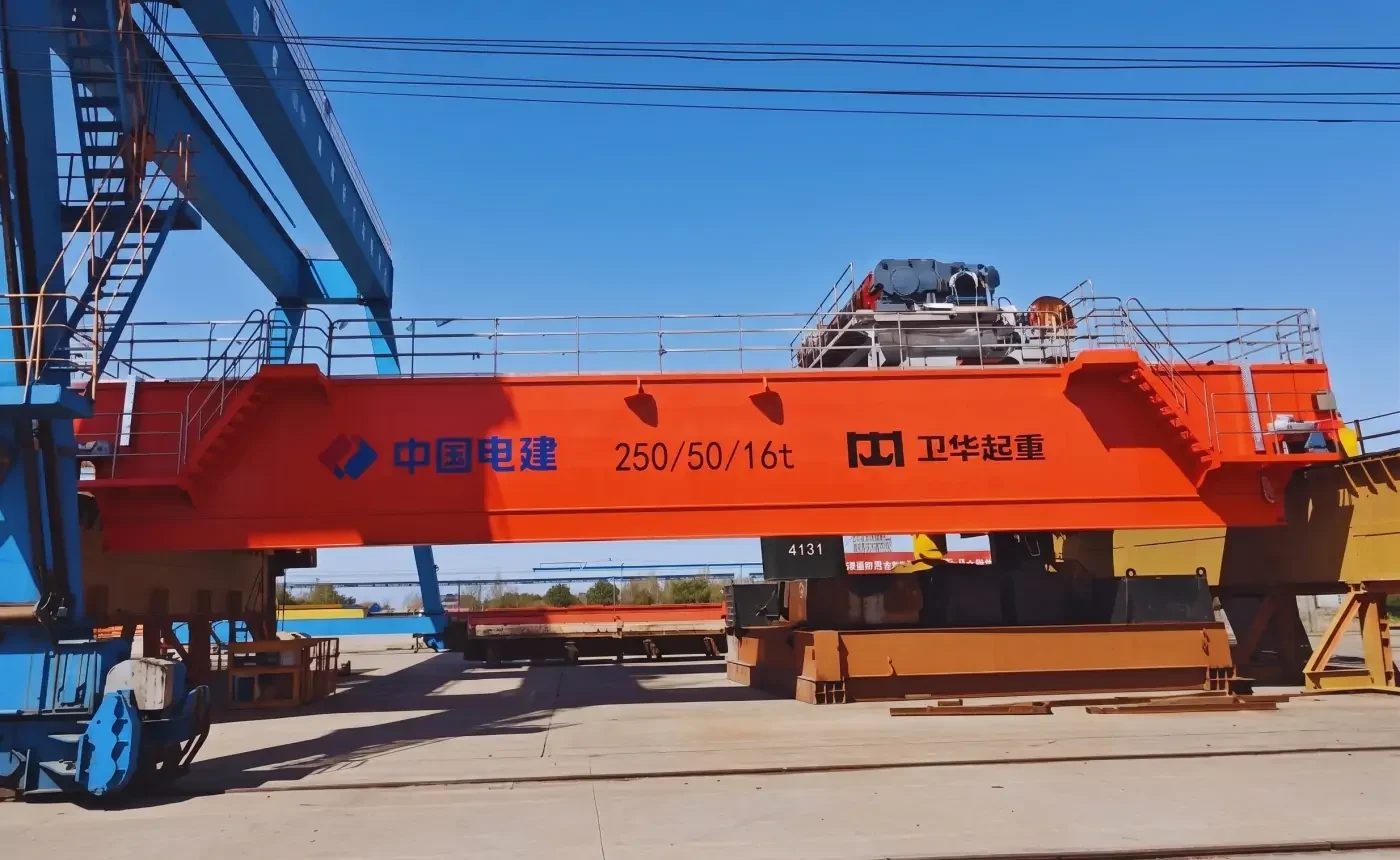
The on-site operating conditions were complex: the peak lifting capacity for a single heavy load reached 250 metric tons, while the crane also needed to handle auxiliary lifting of medium-sized 50-metric-ton components and routine handling of 16-metric-ton lightweight parts. A single unit had to cover these three distinct load scenarios, imposing stringent requirements on the crane’s structural strength, braking safety, precise control, and continuous operation capability.
After multiple rounds of technical solution comparisons, qualification verifications, and on-site production capacity assessments, China Energy Engineering Corporation (China Power Construction) ultimately selected Henan Weihua as the lifting equipment supplier to custom-build a 250-metric-ton double girder bridge crane, tailored to meet the project’s full-process lifting requirements.
Solución Weihua
Upon receiving the custom order, Weihua’s R&D, engineering, production, and testing departments collaborated to conduct specialized optimization designs for the 250-metric-ton ultra-heavy load:
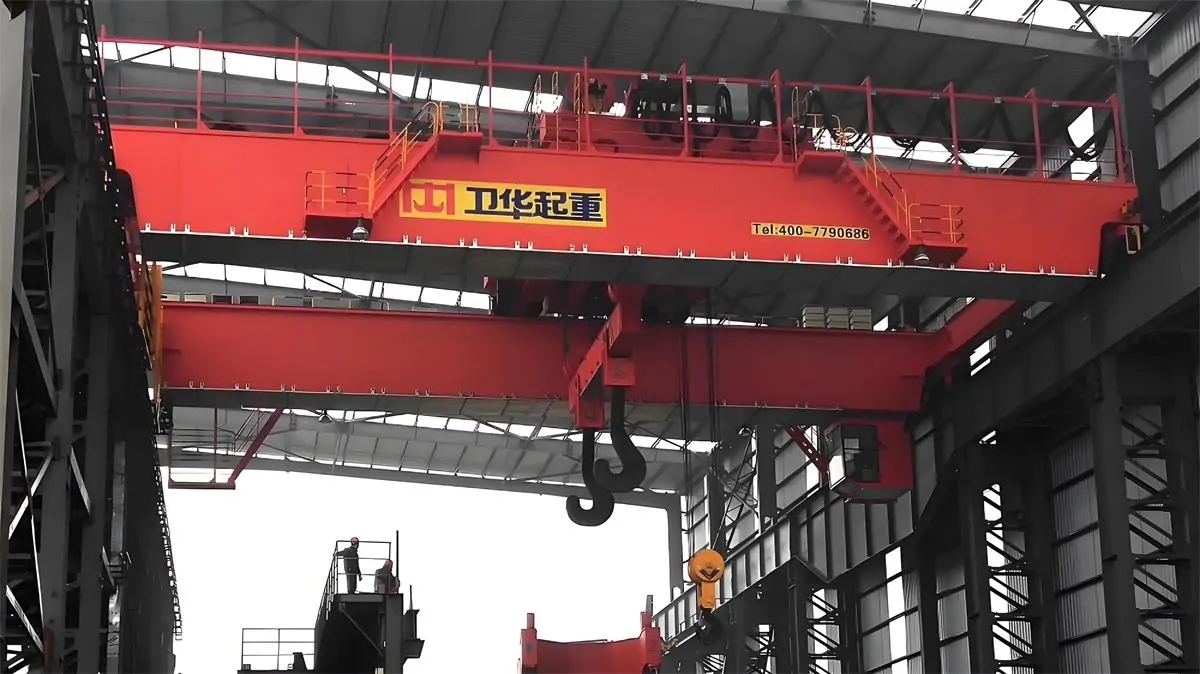
Heavy-Duty Double-Girder Main Structure
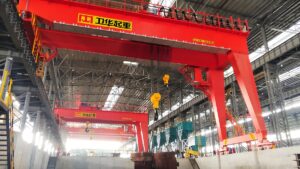
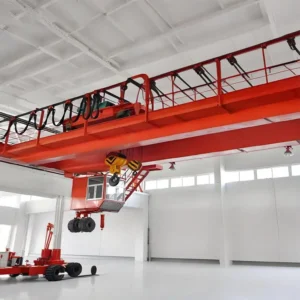
A thickened box-type double-girder structure was adopted, with optimized welding processes for the web and upper/lower flanges. This approach eliminates welding stresses across the entire structure, enhancing the machine’s resistance to bending and torsion. When lifting the full 250-metric-ton load, main girder deformation is controlled within the minimum range specified by national standards, ensuring minimal deformation even under long-term heavy loads.
Three-Tiered Lifting System
The equipment is configured with three independent lifting mechanisms: a 250-metric-ton main hoist, a 50-metric-ton auxiliary hoist, and a 16-metric-ton electric hoist:
- 250-metric-ton Main Hook: Responsible for lifting large steel structures, generator sets, and heavy equipment;
- 50-metric-ton Auxiliary Hook: Suitable for flipping and positioning medium-sized components;
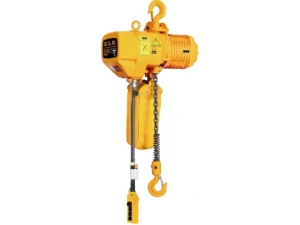
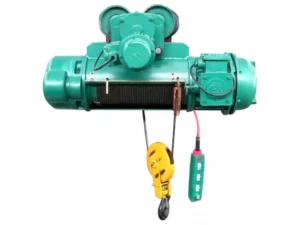
- 16-metric-ton light-duty hoist: For the daily transport of small materials and tools; this multi-purpose unit significantly enhances on-site operational efficiency.
Multi-Layered Safety Protection System
Standard features include overload protection, height limit switches, travel limit switches, emergency braking, real-time load monitoring, and a remote fault warning system. The main hoisting mechanism employs a dual-brake redundancy design that instantly locks the load in the event of a power outage or malfunction, eliminating the risk of falling objects from heights and fully meeting the high-intensity, high-safety-level construction requirements of infrastructure projects.
Comprehensive Pre-Delivery Testing
After the entire machine is assembled, the Weihua Testing Base conducts a full suite of type tests: no-load round-trip operation, static load tests at 50%, 100%, and 125% of the rated load, dynamic load cycle endurance testing, and a simulation of 8 hours of continuous, uninterrupted operation. Structural stress, motor temperature rise, and braking performance data are recorded throughout the process, with every indicator exceeding national and industry standards.
250-metric-ton Crane Successfully Passes Final Acceptance Testing
On June 16, 2026, a project acceptance expert panel from China Energy Engineering Group (CEEC) arrived at Weihua’s production and testing facility to conduct the final acceptance inspection of the crane.
The expert panel cross-referenced the contract’s technical terms and national standards for lifting equipment to verify, item by item, all specifications—including equipment dimensions, load performance, safety devices, electrical control systems, weld quality, and anti-corrosion coating. They also conducted on-site operational demonstrations covering the entire process, including multi-stage load hoisting, back-and-forth travel, and precise positioning.
The complete set of 250/50/16t double girder overhead cranes operated smoothly, featured responsive braking, and offered precise control. All test data met the required standards, and the cranes successfully passed all acceptance tests, earning high praise from the acceptance team.
Conclusión
From design and drawing approval through manufacturing, assembly, testing, and on-site delivery, the Weihua team was fully involved in the implementation of the China Energy Engineering Group’s 250-metric-ton bridge crane project. Since the equipment was put into operation, all performance indicators have met design requirements, fulfilling the practical needs for heavy-load lifting, continuous operation, and safe performance during the construction of large-scale power projects.
For Weihua, this was not merely the delivery of a large-scale double girder bridge crane, but also a validation of our capabilities in complex operational conditions. Moving forward, we will continue to focus on the high-tonnage lifting needs of the power, energy, metallurgy, and heavy industry sectors, continuously optimizing product performance and engineering service capabilities to provide stable and reliable lifting equipment support for more national key projects.