








Tabla de contenidos
Introducción
Container crane specifications directly affect lifting performance, operating efficiency, and equipment selection for ports, terminals, and container yards. Parameters such as lifting capacity, span, lifting height, and working class determine whether a crane can meet daily container handling requirements and long-term operation needs. Understanding these specifications helps buyers select the right container crane for different applications.
In this guide, I will explain the main container crane specifications, including capacity ranges, span requirements, lifting height options, and crane working classes. I will also compare specifications of RTG, RMG, and STS cranes, and discuss how factors such as container size, terminal layout, and operation frequency influence crane selection.
Container Crane Specifications
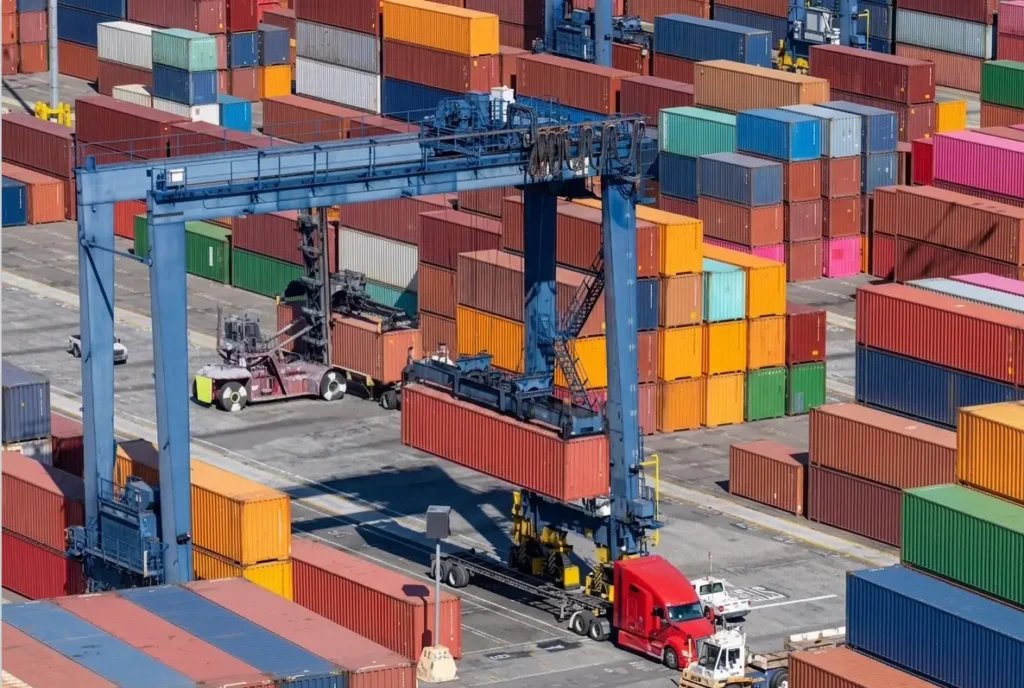
Container crane specifications mainly include lifting capacity, span, lifting height, working class, trolley travel speed, crane travel speed, and container handling type.
| Especificación | Range / Options | Descripción |
|---|---|---|
| Capacidad de elevación | 35–80 tons | Selected according to container weight, spreader weight, and handling requirements |
| Español | 20–50 m+ | Determines the working coverage area of the crane |
| Altura de elevación | 12–50 m+ | Depends on container stacking height and vessel operation requirements |
| Clase trabajadora | A5–A7 | Defines crane duty level based on operation frequency and workload |
| Superar a | Personalizado | Designed according to vessel size and container handling range |
| Velocidad de elevación | 30–90 m/min | Affects container handling efficiency |
| Trolley Speed | 60–180 m/min | Determines horizontal container transfer speed |
| Velocidad de desplazamiento de la grúa | 20–50 m/min | Related to yard layout and operating distance |
The final container crane configuration depends on terminal layout, vessel size, container throughput, and operating requirements. The following sections explain key specifications in detail, including lifting capacity, working range, and spreader options.
Container Crane Capacity Specifications
The lifting capacity is one of the key factors when selecting a container crane. It determines the maximum container weight the crane can handle and should match the container size, spreader type, terminal operation, and working conditions.
Capacidad de elevación nominal
Container crane capacity is usually selected according to the container handling method and operation requirements.
| Capacity Type | Rango típico | Aplicación |
| Single Container Lifting | 30.5–65 tons | Handles standard 20ft, 40ft, and 45ft containers. |
| Twin Container Lifting | 2 × 20 tons | Used for lifting two 20ft containers at the same time. |
| Heavy Duty Lifting | 50–450+ tons | Designed for special cargo and non-standard lifting applications. |
The rated lifting capacity normally includes the weight of the spreader. The actual container weight capacity should be calculated after deducting the spreader weight and other lifting accessories.
Spreader Selection and Capacity Matching
The spreader type directly affects container handling capacity and operation method.
- Single Spreader: Used for standard container handling, including 20ft, 40ft, and 45ft containers.
- Twin-lift Spreader: Allows two 20ft containers to be lifted together, improving handling efficiency.
- Telescopic Spreader: Adjustable between different container lengths for flexible operations.
The crane capacity should be selected together with the spreader configuration to match the terminal’s container flow and handling requirements.
View optional spreader content: Esparcidor de pórtico
Capacity Range by Crane Type
Different container crane types have different typical capacity ranges based on their working applications.
| Tipo de grúa | Capacidad | Aplicación |
|---|---|---|
| Grúa STS | 40–65 tons | Ship loading and unloading at container terminals. |
| Grúa RMG | 35–50 tons | Container yards and railway terminals. |
| Grúa RTG | 30.5–40.5 tons | Container stacking and transfer operations. |
| Heavy Duty Gantry Crane | 50–450+ tons | Heavy cargo and special lifting projects. |
How to Select Container Crane Capacity?
Container crane capacity selection should consider:
- Container size and weight distribution — Including standard containers, overweight containers, and special cargo.
- Spreader weight — The spreader weight must be included in the rated lifting load.
- Terminal operation frequency — High-throughput terminals usually require higher working classes and stronger crane structures.
- Stacking height and outreach — Larger working ranges may require higher lifting capacity.
- Future expansion plans — Capacity should support expected container volume growth.
Selection Tip: Container crane capacity should match the operation type, container size distribution, terminal layout, and future handling requirements.
Container Crane Span Specifications
Container crane span determines the working width of the crane, including the number of container rows and vehicle lanes it can cover. Span selection should match the yard layout, container arrangement, traffic lanes, and foundation conditions.
Typical Span Range by Crane Type
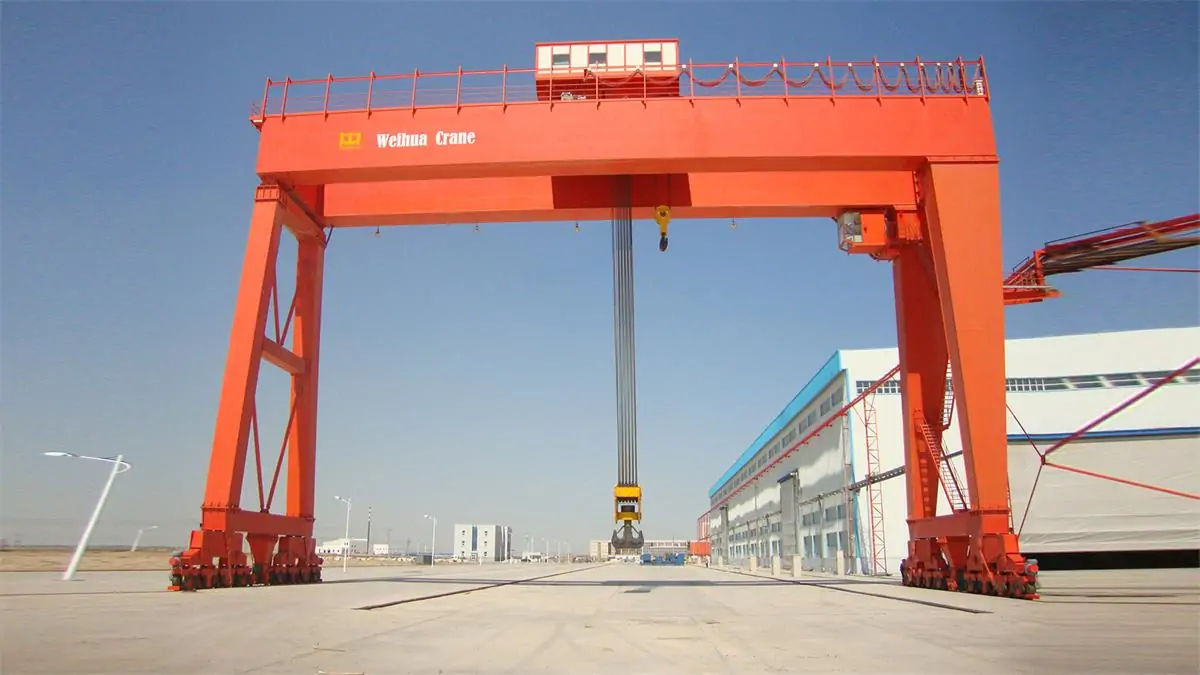
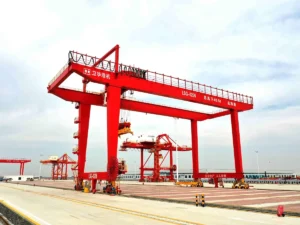
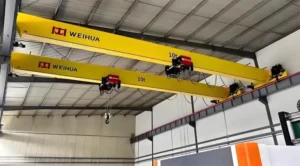
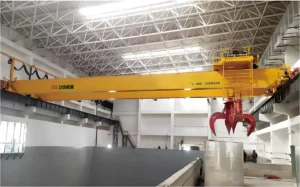
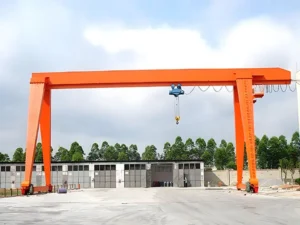
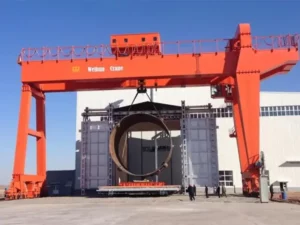
Usually 20–40 m, used for container yards and transfer areas.
Obtenga una cotización personalizada ahora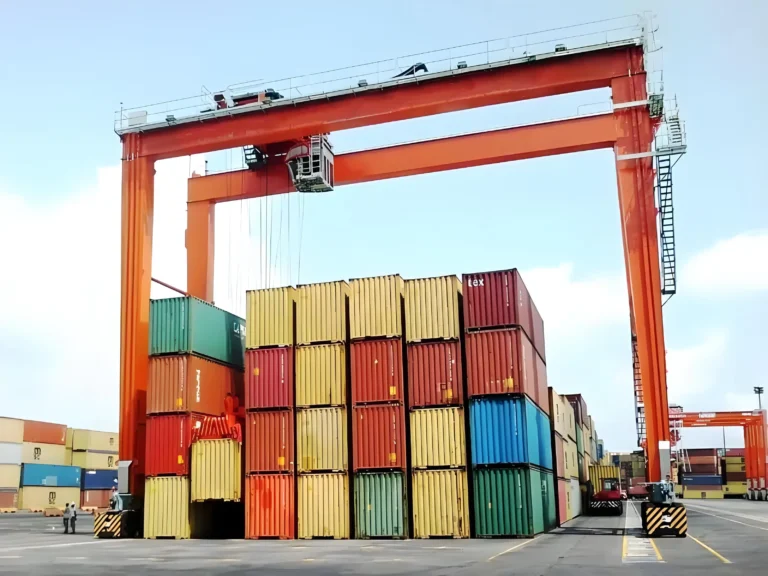
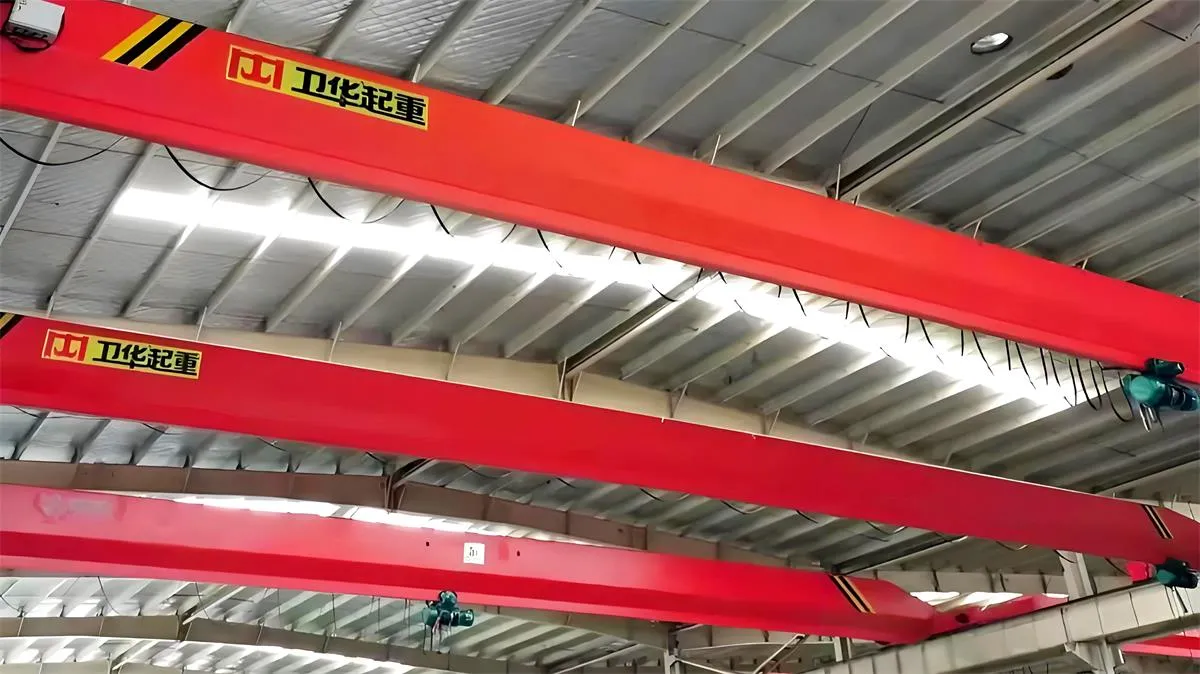
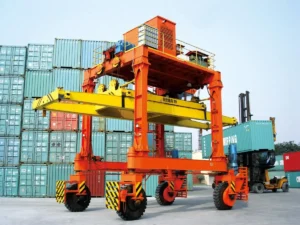
Commonly 10.5–32.5 m, used span for standard container yards.
Obtenga una cotización personalizada ahora
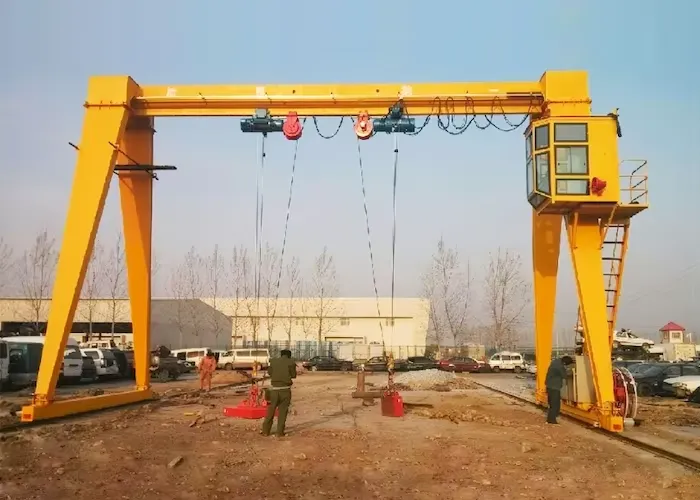
Typically 20–40 m, suitable for large container yards and railway terminals.
Obtenga una cotización personalizada ahora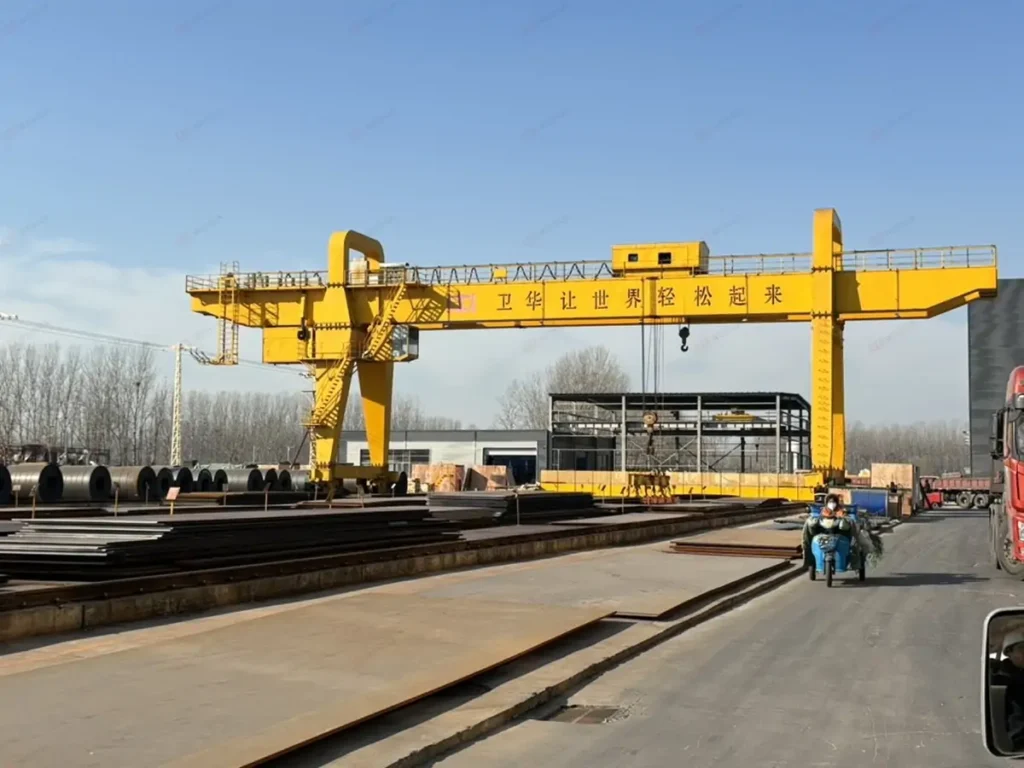
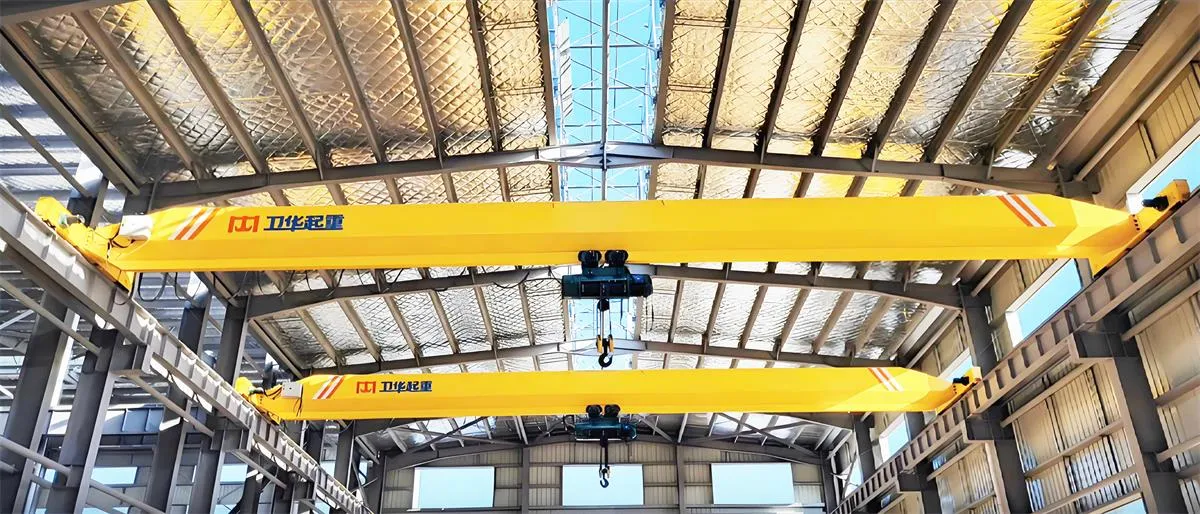
Around 2.5–37.5 m, used for warehouses and indoor or semi-indoor handling applications.
Obtenga una cotización personalizada ahora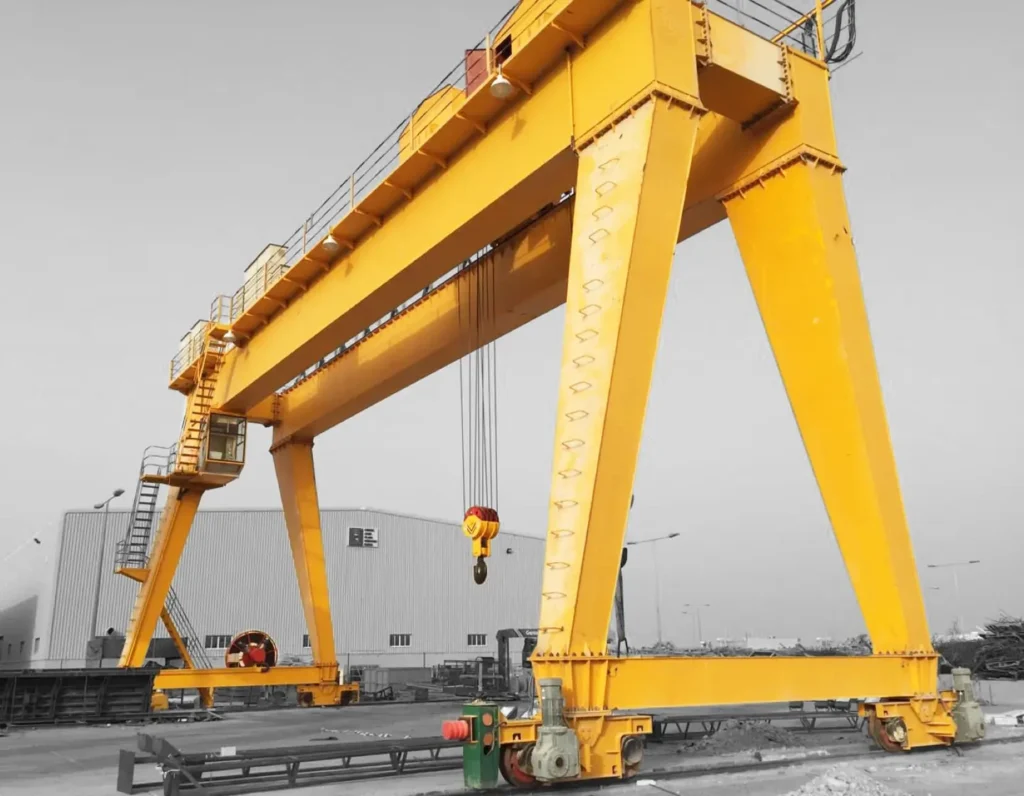
Usually above 40 m, designed for special heavy-load applications.
Obtenga una cotización personalizada ahoraSpan Selection Based on Yard Layout
The required crane span is mainly determined by container stacking rows and traffic lanes:
| Rango de amplitud | Container Yard Coverage | Aplicación |
|---|---|---|
| 20–25 m | Covers approximately 6–8 container rows with one traffic lane. | Small and medium container yards. |
| 25–30 m | Covers around 8–10 container rows with one or two traffic lanes. | Medium-sized container terminals. |
| 30–40 m | Covers more than 10 container rows with multiple traffic lanes. | Large ports and railway container yards. |
Span Selection Factors
- Yard Layout: Span should cover the planned container rows, vehicle lanes, and required safety clearances.
- Future Expansion: Allow sufficient space for planned yard expansion to avoid major structural modifications.
- Foundation Load: Larger spans can increase wheel loads and rail foundation requirements, especially for RMG cranes.
- Crane Structure: Double-girder designs provide higher rigidity for large-span and heavy-load applications.
- Working Class: Span, load, and operating frequency should be considered together when determining the crane duty class.
Selection Tip: Container crane span should be calculated from the actual yard plan rather than selected from a standard range. Container rows, traffic lanes, rail layout, and foundation conditions should all be included in the design.
Container Crane Lifting Height Specifications
Container crane lifting height refers to the vertical distance the spreader can travel. It determines the maximum container stacking height and the crane’s working range. The required lifting height is based on stack height, vessel dimensions, rail level, and operating layout.
Lifting Height by Crane Type
| Tipo de grúa | Altura de elevación | Aplicación |
|---|---|---|
| Grúa RTG | 12–18 m | 5–6 container stacking layers |
| Grúa RMG | 15–25 m | High-stack container yards |
| Grúa STS | Up to 45 m above rail | Ship loading and unloading |
| Heavy Duty Gantry Crane | 20–40 m+ | Heavy cargo and special lifting |
Main Factors Affecting Lifting Height
- Container Stack Height: The crane must clear the highest planned container stack.
- Container Size: 20ft, 40ft, and 45ft containers require different operating clearances.
- Yard Layout: Stack height, truck lanes, rail position, and crane structure affect the required lifting range.
- Vessel Size: STS crane height is selected according to vessel deck height, hatch depth, and container rows.
- Below-Rail Lifting: Some STS cranes provide about 20 m of lifting range below rail level for handling containers inside vessel holds.
Selection Tip: Calculate the lifting height from the highest container position and required clearance. For STS cranes, vessel dimensions and below-rail lifting depth must be included in the specification.
Container Crane Working Class
The working class defines the duty level of a container crane based on operating frequency and load conditions. It affects crane design, service life, and component selection.
Clase trabajadora
The crane working class is mainly determined by:
- Utilization Class (U0–U9): Total number of working cycles during the crane service life.
- Load Spectrum (Q1–Q4): Frequency of different load levels compared with the rated capacity.
The combination of these factors determines the final duty classification, such as A5, A6, A7, and A8.
Common Working Classes
| Clase trabajadora | Aplicación |
|---|---|
| A5 | Light-duty container handling and lower operating frequency. |
| A6 | General container yards and railway terminals. |
| A7 | Large terminals with frequent container handling. |
| A8 | High-frequency and automated container operations. |
Working Class by Crane Type
- STS Crane: Usually A8 for frequent ship loading and unloading.
- RMG Crane: Commonly A6–A8 for container yards and automated terminals.
- RTG Crane: Commonly A6–A7 for container stacking operations.
- Container Gantry Crane: Usually A5–A7 depending on working frequency.
The working class should be selected according to operating cycles, load conditions, and expected service life. High-frequency container handling usually requires A7–A8 classification.
Container Crane Specification Comparison by Application
Container crane specifications vary with the application. STS cranes are designed for ship loading and unloading, while RMG and RTG cranes are mainly used in container yards and railway terminals. Capacity, span, lifting height, and working class are selected according to the operating site and handling requirements.
| Aplicación | Tipo de grúa | Capacidad | Span / Outreach | Altura de elevación | Clase trabajadora |
|---|---|---|---|---|---|
| Ship Loading & Unloading | Grúa STS | 40–65 t | 40–60 m+ outreach | 25 m+ above rail | A8 |
| Large Container Yard | Grúa RMG | 30.5–50 t | 20–50 m | 16 m+ | A6–A8 |
| Flexible Container Yard | Grúa RTG | 30.5–40.5 t | 10.5–32.5 m | 5–6 container layers | A6–A7 |
| Railway Container Yard | Grúa RMG | 30.5–50 t | 20–50 m | Personalizado | A6–A8 |
STS cranes are used for ship-to-shore handling, RMG cranes for fixed high-density yards and railway terminals, and RTG cranes for flexible container yard operations. Final specifications are determined by the container weight, yard layout, stacking height, vessel size, and operating frequency.
Factors Affecting Container Crane Specification Selection
Container crane specification selection depends on operating conditions, load requirements, site layout, efficiency targets, and operating costs.
Operating Conditions
- Application: STS cranes handle ship loading and unloading; RMG and RTG cranes serve container yards and transfer areas.
- Operation Frequency: Frequent continuous operation requires a higher working class, such as A7–A8.
- Container Type: The ratio of 20ft, 40ft, and 45ft containers affects spreader type and lifting capacity.
Load Requirements
- Maximum Working Load: Capacity must cover the container load, spreader, and lifting accessories.
- Load Spectrum: Frequent loads near rated capacity require a higher duty classification.
- Future Capacity: Reserve capacity for planned throughput growth without excessive oversizing.
Site and Layout
- Yard Layout: Container rows, traffic lanes, and safety clearances determine crane span.
- Foundation: RMG cranes require rail foundations; larger spans increase foundation requirements.
- Environment: Wind, salt spray, temperature, and corrosion conditions affect materials and crane design.
Operating Requirements
- Cycle Time: Hoisting speed, trolley speed, and anti-sway control affect handling time.
- Automation: RMG cranes are suitable for automated yards and integration with positioning and control systems.
- Energy: Power supply and local emission requirements affect the choice of electric, hybrid, or battery-powered systems.
Cost and Compliance
- Lifecycle Cost: Purchase price, energy use, maintenance, spare parts, and downtime all affect total operating cost.
- Standards: The crane should meet the required ISO, FEM, GB, OSHA, or ASME standards for the target market.
- Manufacturer Capability: Crane design experience and customization capability affect the final equipment specification.
Container crane specifications should match the actual load, operating frequency, site layout, environmental conditions, and future handling requirements.
Se utilizan diferentes tipos de grúas portacontenedores para diferentes escenarios operativos. Para aprender a seleccionar la grúa adecuada para operaciones con contenedores, consulte el artículo:“¿Cómo elegir una grúa pórtico para la manipulación de contenedores?”
Conclusión
Container crane selection depends on lifting capacity, span, lifting height, working class, yard layout, and operating conditions. The right specifications should match the actual container weight, stacking requirements, handling frequency, and site conditions.
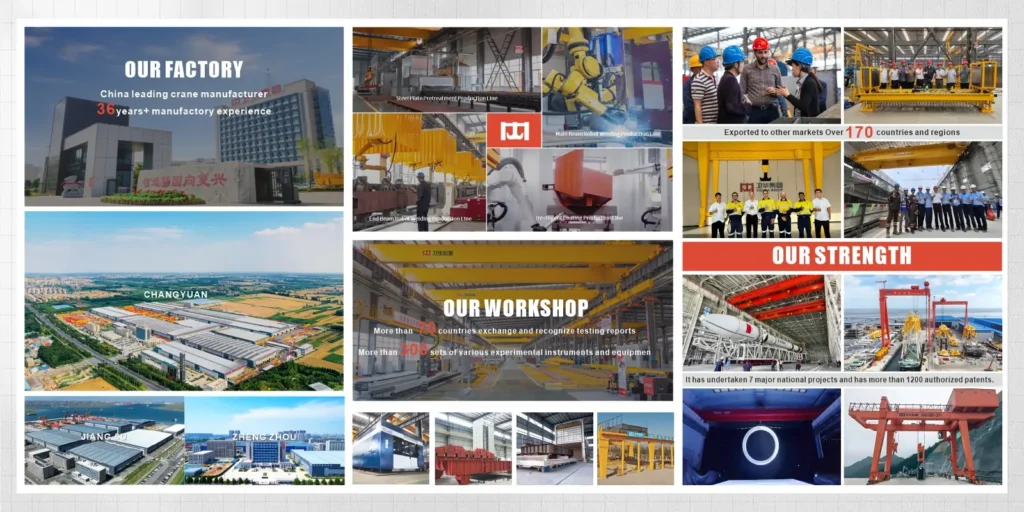
WEIHUA has years of crane manufacturing and export experience, with container cranes supplied to overseas ports, terminals, railway yards, and industrial sites. We provide crane design, manufacturing, installation guidance, commissioning, spare parts, and after-sales support. Contáctanos with your crane requirements and site information. Our team will help you select suitable container crane specifications based on your operation needs.
Preguntas frecuentes
What are the main specifications of a container crane?
The main specifications include lifting capacity, span, lifting height, working class, outreach, and operating speed.
What is the standard capacity of a container crane?
Container crane capacity commonly ranges from 30.5 to 65 tons, depending on the crane type and application.
How high can a container crane lift?
Container crane lifting height typically ranges from 12 to 50 m, depending on the crane type, stacking height, and vessel requirements.
What working class is used for container cranes?
Container cranes commonly use A5–A8 working classes, with the required class based on operating frequency and load conditions.
What is the typical span of a container crane?
Container crane span commonly ranges from 20 to 40 m, while RTG and RMG cranes can be designed to different spans according to yard layout.
What is the difference between RTG and RMG crane specifications?
RTG cranes run on rubber tires and can move between yard blocks, while RMG cranes run on rails and suit fixed container yards and automated operations.
How do I choose the right container crane capacity?
Select capacity based on the maximum container weight, spreader weight, lifting method, load frequency, and future handling requirements.
How do I choose the right container crane specifications?
Consider the application, lifting capacity, span, lifting height, working class, yard layout, operating frequency, power supply, and environmental conditions.