
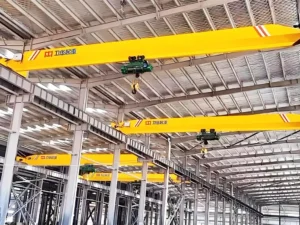
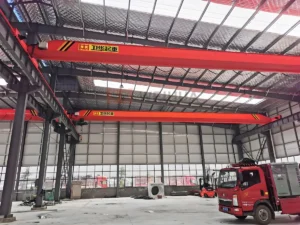
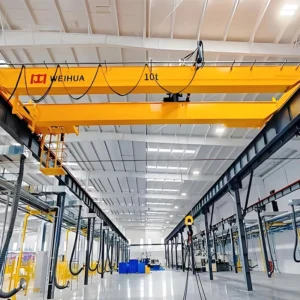
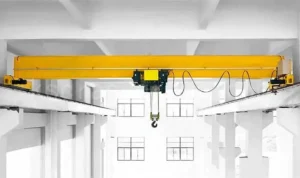
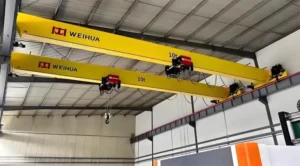
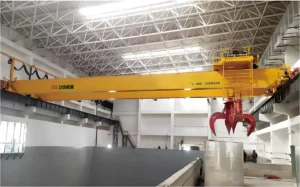
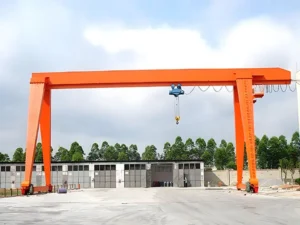

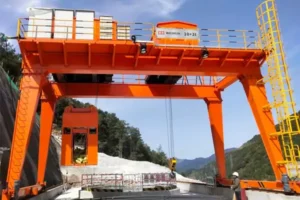

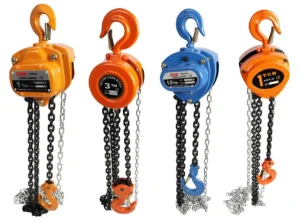
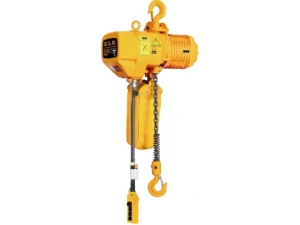
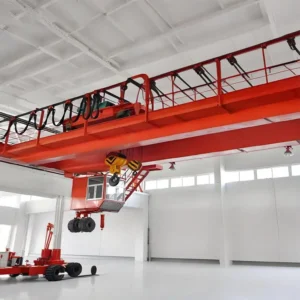
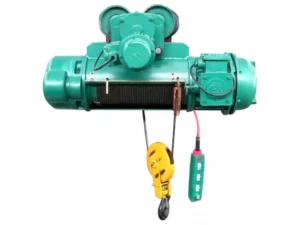






Electric wire rope hoist for sale typically range from $800 to $12,000+ depending on capacity (0.5–20 tons), speed configuration (single vs. dual speed), and lifting height (6–30 m). Most light-to-medium industrial buyers land in the $1,200–$4,500 band for a 1–5 ton unit with standard single-girder trolley mounting. If your facility runs overhead cranes and handles repetitive lifts, a wire rope hoist is almost certainly the right choice — but the model variant and duty class matter more than most buyers realize before they order.
This guide covers pricing by tonnage, how to choose between CD1 (single-speed) and MD1 (dual-speed) configurations, when a wire rope hoist makes more sense than an electric chain hoist, and what certifications and documents to request before you sign a purchase order.
Table of Contents
Quick Reference: Electric Wire Rope Hoist Specs & Price Guide
| Capacity | Type | Lifting Speed | Duty Class | Typical Market Price (USD) |
|---|---|---|---|---|
| 0.5 – 1 T | CD1 (single-speed) | 8 m/min | M3 | $800 – $1,500 |
| 1 – 2 T | CD1 | 8 m/min | M3 | $1,200 – $2,200 |
| 3 – 5 T | CD1 / MD1 | 8 m/min or 8/0.8 m/min | M3 – M4 | $2,000 – $4,500 |
| 10 T | MD1 (dual-speed) | 7/0.7 m/min | M4 – M5 | $4,500 – $8,000 |
| 16 – 20 T | MD1 | 3.5/0.35 m/min | M5 | $8,000 – $12,000+ |
Prices are market reference ranges based on factory-direct China pricing (ex-works). Final cost depends on lifting height, trolley type, control options, and destination freight.

What Is an Electric Wire Rope Hoist?
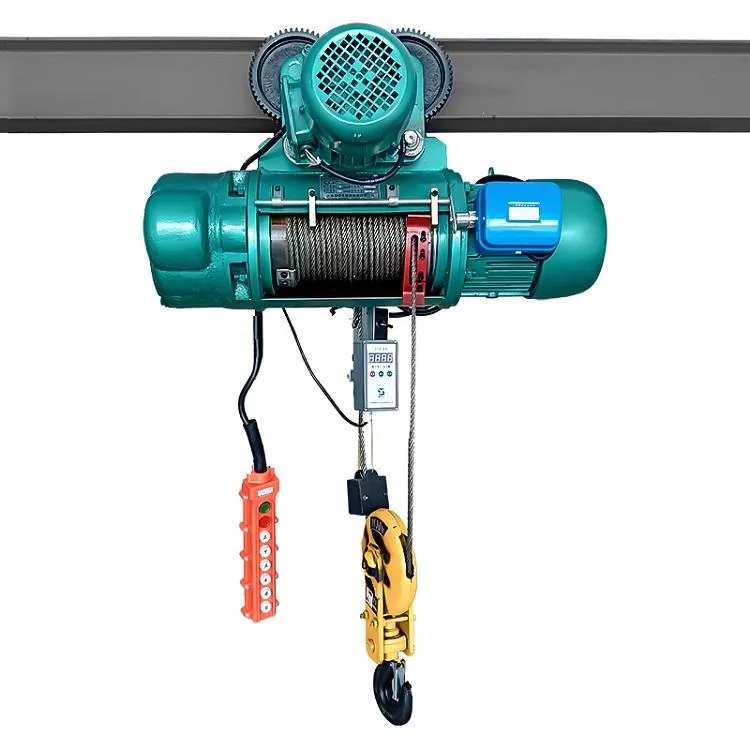

An electric wire rope hoist is a motorized lifting device that raises and lowers loads by winding steel wire rope onto a grooved drum, classified under ISO 4301 and FEM design rules for crane hoist mechanisms. The hoist mounts on a trolley that travels along the bottom flange of a single-girder overhead or gantry crane beam, enabling three-dimensional material handling within a workshop or warehouse.
Compared to manual alternatives, the defining advantage is cycle efficiency: the motor handles lifting energy entirely, so operator fatigue doesn’t limit throughput. The defining limit is headroom — a wire rope hoist with trolley requires more vertical clearance than a low-headroom chain hoist, which matters in older or low-bay buildings.
Key components in every unit: a conical-rotor braking motor (IP44/IP54 protection class), a multi-stage helical gearbox, a grooved drum with rope guide, upper/lower travel limit switches, overload protection relay, and a hook block tested to 150% of rated load before assembly.
CD1 vs MD1: Which Configuration Should You Choose?
CD1 (Single-Speed) Is the Right Default for Most Warehouses and Workshops
The CD1 lifts at a fixed 8 m/min and falls into duty class M3, making it the correct choice for operations that lift fewer than roughly 20–30 cycles per hour with no requirement for inch-precise positioning. This covers the majority of warehouse racking operations, mold storage, spare parts handling, and maintenance bays. The motor is simpler, parts are widely available, and the unit costs 10–20% less than an equivalent-tonnage MD1.
The reason duty class matters here: M3 is rated for light to moderate use — typically up to 1,600 operating hours over the hoist’s design life with load spectrums averaging well below rated capacity. If your actual usage pattern is heavier than this, the mechanical components will wear faster than designed, and you’ll see premature brake and drum failures before the rated service life is reached. When in doubt, describe your shift pattern and daily cycle count to the supplier before specifying M3.
MD1 (Dual-Speed) Pays Off When Precision Positioning Is Non-Negotiable
The MD1 offers a fast lift at 8 m/min and a slow creep at 0.8 m/min — a 10:1 speed ratio that allows operators to inch a load into position without relying on brake-and-jog technique. This matters most in three scenarios: precision machinery installation, die and mold setting on production lines, and machine tool maintenance where a 10 mm misalignment can mean an hour of repositioning.
The practical threshold: if your operators regularly make more than 2–3 positioning corrections per lift cycle, or if loads need to land within ±5 mm, specify MD1. The dual-speed motor adds $200–$600 to the unit cost at most capacity ranges — a minor line item compared to even one day of production disruption caused by a dropped or mis-set load. MD1 units also carry M4–M5 duty ratings, making them the right base for higher-cycle production environments.
Wire Rope Hoist vs Electric Chain Hoist: When to Choose Which

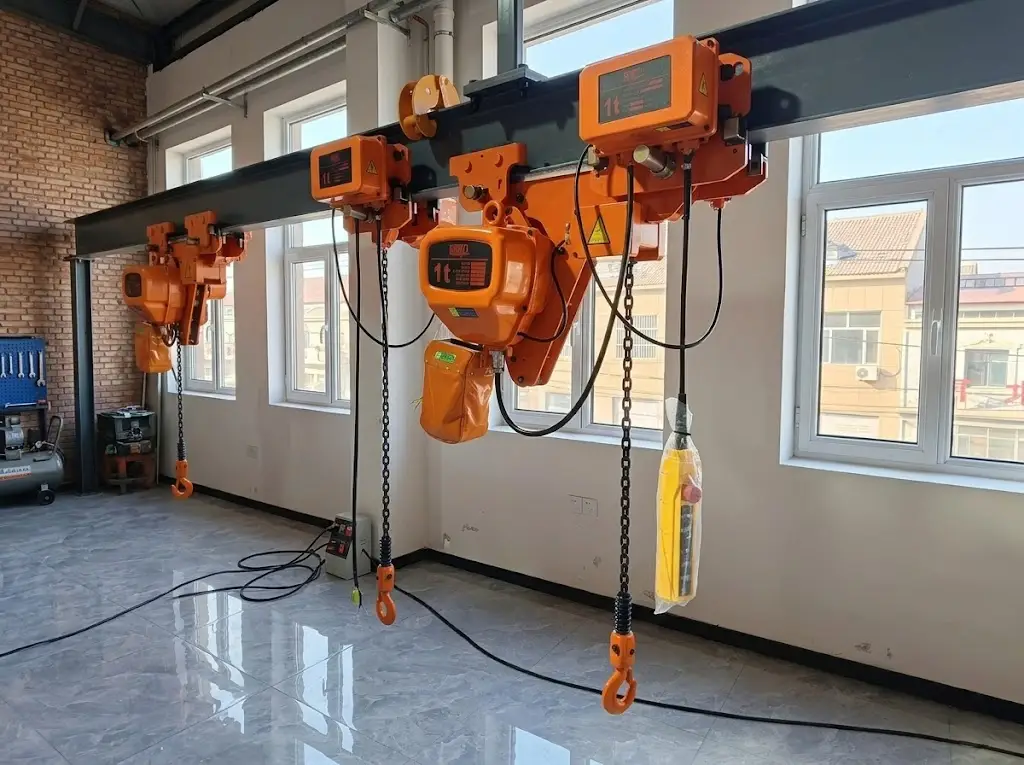
Both products are available from Weihua; the choice comes down to capacity, headroom, and environment.
| Factor | Electric Wire Rope Hoist | Electric Chain Hoist |
|---|---|---|
| Capacity range | 0.5 – 20 T (standard) | Typically up to ~10 T |
| Lifting height | 6 – 30 m standard | Generally up to 12–18 m |
| Headroom requirement | Higher (drum + trolley above beam) | Lower (compact body) |
| Best for | Heavy, repetitive, long-stroke lifting | Lighter loads, restricted headroom spaces |
| Price at 3–5 T | $2,000 – $4,500 | $700 – $1,800 |
| Duty class options | M3 – M5 | M3 – M4 (standard units) |
Selection conclusion: For loads at or above 5 tons, or for lifting heights beyond 12 meters, a wire rope hoist is almost always the correct choice — the chain fatigue life at higher capacities makes chain hoists a poor long-term investment. For loads under 3 tons in a low-clearance building, an electric chain hoist delivers better value and a smaller installation footprint.
Key Specifications to Confirm Before You Order
Duty Class Is the Most Underspecified Parameter in Import Purchases
Most buyers focus on rated capacity and forget to specify duty class — this is the single most common source of premature hoist failure in import procurement. The reason is straightforward: a 5-ton hoist rated M3 and a 5-ton hoist rated M5 look identical on a spec sheet if duty class isn’t listed, but their motor windings, brake components, and drum grooves are designed for fundamentally different workloads.
How to specify correctly: count your actual average daily lift cycles, estimate the average load as a percentage of rated capacity, and match to the FEM/ISO 4301 classification table. If you’re running 50+ cycles per day at 60–80% of rated load, you need M4 or M5. If you’re lifting maximum loads only occasionally with long idle periods between, M3 is adequate. When asking suppliers for a quote, state: “Please confirm duty class per FEM 1.001 / ISO 4301-1.”
Lifting Height Drives Wire Rope Length and Drum Size
Standard lifting heights run 6, 9, 12, 18, 24, and 30 meters. The drum is sized to accommodate the full rope length in a single layer, which affects both the physical height of the hoist body above the hook and the rope fleet angle. Specifying the wrong lifting height — even by 3 meters — means either the rope won’t spool cleanly or the upper limit switch will trigger prematurely. Measure your hook-to-floor distance at maximum hook travel and add 0.5–1 m safety margin when specifying.
Control Mode Affects Daily Operator Experience More Than Any Other Parameter
The three standard options are pendant (push-button on a hanging cord), wireless remote (radio or infrared), and variable frequency drive (VFD) control. Pendant control is the most reliable and lowest-cost option for most workshops. Wireless remote adds $150–$400 but significantly improves safety and ergonomics when operators need to move around the load during positioning. VFD control — which gives stepless speed adjustment rather than fixed fast/slow — is worth the premium only when load swing is a genuine production risk, typically in assembly or precision installation environments.
Certifications & Compliance: What to Verify Before Purchase
For most international buyers, the minimum compliance package for a single-girder electric wire rope hoist covers four documents — and receiving only a verbal assurance on any of these is a procurement risk.
Which Standards and Certifications Apply
For buyers importing into Europe or markets that recognize CE marking, the hoist must comply with the EU Machinery Directive 2006/42/EC, supported by an EC Declaration of Conformity signed by the manufacturer. The hoist design should conform to FEM 1.001 (Federation Européenne de la Manutention) design rules for hoist mechanisms and ISO 4301-1 for crane duty classification.
For buyers in Eurasian Customs Union markets (Russia, Kazakhstan, Belarus, etc.), EAC certification is the required mark. For US-based operations, hoists must be operated in compliance with OSHA 1910.179 (overhead and gantry cranes) and ASME B30.16 (overhead hoists). The manufacturing facility’s ISO 9001 quality management certification provides the baseline assurance that production processes are audited and consistent — request the current certificate with validity dates.
How to Verify at the Point of Purchase
Don’t accept a photocopy of a generic CE certificate that covers an entire product family without a specific model reference. The document you need is the EC Declaration of Conformity naming the specific hoist type and capacity range, accompanied by a proof-load test certificate (typically issued after factory testing at 125% of rated load). For the wire rope itself, request confirmation that it meets ISO 2408 (or equivalent national standard) with a minimum breaking force safety factor of 6:1, which is the standard for lifting ropes under FEM rules.
Ask the supplier these four questions in writing:
- Can you provide the EC Declaration of Conformity for this specific hoist type and capacity?
- What is the factory proof-load test procedure, and can you provide the test record?
- Is the manufacturing facility ISO 9001 certified, and what is the certificate number and expiry?
- What overload protection setting is applied at the factory, and how is it adjusted on-site?
If any of these questions produces a vague or deflected answer, treat it as a quality signal before committing to an order.
Get Custom Quotation NowOrdering Process and Lead Times
What Information to Provide for an Accurate Quote
An accurate quotation from any serious supplier requires at minimum: rated capacity (tons), required lifting height (m), beam/girder type and flange width for trolley fitment, preferred control mode, power supply specification (voltage / Hz / phases), and duty class. If you don’t know the beam flange width, send a photo — most engineers can read it from a clear image.
Optional but valuable: daily shift hours and average cycle count (helps the engineer recommend the right duty class if you’re unsure), environmental conditions (temperature extremes, humidity, presence of dust or corrosive agents), and whether the hoist needs explosion-proof ratings. Weihua also supplies an Explosion Proof Wire Rope Hoist for chemical, petrochemical, and mining environments where standard electrical equipment is not permitted.
Typical Lead Times and Shipping
Standard in-range units (CD1/MD1, 1–10 tons, standard lifting heights) typically ship within 15–25 working days from order confirmation. Custom configurations — non-standard voltages, extended lifting heights, special trolley designs, or VFD control — generally add 10–15 working days. Sea freight to major ports in Southeast Asia, the Middle East, and Europe runs 18–35 days depending on destination.
Conclusion
The right electric wire rope hoist for sale comes down to three decisions made before you generate a purchase order: capacity matched to your heaviest regular load (not your theoretical maximum), duty class matched to your actual daily cycle pattern, and speed configuration (CD1 for standard warehouse use, MD1 for precision positioning environments). Get those three right, and verify the certification documents before payment, and you’re unlikely to have a problem. Get them wrong — particularly the duty class — and you’ll be sourcing replacement brake components inside 18 months.
Weihua offers factory-direct electric wire rope hoists for sale in CD1 and MD1 configurations, 0.5–20 tons, with CE documentation and full engineering support. Request a quote with your specs and our team will confirm the correct model, duty class, and lead time within 24 hours.
FAQ
Q1: What is the price range for an electric wire rope hoist for sale?
Market reference prices run from approximately $800 for a 0.5–1 ton CD1 unit to $12,000+ for a 16–20 ton MD1 hoist with extended lifting height. The most common import range for a 1–5 ton workshop hoist lands between $1,200 and $4,500. Final pricing depends on capacity, lifting height, trolley type, and control configuration. Contact Weihua directly with your specifications for an exact factory-direct quote.
Q2: What is the difference between CD1 and MD1 wire rope hoists?
CD1 is single-speed (typically 8 m/min) and suited to general warehousing and workshop lifting at M3 duty class. MD1 is dual-speed (fast + slow, typically 8/0.8 m/min ratio) and suited to precision positioning tasks — die setting, machinery installation, machine tool maintenance — at M4–M5 duty class. If your application requires landing a load within ±5 mm or involves more than 2–3 positioning corrections per lift, specify MD1.
Q3: How do I choose the right duty class for my application?
Count your average daily lift cycles and estimate your average load as a percentage of the hoist’s rated capacity. M3 suits light-to-moderate use (occasional lifts, long idle periods). M4 suits medium-frequency production environments. M5 suits continuous industrial production with high cycle counts at sustained loads. When in doubt, describe your shift pattern to the supplier and request a formal duty class recommendation referencing ISO 4301-1.
Q4: Can a wire rope hoist be installed on an existing single-girder crane?
Yes, provided the crane’s rated capacity and beam flange width are compatible with the hoist trolley. You’ll need to confirm the bottom flange width of the existing girder to select the correct trolley gauge. Weihua’s standard trolleys accommodate beam flanges from approximately 70 mm to 220 mm depending on the hoist capacity. Send a photo or drawing of the beam cross-section when requesting a quote for retrofitting.
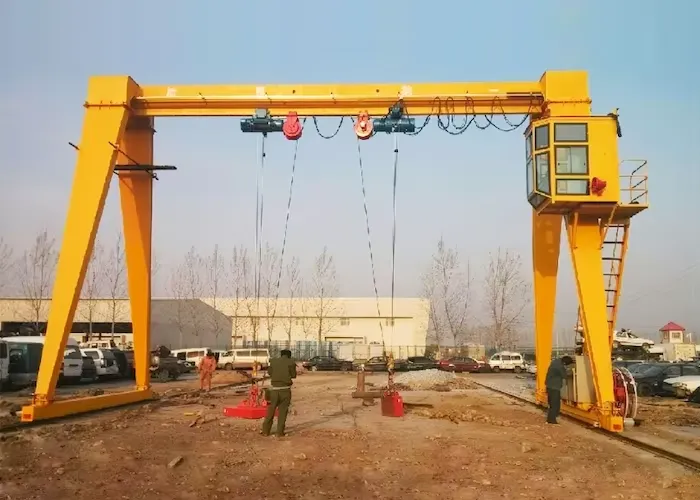
View details about the Hoist Single Girder Gantry Crane: Hoist Single Girder Gantry Crane for Industrial Material Handling
Q5: What certifications should I request from an electric wire rope hoist supplier?
At minimum: (1) EC Declaration of Conformity naming the specific hoist type and capacity; (2) factory proof-load test record (typically 125% of rated load); (3) ISO 9001 certificate with valid expiry date; (4) wire rope compliance documentation (ISO 2408 or equivalent, safety factor ≥6:1). For EAC markets, additionally request the EAC conformity certificate. Do not accept verbal confirmation on any of these — request the actual documents before payment.