








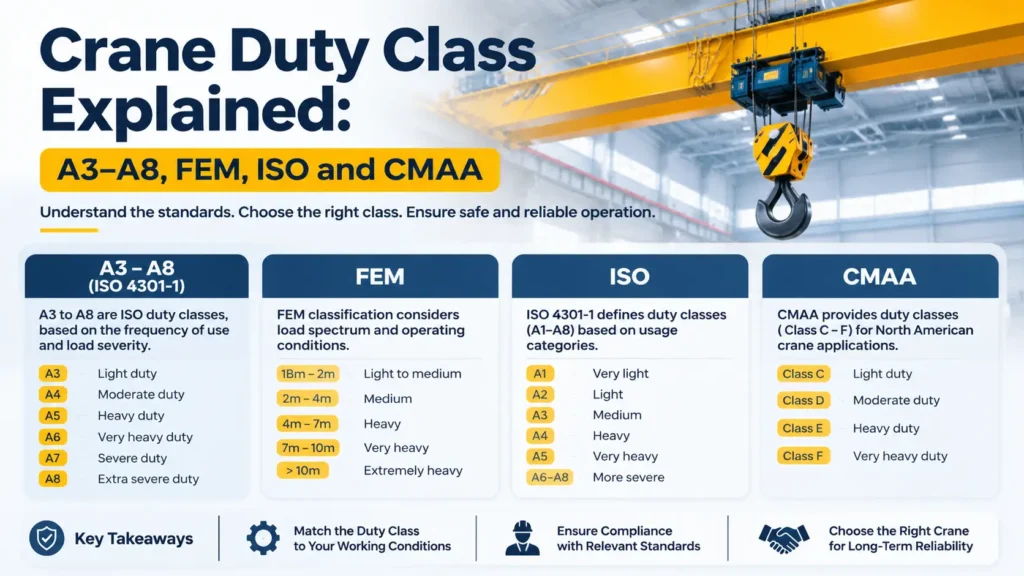
A crane duty class rates how hard a crane is designed to work over its life: how many lifts it makes and how close to rated load they run. ISO 4301-1 uses A1–A8 for the whole crane, FEM uses 1Dm–5m for hoists, and CMAA uses Classes A–F.
Suppliers often quote “A5”, “M5”, “FEM 2m” and “CMAA Class D” as if they meant the same thing. They do not. A 5 t crane that lifts all day can need a higher class than a 100 t crane that serves a turbine hall a few times a week. A class set too low shows up years later as fatigue cracks and worn gearboxes.
This guide explains what a duty class measures, how the A, M, FEM and CMAA labels relate, which classes suit which kinds of work, and what to check before you accept a duty class on a quote. Weihua has built overhead, gantry, port and steel-mill cranes since 1988, so the examples draw on those product families.
Table of Contents
What a Crane Duty Class Measures
Duty class is not capacity
Duty class describes how intensively a crane works, not how much it can lift. Capacity is the rated load in tonnes. The duty class sets the fatigue design of the structure, wheels, gearboxes, ropes and brakes over the crane’s life.
Two cranes show the difference. A 5 t crane feeding a production line may make thousands of lifts a month and need a high class. A 100 t crane serving a powerhouse may lift a handful of times a month and sit at a low one. Tonnage alone would point you the wrong way in both cases.
Cycles and load spectrum drive the class
ISO 4301-1 builds the class from two inputs: the total number of working cycles over the design life and the load spectrum.
Total cycles fall into ten utilization classes, from U0 (up to about 16,000 cycles) to U9 (more than 4 million). The load spectrum factor, Kp, describes how heavy the lifts are relative to rated load. It is weighted so that heavy lifts count far more than light ones. It is banded from Q1 (light, Kp up to 0.125) to Q4 (very heavy, Kp up to 1.0). The table below gives the crane group.
| Max. cycles → | U0 16k | U1 32k | U2 63k | U3 125k | U4 250k | U5 500k | U6 1M | U7 2M | U8 4M | U9 >4M |
|---|---|---|---|---|---|---|---|---|---|---|
| Q1 (Kp ≤ 0.125) | A1 | A1 | A1 | A2 | A3 | A4 | A5 | A6 | A7 | A8 |
| Q2 (≤ 0.25) | A1 | A1 | A2 | A3 | A4 | A5 | A6 | A7 | A8 | A8 |
| Q3 (≤ 0.50) | A1 | A2 | A3 | A4 | A5 | A6 | A7 | A8 | A8 | A8 |
| Q4 (≤ 1.00) | A2 | A3 | A4 | A5 | A6 | A7 | A8 | A8 | A8 | A8 |
A worked sizing example
The same 10 t crane can land in A4 or A6 depending on how often it lifts and how heavy its loads are. Assume a 20-year design life and 250 working days a year.
- Workshop A: 40 lifts a day gives 200,000 cycles (U4). Loads are mostly light (Q2). The table gives A4.
- Workshop B: 100 lifts a day gives 500,000 cycles (U5). Loads are often heavy (Q3). The table gives A6.
Treat this as an illustration of the method. A manufacturer’s engineer should confirm the class against your real lift counts and load pattern.
How A, M, FEM and CMAA Relate
A and M classes label different things
A-classes rate the whole crane, while M-classes and FEM groups rate individual mechanisms, mainly the hoist. ISO M1–M8 correspond to FEM 9.511 groups 1Dm to 5m.
| ISO | M1 | M2 | M3 | M4 | M5 | M6 | M7 | M8 |
|---|---|---|---|---|---|---|---|---|
| FEM | 1Dm | 1Cm | 1Bm | 1Am | 2m | 3m | 4m | 5m |
Mechanism classes follow from running hours, while the A class follows from cycles and loads. Some online tables line A1 up with M1 and 1Dm row by row, which suggests the two are interchangeable. They are not, and a crane’s A class and its hoist class are specified separately and often differ.
ISO 4301-1, FEM 1.001 and EN 13001
ISO 4301-1 and FEM 1.001 use the same A1–A8 logic, while EN 13001 classifies components instead of the whole crane. FEM 1.001 reaches A1–A8 through the same utilization and load-spectrum classes. ISO 4301-1:2016 is the current ISO edition and uses a cycle-based method.
EN 13001-1 keeps similar load-spectrum and working-cycle classes but does not combine them into a single whole-crane A group. A European quote may therefore cite component-level classes, a legacy A group, or both. Ask which one governs the design.
CMAA Classes A to F
CMAA 70 and 74 rate North American overhead cranes in six service classes, A to F, by load class and number of load cycles. Load classes run from L1 (very light) to L4 (regularly near rated load). Cycle bands run from N1 (about 20,000–100,000 cycles) to N4 (over 2,000,000).
| Class | Service | Approx. lifts/hour | Typical use |
|---|---|---|---|
| A | Standby / infrequent | Up to 2 | Powerhouses, small maintenance shops |
| B | Light | 2–5 | Repair shops, light assembly |
| C | Moderate | 5–10 | Machine shops |
| D | Heavy | 10–20 | Foundries, fabricating plants, container yards |
| E | Severe | 20+, near rated load | Scrap, bucket and magnet cranes |
| F | Continuous severe | Continuous | Steel-mill service, covered by a separate AISE specification |
Cross-conversions are approximate only
No official one-to-one conversion exists between A1–A8 and CMAA A–F, so treat any comparison table as orientation only. CMAA’s cycle bands overlap several ISO utilization classes. Published conversions also disagree: one common table puts ISO A5–A6 at CMAA Class D, another at Class C.
| ISO A group | Rough CMAA orientation |
|---|---|
| A1–A4 | A–C |
| A5–A6 | C–D |
| A7 | D–E |
| A8 | E–F |
Instead of converting, ask the supplier to state the class under the standard the crane was actually designed to.
Which Class Suits Which Work
A3–A4 suits light workshop service
A3–A4 suits maintenance bays, light assembly and small workshops where lifts are occasional and loads sit well below rated capacity. A few lifts an hour on one shift is a typical pattern, so the structure and hoist can be lighter and more economical.
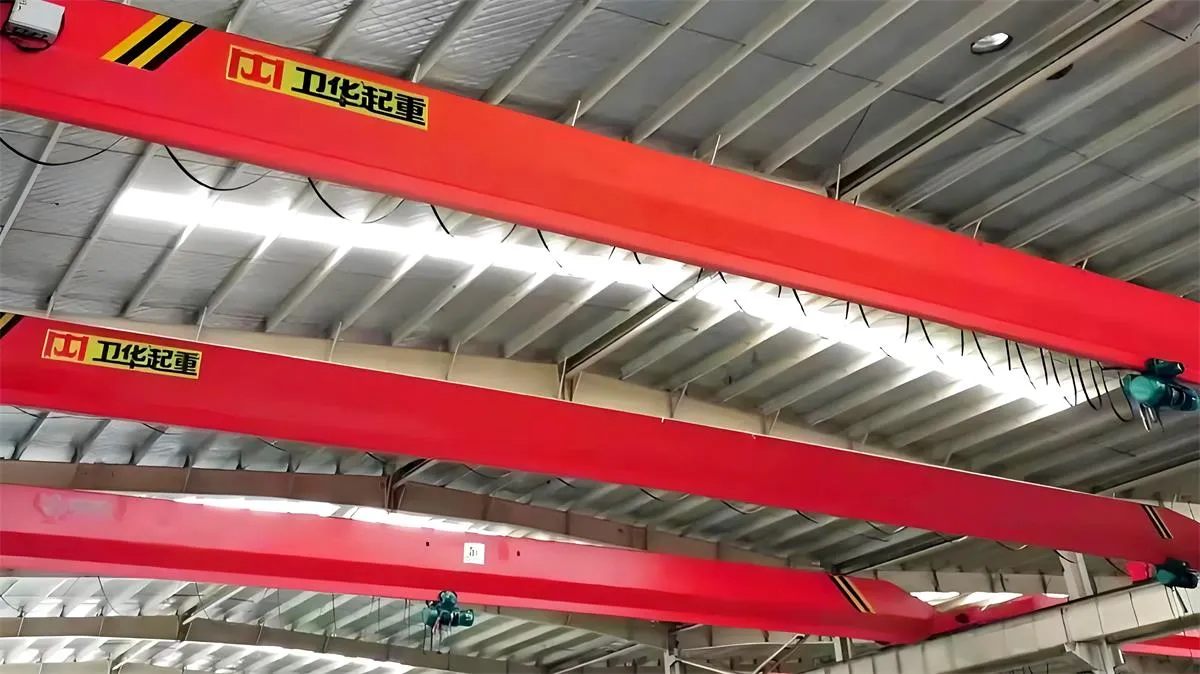
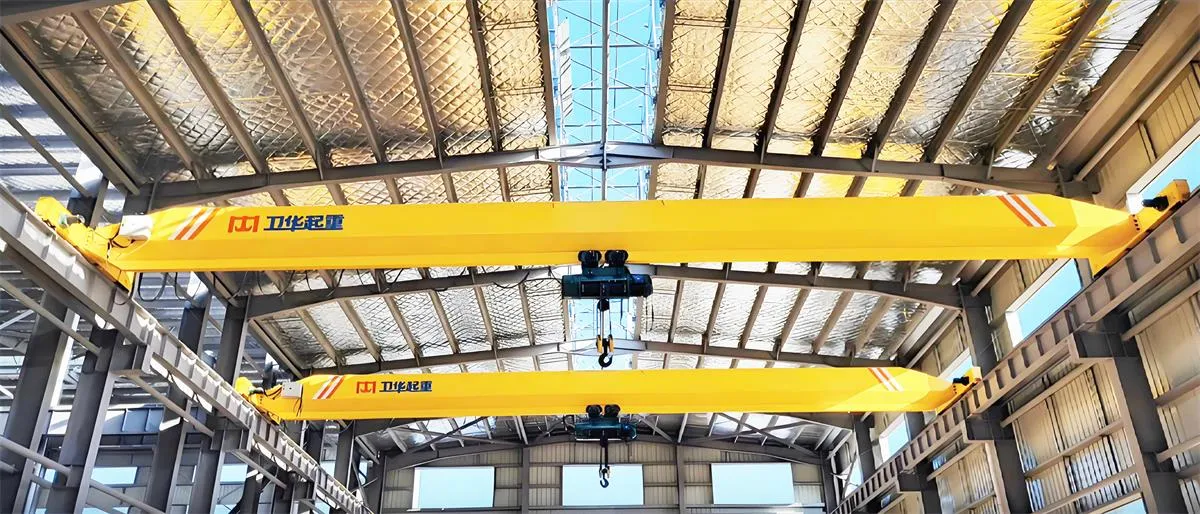
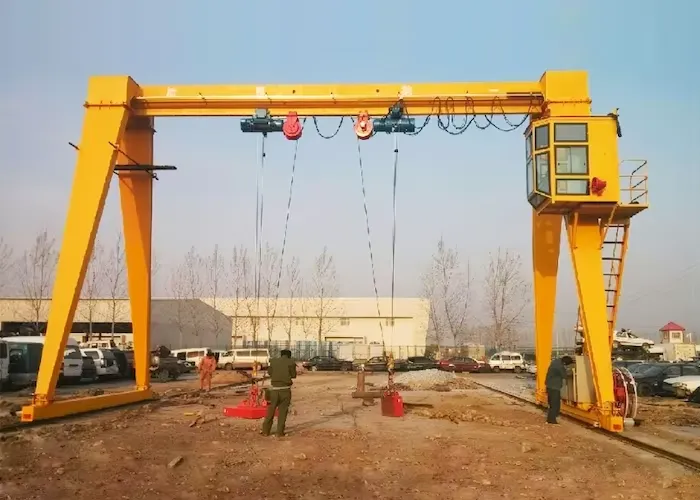
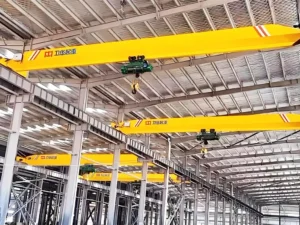
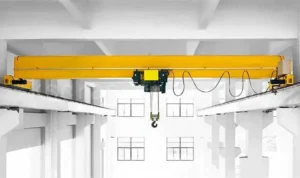
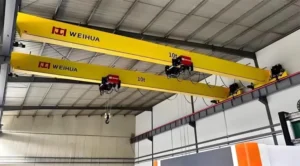
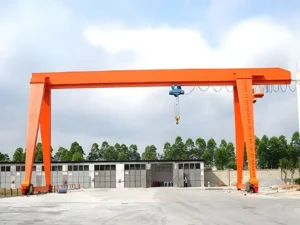
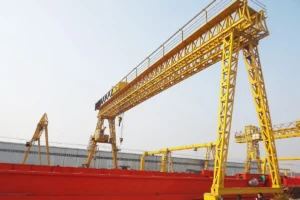
Weihua’s Single Girder Overhead Travelling Crane (1–32 t, A3–A5) and Single Beam EOT Crane (1–20 t, A3–A4) are built for this range, as is the Single Girder Gantry Crane (1–20 t, A3–A5) for yards. A single-girder design is the wrong tool for continuous heavy duty. When lifts become frequent and heavy, step up to a double-girder crane.
A5–A6 suits general industrial service
A5–A6 covers most production workshops: machine shops, fabrication bays and warehouses lifting regularly across one or two shifts. Many general industrial plants specify A5 as the working baseline, and A6 where lifts are more frequent or loads run heavier.
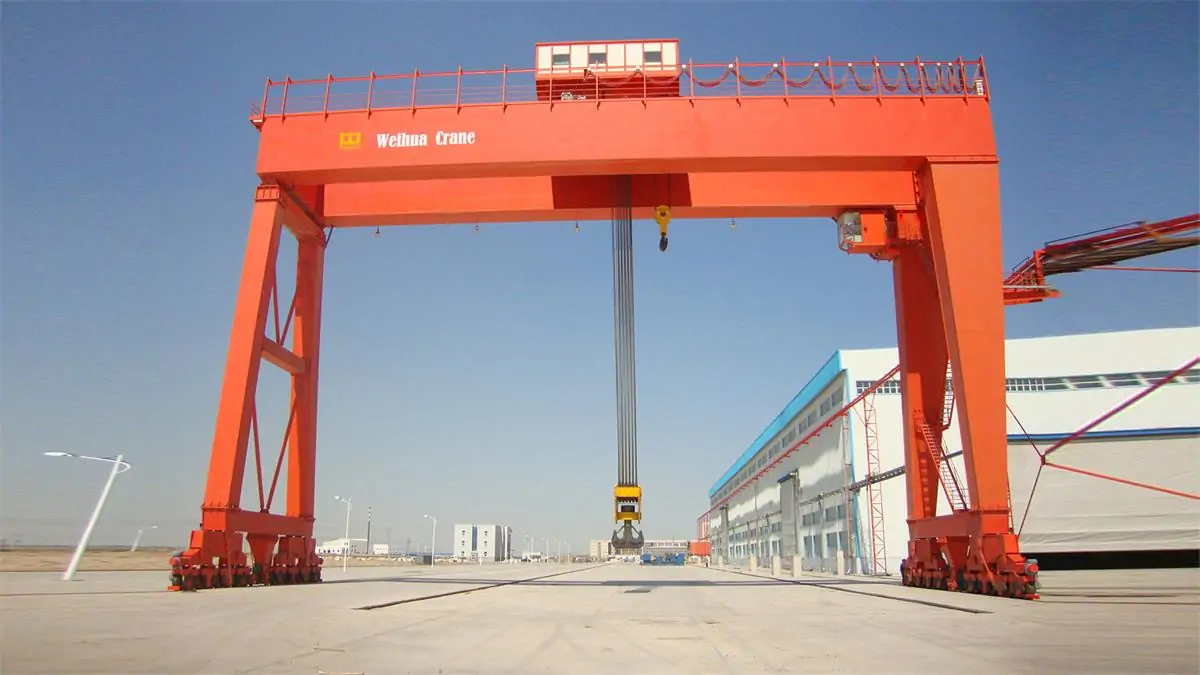
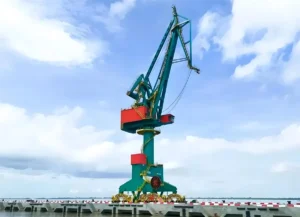
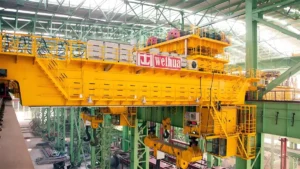
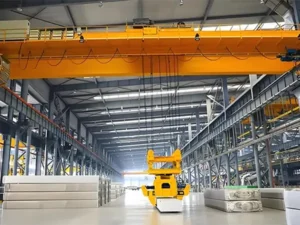
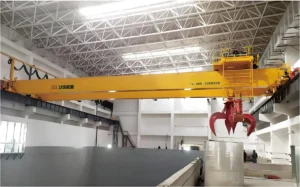
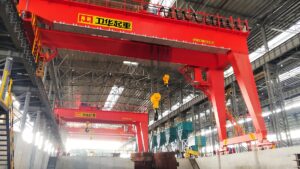
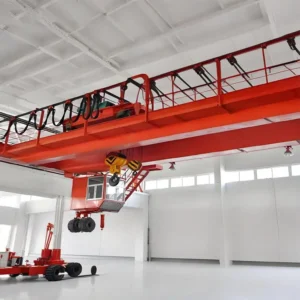
Double-girder overhead cranes are the usual choice here. Weihua lists its Double Girder Overhead Travelling Crane at A5–A8 depending on configuration, with the LH wire-rope-hoist type (5–50 t) at A5–A6. The Portal Slewing Crane (5–80 t, A5–A7) covers port cargo work in the same band.
A7–A8 suits heavy continuous service
A7–A8 is for severe service: ladle, casting, grab-bucket and magnet cranes that lift near rated load many times an hour. Heat, dust and round-the-clock shifts add to the demand, and the structure, hoist components and brakes are designed accordingly. Inspection also becomes more frequent as the class rises.
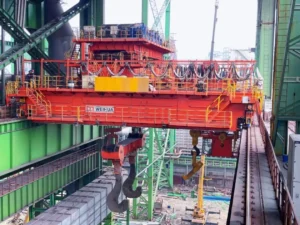
Weihua’s YZ Steel Mill Ladle Crane (50–500 t, span up to 35 m) is listed at A7/A8, which reflects the ladle duty it is built for.
Published classes in Weihua’s range
Weihua publishes duty classes from A3 up to A8 across its overhead, gantry, port and steel-mill cranes.
| Crane | Capacity | Published duty class |
|---|---|---|
| Single Beam EOT Crane | 1–20 t | A3–A4 |
| Single Girder Overhead Travelling Crane | 1–32 t | A3–A5 |
| Single Girder Gantry Crane | 1–20 t | A3–A5 |
| Double Girder Overhead Travelling Crane | 10–500 t | A5–A8 (by configuration) |
| Portal Slewing Crane | 5–80 t | A5–A7 |
| YZ Steel Mill Ladle Crane | 50–500 t | A7 / A8 |
Choosing and Verifying a Duty Class
Gather five usage figures first
Five figures set the class: lifts per hour, hours per day, share of lifts near rated load, lift distance and environment. They feed straight into the cycle count and load spectrum described above.
- Lifts per hour and hours per day: together with design life, these give total cycles.
- Share of lifts near rated load: this sets the load spectrum. One heavy lift a shift is very different from heavy lifts all day.
- Lift height and travel distance: longer movements mean more running time on the hoist and travel drives.
- Environment: heat, dust, corrosion or outdoor wind do not change the A class directly but affect component choices.
Round up only when growth is likely
A higher duty class raises price and maintenance effort, so specify what the work needs, plus a margin only for planned growth. Higher classes call for heavier hoists, end carriages, motors, bearings and controls, and for more frequent inspection.
A crane specified too low costs you in early wear and downtime. One specified too high costs you in capital on day one. If you know a second shift or heavier loads are coming within a few years, specify for that future pattern rather than today’s.
Check what the quote states
A quote should name the standard, say whether the class applies to the whole crane or the hoist, and state the design life. Ask for the following.
- Standard: ISO 4301-1, FEM 1.001/9.511, CMAA 70/74, or GB/T 3811 for Chinese designs.
- Assumptions: the utilization class (U) and load spectrum (Q) behind the stated A class.
- Documents: for the EU, the EC Declaration of Conformity under Machinery Directive 2006/42/EC. Beyond that, the ISO 9001 certificate and the load test report.
A class is a design assumption
A duty class is a design assumption, not a guarantee: use above the stated cycles or loads shortens crane life. If a second shift starts or loads get heavier, the original class may no longer fit. Keep a simple lift log, follow the inspection schedule, and ask your supplier to review the class when the work changes.

FAQ
Q1:Does a higher crane duty class mean higher lifting capacity?
No. Duty class describes work intensity, not lifting capacity. A 5 t crane in continuous production may need A7, while a 100 t crane lifting a few times a month can sit at A3. Capacity and class are specified separately.
Q2:Is A5 the same as FEM 2m?
No. A5 rates the whole crane, while FEM 2m (ISO M5) rates a mechanism such as the hoist. The two are set separately, so a crane’s A class and hoist class can differ. Ask your supplier to state both.
Q3:Is CMAA Class C equal to ISO A4 or A5?
There is no official conversion. CMAA classes come from load classes and cycle bands that overlap several ISO A groups, and published tables disagree. Use conversions as orientation only, and ask for the class under the standard the crane was designed to.
Q4:What duty class does a general workshop crane need?
Light workshops usually need A3–A4, and production workshops lifting every shift A5–A6. Your own lift counts and load pattern decide it, so work through the cycles-and-load method before choosing.
Q5:Does a higher duty class cost more?
Yes. Higher classes need heavier hoists, drives, bearings and structure, and more frequent inspection. Specify the class your usage data supports, add margin only for planned growth, and compare quotes at the same class.