








Table of Contents
Introduction
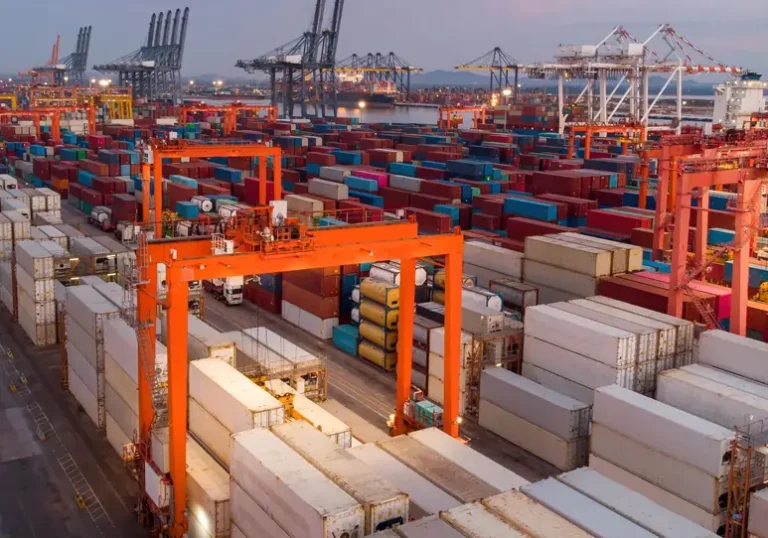
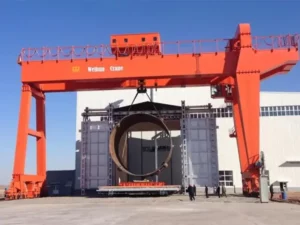
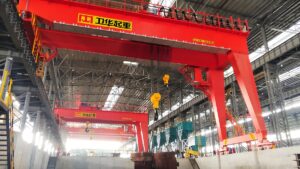
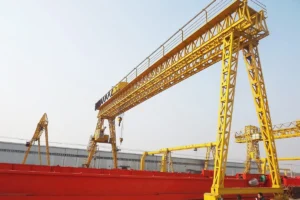
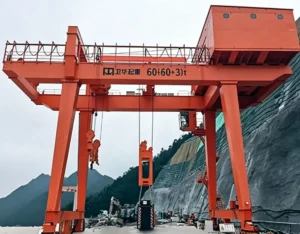
A Container Handling Gantry Crane is designed for lifting, stacking, and transferring containers in ports, terminals, railway yards, and logistics centers. Different crane configurations, such as RTG cranes, RMG cranes, and customized container gantry cranes, are selected according to site conditions, handling capacity, and operation requirements.
In this article, I will explain how to choose the right container handling gantry crane from key factors including crane type, lifting capacity, span, stacking height, travel system, automation level, and working environment. These points help users understand equipment requirements and select a suitable crane solution for their container handling operations.
What Is a Container Handling Gantry Crane?
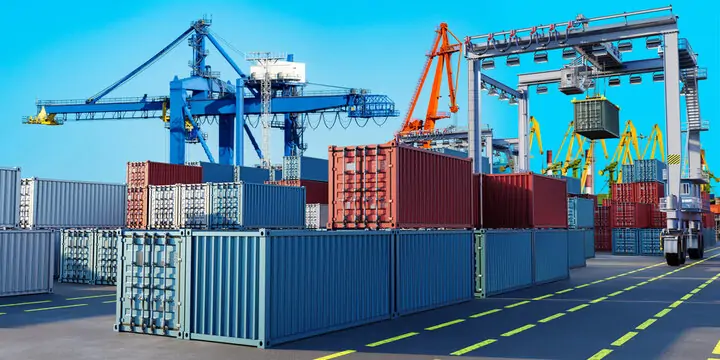
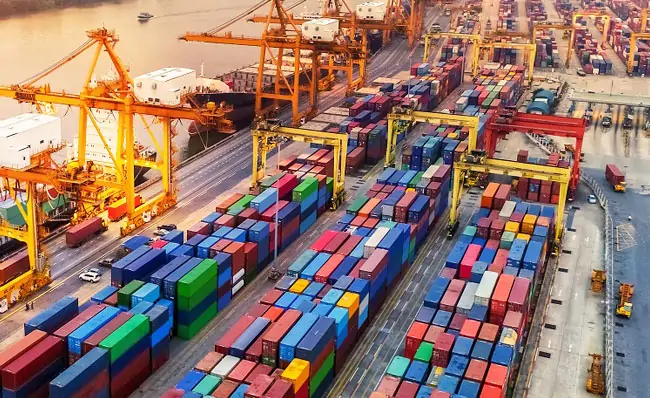
A Container Handling Gantry Crane is used for container lifting, stacking, and transfer operations in ports, terminals, and logistics yards. The crane adopts a gantry structure with a trolley hoisting system and a dedicated spreader, which locks onto container corner castings for loading and unloading.
Unlike general cranes using hooks or slings, container gantry cranes use dedicated spreaders for faster container operations. Modern cranes can achieve 30+ moves per hour and support twin-lift operations. The structure is designed for continuous heavy-duty work, typically rated A6–A8 under FEM or ISO standards.
Container handling gantry cranes are mainly classified by travel system and application. RTG cranes use rubber tires for flexible yard operation, RMG cranes run on fixed rails with positioning accuracy up to ±10 mm, and STS cranes are used for ship loading and unloading with outreach exceeding 70 m. Selection depends on handling requirements, yard layout, and automation needs.
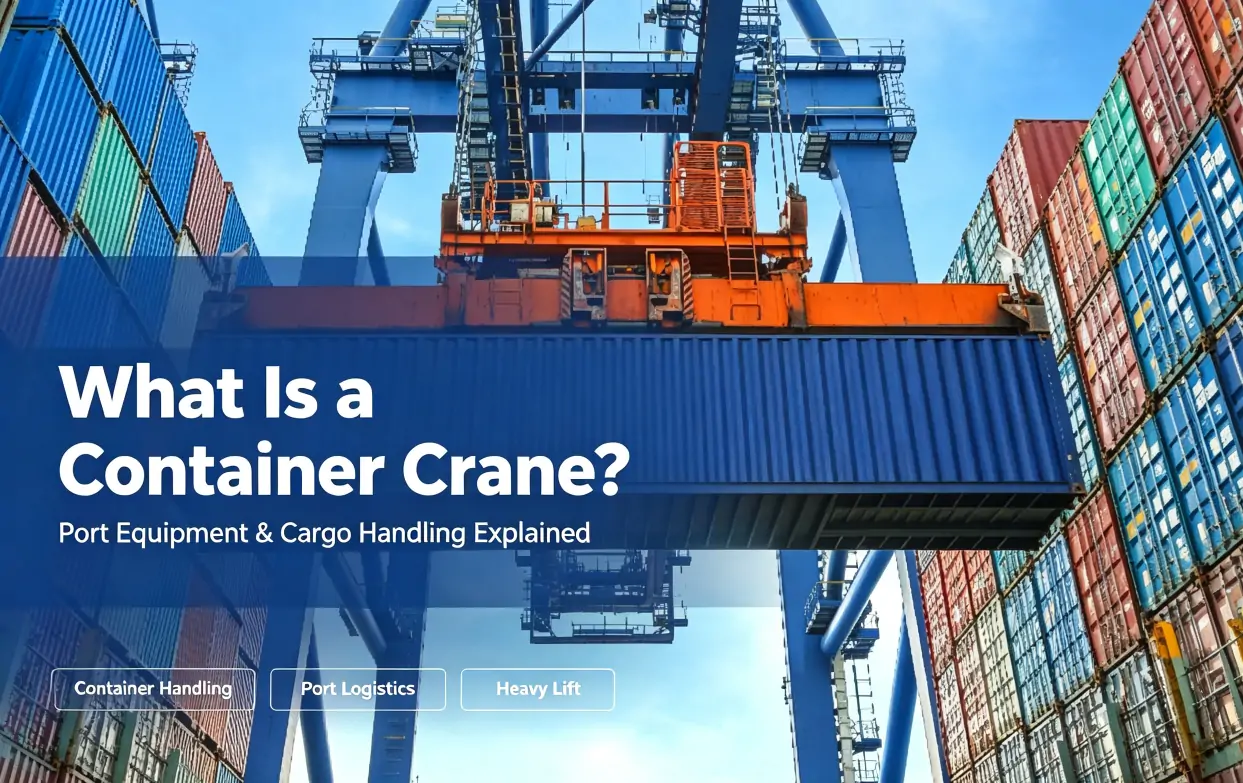
Learn more about container crane types, applications, and working principles in our guide: What Is a Container Crane? Types, Uses & How It Works.
Types of Container Handling Gantry Cranes
Container handling cranes are mainly classified according to their working location and handling purpose. The common types include Ship-to-Shore (STS) cranes, Rubber Tyred Gantry (RTG) cranes, Rail Mounted Gantry (RMG) cranes, and customized container gantry cranes.
Ship-to-Shore (STS) Crane
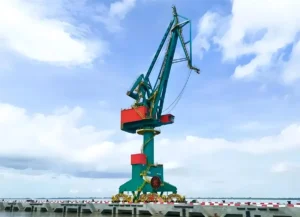
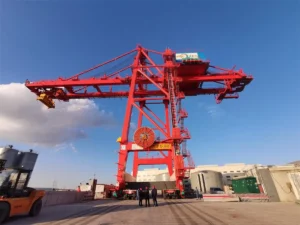
STS cranes are installed at the port berth for loading and unloading containers between vessels and shore transport equipment. They use a large boom and spreader system to handle containers across different ship sizes.
- Lifting Capacity: 30–100+ tons
- Outreach: 40–70+ m
- Lifting Height: 30–50 m
Applications: Seaport container terminals, Deep-water ports, Large container vessel operations.
Get Custom Quotation NowRubber Tyred Gantry (RTG) Crane
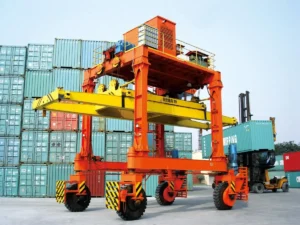
RTG cranes use rubber tires for flexible movement and are mainly used for container stacking and transfer in yards.
- Lifting Capacity: 30–50 tons
- Stacking Height: 4–8 containers
- Span: 20–30 m
Applications: Container yards, Inland terminals, Logistics centers.
Get Custom Quotation NowRail-Mounted Gantry (RMG) Crane
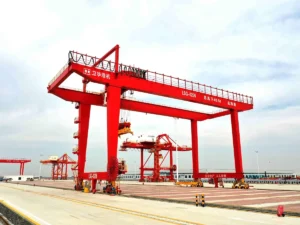
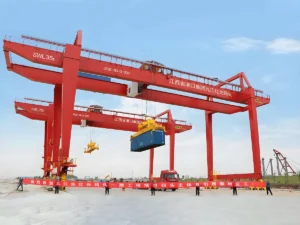
RMG cranes run on fixed rails and are designed for high-density container storage and automated handling operations.
- Lifting Capacity: 30–80 tons
- Span: 30–50 m
- Positioning Accuracy: ±10 mm
Applications: Automated terminals, Railway container yards, Multimodal transport hubs.
Get Custom Quotation NowDifferent types of container handling gantry cranes are designed for different operating conditions. STS cranes handle ship-to-shore operations, RTG and RMG cranes focus on yard handling, and customized gantry cranes are configured for specific project requirements.
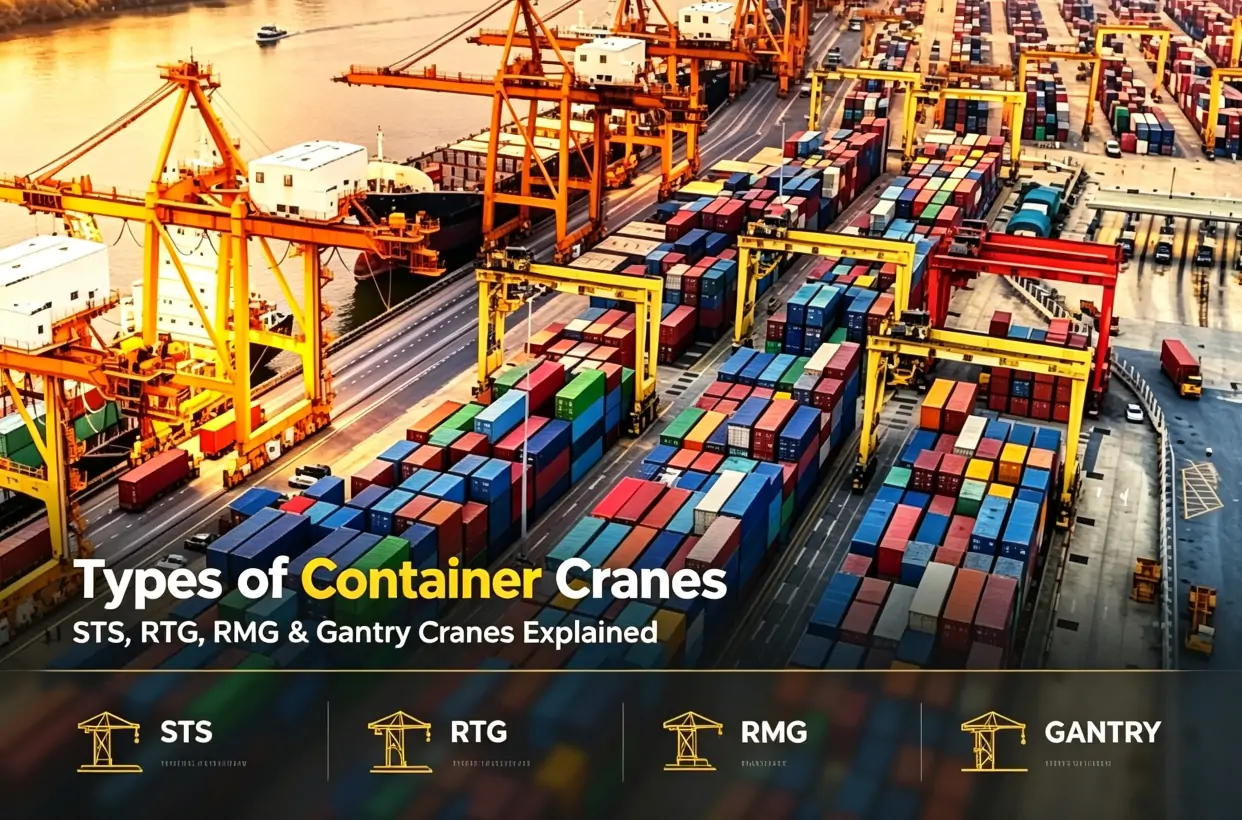
Learn about the main types of container cranes—including STS, RTG, RMG, and gantry cranes—and their applications in various handling operations: Types of Container Cranes: STS, RTG, RMG & Gantry Cranes Explained.
Container Handling Gantry Crane Specifications Guide
The key specifications of a container handling gantry crane include lifting capacity, dimensions, operating speed, crane structure, and safety systems. These parameters should match the working environment and handling requirements.
| Parameter | Range / Options | Selection Notes |
|---|---|---|
| Lifting Capacity | 30.5t / 40.5t / 50t | Select according to maximum container weight, spreader weight, and working load |
| Span | 23.47m / 26m / 30m | Match container rows, truck lanes, and yard layout |
| Lifting Height | 12.2m / 15.5m / 18m | Depends on stacking height and container size |
| Lifting Speed | 15–25 m/min (loaded) | Affects container handling cycle time |
| Hoisting Speed | 30–50 m/min (empty) | Usually higher than loaded lifting speed |
| Trolley Speed | 60–90 m/min | Affects container positioning efficiency |
| Gantry Travel Speed | 90–135 m/min | Depends on RTG or RMG structure |
| Working Class | A6–A8 | Higher class required for frequent heavy-duty operation |
| Spreader Type | Single / Twin / Four Container | Twin and multi-container spreaders improve handling efficiency |
| Anti-Sway System | Mechanical / Electronic | Reduces container swing during operation |
| Power Supply | Diesel Generator / Cable Reel / Electric Power | Select according to operation environment |
| Safety System | Overload Protection, Limit Switch, Anti-Collision System | Must meet relevant safety standards |
| Operation Mode | Manual / Remote / Automatic | Depends on terminal automation requirements |
| Environmental Adaptation | Temperature Range, Wind Resistance, Corrosion Protection | Important for outdoor and coastal operations |
Container handling gantry crane specifications should match the application area, such as ports, railway yards, or inland container depots. High-frequency port operations usually require a higher working class, larger capacity, and advanced control systems, while smaller yards can select configurations based on actual handling volume.
Factors to Consider When Choosing a Container Handling Gantry Crane
Choosing a container handling gantry crane requires matching the crane type and specifications with the operating environment, container volume, and handling requirements. The main selection factors include application area, crane type, technical parameters, automation needs, and long-term operating costs.
1. Confirm the Application Area
The working environment determines the crane design and operating requirements.
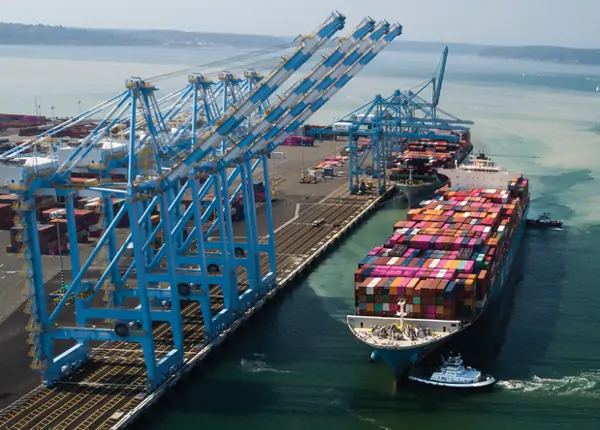
Port Terminals
- Require high-duty cranes for continuous container loading and unloading.
- Focus on reliability, capacity, and corrosion protection.
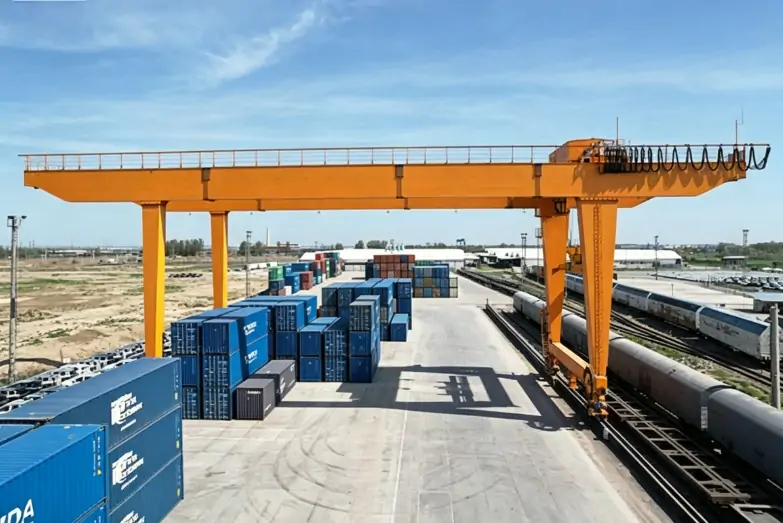
Railway Freight Yards
- Require accurate container transfer between trains and storage areas.
- Focus on stable operation and efficient loading cycles.
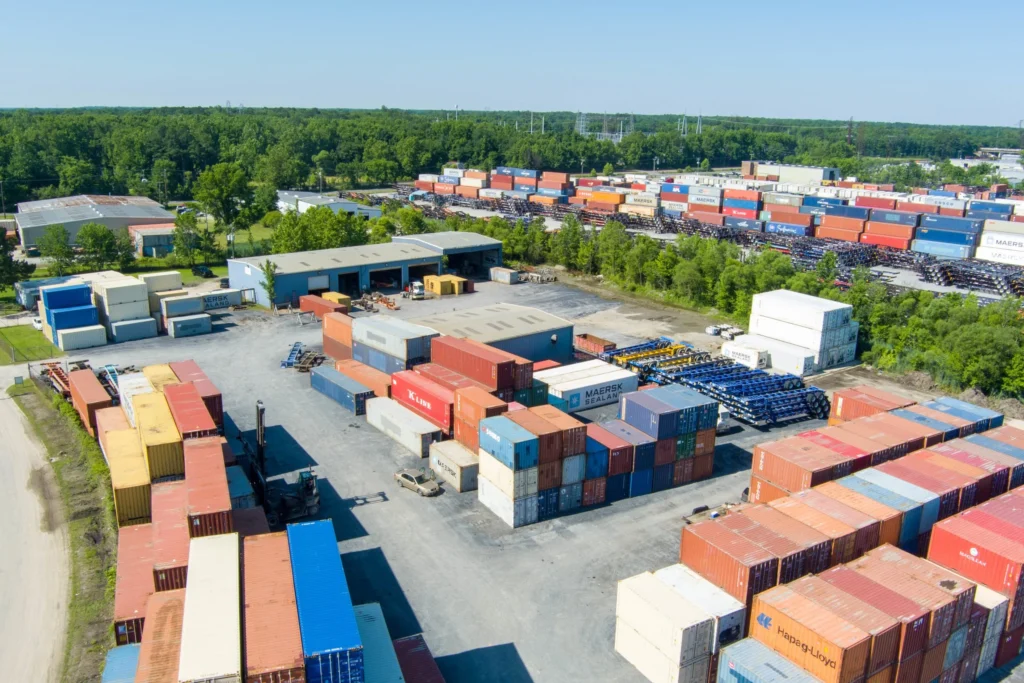
Inland Container Depots
- Require flexible and cost-effective handling solutions.
- Focus on equipment utilization and maintenance costs.
2. Select the Right Crane Type
The main choice for container yards is between RTG and RMG cranes.
| Comparison | RTG Crane | RMG Crane |
|---|---|---|
| Travel Method | Rubber tires | Fixed rails |
| Mobility | Flexible movement between yards | Fixed operating area |
| Positioning Accuracy | Medium | Up to ±10 mm |
| Automation | Manual / Remote options | Suitable for automatic operation |
| Best Application | Flexible container yards | High-density and automated terminals |
- RTG cranes are suitable for yards requiring flexible movement and lower infrastructure investment.
- RMG cranes are suitable for fixed layouts with high efficiency and automation requirements.
3. Check Technical Specifications
The main parameters should match container weight, storage layout, and working frequency.
Lifting Capacity
- Select according to maximum container weight and spreader load.
- Common capacity range: 30–100 tons.
Span and Lifting Height
- Span should cover container rows and transport lanes.
- Lifting height should match stacking layers and container size.
Working Duty
- High-frequency operations require a higher working class, stronger structures, and more durable components.
- Common working class: A6–A8.
The specifications of container cranes—such as lifting capacity, span, and lifting height—directly affect the pace of operations. For detailed data, see: Container Crane Specifications: Capacity, Span, Lifting Height & Working Class
4. Consider Efficiency and Safety Features
Modern container gantry cranes improve operational efficiency through advanced control systems.
Anti-Sway System: Reduces container swinging and improves positioning speed.
Container Spreader:
- Locks container corner castings for safe handling.
- Supports 20ft, 40ft, and twin-lift operations.
Safety System: Includes overload protection, limit switches, emergency stop, and monitoring systems.
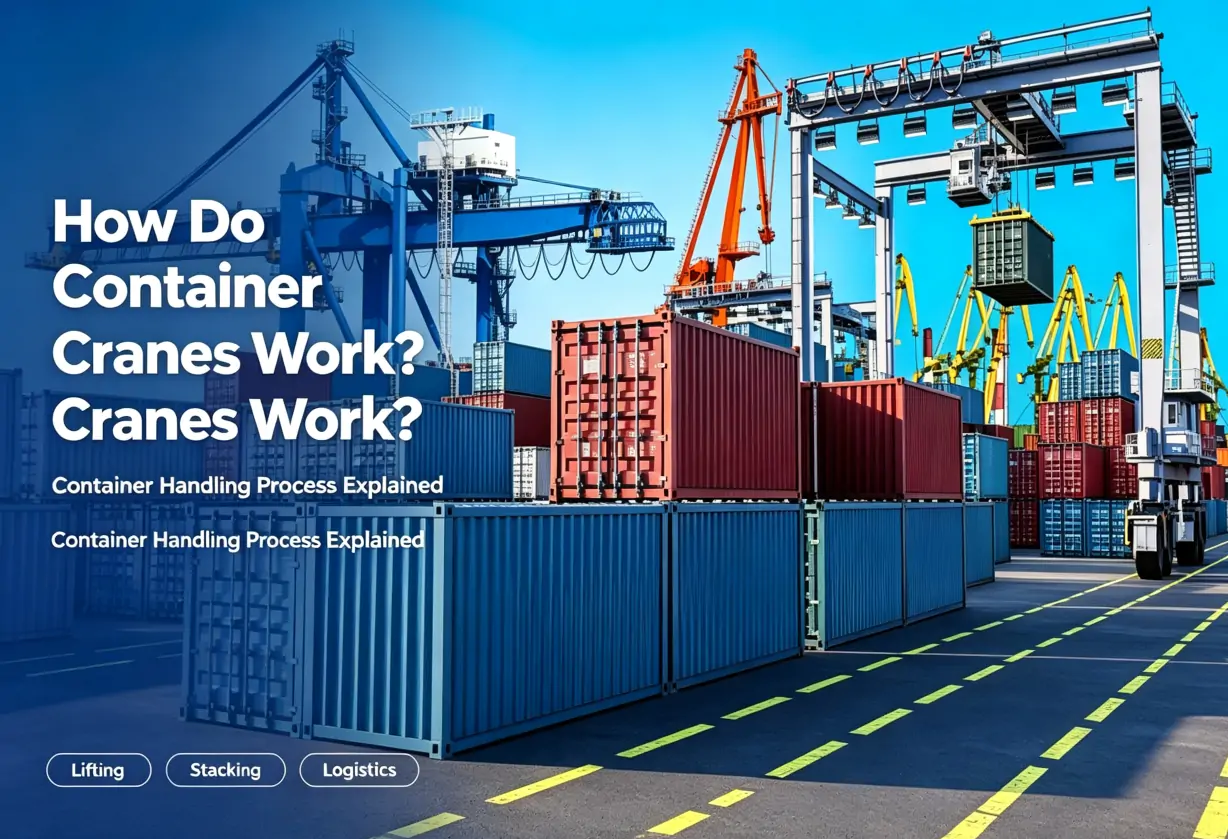
Container crane operations require coordination across multiple stages. Learn how to operate safely during these operations: How Do Container Cranes Work? Container Handling Process Explained
5. Evaluate Long-Term Operating Costs
The total cost includes purchase, energy consumption, maintenance, and service.
| Factor | RTG Crane | RMG Crane |
|---|---|---|
| Power Supply | Available with diesel generators, cable reels, battery systems, or hybrid electric options. | Usually powered by electric systems through cable reels or busbar systems for continuous operation. |
| Maintenance | Easy access to major components helps reduce maintenance time and downtime. | Stable electric drive systems require less routine maintenance, with reliable spare parts and service support improving availability. |
| Operating Cost | Lower initial investment makes RTG cranes suitable for flexible yard operations. | Lower energy consumption and stable operation provide advantages for long-term container yard use. |
Selecting a container handling gantry crane requires balancing working conditions, lifting requirements, automation level, and operating costs. The right crane configuration improves container handling efficiency and supports stable terminal operation.
RTG vs RMG: Which Container Gantry Crane Is Better?
RTG (Rubber Tyred Gantry Crane) and RMG (Rail Mounted Gantry Crane) are the two main container yard cranes. RTG focuses on flexible operation, while RMG focuses on high efficiency, automation, and stable operation.
| Comparison Factor | RTG Crane | RMG Crane |
|---|---|---|
| Travel Method | Rubber tires, flexible movement between container blocks. | Fixed rail movement with stable operation. |
| Power Supply | Diesel generator, battery, or hybrid power options. | Mainly electric power supply. |
| Mobility | High flexibility for changing yard layouts. | Limited to rail areas with precise positioning. |
| Stacking Height | Usually 5–6 containers high. | Usually 6–8 containers high. |
| Automation | Manual, remote, and semi-automatic options. | Suitable for automatic operation and smart terminals. |
| Positioning Accuracy | Medium accuracy. | Higher accuracy for fixed handling routes. |
| Investment Cost | Lower initial investment without rail construction. | Higher investment due to rail infrastructure. |
| Operating Cost | Higher fuel and maintenance costs for diesel models. | Lower energy consumption for long-term operation. |
| Applications | Small and medium yards, flexible container handling. | Large ports, railway terminals, and automated yards. |
How to Choose Between RTG and RMG?
Choose RTG Crane When:
- The yard requires flexible movement between blocks.
- Rail construction is not suitable.
- Initial investment needs to be controlled.
- Operation frequency is moderate.
Choose RMG Crane When:
- The yard layout is fixed.
- High handling efficiency is required.
- Automated operation is planned.
- Long-term energy saving is a priority.
RTG and RMG cranes have different advantages. RTG provides flexibility and lower initial cost, while RMG offers higher efficiency and automation capability. The selection should be based on yard layout, handling volume, automation requirements, and operating costs.
For more comparisons and distinctions regarding container cranes, please refer to the following articles:
- RTG vs RMG Crane: Key Differences, Cost & Which One Is Better for Container Yards?
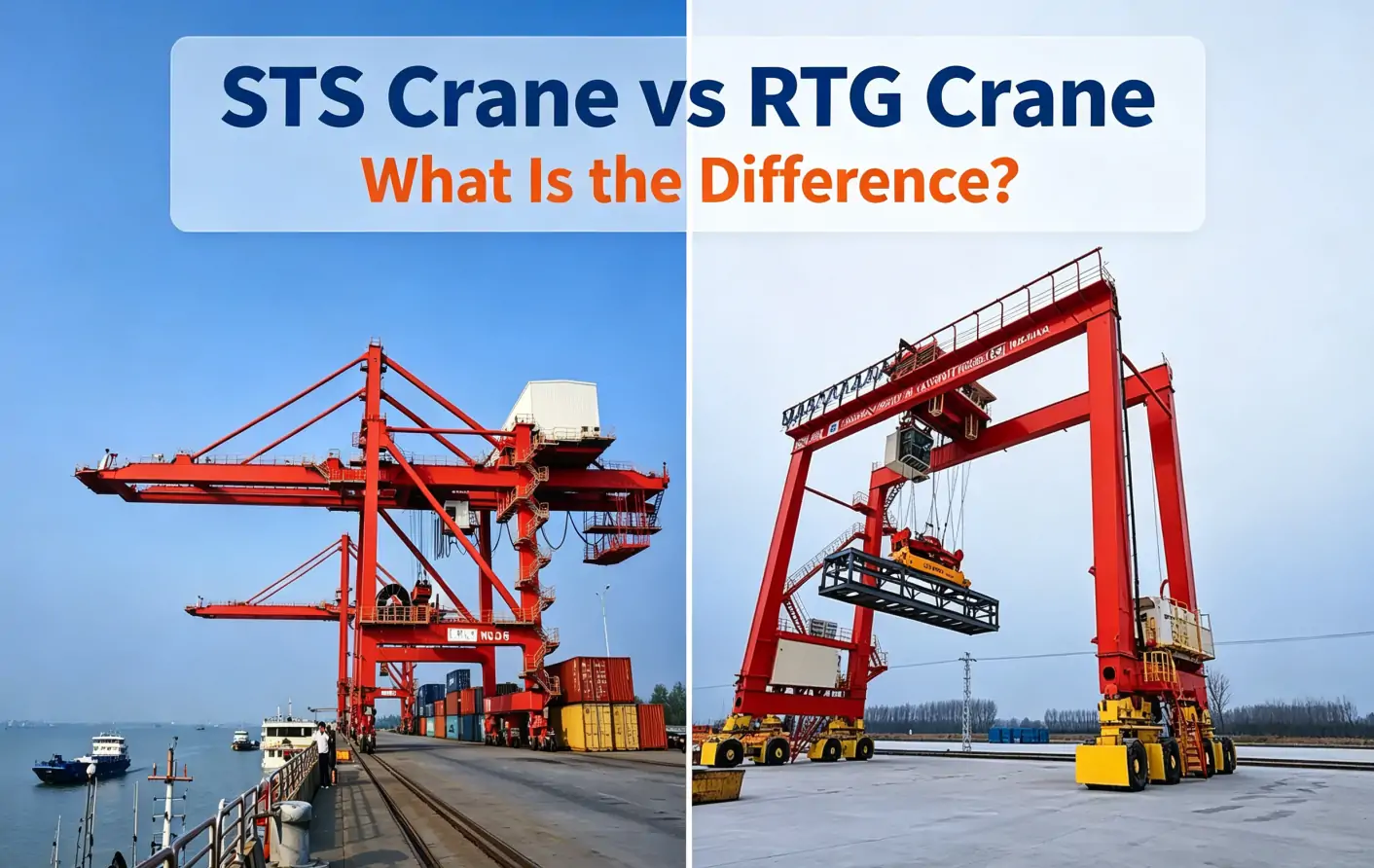
- STS Crane vs RTG Crane vs RMG Crane: Key Differences Explained
- Types of Container Cranes: STS, RTG, RMG & Gantry Cranes Explained
Common Mistakes When Selecting a Container Handling Gantry Crane
Choosing a container handling gantry crane requires matching the crane type and specifications with actual operating conditions. Many selection mistakes come from focusing only on initial requirements while ignoring long-term operation, maintenance, and future expansion.
Incorrect Requirement Analysis
Selecting only by maximum lifting capacity: Rated capacity should be based on the actual working load, including container weight, spreader weight, and safety margin. Oversized cranes increase investment costs, while undersized cranes face overload risks.
- Ignoring the working environment: Port terminals, railway yards, and inland container depots have different requirements for duty cycle, layout, and operating conditions.
- Focusing only on lifting speed: Total cycle time depends on lifting, trolley travel, container positioning, and anti-sway performance, not only hoisting speed.
Incorrect Technical Parameter Matching
Mismatch between span and yard layout: The crane span should match container rows, truck lanes, rail tracks, and future expansion plans.
- Insufficient lifting height calculation: The lifting height must include container stacking height, spreader height, and required safety clearance.
- Ignoring working class selection: High-frequency operations require higher working classes such as A6–A8. Low-duty applications do not need excessive specifications.
Choosing the Wrong Crane Type
Using RMG where flexible movement is required: RMG cranes operate on fixed rails and are not suitable for yards requiring frequent movement between different blocks.
- Using RTG for high-intensity fixed operations: RTG cranes provide flexibility, but long-term fuel consumption and maintenance costs can be higher than RMG systems.
- Ignoring future automation plans: RMG cranes offer better positioning accuracy and automation integration. Selecting the wrong crane type may increase future upgrade costs.
Ignoring Safety and Maintenance Requirements
Underestimating the importance of anti-sway systems: Anti-sway technology improves container positioning speed and reduces operation risks.
- Ignoring maintenance accessibility: Easy access to key components and reliable spare parts supply directly affect equipment uptime.
- Overlooking environmental conditions: Coastal ports require corrosion protection, wind resistance, and electrical protection against harsh weather conditions.
Incorrect Cost Evaluation
Comparing only purchase prices: Initial cost does not represent total ownership cost. Energy consumption, maintenance, and service expenses should be considered over the equipment life cycle.
- Ignoring infrastructure costs: RMG systems require rail foundations and related construction costs, which should be included in the project budget.
- Ignoring energy and emission requirements: Environmental regulations may require RTG cranes to adopt electric, hybrid, or energy-saving solutions in the future.
The main mistake in selecting a container handling gantry crane is treating it as a simple equipment purchase. The right choice requires evaluation of operating conditions, handling requirements, long-term costs, and future development plans. A detailed site assessment and technical solution from the crane manufacturer can help avoid improper selection.
Conclusion
Container handling gantry crane selection depends on working conditions, container capacity, yard layout, automation requirements, and long-term operating costs. The right crane configuration helps improve handling efficiency and reduce operation costs.
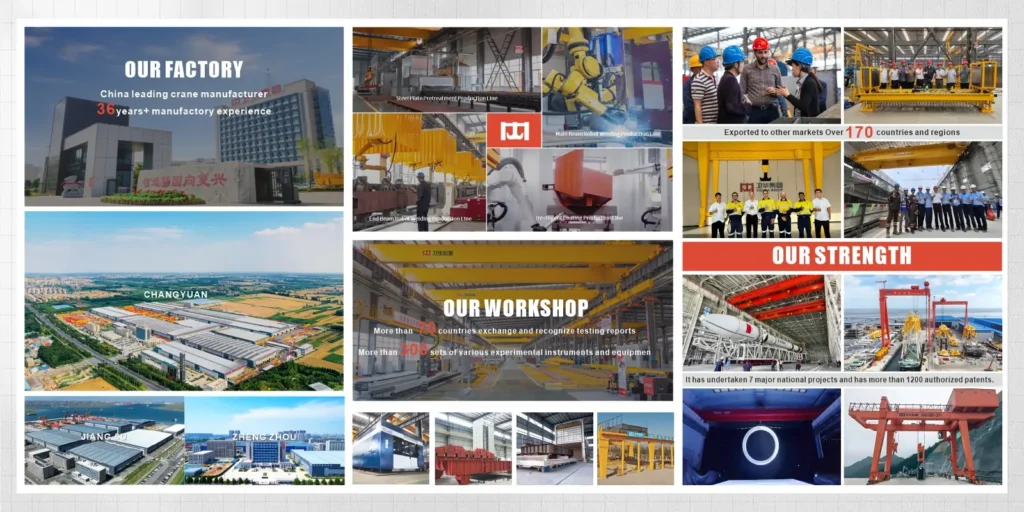
With years of manufacturing and export experience, WEIHUA provides customized container handling gantry crane solutions, including crane design, technical support, installation guidance, and after-sales service. Contact us to discuss your project requirements and get a suitable crane solution.
FAQ
What is a container handling gantry crane?
A container handling gantry crane is a crane designed for lifting, stacking, and transferring standard containers in ports, terminals, railway yards, and logistics centers. It uses a dedicated spreader to lock onto container corner castings for safe handling.
What type of gantry crane is used for containers?
The main types include RTG (Rubber Tyred Gantry) cranes, RMG (Rail Mounted Gantry) cranes, STS (Ship-to-Shore) cranes, and customized container gantry cranes. RTG and RMG cranes are mainly used for container yard operations, while STS cranes handle ship loading and unloading.
How much weight can a container gantry crane lift?
A container gantry crane usually has a lifting capacity of 30–80 tons. Heavy-duty models can reach 100 tons or more depending on the container type, spreader configuration, and operating requirements.
What is the difference between RTG and RMG cranes?
The main difference is the travel system. RTG cranes use rubber tires and can move between container blocks, providing higher flexibility. RMG cranes run on fixed rails, offering higher positioning accuracy and better support for automated operations.
How do I choose the right container gantry crane?
Selection should consider the working area, container volume, lifting capacity, span, stacking height, automation requirements, power supply, and long-term operating costs. The crane type should match the actual yard layout and handling process.
What is the lifting height of a container gantry crane?
The lifting height depends on stacking requirements and crane design. Common container gantry cranes have a lifting height of around 12–20 meters, allowing them to handle multi-layer container stacking.
Are container gantry cranes automated?
Yes. Modern container gantry cranes can be equipped with PLC control, remote operation, automatic positioning, anti-sway systems, and intelligent management systems. RMG cranes are widely used in automated container terminals due to their accurate rail-guided movement.
Where are container gantry cranes used?
Container gantry cranes are used in seaports, container terminals, railway freight yards, inland container depots, and logistics centers for container loading, unloading, stacking, and transfer operations.