








Índice
Introdução
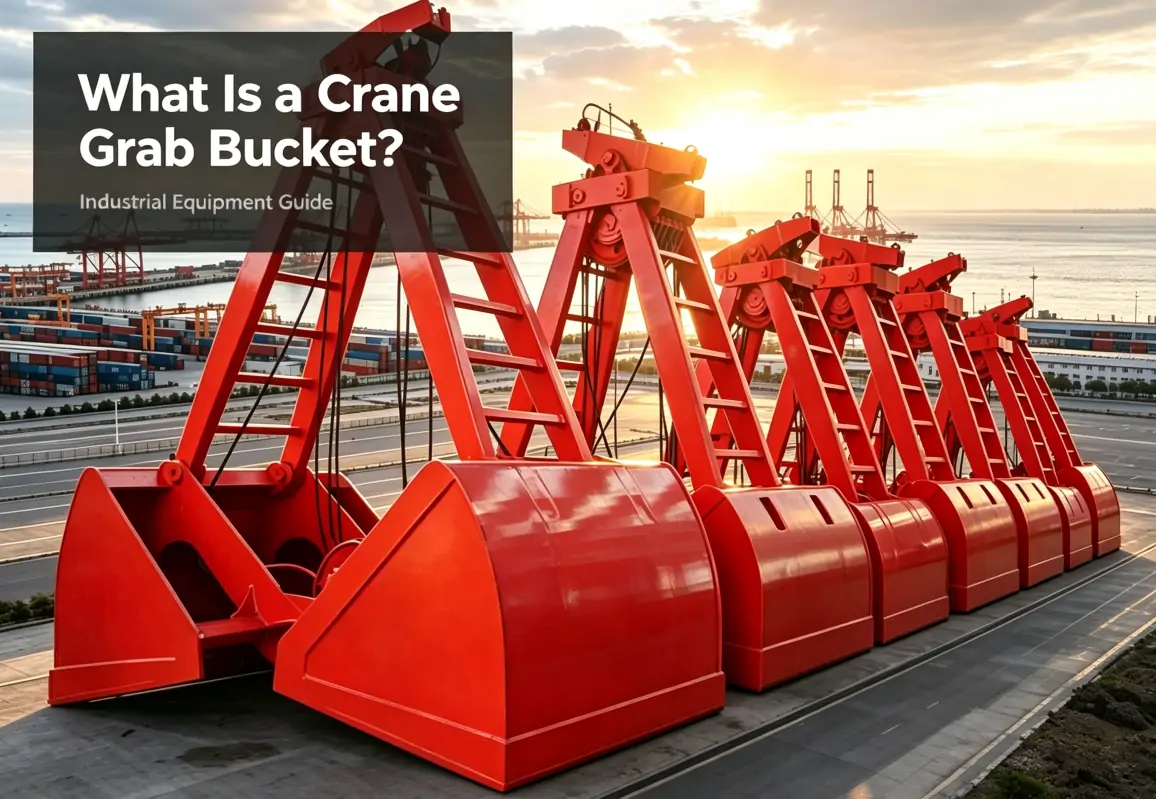
A Crane Grab Bucket is a lifting attachment suspended from a crane hook for scooping, holding, and discharging bulk materials. It is operated by mechanical ropes or a hydraulic system, depending on the grab design, and is used with overhead cranes, gantry cranes, port cranes, and other compatible lifting equipment.
In this guide, we cover how a Crane Grab Bucket works, its main types, common materials and applications, key specifications, lifting capacity, and selection factors. We also compare different grab configurations to help match the bucket with the material and crane system.
What Is a Crane Grab Bucket?
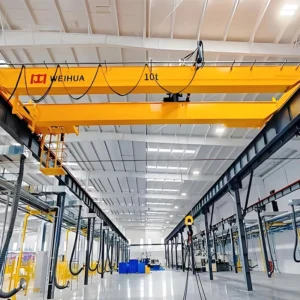
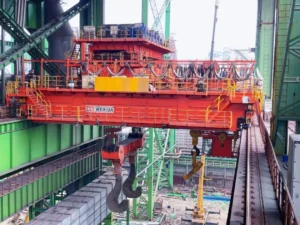
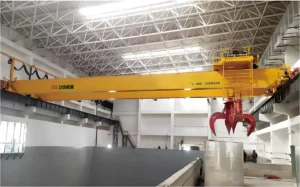
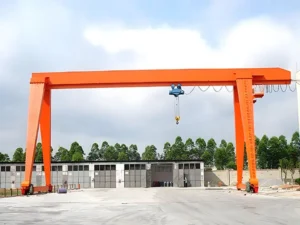
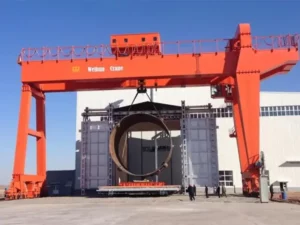
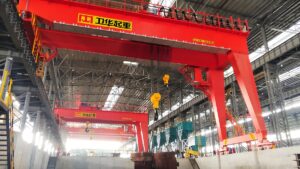
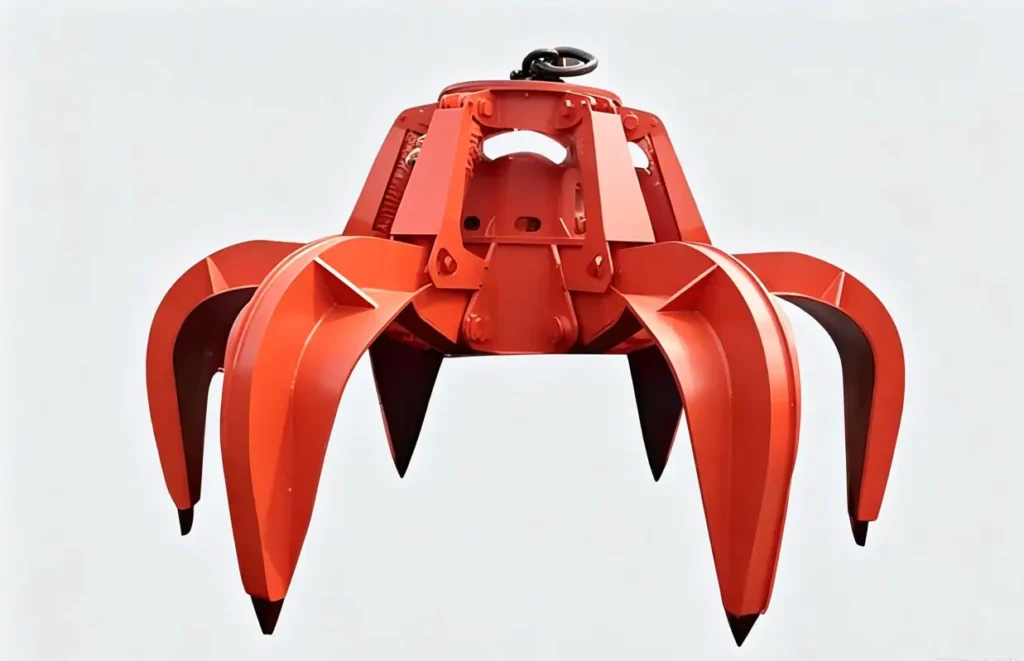
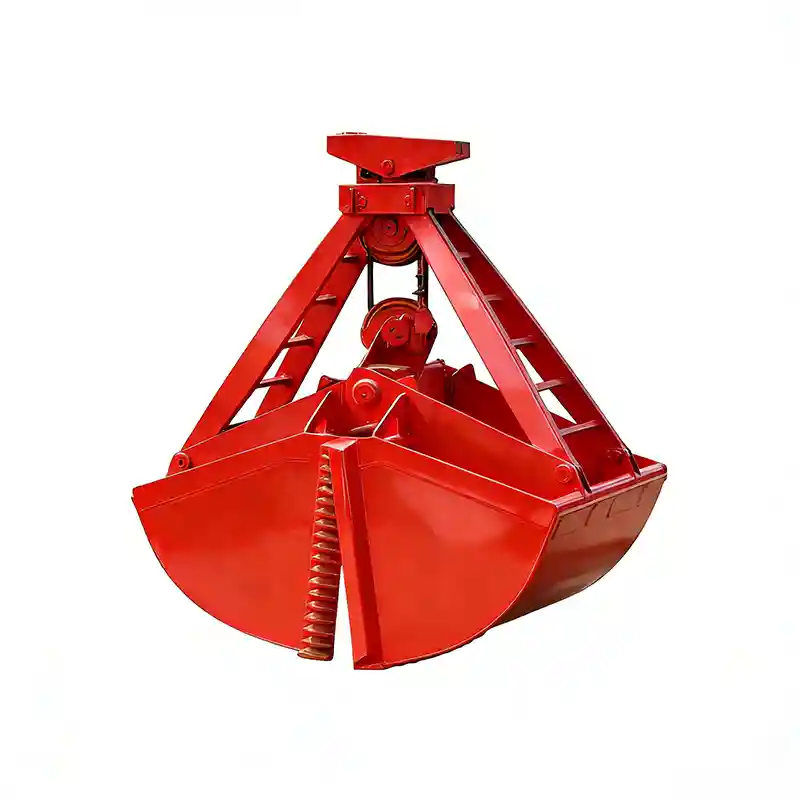
A crane grab bucket is a crane-mounted lifting attachment that replaces the hook to grab, lift, and discharge loose or irregular bulk materials. It is also known as a crane grab, clamshell bucket, orange peel grab, or electro-hydraulic grab, depending on the tine configuration and drive type. It can be used with pontes rolantes, guindastes de pórtico, port cranes, and other suitable lifting equipment. It is widely used in ports, wharves, freight yards, mines, power plants, and warehouses for handling coal, sand, gravel, ore, scrap steel, and logs.
Structurally, the grab consists of an upper frame, a set of tines or clamshell petals, and an opening-closing mechanism. The mechanism is driven by wire ropes, an electric motor, or hydraulic cylinders. Mechanical four-rope grabs use two support ropes and two closure ropes, while hydraulic units actuate each tine directly through cylinders mounted between the upper frame and the tine. Typical capacities range from 0.3 m³ for small excavator-mounted units to 20 m³ for large port cranes.
Selection depends on three factors: the material to be handled, the task to be performed, and the host equipment. The grab suits only bulk materials in their natural state; underwater or special materials require a customized design. Matching the grab’s self-weight and rated load to the crane’s remaining lifting capacity is the critical check, since a grab that is too heavy leaves no margin for the material itself.
For more information, read the article: What Is a Crane Grab Bucket?
How Does a Crane Grab Bucket Work?
A crane grab bucket works by opening its shells or tines, lowering them onto the material, closing them under load, and then lifting and releasing the load at the discharge point. The entire cycle is driven by either wire ropes or hydraulic cylinders, depending on the grab type.
Basic Working Cycle: Lower → Grab → Lift → Discharge
1. Lowering: The crane lowers the open grab onto the material. The shells or tines reach the pile in the fully open position, so the grab lands with the maximum available opening and penetrates the material under its own weight.
2. Grabbing: The shells or tines close around the material. Closing force is applied through the grab’s own mechanism, and the load is held inside the closed shells or between the tines for the duration of the lift.
3. Lifting: The crane lifts the closed grab and its load. The load is carried by the grab body and the closing mechanism, not by the crane hook alone, so the grab stays closed throughout the travel.
4. Discharging: The grab opens at the discharge point and releases the material. Discharge can be controlled or partial where the mechanism allows, letting the operator meter the flow over a hopper, truck bed, or stockpile.
The opening and closing mechanism depends on the grab type, with mechanical models using ropes and hydraulic models using cylinders.
Types of Crane Grab Buckets
Crane Grab Buckets are commonly grouped into mechanical grab buckets, hydraulic clamshell grab buckets, and hydraulic orange peel grab buckets. The main differences are the drive system, grab structure, and material handling requirements.
Mechanical Grab Bucket
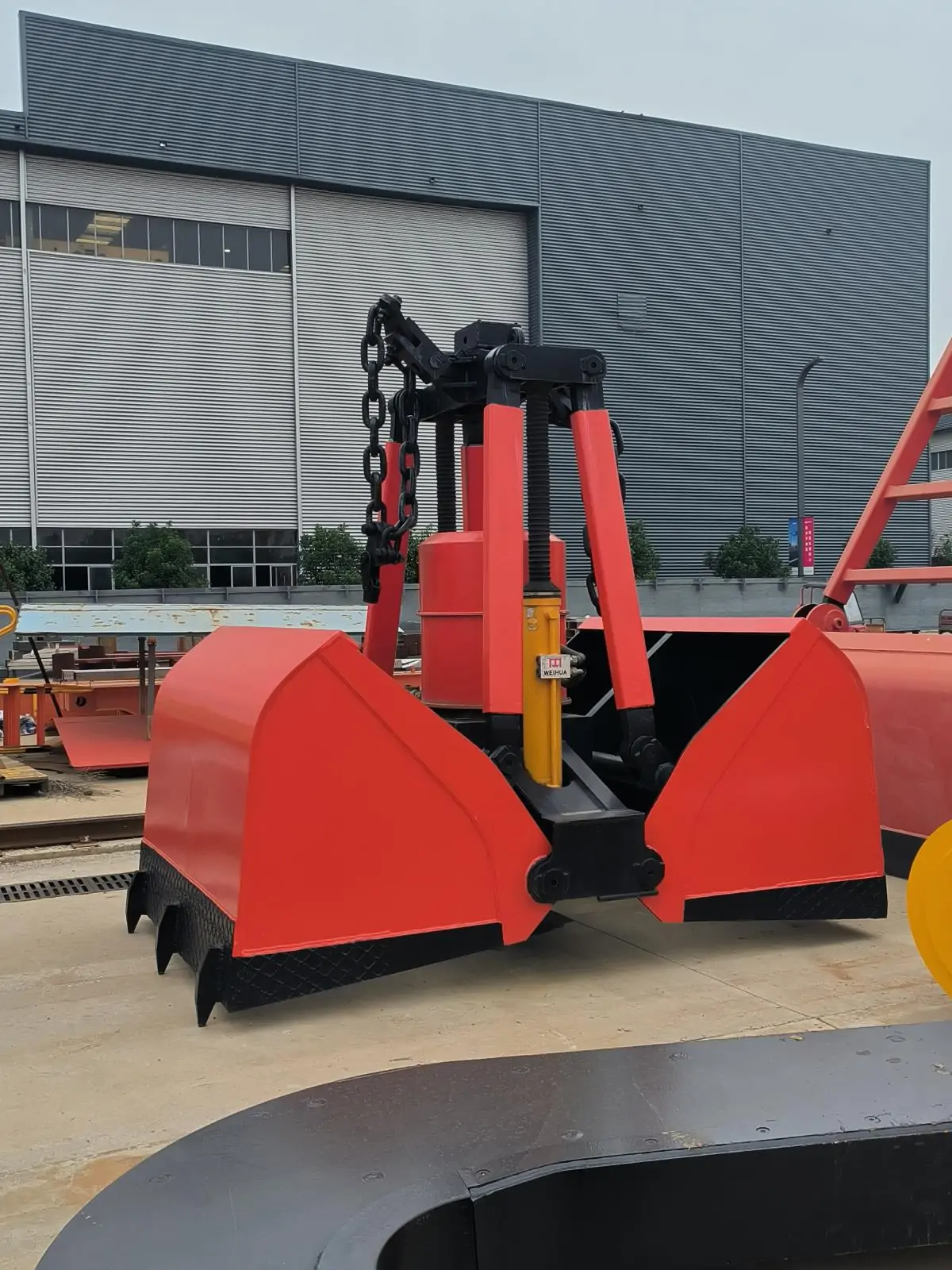
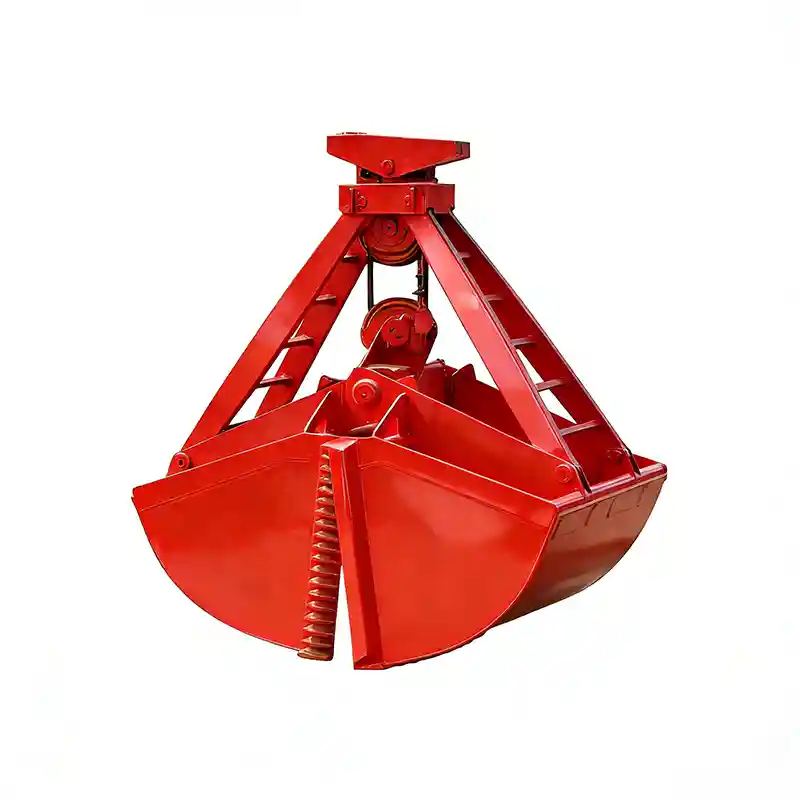
A mechanical grab bucket uses wire ropes connected to the crane lifting mechanism to open and close the grab. Two-rope and four-rope designs are common. It is used for coal, ore, sand, gravel, and other loose bulk materials.
Grab Capacity: 0.5–20 m³
Rope Type: 2-Rope / 4-Rope
Shell Type: Clamshell
Material: Q345 / Q355 / NM400
Obtenha uma Cotação Personalizada AgoraHydraulic Clamshell Grab Bucket
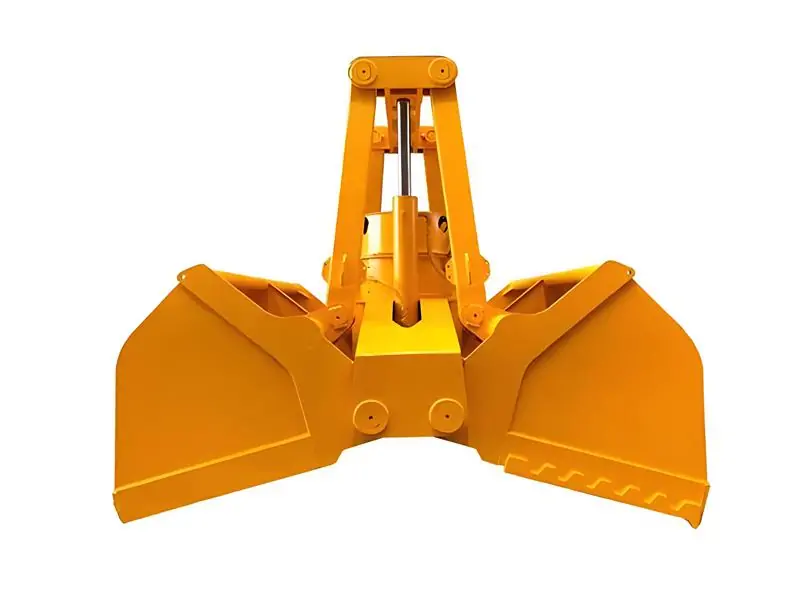
A hydraulic clamshell grab bucket uses hydraulic cylinders to control two or more shells. It is used for coal, ore, sand, gravel, grain, and other loose bulk materials. Crane-mounted and excavator-mounted configurations are available.
Grab Capacity: 0.4–16 m³
Working Pressure: 160–180 bar
Shell Type: Clamshell / Multi-Shell
Rotation: 360° / Non-Rotating
Obtenha uma Cotação Personalizada Agora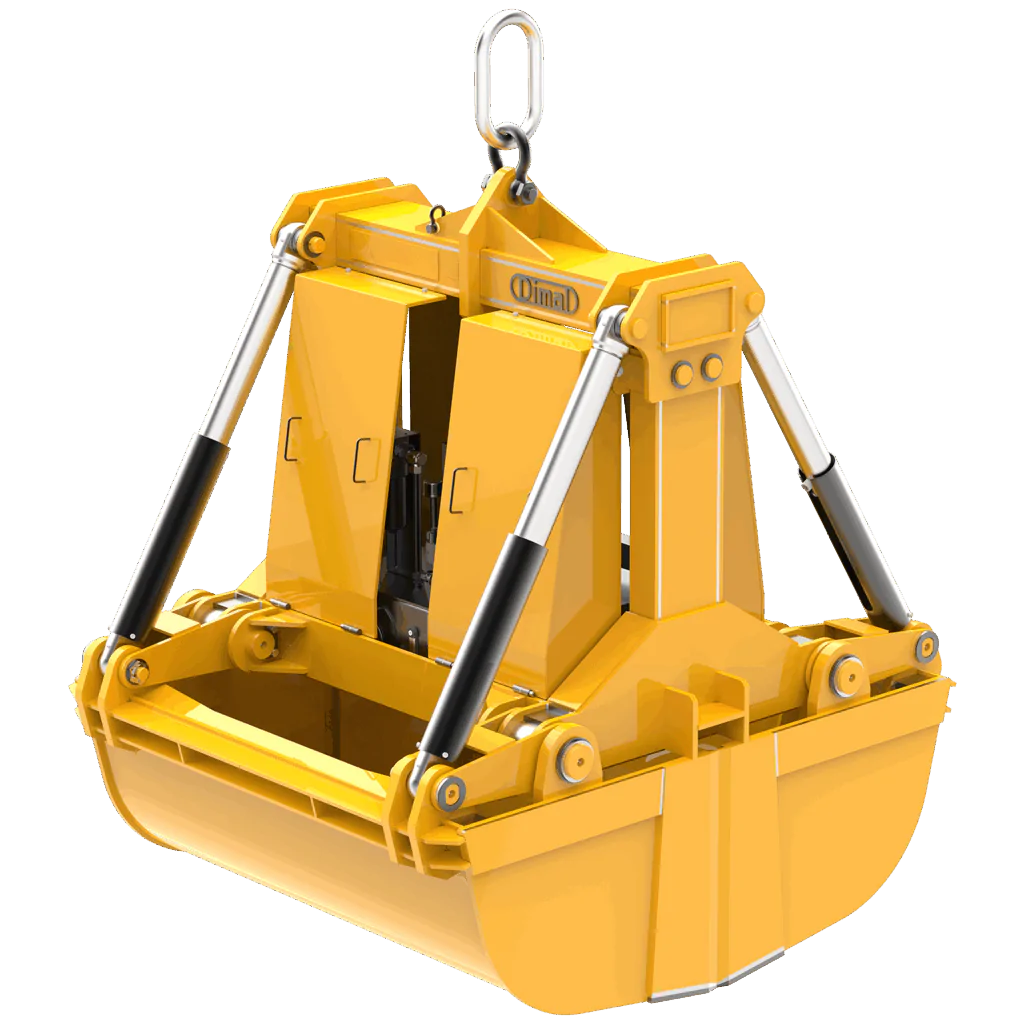
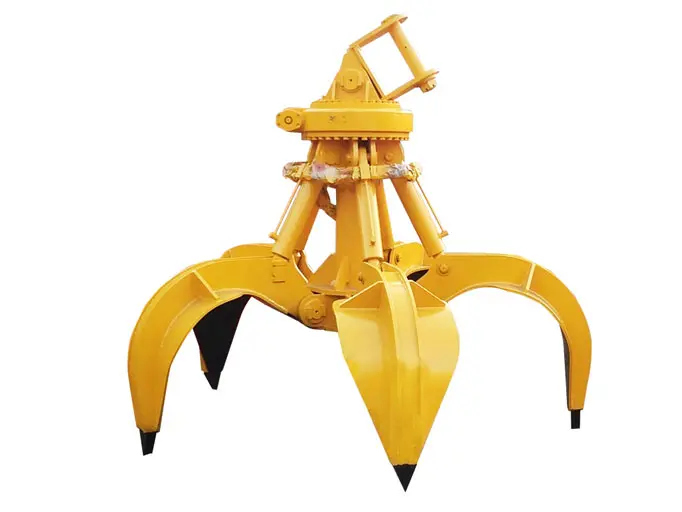
Hydraulic Orange Peel Grab Bucket
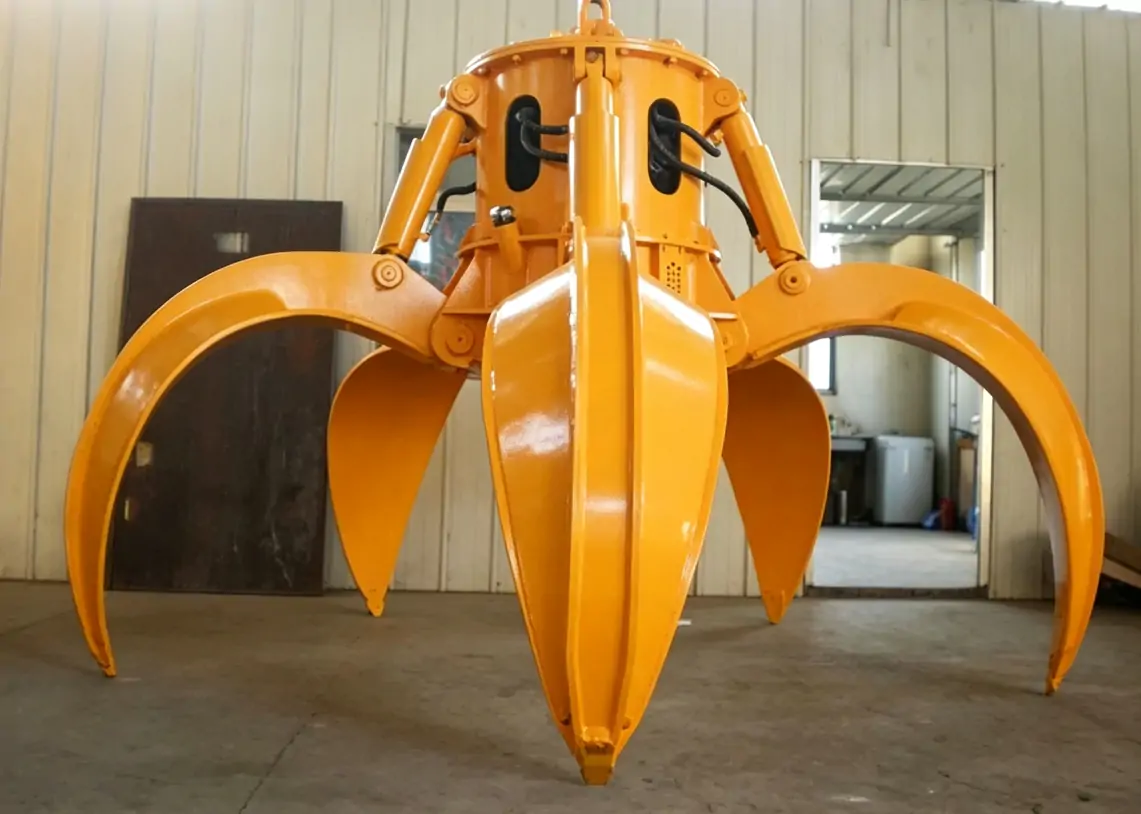
A hydraulic orange peel grab bucket uses hydraulic cylinders to operate multiple tines. The tines close around irregular loads such as scrap steel, metal scrap, rock, and bulky materials. It is widely used in steel plants, recycling yards, ports, and mines.
Grab Capacity: 0.6–10 m³
Working Pressure: 180–320 bar
Tine Configuration: 4–6 Tines
Rotation: 360° / Non-Rotating
Obtenha uma Cotação Personalizada AgoraThe selection of a Crane Grab Bucket is based on material type, grab capacity, lifting equipment, and working conditions.
Clamshell Grab vs Orange Peel Grab
Clamshell Grab and Orange Peel Grab are two common grab structures for crane material handling. Their main difference is the number and shape of the shells or tines, which determines the materials and working conditions each grab suits.
| Comparação | Clamshell Grab | Orange Peel Grab |
|---|---|---|
| Shell / Tine Count | 2 shells | 3–6 tines |
| Closing Shape | Enclosed bucket | Multi-tine, orange-peel shape |
| Material Type | Coal, sand, ore, grain, fertilizer | Scrap steel, rock, metal, large irregular materials |
| Material Form | Loose and free-flowing | Irregular, bulky, and heavy |
| Filling Efficiency | Alto | Moderado |
| Material Grip | Enclosed by shells | Multi-directional grip |
| Penetration | Suitable for loose bulk material | Strong penetration into dense or irregular piles |
| Capacidade | 0.5–20 m³ | 0.6–10 m³ |
| Aplicações | Ports, bulk cargo handling, dredging | Steel plants, scrap yards, recycling, mines |
| Sistema de acionamento | Mechanical / Hydraulic | Mechanical / Hydraulic |
| Rotation | 360° / Non-Rotating | 360° / Non-Rotating |
Clamshell Grabs are suited to loose materials that form stable piles and fill the bucket easily. Orange Peel Grabs are better for irregular, oversized, or heavy materials that need multi-directional gripping. For mixed material handling, an Orange Peel Grab offers broader gripping capability, while a Clamshell Grab provides higher filling efficiency for standard bulk materials.
Mechanical and hydraulic grab buckets differ significantly in their applications and configurations. For more details, see the article: Mechanical Clamshell Grab Bucket vs. Hydraulic Grab Bucket: What Is the Difference?
Orange peel grab buckets are widely used in various industries and are particularly suitable for handling irregularly shaped metal. Steel is one of the most common materials handled; for specific applications, read the article: Hydraulic Orange Peel Grab Bucket for Scrap
What Materials Can a Crane Grab Bucket Handle?
Crane Grab Buckets handle loose bulk materials, dense materials, and irregular loads. The suitable grab type depends on material density, size, shape, and handling conditions.
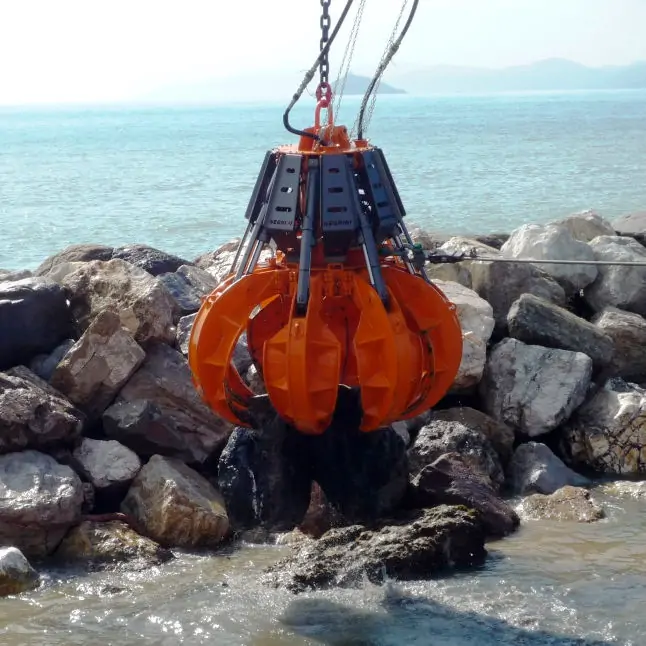
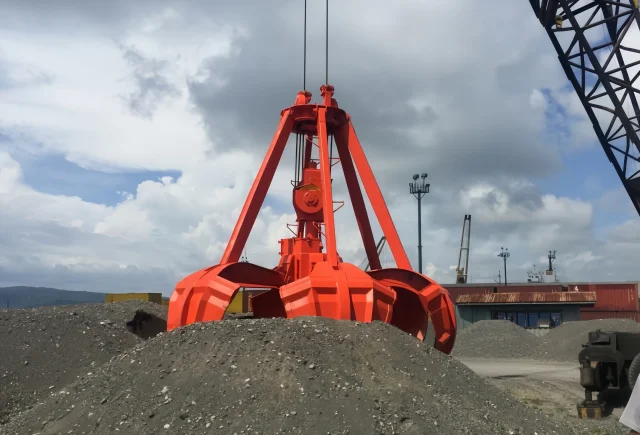
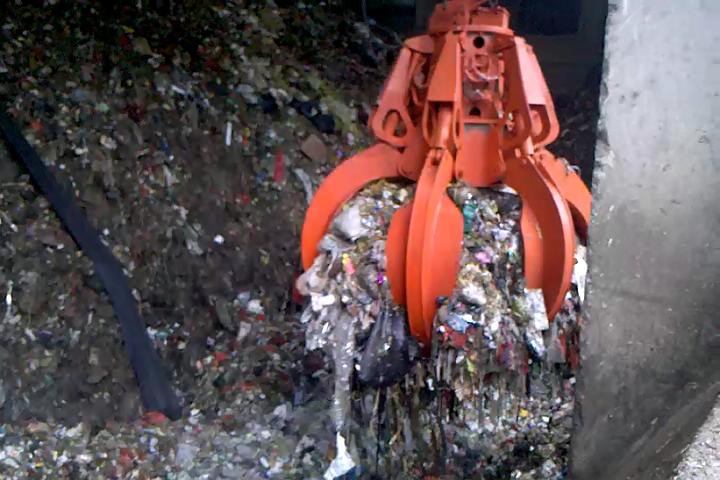
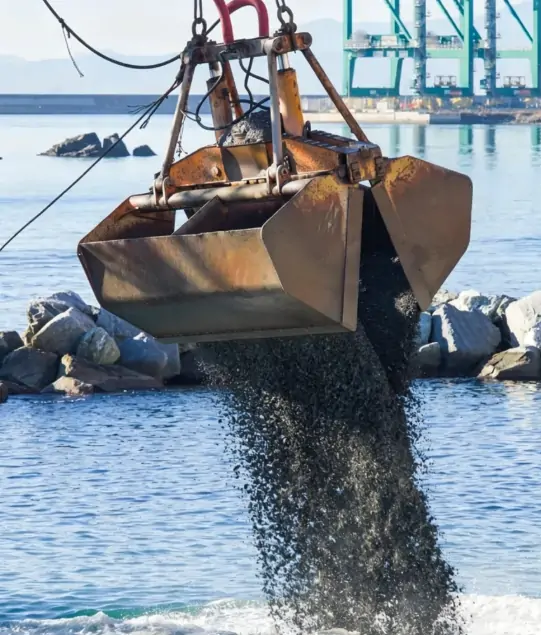
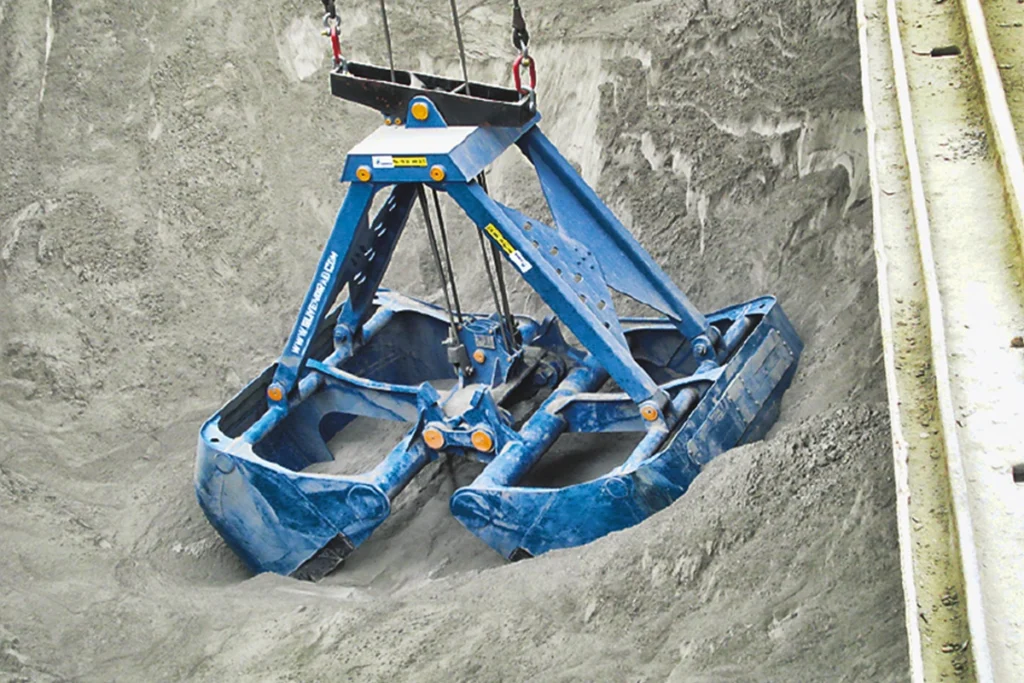
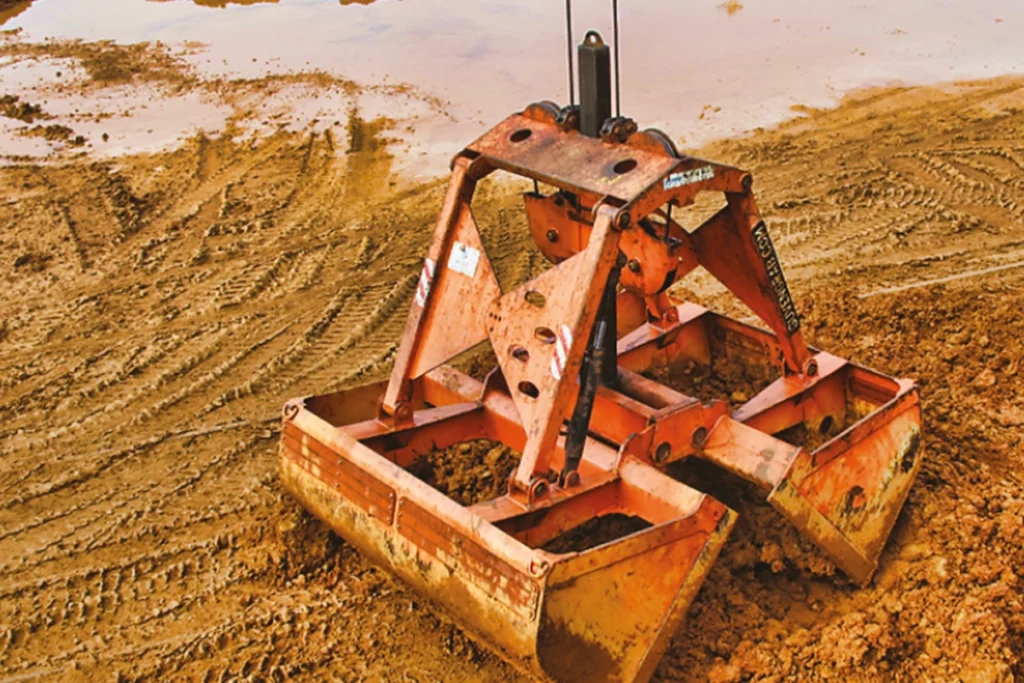
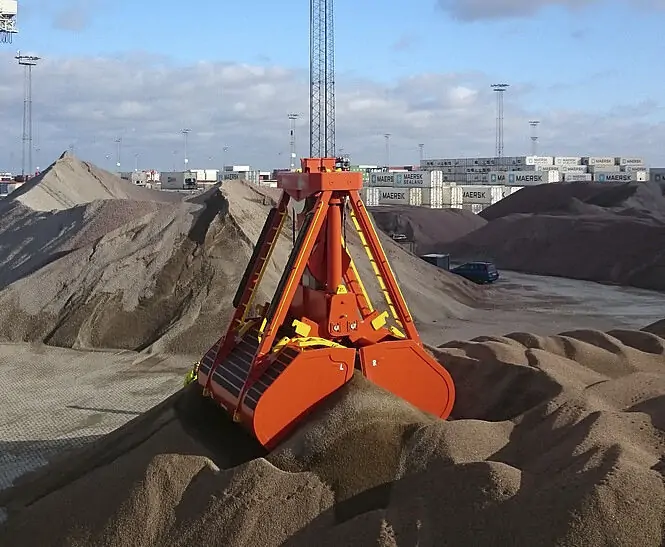
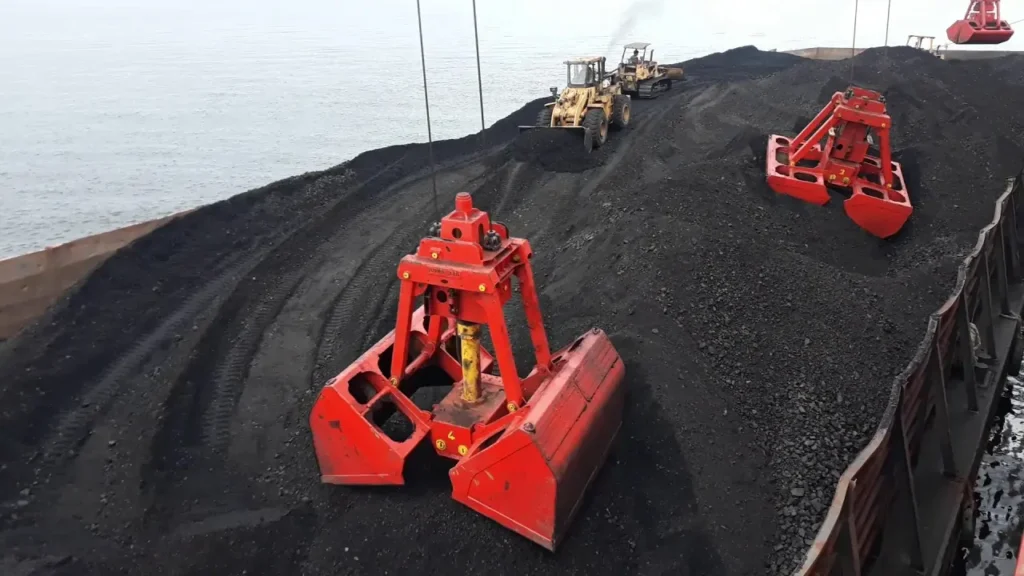
- Coal: Used in power plants, coal yards, and ports for bulk coal handling.
- Ore: Used in mines, ports, and steel plants for heavy material loading and unloading.
- Sand and Gravel: Used in quarries, construction sites, aggregate plants, and dredging operations.
- Grain: Used in grain terminals, storage facilities, and bulk carrier unloading.
- Scrap Steel and Scrap Metal: Used in steel mills, recycling yards, and ports. Orange peel grabs suit irregular metal pieces.
- Rock and Stone: Used in quarries, mines, and earthwork operations. Heavy-duty grabs are suited to abrasive materials.
- Fertilizer and Mineral Materials: Used in fertilizer plants, mineral processing facilities, and bulk material warehouses.
- Waste and Biomass: Includes municipal waste, slag, wood chips, and other lightweight or irregular materials.
To learn more about the specific applications of crane grab buckets in heavy-duty industries, read the article: “Crane Grab Bucket Applications in Ports, Steel Mills, Mining, and Bulk Material Handling”
Where Are Crane Grab Buckets Used?
Crane Grab Buckets are used in industries that require repeated loading, unloading, and transferring of bulk or irregular materials. Common applications include ports, mines, power plants, steel mills, and recycling facilities.
Ports and Terminals
Used for loading and unloading bulk cargo such as coal, ore, grain, and mineral materials from ships and storage yards.
Mining Operations
Used for handling ore, rock, and other extracted materials in mines and mineral processing areas.
Usinas de energia
Used for coal handling systems, including unloading, storage yard transfer, and boiler fuel supply.
Siderúrgicas
Used for scrap steel handling, raw material charging, and transfer of heavy metal materials.
Recycling Yards
Used for collecting and moving scrap metal, waste materials, and irregular loads.
Construction and Aggregate Sites
Used for sand, gravel, stone, and other bulk materials in quarries and material yards.
The grab structure should match the application requirements. Mechanical grabs are common for bulk material handling, while hydraulic clamshell and orange peel grabs are selected for specific material shapes and operating conditions.
For details on the different applications and classifications of grab buckets, see: Different Types of Crane Grab Buckets and How to Choose the Right One
Crane Grab Bucket Specifications
| Parâmetro | Descrição |
|---|---|
| Grab Capacity | 0.5–20 m³ |
| Rated Load / SWL | Matched to crane lifting capacity |
| Grab Weight | Selected according to crane capacity |
| Shell or Tine Configuration | Concha / Casca de Laranja |
| Opening Size | Selected according to material size |
| Sistema de acionamento | Mechanical rope / Hydraulic |
| Material | Q355B / NM400 / NM500 wear-resistant steel |
| Crane Connection | Hook, linkage, or customized mounting |
Grab capacity should match the material density and crane lifting capacity. Shell or tine configuration depends on material size and shape, while the drive system and connection must match the crane or carrier equipment.
How to Choose a Crane Grab Bucket?
Selecting a Crane Grab Bucket depends on the material, crane capacity, and working conditions. The grab structure and operating system should match the actual handling requirements.
Material Type — Check the material density, size, shape, and abrasiveness. Clamshell grabs suit loose bulk materials, while orange peel grabs suit scrap steel, rock, and irregular loads.
Grab Capacity — Choose the grab volume based on the required load per cycle and material density. The grab weight must stay within the crane’s rated lifting capacity.
Crane Compatibility — Match the grab with the crane type, lifting capacity, hook connection, and working height.
Drive System — Mechanical grabs use rope operation. Hydraulic grabs use cylinders to control the shells or tines directly.
Working Conditions — Consider handling frequency, material wear, and site environment when selecting the grab structure and material.
The correct grab bucket is selected according to the material and crane requirements.
If you are considering using an overhead crane or gantry crane and are unsure how to select the appropriate grab bucket, see the article: How to Choose a Grab Bucket for Overhead Cranes and Gantry Cranes?
How Much Can a Crane Grab Bucket Lift?
A Crane Grab Bucket does not have a fixed lifting capacity. The actual load depends on the crane SWL, grab weight, bucket volume, and material density. A larger grab volume does not always mean a heavier lifting load.
For standard crane grab buckets, the capacity is commonly around 0.5–20 m³, with lifting loads matched to different crane requirements. Some heavy-duty configurations can be customized for higher-capacity applications.
The total lifted weight includes both the grab itself and the handled material. For example, a grab used for coal and a grab with the same volume used for ore may carry different material weights because of different bulk densities.
When selecting a Crane Grab Bucket, check:
- Crane SWL: Maximum allowable lifting load
- Grab Weight: Dead weight of the attachment
- Bucket Capacity: Volume per cycle
- Material Density: Weight of the handled material
The correct grab size is selected by matching the material and crane capacity rather than choosing the largest bucket volume.
Mechanical vs Hydraulic Crane Grab Buckets
Mechanical and hydraulic grab buckets differ mainly in the drive system. Mechanical grabs use crane ropes or mechanical linkage, while hydraulic grabs use cylinders to control the shells or tines.
| Comparação | Mechanical Grab | Hydraulic Grab |
|---|---|---|
| Sistema de acionamento | Wire rope / mechanical linkage | Hydraulic cylinders |
| Closing Control | Crane rope operation | Hydraulic pressure control |
| Gripping Force | Depends on grab weight and rope system | Controlled by hydraulic system |
| Suitable Materials | Coal, ore, grain, sand, and other bulk materials | Scrap steel, waste, rock, and irregular materials |
| Estrutura | Simple mechanical design | Hydraulic circuit and cylinders |
| Manutenção | Low maintenance structure | Requires hydraulic system inspection |
| Rotation Option | Depends on grab design | 360° rotation available on selected models |
Mechanical grabs are suitable for loose bulk materials and continuous handling operations. Hydraulic grabs provide direct control of shells or tines for irregular and heavy materials.
Crane Grab Bucket Maintenance
Regular inspection helps maintain stable grab operation and extends service life. Maintenance focuses on the drive system, moving parts, and wear components.
- Ropes or Hydraulic Lines: Check for wear, damage, and leakage.
- Hinge Pins and Bearings: Inspect lubrication, clearance, and wear condition.
- Shells, Tines and Wear Plates: Check for deformation, cracks, and excessive wear.
- Teeth and Cutting Edges: Inspect wear condition and replace when required.
- Hydraulic System: Monitor oil condition, pressure, and cylinder performance on hydraulic grabs.
- Worn Parts: Replace components according to material conditions and operating frequency.
Regular inspection and maintenance of crane grab buckets can extend their service life. For details, please refer to: Crane Grab Bucket Maintenance Tips to Extend Service Life.
Conclusão
A Crane Grab Bucket is selected according to the material type, crane system, and working conditions. This article explains how grab buckets work, the main types, common applications, key specifications, and the differences between mechanical and hydraulic designs to help identify the right solution for bulk and irregular material handling.
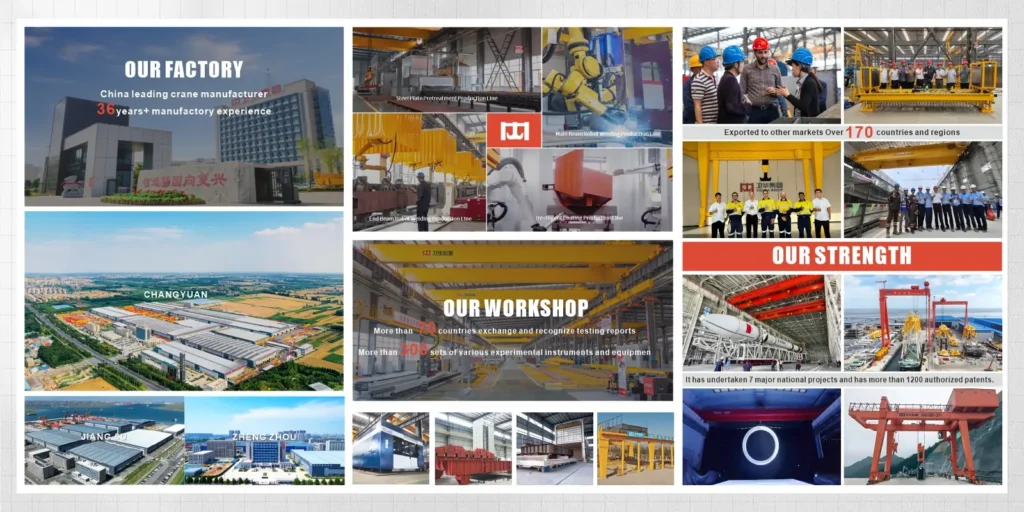
WEIHUA manufactures and supplies mechanical grabs, hydraulic clamshell grabs, and hydraulic orange peel grabs for ports, mines, steel plants, power plants, and other material handling applications. With customized design, overseas supply experience, and CE e ISO9001 certifications, we can provide grab bucket solutions, technical support, and after-sales service based on different crane systems and operating requirements. Contacte-nos with your material type, capacity requirements, and crane specifications for a suitable grab bucket configuration.
FAQ
What is a crane grab bucket used for?
A crane grab bucket is used for grabbing, lifting, and discharging bulk or irregular materials. It is commonly used in ports, mines, power plants, steel plants, and material yards.
How does a crane grab bucket work?
A crane grab bucket works by opening, closing, and holding materials through a rope system or hydraulic system. The crane lowers the open grab; the shells or tines close around the material, then the grab lifts and releases the load at the discharge point.
What materials can a crane grab bucket handle?
Crane grab buckets handle coal, ore, sand, gravel, grain, fertilizer, scrap steel, rock, and other bulk or irregular materials. The grab structure is selected according to material size, density, and shape.
What are the main types of crane grab buckets?
The main types include mechanical grab buckets, hydraulic clamshell grab buckets, and hydraulic orange peel grab buckets. They differ in drive system, grab structure, and suitable applications.
What is the difference between a clamshell grab and an orange peel grab?
A clamshell grab uses two shells to hold loose bulk materials such as coal, sand, and ore. An orange peel grab uses multiple tines to grip irregular materials such as scrap steel, metal, and rock.
How much can a crane grab bucket lift?
The lifting capacity depends on the crane SWL, grab weight, bucket volume, and material density. Common crane grab buckets range from small-volume units to heavy-duty models customized for higher-capacity handling.
Can a crane grab bucket be customized?
Yes. Crane grab buckets can be customized in capacity, shell or tine configuration, drive system, opening size, material selection, and crane connection according to the application.
How do I choose the right crane grab bucket?
Choose a grab bucket based on the material type, density, size, required capacity, crane specifications, and working conditions. The drive system and grab structure should match the actual handling requirements.